

IF THERE IS any indication of income inequality in the Philippines, it is the increasing vehicle sales.
For one, the latest Social Weather Stations (SWS) survey released last January showed that Filipino families who consider themselves “mahirap” or poor increased to 63 percent in the fourth quarter of last year. This is highest recorded self-rated poverty rate since the 64 percent in November 2003, according to the SWS.
Despite the feeling of increased poverty among Filipino families, automotive vehicle assemblers in the country posted record-high sales of 467,252 units in 2024, reflecting an increase of 8.7 percent from 429,807 units sold in 2023, according to the joint report of Chamber of Automotive Manufacturers of the Philippines, Inc. (CAMPI) and Truck Manufacturers Association (TMA).
MONEYED MOTORISTS?
The passenger car segment was a major factor for the overall vehicle sales last year, growing by 10.5 percent to 120,770 units from 109,264 units in 2023. Sales of commercial vehicles also went up by 8.5 percent year-on-year from 320,543 units to 346,482 units.
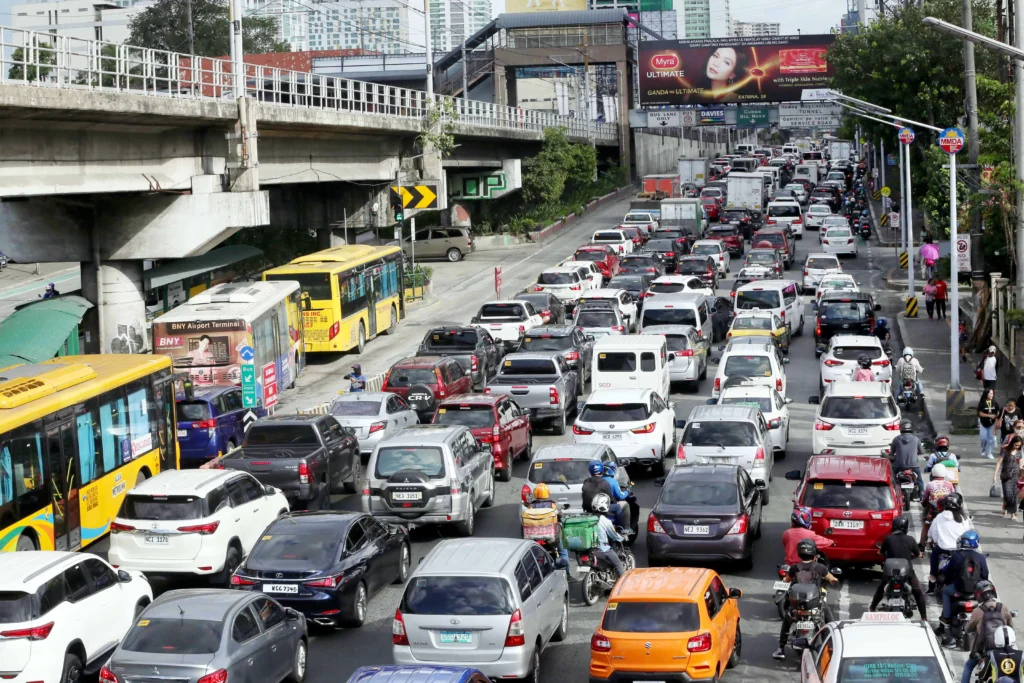
Commercial vehicles accounted for 74 percent of the total sales, while passenger cars shared 26 percent, showing that there are more moneyed motorists buying SUVs and pickup trucks.
However, the industry group fell short of its target of 468,300 to 500,000 unit sales for 2024.
In December 2024 alone, sales reached 42,044 units, or 2.8 percent up month-on-month and 7.4 percent higher year-on-year, demonstrating that many motorists went holiday shopping for cars at bargains offered by car dealerships.
LET GOV’T ADDRESS THIS
Clearly, the increased car sales last year demonstrates that the government has yet to address income inequality nationwide.
And income inequality has been a nagging people in the Philippines in the post-pandemic era.
This, as a 2022 report by the World Bank showed that the Philippines ranked 15th out of 63 countries in terms of income inequality, explaining that the top 1 percent of income earners contributed 17 percent of the national income. On the flipside, the bottom 50 percent of Filipinos captured only 14 of the country’s wealth.
Does this mean that the declaration of President Ferdinand Marcos Jr. that the Philippines will soon attain middle income country status by 2028 is nothing but hot air?“With strong macroeconomic fundamentals, we are confident that the country will be able to hit this year the GNI per capita range set by the World Bank to reach upper middle-income country status, coming off from an all-time high record registered in 2023 to the tune of $4,335 or P241,165,” Marcos said in his toast remarks during the recent Vin d’Honneur (French tradition meaning wine of honor) at Malacañang Palace in Manila.

