


WHO SAYS SHOCK theater or the more academic phrase or term, “shock aesthetics,” is a modern or post-post-modern concept of stage styles, contents and performances?
Ever since the world began, drama of shocking themes and scenes or shall we say outrageous theater and its elements were or still are predominant from the classic traditions to the contemporary times.
To wit.
Tragedies of Sophocles or Aeschylus were already of shock values like the two forerunners of the former, namely, “Oedipus Rex” which exposes the love between mother and son and “Electra” which unravels the sexual relationship between a father and daughter which stems from the
The psychological realm externalizes the implicit behavior like fear, anguish, which is mostly the impetus of the play.
Even the outward appearances of the characters and their motives are
Incest, in the classic narratives, has been here as an idea in theater since God knows when that comes in diverse presentations and representations.
Even comedies of Aristophanes or Menander were and still are genres that bring forth controversial stories of victories and conquests which are also the subject matters in present-day sitcoms or staging wits and humors.
Aristophanes’ “Lysistrata” is one satirical spectacle that made humans susceptible to defeat of the macho to the so-called weaknesses of women who in the comic tradition used theater by disrobing and exposing their bodies in protest against wars where their husbands and other males engaged in the early civilizations.
So Philstagers—a theater foundation conceptualized and established by artist Vince Tanada that ushered in the millennium—isn’t exactly mounting and toeing the line of shock theaters one after the other with gusto but indeed borrowing traditional contents and techniques which have been a legacy of Greek and Roman drama.
Imagine Philstagers’ Black Box Theater in Balic-Balic, the venue, presenting theater plays peppered with profanities and nudities, salacious or cursed languages or dialogues mouthed by characters, both leads or supports etc.
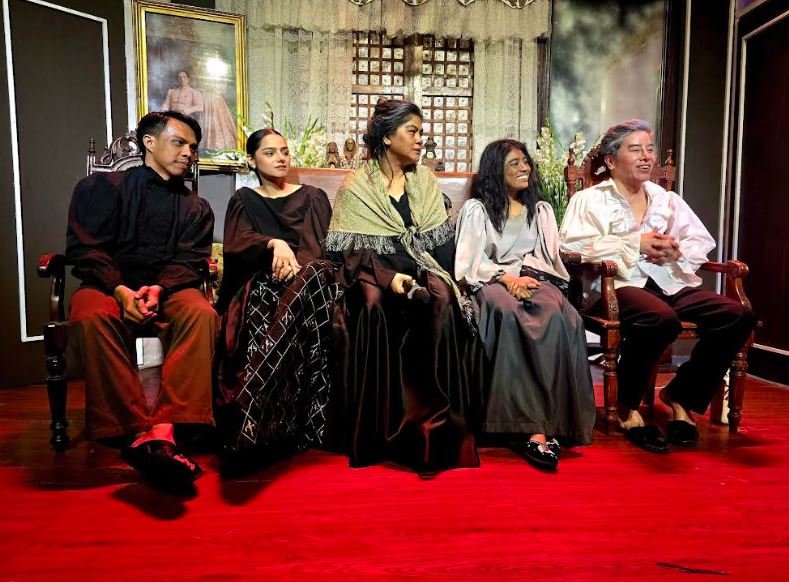
In the latest rerun of “Ang Bangkay,” a First Prize one-act play in 2012 at the Palanca Memorial Awards for Literature, about a well-to-do Don Segismundo Corinto (Vince Tanada), an embalmer in Pangasinan who has just lost a wife and gained the control of his only beautiful but rebellious daughter Isabel (Vean Olmedo)—the object of his carnal desires—constructed a plan to marry her with his assistant Lemuel Alonzo (Gerald Magallanes) who is mutually in love with her but in one condition: no kissing or sexual intercourse with her so that when lights are off, Don Segismundo would be the one to make with his daughter.
There are several lenses or combination of them to view “Ang Bangkay,” one of them shockingly “shock theater.”
Shocked are the audience when Don Segismundo appeared nude in the scene where he was caught by one of his house helpers; Don Segismundo mashing the breasts of his helper Oryang (if I’m not mistaken actress Lili Montelibano); Isabel exposing her frontal body; Lemuel masturbating while his father-in-law was making love to his wife in the dark etc.
“Ang Bangkay” may also be considered Theater of Cruelty, a movement if not a philosophy in lit and aesthetics which was proposed in the 1930s by French dramatist Antonin Artraud.
In the play, there is a plethora of shattering and deafening devices like the moans of the dead, the consistent flashing of red lights thrusting on the old photo of Vince and his departed wife Milagros as if expressing remorse and guilt, the devilish guffaws and dictatorial orders of the patriarch while the subjugation of his vassals is a volcano waiting to erupt etc.
Although the theater piece relies on conventional dialogues which runs against Theater of Cruelty, the way they are spoken and delivered are provocative and intense to show the tension boiling in every scene.
The theatrical pain affliction on the audience is loud in the cruel display of each character implying a domination of one over the other.
Expressionism is also one of live show’s theoretical and practical frameworks that expresses the inner sanctum of every man—the fears all over the bodies of the vassals over the dominance of the landlord, the repressed emotion of love and lust in Isabel, the ambitiousness for wealth and power in Lemuel and his suppressed sexual desires on his wife, the obsession of the chief maid Meding (Adelle Ibarrientos) over Don Segismundo etc., the nymphomania in Oryang, the dark manipulation and terror of the patriarch over his subordinates etc. or situations like the covetousness of the father over his own daughter and her sexual satisfaction thinking the giver is her husband, the vengeance of Isabel over her cheaters by killing them one after other in the same bed she is cheated etc.