


EIGHT YEARS AFTER a 17-year-old student was dragged into a dark alley and shot dead, justice has finally spoken with clarity and finality.
In December 2025, the Supreme Court of the Philippines affirmed the murder conviction of three police officers for the killing of Kian Loyd delos Santos during an anti-drug operation in Caloocan City in 2017.
The ruling closed one of the most painful chapters of the country’s “war on drugs” and reaffirmed a principle long tested by violence: no uniform grants the license to kill.
DELIBERATE INTENT
Kian was only 17, a Grade 11 student with an exam the next day, when plainclothes police officers stopped him near his home on the evening of August 16, 2017.
Police reports initially claimed that he fought back and fired at officers, forcing them to retaliate. But eyewitness testimony and CCTV footage told a different story—one that would later dismantle the official narrative.
The Supreme Court found that officers Arnel Oares, Jeremias Pereda, and Jerwin Cruz acted with deliberate intent and treachery as per testimony of witnesses who actually saw Kian being punched, forced to hold what appeared to be a gun, and dragged toward a dimly lit alley.
Moments later, gunshots rang out.
ABUSE OF AUTHORITY
Forensic evidence showed that Kian was kneeling when he was shot, execution-style. Five bullets tore and pierced through his body—two to the head.
The Court rejected the officers’ claim that they were merely performing their duties. “Performance of duty does not include murder,” the ruling stressed, adding that killing a minor can never be part of a legitimate police operation. The justices also noted attempts to plant a firearm and illegal drugs on the victim—an act that further exposed the abuse of authority.
Kian’s final words, recounted by witnesses during trial, pierced the conscience of the nation: “Tama na po. May test pa ako bukas.” (Please stop. I still have a test tomorrow.) His plea was not answered with mercy.
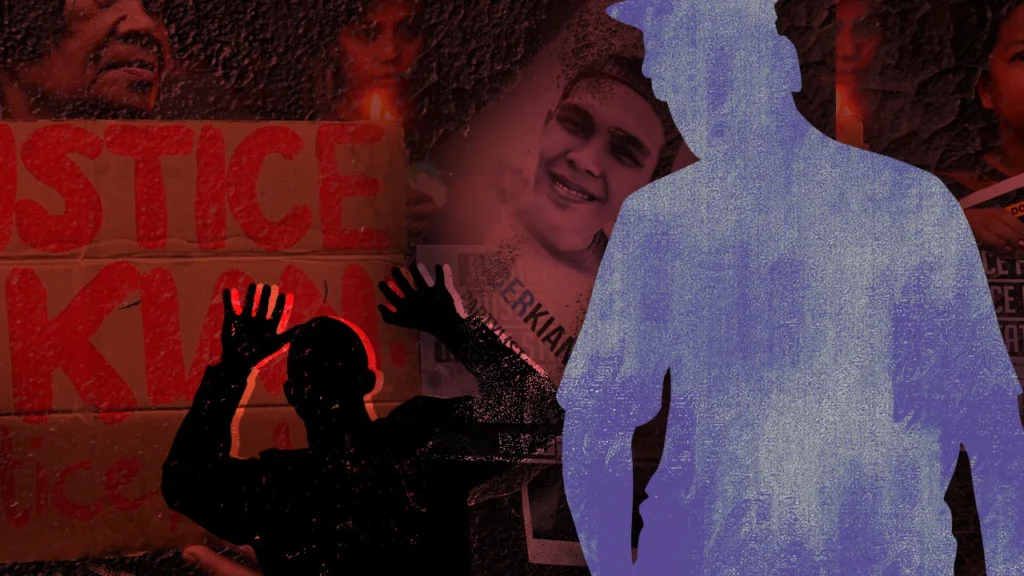
LIFE IMPRISONMENT
In affirming the conviction, the Supreme Court sentenced the three officers to “reclusion perpetua”, or up to 40 years in prison, and ordered them to pay damages of P275,000 to Kian’s family.
Interestingly, the high tribunal modified the penalty by removing the phrase “without eligibility for parole.”
Notably though, the magistrates were unanimous in its decision — the tokhang cops are guilty beyond reasonable doubt, even as the court claimed that all elements of murder under the Revised Penal Code were present.
Human rights groups, including Amnesty International, described the verdict as both welcome and overdue, even as the global organization insisted that Kian’s death was not an isolated incident but emblematic of a broader pattern of violence during the anti-drug campaign—one that disproportionately claimed the lives of the poor and the young.
Thousands were killed, yet convictions remain rare.
CLIMATE OF IMPUNITY
The case also reignited scrutiny of a climate of impunity that once prevailed. Public pronouncements promising protection—or even pardons—for police officers accused of drug-war killings fostered a “shoot first, think later” mindset, critics said.
Allegations of reward systems and operational incentives further underscored how violence was normalized within certain ranks.
Legally, the ruling carries enduring weight. It clarified that the presumption of regularity in police performance collapses in the face of evidence of abuse. It reaffirmed that due process is absolute and that no officer may act as judge, jury, and executioner.
STOLEN VALUE OF LIFE
Morally, the decision stands as a quiet rebuke to policies that sacrificed human life for expediency. Kian’s unfinished exam became a symbol of stolen potential—of futures cut short by unchecked power.
Justice for Kian cannot restore his life. But the Supreme Court’s ruling sends a message that reaches far beyond one alley in Caloocan: the Constitution stands above any slogan, and accountability, though delayed, remains possible.
For Kian—and for all victims—justice matters.
Justice will finally seek its own.