
Saturday, March 28, 2026
Home Blog Page 39

It Pays To Be Corrupt

0

WHENEVER CORRUPTION IS mentioned in a casual conversation, the first thing that comes to my mind is the Department of Public Works and Highways (DPWH).

For one, corruption which embarks on abuse of entrusted power for private gain, is illegal. We have laws providing penalties against corrupt government officials. But not for a few “sacred cows” at the DPWH where corruption (or should we say misdeeds) merits promotion.

Taking the case of the Cabagan-Santa Maria Bridge in Isabela which took the DPWH 14 years to finish, it collapsed eight days after the inauguration.

Instead of manning up, the DPWH tagged an “overloaded truck” as the reason behind the mishap — and wastage of P1.225 billion that was spent for its construction.

‘To be perfectly candid, not one of these officials would dare decide on their own with the approval of the DPWH boss – former Secretary Mark Villar, now a sitting senator of the country.’

FLAWED DESIGN?
At the onset of the Senate investigation, experts in the field of design and engineering shared their thoughts on the collapsed bridge. Most of them said that the flawed design caused the bridge to collapse.

But DPWH Secretary Manuel Bonoan, stood firm that the bridge fell because of the overloaded truck — and neither his former boss nor his peers have something to do with the epic collapse of the expensive infrastructure connecting Cabagan and Santa Maria towns in Isabela.

To note, the government spent on the bridge not once, not twice, but three times — first for its original construction, then for a P285 million retrofitting, and finally for an additional P400 million in repairs.

WHO IS ACCOUNTABLE?
Since the incident took place, not one DPWH official was made accountable, suspended or investigated. Worse, DPWH officials involved were handsomely rewarded in the form of a promotion.

One of them is named Loreta Malaluan. She recommended P233.5 million in retrofitting funds in 2021 and initiated epoxy crack repairs. She has been promoted from Region 2 Director to Assistant Secretary for Luzon.

Others include Mary Bueno, who was elevated from Region 2 Director to Assistant Secretary for Visayas and Mindanao. She allegedly ignored early warnings of bridge failure flagged by Project Engineer Felipe Lingan.

There is Eugenio Pipo Jr. who was promoted from Asec to Undersecretary despite glaring red flags in construction.

MORE ON THE LIST
DPWH engineers flagged shifting columns and sheared boards as early as 2018.

Also on the list of “accountables” are Ador Canlas who approved the P285 million retrofitting plan in December 2023 and again in May 2024. He was promoted to Undersecretary for Technical Services. 

Last but certainly not the least is Maria Catalina Cabral, who approved the P400 retrofitting budget at a time the bridge was still under warranty. She is the Undersecretary for Planning Service and Public-Private Partnership.

To be perfectly candid, not one of these officials would dare decide on their own with the approval of the DPWH boss – then Secretary Mark Villar, now a sitting senator of the country.

GCash Levels Up Compliance: In-App Gaming Hits Pause Button

0

IN A MOVE that’s sure to make both regulators and responsible gamers nod in approval, GCash is hitting “pause” on in-app gaming—at least for now. The popular digital wallet is fully on board with the Bangko Sentral ng Pilipinas’ (BSP) latest directive, Memorandum No. M-2025-029, aimed at creating a safer, more secure, and responsible digital playground.

Starting Saturday, August 16, 8 PM, access to gaming via GLife will be suspended. But don’t worry, GCash users: you’ve got until then to transfer any remaining funds from your gaming account back to your GCash wallet. After the deadline, any leftover funds will need to be accessed directly through the respective gaming merchant websites.

“GCash shares BSP’s commitment to safeguarding the financial health of Filipinos,” the company said. “We’re implementing the required changes within 48 hours and will continue to collaborate with regulators and industry partners for stronger online gaming safeguards.”

So, while your in-app gaming might be taking a short nap, your funds—and your safety—are still very much awake.

Game-Changing App To Connect, Empower Filipino Athletes Worldwide

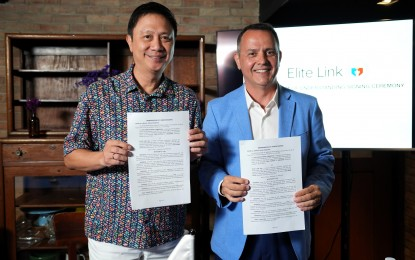
A NEW ERA in Philippine sports development is on the horizon as the Philippine Sports Commission (PSC) teams up with U.S.-based technology firm Elite Link, Inc. to launch a mobile application designed to connect Filipino athletes to global opportunities.

The initiative, formalized through a memorandum of understanding (MOU) signed on Wednesday, August 13, at a Makati City restaurant, will establish a digital database and recruitment platform that allows athletes to showcase their skills, connect with coaches, secure sponsorships, and gain exposure to international competitions.

“This partnership with Elite Link is a beautiful gift for Philippine sports,” PSC Chairperson John Patrick Gregorio said. “It’s a chance for our young, talented athletes to find their communities, discover opportunities, and realize their potential. This is a great generosity that future champions will surely honor with their success.”

‘The app … is “crafted with the needs of Filipino athletes at its core, yet built with global readiness and appeal”, enabling international sporting exchanges and networking beyond borders.’

A DIGITAL GATEWAY
The app will enable Filipino athletes —from grassroots players to professionals— to create and update personal profiles, upload performance statistics, credentials, achievements, and highlight videos. Verified coaches, scouts, and recruiters will have access to these profiles, ensuring that talent is visible to the right eyes.

Elite Link President and CEO Guillaume Lucci described the project as more than just a technological upgrade—it’s a strategic bridge to the global sports community.

“We are creating a game-changing platform where athletes can connect with peers, train with specialized coaches, secure sponsorships, join teams, and get noticed by scouts and recruiters,” Lucci said. “Our mission is to transform the sports ecosystem into an inclusive space that offers equal opportunities for athletes from grassroots to professional ranks.”

The app, he added, is “crafted with the needs of Filipino athletes at its core, yet built with global readiness and appeal”, enabling international sporting exchanges and networking beyond borders.

TECHNOLOGY BEHIND
Philippine software developer, White Cloak Technologies, is tasked with building and maintaining the platform. The company promised to integrate secure data protection mechanisms and authentication systems to ensure the privacy and integrity of athlete information.

“Elite Link isn’t just another app—it’s a robust digital ecosystem designed to connect athletes, coaches, sponsors, and scouts in real time,” White Cloak said in a statement. “From concept to code, we’re ensuring the platform meets the highest standards of performance, reliability, and scalability.”

The PSC will have access to a dedicated analytics dashboard, giving the agency valuable insights for sports promotion and development programs.

AN OPEN DOOR
The MOU will not limit National Sports Associations (NSAs) from using or integrating their own athlete management strategies. Instead, it complements existing efforts, providing a central platform for information sharing and talent tracking.

“We are lucky and proud to have found partners who share our vision—equally dedicated to transforming, modernizing, and elevating Philippine sports governance,” Gregorio said. “This will make many Filipino athletes, coaches, and sports leaders very happy.”

With the partnership now in motion, both PSC and Elite Link expressed optimism that the platform will break barriers for Filipino athletes, offering them the visibility, support, and competitive opportunities they deserve—whether at home or on the world stage. (elamigo)

LGUs Told To Emulate Vico, Report Anomalies

0

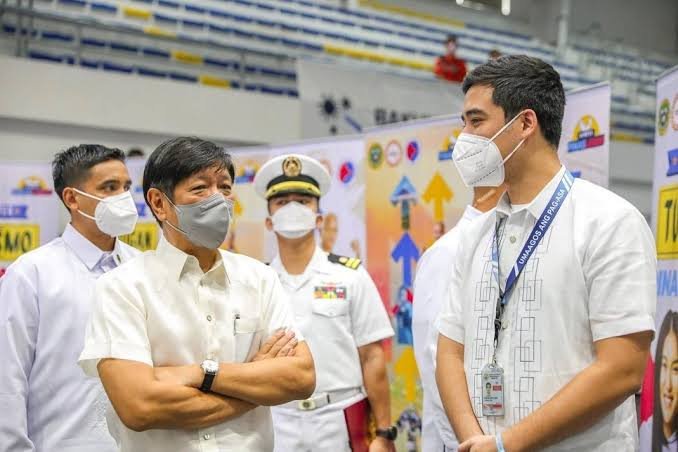
AMIDST THE ONGOING probe on corruption in flood control projects of the Department of Public Works and Highways (DPWH), President Ferdinand Marcos Jr. (PBBM) urged local government chief executives to emulate Pasig City Mayor Victor Maria Regis Sotto or Vico Sotto in reporting graft-ridden public works projects in their localities.

In a media briefing, Palace Press Officer Claire Castro said that President Ferdinand Marcos finds it rather necessary to identify graft-tainted goverment projects — a goal that may only be possible with public cooperation.

The chief executive recently revealed that ₱100 billion, or 18 percent of the entire ₱545-billion budget for flood mitigation projects undertaken by the Department of Public Works and Highways (DPWH) from July 2022 to May 2025, was awarded to only 15 out of 2,409 accredited contractors.

Palace Press Officer Claire Castro said that President Ferdinand Marcos finds it rather necessary to identify graft-tainted goverment projects — a goal that may only be possible with public cooperation.

DISTURBING
The President called this initial finding “disturbing,” though he did not make any accusations about possible anomalies by the private contractors mentioned in the presentation where he named the 15 private contractors that cornered most projects of the DPWH. 

Then shortly after the President’s briefing, Sotto pointed out in a Facebook post that two of the 15 contractors identified by the President —Alpha & Omega Gen. Contractor & Development Corp. and St. Timothy Construction Corp.— were owned by the Discaya family whose matriarch, Cezarah Rowena “Sarah” Discaya, ran against him in the recently concluded midterm election last May 12.

Sotto likewise listed seven more contractor firms owned by the Discaya, namely Saint Gerrard Construction, Elite General Contractor and Development Corporation, St. Matthew General Contractor & Development, Great Pacific Builders and General Contractor, YPR General Contractor and Construction Supply, Amethyst Horizon Builders and General Contractor & Development Corp., and Way Maker OPC.

SUSPENDED
It maybe recalled that ten years ago in August, the DPWH suspended St. Gerrard from participating in any public bidding for a year after it submitted a “spurious” tax clearance certificate.

Five years after, the company was again blacklisted by the DPWH in January 2020 over delays in the construction of school buildings in Indang, Cavite.

In naming the Discaya-owned construction firms as having doubtful track records, Sotto committed that the Pasig City government would send to the President all the information in its possession on government projects that are suspected to be riddled with irregularities.

FLAGGED CONTRACTORS
In the Visayas region, Iloilo City mayor Raisa Maria Lourdes Treñas-Chu likewise flagged four of the DPWH flood control projects amounting to a total of ₱575 million contracted to the Discaya-owned firms, particularly St. Timothy and Alpha & Omega.

“These projects are not only nonfunctional, some have even worsened flooding, while others appear to be practically non-existent,” Treñas posted in her Facebook account. 

The lady mayor also said the projects did not go through proper consultation and were constructed without permits from the city government. She added that the construction were also never reviewed by experts and “allegedly done in haste, sometimes in the middle of the night.”

Never-Ending Tales Of Corruption Woes

0

SCANDALS AND WOEFUL tales of corruption and fund misuse seem to have become our breakfast fare in this country. We get large bites of these disgusting news daily to a point where it desensitizes people because of their regularity and scale.

On August 12, Senator Panfilo Lacson again exposed the Senate and House for approving the removal of P74 billion in subsidies for the Philippine Health Insurance Corp. from the 2025 budget— thereby further endangering the lives and welfare of the common tao, esp. workers who have toiled so hard to chip in to the budget through taxes only to find they have nothing to bank on when they get very sick.

Interpellating on the privilege speech of Sen. JV Ejercito about the Universal Health Care Act, Lacson flagged the realignment of PhilHealth’s budget to other items, which left the agency with zero subsidy for next year, Bilyonaryo reported.

“Bakit pumayag ang mga mambabatas sa pagtanggal sa ₱74 bilyon para sa Philippine Health Insurance Corp. sa 2025 General Appropriations Act kung alam nilang ilegal ito?” Lacson asked.

He stressed that the move violated the Sin Tax Law and the legal principle that a general law cannot amend a special law.

“(The) GAA is a general law. And the sin tax law is a special law. And any lawyer will tell you… that a general law cannot amend a special law. In other words, what the Senate did and what the House did was illegal,” he said.

‘Malacañang assured the people it would be stricter in entering into contracts and implementing flood control projects amid ongoing probes on the status of 9,855 flood mitigation measures under the President’s term.’

DELETION NOT ALLOWED
Ejercito revealed during the exchange that ₱43 billion for PhilHealth remained in the Senate version of the budget, but this amount was entirely removed during the bicameral conference committee deliberations.

Lacson said the legislature should never have allowed the deletion, pointing out that the Sin Tax Law earmarks ₱74 billion annually for PhilHealth. “Paano nakalusot ito sa House, may abogado doon? Sa Senate may mga abogado, paano nakalusot na effectively in-amend ng GAA ang special law?” he asked.

Under the amended PhilHealth Act and the Universal Health Care Act, Lacson noted, any surplus funds of the agency should be used to enhance members’ benefits or reduce their premium contributions.

PUMPING STATION REPAIRS
Similarly, Sen. Raffy Tulfo, in a draft bill, pushed to restore the rehabilitation and maintenance of Metro Manila’s pumping stations to MMDA, instead of the Department of Public Works and Highways. SB No 1168  proposed transferring the mandate and funding for pumping station repairs back to MMDA, which directly supervises and operates these facilities.

Tulfo said he only learned from MMDA chair Romando Artes that DPWH is holding the rehabilitation mandate and budget while MMDA manages daily operations, an arrangement that has caused operational delays with the two agencies splitting control over infrastructure that could be more efficiently managed by one.

The split has brought about non operational pumping stations in Metro Manila, including the one near the Senate in Pasay City under the current set-up. Tulfo also flagged the case of the Sunog de Apog Pumping Station, which has never operated since its completion.

The MMDA said it refused to accept the facility from the DPWH during turnover because it was not functioning. The station was meant to help quickly drain floodwaters along España Boulevard.

“The current bureaucratic set-up could lead to delays, reducing the efficiency and capacity of critical flood control infrastructure during heavy rainfall,” Tulfo said, stressing that the MMDA is more familiar with the condition and needs of pumping stations under its jurisdiction.

TIGHTER WATCH
Malacañang assured the people it would be stricter in entering into contracts and implementing flood control projects amid ongoing probes on the status of 9,855 flood mitigation measures under the President’s term. The palace also urged the people to report alleged anomalies in their communities through sumbongsapangulo.ph.

Palace press officer Undersecretary Claire Castro said the government will be stricter in entering into such contracts and in monitoring the progress of these projects.

Castro said the probe unearthed that those contractors previously listed in the blacklist managed to get new contracts using a different name. “Pero ngayon ay parang namamayagpag pa rin. So, dapat iyon po ang bantayan natin at maging mapanuri tayo sa kanilang mga naging trabaho.”

On Monday, Marcos released the names of 15 contractors that bagged the most number of flood control projects worth P 100 billion under his term. This is 20 percent of the P 545.64 billion worth of flood control projects that were implemented from July 2022 to May 2025.

The President said he is not yet accusing anyone but called on the public to do their part by checking flood control projects in their community to report any alleged irregularity.

Castro said the 15 contractors will be under scrutiny as well but this does not mean that they are  The 15 will be the start of our investigations and will be the basis for determining if said projects were implemented or existing, operational and effective in mitigating floods.”

NAMING INVOLVED
The Department of Economy, Planning and Development’s (formerly NEDA) Regional Project Monitoring Committees and an oversight team composed of officials of the DEPDev, Department of Budget and Management, Department of the Interior and Local Government and the Presidential Management Staff will conduct the inspections and audit of the flood control projects.

She said Marcos will release the names of politicians linked to anomalous flood control projects or the 15 contractors when investigations are over.

“There is no deadline for the public to submit their reports on flood control projects in their areas,” Castro said as she stressed that Filipinos may submit anonymous reports as long as they have basis and are verified.

“Ayaw naman po nating magkaroon ng witchhunting na kahit wala pa pong ebidensiya, eh parang nalaman mo lang, ayon may anomalya, pero walang ebidensya, mahirap naman po, kasi baka iyong ibang inosente ay madamay.”

#floodcontrol

#contractors

#woefultalesofcorruption

#legislators

#government

#pumpingstations

#mmda

#dpwh

#ThePhInsider

Name Names, Not Shadows: Puno Urges Escudero to Clarify ‘Demolition Job’ Claims

0

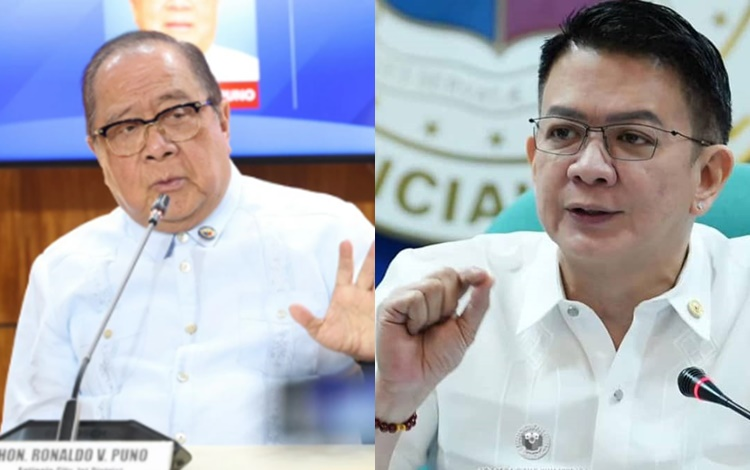
THE POLITICAL ARENA thrives on sharp words and sharper insinuations—but for Deputy Speaker and Antipolo City Rep. Ronaldo Puno, some accusations can cut too wide a swath.

Puno on Tuesday called on Senate President Francis “Chiz” Escudero to stop casting a broad net in his recent claim that certain members of the House of Representatives are behind a “demolition job” against him. 

If Escudero truly believes a targeted campaign exists, Puno, a former Interior Secretary, said, he should name names.

“I don’t know who he’s pointing to or what demolition job he’s talking about,” Puno told reporters in a press conference. 

“If he’s referring to what’s being spread on Facebook—that certain contractors supposedly contributed heavily to his campaign—then that should be brought to the proper investigation, with documents and actual names.”

‘In a political climate where reputations can be bruised by rumor alone … if you’re going to accuse, be ready to name names.’

MORE HARM THAN GOOD

For Puno, Escudero’s blanket statements do more harm than good. By speaking in generalities, the Senate leader risks implicating the entire House, including those who have nothing to do with the allegations.

“Blanket statements like ‘the House is maligning me’ hit all of us,” Puno said. “Chiz is my friend, but now I’m dragged into the accusation. Let’s not lump everyone together. He should just mention who it is so they can confront each other directly.”

The alleged demolition job Escudero mentioned remains vague in both scope and detail. In politics, “demolition job” is a loaded phrase, often implying an orchestrated effort to damage a person’s reputation—whether through leaks, smear campaigns, or disinformation. Yet without specific evidence or names, the term becomes a cloud of suspicion that can hover over many.

Puno stressed the importance of keeping discussions grounded in verifiable facts, not online chatter. “He shouldn’t be too rattled by these online things. Let’s focus on what’s really true,” he said, urging Escudero to respond only to substantial, clear accusations.

The Antipolo lawmaker’s remarks underscore a broader tension in Philippine politics: the increasingly blurred line between social media narratives and official political discourse. 

BE SPECIFIC

In recent years, allegations—true or not—have often first surfaced on Facebook posts, viral threads, or anonymous pages before entering the mainstream political conversation. 

These online narratives can quickly snowball, sometimes prompting leaders to address them even before any formal complaint is filed.

Puno’s call for specificity is, in part, a call to resist that cycle. By pressing Escudero to identify alleged perpetrators directly, he is advocating for a more accountable form of political engagement—one where accusations are backed by clear evidence and channeled through proper venues.

It’s also a personal matter for Puno. Being a long-time political figure, he knows how damaging broad accusations can be, especially when they implicate colleagues without proof. 

“If you say ‘people in the House are behind this,’ that’s a big group. It’s unfair. If you believe someone’s doing it, name them,” he said.

In the absence of names, the public is left to speculate—something Puno clearly wants to avoid. Political intrigue may be a staple of the legislative arena, but Puno believes leaders should rise above hearsay.

THE CHALLENGE

As of press time, Escudero has yet to issue a detailed follow-up clarifying who exactly he believes is orchestrating the alleged demolition job.

For now, Puno’s challenge hangs in the air: move from implication to identification, from shadows to specifics. In a political climate where reputations can be bruised by rumor alone, the Antipolo representative’s message is simple—if you’re going to accuse, be ready to name names. 

Public Clamor

0

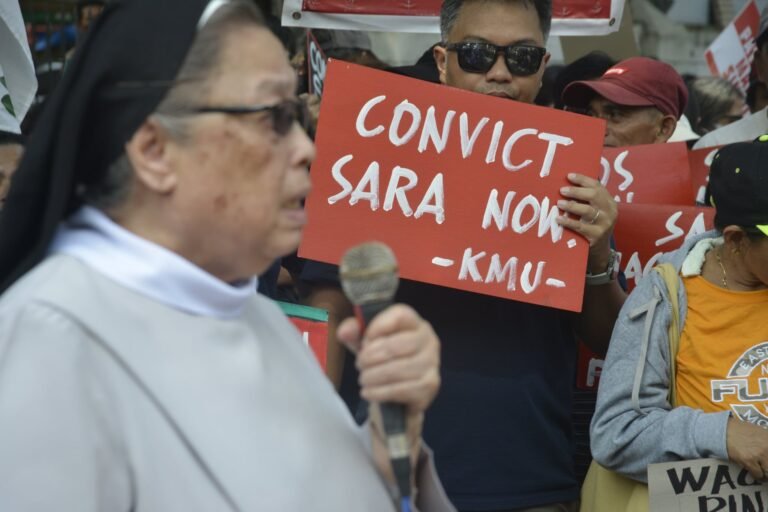
Various groups, including religious clergies, staged protest actions Tuesday morning in front of the Supreme Court (SC) building in Manila, urging justices to reverse their earlier decision, which rendered the Articles of Impeachment against Vice President Sara Duterte unconstitutional. (ITOH SON)

Airport Fee Hike

0

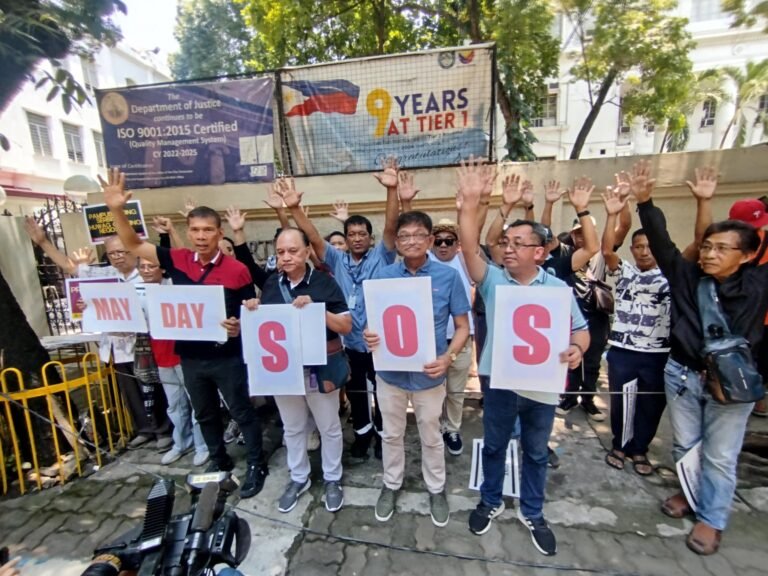
Civic groups file petition for prohibition and TRO before the Supreme Court to halt Manila International Airport Authority’s revised AO No. 1, which effectively gave New NAIA Infra Corporation the power to hike all airport fees. (ITOH SON)

Reviving Call For One Samar Region

0

NOTING THE IMPORTANCE of timing and chemistry, the cause oriented group known as Samar Island Movement for Regional Advancement (SIMoRA) has revived an earlier call for the establishment of one Samar Region that would unite the provinces of Samar, Eastern Samar and Northern Samar into one geographical and political entity.

Last year, House Minority Leader Marcelino Libanan of 4Ps party-list took the cue from the creation of the Negros Island Region (NIR) and filed House Bill 10727 in August to decentralize and boost the delivery of government services by establishing the Samar Island Region (SIR). 

Libanan rationalized that once his proposed measure is enacted, the dispensing of national government services to communities in the three Samar provinces will become more efficient because the island as a whole will have its own regional development council to drive economic growth and job creation. 

OUR COMMON HOME

Taking the cue once again, as the present time is budget season and chemistry matters with the House of Representatives identified as the best organization to champion this cause, SIMoRA cited that the House Minority is not anti-administration and if diversity is an edge, then the 20th Congress must be providential as the Minority Leader is himself a Samarnon (or Samareño). 

“That said, we the Samareños in Metro Manila call upon our agents, our representatives, our collective voice in the People’s House to harken to our appeal (…) it’s about time (to) look at our common home, the 3rd biggest island of Islas Filipinas—Samar Island—long ignored, long neglected, long disregarded.”

The group suggested to legislate the creation of One Samar Region which would pave the way for the creation of a Special Committee for Samar Island Growth and Development (SIGAD) in the Lower Chamber of Congress. 

The group suggested to legislate the creation of One Samar Region which would pave the way for the creation of a Special Committee for Samar Island Growth and Development in the Lower Chamber of Congress.

ADMINISTRATIVE REGION

In the meantime that legislation is under process, the issuance by the President of an Executive Order establishing the Interim Samar Island Administrative Region would be most preferred until a law creating the One Samar Island Region is approved. 

“Samareño professionals can be tapped to provide support services for this initiatory task. They can identify what needs to be done, in the right areas, for right purpose under a unified Samar Island Growth Agenda (SIGA),” SIMoRA suggested. 

While this is ongoing, the group noted that departments, bureaus, offices, government-owned or -controlled corporations should be identified as these would be tasked to constitute the core organizational resource group, ie (a) the Department of Agriculture (DA), the island being agriculturally endowed; (b) the Department of Tourism (DoT), the island being historically and culturally rich, as well as geologically and naturally wonderful; 

(c) the Department of Transportation (DoTr), Island being strategically situated and a major linked between the island groups of the archipelago: Luzon, Visayas, and Mindanao; (d) the Department of Environment and Natural Resources (DENR) because of the island’s fragile ecosystem; (e) the Department of Labor and Employment (DoLE) because of the island’s trainable human resource; (f) the Department of Trade and Industry (DTI) because of the Islands potential for trade investments and industries development; 

(g) the Department of Agrarian Reform (DAR) for the island’s vast land resources; (h) the Department of Science and Technology (DoST) due to the island’s vulnerability to natural disruptions; (i) the education and academic sector for the right mix of employable talents, and (j) the Department of I terror and Local Government (DILG) for the unqualified support of the local government units in the island. 

Towards this end, the heads of these departments will be then asked to designate focal persons (preferably senior-ranked officials) in their respective agencies, to collaborate department efforts toward this goal.

Impressions Of An Italian Filmmaker On Philippine History

0

THE TWO RECENT typhoons surely didn’t dampen the spirit of the Rizalistas, Dr. Jose Rizal’s fans and followers, avid, fanciful or just plain curious, to pay him homage during celebrations of the one hundred fiftieth birth year of our and their national hero.

In many venues of events of Rizal’s birthday last June, they still rode and trooped to Fort Santiago, walked meters and blocks, braved the winds, rains and floods to the historic site just to see what his descendants had in store for his fellowmen who year after year were constantly in search of new things they could discover and learn from him not only as a medical doctor, anthropologist, artist or polymath.

Even a foreigner, who has a penchant for history and literature, was drawn attention in what Philippine past was all about, like Italian painter and filmmaker Marco Russo di Chiara, who didn’t know Rizal from Adam, became interested in him.

“Maybe I missed him in my world history class but I was familiar with Philippine revolutions, one against Spaniards, the next against Americans and the last two, I believe, were against a dictator and a despot, respectively, right?” declared di Chiara, a 28-year old artist who directs the famous “Un Pusto al Sol” for Italy’s Rai TV.

IMPRESSIVE SHRINE 

The Rizal Shrine was like a whole vast of knowledge for di Chiara, who was in town to assist a Fil-Briton filmmaker Jowee Morel in a big indie film on Filipino migration to London starring Pilar Pilapil, every nook and cranny of the repository was a learning experience for him from the vests worn by Rizal to the original manuscripts of “Noli Me Tangere” and “El Filibuterismo.”

“This is impressive,” said di Chiara of the Rizal collection, the major ones, many of the hero’s memorabilia displayed in other museums, art galleries and repositories in the country and around the world as well.

“Ultimo Adios,” Rizal’s farewell piece in poetry, inscribed on the walls, impacted so much on the tourist, its Spanish language stroke him since he has Latin and Hispanic courses, including a degree in Ancient Greek and Roman Literature in college up in Italy.

“You have a very rich culture and colorful personalities in history,” di Chiara observed.

The Rizal Shrine was like a whole vast of knowledge for di Chiara… every nook and cranny of the repository was a learning experience for him from the vests worn by Rizal to the original manuscripts of “Noli Me Tangere” and “El Filibuterismo”.

INTRAMUROS: VERY EUROPEAN

He understood, therefore, the meaning of colonization of a Third World country as Philippines. “I could imagine a lot of your traditions and cultures were destroyed by the Spaniards,” he discerned.  

Hence, the prevailing atmosphere of Fort Santiago isn’t alien to di Chiara including the bricks, the many greens lined-up along the lanes, the cobblestones on the pathways, the lampposts etc. “This is very European,” he noted.

What caught his fancy, though, were the rounded, bulb-lighted lanterns made of sea shells dangling on the trees.

“Those are very European, too. It’s like preserving the ancient beliefs. But in London where I stay now, it’s very different. It prefers colorful lights. London makes it different now,” di Chiara compared.

SOOTHING LOCAL MUSIC

A musical show on Rizal, meanwhile, also impressed the Italian post modern man which showed the unique national past especially the melodious, lyrical and inspirational songs rendered by pop singer Cris Villonco who dished out the emotional contemporary romance song, “Hanggang” and a neo-realist ditty the title of which had escaped us and the Ateneo Chamber Singers in mostly original Filipino compositions on love of Rizal and country.  

“Your music soothes, its’ very caressing especially about love,” he noticed when we interpreted the Tagalog words to English.

Firecrackers lighted up the starless sky and Filipino as well as some adapted foreign music made everyone, including the visitor, stands proud and euphoric of a party given a hero everybody even the world looks up to.

Like important guests of the event former Miss Universe Margie Moran-Floreindo, filmmaker Jim Libiran, writers Luis Gatmaitan and Dino Manrique and other Rizal believers, fans, worshippers and kin not excluding historians, artists and culturati, di Chiara soaked his feet with mud and rainwater but unmindful of them unless they missed the gig organized by My Rizal 150, a group of friends and relatives of Rizal’s clan.

When the birthday cake iced with a giant “Noli Me Tangere” book was served in the middle of the stage while the Ateneo choral group sang “Happy Birthday,” kid descendants of Rizal went up the platform, sang, blew the candles and probably wished privately for the happy soul of their dearly beloved Lolo Jose.

PROMOTING THE PHILIPPINES

Di Chiara felt in love, later, with a short play on Rizal’s life performed by good actors and actresses directed in absentia by famous and intellectual playwright and drama professor Anton Juan who was abroad at the time for cultural exchange.

Notwithstanding his unfamiliarity with the vernacular dialogues interspersed with English lines, he was rooting for the whole cast especially the one who portrayed Teodora Alonso, Rizal’s mom and HeroesSquare Intramuros founder, convenor and producer Andoni Albert.

“When I go back to London and Italy, in my hometown Palermo, I will tell everybody how nice Philippine history and culture are,” assured di Chiara.

Anti Dengue In Q.C

0

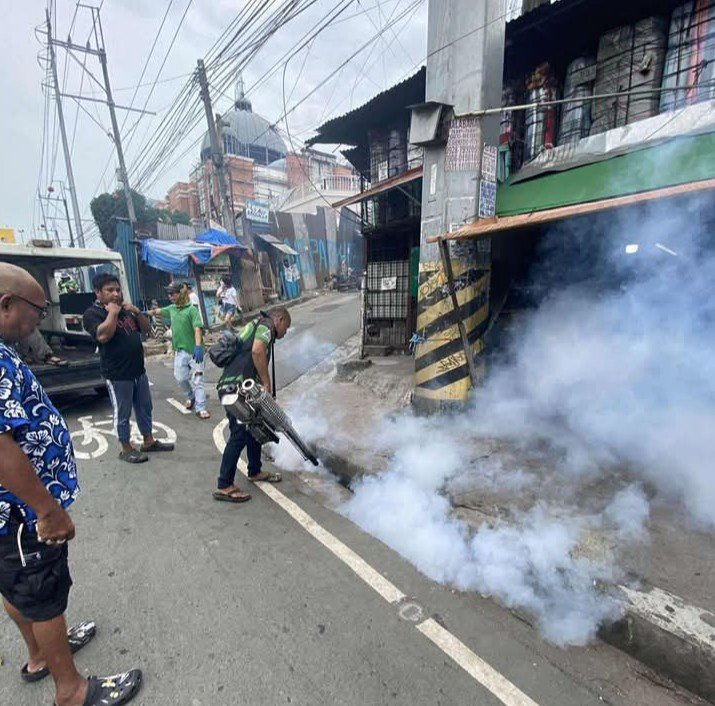
Fogging at Fumigation Operation is regularly being done by the Quezon City Health and Sanitation Department headed by Jojo San Agustin. Cases of Dengue has increased and this preventive measure is implemented to mitigate the increasing number of patients. This was initiated by Commonwealth Barangay Chairman Maning Co and Kgd. Raymart Sario Garcia and members of the barangay sanggunian.

Buwan Ng Wika

0

IN CELEBRATION OF Buwan ng Wika, Atin Ito, the broad civil society coalition behind three historic civilian, led supply missions to the West Philippine Sea, Launched on Monday, August 11, in Quezon City,  the ‘Teritoryo, West Philippine Sea Online Rap Challenge’. This was in collaboration with acclaimed Filipino rap collective Morobeats.
The music challenge sought to amplify public awareness of the plight of Filipino fisherfolk and frontliners who stand at the frontlines of Chinese aggression.

One Little “Hi” Can Save A Life

Ever disappear online for a month… and no one even noticed? We often think big gestures are what make a difference — grand speeches, expensive gifts, heroic acts. But sometimes, it’s the smallest thing that matters most. One short word. Just two letters. Hi.

The Back Story 

It sounds almost too simple, right? But here’s the thing: when someone feels invisible, a “Hi” can feel like sunlight breaking through clouds.

Why “Hi” Matters More Than We Realize

When people are struggling — really struggling — they often don’t tell anyone. They don’t post about it. They don’t hint. They just sink deeper into their own silence. 

  • And the more days go by without anyone noticing, the heavier that silence gets.

Then out of nowhere, someone says “Hi.” No agenda. No big speech. Just a moment of human connection.

That little word says:

  • I see you.
  • You matter enough for me to reach out.
  • You’re not forgotten.

It’s a lifeline disguised as a greeting.

We Underestimate Our Power

We scroll through our phones, pass by people on the street, and think, They’re probably fine. But what if they’re not? What if your “Hi” is the only friendly voice they hear that day?

We like to tell ourselves it’s awkward to start a conversation. We don’t want to intrude. We don’t want to seem weird. But here’s the truth — no one has ever been hurt by hearing a genuine “Hi.” The worst that can happen? They nod and move on. The best that can happen? 

  • You remind them they exist in someone’s world.

You Don’t Need the Perfect Words

If someone’s feeling isolated, they don’t need a TED Talk. They don’t need you to fix their life in one chat. They just need to know they’re not alone in it. “Hi” opens the door for whatever comes next — a laugh, a story, or even just a moment of shared silence.

Think of it like planting seeds. 

  • That tiny “Hi” might not seem like much now, but it can grow into hope, strength, and even survival.

Make It a Habit

We live in a world where people are surrounded by noise but starving for connection. 

Say “Hi” to your coworker you barely know. Message the friend you haven’t spoken to in months. Smile at the neighbor you only wave to. 

  • You never know whose day — or life — you’re changing.

A simple “Hi” is proof that kindness doesn’t need a budget, a plan, or a perfect moment. It just needs you to care enough to say it.

Tips and Techniques 

You never know whose world you might brighten, or whose hope you might keep alive, with just one word. 

  • So don’t wait. 
  • Don’t wonder. 

Say it — Hi — and let someone know they’re seen.

Remember: Say the word that could save a life today.

Truth As A Weapon: A Call To Defend WPS From China’s Lies

0

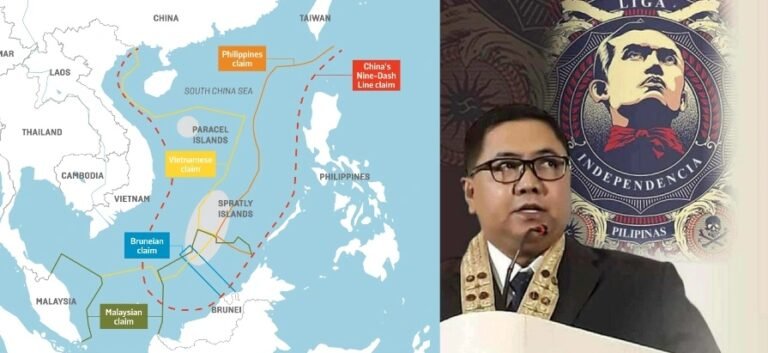
FOR DR. JOSE Antonio Goitia, the battle for the West Philippine Sea is not only fought on open waters but also in the hearts and minds of Filipinos.

“China wants us to feel small, weak, and powerless — to surrender not through the force of arms, but by breaking our spirit,” Goitia told this writer in an exclusive interview. “That’s why President Marcos’ resolve in saying we will never yield is not just political rhetoric. It is a psychological counteroffensive.”

As Chairman Emeritus of four patriotic and civic groups, Goitia has become one of the loudest voices calling for unity against Beijing’s growing maritime and propaganda offensives. His position is clear: the Philippines is under siege on two fronts — the physical intrusion of Chinese vessels deep inside its 200-nautical-mile Exclusive Economic Zone, and a relentless disinformation campaign designed to divide Filipinos and erode confidence in their leaders.

‘The solution … is a sustained, coordinated counter-narrative that not only informs Filipinos but also mobilizes international opinion. This means constant public education, real-time reporting of Chinese incursions, and a united front in the information space.’

TESTING THE NATION’S RESOLVE
Goitia pointed to reports of around 12,000 Chinese maritime militia vessels, fishing boats, coast guard ships, and naval warships operating in Philippine waters. Some patrols have been recorded just 35 nautical miles from Pangasinan.

“This is not normal activity,” he warned. “It is intimidation. It is coercion. China is testing how far it can push the Filipino nation before we push back.”

He views the fight against such aggression as a shared responsibility. The military and coast guard defend the nation’s waters, but ordinary citizens, influencers, and journalists must defend its narrative. “We must drown lies with truth — stated clearly, consistently, and without hesitation,” he said. “Every abused fisherman, every shadowed patrol, every reef that’s taken must be documented and condemned.”

BACKING THE DEFENDERS
Goitia is unflinching in his support for the country’s defense and security sector. He singles out Defense Secretary Gilbert “Gibo” Teodoro, National Security Adviser Eduardo Año, and the men and women of the Armed Forces of the Philippines and the Philippine Coast Guard as “the shield of the Republic.”

“They face danger so the rest of us can live in peace,” he said. “Every Filipino owes them not just gratitude, but active support — in every way possible.”

He sees his own mission as complementary to their work: to fortify public morale and ensure that Chinese propaganda does not take root in Filipino society. “The President already has the diplomatic and military machinery to assert our rights. My role is to make sure our people stay vigilant and confident in our cause,” he explained.

FIGHTING A WAR OF WORDS
Goitia knows the terrain well. As a veteran in public communication, he has watched how disinformation spreads — fast, emotional, and often unchecked. He warns that Beijing’s narrative seeks to portray the Philippines as isolated and helpless, subtly encouraging resignation and appeasement.

“They want to take our seas, and with it, our future,” he said. “But if they take our story, they take our identity. We must fight just as hard to keep our narrative as we do to guard our waters.”

The solution, he believes, is a sustained, coordinated counter-narrative that not only informs Filipinos but also mobilizes international opinion. This means constant public education, real-time reporting of Chinese incursions, and a united front in the information space.

A CALL FOR UNITY
Goitia’s message is not only for policymakers but for every Filipino with a voice — whether online or offline. “The more united we are in telling the truth, the harder it becomes for Beijing’s lies to take root,” he said.

He envisions a nation where every coastal community knows its rights, every citizen understands the stakes, and every media platform amplifies verified facts. “This is a fight for the soul of the nation,” he declared. “We either stand together now, or we watch our sovereignty and our story slip away.”

THE MAN BEHIND THE MISSION
Dr. Jose Antonio Goitia leads from a position steeped in civic engagement. He chairs the Alyansa ng Bantay sa Kapayapaan at Demokrasya (ABKD), People’s Alliance for Democracy and Reforms (PADER), Liga Independencia Pilipinas (LIPI), and the Filipinos Do Not Yield (FDNY) Movement.

Through these platforms, he mobilizes volunteers, partners with security agencies, and engages media channels to counter false narratives about the West Philippine Sea. His advocacy blends grassroots mobilization with high-level strategic communication, aiming to create both informed citizens and an alert, resilient society.

For Goitia, the message is urgent and the stakes absolute: “If we lose our waters, we lose our future. If we lose our story, we lose who we are. We must not allow either to happen.”

Loving God And Nature

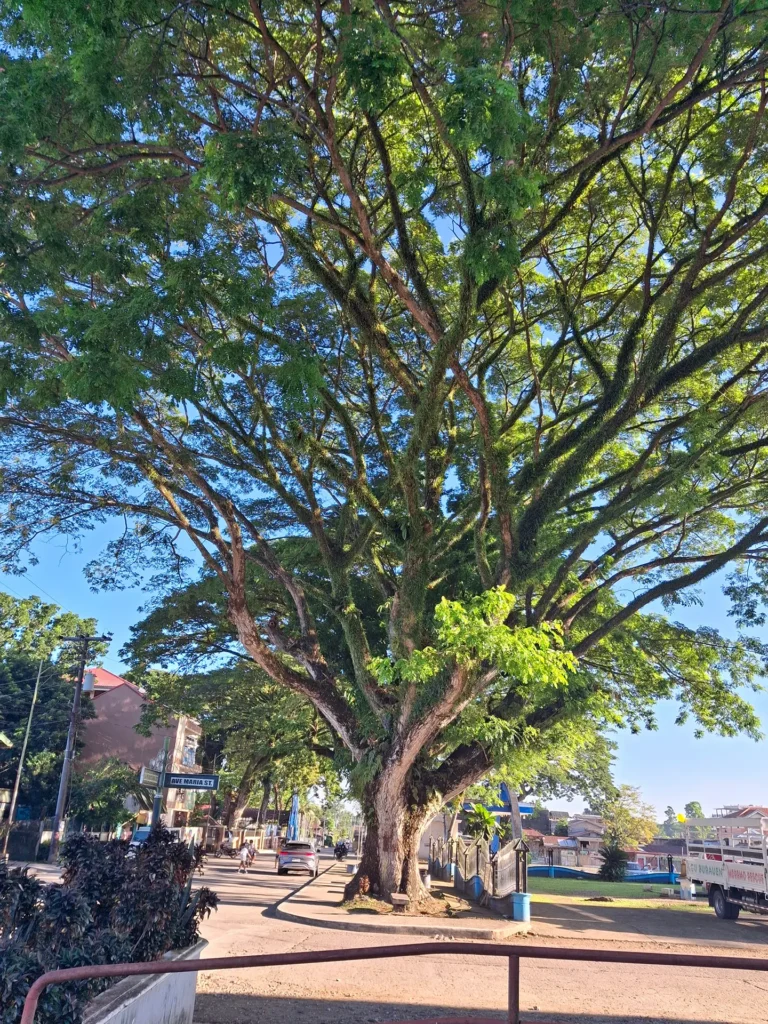
People from Burauen, Leyte are not only truly religious. They love nature! As a testament, this tall, imposing tree forms part of the open spaces required by the zoning ordinance of the town. People clean the roads in their front yards, garbage is collected as early as 5:30 a.m. Ladies presumably not hired by the LGU voluntarily sweep the streets of cigarette butts and chichiria wrappers tugging along broomstick dustpan and sacks for garbage. Wish this is the practice in Metro Manila.

Manila Mayor Focuses On Cleaner, Healthier City; Mitigates Flooding

0

WITH THE ERSTWHILE burgeoning problem of uncollected garbage left by his predecessor soon to be resolved, Manila Mayor Francisco “Isko Moreno” Domagoso is now focused on flood-mitigating measures that would somehow assuage concerns over flashfloods and even health issues brought by flooding such as the spread of leptospirosis. 

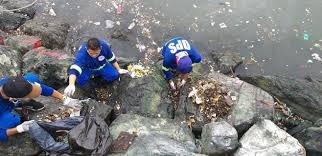
Over the weekend, Manila’s Department of Public Service (DPS) spearheaded the cleanup drive as directed by the mayor who explicitly ordered the clearing of canals, estero and other water channels in order to at least lessen if not put an end to the flooding in several areas of the city. 

Aside from cleaning the streets and thoroughfares, DPS Manila frontliners, particularly its Team Mandaragat, conducted extensive collection of waste and debris from the Manila Bay shoreline to ensure that these will not go back and clog the sewerage systems if a storm once again hits Metro Manila and cause flash floods. 

“Whether on land or at sea, weekday or weekend, the City of Manila’s commitment to a cleaner environment remains unstoppable,” DPS Manila chief Kenneth Amurao pointed out while emphasizing that the cleanup efforts goes beyond simply beautifying the city. 

“This is not just about keeping our city and waters clean—it’s about safeguarding the health and well-being of our residents,” he stressed. 

Apart from maintaining cleanliness, the cleanup is also part of Mayor Domagoso’s ongoing initiative to restore Manila Bay’s natural beauty and protect its marine ecosystem, proving that a cleaner, healthier city starts with consistent community action.

With Over 15K Of Kush In Luggage, British National Nabbed At NAIA

0

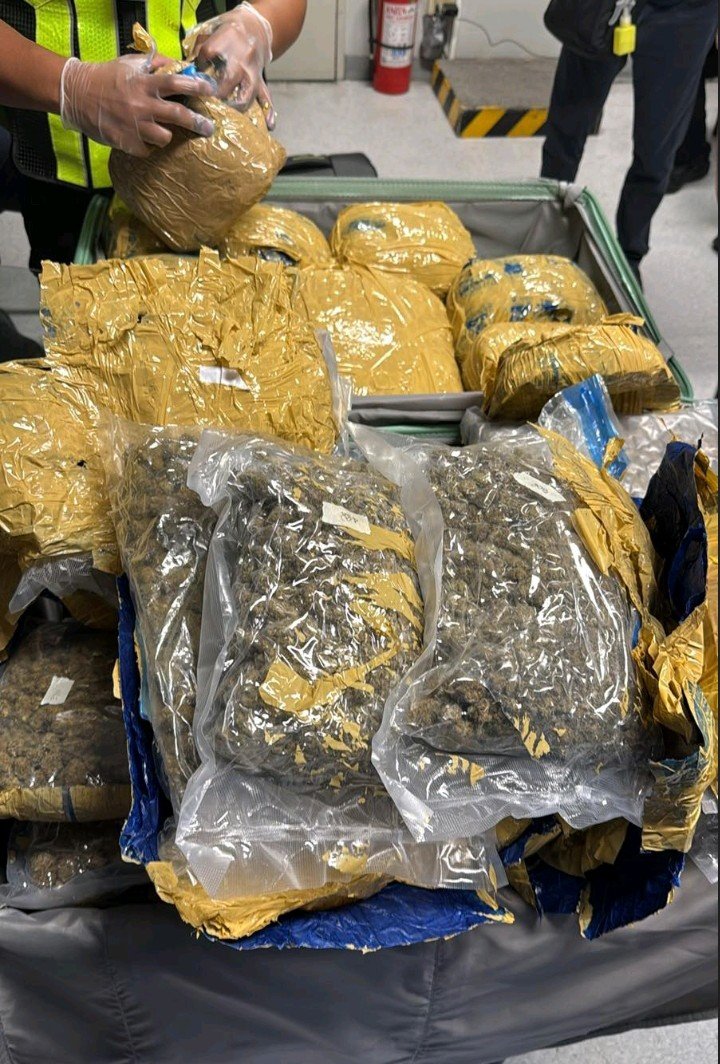
A BRITISH NATIONAL was arrested during an interdiction operation at the Customs International Arrival Area, NAIA Terminal 3, in Pasay City, which led to the confiscation of more or less 15,078 grams of suspected Marijuana Kush.

The operation that took place at around 8:40 p.m. last Thursday, August 7, was carried out by the NAIA Inter-Agency Drug Interdiction Task Group (NAIA-IADITG) composed of personnel from the Philippine Drug Enforcement Agency – Regional Office NCR, Bureau of Customs – CAIDTF, PNP Aviation Security Group, Airport Police Department, PNP Drug Enforcement Group, National Bureau of Investigation, and Bureau of Immigration.

The suspect, temporarily identified only as “Patrick” while processing in ongoing, was an arriving passenger from Bangkok, Thailand. 

IN 35 PLASTIC POUCHES

In a routine inspection of his green luggage, it revealed 35 plastic pouches wrapped with packaging tape that contained dried leaves suspected to be Marijuana Kush, weighing 15,078 grams.

Also recovered from “Patrick’s” possession were non-drug items, including identification documents, a boarding pass, and a cellular phone.

Patrick is currently facing charges for violation of Section 4, Article II of Republic Act 9165, also known as the Comprehensive Dangerous Drugs Act of 2002, which prohibits the importation of dangerous drugs. This offense carries the penalty of life imprisonment to death and a fine of up to ten million pesos, depending on the final weight and classification of the illegal drugs involved.

The confiscated evidence were forwarded to the PDEA Laboratory Service for examination. The suspect will undergo inquest proceedings.

Lifeline: Why Calbayog Says No To Wind Turbines In Its Watershed

2

IN THE LUSH hills above Calbayog City lies a treasure that is both unseen and indispensable: the Pan-as–Hayiban watershed. Here, amid thick forests and meandering streams, the city’s lifeblood flows quietly — fresh, clean water that sustains more than 200,000 residents. For generations, Calbayognons have relied on this watershed, not just as a resource but as a living system that shapes their lives, livelihoods, and future.

But this sanctuary is now at the heart of a growing battle. A proposed wind farm project seeks to install turbines within the watershed, a move that has stirred deep concern among local communities, environmentalists, and advocates for sustainable development.

One of the most vocal voices in this fight is Ricky Bautista, a long-time environmental advocate, journalist, and current President of the SAMOC or Samar Mountaineering and Outdoor Club, Inc. an affiliate to Mountaineering Federation of the Philippines, Inc., an umbrella organization to nearly 300 mountain clubs in PH. Bautista also serves as Vice President for Visayas of the Mountaineering Federation of the Philippines (MFPI), a role that has given him a front-row seat to the challenges of balancing development with environmental stewardship.

“We support renewable energy,” Bautista emphasizes, “but not at the cost of our water and forests. Once our watershed is damaged, there’s no turning back.”

GREEN POWER DILEMMA

Across the Philippines, the shift to renewable energy is gathering momentum. From solar farms in Ilocos to wind turbines in Guimaras, clean energy is seen as a key to reducing carbon emissions and curbing the impacts of climate change. On paper, the proposed wind farm in Calbayog fits this vision — an investment in green power for a better tomorrow.

But for Bautista and the members of the Save Calbayog Rivers Foundation – A Concerted Effort (SACRIFICE), led by Ms. Eleen Lim, the project’s location is the dealbreaker. The Pan-as–Hayiban watershed is not just another stretch of land; it is a protected area, legally designated to safeguard its ecological functions.

Constructing heavy infrastructure here could trigger soil erosion, siltation of waterways, and degradation of forest cover. These environmental disturbances, while sometimes overlooked in development proposals, can have cascading effects. Silted rivers lose their capacity to carry water efficiently, leading to flooding in low-lying areas. Forest loss can disrupt biodiversity, diminish natural filtration of water, and destabilize slopes—raising the risk of landslides.

Most crucially, the watershed’s natural capacity to supply clean drinking water could be irreversibly compromised.

Their fight is not anti-development; rather, it is a push for responsible development… (They) are not against wind energy. (They) are against putting it where it will destroy what we cannot replace.

WATER–LIFE CONNECTION

A watershed is an area of land where all rainfall and streams drain into a single body of water—like a river, lake, or reservoir. In Calbayog, the Pan-as–Hayiban watershed is the main source of clean drinking water for the entire city.

Water security is often taken for granted until it is threatened. In Calbayog, every glass of water, every shower, every rice field irrigation trace their source back to the watershed.

“Importante an tubig inumon ha kinabuhi naton, dinhi nakadepende an kabubwason han Calbayognons,” Bautista wrote on social media. Water is essential to our lives, and our future depends on it.

He warns that once the source is contaminated or diminished, the city could face shortages that no amount of money or technology could easily fix. Alternative sources — such as deep wells or water importation — are costly, less sustainable, and potentially inadequate for the city’s growing needs.

PEOPLE’S STAND

This is why Bautista and SACRIFICE have taken their stand public. They are calling for the project to be relocated outside the watershed boundaries, where its renewable energy benefits could still be realized without endangering Calbayog’s water supply.

The group also urges government agencies, from the Department of Environment and Natural Resources (DENR) to the Department of Energy (DOE), to ensure a transparent review process that meaningfully involves local communities. Too often, large-scale projects move forward without the informed consent of those most affected — a gap that Bautista and his allies are determined to close.

Their fight is not anti-development; rather, it is a push for responsible development. As Bautista explains, “We are not against wind energy. We are against putting it where it will destroy what we cannot replace.”

LESSONS FROM ELSEWHERE

The Calbayog case is not unique. Across the world, renewable energy projects have occasionally clashed with local environmental priorities. In the United States, for example, wind farms have sparked debates over bird migration patterns and visual landscapes. In India, solar farms have sometimes been built on prime agricultural land, displacing farmers.

The lesson, environmental planners say, is clear: site selection matters. Renewable energy is not automatically “green” if it undermines other critical resources or ecosystems.

For the Pan-as–Hayiban watershed, this principle takes on urgent significance. It is not simply a matter of aesthetics or convenience; it is about safeguarding the single most important resource for human survival.

THE PATH FORWARD

The call from Bautista and fellow advocates is not one of defiance but of partnership. They are asking developers and government agencies to work with local stakeholders to find an alternative site that meets both energy and environmental needs.

They are also pushing for stronger protections for watersheds nationwide, noting that climate change is already placing stress on water systems through erratic rainfall, rising temperatures, and increased demand. Protecting these natural reservoirs is, in many ways, the first line of defense against future water crises.

“Protecting our water,” Bautista says, “is protecting our future.”

COMMUNITY’S CHOICE

As the debate over Calbayog’s wind farm continues, one truth remains constant: the decision will shape the lives of thousands, not for years, but for generations. Once a watershed is altered, the changes are permanent. The people of Calbayog now face a choice between immediate energy gains and the enduring security of their water supply.

For Bautista and those standing with him, the choice is clear. Renewable energy can and must be pursued—but not at the expense of the very resources that make life possible.

And so, in the shaded hills where rivers begin and clean water flows, the people of Calbayog stand guard. For them, this is more than an environmental issue; it is a matter of life itself.

No to wind turbines inside our watershed. Yes to protecting our future.

Something Is Still Not Right About PH Economy

“While our growth is slower than India’s projected 6.5-percent expansion, we are expected to outpace Malaysia’s 4.3 percent and Thailand’s 2.4 percent,” Department of Economy, Planning, and Development (DEPDev) Secretary Arsenio Balisacan said.

THERE IS SOMETHING wrong with the Philippine economy despite claims by government economists that it is resilient and the among the best performers in emerging Asia.

This, as the gross domestic (GDP) growth increased by 5.5 percent in the second quarter of this year, a big drop from the 6.5 percent in the same period last year.

Also, the latest economic growth figure is a slight increase from the 5.4 percent logged in the first quarter of this year.

What is disturbing from the 5.5-percent GDP growth is the manufacturing sector recorded a low 2.1-percent growth in the second quarter this year, a big decline from the 7.9 percent of the same period last year.

Department of Economy, Planning, and Development (DEPDev) Secretary Arsenio Balisacan said the decline in the manufacturing sector’s growth was due to the declines in output for coke and refined petroleum products, chemical products, and computer and electronics.

For its part, the services sector increased slightly to 6.9 percent from 6.8 percent last year, with gains recorded in real estate and professional and business services.

The agriculture sector emerged as the savior of GDP growth, logging an impressive 7-percent growth during the quarter, a turnaround from the 2.3 percent contraction in the second quarter of 2024.

However, the better output of the agriculture sector in the second quarter this year can also be attributed to the better weather, as the sector was battered by the El Nino in the first six months of last year.

Balisacan said the agriculture sector’s rebound in the second quarter was largely driven by improved harvests of palay and corn, supported by the Department of Agriculture’s initiatives such as the Agri-Puhunan at Pantawid Program and productivity boosting investments in cold storage, small water impounding dams, farm reservoirs, and solar-powered irrigation systems.

STILL RESILIENT AS CLAIMED

Government economists are quick to cite that the country’s economy is still among the best in emerging Asia,

“With this performance, we maintain our place among the fastest-growing economies in emerging Asia, behind Vietnam’s 8 percent growth, but ahead of China’s 5.2 percent and Indonesia’s 5.1 percent,” Balisacan said.

“While our growth is slower than India’s projected 6.5-percent expansion, we are expected to outpace Malaysia’s 4.3 percent and Thailand’s 2.4 percent,” he added.

Balisacan added that the government continues to safeguard the purchasing power of Filipinos.

This as on the demand side, household consumption growth accelerated to 5.5 percent from last year’s 4.8 percent.

“Our strategic, sustained, and coordinated efforts to manage inflation and safeguard purchasing power are clearly making an impact,” said Balisacan.

“Prices have stabilized, and employment conditions have improved, allowing Filipino families to spend more confidently. Notably, rice prices, a major concern for households, have been declining steadily in recent months,” he added.

House Leaders Decry Senate ‘Overreach’ On Impeachment Issue

0

THREE TOP HOUSE leaders on Thursday, August 7, rallied behind Speaker Ferdinand Martin G. Romualdez, denouncing Senator Imee Marcos’ public call for his removal as an alarming breach of legislative courtesy and institutional boundaries.

Senior Deputy Speaker David Suarez of Quezon minced no words in calling the senator’s remarks “a blatant overreach into the affairs of a co-equal chamber.”

“Let me be clear: no senator, regardless of stature or history, has the right to dictate who should lead the House. That decision rests solely with the elected members of this chamber, and Speaker Romualdez continues to enjoy our overwhelming confidence,” Suarez said.

Suarez defended Romualdez’s handling of the impeachment complaint against the Vice President, saying the Speaker merely followed the constitutional mandate. “It is unfortunate that he is being vilified for upholding a process that the Constitution entrusts to the House,” Suarez added.

‘[N]o senator, regardless of stature or history, has the right to dictate who should lead the House. That decision rests solely with the elected members of this chamber, and … continues to enjoy our overwhelming confidence.’

OUT OF BOUNDS
Deputy Speaker Jay Khonghun of Zambales echoed Suarez’s sentiments, describing Senator Marcos’ remarks as “out of bounds” and warning against undermining the independence of Congress’ two chambers.

“Konting preno naman sa pagsasalita. May hangganan ang mga puwedeng sabihin sa publiko, lalo na kung nakakasira sa integridad ng ibang institusyon,” said Khonghun. 

He emphasized that the Speaker was elected by his peers and continues to have the solid backing of the majority in the House.

Khonghun reminded critics that Romualdez did not file the impeachment complaint nor initiate its proceedings. “Ang ginawa niya ay trabaho niya. Ginampanan lang niya ang tungkulin bilang lider ng Kamara.”

MUTUAL RESPECT
Meanwhile, Deputy Speaker Paolo Ortega V of La Union urged lawmakers from both chambers to show mutual respect and avoid politicizing a legitimate constitutional process.

“Strong statements may grab headlines, but they do little to uphold the dignity of our institutions,” Ortega said. “We must not allow a legitimate constitutional process like impeachment to be dragged into a political circus.”

Ortega underlined that the transmission of the impeachment complaint had the support of at least one-third of the House, as required by law. “The Speaker did not act alone. This was a collective institutional decision—one rooted in the Constitution,” he stressed.

The House leaders cautioned that public calls for Speaker Romualdez’s ouster risk shifting the focus away from the substance of the impeachment complaint and toward unnecessary political distractions.

“If we want to talk about accountability, then let’s talk about the allegations in the complaint,” said Khonghun. “Hindi yung nagtuturo tayo ng mga personalidad na walang ginawa kundi tuparin ang kanilang tungkulin.”

All three officials reaffirmed their trust in Speaker Romualdez’s leadership and warned that any attempt to interfere with House affairs weakens the foundations of democracy.

“Let us set aside divisiveness and stand by the rule of law,” Ortega concluded. – elamigo