Sunday, February 8, 2026
Home Blog Page 94

Investigating Agricultural Smuggling

0

EVERY TIME AN inquiry on agricultural smuggling is conducted, the congressional probers almost always demand a list of big-time smugglers, not the small fry. They would brusquely stress: “Give us the names of the biggies,” they insist in jostling and clamorous fashion. Exasperation is written on their faces, and, in no time at all, decibels are raised to much higher levels than is necessary. Sometimes, they even ignore their own rules. And they tend to forget their real role: to investigate in aid of legislation or to pursue their collective oversight power. In either case, the rights of resource persons are supposed to be respected, nay, protected, under the fundamental law of the land. 

Yet, we often see how these probers have disrespected the rights of witnesses and resource persons. Some behaved as if they could just licentiously go beyond the bounds of decency and reason—they yelled, they hollered, they insulted, and at times, they even threatened their invited resource persons. 

What happened to the old notion of chivalry markedly present and observed in both houses of Congress in the days of yore? Has raising voices during legislative inquiries been proven to effectively ferret out “the truth, the whole truth, and nothing but the truth? When has the truth ever become a function of decibels? 

Or, is anyone ready to defer to Sulla, who asked the Roman Senate: “When did the Senate ever represent the people?”    

But the congressional probers’ impatience over the slow progress of their investigation is not misplaced. For, despite the awesome powers of Congress, the economic saboteurs—and their “indispensable partners” in government, still run rings around these legislative committees. In not so few instances, government witnesses and resource persons were noticed to have mastered the art of stonewalling, of feigning ignorance, of opting to be labeled as tanga rather than to be implicated as kasama in shenanigans being investigated. These stuffs when strutted before the solons will certainly get someone’s goat. And understandably so, because the legislators are—just like us, enraged by the ebb and flow of agricultural smuggling. 

Big-time smugglers include those individuals whose identities ring a bell that reverberates in every nook and cranny of the customs zone, albeit their names do not appear on customs documents. And for the Customs authorities to not know them, identify them, let alone hold them accountable for the systemic fraud on customs is—to the legislators—unacceptable. And it doesn’t sound like a valid excuse that the biggies’ names do not appear on customs papers. 

Put simply: if it looks like a duck, walks like a duck, quacks like a duck, smells like a duck, in all likelihood, it is a duck! Cast the dragnet pronto!

Hence, this question: Is it, at all, possible for anyone whose name does not appear in any customs document, to be indicted for agricultural smuggling—large scale or otherwise?  

The Customs Modernization and Traffic Act (RA 10863), the new law that expressly repealed the 1978 Tariff and Customs Code of the Philippines may be instructive, thus:

Smuggling refers to the fraudulent act of importing any goods into the Philippines, or the act of assisting in receiving, concealing, buying, selling, disposing or transporting such goods, with full knowledge that the same has been fraudulently imported, or the fraudulent exportation of goods. Goods referred to under this definition shall be known as smuggled goods.” [Emphases ours.] 

Verily, one does not need to be the one who fraudulently imported the goods—the “act of assisting in receiving, concealing, buying, selling, disposing or transporting such goods, with full knowledge that the same has been fraudulently imported,” will make one liable for smuggling, as defined by the CMTA.

RA 10863 classifies the commission of smuggling into two (2) types, namely: 

“Outright smuggling [which] refers to an act of importing goods into the country without complete customs prescribed importation documents, or without being cleared by customs or other regulatory government agencies, for the purpose of evading payment of prescribed taxes, duties and other government charges.” [Emphases supplied.]  

and, 

Technical smuggling [which] refers to the act of importing goods into the country by means of fraudulent, falsified or erroneous declaration of goods to its nature, kind, quality, quantity or weight, for the purpose of reducing or avoiding payment of prescribed taxes, duties and other charges.” [Emphases supplied.]

Clearly, smuggling, in its many nuances, is predicated on fraud—actual fraud. And, devoid of any pretentious habiliment, the fraud contemplated by law “must be intentional fraud, consisting of deception willfully and deliberately done or resorted to in order to induce another to give up some right,” said the Supreme Court in CTA v. Farolan
But, then, again: must the author of the fraud have to be named in the accompanying importation documents for him to be indictable?
No Way to Burn Bridges

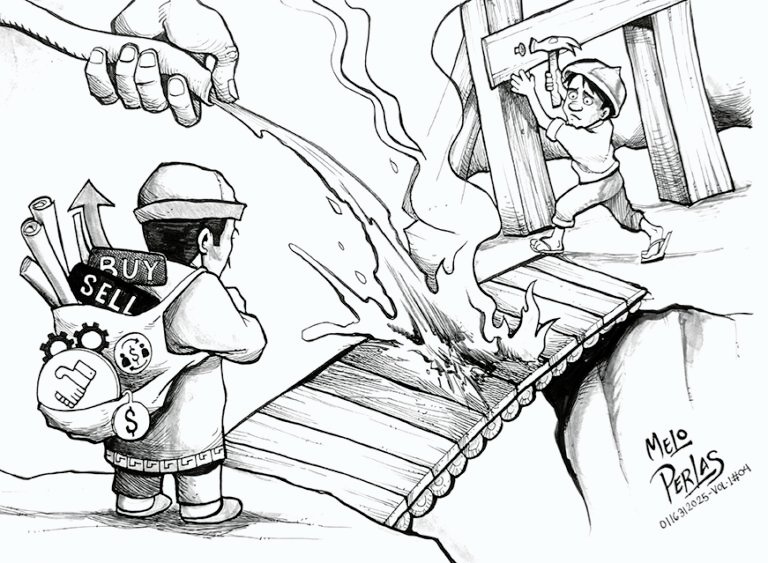
FOR the longest time, China and the Philippines have maintained quite a formidable partnership which dates back to the 12th century.

The partnership drove many of the Chinese traders to marry locals and settle down in the country where they established businesses. Their concentration established in 1594 in Binondo, Manila, the oldest Chinatown in the world.

Referred to as Chinoys, they enjoy the legitimacy of being Filipino citizens. 

Moving forward, Chinoys proved quite an indomitable factor in the Philippine economy amid thriving business and providing employment to locals.

When former President Rodrigo Duterte took helm at the Palace, the government’s foreign policy paved the way for more Chinese to enter the Philippines – some of whom were even appointed in the government.

Under his administration, Chinese businessmen cornered juicy government contracts for which Duterte went under fire for “favoring” Chinese over the Filipino entrepreneurs.

When Ferdinand Marcos Jr. assumed the presidency, citizenship procedures were eased and many Chinese became citizens. Ironically though, the government purge against Philippine Offshore Gaming Operators (POGO) somehow affected this and the tourism sector.

Tourism Secretary Cristina Frasco averred there is, indeed, a significant decrease in the arrivals of Chinese nationals visiting the country — from one million in 2021 to just 300,000 currently. 

Drawing conclusions from the DOT data, the suspension of the electronic visa adversely affected the Chinese market for the Philippines.

In May of last year, the Philippines tightened its visa requirements for Chinese tourists amid a high number of fraudulent applications received in its embassy and consulates in China.

During his third State of the Nation Address (SONA) in July 2024, Marcos declared a total ban on POGOs as their operations had been linked to criminal activities.

Aside from tourism, also shaken was employment of Filipinos working for Chinese POGOs.

The purge created a negative perception among legitimate Chinoys. Some are now being accused of price manipulation, hoarding and profiteering via competition-decimating cartels — not to mention the escalating tension at the West Philippine Sea.

From how it looks, the administration seemed overreacting to the detriment of the Philippine economy, unless the government has a viable contingency plan that would cover the losses that the Philippines would incur as a result of the sweeping purge.

Burning bridges with China doesn’t resolve the problem.

Journey To The Episcopal See Of Catarman

0

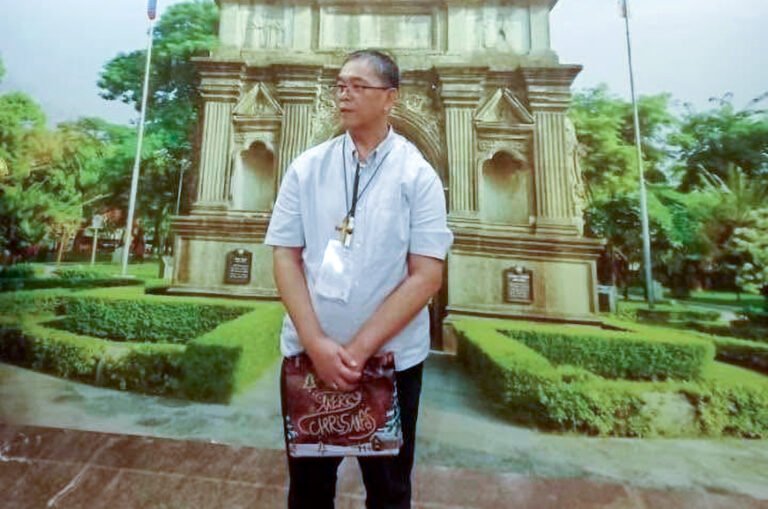
anuary 15, 2025 is the installation rites day of Canon Law expert Bishop Nolly C. Buco as the new bishop of Catarman diocese to be held at the Our Lady of Annunciation Cathedral in  Catarman, Northern Samar.

Simply named “Nolly”, this resonates very well with his persona: humble, unassuming, and magnanimous.

Paradoxes Along The Way

Rightly so. Because his journey from his seminary formation to the priesthood was hatched in humble beginnings. A lowly probinsyano from Southern Leyte, Bishop Nolly’s journey to the episcopate is full of paradoxes: 1) While he failed to qualify in entering two theology seminaries, he later ended up earning a Master’s degree in Dogmatic Theology, a Licentiate in Canon Law, and two Doctorate degrees in Canon Law (JCD) and in Juridical Science (JSD); 

2) Erstwhile hopping from one seminary to another and spending a regency period out of the seminary to work in a government agency, he unexpectedly ended becoming a bishop, and even as chairman of CBCP’s Episcopal Commission on Canon Law, and 3) while he struggled with poverty and could hardly afford to pay his seminary fees, he still survived it all to climb the ladder of episcopacy, and becoming the Judicial Vicar of the National Tribunal of Appeals of the Catholic Bishops’ Conference of the Philippines. 

Buco took his AB Philosophy from Sacred Heart Seminary in Palo, Leyte, and upon graduation, he was expecting to be sent by his Bishop to Cebu’s San Carlos Seminary for Theologate. But, as his first travail, he was not recommended for admission. 

After spending some few months with the diocese, Bishop Nolly decided to come to Manila and look for a job. He landed as a Development Officer of the Department of Social Welfare and Development (DSWD) NCR office, and was assigned in Tanay, Rizal, where he met the late Bishop Protacio Gungon, the first bishop of Antipolo diocese.

A lowly probinsyano from Southern Leyte, Bishop Nolly’s journey to the episcopate is full of paradoxes

Strong Vocation

In early 1989, after two years with DSWD, he approached Bishop Gungon and expressed his intent to continue his priestly studies. Gungon thus recommended him to take the entrance examination at the San Carlos Seminary in Makati City. Again, for the second time, he was deemed not qualified.

Gungon then advised the young Buco to apply at the Immaculate Conception Theology Seminary, Guiguinto, Bulacan, where he spent four years of theological studies.

Bishop Nolly recalls his first year of Theologate at the Bulacan seminary: “When I entered the seminary, my initial payment for my board-and-lodging came from the minuscule separation pay I received from DSWD. My parents could not even afford to provide my monthly allowance for my miscellaneous needs.” He was able to finish his Theology formation through the support of a kind benefactor.

On October 18, 1993, he was ordained priest by his gracious mentor, Bp. Gungon.

Further Studies 

Throughout his priestly journey, he laboriously pursued several studies: finished his Master’s degree in Dogmatic Theology; earned his Licentiate in Canon Law (JCL) at UST Manila; obtained his Doctorate in Canon Law (JCD), also from UST, in 2004; attended the PhD program in Anthropology at the University of the Philippines, Diliman, and obtained his Doctorate in Juridical Science (JSD) from San Beda University Graduate School of Law. 

Bishop Buco is author of the recently published book, “Freeing Distressed Couples From Guilt: The Need for State Recognition of the Church’s Declaration of Marriage Nullity.” His upcoming book is “Shepherding Christ’s Faithful: A Pastoral Guide on the Juridical Recognition of Pious Associations and Administration of the Church’s Temporal Goods.”

Bishop Nolly Buco. From humble beginnings to the Episcopal See of Catarman.

Pillaging PhilHealth

0

WHAT was once admired for its “check and balance,” the so-called democracy has significantly deteriorated in view of the recent developments that saw the Philippine Congress forcibly taking over the “purse” of an agency mandated to promote public health.

For one, the 1987 Constitution clearly defines the separation of powers among the pillars of government – the executive, the legislative, and the judicial branches. However, the constitutional provision embarking on the separation of powers doesn’t seem to apply under a predominantly politicized government.

Looking Back

Prior to the congressional deliberation, the Philippine Health Insurance Corporation (PhilHealth) was at the receiving end of nasty remarks over the transfer of its P60 billion unused funds to the National Treasury. 

Next came P89.9 billion also in unused funds, which however was stopped by the Supreme Court in October when it issued a temporary restraining order.

According to Sen. Bong Go, in his capacity as chairman of the Senate committee on health and demography, such a transfer is uncalled for even as he cited the law which created PhilHealth.

Go stood firm that health funds should not be used for any other purposes.

National Budget

As both chambers – the Senate and the House of Representatives via the Bicameral Conference Committee, hurdled on passing the 2025 General Appropriations Bill (GAB), P6.352 trillion national budget was approved.

Now, with the 2025 GAB already approved by both legislative chambers, PhilHealth ended up being whipped by the legislative branch which decided not to give a dime to the agency. Nadah, zero-subsidy.

To some extent, there are reasons to believe that PhilHealth underperformed as manifested in its own data which shows low absorptive capacity, or its inability to dispense funds for mandated projects and programs due to systems inefficiency, sans the imperative digitization,  principally in the provinces.

Biggest Loser

Taking the case of the late Ramon Angelo of Angono, he died of a curable ailment just because he couldn’t afford the cost of treatment. He was an employee of the Philippine Long Distance Company Co. (PLDT) until he retired.

Joel Larain of Pasig City also died because his family doesn’t have much left after paying rent, utility bills, and food. Both Angelo and Larain are PhilHealth members.

It only goes to show that the people are the biggest loser in what appears more like a political maneuver to get hold of the proposed P74 billion PhilHealth subsidy, for which the House of Representatives was able to double funds at their own discretion.

And to think, no less than the President himself has admitted that the people in the province wait endlessly in vain for PhilHealth assistance for their healthcare needs because the system is clogged.

From how it looks, the Philippine Congress is demolishing PhilHealth because it does not do its job well…

Compelling Figures

Under the 2025 National Expenditure Program (NEP) that was submitted to Congress in June by the Department of Budget and Management (DBM), the House of Representatives proposed P16.3 billion. 

After the closed-door bicameral conference, the lower chamber emerged as the biggest winner as House leaders were able to secure twice as much – a whopping P33.7 billion.

What’s more alarming though is the amount for the so-called “unprogrammed funds. Under the DBM’s 2025 NEP, the administration proposed P158.7 billion. After the bicam convened, the amount bloated to P531.57 billion.

Thanks to PhilHealth and other vital government agencies which were made to suffer budget cuts four months away from the midterm election.

Reinvented Pork

Where would this erstwhile subsidy/budget of Philhealth go? 

Naturally to the unprogrammed funds, which are disguised as priorities of local governments. In other words, patronage funds for the 2025 midterm polls or Pork Barrel 2.0.

Prof. Cielo Diaz Magno-Gatmaytan, former finance undersecretary, wrote an appeal to the senators to reconsider with a dire warning that this would further endanger the healthcare insurance system of the country – for the premium payments of the elderly, the PWD and indigents – and the working class who have been chipping in an escalating Philhealth premium (with no share from the government) in monthly contributions to the system that they have not even availed of in their lifetime. 

Her appeal was ignored.

Not Much Left

In trying to justify the zero-subsidy slapped on PhilHealth, several senators claimed that the state insurer has reserve funds amounting to P600 billion. 

However, what these senators failed to check are the liabilities incurred by the agency —  the mounting current (and future) liabilities with hospitals dating back from the first quarter of 2020. It was during these trying times that most patients are being turned away unless they are paid by the agency in full. 

Just because Philhealth members are forced to pay monthly premiums, then the agency can manage with what it can collect, a very flawed assumption.

The goal of setting up Philhealth is to reduce out of pocket expenses for healthcare of the citizenry that even with Philhealth, people still pay 50 to 60 percent for their healthcare out of their pockets. 

Philhealth also requires emergency room services before it can reimburse the patient. Outpatient, laboratory, medicines and dental care are also not covered. In reality, Philhealth only shoulders 10 percent of medical bills of patients.  So who really benefits?

Demolishing PhilHealth

From how it looks, the Philippine Congress is demolishing Philhealth because it does not do its job well, in which case leadership change with people who can improve the system is more appropriate than to completely remove its funding.

Remittances due to Philhealth from the Sin Tax Law, PAGCOR and PCSO are being channeled to Medical Assistance for Indigent and Financially Incapacitated Patients (MAIFIP) – where those who have less are forced to beg with politicians for funding of their healthcare, a tedious documentation process which require finding padrinos to get a bigger chunk to cover their medical expenses. 

With the 2025 midterm election fast approaching, such a process translates to patronage politics, short of vote buying. Since 2023, funding for Philhealth has  been decreasing while MAIFIP has been ballooning, which is hidden in the budget of the Department of Health and government hospitals.

MAIFP is absolutely not transparent, discretionary and depends on the relation of politicians to the appealing patients.

Viable Options

One recourse is to again ask the Supreme Court, come January,  to declare the congressional whip as unconstitutional, particularly on the decision of both chambers not to give a dime of subsidy to PhilHealth.

Under existing laws, PhilHealth gets a slice from the government collection from the sin taxes paid for by cigarette and alcohol companies, as well as shares from revenues generated by the Philippine Charity Sweepstakes Office (PCSO and the Philippine Amusement and Gaming Corporation (PAGCOR).

Another option is the presidential veto. However, chances of reinstating PhilHealth subsidy seemed slim as no less than President Ferdinand Marcos Jr. has already made his position clear by justifying the removal of Philhealth subsidy — unless PhilHealth gets to beg on their knees and strike a compromise deal.

The Year of the Wooden Snake

0

It’s this time of the year when local Tyches, fortune tellers, seers, and even naysayers err, soothsayers, declare their prophecies, doom or boon.

Madam Suzette Arandela, a famous psychic and feng shui expert, has joined the crowd of prophets to present the oracle of 2025 to the public.

What is in store for the Filipinos in the Year of the Wooden Snake?

Intriguing, Mysterious

According to Madam Suzette, a Gumaca, Quezon-born Fortuna, the Year of the Wooden Snake is quite intriguing.

Contrary to common beliefs that snakes are backbiters and evil, these reptiles, according to her, symbolically, are also tender and passionate like a sweet lover as a tamed cat hugging a human like the romance pictorial of Hollywood actress Nastassja Kinski with a python curling in her whole body or Filipino actor Harold Montano caressing a serpent in a photoshoot while it is coiling to his face, neck and his entire body.

For people who are born in the Year of the Snake, says Madam Suzette, “their characteristics are being mysterious, secretive but warm and compassionate, especially in romance.”

Engagement and Marriage

Madam Suzette warns that Snake people have a bad side to themselves. “The negative trait of snake people is being unpredictable,” she said.

Snake years are 1929, 1941, 1953, 1965, 1977, 1980, 2001, 2013, and 2023.

The Year of the Wooden Snake starts January 29, 2025 and ends February 16, 2026.

Also a geomancer, Madam Suzette predicts that this year is not-so-good for marriage as it entails a lot of challenges, travails and failures. “It’s not a good year for marriage,” Arandela proclaims.

There is the other side of the coin, though. “But proposal for engagement is a lucky one,” Arandela quips.

“2025 is a mix of positive and negative traits.”

Contrary to common beliefs that snakes are backbiters and evil, these reptiles… are also tender and passionate like a sweet lover as a tamed cat…

Economy and Environs

In her layman’s viewpoint, the seer sees a successfully mild economy. “Our economy needs careful and wise planning and thinking. The officials and the ordinary citizens must think twice before they pursue certain business ventures.

“In investing in an open business, think twice because financial growth is slow especially during the first and second quarter of the year. 

“Beware of scams. It will be worldwide in scope,” gushes Madam Suzette.

 “Business will be profitable if one invests in fashion, online store, health, fitness and wellness, home care services, food entrepreneurship, beauty enhancement and cyber security services.”

The country will continue to experience natural and man-made catastrophes.

Positive Side of ShowBiz

In show business, Madam Suzette predicts colorful and awe-inspiring events like the popularity of Alden Richards and Kathryn Bernardo which she says is insurmountable. “Gagawa pa sila ng third episode ng kanilang pelikula. Kung matagimpay ang ‘Hello, Love, Goodbye’ at ‘Hello, Love, Again,’ mas magiging matagumpay ang ikatlo nilang pagtatambal.” 

She also gives credence to the reel and real-life relationship of Dingdong Dantes and Marian Rivera. “Mas magiging matagumpay pa rin ang mag asawang Dingdong at Marian kahit saanmang larangan.”

Madam Suzette pins hopes on former popular stars. “Ang mga dating sikat na mga bituin ay sisikat pa rin bagamat hindi na masyado. Sa mga young ones na nakatutok ang interest ng publiko. Kaya huwag mawawalan ng pag-asa ang mga sikat noon pero hindi na pinapansin ngayon dahil sa kanila na babaling ang publiko.

Ugly Side of ShowBiz

On one hand, she says, 2025 will be the year of breakups and separations between couples, married or not.

“It’s sad but they will happen. Many celebrities will be caught unaware of their private lives. Many of them will be overtaken by their own controversies. More scandalous private lives of celebrities will happen in the Year of the Wooden Snake. Kahit na anong gawin ng mga taong nakapaligid sa kanila, wala ring mangyayari dahil ang nagdedesisyon sa kanilang mga ginagawa ay ang kanilang mga sarili mismo. Mas sinusunod ng mga artista ang kanilang damdamin kaysa kanilang isip kaya nagkakaganyan ang karamihan sa kanila. Sobrang nakakalungkot,” laments Madam Suzette. 

But she suggests that prayers can do a lot of miracles. “Kaming mga psychic ay gumagabay lamang sa kanila (We the psychics only guide them through our pieces of advice).”

Lucky and Compatible 

Lucky colors of the year, according to Madam Suzette, are brown, purple, yellow, and red. 

Compatible signs for people who are born under the Year of the Snake are Ox, Snake and Rooster. 

For animal zodiac signs, lucky this year are those whose signs are Monkey, Rooster, Horse, Rat, and Dragon. For average luck, Ox, Sheep, Snake, Tiger, Rabbit are the frontrunners while the not-so-lucky signs are Pig and Dog.

Clashing Ambitions, Crushing The Nation

0

“As Caesar loved me, I weep for him; as he was fortunate, I rejoice at it; as he was valiant, I honour him: but, as he was ambitious, I slew him,” these words resonate not only with the learners in literature and poetry courses but among political science students as well. 

Yes, you’re right, these were Brutus’ words during the funeral for the slain Roman leader, Julius Caesar. 

I invite you to note well—nota bene—the last phrase: “but, as he was ambitious, I slew him.” All told, said Brutus, it was Caesar’s ambition that did him in. 

To repeat: it was because of ambition that Julian Caesar met his end—not in the hands of Rome’s enemy but in the hands of Romans so known to him—whose unrestrained desires and aspirations conflicted with the logical consequences of Ceasar’s exploits and conquests.

This admission of Brutus—a close peer, associate, and fan of Caesar, sounds ominous today as it was when sounded by Brutus at the steps of that Great Roman Edifice centuries ago. Treachery? Disloyalty? Love of country? Clashing ambitions? 

Be the better judge!

Rust Never Sleeps
Are we witnessing the unfolding of a historical parallelism today with that infamous event that took place right inside the halls of the Roman Senate some decades—44 years, Before the Common Era?

Let me attempt to refresh our collective memory. Early into the 6-year term of a Presidential and Vice-Presidential tandem that was bruited to span at least 12-years of UniTeam’s supremacy—with the jaundiced bloc having taken so much beating during the Duterte Administration (remember the Ocho Deretso?), what appeared to be a super-strong partnership and made much stronger by the steely and alloyed resolve to hold on together with the President providing mentorship to his Veep (after all, Bongbong Marcos needs to train his understudy as he, under the 1987 Constitution, is barred from seeking reelection) and Sara Duterte (learning the basic ropes in statecraft and benefiting from 6-year internship which, by then, must have fortified her confidence level by 2028), succumbed to its own rust. 

As Neil Young & Crazy Horse sang: Rust Never Sleeps.

And the rust was provided by the ambitions of those who cannot wait for 12 years—they wanted badly to be in the order of succession right after PBBM. Ergo, Veep Sara must be yanked out of the ruling party pronto!

Consequently, even before the midterm 2025 elections, the once formidable tandem—propelled by 32 million voters—was headed for the rocks. BBM and Sara Duterte must go separate ways. So today’s reality: unless lightning strikes them into a reunion, no human force can mend the fissure.

How It All Begun 
Let it not skip our memory that the current political hullabaloo had been triggered by the House of Representatives as they deny the Office of the Vice President’s budgetary request for P500M confidential funds. The amount, the HOR felt, is not only unprecedented but irregular as well—the Veep being a mere spare tire in our constitutional order. So, deny the Veep, they did!

Ostensibly, the supporters of the Veep—the former President included, did not like what the House leadership did to the second highest official of the land specially over the Veep’s confidential funds. Thus, FPRRD challenged the House leadership to apply to itself the very measure it wants the Veep to be subjected to: accountability. 

Put differently, the HOR should comply with their liquidation of expenses according to Hoyle. The former Chief Executive hollered: the HOR is the most corrupt agency in the government. It went ballistic saying that the HOR liquidates its expenses by way of a mere certification—a process agreed upon only by both chambers of Congress, and not in accord with COA’s auditing rules and procedures. Hence, improper, illegal, unconstitutional.

To date, the HOR has yet to comment on the  constitutionality of its liquidation by certification—a mode that is outside the modes defined by the constitutionally-mandated state auditors: the COA.

Observers believe that FPRRD’s demand has constitutional moorings. It should be noted that the Executive and the Judicial departments both observe the requirements of the State Auditing Code of the Philippines. This Code is religiously complied with by the Constitutional Commissions—including the COA, and even the Ombudsman. What then is the constitutional basis of both chambers of Congress for excepting themselves from the constitutional coverage of COA’s auditing rules and regulations?

Laws and JurisprudenceLet’s revisit some laws and jurisprudence:  The Administrative Code of 1987 (EO 292) provides: “Declaration of Policy. — All resources of the government shall be managed, expended, or utilized in accordance with law and regulations and safeguarded against loss or wastage through illegal or improper disposition to ensure efficiency, economy and effectiveness in the operations of government. The responsibility to take care that such policy is faithfully adhered to rests directly with the chief or head of the government agency concerned” (Book V, Title I, Subtitle B, Chapter 1, Section 1).

Section 2(7), of Chapter 1 thereof, defines “resources” as “the actual assets of any agency of the Government such as cash, instruments representing or convertible to money, receivables, lands, buildings, as well as contingent assets, such as estimated revenues applying to the current fiscal period not accrued or collected, and bonds authorized and unissued.”

Section 2(8): “‘Government agency’ or ‘agency of the government,’ or ‘agency’ refers to any department, bureaus or office of the National Government, or any of its branches and instrumentalities, or any political subdivision, as well as any government-owned or controlled corporation, including its subsidiaries, or other self-governing board or commission of the Government.”

That said, let us now listen to what the Supreme Court has said about the COA and its constitutional mandate, viz.: “(The) Commission on Audit is a constitutional agency vested with the power, authority and duty to examine, audit and settle all accounts pertaining to the revenue and receipts of and expenditures or uses of funds and property owned or held in trust by the government or any of its subdivisions, agencies or instrumentalities (Commissioner of Internal Revenue v. COA, 218 SCRA 203 [1993]).” 

Further, it held: “The power of the Commission on Audit to audit and examine government expenditures is enshrined in Section 2(1), Article IX-D of the 1987 Constitution (National Housing Corporation v. COA, 226 SCRA 55 [1993]).” 

Furthermore, it ruled that: “The Commission on Audit is a constitutionally-created independent and separate body, and neither Congress nor the Executive Department has the power to detract from its mandated duties, functions, and powers (DBP v. COA, G.R. No. 88435, promulgated January 16, 2002).”

Still, furthermore, the High Court said: 

“The Constitution also granted to Commission on Audit the power to promulgate accounting and auditing rules and regulations including those for the prevention and disallowance of irregular, unnecessary, excessive, extravagant or unconsciously expenditures (National Housing Corporation v. COA, Supra).”

In his book, The Administrative Code of 1987 Annotated, pp. 1093-1094, former Asst SolGen Renan E. Ramos, citing the Supreme Court ruling in Aguinaldo v. Sandiganbayan, 265 SCRA 121 [1996], wrote: “Commission on Audit’s approval of a government official’s disbursements only relates to the administrative aspect of the matter of his accountability but it does not foreclose the Ombudsman’s authority to investigate and determine whether there is a crime to be prosecuted for which such official is answerable.”

Thus, it is now beyond cavil that “The responsibility for state audit is vested by the Constitution on the Commission on Audit (Mamaril v. Domingo, 227 SCRA 206 [1993].”

And the “Commission on Audit shall have exclusive authority to define the scope of its audit and examination, establish the techniques and methods required therefore and promulgate accounting and auditing rules and regulations (Danville Maritime, Inc. v. COA, 175 SCRA 701 [1989]).”

Unfortunately—or as dictated by political one-upmanship geared towards 2028, there’s no responsive answer from the House leadership ever since that elder Duterte’s dare—only diversionary offensives. 

Until, of late, Quad Committee—and just recently, the PenTaComm, were concocted—all HOR committees capable of uncovering skeletons bearing the footprints of the Dutertes were grouped into one multi-barreled noise machine. 

And it seems, a responsive action to the former  President’s challenge is not looming on the horizon.

In basketball, court tacticians are wont to say: “The best defense is offense.” This is what the House  Speaker and his defenders did. And they’re doing it without let up—drowning every attempt to demand from the HOR full compliance of the COA liquidation procedures. 

But if you still have any question why the House cannot just put the issue to rest by simply complying with the proper COA-prescribed liquidation procedures despite the conflagration that has torn apart the once formidable alliance— the UniTeam, listen to this: Because when that happens, that is, the COA puts its foot down and requires the HOR to apply the audit and liquidation procedures enforced in the Judiciary and the Executive, then the conflagration will inevitably shift its locale to the HOR Committee on Accounts—a domain where the spouse of the Speaker holds court. It will be too hot an environment for the well-protected lady. 

So destroy the Veep—at all cost! The script must be pursued, the plan must be observed, and the impeachment charges against the Veep must be pressed. There shall be no let up—the campaign must be sustained. The charges need not hold water; the optics, after all, are what will matter.

Why Acupuncture?

0

GOT ACHES AND PAINS that make you feel like you’ve been put through a blender? Tired of feeling like a zombie going through the motions of living? Well, brace yourself  because acupuncture is here to save the day! Read about the surprising benefits of acupuncture.

1. You’re Already Used to Being Poked and Prodded.

Let’s face it, you get some poking and prodding every time you visit your doctor. But hey, at least with acupuncture, our pokers are hair thin and come with a free relaxation session. It’s like a day at the spa, but instead of a massage and a facial, you get needles in your face and body.

2. Your Friends Will Think You’re Cool.

Needles are the new normal. You’ll be the coolest kid on the block when your friends find out that you’re going to get acupuncture. They’ll either think you’re cool or a masochistic goofball. Either way, it’s a great conversation starter.

3. Feel Like a Real Life Voodoo Doll.

Believe it or not, the sensation of acupuncture is weirdly satisfying. Imagine knowing how it feels to be a real-life voodoo doll. But seriously, one always feels a sense of well being after being pricked with those tiny needles.

4. It’s Like an Instant Mini-Vacation. 

A 20 to 60 minute acupuncture session gives you plenty of time to doze off and catch some quality Z’s or mentally escape to your happy place.

5. Your Body Will Love You for It. 

Acupuncture has been known to boost one’s immune system, improve digestion, reduce stress and even help with those nasty aches and pains. But hey, even if you don’t like it, you’ll still get a good and relaxing nap out of it.

6. You’ll Automatically Be a Member of a 2,500-Year-Old Club.

Join a time-honored tradition and be a part of a long-standing historical practice. Acupuncture, a traditional Chinese medicine technique has a rich history that spans over 2,500 years. 

7. It’s Cheaper Than Going to a Therapist  (and Less Judgy).

Acupuncture is a cost-effective alternative to therapy. Going to a therapist can be pricey. Acupuncture, on the other hand, is like a therapy session minus the judgment.

8. Your Instagram and Facebook Followers Will Be Green With Envy.

Share your wellness journey. “Hey, look at me getting acupuncture! #loveyourself #selfcare #wellness ” Bring on the likes and comments.

Seriously, acupuncture has real benefits. From pain relief to stress reduction, it’s worth considering. So give it a shot (or should I say, a prick?). Your body will thank you.  What’s the worst that could happen? You falling asleep, drooling on the table and waking up feeling relaxed and refreshed? Sounds like a win-win.

BabaWitt, The PH Insider’s Resident Mascot

0

We are proud to introduce BabaWitt, the resident mascot of The PH Insider — a figure of insight, curiosity, and credibility. With his distinctive blend of wizardry and formal style, BabaWitt embodies the values that drive our pursuit of truth and knowledge.

Characterized by his signature large ears and keen, observant eyes, BabaWitt is always on the lookout for important stories. He serves as our inquisitive scout, gathering first-hand information on critical matters, ensuring that our writers can analyze, verify, and present reliable content to our readers.

The name Baba is an honorific title, symbolizing wisdom and trustworthiness, while Witt reflects BabaWitt’s astute reasoning and logical approach. It also represents the collaborative spirit of The PH Insider —“we’re in this together.” Every report BabaWitt contributes is aimed at serving the collective good of our audience.

Created by the talented team behind The PH Insider and brought to life through the creative vision of our Editorial Cartoonist, Carmelo A. Perlas, BabaWitt will be a recurring presence in all our future issues.Stay tuned for more insights from BabaWitt in the upcoming editions of The PH Insider.

Balancing Environment & Economy

0

BOTH foreign and domestic investors are deemed crucial in the government’s quest for economic prosperity, for which special economic zones – particularly free trade zones and free ports – were institutionalized.

The creation of special economic zones (SEZ) is basically designed to attract foreign and local investors to infuse capital and establish business business inside the special economic zones while enjoying tax and duty-free privileges and incentives to business locators.

To date, there are more or less 600 economic zones which are managed either by the Philippine Economic Zone Authority (PEZA) or held privately.

There’s just one glitch though, are these economic zones complying with existing environmental laws? 

Wonders of Ecozones

For one, SEZs create jobs for the local population as business locators require a large workforce to operate, especially in the industrial sector which prefers an environment that makes it easier for businesses to operate, such as streamlined regulations, tax breaks, enhanced infrastructure, not to mention income tax holidays, zero-percent duty on capital equipment, and exemption from wharfage dues.

SEZs also attract Foreign Direct Investment (FDI), which can lead to economic growth and development. This can include an increase in Gross Regional Product (GRP) per capita, higher personal income levels, and higher living standards. 

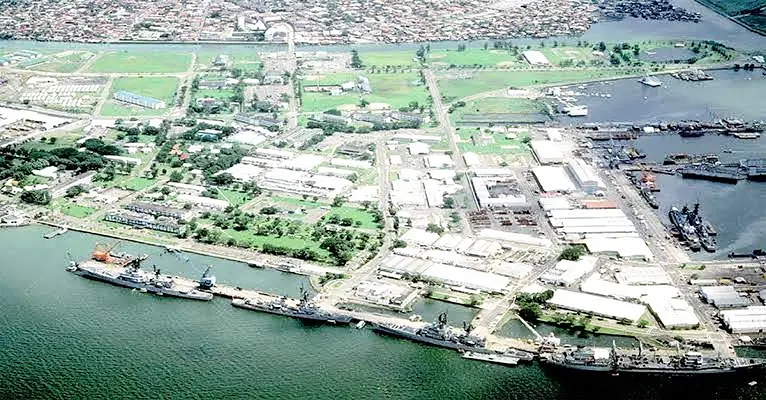
SEZs also trigger development of infrastructure facilities. For example, the United States military bases in Central Luzon, like the Subic Naval Base which is now known as the Subic Freeport Zone.

Adapting to Growth

However, the influx of investment and population growth caused a rapid increase in solid waste produced by the business locators, most of which are engaged in the manufacturing industry.

The good thing though is that Republic Act 7227 (Bases Conversion and Development Act of 1992), the law which created the Subic Bay Metropolitan Authority (SBMA) made sure that the agency overseeing the ecozone has the power and autonomy to address anticipated environmental concerns which include waste disposal, pollution, preservation of Subic’s natural ecosystem, energy efficiency and carbon neutrality.

Speaking of carbon neutrality, what makes the Subic Bay Freeport Zone unique is the existence of a roadmap to keep the area a carbon neutral economic zone by 2040. 

SMBA Up-Close

Overseeing the Subic Bay Freeport Zone is not as easy as many would think it is since the SBMA is duty-bound to strike a balance between economy and environment as negligence may prove tragic to both marine and landmass in the area.

The SBMA has the unique authority (as provided under its mandate) to regulate environmental matters within the Subic Bay Freeport Zone. However, the Department of Environment and Natural Resources (DENR) is keeping a crucial role which is to ensure compliance to national standards and environmental protection.

Under a framework of cooperation and integration, the SBMA takes the role of an implementer, while the DENR provides overarching guidance, ensures effective environmental management while fostering economic growth and sustainability.

Additionally, the DENR ensures environmental regulations are tailored to the specific context of the Freeport Zone, balancing environmental protection with the zone’s economic development objectives.

Broader Mandate

SBMA is not just a specialized agency. It’s more like an autonomous government overseeing all aspects under a “small republic.” Its mandate also covers regulatory functions if only to make sure that the ecological integrity at the Subic Bay area is never compromised.

Itr has its own Environmental Management System (EMS) Manual which provides a detailed framework for the agency’s environmental protection and sustainable development efforts. 

Procedures and guidelines for environmental impact assessments, pollution control, waste management, and other critical aspects of environmental management within the zone, to name a few.

SBMA has the authority to regulate port locators and assess their environmental compliance, as provided for under the SBMA Charter, which also covers issuance of Environmental Compliance Certificates (ECCs) since the Subic Bay Freeport Zone is a “protected area.” 

International Standards

Critically, its authority extends to ensuring environmental compliance in line with international laws, agreements, and conventions. 

As a responsible member of the global community, the Philippines is expected to uphold  international obligations regarding environmental protection by incorporating relevant provisions of international environmental agreements into its policies and guidelines, ensuring that businesses operating within the zone adhere to global best practices.

Interestingly, not all types of businesses are allowed to operate inside the Subic Bay freeport as the SBMA maintains an embedded system to detect “money businesses” like piracy, unfair labor practice, smuggling, delinquency, among many other “red flags.”

Protecting Locators

SBMA is not limited to regulatory powers as the specialized agency also wields power to protect legitimate business locators from undue interference by external agencies, such as the Bureau of Customs (BOC), in matters pertaining to environmental compliance. 

In some instances, BOC tried to seize goods based on alleged violations of DENR administrative orders. Under its mandate, the SBMA may intervene and ensure that any actions taken against port locators are justified and aligned with the Freeport’s specific environmental regulations. 

The protective role is deemed necessary in maintaining a stable and predictable business environment within the zone, encouraging investment, and promoting economic growth.

On Key Budget Cuts On Education, Health

0

Congress’ bicameral committee cut down the respective original 2025 budgets on education and health. 

DepEd’s budget was reduced by nearly P12-billion from P748.6-billion to P737-billion. CHED’s budget was reduced by P3.4 billion from its 2024 budget of P36.7-billion. SUC’s budget was reduced by 5.8-billion, ending with only P122.2-billion. 

It’s a great letdown for the Filipino people, as budgets for the DPWH and the DND were given huge allotments. This was carried out, deceitfully (as social media enthusiasts described it) as the legislators ignored calls for a transparent session open to the public, aware that their tax-money has been funding such legislative meetings.

At the same session, a zero budget was allotted to the Philippine Health Insurance Corporation (PhilHealth). 

Anti-People Decision

This zero budget effectively strips the premium of tens of millions of PhilHealth’s indirect contributors, namely, the poor, the senior citizens, and the PWDs, and thus makes the direct contributors, many of whom are from the working class, bear the sole burden of funding PhilHealth. 

In fact, this anti-people decision by the bicameral committee was strongly condemned with a Public Statement by more than a hundred CSOs, NGOs, Partylist groups, and concerned citizens. They pointed out, among other arguments, that the lawmakers practically decided in violation of the Sin Tax Reform Law and the Universal Healthcare (UHC) Act. 

Noteworthy, too, is that mobilizations were carried out calling for the bicameral committee to meet again to make the necessary pro-people corrections on the budgets of PhilHealth, DepEd, SUCs, UP, Ched, as well as adjustments on the DPWH and DND budgets. 

Surely, the development of people, especially the children and youth, in terms of their physical health and personal educational growth, are obviously much more important than infrastructures and confidential funds for Red-tagging, EJKs, or imagined threats to national security.

Did lawmakers practically decide in violation of the Sin Tax Reform Law and the Universal Healthcare Act.

A Healthy Environment

Education and Health of the Filipino people are the key foundational concerns of any government administration. The level of education of the people of any nation serves not only as the springboard of creativity, but the necessary steady engine, as it were, of new ideas, new inventions, new technologies that lead to progress in various fields of endeavors. 

Primary target for development, as history has shown, has been the need for eliminating diseases and maintaining the health of the people – to ensure a healthy environment and a robust economy for society. 

With a healthy population, any society with its top leadership can then focus its development efforts in the many key fields of concerns, and most importantly, on the education of the people. 

An educated population cannot but lead to responsible citizens, who are able to acquire decent jobs, be productive and be able to contribute to a healthy economy. 

A sustainable economy can bring about, in turn, a progressive spiral of advances in the various fields of endeavors of society, especially in medical science. This cannot but lead further to maintaining a healthy population – and on to a progressive country.  

Heartless Leaders

Education where knowledge starts and is sustained spells POWER – particularly to minimize, if not eliminate the evils that hound a society. 

An educated and healthy population cannot but lead to a society’s progressively healthy growth in its politics, continuing robust economy and even the preservation and enrichment of its culture. 

Can’t our lawmakers craft laws and come up with realistic budgets that should benefit the people and the country as a whole? Their basic job is essentially to improve the lives of all Filipinos, as called for in their mandate as government officials. Such has been the people’s expectation from their representatives in Congress for too long. 

Are they a heartless bunch of leaders for the people?!

Kadiwa As Bridge To Smuggling

0

THE BIG PUSH by the Department of Agriculture to sell imported rice (not local ones) and other basic food items confiscated from the ports by Customs authorities in Kadiwa centers smells rather fishy to me.

Smuggling has intensified in recent months, esp. with the approach of Christmas season, and the DA has been confiscating what it calls imported products without the necessary permits from agencies like the bureaus of plant industry (rice, veggies and fruits), animal industry (pork, chicken, and beef cuts) and fisheries (for fisheries and aquatic products) yet most of these are being impounded in ships after weeks that consignees do not claim them.

Instead of allowing these to rot, the DA asked the BoC to release the rice stocks for victims of calamities and other emergencies but the bulk goes to Kadiwa stores, purportedly to be sold to low-income consumers.

Into Whose Pocket

But what is surprising is that in previous Kadiwa operations (of President Marcos, Sr.), the Kadiwa placed a purchase limit of two to five kilos per buyer to ensure that more people will be able to benefit from cheaper rice.

In today’s Kadiwa operation – which by the way also expanded to MRT North EDSA and LRT Monumento stations – there is no limit to the volume of rice to be bought and the DA even allows merchants to resell them which makes it suspicious. 

Exactly what volume of smuggled and seized rice are we talking about for the Kadiwa outlets? Are they really smuggled or just being seized by the government for its own coffers or for someone else’s pocket.

Exactly what volume of smuggled and seized rice are we talking about for the Kadiwa outlets?

Ensured Access

The Kadiwa was conceived during the time of Marcos Sr. to ensure a ready market for local producers of food crops like vegetables, fruits and rice to be sold to low income consumers with volume limits so that more can buy these items. 

The DA has been hyping that it would be adding 71 more Kadiwa stores by the end of December. There are 108 existing KNP (Kadiwa ng Pangulo)  centers nationwide, which DA aims to increase to 179 by December and 300 by mid-2025 with the ultimate goal of reaching 1,500 KNP centers by the end of the Marcos administration.

As instructed by the President, the DA must ensure accessibility and strengthen KNP operations so more people can buy food products at lower than prevailing market prices.

Prices of agricultural products normally spike after the onslaught of typhoons due to problems with supply. And with the Yuletide just around the corner, prices have been soaring because of heavy demand and short supply from the damage wrought by the typhoons.

Laundering?

The expansion of KNP centers can be done in partnership with other government agencies, such as the Philippine Carabao Center (PCC) and National Housing Authority (NHA) which offer venues that can be converted into KNPs.

The DA is also eyeing the Philippine Postal Corp. (PhilPost) as a major partner in reaching the target 1,500 expansion of KNP centers.

PhilPost has offices near municipal centers and near population centers and it has trucks that can be used to bring the goods to the Kadiwa stores.

Logistics-wise, Philpost is in the best position to help us be able to transport all these goods in various areas in the country, a DA official said.

With the Kadiwa, all smuggled goods seized by the government will now find their way to the legitimate market making the Kadiwa a bridge for smuggling as it legitimizes the sale of confiscated goods.

Somehow it seems to me like laundering a confiscated illegal product through a legitimate government entity, the KNP.

With Power and Wealth, the HECK with Responsibility

0

MANY SUCCESSFUL AND POWERFUL people in their ivory towers are wont to do away with responsibility, thus ushering their fall.

Winston Churchill said: “The price of greatness is responsibility.”  In the same vein, Michael Korda, editor-in-chief of Simon and Schuster, suggested, “Success on any major scale requires you to accept responsibility. In the final analysis, the one quality that all successful people have in common is the ability to take on responsibility.”

Voltaire, a towering figure of the French Enlightenment, put it most succinctly: “With great power comes great responsibility.”

On the other hand, Lord Acton boldly exclaimed, “Power corrupts, and absolute power corrupts absolutely.”

Verily, thus, responsibility is an essential element in both the attainment and management of power and success – and this has been long recognized by great men and women.

Don’t Blame Others

Taking responsibility for your choice, decision and action will keep you on track of your end-goal and, at the same time, from falling into the trap of finger-pointing or blaming others.

Lou Ludwig, author and inspirational speaker, said it beautifully: “The price of success comes with responsibility; (persons who want) to succeed takes 100 percent responsibility for their actions. Staying on track may not be easy; but they stay focus on their desired outcome. 

When things go wrong, they don’t blame others; they take the responsibility to find the solutions and get things back on track. If you want to create a life of success and greatness, you have to take responsibility of the results.”

After attaining success or power, responsibility becomes even more imperative. The higher you go in the ladder of success or in the totem pole of power, the greater demand on you to live up to your responsibilities. The more successful you are in life, the greater your power and influence, but also the more complex and multilayered your responsibility becomes.

Taking responsibility for your choice, decision and action will keep you on track of your end-goal and, at the same time, from falling into the trap of finger-pointing or blaming others.

Actions Matter

However, truth be told, for others who are most successful, they would rather cling to power even if it means turning their back on responsibility.

What could be behind their behavior?

The most obvious explanation is greed or “wanting more and more for oneself”, which impels one to manipulate and take advantage of others.

Thus, instead of opting for the high ground – that is, exercising responsibility – powerful and successful people tend to go low.

It is worth reckoning: What’s the point in being wealthy or powerful, wanting more and more for yourself, when people around you are wallowing in poverty because of your unbridled greed or, at the least, apathy?

A Better Place

People will remember not your wealth, but your actions.

To paraphrase Steve Mueller, a management specialist: “It is not the immense wealth, assets or tangibles that people will remember about the departed. It is their actions, especially if such have made a difference in other people’s lives. Not the amount of money and luxury goods they amassed in their lifetime. 

People will not remember your wealth, but the way you invested this money, either for yourself and your family, or in making this world a better place to stay.”