


FOR THE LONGEST time, news about oil price hike has always been regarded as earthshaking amid resistance from the public transportation sector.
Just over the weekend, the Department of Energy – Oil Industry Management Bureau (DoE-OIMB) announced a huge adjustment on the price of petroleum products — plus P9 per liter for gasoline, additional P19 for diesel and P31 per liter for kerosene.
The add-ons, which is equivalent to around 20 to 40 percent increase as compared to the average price per liter in February, made consumers– meaning all of us– noisy because of its impact on mobility, ability to buy food and other basic commodities, pay utilities and enjoy comfort.
The final oil price hikes will be announced today but oil firms have been adjusting their pump prices every week to reflect movements in the world oil market.
From March 6 to 9, gasoline products range from P49 to as high as P76.5 per liter, diesel costs anywhere from P49 to P79.90 per liter, while kerosene price is at least P78.9 to as high as P99.89 per liter.

POOR MAN’S FUEL
Kerosene is the most used item in the remote areas of our country, rural communities depend on kerosene for cooking and lighting their homes.
Being the poorest of the poor, they are the ones carrying the heaviest brunt of oil price adjustments because of instabilities in geopolitics and ongoing global armed conflicts. They, too, have the most inaudible voices in our society.
We hear the loudest and most vehement cries from urban populations who use mostly diesel for public transport (motorcycles, tricycles and even diesel-fed PUVs) and gasoline for the most affluent people whose SUVs outnumber public transport on our roads, thus adding to the daily angst of the urban poor and struggling middle class.
HISTORICAL TREND
Based on historical trends and recent DoE data, kerosene prices in the Philippines have not always been higher than diesel and gasoline since the Marcos Sr. era.
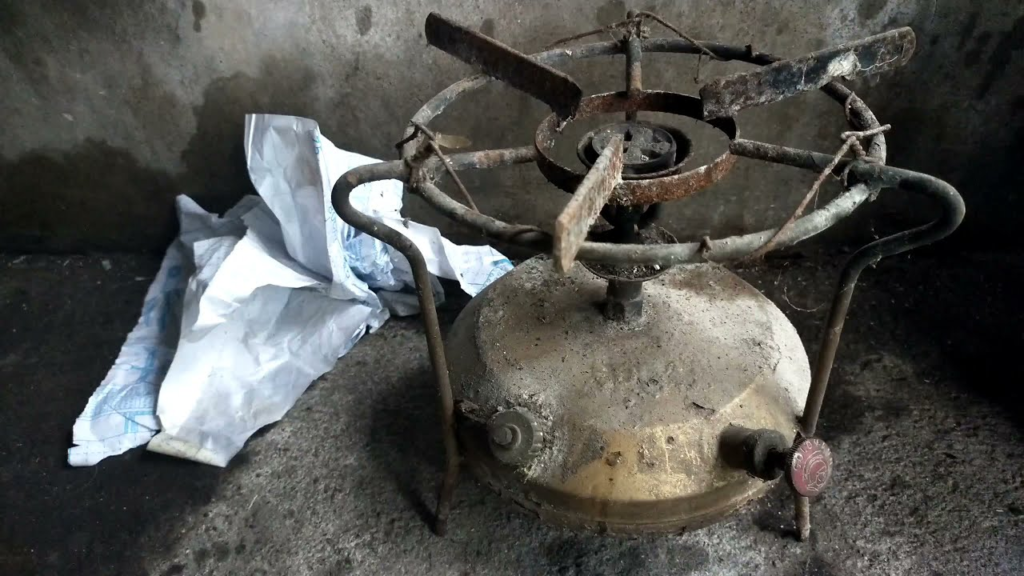
While kerosene is currently often priced higher per liter than both gasoline and diesel (as of 2025–2026), this is a function of current market conditions, specific tax structures, and, historically, lower demand volumes compared to transportation fuels.
Below is the breakdown of the historical and recent price dynamics:
1. Marcos Sr. Era (1965–1986) saw a fuel crisis marked by significant and sharp increases in oil prices because of the global oil crisis of 1973 and 1978, rather than a consistent, higher-priced hierarchy for kerosene.
During this period, the oil industry was not yet deregulated and the government controlled and dictated oil prices.
Kerosene, often considered a household staple for lighting and cooking, was sometimes subject to subsidy or price-fixing to protect lower-income households, keeping it cheaper than automotive fuels.
2. Post-Deregulation (1988) to Present. In recent years, particularly during times of high volatility, kerosene has become more expensive than diesel and gasoline. For example, as of early 2026, kerosene prices were reported in the range of P71to P81 per liter, often exceeding both.
Kerosene is often higher now because it is not used as widely as gasoline or diesel and is thus treated as a specialty product with less competition and lower volume, leading to higher retail margins. It is also often subject to different excise tax rates under recent tax reform laws (like TRAIN).
SUPPLY AND DEMAND
Prices shift rapidly. There are instances where gasoline or diesel prices have risen faster than kerosene due to high demand or supply shortages, leading to situations where diesel becomes more expensive than kerosene temporarily.
In Metro Manila for instance, between 2022 and 2026, kerosene was always priced highest per liter at P71 to P81. Diesel fluctuates heavily sometimes exceeding kerosene during supply shocks like P83 to P92 in June 2022.
Gasoline is often slightly cheaper or the same as diesel prices but is frequently lower than kerosene depending on octane.
The narrative that kerosene is always higher is a more recent phenomenon, whereas, during the Marcos Sr. era, all fuels surged together during crises, with government intervention heavily influencing the relative prices.
FAIR PRICING POLICY
“We recognize that the industry operates under challenging global conditions, and we appreciate those who continue to act responsibly. At the same time, we will not allow any party to take advantage of the situation. Fair pricing and adequate supply are a commitment to every Filipino whose daily needs depend on it,” DoE Secretary Sharon Garin told the Business Mirror.
Senator Sherwin Gatchalian urged the DoE to strictly monitor retailers and oil companies for possible profiteering amid what he described as an “energy crisis” stemming from the escalating conflict in the Middle East.
Current oil industry inventory is good for 50 days, the DoE said, adding that the industry should not jack up pump prices that quickly.
Data from Sen. Gatchalian’s office show that from January to March 4, gasoline pump prices increased by 13.7 percent, from P55 to P62 per liter. Diesel prices rose by 41.4 percent, from P54 to P76 per liter, while kerosene prices went up by 43 percent, from P79 to P114 per liter.
GREEDY RETAILERS
The DoE has already sought the assistance of the Department of the Interior and Local Government (DILG) and the Philippine National Police (PNP) in intensifying monitoring activities at gasoline stations nationwide.
The DoE field offices in Luzon, Visayas and Mindanao have ramped up on-site inspections to verify compliance with fuel pricing directives and the responsible sale of petroleum products.
It also enjoined oil companies, gasoline stations, and downstream oil industry participants to comply with existing fuel pricing rules and anti-hoarding regulations amid continued monitoring of global oil market developments.
President Marcos Jr. ordered the DoE to ensure the orderly sale and distribution of petroleum products and to prevent hoarding, profiteering, and any premature or unauthorized price. The government will not tolerate any attempt to exploit the present situation at the expense of the Filipino public.
UNAUTHORIZED HIKES
Gasoline stations are not allowed to implement unscheduled or unauthorized price increases outside established pricing adjustments.
Oil companies have likewise been directed to ensure that company-owned and dealer-operated stations strictly comply with DoE directives, including any duly authorized staggered price adjustments, where applicable.
Batas Pambansa Blg. 33, as amended by Presidential Decree No. 1865, prohibits hoarding and other abnormal or illegal sales practices involving petroleum products.
In line with this, the DoE reminded all concerned establishments that acts intended to withhold supply, manipulate distribution, or circumvent lawful pricing and sales practices are subject to corresponding administrative and criminal sanctions under existing laws.
All retail stations must dispense petroleum products in accordance with existing rules and safety regulations to prevent any hoarding activities.
EXTRA CONTAINERS
To prevent panic-buying, hoarding and other similar acts, the government cited the need for gasoline stations to dispense fuel products directly to the vehicle’s built-in fuel tank, even as the DoE hinted at restricting loading of petroleum products in separate containers.
The agency warned against practices such as improper container loading, “bote-bote” sales, and the filling of drums, gallons, or other containers for purposes of stockpiling to ensure and preserve the fair distribution of fuel in the market.
Violations may result in the revocation of the certificate of compliance or license to operate, suspension or cancellation of business permits, and the imposition of other applicable administrative or criminal penalties under existing laws and regulations.
ELECTRICITY MARKET
The Energy Regulatory Commission (ERC) recently met with the Independent Electricity Market Operator of the Philippines (IEMOP) to discuss electricity market simulations assessing the potential impacts of escalating tensions in the Middle East on Philippine power prices.
IEMOP presented projections indicating that higher global fuel prices could place upward pressure on electricity prices in the Wholesale Electricity Spot Market (WESM), particularly if global supply disruptions persist.
The simulations examined scenarios involving increases in international coal, oil, and liquefied natural gas (LNG) prices, as well as possible supply constraints in the power system. The analysis indicated that higher fuel costs could lead to increased WESM clearing prices as generators reflect higher fuel costs in their market offers.
“This is part of our proactive approach,” ERC Chairperson and CEO Atty. Francis Saturnino C. Juan said, adding that such stress tests enable them to understand possible risks early and ensure that consumer protection mechanisms are in place should global fuel volatility persist.”
Global fuel markets have experienced volatility amid heightened geopolitical tensions affecting global oil and LNG supply routes, including developments around the Strait of Hormuz—a key maritime corridor through which about one-fifth of global oil and LNG shipments pass.
PH’S ENERGY MIX
The Philippines’ energy mix relies significantly on coal and LNG, making the power sector sensitive to international commodity price movements.
According to IEMOP’s analysis, higher fuel costs alone may exert upward pressure on prices in the WESM, where electricity is traded in real time. Price pressures may intensify under scenarios involving forced outages of large generating units, which could tighten supply.
A forced outage refers to the unexpected shutdown of a power plant due to technical issues. When supply becomes constrained, more expensive generators may set the market price.
The ERC emphasized that existing regulatory safeguards and market protection mechanisms remain operational, including the secondary price cap (SPC) mechanism, which is automatically triggered if sustained price spikes breach regulatory thresholds.
The commission also directed IEMOP and ERC Market Operations Service (MOS) to closely monitor market activities and promptly report any unusual or suspicious behavior in the market. The directive aims to ensure that no participant abuses market power or takes advantage of prevailing market conditions, particularly during periods of heightened global fuel price volatility.
The ERC added that early assessment of potential market scenarios allow the ERC to prepare mitigating or contingency measures, if warranted, to help cushion the impact of external shocks on electricity consumers.
“Our priority is to protect consumers from undue price volatility while ensuring a stable and reliable power supply. Preparedness remains important given the Philippines’ exposure to global energy markets,” said Juan.