


STOP THE FIGHT whether the national food should be adobo or sinigang. There’s also been this long-standing debate whether to standardize popular Filipino foods or not. Ceasefire, already!
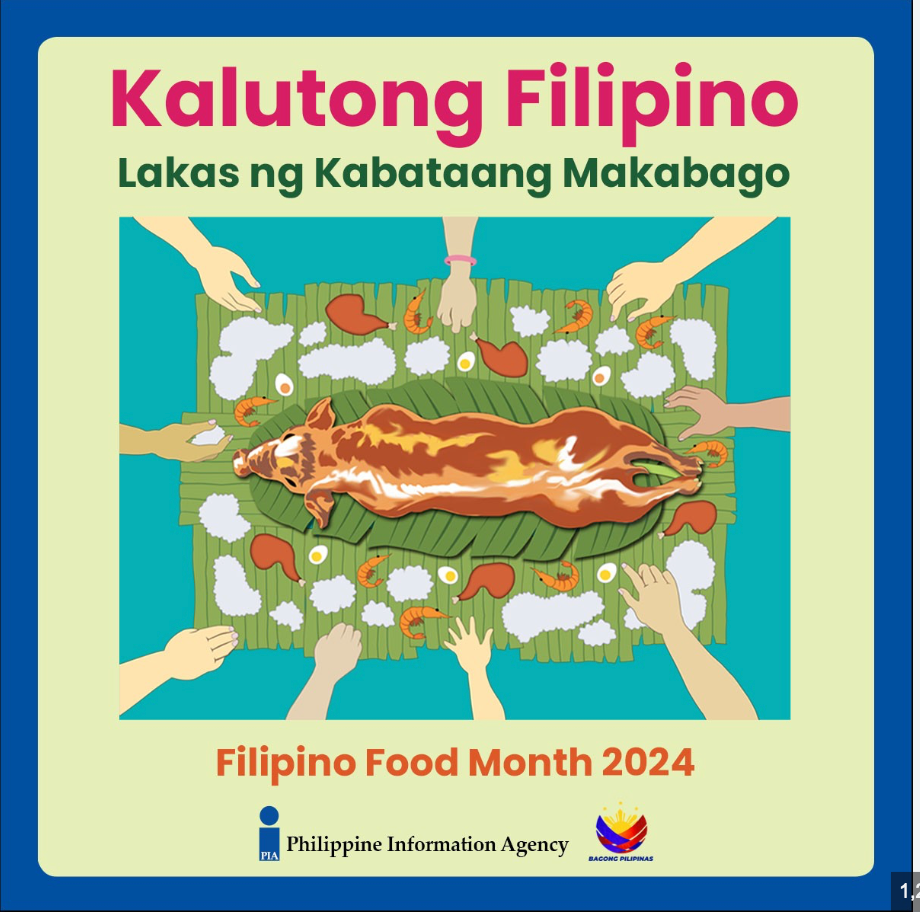
The month of April focuses on the importance of everything Filipino in terms of gastronomy or the food we all share and are proud of. The celebration highlights the intersection between food and culture. It is a fun and effective way to learn about ourselves and the rich culinary heritage of all the regions in the archipelago.
Presidential Proclamation 469 s.2018 declares the whole month of April every year as “Buwan ng Kalutong Pilipino” or Filipino Food Month (FFM) to promote, appreciate, preserve culinary treasures and tradition and ensure its transmission to future generations as well as support the different industries that benefit therefrom like farmers, agri-communities, et cetera.
‘It was disappointing to have found very few references on Filipino cuisine. And do culinary students use them? Hardly, if ever. Is there even a separate course on this subject not integrated on Asian cuisine?’
REGIONAL GASTRONOMY
In the history of Filipino cuisine, it is almost common knowledge already that Ilocos is known for pakbet, bagnet, dinakdakan, longganisa and basi.
Pampanga had long been called the culinary capital of the Philippines and home to sisig, morcon, bringhe, tapa and tocino. Batangas for kapeng barako, goto, and panutsa; Bulacan for pastillas and kakanin; Bicol for ginataan dishes with sili; Cebu for chorizo, lechon and puso; Iloilo for batchoy, inasal, and pancit molo; Bangsamoro for pastil, piaparan, satti, and a lot more.
These are just a few of our food that comes to mind. The point is, food has become one of the identifying characteristics of a place, but how much have we learned about Filipino food?
Sometimes we laud the taste and goodness of other places without first exploring and trying out our very own. We cannot be so proud of our gastronomy if we know so little about it. This month is perfect for getting to know our food.
CULINARY HERITAGE
For the culinary heritage to reach the future, our children need to be familiarized and educated about it.
The home can be a starting point. Teach children about your food culture. You might be surprised at how the love for food and pride in the family’s or town’s recipe can boost sense of active citizenship and nationalism.
It is not difficult to teach something to the young ones if we will just keep the communication open in time for dining. It doesn’t only connect emotions but create memories that will forever be treasured. Even the simplest pandesal can teach history and culture without prodding.
Everybody eats. If we keep talking with sense about food, we will not run out of topic during conversations. Discussions may even lead to stories about ancestors. Food can only be the starting point of a really meaty exchange of memories or ideas with your family, friends, or even strangers.
FILIPINO CUISINE
One sad note on the education of Fiipino food is that it is not made known as much as other Asian food. After having our Focus Group Discussion (FGD) at Our Lady of Fatima University on this topic with chefs on cruise lines, I decided to look for books on culinary arts in the different bookstores in Metro Manila.
It was disappointing to have found very few references on Filipino cuisine. And do culinary students use them? Hardly, if ever. Is there even a separate course on this subject not integrated on Asian cuisine? The Commission on Higher Education and the Philippine Congress can do something about this. We should be promoting, popularizing, and preserving our own gastronomic heritage.
We usually use in the kitchen what is bountiful in our community. FFM should also be a time for looking into the sustainability of the raw materials that we consume.
Taking care of riverine and marine environment that provide food should not be left behind.
Growing plants that we always have on our tables so that we don’t run out of supply is one way of keeping the food “in circulation.” When we lose the ingredient, we lose the authenticity of the recipe we have inherited from our elders. After all, Filipino Food Month is not just about food.
It all boils down to taking care of the earth where our foods come from.
#GemSuguitan
#CulinaryIdentity
#AprilFoodCulture
#BuwanNgKalutongPilipino
#FilipinoFoodMonth
#culinaryheritage