Friday, June 26, 2026
Home Blog Page 11

Vice Mayor Who Faked His Death, Caught In Manila

0

FOR 10 LONG years, residents of an island municipality in Quezon Province were under the impression that former Polillo Vice Mayor Ramil Pancho Fajardo died in a freak accident in the high seas.

However, recent developments showed otherwise, and from how it looks, Fajardo, who is facing a string of swindling cases in court, faked his death to evade arrest.

In a spot report submitted by the Criminal Investigation and Detection Group (CIDG) northern sector, Fajardo was arrested on April 16 in Binondo, Manila by virtue of an arrest warrant issued by Lucena City Regional Trial Court Judge Dennis Orendain.

NOTORIOUSLY FAMOUS

Fajardo is accused of estafa (via falsification of public documents) which dates back 2010.  The court did not recommend bail provision for the former vice mayor.

Interestingly, The PH Insider also discovered that Fajardo has already been convicted and sentenced by the Infanta RTC Branch 65 to 12 to 20 years of imprisonment for scamming a private corporation engaged in the business of desiccated coconut.

In January 2011, hard-hitting broadcast journalist Ben Tulfo also tagged Fajardo for usurpation. 

According to Tulfo, Fajardo, who introduced himself as his staff, solicited and collected protection money from a long list of businessmen, government officials and even crime syndicates. Fajardo, he added, used fake ID purportedly issued by his media entity Bitag.

ENTITLED DETAINEE

According to an Insider, Fajardo has remained under the CIDG custody since his arrest on April 16.

When asked about Fajardo’s condition, the source said: “Andun pa rin sa CIDG north sector, sarap buhay… pinapayagan gumamit ng cellphone. 

Under existing rules, fugitive from justice – especially if convicted — should be brought to the court, which in turn will issue a commitment order for the transfer of the convict to the Bureau of Corrections (BuCor) to serve jail time as stipulated under the promulgation.

“Ang nakakapagtaka, hindi pa yata alam ng korte na nasa CIDG custody na yung tao [Fajardo] kaya hindi pa maibiyahe sa Munti,” he added.

EASY WAY OUT

Since 2003, several high-profile cases in the Philippines involve individuals faking their deaths to evade criminal liability or financial debt, often using fraudulent documents or staged scenes.

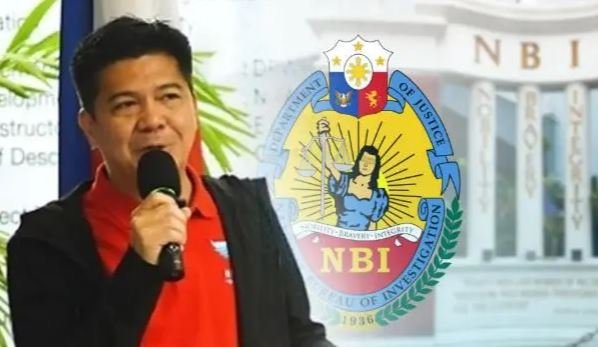
Notable cases include that of textbook scam suspect Mary Ann Maslog who faked her death to evade a P24-million graft case. She lived under the alias “Jessica Francisco” for five years and even convinced her own child to report her as dead before being rediscovered by the National Bureau of Investigation (NBI) in 2024.

Pajero lady Maria Lourdes de Guzman, known for high-profile robberies, also faked her death in 2003 to evade authorities before being captured in 2005. 

A woman in Isabela went viral in March 2026 for allegedly faking her death—including sending a photo of herself appearing lifeless—to avoid paying debts.

Elizabeth Greenwood, researcher who, as part of her research for a book on death fraud, officially faked her death in the Philippines using “death kits” purchased for roughly £350, which included buying an unclaimed corpse from a morgue.

‘Pakitingnan-Tingnan Muna: When Trust Becomes A Legal Obligation

IN MY PREVIOUS column, I talked about the contract of commodatum — a situation where a person lends a non-consumable thing to another person for temporary use, with the legal duty to return the exact same thing afterward. I hope that you learn that ordinary acts of borrowing among friends or acquaintance may already create civil obligations.

This time, let us discuss another common but often unnoticed contract under the Civil Code of the Philippines: the contract of deposit.

On the surface, deposit may look simple.

Friend, pakitingnan nga muna ng phone ko.”

Pakiingatan muna ng bag ko.”

Makikiiwan muna ako ng gamit sa ‘yo.”

The above-stated statements sound casual, spontaneous, and meaningless as we often encounterthem almost every day inside classrooms, offices, homes, and even coffee shops.

But, my dear Legal Classroom readers, legally speaking, those words may already create a binding contract.

‘The law requires the depositary to safeguard the property and return it when demanded. Article 1972 emphasizes that the depositary is obliged to keep the thing safely and return it to the depositor or the person designated in the contract.’

ENTRUSTMENT

Under Article 1962 of the Civil Code, a deposit exists when a person receives a thing belonging to another with the obligation of safely keeping it and returning it later. Put simply, deposit is based on entrustment.

One person temporarily places property under the care of another person, not for use, not for sale, but principally for safekeeping.

But before we continue, let us clarify one common misconception.

The “deposit” being discussed here is not the same as a bank deposit.

People assume that when they place money in a bank, the bank merely keeps the exact same money for safekeeping. Legally speaking, that is not accurate.

Under Article 1980 of the Civil Code, fixed, savings, and current deposits of money in banks are governed not by the law on deposit, but by the rules on contract of simple loan or mutuum.

Why?

Because in bank deposits, ownership of the money passes to the bank. The bank may use, invest, or lend the money to others, subject to banking regulations. What the bank owes the depositor is not the exact same bills or coins deposited, but an equivalent amount.

Hence, the relationship between the bank and the depositor is actually a debtor-creditor relationship. The bank becomes the debtor. The depositor becomes the creditor.

That is totally different from the ordinary contract of deposit under the Civil Code where the exact thing deposited must generally be returned because ownership remains with the depositor.

CONTRACT OF DEPOSIT

Now let’s go back to ordinary deposit.

If your friend gives you a laptop so you can use it for online classes, that may be commodatum. But if your friend merely asks you to keep the laptop safely while she travels abroad, that is a contract of deposit.

The law distinguishes between the two because their purposes are different.

And here is something a lot of people do not know: a contract of deposit does not need to be written. Article 1969 expressly provides that a deposit may be entered into orally or in writing.

So yes, even oral agreements among friends may already carry legal outcomes.

Now let us discuss the duties of the depositary — the person entrusted with the thing.

The law requires the depositary to safeguard the property and return it when demanded. Article 1972 emphasizes that the depositary is obliged to keep the thing safely and return it to the depositor or the person designated in the contract.

In other words, when you accept another person’s property for safekeeping, you also accept responsibility.

And remember, you cannot just use the thing whenever you want. Article 1977 clearly states that the depositary cannot use the thing deposited without the express permission of the depositor.

This means that if your friend entrusted you with a motorcycle for safekeeping, you cannot casually use it for errands, road trips, or late-night rides unless you were clearly authorized.

ANCHORED ON TRUST

Why is the law strict about this? Because deposit is anchored on trust. The law protects the confidence given by one person to another.

As a matter of fact, Article 1979 provides that the depositary may even become liable for loss caused by a fortuitous event if he used the thing without permission or delayed its return.

That means even an unforeseen event like fire or flood may not excuse liability if the depositary violated the terms of the deposit.

Another interesting application of deposit happens in hotels.

Many of us have seen notices saying: “Management is not liable for lost belongings.”

But under the Civil Code, hotels and inns are considered depositaries of the belongings of their guests under what is called a necessary deposit. Articles 1998 to 2003 discuss the liability of hotel keepers for the effects brought by guests.

More importantly, Article 2003 states that hotel keepers cannot free themselves from liability merely by posting notices disclaiming responsibility.

In essence, the law recognizes that travelers are often compelled to trust hotels with their belongings. At its core, the law on deposit teaches a very practical lesson: trust creates accountability.

The moment somebody entrusts property to you, the law expects honesty, diligence, and responsibility. Be reminded that you may already be entering into a legal relationship recognized by the Civil Code of the Philippines.

And sometimes, if not most of the time, the simplest favors carry the heaviest responsibilities.

Class dismissed!

#ThePhInsider

#LegalClassroom

#AttyEduRiparip

#Entrustment

#commodatum

#CivilCodeOfThePhilippines

#ContractOfDeposit

Be Unforgettable: Without Trying

You know what actually makes someone unforgettable? It’s not being the loudest. Not the smartest in the room. And definitely not trying to impress all the time.

The Back Story 

It’s something simpler. You make people feel like the moment with you matters. Not in a big way. Just in a real way.

And that’s where most people miss it. They think unforgettable is about standing out.

But in real life, it’s about how people feel with you. 

  • Seen. 
  • Heard. 
  • At ease. 

That’s what stays.

What Actually Sticks

People don’t remember “perfect.” They remember how they felt around you.

Were they rushed? Judged? Or relaxed… like they could just be themselves?

That feeling stays. 

  • Not your words. 
  • Not your achievements. 
  • Just the moment.

Presence Over Performance

Most people try to be interesting. But the ones you remember? They’re just present.

They don’t rush to fill silence, force clever replies, or perform for effect.

  • They just stay in the moment.

Presence makes the difference.

Clarity Wins

People think you need to say more. But it’s the opposite.

  • The ones who stand out make things simple. 

They don’t over-explain, confuse you, or try to sound important.

  • They make things clear.

And clarity builds trust fast – because simple is easy to follow.

Real Beats Perfect

Some people try too hard. They try to impress, say the right things, and win the moment.

But real connection doesn’t work like that.

It happens when the pressure drops. When you stop performing. When you just get curious.

  • It feels like two humans talking, not two people trying to impress each other.

That’s what people remember. Not what you said. How real it felt.

Magnetic Advantage 

Some conversations feel heavy, others feel light.

The difference is not the topic.

  • It’s making things complicated in your mind.

When you stop overthinking every sentence and stop trying to sound perfect, things start flowing.

  • People open up more. 
  • They relax more. 
  • They stay longer.

Because ease is magnetic.

The One They Don’t Forget

Situation
Job interview. First impression matters.

Before

  • Interviewer: “Tell me about yourself.”
  • Jake: “Uh yes, I have many skills and I’m very hardworking and passionate and—”
  • Interviewer: “Okay…”

Sounds okay… but forgettable.

After

  • Interviewer: “Tell me about yourself.”
  • Jake: “I’m someone who likes solving problems and keeping things simple. That’s where I do my best work.”
  • Interviewer: “I like that.”

Clear. Real. Sticks.

Tip
Don’t impress. Keep it simple. 

When People Pay Attention

Situation
Speaking in front of a group.

Before

  • Leo: “Today I will discuss multiple key frameworks and strategic insights…”
  • Audience: (silent, trying to follow) Sounds smart… but heavy.

After

  • Leo: “Let me make this easy to follow.”
  • Audience: (interested)
  • Leo: “Just focus on this.”

Now it actually makes sense.

Tip: Don’t impress. Keep it clear.

The Moment Things Connect

Situation
Meeting a friend of a friend.

Before

  • Joyce: “Hi, nice to meet you.”
  • Ed: “Yeah, nice to meet you too.” (Silence) Feels stiff.

After

  • Joyce: “Hi, nice to meet you.”
  • Ed: “So how do you know Anna?”
  • Joyce: “Haha depends what you heard!”
  • Ed: “Now I’m curious!” 

It just flows.

TipStay light. Stay natural.

Tips And Techniques 

Unforgettable people don’t try to stand out. Be the person people don’t feel the need to adjust themselves for.

  • No pressure. 
  • No performance. 
  • No noise.

Just presence. And presence sticks.

Remember: Make it easy for others to be themselves.

Loren Legarda’s Bitter Brat Son

NO WORD BEST describes Rep. Leandro Leviste– who talks like a loose cannon against fellow legislators, the President and even his own mother, Sen. Loren Legarda– than what Executive Secretary Ralph Recto said of him as a “bitter brat” and a “natural-born liar.”

The usually smiling Recto minced no words as he got peeved by Leviste’s accusation linking the ‘little president’ to the public works scandal during a privilege speech on Monday as the latter called for an investigation of Recto’s alleged connection with Construction Workers Solidarity partylist Rep. Edwin Gardiola.

In a strongly worded statement, Recto said he decided to finally break his silence due to the persistent slander against him by a “natural born liar.”

Leviste claimed Leandro tried to bribe him (a former senator) with P400 million to persuade his rival (Batangas Gov. Vilma Santos Recto)  in politics to back down.

Leandro offered him and his wife, Batangas Governor Vilma Santos, with P1 billion so she will withdraw from the gubernatorial race so he can replace her. But Recto refused both offers, which piqued Leviste. 

“In his twisted mind, everything is for sale: people, honor, position,” Recto said.

He said Loren Legarda, his mother and a former colleague of Recto in the senate, knows of the said incident and had asked him not to disclose her son’s indiscretions. 

“His mother knows that I didn’t like this conversation, so she apologized to me,” Recto said in Filipino. Leandro eventually got elected after he “engineered a massive vote-buying operation in Batangas,” Recto said.

After being elected, “Leandro” allegedly tried to seize thousands of hectares from the sugarcane hacienda in Nasugbu.

Recto claimed that “Leandro” accused him of having close ties with Gardiola  after the newbie legislator tried to bury the issue of the P24-billion fine slapped on Leviste’s company that he used for “ghost solar projects.”  

The Department of Energy imposed the P24-billion fine earlier this year when Leviste’s  Solar Philippines Power Project Holdings Inc. (SPPHI) failed to deliver its grandiose commitments.

Recto also debunked claims of Leviste about his ties with Gardiola saying that the latter was his political rival and that he has no involvement in any ghost projects as claimed by Leviste. 

He said he is ready to defend himself against claims hurled by a “deranged and dangerous person who will even skin his loved ones, and use their skin to drumbeat his empty achievements to feed his narcissism.” 

“This is a bitter brat. Prone to tantrums, even badmouthing the woman who gave birth to him in front of many people,” Recto said.

In a strongly worded statement on Tuesday, Recto accused the neophyte lawmaker of allegedly attempting to bribe him with up to P1 billion to influence electoral contests and to grab hectares of sugar plantation lands in the province, Inquirer reported.

After offering him P400 million, Leviste again met with Recto “a week later” increasing his bribe offer to P1 billion for his wife to withdraw the gubernatorial race last May 2025 so he could replace her. 

Recto said Leviste’s mother, Sen. Loren Legarda, was “crying” during the meeting.

“Again, I rejected it. It was insulting. It was infuriating. Only my respect for his mother as a former colleague stopped me from exposing him and filing charges,” he added.

According to Recto, Legarda knew he did not appreciate the conversation so she apologized to him.

Leviste ran as an independent and eventually won as congressman for the First District of Batangas during the 2025 polls, against reelectionist Eric Buhain. Santos also won as governor of Batangas.

Recto said he received reports that Leviste “engineered a massive vote-buying operation in Batangas,” unprecedented in history.

When Leviste won the election, he took his oath before Recto, who was then finance secretary, “because he had a persistent desire — to seize thousands of hectares from the sugar hacienda in Nasugbu.”

“I do not have the capacity to allow what is effectively land grabbing. I rejected it again,” Recto said.

“The reason he has been calling for a meeting is to drown his P24 billion debt, the result of his ghost solar projects — his biggest scam against the government and the Filipino people,” he said.

Leviste claimed that Recto spent billions of pesos, alongside CWS party-list Rep. Edwin Gardiola, to campaign for Santos and Luis Manzano in the local elections in 2025. 

How Tanghalang Una Obra finds Derrick Monasterio After Piolo Pascual To Perform As Ibarra

IN THEATER, THERE are several ways to find a diamond in the rough among a bevy of talents.

            One of them is acting workshops where outstanding performances naturally stand out good for the next production.

            The other way is an audition to fit in a role in time for eventual training, script reading, character analysis, building up scenarios etc.

            Still, another is random searches from a multimedia pool of actors.

            GMA Network artist Derrick Monasterio matches the latter manner of discovery to star in a new, invigorated musical.

            As a movie and television actor, Derrick has shown his acting mettle in various styles and depictions.

            In theater, though, Monasterio still has to prove himself as an artist worth one’s salt although he was featured years ago in his stage debut performance in “Rak of Aegis,” a Philippine Educational Theater Association (PETA) iconic musical.

            Obviously, Derrick was only “one of those” in an array of potential musical artists in the stage play.

            He was seen as a latent stage actor who could sing but nothing had come along yet as an exciting theater assignment.

            Until theater director Frannie Zamora was looking for a titular lead in Dr. Jose Rizal’s character-driven literary figure as Crisostomo Ibarra for Tanghalang Una Obra’s “Ibarra….Ngayon.”

            As suggested, Frannie thought of browsing over Monasterio’s digital file videos, one of them a musical cut.

            While watching, Zamora was impressed with Derrick’s potential as a singer in a musical theater.

            “Then I talked with Sparkle, Derrick’s management and his mom Tina Monasterio is a friend. They were convinced of my offer,” said Frannie.

            Finally, Derrick is taking the centerstage and how!

            “Derrick has it. He has the discipline. In our rehearsals, he would take notes of his blockings,” informed Zamora.

            At the moment, the young actor undergoes voice training from music experts couple Camille Lopez Molina and Pablo Molina, the same mentors who trained Piolo Pascual in the role of Ibarra staged by the same theater group three years ago.

            “Ibarra…Ngayon” is slated to run in June at the GSIS Theater in Pasay City.

Easy Win For Duterte In 6-Way Palace Run?

IF POLITICAL SURVEYS are any indicator, the embattled Vice President Sara Duterte would easily win over the 2028 presidential derby — unless contenders consider a coalition that would see a singular bet for the country’s highest elective position.

In a Pulse Asia survey commissioned by the Office of Senator Juan Miguel Zubiri,  VP Sara garnered a whopping 43 percent voter preference, way ahead of Naga City Mayor Leni Robredo with 27 percent and Sen. Raffy Tulfo who landed on the third spot with 19 percent.

The survey, which was conducted from February 27 to March 2, also had three other “presidentiables” on the list of options — Sen. Bam Aquino, Sen. Risa Hontiveros and Interior and Local Government Secretary Jonvic Remulla.

Aquino got five percent voter preference rating, Hontiveros had two percent and Remulla with one percent.

DUTERTE BAILIWICK

VP Sara’s commanding lead has been largely attributed to overwhelming support and family’s political clout in Mindanao where 88 percent of the respondents picked the daughter of former President Rodrigo Duterte in a six-way field of potential contenders.

The Visayan speaking vice president’s clout likewise covered provinces in the Visayas where she garnered 60 [percent voter preference.

However, VP Sara’s numbers declined in Balance Luzon, where she posted just 16 percent, and in Metro Manila, where she registered 35 percent.

VP Sara, who is facing impeachment complaints arising from a political rift with the administration, officially announced in February her intent to run for president in the 2028, with “Tapang at Malasakit” as her battlecry.

SPLITTING LUZON 

Robredo and Tulfo’s numbers combined translates to a whopping 50 percent, which is seven points more than what beleaguered VP Sara garnered.

However, the former vice president and the incumbent senator halved the Luzon vote. Rebredo maintained political support in Balance Luzon with 44 percent while Tulfo got 26 percent.

In contrast, both Robredo and Tulfo showed dismal numbers in Mindanao. Robredo only got three percent in Mindanao, while Tulfo registered seven percent.

The island of Luzon, home to 12 of 15 Philippine presidents, has 55.95% of the voting population nationwide, with Visayas and Mindanao accounting for the remaining 44.05%.

The combined Visayas-Mindanao voting population, however, is also smaller than the voting population of what is referred to as the Balance of Luzon.

PAUPERS’ CHOICE

In determining winnability, the survey also took note of the socio-economic class choice for the next president.

Citing its own data, Pulse Asia said VP Sara remains the preferred candidate among Class E voters, where she garnered 64 percent. Insofar as Class D, the vice president kept 45 percent voter preference on the Class D category.

The so-called intelligent voters under the Class ABC clusters chose Robredo. She secured 45 percent which is more than double of Vo Sara’s 22 percent. Tulfo got 13 percent.

The incumbent senator, who comes from a family of media personalities, posted significant (but still trailing) numbers socio-economic classes. He got 20 percent in Class D and 18 percent in Class E.

K-12: Reform, Reality and Unfinished Promise of PH Education

MORE THAN A decade after the passage of Republic Act No. 10533, otherwise known as the Enhanced Basic Education Act of 2013, the K-12 program remains one of the most ambitious—and most debated—reforms in Philippine education.

It promised transformation: better learning outcomes, stronger skills, and graduates prepared not only for college, but for work and the global stage.

Today, the question is no longer about intent. It is about results.

Did it deliver?

The Promise of K-12

The law expanded basic education from 10 to 13 years, introducing Kindergarten and two additional years of Senior High School.

The objective was clear: address long-standing deficiencies in the system and bring Philippine education in line with international standards.

Senior High School, in particular, was envisioned as a transition point. Students could choose tracks—academic, technical-vocational, sports, or arts and design—aligned with their interests and career goals. In theory, this would bridge the gap between education and employment.

On paper, it was sound policy—necessary reform.

Where the System Struggles

However, as with any reform, policies are not judged by intent—they are judged by outcomes.

Across the country, several issues persist.

First, unequal implementation remains a serious concern. While some schools—particularly in urban areas—offer complete facilities and specialized tracks, many public schools continue to struggle with shortages in classrooms, equipment, and qualified teachers. The reform aimed for uniformity, but in practice, disparities widened.

Second, the financial burden on families cannot be ignored. Two additional years of schooling translate to added costs—daily expenses, transportation, and lost income opportunities. For many Filipino households, especially those already stretched thin, K-12 extended not only education, but economic strain.

Third, the promise of employment after Senior High School has not fully materialized. While opportunities exist in theory, many employers still prefer college graduates. Skills training varies in quality, and certifications are not always recognized or aligned with industry standards. As a result, many graduates pursue higher education—not necessarily by choice, but because they see no viable alternative.

Fourth, learning gaps remain evident. Despite the additional years, concerns over reading comprehension, critical thinking, and foundational skills persist. Time spent in school does not automatically equate to quality education.

Is K-12 Helping or Hurting?

The honest answer is: both.

K-12 has introduced meaningful improvements. It broadened the curriculum and emphasized skills development.

But it also exposed a deeper issue—reform without readiness leads to uneven outcomes.

For some students, the program created opportunities. For others, it simply prolonged the uncertainty between schooling and employment.

Aspiration vs. Reality

One of the strongest arguments for K-12 was global alignment—ensuring that Filipino graduates meet international benchmarks.

That goal remains, at best, a work in progress.

Competitiveness is not determined solely by years spent in school, but by the quality of learning, the ability to innovate, and the capacity to adapt. Without consistency in educational standards, the additional years risk becoming symbolic rather than transformative.

What To Do Next

Abandoning K-12 outright would be a reactive move. Defending it without critique would be equally flawed.

The better path forward is reform—not retreat.

First, strengthen industry linkages. Senior High School must be connected to real employment pathways. Apprenticeships, paid internships, and industry-recognized certifications should be integral, not optional.

Second, standardize quality across regions. Access to facilities, trained educators, and learning materials should not depend on location. Equity must be treated as a priority, not an afterthought.

Third, recalibrate the “employment-ready” narrative. Not all graduates will be immediately job-ready, and policy must reflect this reality. Strengthening technical-vocational tracks and aligning them with actual labor market demands is essential.

Fourth, support parents financially. If the State mandates longer education, it must also ease the burden. Expanded subsidies and targeted assistance programs can make a significant difference.

Fifth, continuously review the curriculum. Education must evolve alongside industry. A static curriculum will always fall behind a dynamic economy.

The Real Issue

The vision behind K-12 was never the problem.

The real challenge lies in execution—how policies are implemented, how resources are distributed, and how outcomes are measured.

Education reform does not end with legislation. It requires sustained commitment, honest evaluation, and the willingness to correct what is not working.

Final Thought

K-12 is neither a complete success nor a failure.

It is unfinished.

And like any unfinished work, it demands improvement—not blind defense, and not outright rejection.

If we are serious about preparing Filipino students for the future—whether in local industries or the global arena—then the conversation must move beyond politics and into solutions.

Because in the end, this is not just about a program.

It is about the future of every Filipino child.

AFP, On A Warpath?

“2 FIL-AMS, 2ND UP STUDENT AMONG SLAIN ‘NEGROS 19” – Inquirer Headline. “The Commission on Human rights is looking into the April 19 encounters at Negros Island as more fatalities were identified as civilians—University of the Philippines (UP) student Maureen Keil Santuyo and Filipino Americans Kai Sorem and Lyle Prijoles.” “The Philippine Army has maintained that all 19 individuals killed in the series of encounters with members of the 79th Infantry Battalion were NPA combatants, including ranking rebel figures in northern Negros.”

US-based activist groups, Anakbayan-USA and Bayan-USA claimed Fil-Ams Sorem and Prijoles were immersing themselves in marginalized farmingcommunities, essentially to learn from them about their life-struggles and provide help in some way.  

The University of the Philippines Open University (OPOU) said that “Ms. Santuyo was known among her peers as a compassionate youth advocate who committed to supporting and working with marginalized agrarian communities.” “Also killed in the April 19 clashes were Alyssa Alano, a peasant organizer and councilor of the UP Diliman University Student council, and RJ Nichole Ledesma, a cultural worker, journalist and regional coordinator for Altermidya on Negros Island.” Errol Wendel, a community researcher, was identified also as a fatality by the peasant groups Kilusang Magbubukid ng Pilipinas and Tanggol Magsasaka.

‘More often than not, mainstream newspapers do not or are unable to report such news about military encounters where youth and farmers are often the victims, and the AFP somehow makes a report outright that the victims or those captured alive were NPA combatants.’

ALA-MASSACRE?

Nineteen individuals, including two minors, were killed in a so-called encounter in a marginalized peasant community, resulting in more than 100 families being displaced. It looks like a massacre. 

Why did the Philippine Army’s 79th Infantry Battalion go into a marginalized farming community and consider most or all those they saw as NPA combatants? Did they see young people carrying arms and posing to shoot at the PA soldiers? 

The soldiers apparently were following the ICC jailbird Rodrigo Roa Duterte’s bloody style in his “War on Drugs, Operation Tokhang, Double Barrel,” except that these happen in far-flung areas in the provinces. Is this the SOP designed by the National Task Force to End Local Communist Armed Conflict (NTF-ELCAC), and a direct order from the AFP Commander-in-Chief President Bongbong Marcos, in cases of armed encounters in marginalized communities in the provinces?

Or is it possible that President Bongbong Marcos is aware of his dictator-father in the past (and he wants to replicate or surpass the deed) that there was the Palimbang Massacre, where that Mindanao barangay had to suffer more than 80 of its residents killed by AFP troops.

MONITORING GROUP

Interestingly, a major mainstream newspaper, the Inquirer, found the April 19 encounter in Negros Islandan important news worth printing as the headline that the Filipino people have to know. More often than not, mainstream newspapers do not or are unable to report such news about military encounters where youth and farmers are often the victims, and the AFP somehow makes a report outright that the victims or those captured alive were NPA combatants.

The Filipino people are fortunate only to a certain, though limited, extent that the long-time Human Rights Violations Watchdog KARAPATAN has managed to monitor, and report such important news, for the information of the general public. 

Hopefully, the rest of the other mainstream newspapers will henceforth be more alert and report such encounters, so that not only the military version (often hard to believe) will be aired objectively, and the Commission on Human Rights will offhand do an official investigation, so that the perpetrators of such encounters will be held accountable, as justice demands.

The Commission on Human Rights will beinvestigating this encounter. The Kabataan Partylist and the UP Community have also called for animpartial investigation on this encounter by other appropriate investigating bodies.

#ThePhInsider

#CriticalAnalysis

#BoniMacaranas

#JusticeDemands

#KARAPATAN

#ArmedForcesOfThePhilippines

#KabataanPartylist

#PhilippineArmy

#UPCommunity

Waiting For Mourners At Showbiz Journo’s Wake

THE USUAL curiosity as a cat query in a funeral wake for a showbiz celeb: “Sinong mga dumating (Who came to pay last respects)?”

The death of entertainment journalist Danny Vibas isn’t spared.

On the first night of his wake, award-winning actor Pen Medina, Danny’s longtime theater buddy since the Teatro Kabataan was around together with visual artist Bon Labora, entertainment journalists Susan Claire Agbayani and Art Tapalla, filmmaker Arman Reyes, movie scribe Anthony Solis, and of course, the Tesoros and the Vibases and other Dan’s kith and kin.

The second night, apart from me, saw two other writers who sport the same name “Jocelyn,” Valle and Dimaculangan, the latter has just moved in to a new communication research job in an Aussie-operated financing company while still maintaining a part-time stint at pep.ph.

Ace Vibas, Dan’s youngest sister informed last night that the officers and members of TEAM (The Entertainment and Arts Media), the movie press org where he was affiliated, were supposed to come today.

More Deserving Than Absentee Bato

MAY 1 — National Labor Day in the country – saw thousands of perspiring workers march under a scorching sun to demand wage hike to cope with rising cost of living.

But Senator Bato dela Rosa (who’s been missing in action for who knows how long) and a bunch of relatives working in his legislative office, have been getting hefty wages, again for not doing anything.

The overworked yet underpaid laborers in the country have long been denied “livable wages” that would enable them to survive, at the very least.

They usually get below mandated minimum wages, deprived of overtime pay and get laid off because of difficult economic conditions while their employers and their families live comfortably, ride in airconditioned cars, eat as many times as they could digest, go on fancy vacations and send kids to prestigious colleges and universities.

Bato dela Rosa is just one of them – enjoying the perks and comforts while hiding from the possibility of being jailed for high crimes committed during his incumbency as the Philippine National Police chief under the oppressive Duterte regime.

Though still considered a sitting senator, he has been absent from sessions and public appearances since November 11, 2025 or for nearly six months because he is escaping from possible arrest by the International Criminal Court to face jail time for crimes against humanity over the bloody war against drugs during his stint as the country’s top cop.

As of January 2026, he had been absent from Senate plenary sessions and committee work for over 60 days totaling 31 absences out of 58 session days from July 28, 2025, to March 18, 2026. His refusal to resign earned him the title of being the 20th Congress’ absentee king.

He has already been stripped of committee memberships in the Senate.

Raking cue from a statement uttered by Sen. Robin Padilla, Bato in an undisclosed location, which is only known to a few friends — including him.

As of April 28, 2026, it was reported that dela Rosa is “considering” forgoing his salary and allowances due to intense pressure regarding his absence.

Mabuti naman kung ganun. But what about your relatives who are still receiving hefty paychecks without proof of work?

Absentee Bato, who has been receiving full salary and allowances, even had the nerve to make a request – to use the Senate mansion in Baguio for vacation.

Ang sarap talaga ng buhay mo, Bato. Of course netizens lambasted him for this, but as to whether he was allowed that privilege, no one knows.

His basic monthly salary is approximately P293,191, totaling over P3.52 million annually, excluding additional allowances, committee funds, and maintenance expenses (MOOE).

The Senate leadership has noted that the current Senate rules do not have a “no work, no pay” policy for senators. Wow ang swerte naman ng mga senators, they can just vanish and still get paid for their disappearances.

Reports indicate that several of dela Rosa’s relatives hold positions in his Senate office. As of early 2026, his staff includes:

Marianne Kristel Dela Rosa Estoesta (daughter) – Chief of Staff (Salary Grade 30).

Mona Lisa C. Dela Rosa-Gino (daughter) – Director II (Salary Grade 26).

Ruvy Ann D. Garcia (sister) – Supervising Political Affairs Officer (Salary Grade 22).

Based on the Salary Standardization Law in 2026, a Salary Grade 30 position gets a monthly salary of over P180,000; SG 26 is over P120,000, and SG 22 is over P80,000. These are base salaries and do not include allowances and bonuses.

The Senate Ethics Committee has asked dela Rosa to comment on a proposal to amend Senate rules to impose a “no work, no pay” scheme on lawmakers. Why, siya na nga ang absent tatanungin nyo pa kung papayag siya o hindi?

Dela Rosa is currently facing an ethics complaint over his prolonged absence from Senate sessions, which came after reports that ICC had allegedly ordered his arrest in connection with the Duterte administration’s war on drugs, which he had led as Philippine National Police (PNP) chief.

Sen. JV Ejercito said the committee is awaiting response from dela Rosa – another foot dragging strategy by JV, noting that the proposed rule change on absenteeism is directly tied to the complaint against him. Absent na nga siya ibinbinbin niyo pa ang pag revise ng rules just to wait for his answer!

“There is a proposal to amend the rules of the Senate already – on absenteeism. So inaantay na, the committee already acted on it by asking Senator dela Rosa to comment regarding this proposal to amend the rules,” Ejercito said.

Ejercito earlier pointed out that the Senate currently has no specific rule penalizing absenteeism among its members. Any amendment would require approval by the full Senate.

“The Ethics Committee already asked Senator Dela Rosa to comment on the proposal to amend the rules kasi it concerns the complaint against him also. Covered na rin ‘yun. Covered na rin ‘yun,” he added.

He also revealed that dela Rosa has yet to respond to his suggestion that he voluntarily forgo his salary and allowances – worth over P230,000 monthly – while absent from sessions. He said doing so could remove the basis for the complaint.

Paano if Bato hands his comments by February 2028 yet or just in time for the elections?

“Sabi nga ordinaryang ano, ‘no work, no pay.’ So it has to apply to all. Kaya lang, ‘yun nga, I already mentioned earlier that the Ethics Committee already acted by requesting him to respond to the proposal to amend the rules,” Ejercito noted.

Revise the rules now, pronto!

Earlier, Senate President Vicente Sotto III also said he would push for dela Rosa to explain his absence, suggesting the senator be asked to show cause why complaints against him should not prosper.

Meanwhile, the panel on Monday dismissed four of nine complaints filed against senators for being frivolous, including one against Ejercito.

Three other complaints were deferred for further study, pending additional documents from concerned agencies.

Ejercito declined to name the respondents in the dismissed complaints, but he admitted one was against him.

“Yes, it was chaired by Senator [Kiko] Pangilinan. I inhibited for a while. I stepped out of the room. It was Senator Pangilinan who chaired. And since there are already actions being taken by the committee, so it was voted by committee members to dismiss [the complaint],” Ejercito further said.

He added that complainants may refile cases that were dismissed.

The panel also deferred action on some complaints, pending the submission of documents from other agencies that will help the panel decide on the final disposition of the complaints.

Abolishing SK, Remulla’s Way

LOCAL Government Secretary Jonvic Remulla never seemed to run out of antics — the latest of which is an idea calling for the abolition of the  Sangguniang Kabataan (SK). His reason — dwindling participation and absenteeism among SK officials.

For one, SK was created by virtue of Republic Act 7160 otherwise referred to as the Local Government Code of 1991. It was later enhanced via the Sangguniang Kabataan Reform Act of 2015 (RA 10742), and later amended through RA 11768.

Then comes Jonvic, who in a snap wanted to abolish a council just because he feels like it. 

Admittedly, SK no longer serves the purpose for which it was created – not because the youth leaders are lazy or reluctant. 

Much has been said against the youth council — inactive, inefficient, and at times corrupt. To some extent, it may be true, simply because they’re surrounded by “elders and mentors” who consider the youth as defenseless tools that they could use for personal (or political) gains.

Taking a closer look at the structural conditions, most of SK chairpersons are anointed by local political dynasties from where they learn the “art of graft.”

They were not trained to serve the youth sector. They were compelled to run for “public office” to be familiar with the “system” so when the time comes, they could serve the purpose for which they were anointed — to return the favor to their benefactor. 

But to be perfectly honest, SK abolition is not in any way the solution. Ending political dynasty is.

However, there’s a very slim chance that an honest-to-goodness anti-political dynasty bill would become a law, unless political dynasties — like the Remullas – are demolished.

Going back to Jonvic, the DILG chief should be reminded that SK was created by virtue of a law. There’s no way he can abolish the youth council even if by any miracle he becomes the President (which I doubt).

Jonvic has openly admitted his intent to run for president. 

Training ‘Em Young As Musicians

YOUTH ISN’T wasted on the young, indeed.

It is when kids are nurtured as early as they start to walk and talk.

Take the sharing of knowledge of young music teacher and fashion designer Erick Valena to the children who want to learn more about advancement in the arts.

Erick, a graduate of Bachelor of Science in Music from the Conservatory of Music of the University of Santo Tomas, has been teaching music to preschoolers, kindergarten and elementary pupils to hone their singing talents either for professional training or simply enhancement of one’s skills.

“Because I believe that every person is gifted with musical talents, especially the innate qualities of Filipinos as musically minded people,” opined Erick.

One of the music schools Valena is employed as a teacher is the Nika Studio which has a tie-up with Yamaha Music.

“We are training the youth to prepare for professional singing on TV or school programs.

“I never get tired of developing the voices of those kids who are open for training,” said Erick who has mounted recitals every now and then at the end of his students’ workshops.

It is a collaboration among him, his proteges and their parents.

“The willingness of both parents and students is important in learning music to prepare them for public performances.

When Robinsons mall approaches Yamaha Music to stage showcases of kids’ know-how in music, Erick readily prepares them for public exposure.

“Basically, the children’s musicality is publicly shared and development of their personalities are works in progress,” Valena quipped.

Last Sunday’s recitals of pupils like Prince Roland Gazo and some of his female classmates at the RKids Rhythm Camp in Robinsons Galleria had witnessed their upgraded versions of singing prowess not to expose them to star in concerts or multimedia shows but basically to test as well their personal attitudes on human relationships like audience contact and correct interpretations of musical pieces.

Prince Roland is a student at Nika Studio in Makati and guested at the Camp.

“As a teacher, I also teach my pupils the right emotional rendition to a song,” shared Erick who is also prepping up a bridal fashion show in Tagaytay on May 9 and 10, 2026.

“Fashion designing is like teaching kids music. We determine the type of dresses to be sewn and worn to fit our models just like what kind of music best suits our students,” Valena compared and contrasted.

Assunta Ventures Into Beauty & Wellness Biz

AFTER QUITTING acting, one-and-off actress Assunta de Rossi has ventured into business and how!

In her digital spaces, Assunta revealed going into retail sales of beauty and wellness products called La Fortuna Essentials which she’s producing in San Carlos City in Negros Occidental.

Being the wife of congressman Jules Ledesma, obviously, without qualms, de Rossi has publicized her membership in a flea market in Diliman, Quezon City in a letting go bazaar called van Gogh is Bipolar.

It is where Assunta spends most of her time whenever she’s in Manila.

Sis Alessandra de Rossi dropped by elder sister Assunta in the store to support the latter’s commercial venture.

At the moment, the elder sibling is concentrated in her entrepreneurial management but when good showbiz offers come her way, she stops and thinks before accepting them.

Sara G. Skipping Aurora Music Festival Tonight

EVERYTHING was in place about Sarah Geronimo performing at the 2026 Aurora Music Festival at the GameZone in Clark Pampanga, suddenly her management announced the singer-actress couldn’t make it for health reasons.

According to a very reliable source, Sarah after rehearsals wasn’t feeling well.

Anyway, the music events scheduled tonight and tomorrow night go on.

Which brings to mind, what makes casino games and showbiz tick?

It’s the music and performances, what else?

Especially at this stage of economic uncertainties and world war panic, gaming and singing are panaceas to quash public fear.

Like the fifth year of Aurora music fest tonight.
A musical extravaganza can solve worries or sustain excitement in the middle of crises however shortlived.
Forget depressing moments, let the fun and entertainment reign.

That’s the Third World Philippines is.

In a press briefing at noon today, Saturday, Game Zone offers an array of musicians who can momentarily relieve the gamers, players or simply watchers and listeners of music icons stresses while playing casinos and savoring sights and sounds onstage.

Some of the entertainers scheduled to perform at the GameZone Aurora Music Festival tonight and tomorrow night are SB 19, Ben&Ben, IV of Spades, among others.

There are also music and photo booths, free drinks, van service and other merch items.

From Deckman To Cruise Ship Commander

IN TODAY’S COLUMN, we sail into the inspiring life of Captain Ryan James D. Martinez, a man who navigated the treacherous waters of homesickness and hardship to rise from a humble OFW deckman to a master of the high seas. 

His journey is a powerful testament to the Filipino spirit—proving that no wave is too high and no horizon too distant for someone fueled by a dream to provide for those back home.

Behind every decorated ship commander is a story written in sweat, sacrifice, and the relentless spray of the salt sea. In an industry where the journey from the lower decks to the bridge can take a lifetime of sacrifice, Ryan James Martinez has charted a course that will be remembered for generations. 

After 25 years of unwavering dedication, Martinez officially broke the ‘glass ceiling’ of the maritime world, rising from a humble deckboy to become the first-ever Filipino Staff Captain for Norwegian Cruise Line. His story is more than just a career milestone; it is a testament to the grit, excellence, and leadership of the Filipino mariner on the global stage.

Humble Beginnings

The story of Captain Ryan James Martinez is a landmark “rags-to-riches” narrative in the maritime industry, serving as a beacon of hope for Filipino seafarers. 

His ascent from an entry-level position to a high-ranking officer on an international cruise ship exemplifies the power of grit and long-term loyalty to one’s craft.

Martinez began his career in the maritime world with C.F. Sharp Crew Management back in 2001. 

Starting from the bottom, he worked his way through various roles on at least nine different vessels. 

Norwegian Cruise Line

His career with Norwegian Cruise Line (NCL) actually traces back even further to 1998, when he first joined as a Deckboy. 

Such a starting point is a central part of his viral appeal, as it shows he literally started at the lowest possible rank on a ship’s deck.

Norwegian Cruise  is an American-Bermudian cruise line based in Miami and founded in 1966. 

Originally known as Norwegian Caribbean Lines, it rebranded to its current name in 1987 to reflect its global expansion. 

It is a subsidiary of Norwegian Cruise Line Holdings (NCLH), a logistics and container shipping company that operates a fleet serving over 25 ports from Europe to Norway.

Promoted As Captain

In a historic move for the Filipino maritime community, Martinez was appointed as the first-ever Filipino Staff Captain for Norwegian Cruise Line on September 6, 2024. 

Serving as the second-in-command aboard the Norwegian Gem, he is responsible for the overall safety, security, and operations of the vessel, reporting directly to the Master of the Ship. 

The promotion broke a long-history of tradition embarking on a limited circle from which ship captains are selected. High-level management roles on international cruise ships used to be dominated by European officers.

Supportive Family

Behind the success and downfall of a man is a woman. But for Martinez, the cue to success is a supportive family.

He frequently credits his success to the unwavering support of his manning agency, C.F. Sharp, which he describes as his “family” rather than just a company. 

By his own admission, his 25-year journey wasn’t a walk in the park as it requires immense determination and a deep passion for the sea. 

His loyalty to his roots and his recruiters has made him a beloved figure in the seafaring community, often featured in viral posts as a model of “professionalism and kindness.”

Inspiring Seafarers

His success has broader implications for the Philippines, which provides a significant portion of the world’s seafarers but often sees them stay in operational or service roles. 

Captain Martinez’s leadership on a “floating mega-structure” is a testament of the Filipinos’ determination to learn and persistence to achieve a goal. In his case, Martinez kept both for which he developed the “fine art” of commanding world-class vessels. 

His viral story has encouraged thousands of aspiring mariners to look beyond entry-level service and aim for the “Big 5” officer positions on cruise ships.

Success And Legacy

As of early 2026, Captain Martinez remains a prominent leader at sea, with his story continuing to circulate in maritime forums as a “masterclass” in career progression. 

He is often cited by officials like those from the Department of Migrant Workers (DMW) and recruitment agencies as living proof that an OFW can transform their life through decades of consistent, excellent service. 

His legacy is now paving the way for a new generation of Filipino captains to take the helm of the world’s largest cruise liners.

Captain Martinez’s journey is a quintessential narrative of persistence, moving from the lowest decks to the highest echelons of international cruise leadership. 

His background is deeply rooted in the Filipino maritime tradition, characterized by early sacrifices and a steadfast commitment to professional growth.

Driven By Poverty

While specific childhood details are kept private, Captain Martinez’s early life was shaped by the typical aspirations of a young Filipino aiming to uplift his family through a seafaring career. 

His “family” extends beyond blood ties to include his long-term manning agency, C.F. Sharp Crew Management, which has supported him since 2001. 

He often highlights that his motivation comes from seeing his family enjoy a better, more comfortable life, which affirms that his “hard-earned” professionalism was the right path.

Educational Foundation

 Like many top-tier Filipino officers, Martinez’s career began with a rigorous academic foundation in the Philippines. 

He pursued a Bachelor of Science in Marine Transportation (BSMT), a program that typically involves three years of academic study followed by a mandatory one-year shipboard apprenticeship. 

This education provided the technical and navigation skills necessary to align with global STCW Convention standards, which are strictly regulated by the Maritime Industry Authority (MARINA).

Bottom-Up Climb

His professional trajectory is a legendary “bottom-up” climb. He started as a Deckboy in 1998, the most junior rating on a ship. 

Over the next two decades, he served on at least nine different vessels, navigating the ranks of Third, Second, and Chief Officer. On September 6, 2024, he became the first Filipino Staff Captain for Norwegian Cruise Line (NCL), serving as the second-in-command of the Norwegian Gem.

To command a multi-million dollar vessel, Captain Martinez had to complete numerous advanced training programs. 

Beyond his initial degree, he earned certifications in Global Maritime Distress and Safety System (GMDSS) and Advanced Firefighting, which are essential for high-ranking officers. 

His career also involved intensive Bridge Resource Management (BRM) and leadership training, often facilitated through industry partnerships like those at the Norwegian Training Center (NTC), which specializes in grooming Filipino cadets for international leadership.

Overcoming Challenges

His path was not without hurdles; he faced criticism from some who believed he was too young for such significant responsibility. 

However, his “quiet steady spirit” and refusal to stop learning allowed him to prove his critics wrong. Today, he is not just a captain but a mentor who encourages fellow seafarers to “get the maximum advantage of being onboard” and to never cease their professional development.

For the thousands of Filipinos currently navigating the challenges of life overseas, Captain Martinez’s story serves as a reminder that the “maritime ladder” is climbable. 

His transformation from a boy cleaning decks to a leader managing the safety of thousands of passengers and crew is a powerful case study in career professionalism and the long-term rewards of loyalty and excellence. 

Women Most Vulnerable To Online Savage

DAYS AHEAD OF the World Press Freedom Day, the United Nations released a commissioned report exposing women’s vulnerability to artificial intelligence-induced savagery in cyberspace.

Entitled “Tipping Point: Online Violence,” the UN report noted that 12% of women human rights defenders, activists, journalists, media workers and other public communicators have experienced nonconsensual sharing of personal images, including intimate or sexual content. 

The same report said six percent have been victims of “deepfakes,” while nearly one in three have received unsolicited sexual advances through digital messaging.

Abuse is often deliberate and coordinated, designed to silence women while undermining their professional credibility and personal reputations. Such a strategy is already having an impact: 41% of all women respondents said they self-censor on social media to avoid abuse, while 19% reported self-censoring in their professional work as a result of online violence.

For women journalists and media workers, the picture is even more concerning, with 45% of this group reporting self-censorship online in 2025 compared to 30% in 2020. This represents a 50% increase.

This violence is taking a serious toll on women’s health and well-being. The report reveals that nearly a quarter (24.7%) of women journalists and media workers have been diagnosed with anxiety or depression connected to the online violence they’ve experienced, and almost 13% reported being diagnosed with post-traumatic stress disorder.

“AI is making abuse easier and more damaging, and this is fueling the erosion of hard-won rights in a context marked by democratic backsliding and networked misogyny. Our responsibility is to ensure that systems, laws, and platforms respond with the urgency this crisis demands,” said Kalliopi Mingerou, chief of the Ending Violence Against Women Section.

Other notable trends include increasing rates of legal action and reporting to law enforcement among journalists and media workers. In 2025, women journalists and media workers were twice as likely (22%) to report incidents of online violence to the police compared to 2020 (11%). 

Additionally, almost 14% of this group are now taking legal action against perpetrators, enablers or their employers compared to 8% in 2020 — an increase that reflects growing awareness and determination to seek accountability.

Significant gaps in legal protection against online violence persist. As the World Bank highlighted last year, fewer than 40% of countries have laws in place to protect women from cyber harassment or cyberstalking. As a result, 44% of the world’s women and girls — approximately 1.8 billion people — remain without access to legal protection.

The “Tipping Point” study was commissioned by UN Women under the ACT to End Violence Against Women Programme, funded by the European Union. It was produced in partnership with The Nerve’s Information Integrity Initiative and City St. George’s, University of London, in collaboration with the International Center for Journalists, and UNESCO. The report’s authors are Dr. Julie Posetti, Kaylee Williams, Dr. Lea Hellmueller, Dr. Pauline Renaud, Nabeelah Shabbir and Dr. Nermine Aboulez.

Dancing PWDs, IPs As National Identity

FILIPINO ARTIST Cecile Guidote-Alvarez, founder of the Philippine Educational Theater Association (PETA), has time and again espoused dance as an art form that expresses the unique identity of the nation.

In her latest commitment to the progress and development of the arts, Guidote-Alvarez chose to rally behind dance as a platform to enhance the terpsichorean talents of the underprivileged and the marginalized by way of a workshop that would further inspire them to contribute to national consciousness of a transformative dance in achieving Sustainable Development Goals (SDGs).

At the recently held free dance workshop at the Metropolitan Theater organized by the Earthsavers Dreams Ensemble which she heads, Cecile partnered with the International Theater Institute (ITI) Philippine Center and the National Anti-Poverty Commission (NAPC) to enhance the artistic prowess of economically challenged and differently-abled students.

The “Dance for All Marathon” opened with the presence of the worldwide president Jessica Kaahwa, the first African woman to lead the ITI, the global performing arts organization created by the United Nations Educational, Scientific and Cultural Organization (UNESCO) in Paris in 1948.

This year, the UN has dedicated volunteerism for SDGs as the Philippines hosts the International Dance Dayon April 29, 2026 with President Ferdinand R. Marcos, Jr. holding the chairmanship of Association of Southeast Asian Nations (ASEAN).             

“Art as a defense against social erosion is a formidable fortress in human development,” said Guidote-Alvarez in one of our exclusive conversations.

Indeed, Cecile, a UNESCO artist for peace and Ramon Magsaysay Outstanding Asian Laureate, emphasized that arts education is a necessity in an era of global instability.

“Effective arts education for all is an urgent defense against the fraying social fabric of our time,” Guidote-Alvarez stated. “As we celebrate the universal language of movement, we are reminded that the arts—synergized with communication technology—are the most potent tools we possess to bridge the widening chasms of distrust in our world.”

She further noted the legacy of her late husband, Senator Heherson T. Alvarez, in pioneering Earth Day Month in the Philippines, remarked that the “soft power” of the arts serves as a “Balm in Gilead” amidst global armed conflicts, climate catastrophes and health pandemics.

The workshop catered to fourteen vulnerable groups identified by the NAPC, featuring an intensive curriculum of artistic exchange and cross-cultural dialogue.

The program highlighted the participation of Aetas supported by Congresswoman Gloria Macapagal-Arroyo, indigenous elders assisted by Congresswoman Mila Aquino Magsaysay, Persons with Disabilities (PWDs), poor families from all over the country and other deprived members of various communities in the country.

Among the other performers were the creation of digital integration called “SDG TikTok” which blended traditional movement with modern digital storytelling, musical collaborations of an ASEAN song by Ferdie Dimadura with Edru Abraham and the Kontra-Gapi with the Earthsavers DREAMS Ensemble blind singers, cultural showcases from the Halili-Cruz School of Ballet, Layág Dance Co., Tanghalang Bagong Sibol and a collaborative poetry-to-dance performance by St. Paul University and Gigi Velarde-David with Swiss poet Tobias Biancone together with the Mongolia Dance Chair Betgerel Chuluunbat and a social impact documentation of audio-visual presentations of the ResiliArt prison workshop series and the Boystown intergenerational SDG workshops.

Also included was a session with mask dancer Agung Gunawan, theater taste from playwrights Le Quy Dong of Vietnam and Mark Leary of Australia.

Other delegates to the workshop-forum were Lemi Ponifacio and Myriam Mansouri from the ITI Secretariat, Viktor Šebek, founding Chairman of South-South Cooperation Council/Co-President of Colombian Centre of the International Theatre Institute, UNESCO Paris, Roderick Cruz from the US and Kalyani Rao from India.

Through this gathering, the Earthsavers DREAMS National ITI which is currently headed by Estonia Consul General Fernando Peña as Chairman and former Senator Joey Lina as President—reaffirms its conviction that culture is not a luxury, but a vital pillar of sustainable development and human resilience.

According to Cecile, the inspiring words of National Artist for Literature Alejandro Roces that “dance is the oldest form of prayer” took her to realize this event.

The highlights of the workshop was an awarding ceremony to outstanding personalities in the promotion of arts, namely Lt. Col. Gen. Aristotle Gonzalez PAF Commander, Northern Luzon Command (NOLCOM) and Col. Dominador Acoba, Jr. MC (GSC), Commanding Officer, Camp Aquino Station Hospital (CASH). 

PH Remains A Risky Place For Journos

DESPITE IT’S “extremely dynamic landscape,” the Philippines has remained in the list of countries where being a journalist isn’t just alleviated but extremely dangerous.

According to Reporters Without Borders (RSF), a coalition of international press freedom organizations, the Philippines ranked 114th in a list of 180 countries in the World Press Freedom Index 2026 iteration.

In 2025, the Philippines ranked 116th.

RSF World Press Freedom Index is a yearly ranking of countries and territories since 2002 to reflect the level of freedom for journalists, news organizations, and netizens from across the globe.

It also entices authorities to initiate efforts to respect freedom.

The index’s page for the Philippines notes: “Despite its extremely dynamic media landscape, the Philippines is one of the most dangerous countries in the world for journalists.”

Despite a change in political leadership from Rodrigo Duterte to President Marcos Jr., the practice of red-tagging continues. Journalists critical over government narratives are accused of being “subversives” or “terrorists.”

According to the RSF, despite a 1987 Constitution that guarantees freedom of the press, the absence of an enabling law to protect journalists has yet been drawn.

Defamation charges are misused to prosecute journalists and threaten prison sentences, hence creating a chilling effect. 

Meanwhile, online defamation charges under the Cybercrime Prevention Act are even harsher, reads a Rappler report.

Also, laws on media ownership and taxation are also used by the government to harass media outlets critical of authorities – such as what happened to ABS-CBN and Rappler.

RSF is composed of groups like the Committee to Protect Journalists (CPJ) and Free RSF consists of Press Unlimited (FPU), who few years ago flew to Tacloban City and Manila as part of the Consultative Network of the Media Freedom Coalition (MFC) to engage in meetings with local stakeholders.

Marking the first of its kind mission organised by the MFC, a global alliance of 51 states committed to defending press freedom worldwide.

In economic context, the RSF noted the concentration of media to a few players, with “closer ties between media owning families and political barons at regional and national levels,” while smaller outfits that operate online continue to struggle with economic viability.

The RSF also called on the growing influence of Marcos cousin, former House Speaker Martin Romualdez in media “even more worrying.”

In 2023, Romualdez’s company Prime Media Holdings Inc. entered into a joint venture with ABS-CBN Corporation — Media Serbisyo Production Corporation. Under the joint venture, ABS-CBN (49%) is responsible for content, while Prime Media (51%) handles distribution. 

Inside information also hinted at Romualdez stake in other media companies including the People’s Journal, the Manila Standard and the Philippine Daily Inquirer.

The political polarization has led to disinformation flooding the spaces people go to for information, especially social media. Fake accounts flood social media platforms with false information that then influences online debate.

RSF added: “The 2025 general election campaign highlighted the scale of the problem: according to Cyabra, a company specializing in disinformation analysis, up to 45% of online discussions about the election originated from fake accounts, such as bots and fake users.”

The RSF noted that the Philippines is “one of the world’s most dangerous countries for journalists, as highlighted in 2009 when 32 reporters were massacred in Maguindanao. Impunity for these crimes is almost total.”

While the Philippine government set up a Presidential Task Force on Media Security in 2016, the body was not able to stem the vicious cycle of violence against journalists, RSF noted.

Regionally speaking, journalists are also the target of threats and lawsuits, while women journalists are subjected to specific gender-based risks — these include rape and cyber-harassment alongside the divulging of personal details.

Wage Hike Untimely, Harmful — DEPDev

Amidst soaring prices of prime commodities triggered by the prevailing energy crisis, Department of Economy, Planning and Development (DEPDev) Secretary Arsenio Balisacan warned against plans for an across-the-board wage hike, stressing that wage adjustments should continue to be determined at the regional level.

In a statement, the socioeconomic planning chief clarified that caution is of utmost importance: “We would want all the parties to discuss and agree, particularly between labor and management, and with [the] government also facilitating that process.”

But at the same time, Balisacan asserted that the government’s position regarding salary increases has always been that wages have to be determined at the local level, through the regional wage boards.

Under Republic Act 6727, minimum wages are determined by regional tripartite wage boards composed of labor, employer and government representatives. Lawmakers abandoned the previous practice of legislating wages in 1989 and proponents of the shift said that regional adjustments would better reflect varying economic conditions across the country.

Early this week, several labor organizations urged President Ferdinand Marcos Jr. to suspend or scrap fuel taxes and push for wage increases, citing that the continued rise in oil prices have overburdened workers with the high cost of living due to the high prices of food and basic items.

The labor groups likewise called on the chief executive to use the government’s authority under RA 12316 to expand tax relief, including cutting or suspending excise taxes, and the value-added tax on fuel.

“These measures, alongside higher wages, (a)re needed to ease the impact of inflation and protect workers’ purchasing power,” they pointed out.

However, Balisacan opposed the call while reiterating that differences in cost of living, business conditions and labor market dynamics across regions would make a uniform nationwide wage increase impractical.

“While Metro Manila faces significantly higher living costs, other regions operate under different economic realities. Applying a single minimum wage rate across all regions could create distortions, particularly in areas where businesses operate on thinner margins,” he cited.

He warned that imposing a nationwide wage hike could have unintended consequences for regional economies, including reduced investment inflows and weaker job creation.

Promoting Medicancy Via Gov’t Assistance

POVERTY REMAINS ONE of the most painful realities in the Philippines and even without the current energy crisis that has triggered soaring prices of basic commodities, at least 17.54 million Filipinos are living below the poverty threshold. 

Yes, we hear about economic growth and we see infrastructure development all around us, but at the same time, many of us still feel like we’re barely surviving. Some don’t just feel poverty-stricken—they are poor and their daily life proves it.

Traveling around Metro Manila, we see it everywhere: children selling Sampaguita, families living under bridges, makeshift shanties beside rivers and people knocking on car windows with outstretched hands. It’s not just sad scenery, it’s a reminder that for many, life is still a daily fight for food, shelter and dignity. And when people are pushed to the edge, they do what they believe they must do to survive—sometimes, that includes begging.

But here’s the deeper question: Are we simply seeing poverty or are we slowly developing a mendicancy culture? 

In the past month or so, our government has taken steps to ease the impact of the energy crisis on the lives of millions of Filipino families. 

Actually, this has always been the case, subsidies and cash assistance are given to the needy. However, this has developed an unacceptable mindset that is quietly growing in our society: “Someone will help me.” “Maybe I just need to wait.” “Someone with money should provide for me.” “I don’t really need to change my situation—I just need assistance.”

But to be clear, we’re not saying that receiving help is wrong. Yet, we realize that a culture of dependency slowly weakens initiative, personal responsibility, resilience and dignity and when that becomes normal, we don’t just create poverty, we prolong it.

Right now, the intention behind the different forms of assistance being distributed is sound. Oil price shocks quickly hit transport workers and government support is justified. However, the manner in which the subsidy is delivered raises uncomfortable questions about efficiency, fairness and dignity.

On one occasion, we stopped to interview a jeepney driver who was among those lined up in the long queue awaiting the gasoline subsidy. He described the process, it meant six grueling hours of waiting in line—six hours not driving, six hours not earning.

Observers lamented that such scenes undermine the dignity of drivers, making them appear like supplicants rather than workers receiving legitimate assistance. “Drivers are not beggars,” one transport leader pointed out, but the optics of thousands of people waiting in parks and parking lots inevitably create that impression.

And recently, the situation has even taken a tragic turn as a news report recounted how a transport network vehicle services (TNVS) rider collapsed and died of a heart attack while waiting in line for the subsidy. Whether the long wait was the culprit, the episode underscores the human cost of a poorly designed system.

Even more troubling are alleged reports of so-called facilitation fees being asked by some unscrupulous people manning the ‘dole-out’ centers. The driver we interviewed told us that he was quietly informed that his processing could move faster if he agreed to a ₱200 deduction. Others reportedly paid as much as ₱500, fearing they might have to return another day if their paperwork was delayed.

If these accounts are true, the subsidy program has unintentionally created a system where assistance leaks before it reaches the intended beneficiaries. And considering the number of beneficiaries running in the hundreds of thousands across the country, we’re talking about facilitation fees maybe reaching millions of pesos.

This time, we witness the mindset of our government people—not really helping but taking advantage of a situation where they can generate monetary opportunities for themselves.

So we ask, is this the kind of public servants we have?

FOR your comments or suggestions, complaints or requests, just send a message through my email at cipcab2006@yahoo.com or text me at cellphone numbers 09171656792 or 09171592256 during office hours from Monday to Friday. Thank you and mabuhay!