
Friday, June 26, 2026
Home Blog Page 12

Promoting Medicancy Via Gov’t Assistance

POVERTY REMAINS ONE of the most painful realities in the Philippines and even without the current energy crisis that has triggered soaring prices of basic commodities, at least 17.54 million Filipinos are living below the poverty threshold. 

Yes, we hear about economic growth and we see infrastructure development all around us, but at the same time, many of us still feel like we’re barely surviving. Some don’t just feel poverty-stricken—they are poor and their daily life proves it.

Traveling around Metro Manila, we see it everywhere: children selling Sampaguita, families living under bridges, makeshift shanties beside rivers and people knocking on car windows with outstretched hands. It’s not just sad scenery, it’s a reminder that for many, life is still a daily fight for food, shelter and dignity. And when people are pushed to the edge, they do what they believe they must do to survive—sometimes, that includes begging.

But here’s the deeper question: Are we simply seeing poverty or are we slowly developing a mendicancy culture? 

In the past month or so, our government has taken steps to ease the impact of the energy crisis on the lives of millions of Filipino families. 

Actually, this has always been the case, subsidies and cash assistance are given to the needy. However, this has developed an unacceptable mindset that is quietly growing in our society: “Someone will help me.” “Maybe I just need to wait.” “Someone with money should provide for me.” “I don’t really need to change my situation—I just need assistance.”

But to be clear, we’re not saying that receiving help is wrong. Yet, we realize that a culture of dependency slowly weakens initiative, personal responsibility, resilience and dignity and when that becomes normal, we don’t just create poverty, we prolong it.

Right now, the intention behind the different forms of assistance being distributed is sound. Oil price shocks quickly hit transport workers and government support is justified. However, the manner in which the subsidy is delivered raises uncomfortable questions about efficiency, fairness and dignity.

On one occasion, we stopped to interview a jeepney driver who was among those lined up in the long queue awaiting the gasoline subsidy. He described the process, it meant six grueling hours of waiting in line—six hours not driving, six hours not earning.

Observers lamented that such scenes undermine the dignity of drivers, making them appear like supplicants rather than workers receiving legitimate assistance. “Drivers are not beggars,” one transport leader pointed out, but the optics of thousands of people waiting in parks and parking lots inevitably create that impression.

And recently, the situation has even taken a tragic turn as a news report recounted how a transport network vehicle services (TNVS) rider collapsed and died of a heart attack while waiting in line for the subsidy. Whether the long wait was the culprit, the episode underscores the human cost of a poorly designed system.

Even more troubling are alleged reports of so-called facilitation fees being asked by some unscrupulous people manning the ‘dole-out’ centers. The driver we interviewed told us that he was quietly informed that his processing could move faster if he agreed to a ₱200 deduction. Others reportedly paid as much as ₱500, fearing they might have to return another day if their paperwork was delayed.

If these accounts are true, the subsidy program has unintentionally created a system where assistance leaks before it reaches the intended beneficiaries. And considering the number of beneficiaries running in the hundreds of thousands across the country, we’re talking about facilitation fees maybe reaching millions of pesos.

This time, we witness the mindset of our government people—not really helping but taking advantage of a situation where they can generate monetary opportunities for themselves.

So we ask, is this the kind of public servants we have?

FOR your comments or suggestions, complaints or requests, just send a message through my email at cipcab2006@yahoo.com or text me at cellphone numbers 09171656792 or 09171592256 during office hours from Monday to Friday. Thank you and mabuhay!

Sonza Arrested Over Deleted FB Post On Marcos Health

0

IN WHAT LOOKS more like a sustained purge against peddlers of disinformation, the National Bureau of Investigation (NBI) arrested retired broadcast journalist Jay Sonza over alleged dissemination of false medical information pertaining to President Ferdinand Marcos Jr.

He was arrested in a joint operation on Project 8, Quezon City by virtue of an arrest warrant issued by the Pasay City Regional Trial Court.

Sonza is facing charges of unlawful use of means of publication and unlawful utterances under Article 154 of the Revised Penal Code in relation to the Cybercrime Prevention Act of 2012.

According to the NBI, the warrant “indicates that the offense is not bailable.” 

The arrest was carried out by operatives of the NBI Organized Crime Division (NBI-OCD) in coordination with the NBI Cybercrime Division (NBI-CCD) and NBI Technical Intelligence Division (NBI-TID).

The NBI previously hinted at a case buildup and cyber-surveillance operations conducted by the NBI-Cybercrime Division which found Sonza as among those who allegedly circulated “unverified and misleading medical information involving the President.”

The post has since been deleted. Interestingly, the NBI was able to preserve the evidence through digital forensic methods, including authenticated screenshots and tracking of reposted content.

“These materials formed part of the evidence submitted before the Department of Justice (DOJ), which led to the filing of charges and the eventual issuance of the warrant,” the NBI said in a statement. 

Upon his arrest, Sonza said he is ready to go through due process.

“I was ready to post my bail kanina, kaya lang wala pang warrant kanina eh, so I am surprised they have a warrant tonight,” Sonza was quoted as saying in an interview with the television network where he used to work.

“And it was supposed to be a bailable, nakalagay dito non-bailable. You know the process,” Sonza said, adding: “We go through the process naman eh.”

Working Class Funding Gov’t Ayuda Programs

IF NOT FOR the public outrage, the people would not have known the truth behind the laws primarily designed to alleviate poverty.

For one, power supply is essential. In Metro Manila and adjoining provinces, consumers were made to believe that what they’re paying corresponds to their monthly consumption.

However, a closer look at the Meralco billing statement proved otherwise. We’re not just paying for our actual consumption. We’re made to shoulder a long list of concerns that we have nothing to do with.

We’re actually made to bankroll a government program referred to in the Meralco billing statement as the “lifeline subsidy” rate. We’re also made to share the burden of funding senior citizen discounts and renewable energy initiatives.

The lifeline subsidy rate under the Electric Power Industry Reform Act (Epira) of 2001 is automatically collected to raise funds for both the Pantawid Pamilyang Pilipino Program (4Ps) and the costs incurred by marginalized power consumers.

According to the Energy Regulatory Commission (ERC), senior citizens are getting a five percent discount (as provided under the Expanded Senior Citizens Act of 2010) if their monthly consumption does not go over 100 kilowatt-hour, while 4Ps beneficiaries consuming 50 kWh per month are spared from paying.

As if these burdens aren’t enough, Meralco also charges its consumers the feed-in tariff (Fit-All) and green energy auction allowances. It’s not our job to entice investments into renewable energy.

A “universal charge,” in accordance with Epira, is also collected to finance missionary electrification (providing power to remote, off-grid areas), watershed rehabilitation as well as the debts and other obligations of the National Power Corp (Napocor). 

Consumers are actually paying for rural electrification and the humongous debt of Napocor. Guess what, we’re also made to shoulder the cost of rehabilitating watersheds which have been destroyed on the guise of “progress.”

We’re also paying for Meralco’s losses due to pilferage. 

All these — plus the government taxes — made the Philippines top number one in Southeast Asia’s list of countries with the most expensive electricity.

The worst part of it — we’ve been made to suffer (unknowingly) for the last two and a half decades.

By the way, isn’t Meralco supposed to return over 100 billion in its overcollection? Sadly though, the government isn’t eager enough to oblige the giant utility company to comply. 

Meet The Baker’s Cyst: Harmless, Annoying, Misunderstood

THERE’S SOMETHING ABOUT discovering a mysterious lump on your body that instantly turns you into a full-time Google researcher and part-time funeral planner.

“Is this serious?”

“Is this cancer?”

“Should I start apologizing to people I don’t even like?”

And then—after hours of doom-scrolling—you land on something called a Baker’s cyst. Which sounds less like a medical condition and more like a pastry problem.

Let’s be clear: a Baker’s cyst is not a rogue croissant behind your knee. It’s a fluid-filled swelling that appears when your knee produces more lubrication than it actually needs.

Yes. Your knee overdoes it on joint juice.

Normally, that fluid keeps things moving smoothly. But when the joint gets irritated—arthritis, injury, a torn meniscus—it starts producing excess fluid like it’s stocking up for a drought. That extra fluid gets pushed into a small sac at the back of the knee.

And just like that, you’ve got a lump that feels like a water balloon tucked into your leg.

SYMPTOMS

Not dramatic, but annoying enough:

  • A bulge behind the knee
  • Tightness when bending or straightening
  • A dull ache that makes stairs feel personal

Some people barely notice it. Others suddenly walk like they’ve aged 40 years overnight.

Now here’s where panic sets in.

Because sometimes, a Baker’s cyst can rupture. When it does, fluid leaks into the calf, causing swelling and pain that can look a lot like a blood clot.

Cue dramatic music.

But before you spiral—most Baker’s cysts are harmless. Irritating, yes.

Life-threatening, no.

The real problem isn’t the cyst. It’s what caused your knee to act up in the first place.

This is where people get it wrong. They fixate on the lump like it’s the villain. It’s not. It’s the messenger.

Your knee is basically saying:

“Something’s wrong in here. I made extra fluid. Please pay attention.”

Instead, we try to erase the message.

NO MIRACLE CURE

Drain the cyst? Sometimes.

Fix the root cause? That’s the part people skip.

So the cyst comes back. Like a sequel nobody asked for.

What actually helps?

Not sexy. Not viral. Just effective:

  • Rest
  • Anti-inflammatory meds
  • Physical therapy
  • Treating the underlying joint problem

And no, there’s no miracle oil or “one weird trick” that dissolves it overnight. If there were, doctors wouldn’t be keeping it a secret—they’d be out of a job.

The takeaway?

A Baker’s cyst is your knee waving a small, squishy flag that says:

“Something’s off.”

Not panic.

Not denial.

Not 2 AM Google marathons.

Just attention.

So if you find a lump behind your knee, don’t ignore it—but don’t spiral either. Get it checked, understand what’s driving it, and deal with the cause.

Because in medicine, the obvious problem is often just the decoy. The real issue is usually one layer deeper—quietly waiting for you to finally notice.

The Certified Prick – Fix the cause, not just the lump.


The Cost of Leaving, the Duty of Return

I write this piece with deep respect for our Bagong Bayani—our Overseas Filipino Workers—whose sacrifices continue to sustain not only their families, but the nation itself. It is fitting that I write this for Labor Day, a day that honors the dignity of work, and one that also happens to mark my birthday. There is no better occasion to reflect on those who have given so much of their lives for others.

There is a quiet sacrifice that helps keep the Philippine economy standing. It rarely makes headlines, yet it is felt in homes across the country.

It is the life of the Overseas Filipino Worker—the OFW we so often reduce to numbers.

We often speak of OFWs through numbers—remittances, deployment figures, economic contribution. But behind every statistic is a family learning to live with absence. Parents miss birthdays. Children grow up knowing a parent more through calls than embraces. Homes are sustained by love stretched across oceans.

I know this story not only as an observer, but as a son. Like many families, we did not always speak about how difficult it was. We simply endured it.

My father worked in the Middle East so we could study and hope for a better future. His absence was never abandonment. It was sacrifice in its most difficult form. Like many OFWs, he gave up time with family so his family could move forward.

And before I ever wore a barong in court, I wore a factory uniform in Taiwan. I know what it means to be far from home, to work long hours in a foreign land, and to carry not only fatigue, but the weight of distance and uncertainty.

Our story is not unique. It is shared by millions of Filipinos who leave not because they dream of leaving, but because circumstances leave them little choice.

This is where the law must do more than praise them—it must actually work for them.

To our credit, we have enacted laws meant to protect migrant workers. The Migrant Workers Act and later reforms created safeguards, assistance mechanisms, and programs for those who seek work abroad.

But the harder question remains: do these protections reach people where and when they are most needed?

For many returning OFWs, the answer is still uneven.

Some come home with savings that disappear too quickly. Others return with years of experience, only to find few opportunities waiting. Still others are forced home by war, abuse, contract disputes, or crises they never expected. Many start over with very little.

Too often, they return to the same conditions that pushed them to leave.

If we truly call OFWs modern-day heroes, then our policies must offer more than gratitude. They must offer continuity.

Reintegration should not be treated as an afterthought. Support should not end at the airport. It should mean real access to financial guidance, workable livelihood opportunities, and practical assistance for those who want to build something at home. Programs should not be judged by attendance sheets alone, but by whether families are actually able to stand on firmer ground afterward.

We must also confront the larger issue: the lack of sufficient opportunities here at home. As long as stable and decent work remains out of reach for many Filipinos, going abroad will continue to feel less like a choice and more like a necessity. Strengthening local industries, helping small businesses grow, and matching education with the needs of our labor market are all part of keeping families together.

Just as important is the condition of the families left behind. The burden of overseas work is never carried by the worker alone. Spouses assume greater responsibilities. Children grow up through long absences. Family life adjusts around distance. These wounds cannot be healed by remittances alone. They require community support, counseling, and sustained attention.

And we must be careful in how we speak of OFWs. They are not merely economic contributors. They are citizens whose welfare deserves protection abroad and dignity upon their return.

For decades, labor export has been treated as a practical answer to economic gaps. Perhaps at one time it was necessary. But it should never become our permanent model.

Because beneath it lies a deeper truth: too few opportunities, uneven development, and a system that too often asks its people to search elsewhere for the future they deserve here.

We owe it to every Filipino who has stood in a departure hall carrying more hope than certainty to build a country where leaving is no longer the default path to a better life.

My father left so we could stay.

The question now is whether we can build a nation where the next generation no longer has to make the same sacrifice.

That is more than an economic goal.

It is a responsibility we can no longer afford to postpone.

LandBank Launches Fuel Subsidies, Fare Cashback

0

AMID THE Middle East tension-induced energy crisis, the Land Bank of the Philippines (LandBank) stepped up its response by deploying a coordinated package of fuel subsidies, commuter fare cashback and concessional lending programs.

According to LandBank president and chief-executive-officer Lynette Ortiz, the state-run bank is supporting the Department of Energy (DoE), Department of Transportation (DoTr), Land Transportation Franchising and Regulatory Board (LTFRB) and the Department of Information and Communications Technology (DICT) in digitally processing the government’s Fuel Subsidy Program, which began on April 14 and will continue until July 2026.

Taking cue from President Ferdinand R. Marcos Jr.’s Unified Package for Livelihoods, Industry, Food and Transport or UPLIFT Program, Ortiz cited the need to secure and develop a digital system from where qualified public utility jeepney and UV Express drivers and operators can automatically avail of the P10-per-liter diesel discount at participating gasoline stations in Metro Manila. 

“The subsidy covers up to 150 liters or P1,500 per unit per week. Amid rising fuel costs, we remain committed to delivering responsive and inclusive financial solutions that directly benefit transport operators, commuters, and food producers,” she averred.

“Through close coordination with government partners, we ensure that assistance reaches those who need it, when they need it most.” 

In addition, Ortiz also announced that in order to ease daily commuting costs, they have reintroduced the MRT-3 Balik-Pasahe promo, which started last April 15 and will run until July 31, 2026 and offers 100-percent fare cashback to MRT-3 passengers using LandBank contactless Visa Debit, Mastercard Prepaid or Mastercard Credit cards at select turnstiles.

She likewise noted that beyond immediate relief, LandBank is extending longer-term support through its Calamity Assistance and Rehabilitation Efforts for a Sustainable Recovery Plus Lending Program, which provides financing for transport groups, micro, small and medium enterprises and other sectors affected by the energy crisis to cover working capital, operating expenses and recovery needs.

In ending, the LandBank chief executive also disclosed that during these trying times, the agriculture sector is accorded support through the Agrisenso Plus Lending Program, which offers loans at three percent per annum to help farmers and fishers manage rising input costs including fuel and electricity. 

“The program is complemented by the Agri-Fishery Support thru Capability Enhancement for Nationwide Development Program, which brings together public and private partners to deliver capacity building, technical training, market linkage and enterprise development services,” she quipped.

Entertainment Journalist Danny Vibas Writes 30

IT WAS A sudden death for a popular entertainment personality known for writing hot news about local celebrities.

Danny T. Vibas, Danilo T. Vibas in real life, died of pancreatic cancer Wednesday night at the East Avenue Medical Center in Quezon City.

This was announced by his youngest sister Ace Vibas in a phone interview this morning.

Danny, a cum laude graduate of Bachelor of Arts (AB) in Journalism from the Faculty of Arts and Letters of the University of Santo Tomas, was one of the most influential movie columnists in vernacular tabloids and English broadsheets.

He started his professional journalism career as a staff member of the publication of the Department of Public Works and Highways (DPWH) in the mid-70s.

After a public estate stint, he joined the advertising world as a copywriter for Word Associates.

Not too long enough, Dan, as he was fondly called by his kith and kin, embarked on entertainment writing. He wrote for Celebrity Magazine, an in-depth compendium of stories about film, stage, television, society and sectoral celebs and fanzines like Bulaklak, Modern Romances and True Confessions, Kislap, Jingle Extra Hot, among others, in his nom de plume Rico E. Alegre.

Vibas was a member of Special People together with Lhar Santiago, Pilar Mateo, Ronald Mendoza, Josie Manago, the late Rino Fernan Silverio and this writer with the iconic Boy C. de Guia as mentor.

He was the entertainment editor of Abante and Lider tabloids.

Dan was a Production Assistant (PA) for Intercontinental Broadcasting Corporation (IBC) Channel 13’s “Scoop” with Boy and Lolit Solis as hosts.

He also had a short stint as field reporter for Angelique Lazo’s entertainment news in “Action 9,” a public affairs show on Radio Philippines Network (RPN) Channel 9.

At the time of his death, Danny was running columns for Daily Tribune, Hataw and Remate.

Details of his funeral wake will be announced soon. He was 71.

No Sacred Cows: BIR Issuing LOA to Duterte’s Businesses

0

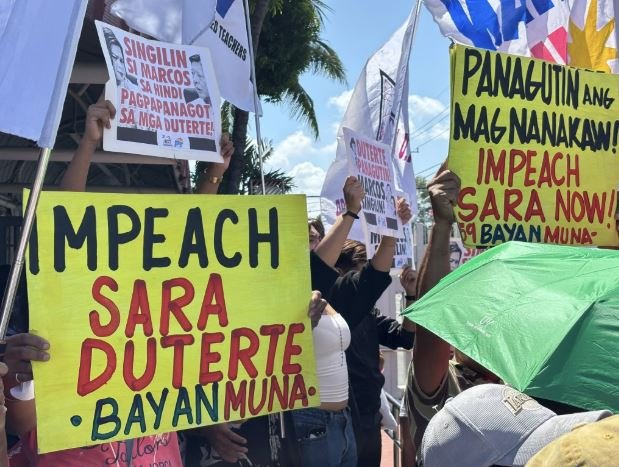
WHILE THE HOUSE of Representatives Justice Committee played extreme caution by keeping its hands off on the box of documents, the agency from where the supposed bank records is keen on pursuing a closer look into the businesses reportedly owned by Vice President Sara Duterte and husband Maneses Carpio.

In a press statement, the Bureau of Internal Revenue (BIR) Commissioner Charlito Mendoza ordered the issuance of Letters of Authority (LOAs) to audit the beleaguered couple and at least nine businesses related to them.

Mendoza particularly cited urgency to “to examine the taxpayer’s books of accounts and other accounting records.”

Letter Of Audit

The BIR maintained that such an action follows its “careful determination that probable cause exists to warrant a formal audit investigation of the subject taxpayers.” 

The Commissioner explained that the LOA is the legal instrument used by the agency to initiate formal tax audits — “It is not a conclusion of liability, but it is a necessary step in determining the correct taxes due.” 

Accountability begins with the consistent application of the law. Where there is a basis to investigate, the BIR will do so… And if evidence of tax violations exists, it is our duty to pursue the appropriate civil, administrative or criminal remedies,” he added.

The tax audit would cover third party information and data from publicly-available and official sources including the Office of the Ombudsman on SALNs and those of the Anti Money Laundering Council, which were all bared during the House impeachment hearings.

Disparity In SALN

Duterte’s Statement of Assets, Liabilities and Net Worth (SALN) indicated no petty cash or bank deposits since 2019 despite declaring liquid assets. 

Meanwhile, the AMLC reported that banks had flagged more than 33 suspicious transactions and 630 covered transactions amounting to P6.7 billion involving Duterte and her husband, the Inquirer reported.

The AMLC also recorded a total of P3.9 billion across 417 transactions from 2005 to 2026. 

Former Sen. Trillanes who testified in the confirmatory hearings of the House was able to validate all his records of spurious transactions, donations and ill-gotten wealth that the Dutertes received from drug lords and operators of illegal POGOs.

Sara’s Businesses

By her own admission, VP Sara in previous press conferences took a swipe at the administration’s sweeping claim into the “surge of wealth” that was declared in her SALN.

“Wala ba akong mga negosyo?” the vice president was quoted as saying when asked to comment over jabs by politicians known as administration allies.

With the issuance of LOAs, BIR revenue officers are authorized to examine the taxpayers’ books of accounts and other financial records.

The companies to be audited are as follows: Carpio Lawyers, Zelta Matiem Salon, City Hall King Chow Foods Corp., Davao Bounty Times Foods Corp., Madayaw Fisheries Inc., Davao Emerging Taipans Corp., Amianan Shores Inc., Cale88 Foods Corp., and Geometry Security and Investigation Agency Inc.

No Conclusion Yet

“It is not a conclusion of liability, but it is a necessary step in determining the correct taxes due. Accountability begins with the consistent application of the law,” Mendoza stressed.

“Where there is a basis to investigate, the BIR will do so. And if evidence of tax violations exists, it is our duty to pursue the appropriate civil, administrative, or criminal remedies,” he further said.

“The end objective of this lawful exercise is to collect the correct taxes due to the government. This will be a rules-based approach in determining the truth. Rights will be accorded to the audited entities,” the BIR chief added

The BIR assured that audits will be fully compliant with the run after tax evaders (RATE) protocols, the primary enforcement program of the bureau for tax evasion and tax fraud.

Pahiram Lang? That’s Already A Contract!

“UY, PAHIRAM NAMAN nito!”

We often hear this from a friend, a classmate, a neighbor, or an officemate. And most of the time, it’s said very casually—as if borrowing is too simple to have legal consequences. For a lot of people, pahiram is just a favor, a gesture of trust, or even a sign of friendship.

However, you have to think again because the lawtreats it differently.

Under Articles 1933-1952 of the Civil Code of the Philippines, that simple act of borrowing something—whether a book, a phone, earphones, or even a car—is actually a contract. It is called commodatum, a contract where one person delivers something to another, not to transfer ownership, but for the latter (borrower) to use it temporarily and return it afterward.

Take note: money is not covered by a contract of commodatum. When money is involved, the contract is called mutuum or simple loan, where ownership is transferred to the borrower.

In simpler terms: Hihiram ka. Gagamitin mo. At ibabalik mo kung ano ang hiniram modahil hindi itosa ‘yo.

The borrower, therefore, does not acquire ownership of the thing loaned by the lender. 

‘[T]he law treats commodatum as a gratuitous contract—meaning no payment is involved—but that does not make it less binding. On the contrary, because it is based on trust and generosity, the law imposes a higher degree of responsibility on the borrower.’

LEGAL RELATIONSHIPS

Because when you lend something, you are not giving it away. Ownership remains with lender. The borrower is only allowed to use the thing—with the obligation to take care of it—usually with a diligence of a good father of a family—and return it after use. This is in contrast with a contract of simple loan (mutuum) which generally involves money. Here, the lender of the money transfers ownership to the borrower. 

Think about everyday situations.

You lend your classmate your reviewer before an exam. You allow a friend to use your laptop for a project. You let a neighbor borrow your essential home tools. Or perhaps more commonly, you allow someone to use your car “for a while.”

All of these are not just acts of kindness. They areconsidered legal relationships.

And like any contract, commodatum creates rights and obligations.

For the borrower, there is a duty to take care of the thing borrowed. The law expects the borrower to treat it with diligence—as if it were their own, sometimes even more carefully. They cannot use it for a different purpose than what was agreed upon. And most importantly, they must return the exact same thing after use.

For the lender, there is an obligation to allow the borrower to use the thing for the agreed period or purpose—unless emergency need arises in certain cases recognized by law.

LEGAL CONSEQUENCES

Here’s where it becomes more interesting—and more real.

If you lend your phone and it gets damaged because the borrower was careless, that borrower may be held liable. If you lend your car for a short errand but it was used for a long trip without your permission, that misuse may have legal consequences. Even something as simple as refusing to return a borrowed item can give rise to legal action called an action for replevin, where you recover possession of a personal property.

“Borrowing a thing” does not free someone (borrower)from responsibility and legal consequences.

In fact, the law treats commodatum as a gratuitous contract—meaning no payment is involved—but that does not make it less binding. On the contrary, because it is based on trust and generosity, the law imposes a higher degree of responsibility on the borrower.

So the next time you think of lending something, you have to remind yourself that you are not just extending a favor—you are entering into a contract.

And if you are the one borrowing, take it seriously. What you hold is not yours. It is something entrusted to you—with the expectation that it will be returned, in the same condition, after its proper use.

We may think it as a simple act, but it carries weight in the law. They are not just gestures. They are obligations.

Class dismissed!

#ThePHInsider

#LegalClassroom

#AttyEduMRiparip

#LegalObligations

#LegalConsequences

#Commodatum

#LegalRelationships

#LenderBorrower

Navigating The Future

0

AS MANY OF us dribble the thought of where the Philippines is going – spurred by the dirt, noise, squabbles, and inanities among the supposed beacons of hope in government – one organization I know came up with a plan. Founded in 1886, the Chamber of Commerce of the Philippine Islands (CCPI), the provenance and oldest economic/business association of the country, is revved to help navigate the future of the country (phrase I borrowed for this column’s title).

‘Hope for a better Philippines may be deeply rooted in the mind and heart of most Filipinos, regardless of the political climate. Actionize hope may likewise be a good call to one and all, in big and small ways.’

FROM A GLORIOUS PAST

​The Chamber has a glorious past to build on. It contributed in ushering the country to become the “Pearl of the Orient” and a leading economy (GDP per capita) in the ASEAN and Asia in the 1960s. In bouncing back (as it took a backseat for more than 30 years due to martial law), it came to adopt a Work Program Advocacy for the future, which it calls Economic Compass Pillars 5 (ECOMP-P5).

​And so one April afternoon was about that, with some 200 fellow hopefuls (participants) invited from the sectors of business, government, academe, and civil society to a conference titled, “Actionize the Missions of Economic Compass Pillars 5”. CCPI president, Jose Luis U. Yulo, Jr. rationalizes, “Actionizing converts good intentions into implemented success to rebuild the country’s once glorious past.”

​The plenary session speakers gave clues on rebuilding the Philippines. SEC Commissioner Rogelio Quevedo, recommending “behavioral nudges” to government people especially in the light of corruption; former UP President and DTI SecretaryAlfredo Pascual, egging the very talented Filipinosfrom “potential to prosperity”; former Supreme Court Justice and Ombudsman Conchita Carpio-Morales, stressing the need for “moral people in government”. 

ENVIRONMENT AS AN ECONOMIC PILLAR

​The Chamber identified Five Pillars for the country’s growth: The Filipino and Education,Industries and Businesses, The Government, Infrastructure and Environment, and the Economy. The participants were spread out to breakout sessions on these according to their experience. Each session processed desired actions for its designated pillar.​

​I, of course, joined the session on the infrastructure and environment pillar (combined due to overlapping features, I suppose), owing to my environment advocacy and this column.

​There was a consensus on doing a registry of natural geographic attractions that are unique to the Philippines. Use of these has to be controlled: with no-build zones and with observance of carrying-capacity limits for residents, workers, and tourists-visitors. This mainly as respect for God-given attractions.

​The opposite was true for the topic on a mix-combination of new energy sources (easing out the “dirty” and diminishing fossil fuel). There was an intense argument on nuclear energy which perked up everyone. Dr. Angelina Galang, a trustee of the Green Convergence coalition and convenor of Ako AngBukas, a movement for climate action gave a firm NO to nuclear energy backed up by science, safety, and cost considerations. CCPI president Yulo Jr. asked that we study more the modular nuclear plants as no accidents are yet reported.  This is a debate we can bet to still last even as government leans towards going nuclear.

THERE’S HOPE?

​Hope for a better Philippines may be deeply rooted in the mind and heart of most Filipinos, regardless of the political climate. Actionize hope may likewise be a good call to one and all, in big and small ways. 

#thephinsider

#erlielopez

#environment

#daybreak

#future

#ECOMPP5

#NonoyYulo

#GreenConvergence

#ActionizeTheMissions

#EconomicPillar

#PearlOfTheOrient

Russians Cry Over Jeffrey Jeturian’s Film ‘Unmarry’

Film indeed is a universal experience.

Such is the global wonder.

Language barrier is thrown out of the screen. Translations and English subtitles set in.

Images speak a thousand words.

It is so when Filipino filmmaker Jeffrey Jeturian went to Russia recently to screen his newest film “Unmarry” at the 48th Moscow International Film Festival in Moscow to a full audience capacity.

While the film was wholly well-appreciated by a multicultural crowd, predominantly Russian and Filipino moviegoers were seen cheering for it.

One of the most striking events during the screening was the scene-stealing performances of child actor Zack Sibug who plays Elio in the film.

According to Jeturian, “this kid doubly stole and broke the hearts of the audience with his heartfelt performance.”

Sibug delineates the son of actors Zanjoe Marudo as Ivan and Solenn Heussaff as Maya—a married couple in the middle of an annulment—who was caught in the maze of emotional pains and mental anguish tormented to cling to any of them.

At the Q&A segment of the talkback, Jeffrey shared that one Russian actress from the audience asked how old Zack is. “I told her, thirteen,” he said.

“Then she followed the question up with how he was cast. I told her it’s his first acting job but he had to undergo a workshop before facing the cameras.

“There was laughter, though, when I added information that he happens to be the producer’s grandson,” Jeturian chuckled.

The Russian actress and most members of the audience, Jeffrey recalled, found the situation common as well in Russia. “They said it happens in Russia too. I had to add though that ‘the production was lucky that the kid can act and how!’” the maverick director quipped.

“Unmarry,” produced by Quantum Films and Cineko Productions also stars Angelica Panganiban ang Tom Rodriguez.

Spontaneous: Real Talk, Real Time

You know that feeling—you had the right thing to say… but it came too late? Some people think being spontaneous means you just “don’t think.” But that’s not it.  

The Back Story 

It’s more like… 

  • You stop interrupting yourself in your head.

Most of the time the conversation is already happening—you’re just not in it. 

  • You’re busy editing, polishing, predicting. 

And the moment? It already moved on without you.

Just Flow

Real talk doesn’t feel like a presentation. It feels like flow. Someone says something… you reply… then it shifts… then shifts again. 

  • No script. No plan. Just movement. 

And somehow, it still makes sense.

Trying Too Hard

Here’s the trap—trying to sound clever every time. That pressure kills spontaneity. 

  • Now you’re not listening… you’re performing. 

And people feel that shift instantly, even if they don’t say it.

Hear It, Then Reply

When you’re actually in it, you stop over-checking yourself. You hear what’s being said, and you reply to that—not the version in your head. 

  • And your replies get lighter, cleaner, more real.

Simple Hits

Sometimes it’s not even a “perfect answer.” It’s just: “Yes, I get you.” Or, “Hmm… makes sense.” Or even just a pause and a nod. 

  • And somehow… that connects better than a long explanation.

Stay With It

Real conversation isn’t about filling space. It’s about staying with it. Not jumping ahead. 

  • Not drifting away. 
  • Just… being there.

Not Perfect Is Okay 

Sometimes you’ll say it awkward. Sometimes you’ll think, “I could’ve said that better.” But in real time? That’s fine. 

  • The goal isn’t perfect sentences. 

It’s real connection… happening live.

Keep Up Or Miss It

Situation: Team conversation moving fast

Before:

  • Liam: “Uh… I had something earlier… wait…”
  • Team: “We’re already on the next point.”
  • Liam: “Ah… forget it.”

After:

  • Liam: “Wait—this connects. If we tweak that part, it might move faster.”
  • Team: “Yes… that works.”

Tip:
Don’t overthink timing. If it’s relevant—just jump in.

No Holding Back

Situation: Something small… but it’s starting to build

Before:

  • Mara: “You’re quiet.”
  • Kian: “No, I’m fine.”
  • Mara: “Okay…” (but it’s clearly not fine)

After:

  • Mara: “You’re quiet.”
  • Kian: “Yeah… I’m a bit off today.”
  • Mara: “Okay… you wanna talk about it?”

Tip:
Don’t hide it and fix it later. Say the real thing while you’re in it.

In the Room

Situation: Group discussion, idea comes late

Before:

  • Darius: “I had a point earlier… but yeah, never mind.”
  • Others: already moved on

After:

  • Darius: “Wait—quick one. How does this affect parking?”
  • Facilitator: “Good point, let’s check that.”

Tip:
Don’t save it for later in your head. If it matters now—say it now. 

Tips And Techniques 

Spontaneous isn’t loud. It’s not chaotic. It’s just you… staying with the conversation instead of in your head.

  • Real talk. 
  • Real time. 
  • No script. 

It’s not about saying more. Just say it.

Remember: Be spontaneous. Stay in the moment.

Making Sense Of The Corruption Noise: Are We Taken For A Fool? 

0

THE REVELATIONS KEEP coming, not in drips but in torrents, as if the floodgates of impunity have finally cracked open. We hear of alleged undeclared wealth in the accounts of Sara Duterte, of staggering assets that sit uneasily beside what is written—or not written—in a Statement of Assets, Liabilities, and Net Worth. We hear accusations from Antonio Trillanes IV, long a relentless critic of the Dutertes, pointing to possible flows of illicit money, even insinuations of drug-linked financing. 

At the same time, a former Speaker of the House, Rep Martin Romualdez, threatens to bring everyone down with him if he is made the scapegoat, hinting at executive complicity of his cousin, the President BBM, in the allocation and release of funds.

These are not isolated murmurs. They are part of a growing chorus. The testimony of alleged bagmen like Ramil Madriaga details how public funds are diverted and distributed to political allies. Before him came others—the 18 Marines reportedly used as conduits of corruption, the insiders from the Department of Public Works and Highways who exposed the mechanics of flood control projects that controlled nothing but the movement of money into private hands. 

‘In the Philippine context, this is reinforced by political dynasties that ensure continuity of power and protection. Families reproduce themselves in office, carrying with them networks of loyalty, influence, and impunity. The system is not disrupted by scandal; it absorbs it.’

ANATOMY OF CORRUPTION

Piece by piece, the anatomy of corruption is being revealed, not as a random occurrence but as a coordinated enterprise involving politicians, bureaucrats, and businessmen acting in concert.

Yet the more vivid the picture becomes, the more difficult it is to pin responsibility on any single actor. This is the paradox of systemic corruption. The clearer the details, the more diffused the accountability. Each player is implicated, yet each finds refuge in the collective. 

The executive points to Congress, Congress points back, bureaucrats claim obedience, and private contractors insist they merely comply with the rules of engagement. Everyone is involved, but no one is responsible. The fiction of collegial decision-making becomes a convenient shield, allowing individuals to dissolve their culpability into the anonymity of the group.

Criminological theory helps us understand why this happens. As I had written earlier, Edwin Sutherland’s concept of white-collar crime reminds us that those in positions of power can commit offenses under the guise of legitimacy, often escaping scrutiny because of their status. 

I also posited Donald Cressey’s fraud triangle—pressure, opportunity, and rationalization—finds a perfect home in the Philippine political system. Elections create immense financial pressure, weak institutions provide abundant opportunity, and a deeply ingrained culture of patronage supplies the rationalization. 

EXPECTED FEATURE

Corruption becomes not an aberration but an expected feature of governance, embedded in its very structure.

This is why corruption persists despite repeated exposure. Scholars like Michael Johnston and Susan Rose-Ackerman have shown that in many developing democracies, corruption is sustained not merely by secrecy but by normalization. It becomes routine, almost banal, woven into everyday transactions of the state. 

In the Philippine context, this is reinforced by political dynasties that ensure continuity of power and protection. Families reproduce themselves in office, carrying with them networks of loyalty, influence, and impunity. The system is not disrupted by scandal; it absorbs it.

What we are witnessing now is not just corruption, but its public performance. The accusations and counter-accusations, the dramatic testimonies, the threats of exposure—these create what political analysts describe as strategic obfuscation. 

The goal is not to clarify but to confuse. By flooding the public with competing narratives, the political class ensures that truth becomes difficult to discern. The accuser becomes accused, the guilty claim victimhood, and the public is left to navigate a maze of claims that ultimately leads to exhaustion.

This confusion is not a byproduct; it is a strategy. A confused public is less likely to act, and an exhausted public is more likely to disengage. Over time, outrage gives way to resignation. The ordinary Filipino, bombarded by endless revelations, begins to see corruption as inevitable. “They are all the same,” becomes both a conclusion and a surrender. In that moment of resignation, the political class secures its greatest victory.

This is why it is dangerous to frame the current situation as a battle between political camps. It is not a contest between supporters of one administration and another, nor between competing ideological factions. Reducing it to a partisan fight only serves the interests of those in power. It divides the public, turning citizens against each other while those at the top remain insulated. 

THE REAL DIVIDE

The real divide is not between DDS, BBM supporters, or Kakampinks. It is between the ordinary Filipino and a political class that has learned to manipulate divisions to maintain control.

Allowing oneself to be drawn into partisan loyalty is to become a pawn in a larger game. Politicians thrive on this loyalty, cultivating it through narratives of persecution and promises of protection. They ask for allegiance not to principles but to personalities, not to reforms but to reputations. In doing so, they deflect attention from the structural issues that sustain corruption. They turn politics into spectacle, where the focus shifts from accountability to entertainment.

Breaking free from this cycle requires a deliberate shift in perspective. It begins with listening carefully to the unfolding revelations, but doing so without the filter of partisan bias. It requires applying the same standards of scrutiny to all public officials, regardless of affiliation. It demands an openness to the possibility that corruption is not confined to one camp, but is a shared practice across the political spectrum.

Recognizing patterns is equally important. Corruption in the Philippines follows a script. The mechanisms are familiar: the use of intermediaries, the manipulation of public funds, the invocation of political vendetta when exposed. These patterns repeat themselves across administrations and across personalities. Seeing these patterns allows citizens to move beyond the noise and understand the structure beneath it.

COLLECTIVE ACTION

Most importantly, it calls for collective action grounded not in partisanship but in principle. The challenge is not merely to expose corruption but to dismantle the conditions that allow it to thrive. This includes pushing for reforms that strengthen institutions, enforce transparency, and break the hold of political dynasties. It involves supporting measures that hold officials accountable, not just in rhetoric but in practice.

The noise will not stop. There will always be new revelations, new scandals, new performances of outrage. The political class has mastered the art of surviving exposure. What remains uncertain is whether the public will continue to play its assigned role in this script.

The choice lies with us. We can remain spectators, caught in the cycle of outrage and resignation, or we can step outside the spectacle and confront the system for what it is. Doing so requires clarity, discipline, and a refusal to be manipulated. It demands that we see beyond personalities and focus on structures, beyond noise and toward accountability.

Only then can the machinery of corruption, sustained for so long by confusion and division, begin to falter under the weight of a citizenry that finally refuses to be deceived.

#ThePhInsider

#thefilipinocriminologist

#RaymundNaragPhD

#corruptionmachinery

#anatomyofcorruption

Zaldy Co Nowhere, DOJ Chief Admits

0

NEITHER repatriation nor deportation would apply insofar as government efforts to bring home fugitive Zaldy Co who has managed to slip out of the Czech Republic days after he was “arrested.”

According to Justice Secretary Frederick Vida, Philippine authorities would continue efforts to secure Co’s return to face graft and malversation charges over the so-called flood control scandal.

Vida likewise confirmed that the Czech government no longer has custody of Co, whom the DOJ chief hinted may have moved within a “border-free” zone in Europe.

“I have to share difficult news. Czech authorities have informed us that Mr. Zaldy Co is no longer in their custody,” Vida said in a news briefing on Monday night.

Co has reportedly managed to enter France to seek political asylum in an effort to evade return to the Philippines, where he is facing a string of arrest warrants amid criminal cases related to the flood control project corruption. 

Co’s basis for asylum — “political persecution.” 

Interpol Red Notice

After almost a year, the government hinted at the urgency of securing a red notice from the International Police Organization (Interpol), a task previously delegated to Interior Secretary Jonvic Remulla.

This comes as Philippine Center on Transnational Crime (PCTC) executive director Major General Romeo Prestoza said they are pursuing international mechanisms, including a request for an Interpol red notice, which would allow law enforcement agencies worldwide to locate and provisionally arrest Co pending legal action.

Prestoza said they have already submitted the required documents to Interpol’s secretariat in Lyon, France.

DOJ Request Declined

Czech authorities in a statement said they are not pursuing extradition proceedings against the fugitive former congressman from the Philippines.

In a statement issued by the Czech Ministry of Justice (MOJ) following a meeting with the Philippines’ high-level coordinating team headed by Philippine Justice Secretary, officials clarified that no formal extradition case involving a Filipino national is underway at this time.

“Despite information that has appeared in the media in recent days, the Czech Republic is currently not conducting any extradition proceedings against a citizen of the Republic of the Philippines,” Czech Justice Minister Jeronym Tejc said in a statement.

Co’s Political Asylum

No less than Palace Press Officer Claire Castro confirmed that Co is seeking asylum in France.

“The DFA (Department of Foreign Affairs) has received highly reliable information that Zaldy Co has a pending petition for political asylum in France,” Castro said during a press briefing.

The Palace official likewise noted that Co has not committed any violation in France and that his transfer was carried out upon the request of French authorities in relation to his pending asylum application.

“He has been requested to be transferred to and is now under the jurisdiction of French authorities. All missions in Europe have been instructed to obtain further official confirmation,” she added. 

Seeking Other Means

According to the Palace mouthpiece, the Philippine government would explore all available legal channels available under international laws to bring Co home to face the graft and malversation cases filed against him. 

”Gagawin natin ang lahat nang naaayon sa batas at sa diplomatikong proseso,” Castro averred.

The President is set to meet with the ambassadors of France and the Czech Republic to discuss the circumstances involving Co, including ways forward on how he will be brought back to the country, she added.

Co’s asylum application would also be tackled during the meeting.

”Dapat din po nating igalang kung ano ba ang batas at polisiya ng ibang bansa kung saan siya nag-file ng petition for asylum,” Castro said. 

Premature Announcement

On April 16, it was President Marcos himself who announced that Co had been held in custody in Prague.

Marcos said Co was flagged at the German border after entering from the Czech Republic and that the Philippine government continued to coordinate with Czech officials.

But after being informed that Co is no longer under the custody of the Czech government, Castro admitted that the President is disappointed with the recent developments — ”Sinabi niya na disappointed siya… malapit na sana natin napauwi si Zaldy Co,” Castro quipped.

Arrest warrants were issued against Co and directors of Sunwest Corp. over supposed anomalous flood control projects. 

The Ombudsman filed with the Sandiganbayan corruption and malversation of public funds charges against Co and others. The charges were in connection with the alleged anomalous P289 million flood control project in Oriental Mindoro. 

DoT Underspent By P655.8M In 2024

0

ON PAPER IT MAY sound good and prudent that the Department of Tourism underspent by P655.78 million of its allotment of P3.27 billion in 2024. But the fact is, the DoT head that time Maria Christina Garcia Frasco only obligated P2.82 billion or 86.31 percent leaving an unobligated balance of P448.08 million or 13.69 percent.

Such underutilization of budget was the reason that the Department of Budget and Management did not heed the DoT’s clamor for more budget the following year when it received P3.14 billion, lower than what it got in 2024.

The DoT honchos persistently complained about the lack of funds to boost its marketing efforts and keep the Philippines on the radar of tourists abroad, noted Business Mirror.

The latest audit report of the Commission on Audit (COA) said: “Out of the total allotments received by DoT amounting to P3.27 billion in CY 2024, the amount of P2.82 billion, or 86.31 percent, was obligated, leaving an unobligated balance of P448.08 million, or 13.69 percent, while P2.17 billion, or 76.78 percent of the total obligations was disbursed, leaving an undisbursed balance of P655.78 million or 23.22 percent at year-end, thus, utilization of authorized budget was not fully maximized.”

The agency’s poor utilization of its budget was the possible reason the DoT-Office of the Secretary (Osec) only received a P3.14 billion budget in 2025, lower than in 2024.

Under this year’s General Appropriations Act, the DoT lobbied for and received some P1.15 billion in branding funds, double than that of 2025. This raised the agency’s total funds this year to P3.64 billion. It also has a separate allocation of P4.6 million under the Tourism Development Fund (TDF).

Former Tourism Secretary Christina Garcia Frasco had often blamed the agency’s low budget allocation for its inability to attract more foreign tourists, which last year reached 5.87 million, 1.34 percent less than in 2024. She was removed from the post last March 12 as complaints mounted on her alleged self-promotion efforts, instead of marketing the Philippines.

She has since been replaced by veteran trade diplomat, Ma. Bernadita Angara-Mathay, who has been proven to have the marketing chops to get Japanese businesses to invest in the country. 

Improve Tactics, Expense Plans

The latest COA report likewise found that close to P150 million of the Notice of Cash Allocations (NCA) amounting to P3.11 billion were not utilized, and thus reverted to the Bureau of Treasury (BTr).

In both cases, COA told DoT management to maximize the use of available allotments (and NCAs) “by improving strategies, plans, and expenditure measures in the implementation and execution of programs and projects as well as prudent allocation of budgets to avoid accumulation of unobligated allotments and adverse effect on future budget levels.”

COA also asked DoT-Osec to instruct its Bicol Regional office “to facilitate the planning of a timely procurement/bidding process. This will ensure sufficient time to conduct a re-bidding in case of a failed bidding, allowing programs and projects to proceed as planned and preventing the reversion of cash allocations and ultimately delivering the benefits envisioned by the Program.”

The specific notation for Bicol was due to the region’s delayed, then failed bidding for the P100-million Hot Air Balloon project. Having no expertise and capacity to implement it, the office partnered with the Legazpi LGU instead. COA contends total disbursements to the LGU should only be P22 million as funds should be totally utilized for construction and services first.

P498M In Disallowances

The COA said In total, the DoT incurred P119.23 million in unsettled audit suspensions and P498.4 million in disallowances by end-2024.

The audit agency rendered an “unmodified opinion” on the fairness in the presentation of DoT’s financial statements for that year, meaning the financial records it submitted were reliable, but does not mean there are no issues with its operations.

Business Mirror identified the following COA observations:

Deviations from established laws, rules, and regulations concerning cash management by the DoT Central Office, the National Capital Region, Cordillera Administrative Region, as well as the Regional Offices of Central Luzon, Bicol, and Eastern Visayas, “thereby exposing government funds to risk of loss or misuse.”

These cover the liquidation of petty cash disbursements and accountabilities of administrative officers, and reclassification of transferred funds to the correct BTr account.

 Some P171.66 million in funds that had been transferred to local governments, national government agencies, regional offices, and nongovernment organizations remained unliquidated between one and 27 years, despite the completion of their projects.

Lapses in the grant, utilization, and liquidation of cash advances, the largest amount of which were unsettled “past due cash advances” for the operations of the agency’s Foreign Offices, reaching P103.33 million, among others.

COA said the DOT failed to implement 54.78 percent of 115 audit recommendations in 2023, of which 32 were reiterated/restated in the 2024 report.

Boracay Needs A Hospital, Not A Bridge

INSTEAD OF building a bridge project that would just displace the boatmen and tourism workers, stakeholders urged the Department of Public Works and Highways (DPWH), an agency mandated to undertake major infrastructure projects, to seriously consider constructing a hospital, which is what they need most.

The bridge, if it pushes through, will provide temporary employment to residents but once completed only those with private cars and public transport like habal habal will benefit from it.

But for the sick residents and in times of epidemics and disease outbreaks, they still need to go to the provincial government to get treatment for their ailments.

Boracay, renowned white sand beaches, is famous as well for boat rides or ferries to take the local and foreign tourists to their desired destination (called stations with Station 1 catering to the affluent clients while Station 2, the epicenter has the highest concentration of shops, bars, restaurants and D’ Mall or the best place for convenience and night life that can be loud while Station 3 is the most peaceful and authentic area being closest to the boat stations with more vegetation and offers cheaper accommodation options for budget-conscious travelers).

Station 1 is reputed as the “luxury zone” with wider, powdery sand and high-end resorts for a quiet, intimate experience. Station 2 is the bustling, noisy center with D’Mall, nightlife, and many mid-range hotels, while Station 3 is a laid-back, tranquil area with budget-friendly accommodation and lush nature. 

Except for some private clinics, the only public hospital in Boracay Island is Ciriaco S. Tirol Hospital (categorized as level one with a 25-bed capacity) with its emergency room still being upgraded to increase its service offering.

While  a popular digital content creator, The Poor Traveler, notes that Station 2 is the most accessible for transportation and dining, it is also the most crowded. Alternatively, Tripadvisor users mention that while these, on the Boracay Forum, tend to be generally true, Station 3 is also great for a quieter experience. 

The DPWH, now under Vince Dizon, is being asked to shift its project from bridge to hospital to save more lives and help more poor sickly people get immediate medical treatment for their ailments. The DPWH just months ago was at the center of the most toxic scandal of all time with its flood control projects.

“We don’t need a bridge, we need a hospital,” is the campaign of the Philippine Chamber of Commerce and Industry-Boracay in expressing its opposition to the P7.8-billion project connecting the island to the Aklan mainland, that DPWH recently approved.

In a position paper issued on April 24, 2026, PCCI-Boracay said: “Instead of allocating nearly P8 billion to a single unsolicited project such as the Boracay Bridge, a more strategic approach would be to direct investment toward more practical and cost-effective public-private partnership [PPP] initiatives that address longstanding gaps, without risking irreversible damage to the island’s environment and marine ecosystem, while delivering meaningful improvements to critical infrastructure and systems that have repeatedly fallen short,” reported Business Mirror.

The island, which forms part of the list of Best Beaches in Asia, needs for one, “at least a Level 2 hospital with select Level 3 capabilities, rapid emergency response systems, and strong disaster preparedness to ensure safety for both visitors and Boracay’s estimated 12,000 residents.” Last year, Boracay welcomed some 2.16 million tourists, of which 1.77 million were domestic travelers, the PCCI said.

According to the Department of Health, a Level 2 hospital should have: full emergency hospital services, intensive care and trauma response, and advanced maternity/neonatal care. Level 3 services may include: CT/MRI equipment, specialist surgery, and dialysis/trauma support.

As this developed, Aklan Gov. Jose Enrique “Joen” Miraflores said when he brought up the bridge project to President Marcos Jr. again, “He  was surprised that it was approved without public consultations. In fact, he even said, ‘Dapat nagkaroon ng public hearing.’”

Miraflores, who was in Roxas City with other Aklan officials for projects Marcos Jr. was to inaugurate, told Business Mirror, “The President said he will talk with Ramon Ang of San Miguel Holdings Corp. to make sure a public consultations will happen.” 

He added that the President’s response made him and his fellow Aklan officials “hopeful” that the issues surrounding the controversial bridge project will finally be settled. 

The Aklan governor said he reiterated the local governments’ and the island’s stakeholders’ continuing opposition to the project due to environmental and livelihood concerns for the local tourism workers.

To ensure the long-term viability of Boracay, there should be investments in an “Environmental Protection Infrastructure” focused on “coastal protection, mangrove and reef rehabilitation, and comprehensive management of beach erosion,” among others, the governor added.

Investments toward improving the port and arrival experience of travelers, and sustainable waste management systems, are needed to elevate tourists’ impressions of Boracay and “maintain its cleanliness and global reputation,” respectively.

These projects, instead of a 2.54-kilometer bridge system, will “generate jobs across sectors and deliver broader benefits to residents, local businesses, and visitors alike, by enhancing environmental quality, improving mobility and essential services, and preserving the distinct island experience that continues to attract tourists to Boracay.”

PCCI-Boracay is the latest among groups that have continuously opposed the Boracay bridge project. SMHC assures the project will allow safe and efficient access between Caticlan and Boracay, address waste management and disposal issues, improve response times during disasters and medical emergencies, to name a few.

The PCCI- Boracay pointed out, in the course of approving the controversial project, DPWH failed to follow Republic Act 11966 (Public-Private Partnership Code of the Philippines) and RA 7160 (Local Government Code of 1991). Provisions in these laws include the development of a “transparent, comprehensive, and independent Environmental Impact Assessment [and] meaningful consultation with local stakeholders, residents, businesses, and environmental groups.”

Meanwhile, PCCI-Boracay noted that the bridge will only worsen vehicular traffic on the island, which is already congested, “despite strict vehicle limits including a ‘no private car’ system under municipal ordinances and BIATF (Boracay Inter-Agency Task Force) issuances.”

The newspaper said the permanent land connection will likely reverse the environmental gains Boracay earned during its six-month rehabilitation in 2018. The island “has already experienced the consequences of exceeding its sustainable limits. Improved unrestricted access may lead to increased pressure on infrastructure, waste management systems, and natural resources.”

During its closure in 2018 by President Rodrigo Duterte, the Department of Environment and Natural Resources determined the island’s carrying capacity to be 19,215 tourists at any given time, which has been exceeded every Holy Week break since 2022. 

The business group stressed that the construction and operation of a bridge pose “significant risks” to Boracay, which has a total land area of just 10.32 square kilometers. “Its fragile coastal and marine ecosystems may be adversely affected, including disruptions to water circulation, coral systems, and shoreline integrity.”

This includes possible damage to Boracay’s “world-renowned powdery white sand” among other risks which “outweigh any projected benefits” of the bridge.

Aside from the environmental risks, there are potential threats to livelihood as well “from boat operators to service providers. A bridge may significantly disrupt these sectors without clear, inclusive transition plans,” said PCCI-Boracay.

Fresh Plot To Unseat Marcos Confirmed

0

AS IF THE energy crisis, impeachment brouhaha and corruption scandal aren’t enough, retired military officers are hatching a fresh plot to unseat President Ferdinand Marcos Jr.

According to Senate President Pro Tempore Panfilo Lacson, he received information that the unidentified retired officers are recruiting supporters within the Armed Forces of the Philippines (AFP) for a possible military-backed “people power revolution.”

“There is definitely an attempt but this is outside the AFP. Those behind this could only recruit a few, if at all, from inside the AFP,” Lacson was quoted in a radio interview.

“My contacts in the Philippine National Police are saying there is no indication that the coup plot will prosper. But definitely there is an attempt, mostly by retired officers,” he added in a mix of English and Filipino.

Lacson himself expressed belief that the effort to unseat Marcos won’t succeed, for as long as the AFP continues to adhere to professionalism.

“So long as the AFP is professional, and I would like to believe it is, there is no compelling reason to have a military junta or another People Power revolution,” he said.

Sometime last year, Lacson claims to have turned down calls to support a military-backed “reset” or junta amid public outrage over corruption issues. According to the legislator, “some retired military officers” had approached him to be part of a “transition council” to change the government, but he declined.

In declining the offer, he cited the 1987 Constitution provision which ends the succession of leadership with the House speaker, for which he filed the “Designated Survivor” bill that extends the line of succession to include the most senior Senate and House member.

Actress Isabel Lopez Figures In Car Mishap 

ACCIDENTS like deaths occur like thieves in the night.

Filipino actress and beauty queen Maria Isabel Lopez has just gone through the ordeal days before she’d attend the premiere screening of her film in Los Angeles, California.

Maria Isabel recently figured in a car mishap miles away from the venue of the movie premiere but it was still the same state emergency management applied to her when she was driving along a highway in Sebastopol, CA and met the car crash.

According to Lopez, she was already five minutes away from home as she was driving Gravenstein Highway at the corner of Hessel Road in Sebastopol when she collided with another car on the opposite lane.

“Things happened so fast. My iPhone said ‘This is an emergency.’ My airbag burst! Side window airbags, too. The door couldn’t be opened from inside. Ambulance came and I was brought to Kaiser Santa Rosa,” recalled Maribel in an exclusive oline interview.

“CT scan showed I had ruptured my small intestines,” said the actress and 1982 Binibining Pilipinas-Universe.

“So, I was in surgery. Doctors removed 70cm of my intestines,” she added.

After a few days, an inflammation occurred. “They saw an abscess in my abdomen so I had another procedure to ‘aspirate’ it,” Maribel remembered.

Lopez stayed thirteen days in the hospital.

“Now I’m back home with a wound vacuum in my abdomen to speed the healing process,” she shared.

At the moment, she is thankful she was saved from total wreck. “I praise God for ‘my second life.’ Grateful that I can walk. To God be the glory,” Maribel smiled.

At the time of the accident, she was preparing to go to LA for the Los Angeles Asian Pacific Film Festival (LAAPFF) for the premiere showing of her Japanese film “Diamonds in the Sand” where she plays a Filipino caregiver to Yogi, a divorced Japanese man who chooses to go to Manila because he believes that no one is lonely in the Philippines.

The film is scheduled for showing on May 2, 2026.

“But the doctors didn’t allow me,” regretted Maribel.

Nowhere To Go For Escudero

0

THE government can no longer afford another blunder in its quest to prevent suspected crooks from seeking refuge elsewhere.

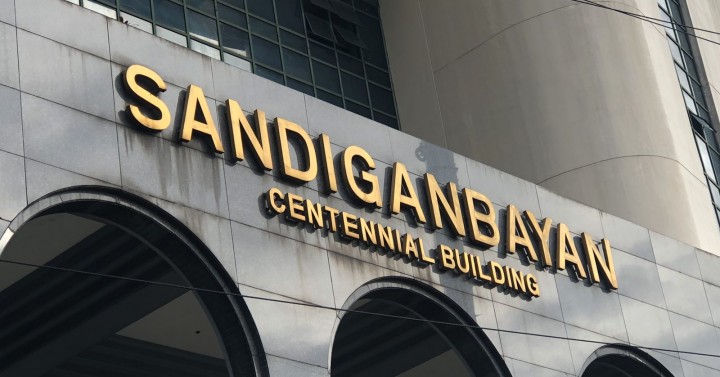
This comes as the Sandiganbayan Sixth Division, chaired by Associate Justice Sarah Fernandez, ruled to issue a precautionary hold-departure order (PHDO) against former Senate President Francis Escudero.

The anti-graft court’s PHDO that was issued on Monday also covers businessman Maynard Ngu, who is being investigated for alleged plunder, graft, and indirect bribery in connection with the so-called flood control scandal.

The tribunal also directed the Bureau of Immigration to prevent Escudero and Ngu from leaving the country — and to include their names in the Hold Departure List.

Weeks ago, Ombudsman Jesus Crispin Remulla hinted at wrapping up its preliminary investigation on Escudero and former House Speaker Martin Romualdez who would both be facing plunder over the flood control mess. 

Romualdez has denied role in fund mess even as he tagged Escudero and fugitive Ako Bicol partylist Rep. Zaldy Co as masterminds.

“We have been seriously preparing a case [for] plunder against former Speaker Martin Romualdez and former Senate President Chiz Escudero. There’s a conspiracy involved,” Remulla said during a press conference.

“This [case] is flood control related in so many ways,” he added. 

Former Department of Public Works and Highways (DPWH) undersecretary and state witness Roberto Bernardo earlier claimed to have funneled 20%—or about P160 million—of roughly P800 million worth of inserted projects for Valenzuela City under the General Appropriations Act through Ngu.

The P160 million, Bernardo said, was “meant for Senator Francis ‘Chiz’ Escudero.”

The former senate president earlier denied the allegations, calling Bernardo’s statements as “malicious allegations and innuendos.”

Escudero previously hinted at filing charges against the former DPWH official for “malicious allegations and innuendos” made against him. 

“By his own admission, he never had any contact with me directly regarding this matter—and I will prove that he is lying about my alleged involvement,” Escudero asserted.

He also raised concerns about the “well-orchestrated plan” supposedly to attack the Senate and its members “to destroy and discredit the institution and to divert the public’s attention from the real perpetrators.”

In a Senate hearing earlier this year, Ngu also denied the allegation that he was involved in flood control kickbacks, as claimed by Bernardo. 

Internalize: Don’t Memorize

Have you seen this happen in a conversation? Buddy was talking, but it felt rehearsed. Like he was trying to remember instead of just talking. Everything sounded correct… but it didn’t feel real. It  sounded memorized. 

The Back Story 

You can usually tell when someone is memorizing. The words are there, but it feels stiff. As if they’re trying to recall what comes next while they’re talking. And you can feel it right away.

  • When you internalize your message… you’re not chasing words anymore. You’re just saying what you actually think.

The Eyes Tell First

You see it instantly. 

  • Memorized… eyes move around. Searching, like the next line is somewhere outside them.
  • Internalized… the eyes stay with you. No searching.

That alone changes the whole feeling.

Sounding Right vs. Being Real

Then the voice.

  • Memorized voice is careful. Like they’re holding everything in place so nothing goes wrong.
  • Internalized voice is more relaxed. 

It breathes. It flows. There are pauses that feel natural, not planned.

From Scripted to Natural

It’s actually a simple shift.

  • Memorizing is “What do I say next?”
  • Internalizing is “What do I actually think here?”

And once you get that, you stop sticking to exact words. You just explain it in your own way.

Don’t Recite. Relate.

People feel it.

  • When it’s memorized, people listen… but they’re a bit detached from it.
  • When it’s real, people naturally pay more attention without thinking.

Don’t focus on perfect lines.

  • Just understand it first.
  • Then talk.
  • And it will sound like you.

From Report to Real Talk

Situation: Team giving a quarterly update.

Before

  • Gina: “As previously stated in the report, the quarterly performance increased by 12%.”
  • Andy: “Yes, and further analysis indicates continued growth potential.”

After

  • Gina: “Andy, we’re up 12% this quarter.”
  • Andy: “Yes, i saw that. Better than expected. We can push this more.”

Tip: Don’t read the data—say what it means.

Feel It, Then Say It

Situation: A couple dealing with a misunderstanding.

Before

  • Lia: “I am fine.”
  • Marlon: “Okay. If you say so.”

After

  • Lia: “I’m not fine… I just needed space.”
  • Marlon: “Okay… I hear you. I’m here.”

Tip: Say the real thing. Simple beats perfect.

Not a Speech – A Conversation

Situation: A group talking about participation.

Before

  • Liz: “The objective is community engagement improvement.”
  • Bob: “Yes, participation metrics are essential.”

After

  • Liz: “We just want more people to actually show up.”
  • Bob: “Yes, not just numbers. Real people.”

Tip: Talk like you’re in it—not presenting it. 

Tips And Techniques 

This is the shift.

  • From memorizing… to internalizing.
  • From sounding correct… to sounding real.

Because in real conversations, people don’t connect to perfect words. 

  • They connect to presence. 
  • To honesty. 
  • To something that feels alive in the moment.

Once you stop chasing the “right lines,” you start speaking from something deeper – insight.

  • Don’t overthink your next conversation.
  • Don’t try to remember what to say.

Pause for a second. Understand what you actually think… and say it.

Remember: Don’t memorize. Make it real. Say what you think.