Thursday, March 26, 2026
Home Blog Page 14

The Human Edge: What AI Can’t Do

HAVE YOU EVER been told, “Learn more tech, master every tool, keep up or fall behind”… only to realize none of it actually helps you stand out?

The Back Story

Tools matter. But here’s the quiet truth nobody says out loud:

  • The future doesn’t belong to the most technical person.

It belongs to the most human one.
The one who can:

  • Think — Listen — Connect — Decide — Lead

We Don’t Have a Skill Problem — We Have a Human Gap

Look around. Information is everywhere. Tools are everywhere. Instructions are everywhere.
Yet… somehow, confusion is everywhere. Why?

Knowing what to do is easy now. But knowing

  • When to pause
  • How to really listen
  • Who to connect with

That’s the real gap. And that’s where the human edge lives.

Think: Not Faster — Clearer

Let’s be real—thinking isn’t about being quick.

  • It’s about being clear

Most people hop from one notification to the next.

The people who stand out? 

  • They pause
  • They take a breath
  • They separate what actually matters from the rest

They don’t confuse being busy with making progress. 

Clear thinking doesn’t shout. You feel it:

  • In conversations that suddenly make sense
  • In decisions that feel lighter
  • In direction that just clicks

Stop: The Most Underrated Power Move

Stopping sounds simple… but it’s not. It’s about:

  • Not interrupting
  • Not rushing to reply
  • Not needing to prove you’re right

Most people skip this step. 

When you stop, you create space. And space? That’s where better decisions live.

Listen: Not to Reply — To Understand

Real listening isn’t waiting for your turn to talk. 

  • It’s tuning in. 

When people feel that you’re actually listening:

  • They soften
  • They open up
  • They trust you

And trust? That’s influence without force.

Connect: Where Everything Actually Happens

Connection isn’t networking. 

  • It’s not small talk
  • It’s not clever words
  • It’s presence

When people feel seen and heard, collaboration feels easy.

  • Resistance drops
  • Ideas move faster
  • Connection is the shortcut most people overlook

Decide: Calm Beats Clever

Decisions don’t need drama. They need calm

The best decision-makers aren’t loud. 

  • They’re steady
  • They weigh input
  • They trust their judgment

They move forward without second-guessing every step.

Lead: Without Needing a Title

Leadership isn’t a position. It’s a behavior. People follow those who:

  • Create safety
  • Bring clarity
  • Make others feel capable

You don’t need permission to lead.

  • You lead by how you show who you are in conversations.

That’s Your Zone

If you can:

  • Think clearly
  • Stop intentionally
  • Listen fully
  • Connect genuinely
  • Decide calmly
  • Lead humanly

You’re already ahead. Not because you know more, but because you understand more.

Tips and Techniques

Tools will change. Trends will shift. Buzzwords will fade. 

While AI can keep up with the latest, it can’t feel the moment, notice the nuance, or understand the human heartbeat behind every decision.

But human skills? 

  • Every conversation you have
  • Every person you really listen to
  • Every calm choice you make

These are the moments that define the real difference.

Remember: Focus on people — bring the human edge.

President Signs Pork-Laden National Budget

0

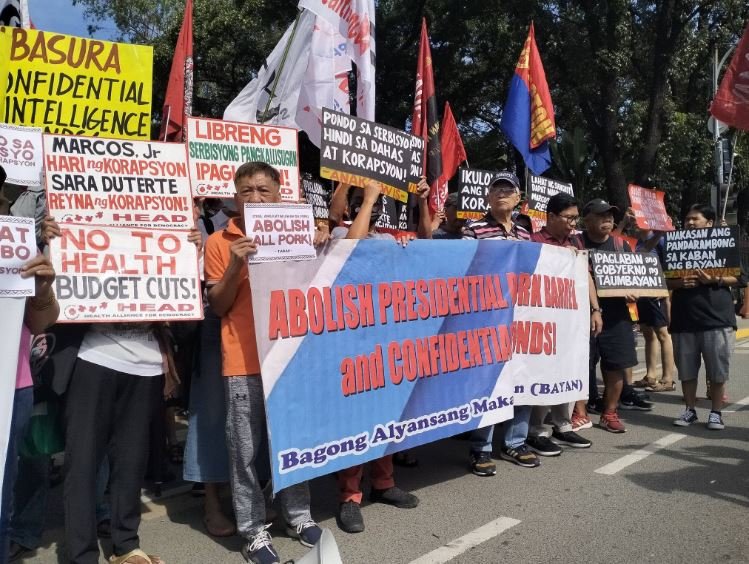
AFTER ALL THE outrage over the numerous insertions from where crooks drew loot in last year’s budget, President Ferdinand Marcos Jr. had just signed the 2026 General Appropriations Act which still contains pork barrel in the guise of unprogrammed funds.

For one, the so-called pork barrel is unconstitutional as stipulated under the 2013 Supreme Court decision — and again in 2025 when the High Tribunal ruled to order the executive branch to return the unused funds of Philippine Health Insurance Corporation (PhilHealth).

With the 2026 national budget still tainted with “pork,” House Deputy Minority Leader Rep. Edgar Erice (Caloocan, 2nd District) said he would question before the High Tribunal the remaining unprogrammed appropriations in the 2026 GAB, despite the veto by the President of P92.5 billion (from over P200 billion) and despite his enjoining the citizenry to be vigilant in watching against budget abuse.

“This is not enough,” said Erice, even as he reminded the President of the SC ruling which declared such an allocation as “unconstitutional.” 

“All unprogrammed funds, in any form, are unconstitutional. So I will have to challenge it before the Supreme Court. We’re already drafting the petition.”

He insisted that P43 billion should have been in programmed funds, particularly for the teachers’ gratuity pay, along with the local government shares of national taxes. 

He said if the government could not raise the funds for teachers’ gratuity pay, “does it mean susubain ng gobyerno and mga teacher at local government share. Diyan ako tumututol sa ganyang sistema.”

SHADOW OF PORK

ML Partylist Rep. Leila de Lima agreed, saying unprogrammed appropriations “bypass constitutional safeguards. Vetoing a considerably significant amount—or any amount—in unprogrammed appropriations is NOT the point. It is still shadow pork… they lack definite and identifiable revenue sources, bypass constitutional safeguards, and surrender congressional power of the purse to executive discretion,” she said in a statement.

“Isa pa: inamin mismo ni ES and former Finance Secretary Ralph Recto na halos wala na raw excess revenue to be collected. So, hindi po ba illogical nang magka-UAs, in the first place?” De Lima added.

The Makabayan bloc has this to say: “The 2026 General Appropriations Act signed today by the President perpetuates the pork barrel system, patronage politics, and systemic corruption in government.”

In a joint statement, ACT Teachers Party List Representative Antonio Tinio, Gabriela Party List Representative Sarah Elago, and Kabataan Party List Representative Renee Co, tagged the President’s veto of P92.5 billion in unprogrammed appropriations as a “token gesture meant to distract from billions in pork barrel funds.”

MEANT TO APPEASE

“The President’s much-touted veto of p92.5 billion in Unprogrammed Appropriations (UA) is nothing but “pampalubag-loob” —a token gesture meant to distract from the billions in pork barrel funds that remain untouched in the signed budget,” they said.

“By refusing to veto the DPWH ‘allocables,’ the President has ensured the continuation of the most entrenched system of corruption in government—one that involves lawmakers, DPWH officials, and private contractors in a well-oiled machinery of kickbacks, overpricing, and ghost projects,” the militant bloc added.

Marcos’ refusal to touch this system, the Makabayan bloc claimed, reveals his true priority — “maintaining Malacañang’s hold on Congress through the distribution of billions in infrastructure funds. Walang tunay na reporma, walang tunay na pagbabago. Only the preservation of a corrupt system that keeps him in power.” 

CONFIDENTIAL FUNDS

“Confidential and intelligence funds exceeding P11 billion remain in the budget, with no transparency or accountability for how these funds are spent.”

Band-aid assistance programs that fuel patronage politics have been massively bloated: P63.9 billion for AICS, P51.6 billion for MAIFIP, and P22.4 billion for TUPAD. 

“These are not solutions to poverty, unemployment, or lack of healthcare. These are tools for vote-buying and political control. These dole outs are not solutions to long-standing problems of poverty and underdevelopment. The people need jobs with living wages, free and quality healthcare, genuine land reform, and national industrialization to spur economic development,” Makabayan solons said.

While projects under the UA are those deemed on “standby” as they may only be executed if “revenue collection exceeds targets and when additional grants or foreign funds are generated,” these items in the budget have been criticized as another form of discretionary fund that is vulnerable to corruption.

Weeks before the signing of the GAA, several lawmakers questioned why the UA supposedly ballooned to over P200 billion.

WHAT REMAINS OF UA

Marcos retained in UA for 2026 the following items: 

• Support to Foreign-Assisted Projects (P97.30 billion)

• Program on Risk Management (P3.6 billion)

• Revised AFP Modernization Program (P50 billion)

In his speech, Marcos emphasized that UAs “are not blank checks” and guaranteed that its utilization “is provided with safeguards and is only available when clearly defined triggers and tests are met.”

“My administration will enforce these safeguards without exception to serve public interest and advance our national development goals,” he said.

EDUCATION & HEALTH

The Department of Budget and Management (DBM) described the 2026 national budget as a “decisive shift toward a people-centered development agenda that focuses on human capital and the aspirations of the next generation” with education still receiving the biggest allocation under the country’s annual spending bill.

The education sector, as mandated by the Constitution, got the lion share with P1.345 trillion or 4.36 percent of the country’s gross domestic product.  The fund is expected to “provide funding for the creation of 32,916 teaching and 32,268 non-teaching plantilla positions in public schools and expand funding for the construction of 24,964 classrooms nationwide.”

The health sector will receive “its highest budget level” at P448.125 billion to fund the Department of Health’s Universal Health Care Fund for Zero Balance Billing (ZBB), interventions for communicable and non-communicable diseases, disease surveillance, sustainable health financing and the employment of more doctors and nurses across the country.

OTHER KEY ALLOCATIONS

The agriculture sector got P297.102 billion in keeping with the Marcos administration’s push for food security through modernization of farming and fishing systems and supply chains.

Social services was given P270.18 billion, while P15.33 billion is earmarked for the country’s Disaster Rehabilitation and Reconstruction Assistance Program.

The allocation for local government units was hiked “to address local development challenges and enhance the well-being of every community,” the DBM said without giving a specific amount.

“The Executive received the enrolled bill on December 29, 2025 and conducted a thorough and careful review of the proposed budget to ensure consistency with the administration’s priorities and taking into consideration valuable recommendations from stakeholders,” DBM Secretary Rolando Toledo said.

The passage of the 2026 GAA comes as Marcos Jr.’s administration remains under fire for billions-worth of taxpayers’ money that was lost to substandard and non-existing flood control projects, as well as slow moving investigations and incarcerations personalities supposedly involved in the Philippines’ so-called “biggest corruption scandal.”

WATCHDOGS BARK

Watchdogs have criticized the persistence and ballooning of this fund on account of its potential for abuse. Many flood control projects discovered to be substandard or non-existent were funded through unprogrammed appropriations.

Watchdogs had earlier asked the President to act on over P633 billion in projects in the 2026 budget, including the P243 billion in “shadow pork” items or UAs.

The 2026 budget — particularly the process of Congressional scrutiny — is backdropped by criticism and outrage over what is estimated to be billions in public funds that were misspent in substandard or non-existent flood control projects.

Marcos’ trust ratings have plummeted amid the flood control controversy, which he unwittingly sparked with the launch of a crackdown on corruption in his 2025 SONA. The scandal has touched many parts of Philippine government and politics, including allies and even close friends and family of the President.

10 VETOED ITEMS 

In a press briefing following the signing, Acting Executive Secretary Ralph Recto said Marcos vetoed seven of the 10 items listed under UAs namely: 

• Budgetary support to government-owned and controlled corporations (P6.895 billion)

• Philippine government counterpart funding for foreign-assisted projects (P35.769 billion) 

• Fiscal support arrearages under the Comprehensive Automotive Resurgence Strategy (CARS) Program (P4.32 billion) 

• Revitalizing the Automotive Industry for Competitiveness Enhancement (RACE) Program (P250,000)

• Comprehensive insurance coverage for strategically important government assets and interests (P2 billion)

• Payment of Personnel Services Requirements (P43.245 billion)

Only three line items remain under UA, including support for foreign-assisted projects (P97 billion), military modernization (P50 billion), and risk management related to private-public partnership projects (P3.6 billion), reported Rappler.

Recto explained these three line items remained under UAs because they “did not make the cut” in planning for the 2026 budget but are already being implemented or are already set to be implemented.

Three items had been removed prior to submission to the President: SAGIP or Strengthening Assistance for Government Infrastructure and Social Programs (P80 billion), P210 million for the Refund of the Service Development Fee for the Right to Develop the Nampeidai Property in Tokyo, Japan, and P2 billion under the Marawi Siege Victims Compensation.

TRANSPARENT USE

Marcos vowed to make “transparent” the use of unprogrammed appropriations by “providing the necessary details on the funding source and the corresponding purpose.”

Funding for the Department of Public Works and Highways (DPWH), chief implementor for infrastructure projects, was also much lower compared to the proposed budget submitted by the executive to Congress. A bulk of this was because of the slashed funds for flood control projects.

For the first four days of January, the Marcos administration operated on a reenacted budget because of the delay in the law’s signing. 

“The year 2025 tested our nation on many fronts. We experienced climate-related disruptions, earthquakes, economic uncertainty, and the exposure of widespread corruption within our system,” said Marcos.

He added: “We are at a critical juncture in the implementation of this administration’s medium-term development plan and on the cusp of sweeping reforms in politics and in governance. The 2026 General Appropriations Act is a vital component in all of these,” Rappler quoted him as saying.


Cops Arrest Retired General For Sedition

0

THE RETIRED GENERAL who was earlier tagged to be behind the aborted coup plot in the last quarter of 2025 had just been arrested for inciting to sedition.

By virtue of an arrest warrant, operatives from the Criminal Investigation and Detection Group – National Capital Region (CIDG-NCR) handcuffed retired Major Gen. Romeo Poquiz shortly after arriving at the Ninoy Aquino International Airport in Pasay City.

Poquiz came from Bangkok, Thailand where he spent Christmas with his family.

According to CIDG-NCR chief Police Colonel John Guiagui, the arrest was executed in accordance with the proper procedure.

“Binasahan natin siya ng Miranda Rights niya. Pinaalam natin ‘yung warrant of arrest for inciting to sedition, which was ang nagbigay nito is ‘yung sa Quezon City Regional Trial Court 77,” Guiagui told reporters.

Interestingly, the retired general is among an estimated 100 military officials who signed a manifesto calling for President Ferdinand Marcos Jr’s resignation amid the so-called flood control scandal which involved his political allies — including his cousin former House Speaker Martin Romualdez.

Poquiz was arrested in connection with the sedition charges (which was later downgraded to inciting to sedition) for his participation in the protest action at the People Power Monument in Quezon City on November 16 and 17 last year.

From NAIA, Poquiz was brought to Camp Crame for processing, according to Atty. Ferdinand Topacio who is expected to post bail for the retired general’s temporary liberty.

As this developed, Topacio hinted at filing charges against Poquiz’s arresting officers, even as he claimed that the police allegedly violated the rights of his client. 

“So, we will make the people responsible to be held to account. For the violation of the rights of our client,” added Topacio who aptly described the arrest as a scare tactic of the administration.

“Ito po ay talagang very obvious na tinatakot po ng administrasyon na ito ang kanyang mga kritiko. Ito po ay ginawang sampol si General Poquiz na kapag ikaw ay nagsalita laban sa gobyernong ito, ito ang sasapitin mo.” 

Employment, Job Security Matter

0

A DECEMBER 30 post by the Department of Health DOH) on Facebook about close to 1,000 calls of mental health issues was widely publicized by mainstream media, as if this was the first time it was happening to the country.

To recall the mental health crisis reached its peak during the pandemic of 2019 to 2020 when mandatory lockdowns, social distancing and work and school stoppage were enforced.

Hospital deaths that rose by the day, including those of medical frontliners, were reported as mere numbers with the survivors hardly ever seeing their suffering loved ones.

SEASON OF HOPE

It is myopic for the DOH to cite (emotional problems) relational break-ups to be the cause of mental health – even suicide – particularly during the Christmas season when the country, which is dominantly Catholic and Christ-centered projects love and compassion more during the season of giving.

A more plausible reason for the nearly 1,000 calls during the Christmas holiday, most of which were logged by DoH on December 30, could be: unemployment; job security and global economic uncertainty that could affect the aspirations of many young people to seek and land jobs abroad for better wages.

Mainstream media, citing the DOH FB post, said a total of 961 callers reached to its Mental Health hotline at the National Center for Mental Health from December 1 to January 2.

The number of callers rose on December 30, 2025, mainly due to relationship or love-life problems, anxiety, and depressive symptoms,” the DoH added.

EXEC’S ADMISSION

DOH Assistant Secretary Albert Domingo said it was the first time the department tracked the number of calls to the mental health hotline.

Those in need of mental health support may call the National Center for Mental Health Crisis Hotline at 1553 or contact 0919-057-1553 and 0917-899-8727.

Domingo said that every call the NCMH hotline receives is considered a life saved.

On December 26, Health Secretary Teodoro Herbosa urged the public to exercise sensitivity and consideration during the holidays, noting that not everyone celebrates the season in the same way.

EXERCISE SENSITIVITY

He added that the DOH also observes an increase in suicide and depression cases during the holiday period.

Asked if 961 distressed calls are high, Herbosa told Inquirer that there is no cut-off in mental health to label a situation as alarming or not; what matters is that the DOH is ready to assist anyone who wishes to call.

KEY FINDINGS

The most common reasons for seeking help were: Relationship problems (including “love-life” issues); Anxiety symptoms; Depressive symptoms; Family problems and loneliness. Most callers were young adults aged 18 to 30, and the majority were female.

Health authorities noted that the holidays, while a time of celebration for many, can be a period of heightened emotional and psychological strain for others due to various stressors like family conflicts, financial issues, and social media pressure.

This was the first time the DOH actively monitored and released total call numbers for the specific holiday period, making direct year-over-year comparisons difficult.

AXA 2025 REPORT

Insurance company, AXA Philippines, said in its 2025 Mind Health Report that Filipinos aged 18 to 34 experience significantly higher levels of stress and mental health problems than their global peers, mostly triggered by financial instability and job insecurity, even though they are among the most proactive in seeking help.

A World Health Organization report released on September 1 said that globally, one in seven people aged 10 to 19 experiences a mental disorder.

It also noted that depression, anxiety, and behavioral disorders are among the leading causes of illness and disability among adolescents. Suicide is the third leading cause of death among those aged 15 to 29.

People in mental distress may seek help through the NCMH hotline at 0917-899-USAP (8727) for Globe; 0908-639-2672 for smart; or 1553 (landline to landline, toll-free).

You may also call Hopeline PH: 0917-5584673, 0918-8734673, 88044673 or visit ngf-mindstrong.org and its Facebook account: Hopeline PH.

MILLENNIALS AND GEN Z

AXA’s 4th edition report noted a surge in stress, anxiety and depression among Filipinos, yet mental health remains stigmatized and overlooked.

The report focused more on the working population’s mental health and wellbeing and providing actionable solutions to mitigate them.

Raising awareness and fostering open discussions are crucial to ensuring access to support and resources for all.

The AXA report reveals alarming rates of mental distress among young Filipino employees, particularly 18-24-year-olds, who are disproportionately affected by severe anxiety, stress, and depression compared to older age groups. In fact, 48% of 18-24-year-olds and 42% of 25-34-year-olds reported suffering from mental health conditions, significantly higher than the total population (34%) and their older counterparts.

When it comes to employee expectations for mental health support, 83% of Filipino respondents agreed that mental health benefits and initiatives are very important and will influence their decision to stay in their current company. Specifically, 43% said that companies can better support them by providing access to mental health professionals, while 38% mentioned extended medical policy to cover mental health care.

UNHEARD, UNDERVALUED

Many young employees feel unheard and undervalued in the workplace.

Based on the report’s Mind Health Index (MHI) mental illness is categorized — in four distinct states: flourishing, representing the pinnacle of good mind health; getting by, describing those who may have some areas of good well-being but not enough to reach the state of flourishing; languishing, representing the absence of positive wellbeing; and struggling, reflecting the absence of wellbeing in most areas – a significant portion of under-25s is “languishing” or “struggling” with their mental well-being, often due to difficulty in acknowledging their own challenges or seeking assistance.

Of those surveyed, 29% said that training/coaching to managers on how to be a good people manager can help them have a better workplace experience.

Two out of three would also ask support from their manager due to work impact on their psychological well-being. This means, employees are open to share their thoughts, ideas, and concerns, if given the opportunity such as during regular check-ins, one-on-one meetings, or team discussions.

Actively seeking feedback and acting on it may also show employees that their opinions matter.

SUFFERING BURNOUT

One third of those surveyed admitted experiencing burnout, with a higher incidence among the youth.

This is because young professionals are more likely to find work demands unmanageable, making it difficult for them to keep up with the pace of change. Additionally, they may lack the soft skills needed to better manage their workload, as they are just beginning their careers.

Beyond offering flexible work arrangements, such as remote work options, flexible hours, and generous vacation policies, 38% of surveyed Filipinos said that it’s important for them to also have mental health care days, or any programs that encourage them to take breaks, disconnect from work during non-work hours, and prioritize their well-being.

The report said that younger generations are particularly affected by issues such as technology addiction, social media, body image, and uncertainty about the future. When these concerns are coupled with lack of proper guidance and awareness, they can lead to feeling lost and disengagement.

While learning and development training sessions for career advancement encourage employees to explore their interests and develop new skills, 49% of Filipino respondents shared that they also appreciate access to comprehensive mental health resources, including workshops that improve their mental health knowledge and practice. Such special well-being courses can help them better manage and understand certain psychological stress that they may experience at work.

WORKPLACE CULTURE

Of the total respondents that experienced burnout due to work, two out of five were not satisfied with the way their company reacted or provided support. This shows how further companies still have to go.

The report also identified common obstacles to care among young people, including stigma, financial concerns, and apprehensions regarding confidentiality.

This emphasizes the need for more young people to access the right support and find a safe space that can safeguard their mental well-being during this crucial phase of their lives.

A workplace that openly celebrates diversity, encourages teamwork, and recognizes employee contributions, not only fosters social interaction and team building but also strengthens relationships and, ultimately, cultivates a sense of community.

MENTAL RESILIENCE

Rea Villa, senior psychologist of Mind You, emphasized, “Initiatives like these not only provide immediate relief from stress but also play a crucial role in building psychological resilience over time.

Regular access to counseling and mindfulness practices can significantly reduce the risk of long-term mental health issues, such as anxiety and depression, by equipping individuals with coping mechanisms and promoting emotional regulation.”

Through its partner, Mind You, an organization committed to providing cost-effective, accessible mental health support for both individuals and large working communities, AXA Philippines offers healthcare and critical illness plans that cover mental health counseling by licensed psychologists.

Within the organization, AXA recognizes the importance of employee well-being and has implemented various programs and initiatives to support its workforce. A range of Mind Health initiatives were made available such as access to free counseling services, stress management workshops, and mindfulness programs.

Origins And Pitfalls Of LOA In Customs Enforcement

0

ONE OF THE most potent — and often dreaded — enforcement mechanisms utilized by the Bureau of Customs (BOC) is the Letter of Authority (LOA).

In practice, an LOA is perceived as a command emanating from the highest official of the agency, issued by the Commissioner of Customs whenever the Bureau seeks to exercise visitorial power as provided under Section 224, Chapter 3, Title II of the Customs Modernization and Tariff Act (CMTA).

This raises fundamental questions: What exactly is LOA in the customs context, and when did it first emerge as an enforcement instrument of the BOC?

The authority for the Customs LOA is traced to Section 4.6.1 of Customs Administrative Order (CAO) No. 03-2019, approved on 08 April 2019.

CAO No. 03-2019 is an administrative issuance promulgated by the Commissioner of Customs and approved by the Secretary of Finance. As such, LOA in legal contemplation, is an administrative creation. It can neither rise above, nor expand beyond, or run roughshod over the statute it purports to implement—the CMTA, let alone the Constitution.

Notwithstanding this limitation, the prevailing institutional view within the BOC appears to be that the issuance and use of LOA need not be anchored on any express legislative authorization.

Under CAO No. 03-2019, LOA is defined as “a written authorization signed by the Commissioner of Customs in the exercise of the power to visit and inspect premises and goods, identifying the Customs Officers authorized to demand evidence of payment of duties and taxes on imported goods openly offered for sale or kept in storage,” citing as its basis Section 224, Chapter 3, Title II of the CMTA.

As a matter of historical record, LOA first surfaced as an enforcement tool following what was then considered the largest raid conducted by the BOC in the Binondo area. In that operation, more than two hundred (200) commercial stalls were ordered padlocked for failure to present proof of payment of duties and taxes on merchandise openly displayed for sale.

At the time of the Binondo raid, there was no existing Customs rule prescribing the form of LOA, no guidelines governing its issuance, and no standards regulating its use or enforcement. The relevant CAO was promulgated only after those raids had already been carried out.

Significantly, these events transpired under the regime of the Tariff and Customs Code of the Philippines (TCCP), the predecessor statute of the CMTA. Section 224 of the CMTA was reportedly derived from Section 2536 of the TCCP. Yet, the TCCP itself made no reference whatsoever to a Letter of Authority. This historical context marks the provenance of the first LOAs issued by the BOC.

Equally noteworthy is the fact that during the congressional deliberations on the CMTA, the concept, scope, or use of LOA was not the subject of legislative discussion. Consequently, LOA was never codified in the CMTA, unlike that of the Bureau of Internal Revenue (BIR), which is provided for under the National Internal Revenue Code.

Despite its non-codification, the Customs LOA, over time, has been utilized as an instrument in the pursuit of alleged tax fraud.

At present, the use of LOA in customs enforcement is governed solely by CAO No. 03-2019. Its relative ease of issuance and broad applicability have rendered it the enforcement tool of choice for customs officials tasked with running after alleged tax evaders.

Currently, LOAs have been employed to pursue consignees of imported goods even after such goods have already been cleared and released by port authorities. It has also become so pervasive that other regulatory agencies—and even media organizations—have in some instances sought the assistance or participation of the BOC in enforcement activities primarily on the strength of the latter’s ability to issue a LOA.

As earlier discussed, the Customs LOA remains devoid of any explicit legislative mooring. Only Section 224 of the CMTA is frequently invoked as its legal basis, yet a close reading of that provision reveals no express reference to a LOA as an enforcement mechanism. 

What Section 224 confers is the power of the Commissioner of Customs to visit and inspect premises and, when necessary, to demand evidence of payment of duties and taxes on imported goods openly offered for sale or kept in storage—powers that, by the statute’s own terms, may be exercised even without the creation or issuance of an LOA. Nowhere in Section 224 ever mentioned Letter of Authority.

And in light of the Wenle Guidelines promulgated by the Supreme Court in G.R. No. 242957 on February 28, 2023, the BOC needs to revise, adjust, update, or modify its rules and procedures on the issuance and execution of LOA.

The most notable in these Wenle Guidelines is: The LOA, as a form of administrative warrant, “must not pertain to a criminal offense, or be pursued as a precursor for the filing of criminal charges.” And “any object seized pursuant to such writ [LOA} is inadmissible in any criminal proceedings.”

The Wenle Guidelines seem stringent, but that is how the Supreme Court crafted the framework aimed at eliminating abuses in the implementation of all administrative warrants–including LOA, occurrences prevalent not only in the BIR but in BOC as well. 


Yes, the Customs LOA cannot be used in filing criminal offenses. Deviation from the Wenle Guidelines will expose the responsible officers and agents to what the High Court denominated as “a prima facie proof of usurpation of judicial function, malfeasance, misfeasance, nonfeasance, or graft and corrupt practices” punishable by the laws for being repugnant to the Constitution.

The new BIR leadership immediately acted on the complaints; Commissioner Charlito Mendoza “grabbed the bull by its horns”–he suspended the issuances of BIR LOAs, including the implementation of those about to be served.

That was the first official issuance of Commissioner Mendoza — quick, resolute, determined. Unfortunately, we didn’t see a similar response from its port-based counterpart.

Decimated Villar No Longer PH’s Richest Man?

0

IF THE MAJOR reshuffling of the leaders and losers of the Philippine Stock Exchange (PSE) is any indication of the new year, then it will be an even harder year for the Villars and a prosperous one for the Razons.

As 2025 closed, Ricky Razon, who leads global port operator International Container Terminal Services Inc. (ICTSI), made a surprising overtake of industry favorites in a major reshuffling of the stock market.

MAJOR WINNERS

ICTSI climbed 41 percent year on year in its market capitalization, or roughly P1.14 trillion, pushing it to the top from the third spot in 2024.

This was also after a P330-billion gain, the biggest among all listed firms, surpassing the gains of Manny Pangilinan and Lucio Tan’s companies.

Razon also got major bags from his two other firms—Apex Mining Co. Inc. and Manila Water Co. Inc.—with P47 billion and P34 billion, respectively.

Manny Pangilinan’s group also recorded big gains, with Manila Electric Co. (Meralco) and Philex Mining Corp. posting P99 billion and P41 billion.

Meanwhile, Lucio Tan–led Philippine National Bank also had a strong year with a P40-billion gain.

BIGGEST LOSERS

Meanwhile, the business and political clan of Villar, led by their patriarch Manny Villar, continued to suffer major losses as 2025 came to a close.

Villar Land Holdings Corp. suffered a massive loss pegged at P806 billion, which accounts to more than half of its market capitalization.

Other losers include SM Investments Corp. with P255 billion, Ayala Corp. with P155 billion, Jollibee Foods Corp. with P97 billion, and Globe Telecom Inc. with P84 billion.

In property, SM Prime Holdings Inc. suffered a loss worth P83 billion, while Ayala Land Inc. lost about P73 billion.

RICHEST NO MORE

From being the country’s richest man for years, Manny Villar was easily replaced not just because of Razon’s gains but also because of controversies exposing irregularities and incompetence among Villar’s firms.

Having reached the peak of its fame and fortune during the administration of their close ally, former President Rodrigo Duterte, the transition from a Duterte-led government to one in which the Dutertes hold almost no government power does not put the Villars in a good place.

Notably, 2025 was the year consumers finally had enough of the dreadful services of Villar’s PrimeWater and made it a national issue, exposing the company.

A DISMAL FAILURE

For the longest time, PrimeWater has been raking in lucrative revenues through Joint Venture Agreements (JVA) with local water utility companies and cooperatives which effectively gave the Villars the right to operate, distribute and collect for the “water services” in as many cities and municipalities.

However, instead of the improvements expected from the firm of the country’s richest man, what consumers got was a water nightmare born out of incompetence, if not outright negligence.

Consumers suffered years of poor to no water supply, muddy water, and terrible customer service, yet faced quick disconnections if bills were unpaid.

ENOUGH IS ENOUGH

The result: 61 of 70 local water utilities (LWUs) under JVAs with PrimeWater are dissatisfied, 24 issued notices of pre-termination, and 25 in the process of terminating JVA as of December.

But throughout those years of suffering, the Villars got their “unfair” share of profits.

From P196 million in 2017, their profits climbed to P1.8 billion in 2023, far from Cynthia Villar’s claim in an interview that they barely made profits from it.

As of December, Crystal Bridges Holdings Corporation of Lucio Co. acquired PrimeWater from the Villars, but consumers are still worried that things will remain the same, just under a different name.

THE REAL VALUE

The most significant factor in Villar’s fall was the discovery that the appraisals of newly acquired land inside Villar City did not comply with International Valuation Standards.

The Villars boasted a P1.33-trillion valuation, but the celebration did not last long when auditor Punongbayan & Araullo refused to sign on the fair-value adjustments, questioning the appraisal methodology.

As it turned out, the firm behind the P1.33-trillion valuation, did not comply with International Valuation Standards. Worse, the real value was barely P35.7 billion.

This immediately pulled Villar out of the richest-man throne.

VILLAR BRAND

More recently, Villar-controlled Siquijor Island Power Corporation (SIPCOR) lost its permit to operate in Siquijor after the Energy Regulatory Commission (ERC) determined that it had failed to deliver on mandated service improvements.

This marked the first time the government firmly revoked the operating authority of a Villar asset, and it might not be the last.

SIPCOR and PrimeWater had similar stories of failing to deliver service improvements. Reports indicate that PrimeWater failed to abide by the JVA in terms of performance duties.

Moreover, other firms of the clan, such as Vista Malls and AllDay Marts, are losing customers and profits.

AllDay suffered a revenue decline to P9.25 billion and a drop in net income to P268 million.

BUSINESS IS POLITICAL

“The PSEi’s decline this year is not just about numbers—it’s about trust and confidence,” noted PSE President and Chief Executive Officer Ramon S. Monzon.

“The corruption scandal, the deteriorating peso, and disappointing GDP performance for the third quarter clouded the economic outlook and triggered persistent selling by foreign investors,” Monzon added.

Razon’s rise is an example of a priority shift among investors, while Villar’s fall shows how business falls when confidence falls.

If the government truly wants to attract more investors, it needs to do the hard work of going after irregularities in the business sector and rewarding true good business as the leaders of the industry.

Filipino Educator Conferred With Royal MBE Award

IN A MOMENT OF QUIET triumph resonating far beyond the halls of Buckingham Palace, Filipino education leader Edison David has been conferred the prestigious Member of the Most Excellent Order of the British Empire (MBE) by His Majesty King Charles III, as part of the 2025 New Year Honours List.

Published in The Gazette, the official newspaper of the British Crown, the royal citation recognizes David’s outstanding and sustained service to education in the United Kingdom—a distinction that places him among a select group of global achievers whose work has made a lasting impact on society.

HISTORIC MILESTONE

David is widely believed to be the first Filipino of heritage to receive an MBE specifically for contributions to education, marking a historic milestone not only for the Filipino diaspora but for the Philippines itself.

“I never did my job thinking I would one day receive an MBE—not even in my wildest dreams,” David told BusinessWorld. “I simply made sure I worked hard every day and gave my best, because if you don’t start with excellence, there’s no point in doing it.”

DAVID’S HUMBLE ORIGIN

David’s journey began far from royal ceremonies and international recognition. In 1994, he started his teaching career in a public school in Tarlac City, armed with little more than dedication, discipline, and an unshakable belief in education as a force for transformation.

What followed was not overnight success, but decades of perseverance. After moving to the United Kingdom, David steadily built a distinguished career in British education—one defined by school transformation, inclusive leadership, and measurable impact.

EXECUTIVE HEAD TEACHER

Today, he serves as Executive Headteacher of Outstanding-rated schools in the London Borough of Lambeth, a Lead Inspector for Ofsted (the UK’s national education inspection body), and a School Improvement Adviser working with school leaders to raise academic standards, particularly for disadvantaged pupils.

Under his leadership, multiple underperforming schools were turned around—achieving Outstanding Ofsted ratings, reversing financial deficits, improving pupil outcomes, and earning national awards, including TES Primary School of the Year and the National Pupil Premium High Aspiration Award.

WHAT MBE REPRESENTS

The MBE is one of the United Kingdom’s most respected civilian honors, awarded to individuals whose service has produced long-term, significant impact. 

Past recipients include internationally renowned figures such as Adele and Steven Gerrard, underscoring the prestige of the recognition.

For David, however, the honor is deeply personal—and collective.

“This award is not just for me,” he said. “It is for every Filipino teacher working tirelessly in classrooms, whether overseas or back home.”

PH EDUCATION CRISIS 

Despite building most of his career in the UK, David has never severed his connection to the Philippines. 

He has actively reached out to Philippine education leaders, including Senator Paolo Benigno ‘Bam’ Aquino IV, offering evidence-based policy recommendations to help address the country’s learning crisis.

One of his key advocacies is the nationwide adoption of synthetic phonics and a structured reading program—an urgent need highlighted by EDCOM 2 data, which shows 24.8 million Filipinos are functionally illiterate.

“There are Filipinos abroad who have earned knowledge and wisdom that can help strengthen our education system,” David emphasized. “What matters is that we listen—and act.”

SHINING MOMENT FOR PH

The formal investiture ceremony, expected to be held in the Throne Room of Buckingham Palace or Windsor Palace will officially confer the medal in the coming months—either by King Charles III himself or a senior member of the Royal Family.

Yet beyond the ceremony lies a deeper symbolism.

David’s journey—from a public school classroom in Tarlac to the pinnacle of British educational leadership—stands as a powerful reminder that Filipino excellence knows no borders.

RESILIENCE & HUMILITY

“I may have spent most of my professional life in the UK,” he said, “but my roots are firmly in the Philippines. I carry with me resilience, humility, hard work, and a deep belief in the power of education to transform lives.”

In honoring Edison David, the British Crown has also, in its own way, honored the Filipino teacher—quietly shaping minds, lifting communities, and carrying the Philippine flag with pride wherever learning takes place.

Frasco Starts 2026 With Fiasco

SEEMS LIKE 2026 started bad for Tourism Secretary Ma. Christina Garcia- Frasco.

First, a photographer whom she allegedly commissioned to shoot from Luzon, Visayas and Mindanao decried the use of a file photo of her for a private magazine that had her for its cover instead of the thousands of shots done but were all just discarded.

Next, the Commission on Audit (COA) flagged the questionable fund disbursements in 2024 totalling P48.832 million due to missing or insufficient supporting documents.

To recall, her husband, Liloan Cong. Duke Frasco brought her and other local government officials to London just when tropical storm Tino was lashing the entire province (including his district, Liloan) and just soon after a deadly earthquake devastated the entire Cebu leaving so many dead, and destroying private properties and government infrastructures.

Stories on the London trip caused a public outcry and the officials were ordered to explain why such travel could not be shortened or aborted to help their constituency.

STATE AUDITOR’S REPORT

COA said the Department of Tourism (DOT) central office (CO) and regional offices (ROs) IV-B, IX, X and XI disbursed a total of P48.832 million for various transactions but failed to submit documents necessary to establish the validity of the expenses.

“The lack of certain documentary requirements in the disbursement totaling P48,832,191.57, paid by the DOT CO and ROs IV-B, IX, X, and XI, led to non-compliance with various accounting, auditing and budgeting LRRs (law, rules and regulations) and issuances, thereby casting doubt on the propriety of these transactions,” the COA report was quoted by the Philippine Star.

The audit showed that the bulk of the questionable disbursements came from the CO, which accounted for P39.183 million for alleged payments to “foreign service providers” related to the DOT’s participation and sponsorship in tourism events.

DEFECTIVE DISBURSEMENTS

COA noted that while the payments were covered by five disbursement vouchers, they lacked the required certification of availability of funds from the CO’s chief accountant.

Additional deficiencies cited included the improper use of budget terminology, lack of details on the source of funds and the absence of Certification of Budget Allotment in project proposals.

DoT RO IX was flagged for P8.826 million in disbursements for salaries and wages of regular and job order personnel.

The regional office was also cited for granting Collective Negotiation Agreement incentives of P30,000 each to 13 employees, or P388,500 in total, without sufficient supporting documents.

SHADOW OF CORRUPTION

RO X, for its part, was flagged over its procurement of furniture sets worth P364,200, which were certified as inspected and accepted despite incomplete delivery and non-compliance.

COA also flagged RO IV-B’s disbursements amounting to P55,962.52 for repair and maintenance expenses, citing the absence of required documents.

RO XI was likewise cited for P14,396.45 in reimbursements for the travel expenses of three job order personnel, as the submitted documents lacked the required certifications.

MAGAZINE SPONSORSHIP

The DoT labeled as “false and misleading” the claims insinuating that government funds were used for the newbie Philippine Tropics magazine that shows Frasco on its cover.

The DOT stressed that Philippine Topics is a private publication and not an official magazine of the DOT. “The Department did not contract, pay, commission, or direct the magazine to produce its cover or feature story,” the DOT statement was quoted by Politiko..

“The content, including the selection of images and text, was produced entirely at the magazine’s editorial discretion.”

The DoT said it “did not provide any photographs, guidance, or funding for the feature. Philippine Topics independently covered activities related to World Expo Osaka 2025 and used its own coverage in their magazine.”

“Any claim suggesting that the Department or the Secretary used public office or resources for personal promotion is false, misleading, and expressly denied,” the statement said.

PREFERRED PHOTOGRAPH

The DOT also addressed the now-deleted Facebook post by photographer Max Abasolo, which read: “You made us shoot from Region 1 to Region 13… almost 320 tourist spots, 236,000 photos, 6,500 video materials. Then this is the one you use, DOT.”

“With respect to claims made by a certain photographer, the DOT clarifies that it did not supply the photograph in question to Philippine Topics. At no time did the Department instruct, select, approve, or endorse any photograph for the magazine. Any implication that the DOT chose or favored the use of an image of the Secretary over destination-focused materials is entirely false and without factual basis,” the DOT said.

“The Department views the dissemination of these false claims with serious concern. Misrepresenting official acts, fabricating affiliations, or implying improper use of public resources undermines public trust and misleads the public,” it added.

The department said it remains steadfast in its commitment to transparency, accountability, and the ethical promotion of Philippine tourism.

WHEN IT MATTERS MOST

Last November, Cebu 5th District Rep. Duke Frasco and seven mayors from his district faced administrative and criminal complaints before the Ombudsman Visayas for abandoning posts to travel to London at the height of Typhoon Tino which killed over 200 people, mostly in Cebu.

A complaint, filed by Atty. Julito Anora of Cebu accused the officials of “gross negligence, grave misconduct, dereliction of duty, and breach of public trust” for being abroad while their towns were suffering from floods.

Summoned by the Ombudsman-Visayas to explain such heartless travel were: Liloan Mayor Aljew Fernando Frasco, Catmon Mayor Avis Ginoo-Monleon, San Francisco Mayor Alfredo Arquillano Jr., Tudela Mayor Greman Solante, Pilar Mayor Manuel Santiago, Compostela Mayor Felijur Quiño, and Poro Mayor Edgar Rama.

PROTECT SANDRO!

0

THE PRESIDENT IS on the verge of having to choose between his political career and the love for a son he’s been grooming to follow his footsteps, following a miscalculated exposé on what has become the biggest scandal ever to rock the government.

For one, the revelation made by President Ferdinand Marcos Jr. on the ghost flood control projects exposed a systemic corruption that has long been embedded in government-funded infrastructure projects.

However, Marcos didn’t quite expect that the scandal would go beyond control after his son, House Majority Leader and Ilocos Norte 1st District Rep. Sandro Marcos, gets dragged into the fund mess.

Data collated by the Philippine Center for Investigative Journalism (PCIJ) showed a national budget marred by billions worth of budget insertions primarily designed to serve the interest of the powers that may be.

ENABLING FUNDS 

Funds intended to build bridges connecting people, streetlights making roads safer, and classrooms for the youth literally made the wealthy politicians richer beyond one’s imagination.

The congressional investigations “in aid of legislation” saw the Department of Public Works Highways (DPWH) renege on its mission — to “enable a comfortable life for Filipinos through safe, reliable and resilient infrastructure.”

While the DPWH budget didn’t serve the purpose for which it was allocated, it enabled lawmakers and high-ranking executive officials to pocket billions in kickbacks. 

UNLAWFUL PORK

Sometime in 2013, the Supreme Court ruled to declare the Priority Development Assistance Funds (PDAF) or congressional pork barrel unconstitutional.

The ruling effectively restrained the Department of Budget and Management (DBM) from releasing PDAF.

According to the high tribunal, the law’s provisions allowing legislators to determine the funded projects and related practices are deemed to be an abuse of legislative and executive powers.

Aside from PDAF, the tribunal declared the use of Malampaya funds in other projects other than energy-related initiatives as unlawful. It also found releases of the Presidential Social Fund for infrastructure projects without constitutional basis.

WHAT’S IN A NAME?

Despite the Supreme Court ruling, pork barrel has remained under the guise of a jargon — allocable, which serves as funds being set aside by the DPWH for congressional districts. 

According to a civil society group which calls itself People’s Budget Coalition, allocable funds represent a new form of pork.

“It’s discretionary, politically motivated, and directed toward politically determined projects that crowd out more equitable and accountable public spending.”

Interestingly, the term “allocable” is not mentioned under the General Appropriations Act (GAA) from the time Marcos became President, to date.

HIGHEST ALLOCABLE

According to the data collated by the PCIJ, the highest shares of nearly P1.2 trillion in “allocable” funds have gone to President Marcos’ son Sandro Marcos and former House Speaker Martin Romualdez.

The young Marcos got a whopping P15.8 billion while Romualdez cornered P14.4 billion, from 2023 to 2025. 

The remaining 251 district representatives in the previous Congress were each allotted P1 billion to P10 billion in allocables during that period.

Congressmen closely identified with Vice President Sara Duterte however got zero “allocables” in the final version of the 2025 budget.

STARK MISMATCH

The amount of “allocable” for the young Marcos’s congressional district with a population of around 320,000 is twice as much as the P7.8 billion given to Rizal’s first congressional district with a population of 1.2 million.

Documents also showed political maneuvering perpetrated by both legislators and DPWH officials for so-called “non-allocable” projects. 

These are projects that the DPWH proposes, supposedly based on an infrastructure masterplan that is premised on poverty alleviation, disaster mitigation, and service provision.

Previously, the late DPWH Usec. Catalina Cabral was asked in a congressional hearing to explain what the term “allocable” meant.

Cabral said that allocable is the “ceiling budget” that each engineering office gets, based on a “parametric formula” that her chief, former secretary Manuel Bonoan, instructed her to make.

MODERN-DAY PORK

According to formrr DPWH Usec. Roberto Bernardo, allocables are the current form of pork barrel but with a twist — amounts are determined by the executive.

Interestingly, lawmakers can decide how those amounts should be spent. Unlike the old pork, “allocables” are itemized and decided on by Congress before the budget is enacted, not after.

With his father at the helm of the executive branch, it’s not surprising the Sandro got the biggest slice of the pork barrel among all district congressmen in 2025. 

His father’s first cousin got the second biggest amount.

No Way To Dump Pork In 2026 Budget

0

DESPITE THE transparency theatrics, political capture of the budget remains intact. Hundreds of billions of pesos are still embedded in pork-like discretionary allocations, fragmented line items, and executive-legislative patronage channels.

IBON Foundation Executive Director Sonny Africa opined that “once the anti-corruption spectacle subsides, it will be clear that what remains is a fiscal structure oriented toward short-term political survival rather than long-term development.”

JUST FOR A SHOW

He said that as with previous budgets, the 2026 budget reinforces a consumption-led and patronage-driven growth model that stifles domestic productivity and deepens poverty, inequality, and dependency. 

“Domestic agriculture, Filipino industrialization, and strong public provision of education, health, housing, transport, water, and electricity remain secondary concerns at best,” he stressed.

The P6.8 trillion 2026 national budget generated immense political drama and moral spectacle in the second half of the year, consuming a large share of the public’s attention. 

“Yet, in this moment of pause  — after Congress’ ratification and as the budget awaits the president’s signature – an unsettling thought rises to the surface. For all the noise, the budget remains strikingly hollow in terms of genuine developmental transformation.”

NO DEVELOPMENT TALK

Africa noted that discussion of the national budget for 2026 has been engulfed in corruption exposés, pork barrel controversies, and public moral drama — and much political posturing. The issues raised are certainly serious and deserve scrutiny.

Yet the fixation on scandal has also obscured the more fundamental question of whether the budget meaningfully addresses the country’s deep and persistent development problems, which remains largely  unaddressed.

In quantitative terms, the 2026 budget is only marginally expansionary. Its 7.8 percent growth is smaller than the increase in the 2025 budget, below the 10.6 percent historical average over the past four decades, and far short of what is needed to stimulate robust growth or drive structural change. 

“At a time of weak domestic production, fragile employment, and rising vulnerability, the budget’s scale and ambition fall short,” Africa said.

PRESERVING THE PORK

Qualitatively, some of the most blatant pork barrel allocations were trimmed or reworked, but the overall spending framework remains fundamentally unchanged. 

The budget does not decisively pivot toward building agricultural and industrial capacity, generating decent jobs, reducing inequality, or expanding public provision of essential services and utilities. 

Given the depth of the economy’s problems, each annual budget should be a deliberate step toward structural transformation. 

Instead, long-standing mispriorities are once again reproduced.

OBLIVIOUS TO POVERTY

As it is, the proposed budget is structurally oblivious to how poverty, hunger and joblessness have been growing since the start of the Marcos administration. 

Since June 2022, the number of poor Filipino families has grown by two million and of hungry families by 3.3 million, according to Social Weather Station (SWS) surveys. 

Adjusting for seasonality and including discouraged workers, IBON estimates at least a million more Filipinos have become jobless.

Joblessness, poverty and hunger stem from how agriculture and manufacturing have collapsed under the Marcos Jr administration. Agriculture’s share in gross domestic product (GDP) has gone down to just 7.7% of GDP and of manufacturing to just 17% in the first three quarters of 2025 — compared to 8.9% and 18.7%, respectively, in 2022.

ANTI-PORK HYPE

The much-publicized P1.35 trillion allocation for education, supposedly equivalent to 4.4% of GDP, is “historically symbolic but structurally incomplete.”

It is an important starting point, but remains to be seen whether such will be sustained long enough in subsequent budgets to reverse learning losses, address teacher shortages, upgrade facilities, and link education to industrial and technological policy. 

Without continuity, the gains will be fleeting.

More budget increases should go beyond boosting salaries and administrative costs to also include more sustained transformative investments in classrooms, research, and technical capacity.

EDUCATION SPENDING

Education spending becomes far more transformative when it is explicitly linked to an employment strategy and a coherent Filipino industrialization strategy. 

Absent this integration, higher allocations will deliver social benefits but remain economically underleveraged — producing graduates but without expanding productive opportunities at home.

The P255 billion realignment away from the Department of Public Works and Highways (DPWH) is potentially positive, given the agency’s long-standing association with pork barrel politics and rent-seeking. 

But, the shift appears narrowly focused on flood control projects, while other pork-risky allocations for roads and major infrastructure remain largely untouched.

FROM HARD TO SOFT

There is also strong reason to suspect that this is less a reform than a redistribution of discretion – pork barrel from hard infrastructure projects was just redirected towards soft pork barrel projects.

There are huge increases in budget items politicians will distribute as largesse. 

The Assistance to Individuals in Crisis Situation (AICS) goes up to P63.9 billion, Medical Assistance to Indigent and Financially-Incapacitated Patients (MAIFIP) to P51.6 billion, Tulong Panghanapbuhay sa Ating Disadvantaged Workers Program (TUPAD) to P22.4 billion, and Presidential Assistance for Farmers and Fisherfolk Program to P10 billion. 

REDIRECTED PORK

Some hard pork actually remains equally hard but were just shifted from the controversial DPWH — such as P33 billion in farm-to-market roads for the Department of Agriculture (DA), which woefully lacks the capacity to implement these.

Developmental impact hinges not on where funds are removed, but on where they ultimately land — especially when controversy is selectively tolerated. It is also suspicious that the President kept the P4.6 billion in confidential and intelligence funds for his office intact.

ANTICIPATING 2028

Politically, the President will be signing a budget that projects an image of restraint against traditional political meddling and patronage. Yet Congress deliberately framed these safeguards too weakly and too vaguely to be effective.

For one, they did nothing to address the hundreds of billions of pesos in pork barrel “allocables” and “non-allocables” already embedded in the National Expenditure Program (NEP) even before congressional insertions in the House and Senate.

It is more likely that the budget approved by Congress will be signed largely intact, perhaps accompanied by a few symbolic vetoes as another display of reform. 

POLITICAL SURVIVAL

Substantively, the budget signals a clear strategy of elite consolidation rather than of succumbing to popular mobilization. 

Executive discretion and congressional largesse are preserved to secure short-term political stability among allies, not to advance long-term national development.

As the administration enters 2026 with an eye on 2028, it does so with a budget that manages politics but not development. Designed for political survival, it paradoxically leaves the government more exposed to public anger as corruption persists and growth remains shallow, exclusionary, and immiserating.

FUTURE EXPECTATIONS

The President’s political calculation with his allies in the Senate and HOR have actually left little space to discuss chronic food insecurity and high prices, rural backwardness and industrial stagnation, or worsening joblessness and informality.

The budget that will soon be signed into law is rhetorically reformist but fundamentally politically functional, achieved at the expense of social and economic transformation. 

It reinforces the very structural weaknesses it claims to confront — and in doing so, sets the stage for further political turbulence and economic drift in the year ahead.

Report: Online Scammers P4T Richer In 2025

0

NOT EVEN THE enactment of laws primarily designed to prevent cybercrimes seemed enough to keep the country safe from modern-day con artists, says a report released by the Trans Union of the Philippines (TUP).

Citing Top Fraud Trends Report, the TUP categorically described the Philippines as “vulnerable” to cybercrime and digital fraud, for which country-based businesses and consumers have incurred staggering P4 trillion losses covering the first half of 2025.

“Fraud is no longer a peripheral risk but a systemic threat to business, consumers and the economy,” TUP chief commercial officer Yogesh Daware said in a statement.

“It also highlights the need for a stronger, bolder approach to identifying and preventing potentially fraudulent digital activity,” Daware added.

FRAUDULENT SCHEMES

He said that “first-party fraud” — where misrepresented identities or falsified information are used for financial gain— emerged as the leading cause of fraud loss in the country as reported by 25% of Philippines business leaders. 

TUP surveyed 200 business leaders in the country.

“This is significantly higher than the global average of 16% and signals a distinct local vulnerability,” he said.

“Equally concerning is scam or authorized fraud, which was also reported by 25% of Filipino business leaders as the most prominent cause of fraud losses. These schemes trick individuals into willingly giving up something of value like sensitive information, account access or money, often through social engineering tactics,” he noted.

EXTREMELY WORRIED

According to Daware, 70 percent of the Filipino business leaders who took part in the study said they are “very or extremely concerned” about fraud’s impact on their business.

Under such circumstances, the Philippines ranked third in the list of countries classified as “most worried” globally across the six markets surveyed, 

Topping the list is the United States with 89 percent. Not far behind is India which got 82 percent.

“Synthetic identity fraud, account takeover and third-party fraud remain prevalent with 19%, 17% and 13% of Filipino business leaders respectively reporting them as the most prominent cause of fraud losses, adding layers of complexity to an already challenging landscape,” he said.

A CONSUMER CRISIS

Interestingly, digital fraud isn’t limited to those who have much, even as Daware claimed that even the consumers are not spared by the cybercriminals.

“Fraud is not just a business problem, it is a consumer crisis.” 

“Almost two-thirds or 65 percent of Filipino consumers reported being targeted by email, online, phone call or text messaging fraud attempts between February and May 2025, far above the global average of 48 percent” he noted.

“Among the Filipinos who claimed to have been targeted, the most common schemes they reported during the prescribed period were phishing (44.5%), money/gift card scams (40.4%), and smishing (39.7%).” 

ANTICIPATE AND ADAPT

With a government predominantly preoccupied with other “more important matters,” businesses, consumers and even the so-called small fries are left clueless as to who is behind the digital fraud and how to recover what they have lost.

Daware said that “businesses need to anticipate, adapt, and act to protect trust at every stage of the consumer lifecycle and ensure that the digital economy remains an environment of opportunity and a platform for growth.”

Repeated efforts to get a reaction from the Cybercrime Investigation and Coordinating Center (CICC) and Securities and Exchange Commission about TransUnion’s survey findings, proved futile.

NEW YEAR DIGITAL TIPS

Digital well-being has to do with the mental, emotional and physical health implications of interacting with digital devices and platforms and services, says a UN “Guide to Digital Wellbeing.” Here are some tips: 

Social media users have control over the content they consume online, which could either become a source of stress or relaxation.

It’s (social media) already incorporated with our everyday life, so it’s better to know how to manage our stressors,” says psychologist Riyan Portuguez. 

It is also important to remember that one has control over their social media experience, especially the time spent online — “Everybody has to remember that you can control how you experience being online. And you also are able to stop when you need to. You’re also able to take a break when you need to,” said Bea Bautista, TikTok Philippines communication head.

When building healthy digital habits, Bautista advised educating the public rather than restricting them from engaging online.

Portuguez agrees, pointing out that teaching individuals to regulate themselves when using social media also means empowering them.

RANKED 12TH GLOBALLY

According to the Digital 2026 Report, the Philippines ranked 12th globally in total internet users, with over 98 million individuals now online.

The report showed that Filipinos spend more than 20 hours weekly watching online videos, and over 80 percent use TikTok and YouTube, making the Philippines the top YouTube user globally.

While social media offers entertainment, learning, and connection, it also requires mindfulness to protect emotional and mental well-being, said Peachy Paderna, TikTok Philippines public policy manager.

“Digital balance is really all about having the liberty to enjoy creativity, learning, and connection online. But that also comes with the mindfulness that you need to have around your emotional and mental well-being,” Paderma said.

Portuguez, a digital wellness advocate, said that managing digital habits is crucial to preventing the negative mental health effects of being overwhelmed, especially by excessive online content.

STAYING GROUNDED 

Portuguez says taking a pause to look into the mirror and doing positive self-affirmations helped her stay grounded.

Lifestyle content creator Belle Rodolfo said starting her day with a routine helps her get through her day. “I wake up, refresh myself, get dressed, have coffee, go to the gym. I have to hit those points, and I’m good to go for the day,” Rodolfo shared.

Bautista listens to classical music after work to help her decompress and let go of stress.

For Paderna, singing, rather than listening to music, helps her unwind. “I know I’m not okay when I stop listening to music or singing. So to ground myself, to remind myself that you have an option to feel okay, I just sing in the shower,” Paderma admitted.

DIGITAL WELL-BEING

The speakers shared tips on taking care of one’s digital well-being during TikTok’s launch of their Time and Well-being Page earlier this month.

TikTok has an affirmation journal, soothing sound, breathing exercises, and a time and well-being mission where users can use so they can keep a healthy digital habit.

An Echo Beyond One’s Life Value

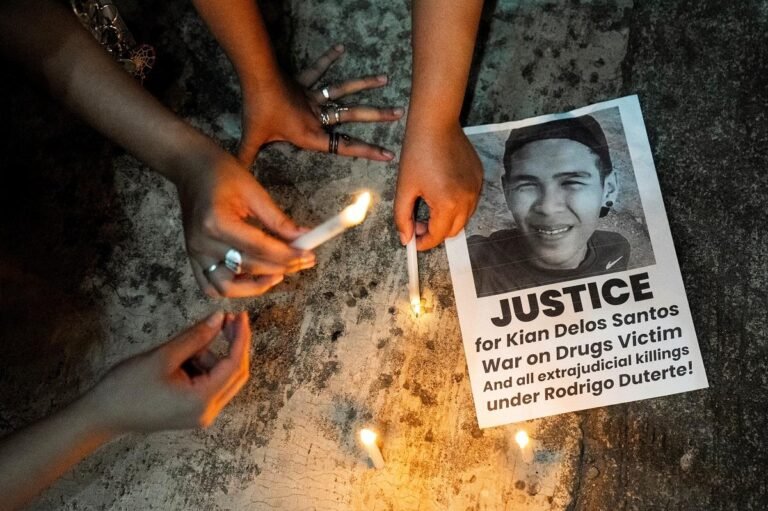
EIGHT YEARS AFTER a 17-year-old student was dragged into a dark alley and shot dead, justice has finally spoken with clarity and finality.

In December 2025, the Supreme Court of the Philippines affirmed the murder conviction of three police officers for the killing of Kian Loyd delos Santos during an anti-drug operation in Caloocan City in 2017. 

The ruling closed one of the most painful chapters of the country’s “war on drugs” and reaffirmed a principle long tested by violence: no uniform grants the license to kill.

DELIBERATE INTENT 

Kian was only 17, a Grade 11 student with an exam the next day, when plainclothes police officers stopped him near his home on the evening of August 16, 2017. 

Police reports initially claimed that he fought back and fired at officers, forcing them to retaliate. But eyewitness testimony and CCTV footage told a different story—one that would later dismantle the official narrative.

The Supreme Court found that officers Arnel Oares, Jeremias Pereda, and Jerwin Cruz acted with deliberate intent and treachery as per testimony of witnesses who actually saw Kian being punched, forced to hold what appeared to be a gun, and dragged toward a dimly lit alley. 

Moments later, gunshots rang out. 

ABUSE OF AUTHORITY

Forensic evidence showed that Kian was kneeling when he was shot, execution-style. Five bullets tore and pierced through his body—two to the head.

The Court rejected the officers’ claim that they were merely performing their duties. “Performance of duty does not include murder,” the ruling stressed, adding that killing a minor can never be part of a legitimate police operation. The justices also noted attempts to plant a firearm and illegal drugs on the victim—an act that further exposed the abuse of authority.

Kian’s final words, recounted by witnesses during trial, pierced the conscience of the nation: “Tama na po. May test pa ako bukas.” (Please stop. I still have a test tomorrow.) His plea was not answered with mercy.

LIFE IMPRISONMENT

In affirming the conviction, the Supreme Court sentenced the three officers to “reclusion perpetua”, or up to 40 years in prison, and ordered them to pay damages of P275,000 to Kian’s family. 

Interestingly, the high tribunal modified the penalty by removing the phrase “without eligibility for parole.” 

Notably though, the magistrates were unanimous in its decision — the tokhang cops are guilty beyond reasonable doubt, even as the court claimed that all elements of murder under the Revised Penal Code were present.

Human rights groups, including Amnesty International, described the verdict as both welcome and overdue, even as the global organization insisted that Kian’s death was not an isolated incident but emblematic of a broader pattern of violence during the anti-drug campaign—one that disproportionately claimed the lives of the poor and the young. 

Thousands were killed, yet convictions remain rare.

CLIMATE OF IMPUNITY

The case also reignited scrutiny of a climate of impunity that once prevailed. Public pronouncements promising protection—or even pardons—for police officers accused of drug-war killings fostered a “shoot first, think later” mindset, critics said. 

Allegations of reward systems and operational incentives further underscored how violence was normalized within certain ranks.

Legally, the ruling carries enduring weight. It clarified that the presumption of regularity in police performance collapses in the face of evidence of abuse. It reaffirmed that due process is absolute and that no officer may act as judge, jury, and executioner.

STOLEN VALUE OF LIFE

Morally, the decision stands as a quiet rebuke to policies that sacrificed human life for expediency. Kian’s unfinished exam became a symbol of stolen potential—of futures cut short by unchecked power.

Justice for Kian cannot restore his life. But the Supreme Court’s ruling sends a message that reaches far beyond one alley in Caloocan: the Constitution stands above any slogan, and accountability, though delayed, remains possible.

For Kian—and for all victims—justice matters.

Leviste Tagged For Spreading Hearsay

0

FOLLOWING ALLEGATIONS DRAGGING several Cabinet secretaries into the so-called budget insertions for infrastructure projects, Malacanang took a swipe at a neophyte congressman for allegedly releasing information based on hearsays.

Lawyer Claire Castro in her capacity as Palace Press Officer, particularly hinted at the sweeping accusations made by Batangas 1st District Rep. Leandro Leviste — that some Cabinet secretaries were among the proponents of the multibillion-peso budget insertions for infrastructure projects of the Department of Public Works and Highways (DPWH).

DEAD AS SOURCE

Castro issued the statement after Leviste claimed that late DPWH undersecretary Maria Catalina Cabral gave him documents on Sept. 4 containing the names of high-ranking officials.

The list, Leviste claimed, included Cabinet secretaries acting as proponents in the agency’s budget insertions.

“The Palace will only respond to documents authenticated by the DPWH,” Castro said in a statement. “Other than these, they will all be considered hearsay or tsismis, which have no probative value.”

Interestingly, Leviste made the claim only after Cabral’s death.

DEAD CAN’T TALK

In a Facebook post, Leviste said the files were shown to the Independent Commission for Infrastructure (ICI) on Nov. 18 and 19, and to the Office of the Ombudsman on Nov. 26.

He added that the file contained provision on a staggering P401.3-billion “allocable” or the budget allocated to DPWH projects for selected congressional districts.

The whopping amount of the so-called “allocable” further increased to P1.041 trillion because of the “outside allocable.” 

“The release of the files would have wide-ranging consequences,” Leviste said. “They list proponents of flood control and other DPWH projects from the whole government.” To avoid compromising his legislative work, “I would prefer that DPWH be the one to decide on releasing these files to the public,” he quipped.

Dawla Islamiya To Strike Again

1

THE GOVERNMENT WILL have to wrap up its purge against crooks in the soonest possible time if only to prepare for another battle, this time against a group which has been mistakenly taken for “dead.”

According to the Climate Conflict Action Asia (CCAA), Dawla Islamiya, also known as Isis, has been extensively fortifying its forces in the southern part of the Philippines.

SHUN COMPLACENCY

CCAA also cautioned the government that the extremist group behind terrorist attacks across the archipelago, adding that Dawla has not been eliminated and continues to pose a national security concern.

In a statement issued days after the deadly Bondi Beach shooting in Sydney earlier this month, Dawla Islamiya was “significantly degraded” in view of sustained military operations since the 2017 Marawi siege.

However, the group insisted that recent developments show the threat persists — “Dawla Islamiya is down but not out,” the group said, pointing to the government’s announcement just a month earlier of the neutralization of two ISIS leaders, Abu Jihad and Mohammad Usman Suleiman. 

ACTIVELY REGROUPING 

While large-scale extremist activity has reportedly declined, CCAA insisted that militant networks and leadership elements have remained active.

The group said the Bondi Beach incident reinforced the need for continued vigilance, especially amid indications of renewed extremist activity in areas previously considered free of violent extremism, including parts of Basilan.

Without naming sources, CCAA made a sweeping claim on what it looks more like signs of increased mobilization and polarization, citing renewed recruitment efforts targeting the youth and cases of young people breaking away from their families and clans. 

It also reported a spike in violent encounters between government forces and extremist-linked groups in the Bangsamoro Autonomous Region in Muslim Mindanao (BARMM).

UNSOLICITED ADVICE

The organization likewise called on the Philippine government, as well as peacebuilding and development groups, to strengthen reintegration programs for former violent extremism combatants and their families. 

CCAA emphasized that current approaches should move beyond a limited focus on preventing and countering violent extremism, urging more community-based and early-response initiatives anchored on sustainable reintegration and a restorative justice framework.

CCAA said it remained committed to evidence-based analysis in addressing violent extremism and cautioned against speculation while investigations into the Bondi Beach attack are ongoing.

“Premature conclusions that lack evidence risk fueling religious- and identity-based conflict and may obscure the deeper and more complex drivers of violence and radicalization,” the group said.

KADASIG AWARD 2025

Empowering the youth has always been at the heart of the Provincial Government’s steadfast commitment to building a more progressive and inclusive Northern Samar. In recognition of the invaluable role of young leaders as active partners in development, the Provincial Government through the Provincial Youth Development Office (PYDO) annually holds the KADASIG Awards— an event that honors exceptional youth leaders, organizations, and initiatives that continue to shape communities and inspire transformative action.
This year’s KADASIG Awards celebrated not only outstanding youth-driven programs and innovative projects but also the dedicated individuals who work tirelessly behind the scenes whose passion for public service fuels meaningful change in their communities. The 2025 edition highlighted how youth leadership, civic engagement, and collaborative action remain crucial foundations in uplifting the province and its people.
In the event, Sen. Bam Aquino addressed the young Northehanons.

The Year Of The Fire Horse, According To Madam Suzette Arandela

CONTROVERSIAL PSYCHIC MADAM Suzette Arandela predicts that the Year of the Fire Horse is a challenging year.

“The tempo of our economy is very weak in 2026. The first until the third quarter of the year sees a very slow-moving growth in practically all businesses,” she says.

Madam Suzette has a piece of advice, though. “In order to strengthen the national economy and individual businesses, we need to subscribe to new strategies. Our government, the public as well as the private sector must encourage the citizenry to patronize our own local products and services,” she recommends.

“Foreign investors harbor second thoughts and are discouraged by corruption in government and systemic bureaucratic maneuvering.

“Gas and crude price hikes continue because of the conflict between Russia and Ukraine.

“If the government doesn’t do anything about the politicians involved in corruption, the public continues to stage massive protest rallies while the masses wallow in poverty amid anomalies in the bureaucracy this year,” Arandela gushes.

“Emotions are high among the Filipinos that lead to depression, anxiety and eventually, suicide among the young and adults alike … In social life, separations, live-in relationships, and marital scandals are ubiquitous … Natural calamities, both natural and man-made abound in the Year of the Fire Horse.”

POLITICS, DRUGS, SCAMS

“In politics, a new charismatic personality emerges and plans to run in the 2028 polls,” exclaims Madam Suzette. “Sara Duterte moves heaven and earth to run for the presidency in 2028. Former president Rodrigo Duterte won’t be absolved from his cases and will languish in the custody of the international Criminal Court,” she adds.

Drugs, according to Madam Suzette, are everywhere and the root causes of crimes like robbery, murder and rape, especially among the youth.

“Emotions are high among the Filipinos that lead to depression, anxiety and eventually, suicide among the young and adults alike.

Scams, of all shapes and sizes, particularly online, are prevalent in 2026, says Madam Suzette.

“In social life, separations, live-in relationships, and marital scandals are ubiquitous,” she adds. “Natural calamities, both natural and man-made abound in the Year of the Fire Horse.”

MORE FLOODS, QUAKES

“15 strong typhoons will visit the Philippines between July and October and five of them are the strongest.

“Massive floods will happen in Bulacan, Laguna, Quezon City, Cebu, Davao and the rest of Metro Manila because of heavy typhoons.

“Beware of sea transport especially in the Visayas and Mindanao.

“There will be fires all around the country especially in Caloocan, Bulacan, Davao, Iloilo and Bohol. There will be 6.5 to 7.5 intensity quakes in Bicol, Mindanao, Surigao del Sur, Laguna and Batangas.

Taal and Mayon Volcanoes and one other volcano will erupt.

GOOD YEAR FOR SHOWBIZ

The local show business, says Madam Suzette, will enjoy its success.

“Good projects will earn at the box-office, here and abroad. “Kathryn Bernardo, Alden Richards and Dingdong Dantes will receive international recognition.

“Many celebrities get married as well as separate this year.

“A veteran actor dies due to illness, an actress due to depression and an actor due to a car accident.

Here’s Madam Suzette ‘s individual forecast for our celebs:
“Kim Chiu pursues a legal case against a family member despite filial piety to teach her sibling a lesson.

“Marian Rivera makes a box-office hit film but she should take care of her health.

“Sarah Geronimo gets pregnant only through artificial insemination.

“Jennylyn Mercado focuses on her filmmaking and wins an award.

“Anne Curtis puts up a successful business.

“Vice Ganda must take care of her body, especially in stomach and kidney.

“Heart Evangelista slows down her career in fashion.

“Carla Abellana succeeds in her marriage.

“Barbie Forteza finds a new love and wins an award this year.

“David Licauco’s career soars.

“Ruru Madrid becomes an action star.

“Miguel Tanfelix must take care of his health while being romantically involved with a fellow GMA artist.”

PH Is Asia’s Best Retirement Destination

THE PHILIPPINES HAS once again captured global attention—this time as Asia’s Best Retirement Destination, earning an exemplary recognition at the 11th TripZilla Excellence Awards. The recognition affirms the country’s growing reputation as one of the world’s most appealing places to spend one’s golden years, combining affordability, natural beauty, quality healthcare, and a deeply rooted culture of care.

The accolade adds to the Philippines’ consistent high rankings in international surveys, including the International Living 2025 Retirement Index, where the country continues to be cited among the most affordable and livable retirement destinations worldwide.

VOTE OF GLOBAL CONFIDENCE

Department of Tourism (DOT) Secretary Christina Garcia Frasco welcomed the recognition, describing it as a testament to the country’s expanding global appeal—not only as a travel destination but as a place retirees can genuinely call home.

“This award affirms what the global community increasingly sees—the Philippines is not only a beautiful place to visit, but a place to live,” Frasco said. “The warmth of our country transcends our destinations. It is deeply rooted in our culture of care, hospitality, and compassion.”
She emphasized that the Marcos administration’s whole-of-government approach is strengthening retirement tourism as a vital pillar of the country’s tourism portfolio—one that contributes to economic growth while promoting long-term, meaningful engagement with international residents.

“The Philippines offers something truly rare—retirement that feels like coming home… Retirees are not just welcomed here; they are embraced as part of our communities.
The campaign underscores the country’s commitment to dignity, comfort, and well-being—values that resonate strongly with retirees seeking not just affordability, but quality of life.”

STRATEGIC PARTNERSHIP FOR RETIREMENT

Under Secretary Frasco’s leadership, the DOT continues to work closely with the Philippine Retirement Authority (PRA) to enhance the competitiveness of the country’s retirement offerings. Central to this effort is the Special Resident Retiree’s Visa (SRRV)—one of Asia’s most accessible and comprehensive retirement residency programs.

The SRRV grants indefinite residency, multiple-entry privileges, and tax exemptions on pensions, making it highly attractive to foreign retirees and returning Overseas Filipinos. As of late 2025, eligibility for the program was lowered to 40 years old, further broadening its appeal.

According to PRA General Manager Roberto Zozobrado, more than 83,000 SRRV holders now call the Philippines their second home—a figure expected to grow as global retirees seek affordable, secure, and welcoming environments.

REDIFINING THE RETIREMENT EXPERIENCE

To strengthen its global positioning, the PRA recently launched its new campaign, “WE CARE” (We Create an Amazing Retirement Experience)—a bold initiative designed to place retirees at the center of national hospitality and support systems.

“The Philippines offers something truly rare—retirement that feels like coming home,” Zozobrado said. “Retirees are not just welcomed here; they are embraced as part of our communities.”

The campaign underscores the country’s commitment to dignity, comfort, and well-being—values that resonate strongly with retirees seeking not just affordability, but quality of life.

AFFORDABILITY WITHOUT COMPROMISE

One of the Philippines’ strongest advantages is its cost of living. Retirees can enjoy a comfortable lifestyle for USD 1,000 to 1,800 per month, covering rent, dining, utilities, and healthcare—significantly lower than in North America, Europe, or Australia.

Equally important is ease of communication. English is widely spoken in government offices, hospitals, and everyday life, eliminating a major barrier for foreign retirees.

CULTURE THAT HONORS AGE

Filipino society places high value on elders, fostering an atmosphere of respect and inclusion. Retirees benefit from senior-friendly practices such as priority lanes in banks and supermarkets, as well as strong community ties that promote belonging and emotional well-being.

CHOICES AS DIVERSE AS THE ISLANDS

With more than 7,641 islands, retirees can choose lifestyles that suit their preferences—from modern urban hubs like Makati and Cebu, to cool mountain retreats in Baguio and Tagaytay, or relaxed coastal communities in Dumaguete and Palawan.

Major cities also host internationally accredited medical facilities, staffed by English-speaking professionals and offered at a fraction of Western healthcare costs.

RETIREMENT DESTINATION WITH A HEART

The TripZilla Excellence Award reinforces what many retirees already know: the Philippines offers more than scenic landscapes and affordability. It offers connection, care, and community—qualities that transform retirement from a stage of life into a meaningful new beginning.

As global retirees look eastward for the next chapter of their lives, the Philippines stands ready—not just as a destination, but as a home.

Getting More Earthwise

0

LOOKING BACK TO the beginnings of my environment watch two decades ago, I rub my eyes seeing the same festering sores and even more harmfulones of late. Pollution (toxic gases in air, water bodies, industries, cities; plastics everywhere till they mount un-decomposed in dumpsites and oceans). 

Ecosystem degradation (mountains denuded for favored extractive activities like mining and logging, slopes and fields sacrificed for uncontrolled real estate development). Biodiversity loss (plants and animals excessively and carelessly uprooted from their habitats for commercial purposes). And the unheard-before Climate change (causing extreme weathers and natural havocs that may collapse the earth system just over two decades from now). 

​Going into a new year, I thumb down “resilience”, the common escape door, and switch on hope. I believewe humans can definitely make up for our excesses and failures. Yes, environment destruction is largely a human ax.  A sin against creation that needs cleansingand making up. 

“Going into a new year, I thumb down “resilience”, the common escape door, and switch on hope. I believe we humans can definitely make up for our excesses and failures. Yes, environment destruction is largely a human ax.  A sin against creation that needs cleansing and making up.”

RESPECT FOR CREATION: THE GOOD ROOTS

​In his encyclical published in 2015 titled Laudati Si (On Care for Our Common Home), Pope Francisaddresses various environmental issues like global warming, pollution, and indigenous communitiesthrough a relational approach that includes God, human beings, and the Earth.  Calling Earth our common home, he prescribes both spiritual and practical ways for all people and institutions to care for it. The global movement he inspired, Laudato Si Movement, has continued the advocacy for an environment and community that co-exist in harmony. Specifically, it promotes ecological conversion, divestment from fossil fuels, integration of creation care into Philippine institutions like schools, pushing for nature-based solutions, among others. Spiritual roots, how can they go wrong for God’s amazing creation?

NATURE-BASED SOLUTIONS: AN IDEAL STRATEGY

​NbsS are emerging as one of the country’s most important strategies for restoring ecosystems, while addressing climate, resiliency, biodiversity, and social challenges. Just last September, the Department of Environment and Natural Resources, in partnership with the Forest Foundation of the Philippines and the Canadian government, gathered government leaders, civil society groups, indigenous communities, academics, and development partners to chart a shared path for NbsS. The young environment leaders in the conversation, are for a shift from extractive relationships with nature to stewardship rooted in education. 

​The call was simple but urgent: work with nature, not against it. NbsS is seen to thrive with collective action.  

​NbsS or NBS use ecosystems to solve problems like climate change and flooding. They harness the power of nature – like trees, mangroves, and coral reefs– to protect communities and the planet from the impacts of climate change. 

Examples are: restoring mangroves for coastal protection and restoring wetlands for flood control, urban greening (developing “sponge cities” with more green spaces, parks, and walkable areas), creating green roofs for stormwater management, and practicing agroforestry for food security. 

Isn’t it high time we rational humans get earthwise? If not, our only planet will crumble and worst, have no way out but collapse.

The January Blues: When The Calendar Turns, But Your Mood Doesn’t

3

JANUARY IS MARKETED as a reset. Clean slate. New planner. New you.

In reality, many of us wake up feeling flat, tired, irritable, and quietly resentful that the holidays packed up and left without us.

Welcome to the January Blues.

It’s not a clinical diagnosis. It won’t show up on your blood work. But it’s real enough to make mornings heavier, patience shorter, and motivation feel like something you forgot to renew.

Why January Hits So Hard

Let’s prick the myth that this is “just in your head.”

January is a perfect physiological and emotional storm:

• Post-holiday crash – Dopamine and serotonin spike in December (lights, gatherings, food, anticipation), then drop sharply.

• Financial hangover – Bills arrive with no mercy and zero sparkle.

• Sleep disruption – Late nights don’t magically undo themselves.

• Less sunlight – Shorter days affect melatonin and mood regulation.

• Unrealistic resolutions – You’re suddenly failing at a brand-new version of yourself by January 10.

Your nervous system does not care that it’s a new year. It cares about rhythm, rest, blood sugar stability, and whether you’re living like a human or a productivity app.

The Subtle Signs You Might Miss

January Blues doesn’t always look like sadness. Sometimes it shows up as:

• Low-grade anxiety without a clear reason

• Brain fog and decision fatigue

• Body aches with no dramatic explanation

• Craving sugar, caffeine, or carbs like they’re emotional support animals

• Wanting to withdraw, but still scrolling endlessly

This isn’t weakness. It’s dysregulation. Your system is asking to recalibrate, not to be punished.

Let’s Talk About Well-Being (Not the Instagram Version)

Improving well-being in January isn’t about becoming “better.” It’s about becoming regulated.

Here’s what actually helps:

1. Stabilize Before You Optimize

Before adding goals, fix the basics:

Eat regular meals (skipping breakfast is not discipline)

Hydrate like your cells depend on it—because they do

Go to bed at roughly the same time, even on weekends

Mood follows physiology more than motivation ever will.

2. Move Gently, Not Aggressively

January is not the time for punishment workouts fueled by guilt.

Walking, stretching, light strength training—these calm cortisol instead of spiking it. Consistency beats intensity when your nervous system is already edgy.

3. Lower the Bar (On Purpose)

If your resolution requires willpower every single day, it’s poorly designed. Start embarrassingly small. Momentum is kinder than motivation.

Where Acupuncture Fits In (And Why It Makes Sense)

Let’s prick another misconception: acupuncture isn’t just for pain or “alternative people who drink celery juice.”

Acupuncture works directly on the nervous system, which is exactly what’s out of balance during the January Blues.

From a modern lens, it:

• Helps shift the body out of fight-or-flight and into rest-and-digest

• Influences neurotransmitters involved in mood regulation

• Improves sleep quality, which quietly fixes half of what we think is a personality flaw

From a Traditional Chinese Medicine perspective, January often reflects Qi stagnation (everything feels stuck) and Kidney depletion (deep fatigue, fear, low drive). Acupuncture helps restore flow and internal reserves—without forcing anything.

Patients often report better sleep, lighter mood, less anxiety, and a subtle but real sense of “I can cope again.” Not euphoric. Just steadier.

The Certified Prick Takeaway

If January feels heavy, stop shaming yourself for not feeling grateful or motivated enough.

Your body is coming down from stimulation, stress, and excess. That requires support, not self-criticism.

Think of January as a recovery month, not a performance review.

Eat well. Sleep better. Move kindly. Regulate your nervous system.

And if you need help—acupuncture included—take it without apology.

Because well-being isn’t about becoming someone new in January.

It’s about returning to yourself—calmer, steadier, and far less likely to scream at slow elevators.

By The Certified Prick — Serving health truths with sarcasm and zero apologies

Corruption Is In The Filipino DNA: Intergenerational Curse

0

PRESIDENT BONGBONG MARCOS raised a call to scrutinize contractors who raked in billions for flood-control projects that turned out to be nothing but dikes of sand. Roads that collapse before the paint dries, drainage that turns streets into rivers, projects unfinished yet already “completed” on paper. Then the inevitable revelation: politicians—congressmen, senators—were behind these contracts. These were their pork. Their magic wand. Their piggy bank.

The scheme is old as time. Politicians divest their names on paper, but the companies remain theirs in spirit. Conflict of interest? It is not a conflict; it is the VERY business model. Despite the supposedly stringent rules of the Bids and Awards Committees, the winners were always the politicians’ preferred bidders. And the payoff is clean: gargantuan campaign donations come back their way, ensuring the wheel keeps turning, the dynasty keeps ruling. A firm with capitalization smaller than a sari-sari store can land projects worth billions, so long as it knows which hands to grease.

The corruption is not confined to the high towers of Malacañang or the Senate. It drips down to the barangay hall, the street corner, the jail canteen. Power is not wielded to govern; it is weaponized to extract.’

This is what scholars call “rent capitalism,” what activists name “bureaucrat capitalism.” I call it systemic plunder. It is not accident or anomaly. It is the bloodstream of the republic.

The corruption is not confined to the high towers of Malacañang or the Senate. It drips down to the barangay hall, the street corner, the jail canteen. Power is not wielded to govern; it is weaponized to extract.

A traffic enforcer waves down a driver. The fee is P2,000. “But for P500, you can go now.” A Bureau of Internal Revenue agent sits with a taxpayer. “Pay me directly and I’ll wipe your record clean.” A mess officer in a jail inflates the cost of rice by half, then splits the take with suppliers. Even in universities, a professor can be bought with a case of beer. “Sir, inumtayo mamaya, lapit na ang exam.”

We have a thousand euphemisms for it: pakikisama, team player, sumunod sa agos, kung ano ang tugtog, ’yun ang sayaw. All mean the same thing: survive by cooperating in the corruption.

Even noble projects are not immune. In our own community bail bond program meant to help first-time offenders, one staff member ran off with bail money despite strict prohibitions. NGOs are corrupted, charities are corrupted, churches are corrupted. The culture consumes everything.

The Filipino talent for rationalization is unmatched. “If someone thanks you with money, why not accept?” The prisoner’s family slips you an envelope—“it’s just gratitude.” You help secure a permit, and someone sends you a lechon—“it’s just appreciation.” But when gratitude becomes currency, it ceases to be gratitude. It becomes corruption, whether paid in pesos, in pork, or in principle.

The slope is greased further: “Okay lang tumanggap ng pera galing sa pulitiko tuwing eleksyon—pera naman natin ’yan.” With that shrug, we justify the very system that enslaves us. It ensures that only the richest, most corrupt politicians can keep winning.

We have seen this script before, over and over. The pork barrel scam under Janet Napoles, where lawmakers funneled public funds into ghost NGOs. The fertilizer fund scam of the Arroyo years, where billions meant to help farmers went into campaign war chests. The overpriced lampposts in Cebu during ASEAN. The Northrail project that never took off, but took off with billions.

Each scandal follows a ritual. A tragedy or exposé surfaces. Public outrage explodes. The government promises a crackdown. Committees are formed, hearings held, witnesses called. Headlines blare. Then—silence. No one is held accountable. No one is punished. The corrupt are not destroyed—they are upgraded. They grow more sophisticated, more inventive, more shameless. They master the new laws meant to curb them, and they weaponize them instead.

Why does this keep happening? Because the ground is fertile. Everyone despises corruption in the abstract, but when opportunity arises, everyone participates. The businessman who pays under the table to win a contract is just as guilty as the official who accepts. The citizen who sells his vote justifies the dynasty that enslaves him.

And the perversity of the culture is this: those who try to stay clean are mocked. Speak against corruption and you are branded naïve, nasa ere, not grounded in the “realities.” “Keep quiet,” people say. “Don’t join politics, lahat naman sila magnanakaw.” Worse, they will say “your principled stand will be twisted by corrupt politicians who weaponize your words against their rivals. You are not rewarded—you are used.” Thus, people who jeer my work said I am just being used. 

This is the tragedy. Corruption is not merely practiced; it is normalized, romanticized, passed down like inheritance. Children grow up watching their fathers hand over bribes to the police, their mothers slip “pabaon” to officials, their barangay captain dole out cash during campaigns. It becomes the expected, accepted way of life.

Do the right thing, and you are the odd one out. You are punished for honesty, ridiculed for integrity, sidelined for refusing to play along. In a lawless society, to be lawful is to be the outlaw.

Is corruption in the Filipino DNA? Perhaps not biologically, but culturally, socially, politically—it may as well be. It is encoded in the way we transact, the way we excuse, the way we survive. It is not genetic fate, but it is intergenerational curse.

The president’s call to investigate corrupt politicians and contractors is welcome, but it is also wearying. We have heard it too many times before. What is needed is not investigation, but conviction. Not hearings, but jailings. Not speeches, but systemic surgery. Until then, every flood will not only drown our cities, it will drown our faith in this republic.

The question is not whether corruption is in our DNA. The question is whether we have the will to mutate, to evolve, to cut it out before it consumes us whole.

Or perhaps, it has consumed as whole.