Friday, March 27, 2026
Home Blog Page 19

Poor PH Environmental Record

1

BEING IN THE environment movement, I get to see and feel how intensely and tirelessly many advocates work to make the country green, clean, beautiful, and sustainable. That it would be disheartening for the Philippines to still rank very low in recent global environment performance indices.

GLOBAL RANKINGS

Of 180 countries, the Philippines placed 168th in the 2024 Performance Environmental Index of Yale University and Columbia University. It scored 32.1 out of 100, which is below the Asia-Pacific median. The biennial EPI ranks countries on climate change performance (mainly mitigation), environmental health(air quality, sanitation and drinking water, heavy metals), and ecosystem vitality (biodiversity and habitat, forest, agriculture, fisheries, air pollution). Through establishing a data-driven summary of the state of sustainability around the world, it seeks to guide countries aspiring to be more sustainable.

Also, in the 2025 Notre Dame Global Adaptation Index, Ph placed 116th out of 187 in addressing climate vulnerability and 197th of 220 countries in the Ocean Health Index. 

‘As all actions will ripple longer and more seriously to the next generations, wisdom also dictates that the youth, from grade school to graduate class levels must already be more rooted on the critical importance of increased environmental knowledge and active participation in  sustainability efforts.’

WHY WE LAG BEHIND

​The EPI highlights connections among governance, economic resources, and environmental performance. How is this connection in our country?

​While the Philippine government has enacted anumber of landmark environment laws notably on clean air, ecological solid waste management, wildlife conservation and protection, and climate change, the implementation is still far from ideal by local advocate standards. Moving forward, of the government budgetfor 2026 which is P 6.793 trillion, only 0.43% has been allocated for the Department of Environment and Natural Resources which is seen by some as very small but not unexpected.

There’s also criticism on prioritizing infrastructure over environment protection and social justice programs. Where and how science, including nature-based solutions to major environmental problems, will fit in the national program must definitely require a bigger and more determined push.

Politics also muddles the undertaking of environment programs. At national and local levels,dynastic and big-business preferences still hover widely, compromising ecosystem integrity and community life. Public servants will have to be schooled better on environmental principles to be more equipped to cascade them to their communities.Environmental NGOs will be of big help here.

STEWARDSHIP: A CRITICAL FACTOR

Bottomline, it is still how much and how well institutions and individuals value their common home (planet earth) and their territorial space (ridge to reef). Both forces must also be able to harmonize their dreams and realities, and not forgetting the global impact each country stands to make to the whole of the inter-connected creation. Improved standings in the global performance measures is a motivating aspiration.

As all actions will ripple longer and more seriously to the next generations, wisdom also dictates that the youth, from grade school to graduate class levels must already be more rooted on the critical importance of increased environmental knowledge and active participation in  sustainability efforts. 

It is reasonable for the Generation Z, seen as the political and technological game-changer, to also match their current political activism with a more passionate environment stewardship. And of course, those who wield power, in both policies and budgets, must lead the way as green warriors.
Amid Black Propaganda, PBBM and FL Continue To Serve

0

If you try and lose then it isn’t your fault. But if you don’t try and we lose, then it’s all your fault. 

                               — American writer Orson Scott Card

REMINDING THE NATION that truth does not rely on theatrics but simply stands firm, civic leader Dr. Jose Antonio Goitia offers a clear message to the Filipino people during a time when rumors attempt to overwhelm reason and noise tries to outshout reality. 

Reacting to widespread criticism against the administration, the chairman emeritus of the Alyansang Bantay sa Kapayapaan at Demokrasya (ABKD), People’s Alliance for Democracy and Reforms (PADER), Liga Independencia Pilipinas (LIPI) and

Filipinos Do Not Yield (FDNY) Movement cited that “people forget lies grow loud only because truth refuses to argue with them.” Goitia asserted that “truth does not need drama to be believed” and while others push baseless accusations, President Ferdinand ‘Bongbong’ Marcos Jr. (PBBM) and First Lady Marie Louise ‘Liza’ Araneta-Marcos continue their work quietly—steadily and with full commitment.

‘People attack who they cannot influence. They target her because she stays focused on meaningful work. Her composure frustrates those who rely on chaos. Her silence is not weakness. It is dignity. It is strength. It is the quiet assurance of someone choosing service over spectacle.’

CHALLENGES

Dr. Goitia underscored that governance does not pause just because some choose to create spectacle: “The country continues to move. Challenges remain. And through all the noise, President Marcos keeps working with discipline and clarity.”

He described the situation as quite stable as the economy continues to grow, infrastructure advances, social services reach more communities, local governments receive support and international partnerships are strengthened. 

“All of this happens because the President refuses to be derailed. Real leaders do not allow noise to dictate their priorities. They serve the people regardless of what others say. Those who build the nation have no time to indulge those who thrive on turmoil,” he pointed out. 

And turning to the First Lady’s side, Goitia emphasized that Mrs. Araneta-Marcos has been drawn into baseless narratives not because of wrongdoing but rather because she has chosen to rise above political theatrics, devoting her time to cultural preservation, education, institutional strengthening and public service.

LOUD PEOPLE

“People attack who they cannot influence. They target her because she stays focused on meaningful work. Her composure frustrates those who rely on chaos. Her silence is not weakness. It is dignity. It is strength. It is the quiet assurance of someone choosing service over spectacle,” he described the First Lady. 

In ending, the civic leader reminded everyone one that what matters is not who speaks the loudest but whose actions uplift the Filipino people.

===

PS

BELATED happy birthday to my colleague Leo Villan, publisher of the weekly newspaper tabloid People’s Brigada News Manila and it’s sister publication PhilStar.

Thank you for your sunptuous ‘blowout’ at the posh Convo Coffee Shop in Greenheights Village in Parañaque City—the roast babyback  ribs were great! 

Mister Not-So-Clean

0

IF MY MEMORY still serves me right, I first came across the name “Ted Herbosa” during the onslaught of the COVID-19 pandemic. It was then that he made himself “visible” on social media — floating suggestions and promoting health-related advocacies.

His noise somehow worked in his favor as then President Rodrigo Duterte appointed him as member of the Inter-Agency Task Force for the Management of Emerging Infectious Diseases (IATF-EID), the primary body responsible for managing the country’s response to the pandemic.

In fairness, he did well as an IATF-EID member.  To be perfectly honest, Herbosa did better than former Health Secretary Francisco Duque — or so I thought.

‘Enacted in July last year, the New Government Procurement Act aims to increase transparency, efficiency, and sustainability through electronic procurement, public monitoring, beneficial ownership declarations, and simplified procurement methods like direct acquisition.’

HEALTH BROUHAHA

Moving forward, President Ferdinand Marcos Jr. named Herbosa to take the lead at the Department of Health (DOH).

I was under the impression that his advocacy on Universal Healthcare would be his top agenda. I was wrong though.

During his early years, he went on what looked more like junkets which had little effect on public health. Since being appointed in mid-2023, Herbosa has figured in a long list of brouhahas, which included purchase and distribution of expired, almost expired — and in some instances, fake vaccines.

It was also under his watch that the Commission on Audit flagged the DOH for the expiration of P11.5-billion worth of medicines and vaccines, the two-year lull in the treatment of tuberculosis, PhilHealth zero-subsidy, and ghost health centers, to name a few.

MISTER CLEAN?

In a previous news article which first appeared on The PH Insider, Herbosa’s name was dragged into what looks more like another Dengvaxia scandal, except that the new controversy involved fake anti-rabies vaccines being administered to humans who were bitten by dogs, cats and other mammals. 

A little over a week ago, the Office of the Ombudsman received a complaint against the person who has effectively portrayed himself as Mister Clean.

In a letter dated November 25, a group of government employees urged Ombudsman Crispin Remulla to seriously consider the idea of looking into what they claimed as bid-rigging in the procurement system of the DOH.

The complaint particularly tagged Herbosa “behind the rigging of bids for the Supply, Delivery, Testing and Commissioning of 150 units of Brand New Mobile Primary Care Facility at P12 million per unit, which translates to a staggering P1.8 billion just for a single procurement transaction.

According to the complainants,  Dr. Gregorio Murillo Jr. in his capacity as Undersecretary for Health Facilities Enhancement Program on November 5 approved the Terms of Reference for Supply, Delivery, Testing and Commissioning of 150 units of Brand New Mobile Primary Care Facility.

A week after, Herbosa’s minions Aquino and Tope instructed Murillo to substitute their own version of the technical specification for the project. 

I must admit, I am not a lawyer. But from a taxpayer’s vantage point, Herbosa is no longer the same Mister Clean I used to know. He should be made accountable for serious violations of the Anti-Graft Practices Act, the New Government Procurement Act primarily designed to quell corruption in government transactions .

E-PROCUREMENT

Enacted in July last year, the New Government Procurement Act aims to increase transparency, efficiency, and sustainability through electronic procurement, public monitoring, beneficial ownership declarations, and simplified procurement methods like direct acquisition.  

The key features of the law include modernization through comprehensive digitization and automation of the entire procurement process, from planning to payment. 

It also boasts of electronic procurement which mandates the use of electronic tools, an electronic marketplace, and the interconnectivity of government procurement systems. 

More than the modern-day technology (automation of the procurement process), RA 12009 is primarily designed to enhance transparency and accountability through open contracting standards for accessible information; and public monitoring with the help of observers and Civil Society Organizations (CSOs).

It also mandates beneficial ownership declarations to prevent conflicts of interest; video recordings of all procurement-related conferences for public viewing; and streamlined procurement methods.

Under the streamlined procurement methods are direct acquisition for lower-value items or those not available in the common-use supplies catalog; enhanced negotiated procurement which incorporates negotiated procurement from international bodies and adds requirements for advanced technologies and critical health goods. 

Not one of the aforementioned safeguards were complied with in the acquisition of the 150 units of Brand New Mobile Primary Care Facility.

Smuggling Of All Types Always Has A Big Protector

0

BE IT AGRICULTURAL, commercial or industrial products, smuggling (to avoid payment of proper duties and taxes), is always being protected by someone powerful, influential and untouchable. A mafia of sorts.

At least that is what I have believed and have been preaching all these years. I know for a fact that anyone, faced with stiff penalties and jail terms for smuggling into the country dutiable goods but forego payment for duties and taxes is always backed up by a padrino.

Turns out I have not been mistaken because of recent pronouncements even by a fleeing fugitive like former Ako Bicol Rep. Elizaldy Co, who claims that a powerful sibling is behind the cartel manipulating the supply and prices of rice, onions and other agricultural commodities.

‘Laurel, in a Facebook post, dismissed allegations made by Co as “total baloney” and “a script fit for Netflix.” Co’s detailed accusations linked administration figures to supposed irregularities in the price and import manipulation of rice, sugar, onions, and fish.’

BALONEY ALLEGATIONS

Even if we believe that Co’s allegations have to be taken with a grain of salt— not to be believed as gospel truth— still there is some credence to his claims. For who would dare touch or investigate these powerful siblings.

Besides, Co’s choice of forum– social media– to blurt out such accusations makes it incredible, to say the least. Still let us give him a good grade for his courage to do so.

Co claims that First Lady Liza Araneta Marcos and her brother, Martin, have been heading the rice and onion cartels, which control the supply and prices of these goods to the detriment of consumers– rich, struggling middle class and poor. As expected, Agriculture Secretary Francisco Tiu Laurel Jr. branded such claims as “total baloney.”

The alleged family cartel is being supported by former Speaker Ferdinand Martin Romualdez and Laurel Jr. who cover for them while consumers get hit by high food costs, Co claimed.

Co said when costs reached P600 per kilo instead of the usual P80 in 2022, the House investigation into onion prices was abruptly halted because, he alleged, FL contacted Romualdez to abort the probe.

“Doon lumabas ang pangalan ni Martin Araneta bilangisa sa mga nasa likod ng kontrol sa importasyon ng sibuyas,” he said.

“Pero hindi po natuloy ang imbestigasyon, ang sabi niSpeaker tinawagan daw siya ni First Lady Liza Marcos at ipinapatigil ang imbestigasyon kaya walang natuloyat walang naparusahan. Dahil pala kontrolado ng kapatid ng First Lady ang importasyon ng sibuyas,” he added.


RICE CASE ISN’T ANY BETTER

For rice, the situation isn’t any better. Despite Co’s push in 2023 to import 13 million metric tons and lower tariffs to zero to make rice more affordable, prices continued to skyrocket.

A House investigation into rice imports was blocked after a confidential report shown by Laurel to the House panel that linked the FL to the rice importers, Co said.

“Nakasaad dito na si First Lady Liza Marcos mismoang may hawak sa mga rice importers. 

“Ayon kay Sec. Laurel maaapektuhan daw ang First Lady kung itutuloy ang imbestigasyon dahil kasamaraw nila sa Vietnam visit ang ilang importer ng bigas at nag-dinner pa raw sila roon,” he said.

The President’s eldest son, Ilocos Norte Rep. Sandro Marcos, called to halt the House inquiry, according to Co.

“At noong araw ding yun, tumawag si Cong. Sandro Marcos kay Speaker Romualdez upang ipatigil ang House investigation tungkol sa bigas as instructed ng Pangulo. Magkasama kami ni Speaker Martin Romualdez ng tumawag si Cong. Sandro Marcos,” he said.


Co said Romualdez also scolded Laurel during a meeting at the Manila Polo Club for releasing the confidential report that linked the First Lady to “rice smuggling.”

“Humihingi ng paumanhin si Sec. Laurel Tiu at sinabiniyang pasensya na masyado akong naive,” he said.

“Doon namin naintindihan kung bakit kahit ibinababaang import tax ng bigas mula 35 percent to 15 percent ay hindi pa rin bumababa ang presyo sa merkado dahilpala sa dami ng SOP at remittance na ipinapasa sabawat transaksyon,” he added.

S.O.P COLLECTIONS

As for sugar importation, Co claimed the alleged ‘SOP collections” from sugar. Romualdez told him that the President asked him (the former Speaker) to help cover campaign expenses for both national and local candidates in the 2025 polls.

Co added that Romualdez reported “SOP collections” at the Bureau of Customs totaling P11 billion, along with P9 billion from sugar, which he alleged is being divided among only five companies to control sugar prices in the market.

Laurel, in a Facebook post, dismissed allegations made by Co as “total baloney” and “a script fit for Netflix.” 

Co’s detailed accusations linked administration figures to supposed irregularities in the price and import manipulation of rice, sugar, onions, and fish.

Laurel clarified that: 

• Tariff Reduction Discussions was not his suggestion alone but that many sectors pushed for it.

• Co’s Recommendation was for “zero tariff, not 15%.”

• During the House investigation, Laurel did not send confidential messages to lawmakers to stop the rice-importation probe. 

The DA chief made these remarks in a text message and Viber message to several news outlets on Wednesday, November 26, 2025. 

Sugar Babies: How Parents Create Diabetic Toddlers Before Kindergarten

0

LET’S GET THIS out of the way: babies do NOT need sugar. They need milk, naps, and adults who keep them alive long enough to reach preschool without developing the palate of a retired candy taster. But for some reason, parents keep handing out juice boxes like they’re emotional support objects.

Science—yes, that thing you argue with on Facebook—already confirmed what grandma tried to tell you while waving a wooden spoon: the first 1,000 days of life (conception to age two) blueprint your child’s health for the rest of forever. And if those days are soaked in syrup? Congrats. You’ve pre-ordered diabetes, hypertension, and a standing appointment with an endocrinologist before your kid even learns the alphabet.

Side effect: parenting guilt when you realize your 10-year-old’s blood sugar is higher than your WiFi bill.

The Stats That Slap You Harder Than Your Kid’s Tantrum

• 35% lower risk of Type 2 diabetes when sugar is limited early.

• 20% lower risk of childhood high blood pressure.

• Better immunity. Better metabolism. Less chance of your kid waddling into obesity like a baby penguin.

Translation: give them broccoli now… or metformin later.

Warning: broccoli causes whining. Diabetes causes worse.

Taste Bud Bootcamp (Or: How to Ruin a Palate Before Age Two)

Babies start life as blank culinary slates. Feed them apples and their taste buds go, “Oooh, fruit!” Feed them gummy worms and the palate recalibrates to: “Where’s the candy?”

Once a child is trained on 100%-sugar-0%-sense junk, carrots taste like expired cardboard. And good luck convincing a sugar-raised toddler that a banana is a dessert and not a punishment.

Breaking news: kids will survive without cookies for breakfast.

Breaking-er news: they may not survive WITH them.

The Doctor’s Killjoy List (Don’t Shoot the Messenger)

High sugar intake early in life can lead to:

• Insulin resistance

• Childhood obesity

• PCOS in girls

• Fatty liver disease in kids who’ve never even smelled tequila

But sure—go ahead and reward good behavior at the clinic with a lollipop. Nothing like giving early insulin resistance a head start.

Hot tip: “doctor-approved” stickers exist. They’re cheaper, don’t rot teeth, and don’t require a future prescription for metformin.

“But They’re Happy With Candy!”

Your dog is happy when it eats your socks. That doesn’t make it right.

Babies don’t need Oreos to be joyful humans. They need naps, attention, and something shiny to bang on the floor until you question your life choices. Sugar isn’t love—it’s just lazy parenting in cute packaging.

Pro tip: actual affection = calorie-free, cavity-free, drama-free.

Where Does Acupuncture Fit In?

Before you ask: No, acupuncture cannot undo a childhood marinated in syrup. But—because some of you love a holistic sprinkle—it can help with:

• Improving appetite regulation

• Supporting better sleep (which decreases sugar cravings)

• Calming hyperactive “tiny tornado” toddlers

• Supporting metabolic balance after you fix the diet

Think of acupuncture as a supportive cast member, not the lead role. It’s the friend who helps tidy the house… after you stop throwing sugar bombs everywhere.

Dear Parents: This Is On You

Your toddler doesn’t have a credit card. If your pantry looks like Willy Wonka’s warehouse, that’s not a “kid problem.” That’s a you problem.

Rules for parents who want sane, non-diabetic offspring:

• Water > juice. Always.

• Whole foods before “fun foods.”

• Stop buying snacks you “swear are for the kids.” Spoiler: you’re the one finishing them at 11 p.m.

Confession: I’m judging you while eating your kid’s Chips Ahoy.

The Certified Prick Bottom Line

The first 1,000 days aren’t just diapers and sleep deprivation—they’re the foundation of your kid’s metabolism, immunity, and lifelong eating patterns. Limit sugar now and you gift them a healthier future. Drown them in sweets and you’re basically donating their pancreas to science early.

Love your kid enough to say NO to the damn lollipop. Their pancreas will thank you—silently, because Hallmark doesn’t make a “Thanks for Not Destroying Me” card.

– The Certified Prick

The Health Column That Doesn’t Sugarcoat… unless your kid’s blood sugar is already doing it for me.

Traitors In The Libingan

1

MARTIAL LAW DICTATOR Fe Marcos and his Defense Minister Juan Ponce Enrile have proven themselves TRAITORS to the Filipino people. Their remains deceitfully and shamelessly interred in the sacred grounds of the Libingan ng Mga Bayani (LNMB) by the Marcos/Duterte dynasties is among the unforgiveable insults not only to the certified heroes already buried there and the recognized national heroes, but to the Filipino people, and more particularly, to their victims of atrocities from 1971 to 1986.

That Bongbong Marcos – Sara Duterte administration ordered the traitor Juan Ponce Enrile’s remains to join dictator/co-traitor FE Marcos’ remains is a clear confession by them of their disloyalty to the Filipino people. More pointedly, Bongbong and Sara have clearly admitted and publicly shown their corrupt mind-set, their greed for money and self-serving political power, to fool, exploit and oppress the Filipino people. They are themselves traitors to the Filipino people, based on such pro-traitor decisions.

As comprehensively clarified by countless CSOs, NGOs and concerned citizens, dictator FE Marcos and his defense minister Juan Ponce Enrile, ruthlessly supported by their attack dogs — the Philippine Constabulary (forerunner of the present PNP) and the AFP — plundered the economy and committed atrocities involving more than 200,000 Filipinos. 

‘The internment of FE Marcos and Juan Ponce Enrile in the LNMB, is a clear historical distortion, a BIG LIE, a crime of whitewashing the brutal period of Martial Law that has caused the downward economic, political and even cultural retrogression of the country… ‘

ACTS OF TREASON

Among their crimes and acts of treason against the people: fake/staged ambush of Enrile on September 22, 1972; crafting Proclamation 1081 (imposing martial law) with military officials dubbed as the Rolex 12;Mindanao massacres – Burning of Jolo (1974), Palimbang Massacre (’74), Pata Island Massacre (’82), among others; brutal killings of 45 residents of Barrio Sagod, Las Navas, Northern Samar (Sept. 15, 1981, done by a paramilitary group, “Lost Command,” which served as private goons of Enrile’s logging company, San Jose Timber Corporation; ordered tens of thousands of incarcerations and tortures of Filipinos in military camps and secret safehouses, enforced disappearances and executions;

Collusion w/ crony Eduardo “Danding” Cojuangco in stealing billions in coco levy funds from farmers; the widespread deforestation of the entire Ph forest cover by his logging companies and timber concessioners; he cheated in the 1986 snap elections, as he himself admitted publicly; he launched seven to nine coup attempts to destabilize Pres. Cory Aquino’s administration, resulting in hundreds of people dead, and “salvaged” progressive leaders, like Rolando Olalia, and he was implicated in the 2013 pork barrel scam, involving the theft of millions of public funds.

NEVER AGAIN!

The internment of FE Marcos and Juan Ponce Enrile in the LNMB, is a clear historical distortion, a BIG LIE, acrime of whitewashing the brutal period of Martial Law that has caused the downward economic, political and even cultural retrogression of the country, and continuing acts of impunity by the dominant dynastic government officials nationwide until today. 

FE Marcos and Juan Ponce Enrile are traitors, and their burial in the LNMB is a mockery of the Filipino people’s ongoing noble struggle for good governance and persistent attempts “to build a just and humane society.”

The people’s cry, “NEVER FORGET, NEVER AGAIN” to traitors! Traitors are out of place in the Libingan ng Mga Bayani!

Juan Ponce Enrile and Ferdinand E. Marcos NEVER were, and NEVER WILL BE heroes. For the Filipino people and in the country’s history, these two public officials are TRAITORS!  

Due Process Over Sensational Politics

0

DEMOCRACY IN THE Philippines is often viewed as an all-access pass—an absolute right that can be invoked at any time and for any reason. It becomes a sword when we aim to cut away the flaws of officialdom, and a shield when we want to justify outrage. 

At its worst, it turns into a battering ram, used not to pursue truth but to harass, humiliate, and paint entire institutions with a broad stroke.

This dynamic has been fully visible in the recent allegations involving the Bureau of Internal Revenue (BIR).

After the flood control scandal dominated headlines, the public was barely catching its breath when a new “teleserye” appeared — claims that certain BIR personnel were taking 70% of supposed collections through the so-called Letters of Authority (LOA). 

DRAMATIC SPECTACLE

The accusations were made with drama worthy of prime time—but without the seriousness that real accountability demands. No formal complaint has been filed, no sworn statement submitted, no case started before proper authorities. 

Instead, the good Senator prefers to bring the issue before the Senate Blue Ribbon, as if spectacle could replace due process.

Here lies a fundamental truth about democracy: it demands responsibility as much as it guarantees freedom. Anyone who knows of wrongdoing has the right—and the obligation—to file a complaint, present evidence, and follow established legal channels. 

What democracy does not allow is the casual destruction of an institution’s credibility through sweeping accusations. A single allegation, amplified without proof, becomes a wrecking ball that strikes not just the guilty but also the thousands of honest public servants who show up every day to do their work.

NOT JUST ABOUT LOA

The BIR is not just about the LOA. Looking at the numbers, LOA issuance—compared to the millions of registered taxpayers—is only a small part of what the Bureau actually handles. It manages tax laws, processes returns, audits high-risk taxpayers, enforces compliance, and secures the revenue that funds the country’s services. 

Reducing the entire institution to one story is neither fair nor accurate.

Corruption must be confronted, and wrongdoing must never be excused. But every accusation must stand on evidence—not noise, not theater, not political pressure. 

Without this discipline, democracy becomes a blunt instrument, used not to uphold justice but to injure reputations and destabilize institutions.

TRUTH REQUIRES PROOF

If we are to protect our republic, then we must protect the integrity of our processes. Accountability begins with truth, and truth requires proof—not televised accusations, not insinuations, but facts presented before the bodies empowered to act. 

Anything less weakens not only the BIR, but the very democratic ideals we claim to defend.

Democracy is a powerful tool. But like all powerful tools, it must be used with precision, not recklessness—otherwise, it becomes a danger to the very society it was meant to serve.

Only In PH: Loose Change To Evade Jail Time?

0

IN THE PHILIPPINES, crooks can easily get away with criminal liabilities, just like what a dismissed government official did — return a small chunk of what has been stolen, and keep the rest from anomalies that have yet been uncovered.

Taking cue from what has been reported in various newspapers, former Bulacan District Engineer Henry Alcantara surrendered P110 million of an estimated P300 million plundered from the flood control funds.

Immediately after the so-called partial restitution, Alcantara who has been tagged as mastermind by his subordinates, applied to become a state witness.

GO SLOW ON HENRY

Acting Justice Secretary Fredderick Vida during a press conference emphasized that the cash represents “a portion of the P300 million kickbacks he received from the flood control projects.”

“This is a portion of the amount. Basically, the restitution amount is based on… we look at the averments, their statements on how these amounts accumulated from certain transactions. This P300 million is only for those particular cases,” Vida was quoted by the Inquirer.

While Vida did not specify which cases he was referring to, he cited Alcantara’s sworn statement and the complaints undergoing preliminary investigation before the Department of Justice (DOJ), to wit malversation, graft under Republic Act 3019, and perjury.

CASH BASIS ONLY

The DOJ chief said the total restitution amount of P300 million is based on transactions Alcantara admitted to.

“If the applicant states: I delivered a total of P1 billion, and I earned two percent kickbacks, the panel will total the kickbacks received from every transaction,” Vida explained.

For the remaining P190 million, Vida said, it should also be paid in cash.

The returned money, he said, is considered “money unlawfully obtained by Engr. Henry Alcantara. This is the recovery of the people‘s money.” 

From the DOJ, the money was turned over to the Bureau of the Treasury, where representatives from the Land Bank of the Philippines will help count and validate the bills to determine whether the bills are genuine or otherwise.

“Then, they will issue a certification that they received this particular amount and an official receipt,” he said.

SIGN OF GOOD FAITH

“Returning the money is a sign of good faith, proof of their desire to help the government,” Vida said. 

Alcantara has been provisionally admitted to the Witness Protection Program (WPP), meaning he only receives government protection. Once fully admitted, he will be immune from suit only in connection with the cases he testified on.

Vida stressed that restitution is only one factor in determining whether a person can become a state witness.

Under Republic Act 6981 or the Witness Protection, Security and Benefit Act, the final say on whether a person will become a state witness lies with the court.

The law states that the DOJ shall issue a certification that a certain person is admitted to the WPP, then the prosecutor shall file a petition in court for the person’s discharge.

“The court shall order the discharge and exclusion of the said accused from the information,” stated under the law.

COMPELLED TO TESTIFY

The Justice Secretary further said that the successful admission of a state witness hinges on their honesty and commitment to testify truthfully in court.

Vida said Alcantara is the first to turn over cash to the government. Previously, fellow Engr. Brice Hernandez and the Discaya couple turned over their luxury vehicles to the government.

As DPWH Bulacan district engineer, Alcantara approved several flood control projects, including the P55 million reinforced concrete river wall in Barangay Piel, Baliwag, Bulacan.

ALCANTARA LEAST GUILTY?

Granting state witness status to a plunderer involves careful evaluation of their potential to provide crucial testimony against other offenders, while they are still potentially subject to prosecution. 

Key factors include the gravity of the offense, the witness’s willingness to testify, and their potential role in the crime, which can be controversial and is subject to public and legal scrutiny. The ultimate decision requires balancing the need for evidence against the seriousness of the crime. 

Considerations for state witness include: 

  • Eligibility– if a person has participated in the crime and is willing to testify for the state
  • Grave felony – the crime in question, like plunder, must be a grave felony as defined by the Revised Penal Code or its equivalent law
  • Evaluation– the DoJ carefully evaluates potential state witnesses to determine if their testimony is necessary to prove a case. This process involves analyzing different violations and their potential impact on the case
  • Controversy– granting state witness status to someone accused of plunder is often controversial, as it can be seen as giving leniency to those who are potentially the most guilty
  • Public sentiment is a factor in such decisions, especially when the accused’s involvement is significant and has been widely publicized.

The potential outcome of being a state witness is an exemption from prosecution for plunder but this is not a guaranteed outcome and is subject to the court’s approval.

The Witness Protection Program applies to a state witness to ensure his/her safety.

If the witness’s testimony is not deemed necessary or if the process is challenged, they may still face prosecution.

Chase Is On For Electric Bikes And E-Trikes

0

AMID A SHARP increase in the number of road accidents involving vehicles run solely by the stored energy in battery packs, the Land Transportation Office (LTO) announced a crackdown on electric bikes and tricycles plying major thoroughfares across the country.

According to Assistant Secretary Markus Lacanilao in his capacity as LTO chief, the agency would start impounding e-bikes and tricycles on December 1.

During the Senate hearing on the proposed 2026 budget of the Department of Transportation (DOTr), Senator Joseph Victor Ejercito cited Lacanilao’s commitment to address the rising number of road mishaps involving e-bikes and tricycles.

“Our new LTO head, Assistant Secretary Lacanilao, has committed that by December 1, all e-trikes on the streets will be apprehended,” said Ejercito, budget sponsor of the DOTr’s budget.

“There you go, e-bikes and e-trikes—starting December 1, refrain from plying your route,” Ejercito added.

For his part, senator Rafael ‘Raffy’ Tulfo cited that unlike the traditional tricycles, e-trike and e-bike operators and drivers are not only unregistered with the LTO but they also do not have a license and insurance—and yet, they are allowed to operate.

Tulfo thus suggested that the LTO and LGUs come up with an agreement to regulate e-bikes and e-trikes, without “killing” the business of traditional tricycles.

“So, maybe it’s about time we consider requiring these e-bike drivers and operators to get a driver’s license. If not, they should be apprehended, or the LGU should be warned,” the former broadcaster pointed out.

It was at this moment that the LTO chief vowed to strictly enforce the ban on e-bikes and e-trikes on major thoroughfares and highways by impounding those caught violating the policy.

While commending the move, Tulfo advised the transportation agency to conduct an information drive first before apprehending violators.

Tulfo’s advice carried weight to some sectors as Bicol Saro partylist Rep. Terry Ridon claimed that the LTO cannot just impound electric bicycles and tricycles because the agency has no jurisdiction over vehicles that are not registered with it. 

“The Electric Vehicle Industry Development Act (EVIDA Law) clearly provides that LEVs intended for exclusive private use are not required to register with the DoTr and its attached agencies, including the LTO. In other words, the LTO cannot use DoTC–LTO Memorandum Circular 89-105 as the basis for impounding privately used LEVs because these vehicles are not required to be registered with the LTO in the first place. A memorandum circular cannot override a later, specific national law,” he explained.

Accordingly, Ridon, who chairs the House committee on public accounts, disclosed that there is no legal basis to impound LEVs, regardless of whether they are for private use or for hire.

He however suggested that LEVs being used as public transportation modes should be registered with the DoTr and local government units before being allowed to operate. 

Moreover, the neophyte solon reminded that there is no legal basis to apprehend and impound LEVs using major national thoroughfares, including national roads identified by the MMDA, because the EVIDA Law itself allows LEVs, whether privately used or for-hire, to use all major local and national roads. 

CHR Probing Crackdown On Lesbian Union

0

SLAVERY MAY HAVE been a thing of the past — but discrimination remains a serious concern for the Commission on Human Rights (CHR) following reports of orchestrated acts embarking on shaming and harassment perpetrated by village officials in a province which forms part of the Bangsamoro Autonomous Region in Muslim Mindanao.

The CHR particularly took a swipe at the reported public shaming, forced separation, and harassment of lesbian and gay couples in Pagalungan, Maguindanao del Sur, calling the act as a “grave violation of human dignity” and entirely without legal basis. 

The incident—now referred to as “Operation Supak”—has triggered a full CHR investigation even as it renewed calls for stronger protection of LGBTQIA+ (lesbian, gay, bisexual, transgender, queer/questioning, intersex, asexual, and other identities) individuals in the region.

According to reports gathered from local radio and community groups, village officials in Barangay Layog allegedly conducted coordinated visits to the homes of individuals perceived to be lesbian or gay. Witnesses said that victims—some of whom were adults living with their same-sex partners—were compelled to report to the barangay hall, interrogated, and subjected to public shaming in the guise of the so-called “moral lectures.” 

Several couples were forcibly separated and ordered to cease cohabiting.

NO LEGAL BASIS 

The CHR stressed that the actions taken by barangay officials have no legal foundation, as no Philippine law prohibits same-sex couples from living together, nor does any statute authorize government officers to conduct moral policing based on gender identity or sexual orientation. 

The Commission underscored that the Constitution guarantees equal protection, privacy, and dignity—rights that cannot be superseded by religious morality.

“While freedom of religion is respected, it cannot justify the use of government authority to target individuals because of their perceived sexual orientation,” the CHR emphasized. “Public officials are governed by the rule of law, not personal or religious belief.”

The agency reiterated that under the Safe Spaces Act (RA 11313), gender-based harassment—including acts motivated by homophobia or transphobia—is punishable. The Magna Carta of Women (RA 9710) likewise prohibits discrimination, including those based on sexual orientation and gender expression.

PATTERN OF ABUSE

CHR noted that the incident is not isolated. In recent years, the agency has documented similar violations in the region—including a public head-shaving incident in 2021 involving LGBTQ individuals—indicating a deeper pattern of moral policing and stigma rooted in tradition, misinterpretation of religious norms, and local power structures.

Community groups such as the ASEAN SOGIE Caucus (ASC) condemned the Pagalungan incident as “state-enabled discrimination,” claiming that barangay officials, barangay tanods, and members of the religious sector forcibly entered private homes without warrants, removed individuals from their residences, and subjected them to humiliation.

At least two women and several LGBTQIA+ individuals were reportedly taken from their homes, interrogated, and pressured to end their relationships—actions the ASC described as “a clear violation of privacy, liberty, and security of person.”

MAYOR’S INVOLVEMENT 

According to local reports, barangay officials acted upon an alleged instruction from the municipal mayor to implement the operation. The CHR is now working and investigating to determine the scope of the mayor’s role and whether directives were issued formally or informally, emphasizing the need for accountability at all levels of governance.

“If proven true, this constitutes abuse of authority,” CHR officials stated, adding that the incident raises serious questions about the enforcement of personal moral views through public power.

JOINT INVESTIGATION

CHR Region XII has begun its investigation in coordination with the Bangsamoro Human Rights Commission (BHRC). 

The agency urged the BHRC and the BARMM Ministry of the Interior and Local Government to examine the incident thoroughly, determine administrative or criminal liability, and extend immediate protection to individuals affected.

CHR also called on the Presidential Special Committee on LGBTQIA+ Affairs to ensure collaboration among national and BARMM agencies, particularly in providing security, psychosocial support, and preventive mechanisms against further violence.

CALL FOR JUSTICE

Human rights advocates urge the public to condemn any form of discrimination masked as “morality enforcement.” 

“Equality, justice, and humanity—not prejudice or misuse of authority—must guide our response,” ASC said.

The CHR concluded that the Maguindanao incident demands urgent resolution, as well as long-term reforms to ensure that LGBTQIA+ individuals in BARMM can live without fear of state-sanctioned harassment.

Carless Cities: Road To Greener Future

0

AROUND THE WORLD, a quiet revolution is taking place—one without the sound of engines or the glare of traffic lights.

In select cities where cars are banned or severely restricted, the hum of conversation and the rhythm of footsteps have replaced the roar of vehicles. These car-free cities are showing the world that urban living can be cleaner, healthier, and more humane.

Modern cities face a paradox. As populations and wealth increase, so does car ownership.

In families of four, it’s common to see two cars parked outside the home. Multiply that by millions, and the result is traffic congestion, air pollution, and rising carbon emissions that choke urban life.

Despite the availability of public transport, convenience still drives private car use. Yet some cities have boldly chosen another route.

CAR-FREE PIONEERS

Venice, Italy, leads the list with its timeless canals replacing roads. Built across 126 islands linked by 400 bridges, this UNESCO World Heritage city has no place for cars.

Residents and millions of tourists alike move by gondolas and water buses—a system that keeps air clean and the atmosphere serene.
Across the Atlantic, Mackinac Island, USA, has banned motor vehicles since 1898.

Here, bicycles and horse-drawn carriages rule the streets, preserving both the island’s charm and its unspoiled air. Similarly, Giethoorn, Netherlands, fondly called the “Venice of the North,” relies on narrow waterways and bicycles instead of cars—maintaining air purity and rural tranquility.

In Hydra, Greece, the ban on motorized transport since the 1960s has turned its steep, narrow paths into a pedestrian haven. Donkeys and water taxis serve as the island’s only transport options. La Digue, Seychelles, also thrives without cars, where bicycles glide quietly along palm-lined roads.

Asia’s Matheran, India, offers an inspiring model: it is the continent’s only automobile-free hill station. Visitors must leave their cars at the gates and explore on horseback or on foot, enjoying a pollution-free retreat amid lush forests.

Meanwhile, Ghent, Belgium, has redefined urban planning since the 1990s with its ambitious “circulation plan” that prioritizes bicycles and public transport. The result? Cleaner air, happier citizens, and one of Europe’s largest car-free city centers.

Amsterdam follows closely, with its cycling culture setting a global standard—one-quarter of all trips are made by bike or foot. Further north, Oslo, Norway, pushed for environmental excellence by phasing out cars in its city core, replacing parking spaces with pedestrian areas and bike lanes.

Across the ocean in South America, La Cumbrecita, Argentina, keeps its streets clear of vehicles during the day, offering a walkable alpine village that feels like a step back in time.

HOW IT WORKS

Without cars, how do these cities handle emergencies? Through innovation.

Venice relies on ambulance boats, while Ghent and Oslo design pedestrian zones with access routes for emergency vehicles.

Public awareness campaigns ensure residents keep pathways open for responders.

GREEN DIVIDENDS

The impact of going car-free is immediate and measurable. In Madrid, restricting vehicles cut nitrogen oxide emissions by 38% in just months.

Brussels recorded a 10-decibel drop in noise during its “car-free Sundays.” Cleaner air, quieter streets, and greener spaces are now hallmarks of these forward-thinking cities.

By reclaiming roads for people, these cities create more parks and plazas, nurturing biodiversity and reducing the urban heat island effect. Citizens walk and cycle more, promoting fitness and mental well-being.

GLIMPSE OF THE FUTURE

Car-free cities prove that the fight against climate change can start at street level.

They demonstrate that progress need not be measured in horsepower but in the health of the air we breathe and the happiness of communities that thrive without traffic.

As cities worldwide search for solutions to urban congestion and pollution, these examples remind us that the cleanest path forward may be the one without cars at all.

OFW Pension Act: Life After Retirement

FOR THE LONGEST time, Overseas Filipino Workers (OFWs) have kept the Philippine economy afloat, sending home billions in remittances representing nearly 11 percent of the country’s GDP.

Hailed as “Bagong Bayani,” they sacrifice years of their lives abroad to support families and drive national progress—yet many return home with no stable safety net for their own old age.

The painful gap is what the proposed OFW Pension Act (Senate Bill No. 252) seeks to address. Authored by Senator Erwin Tulfo, the bill introduces a dedicated retirement pension exclusive to OFWs—separate from their Social Security System (SSS) benefits and designed specifically around the realities of overseas work.

DIGNITY BEYOND SERVICE

Senator Tulfo describes the measure as a long-overdue act of justice: “If you’re an OFW—whether a driver, domestic helper, or technician—you’ll have a pension waiting when you go back to the Philippines.”

Under the bill, an OFW qualifies for the pension upon:

  • Reaching 60 years of age, and
  • Accumulating at least 15 years of overseas employment.

Advocates of the bill say that such legislation when enacted into law will provide long-term financial security for millions who often return home financially depleted after decades of supporting their families.

ADDRESSING THE GAP

One of the strongest arguments behind the measure is that current government systems fall short. The Department of Migrant Workers (DMW) and the Overseas Workers Welfare Administration (OWWA) provide legal aid, insurance, repatriation assistance, and livelihood programs—but no guaranteed monthly retirement pension.

Membership in SSS has also been inconsistent: for many years, contributions were voluntary for land-based OFWs, resulting in inadequate pension amounts or complete ineligibility. Many long-serving OFWs—some who worked 20 to 30 years abroad—return home with little to no retirement funds.

The proposed bill seeks to correct this long-standing gap by creating a specialized pension structure under the DMW, built to shield OFWs from the unique risks of overseas employment.

NEED FOR OFW PENSION

Economic vulnerability after return: Many OFWs come home with depleted savings. Their income abroad is often directed entirely toward family needs—education, food, medical bills, and sometimes debt. Without a pension, they face uncertainty and hardship in old age.

Unpredictable nature of overseas work: Short-term contracts, global crises, employer changes, and age limits make overseas employment unstable. Many OFWs struggle to find new contracts past age 50 or 60, leaving them without consistent income or savings.

Gaps in existing government systems: OWWA does not provide a monthly retirement pension. SSS pensions, while available, may be insufficient due to irregular contributions.

Social justice and national gratitude
OFWs sustain the economy through their remittances. A state-backed pension acknowledges their contribution in a concrete, measurable way.

Protection against poverty in old age: A guaranteed monthly amount—proposed at ₱5,000—ensures basic dignity and prevents retired OFWs from becoming dependent on relatives or the government.

REFORM VIA REINTEGRATION

The DMW is mandated not only to deploy workers abroad but also to ensure their sustainable reintegration.

Advocates say that without a retirement pension, reintegration remains incomplete.

A pension program ensures that OFWs return home with security, enabling them to age with dignity and independence.

HONORING HEROES

Supporters emphasize that the OFW Pension Act is more than just a financial mechanism—it is a recognition of sacrifice.

For decades, OFWs have endured loneliness, cultural isolation, and dangerous work environments simply to provide a better life for their families.

Their contributions ripple across every Filipino community.

Providing a pension is the least the country can do in return.

A CALL TO ACTION

As Senate Bill No. 252 moves forward, the message to millions of OFWs is clear: your sacrifices matter, and the nation is finally taking steps to ensure your future is protected.

If passed into law, the OFW Pension Act would mark one of the most transformative reforms for Filipino migrant workers—offering not just financial stability but long-awaited recognition of their immeasurable contribution to the country.

DOH Chief Blamed For Vaccine Crisis

0

AN EXASPERATED Senator Alan Peter Cayetano lashed at what he described as incompetence of the leadership of the Department of Health in procuring and distributing routine vaccines for children and flu vaccines for the elderly, whose lives are being endangered by the non-administration of these drugs to build their immunity to these preventable diseases.

In Tuesday night’s hearing for DoH’ s 2026 budget, Cayetano angrily claimed that the DoH has repeatedly been unable – because of its incompetence and sheer lack of direction– to deliver such vaccines to the targeted beneficiaries for free.

He said the DoH delivers such vaccines either “late, kulang or nearing expiration.”

When told by the health committee chair, Alan’s sister, Sen. Pia, that DoH has problems with the bidders, the minority leader fumed “ganyan ba kayong kahina, hindi nyo kayang slap ang mga bidders sa mukha para umayos sila.”

He said the routine vaccines for kids (MMR, for mumps, measles and rubella; rotavirus, hepatitis B, chickenpox, and influenza, along with vaccines that protect against bacterial infections such as DPT or diphtheria, tetanus, pertussis, and pneumococcal disease) are covered by annual budgets but they come either late or near expiration. 

The flu vaccines for the elderly are flu, COVID-19, RSV, and pneumococcal vaccines to protect against respiratory illnesses and other important inoculations for shingles, tetanus, diphtheria and pertussis (Tdap). Some travel vaccines for the aged who may be traveling would depend on their destination and this is usually done by private hospitals and clinics. 

He added that those who have financial means get their vaccines from private clinics and hospitals, to the detriment of the majority of Filipinos who cannot afford an additional burden.

Cayetano said if the DoH is incapable in handling the procurement, distribution and administration of important inoculants for children and the elderly, then let the senate and the local government units do it. Most of the LGUs in the country have been deprived of such important protection against preventable diseases, which is concentrated in the nincompoop agency. 

REQUIRED VACCINES

Routine childhood immunizations in the Philippines are provided free of charge through the Expanded Program on Immunization (EPI) and protect against diseases like polio, measles, tetanus, and diphtheria. Key vaccines include BCG and Hepatitis B at birth, followed by doses of Pentavalent, Oral Polio, and Pneumococcal Conjugate Vaccines (PCV) at specific months, with Measles-Mumps-Rubella (MMR) given later in infancy and early childhood.  

At birth, the required vaccines under the DoH EPI program are BCG to prevent tuberculosis and Hepa B given within 24 hours of birth; at 6, 10 and 14 weeks, the pentavalent vaccines (DPT, oral polio vaccine, pneumococcal conjugate vaccine to prevent pneumonia and meningitis must be administered. 

Other recommended vaccines are: Inactive Polio Vaccine given at 14 weeks, MMR, Rotavirus, Varicella against chickenpox and Japanese encephalitis are also needed.

The US Center for Disease Control and World Health Organization under Passport Health program require these vaccines for those coming from the Philippines: typhoid, hepa A, polio, yellow fever, Japanese encephalitis, chikungunya, rabies and Hepa B.

ANTI-RABBIES JABS

On November 2, this paper wrote about the fake anti rabies vaccines being distributed by the DoH.

Related story: https://thephinsider.net/doh-distributing-fake-anti-rabies-vaccines/

Vaccine hesitancy, which was highlighted during the COVID-19 pandemic, could be attributed to factors like trypanophobia (intense fear of medical procedures with needles) and concerns on vaccine safety following the death of 14 children who were injected with Dengvaxia vaccines bought by the DoH using public funds.

After 10 years, the DOH didn’t seem to learn from the Dengvaxia nightmare amid reports on the proliferation of fake anti-rabies vaccines being distributed to the LGUs.

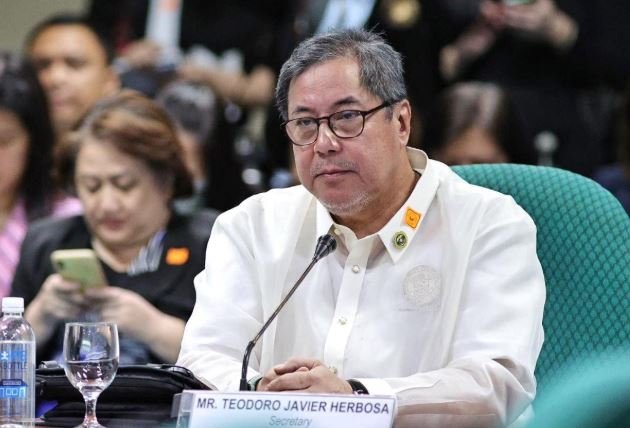
If reports are true, there’s no way for Health Secretary Ted Herbosa to find a valid excuse to avoid legal repercussions arising from the procurement of the so-called Purified Chick Embryo Cell Culture Rabies Vaccine (or Vaxirab N for brevity).

Being a doctor, Herbosa is aware that consumption of fake medicines or vaccines pose great risks.

REPEATED WARNINGS

The Food and Drugs Administration (FDA) has been giving stern warnings against “purchase and use of counterfeit versions” of Vaxirab N.

The first advisory against the fake Vaxirab N came out on June 4 2024, November 13, 2024 and December 9, 2024. For 2025, the FDA issued similar warnings last July 18,  August 7, September 29, October 22 and October 28.

Despite these warnings, the DOH still procured (from its budget) Vaxirab N. 

FAKE JABS INSERTIONS

While there is nothing wrong with buying anti-rabies vaccines, the glitch happens when “enterprising” people from the DOH mix fake Vaxirab N in the bulk of supplies being delivered to the LGUs, public hospitals and health centers.

Worse, these “enterprising minions” are pulling one trick after another under Herbosa’s very nose. It’s either Herbosa is unaware or playing dumb about these atrocities.

PERSISTENT BLUNDERS

Since his appointment, Herbosa has figured in numerous blunders such as: the expiration of P11.5-billion worth of medicines and vaccines, the two-year lull in the treatment of tuberculosis, PhilHealth zero-subsidy, and ghost health centers, to name a few.

With fake vaccines being mixed in the bulk of legit Vaxirab N, Herbosa must pray hard  that nobody gets killed by the fake anti-rabies vaccines being mishandled in DoH’s supply distribution.

Assuming nobody gets killed by the fake Vaxirab N, Herbosa would still be liable for violating Republic Act 9711 (Food and Drugs Administration Act of 2009) and RA 8203 (Special Law on Counterfeit Drugs).

CALL FOR RESIGNATION

Amid these blunders, Herbosa should seriously consider the idea of stepping down, that is he still has delicadeza under his sleeves.

But Herbosa should bear in mind that resigning doesn’t mean absolution.

Araneta Siblings Tagged As Cartel Brains

0

THE COUNTRY’S MOST popular fugitive doesn’t seem to run out of “dosiers” against the administration where he once part of. 

In what looks more like a never-ending saga, former Ako Bicol partylist Rep. Zaldy Co has started pointing his gun at President Ferdinand Marcos Jr’s wife Liza and brother-in-law Martin Araneta.

Co particularly tagged the First Lady Liza Araneta-Marcos as the head of a syndicate behind smuggling, hoarding and price manipulation of the country’s supply and pricing of rice and onions, even as he described her brother Martin as the cartel operator 

According to the former congressman, the First Lady controls the rice imports while her brother Martin Araneta was pulling the strings on onion imports. 

MARTIN ROMUALDEZ TOO

The cast however is not limited to Liza and younger brother Martin, says Co who also went to drag former Speaker Ferdinand Martin Romualdez and Agriculture Secretary Francis Tiu-Laurel.

Co accused Romualdez of protecting the Araneta siblings from being exposed during congressional inquiries into agri-smuggling. Tiu Laurel, Co claimed, covered for them (Liza and Martin Araneta) while consumers get hit by high food costs.

Co said when costs reached P600 per kilo instead of the usual P80 in 2022, the House investigation into onion prices was abruptly halted because the First Lady contacted Romualdez to halt the probe.

“Doon lumabas ang pangalan ni Martin Araneta bilang isa sa mga nasa likod ng kontrol sa importasyon ng sibuyas,” he averred.

“Pero hindi po natuloy ang imbestigasyon, ang sabi ni Speaker tinawagan daw siya ni First Lady Liza Marcos at pinatigil ang imbestigasyon kaya walang natuloy at walang naparusahan. Dahil kontrolado pala ng kapatid ng First Lady ang importasyon ng sibuyas,” he added.

WORSE RICE SITUATION

The rice situation isn’t much better. Despite his push in 2023 to import 13 million metric tons and lower tariffs to make rice more affordable, prices continued to skyrocket, Co said.

A House investigation into rice imports was also blocked after a confidential report linking the First Lady to the rice importers, Co said, adding that it was Laurel who showed the supposed confidential report.

“Nakasaad dito na si First Lady Liza Marcos mismo ang may hawak sa mga rice importers.”

“Ayon kay Sec. Laurel maapektuhan daw ang First Lady kung itutuloy ang imbestigasyon dahil kasama raw nila sa Vietnam visit ang ilang importer ng bigas at nag-dinner pa raw sila Doon,” he said.

The President’s eldest son, Ilocos Norte Rep. Sandro Marcos, called to halt the House inquiry, according to Co.

“At noong araw ding yun, tumawag si Cong. Sandro Marcos kay Speaker Romualdez upang ipatigil ang House investigation tungkol sa bigas as instructed ng Pangulo. Magkasama kami ni Speaker Martin Romualdez ng tumawag si Cong. Sandro Marcos.”

LAUREL BERATED TOO? 

Co also recounted the manner then House Speaker Romualdez scolded Tiu-Laurel during a meeting held at the Manila Polo Club. He claimed that the agriculture secretary was berated for releasing the confidential report that linked the First Lady to “rice smuggling.”

But instead of reasoning out, Tiu-Larel , according to Co, apologized to Romualdez — “Humihingi ng paumanhin si Sec. Laurel Tiu at sinabi niyang pasensya na masyado akong naive.”

“Doon namin naintindihan kung bakit kahit ibinababa ang import tax ng bigas mula 35 percent to 15 percent ay hindi pa rin bumababa ang presyo sa merkado dahil pala sa dami ng SOP at remittance na ipinapasa sa bawat transaksyon,” he added.

‘DIVIDEND’ FROM SUGAR

Co also spilled the beans about the alleged ‘SOP collections” from sugar. Romualdez allegedly told him that the President cried SOS to cover campaign expenses for both national and local candidates in the last polls.

Co added that Romualdez reported “SOP collections” at the Bureau of Customs totaling P11 billion, along with P9 billion from sugar, which he alleged is being divided among only five companies to control sugar prices in the market.

Laurel, in a Facebook post, dismissed allegations made by Co as “total baloney” and “a script fit for Netflix.” 

Co’s detailed accusations linked administration figures to supposed irregularities in the price and import manipulation of rice, sugar, onions, and fish.

DA CHIEF’S CLARIFICATION

Tariff Reduction Discussions was not his suggestion alone but that many sectors pushed for it.

Co’s Recommendation was for “zero tariff, not 15%.”

During the House investigation, Laurel did not send confidential messages to lawmakers to stop the rice-importation probe. 

The DA chief made these remarks in a text message and Viber message to several news outlets on Wednesday, November 26, 2025. 

Worse Than Cigarettes? DOH Eyes Vape Ban

0

LIKE DRUGS, VAPES are addictive and harmful to health. Still, the deceptive marketing of these products as harmless alternatives combined with weak government policy has created a problem worse than cigarette smoking.

No less than the World Health Organization (WHO) has spoken against the potential harms of vaping and the dangers posed by irresponsible marketing.

According to WHO, there are many types of e-cigarettes, with Electronic Nicotine Delivery Systems (ENDS) and Electronic Non-Nicotine Delivery Systems (ENNDS) being the most common.

However, some products claiming to be ENNDS have been found to contain nicotine.

WHO is clear: vapes contain nicotine, additives, flavors, and chemicals that can be harmful to people’s health.

YOUTH AS TARGET

WHO is also concerned that these products have been allowed on the open market as consumer goods and are aggressively marketed to young people.

“Some of these products use cartoon characters and have sleek designs, which appeal to the younger generation. Some look like toys and games. There is an alarming increase in the use of e-cigarettes among children and young people, with rates exceeding adult use in many countries.”

Latest data from the Institute for Global Tobacco Control (IGTC) shows that 14 percent of the youth or 1.21 million, use e-cigarettes, while only 2 percent, or 1.63 million, among adults use them.

RISING VAPE USERS

Meanwhile, the 2019 Global Youth Tobacco Survey shows that one in every seven students aged 13 to 15 uses e-cigarettes. Globally, at least 15 million children aged 13 to 15 vape.

These statistics are no accident. Studies show that many vape companies intentionally target the youth through marketing.

“E-cigarette and HTP brand websites in the Philippines commonly employ marketing strategies directed at youth, including fruit flavors and the use of cartoon characters or other pop-culture references,” IGTC concluded.

Brands involved include JUUL, JVE, Kardinal Stick, Kokin, Mad Master, NIXX Global, RELX, Snowplus, Spade Vapes, VLADDIN, Yooz, Zalan, IQOS, MOK, and TEO/NEAFS.

BAD FOR THE BRAIN

Nicotine is highly addictive and harmful. Its consumption among children and adolescents can negatively affect brain development, leading to long-term consequences and increasing the risk of learning and anxiety disorders.

A non-smoker who uses ENDS may become addicted to nicotine and may also shift to conventional tobacco products. 

Many e-cigarettes are also designed to allow users to control nicotine levels which can reach dangerously high concentrations.

This increases toxic exposure for users and also exposes bystanders to harmful emissions.

DAMAGING OUR LUNGS

There have been scientific studies which tend to show that what was previously promoted as a safe alternative to cigarettes is no more than a marketing hoax.

In the United States alone, evidence shows that ENDS use is associated with lung injuries. The Centers for Disease Control and Prevention (CDC) calls this EVALI or E-cigarette or Vaping-Associated Lung Injury.

As of 2020, there have been 2,807 reported EVALI cases, including 68 deaths.

HEART ATTACK

In the Philippines, the first recorded EVALI-related death occurred in 2023 when a 22-year-old man with no prior health issues died of a heart attack.

Reports say he did not smoke cigarettes but was enticed to vape, which he used daily for two years.

“He had blocked lungs and a blocked heart. He died in spite of all the efforts made by the doctors at PGH. This is the first documented case,” said Dr. Rizalina Gonzalez.

MARKETING HOAX

Gonzalez believes the patient was “a victim of misinformation.”

Across all 15 brands included in the previous study, companies claimed that their products help people stop smoking, promoted harm-reduction messages, and portrayed themselves as responsible or capable of self-regulation.

Their marketing worked. Seventy percent of people who have heard of vapes think they are harmless.

Among users, 26 percent primarily vape “to cut down smoking”, 25 percent “to help quit smoking”, 12 percent “to use when smoking is not allowed”, and 12 percent because it is “less harmful to those around me”

LIFE-SAVING LAW?

One landmark law that enabled the widespread marketing and availability of vapes is Republic Act No. 11900, or the Vaporized Nicotine and Non-Nicotine Products (VNNP) Regulation Act, passed in 2023.

Marketed as a bill that would help smokers, its proponents “could not be more wrong,” according to health advocates.

Among those who pushed for the measure were Congressmen Alfredo Garbin Jr., Wes Gatchalian, Rodante Marcoleta, and Senator Ralph Recto, who touted its passage as a life-saving policy.

TAX OVER HEALTH

Since its passage, many have called for stricter regulations—if not an outright ban—but these calls have largely been ignored.

Vape products generated p1.5 billion in tax collections this year, a massive increase from P179 million the previous year.

TOTAL VAPE BAN 

On Saturday, Department of Education Secretary Teodoro Herbosa discussed the growing vape addiction among youth.

“Eighteen years old and above ang pwedeng mag-vape, pero umikot ka, tingnan mo ’yung mga bata naka-high-school uniform, may vape implement sa leeg nila at makikita mong nagve-vape,” he said.

He also noted how vape companies target the youth.

“Kailangan striktuhan natin ’yung enforcement ng batas na pinasa natin, o baka mas madali mag-total ban na lang tayo para wala nang mabili itong mga kabataan,” he added.

More To Come: Zaldy Co’s Air Assets Frozen

0

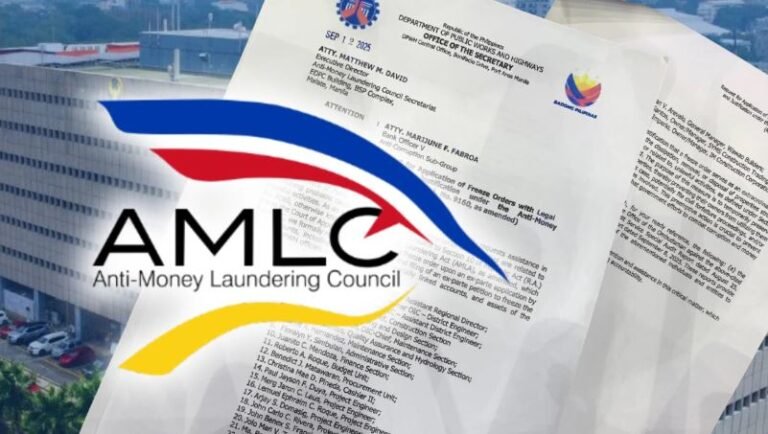
AIR ASSETS WORTH P3.9 billion were frozen by the Anti Money Laundering Council covered by two orders issued on November 25 against a sitting high ranking official from an independent constitutional body and a former elected official. 

The latest action brings to 3,566 bank accounts, 198 insurance policies, 247 vehicles, 178 real estate properties and 16 e-wallet accounts now frozen in connection with the alleged scheme.

The total value of seized assets has climbed to P 11.7 billion and is expected to increase further, the AMLC said.

Authorities are intensifying efforts to recover more ill-gotten wealth in kickbacks from the flood control project scandal.

Investigators said the properties are linked to suspected violations of the Anti-Graft and Corrupt Practices Act and malversation of public funds under the Revised Penal Code, according to the AMLC press release.

Already P6.3 billion worth of assets had been frozen as part of the administration’s effort to recover alleged ill gotten wealth already frozen by the AMLC, Solicitor General Darlene Berberabe said.

Berberabe said the AMLC, represented in court by the Office of the Solicitor General (OSG), has so far obtained seven freeze orders, with nine more applications pending.

“These involve bank accounts and real properties. The P6.3 billion already covered by freeze orders is what has been logged in our office so far and the amount is expected to rise as agencies tighten coordination on asset recovery linked to corruption cases, including the ongoing investigations into alleged anomalies in flood control projects, she added.

In a press release, the AMLC said that two freeze orders were for the assets of an incumbent high-ranking official from an independent constitutional body and a former elected government official.

Investigators have linked to possible violations of the Anti-Graft and Corrupt Practices Act (RA 3019) and to Malversation of Public Funds and Property under Article 217 of the Revised Penal Code.

The newly frozen assets include a wide range of financial and physical holdings: 230 bank accounts, 15 insurance policies, two helicopters, and one airplane, with the air assets alone valued at around P3.9 billion.

Berberabe said the administration is relying heavily on laws that shift the burden of proof to public officials, requiring them to explain assets that appear disproportionate to their lawful income.

“There is already a presumption that these are unlawfully acquired. The public officer must now explain—were these inherited, or legitimately acquired before joining the government?” she asked.

“Even if properties are placed under the names of siblings or cousins, they will still have to justify their capacity to purchase such assets.”

She explained that lifestyle checks, land title verification, and reports from communities remained vital tools, given the increasingly sophisticated methods used to conceal property.

“Criminals are also very creative now in hiding assets,” she said.

Berberabe also confirmed that the Department of Justice (DOJ) supported offering monetary rewards for whistleblowers who provide actionable information on hidden wealth.

“If the asset recovered is worth billions and the reward is 10 to 15 percent, the government will still gain significantly,” she quipped.

The Department of Public Works and Highways (DPWH), she added, was developing its own “Balik Yaman” monitoring system to track funds that could be returned to the public.

As agencies prepare for the filing of more cases, Berberabe said the OSG has organized internal task forces—including a Task Force on Restitution—to handle the expanding workload.

“We are setting up centralized and focused efforts. Our divisions, with around 10 lawyers each, are fully engaged. There are daily meetings with the DPWH and ICID,” she said.

“Everyone knows results must be shown. The filing of cases is continuous.”

She said even private establishments, like exclusive clubs where suspicious purchases of golf shares or similar high-value assets are reported, may contribute information—subject to confidentiality rules. Anonymous tips and white papers, she added, could also aid investigators.

She expressed confidence that more assets would be identified and recovered in the months ahead.

Investigators said the properties are linked to suspected violations of the Anti-Graft and Corrupt Practices Act and malversation of public funds under the Revised Penal Code.

“The issuance of the freeze orders will enable AMLC to pursue a more extensive financial investigation to uncover any possible money laundering scheme linked to the flood control projects,” AMLC Executive Director Matthew David said. 

He added that the public “can be assured” the council will exhaust all legal remedies to hold those involved accountable.

The Untold Story Behind BIR Audits and Taxpayer Power

0

THERE IS A striking irony in the public discussion about the Bureau of Internal Revenue. A politician recently called the BIR the “second most corrupt agency” in government—a sweeping claim condemning more than 11,000 workers in a snap, as if every examiner and revenue officer has already been tried and found guilty. 

Sweeping allegations are easy, even cathartic, for a frustrated public. But they also ignore the need for evidence and skip over the complicated realities of tax administration in a developing democracy.

The allegations, the legislators claim, stem from abuses in the issuance and execution of Letters of Authority (LOAs). Many taxpayers share this view, feeling that the audit process has become equated with harassment. 

The story is appealing because it is straightforward. Corruption occurs; therefore, blame the agency. But public policy—like the tax code—rarely relies on simplicity.

STORY BEHIND STORY

For one, corruption is real. But it is equally naïve to imagine that all wrongdoing flows in one direction. In fact, some of the most sophisticated and entrenched misconduct in the system originates not from government offices but from the private sector.

Tax evasion isn’t just a term; it’s a national pastime. Underreporting income, disguising deductions, creative accounting, ghost companies, fake receipts—these have created entire cottage industries. Tax avoidance schemes are openly marketed as “tax planning strategies.” Behind sleek offices and expensive suits, there are complex mechanisms designed to hide liabilities or at least render them invisible.

When the BIR pursues these cases, many taxpayers do not just defend themselves; they retaliate. They file harassment lawsuits against BIR personnel, threaten litigation, or mobilize political connections to intimidate revenue officers into backing down. Some even rally the media and public opinion to portray themselves as victims of government abuse.

Thus, a paradox arises: the agency responsible for enforcing the law is often the one criticized for doing exactly that.

A FLAWED SYSTEM

It is easy to demand that BIR officials enforce the law “without fear or favor.” It’s much harder to do so when the people evading taxes are the same ones who can destroy careers, weaponize the media, or exert political pressure.

Revenue officers know this. Their families know this. Everyone within the agency has a story of how an audit suddenly became a political fight.

This does not justify corruption, but it clarifies the landscape—the tough pressure points where integrity is challenged and where institutional safeguards need to grow.

PARALLEL HONESTY

The Philippine taxation system largely relies on voluntary compliance: self-assessed returns, self-declared income, and self-reported expenses. For this approach to succeed, integrity must be upheld by both the tax collector and the taxpayer.

However, experience shows a different reality. If left unmonitored, many taxpayers will underreport, misreport, or hide income. The BIR is justified in questioning self-assessments; it would be negligent if it didn’t. 

LOAs, when used correctly, are tools of accountability — not harassment. The issue is not with the tool itself, but with the system that permits discretion, inconsistency, and makes it vulnerable to corruption and manipulation.

ROOM TO DEVELOP 

The most unfortunate part of today’s discourse is how quickly condemnation is directed at those who have barely taken charge. 

The new leadership stepped in during a time of turmoil—exactly when a fresh approach could offer hope. Instead of giving space for reforms to take hold, the public prematurely labels the Bureau as a lost cause. Some even demand its abolition, as if erasing an institution could wipe out the nation’s tax obligations.

But transformation does not come from cynicism. It develops through deliberate, structured reform—and by giving new leaders the chance to demonstrate what they stand for.

INTEGRITY, TRANSPARENCY 

What if we say, the BIR’s audit transformation agenda aims for exactly that: a system where LOAs are digital, risk-based, justified, verified, monitored, and protected from both abuse and external interference; a system where transparency shields honest officers and accountability keeps those who stray in check; and a system where taxpayers see the audit not as harassment but as a necessary instrument of fairness.

Reforms of this scale require time, political capital, and institutional courage. But above all, they require trust—not blind trust, but responsible trust grounded in transparency and oversight.

It’s easy to criticize a system but it’s harder to understand it. The most difficult part of it is to change. But this is exactly where the country is today. The BIR is not a saint or a villain; it is an organization facing the same challenges that every tax authority around the world encounters.

CHANGE IS COMING

If we seek fairness, we must hold both taxpayers and tax collectors to the same standard. If we want integrity, we must demand it from both sides of the audit table. If we want a better future, we must give reform a fighting chance.

Change is occurring—not just on the surface of public noise, but through the challenging, disciplined work of institutional transformation. 

The better approach is not to judge too quickly, but to engage in building a tax system worthy of public trust.

Purge Is On For Crooks In Suits

FOR THE LONGEST time, the Bureau of Internal Revenue (BIR) has been notoriously famous for corruption, but not under my watch, says newly-appointed Commissioner Charlito Mendoza who cited the urgent need to cleanse the agency of crooks in the guise of civil servants.

Immediately after being sworn in, Mendoza buckled down to work. His first agenda — listen to the taxpayers, from whom he was able to uncover what looks more like an “institutionalized scheme” embarking on the so-called Letters of Authority (LOA) issued by the bureau.

Under the law which created the BIR, the agency’s mandate is to assess and collect all national internal revenue taxes, fees, and charges, and the enforcement of all forfeitures, penalties, and fines connected therewith, including the execution of judgments in tax cases resolved by judiciary or the Court of Tax Appeals.

AGAINST ALL ODDS

In a press briefing held at the Department of Finance (DOF), Mendoza announced the immediate suspension of all field audits and related operations of the BIR.

“I have ordered the immediate suspension of all field audits and related operations, including the issuance of Letters of Authority (LOA) and Mission Orders (MO), effective immediately, in accordance with Revenue Memorandum Circular 107-2025. No Letter of Authority or Mission Order shall be created, printed, signed, or served during the suspension period,” the new BIR chief said.

Only in his first week in office, Mendoza dared to do what his predecessors didn’t — to see things from the perspective of the Filipino taxpayers who have been profusely bleeding for who knows how long.

TALL, TOUGH ORDER 

When he was appointed to take the helm of the BIR, Mendoza knew only too well that being “bright” would not be enough in an agency where corruption has become a norm.

To start with, Mendoza convened the bureau’s key units in an earnest effort to gain a thorough understanding of existing audit operations — and identify long-standing issues adversely affecting taxpayers, and the government revenue collection.

Hence, the suspension in the issuance of LOAs and MOs.

“This is in response to the concerns raised by the taxpayers regarding the issuance of Letters of Authority and Mission Orders. We hear the people, we hear your concerns, and are immediately acting on them. The people deserve better.”

COLLECT AND PROTECT

Under the law and subsequent legislations covering the BIR, the agency’s top mandate is to protect taxpayers from irregular, untimely, or intrusive audits and to strengthen internal discipline by limiting discretionary field operations — if only to guarantee a fair, transparent, and efficient tax system that promotes compliance and fosters trust among taxpayers.

While LOAs are deemed as the BIR’s primary legal document authorizing revenue officers to examine a taxpayer’s books and records, the same system has evolved to become a scheme that saw the government at the losing end.

The same principle applies in the issuance of MOs, which authorizes designated BIR personnel to conduct surveillance, verification, site inspections, and other limited fact-finding activities.

Unlike LOA, an MO does not authorize audits, examination of books of account, or the issuance of assessments. 

ENTICING CORRUPTION

For one, LOA was designed to give revenue officers the legal right to examine a taxpayer’s books and records. Over the years, LOA documents have been used not to strengthen compliance but to intimidate businesses and line pockets.

The most common abuse comes in the form of “settlements.” When LOA is served, taxpayers are often given choices: settle the case quietly with a bribe or prepare for an inflated assessment.

It doesn’t take businessmen to become rocket scientists to know what would be best for their investments — cave in, by paying up. Problem solved, but not for long as the practice becomes a never-ending cycle of “give and take.”

And yet, not one BIR Commissioner in the past dared to break the cycle of corruption which adversely affected revenue collection from where the government is drawing funds to defray universal healthcare, free education, farm-to-market roads, and many other basic services.

SUSPENSION COVERAGE

The temporary suspension applies to all BIR offices involved in audit and field operations, including the Large Taxpayers Service, Revenue Regions and District Offices, Assessment Divisions, VAT Audit Units, and Intelligence and Special Audit Units. 

Interestingly, the suspension comes with exemptions which include urgent or legally mandated cases such as active criminal investigations, one-time transactions, audits prescribing within six months, refund claims that require audits, or immediate action on taxpayers flagged by verified intelligence.

“This suspension is necessary to protect taxpayer rights, strengthen internal discipline, and ensure the integrity of our audit processes. We take every complaint seriously, and any misuse of authority, harassment, or irregularity has no place in the Bureau,” Mendoza emphasized.

INTEGRITY AND REFORM

The BIR chief likewise ordered the creation of a Technical Working Group on LOA and Mission Order Integrity and Audit Reforms to lead the transformation efforts. 

Mendoza’s marching order to the group — evaluate existing procedures, identify operational and systemic vulnerabilities, recommend revised LOA protocols, and integrate digital safeguards and uniform audit standards.

“Our goal is to create processes that are predictable, evidence-based, technology-driven, and fair,” an obviously ecstatic Mendoza said even as he reiterated that these systems are meant to protect taxpayers while helping the Bureau perform its mandate efficiently.

“I cannot overemphasize President Ferdinand Marcos, Jr.’s directive for the BIR to continue meeting revenue targets while strengthening service delivery for workers, small business owners, and all taxpayers who rely on predictable and transparent audit processes.”

“The overarching directive of the President when I assumed office is to ensure efficient and fair revenue collections,” he quipped.

Family Feud PH

2

FOCUSED ON THE call for accountability and jailingof senators and congressmen involved in stealing the people’s money in the government’s flood-control and infrastructure projects with private contractors, the country suddenly finds itself rivetted on a public spectacle of two Marcos siblings feuding like a hungry lioness trying to grab a freshly-caught gazelle from a lion already relishing its fresh meat.

In front of more than half a million INC rallyists in the Luneta, Senator Imee Marcos cried out loud and clear that his brother President Ferdinand R. Marcos, Jr. has been taking illegal drugs. Sen. Imee also said that hiswife, the First Lady, was also taking illegal drugs. 

In truth, the public has been aware, many years back and especially during the campaign period of the Bongbong Marcos – Sara Duterte UNITEAM, that there were talks of the young Bongbong taking illegal drugs, as early as when his father was the president.

Cheers from the crowd met Sen. Imee’s public revelation about drug use by her brother, including his family. Reactions quickly reverberated, most prominently from the president’s son, Majority Leader Ferdinand “Sandro” A. Marcos, saying that “IT’S NO ACT OF REAL SIBLINGS.” 

“Political Analysts and citizens, concerned about the country’s progress as a nation, can only hope that the Marcos-Duterte brand of leadership, in the meantime that they are in the driver’s seat until early 2028, will abandon their stupid and corrupt style of decision-making, and use a bit of common sense, if they have any.”

FAMILY DRAMA

Press Officer Claire Castro quickly retorted: “a desperate move,” “kwentong kutsero,” “It’s just noise!” – probably to stop her allies in the senate from being implicated in the anomalous flood-control projects investigations. Sen Panfilo Lacson expressed his disappointment, “That was very un-Filipino.” 

“A family drama,” according to Akbayan Rep. Perci Cendana and Mamamayang Liberal Rep. Leila De Lima, pointing out that the incident just highlighted the urgency of Congress’ passing an Anti-Dynasty Bill forthwith.

To the netizens and serious followers of political and economic developments in the country, this latest open display of the Marcoses’ family feud simply reminded them not to forget the long-held public awareness of a corrupt family dynasty, responsible for atrocities involving more than 200,000 Filipinos in the seventies until the 1986 People Power Revolution. 

This was heartlessly implemented by their patriarch-dictator father, Ferdinand E. Marcos. 

Among themselves, as individuals, the Ferdinand-Imelda children were probably born with the unique “corruption-DNA.”

Thus, the sister-brother feud just happened to erupt publicly before a “religious” Filipino audience numbering almost a million gathered, ironically, in the sacred grounds of the imposing monument of the country’s national hero, Dr. Jose Rizal. 

LOYAL TO DUTERTE

Not to forget, that Sen. Imee Marcos, on the same stage, practically announced to the entire nation about her political stand, namely, her loyalty to the ICC jailbird Duterte and family. (She probably cannot forget that it was this murderer, as former mayor/president who managed, deceptively, in defiance of the people’s understandable objection, to have the remains of her father – the brutal dictator-plunderer and traitor to the Filipino people, Ferdinand E. Marcos – buried in the sacred grounds exclusively for certified heroes of the country, the Libingan ng mgaBayani).  

More pointedly today, Sen. Imee, along with what the netizens call DDS-senators, has shown her support for the archiving of the impeachment of the galivanting VP Sara Duterte. The people cannot fully understand thisapparent canine loyalty to this corrupt vice-president, publicly exposed as betrayer of public trust, havingwasted millions of the people’s money in her “confidential projects,” and clear violations of the Constitution and the Rule of Law. 

Political Analysts and citizens, concerned about the country’s progress as a nation, can only hope that the Marcos-Duterte brand of leadership, in the meantime that they are in the driver’s seat until early 2028, will abandon their stupid and corrupt style of decision-making, and use a bit of common sense, if they haveany.

Talk Sharp: Be Remembered

0

EVER BEEN IN a meeting where someone talked for 20 minutes straight… and you walked out remembering absolutely nothing? It happens more than we admit.

The Back Story

People don’t remember everything you say — they remember how you made them feel — and that one line that stuck.

When you speak, don’t just talk to fill the air — aim to leave a mark.

Ask yourself:

  • Will they remember this tomorrow?
  • Does it have meaning?
  • Is it simple enough to stick?

Because talk is cheap… but memorable talk? That’s priceless.

The Big Truth: Less is More

You can talk for hours, but if you’re not clear, simple, and real – no one will remember.

We’re wired for stories, emotions, and things that spark our minds — not endless bullet points. Your goal isn’t to show you know a lot. Your goal is to make people care.

  • Think about it like writing on a foggy mirror. If your words aren’t sticky, they disappear as soon as the room cools down.

Drop the Fancy. Be Human.

You don’t have to be fancy. You just have to be real.

Talk like a human. Use a juicy example instead of a paragraph of theory. That’s what sticks. 

Want to teach someone something?

  • Make it emotional enough or entertaining enough that their brain goes: “Ohhhh yes, that!”

Make It Stick — Try These Moves

One catchy line.

  • Turn your point into one sentence people can repeat.


Speak to their reality.

  • Drop examples they relate to.


Use visuals and metaphor.

  • Think of your message like a tattoo…” (See? You’re paying attention now.)


Make it conversational.

  • Not a monologue. A connection.

The Memory Test

Before you speak or write, ask yourself:

  • “If they forget everything else… what’s the ONE thing I want them to remember?”

That’s your anchor. Build your message around it. They’ll walk away with something that actually matters.

Tips And Techniques 

The next time you step up to speak? Keep in mind: 

  • You’re not just delivering words… you’re planting memories.

Start small. Take one idea. Make it meaningful. Repeat it with style.
Ditch the overwhelming paragraphs. Drop the jargon.

Go for this instead:

  • Say what matters. 
  • Make it stick. 
  • Leave them thinking about it tomorrow.

Because great communication isn’t about sounding smart — it’s about being unforgettable.


Remember: Say something they’ll remember.