
Friday, March 27, 2026
Home Blog Page 24

Reforming Systems Amid Flood Control Scandal

0

IN A WAY, the exposé by President Marcos of the multibillion flood control projects fund scandal is leading to reforms in government’s regulations.

The scandal has enraged the people to a point where politicians, the President included, have been forced to make serious efforts to introduce reforms in the system– from budget approval, to regulating contractors, instituting measures against shell companies being used by money launderers and more.

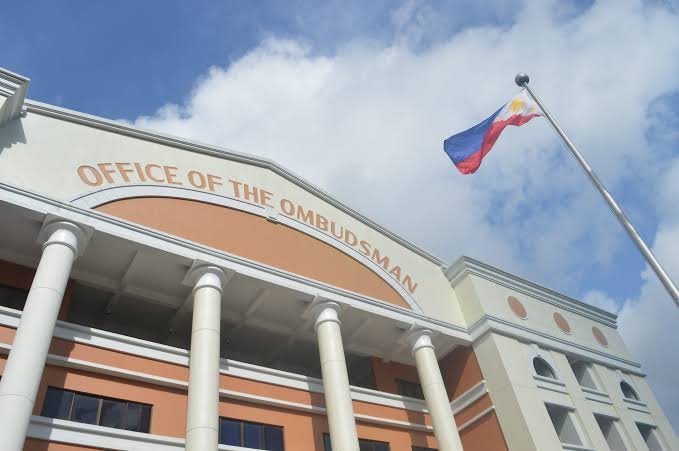
The revival by Ombudsman Jesus Crispin Remulla of access to SALNs of government officials now brings a promise to the people of transparency and hopefully even accountability within government – national and local. But vigilance by the people is of utmost concern as local officials, whose mindset is that their distance to the capital, would make it hard for them to be monitored and sanctioned to toe the official line.

Slowly, the lawmakers are now formulating guidelines to comply with statement of assets, liabilities and networth or SALN, which was quashed to oblivion by the predecessor of Remulla, Ombudsman Martires, whose loyalty to the former president made him rule against public access to SALNs. Martires claimed are being weaponized against the incumbents.

Sen. Risa Hontiveros and Rep. Chel Diokno madeavailable their SALNs as a show of support to the public’s clamor on transparency and accountability. Hopefully, more lawmakers would open their SALNs as a sign of sensitivity to people’s aspirations.

S.A.L.N. DISCLOSURES  

Speaker Faustino “Bojie” Dy III formed a committee to review the chamber’s guidelines on releasing net worth statements, amid calls for greater government transparency. 

The memorandum, effective immediately, directs the committee, chaired by Deputy Speaker Rep. Ferdinand Hernandez (Cotabato) with Iloilo Rep. Lorenz Defensor and Marikina Rep. Romero Federico Quimbo as deputies, to begin reviewing the House’s rules on publicizing lawmakers’ SALNs.

Dy, who released his SALN last week, said the lawmakers are open to releasing theirs, following Ombudsman Jesus Crispin C. Remulla’s reversal of Martires’ restrictions to such documents. Republic Act 6713, the Code of Conduct and Ethical Standards for Public Officials and Employees, assigns multiple custodians for SALNs across government branches and regions.

Dy declared a net worth of P74 million, including 11 agricultural lots, two residential lots, and three houses plus assets like P25.18 million cash, P29.6 million investments and P12 million worth of jewelry and personal items. 

“Slowly, the lawmakers are now formulating guidelines to comply with statement of assets, liabilities and net worth or SALN, which was quashed to oblivion by the predecessor of Remulla, Ombudsman Martires, whose loyalty to the former president made him rule against public access to SALNs. Martires claimed are being weaponized against the incumbents.”


A REPOSITORY

The Ombudsman is the repository of net worth statements of the President, Vice-President and heads of Constitutional offices. The Office of the President holds those of the Cabinet, presidential appointees and high-ranking military officials. Legislators file theirs with their respective chambers, while judges and justices submit theirs to the Office of the Court Administrator and the Supreme Court’s Clerk of Court, respectively.

Political Science lecturer, Hansley Juliano, told Business World that the House SALN release policy should not be too complicated and be bogged down with bureaucratic processes. 

“As long as it is consistent with lobbied standards for Freedom of Information (FOI) requests, and as long as it provides the relevant information, we should not complicate the process and we should not involve too many politicians,” Juliano said.

Juliano said it would be easier for the House to just pass an FOI law to ease government requests, like SALN releases. “They’d garner more with that legislation.”

Remulla also opened his SALN last Tuesday and President Marcos also indicated his intention to release his SALN.

TIGHTER GRIP ON FIRMS 

The Securities and Exchange Commission (SEC) is drafting new rules requiring companies to reveal the true owners of the firm to boost accountability in the financial system. Under the proposal, corporations must report any change in beneficial ownership within seven days. The SEC is pushing a crackdown on dubious ownership structures associated with money laundering and tax evasion.

The SEC would not hesitate to give timely data access to authorized personnel, including law enforcement agencies, competent authorities, and other government bodies.

Penalties for untruthful disclosures are: Stock corporations with retained earnings of less than ₱500,000 will pay ₱50,000 for first violation until ₱500,000 for the fourth. Non-stock corporations face ₱25,000 to ₱250,000 for similar violations.

False ownership data could cost companies up to ₱2 million and even lead to dissolution. Corporate officers, trustees, and directors who neglect their duty to ensure compliance will also be fined, starting at ₱50,000 and rising to ₱1 million for repeated offenses.

CONFLICT OF INTEREST

The Department of Trade and Industry, which recently took over the graft-ridden  Philippine Contractors Accreditation Board, which grants license to contractors, prohibits PCAB members from owning construction companies themselves due to a “conflict of interest,” 

DTI Secretary Cristina Roque said PCAB has been linked to the massive corruption in the flood control projects of the DPWH as all companies require a PCAB license to participate in bidding.

Comebacking Blue Ribbon Committee chair, Sen. Panfilo Lacson has called for PCAB’s overhaul as he described it as a “low-key yet corrupt-ridden regulatory body” following allegations of licenses being sold.

CASH WITHDRAWAL LIMIT

Shocked by the hundreds of millions of pesos that a contractor withdrew from a flood control project fund deposited with the Land Bank branch in Bulacan, the Bangko Sentral is now limiting cash withdrawals over the counter to only P500,000.

It has reminded banks of their mandate to be vigilant about possible infractions to the money laundering and dubious accounts that criminals might use for arms and drugs financing.


BSP Gov. Eli Remolona, who chairs the AMLC, said the agency has already issued over 700 freeze orders covering bank accounts, insurance policies and other assets of individuals linked to the flood control scandal. More are expected in the coming days.

Personal Notes On Feminist Ellen Ongkeko-Marfil, Maker Of ‘Lakambini Gregoria De Jesus’ Meta Docu

LET ME BE personal about “Lakambini Gregoria de Jesus,” the meta documentary fiction film or as the press briefs have described as “meta docufiction,” especially on Ellen Ongkeko-Marfil who creatively produced it for Pelikulove and the other director Jeffrey Jeturian.

​I have always been a follower not only of the works of Ellen but her personal events as well.

​Although I might not see her often, she is always in my heart and in my mind.

​I might not be the closest of her friends but she has always made me feel a real friend.

COMPASSIONATE WOMAN

​One of the reasons why I feel her closeness is the family she comes from.

​Being one of the daughters of the socialite ViringOngkeko, I could feel Ellen’s filial affection not only to her mom or to her sis Margie Ongkeko but to women in general.

​That makes her a magnanimous female and a compassionate woman to her society.

​I also feel an affinity with Viring who has been an active guest and participant in ballroom dancing with the music of Nonoy Lopez and His Orchestra and the crooning of Amazing Diva Armie Zuniga.

​I would always see Viring in socials, particularly ball room parties either at the Manila Polo Club or Makati Sports Club or any high-end venue whenever I would meet up with Armie.

​The lady director loves her mom so much.

In some memorable nights, Ellen and Margie would lend Viring their presence in ballroom affairs even sans dancing on the floor.

​Just to keep their mother company is quite filial of the siblings.

‘(Ellen is) a compassionate artist who promotes, first and foremost the interest of women, in particular, Filipino women and the welfare of any community to make sense of life. That must be the virtue she has imbibed in the film about Gregoria de Jesus, also known as Ka Oriang.’

A RARE BOOK

It was Ellen who gave me a beautiful and rare book, “1000 Movies You Must Watch Before You Die.” 

​Ongkeko-Marfil would always show up whenever I would invite her to my events like the book launching of my Filipino version of “SekSinema” at Star Mall in Shaw Boulevard in Mandaluyong City more than a decade ago.

​Mutually, with sincerity and candor, I would always make time to attend screenings of her directed or produced films like “Pusang-Gala,” “Boses,” to name a few. Or meet up with her for some professional linkages like marketing or booking her films although they were nipped in the bud due to unavoidable circumstances.

​And as an alumnus of UP and PETA, Ellen has always been a profound and progressive artist.

​She’s a compassionate artist who promotes, first and foremost the interest of women, in particular, Filipino women and the welfare of any community to make sense of life.  


​That must be the virtue she has imbibed in the film about Gregoria de Jesus, also known as Ka Oriang.

​The film is about the heroism of De Jesus, rarely given impetus by the collective national consciousness or simply, education in general.

CREATIVE CAREER

​Jeffrey, on the other hand, has always been supportive of my writing career.

​Jeturian and I were classmates at the very first free scriptwriting seminar-workshop in 1982 of now National Artist for Film Ricardo Lee, also known as Ricky Lee.

​Award-winning Jeff initially directed “Lakambini” but somewhere along the way, it was shelved due to many hitches, one of them the backing out of financiers when it was snubbed by the Selection Committee of the Metro Manila Film Festival 2015 saying it lacked combat scenes for an action movie which the filmmakers didn’t intend.

​Jeffrey is a genuine friend however we seldom see each other.

​To jumpstart the “Lakambini” project which takes more than one decade to complete, Pelikulove assignedanother visionary, a relatively new director, ArjanmaraRebeta who did a good damn creative job.

​”Lakambini” which stars Lovi Poe, Elora Espanoand Gina Pareno as generational Gregoria de Jesus, Rocco Nacino as Andres Bonifacio is set to open on November 5 in cinemas nationwide.

Espina Dynasty Faces Plunder Charges

0

“IT’S NOT DYNASTY, but sheer destiny,” were the words of then Biliran Governor Gerardo “Gerryboy” Espina Jr. in response to accusations dragging the clan as a political dynasty before the 2016 elections.

But recent controversies surrounding flood control projects have raised questions about the Espina family’s role in shaping Biliran’s destiny.

PLUNDER CHARGES

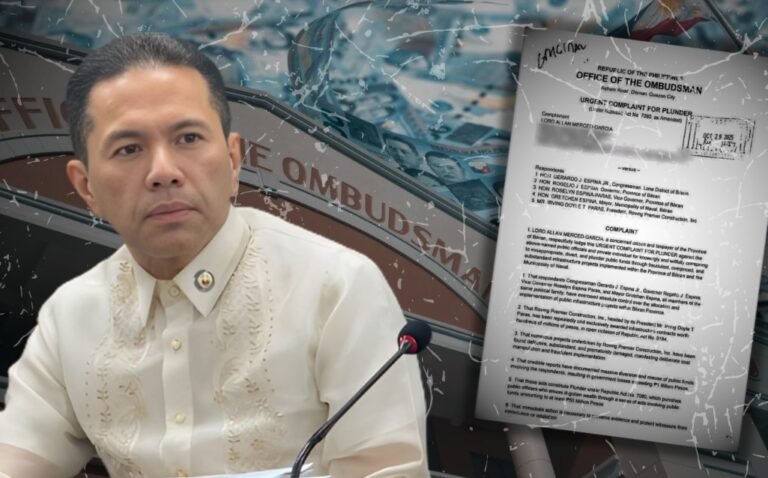
Earlier this week, plunder charges were filed before the Ombudsman against the Espina political dynasty, following exposés implicating the clan in the flood control project scandal through Roving Premier Contractors Inc., a company allegedly owned by the family.

Among those charged are Congressman Gerardo Espina Jr., Governor Rogelio Espina, Vice Governor Roselyn Espina-Paras, Naval Mayor Gretchen Espina, and Roving Premier President Irving Doyle Paras.

According to complainant Lord Allan Merced Garcia, the respondents “knowingly and willfully conspired to misappropriate, divert, and plunder public funds through fraudulent, overpriced, and substandard infrastructure projects implemented within the Province of Biliran and the Municipality of Naval.”

FAMILY BUSINESS

In his complaint, Garcia accused Roving Premier—led by the vice governor’s husband, Paras—of being repeatedly and exclusively awarded infrastructure contracts worth hundreds of millions of pesos, in open violation of Republic Act No. 9184.

Furthermore, the projects undertaken by the firm were allegedly defective, substandard, and prematurely damaged, showing signs of cost manipulation and fraudulent implementation.

Previous reports revealed that Roving Premier has bagged 45 contracts in Biliran amounting to ₱1.03 billion in Department of Public Works and Highways (DPWH) projects, 44 of which were awarded by the district engineering office since 2020.

ETCHED IN HISTORY

Since Biliran’s birth as a province in 1992, the name Espina has been etched on nearly every page of its history.

In Congress, the province’s first representative was Gerardo Espina Sr., who served from 1995 to 2004. He was succeeded by his son Gerryboy Espina, who held the seat until 2007.

The only time Biliranons did not have an Espina in Congress was in 2007, when Glenn Chong defied the odds and won. But in 2010, Chong lost his reelection bid to Rogelio Espina, Gerryboy’s elder brother.

Rogelio went on to complete all three consecutive terms allowed by the Constitution, only to be replaced by Gerryboy again in 2019.

IN FULL CONTROL

The province has had only four governors in its history, two of them bearing the Espina name.

From 2001 to 2010, Rogelio Espina served three consecutive terms as governor before running for Congress. From 2010 to 2019, Gerryboy replaced his brother as governor, later succeeded by Gerard Roger Espina, Rogelio’s son until 2025.

Their siblings, Roselyn Espina-Paras and Rudy Espina, currently serve as Vice Governor and Kawayan Mayor, respectively, and have held various local positions in the past.

Roselyn’s daughter Gretchen is the Mayor of Naval, while her son Anton serves as a councilor.

Despite all these names, the list remains incomplete.

HEAVY INFLUENCE

For the longest time, the Espina clan has been holding favorable positions with deep influence in local politics.

For one, incumbent Representative Gerryboy Espina has been the vice chairperson of the appropriations committee since 2019. The committee wields the so-called “power of the purse.”

From budgeting to project implementation, the Espinas have influence over the entire process, The PH Insider was told.

Further research reveals that local politics in Biliran have remained colorful, even without a strong opposition since 2007.

LEGAL HARASSMENT

Signs of systemic censorship and harassment are also evident. The complainant, Garcia, is one of the most vocal critics of the Espinas.

This has earned him online attacks from what appear to be “attack dogs” hurling insults at critics like him. Garcia claims to have been the target of legal harassment from the Espinas through the filing of charges.

Earlier this year, Gretchen Espina filed multiple counts of libel against Garcia for “posting, speaking, and spreading unfounded accusations and statements of corruption, imputation of crimes, and defects in videos and social media posts… which are all geared to malign my (her) reputation.”

An email sent to the media by another critic, Daniel Silk, also accused the Espinas of attempting to have him deported through “false and fabricated evidence.”

Meanwhile, Ashi Santini Lagat, another vocal influencer, filed a complaint with U.S. cyber authorities in New York concerning coordinated online harassment and fake accounts allegedly traced to Biliran.

CENSORSHIP, BRIBERY

A post on Biliran.ph also showed a certain Leonard Olaer, identifying himself as Congressman Gerryboy’s staff, asking the page to delete a post showing the congressman’s signature in support of the impeachment of Vice President Sara Duterte.

A similar incident happened to The PH Insider, when someone claiming to work for the governor sent a message asking for the takedown of an article titled “Infra Projects Just for Espina’s Roving Premier?”— even offering: “Name your price.”

DESTINY FULFILLED

For over three decades, the Espinas have been claiming that the government position they have is a matter of “destiny” — to lead Biliran.

But despite their long rule, the province’s potential remains largely untapped, its natural beauty underappreciated, and its progress stunted.

Since its creation as a province, the Espinas have shaped Biliran’s future from the top.

Inter-Generational Electoral Relevance

0

AS OF JANUARY 23, 2025, there are 69,673,655 eligible voters in the poll body’s registry.

A segmentation of this universe, presented according to generational cohorts by the GMA Integrated News Research, showed the following information are vital:

(a) There are 10.50 million Filipinos who belong to this writer’s generation — the Baby Boomers, and the Silent Generations of the post-wars era, or those born in the periods from 1946–1964 and 1928–1945, respectively, making up 13.83% of the electoral pie;

(b) While there are 17.64 million regarded as Gen Xers, or those born in the period from 1965 to 1980, making up 23.22% of the electoral pie;

(c) The Millennials number  25.94 million—they are those born in the period from 1981 to 1996, making up 34.15% of the electoral pie;  and 

(d) Those who belong to the Gen Z, or those born in the period from 1997 to 2007, number 21.87 million Filipinos, making up 28.79% of the electoral pie. 

POLITICAL ACTIVISM

In the face of growing political activism triggered by the people’s collective disgust over the unprecedented levels of corruption in public works, it is best for the country’s leadership to consider these vital numbers as it tries to factor in the youth’s activism. The Administration’s National Situation Room should better consider the poll body’s figures as of the latest data consolidation. 

The foregoing composition of the electoral pie indicates that our future will now have to be heavily influenced by the disposition of the Millennials and Gen Z voters—they constitute about 63% of the political gravitas that can catapult anyone to the political totem pole—or make uneasy the head on which the crown rests. They made up the 68% of the registered voters that packed a wallop during the Eleksyon 2025.

While the BabyBoomers who still strut their political wares and sashay into the fray with what they believe they have—grey matter between their ears, are better served notice that whatever solid arguments they may have on any issue, cerebral or comical, pretentious or real—will no longer make a dent on the political discourse when ranged against the exuberance of the younger generations from the likes of representatives Leandro Leviste, Kiko Barzaga, and Renee Co, or Pasig Mayor Vico Sotto, QC’s Joy Belmonte, or even emerging youth organizer Kiko Aquino-Dee, and that tech-savvy Vice Mayor from Cagayan Valley, or even the Millennials like Senator Bam Aquino, Francis Zamora of San Juan City, Mayor Gatchalian of Valenzuela City, and, hate them or love them, Davao City’s Acting Mayor Baste Duterte and his sister, Veep Sarah Zimmerman Duterte.

ECONOMIC CHALLENGES

Here’s a caveat though: This segmentation according to generational groupings is not the sole determinant of electoral consequence. The economic categorization is what is telling during the polls. For as long as economic challenges are readable and made comprehensible in terms of the number of meals a family eats everyday, the poverty index remains the more solid argument. Thus, the political weight of the age cohorts will still be disrupted by the wallop of the 4Ps, Tupad, AICS, and other state welfare aids.

Yes, the younger electorates will surely dictate; however, even among the millennials and company, it is still the question of what they will eat for the day that will impact when they get to decide whose name to shade on Election Day.

This is how our society has fallen prey to a politically weaponized welfare assistance program. Make no mistake though that this welfare assistance programs are effective only for those who dangle them during Election Day—the congressmen, governors, or mayors. These “vote-getting tools” or “campaign sweeteners,” if you will, do not necessarily translate into electoral votes for the party’s national candidates. 

POLITICAL HUSTINGS

Pertaining to the dynamics of political hustings insofar as the candidates for national positions are concerned—especially in light of the tight campaign periods, these national hopefuls will still have to rely on local politicos who enjoy real local support. 

Perforce, the former’s total reliance on the local politicians as their main campaigner will rise and fall on a couple of factors: (1) the acceptability of the local politicians vis-a-vis their constituency; and (2) the trustworthiness of these local politicos as they carry out the campaign for the national candidates. 

Failing in one, the national candidate who casts his lot solely on the assurances of local politicos—who also have their own political survival depend on how shrewdly they horse trade and campaign until the day of the polls—will likely eat the dust. 

Graft-Tainted Senator Claims To Be Poorest 

0

A SITTING SENATOR who gave his wife an engagement ring worth three times the amount he declared in his Statement of Assets, Liabilities and Net Worth (SALN), now claims to be the poorest member of the upper legislative chamber.

Based on his SALN covering calendar year 2024, Senator Francis Escudero, who forms part of the list of elected officials being investigated over links into the flood control scandal, declared a net worth amounting to ₱18.84 million, for which he notched the title of being the poorest member of the Philippine Senate.

He listed five real properties, all acquired by succession in 2013, ₱11.7 million cash, ₱4.95 million worth of jewelry and other personal properties, and five vintage cars.

Also listed in his SALN is a portion which states he’s a partner at Escudero Marasigan Vallente & E.H. Villareal Law Offices.

Interestingly though, Escudero in February 2024 gifted his wife, socialite Heart Evangelista, a paraíba tourmaline gemstone estimated to be worth $1 million which translates to more or less ₱58 million.

RICHEST SENATOR

As expected, Senator Mark Villar, who is also among the personalities facing probe into the flood control anomalies, emerged as the richest member of the Philippine Senate as per his SALN.

In his 2024 SALN, Villar who is a direct descendant of the country’s richest individual — former Senate President Manny Villar — declared with a net worth of ₱1,261,337,817.

Except for one, his immediate family members — father Manny, mother Cynthia and Camille, have (had) stints in the Philippine Senate. Mark’s sister Camille, an incumbent senator, declared a net worth amounting to ₱362,073,819 as of June 2025.

The family also owns one the country’s biggest business empires in the country.

Notably though, the country’s richest sitting senator served as Secretary of the Department of Public Works and Highways Secretary during the previous administration.

TULFO BROTHERS

The second and third spots in the senate list of richest belong to the Tulfo brothers, with Senators Raffy and Erwin Tulfo listed at ₱1,052,977,100 and ₱497,003,425.13, respectively.

Raffy is in himself a media empire that earned him a seat in the Senate through Raffy Tulfo In Action.

He is listed as the president and trustee of Raffy Tulfo in Action Foundation Incorporated, and a director at RW Productions Incorporated and Idol Network Philippines Incorporated.

Erwin declared owning stocks in three companies, being a partner in one, and owning a sole proprietorship. He however redacted the names of all companies in which he has business interests.

Before being elected senator, Erwin was Secretary of the Department of Social Welfare and Development in 2022 and a congressman as ACT-CIS Representative from 2023 to 2025.

POOREST SENATOR

Until Escudero explains, the title of “Poorest Senator” belongs to Risa Hontiveros.

The first to release her SALN voluntarily, Hontiveros listed her net worth at ₱18,986,258.21 as of 2024, a slight increase from ₱16,720,359.73 in 2020. Hontiveros declared owning shares in a dive resort called Planet Dive Incorporated, being a member of the New Rural Bank of San Leonardo Incorporated, and serving as a director at La Luna Corporation.

She also listed three real properties worth ₱8.7 million, ₱3.6 million in cash deposits, a 2014 Toyota Innova, a Toyota Fortuner, equity in an installment purchase worth ₱3 million, some furniture, fixtures, appliances, jewelry, books, and a car loan with Toyota Financials worth ₱897,840.

BILLIONAIRE’S HUSBAND

Meanwhile, Kiko Pangilinan is the next poorest senator with ₱26,738,597.97 net worth as of June 2025, a slight increase from ₱23,941,333.25 in 2020.

He listed seven land properties worth ₱5.8 million, ₱7.96 million in cash, furniture, fixtures, jewelry, books, journals, vehicles, and shares of stock.

In an interview with Bilyonaryo, former Ombudsman Samuel Martires—who issued the order barring the release of SALNs without the consent of the person—questioned Pangilinan’s SALN.

“Why did he also file a SALN of ₱23 million? Is that believable? Why didn’t he let his wife, Sharon Cuneta, join or state her assets and liabilities in his SALN?” Martires said.

This was in response to Pangilinan’s post on social media urging Ombudsman Jesus Crispin Remulla to release Martires’ own SALN.

Pangilinan and billionaire wife Sharon Cuneta, as well as Escudero and Evangelista, have a prenuptial agreement separating their properties by law.

How Low Can The Peso Go?

0

THE SON OF the president who once immortalized the myth of a strong peso during his time has now made history for the opposite reason, presiding over the currency’s weakest level ever.

On Tuesday, the peso hit a new all-time low of ₱59.13 corresponding to one US dollar, slightly breaching the previous record of ₱59 set in October 2022, also under President Ferdinand Marcos Jr.

While the figure may not sound alarming on its own, the reasons behind it seemed causing concerns given the government’s weak response in recent weeks.

CORRUPTION SCANDAL

The peso’s latest depreciation is largely attributed to the flood control scandal embarking on trillions of pesos-worth of substandard and ghost flood-control projects.

“The recent peso depreciation may reflect market concerns over a potential moderation in economic growth due in part to the infrastructure spending controversy, as well as expectations of additional monetary policy easing by the BSP,” the Bangko Sentral ng Pilipinas (BSP) said in a statement.

The United States’ 2025 Investment Climate Report has already flagged the Philippines for pervasive corruption as a major barrier to foreign investment.

Meanwhile, the International Monetary Fund (IMF), Asian Development Bank (ADB), and the ASEAN+3 Macroeconomic Research Office (AMRO) have each lowered their growth forecasts for the country amid governance and external-demand risks.

LACK OF CONFIDENCE

According to former BSP Deputy Governor Diwa Guinigundo, the peso’s fall reflects both fundamental and non-fundamental factors including a large trade deficit, weakened foreign investments, and slower growth in overseas remittances and the BPO sector.

On the non-fundamental side, he cited political uncertainty and poor governance, which drove investors away.

“Number two, there are signs of a culture of impunity. Sinasabi ito may kasalanan, ito tumanggap ng ganito pero ilang buwan na ang nakakaraan, wala pa ring inakusahan. Wala pa ring nakukulong,” he said.

Months after President Marcos’s State of the Nation Address where he exposed alleged corruption in Congress and the Department of Public Works and Highways (DPWH), no mastermind or high-profile suspect has been held accountable.

SANTA TO THE RESCUE

Still, Rizal Commercial Banking Corp. (RCBC) Chief Economist Michael Ricafort believes some relief may be coming for the peso.

He expects the Christmas season and All Saints’ Day to bring seasonal inflows of dollars from overseas Filipinos, as remittances increase and are converted into pesos for holiday spending.

A trader in a Business World report shared the same outlook — “Seasonally speaking, we expect dollar inflows courtesy of remittances. So, we expect natural support for the peso moving forward.”

LOWER INTEREST RATES

The BSP has also been considering further interest-rate cuts this December and into 2026 in response to the projected slowdown in the economy caused by corruption scandals and global trade uncertainties.

Since August 2024, the BSP has reduced rates by a total of 175 basis points (bps), including its most recent 25-bps cut earlier this month, bringing the policy rate to 4.75 percent.

The central bank maintained that the peso will continue to be supported by “resilient remittance inflows, still relatively fast economic growth, low inflation, and ongoing structural reforms.”

It added that foreign-exchange inflows from BPOs, tourism, and OFWs continue to buffer external shocks.

LET THE MARKET DECIDE

Interestingly, the BSP doesn’t seem keen on the idea of going beyond interest cuts even as it maintained that market forces should be allowed to determine the exchange rate.

“We continue to maintain robust reserves. When we do participate in the market, it is largely to dampen inflationary swings in the exchange rate over time rather than prevent day-to-day volatility,” the BSP said.

However, another trader from the same Business World report noted that this stance itself may have pressured the peso further:

“The peso closed at record levels after the BSP ruled out any near-term intervention in the local FX market despite apparent pressures on the local currency.”

ERODED CONFIDENCE

First Metro Investment Corp. Head of Research Cristina S. Ulang said the peso’s decline impacts confidence more than inflation.

“In terms of inflation, the pass-through is really small coming from the peso-dollar weakness, but of course, the confidence level is being eroded by the weak peso,” she said.

Economist JC Punongbayan agreed that even if the BSP steps in, business confidence may not recover immediately.

“As I teach my Macroeconomics students, whenever the peso depreciates to this extent you might expect the BSP to sell part of its dollar reserves to avoid reaching ₱60 per dollar. But the peso’s movement of late may be partly because of an exodus of capital borne by eroded business confidence amid large-scale infrastructure corruption.”

It seems that in this case, only justice can save the economy.

Too Late: Comelec Unseats 2 Mayors

0

THE COMMISSION ON Elections (Comelec) took too long to act on election-related complaints, allowing two mayors from different localities to stay in power despite its decision to unseat them for major infractions provided under the Omnibus Election Code.

Ordered disqualified by the Comelec 1st Division is Cabuyao, Laguna Mayor Dennis Hain for alleged vote-buying during the May 2025 midterm elections.

Also disqualified is Tarlac City Mayor Susan Yap-Suit for failure to meet the mandatory one-year residency requirement for local candidates.

POLL WATCHER SEMINAR 

The issue against Hain stemmed from a petition filed by former Cabuyao Vice Mayor Leif Opiña, who accused Hain of distributing money to residents who attended a “poll watcher seminar” held in their business property.

Also named as respondent in the petition was Hain’s brother Richard, who was also a candidate for congressman in the second congressional district. The Comelec however opted to dismiss the petition since the respondent lost the congressional bid.

In its 19-page resolution promulgated Oct. 23, the Comelec division sided with Opiña, who showed photos and videos of people lining up in the establishment for a P1,000 cash and a sample ballot. 

According to Comelec, giving out “something of value by a candidate satisfies the first element of vote-buying under Section 68 (a) of the [Omnibus Election Code], “with the intent to induce the residents of Cabuyao City to vote for him,” reads part of the resolution.

INDIRECT ADMISSION?

“Taking a hard look at the surrounding circumstances… it can be reasonably concluded, in accordance with the ordinary course of human nature, that Respondent Dennis is involved in the handing out of cash to influence and induce the residents of Cabuyao City to vote for him,” the document stated. 

“Noteworthy is the fact that Respondent Dennis offered neither denial nor vehement objection over the allegations in the Petition that the gathering took place within the compound owned by him, that he was present at the time the distribution of the money occurred, and that he spoke before the residents of Cabuyao City to solicit their votes,” it added. 

This means, according to the Comelec division, that Hain “effectively admitted” and that he had knowledge of the activity. 

“We find that Respondent Dennis failed to overcome the presumption and the evidence showing that he committed vote-buying,” it read. 

ESTABLISHING RESIDENCY

In the case of Tarlac City Mayor Susan Yap-Sulit, the Comelec En Banc ruled to disqualify and render her ineligible to serve public office for failure to meet the mandatory one-year residency requirement.

The en banc also said the mayor failed to establish that she is a resident of Barangay Tibag as prescribed under the Local Government Code and annulled her proclamation.

“Wherefore, premises considered, the Comelec en banc resolved, as it hereby resolves, to grant the motion for reconsideration filed by Amado de Leon and Jay-Ar Navarro dated April 21, 2025. The resolution of the Commission Second Division dated April 14, 2025 is hereby reversed and set aside,” it ruled. 

“Consequently, Susan Areno Yap-Sulit is ineligible to be elected as Mayor of Tarlac City. Hence, her proclamation is hereby annulled,” it added while stating that the rule of succession will apply should the decision become final and executory.

TAKING LEGAL REMEDIES

In separate statements, Hain and Yap-Sulit hinted at taking the legal course in a bid to reverse the Comelec decisions.

Hain’s legal team said it would file a motion for reconsideration with the commission en banc, expressing confidence there would be a fair and thorough review of the case which would “ultimately vindicate his name.”

“Mayor Hain continues to faithfully discharge his duties as Mayor of Cabuyao City, focused on governance and public service, while allowing the proper legal remedies to take their course,” lawyer Paeng Palis.

Yap-Suit for her part said that she will exhaust all legal remedies to overturn the Comelec decision.

According to the local chief executive, she believes her disqualification would be ‘unfair’ to those who had voted for her Evan as she pointed out that “a technicality once dismissed cannot erase a mandate freely given.” 

“Tarlac City is my home, my life, and my heart. Respect and uphold the people’s vote,” she enthused emphatically. (With reports from Tracy Cabrera)

Quezon As A Chameleon

IN WRITING AND producing the documentary film “The Making of Quezon City” (2018) directed by Fil-Briton filmmaker Jowee Morel for the Quezon City Public Library, I had to refresh my Manuel Luis Quezon biography and other related materials by rereading and researching more about the man as founder of the capital city of the Philippines.

Not only that.

I had to write or approach resource persons and institutions, family relations, filial contacts, historians etc. for interviews and if they agreed, scheduled them for shoots.

One of our subjects was Ricky Avancena, one of the grandsons of MLQ with daughter Maria Zenaida Quezon Avancena.

Yes, Ricky Avancena who passionately reacted negatively about how his grandfather was portrayed onscreen at a talkback session after one of the screenings of “Quezon,” the movie, in the presence of its director Jerrold Tarog and titular actor Jericho Rosales.

One of Ricky’s revelations in our exclusive interview was the genealogy of his lolo.
“Bihira ang nakakaalam na ang lolo ko ay apo ng prayle (Only a few knows that my grandfather was a grandson of a friar.

Or Prof. Xiao Chua’s account that as a young boy, Quezon, was kind of a bully to his playmates in Baler so his father had to dress him down one day.

These details make for an interesting and exciting view of how Quezon himself took and carried himself later in life.

Although these pieces of information aren’t included or even glimpsed at in the full-length feature currently showing in cinemas nationwide, these could as well spur a lot of colorful and intriguing reel interpretations of Quezon, the way the film has unearthed facts and figures on the life story of the first president of the Commonwealth woven them together to present a so-called creative documentary of sorts bordering on feature film or shall we say, creative non-fiction film.

Historical accounts as texts are lent with subtexts, contexts and pretexts to make them more palatable and relatable without necessarily being conclusive yet discursive.

In the opening scene alone after a prologue, black and white footages are framed onscreen like vintage silent movies prevalent during the turn of the twentieth century movies (whose sizes were smaller than the spread of a wider screen or widescreen) with Quezon (Benjamin Alves) as a young man visibly already a politician being cheered up by his supporters in his Tayabas province as a fiscal and as a councilor in Lucena, the provincial capital city before he was governor of the whole of Tayabas eventually until his presidential victory in the 1935 elections (portrayed by Rosales) where scenes are transformed in color.

These smaller frames are breakers to lead-in anew to the political drama of Quezon like his victories during his representation at the Philippine Assembly and other national posts like being Senate President to his reaching the apex of his ambition to be the president of the republic.

These recurrent images are devices to remind the audience that what they are watching are movie clips taken together to complete an impression of Quezon in his diverse personalities.

The alternate portrayals of Alves and Rosales’ generational Quezon emphasize the changing mood and atmosphere not excluding the hero’s psyche and motives as a politician to lead the country.

Why else is he described by his own wife, first cousin Aurora Aragon Quezon, as a chameleon?

In its non-linear approach to narrative, “Quezon” has risen above in most local historical films as a mastery in the modernist persuasion without losing credibility and plausibility as a general tone of resonance of traditional, patronage politics in today’s landscape.

Successive Deaths In Show Business

I OVERHEARD AND read from several members of the local entertainment press about the recent demise of movie news hen Blessie Cirera and a foreboding impression in relation to her being an officer of the Philippine Movie Press Club (PMPC).

            “Sino naman kaya ang susunod sa mga (Who would follow suit among the) officers and members) ng (of) PMPC?” unwittingly if not half-jokingly asked a non-member of the group.

            “Bakit naman gano’n ang tanong niya (Why is that his manner of questioning?),” observed one PMPC member.

            “Sana naman, huwag gano’n (I hope it’s not like that),” said another male club member.

            “Napaka-morbid naman (It’s too morbid),” a lady reporter quipped.

            “Magdasal tayo na maputol ang sumpa (Let us pray to stop the curse),” persuaded a gay movie scribe.

            The cycle of life and death has continued, though, not only in the quotidian but in the thick of things in show business.

            Just a few hours ago a promising career of a music artist was nipped in the bud by death like a thief in the night.

            “My heart is broken today. A gifted young man who filled his music with love and honesty was called back by the Father last night.

            “Now he is singing with the other angels.

            “Goodbye, Davey Ryan Edward Langit,” grieved Jose Javier Reyes, film director and Chairman and Chief Executive Officer (CEO) of the Film Development Council of the Philippines (FDCP).

            Veteran actress Loly Mara, a one-time head of Malacanang Radio and TV during the Fidel V. Ramos regime, recently kicked the bucket.

Loly, Gloria Mara in real life, succumbed to heart attack.

“It is with heavy hearts that we share the passing of Loly Mara. We are all heartbroken. Words cannot express how much our mom meant to us,” the family wrote on the actress’ Facebook page. 

“She was the strongest, most compassionate, and deeply loving woman we’ve ever known. Loly had a rare gift for making everyone feel seen, heard, and cherished,” the statement continued.

Mara, mom of actor Lorenzo Mara and sister of the late entertainment editor and member of the Manunuri ng Pelikulang Pilipino (MPP) Manny Pichel, had done many movies like “Shake, Rattle and Roll X,” “Ang Bagong Pamilya ni Ponching,” “Stella Magtanggol,” “Be Careful with My Heart,” “Praybeyt Benjamin” etc.

Her colleagues mourn her passing.

“You have been part of so many of my television and film projects that you have practically become a regular fixture on my sets. Now it breaks my heart to find out that you have left us to return home to Our Father.  

            “Thank you for all the beautiful memories we shared on the set. Thank you for your grace and kindness you have always shown and the light you bring to every venue where we find work. 

            “Rest now, dearest Loly Mara. Yours was a life full and filled. You shall be missed as you are so loved, Lolly,” said Joey Reyes.

            Entertainment journalist Noel Ferrer also expressed his sadness at the passing of Lolly.

            “The world was never meant for one as beautiful as you,” mourned Reyes and Ferrer.

            Dwight Gaston, a prolific TV and movie screenwriter and actor has also gone to the Great Beyond.

            “We mourn the passing of Dwight, who passed away at the age of 66.

            “A gifted artist and storyteller, Dwight was known for his work as a musician, actor, writer, art director, costume designer, and visual effects artist.

            “His contributions to films such as ‘Red,’ ‘Scorpio Nights,’ and ‘Platoon’ leave behind a lasting legacy.

            “May he rest in peace,” posted his friends and colleagues on Facebook.

            Celebrated theater art designer and award-winning video projection artist GA Fallarme died of heart attack on October 19, 2025, announced visual artist Bon Labor .

“The theater scene will never be the same again without GA,” lamented Bon, GA’s first cousin.

            Three of the recent stage works of Fallarme were the critically acclaimed theater gems, “Anak Datu,” an original musical by Rody Vera adapted from the short story of National Artist for Visual Arts Abdulmari Imao of the same title directed by Chris Millado; “Pingkian Isang Musikal,” a theater piece on the life and times of Andres Bonifacio and Emilio Jacinto directed by Jenny Jamora and “The Bodyguard,” a stage adaptation of the 1992 film that started Kevin Costnee and Whitney Houston directed by Tobbir Guevarra.      

            Artist At Maculangan also passed on.

            Here’s an updated news bulletin on the life and times of At.

“The memorial service and gathering for At Maculangan has been moved to 23 October 2025, Thursday, 2:00-8:00pm. Mass will be held at 6:00pm to be presided by Fr. Jason Dy, SJ.

            “The Ateneo Art Gallery joins the cultural community in mourning the passing of visual artist, photographer, and filmmaker At Maculangan (b. 5 March 1965), who passed away on 14 October 2025.

            “Maculangan was also one among 31 featured artists in ‘Not Visual Noise,’ a seminal photography exhibition hosted in 2019 at the Ateneo Art Gallery, curated by Angel Velasco Shaw. He presented a video and photo installation titled ‘Today, I’m not feeling well; which featured Juan Gapang (1986), a short experimental film of a young man searching for his destiny.

            “Friends and family are invited to join us on 23 October 2025, Thursday, 2:00–8:00pm at the Ben Chan ArtSuite, 2F Ateneo Art Gallery for a simple gathering and memorial service for At. 

            “Deepest sympathies to his family and friends,” write the Ateneo Art Gallery.

            Theater actor Ninoy Leyran, Juan Felino Salazar Leyran in real life, also had the final curtain fall on him.

            And the compassionate, people loving and classical music aficionado, producer and writer Pablo Tariman already bid us adieu.

            Veteran choreographer and actress Ana Feliciano has also died.

            Jazz singer and an original member of The New Minstrels Louie Reyes and actor Patrick de la Rosa passed on.

Selective Gov’t Policy On Reclamation

0

THE COUNTRY’S BIGGEST freshwater basin is on the verge of destruction in view of reclamation activities in the guise of flood control program, says a top official of the Department of Environment and Natural Resources (DENR).

During the senate budget hearing, Carlos Primo David in his capacity as DENR Undersecretary for Integrated Environmental Science presented satellite photos of supposed flood control projects at the Laguna de Bay which he claimed were clearly reclamation projects. 

According to David, Laguna de Bay is being reclaimed by local government units encompassing the C6 area, and private entities which have transformed portions of the freshwater basin into real estate — despite an existing ban.

While David tagged four local government units, he however declined to identify the private entities behind what he aptly described as “illegal reclamation.”

SELECTIVE POLICY

For one, the DENR is mandated to protect the environment while ensuring availability and sustainability, promoting equitable access and regulating utilization for the welfare of present and future generations.

In August 2023, President Ferdinand Marcos Jr. ordered the suspension of 22 reclamation projects in the Manila Bay “pending review by the DENR.”

Not long after, then Environment Secretary Maria Antonia Yulo-Loyzaga lifted the suspension order on two Manila Bay reclamation projects despite the long-standing opposition by environmental and fisherfolk groups, including Oceana and Pambansang Lakas ng Kilusang Mamamalakaya ng Pilipinas (Pamalakaya).

In April 2025, the University of the Philippines and the DENR confirmed in its cumulative assessment report that reclamation activities negatively affected the bay’s natural ecosystems and water circulation. The study found that these projects could worsen flooding, harm marine biodiversity, and threaten the livelihood of fisherfolk.

LEGALIZED POLLUTION

On matters concerning Asia’s second largest freshwater basin, the Laguna Lake Development Authority (LLDA) is the lead agency tasked to promote and accelerate the sustainable development of the Laguna de Bay Region.

Topping its concerns is to conserve and maintain the ecological balance of the Laguna de Bay ecosystem, which includes the lake and its tributary rivers.

Ironically though, the LLDA has been implementing a policy contradicting its mandate — the environmental users fee (EUF).

EUF is a system used by the LLDA to collect charges for liquid waste emissions into the Laguna de Bay, based on a market-based instrument that includes a fixed fee (for compliance) and a variable fee (based on the concentration and volume of pollutants). 

On the list of the lake’s top polluters are fast food stores, restaurants, housing subdivisions, and other commercial establishments. 

LAKE RECLAMATION

As early as April, 2024, the LLDA made a sweeping claim that the reclamation activities within Laguna de Bay are not covered by permits or clearances, even as the agency claimed taking necessary legal actions.

In a statement, the LLDA said that they’re contesting ownership claims in the area, particularly where reclamation and backfilling activities have been reported, along with satellite photos of such ongoing activities.

According to the LLDA, the agency is fully aware of the reclamation activities along C6 Road, undertaken by both local government units (LGUs) and private entities and individuals — “We acknowledge the concerns raised about the potential adverse effects of these activities on the ecological balance and water supply in the region.”

MORATORIUM IN PLACE

In the meantime, the LLDA said it has imposed a moratorium on the issuance of Shoreland Development Clearance in recognition of the need for enhanced regulatory measures, which took effect pending the finalization of the Revised Rules and Regulations on Shoreland Management. 

“This measure underscores our commitment to ensuring that any development activities along the lake’s shoreland area adhere to strict environmental standards and sustainable land use practices,” the LLDA said in a news article published by the Philippine Star.

Being attached to DENR, the LLDA said it takes the position of its mother agency that all illegal and non-permitted reclamation projects are to be forfeited in favor of the state, regardless of the parties who undertook the project.

RECLAMATION CONTINUES

Despite the moratorium, reclamation activities at the Laguna de Bay has yet to stop, according to the Pambansang Lakas ng Kilusang Mamamalakaya ng Pilipinas (Pamalakaya).

“There are many illegal reclamation projects. These are illegal as they are operating without permits,” Pamalakaya chairman Fernando Hicap said, citing the ongoing reclamation in the lakeshore.

Among the areas identified by Hicap is Taguig City where reclamation activities — which include dumping garbage (and covered with soil) on the lake — covered at least 10 hectares. 

The LLDA pointed out the potential adverse effects of reclamation on the ecological balance and water supply in the region. 

METRO’S FISH BASKET

Laguna de Bay produces as much as 90,000 tons of freshwater fish a year and provides livelihood to about 13,000 fishermen. It remains a major source of protein for millions of residents of Metro Manila and nearby provinces.

Aside from aquaculture, Laguna Lake is also used for navigation, power generation, water supply and recreation.

“It will no longer become a major source of fish amid the deterioration of Laguna de Bay,”  as fishermen already fetch low prices for their catch from the bay at P35 and P40 per kilo.

“Fish from fishpond, fish cages ranged between P70 and P80 per kilo compared to the fish catch of small fishers of only P35 to P40 per kilo,” he said.

RAMPANT RECLAMATION 

Data collated by The PH Insider showed that reclamation activities have been prevalent in many parts of the country, with Metro Manila and adjoining provinces recording the highest number of land activities which effectively reduced (if not totally buried) rivers, creeks and even ponds.

Hence, the so-called “missing esteros” which now form part of prime real estate properties.

The most notorious places for illegal reclamation are the cities of Manila, Las Pinas, Muntinlupa and Taguig.

The same problem hounds wealthiest provinces like Bulacan, Cavite, Cebu, and Davao to name a few.

NINGAS COGON CULTURE

In September 2012,  the Metro Manila Development Authority (MMDA) blamed flooding in the region to the “missing esteros.” According to then MMDA chairman Francis Tolentino, waterways are unable to dislodge floodwaters because they have been buried under construction.

The agency, along with the departments of Justice and Public Works and Highways, planned a technical working group to discuss how many of the capital’s 273 esteros, creeks, and tributaries are under current roads or buildings with existing titles.

Tolentino explained during a Senate finance committee hearing that apart from informal settlers dumping garbage into the waterways, many of these are actually buried under roads and establishments built on top of them decades ago.

Among the “missing esteros” then included the Concordia, where a building now stands, and Sunog Apog, upon which a school was built, while roads have also rendered useless parts of Bilibid, Paco, or Sampaloc.

NOW TITLED PROPERTIES

The former MMDA Chairman (who later became a senator) admitted that revoking the titles of establishments built upon waterways won’t be an easy task.

“There are some esteros titled pursuant to a republic act or presidential decree decades ago and supposedly distributed to the settlers living beside the esteros,” he said.

For instance, many of the titles were issued in the 1960s, when the population of Metro Manila was much smaller.

“They never thought that this would be needed 40 years after for flood control and prevention (…) These are just some of the legal twists that the technical working group will have to address,” Tolentino quipped.

Human Argues With AI: Ego vs. Info

IT STARTED LIKE any ordinary coffee shop morning — soft music, warm aroma of espresso, and people lost in their screens. Then out of nowhere, this fellow at the next table slams his fist on the table. Cups rattle. Heads turn. I almost spilled my latte.

The Back Story

Ever seen someone argue with an AI — in public? It was a normal morning — or so I thought. At first, I guessed he was on a heated call. One of those “I told you already!” moments. But no phone in sight. Just his laptop — glowing bright, screen full of words.

And then it hit me:

  • The guy was arguing with an AI.
  • He was scolding a chatbot like it had just stolen his parking spot.

Man vs. Machine — and the Machine Stayed Calm

His face was red, his voice rising, and all I could see on his screen were calm replies like:

  • “I understand your frustration.”

I tried to hold back a laugh. It started with a small giggle and grew into full-blown laughter. 

  • He got even madder — probably thinking I was on the AI’s side.

Humans and the Need to Be Right

The poor guy looked like he needed a hug — or maybe another coffee refill.

  • It was a perfect snapshot of how emotional people can get when things don’t go their way — even with a machine that has no feelings.

That moment made me think:

  • Why do we get so defensive when something challenges us — even if it’s just an algorithm?
  • Maybe it’s not really about the AI at all. Maybe it’s about control.

We humans love being right, and when something (or someone) questions us, our pride steps in to “win the argument.”

The Calm We Could All Learn From

You can’t win against something that doesn’t compete.

  • AI doesn’t hold grudges, doesn’t get offended, and doesn’t care if you raise your voice.
  • It stays calm while you lose yours — and honestly, that’s a lesson right there.

Imagine if we all handled disagreements like that — calm, steady, polite. No table-pounding, no drama, just curiosity and understanding.

The world would be a more relaxed and livelier place.

Comedy, Caffeine, and a Little Humanity

By the time he realized people were watching, it was too late. His “opponent” — the AI — had probably just replied, “Is there anything else I can help you with?” Classic.

When he finally stormed out, I couldn’t help but smile. Not to mock him, but because it reminded me how human we are:

  • Emotional, imperfect, sometimes irrational, and yes, unintentionally hilarious.

Tips And Techniques

Next time frustration hits, don’t forget — debating with a bot is a losing game. Grab your coffee and laugh at your own silliness.

  • The AI isn’t out to get you.
  • It’s just trying to help — even if you don’t like the answer.

Remember: Your ChatGPT partner never gets upset. Don’t argue with it.

Will Martin Testify In The Senate Hearing?

0

WHEN THE SENATE Blue Ribbon Committee reconvenes on November 14, a “very important witness” will be taking the hot seat for his testimony over the flood control scandal, according to Senator Panfilo Lacson who is expected to reassume its committee chairmanship soon.

Lacson, who earlier stepped down as lead chair of the committee amid bickerings from fellow legislators, is expected to assume his post.

“To help speed up the filing of airtight cases against some politicians, DPWH (Department of Public Works and Highways) officials and errant contractors, we will invite, among others, a ‘very important witness’ and retired Philippine Marine Sergeant Orly Guteza to expound on his previous testimony,” reads Lacson’s post on X social media platform.

IMMINENT FACE-OFF 

Without delving into details, Lacson said that the testimony of the “very important witness” in the upcoming hearing would be “crucial in establishing a solid foundation” for potential criminal charges arising from the alleged misuse of flood control funds.

Guteza previously tagged former House Speaker Martin Romualdez into the flood control scandal. He was presented by Senator Rodante Marcoleta, who claimed that the witness was referred to him by former Anakalusugan sectoral representative Michael Defensor.

Interestingly, Romualdez is the first cousin of President Ferdinand Marcos Jr.

In his testimony, Guteza claimed that he delivered several suitcases of cash—allegedly referred to as “basura” (trash)—to the residences of resigned Ako Bicol partylist congressman Zaldy Co and former House Speaker Martin Romualdez.

BLINDFOLD MENTALITY

In heeding calls to reassume as chairman of the Senate Blue Ribbon Committee, Lacson vowed to spare no one — not even his peers at the higher legislative chamber.

“I intend to lead the investigation with a blindfold mentality. There will be no bias, no political color—only evidence and accountability,” he assured.

Senate President Vicente said that Lacson, who served as the country’s top cop before entering politics, must have realized the need to “continue what he started” and that the Senate leadership agreed on his return after a series of internal discussions. 

Several senators have since voiced their support for Lacson, saying the probe’s credibility would be strengthened under his leadership.

HEEDING PUBLIC CLAMOR

Lacson’s renewed push for the investigation coincided with his call for a broader, more inclusive fight against corruption—one that protects not only the business community but also ordinary Filipino taxpayers who have long been burdened by the 12-percent value-added tax imposed by the government.

“I couldn’t agree more with the business sector except that they should not only be speaking on their behalf but for the tens of millions of individual taxpayers, including every Filipino who cannot escape the 12 percent VAT or consumer tax that we all pay,” Lacson enthused in reference to a joint resolution by 34 business groups urging President Ferdinand Marcos Jr. to take “swift, decisive action” against corruption.

The business groups described corruption as not just a financial loss but a “fatal breach of public trust,” and recommended more resolute action, such as empowering the Independent Commission for Infrastructure (ICI), ensuring restitution of stolen funds and prosecuting offenders regardless of rank or political affiliation.

Local Industry Hits New Sugar Importation Plan

0

LOCAL SUGARCANE PLANTERS don’t seem to find the logic behind the planned sugar importation despite more than enough supply for local consumption.

In a press statement, the Mindanao Sustainable Sugarcane Agricultural Development Incorporated (MINFED) called on the Department of Agriculture (DA) to seriously consider reassessment of the Sugar Regulatory Administration’s (SRA) plan to import refined sugar. SRA is under the Department of Agriculture.

According to the MINFED, such a move could drastically impact production and cause losses to the livelihood of the local sugar industry which includes sugarcane farmers in Mindanao.

The group particularly took a swipe at the Sugar Order No. 8, Series of 2024–2025 authorizing the importation of at least 424,000 metric tons of refined sugar beginning next month.

LOCAL ADVERSE EFFECTS 

According to former Bukidnon Rep. Manuel Antonio Zubiri, in his capacity as MINFED president, the imminent sugar importation could hurt local producers already struggling with high production costs and low market prices.

“This move threatens the livelihood of our farmers and the viability of the local sugar industry,” Zubiri said.

He cited that Bukidnon’s two major mills—BUSCO Sugar Milling Company and Crystal Sugar Milling Corporation—still have adequate stocks as of October 7, with 99,726 50-kilogram bags of raw sugar, 1,716,158 50-kg bags of refined sugar and 1,347,737.70 50-kg bags from other mill operations.

LOCAL FARMERS FIRST

The former congressman added that the combined sugar stocks could help supply areas like Negros Occidental, where shortfalls are anticipated, instead of importing new supplies.

Based on consequential assessments, while Bukidnon was spared from the red-striped soft scale insect infestation that hit Negros, prolonged rains have lowered sugar recovery rates and yields, thus reducing the income of local sugar producers. Added to this, rising fertilizer and fuel costs have also contributed significantly in the reduction. 

Zubiri asserted that there is ample sugar supply as Bukidnon’s sugar mills are set to begin operations on November 24 and Mindanao currently has around 79,000 hectares of sugarcane plantations, 59,000 hectares of which are located in Bukidnon.

IMPORTATION BAN STAYS

Meanwhile, Agriculture Secretary Francis Tiu Laurel assured sugar producers and traders that the government will not import sugar until mid-2026, in a bid to ease market anxiety following weak prices seen during the first sugar auction in Negros earlier this month.

“Let us be clear – there is, and never was, any talk of an importation program for crop year 2025-2026 until we finish significant milling, have firm production figures and ensure any imports would only be classified as C or reserve sugar,” Laurel said in a joint statement.

The government agency added that a two-month buffer stock of refined sugar would be maintained to ensure steady supply and prevent sudden price spikes. Any future imports, he added, will only be classified as reserve sugar and will not be released into the domestic market.

PH Tourism In Winning Form, Notch 6 Plums

THE PHILIPPINES HAS once again illuminated the world tourism stage, capturing six major honors of excellence at the 2025 World Travel Awards (WTA) Asia and Oceania Gala Ceremony recently held in Hong Kong.

The latest triumphs reaffirm the country’s position as one of Asia’s most favorite destinations—where natural beauty, heartfelt hospitality, and cultural warmth converge into unforgettable experiences.

WORLD-CLASS EXCELLENCE

For the eighth time, the Philippines was hailed as Asia’s Leading Beach Destination, a recognition that underscores its breathtaking coastlines and crystalline waters. From the powdery white sands of Boracay to the untouched shores of Palawan and Siargao, the country continues to captivate global travelers seeking serenity and adventure.

The Philippines also clinched its seventh consecutive win as Asia’s Leading Dive Destination, a testament to its flourishing marine biodiversity and spectacular underwater landscapes. 

Completing the country’s triumphant streak is its back-to-back award as Asia’s Leading Island Destination, further solidifying its standing as a tropical paradise like no other.

RECOGNITIONS OF PRIDE

The six major recognitions earned by the Philippines are:

  • Asia’s Leading Beach Destination – Philippines
  • Asia’s Leading Dive Destination – Philippines
  • Asia’s Leading Island Destination – Philippines
  • Asia’s Leading Luxury Island Destination – Boracay
  • Asia’s Leading Meetings and Conference Destination – Clark Freeport Zone
  • Asia’s Leading Tourist Board – Department of Tourism (DOT), Philippines

TRIBUTE TO THE PEOPLE

According to Tourism Secretary Cristina Garcia-Frasco, the awards serve as a tribute to the Filipino spirit.

“These recognitions reaffirm our country’s place among the world’s premier destinations. Beyond the accolades, they honor the dedication of our tourism frontliners—the guides, hospitality workers, artisans, and countless others whose warmth and resilience inspire travelers worldwide,” Secretary Frasco said.

She added that the DOT remains committed to building a sustainable, inclusive, and globally competitive tourism industry that empowers communities and preserves the environment.

WORLD TAKES NOTICE

With Boracay hailed again as Asia’s Leading Luxury Island Destination and Clark Freeport Zone recognized as Asia’s Leading Meetings and Conference Destination, the Philippines continues to rise as a dynamic hub for leisure, business, and eco-tourism.

Established in 1993, the World Travel Awards is regarded as the “Oscars of the Travel Industry,” honoring destinations and organizations that set the gold standard for excellence.

The Philippines’ consistent victories at this global platform reflect not only its natural splendor but also the indomitable Filipino character—warm, resilient, and ever welcoming to the world.

As Secretary Frasco proudly declared — “The Filipino brand of service—with warmth, care, and genuine hospitality—remains our strongest asset. These awards are for every Filipino who makes our guests feel at home.”

Indeed, as the Philippines shines brighter on the world tourism map, it carries with it a message of hope, unity, and pride—that amid challenges, the Filipino spirit remains the true destination of every traveler’s heart. 

DOTr Sorely Missing Bike, Pedestrian Lanes

0

THE GOVERNMENT HAS been eagerly spending on roads, bridges and other infrastructure meant to cater vehicles — unmindful of the need to ensure safety of pedestrians and bikers who also form part of the so-called transport sector.

This comes as a group which calls itself the “Move As One Coalition” called on the Department of Transportation (DOTr) to switch up its infrastructure mindset to prioritize as well the completion of active transport facilities like bike lanes and pedestrian walkways to ease travel among millions of commuters across the country.

In support of this endeavor, the advocacy group composed of some 150 non-government organizations (NGOs) and individuals is pushing for a hike in the active transport budget to as much as ₱3 billion as Filipinos are now more open to cycling and walking to their destinations.

A DECADE TO COMPLETE

According to Move As One Coalition co-convenor Robert Siy, the DoTr is too focused on building large-scale railways, particularly the ₱873.6-billion North-South Commuter Railway (NSCR) and the ₱488.5-billion Metro Manila Subway Project (MMSP).

Siy however clarified that although these projects would bring the most benefits, they would still require at least a decade to be built.

On record, the NSCR, the country’s single largest infrastructure investment to date, its partial operations are scheduled by 2027 for the Malolos-Valenzuela section and by 2028 for the Malolos-Clark line even as complete operations are projected by 2032. 

On the other hand, the ongoing MMSP still has to resolve challenges in obtaining right-of-way concerns in business districts and posh villages, pushing completion to as far as 2032.

URGENT NEED TO DELIVER

“Given this, it is important for the DoTr to make more transit options available now, and this can be achieved if the agency invests in active transport, because for us, active transport infrastructure is what you can deliver faster and it has the most inclusivity, and it has profound impact on the mobility of ordinary Filipinos,” Siy pointed out. 

Based on latest budgetary developments, the DOTr was given just ₱69.38 million for active transport projects in the National Expenditure Program (NEP) for next year. Interestingly, lawmakers injected an additional ₱250 million to boost funding for bike lanes and pedestrian walkways.

Despite this, Siy expressed belief that the combined amount may not be enough even as he pressed on at least ₱3 billion annually to build an active transport network in line with the demand, especially since Filipinos are becoming more inclined to bike or walk to school or work to avoid dealing with traffic congestion.

MORE PREFER WALKING

Based on preliminary results from the Active Transport Strategic Master Plan (ATSMP), walking is now the main mode of transport among Filipinos—beating tricycles and other public transportation such as passenger jeepneys and buses.

“About one third of all trips around our big cities are three kilometers or less, short trips, making them bikeable and walkable,” Siy noted to mention the ATSMP’s assessment that most Filipinos are okay to walk to their destination for as long as it just takes half a kilometer and around 15 minutes.

Senior OMB Officials Told To Resign

0

FOLLOWING DISCLOSURE OVER the prevalence of midnight appointees, Ombudsman Crispin Remulla directed some 80 senior officials to submit their courtesy resignations as part of an ongoing reorganization of the Office of the Ombudsman.

Remulla likewise ordered the review of 204 new hires so the the Office of the Ombudsman could address the “midnight appointments” which took place months before his predecessor Samuel Martires retired.

Under Office Order 347 dated Oct. 22, Remulla directed officials holding Salary Grades 25 to 29 — including assistant ombudsmen, directors and senior graft investigators — to turn in their resignations within seven days from the issuance of the order.

“All officials and employees named herein shall continue to report for work and perform their normal duties and responsibilities until any action on the courtesy resignations is taken by the undersigned,” reads part of a statement issued bt the Office of the Ombudsman.

The appointments in question were made between May 29 and July 27‌.

THE BUTCHER’S LIST

Interestingly, Martires’ appointees occupying Salary Grades 24 and below were also encouraged to do the same “to show good faith.”

On Remulla’s list are Assistant Ombudsmen Nellie Golez and Maria Olivia Elena Roxas, as well as several directors IV, Graft Investigation and Prosecution Officers (GIPO), and assistant special prosecutors.

According to Remulla, the order covers a two-month period coinciding with the final stretch of Martires’ tenure. The former Ombudsman retired last July 27.

Remulla earlier clai.ed that the move was meant to uphold the principles of accountability and transparency even as he insisted that the review is “not a purge” but a necessary step to ensure that all appointments were properly vetted and made in good faith.

“Unfortunately, last July, there were 204 new hires in the Office of the Ombudsman,” Remulla said. “I will ask these 204 people to reapply — lest they be treated as midnight appointees.”

“I hope they’re all in good faith also, that they will reapply, and some of them will probably hand in their courtesy resignations just to show good faith,” he said.

PROBATIONARY PERIOD

Remulla said those hired in July were still under a six-month probationary period, making it easier to review their appointments without violating labor or civil service rules.

The Civil Service Commission (CSC) previously offered to assist in evaluating the appointments made during the transition period.

Remulla, who took his oath as Ombudsman earlier this month, said the directive reflects his intent to restore order and integrity to the institution.

He noted that upon assuming office, he found that many vacancies expected to be open for reorganization had already been filled.

“You don’t want to arrive in a place and see that all the seats expected for your team have been suddenly filled up,” Remulla said. “That’s not how things should work.”

The courtesy resignation policy, he added, seeks to “reset” the office without immediately displacing personnel, while providing an opportunity for the incoming administration to assess merit, qualifications, and compliance with hiring standards.

REVERSAL OF POLICIES

Since assuming office, Remulla has also rolled back several controversial policies commensurated during Martires’ term.

Topping his list is the restoration of public access to Statements of Assets, Liabilities and Net Worth (SALNs) — a transparency measure that had been severely restricted since 2019.

During Martires’ tenure, the Ombudsman required journalists and the public to secure notarized authorization from public officials before obtaining their SALNs, effectively limiting the scrutiny of wealth declarations.

Remulla cited the urgent need to reverse such policies as a matter of constitutional mandate of transparency.He has also revisited a number of pending or reversed disciplinary cases.

Earlier this month, he considered reinstating a 2016 dismissal order against Sen. Joel Villanueva for the alleged misuse of discretionary funds during his tenure as Cibac party-list representative.

REMULLA BACKS DOWN

He later backed down after discovering that Martires allegedly quietly overturned the order before leaving office.

While Remulla declined to comment further on Villanueva’s case, he said it was an example of why the Ombudsman needed to conduct a full review of actions taken in recent months, especially those made without public disclosure.

“We have to know where we stand on every matter left to us,” he said. “We cannot simply inherit decisions without understanding how and why they were made.”

Remulla described his early months in office as a period of institutional housecleaning, emphasizing that the reorganization is not meant to single out any individual, but to “renew confidence in the Office of the Ombudsman as an independent, credible institution.”

He said the resignations and reapplications will be reviewed individually, with due process observed.

NO NEED TO WORRY

He however assured that no immediate suspensions or dismissals are expected until after a full evaluation by the Human Resource Management Division (HRMD) and the Civil Service Commission.

“This is about good governance,” Remulla said. “We’re not out to punish anyone. We just need to ensure that everyone here serves under legitimate, transparent, and accountable appointments.”

Created under the 1987 Constitution, the Office of the Ombudsman serves as the chief anti-corruption agency of the government, tasked with investigating and prosecuting public officials accused of wrongdoing.

Remulla’s directive marks the broadest personnel review in the agency in recent years and emphasizes his effort to distinguish his administration from that of Martires — whose term was often criticized for limiting transparency and refusal to pursue high-profile corruption cases.

“We have to show that the Office of the Ombudsman is not beholden to anyone,” Remulla said. “This is how we begin restoring faith in public accountability.”

Galaw-Galaw Pilipinas! Move for Your Heart!

“GALAW-GALAW PILIPINAS!” — the call was loud, clear, and cardio-powered. On October 26, 2025, the Philippine Heart Association (PHA) didn’t just celebrate 25 years of joining the global World Heart Day — they made it a national wake-up callto get moving before our hearts wave the white flag.

After all, the numbers don’t lie — and they’re not flattering either. Almost 4 in 10 Filipino adults and 1 in 10 children are overweight or obese. That’s a lot of extra baggage for our hearts to carry. Add to that, 46% of adults are physically inactivewhile 75% of teens are glued to their screens. The result? Cardiovascular disease (CVD) continues to reign as the country’s top killer, claiming 112,789 lives in 2023 alone.

PHA President Dr. Walid Amil couldn’t have said it better: “Obesity increases the risk of heart disease, high blood pressure, and diabetes. Around 38% of Filipino adults already have a high body mass index.”

But here’s the good news — it’s preventable. The World Heart Federation says up to 80% of heart disease and stroke casescan be stopped with something as simple as… movement. Yes, exercise remains the cheapest, most effective “medicine” there is.

So, this year’s theme — “Don’t Miss a Beat” — and the PHA’s local call to action — Galaw-Galaw Pilipinas!” — remind us that even small steps count. In true bayanihan spirit, PHA took the message to Barangay Bagong Pag-Asa, Quezon City, proving that big changes begin in the barangay — one brisk walk, one zumba step, one stretch at a time.

So if you’re reading this while slouched over your phone — stand up, stretch, and take a quick walk. Because remember: the best time to move was yesterday; the next best time is now. Galaw-galawPilipinas — don’t miss a beat!

The KitKat Ice Cream Booth Experience at Robinsons Place Manila

THERE’S SOMETHING MAGICAL about unplanned pauses—the kind that come wrapped in chocolate, topped with laughter, and served cold in a waffle cone.

After weeks of back-to-back workshops, meetings, and emotional juggling that would make any circus proud, the universe decided to give me the sweetest gift: a KitKat Ice Cream Booth experience at Robinsons Place Manila. The timing couldn’t have been more divine—it was my birthday, and all I wanted was a little break from being an adult.

The Booth That Broke the Routine

You couldn’t miss it—bright, cheerful, and unapologetically red, the KitKat Ice Cream Booth looked like it had been airlifted straight from a commercial. The air was filled with laughter, camera flashes, and that unmistakable scent of freshly churned happiness.

So there we were: me, Angelic, Anne, and Ahva—four battle-worn yet still fabulous souls, ready to trade deadlines for dessert.

Angelic, ever the comic relief, declared between bites, “Finally, a sweet break after my hangover!” We didn’t question his life choices; we simply toasted our cones in solidarity.

Ahva, on the other hand, had her own brand of poetic drama: “Even my emotional hugot deserves a day off,” she said, gazing into her chocolate swirl like it held the answers to life’s mysteries. Turns out, it did—the answer was sugar.

Meanwhile, Anne and I were content just to exist in the sweetness—our first real pause after an exhausting creative sprint. No scripts, no schedules, just the crunch of wafer and the cool of chocolate ice cream melting into perfect imperfection.

A Break Worth Taking

What struck me most wasn’t just how good the ice cream was (and it was dangerously good). It was how something so simple could instantly change the mood. In the middle of a mall, surrounded by city noise and endless to-do lists, the KitKat Ice Cream Booth became a tiny island of joy—a place where deadlines dissolved and calories didn’t count (at least emotionally).

Birthdays, I realized, don’t always need big celebrations. Sometimes, they just need a cone of KitKat ice cream, shared laughter, and friends who understand your brand of chaos.

Sweet Lessons from a Chocolate Break

If there’s one thing KitKat has taught the world, it’s this: breaks aren’t a luxury—they’re a necessity. You can’t pour from an empty cup… or scoop from an empty tub.

That afternoon, amid giggles and sugar highs, I found my reset button. Life may not come with a pause button, but thankfully, it comes with chocolate—and friends who remind you that sweetness still exists, even after the toughest days.

So here’s to birthdays, hangovers, emotional hugots, and creative burnouts. And here’s to KitKat Ice Cream—for turning a random Saturday into a memory worth melting for,  

#HaveABreakHaveAKitKat #KitKatIceCream #KitKatIceCreamBooth #Sw

Napoles Taking The Fall For Senators?

1

IF THE CONVICTIONS of prominent personalities behind the infamous pork barrel scandals are any indication of what will happen with the even bigger anomalies surrounding the government-funded flood control projects, it’s that no senators will end up behind bars — at least for now.

This week, the Sandiganbayan Special Third Division found Priority Development Assistance Fund (PDAF) scam mastermind Janet Lim-Napoles and two others guilty of graft, malversation of public funds, and three counts of malversation of public funds through falsification of documents.

The other two are former National Livelihood Development Corporation (NLDC) president Gondelina Amata and former Senator Gringo Honasan’s chief political officer, Michael Lim Benjamin.

HONASAN’S ₱29-M PDAF

The case involved the misuse of around ₱29 million worth of PDAF from then-Senator Honasan between 2009 and 2010.Each were sentenced to 12 to 17 years in prison for one count of malversation involving ₱4.05 million, and were fined the same amount.

They were also ordered to return ₱4.05 million to the Bureau of the Treasury with 6% legal interest per annum. For the three counts of malversation of public funds through falsification of public documents, the amounts were ₱7.5 million, ₱1.5 million, and ₱1.5 million.

Each conviction carries another 12 to 17 years in jail, plus a fine equal to the amount malversed and restitution of the same amount to the Treasury.

For the graft conviction involving ₱14.55 million, the sentence is six to 10 years in prison. All convictions also carry the perpetual disqualification from holding public office.

Napoles is in jail serving sentences for similar cases, while Amata and Benjamin’s lawyers said they would be filing motions for reconsideration.

HONASAN ABSOLVED

Despite being the head of the office from where the funds originated, Honasan was not charged in the cases.

Sandiganbayan in 2021 junked the graft charges against Honasan after ruling that the prosecution “failed to establish the essential elements of the crime charged and to overcome the presumption of innocence in favor of the accused.”

Honasan was accused of channeling over ₱29 million of PDAF to a non-government organization without public bidding.

NAPOLES AS USUAL

On October 24, 2025, the same Sandiganbayan division acquitted Napoles, former senator and current Presidential Chief Legal Counsel Juan Ponce Enrile, and his former chief of staff Gigi Reyes of 15 counts of graft related to the PDAF scam.

The court ruled that the prosecution failed to prove beyond reasonable doubt that Enrile conspired with Reyes and Napoles to receive ₱172.83 million in alleged kickbacks.

The decision stated that there was no civil liability imposed upon Enrile, but Napoles was held civilly liable, ordered to return millions of pesos to the Treasury.

On May 29, 2025, the same division also upheld the acquittal of the three from plunder charges still connected to the PDAF scam.

Former Ombudsman Conchita Carpio-Morales originally filed the graft and plunder charges in 2014, alleging that Enrile received kickbacks through Reyes from Napoles. Enrile was granted bail in 2015 on humanitarian grounds due to his old age and medical condition.

NAPOLES LEFT BEHIND

Aside from Enrile, other senators heavily indicted in the PDAF scam were Jinggoy Estrada and Bong Revilla Jr.In 2018, Revilla was acquitted of plunder charges, while his chief of staff Richard Cambe and Napoles were found guilty. He later posted bail.

In 2021, the Sandiganbayan cleared Revilla of all 16 counts of graft after granting his demurrer to evidence.

Napoles, however, was denied the same plea and remained convicted, while Cambe died of a stroke while imprisoned at the New Bilibid Prison.

NO MORE WAY OUT

In Estrada’s case, he was acquitted of plunder but initially convicted of direct and indirect bribery in 2023, though the bribery convictions were later reversed.

The court ruled that the prosecution failed to prove that Estrada amassed ₱50 million in ill-gotten wealth, but confirmed that NGOs controlled by Napoles received ₱262 million worth of Special Allotment Release Orders (SAROs) for ghost projects.

The Sandiganbayan ordered Estrada to pay a ₱3 million fine, while Napoles was ordered to return ₱262.034 million to the government with 6% annual interest.

Meanwhile, after being allowed to post bail in 2017, Estrada continues to face pending graft cases and is now among those implicated in the ongoing flood control project scandal.

Remulla Bares Predecessor’s Midnight Appointments

0

FACED WITH A tall order to send corrupt government officials to jail, newly appointed Ombudsman Crispin Remulla cited the need to clean his backyard first if only to ensure that everything goes well in his pursuit for accountability.

To begin with, Remulla hinted at two issues — the dismissal of the pork barrel complaint against Senator Joel Villanueva and the so-called midnight appointments by his predecessor, retired Ombudsman Samuel Martires.

According to Remulla, Martires filled up over 200 positions at the Office of the Ombudsman before he retired.

Among those whom he claimed were new lawyers whose salaries are already equivalent with that of government bureau directors despite lack in litigation experience.

Remulla raised concerns that the high-level salary grades given to Martires’ appointees would cause demoralization among incumbent staff since the new hires had minimal experience compared with the permanent staff hired even before Martires became an Ombudsman.

Remulla specifically tagged individuals, some of whom are newly- minted lawyers, who secured positions with a salary grade 26 or 27, classified as “director-level” positions.

Such salary grades cover the following ranges, according to National Budget Circular 59:

Salary Grade 25- P111,727 to P124,591 monthly

Salary Grade 26- P126,252 to P140,788 monthly

Salary Grade 27- P142,663 to P158,723 monthly

“Sometimes it’s bad for morale when people just starting out get in with a salary grade of 26 or 27. That’s already director-level,” Remulla said in an ANC interview.

“That’s just a new lawyer. That’s not right,” he added.

Remulla also stressed that such practice affects the morale of long-serving and more qualified personnel within the office.

“It’s bad for morale when you bring in people who are less qualified than those who are already in the service,” he explained.

Remulla also expressed the need to personally form and vet his team, noting the significant number of personnel hired in July and the preceding months.

“When I form my team, I want to know them. I want to know the new recruits,” he said.

Asked if he would categorize the appointments made by the former ombudsman as “midnight appointees,” Remulla indicated that he would prefer to see cooperation first.

“Well, we will have to resort to the doctrine of midnight appointments if some of them resist. I just want full cooperation with them,” he said.

On October 20, Remulla said that he asked 204 appointees in his office to submit their courtesy resignations and re-apply for the same position.

Ninety-nine of these appointees, according to Remulla, hold salary grade 25 up.