Friday, March 27, 2026
Home Blog Page 25

LGUs Now In Charge Of Constructing Classrooms

0

THE SEVERITY OF systemic corruption in the government may have compelled President Ferdinand Marcos Jr. to adopt a new scheme primarily designed to eliminate the Department of Public Works and Highways (DPWH) from implementing education-related infrastructure projects.

In a news dispatch posted on the Presidential Communications Office (PCO) website, Marcos cited the urgent need to “capacitate local government units (LGUs) to construct and repair classrooms with national government funding.”

Speaking during the handover of patient transport vehicles (PTVs) in Butuan City, President Marcos said the new scheme would fast-track the construction and rehabilitation of classrooms to address nationwide shortages and support post-disaster recovery efforts.

“Kaya’t para pabilisin natin, we are changing the system. From now on, lahat ng LGU na may kapasidad, na may kaya, ida-download namin ang pondo sa LGU na. Kayo na ang magpatayo ng inyong eskuwelahan,” Marcos said.

Under the existing set-up, the Department of Education (DepEd) receives the budget for classroom construction and repair, which is then downloaded to the DPWH for implementation.

No less than the President admitted that project implementation is delayed by the bureaucratic process of getting clearances and permits.

“This is a closer coordination between the national government and the LGUs. This is part of that new scheme that we have to accelerate the building of schoolrooms, school buildings, so that we will achieve at least partway ang naging kulang sa ating mga schoolroom, sa ating mga school building,” the President was quoted as saying.

Marcos expressed confidence that local chief executives could carry out the construction and repair of classrooms faster and at a lower budget, given their administrative experience.

“Ako malakas ang loob ko sa mga LGU executives dahil hindi sila puwedeng mag-ghost project. Sisitahin kayong lahat,” the President said.

“Hindi kayo puwedeng gawin substandard at pagka ginawa ninyo yun, araw-araw ay minumura kayo ng mga constituents ninyo kung hindi tama ang trabaho ninyo.”

At the same time, the President assured the national government would assist LGUs that do not have the equipment and capacity to implement classroom projects.

Marcos expressed optimism that the new scheme would fast-track the rehabilitation of classrooms damaged during the recent earthquakes.

How Countries Avoided Corruption

0

AN INTERESTING COLUMN written by John Lesaca, a phenomenal musician, discussed the practices of numerous countries that kept them out of corruption’s path. But their common ingredient is political will and transparency in every transaction, their avoidance of patronage politics and political dynasties and a strong and well-entrenched oversight by the people (civic groups and individuals).

Lesaca said the Philippines is at a critical juncture that requires comprehensive reforms to address issues in governance, economic disparity and social justice that can only be addressed by a holistic strategy integrating political, economic and social reforms for sustainable and inclusive national development.  

In his piece at the Manila Times, he said that Singapore/Hongkong had strong independent anti-corruption bureaus, a highly-paid public sector and rapid investigations. 

Estonia in Northern Europe used egovernment, online services and transparency. 

Hongkong had its Independent Commission Against Corruption, set up in 1974 with investigation, prevention and public education arms. It enjoys independence from political interference, and strong enforcement and public campaigns helped wipe out petty and grand corruption.

Singapore’s Corrupt Practices Investigation Bureau has strong legal powers and the political will to enforce rules against senior officials, and a professional public service culture produces consistently low levels of corruption. Legal independence, investigatory/prosecutorial teeth, steady political backing and public outreach ensured its successful implementation.

Georgia in the Caucasus region at the intersection of Eastern Europe and West Asia had procurement and licensing reform that cut corruption rapidly in the 2000s, Lesaca said.

He quipped: “So, there is no need to reinvent the wheel, it’s just common sense.”

Chile’s and Mexico’s national e procurement platforms (ChileCompra, CompraNet) have made procurement transparent and reduced informal deals. Automation removes gatekeepers, creates audit trails and speeds up processes.

Ukraine’s ProZorro e procurement system implemented an open, competing bidding platform that increased bidder participation and saved public money while improving transparency. 

OPEN CONTRACTING DATA

Adoption of the Open Contracting Data Standard in many countries has made procurement data reusable and publicly auditable. It opened previously opaque spending to public, media and supplier scrutiny; measurable savings and competition gains.

Georgia’s post 2003 reforms included a radically simplified business registration, licensing and tax administration, replaced corrupt traffic police and enhanced computerized services resulting in reported large drops in petty bribery and faster business processes. Fewer discretionary permits and fewer in person interactions reduced opportunities and incentives for petty corruption.

The United Kingdom has its unique Unexplained Wealth Orders (introduced 2018). It serves as a legal tool compelling people to explain sources of wealth and is used to pursue illicit assets. Countries with this policy (with help from partner jurisdictions and institutions) have repatriated funds stolen by kleptocrats (e.g., recoveries related to Sani Abacha in Nigeria). It works because it hits the financial incentives of grand corruption and uses cross border cooperation.

EMPOWERED WHISTLEBLOWERS

Several OECD and EU countries have strengthened whistleblower protection and channels (confidential reporting, legal protections, sometimes rewards), increasing detection and reporting of wrongdoing. This protects insiders who expose corruption and improves the flow of actionable information to investigators.

In South Korea, vigorous investigations and prosecutions of senior officials and ex presidents signaled that no one was above the law.

Brazil’s Operation Lava Jato (Car Wash) exposed massive financial schemes and led to many convictions and asset recoveries. Visible, impartial enforcement creates deterrence — provided institutions remain independent and due process is respected.

PUBLIC PARTICIPATION

Cities using participatory budgeting (e.g., Porto Alegre initially, later other cities) and open spending portals have given citizens direct oversight and voice over public funds. 

Civil society and investigative media in many countries act as external auditors and pressure agents (e.g., investigative reporting that triggers probes). 

Public monitoring increases reputational and political risks for corrupt actors.

Common success factors across these cases: political will; institutional independence; reducing discretion through digitization and regulatory simplification; transparency of public spending and procurement; safe channels for whistleblowers and protections for investigative journalism; international cooperation for tracking and recovery of assets; and public education and cultural change to build norms against bribery.

QUICK STARTER PACKAGE

A very doable “Quick Starter Package for the first six to 12 months include:

  • Mandate full e-procurement + open contracting for large purchases.
  • Publish statements of assets, liabilities and net worth (SALNs) online, and create a SALN verification task force
  • Issue a strong executive order protecting whistleblowers and create a secure reporting platform
  • Require digital payments for key government transactions
  • Increase funding and investigators for Ombudsman/Sandiganbayan
  • Set up a public-beneficial-ownership (disclosure of real individuals who own/control a company) feasibility study.

SUSTAINED ENFORCEMENT

No single reform is a silver bullet. Most successes combine multiple measures and need continuous enforcement. Some high profile campaigns can be politicized; independence and due process are essential to avoid backfiring.

Mahilig naman tayo manggaya, gayahin naman natin ang kabutihan at katinuan, ’wag ang katiwalian, Lesaca suggested.

PCB Sees Brighter Prospect For PH Coffee

0

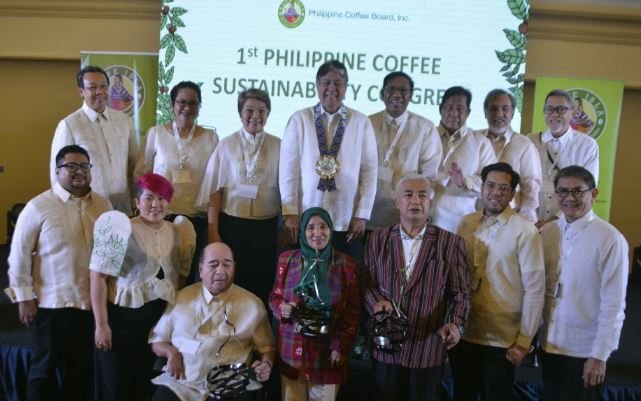
AMID PRICE VOLATILITY of Robusta coffee in the world market, local industry experts cited the need to address major challenges to ensure sustainability, for which the Philippine Coffee Board Inc (PCB) convened the First Coffee Sustainability Congress.

Held in Makati City, Sen. Francis “Kiko” Pangilinan in his capacity as chairman of the Senate Committee on Agriculture, Food, and Agrarian Reform, delivered a keynote speech embarking on the need for legislative measures to protect the local coffee industry.

The event gathered leaders from the public and private sectors, growers, and advocates and discussed sustainability, traceability, and innovation toward securing the future of Philippine coffee.

The Coffee Sustainability Congress also featured one of the foremost Robusta experts, Nishant Gurjer of Kaapi Royale Bangalore, to share how India’s Robusta production continues to receive good value and better prices. 

“We have long wanted to raise the value of Robusta, which is 90 percent of our country’s production,” says Pacita Juan, chairman of the PCB. “The way to ensure the sustainability of our country’s coffee supply for domestic consumption is to enable farmers to produce quality coffee and by helping consumers appreciate high quality Philippine coffee,” she added.

Another way to sustainability is understanding the appreciation protocols of buyers from Asia Pacific and other global specialty markets, said Dave Lim in his capacity as Technical Director of the Asean Coffee Institute. (ITOH SON)

Provincial Wage Rates Promoting Disparities 

0

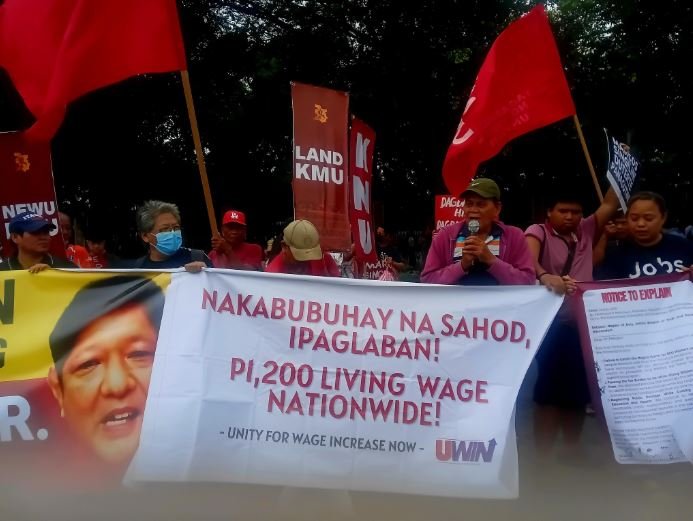
FOR THE LONGEST time, labor groups have been calling for the abolition of the so-called Regional Tripartite Wages and Productivity Board (RTWPB) which is responsible for setting minimum wage rates for each region.

While legislative measures have been filed in Congress, not even one of those proposals made it to the plenary.

Under the 20th Congress, Kamanggagawa partylist Rep. Elijah San Fernando expressed optimism that the current batch of legislators would seriously consider House Bill 5678 (Fair Industry Wages) seeking to ensure parity based on actual work rather than on zip code or addresses.

According to San Fernando, it’s high time that the Philippine Congress address the huge discrepancy that has been hounding workers from various regions. 

ABOLITION CLAMOR

To begin with, the partylist congressman called for the abolition of the regional wage boards, even as he hinted at shifting to Industrial Tripartite Wage and Productivity Boards (ITWPBs) for each and every industry.

“Each board will be composed of representatives from the Department of Labor and Employment (DOLE), employers, and workers’ organizations within the same industry, ensuring a balanced and participatory approach to wage determination,” reads part of the legislative bill.

The bill proposes to set industry-based wage standards and eliminate pay disparities among workers performing the same jobs across regions.

“Hindi dapat maging batayan ng kabuhayan ng manggagawa kung saan siya pinanganak o saan siya nakatira,” San Fernando was quoted by Politiko upon filing last Thursday HB 5678.

“Pare-pareho ang trabaho, pero magkaiba ang sahod, dahil lang sa zip code. Through industry-based wages, we align pay with the value of work, not location,” he noted.

SECOND WAGE BILL

Previously, Rep. San Fernando filed House Bill 94 (National Minimum Wage Bill) which he claimed would ensure that every industry builds upward from that floor: fairly, transparently, and based on real economic value.

According to the partylist congressman, HB 5678 will complement the HB 94 which he earlier filed.

“While the National Minimum Wage Bill sets the floor, the Fair Industry Wages Bill ensures that every industry builds upward from that floor: fairly, transparently, and based on real economic value,” San Fernando said.

“The existing regional wage mechanism locks provincial workers in low-wage cycles while prices and profits continue to soar. These bills seek to fix that,” he added.

EQUITABLE SALARY

He also cited the declared policy of the State to guarantee just and equitable compensation to all workers grounded on the principle of social justice and in recognition of the indispensable role of labor in nation building.

Under the existing law, the State shall establish a universal wage floor across all industries ensuring no worker falls below a baseline standard of decent compensation. 

The bill gave a premium on the mandate of the State to support the determination of industry-based wage standards that reflect sector-specific productivity, value creation and cost of living associated with work performed. 

He went on to say that the 1987 Constitution guarantees the right of every Filipino worker to “security of tenure, humane conditions of work, and a living wage.”

BELOW REALISTIC

Despite the Constitutional mandate, millions of workers across the country continue to receive wages that fall far below what is necessary to sustain a dignified existence.

The current wage-setting system, he noted, shaped by fragmented policies and outdated structures, has systematically failed to  protect the labor force from chronic deprivation.

The current national average minimum wage is only P481 per day, way below the average living wage estimated at P1,218.

This massive gap demonstrates the inadequacy of minimum wages to cover even the most basic needs of Filipino households. Regional disparities deepen this injustice.

San Fernando also cited official data manifesting injustice in the system of determining how much workers should be paid.

INDUCING POVERTY 

In Metro Manila workers earn a minimum of P695 per day while those in Bangsamoro receive only P411, regardless of similar costs in food, education  and healthcare their compensation remains deeply unequal, San Fernando stressed.

Such disparity cannot be justified by the regional variation alone, especially when it results in widespread poverty among working families.

The industry wage boards, under HB 5678, will be tasked to formulate industry-specific minimum wage standards based on productivity, enterprise classification, and cost of living, recommend productivity-based incentive schemes to encourage fair wage progression, conduct periodic industry wage reviews to reflect inflation, sectoral growth, and profit trends, and ensure that no worker earns below the statutory national minimum wage.

“The time has come to rebuild the economy around the dignity of work—not cheap labor, but just wages. 

PROGRESS INDICATOR

San Fernando emphasized that “true progress is not measured by stock market gains or GDP growth, but by whether workers can live decently from their labor.” 

The solon added that the measure will “create a fairer and more rational wage structure” that rewards skill, productivity, and contribution, instead of being arbitrarily determined by location or political influence.”

Kampihan ng mga Maralita at Manggagawa (commonly known as Kamanggagawa) is a political party dedicated to workers rights and comprehensive labor reforms. 

Founded in 2024, the party chaired by Alex S. Arellano, focuses on addressing wage inequality and promoting economic justice for marginalized sectors, particularly workers and the urban poor.

Kamanggagawa originally operated under the name Alternatiba Partylist, and was formed in preparation for the 2025 midterm elections, with a shift in focus to labor rights and wage reforms. 

The Best PH President for ChatGPT

0

THERE IS ABSOLUTELY no way to turn back the clock, but if one would dare ask ChatGPT, the corruption scandal that the Philippines is facing would have somehow been addressed had the electorate picked the best person to run the country.

For one, ChatGPT doesn’t have any emotion like humans do. Surprisingly though, the artificial intelligence-induced chat bot came up with the best person fit for the position of Philippine President.

According to ChatGPT, neither incumbent president Ferdinand Marcos Jr. nor Vice President Sara Duterte would be able to effectively steer good governance.

ChatGPT’s choice — former Vice President Leni Robredo.

WHAT IS CHATGPT?

ChatGPT is an artificial intelligence (AI) chatbot that uses natural language processing to create human-like conversational dialogue. The language model can respond to questions and compose various written content, including articles, social media posts, essays, code and emails.

It’s a form of generative AI — a tool that lets users enter prompts to receive humanlike images, text or videos that are created by AI.

ChatGPT is similar to the automated chat services found on customer service websites, as people can ask it questions or request clarification to ChatGPT’s replies. 

The GPT stands for “Generative Pre-trained Transformer,” which refers to how ChatGPT processes requests and formulates responses. It is “trained” with reinforcement learning through human feedback and reward models that rank the best responses. Generated feedback helps augment ChatGPT with machine learning to improve future responses.

CHATGPT FOR PRESIDENT

On September 26, comedian Leland Lim posted a video on Facebook where he asked ChatGPT, “Who would you vote for as president of the Philippines? Bongbong Marcos, Sara Duterte, or Leni Robredo?”

ChatGPT picked Robredo, saying, “I would lean toward Leni Robredo because she aligns more with the values of accountability, human rights, and service.”

“Huwag niyo sabihing pinklawan si ChatGPT, okay? Wag niyo rin sabihin o tanungin magkano binayad ko kay ChatGPT para sabihin niya yun,” said Lim.

“So kung di natin kayang mag-decide as a nation kung sino ang dapat iboto sa President, Vice President, Senators, ipaubaya na lang natin sa AI lahat para fair, diba? Para walang biases, walang opinions, just facts. ChatGPT for president,” he added.

BOT’S FIRM CHOICE

Coming from a comedian, the video should be taken as political commentary spoken in jest.

But there is no harm in humoring what he said.

I opened my ChatGPT and entered the same question. True enough, it picked Leni Robredo.

Dominguez Marketing Celebrates Pearl Anniversary

LOOK WHO CAME to the thirtieth-year shindig of Dominguez Marketing spearheaded by its honcho, Imelda Dominguez, recently held at F1 Hotel in Bonifacio Global City.

Before queuing up at the buffet dinner table, I bumped into Wilma Villanueva-Palafox, an alumnus of the Faculty of Arts and Letters of the University of Santo Tomas (UST), the same alma mater of Dominguez, who earned her diploma in Journalism while the former got her Economics degree.

Wilma was with her husband, the celebrated and award-winning urban designer, Arch. Jun Palafox.

I had a brief chat with Villanueva-Palafox whom I asked if Dominguez fellow Thomasian Journ graduate Nestor G. Cuartero was coming to the event.

“I wouldn’t know. I was just invited,” replied Wilma.

After getting my food, I looked for available seats to munch my meal.

A table half-filled with guests had empty chairs so I asked the occupants if I could sit on one of them.

A young guy quickly offered the seat beside him.

I found out later that I was sitting next to the creative staff of the Dominguez agency.

I was also reunited, in serendipity or by chance, with Matess Salviejo, who together with former komiks writer and literary genius Reggie Flores, was an erstwhile ABS-CBN writer for Noli de Castro’s “Magandang Gabi, Bayan” and Korina Sanchez’s “Rated K” and “Balitang K.”

Yes, Matess was around and reminisced during the ABS-CBN Integrated News and Current Affairs (INCAD) Reunion of old and new men and women last August.

Matess, who is sister to TV, film, stage and soprano artist Beverly Salviejo, was Imelda’s batchmate at Artlets and now works for her as a creative consultant.

That evening, though, the other Salviejo, was the scriptwriter of the show to commemorate the pearl anniversary of the company.

The night was a night of recognitions, revelations, milestones and throwbacks.

During her speech, Imelda welcomed the presence of one of her friends from the media and civil society, Ma. Cecilia Flores-Oebanda.

Yes, the Kumander Liway herself, in flesh and blood, the inspiration of screen heroine played by young actress Glaiza de Castro in the prizewinning 2018 Cinemalaya Philippine Independent Film Festival’s main competition entry, “Liway” directed by the son of the freedom fighter, Kip Oebanda.

Imelda’s other batchmates in UST were around, the most conspicuous was former Philippine Daily Inquirer’s newsman and freelance writer Chito de la Vega who graduated with a degree in Communication Arts, the UST MassCom version of the course.

Imelda revealed in her inspirational talk that before putting up Dominguez Marketing, she was into selling pastries on orders.

To build an empire, she realized, needed professionalism, creativity, compassion, hard work, foresight, common sense etc., the same tools she learned academically and experientially.

From there on, the Dominguez doyenne has been proud of the creative minds she has nurtured from day one with the able support of friends and associates.

Most of these professionals are thriving in the media business like graphic artists, screenwriters, copywriters, and other technical and creative programmers here and abroad or who have either shifted to other endeavors or ceased to work totally but the discipline they obtained from the Dominguez work ethics is still intact.

Imelda’s headway into the advertising and promotion of products and services saw the light of day in the early 1990s when her adprom agency presented to the public the digital wonders of HP and other cyber items.

“We are just beginning a new decade of service and beyond,” Dominguez beamed with pride.

Manila Hosts 13th Philippine Electric Vehicle Summit 

0

THE COUNTRY’S BIGGEST electric mobility event is charging up once more as Manila gets to host the 13th Philippine Electric Vehicle Summit (PEVS) from October 23 to 25, at the SMX Convention Center Manila in Pasay City.

Hosted by the Electric Vehicle Association of the Philippines (EVAP), the three-day summit with a theme “Charge Ahead, Ignite the EVolution” summit brings together policymakers, industry leaders, consumers, and advocates to spotlight the next wave of electric mobility in the country.

Among the featured exhibitors leading the charge are major EV brands including BYD, GAC, Omoda & Jaecoo, and United Asia Automotive Group, Inc. (UAAGI). Power Equipment and Supplies, Inc. (PESIN), Presidium, Developer of Electric Conveyances Corporation (DECC), KIA Philippines, AC Mobility, and Honda also have booths at the summit.

DISCUSSING EV’S FUTURE

According to EVAP, the local EV market has grown faster than ever before. Citing its own data and that of the Department of Energy, four-wheeled EV sales nearly tripled in 2024, while sales of two and three-wheeled EVs surged from just 172 units in 2023 to over 43,000 units in 2024. 

Analysts call it the start of a genuine “EVolution” in Philippine transport.

This year’s event also focuses on implementing the Electric Vehicle Industry Development Act (EVIDA) and addressing the critical need for a robust charging infrastructure to support the expanding electric fleet.

Government agencies, led by the Department of Energy (DOE), are targeting 7,300 public charging stations by 2028 and over 20,000 by 2040, under the Comprehensive Roadmap for the Electric Vehicle Industry (CREVI).

The Board of Investments (BOI) earlier announced ongoing discussions with a Chinese delegation on the possibility of establishing new local facilities for EV and renewable energy equipment manufacturing.

So far, the BOI has not released further details about the talks, though it hinted that the project is likely to move forward.

The DOE has also confirmed growing interest from private investors to build around 4,000 EV charging stations nationwide within the next two to three years.

MAJOR INVESTMENTS

The Philippines’ electric vehicle industry is also seeing a surge in major investments.

In June, Mitsubishi Motors Philippines pledged an additional ₱7 billion over the next five years to support the government’s EV and renewable energy initiatives. During the same month, the Department of Trade and Industry (DTI) lobbied for the proposed Electric Vehicle Incentive Strategy (EVIS)—a program projected to generate up to ₱11.4 trillion in economic output and nearly 700,000 jobs in EV assembly, battery production, and maintenance services.

Complementing these efforts, the Asian Development Bank (ADB) and Ayala Corporation committed $100 million (₱5.84 billion) for EV charging infrastructure and commercial fleet distribution through AC Mobility.

In September 2024, Australia’s StB GIGA Factory launched the country’s first EV battery manufacturing plant in New Clark City, designed to produce 2 GWh of batteries annually by 2030—enough to power about 18,000 EVs each year, with a portion intended for export.

Alongside the conference is a major exhibit showcasing a wide array of EV models, charging technologies, and related products and services—offering attendees a comprehensive look at the country’s fast-growing EV ecosystem.

The summit is open from 9 am to 7 pm.

For more information or free registration, visit the official website at pevsummit.com. (With reports and photos from ITOH SON)

Toilet Politics Breaks Two Sitting Baricuatros

0

IN THE PHILIPPINES, family ties matter – but not in a small municipality located in the province of Cebu where the sitting governor collides with a relative over a relatively small infrastructure project.

In recent weeks, Cebu Governor Pamela Baricuatro has been taking a swipe after another against Pinamungajan municipal Mayor Glenn Baricuatro whom she dragged into an “overpriced” toilet pegged at P1.15 million.

While both local officials share similar surnames, the governor and the municipal mayor belong to opposing political parties.

According to Gov. Baricuatro, P1.15 million for the construction of a public toilet in Barangay Tajao is too much. 

FUNDED BY THE DILG

However, Mayor Baricuatro insisted that no local funds were used in the construction of the public toilet even as he claimed that the project was made possible with the financial incentive given by the Department of Interior and Local Government (DILG) after the town notched its Seal of Good Local Governance (SGLG).

The municipal chief executive likewise warded off the government’s jab which he described as premature as the project has yet to be completed. 

He also insisted that the local government will not pay the contractor until after proper evaluation, inspection, and acceptance upon project completion.

“This project has undergone proper legal and administrative procedures and was approved by the Department of the Interior and Local Government (DILG),” the mayor said.

“The Municipality of Pinamungajan remains resolute in upholding transparency, accountability, and genuine service to the people because true governance shines brightest when it is anchored on trust and truth,” he further emphasized.

The mayor added that all related documents are available at the Municipal Hall, although as of writing, none have been posted on their social media sites.

DISCLOSE DOCUMENTS

In response, the governor urged the Pinamungajan local government to disclose the itemized cost breakdown, bidding process and bidders’ qualifications, audit and procurement compliance, timeline, current status, and remaining milestones.

“The mayor’s stance on transparency must be proven with verifiable data. I call on the local government to publish the full project documents and an independent audit report,” she said.

The governor also disclosed having received information alleging that Dinah RBS Construction & Supply served as a dummy contractor, with a councilor closely tied to the mayor using its license to have his own company undertake the project.

OVERLAPPING TIMELINES

According to a SunStar report, official DILG documents showed that the agency funded the project through the SGLG Incentive Fund for Fiscal Year 2024, just as the mayor claimed.

On September 29, DILG Region 7 Director Leocadio Trovela issued a Notice to Implement (NTI), requiring the project to be completed and liquidated within 12 months upon receipt.

However, when the governor visited the site on October 19, she discovered writings on the project tarpaulin stating that construction began June 27, with a target completion date of August 20.

Interestingly, the project remains unfinished upon the visit. The DILG hinted at inspecting the project any time soon.

POLITICAL BICKERING

On October 17, the governor posted on social media: “Visit Pinamungajan, our public toilet costs 1.153M” — followed by a “face with stuck-out tongue and winking eye” emoji.

She followed up the next day with: “Transparency? Yes, your being kurakot is now transparent” — again using the “face with stuck-out tongue and winking eye” emoji.

“If she is truly concerned about the alleged overpriced CR, she could have directly inquired or verified with DILG if there are any irregularities in the pricing of the project, rather than resort to a provocative stance on social media, which may be construed as conduct unbecoming of a public official,” reads part of the mayor’s statement dated October 20.

DEFENSIVE POSTURE

“I refuse to be distracted by theatrics or unfounded claims,” he added.

While still awaiting DILG’s intervention, the governor added more controversies, this time questioning the usefulness of a P10-million tennis court project on Tuesday.

In response, the mayor defended the project and clarified details surrounding the cost and implementation — yet again, without providing any substantial proof.

The mayor, as uploaded on the local government unit’s website, showed that he enjoys jogging, tennis, basketball, and chess.

Déjà vu: Purging Student Activists

0

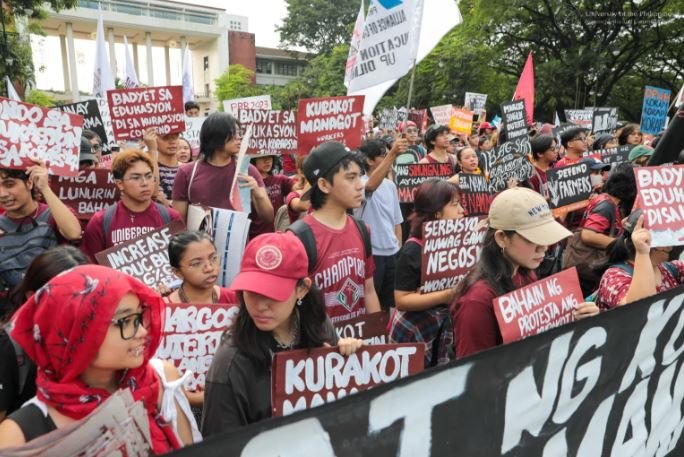
FIFTY-FIVE YEARS after the First Quarter Storm, the echoes of student dissent are once again thundering through Mendiola, and the police are going after them again.

Recent incidents where students are detained or subpoenaed reveal how the state continues to confront youth activism with coercion instead of dialogue.

ILLEGAL ARREST

On October 22, the University of the Philippines (UP) Diliman’s official publication Philippine Collegian reported the arrest of a student after a Peasant Month mobilization protest in Mendiola on grounds of vandalism.

While the publication did not mention the name of the student, DZRH published an article describing the arrest of Georel Albaña after being “caught vandalizing an LRT post” during the same protest.

According to police reports, officers Police Sergeant Jessie James Butawan and Corporal Richard Ron De Guzman spotted Albaña spray-painting on a concrete LRT post.

Cops claimed that Albaña ignored warnings to stop vandalizing, prompting his arrest.

However, Philippine Collegian has a different story — that the suspect was already in a jeepney exiting the protest when they were stalked and taken into custody by the police.

“Overkill ang dami ng mga pulis at hinarangan pa tayo ng isang truck nila sa tabi ng jeep, at kahit na may abogado na sa eksena ay walang awang hinila pababa ng sasakyan ang ating naturang kabataan,” (It was overkill, the number of police officers was excessive, and they even blocked our jeepney with a truck. Even though a lawyer was already present, they mercilessly dragged the person out of the vehicle) said the All UP Academic Employees Union Diliman in a post.

The Union also shared that the suspect is still being held at the Manila Police District Headquarters and was subjected to psychological abuse despite the police’s failure to present documents containing the charges to their lawyer.

WEAPONIZING SUBPOENAS

Meanwhile, the Philippine National Police (PNP) have been issuing subpoenas in recent months to student activists who participated in the September 21 protests against corruption.

Their most recent recipient is UP Diliman University Student Council Chairperson Joaquin Buenaflor, over alleged violence during the protest.

According to reports, three police officers served the subpoena to Buenaflor’s family on Wednesday, October 22.

In a press conference on Thursday, PNP public information chief Brig. Gen. Randulf Tuaño cited Republic Act No. 10973, which effectively gave the Criminal Investigation and Detection Group (CIDG) the authority to issue subpoenas — and failure to comply would automatically result in the filing of a case for indirect contempt before a regional trial court.

In another press conference held in UP Diliman the same day, Buenaflor condemned the attacks on student leaders and challenged the PNP to prove their mantra to serve and protect the Filipino people, not the corrupt.

STATE HARASSMENT

Buenaflor is the fourth student activist subpoenaed by the police.

The list includes Polytechnic University of the Philippines (PUP) students Tiffany Brillante and Jacob Baluyot, and De La Salle–College of Saint Benilde student Aldrin Kitsune.

“Malinaw na pamamaraan ito ng PNP upang supilin ang mga lumahok sa isinagawang protesta nang 21. Ito ay bahagi ng brutalidad ng PNP, mula sa arbitraryong pag-aresto at witch-hunting sa mga lider at indibidwal na lumahok sa protesta,” (This is clearly a method by the PNP to suppress those who joined the September 21 protest. It is part of the PNP’s brutality, from arbitrary arrests and witch-hunting of leaders to the persecution of individuals who participated in the protests), said the UP Office of the Student Regent.

Kitsune expressed strong belief that posted videos (on social media) of the September 21 rally are among the reasons behind the issuance of the subpoena.

ISKO MORENO’S DECEPTION

The videos contradict Manila Mayor Isko Moreno and Department of the Interior and Local Government (DILG) Secretary Jonvic Remulla’s claim that the police were not violent during the rally.

In Brillante’s case, police visited her former residential address on October 10, telling neighbors they were looking for supposed leaders of the September 21 protests while showing printed pictures of her from different rallies.

For Baluyot, he received a phone call from his father saying two policemen were outside their home to serve a subpoena.

Baluyot still does not know how the police found his address or the grounds for the subpoena.

In an unrelated incident, The PH Insider previously reported that state agents were caught spying on students during a walkout protest at PUP Sta. Mesa on October 10.

All three students rejected the subpoenas. Kitsune and Baluyot were reportedly scheduled to appear before the CIDG on October 6 and 10, but both refused to show up, according to Inquirer.net.

LIKE FATHER, LIKE SON

It is impossible not to see the parallels between the September 21 protests and the events that followed, and the First Quarter Storm (FQS) of 1970.

For one, both presidents are named Ferdinand Marcos.

The FQS was marked by student-led protests, mostly in Mendiola, against corruption, poverty, and the policies of the Marcos administration, which the dictator responded to with harassment, red-tagging, surveillance, and illegal detention.

And just like his dictator father, the younger Marcos’s administration is drawing historical parallels.

Escudero-Contractor Relationship Dates Back 2019

0

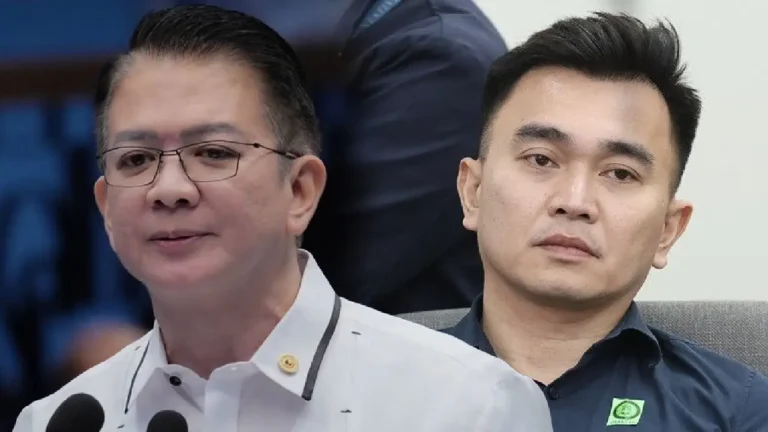
TWO WEEKS AFTER filing an ethics complaint against Senator Francis “Chiz” Escudero, lawyer Eldrige Marvin Aceron submitted an Omnibus Motion to the Senate Ethics Committee revealing that the relationship between Senator Escudero and contractor Roberto Lubiano was already transactional as early as 2019 when Escudero’s was Governor of Sorsogon.

The motion comes in the wake of the Senate’s halt of the flood control scandal hearings, as the Independent Commission for Infrastructure (ICI) has maintained closed-door hearings.

Public records show that while Escudero served as Governor of Sorsogon, Lubiano’s Metroways Health Care and Medical System won government contracts in 2021. From December 2021 to May 2022, Lubiano donated Php30,000,000 to Escudero’s senatorial campaign.

From 2022 to 2025, Lubiano’s Centerways Construction won a total of Php16,670,000,000 in Department of Public Works and Highways (DPWH) contracts concentrated in Sorsogon.

Aceron pointed out, “This is not a case of a politician accepting a donation from a friend, then that friend’s company coincidentally winning contracts later. This is a case of a contractor winning government contracts under a Governor’s administration, that contractor then donating ₱30 million to that Governor’s Senate campaign, and that contractor’s other companies then winning billions more after the Governor becomes Senator.”

According to COMELEC Chairman George Garcia’s public statements on October 8, 2025, Senator Escudero submitted an affidavit stating he “believed” the ₱30 million-donation was from “personal funds” and accepted it based on friendship with Engineer Lubiano.

“That defense is precisely why I documented the ₱35,070,000 accounting discrepancy in Centerways’ SEC filings,” Aceron stated. “The corporate books cannot verify Senator Escudero’s belief. When a sitting Senator accepts ₱30 million from a contractor-owner whose companies were winning government contracts under his own administration, ‘I trusted my friend’ is not sufficient due diligence under RA 6713 Code of Conduct and Ethical Standards for Public Officials and Employees.”

Centerways Construction filed three different versions of their 2022 Annual Financial Statements with the SEC: The 2023 filing showed retained earnings of ₱315,146,828; the 2024 filing showed retained earnings of ₱280,076,828 (restated), and the 2025 filing showed retained earnings of ₱280,076,828 (restated).

Thus, ₱35,070,000 vanished from retained earnings between the first and second filing—during the exact period of the ₱30 million-donation—with no explanation provided under Philippine Accounting Standard (PAS).

The Omnibus Motion reveals that Lubiano also owns 91% of Metroways Health Care and Medical System, Inc., founded in 2021. Public records and social media documentation confirm the company won government contracts during Escudero’s governorship, including medical supplies and equipment during the COVID-19 pandemic.

“Senator Escudero had direct knowledge of Lubiano’s companies winning government contracts because those contracts were awarded during his own governorship,” Aceron explained. “He cannot claim ignorance of Lubiano’s business interests when accepting the ₱30 million.”

The Omnibus Motion specifically sought the Senate Ethics Committee to conduct the following:

•Expedite the referral of the complaint to Sen. Escudero with a clear deadline for a response

•Issue subpoenas for Centerways Construction’s complete financial records, Metroways Health Care’s complete financial records, Lubiano’s personal financial records, BIR records showing dividend declarations and shareholder transactions, and Provincial Government of Sorsogon records from 2019 to 2022 showing all contracts awarded to both companies.

It also asked the Ethics Committee to conduct a hearing in order to determine whether “good faith belief” satisfies due diligence requirements under RA 6713.

The same motion cited the need to uncover how Sen. Escuero verified Lubiano’s source of the donation before he accepted it, — and how the ₱35M accounting discrepancy relates to the “personal funds” claim.

Aceron also finds it imperative for the Senate Ethics Committee to verify whether the relationship was already transactional during Escudero’s stint as provincial governor.

“Should there be any violations, the case must be referred to the appropriate agencies,” said Aceron.

The motion notes that four days after the Ethics Complaint was filed, Senator JV Ejercito—Chair of the Senate Ethics Committee—publicly posted birthday greetings to Senator Escudero on Facebook, which Escudero shared with thanks.

“I raise this not to question Senator Ejercito’s integrity, but to note that the public requires confidence that the ethics process functions impartially when documentary evidence raises serious questions,” Aceron stated.

Fire Hits DPWH Office Amid Probe

0

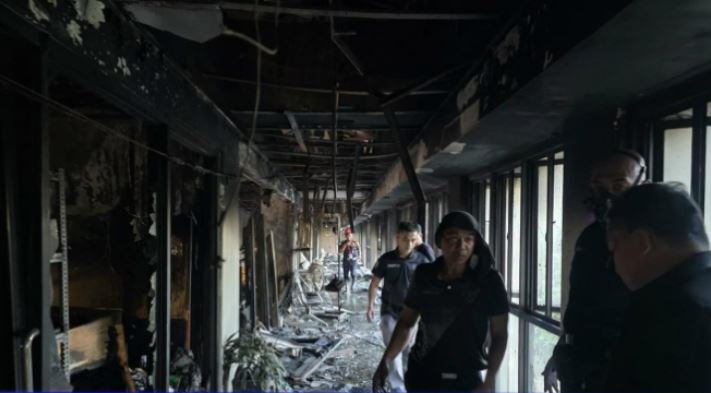
JUST WHEN SECRETARY Vince Dizon is about to commence its investigation into the allegations of the local government claiming flawed infrastructure designs caused massive flooding in Quezon City, fire gutted down the Department of Public Works and Highways (DPWH) office in Barangay Pinyahan.

According to the Bureau of Fire Protection – National Capital Region (BFP-NCR), the fire that started at around 12:39 pm (October 22) quickly spread, reaching the third alarm by 12:56 pm. After 38 minutes, 

firefighters had it “under control.”

By 1:49 pm, the bureau declared it “fire out.”

According to BFP-NCR, an exploded computer unit inside the Materials Testing Division under the DPWH Bureau of Research and Standards (DPWH-BRS) office caused the fire. 

DPWH-BRS is tasked to conduct research, studies, pilot testing, and formulation of policies for government infrastructure projects.

A few hours later, the DPWH issued a sweeping statement claiming “no documents related to the ongoing corruption probe were burned.”

However, the Office of the Ombudsman doesn’t seem convinced even as it ordered the National Bureau of Investigation to step into the investigation to determine whether or not the incident was deliberately done amid the ongoing investigation.

Independent Commission for Infrastructure (ICI) Commissioner and former Public Works Secretary Rogelio Singson said during a Senate hearing, “I hope it is not arson.”

“As per record now, the burning in Quezon City does not involve flood control projects but I did have a meeting with COA and I told them you have to secure all records of the COA,” ICI Chairperson Andres Reyes said. 

“There is the tendency for criminals to burn down the office,” he added.

The ICI previously admitted receiving reports of “widespread destruction and tampering of official documents” by some DPWH officials in connection with anomalous flood control projects.

Usec. Bernardo: Epitome Of Money Laundering

0

RESIGNED Undersecretary Roberto Reyes Bernardo of the corruption-riddled Department of Public Works and Highways has surely mastered the art of laundering money, as he has employed most of the techniques of how to keep stolen money away from the radar of banks and authorities.

And to think that former Justice Secretary (now Ombudsman) Jesus Crispin Remulla was too kind to him by granting him legal protection in the hope that he would continue narrating and reporting all those involved in the trillion pesos fund scandal of DPWH for flood control projects.

As if to further insult the Marcos administration, Bernardo has snubbed the invites of the newly-formed but toothless Independent Commission on Infrastructure (ICI), with a marching order to execute an impartial probe into the flood control fund scandal and ensure culpables are prosecuted, fined and sent to jail – as Filipinos are demanding– and secure stolen public funds be.

Since its creation by Executive Order 94 on September 11– closed-door ICI investigations have been held yet no cases have been filed and people, including the business community, are now demanding blood. Most of those linked to the massive systemic DPWH corruption have managed to evade hearings with excuses like health problems that need to be treated abroad, being a resigned official, etc. The clamor for the probes to be opened keeps mounting by the day.

BELOW THE RADAR

Documents obtained by Bilyonaryo show the Anti Money Laundering Council reviewed his 2003–2025 finances and flagged a pattern “consistent with money laundering,” noting he stopped using banks at the height of the scheme, through a “deliberate cover-up.”

The AMLC said his financial inflows and outflows from 2003 until 2025 revealed that he predominantly transacted through cash deposits, secondarily through over-the-counter withdrawals, and also through check issuances. Evidently, Bernardo’s transactions were cash intensive, a common money laundering strategy.

He stopped using his bank accounts between 2020 and 2022, despite getting a promotion. He had no inward transactions from 2020 to 2022, and no outward transactions in 2021, when he was already a Usec of the DPWH, as such was already receiving bigger compensation due to his appointment, AMLC said.

Bernardo had begun to avoid using the banking system during the said years to prevent a paper trail that would lead to his corruption scheme. Before his promotion, Bernardo was Assistant Regional Director for DPWH R IV-A(2010–2013), when “significant financial outflows” were also observed, AMLC noted.

His cash movements peaked again in 2025, “presumably because he had undertaken massive bank withdrawals to prevent the impending forfeiture of his deposits,” the watchdog added.

Bernardo opted for early retirement last August 15 or weeks after President Marcos exposed the massive corruption in flood control projects in the country.

Notably, between Sept. 12 and 22, or days before his appearance in the Senate Blue Ribbon hearing, several banks filed suspicious transaction reports (STRs) related to the flood-control controversy, with one STR stating that a client that was intending on opening a new bank account did not disclose his previous employment with the DPWH, AMLC said.

39 BANK ACCOUNTS

Bernardo maintained 39 bank accounts across 10 banks; life-insurance policies (Allianz PNB, Insular Life, and Manulife with his wife Sunshine Miguel Bernardo) and 59 properties in Malolos, Bulacan allegedly bought using laundered funds.

His accounts were spread across Philippine National Bank (13), The Real Bank (10), HSBC Philippines (4), Philtrust Company (3), BDO Unibank (3), Land Bank of the Philippines (2), Metropolitan Bank & Trust Co. (2), and Bank of the Philippine Islands (1).

He also took out large loans between 2008–2011 and in 2014, which were repaid within weeks.

Bernardo’s government bond and time-deposit investments were short-lived—sold or withdrawn within years (2008–2009 and by 2014, respectively)—a pattern it said that mirrors money-laundering tactics rather than genuine investing.

The AMLC concluded a “probable cause” linking Bernardo’s bank deposits, insurance policies, and real properties to violations of the Anti-Graft and Corrupt Practices Act, Malversation of Public Funds, and Indirect Bribery under the Revised Penal Code, as well as unlawful activities under the Anti-Money Laundering Act (AMLA).

Bernardo once headed the International Global Mining Exchange before his appointment as DPWH undersecretary by then DPWH Secretary Mark Villar. He was a protege of former President Estrada (himself ousted and jailed for plunder making his presidency short-lived).

He now faces criminal charges with the National Bureau of Investigation (NBI) aside from separate cases filed by current DPWH Secretary Vince Dizon against him before the Ombudsman.

The AMLC has secured an ex-parte freeze order on his assets, citing probable cause linking them to illicit activities.

Bernardo was implicated in the Bulacan flood-control scam by his district engineer Henry Alcantara, who told senators he funneled P6.91 billion in projects—P5 billion of which were ghost works. Alcantara claimed remitting a 25 percent “proponent’s” kickback—normally reserved for lawmakers—to Bernardo via his driver or chief of staff, often at the Diamond Hotel parking lot, where Bernardo allegedly maintained a suite. He said 30 percent or P2.1 billion of the funds went directly to legislators.

Days later, Bernardo reportedly admitted his role in the DPWH syndicate, including how he delivered proceeds to Senators Chiz Escudero and Bong Revilla, former Senator Nancy Binay, and DepEd Undersecretary Trygve Olaivar (allegedly for Executive Secretary Lucas Bersamin).

LAUNDERING TACTICS

Money laundering is prevalent globally with the United Nations estimating the problem hitting $800 million to $2 trillion annually, or 2 to 5 percent of the world’s GDP (gross domestic product). 

Over the years, criminals have devised different methods of laundering money, all of them designed to make illicit money appear legitimate through the following modes:

  • Moving money through different accounts or invest in businesses that are their fronts
  • Buy expensive items and mask the source making it hard to trade the origins of illegal money
  • Common tactics include cash deposits, purchasing monetary instruments and smuggling currency all of these are labelled as placements
  • Layering come in complex transactions such as moving across different accounts, regions and financial instruments to obscure the money trail through wire transfers, shell companies and complex financial products
  • Integration includes investing in legal businesses or luxury items like investments in real estate, businesses and high value assets
  • Smurfing (or structuring) or breaking down large amounts into smaller ones to make it less suspicious and avoid detection by financial institutions and using multiple bank accounts and money mules (dummies)
  • Cash-intensive businesses that handle large volumes of cash and mixing dirty money with clean ones
  • Bulk cash smuggling by bringing large cash to another country’s banks and later used for drugs and arms or they can be cash hidden in vehicles, luggage and personal items
  • Trade-based money laundering misreporting the value of goods and quantity or having multiple invoice
  • Real estate laundering where they buy properties and sell them later making their income legit
  • Shell companies and trusts which exist only on paper (sometimes with a bank account)
  • Casino and gambling where criminals buy chips with illicit funds then gamble and cash out winnings with legitimate money
  • Cyber laundering using digital platforms like cryptocurrencies and online banking. This method launders money digitally. The anonymity and speed of these transactions attract criminals. They move unlawful funds across borders quickly. This integrates the money into the financial system
  • Bank capture occurs when money launderers gain control of a financial institution through bribery, extortion, or other corrupt means. Once in control, they manipulate transactions. They bypass AML measures allowing them to move large sums without detection; and 
  • Transaction laundering uses financial institutions to process illegal transactions through fake businesses.

ENTRENCHED SYNDICATE

He was first mentioned at the Blue Ribbon Committee as the padrinos of engineers Henry Alcantara and Brice Hernandez of DPWH Bulacan first district.

He was also mentioned by the king and queen of flood control, the Discaya couple, when they said he required them to pay SOP after awarding them projects. 

Blue Ribbon chair Sen. Panfilo Lacson also named Bernardo and Bonoan as partners in the MBB Global– contractors in Bulacan flood control projects– of which the children of Bernardo and Bonoan are among the owners.

He rose from the ranks in 30 years becoming undersecretary for regional operations in the Visayas, NCR and Region IV-B with overall supervision and control of all infrastructure projects before being handpicked by Villar as undersecretary during the time of exiled President Duterte.

 Grapevine talk is that Bernardo may have already left the country last month even as DPWH Secretary Vince Dizon earlier requested the issuance of an immigration lookout bulletin order on contractors and DPWH officials, including Bernardo.

Pinoys More Anxious About Corruption

0

POVERTY AND HUNGER have taken the backseat as more Filipinos have grown “anxious” on the unabated corruption in the government, says a survey administered by the University of the Philippines-Octa Research Group.

According to Octa Research, the corruption malaise that gripped the entire system of the Department of Public Works and Highways (DPWH) has landed in the Top 5 urgent concerns of Pinoys.

Citing data based on a survey, fighting corruption has risen alongside that of rising cost of commodities in the consciousness of Filipinos across the country, when before Pinoys took corruption as a fact of life.

Since the President spewed the list of Top 15 DPWH contractors engaged in kickbacks, incomplete, substandard and ghost flood control projects, people have become unforgiving and demanding jail term, heavy penalties, restitution of stolen money by the DPWH people, contractors and legislators behind budget insertions and unprogrammed funds.

Based on the latest Tugon ng Masa survey administered by Octa from during the last week of September, 31 percent of adult Filipinos now consider corruption as an urgent national concern– an 18-point jump from 13 percent in July 2025. 

FIRST IN RECENT YEARS

The unprecedented rise indicates a major shift in public priorities from purely economic issues to questions of integrity and accountability in governance, reported Business Mirror.

“This is the first time that corruption has entered the top five national concerns,” OCTA said, noting that the surge reflects a growing public demand for honesty and transparency in government.

Despite the rise in corruption concerns, controlling the prices of basic goods and services remains the top national issue, cited by 48 percent of respondents—down slightly from 50 percent in July.

This was followed by fighting corruption (31%), access to affordable food (31%), improving wages (27%), and reducing poverty (23%).

Concern over job creation, which previously ranked among the top five, fell sharply to 19% this quarter—a seven-point decline from 26% in July. OCTA said the drop may suggest “a perceived improvement in employment conditions or a redirection of public focus toward governance issues.”

NCR AS BOILING POINT

The call to fight corruption is strongest in the National Capital Region (53%), while Mindanao (18%) registered the lowest concern. The issue resonates most among Class ABC (40%), compared to Class D (31%) and Class E (24%).

Meanwhile, concern over rising prices remains highest in Mindanao (53%), but least cited in NCR (17%), while access to affordable food is most pressing in Balance Luzon (36%).

The call to increase wages is most pronounced in NCR (33%), the Visayas (29%), and Balance Luzon (28%), with Class D (29%) leading this concern.

Reducing poverty is most often cited in Balance Luzon (27%) and among Class E respondents (28%), reflecting continuing struggles among lower-income households.

PERSONAL CONCERNS 

Despite changing national priorities, Filipinos’ personal concerns have remained stable.

The most urgent personal concern continues to be staying healthy and avoiding illness (63%), followed by having enough to eat every day (49%), finishing schooling or providing education for one’s children (49%), having a secure and well-paying job (46%), and avoiding being a victim of crime (38%).

“While national anxieties are shifting toward governance, everyday worries—health, food, and education—still define the lived reality of most Filipino families,” OCTA said.

Health concerns remain highest among Class ABC (80%), while food security is most pressing in Mindanao (56%) and Visayas (55%).

“Overall, these results indicate that personal priorities among Filipinos have mainly remained stable through the third quarter of 2025, with only minor shifts across categories. While national concerns have shifted toward issues of governance and corruption, personal concerns continue to center on health, food security, and education—core pillars of family welfare and daily stability,” OCTA added.

No Way To Replace A Campaign Donor?

0

AMID CONFLICTS WITHIN the organization and the anxiety voiced by public servants over the life span of pension funds kept with the Government Service Insurance System of up to 2058 only, President Marcos Jr. seems to be taking his sweet time deciding on the fate of a campaign donor whom he appointed to the agency.

According to the Palace, the President is still assessing the situation at the GSIS and looking into the allegations against GSIS President Jose Arnulfo Veloso.

The conflict within the GSIS board led to the resignation on October 14 of three trustees–  Merceditas Gutierrez, Emmanuel Samson and Rita Riddle, effective upon the appointment of their replacements.

QUICK REPLACEMENTS

Not long after their resignation the President appointed on October 17, concurrent GSIS board member Garry de Guzman as head of the legal oversight committee in lieu of Gutierrez, Enrico Gregorio Molina Trinidad vice Samson (pension fund’s risk oversight) and Cenon Cruz Audencial Jr. who takes the post of de Guzman.

Marcos’ swift appointments of the board– instead of replacing the embattled GSIS head – was meant to stabilize the state pension fund after a public dispute over investment losses amounting to P8.8 billion, which Veloso staunchly denied. 

Audencial and Trinidad will serve as acting members representing the banking, finance, investment, and insurance sectors.

“The shake-up highlights months-long rift within the pension fund, which manages nearly P2 trillion in assets for millions of government employees, and raises fresh scrutiny on governance and risk management at the state-run institution,” reads part of an article posted on Bilyonaryo news portal.

SUDDEN TURNAROUND

Interestingly, the new appointees formed part of the group which earlier sought Veloso’s immediate resignation citing deep divisions over his investment strategies, that included investments in online gambling. 

Riddle, the former chair of the GSIS audit committee, will be replaced by Gilbert Tan Sadsad, Inquirer disclosed.

The resignations came just days after the three, along with one other incumbent member of the nine-member board, sent a sharply worded letter to Veloso demanding his “immediate and irrevocable” resignation over what they described as “poor investment decisions” that allegedly led to billions of pesos in losses.

The letter was also signed by current board member Evelina Escudero and former trustees Jocelyn de Guzman Cabreza and Alan Luga.

ONE-MAN CONTROL?

The signatories accused Veloso of pursuing risky investments “marked by a disturbing lack of transparency.”

They cited what they described as “a pattern of actions seemingly designed to bypass proper governance,” including the alleged practice of splitting investment transactions — a “clear tactic,” they wrote, intended to evade the mandatory board review for investments exceeding P1.5 billion.

The GSIS board members also took a swipe at Veloso (who recently returned to his post after a preventive suspension ordered by the Office of the Ombudsman) for “fabricating issues and weaponizing administrative procedures to retaliate against [board] members exercising their fiduciary duty of oversight.”

Gutierrez, in her resignation letter, cited “a productive and tenable working relationship” with Veloso was “no longer achievable.”

Samson pointed to the “numerous” policy differences with the GSIS chief, while Riddle mentioned the “absence of transparency and shared accountability.”

NOT KEEN ON RESIGNING

Veloso meanwhile said that he would only step down if the appointing authority would ask him to.

In a radio interview last Monday, Veloso described the accusations against him as malicious, particularly the claim that he had split investments to avoid board scrutiny.

“Investments [within allowable amounts] can be done every day. It gives the flexibility to the team to be able to take advantage of market volatility.” Short of calling them ignorant on investing, Veloso explained “If you don’t understand investing, we will have issues with all of that.” 

“That’s why I’m encouraging them [trustees], because of different backgrounds, to be able to clearly study and allow management to be able to execute its role. Everything there is transparent,” he added.

MISLEADING METRICS

Veloso went on to say that the fund’s financial performance “speaks for itself,” citing figures as of August 2025.

He pointed to the total assets of GSIS climbing to P1.92 trillion and a total income of P231.06 billion, with net income reaching P100.02 billion.

The trustees, in a statement last Oct. 19,  said the “narrative of success” being advanced by Veloso was “predicated on misleading metrics and structural inflows that are unrelated to active investment management.”

“The reported growth in the Fund’s assets is significantly inflated by non-cash, unrealized gains from the annual revaluation of our property portfolio,” they said.

MANDATED PREMIUM HIKE

“Furthermore, a substantial portion of reported income is derived from the increase in mandatory premium collections. As a fund with a captured market, this growth is an automatic, structural feature, not a result of strategic financial management,” they said.

In July, Veloso and several other GSIS officials were suspended by the Ombudsman after an anonymous complaint questioned the fund’s P1.45-billion investment in Alternergy Holdings Corp. The other GSIS officials were Executive Vice Presidents Michael Praxedes and Jason Teng, Vice Presidents Aaron Samuel Chan and Mary Abigail Cruz-Francisco, officer Jaime Leon Warren, and acting officer Alfredo Pablo.

The six-month suspension was intended to prevent those accused from influencing the investigation. The suspension was lifted in September after the anti-graft body determined there were “insufficient grounds” to believe the officials’ continued stay in office would affect the inquiry.

Emotional Armor: The Confidence We Fake

EVER MET SOMEONE who’s always defending, always right, and somehow always ‘amazing’? You mention a touchy topic, and boom — they snap back with “I’m not like that!” followed by a self-praise parade. 

The Back Story

That’s not confidence talking. That’s emotional armor — the invisible shield people wear to protect their fragile self-esteem.

They sound strong, but truth is, that emotional armor often hides:

  • Fear
  • Insecurity
  • Old emotional bruises

What Emotional Armor Looks Like

Emotional armor doesn’t clang like metal.

  • It smiles
  • It talks big
  • It performs confidence


It shows up as:

  • Over-defensiveness: “That’s not me!” even before anyone accuses them.
  • Brag reflex: turning every topic into “look how great I am.”
  • Control freak energy: steering every chat back to safe, flattering ground.
  • Polished perfection: refusing to admit mistakes, flaws, or doubts.

It’s all about protection. The louder the brag, the heavier the emotional armor.

Where It Comes From

Nobody’s born wearing emotional armor. It’s built — layer by layer — from past pain.

  • Childhood approval traps. When love or praise had to be earned, people learn to perform, not just be.
  • Fear of judgment. One bad experience of being criticized or embarrassed can make someone promise themselves, never again.
  • Comparison culture. Living in a “who’s better” world trains people to overcompensate just to stay visible.
  • Low self-worth. When you don’t feel enough, you work overtime to look enough.

That “I’ve got it all together” act? It’s often a scared heart whispering, Please don’t see my cracks.

When The Armor Backfires 

The sad twist? Emotional armor keeps out the bad stuff and the good stuff.

  • You can’t truly connect when you’re busy defending.
  • You can’t grow when you’re always proving.
  • You can’t be loved for who you are if you’re constantly performing who you’re not.

The stronger the armor, the lonelier the person behind it.

How to Drop The Armor (Without Falling Apart)

  1. Catch your defenses. Notice when you instantly justify, explain, or brag. Pause.
  2. Get curious, not combative. Ask yourself, What am I protecting right now?
  3. Practice imperfection. Admit small mistakes out loud. It builds real confidence, not fake toughness.
  4. Connect, don’t compete. People remember warmth, not “wow.”

Tips And Techniques 

True confidence isn’t about never being wrong — it’s about being real enough to say, “Yeah, I messed up.”

Dropping your emotional armor doesn’t make you weak — it makes you free.

  • Strength without the emotional armor

Next time you feel that defensive spark — stop, breathe, and let the armor clink to the floor.

  • You don’t need to impress to be worthy

Real strength begins the moment you stop performing — and start being.

Remember: Choose real, not proud. 

Martin Looter King’s Attack Dog

0

WHEN President Ferdinand Marcos Jr. called for an investigation into the systemic government corruption perpetrated by his appointees and political allies, many were made to believe that days of crooks are numbered.

For one, the amount that was lost due to corruption is no laughing matter. No less than Public Works Secretary Vince Dizon admitted in a senate blue ribbon hearing that the squandered government funds in the last three years could have breached a whopping P1.4 trillion.

Just how significant could P1.4 trillion be? I did some research with the help of Google-hosted artificial intelligence and came up with an astounding discovery.

Based on recent Philippine hospital projects, P1.4 trillion is more than enough to defray the cost of constructing 1,798 localized hospitals on the assumption that each would cost P791.5 million. The Philippines has 82 provinces, 148 cities and 1,498 municipalities.

Based on the government price tag, P1.4 trillion can construct 560,000 classrooms at the rate of P2.5 million per classroom paid for by the government to favored contractors. But if we are to consider Angat Buhay to do the legwork, the government may only spend P862,500 per classroom. With P1.4 trillion, they can construct around 933,333 classrooms.

Google-hosted AI also claimed that such an amount can feed 115 million Filipinos four times a day (breakfast, lunch, snack and dinner) for an entire year.

The squandered funds could have been wisely spent to build 1.6 million low-cost housing units using P1.4 trillion.

But instead of serving its purpose, P1.4 trillion went straight to the pockets of politicians like former House Speaker Martin Romualdez, resigned partylist Congressman Rep. Zaldy Co and a bunch of minions at the House of Representatives.

With an entire nation venting ire on Romualdez and his minions, a man by the name of Antonio Trillanes claiming to be incorruptible came out to defend the crooks by trying to divert the issue to another senator who is not even on the list of legislators being investigated by the Independent Commission for Infrastructure.

For one, Trillanes isn’t clean as he claims to be. If my memory serves me right, the PNP Criminal Investigation and Detection Group (CIDG) filed a criminal case (swindling) against Trillanes in 2019.  

Swindling, a criminal offense under the Revised Penal Code, embarks on property, money, or goods that are unlawfully obtained through deceit, abuse of confidence, or fraudulent means. That’s tantamount to stealing.

From how it looks, Trillanes got himself a chunky deal. He could have been “commissioned” to take the role of an attack dog with a marching order to divert public attention on Romualdez and his minions.

For the longest time, Trillanes has been accustomed to making noise every time there’s an earth-shaking controversy involving politicians. And just like a jukebox, he stops playing at the end of the song. 

For me, that’s weird because a genuine advocate doesn’t stop. Unless somebody made him stop. As to how much, only Trillanes would know.

We should not be swayed by efforts primarily designed to bury the issue of systemic corruption perpetrated by the President’s cousin. Let’s keep vigilance. Lest we forget “blood is thicker than water.”

Transparency Sought In P1.3T Education Budget

0

FOLLOWING THE SWIFT approval of the P1.28 trillion 2026 budget by the House of Representatives for the education sector, the Philippine Business for Education (PBEd), a non-profit organization founded by business leaders in 2006, cited the need for full transparency on how allocated funds would be spent.

Considered a record high by House Appropriations chair Mikaela Suansing, the lady legislator said P914.14 billion would be earmarked for the Department of Education (DepEd).

PBEd Executive Director Bal Camua said “the growing investment in the education sector is a welcome development, but without clear data on how funds will be distributed and used, it remains difficult to assess whether the budget will lead to meaningful improvements in learning outcomes.”

BEYOND BUDGET HIKE

PBEd emphasized that beyond simply increasing the budget, the funds must be used strategically and backed by evidence to address the most urgent gaps in the system, including building more classrooms, hiring more teachers and school heads, improving access to learning materials, expanding feeding programs, and sustaining initiatives such as free higher education.

“As the budget process moves forward, we recommend that Congress and key government agencies — including the Department of Budget and Management — provide clear, detailed, and accessible information not only on how education funds will be allocated and what outcomes are expected, but also on the methodology used to determine that the allocation meets the four percent of GDP benchmark,” Camua said.

The United Nations Educational, Scientific and Cultural Organization recommends that countries allocate 4–6% of its gross domestic product (GDP) to education, a standard PBEd says the Philippines has consistently failed to meet.

“A whole-of-society approach — rooted in transparency, systematic planning, and shared accountability — is crucial to transforming budget allocations into real improvements that empower every Filipino learner to succeed and contribute to national development,” Camua added.

EDUCATION BREAKDOWN

Of the said amount, P928.52 billion, or the largest share of the proposed Fiscal Year 2026 budget, will go to the Department of Education (DepEd). Additionally, P134.99 billion is earmarked for State Universities and Colleges (SUCs), P34.00 billion for the Commission on Higher Education (CHED), and P20.24 billion for the Technical Education and Skills Development Authority (TESDA), explained Budget Secretary Amenah Pangandaman.

“This is a first, and we want to thank the President for supporting us as we ensure that the government immediately responds to the crisis in nutrition and early childhood development,” Secretary Pangandaman added. 

Pangandaman, who chairs the Development Budget Coordinating Committee, shared how the government is implementing the Program Convergence Budgeting (PCB) Approach—an inter-agency effort to eliminate program duplication and align targets, beneficiaries, resources, and timelines across agencies, as directed by the President. ​

SECURING BETTER FUTURE

Among the new PCB programs introduced for FY 2026 is the Building Early Growth through Integrated Nurturing (BEGIN) Program, which aims to address stunting and other recommendations in the Second Congressional Commission on Education (EDCOM2) Year II Report.

She called on Congress to support the government’s goal of securing a better future for Filipino children: “Together, let us take immediate action to fight child malnutrition, address the learning crisis, and support our youth in fulfilling their dreams.”

Biz Groups Restive Over Snail-Paced Corruption Probe

0

WHAT USED TO be a political issue has gone massive as more sectors are demanding beyond the government-sanctioned probe into the systemic corruption involving prominent politicians.

Following the series of protest actions embarking on street demonstrations and walk outs staged by workers, students and faculty members, various business organizations have joined the call for accountability of government officials behind the flood control scandal.

In a report which first appeared on Bilyonaryo News portal, 34 of the country’s biggest business organizations are demanding the immediate prosecution, litigation and jail conviction of influential personalities — appointive and elected government officials and cahoots in the private sector involved in the fund mess.

SALN, BANK SECRECY

To begin with, the groups urged the Office of the Ombudsman to publicize 

the statements of assets, liabilities and net worth of government officials whose names form part of the list of the so-called “persons of interest.”

The same groups also urged President Ferdinand Marcos Jr. to find ways to ease the bank secrecy law to ensure transparency.

“For the first time in recent memory, 34 of the country’s most influential business organizations– from the Makati Business Club to the oldest business group, the Philippine Chamber of Commerce and Industry– have come together to demand swift and decisive action from President Marcos Jr. over what they call a ‘historic and unprecedented corruption scandal’ crippling the nation’s flood-control and infrastructure programs,” reads part of the Bilyonaryo report.

The statement [of the business groups] carried a sharper edge than past appeals: executives said it is time to move beyond rhetoric, prosecute perpetrators “regardless of rank,” claw back stolen funds, and disclose audits regularly — or risk deeper damage to public trust and investment sentiment.

BIGGEST CONTRIBUTORS

In their joint appeal, the groups said: “We, the major business organizations representing members across all sectors – large, medium, small, and micro-enterprises are co-signing this resolution, urgently calling on your administration to address, without delay, the historic, massive, and unprecedented corruption scandal crippling our flood control and infrastructure projects — a crisis that has eroded public trust and now threatens our national security.”

“We have contributed to national funds through taxes locally and nationally and have paid additional assessment of taxes. We provided many fees to enable us to do business.” 

Yet, Trillions of pesos supplied and intended to protect our communities from disasters have been squandered through ghost projects, substandard work, and inflated contracts. This is more than financial loss – it is a fatal breach of public trust that leaves our people vulnerable and outraged,” the business groups added.

UNSOLICITED PROPOSALS

The groups also presented “unsolicited proposals,” which include:

  • Empowering the Independent Commission on Infrastructure (ICI) with full legal authority and independence to conduct a swift, comprehensive investigation, free from political influence
  • Prosecuting all those responsible, impartially and without regard of rank, position, political affiliation or personal relations
  • Implementing institutional reforms, ensure restitution of ill gotten wealth and embezzled funds of the government, and strengthen procurement and oversight systems, preventing future abuse and d) providing regular public updates on the progress of investigations and reforms and to publicly disclose all audit findings to demonstrate genuine commitment and credibility.

“Mr. President, we strongly urge you to act decisively to signal your administration’s genuine commitment to justice, integrity, and accountable governance,” the business groups said.

STRAIGHTJACKET LAW

Last Friday, the MBC, Filipina CEO Circle, Financial Executives Institute of the Philippines, Institute of Corporate Directors, Justice Reform Initiative and the MAP pushed strongly for proposed amendments to reform the country’s bank secrecy laws, which are crucial to combating corruption, improving financial transparency, and bolstering investor confidence.

The proposed reforms, which forms part of 44 priority bills identified by the Legislative-Executive Development Advisory Council (LEDAC) for the 20th Congress, would give the Bangko Sentral ng Pilipinas (BSP) authority to investigate deposit accounts of individuals suspected of illegal activities, a move aimed at closing loopholes that have long hindered regulators.

Their joint statement said these laws “have acted and continue to act as straitjackets on regulators, preventing them from being efficient in undertaking measures, such as investigating and prosecuting people involved in corruption and money laundering.”

ADAPTING STANDARDS

“These legislative initiatives, once enacted, will align the Philippines with international standards on financial transparency and anti–money laundering. By empowering regulators and enforcement agencies with the authority to investigate corruption, tax evasion, and other illicit economic activities, the reforms will help ensure integrity across both public and private financial systems. In doing so, they will also boost the country’s credibility and competitiveness within the global financial community,” their statement said.

They also pushed for SALNs to be publicly accessible “as originally required under RA No. 6713, or the Code of Conduct and Ethical Standards for Public Officials and Employees.” 

RA 6713, they noted, “was designed to create an investigative mechanism that will uphold all government employees and public officials to the highest standards of transparency and accountability.”

SIGNIFICANCE OF SALN 

“This was supposed to be a critical tool serving as a watchdog to prevent corruption. It sadly hasn’t served those purposes. The reforms for this law will reinforce the constitutional principle that public office is a public trust and that accountability is essential for maintaining citizens’ confidence in their institutions,” the statement added.

The reform effectiveness depends not only on enactment but also on enforcement, they said.

“Therefore, good governance is paramount. Good governance fosters a stable environment in which both local and foreign investors can make long-term commitments with confidence. When governance systems are predictable and information is accessible, the risks of corruption and policy uncertainty decrease, lowering the cost of doing business. This attracts sustained capital inflows, promotes fair competition, and contributes to stronger, more resilient economic growth.”

“We remain dedicated to collaborating with policymakers, regulators, and the business community to promote reforms that create a fair, transparent, and trustworthy economic environment; one that strengthens institutions, maintains integrity, and positions the Philippines as an attractive and reliable investment destination,” the groups added.

In Defense Of Order: Martires Right About SALNs

THE ARTICLE “Good Riddance to the Ombudsman Who Enabled Corruption” portrays Ombudsman Samuel Martires as an official who hid corruption behind secrecy. That portrait is false. Martires was not hiding; he was organizing. He did not weaken accountability; he strengthened its legal foundations.

Among all the criticisms against him, none is more distorted than the claim that he “locked down” the Statements of Assets, Liabilities, and Net Worth (SALNs). This essay explains what the law actually says, how SALNs have been abused in the past, and why Martires’s actions were both lawful and necessary. In truth, his circular did not close transparency—it restored order to it.

WHAT THE LAW SAYS

The Constitution requires all public officials to file their SALNs (Art. XI, § 17). It also says that these records are public. But the Constitution is silent on how the public can access them. That power—to set rules and safeguards—belongs to the agencies that keep them.

Republic Act No. 6713 (the Code of Conduct and Ethical Standards for Public Officials and Employees) explains the process. Section 8(A–C) says that each agency is the custodian of the SALNs filed with it and may regulate access to them. In other words, the SALNs are public documents, but their release must follow rules.

Using this mandate, Martires issued Ombudsman Memorandum Circular No. 1 (2020). The circular states that the Ombudsman may release a SALN only when:

 1. The declarant consents in writing;

 2. A court orders it; or

 3. The Ombudsman needs it for an official investigation.

This is not secrecy. It is the exact procedure that R.A. 6713 authorizes.

Martires’s rule also follows the Data Privacy Act of 2012 (R.A. 10173). That law protects personal and sensitive personal information kept by both public and private agencies. A SALN contains a person’s home address, family members, income sources, and property details — all of which fall under those protected categories. Section 12 of the Act says such data may be processed or released only with consent or when required by law.

Section 5 of the Ombudsman circular reflects this rule. It treats the SALN as a public record subject to privacy safeguards. Thus, when Martires required consent before release, he was not hiding information; he was following national privacy law.

When Ombudsman Boying Remulla later nullified this circular and announced open SALN access, that act risked violating the Data Privacy Act itself — and ignored the Supreme Court’s 2021 ruling in Biraogo v. Ombudsman, which had already upheld Martires’s approach as valid and lawful.

WEAPONIZING SALN

Martires’s caution was born of experience, not fear.

When he retired as an Associate Justice of the Supreme Court, he filed his Exit SALN before receiving his retirement benefits. Upon his appointment as Ombudsman, he filed his Entry SALN, which included those proceeds. Naturally, his net worth rose.

He shared both his Exit and Entry SALNs voluntarily with reporters, believing transparency built trust. Yet news outlets reported that his “net worth ballooned by several millions in five months,” without explaining that the increase came from lawful retirement pay.

That episode exposed the danger of unguarded disclosure — when a document of honesty becomes a headline of suspicion. If the Ombudsman himself can be misrepresented, what protection remains for ordinary public servants?

Martires’s 2020 circular sought to prevent that. It did not hide the truth; it required discipline in its handling. His rule ensured that the right to know would not become a license to destroy reputations.

Today, with reports that SALNs may be used against certain public officials, we see exactly the problem Martires foresaw. Without safeguards, SALNs can be weaponized again. His policy was not about hiding wrongdoing; it was about keeping integrity safe from manipulation.

SALNs UNDER OMB

Many are under the impression that the Ombudsman keeps every official’s SALN. That is wrong. R.A. 6713 § 8(A–C) divides responsibility depending on the office held.

Filed with the Ombudsman – Central Office: The Central Records Division (CRD) of the Ombudsman keeps the SALNs of top constitutional officials: the President, Vice President, and the Chairpersons and Commissioners of the COA, CSC, COMELEC, CHR, and the Ombudsman himself. These are national and constitutional officers.

Filed with the Deputy Ombudsman (Regional or Sectoral Offices): Regional and local officials—such as Regional Directors, Governors, Vice-Governors, Mayors, Vice-Mayors, Sangguniang Panlalawigan, Sangguniang Panlungsod, and Barangay officials and employees—file their SALNs with their respective Deputy Ombudsman (Luzon, Visayas, or Mindanao). Specialized offices like MOLEO handle those from law-enforcement and the military.

AFP Officers – Split Rule: Officers with the rank of Colonel / Naval Captain and above file with the Office of the President, not the Ombudsman. Those below these ranks file with their Deputy Ombudsman by region or sector. This rule is written directly in R.A. 6713 § 8(B), yet many commentators still overlook it.

Not Filed with the Ombudsman: Some officials file elsewhere: Senators and Representatives with their respective Secretaries in Congress; Justices and Judges with the Clerk of Court or Court Administrator; Cabinet Secretaries and Undersecretaries with the Office of the President.

MANAGING SALNs

Within the Ombudsman, the CRD keeps constitutional officials’ SALNs, while CREMEB units in Luzon, Visayas, and Mindanao handle local ones. Sectoral offices such as MOLEO keep those from law enforcement. Access is limited to:

• the declarant or an authorized representative;

• a court handling a case; or

• an Ombudsman investigator for an official inquiry.

Others must have the declarant’s notarized consent. Direct viewing or photography is not allowed to prevent tampering. Records are kept for ten years and may be destroyed afterward unless needed in an ongoing case (R.A. 6713 § 8[C]).

This system shows that Martires did not centralize control—he simply applied the structure already written in the law.

JUDICIARY’S EXAMPLE

Martires’s approach followed a precedent set by the Supreme Court itself.

In the Alejandrino request (1989) and later in A.M. No. 09-8-6-SC (Re: Request for SALNs of Justices, June 13, 2012), the Court adopted strict rules on SALN access. The Court said that although the SALN is a public record, access must be regulated to protect judicial independence and the privacy and security of justices and their families. Requests must be specific, written, and justified, and any release requires en banc approval.

The Court also clarified that the constitutional right to information (Art. III, § 7) is not absolute and yields to the need for confidentiality in sensitive government functions. The Court used these same principles when it later handled requests from media organizations such as PCIJ and Rappler.

Thus, when Martires issued his 2020 circular, he was not creating new secrecy rules—he was applying the same standard the Supreme Court had already set: openness balanced by responsibility.

CONGRESS’ OWN RULES

Congress followed a similar path.

During the 17th Congress, the House adopted House Resolution No. 2467, which governs requests for the SALNs of its members. The rule was issued after members complained of harassment and online attacks using their financial disclosures.

The Resolution requires all requests to be in writing, to state a legitimate purpose, and to undergo review by the Office of the Secretary General. It allows redactions—such as addresses and the names of minors—and limits use of the SALNs to official purposes only.

These rules remain in force because the House continues them in each succeeding Congress. The Senate also practices controlled access, often releasing a SALN only with the Senator’s consent. These are not laws but internal rules under Article VI, Section 16(3) of the Constitution, which authorizes each chamber to set its own procedures.

The takeaway is clear: every branch of government regulates SALN access. The Ombudsman’s 2020 circular simply aligned its policy with those of the Supreme Court and Congress.

FAIRNESS, NOT CONCEALMENT

Martires’s critics often combine the SALN issue with his order on lifestyle checks, claiming he ended them. He did not. Under Ombudsman Memorandum Order No. 1, lifestyle checks continue, but only when supported by verified information or a sworn complaint.

Before this reform, anyone could demand a lifestyle check, even without evidence. Many requests were anonymous or malicious. The order now requires that a requester file a formal complaint so the Ombudsman can hold the person accountable for truthfulness. This change prevents abuse while allowing genuine investigations to proceed.

The policy also reflects the legal framework in R.A. 1379 (Forfeiture of Illegally Acquired Property) and R.A. 3019 (Anti-Graft and Corrupt Practices Act). Both laws require proof of unlawful acquisition—not mere speculation about how much someone spends. Martires redirected the office’s manpower toward cases with solid evidence, not gossip.

This same principle guided his SALN policy: access with accountability. The consent requirement under MC No. 1 (2020) stems from the Data Privacy Act, protecting the filer’s right to privacy while preserving the public’s right to information.

QUALITY OVER QUANTITY

Critics often point to fewer cases filed before the Sandiganbayan during Martires’s term as proof of inaction. But fewer cases do not mean less work — it means smarter prosecution.

The Constitution and R.A. 6770 (Ombudsman Act) require the Ombudsman to file only when evidence is strong enough for conviction. As a former Sandiganbayan justice, Martires knew that weak cases waste government time and public trust. He valued proof over publicity, preferring ten solid convictions to a hundred dismissed complaints.

Republic Act No. 10660 (2015) narrowed the Sandiganbayan’s jurisdiction to high-ranking officials and sent lower-level cases to Regional Trial Courts. Although passed before Martires’s term, its effect appeared only from 2018 onward when those investigations ripened into charges. Critics who count only Sandiganbayan cases ignore the many filed in lower courts. The work continued where the law required it to be.

And the results speak for themselves. In the first nine months of 2023, the Ombudsman’s conviction rate soared to 78.89 percent with 1,005 convictions out of 1,274 decided cases (Malaya Business Insight, 2023). For the full year, the rate remained high at 73.4 percent, representing 1,242 convictions out of 1,692 cases (Rappler, 2024). In the first half of 2025, the rate stood at 61.36 percent, up from 48.51 percent in the same period of 2024 (Malaya Business Insight, July 2025). These figures rank among the highest in Ombudsman history and prove that Martires valued strong cases over sensational filings. He did not chase headlines; he secured convictions.

Martires did not slow down the fight against corruption — he refined it. By following the law, prioritizing evidence, and avoiding showy prosecutions, he made the system more credible and results-driven.

SC AFFIRMATION

In 2021, the Supreme Court directly upheld Ombudsman Samuel R. Martires’s policy on SALN access. Lawyer Louis “Barok” Biraogo had asked for the SALN of then Vice President Leni Robredo. When the Ombudsman denied the request under Memorandum Circular No. 1 (2020), he claimed that Martires had hidden a public record.

The Court rejected the claim. In G.R. No. 254516 (February 2, 2021), it ruled that the right to information is not absolute. Article XI, Section 17 of the Constitution and R.A. 6713 guarantee public accountability, but they also leave the power of regulation to the custodian. The Ombudsman may lawfully restrict release to protect privacy, avoid harassment, and ensure that requests are made for legitimate purposes. Disclosure is therefore discretionary, not automatic—no one can compel it through a writ of mandamus.

The Court referred to earlier rulings that established this rule, such as Re: Request for Copy of 2008 SALN and Personal Data Sheet of Justices and Court Employees (A.M. No. 09-8-6-SC, June 13 2012) and Subido v. Ozaeta (80 Phil. 383 [1948]). These cases recognized that record custodians may control access to prevent misuse or invasion of privacy. Transparency, the Court said, cannot mean unrestrained fishing expeditions for political ends.

By upholding Memorandum Circular No. 1 (2020), the Court confirmed that Martires’s rules were consistent with R.A. 6713 § 8 and the Data Privacy Act of 2012 (R.A. 10173). SALNs contain personal and sensitive data—such as family details, home addresses, and income sources—that the government must protect. The consent, court-order, or official-investigation rule reflects that duty.

In short, Biraogo settled the issue. Martires’s circular did not hide information; it enforced accountability within the limits of law. The Supreme Court itself declared that regulated disclosure preserves both transparency and fairness—the very balance that keeps justice from turning into spectacle.

WHY CRITICS FAIL

When the full body of law is read together, the attacks on Ombudsman Martires lose force.

The Constitution (Art. XI § 17) requires public officers to file SALNs and calls them public records, but it leaves access to the custodian agency. R.A. 6713 § 8 empowers that custodian to set disclosure rules. The Data Privacy Act of 2012 (R.A. 10173) reinforces this by treating SALNs as documents containing sensitive personal data, which may be released only with consent, a court order, or a lawful investigation.

The Supreme Court, in A.M. No. 09-8-6-SC (2012), Subido v. Ozaeta (1948), and Biraogo v. Ombudsman Martires (2021), confirmed the same principle: transparency must coexist with privacy and institutional independence. Requests made in bad faith or for political purposes may rightly be denied.

Congress follows identical safeguards. The House’s Resolution No. 2467 (17th Congress) requires written requests stating a legitimate purpose and allows redactions for privacy and security. The Senate also requires the member’s consent before release. These internal rules, issued under Article VI § 16(3) of the Constitution, remain in effect today.

Within the executive branch, Martires’s Memorandum Order No. 1 on lifestyle checks applies the same discipline: investigations continue, but only upon a sworn complaint or verified information. This ensures that accountability is built on fact, not speculation.

Taken together, these measures show that Martires’s policy was not an act of concealment but part of a consistent national standard. The Ombudsman simply aligned executive oversight with the judiciary and legislature.

Critics mistake structure for secrecy. They forget that unrestricted disclosure can destroy reputations and turn accountability into performance. Martires’s policy protects both transparency and justice by making sure that every request is grounded in law, not politics.

He did not hide the truth—he defended it from distortion. By uniting the Constitution, R.A. 6713, the Data Privacy Act, and the Supreme Court’s own rulings into one coherent policy, Martires restored balance between openness and fairness—the foundation of genuine public accountability.

Editor’s Note: The author is an NCA-Qualified international lawyer with over 20 years of experience in public prosecution, criminal law education, and technical legal practice across Southeast Asia. His career spans complex anti-corruption litigation, high-value engineering contracts, and legal education that bridges civil and common law traditions.

GSIS Board Wants Veloso Out

0

THE PURPOSE FOR which the Government Service Insurance System (GSIS) was created embarks on securing all properties, assets, and interests of the government against any risk – and nowhere in its provisions allow the agency to venture into games of chance.

It is for the same reason that members of its board of trustees are calling for the immediate resignation of GSIS President Jose Arnulfo Veloso for poor investment decisions resulting in losses amounting to P8.8 billion.

In a strongly-worded letter addressed to Veloso, members of the GSIS board of trustees accused Veloso of pursuing risky investments “marked by a disturbing lack of transparency.”

“Your continued presence at the helm of the GSIS puts the welfare of its 2.6 million members—dedicated public servants who have entrusted their life savings and future security to this institution—in imminent danger,” part of the letter states.

“The primary mandate of the GSIS is to manage its funds with utmost prudence, diligence, and loyalty. Your current trajectory suggests a departure from this sacred mandate, prioritizing transactions that serve interests other than those of the members,” it added.

ONE-MAN CONTROL

Among the signatories in the letter included former Ombudsman Merceditas Gutierrez (in her capacity as GSIS legal oversight committee chairperson), risk oversight committee head Emmanuel de Leon Samson, audit committee chief Rita Riddle, board member Evelina Escudero and former board members Jocelyn de Guzman Cabreza and Alan Luga.

The signatories also cited what they described as “a pattern of actions seemingly designed to bypass proper governance,” including the alleged practice of splitting investment transactions—a “clear tactic,” the petitioners stated, intended to evade the mandatory board review for investments exceeding P1.5 billion.

The board likewise accused Veloso of “fabricating issues and weaponizing administrative procedures to retaliate against [board] members exercising their fiduciary duty of oversight.”

VELOSO WON’T QUIT

Responding to the letter, Veloso outrightly rejected calls for his resignation even as he claimed to enjoy the trust of President Ferdinand Marcos Jr., who appointed him to the post.

He added that the call for his resignation is something that is “not entirely unexpected,” adding that the maneuver is politically motivated. 

“I categorically state that the allegations against me are baseless. I am addressing them squarely and transparently in the proper legal forum, where they rightfully belong,” he asserted. 

“I appeal to everyone to spare GSIS from politics,” he added. 

“Our performance speaks for itself,” Veloso likewise argued, referring to figures that indicated GSIS’s total assets climbing to P1.92 trillion and a total income of P231.06 billion, with net income reaching P100.02 billion.

“These results clearly demonstrate that, despite market headwinds, GSIS remains financially strong, resilient, and highly profitable.”