Friday, March 27, 2026
Home Blog Page 27

Restoring The Iconic Manila Post Office 

0

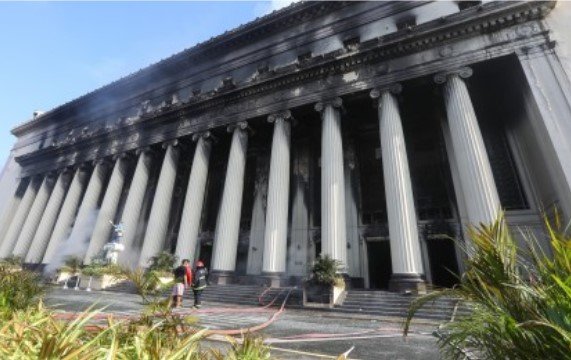
TWO YEARS AND four months after a vicious fire gutted down an iconic structure at the heart of Manila, the Department of Public Works and Highways (DPWH) renewed its commitment to restore the century-old building referred to as the Manila Central Post Office.

According to DPWH Secretary Vince Dizon, the agency is prioritizing the rehabilitation of the damaged Manila Central Post Office “as fast as possible.”

Built in 1926, the building which once boasted of its classical architectural design, was gutted down by a fire on the evening of May 21, 2023. Firefighters were able to contain the blaze after two days. The cost of damages — P300 million.

The Bureau of Fire Protection (BFP) ruled out arson.

By his own admission, Dizon said that prioritizing phase one of the rehabilitation is in line with the President’s directive.

“My promise to you, our promise to you is that we will do it right. And we will do this as fast as possible,” Dizon told reporters in an interview.

“We will coordinate with the National Historical Institute to ensure that its restoration, rehabilitation, and repair will be done fast and right,” Dizon added.

The DPWH chief however remained mum as to when the restoration of the gutted structure would be completed.

297 Ghost Super Health Centers Haunting DOH

0

GHOST PROJECTS ARE not limited to the Department of Public Works and Highways (DPWH).

This comes as the Health Secretary Ted Herbosa admitted that the Department of Health (DOH) is digging deep into 297 ghost super health centers that were built from 2021 onwards.

“The other [projects] are completed while the others are in different phases of completion,” Secretary Ted Herbosa was quoted as saying in an interview following an inspection of an incomplete health center in Barangay Concepcion II in Marikina City.

CLOSE TO GHOST

According to Herbosa, quite a number of health centers — mostly in Luzon — have remained unfinished, including that of the uncompleted “super health center” in Marikina City.

Herbosa explained that under existing rules governing small facilities, health centers should be finished within two years. However the ghost projects, he added, just passed the first phase and have yet to proceed to the second phase.

“My objective as the Health Secretary is to make sure that all these 297 [health centers] are functional,” Herbosa told reporters.

ADDRESSING GAPS

The DOH chief has designated the Health Facilities Enhancement Project, which was created solely to address gaps in public health infrastructure, to handle the Investigation. 

He also said that there could be more unfinished health centers in the country, but the agency will be coordinating with Local Government Units (LGUs), which he claimed has the responsibility to ensure that the centers that were funded by the agency will be completed.

Meanwhile, the Marikina City government slammed the DOH for what they described as “misleading and irresponsible claims.”

NOT ENTIRELY TRUE

In a statement, the city government noted that the funds released by the DOH only covered the first phase, which was already completed and certified by the DOH itself.

“Despite follow-ups from the City, no additional funding for the succeeding phases has ever been released by the DOH,” the LGU added.

The city government likewise emphasized that the construction delay “does not lie with the city alone. It lies with the DOH’s failure to provide full project funding.”

WASTED RESOURCES

In an apparent effort to come up with a solution, the city government hinted at continuing the construction of the project using local funds to ensure quality medical care for its residents.

However, the idea doesn’t seem to sit well with Herbosa who claimed that the construction of phase two could not commence as the “as built” plan could not be turned over by the constructor of the first phase to the second one.

ICI: Closed-Door Policy On Graft Probe Stays

0

DESPITE MOUNTING CALLS for transparency in its investigation into the flood control scandal, the Independent Commission on Infrastructure (ICI) stood firm on its policy — keeping the probe away from the general public.

This comes as ICI member, former Public Works Secretary Rogelio Singson defended the need to maintain a closed-door policy in the process of interrogating “persons of interest” even as he likened the ICI task to a police investigation.

According to Singson, the investigation is kept away from the public eye — through the media — so as not to jeopardize the process. 

“The mandate of ICI under EO 94 is to investigate. May nakita ka na ba na police investigation na may kasamang media, di ba wala. So we are trying to get as much information, which the people being investigated have to sign and submit sworn affidavits and exhibits,” Singson said. 

PROPERLY DOCUMENTED

He also assured that the entire proceedings are properly documented if only to ensure that nothing suspicious that would compromise the investigation would take place. 

All the investigations are properly taped and video recorded. Then we pass everything to the Ombudsman, which has the power to have them jailed or penalized,” Singson said in an interview with broadcaster Karen Davila.

He said they make everything as thorough as possible so “hindi na paulit ulit as the people are expecting results fast.”

Among the top personalities who have undergone interrogation by the ICI members include former Public Works and Highways Secretary (now senator) Mark Villar and former House Speaker Martin Romualdez.

WITNESS PROTECTION 

Interestingly, Singson declined to provide a categorical answer on the question as to whether or not the ICI has the power to recommend witnesses for inclusion in the government’s witness protection program.

He instead insisted that persons made to appear in the ICI proceedings who were invited to shed light on the flood control scandal are considered suspects.

“Why should we do that? They were involved so why should they become witnesses?”

Under Republic Act 6981, any person who has witnessed or has knowledge or information on the commission of a crime may qualify for the government’s witness protection program, but with conditions — “testifying before any judicial or quasi-judicial body, or before any investigating authority.”

STATE WITNESSES

Under RA 6981, any person involved in or has knowledge considered essential for the prosecution of a serious crime may apply with the Department of Justice as a witness for the state, subject to certain conditions.

Among the conditions to become a state witness is that the applicant must not appear to be the most guilty. 

In the case of the Discaya couple in their capacity as private contractors, dismissed DPWH engineers Henry Alcantara, Brice Hernandez and Jaypee Mendoza as implementors, and the likes of former House Speaker Martin Romualdez and minion fugitive Ako Bicol partylist Rep. Zaldy Co, may avail witness protection but may not qualify as state witnesses since they appear to be the most guilty.

BOC Remains On Top Of The Most Corrupt

0

IN THE PAST, the mere mention of the Bureau of Customs (BOC) connotes corruption — and from how it looks, the public impression has yet to change, not in the near future perhaps.

As far as the US State Department is concerned, the BOC is still the most corrupt agency in the country. This was contained in its investment climate report which said the government must address transparency issues in its regulatory system.

It described the system as characterized by bribery and corruption which serve as barriers to investment in the Philippines, the Manila Times quoted the US Department of State report.

KILLING PH ECONOMY

The State Department report described the regulatory environment as “unclear” in many economic sectors, leading to inconsistent regulatory enforcement.

“Some US investors describe business registration, customs, and immigration processes as burdensome. 

Customs procedures in particular can present challenges and the Embassy has received multiple reports from US businesses of overly invasive searches, inconsistent customs charges, and solicitations of “facilitation fees” (like bribes) from some customs officials,” the US Investment Climate Statement for the Philippines read.

“Regulatory agencies are generally not statutorily independent but are attached to cabinet departments or the Office of the President. Inconsistencies in the judicial system affect regulatory enforcement,” it added.

BOC’s OWN ADMISSION

Customs Commissioner Ariel Nepomuceno has acknowledged the concerns raised in the 2025 US State Department Investment Climate Statements report but stressed that the issues have already been tackled prior to the report.

Nepomuceno claimed that the customs bureau, under his watch, initiated institutional reforms to address these issues during his first 100 days in office.

Among the key anti-corruption reforms implemented early in his tenure are the issuance of a strict “No Take” policy prohibiting any form of bribery or unlawful monetary transactions within the BOC.

This directive, Nepomuceno said, is enforced across all levels of the agency, with violations subject to immediate disciplinary action.

CONFLICT OF INTEREST

Nepomuceno issued a memorandum in July 2025, banning all BOC officials and employees from holding any business or financial interest in Customs Brokerage operations.

Personnel were also required to disclose familial ties to brokerage firms, ensuring impartiality and transparency in customs transactions.

State Agents Spying On Student Activists

0

WHAT WAS SUPPOSEDLY a peaceful yet meaningful protest against systemic corruption turned into a golden opportunity for alleged state agents to take a “closer look” at the students of what was once regarded as the country’s bastion  of student activism

During a walkout staged by students of the Polytechnic University of the Philippines (PUP) and Kabataan Partylist members, two individuals in civilian clothes were caught “spying” on and harassing participants of the event held at the PUP Main Campus in Sta. Mesa, Manila on October 10.

SPURIOUS IDENTITIES

When students forming part of the protest approached the two, the suspects quickly ran away but were subsequently stopped at the guard post by Student Council officers.

Upon investigation, authorities found that the names on their visitor passes did not match the ones on their official IDs.

The suspects confessed to infiltrating the campus to ask about “NTAF,” but there is no department or program in PUP with that name.

They also admitted to taking photos of Kabataan Partylist leaders, members, and other protest participants but refused to show their phones or delete the photos.

INTELLIGENCE AGENTS 

Only after the suspects were brought to the Campus Security Office were they forced to delete the photos on the grounds of violating the students’ privacy and security.

Authorities later discovered that the suspects were either military personnel or had connections with the military based on their social media accounts.

“Liban dito, marami ring mga ulat ng intelligence agents na umaaligid at kumukuha ng litrato habang may rally.” (Apart from this, there are also many reports of intelligence agents loitering around and taking photos during rallies) Kabataan Partylist added.

MISSION ACCOMPLISHED

Meanwhile, Wellyssa Espiritu Torne, a paralegal from PUP, said that while the images had been deleted, she is certain they were already sent around in government intel group chats.

“Sila iyong dalawang katapat ko. Nakangiti sila dahil paalis na sila noong time na ito. Pero noong sinabi ko na kapag nakatanggap ako ng red-tagging sa kung sino man bilang paralegal na humarap, kilala ko na ang mukha nila at doon sila natawa. Palibhasa, mga tuta ng estado eh.” (They were the two people in front of me. They were smiling because they were about to leave at that time. But when I said that if I ever get red-tagged by anyone, as a paralegal, I already know their faces — that’s when they laughed. Typical state lapdogs.) she added.

Red-tagging is the labeling of individuals or organizations as communists, subversives, or terrorists, regardless of their actual political beliefs or affiliations. It is a type of harassment and has pernicious effects on its targets.

NOT THE FIRST TIME

Interestingly, the incident at the PUP Sta. Mesa Campus is not the first time that alleged state agents have been caught spying on independent groups.

Sometime in August this year, members of Pambansang Lakas ng Kilusang Mamamalakaya ng Pilipinas (Pamalakaya) caught a spy who introduced himself as Miguel Richard Gerardo Castro, an employee of the Bureau of Fisheries and Aquatic Resources (BFAR).

According to the group, Castro had been contacting leaders and members of its Navotas Chapter, asking them to provide information about the organization and its activities in exchange for financial assistance.

The group then arranged for a member to meet Castro at a fast-food chain, where they bravely confronted him.

JUST LIKE IN MOVIES

The following scenes which were documented through videocams saw Castro stood up and tried to flee after being confronted. 

He ran outside the fast-food chain and into a nearby supermarket, still pursued by the group, before finally sprinting to a nearby police station, where he sought refuge.

Police personnel prevented Pamalakaya members from confronting and recording video of the suspect.

In a statement on September 1, BFAR disowned Castro and condemned the incident, notably missing, however, was any mention of an investigation into the matter.

RED-TAGGING MISSION

Both groups concluded that such acts are tied to red-tagging.

“Dapat imbestigahan ang insidente na ito, at panagutin ang mga naniniktik at umaatake sa kabataan. Buwagin na dapat ang NTF-ELCAC at ilipat ang pondo sa edukasyon at iba pang serbisyo!” (This incident must be investigated, and those spying on and attacking the youth must be held accountable. The NTF-ELCAC should be abolished, and its funds redirected to education and other public services!) said Kabataan Partylist in a statement.

“We also urge the Commission on Human Rights to expedite the investigation we requested into the continuing human rights violations, harassment, and red-tagging against fisherfolk communities in Navotas,” reads part of Pamalakaya’s press release.

Anger Unplugged: The Real Reason Voices Rise

YOU KNOW THAT moment when someone’s face turns red, their voice shoots up, and suddenly the air feels heavy? And there it is — anger in full volume.

The Back Story 

People shout when they’re angry not because they want to yell, but because emotions spill faster than they can control them. It’s like the feelings rush out before the words are ready.

  • Sometimes anger speaks louder than the message itself.

Here’s what’s actually going on beneath the noise.

The Body Goes Into “Alert Mode”

Your brain thinks it’s in danger — even when it’s just a disagreement.

Situation: You’re driving, someone cuts you off, and you instantly yell, “Watch where you’re going!”

  • That shout isn’t strategy — it’s a stress response.

Action: Pause. Breathe. Let your body settle before your words step in.

Shouting Feels Like Taking Charge

Anger often hides fear of being ignored.

Situation: You’re explaining your side, and the other person keeps talking over you. Suddenly, you raise your voice: “Can you just listen?!”

  • It feels like power, but it only pushes them further away.

Action: Say calmly, “Please let me finish — I’ll listen to you after.”

Noise Becomes A Substitute For Clarity 

When people can’t find the right words, they turn up the volume.

Situation: During an argument, someone yells, “You never understand me!” — when what they really mean is, “I feel misunderstood.”

  • Different words, completely different outcome.

Action: Slow down. Say what you feel, not just what you want heard.

Calm Feels Powerless (But Isn’t)

Staying calm can feel like you’re losing ground — but it’s actually strength.

Situation: Someone’s shouting, insisting, “I’M NOT UPSET!”
Instead of matching their tone, you quietly say, “Let’s take a moment.”

  • That one calm line can reset the entire conversation.

Action: Keep your tone low and your pace steady.

The Real Power Is in Composure

Anyone can shout. Few can stay centered.

Situation: A coworker snaps at you during a stressful meeting. Instead of firing back, you respond, “I get this is frustrating — let’s figure it out.”

  • You stay calm, and the tension drops instantly.

Action: Focus on solving, not scoring points.

Tips And Techniques 

Anger gets loud because it feels like the only way to be heard. But the real strength is calm confidence — the kind that earns respect, instead of regret.

Centered presence wins every time.

  • Calm words
  • Strong energy
  • Peaceful vibes

Remember: Next time voices rise, choose composure — not volume.

The Big One Is Knocking

0

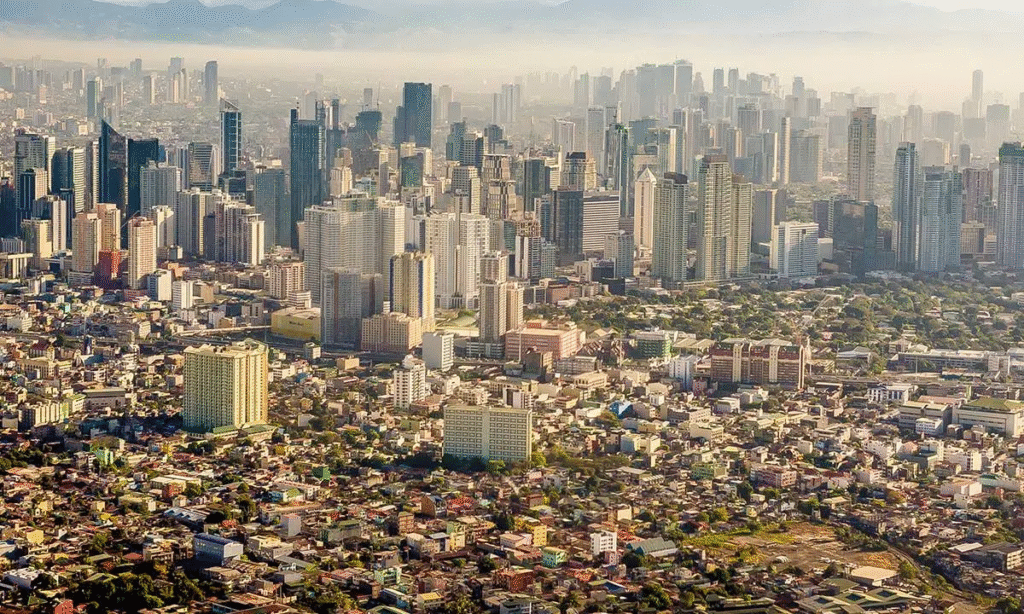
AMID FEARS OVER the possibility of “The Big One” hitting Metro Manila and adjoining provinces, seismic experts have started looking into the probability that the earthquakes which struck in succession in the last 14 days may have triggered both active and dormant faultlines.

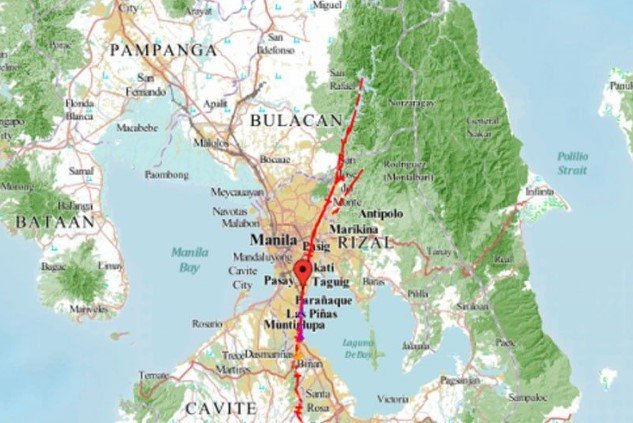
For one, Metro Manila sits directly atop the West Valley Fault, which in itself may trigger a magnitude 7.2 quake. 

According to Philippine Volcanology and Seismology Director Teresito Bacolcol, not even a half kilometer distance from the can guarantee safety. 

“Even if a house is 500 meters away, if it’s not well-built, it could collapse in intensity 8 shaking,” he said. Some cities have marked fault traces: “Pasig and Quezon City have put up markers so people know where the fault runs.”

However, the recent earthquakes triggered by the so-called Philippine Trench, could  have rattled fault lines that had lain dormant for centuries – including the West Valley Fault which traverses adjacent provinces.

3,224 QUAKES IN 14 DAYS

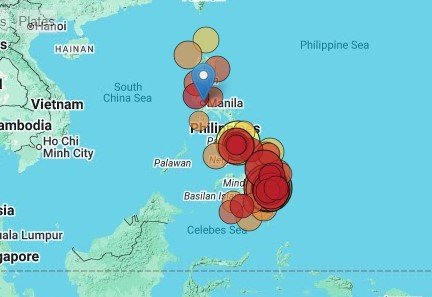
According to data collated from volcano discovery.com, the Philippines has had 3,224 quakes of magnitudes up to 7.4: in the last 14 days. 

  • 1 quake above magnitude 7
  • 3 quakes between magnitude 6 and 7
  • 26 quakes between magnitude 5 and 6
  • 133 quakes between magnitude 4 and 5
  • 459 quakes between magnitude 3 and 4
  • 1,573 quakes between magnitude 2 and 3
  • 1,029 quakes below magnitude 2 that people normally don’t feel.

On the average, the number of earthquakes based on data from the past 25 years and local earthquake archive back to 1900, there are about 13,000 incidents of temblor hitting the Philippines per year.

  • Mag. 8 or higher: 0.03 quakes per year (or 1 quake every 31.3 years)
  • Mag. 7 or higher: 0.93 quakes per year (or 1 quake every 1.1 years)
  • Mag. 6 or higher: 6 quakes per year
  • Mag. 5 or higher: 72 quakes per year (or 6 quakes per month)
  • Mag. 4 or higher: 754 quakes per year (or 63 quakes per month)
  • Mag. 3 or higher: 2,900 quakes per year (or 7.9 quakes per day)
  • Mag. 2 or higher: 10,000 quakes per year (or 28.6 quakes per day)
  • Mag. 1 or higher: 13,000 quakes per year (or 36.8 quakes per day)

HIGH SEISMIC LEVEL

Situated in the so-called Ring of Fire, the Philippines has a very high level of seismic activity – proof of which is the occurrence of at least four tremors above magnitude 8 since 1900, suggesting larger earthquakes of this size occur infrequently, probably on average approximately every 30 to 35 years.

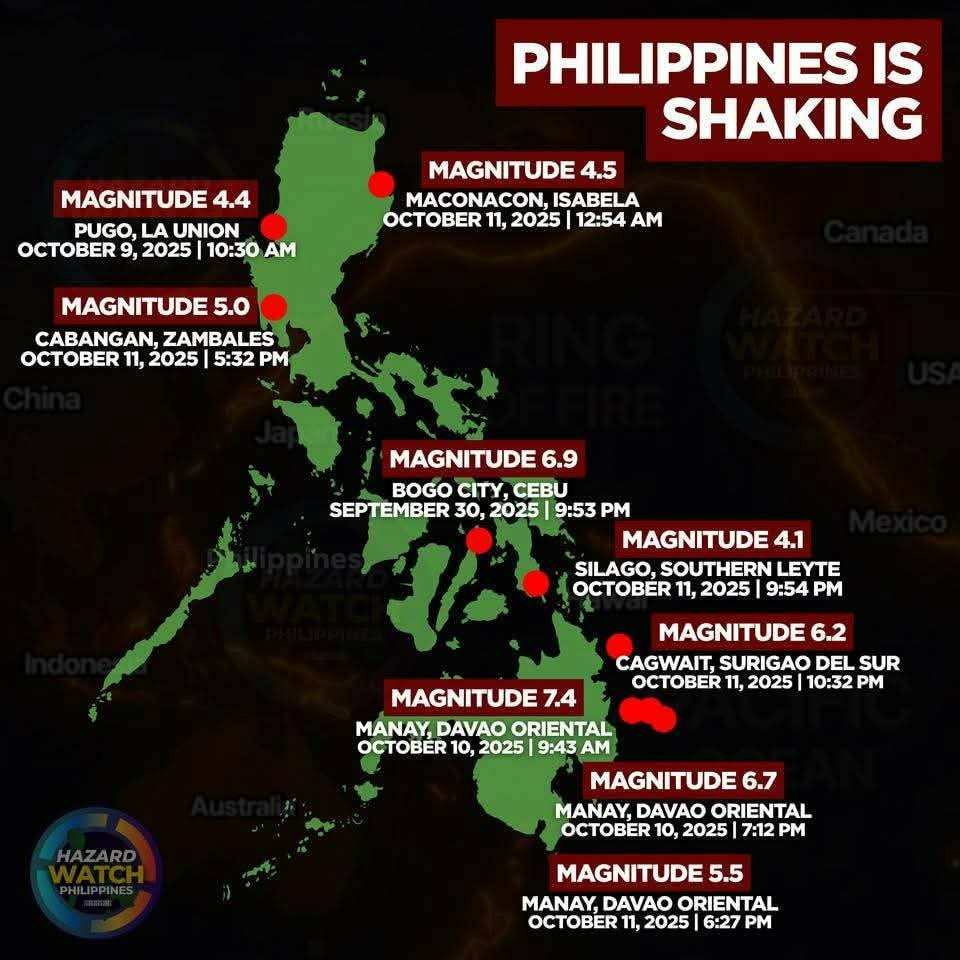
Magnitudes 6.9 and 6.0 earthquakes that struck Cebu on Sept. 30 and October 13, magnitudes 7.4 and 6.8 which shuddered Davao Oriental on October 10 and other midrange temblors in shaking provinces in Luzon and in the Visayas region raised concerns over the Philippine Trench encompassing the archipelago.

Most recent seismic activities served as a stark reminder of the urgent need for preparedness against the next major earthquake threatening lives of an estimated 14 million people in Metro Manila.

Several local government units in Metro Manila and adjoining provinces have already started distributing survival kits.

EARTHQUAKE STATS

According to Phivolcs, the agency has been recording an average of 30 quakes per day coming from different active faults and trenches.

In an interview on Bilyonaryo News Channel, Bacolcol detailed the risks and the measures both government and communities are taking to protect lives and infrastructure.

As of early Oct. 1, Bacolcol reported 9,887 aftershocks following the magnitude 6.9 earthquake that struck  Bogo City and Cebu. “In the first 24 hours, we recorded about 2,000 aftershocks. By the 10th day, that number dropped to 200-300. After 100 days, only 20-30 remain, and these are barely felt – only our instruments detect them,” he said.

The twin earthquake in Davao however yielded higher numbers. According to Phivolcs data, at least 1,111 aftershocks were recorded as of noon of October 12.

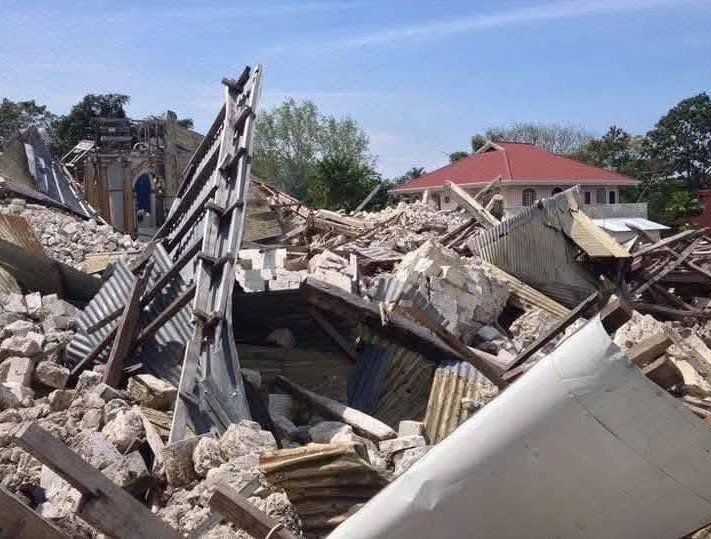
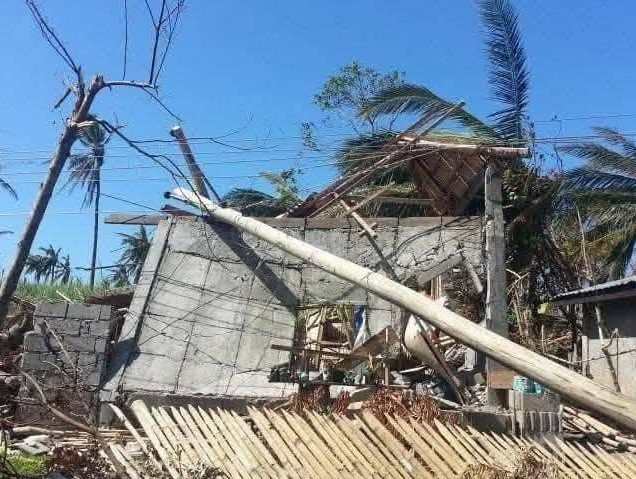
Davao Oriental logged in with eight casualties, sustained damages and displacement of a little less than half million residents while Cebu had over 70 persons dead, massive infrastructural damages, economic slump, chaos, hunger and uncertainty.

HAZARD, RELOCATION

There’s no way to predict or prevent an earthquake from happening but the government has put in place hazard mapping and relocation planning. 

“We provide hazard maps and data on active faults so LGUs can plan accordingly,” Bacolcol said.

“We can’t warn when an earthquake will happen,” Bacolcol said. “But we can locate epicenters accurately, especially offshore quakes that could trigger tsunamis.”

Public tools like Hazard Hunter PH and GeoRisk PH allow residents to check earthquake, volcano, and hydrometeor risks, helping plan safe schools and energy facilities.

Government retrofits can help, but engineers stress that following building codes remains the most reliable safeguard. “Participating in earthquake drills helps, but if the building collapses, drills alone won’t save lives. Follow the building code. No cutting corners,” he quipped.

Quake-Terrified Moms: Suspend F2F Classes 

0

FOUR STRONG TREMORS hitting different parts of the archipelago in just 10 days is not coincidence, but should be seen as an indicator of something bigger — perhaps, the so-called “Big One.”

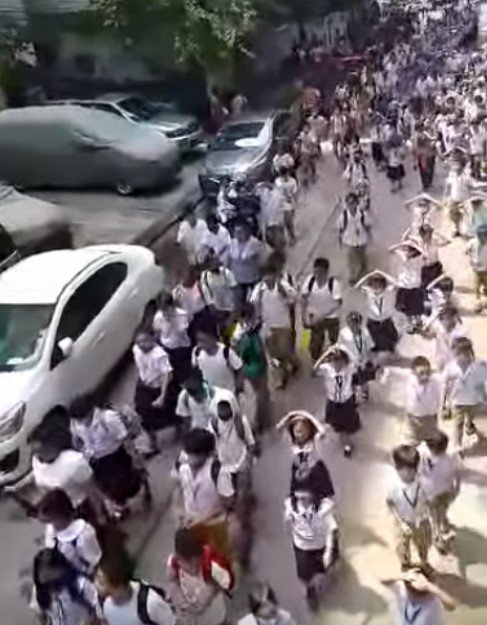
With this in mind, parents from Pasig City mounted a call to the city government to seriously consider the idea of imposing a suspension of face-to-face classes “as a matter of ensuring the safety of students.” 

In a Facebook post, parents urged Pasig City Mayor Vico Sotto to allow modular or online classes for fear of the “Big One” which had been played up in both the traditional and social media.

PHIVOLCS WARNING

Previously, the Philippine Institute of Volcanology and Seismology (Phivolcs) hinted at the possibility of the so-called “The Big One” hitting Metro Manila, with the West Valley Fault System already affected by the tectonic plates movements that shook Davao Oriental, Surigao, General Santos, Iloilo and Davao provinces last Friday, Cebu City a week before that, Baguio and Cagayan over the weekend the following day.

But Metro Manila residents are also being asked to prepare for quakes not just in the West Valley Fault but also in the East Valley Fault in Rizal where 12 barangays in Rodriguez and San Mateo would be greatly affected by the tremors of magnitude 6.2 quakes.

The Big One, with a magnitude 7.2 or more, is expected to shake in varying degrees the entire Luzon. 

The 100 kilometer West Valley Point would cross Bulacan, Rizal, Quezon City, Marikina, Pasig, Makati, Taguig, Muntinlupa, Cavite and Laguna. A total of 80 barangays in these places mentioned are at risk of the Big One. 

VICO’S INTERCESSION

Jeremy Pablo Quijano appealed to Mayor Vico Sotto to allow online classes for now “dahil po sa sunod sunod na lindol na nagaganap. Nakakatakot po lalo na sa mga students na mataas ang floor ng kanilang building. Para din po sa kaligtasan ng mga students ng buong Pasig at lalong lalo na sa Nagpayong Elementary School, na napakasikip at maraming estudyante,” reads his Facebook post.

Parents also said “sana mapansin mo po ang tinig namin mga magulang,” said 40 parents clamoring for the suspension of face-to-face classes.

The netizens whose accounts showed that they’re all from Pasig City, suggested a shift to the learning mode adopted during the pandemic — either modular or online classes.

DEPED INTERVENTION

One parent, Zil Ponesto said “Siguro DepED (Department of Education) din dapat mag decide or mismong gobyerno, may sinusunod ang mga LGUs na guidelines, hindi sila pwedeng mag decide, maliban kung may bagyo na paparating na.

Pero dun pa rin sila bumabase sa kung anong utos sa kanila, yan sabi ni Mayor dati pa. Anak ko din nasa 5th floor. Bilhan niyo po muna ng helmet and whistle mga anak niyo isabit kasama ng ID.”

Cris Sadia Catolico remarked: “Lalo’t yung mga magulang nasa trabaho tapos 2-3 ang anak na nasa school paano na kung may biglang trahedyang ganun di makapunta agad. Kawawa naman ang mga bata nakakatakot ang panahon ngayon. 3rd and 5th floor pa ang kwarto ng mga bata.”

P1.2B Wasted Over BPE Postponement 

0

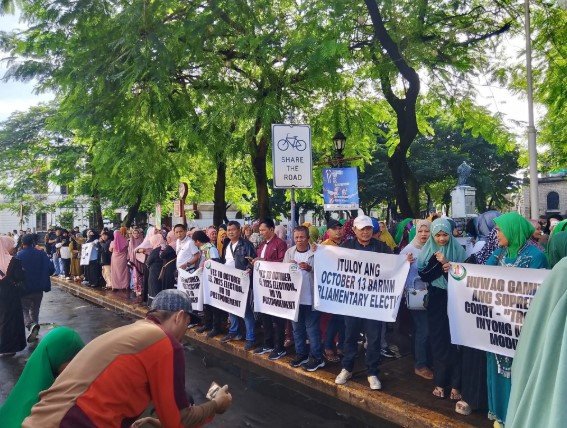
THE COMMISSION ON Elections (Comelec) can no longer afford another postponement of the Bangsamoro Parliamentary Elections (BPE) amid the absence of a new law by the Bangsamoro Transition Authority.

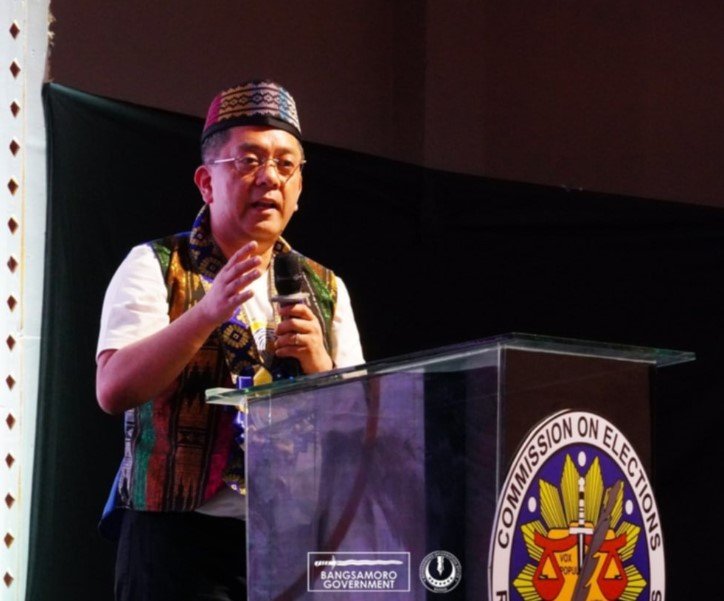
No less than Comelec chairman George Garcia admitted that they have yet to finalize the final date for the first ever election covering the provinces forming part of the autonomous Muslim Mindanao region.

“As long as no law is passed by the Bangsamoro parliament, the Comelec cannot prepare and cannot fix the election periods. The Supreme Court merely said it should not be later than March 31,” Garcia said.

NEVER REMISS

According to Garcia, Comelec was never remiss in its mandate even as he claimed that the poll body has been constantly communicating with the BTA regarding the status of the new Bangsamoro redistricting law. 

“We are regularly asking the parliament if there is already a proposed law or even movement for its enactment,” said Garcia.

The Supreme Court (SC) previously declared the Bangsamoro Autonomy Act 58 and 77 unconstitutional, even as it ordered the BTA to craft a new districting law by October 30, 2025.

The ruling also resulted in the postponement of the BPE to a date no later than March 31, 2026.

WASTED FUNDS

Comelec said the postponement has cost the agency P1.2 billion in wasted funds. Of that amount, P500 million went to the printing of official BPE ballots.

Garcia said they are seeking to recover the wasted funds as preparations for the BPE are now back to zero.

“We need to ask for an additional budget, likely similar to how much we lost or even more,” he said.

He noted that the poll body will have to pay again for the deployment and retrieval of poll paraphernalia — “We have already distributed the poll materials, so we will have to pay for the deployment. Also, there is reverse logistics, which will also be included in the payables,” Garcia added.

MANUAL ELECTION

Pressed against time, Comelec is studying the possibility of shifting to a manual system of voting for the BPE.

“In compliance with the Supreme Court’s decision that an election must be held by March 31, 2026, we are currently studying whether manual elections are possible to do,” Comelec spokesperson John Rex Laudiangco said on Bagong Pilipinas Ngayon.

“We see the pressing demand to have an election on March 31. That is why we are really pushing forward with the study on whether holding a manual election is possible,” he added.

The first-ever BPE was supposed to be held on Oct. 13 but was postponed.

ANOTHER RESET

Laudiangco said if ever the poll body finds itself pressed for time, it can move to push the BPE to a later date.

“In case we really run out of time, the Comelec may postpone the election for a brief period, in accordance with Section 5 of the Omnibus Election Code,” he said.

Under Section 5 of the Omnibus Election Code, the Comelec “may, motu proprio or upon a verified petition, postpone the scheduled elections to a date, which should be reasonably close to the date of the election not held, when there are cases of violence, terrorism, loss or destruction of election paraphernalia or records, force majeure, and other analogous causes.”

VOTER REGISTRATION 

Meanwhile, Comelec will resume the nationwide voters’ registration activities on Oct. 20.

According to Garcia, the seven-month registration period will be held until May 18, 2026 in all regions in the country except for the Bangsamoro Autonomous Region in Muslim Mindanao (BARMM). 

In an interview, the poll body chief said they are expecting over 1 million applicants for registration during the period — “We believe we can reach 1.4 million registrants.”

He however clarified that the BARMM is not included in the scheduled activities as the region will have its own voters’ registration schedule.  

The Comelec chief said the registration activities in the region shall commence on May 1, 2026 and will run until May 18 of the same year. (With reports from Jai Duena)

PH Claim Over Disputed Sea Gains Traction

0

BY SOME TWIST of fate, the Philippines no longer dons the role of an underdog insofar as its claim over the West Philippine Sea is concerned.

This comes as the Philippines assumed the chairmanship of the 6th Committee (Legal) of the 80th session of the UN General Assembly, after hosting the Foreign Ministerial Meeting (FMM) on “Reinforcing Cooperation to Achieve a Secure and Stable Maritime Domain.”

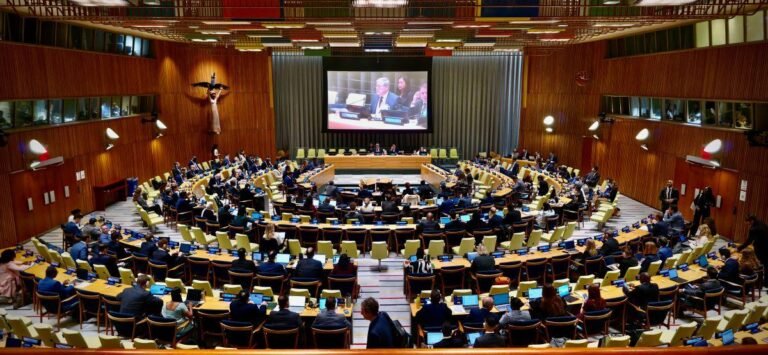
Ambassador Enrique Manalo in his capacity as Permanent Representative of the Philippines to the United Nations, delivered the opening statement of the Sixth Committee (Legal) at the Trusteeship Council Chamber at the UN Headquarters in New York.

The Sixth Committee deals with legal questions, as well as the codification and progressive development of international law. It serves as the UN General Assembly’s primary forum for legal matters.

Foreign Affairs Secretary Maria Theresa Lazaro thanked the member states for their confidence in electing Manalo as chairman.

BIGGER AUDIENCE

The FMM meeting had a strong turnout of invited countries, rising from 26 IN 2024 to 40 this year. Last year’s participating countries were primarily in Asia, Europe and North America but this year saw more regions represented, including Latin America and Africa. 

All 10 ASEAN countries participated in the event. 

Among the 40 countries that attended FMM were: Australia, Estonia, Greece, Japan, The Netherlands, Romania, United Kingdom and the United States.

Twenty-eight countries delivered interventions focusing on the role of the multilateral system in ensuring peace and stability in the maritime domain, UNCLOS (or the UN Convention on the Law of the Sea) as the legal framework for the oceans.

SOUTH CHINA SEA

Among the highlights of the so-called “interventions” is the need for greater cooperation in the sustainable use of marine resources, maritime safety in the South China Sea as a continuing concern, the importance of the peaceful resolution of maritime disputes, and the need to respect international courts and tribunals, including the 2016 Arbitral Tribunal.

Acknowledging the current challenges in ensuring a secure and stable maritime domain, there was renewed commitment to multilateralism and the shared stewardship of the world’s oceans. 

In particular, there was emphasis on international law, cooperation across shared maritime issues, such as the protection of the marine environment, ensuring freedom of navigation and commerce, facilitating global connectivity, and protecting critical marine infrastructure such as undersea cables.

ENFORCEMENT FUND

US Secretary of State Marco Rubio also announced that America will pitch in $55 million in new funding for maritime law enforcement in the Indo-Pacific.

“As a growing coalition across regions, we reaffirmed international law, particularly the United Nations Convention on the Law of the Sea (UNCLOS) as the constitution of the ocean and the legal framework in addressing global challenges to security and stability at sea.” Secretary Lazaro said at the meeting.

“It is a great honor and privilege for me personally and for my country, the Philippines, and is in line with our long-standing commitment to the rule of law,” Ambassador Manalo said.

CONSENSUS BUILDING

Manalo urged delegates to uphold the tradition of consensus-building and cooperation, emphasizing that its work comes at a crucial time for multilateralism, as international law faces mounting global challenges.

“At times of increased challenges, our work gains heightened importance, and our commitment to delivering its mandate should gain renewed focus,” he stated.

During its opening session, the Committee adopted its program of work for the session, which includes 34 agenda items, and established three working groups—on the Responsibility of States for Internationally Wrongful Acts, Measures to Eliminate International Terrorism, and Protection of Persons in the Event of Disasters (PPED).

The Philippines will continue to chair the Working Group on PPED, which aims to advance work on a treaty on disasters.

Another Tremor Jolts Davao, Tsunami Alert Raised Anew

PEOPLE FROM DOWN south who have survived the magnitude 7.4 earthquake remain under threat following a magnitude 6.8 tremor last night, even as the Philippine Institute of Volcanology and Seismology (Phivolcs), raised a tsunami warning hours after lifting one.

According to Phivolcs, the earthquake, with a depth of 10 kilometers, jolted Manay town in Davao Oriental at 7:12 pm. 

Intensity IV (moderately strong) was felt in Davao City; Bislig City, Surigao del Sur; Magpet, Cotabato; Digos City, Davao del Sur; Sta. Maria, Davao Occidental; Nabunturan, Davao de Oro; Gingoog City, Misamis Oriental; Malungon and Alabel, Sarangani; Tupi, South Cotabato; and Hinunangan, Southern Leyte.

As a preemptive measure, Phivolcs – for the second time in less than 24 hours – hoisted a tsunami warning.

“Based on the local tsunami scenario database, it is expected to experience wave heights of more than one meter above the normal tides and may be higher on enclosed bays and straits.” 

“Destructive tsunami is expected with life threatening wave heights,” warned Phivolcs in its forecast on high waves which may persist for hours.

Residents in the coastal areas of Surigao Del Sur, Davao Oriental, Surigao Del Norte were “strongly advised” to immediately evacuate to higher grounds or move farther inland.

Government experts also urged owners of boats in harbors, estuaries or shallow coastal waters in all three identified provinces to secure boats and move away from the waterfront.

Boatmen who have already sailed the sea were advised to stay offshore in deep waters until further advised.

Magnitude 7.4 Quake Hits Down South

0

WITH STRONG EARTHQUAKES hitting different parts of the country in the last several days, many must be wondering whether or not the government has put in place an appropriate disaster plan to cushion its impacts.

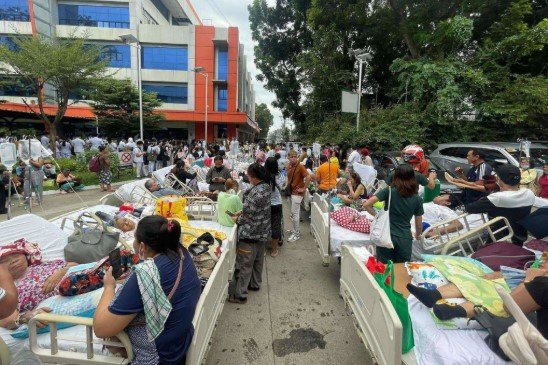
Earlier today, a magnitude 7.4 earthquake rocked Manay, Davao Oriental that sent people from down south scampering to safety in a manner that is way different from the National Simultaneous Earthquake Drills (NSED) being exercised on a quarterly basis.

Citing data from the Philippine Institute of Volcanology and Seismology (Phivolcs), the earthquake with a depth of 20 kilometers occurred at 09:43 Friday morning. 

Days before the Davao Oriental tremor, strong earthquakes also hit the provinces of Cebu (in the Visayas) and La Union (in Luzon). Phivolcs however clarified that all three earthquakes are not related.

VICIOUS AND WIDE

The intensity of the earthquake, initially reported as magnitude 7.6, was eventually downgraded to 7.4 before 11 in the morning of the same day.

The shuddering of the ground affected localities in adjoining regions. The earthquake’s impact was also felt in the Visayas region.

Reported intensity is the measure of the strength of an earthquake based on what people feel as well as the effects on structures and the environment. 

Initial reports coming from the Davao Oriental provincial government claimed that a resident from Mati City was killed after being hit by a beam.

POOLING EFFORTS

In a statement, President Ferdinand Marcos Jr. said that the government is mobilizing efforts to ensure the safety of everyone affected. 

“We are now assessing the situation on the ground and ensuring that everyone is safe,” Marcos said.

“We are working round the clock to ensure that help reaches everyone who needs it. Let us continue to look out for one another and pray for the safety of all our countrymen,” he added.

As of posting, concerned government agencies have yet to release other details including the extent of damages.

TSUNAMI WARNING

Following the incident, Phivolcs “strongly advised people in the coastal areas to immediately evacuate” to higher grounds or move farther inland, in view of a “destructive tsunami with life threatening wave heights.”

“Based on the local tsunami scenario database, it is expected to experience wave heights of more than one meter above the normal tides and may be higher on enclosed bays and straits,” Phivolcs said.

“It is forecasted that the first tsunami waves will arrive between 09:43:54 to 11:43:54, 10 Oct 2025 (PST). These waves may continue for hours,” it added. 

Meanwhile, Indonesia has also issued a tsunami warning for northern Sulawesi after the quake hit Davao Oriental. 

Indonesia’s geophysics agency suggested that there was a risk of tsunami waves as high as 50 cm hitting Indonesia’s shorelines. 

Phivolcs lifted the Tsunami warning at 1:43 p.m.

MORE AFTERSHOCKS

Shortly after the magnitude 7.4 earthquake that hit Davao Oriental, Phivolcs recorded nundreds of aftershocks.

In a television noontime news program, Phivolcs Supervising Science Research Specialist Angelito Lanuza said that the number had been recorded from the Mati seismic station within one hour of the initial quake.

“So far, siguro nasa hundreds na po ‘yan kasi one hour pa lang. Ganun naman po kadalasan ‘yan pero sa ngayon nagbibilang pa lang,” he said.

“Malakas po talaga yung 7.5, it’s almost kasing lakas ng 1990 earthquake. [Magnitude] 7.8 ‘yung 1990 earthquake. Ang kagandahan, medyo may kalaliman nang konti po ‘yung depth [ng lindol ngayon] tapos po medyo 44 kilometers naman po [at] nasa dagat,” Lanuza added.

EXPECT POWER OUTAGE

The Department of Energy (DOE) reported some electric cooperatives and distribution utilities are experiencing partial power interruptions following the magnitude 7.4 earthquake.

In its situation report, the DOE said three electric cooperatives — Davao Oriental Electric Cooperative Inc. (DORECO), Davao del Sur Electric Cooperative Inc. (DASURECO), and Northern Davao Electric Cooperative, Inc. (NORDECO) — are currently experiencing partial power interruptions due to the National Grid Corp. of the Philippines’ (NGCP) ongoing line assessment.

Two electric cooperatives — Surigao del Sur I Electric Cooperative Inc. (SURSECO I) and Surigao del Sur II Electric Cooperative (SURSECO II) — are under normal operations following the earthquake.

New DPWH Planning Exec.

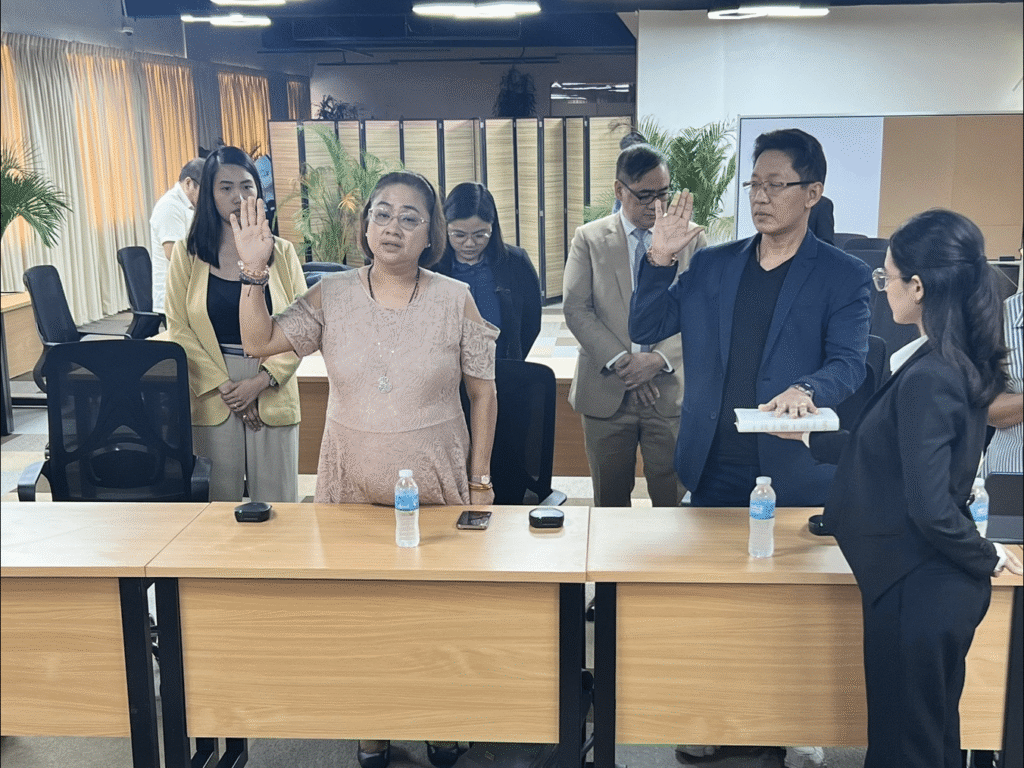
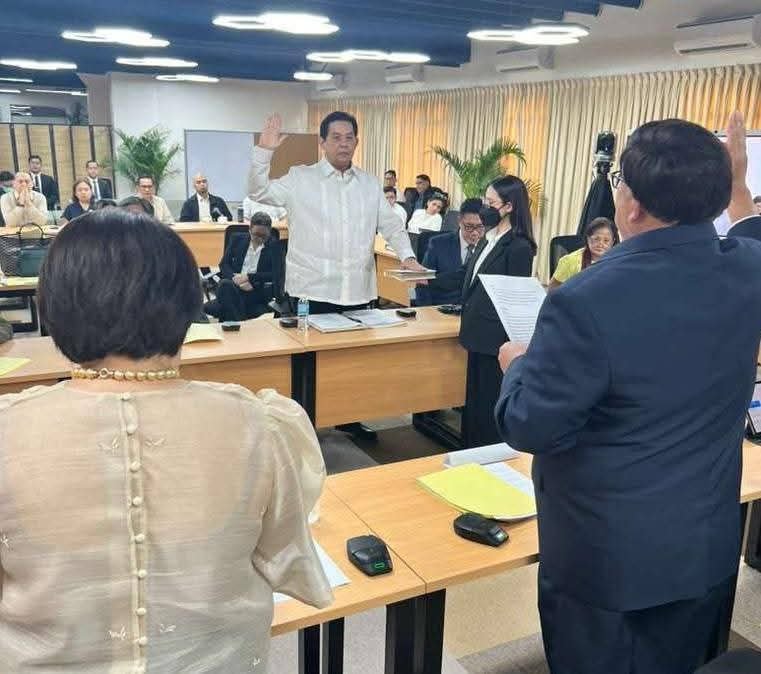
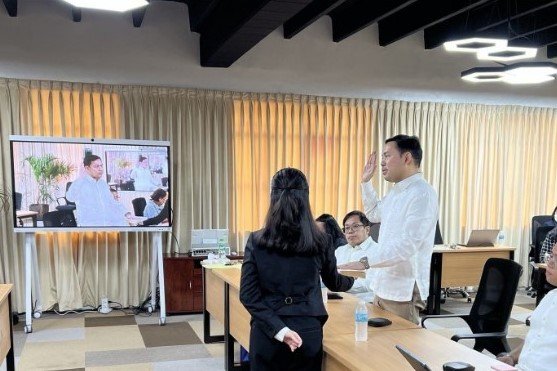
PUBLIC WORKS SECRETARY Vince Dizon swears in Atty. Nicasio A. Conti  as Undersecretary for Planning of the  Department of Public Works and Highways, vice USec Maria Catalina Cabral. Witnessing are Undersecretary Arrey Perez (right) and San Pascual (Batangas) Mayor Roanna Conti.

Blessed Movement

4

A PLATFORM THAT aims to strengthen digital engagement, streamline coordination among partner communities, and provide an integrated space for collaboration, promotions, and online campaigns was launched to support the advocacies of the BLESSED Movement, Inc. The kick-off event was held yesterday, October 9, at the Bagong Pilipinas Headquarters on EDSA, Mandaluyong City attended by BLESSED Social Media City coordinators, suppliers, partner merchants, members of the BLESSED Program Management Office (PMO), and the official Technology Provider — Arronet Technology Solutions, Inc.

This milestone marks a significant step toward BLESSED MOVEMENT’s vision of empowering its members and partners through technology, unity, and innovation — in alignment with its mission to promote Peace, Progress, and Prosperity for all.

Free-For-All Corruption Traced To Bonoan

0

THE DECENTRALIZATION POLICY of resigned Public Works and Highways Secretary Manuel Bonoan opened the floodgate of corruption, by weakening the oversight functions of central office leading to bid rigging and ghost flood control projects.

Former Supreme Court Justice Andres B. Reyes Jr., chair of the Independent Commission for Infrastructure, recommended to current DPWH Secretary Vince Dizon to reverse the decentralization policy of Bonoan contained in Department Order 195 (series of 2022) expanding procurement powers at the regional and district levels.

He noted that the policy created flaws and governance gaps that weakened oversight and enabled bid rigging and ghost projects at the district level.

Bonoan’s order raised the limit of authority (LOA) for civil-works awards to P150 million for district offices (from P100 million) and P400 million for regional offices (from P300 million), a decentralization meant to speed up implementation.

The ICI stressed that the relaxed thresholds paved the way for abuse — most visibly in Bulacan, where former district engineer Henry Alcantara and aide Brice Hernandez allegedly rigged bids and booked non-existent works worth billions of pesos with fly-by-night contractors including the Discaya Group, SYMS Construction, and Wawao. 

“What was sold as efficiency made it easier for field offices to push through billion-peso ghost projects with minimal central review. The scheme has prompted graft charges and Anti-Money Laundering Council (AMLC) asset freezes,” ICI said.

RESTORE CONTROL

To restore controls, the ICI proposed halving the caps to P75 million for districts and P200 million for regions — a move that may slow procurement but tighten checks by reducing local discretion expanding central approval, and signaling a rollback of the Bonoan-era decentralization viewed as a key catalyst of the flood-control scandal, said a report from Business World.

By shifting more approvals from districts back to regional and central DPWH offices,vetting of large contracts will have to go through Manila-based scrutiny where audit and anti-graft oversight are stronger.

While procurement could slow and some bottlenecks may return, the trade-off is fewer opportunities for bid collusion and manipulation at the local level, with district engineers’ discretion sharply curtailed.

ICI’s prescription is a rebuke of the Bonoan-era decentralization that handed vast procurement power to districts. It also signals a renewed anti-corruption push from the government, aiming to rebuild checks and balances after flood-control abuses and overpriced or ghost projects surfaced across multiple DPWH field offices.

WARY U.S. INVESTORS

Corruption issues on government projects are dampening US investor interest in the country, reported Philippine Ambassador to the US Jose Manuel “Babe” Romualdez.

But Secretary Frederick Go, Special Assistant to the President for Investment and Economic Affairs, begged to disagree as he claimed the Philippines has not lost any investment pledges due to ongoing probes into corruption on flood control projects.

In a radio interview, Romualdez said around $100 billion to $150 billion in potential investments — including those linked to President Ferdinand Marcos, Jr.’s US engagements — may be at risk unless the corruption scandals are resolved.

“(Foreign investors) want to see that our justice system is efficient… These corruption scandals need to be resolved,” the envoy was quoted by Business World.

INVESTMENT REPORT

In its 2025 Investment Climate report, the US State department identified corruption as a major barrier to foreign investment in the Philippines. It noted that corruption is “a pervasive and long-standing problem in both the public and private sectors” in the country.

The Marcos administration is intensifying its anti-graft campaign following public outrage over fraudulent infrastructure projects involving lawmakers, public works officials and select contractors. 

Marcos created the Independent Commission for Infrastructure (ICI) to investigate irregularities in flood control projects.

Go told a palace briefing that the President’s decisive actions demonstrate the government’s resolve to fight corruption and strengthen investor confidence.

“The swiftness and decisiveness of the President show the resolve of the government to clean up corruption, which is good for the economy and builds confidence,” he said, citing ICI’s creation and appointing former Justice Secretary Jesus Crispin Remulla to the Office of the Ombudsman “with gravitas” to lead the probe.

FUTURE-READY ECONOMY

Go said the administration’s proactive response to the corruption probe sends a clear signal that the Philippines is “building a future-ready economy anchored on trust and sustainable growth.”

He dismissed the corruption controversy as a “short-term issue,” which when resolved could yield long-term benefits by improving governance and ensuring more efficient public spending.

“This investigation will be good for the country in the long-term because it will address and correct the wrong practices,” he noted.

“The effect of this is that the budget, and we already see it now, will be more efficiently spent and allocated on more productive programs, which will benefit the country and our people,” he added.

Go said the business community, particularly foreign business chambers, has always flagged corruption and red tape as top concerns.

“This administration sees the fight against corruption and red tape as a core part of its economic strategy,” he said.

TRANSPARENCY RANKING

The Philippines ranked 114th out of 180 countries in Transparency International’s 2024 Corruption Perceptions Index, a position largely unchanged in recent years.

Josue Raphael J. Cortez, a diplomacy lecturer at De La Salle-College of St. Benilde’s School of Diplomacy and Governance, agreed with Romualdez’s remarks on corruption and investment as reflecting an accurate picture of how political stability influences foreign investor confidence.

“Romualdez’s statement is unlikely to harm Philippine-US relations, as such observations are widely recognized in discussions on foreign direct investment,” Cortez said.

He said this could encourage the US to support structural reforms and transparency measures that align with its democratic values.

Gov’t Spots Identity Theft Via Eye Scanning

0

DESPITE THE ENACTMENT of laws primarily designed to protect Filipinos from digital pirates, the Philippines has remained vulnerable to cybercrimes — including identity theft in the guise of cryptocurrency investment.

In a document obtained by the Insider, the National Privacy Commission (NPC) particularly hinted at the “Tools for Humanity (TFH) which developed the so-called World App.

According to the NPC, a cease-and-desist order against TFH has already been issued for using an “Orb” device to scan a user’s irises for digital identity verification.

In its order dated September 23, 2025, the NPC said TFH violated key provisions of the Data Privacy Act of 2012, citing breaches of the General Data Privacy Principles and the Rights of Data Subjects.

The order prevents TFH from making the app available for download, conducting identity verification, or transferring and sharing any personal data already collected.

WORLD APP, WHAT?

World App serves as a digital wallet for Worldcoin, a cryptocurrency and digital identity project co-founded by Sam Altman, who also leads OpenAI (the company behind ChatGPT).

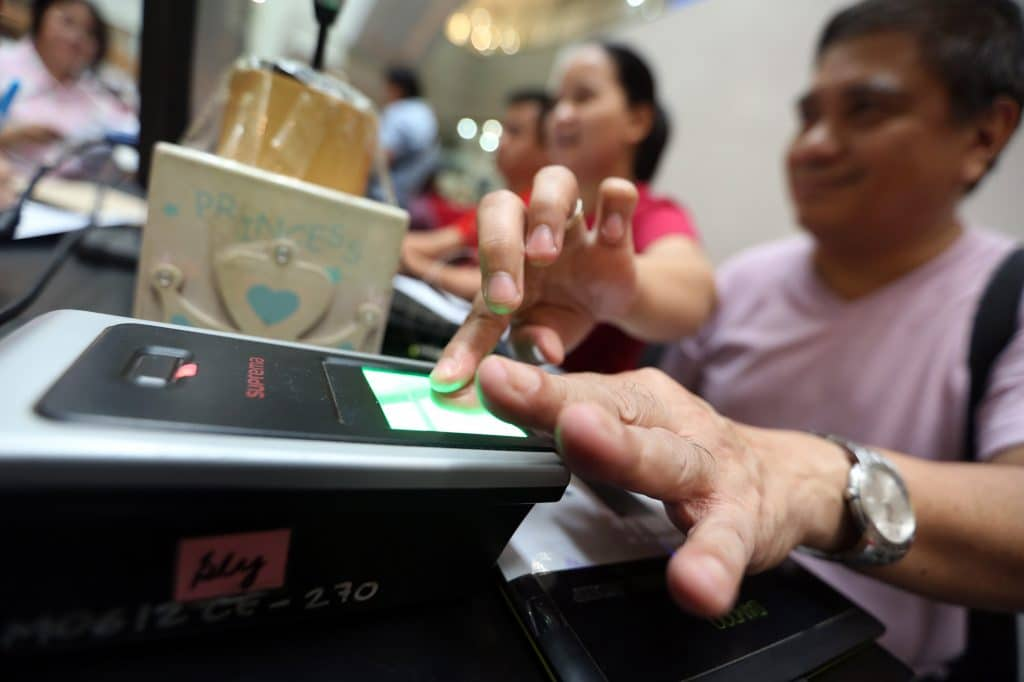
To register, users must visit a location with an Orb device to scan their eyes to confirm they are real humans, not bots or AI accounts. The image is then converted into a unique digital code that serves as the user’s identity.

TFH claims that images are deleted immediately after scanning to protect users’ privacy, while new users receive a small amount of Worldcoin as an incentive.

However, reports allege that TFH’s representatives have conducted field operations in provincial areas, offering cash in exchange for iris scans.

CASH FOR CONSENT

The NPC began investigating TFH following complaints early this year over supposed data collection in Plaridel, Bulacan, during a “Libreng Cyber Security at Digital Financial Literacy Program” supported by the local government.

Complainants said participants were asked to provide retinal scans, fingerprints, and personal information such as names, ages, and addresses in exchange for a digital ID — data that, if compromised, could lead to identity theft or financial fraud.

A report by the NPC’s Complaints and Investigation Division (CID) in May described several red flags. “There is no privacy policy, not even on their website,” the CID said.

“General statements without specific information on how data is collected and disposed of are insufficient for informed consent.”

DEFIANT TO PH LAWS

The report also questioned the need for extensive biometrics collection – “The collection of retinal and iris scans for mere authentication appears excessive. Most authentication processes only require facial captures, which themselves can already raise privacy issues,” it added.

The NPC emphasized that collecting such sensitive biometric data poses serious privacy risks and could enable identity cloning or deepfake creation.

Further research by the commission also revealed that TFH is not even registered with the Securities and Exchange Commission (SEC).

TFH however insisted that they do not need local registration, even as they claimed that they are not into business and that their activities are limited to providing technology. 

IN DEFENSE OF TFH

In a statement, TFH argued that the cease and desist order issued by the NPC would effectively expose millions of Filipinos to cybercrime.

“If not reversed, this could deprive millions of Filipinos of technology designed to protect them from scams, identity theft, and AI-driven fraud,” it said.

TFH also denied engaging in identity theft – “Our system does not identify individuals. It simply verifies that they are unique humans, not bots or AI accounts. We don’t store, sell, or purchase biometric data.”

In view of the order, TFH hinted at the idea of seeking legal remedy in an apparent bid to prove “legitimacy.”

In the meantime, TFH said that they’re inclined to seek reconsideration of the NPC’s decision.

GLOBAL CONTEXT

The Philippines joins a growing list of countries scrutinizing TFH’s practices.

Kenya, Spain, Germany, and Hong Kong have banned Worldcoin outright, while India, South Korea, Colombia, and China have issued warnings or launched separate investigations.

Junior’s Formula: Purge Crooks To Restore Order

0

WITH ALL CERTAINTY, the flood control scandal has grown beyond control for which the government suffered a significant drop in public trust – and only a light at the end of a dark tunnel could possibly restore its dignity.

According to civic leader Dr. Jose Antonio Goitia, the fact that President Ferdinand Marcos Jr. opted to take a stand against corruption is a positive indication for the nation.

He likewise described the president’s firm stance as a “renewal of moral governance” seen to restore confidence in government institutions.

“The President’s message is simple but powerful,” enthused Goitia in his capacity as chairman emeritus of Alyansa ng Bantay sa Kapayapaan at Demokrasya (ABKD).

Goitia pointed out that “no money should go to waste and no one should be above the law—this is the kind of leadership that earns the trust of the people.”

Vowing that every peso in the national budget must reach Filipino families and not get lost in bureaucracy or misuse, Marcos formed the Independent Commission for Infrastructure (ICI) to look into irregularities in flood control and public works projects.

He also ordered a long-overdue update of the Investment Coordination Committee guidelines. Accountability, the President said in a previous report, applies to everyone, regardless of rank or position.

According to Goitia, Marcos’ decisive move marks a break from the politics of convenience: “At last, we have a leader who isn’t afraid to clean up his own ranks.” Forming the (ICI) sends a clear message that accountability is not a slogan but a principle. The President is proving that honesty still belongs in government,” he stressed. 

The civic leader also emphasized that the reforms initiated by the chief executive are not mere words but concrete steps toward genuine reform even as he asserted that simplifying government processes and improving coordination among agencies will reduce duplication, red tape and waste.

“This administration isn’t just talking about change. It’s doing the work. For the first time in years, there’s a clear sense of direction and discipline. Every project is now measured by how much it helps ordinary Filipinos,” he cited. 

He reminded everyone that the real fight is not between politicians but against corruption itself: “The true enemies of progress are corruption, incompetence, and abuse of power. That is where the President is focusing his energy, and that’s where the people should stand with him.”

In conclusion, Goitia brushed aside political noise meant to distract from the administration’s reforms, describing these as the same old tactics designed to divide and derail progress, and yet he disclosed that this time, the public knows better and people can see who’s working and who’s merely talking.

“The government is doing its part to fix the system. Now it’s our turn to do ours,” he said. “Support honesty. Reject corruption. Speak up against waste. This is a fight for everyone.

“President Marcos isn’t just balancing the books. He’s rebuilding the nation’s trust. This is how a country truly rises, not through noise and division, but through unity, integrity, and hard work. The Republic stands stronger today because we finally have a leader who chooses what is right, even when it is not easy,” quipped Goitia who also serves as convenor of People’s Alliance for Democracy and Reforms (PADER), Liga Independencia Pilipinas (LIPI), and Filipinos Do Not Yield (FDNY) Movement. 

Swinders’ List Out, Romualdez on Top

0

BLOOD IS THICKER than water, but not in instances when familial relationships could spell disaster.

In the case of former House Speaker Martin Romualdez, he has become more like an extra baggage to the administration, for which his cousin at the helm of the Palace finds it rather imperative to consider “damage control” by ditching him out.

Romualdez has earlier been tagged as the main architect behind the systemic corruption embarking on ghost flood control projects being investigated by the Independent Commission for Infrastructure (ICI).

Aside from Romualdez, likewise dragged into the flood control scandal are members of the Senate, the House of Representatives, officials from the Department of Public Works and Highways (DPWH) and private contractors.

But not all in the list of personalities suspected to have something to do with what appears more like a scandal that is hundreds fold bigger than the pork barrel scam.

To ensure accountability, the ICI formally requested the Bureau of Immigration (BI) for the issuance of a lookout bulletin to 31 individuals — with no less than the President’s first cousin on top of the list.

A day after the request was formally submitted, the Department of Justice (DOJ) announced that the request — issuance of immigration lookout order against Romualdez and 30 other prominent personalities – has been granted.

SWINDLERS’ LIST

Aside from Romualdez, also on the list included former Senate President Francis Escudero, Senator Jinggoy Ejercito Estrada, former Senator Bong Revilla Jr., former senator now Makati Mayor Nancy Binay, Commission on Audit Commissioner Mario Lipana and contractor wife Marilou, Education Undersecretary Trygve Olaivar, Carlene Villa, Special Envoy to China for Trade, Investment and Tourism Maynard Ngu.

Pasig Rep. Roman Romulo, Uswag Ilonggo Rep. James “Jojo” Ang, Quezon City 5th District Rep. Patrick Michael “PM” Vargas, Quezon City 1st District Rep. Arjo Atayde, AGAP Rep. Nicanor “Nikki” Briones, Marikina 1st District Rep. Marcelino “Marcy” Teodoro, former San Jose del Monte, Bulacan Rep. now mayor Florida “Rida” Robes, Romblon Rep. Eleandro Jesus Madrona, Laguna 4th District Rep. Benjamin “Benjie” Agarao, former An Waray Rep. Bem Noel.

Occidental Mindoro Rep. Leody “Ode” Tarriela, Quezon 3rd District Rep. Reynante “Reynan” Arogancia, former Quezon City 4th District Rep. Marvin Rillo, Aklan 2nd District Rep. Teodorico “Teodoro” Haresco Jr., Zamboanga Sibugay 2nd District Rep. Antonieta Eudela, Caloocan 3rd District Rep. Dean Asistio, Quezon City 6th District Rep. Marivic Co-Pilar, District Engineer Loida Busa “Bogs” Magalong, District Engineer Ramon Devanadera, District Engineer Johnny Protesta Jr., District Engineer Arturo Gonzales Jr.

NOT ON THE LIST

Aside from Escudero, Estrada and Villanueva, conspicuously missing on the list are other members of the senate whose names have also been dragged into the scandal.

Also not on the list is fugitive Ako Bicol Rep. Zaldy Co, who has earlier been reported to hopping from one European country to another to evade the ICI investigation. He however has recently been spotted in Portugal. 

However, the DOJ earlier claimed that the government has already requested the International Police Organization (Interpol) to issue a “blue notice” against the former partylist congressman.

The justice department already previously issued an ILBO against some DPWH officials and top flood control contractors.

Former Supreme Court Justice Andres Reyes Jr., in his capacity as chairman of the ICI, said that the issuance of ILBO is of utmost necessity to enable the Commission to proceed without delay and to hold those liable accountable to the Filipino people.

ICI INVITES ROMUALDEZ 

The ICI also invited Romualdez, and Budget Secretary Amenah Pangandaman to appear before the commission on October 14 to discuss his “familiarity and personal knowledge as Speaker of the House relative to the National Budget insertions and as well as the DPWH flood control projects.”

Pangandaman for her part would be made to explain “line projects which are linked to the ghost projects, substandard or otherwise unfinished implementations of flood control projects.” 

Part of the interrogation would delve on the government procedures for the release of the unprogrammed funds.

Romualdez’s office said he has received the invitation from the ICI.

“Rep. Romualdez welcomes the opportunity to cooperate with the Commission and fully supports its objective of promoting transparency, accountability, and good governance. In this regard, Rep. Romualdez is prepared to appear before the Commission,” his office added.

ICI also issued a subpoena to Co “to testify under oath relative to your personal knowledge ever since you joined the Committee on Appropriations of the National Budget insertions and your involvement in DPWH flood control projects.”

He has also been told to present documents in his appearance before the ICI.

Extremely Overpriced FMRs Exposed

0

INSATIABLE GREED HAS crept into the system of the Department of Public Works and Highways and its select contractors in implementing not just ghost and substandard flood control projects but also farm to market roads (FMR) and substandard school buildings.

This comes as Sen. Sherwin Gatchalian exposed on Wednesday the “extremely overpriced” FMRs by up to 70 percent amounting to P10 billion programmed for calendar years covering 2023 and 2024.

One project, he said, cost 23 times more than the standard price set by DPWH while others saw markups of 70 percent, further ballooning the project cost. FMRs are planned by the Department of Agriculture and passed on to the DPWH for design and execution.

The Senate finance committee, chaired by Gatchalian said these were projects taken from the P176.7 billion budget of the DA.

DA Secretary Francisco Tiu Laurel Jr. said the DPWH set a P15,000 per meter standard cost for FMRs, but this could go as low as P10,000 if the “30 percent” markup was trimmed.

Gatchalian noted that many FMRs funded under the General Appropriations Act (GAA) under 2024 Fiscal Year (FY) cost P30,000 per meter, or twice that of the P15,000 benchmark set by the DPWH.

ZALDY CO’S BAILIWICK

Bicol region topped the list of FMR projects that had a “cost overshoot,” as Gatchalian explained.

The region’s 80 projects could have cost only P520 million but went up to P1.7 billion because of the 68-percent markup amounting to P1.18 billion, said a report of the Inquirer.

This was followed by Eastern Visayas with 33 projects that were allocated P791 million with a 70 percent or P555-million cost overshoot. This meant that the projects should have cost only P236 million without the markups.

The overpriced FMR project in Albay was handled by Hi-Tone Construction and Development Corp., co-founded by Christopher Co, brother of former Ako Bicol Rep. Zaldy Co.

Zaldy Co, chaired the powerful committee on appropriations of the House of Representatives from July 2022 to January 2025, but resigned from his post to avoid investigations on flood control projects and budget insertions.

The concreting of FMRs from Barangay Kidaco to Barangay San Roque in Daraga, Albay, was allocated a P46-million budget in the 2024 GAA and had a length of only 0.37 kilometers but cost P124,324.32 per meter — over eight times the standard P15,000.

Other areas that were flagged with extremely overpriced projects under the 2024 GAA were Camarines Sur (P263,157.89 per meter), Bulacan (P193,548.39) and Eastern Samar (P169,902.91).

“For me, this is an obvious sign of corruption,” Gatchalian said.

Agriculture Secretary Francisco Tiu Laurel Jr. had vowed to look into the matter.

ROMUALDEZ FORTRESS

For Eastern Visayas, Barangay San Roque in Tacloban City topped the list of extremely overpriced FMRs with an ongoing road concreting.

The 2024 GAA allocated P100 million for the project, with an actual length of 0.287 kilometers, putting its cost per meter at P348,432.06 — or 23 times more than the P15,000 DPWH standard price.

In addition, the project’s contractor could not be found in the DPWH Civil Works Contracts Database.

“This is just extremely, extremely, extremely overpriced,” Gatchalian said.

Gatchalian asked Laurel if they have “not detected this extreme overpricing? If the P15,000 [cost per meter] is already overpriced in your opinion, this one is P348,000 per meter.”

Laurel said he was shocked by such figures but that the question could be better answered by the project implementer, the DPWH.

Eastern Visayas, particularly Tacloban, is under former Speaker Martin Romualdez.

TOP FMR CONTRACTORS

Gatchalian said the three contractors who bagged the most number of FMR projects were also among the top 15 firms list reported last August by President Marcos that secured the biggest amount of flood control projects nationwide.

These three were EGB Construction Corp. (with P242.1 million FmR for 2024 or the second highest in Gatchalian’s list), Hi-Tone (the third biggest at P221.9 million) and Road Edge Trading & Development Services (with P98 million).

The top contractor for FMRs in 2024 was GCI Construction and Development Corp. with P288.5 million.

Gatchalian said since the Bicol region had the most number of overpriced FMRs with Hi Tone cornering the third biggest road contracts, he believes this is not coincidental as “Zaldy Co was behind the company that got the third largest number of contracts.”

TULFO PRESIDES BRC

Following Sen Panfilo Lacson’s resignation as blue ribbon committee chairman, its vice chairman Sen. Erwin Tulfo, will preside over the committee hearings to ensure continuity in the investigations into the flood control projects and fund scandals. Though he is on official travel, he had been informed of his new appointment by Senate President Tito Sotto.

He however clarified that he’d be on board until after a permanent committee chairman shall have been named.

Lacson gave up committee chairmanship amid controversies and negativities by peers in the Senate.

“Some senators publicly and secretly pursue the narrative that I am zeroing in on several of my colleagues while purportedly protecting those members of the Lower House perceived to be the principal actors in the budget anomalies related to the substandard and ghost flood control projects,” said Lacson, as he denied such claims.

Sotto previously offered the BRC to Sens. JV Ejercito, Risa Hontiveros, Pia Cayetano, Raffy Tulfo and Francis Pangilinan, who all declined so they could focus in their respective committees.

Blockchain: Block Corruption And Chain The Corrupt

0

IN AN APPARENT effort to promote transparency in the process of legislation, implementation and disbursement of the national budget, separate proposed bills embarking on the so-called blockchain technology were filed at the Senate and at the House of Representatives.

According to its proponents, blockchain would serve as a digital ledger designed to serve as a tamper-proof record of all transactions.

In September, Senator Bam Aquino filed Senate Bill 1330 or the proposed Philippine National Budget Blockchain Act. At the House of Representatives, Negros Occidental 3rd District Representative Javi Benitez  filed House Bill 4380, a counterpart bill complementing Aquino’s proposed measure.

Both bills seek to infuse transparency and accountability through the use of blockchain technology, making it publicly available, accessible, and easy to understand as well as open for citizen engagement.

BLOCKCHAIN UP-CLOSE

Imagine a magic notebook that appears in your hand with just a snap. Anyone can read it anytime they want.

Instead of a pen, you can use a magic wand to record everything that is happening permanently. Example: Juan asked his mom for P1,000 for a school project. The notebook will keep record of this:

“Juan received P1,000 pesos from his mom for a school project.” But Juan only needs P500 pesos for the project.

“Juan spent P500 pesos for the school project” After school, Juan went to a computer shop to play using the rest of the money

“Juan went to a computer shop to play using his mom’s money.” Juan went home later, and his mom asked about the P1,000. Juan lies.

NO WAY TO FOOL MOM

Little did Juan know that his mom used the magic wand to trace the P1,000 pesos.

Juan’s mom snapped her fingers and the notebook appeared in her hand. Hence, Juan was caught red-handed.

Then Juan begged his mom not to tell his dad. But too late, his dad snapped his fingers and saw the same thing.

Now imagine that each log is a block linked together by a chain. That is blockchain.

BAM AQUINO’S VISION

Senator Aquino’s vision for his proposed Philippine National Budget Blockchain Act is synonymous to wave the magic wand on every peso in the national budget and keep a record of all transactions on the magic notebook that anyone can read in a snap.

In his proposed bill, Aquino cited the need to take advantage of three major features of the blockchain technology.

IMMUTABILITY: All data in the blockchain is permanent and cannot be altered, deleted, or manipulated.

TRANSPARENCY: No single person or group has control of the blockchain, while the software code is open to the public for evaluation.

AUDITABILITY: An easy-to-understand chain of records of all public funds from appropriations to utilization will be open for scrutiny to the public.

Bam’s Vision is to BLOCK corruption in the budget process by putting every transaction to light and to hopefully put those who dare steal in CHAINS.

HERE’S THE CATCH

But here’s the catch: implementing a foolproof blockchain on the entire budget process is easier said than done and neither is its passage into law a walk in the park.

For one, blockchain’s biggest strengths could also be its biggest weaknesses.

IMMUTABILITY means false or manipulated data entered in the first place cannot be corrected by the system.

TRANSPARENCY and AUDITABILITY mean there is a need for a strong internet connection nationwide for both the government and watchdogs.

For the longest time, crooks in the government have always managed to find their way around the blockchain so it’s paramount that the system is airtight.

The bill is still at committee level as of writing and the Senate has plenty of time to study and deliberate on the bill.

Regardless, blockchain will not solve corruption, it is merely a tool. In the end, technology is only as powerful as the people using it.