Friday, March 27, 2026
Home Blog Page 34

Netizens Welcome Senate Coup

0

AS QUICKLY AS a lightning style coup at the Senate took place on Monday, netizens welcomed instantly the leadership, including the chair of the Blue Ribbon Committee that has been handling what they used to call a mock probe (zarzuela) into the corruption-riddled flood control projects of the Department of Public Works and Highways.

In fairness to Sen. Rodante Marcoleta, former committee chair, he was able to obtain from the flood control king and queen Curlee and Sara Discaya, the list of DPWH, legislators and people in the executive branch who have been demanding kickbacks from contractors, through budget insertions or use of unprogrammed funds. Soon after the list was made public, the lightning coup occurred, catching everybody, including their diehard Duterte-loyalists colleagues.             

People have posted in social media their hopes that more thorough and credible probes would be expected, esp. since the committee is now chaired by Sen. Panfilo Lacson, an anti-pork legislator.

LOWER HOUSE ALSO

They are now clamoring for a leadership change in the lower chamber so that it can cleanse its ranks of legislators who have been deeply into graft and corruption of all types of projects, beginning with the flood control project mess.  They are now expressing the hope that the probes would also unveil those in the executive department and oversight agencies like the Commission on Audit. 

Netizens believe that the scandal is not just confined to favored contractors, but goes as deep as the executive branch, specifically palace insiders, citing the long history of such anomalies in previous administrations.

They are also expressing frustrations at the snail pace of issuing an executive order creating a powerful independent probe body, which they hope would yield results like charging those involved, having them jailed and fined heavily (including sequestration of ill-gotten wealth of those that amassed great wealth from the outlawed pork barrel).

Good thing, new DPWH Secretary Vivencio Dizon stopped all the circus-like probes within the DPWH, which netizens say would redound to nothing but cover up.

DPWH, COA ASKS OMBUDSAN TO CHARGE THOSE INVOLVED

The DPWH and COA have turned over fraud audit reports to the Office of the Ombudsman, recommending criminal charges against officials and contractors linked to anomalous flood control projects in Bulacan.

The audit reports flagged “ghost” or substandard projects worth hundreds of millions of pesos, declared complete but were either defective, incomplete, or non existent (not built at all).

Dizon told reporters that DPWH is expediting the filing of cases against contractors and officials of the DPWH, particularly of projects that the President has inspected in Bulacan which were either duplicated (charged multiple times) and “super substandard.” 

“I have received more than a hundred projects that are either ‘ghost’ or substandard and these reports are piling up almost every day… We have recommended the filing of criminal cases against contractors.”

CoA sought charges against three contractors and four DPWH officials after auditors flagged multimillion projects, declared “100% complete,” but presented “shoddy workmanship issues” or were non-existent.

CoA said the fraud audit stemmed from Chair Gamaliel A. Cordoba’s directive last August to immediately scrutinize DPWH flood control projects in Bulacan covering July 2022 to May 2025.

“The findings shall form part of the evidentiary record and may be used as basis for administrative and/or criminal liability,” CoA said in a statement.

DISCAYAS AS STATE WITNESSES?

Notorious flood control project Discaya couple, said they are volunteering to be state witnesses after tagging several congressmen, their staff, and DPWH officials.

“We are ready to testify without coercion and volunteer as state witnesses and tell all the corruption that is happening in the House, DPWH, and other government employees to do what is right,” said Pacifico “Curlee”  Discaya, owner of the St. Gerrard Construction General Contractor and Development Corp. 

The Senate investigation stemmed from President Marcos’ disclosure in August of 6,000 anomalous flood control projects since 2022. He also launched the app sumbongsapangulo, where people are enjoined to report documented and validated cases of corruption in flood control projects in their areas.

The Discaya’s company St. Gerrard Construction, among others, figured in the President’s list of top 15 contractors that cornered the government flood control contracts.

Since 2022, about P544 billion in public funds have been allocated for flood control nationwide, with about P100 billion cornered by contractors. 

MORE CONTRACTORS TO BE BLACKLISTED

The budget department said it will declare more flood-control contractors blacklisted, said DBM Secretary Amenah F. Pangandaman as she explained its Procurement Service (PS) is awaiting a DPWH order barring the contractors from future projects before removing them from the Philippine Government Electronic Procurement System (PhilGEPS).

Already removed are SYMS Construction Trading and Wawao Builders, both barred by the DPWH last week after their alleged involvement in “ghost” infrastructure projects, which turned out to be non-existent despite being classified as completed.

“We are ready to cancel the PhilGEPS membership of these companies to prevent them from participating in government procurement activities.”

Last week, the DBM-PS revoked the PhilGEPS “platinum” membership of nine companies linked to Cezarah Rowena Discaya, a defeated mayoralty candidate for Pasig.

President Ferdinand R. Marcos, Jr. ordered the blacklisting of contractors proven to be behind “ghost” flood control projects.

Flood-control contractors have been in the spotlight since the July floods after their projects failed or were found to be substandard, unfinished, or non-existent.

PhilGEPS is the official platform for all government procurement.

MORE GROUPS CALL FOR ACCOUNTABILITY

Retired police and military generals have joined the call for accountability for the anomalous flood control projects amid ongoing inquiries in the House and the Senate.

In a joint statement signed by different groups and individuals, the proponents expressed outrage at government officials and politicians who act as contractors, private sector parties, including their family members and relatives, who flaunt their lavish lifestyles while many Filipinos suffer the consequences of flooding events resulting in loss of lives and damage to millions of pesos worth of private properties.

“We demand that this corrupt system be replaced with a system of transparency, accountability, and people’s participation that makes it harder to be bad and easier to be good,” it added.

Signatories include: retired Gen. Renato S. de Villa, former AFP Chief of Staff; Maj. Rene C. Valencia, former Social Security System president; Adm. Danilo Abinoja of the Coast Guard, Col. Plaridel  M Abaya of the Constabulary; Lt. Gen. Edilberto P Adan, former head of the Visiting Forces Agreement Commission; Col. Guillermo G Cunanan of the Air Force.

Lt. Col. Alejandro T Flores of the National Police; Gen. Victor Ibrado, former AFP chief of staff; Vice Adm. Emilio C Marayag of the Navy; Brig. Gen. Manuel Mariano of the Army, Vice Adm Mateo Mayuga of the Navy, Brig. Gen. Eliseo Rio Jr of the Army;

Maj. Gen. Melchor Rosales of the Air Force and baron of Philippine Military Academy Class of 1968; Col. Mariano Santiago former director of the then Bureau of Land Transportation; Gen. Recaredo A Sarmiento II, former National Police chief; Lt. Gen. Raul S Urgello former Army commander;Gen. Alexander B Yano, former AFP COS; Brig. Gen. Rodrigo Diapana; and Rear Adm. Rommel Jason L Galang of the Navy.

Religious leaders that signed were: Cardinal Pablo Virgilio David, Bishop of Kalookan; Archbishop Socrates B Villegas of the Archdiocese of Lingayen-Dagupan; Bro. Armin A. Luistro FSC, the first Filipino and Asian picked by Pope Leo XIV last June to be member of the Vatican curia to promote, support and oversee the implementation of evangelical counsels; Br. Bernard S. Oca FSC; and Fr Roberto C. Yap SJ.; former DPWH Secretary Rogelio Singson, former Senate President Franklin M. Drilon, and former Finance Secretary Ramon del Rosario Jr. and Baguio City Mayor Benjamin Magalong.

Groups that joined the call include De La Salle Brothers Philippines, De La Salle Philippines, Integrated Bar of the Philippines (IBP), Makati Business Club (MBC), MUP (Military & Uniformed Personnel) 4 United PH; Ateneo de Manila University, Ateneo de Naga University, Ateneo de Davao University, Ateneo de Zamboanga University, Xavier University-Ateneo de Cagayan, Xavier School San Juan, Xavier School Nuvali, Loyola College Culion, and the PHINMA Education Group.

PASTORAL LETTER

Catholic bishops demand the return of public funds lost to corruption in flood-control projects, warning that Filipinos will remain exposed to disasters so long as billions of pesos meant for protection end up in private pockets.

A pastoral letter read in churches issued by the Catholic Bishops’ Conference of the Philippines (CBCP) said “justice cannot stop at punishment.”

“True justice demands more than punishment. It also calls for restitution: that stolen wealth be returned to the public coffers from which it was taken,” the bishops said.

The bishops cast doubt on the credibility of these hearings, noting that the same lawmakers leading them had a hand in inserting “pork” projects into the national budget.

The CBCP said as much as 60 percent of project funds are swallowed by a “multi-layered system of commissions,” leaving only scraps for actual construction, leading to a string of substandard projects that repeatedly collapse and require repair.

They called for the creation of an independent committee to investigate corruption in flood-control programs and other budget insertions, stressing that accountability must reach legislators, engineers, auditors, contractors, and financiers who enable the racket.

“[Accountability] must apply to both public officials and private contractors. Blacklisting is not enough; collusion in corruption is a crime and must be punished,” the statement said.

They also urged Filipinos to reject patronage politics and push for transparency from leaders, while calling on the youth to use their digital platforms for vigilance.

“If floodwaters rise because public funds are stolen, the greater flood is corruption itself, drowning our nation’s future,” the bishops warned.

TRANSPARENCY IN PUBLIC CONTRACTS PUSHED

The Conference of Major Superiors in the Philippines (CMSP),in a statement called for transparency in public contracts, particularly in mining, taxation, and infrastructure, saying independent investigations must be carried out to stop the misuse of public funds. 

It also warned against “dole-out politics” that traps the poor in a cycle of dependence, urging instead for reforms that dismantle patronage.

The CMSP pressed for stronger civic engagement—through local Freedom of Information ordinances, open legislative processes, and citizen oversight—as safeguards against systemic abuse.

“True reform begins not with changing the rules of the game but with the conversion of hearts and the integrity of leaders,” the group stressed.


Avoiding Arguments Can Break a Relationship

0

THINK AVOIDING ARGUMENTS keeps the peace? Think again. Silence isn’t golden—it can backfire. At first, staying quiet feels peaceful. But little things—a forgotten text, a late night, a messy plate—start piling up. Over time, that fragile “peace” starts to crack, and one tiny spark can set off a huge blow-up.

The Back Story

Lots of people believe avoiding conflict keeps the peace. Truth is, it only delays the problem.

Tension simmers quietly under the surface until it finally explodes. And when it does, the fight usually feels way bigger than the real issue.

Small Issues Grow Fast

Take this example: one partner comes home late from work often. 

  • At first, the other partner thinks, “It’s fine, I don’t want to nag.” 

But after the tenth time of sitting alone at the dinner table, the silence starts to sting. 

Finally, one night when the partner walks in late again, the frustration boils over. 

  • Instead of calmly saying, “I wish you’d let me know if you’ll be late,” it comes out as, “You never care about me!” 

The late nights weren’t the real problem—it was the silence and bottled-up feelings that caused the fight.

Late Nights, Big Fights

Or consider house chores. Imagine one person constantly picking up clothes, washing dishes, and cleaning while the other relaxes. 

  • At first, they shrug it off, thinking, “Not worth the fight.” But day after day, it feels unfair. 

Then one small thing—a single dirty plate left in the sink—becomes the spark for a huge argument. 

The outburst isn’t about the plate. It’s about weeks of unspoken frustration. 

  • A simple talk earlier—“Can we split chores more evenly?”—could have prevented the blow-up.

Chores: More Than Just Plates

Even emotional needs can create this kind of hidden tension. One partner might feel lonely, craving more quality time. 

  • But instead of saying, “I miss spending time with you,” they keep quiet. 

They don’t want to sound needy. But silence only deepens the gap. 

Eventually, the loneliness turns into anger: 

  • “You don’t care about us anymore!” 

Once again, the real issue wasn’t addressed early, so it grew into something much bigger.

Loneliness Builds Tension

These examples show a simple truth: arguments themselves don’t destroy relationships—lack of communication does. 

  • When we avoid talking about what bothers us, we trade short-term comfort for long-term chaos.

Communication Beats Chaos

That doesn’t mean couples should fight all the time. The goal isn’t endless arguing—it’s honest communication. The trick is how you bring things up. 

Instead of blaming, try expressing how you feel. 

  • For example, say “I feel hurt when you don’t text me back” instead of “You never care about me.” 

That small shift makes the conversation less of an attack and more of a bridge.

Talk Before It Explodes

At the end of the day, relationships thrive on openness. A little spark of disagreement handled with care is much healthier than pretending everything is fine until it explodes.

The bottom line: It’s not about arguing all the time, but about talking things through before they grow into something bigger. 

  • A healthy relationship needs open conversations, even when they’re uncomfortable. 

It’s better to face the sparks now than fight the wildfire later.

Tips And Techniques 

Do’s

  • Speak up early.
  • Say “I feel,” not “You never.”
  • Listen fully.
  • Look for solutions.
  • Stay calm.

Don’ts

  • Don’t bottle things up.
  • Don’t point fingers.
  • Don’t drag up the past.
  • Don’t go silent.
  • Don’t wait until you explode.

Avoiding arguments might feel easier, but it trades short-term peace for long-term tension. 

  • Speaking up isn’t fighting—it’s caring enough to fix things while they’re still small.

Remember: Take action—speak up before small sparks turn into big explosions.

Maine Mendoza Defends Husband Arjo Atayde vs Discaya Accusations

YAYA DUB HAS resurrected not as a nanny this time, but as a wife of a politician.

Maine Mendoza (the famous actress who who played Yaya Dub in the iconic “kalye serye, a television series on the quotidian” opposite Alden Richards to complete the portmanteau AlDub) has lashed out against the accusations of Curlee Discaya Monday morning that her husband Arjo Atayde, the congressman of the 1st District of Quezon City, was one of the lawmakers who received percentages on flood control projects.

Maine initially warned in her social media spaces about the issue. “Teka lang muna…,” Mendoza opened her statements immediately after the congressional hearing was held at the Batasan Pambansa.

“Those are baseless accusations … Please refrain from throwing hate and personal attacks at him, including me and our family until facts come out.”

“Those are baseless accusations ” she added.

The “Eat Bulaga” hostess requested the public to halt its ire against Arjo before everything is biown out of proportions.

“Please refrain from throwing hate and personal attacks at him, including me and our family until facts come out,” quipped the actress. 

IT’S UNFAIR!

Maine Mendoza said that she is one with Atayde in facing up the issue.

“I am with my husband in this. Wala siyang ginagawang masama sa loob (He hasn’t done anything).

“He has been doing his best to serve the people of his district in Quezon City since the beginning,” she clarified. 

“I sincerely hope and pray that the people who are TRULY responisable will be held accountable and that innocent individuals are spared from this mess,” said Maine. “Napaka unfair (It’s very unfair),” exclaimed the actress.

Wannabe Actresses End Up As Sex Toys

0

DESPITE the government’s claim of an “intensified campaign” against cybercrime, Filipino women have remained a favorite target of chauvinist pigs in the guise of “foreign talent scouts.”

In a case filed at the Pasay City Prosecutor’s Office, two Filipino women accused two London-based foreign nationals and a Pinay cohort of human trafficking, even as they claimed that they were forced to appear in “per-per-view online shows.”

Named respondents in the complaint — violation of Republic Act 9208 (Anti-Trafficking in Persons Act) as amended by RA 11862 — are Adel En Nouri, Centvin Menez and a Pinay pimp identified as “Mhami Jane.”

Nouri is an Italian, while Menez, according to the complainants, is a London-based British-Indian national. Mhami Jane, a Filipino national, has been accused of recruiting the victims.

In separate sworn affidavits dated and executed on September 4, they claimed to have met Mami Jhane, who introduced herself as manager of Aqua KTV Bar in May 2025.

Aqua KTV Bar, located along Roxas Boulevard in Pasay City, has since been issued a closure order following a raid by Philippine authorities last month.

According to victims, the respondent allegedly recruited them for “online shows” where  they were made to perform sexually explicit acts during live video calls for foreign customers.

According to the affidavit, the first show which occurred on May 19, was facilitated by Mami Jhane using her laptop and Viber account. 

The customers, primarily based in London, would pay to watch the complainants undress and engage in sexual acts. 

The complainants  stated they were paid P8,000 each for a session, with occasional bonuses.

One of the complainants admitted that Nouri, who was a regular customer, eventually became her friend.

“He told me that his real name is Adel En Nouri, that he is an Italian living in London, United Kingdom, and that he works at the UK Harrods Department Store,” part of the complaint-affidavit reads. 

Nouri, according to the complainant, even showed a picture of his house in London. 

Menez, on the other hand, would ask them to  wear school uniforms during the shows.

The scheme allegedly continued until mid-August 2025, when Mami Jhane suddenly disappeared. Weeks later, they were told that Aqua KTV had been raided and realized that Mami Jhane might have been arrested.

Fearing that they might also be arrested, the complainants sought the assistance of a legal counsel who advised them to file charges against their recruiter and customers for qualified trafficking embarking on the use of information technology, the involvement of a syndicate of three or more persons and the duration of the illegal acts committed.

The Office of the City Prosecutor is expected to commence a preliminary investigation to determine if there is probable cause to file the case in court.

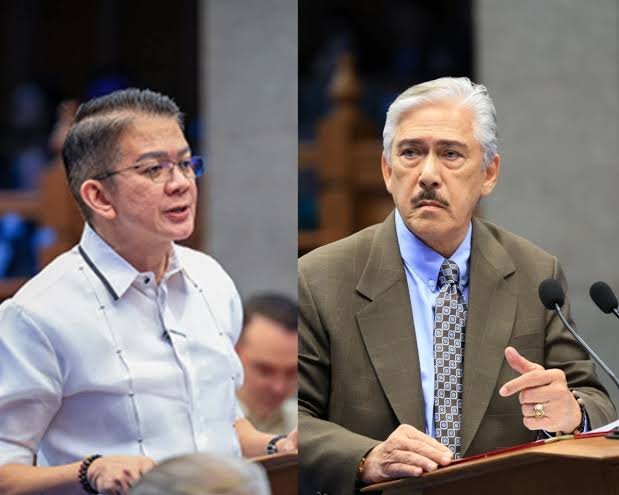
Escudero Ousted, Sotto Takes Over

0

THE hype embarking on budget insertions to accomodate favored contractors could have an early leadership change in the Senate.

This comes as 15 members of the higher legislative chamber voted to oust Senator Francis Escudero as senate president.

In a motion in the plenary, Senator Juan Miguel Zubiri called on. fellow legislators to declare the position of the Senate president vacant.

With no objection, Escudero was compelled to approve Zubiri’s motion.

Zubiri then nominated Sotto. His motion was quickly seconded by. Senator Loren Legarda.

“With Senator Sotto as senate president, the Senate is in good hands,” Zubiri said.

Senate President Pro Tempore Jinggoy Estrada approved the motion after no one objected in the 24-member chamber.

Sotto earlier admitted moves to initiate leadership change in the Senate, replacing Escudero.

The 15 senators who chose to oust Escudero, supported Sotto.

In a related development, Zubiri replaces Sen. Joel Villanueva as majority leader.

Sen. Panfilo Lacson has also taken over Sen. Jinggoy Estrada’s position as senate president pro tempore.

Kickbacks confirmed, congressmen tagged

0

NOTORIOUS FLOOD control couple, Curlee and Sara Discaya submitted to the Blue Ribbon Committee this morning a list of congressmen, officials of the Department of Public Works and Highways and those from the executive branch who have demanded kickbacks from them in exchange for the billions of pesos projects that were either ghost, uncompleted, and were of substandard quality.

Their submission is meant to demonstrate their cooperation with the committee, in exchange for which they hope the Department of Justice would make them state witnesses under the government’s witness protection program.

It is not clear yet whether or not committee chair Sen. Rodante Marcoleta has extended them any assurance or privilege in exchange for their cooperation.

Curlee Discaya alleged that after securing government contracts for flood control, several officials of DPWH and lawmakers demanded their share or SOPs (standard operating procedure) from the couple.

The supposed “cuts” typically starts at 10 percent of the contract value, rising up to 25 percent. He said the payments were made in cash and documented through vouchers and ledgers.

He alleged that many DPWH officials mentioned in his list keep saying that the money was meant for Rep. Zaldy Co, chair of the House Committee on Appropriations, with an expected share of at least 25 percent.

He also claimed that Rep. Marvin Rillo repeatedly dropped the name of Speaker Ferdinand Martin Romualdez as “his close friend” every time Rillo collects his share.

EXECS ON THE LIST

Topping the list from the executive branch is former Undersecretary Terrence Calatrava, Presidential Assistant for the Visayas; Undersecretary Roberto Bernardo, regional operations in the Visayas, NCR and Region IV-B and worked 30 years as civil engineer with DPWH; Regional Director Eduardo Virgilio DPWH Region 5; Director Ramon Ariola III, Unified Project Management Office; District Engineer Henry Alcantara, DPWH Bulacan First District; District Engineer Aristotle Ramos, DPWH Metro First, Pasig City; DE Edgardo Pingol, dPWH Bulacan Sub-District Engineering Office; DE Michael Rosaria, DPWH Quezon Second District Engineering Office.

KOTONG-RESSMEN

In the list of congressmen requiring their cut from the Discayas were: Rep. Roman Romulo, Pasig City; Jojo Ang, Uswag Ilonggo Partylist; Patrick Michael Vargas, Quezon City; Juan Carlos “Arjo” Atayde, Quezon City; Nicano “Nikki” Briones, AGAP Partylist; Florida Robes, San Jose del Monte, Bulacan; Eleandro Jesus Madrona, Romblon; Benjamin “Benjie” Agarao Jr. , Laguna (4th district); Florencio Gabriel “Bern” Noel, An Waray Partylist; Leody “Ode” Tarriela, Occidental Mindoro; Reynante “Reynan” Arogancia, Quezon province; Marvil Rillo, Quezon City; Teodorico “Teody” Haresco Jr., Aklan; Antonieta Eudela, Zamboanga Sibugay; and Dean Asistio, Caloocan.

The couple also named Marikina City Mayor Marcelino “Marcy” Teodoro in the list of legislators on the take.

MAGALONG’S INSIGHTS

Baguio City Mayor Benjamin Magalong, who was among the first to blow the whistle on anomalous flood control projects and the involvement of DPWH and congressmen in the mess, turned down the invite of Marcoleta to testify at the Blue Ribbon, saying he preferred to face first his critics in the House of Representatives, where he vowed to expose all those involved.

He said he would want to address questions raised by a parallel probe at the house about unnamed lawmakers allegedly earning kickbacks from bogus and substandard flood control projects.

Arms Supply Deals Breeding Graft Too

0

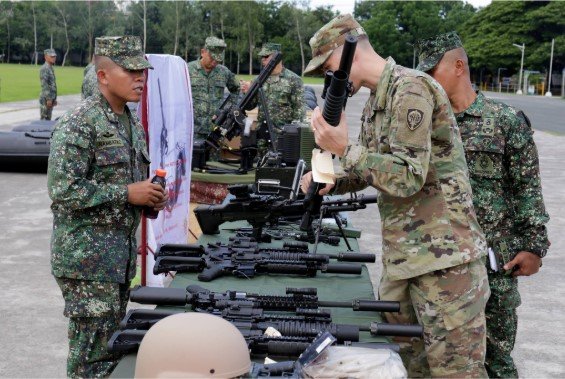
DILIMAN, Quezon City — Amidst the ongoing probe over massive corruption  behind government flood control projects, Interior Secretary Jonvic Remulla doesn’t mind facing an investigation into the attempted budget insertion for an P8-billion arms deal proposal.

The deal, which reportedly triggered the relief of former Philippine National Police (PNP) chief Nicolas Torre III, embarks on buying 80,000 pieces of assault rifles at P100,000 apiece.

Torre refused to sign an “accomplished request letter” which already had Remulla’s signature for two reasons — the PNP doesn’t need that much, and that the price per unit of the rifle is “extremely excessive.”

NO COERCION

The supposed document, which was posted (and has gone viral in social media) was confirmed by Remulla himself. He however insisted that Torre was never forced to sign the “accomplished request letter.”


The former top cop’s refusal to sign the proposal allegedly led to his removal as the country’s top cop. In place of Torre, President Ferdinand Marcos Jr. named Lieutenant General Melencio Nartatez to assume the top PNP post.

According to highly-placed sources, Nartatez has “deep ties” with the most powerful political clan in Cavite.

LIE DETECTOR

Following his admission on the supposed letter request embarking on the P8-billion arms deal, Remulla expressed willingness to provide details of the aborted deal. 

Interestingly, Remulla declined to disclose who submitted the firearm purchase proposal to the Department of the Interior and Local Government (DILG).

The DILG chief likewise floated the idea of submitting himself to a lie detector test.

“If I’m called on by Congress and the Senate to give all the details, I will do it… I’m willing to take a lie detector test to prove my point that I wasn’t allowing the proposal,” the DILG said in a press conference.

RAISING DOUBT

Digging deeper, sources asserted that if Torre had signed the proposal, it would have been brought to House Speaker Martin Romualdez for possible budget insertion into the 2026 national budget, since the PNP doesn’t have funds for such.

But the concession here is to purchase the 80,000 pieces of assault rifles pegged double the price offered by another company. The amount stipulated in the request letter that Torre didn’t sign is P8 billion which translates to P100,000 apiece.

The “other” company tendered an offer of P49,000 each.

FOILED PERKS

The foiled arms deal would have made the “facilitator” P4 billion richer at the very least, the source added.

By his own admission, the scheme embarking on overpricing and rebate is an open secret in the PNP — and even in the Armed Forces of the Philippines (AFP).

For one, arms procurement forms part of the AFP modernization required in defending sovereign rights over the disputed maritime region referred to as the West Philippine Sea where bullying of Chinese Coast Guard and militia vessels has become a norm. 

BIDDING FIASCO

The same source also took a swipe at what he described as “spurious” bidding process embarking on elimination.

Sought to elaborate, the source cited an instance when a foreign supplier which offered the lowest price, was disqualified over “fabricated allegations” in an effort to ensure that the contract goes to a bidder known for being “generous” to signatories and facilitators.

Hence, the contract was awarded to an arms dealer at twice the price. The deal would have allowed the Philippine Coast Guard to utilize the “savings” for other needs — additional personnel and communication equipment in protecting the West Philippine Sea from foreign poachers.

Flirting Anew With People Power

0

PEOPLE ARE GETTING restive and increasingly agitated just by watching what looks more like a circus in the guise of news.

Deep down, Filipinos knew well enough that the investigators — members of the Senate and the House of Representatives — are neither righteous nor credible enough to take the lead in “congressional investigations in aid of legislation,” amid  theatrics, shaming and putting blame on somebody else.

The public wanted something beyond grandstanding — an honest-to-goodness investigation by an independent commission composed of people with integrity, fortitude, credibility and courage, to be the ones to investigate.

NOT JUST CONTRACTORS

The scope should not be limited to  contractors, for the anomalies in flood control projects — but for ALL the people who in one way or another, erred by commission or by omission.

By ALL, the probe would cover the lawmakers , the Commission on Audit (COA), the Department of Public Works and Highways nationwide (DPWH), the Philippine Contractors Accreditation Board (PCAB), the Bureau of Immigration, the Bureau of Customs (BOC) and the Philippine Ports Authority (PPA).

For one, most (if not all of the flagged projects) were funded either through congressional funds or lobbying of lawmakers, notoriously famous for budget insertions — by their own admission. 

For the longest time, DPWH has been consistently on the list of the “most corrupt government agency.COA for its part failed to do pre and post audits, while PCAB whose officials, as per news reports, have amassed a fortune for accrediting “generous” contractors.

Not to be left behind is the BI for allegedly dragging their feet in issuing lookout bulletins), BOC for being remiss in inspecting all imported luxury cars as flaunted by one of the top contractors) and the PPA where bulky smuggled items are unloaded.

INDEPENDENT COMMISSION

The President on September 1 announced that he would create, through an executive order, an independent commission to look into flood control anomalies and vest it with subpoena powers to summon all those presumed involved in such high- stakes crimes.

The logic behind the President’s announcement — these agencies form part of what should have been a tedious process primarily designed to ensure a check and balance.

However, from the time the President floated the idea of creating an independent commission, people are increasingly hating (and making parodies in social media) of the grandstanding by lawmakers in summoning and throwing all the blame on select contractors, while sparing their ranks from such public rebuke. 

Netizens have become bold enough to post pictures of politicians who they know are notoriously corrupt and must be subject to the bar of public justice.

FLIRTING AN ANGRY MOB

Already, there is a clamor for an EDSA People Power on September 13 to demand transparency and accountability on all state workers and public officials through mandatory declaration of statement of assets, liabilities and net worth (SALN).

The supposed public clamor contained “specifics,” which include the amount and identity of businessmen who contributed to their election bid, producing receipts of purchase of their luxurious assets, lifestyles and properties (clothes, watches, cars, etc), among others. 

Just yesterday, a sizable group of people  rallied in front of the house of billionaire contractor-couple Curlee and Sarah Discaya, who earned public condemnation for flaunting in two lifestyle vlogs of broadcasters, Korina Roxas and Julius Babao, their lavish mansions, cars and watches, rifles, silver and glasswares.

Months after the vlog went viral, Sarah Discaya ran — but miserably lost to Pasig City Mayor Vico Sotto.

NOT LIMITED TO DPWH

Apart from the DPWH, the couple also cornered materials supply for the Commission on Election, for which netizens are pushing for the inclusion of Comelec chairman George Garcia to be investigated. 

The Discayas were also dragged in the substandard and defective P107M Film Heritage Building in Intramuros, which First Lady Liza Araneta Marcos inspected and pointed at the defects. 

The government is set to file estafa charges against the couple. The couple said through their counsel that they would appeal their permanent blacklisting as contractors.

PCAB FROZEN FOR NOW

The President meantime placed the private-sector watchdog, Philippine Contractors Association and the Construction Industry Association of the Philippines under the oversight powers of the Department of Trade and Industry.

There is also growing clamor that the independent probe body must not stop at the bogus, substandard, ghost flood control projects but in all government transactions like roads and bridges, safety gears for roads, telecommunications, data privacy, labor and more. In short, the entire spectrum of society, where state officials dip their hands into.

Intensified calls for not just jail terms and fines but also public executions be done on erring public officials and workers and corrupt businessmen as well.

BIZ GROUPS’ CONCERN

Business and civil society groups have united in pushing for the independent body to prosecute corrupt officials, even as they called for an end to “shameful, unabated, continuing and excessive” corruption in government’s public works projects.”

“While we take note of the President admonishing the corrupt in government, we are concerned that the guilty among these officials will continue their merry way of robbing the people and filling their pockets, completely oblivious to the fact that they are betraying the public trust, committing a treasonous act against our people, and simply being unpatriotic and sinful,” reads the joint statement signed by heads of 30 groups.

“It is thus important that thorough investigations be conducted by an independent body with the aim of prosecuting these corrupt officials, putting them in jail, and recovering the stolen funds,” the groups said while pointing out that Justice for the Filipino people, especially the poor, can only be achieved by successfully punishing the corrupt.

The 30 business and civil society groups raised a six-point action plan , to wit:

  • “Blacklist” the notorious businessmen and contractors in cahoots with corrupt politicians and government officials
  • Gather evidence of corruption against government officials, particularly those in the DPWH, the LGUs, and COA and their partners in crime in the private sector, so “appropriate” criminal and civil cases can be filed against them
  • An Integrity Pledge where, among others, the leader and the company he/she leads “shall not bribe any politician or government official in exchange for project approvals or favors
  • The importance of encouraging the financial sector, particularly the banks and the Anti-Money Laundering Council (AMLC), “to be one with us in bringing out the money launderers and their unexplained wealth within legal and regulatory boundaries.

They also raised the importance of participating in and supporting citizen and voter education campaigns to make the people aware of the “evils of corruption and other misgovernance practices so that citizens can discern and elect officials who have good anti-corruption records.”

Signatories include the Alliance of Women for Action towards Reform (AWARE); Alyansa ng Nagkakaisang Mamamayan (ANIM); Association of CPAs for Sustainability Inc. (ACPAFSI); Brotherhood of Christian Businessmen and Professionals (BCBP); Cebu Business Club (CBC); Cebu Chamber of Commerce and Industry (CCCI); Cebu Leads Foundation (CLF); Chamber of Commerce of the Philippine Islands (CCPI); Connected Women; Employers Confederation of the Philippines (ECOP); Federation of Philippine Industries (FPI); Filipina CEO Circle (FCC); Financial Executives Institute of the Philippines (FINEX); FinTech Alliance Philippines ; Green EDSA Movement (GEM); Iloilo Economic Development Foundation, Inc. (ILED); Institute for Solidarity in Asia (ISA); Institute of Corporate Directors (ICD); Justice Reform Initiative (JRI); Management Association of the Philippines (MAP); Military and Uniformed Personnel for United Philippines (MUP); Nextgen Organization of Women Corporate Directors (NOWCD); People Management Association of the Philippines (PMAP); Philippine Chamber of Commerce and Industry (PCCI); Philippine Exporters Confederation, Inc. (Philexport); Philippine Institute of Certified Public Accountants (PICPA); Philippine Women’s Economic Network (Philwen); Semiconductor and Electronics Industries in the Philippines Foundation, Inc. (SEIPI); Shareholders’ Association of the Philippines (Sharephil) and Women’s Business Council Philippines (WBCP).

PUBLIC OUTRAGE

“In the strongest terms possible, we hereby declare our outrage, disgust and disappointment about the acts of many of our legislators in Congress and officials in the Executive Department, primarily in the Department of Public Works and Highways (DPWH), the local government units (LGUs), and the Commission on Audit (COA), for their shameful, unabated, continuing and excessive acts of graft and corruption—a crime against our people, especially those who continue to live in dire poverty,” the groups said in their statement.

Homonhon’s Never Ending Struggle

0

NEARLY 500 YEARS ago, Portuguese explorer Ferdinand Magellan first set foot on a rugged island, which he described as a refuge of lush forests, clear rivers, and abundant food.

Today, Homonhon is making history again—this time as a battleground against destructive mining which in time pushed its fragile environment to the brink of collapse.

But change may be on the horizon.

This comes as Eastern Samar Rep. Sheen Gonzales expressed alarm over the activities of five mining companies covering almost 90 percent of Homonhon’s 7,400 hectares.

An obviouly pissed off congressman accused them of degrading forests, polluting rivers, and threatening the livelihood and well-being of fisherfolk and farmers.

“The people of Homonhon have endured decades of environmental abuse,” Gonzales said. “It is time to review our mining laws and put communities, not corporations, at the center of decision-making,” reads part of the legislator’s privilege speech.

LAST FORTY YEARS

Homonhon which forms part of Guiuan town in Eastern Samar, holds a special place in Philippine history. On March 16, 1521, Magellan’s expedition landed on this island after a grueling Pacific crossing. Chronicler Antonio Pigafetta described the island as rich with fresh water, coconuts, and game.

Centuries later, it would attract not explorers but mining corporations. By the 1980s, nickel and chromite deposits lured companies into carving roads into and through the mountains.

In 1995, the situation worsened following the enactment of the Philippine Mining Act which granted foreign and local firms sweeping rights to extract minerals.

Today, large swaths of the island lie denuded. Residents say once-clear rivers have turned muddy from siltation, while coral reefs—the nurseries of fish—are smothered by mine waste.

VOICE OF RESISTANCE

The fight against mining in Homonhon is long and often perilous.

Fr. Edwin Gariguez, former executive secretary of the Catholic Bishops’ Conference of the Philippines–National Secretariat for Social Action (CBCP-NASSA), once called large-scale mining in Samar “a death sentence for communities whose lives depend on the land and sea.”

Local groups, particularly the Homonhon Environmental Rescuers Organization (HERO), led protests, road blockades, and petitions. Supported by church leaders and environmental NGOs, they staged demonstrations in Guiuan and Tacloban, denouncing what they aptly referred to as “plunder of our island.”

In 2016, residents successfully blocked a nickel ore shipment bound for China by barricading Homonhon’s port. In 2020, at the height of the COVID-19 pandemic, islanders protested when mining vessels were allowed to dock even as relief goods were scarce.

“Our island is rich, but our people are poor,” said HERO spokesperson Lourdes Cabasag.

“Mining companies take the minerals, but leave us with poisoned rivers, bald mountains, and empty seas.”

SIGNIFICANT TIMELINE

1980s – Small-scale mining begins; locals raise concerns about deforestation.

1995 – Philippine Mining Act enacted, opening the door to large-scale operations.

2001–2010 – Church leaders and NGOs conduct fact-finding missions documenting siltation and forest loss.

2016 – Residents block a nickel shipment, drawing national attention.

2020 – During lockdowns, residents protest the entry of mining vessels.

2023 – Watchdogs report worsening coral reef damage due to mine tailings.

2025 – Rep. Gonzales calls for closure of destructive mining operations.

THE PH MINING ACT

At the core of the problem, Gonzales claims, is the Philippine Mining Act of 1995, which centralizes decisions under the national government while sidelining local communities.

“This law treats residents as bystanders in decisions about their land,” he said.

“It is time we restore the power of local governments to decide what kind of development they want.”

SO MUCH AT STAKE

For Homonhon’s 5,700 residents, the fight is deeply personal. Fisherfolk report dwindling catches as reefs are buried in silt. Farmers say croplands are contaminated by mine runoff.

“If mining continues, there will be nothing left for our children,” said fisherman Mario de los Reyes, who has joined anti-mining protests since the 1990s. “The ocean used to provide for us. Now we sail farther and catch less.”

Environmental scientists warn that continued large-scale extraction could cause irreversible damage to the island’s watershed, which sustains both residents and nearby communities.

MAKE OR BREAK

Gonzales’s speech has reignited calls for a moratorium—or even a ban—on mining in Homonhon. Environmental groups see this as a rare chance to push for long-delayed reforms.

“The closure of destructive mines in Homonhon would not only save the island—it would send a message that communities matter,” said Kalikasan People’s Network for the Environment.

Five centuries after Magellan’s landing, Homonhon once again stands as a symbol—this time of the clash between exploitation and preservation, profit and survival.

Scarred but unbowed, the people of Homonhon continue their fight. Their message is clear: they seek an end to exploitation, and a future where the island’s wealth sustains its people, not destroys them.

Power Sip

0

THEY SAY BIG things come in small packages—and when it comes to health, nothing proves better than an immunity shot.

Imagine a tiny glass filled with a fiery kick, a refreshing zing, and a cooling finish.

That’s exactly what you get when ginger, apple, lemon, and mint team up: a shot of goodness designed to wake up your senses and supercharge your immune system.

GINGER: FIERY PROTECTOR

Ginger isn’t called a kitchen pharmacy for nothing. Its natural compounds, especially gingerol, are known to reduce inflammation, fight infections, and soothe digestion.

That spicy warmth you feel? It’s not just flavor—it’s your body being nudged into better circulation and defense mode.

As one wellness enthusiast joked after her first sip: “I felt the ginger rush straight to my soul—it’s like a natural alarm clock for my immune system!”

APPLE: GENTLE BALANCER

“An apple a day keeps the doctor away” may sound old-fashioned, but science agrees.

Apples are rich in antioxidants, fiber, and vitamin C—perfect for balancing out the fiery ginger with natural sweetness while still giving your body the nutrients it craves.

Think of it as the grounding friend in your immune-boosting squad.

LEMON: ZESTY DEFENDER

Packed with vitamin C, lemons are your body’s frontliners against colds and fatigue.

That tart, refreshing burst helps alkalize the body, support digestion, and keep your skin glowing.

One squeeze is like sunshine in liquid form—bright, sharp, and undeniably energizing.

MINT: COOL FINISHER

Then comes mint—the cool, refreshing note that ties the flavors together.

Beyond its fresh taste, mint aids digestion, eases congestion, and provides a calming effect.

It’s the exhale you didn’t know you needed after the fiery kick of ginger and the zing of lemon.

WHY DRINK IT

Because life is busy, stress is constant, and your immune system deserves backup. One small shot offers:

  • Immune defense from vitamin C and antioxidants.
  • Better digestion with ginger and mint working in tandem.
  • Anti-inflammatory support to ease the body’s daily wear and tear.
  • Natural energy boost without the crash of caffeine.

It’s quick, it’s natural, and it’s proof that health doesn’t have to be boring—or bland.

As one regular customer puts it: “It’s like taking a vacation in one gulp—first the heat, then the zing, then the cool breeze.”

WHERE TO GET YOURS

Good news: you don’t need to juice, blend, and strain your way through these ingredients at home.

You can enjoy this powerhouse immunity shot at Healthy Kitchen Café, located at Q. Abeto Street, Mandurriao, Iloilo City, Philippines. Call 0945 978 6995 or email: healthykitcheniloilo@gmail.com

Because sometimes, the best way to stay strong is to raise your glass—one small but mighty sip at a time.

Tuna Trade In Peril

0

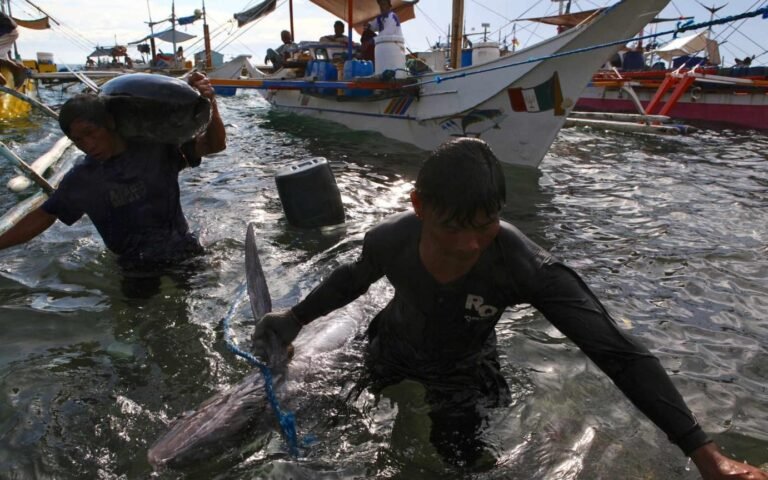
EVEN AS I WAS covering the agriculture beat in the early 90s, world tuna production, especially ours have been declining at a time when climate change and warming global waters were not yet severe.

The problem was overfishing for which our commercial fishers were fishing for tuna and other ocean species in distant Pacific waters like Palau and others.

In May 2009, a BBC documentary entitled South Pacific, stressed that should fishing in the Pacific continue at its current rate, populations of all tuna species could collapse within five years.

It highlighted huge Japanese and European tuna fishing vessels, sent to the South Pacific international waters after overfishing their own fish stocks to the point of collapse.

A 2010 tuna fishery assessment report, released in January 2012 by the Secretariat of the Pacific Community, supported this findings, recommending that all tuna fishing should be reduced or limited to current levels and that limits on skipjack fishing be considered.

OCEAN WARMING

Research data repeatedly point to increasing ocean temperatures as taking a toll on the tuna in the Indian Ocean, where rapid warming of the ocean has resulted in a reduction of marine phytoplankton, the food of tuna and other marine species.

The bigeye tuna catch rates have also declined abruptly during the past half century, mostly due to increased industrial fisheries, with the ocean warming putting more stress on the fish species. Tuna, belonging to the thunnus family, is an important commercial fish.

In 2009, global tuna stocks were recorded by the International Seafood Sustainability Foundation, which listed the most important commercial and recreational tuna as: yellowfin, bigeye, bluefin (T. obesus) and bluefin (T. orientalis and T. macoyi), albacore and skipjack.

MID 20TH CENTURY

Between 1940 and the mid-60s, the annual world catch of the five principal market species of tunas rose from 300,000 tons to 1 MT, most of it taken by hook and line.

With the development of purse seine, now the predominant gear, catches had risen to over 4 MT yearly, 68 percent of which is from the Pacific Ocean and Mediterranean Sea.

Skipjack makes up about 60 percent, followed by yellowfin (24 percent), bigeye (10 percent), albacore (5 percent), and bluefin the remainder. Purse-seines take about 62 percent of the world production, longline about 14 percent, pole and line about 11 percent, and a variety of other gears the remainder.

Greenpeace International, in 2010, included the albacore, bigeye tuna, Pacific bluefin tuna, Atlantic bluefin tuna, southern bluefin tuna, and yellowfin tuna to its seafood red list, or those “commonly sold in supermarkets around the world that have a very high risk of being sourced from unsustainable fisheries.

Bluefin tuna have been widely accepted as being severely overfished, with some stocks at risk of collapse.

The International Seafood Sustainability Foundation (a global, nonprofit partnership between the tuna industry, scientists, and the World Wide Fund for Nature), noted that Indian Ocean yellowfin tuna, Pacific Ocean (eastern and western) bigeye tuna, and North Atlantic albacore tuna are all overfished.

In April 2009, no stock of skipjack tuna (which makes up roughly 60% of all tuna fished worldwide) was considered to be overfished.

CALL FOR SUPPORT

Agriculture Secretary Francisco Tiu Laurel Jr. on Wednesday made an appeal for support to the tuna industry in view of difficulties in obtaining sustainability certifications to export their products, Business World reported.

Laurel said the tuna industry faces threats from “climate change, global sustainability mandates, labor issues, and the persistent threat of IUU (illegal, unreported, unregulated) fishing.”

He called for science-based management of tuna stocks and stronger support for the industry.

A recent Supreme Court ruling allowing commercial fishing operations to ply municipal waters has cast doubt on sustainability claims for Philippine tuna, the Philippine Association of Tuna Processors, Inc., has said.

Sustainability certificates enable the Philippines to access crucial export markets that require traceability and sustainability of fish resources, it noted.

Philippine tuna production rose to 494,047.02 MT in 2024 from 409,797.17 MT in 2023, the DA said.

Tuna exports rose 31% to $514.47 million in 2024, DA added.

Power Sip

0

THEY SAY BIG things come in small packages—and when it comes to health, nothing proves that better than an immunity shot. Imagine a tiny glass filled with a fiery kick, a refreshing zing, and a cooling finish. That’s exactly what you get when ginger, apple, lemon, and mint team up: a shot of goodness designed to wake up your senses and supercharge your immune system.

Ginger: The Fiery Protector

Ginger isn’t called a kitchen pharmacy for nothing. Its natural compounds, especially gingerol, are known to reduce inflammation, fight infections, and soothe digestion. That spicy warmth you feel? It’s not just flavor—it’s your body being nudged into better circulation and defense mode.

As one wellness enthusiast joked after her first sip:
“I felt the ginger rush straight to my soul—it’s like a natural alarm clock for my immune system!”

Apple: The Gentle Balancer

“An apple a day keeps the doctor away” may sound old-fashioned, but science agrees. Apples are rich in antioxidants, fiber, and vitamin C—perfect for balancing out the fiery ginger with natural sweetness while still giving your body the nutrients it craves. Think of it as the grounding friend in your immune-boosting squad.

Lemon: The Zesty Defender

Packed with vitamin C, lemons are your body’s frontliners against colds and fatigue. That tart, refreshing burst helps alkalize the body, support digestion, and keep your skin glowing. One squeeze is like sunshine in liquid form—bright, sharp, and undeniably energizing.

Mint: The Cool Finisher

Then comes mint—the cool, refreshing note that ties the flavors together. Beyond its fresh taste, mint aids digestion, eases congestion, and provides a calming effect. It’s the exhale you didn’t know you needed after the fiery kick of ginger and the zing of lemon.

Why Drink It?

Because life is busy, stress is constant, and your immune system deserves backup. One small shot offers:

• Immune defense from vitamin C and antioxidants.

• Better digestion with ginger and mint working in tandem.

• Anti-inflammatory support to ease the body’s daily wear and tear.

• Natural energy boost without the crash of caffeine.

It’s quick, it’s natural, and it’s proof that health doesn’t have to be boring—or bland.

As one regular customer puts it:
“It’s like taking a vacation in one gulp—first the heat, then the zing, then the cool breeze.”

Where to Get Yours

Good news: you don’t need to juice, blend, and strain your way through these ingredients at home. You can enjoy this powerhouse immunity shot at Healthy Kitchen Café, located at Q. Abeto Street, Mandurriao, Iloilo City, Philippines. Call 0945 978 6995 or email: healthykitcheniloilo@gmail.com

Because sometimes, the best way to stay strong is to raise your glass—one small but mighty sip at a time.

When Everyday Feels Like GDay: Globe at 10

0

HAVE YOU EVER had one of those small, ordinary days suddenly turn extraordinary—like a friend surprising you with your favorite snack, or stumbling upon a song that feels written just for you? That’s the kind of magic Globe has been sprinkling into our lives every September for the past ten years through GDay.

What began as a simple “thank you” has grown into a nationwide celebration—a love letter to customers, wrapped in rewards, music, surprises, and meaningful experiences. Ten years on, Globe isn’t just handing out perks—it’s reminding us that joy doesn’t always need to be grand. Sometimes, it’s the little things that make us feel most valued.

As Bianca Wong, Globe’s VP and Head of Feel Valued Tribe, beautifully put it:
“The most meaningful rewards are the ones that feel personal, those that are made just for you.”

And true enough, this year’s GDay feels tailor-made for every kind of Filipino.

In malls, neighborhoods, and city corners—Pop-up booths are turning everyday spaces into playgrounds of delight. Imagine doing errands and suddenly stumbling into games, promos, and giveaways that feel like they’ve been waiting just for you.

On the GlobeOne app—surprises arrive with a tap. Vouchers, lifestyle perks, mystery gifts—sometimes it’s just the little notification that makes your day brighter.

For the fans—a dream afternoon with P-pop sensations BINI awaits over 1,500 lucky customers. Because GDay isn’t just about gadgets and prizes—it’s about creating memories you’ll keep long after the lights dim.

And speaking of prizes—Globe is thinking big. A ₱50,000 grocery spree? A family trip to Japan? Gadgets? Even a brand-new electric car and a house-and-lot? The G Raffle Rush is proof that Globe knows how to dream with us—and for us.

But here’s the heart of it: GDay isn’t really about the prizes. It’s about the feeling. That rush of being seen, of being celebrated, of being reminded that even in our busiest, messiest, ordinary lives, we matter.

Ten years of GDay and Globe is still whispering the same promise:
“We celebrate you—not just today, but every day.”

And maybe that’s why it hits differently. Because at the end of the day, what we all crave isn’t just rewards—it’s connection, recognition, and those small moments of joy that make us feel at home.

So here’s to Globe, to ten years of making everyday a GDay—and to many more little surprises that turn the ordinary into extraordinary.

Batangas Logs Three Zero-Crime Days in a Week

0

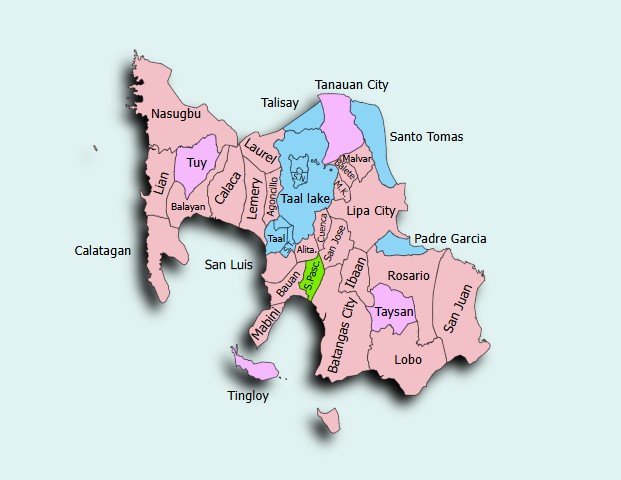
IN WHAT LOOKS more like next to impossible, the densely-populated province of Batangas logged in three “zero-crime” days in a single week, based on a weekly crime incidence report released by the provincial police command.

According to Col. Geovanny Siballo, in his capacity as provincial police director, not a single crime was recorded in the five component cities and 29 municipalities on August 25, 27 and 29. 

It was not certain though if all the 34 local police stations received reports or responded to distress calls.

However, Siballo said that he has every reason to believe that such an achievement is real and the result of what they’ve been working “smartly” for.

SAFEST PROVINCE

For a province bustling with industries, tourist destinations, and a population of more than 2.9 million, maintaining peace and order requires more than police visibility.

The Batangas top cop went as far as describing the feat as a significant milestone in their peace and order campaign.

“This is exactly what BPPO has been working smartly for — making the province peaceful so its citizens can achieve their full potential in life and in business,” said Siballo.

He went on to commend the “Batangas Barako policemen” for what he aptly referred to as discipline and dedication.

DECLINE IN CRIME

Data from BPPO showed that from August 23 to 29, only 12 crimes were reported across Batangas—57 percent lower than the 28 incidents logged during the same week last year. 

Most of the cases involved petty theft, physical injuries, and minor property-related offenses, all of which, he claimed, were quickly resolved.

For Siballo, the numbers highlight not just effective police work but also stronger cooperation with local governments and communities. 

Barangay officials, civic groups, and even ordinary residents have been contributing to crime prevention efforts, such as neighborhood watch programs and active reporting of suspicious activities.

PROGRESS INDICATOR

Batangas’ success in reducing crime resonates beyond statistics. 

With thriving ports, manufacturing hubs, and famous tourist spots like Taal Volcano and Nasugbu beaches, a peaceful environment is seen as critical to attracting more investors and ensuring safe experiences for visitors.

Residents, too, feel the impact. “It feels good to know we live in one of the safest provinces. You can sense the order in the community,” shared Marissa Dela Cruz, a business owner in Batangas City.

SUSTAINING GAINS

While officials celebrate the milestone, police acknowledge that keeping crime rates down is an ongoing challenge. 

BPPO vowed to continue strengthening patrol visibility, intelligence gathering, and crime prevention programs, especially as the “Ber months” usually see increased economic activity—and with it, higher risks of crime.

Still, three crime-free days in a week is a rare achievement in any province, and for Batangas, it is proof that peace and progress can go hand in hand.

First Casualty: Bulacan District Engineer Fired

0

THE ENORMITY OF the controversy may have compelled the government to commence a purge that saw suspended Bulacan first district engineer Henry Alcantara as the first casualty.

In an ambush interview, no less than Public Works and Highways Secretary Vince Dizon announced Alcantara’s dismissal from government service amid the probe into anomalous flood control projects.

“He is now dismissed. I will call for summary dismissal of Henry Alcantara,” Dizon told reporters during an inspection of another flood control project in Bulacan.

NO CHARGES YET

When asked as to what awaits the sacked official, Dizon hinted at asking the Department of Public Works and Highways (DPWH) Legal Service Office to recommend the filing of charges against Alcantara with the Ombudsman.

“I will ask the DPWH Legal to recommend filing of appropriate charges against Henry Alcantara. Well, obviously, criminal ito. Pagnanakaw ito eh, P100 million… We will recommend filing of charges with the Ombudsman,” Dizon assured.

Alcantara, who hails from Bocaue town in Bulacan, began his career in the DPWH in 1994. 

“Nagsimula po ako job order, ang item ko po ay laborer 1, naging laborer 2, naging engineer 1, every six months po because I was a casual employee at that time,” Alcantara was quoted as saying before the House Infrastructure Committee on Tuesday. 

VILLAR PROTEGE

Alcantara rose to prominence in 2019 after then DPWH Secretary Mark Villar assigned him as the district engineer of Bulacan’s first engineering district.

During the congressional hearing, he was asked as to how Villar picked him among many other “equally able” engineers in the DPWH, he replied — “Nag-apply lang po ako.”

As Bulacan’s 1st district engineering office head, Alcantara called shots for 13 localities in Bulacan including the flood-prone ones such as Hagonoy, Baliwag, Calumpit, and Malolos. 

Data lifted from the Sumbong Sa Pangulo website showed that Alcantaras engineering district had the largest project cost among the implementing offices of the DPWH. It has 450 flood control projects with a total cost of P28.9 billion from 2022 to 2025.

Under Alcantara’s helm, the reinforced concrete river wall project (that was later found to be non-existent) in Barangay Piel in Baliwag was implemented by Syms Construction Trading. 

Why socialized housing remains unaffordable

0

LOW WAGES, LACK of job security and high living costs are among the factors depriving poor Filipinos from availing units under the government-funded socialized housing program, according to a study of the UP Center for Integrative and Development Studies.

Implemented as early as 2022, the government’s flagship program referred to as 4PH (Pambansang Pabahay Para sa Pilipino) hardly improved affordability and accessibility for the poorest and is unlikely to address broader structural barriers without broader structural reforms, the study authored by Rafael Vicente Dimalanta, Vincent Eugenio, Abigail Roa and Jay-R Panagsagan was quoted by Business World.

“The diversification of modalities has yet to resolve the core accessibility and affordability challenges of social housing for the poorest, shaped by broader structural issues such as low wages, precarious work, and weak land governance,” it said.

It would cost P8,324.06 a month to avail oneself of a housing unit under the expanded 4PH program, the study said.

This comes as a mid-range high-rise unit under the 4PH Program that costs P1.5 million to amortize at that rate for the first 10 years, state housing data showed.

The researchers said a 4PH beneficiary may incur further additional expenses related to high-rise living, such as maintenance and operational fees, which could amount to P2,000.

BOTTOM 30% INCOME

The Philippine Statistics Authority said Filipino households belonging to the bottom 30% of income deciles — the “primary beneficiaries” of 4PH — earn monthly incomes of only P11,940. (first decile), P15,217.50 (second decile), and P17,369.17 (third decile), respectively, the study cited.

“Based on these figures, the housing payment for a mid-priced Expanded 4PH vertical unit would consume 59.35% of total household expenditures for the bottom 10% income earners, 49.06% for the bottom 20%, and 43.99% for the bottom 30%,” according to the study.

Many of these poor households work in the informal economy, receiving low or irregular wages while working under a short-term or contractual tenure.

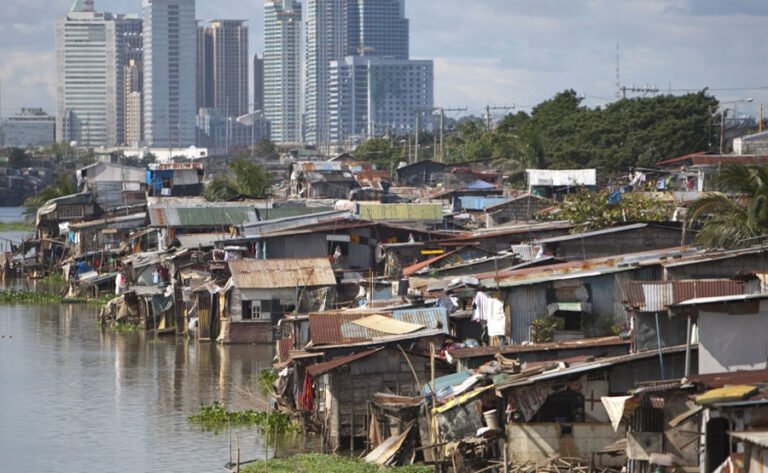
The bottom 30% segment are families living in slum areas. They can neither afford to pay rent, much less acquire a house they could call their own.

“Given the income and expenditure profiles of the poorest households in the lowest 30% income deciles, it is evident that the combined costs associated with the Expanded 4PH significantly exceed the financial capacity of the program’s priority beneficiaries,” the researchers noted.

4PH ANOTHER FAILURE

The 4PH program is primarily designed to end the country’s housing backlog by building six million housing units by 2028. 

However, only 1,900 units have so far been completed under the program since its launch, Human Settlements and Urban Development Secretary Jose Ramon P. Aliling told congressmen on Monday.

The government has kept a “manageable” goal of building 300,000 houses by 2028, Aliling said, but noted that it cannot hit the target if the 4PH program itself is not strengthened.

To better support beneficiaries, the expanded 4PH program allowed both vertical and horizontal or subdivision-type housing options.

It also included rental and incremental housing to consider beneficiaries’ financial situation and revived the community mortgage financing program by the Social Housing Finance Corp.

FOR PAG-IBIG MEMBERS

To become a 4PH beneficiary, an individual must be a member of the Home Development Mutual Fund or Pag-IBIG Fund.

However, the study noted that this poses a barrier, especially for informal workers with stagnant and low wages.

“The program’s financing structure and restrictive criteria thus reinforce exclusion undermining its stated goal of prioritizing the poorest who are most in need of housing,” the researchers said.

Recommendation is for the government to increase budget allocation for socialized housing

The study likewise hinted at the urgent need to align the program’s socialized housing amortization and rent with the financial capacity of the poorest households to ensure that their basic needs are not compromised.

It also cited the need to increase the government’s housing budget and lessen its dependence on the private sector in constructing 4PH units to make them more affordable to poor beneficiaries.

STIFF REQUIREMENTS

The government must also relax and make more flexible its eligibility criteria for irregular or informal workers to ensure the participation of urban poor groups in planning and implementation processes, and address bureaucratic delays, it said.

“These recommendations should be complemented by strengthened land governance to control speculation and the rapid escalation of land prices, which significantly hinders the government’s ability to make land available for social housing, and eventually undermines the affordability of land for social housing for the poorest.”

House Mulls Sending 2026 NEP Back To Palace 

0

BY THE PRESIDENT’S own admission, the proposed 2026 National Expenditure Program (NEP) is tainted with budget insertions, for which members of the House of Representatives hinted at the idea of returning the “package” back to the sender.

Citing systematic anomalies undermining transparency and accountability, Deputy House Speaker Ronie Puno urged Malacañang to recall and revise the proposed P6.793-trillion 2026 national budget, even as he claimed  

Puno said the irregularities uncovered during their initial budget review were too serious to be ignored. 

PH UNDER WATER

These findings, he noted, reflect the very issues flagged in the “Philippines Under Water” probe — ranging from template allocations to questionable lump sum entries, raising an alarm over potential fund misuse.

“We cannot, in good conscience, begin deliberations on a national budget riddled with questionable allocations,” Puno declared. “The House owes it to the Filipino people to ensure that every peso is allocated properly, transparently, and free of corruption. At this point, the 2026 NEP falls short of that standard.”

Joining Puno in the rare collective stance were Deputy Speakers Janette Garin (Lakas-CMD) and Bambi Emano (Nacionalista Party), along with Reps. Mark Enverga (NPC), Eleandro Jesus “Budoy” Madrona (NP), Manila Rep. Rolan Valeriano (NUP), and Jose Alvarez (NPC).

GRAFT PATTERN

House leaders detailed a troubling pattern of irregularities across key agencies:

  • DPWH Flood-Control Projects: Identical allocations amounting to tens of billions of pesos, raising suspicions of “copy-paste” budgeting.
  • Double Appropriations: Line items funding projects that had already been completed.
  • Opaque Lump Sums: Oversized nationwide allocations under DPWH that weaken accountability.
  • Unsolicited Firearms Proposals: Reports of billions worth of DILG/PNP requests not part of the President’s original budget submission.
  • Allocation-for-Sale in Agriculture: Alleged schemes involving farm-to-market road projects under the DA.

“These are not isolated mistakes,” the House leaders said in a joint statement. “They reflect deeper flaws in the way the budget was crafted. Before Congress can deliberate responsibly, the Executive must first correct and clean up these provisions.”

ACCOUNTABILITY

The House bloc urged Cabinet officials — specifically the secretaries of DPWH, DBM, DA, and DILG, along with the PNP chief — to explain directly to the President and to the public how such questionable provisions slipped through the budget drafting process.

“We respect the President’s vision of a Bagong Pilipinas, but that vision cannot be achieved if his Cabinet submits a budget that invites corruption and mismanagement,” part of the joint statement reads.

STANDING FIRM

The House leadership emphasized that Congress is ready to pass a credible, people-centered national budget once Malacañang resubmits a corrected version.

“The House of the People stands firm: no budget riddled with anomalies will pass under our watch. Our constitutional power of the purse exists precisely to safeguard the hard-earned money of the Filipino taxpayer. That is a duty we will never abandon,” the statement concluded.

Harry Roque To Surrender Soon?

0

WITH his six month temporary residency permit closing to an end, former presidential spokesperson Harry Roque is now toying with the idea of surrendering to authorities and filing a petition for bail for a crime classified as “heinous” under existing Philippine laws.

Roque, who has been in The Netherlands soon after former President Rodrigo Duterte was arrested and flown to The Hague in March, is facing a string of criminal charges — including qualified human trafficking, a non-bailable case under the Revised Penal Code.

In an interview with veteran journalist Carlos Conde, Roque clarified that surrendering to the Philippine authorities will depend on the outcome of his request for political asylum in The Netherlands.

Roque however expressed optimism that The Netherlands would grant his wish amid what he aptly described as “political persecution” by the Marcos administration. 

For the time being, the former palace mouthpiece said that he would seek all legal remedies — remotely though.

“Well, of course, I continue to avail of judicial reliefs. They filed a nonbailable case against me, and all the reliefs that I’m availing of do not require my physical attendance in the Philippines,” Roque quipped.

Sari-Sari Stores Benefit From Typhoons

0

“Through presence and grit, our store owners have figured out how to persevere and even positively thrive amid natural calamities, creating real business value and opportunities while aiding in the community’s recovery,” said Packworks Chief Data Officer Andoy Montiel.

SARI-SARI STORE benefit greatly whenever typhoons visit the Philippines, according to the latest insight from Filipino tech startup Packworks.

“These data findings challenge the common belief that micro businesses are less resilient during bad weather conditions. Through presence and grit, our store owners have figured out how to persevere and even positively thrive amid natural calamities, creating real business value and opportunities while aiding in the community’s recovery,” said PackworksChief Data Officer Andoy Montiel.

The company analyzed over a million monthly sales transactions from more than 300,000 sari-sari stores nationwide through its business intelligence platform, Sari IQ.

Packworks researched historical data from 2024 on sari-sari stores in some of the hardest-hit areas in the Philippines. Among those measured were Batangas from Region IV-A (Calabarzon), Cagayan and Isabela from Region II, and Albay, Camarines Norte, Camarines Sur, and Catanduanes from Region V (Bicol Region).

27 PERCENT INCREASE IN GMV

Data reveals that sari-sari stores in these areas saw an overall 27 percent increase in average daily gross merchandise value (GMV) and a 50 percent rise in transactions a month after six typhoons hit between October 23 and November 18.

The year 2024 holds the record for the most decommissioned names in a single season since the Philippine Atmospheric, Geophysical, and Astronomical Services Administration (PAGASA) began the current naming scheme in 2001.

These sales trends were driven mainly by the provinces located in the Bicol region, which saw a combined 50 percent spike during a typhoon and a further 26 percentincrease in average daily GMV after a typhoon hit. 

The Bicol region, located on the southeastern part of Luzon, is one of the first major landmasses to be hit by typhoons entering the Philippine Area of Responsibility (PAR) and often bears the brunt of a typhoon’s strength, creating an urgent need for supplies and driving increased demand for essential goods from sari-sari stores. Notably, Camarines Norte saw a staggering 105 percent increase in the average GMV after a typhoon hit.

CIGARETTES AND GIN TOP-SELLERS

Packworks’ data also examined buying habits in sari-sari stores during typhoons compared to before they hit in the analyzed areas. Findings reveal that cigarettes and gin were the top-selling items during typhoons, suggesting a continued demand for these discretionary goods even in times of crisis. Gin saw the highest GMV percentage change, with a median increase of 14 percent among seven affected provinces, while cigarettes followed with a 12 percent median increase among six provinces. Meanwhile, easy-to-eat items were also top purchases, with powdered coffee recording a midpoint GMV increase of 10 percent in six provinces and biscuits a 2 percent GMV median increase in seven provinces.

There were further shifts in the buying trends after a typhoon hit, as communities began their recovery, notably detergent became one of the top-selling items across five provinces with a 7 percent GMV share, causing a temporary spike in demand for cleaning supplies for typhoon-stricken households. 

According to PAGASA, an average of 20 tropical cyclones enter PAR each year, with eight to nine typhoons making landfall in the country’s regions. The country is forecast to be visited by seven to 15 tropical cyclones from September 2025 to February 2026.

Dizon Suspends Project Bidding 

0

ALL public biddings for locally-funded infrastructure projects all over the country are taking a break — at least until after the anti-fraud mechanisms are put in place, says Secretary Vince Dizon.

“I will order today a pause to all the ongoing bidding of all locally funded projects nationwide,” Dizon said in an interview following the ceremonial turnover of the Department of Transportation’s leadership to Acting Secretary Giovanni Lopez.

Dizon however stressed that the suspension in the conduct of bidding of infrastructure projects — including flood control, roads, bridges, among others by the national, regional and district engineering offices, would resume after two weeks.

PRESIDENT’S WISH

The DPWH chief cited the need to review its bidding process for locally funded projects.

“I’m giving our new team two weeks maximum to put safeguards in the bidding process,” said Dizon, even as he cited the need to comply with the President’s wish — “The President does not want any more money of the government, of the DPWH, thrown out to the river.” 

However, foreign-assisted projects will continue.

“Because we are confident these [foreign-assisted projects] are in order since our foreign funders are monitoring these,” he clarified.

NO OTHER CHOICE 

Dizon also hinted at rebidding previously awarded flood control projects deemed as non-existent.

“We have no choice.” 

Prior to Dizon’s assumption as Public Works and Highways Secretary, his predecessor, resigned Secretary Manuel Bonoan released a validated list of flood control projects.

On the list are 160 flood control projects. Of this number, 15 were supposedly “ghost projects.”

It was not certain though whether Bonoan voluntarily resigned or asked to quit from his Cabinet post amid an ongoing probe into the probable cause of the massive floods in Metro Manila and many other parts of the country.