FROM HOW IT looks, dirty politics may have something to do with the relief of Philippine National Police (PNP) chief General Nicolas Torre III, barely three months after being named as the country’s top cop.
In a briefly written letter, Executive Secretary Lucas Bersamin ordered Torre to “ensure proper turnover of all matters, documents and information related to your office.”
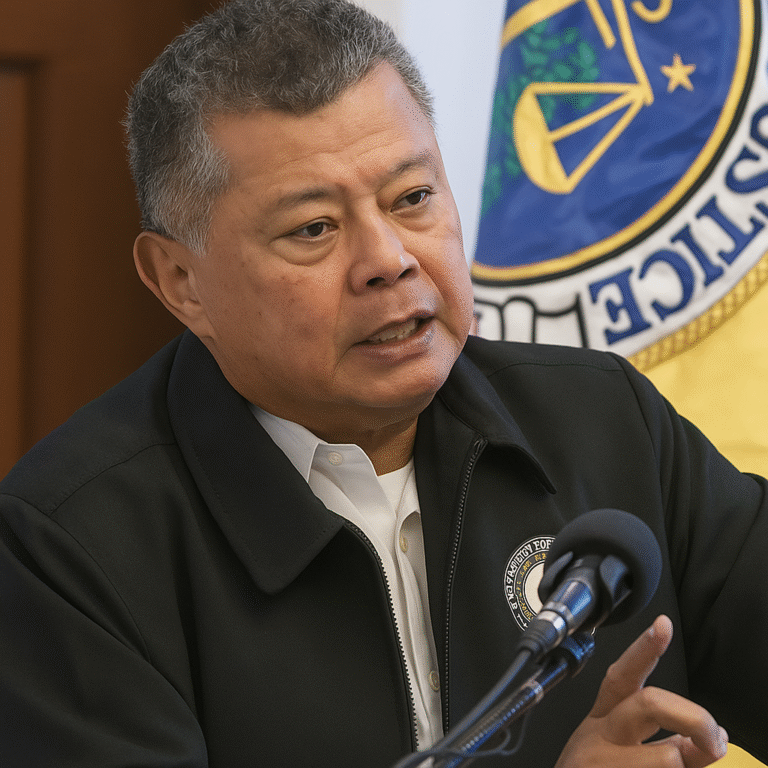
Prior to the relief order, Torre figured in what looked more like a turf war with Interior and Local Government Secretary Jonvic Remulla who “nullified” the most recent police reorganization that saw PNP’s number two man — Lt. Gen. Jose Melencio Nartatez reassigned as area commander in Mindanao.
SEPARATE ORDER
A highly placed source from the Palace said that Bersamin actually signed two documents — one for Torre’s relief and another one recommending Nartatez as the new PNP chief, both dated August 25, 2025.
“The undersigned (Bersamin) respectively requests for the President’s signature to sign the appointment of Lt. Gen. Jose Melencio Corpuz Nartatez Jr. as chief of the PNP, replacing Ge. Nicolas D. Torre III, reads part of the Memorandum for the President.
Attached with the memorandum is an accomplished appointment paper which awaits the President’s signature.
NO OTHER CHOICE
For the longest time, the President gets to name a national police chief from a shortlist of nominees – but not this time.
Marcos doesn’t have the leverage to choose because there isn’t much choice but Nartatez, who is known to be “extremely close” to Jonvic.
Their partnership dates back when Nartatez was still the Calabarzon (Cavite, Laguna, Batangas, Rizal and Quezon) regional police director. Jonvic was then the Cavite governor.
Those were the days when multi-billion dollar business embarking on illegal offshore gaming operations sprawled all over the Remulla clan’s turf — the province of Cavite, with Sangley Point as its melting pot.
DOUBLE AGENT?
Poised to take over the role of the country’s top cop, Nartatez doesn’t seem aware that he’s standing in the middle of a highly volatile political demigod. Serving politicians is far from the PNP mantra which is “to serve and protect.”
But clever as his friends would often describe him, Nartatez knows only too well how to use his position for survival, even if it takes to go around the bush.
Aside from Jonvic, Nartatez (who had a stint as Ilocos Norte provincial police chief) is also known close to former Ilocos Norte Governor and now Senator Imee Marcos who has been attacking his younger brother at the helm of the Palace.
PAPER LEAKS
In an online article posted on Reddit, a netizen who calls himself as PH Informer accused Nartatez of feeding Sen. Imee with “classified documents” — detailed stuff that only an insider like Nartatez would be able to sneak out.
“Sources say Tateng is the original source of a secret paper called Oplan Pursuit, which Imee used to say the government did an unfair witch hunt for the Duterte loyalists,” reads part of his web rant.
The same netizen went as far as tagging Nartatez as “the one who leaked video from President Marcos Jr’s birthday party — the Duran Duran concert,” resulting in public condemnation.
MAKE OR BREAK
When news broke out about the imminent arrest of former President Rodrigo Duterte, the same netizen claimed that Nartatez (in his capacity as NCRPO Director) instructed his men to ignore ICC.
This was where Torre gambled on a make or break decision – to arrest Duterte. He even went as far as taking the former President to The Hague to face charges before the International Criminal Court.
IN WHAT LOOKS more like an effort to weaken the so-called “opposition,” the administration seemed to have adopted an ancient strategy on how to topple the walls of an enemy fortress — by targeting its tower.
In March this year, former President Rodrigo Duterte was arrested and flown to The Netherlands to face charges arising from crimes against humanity filed before the International Criminal Court (ICC).
Five months later, news broke out on the supposed extradition request from the United States. The target — Kingdom of Jesus Christ leader Pastor Apollo Quiboloy for a long list of criminal allegations.
FORMAL REQUEST
No less than Philippine Ambassador to the US Jose Manuel “Babe” Romualdez admitted that the United States has sent a formal request to the Philippines to extradite the controversial televangelist, ally and longtime friend of the former president.
“Yes, it was sent to the DOJ (Department of Justice),” Romualdez said when asked to confirm the reported extradition request.
The DOJ however denied such even after Department of Foreign Affairs Secretary Ma. Theresa Lazaro claimed that the US government sent the request to the justice department.
“Secretary of Foreign Affairs Ma. Theresa Lazaro did not receive the US extradition request for Kingdom of Jesus Christ leader Apollo Quiboloy… the documents were sent to the DOJ as early as June and not to DFA,” the foreign affairs department said.
Romualdez also confirmed that the request was made last June.
LOOKING BACK
A US federal warrant was issued against Quiboloy on November 10, 2021 after he was indicted for conspiracy to engage in sex trafficking by force, fraud and coercion and sex trafficking of children among other charges.
He is accused of participation in a labor trafficking scheme that brought church members to the United States, via fraudulently obtained visas, and forced the members to solicit donations for a bogus charity.
The donations were allegedly used to “finance church operations and the lavish lifestyles of its leaders.”
Interestingly, the KOJC founder also has a string of criminal cases filed in the local courts, for which he was arrested in September last year — and has since been in jail.
Quiboloy pleaded not guilty to charges of qualified human trafficking.
PH-US TREATY
According to Senate Deputy Minority Leader Risa Hontiveros, the Philippine government may “surrender” Quiboloy to the United States even as she cited what she described as “clear” legal basis to do so.
The senator cited Article 11 of the PH-US Extradition Treaty, which allows a person facing prosecution or serving a sentence in the country to be surrendered for trial abroad, then returned once proceedings are concluded.
“Kahit may kaso siya dito, pwede pa rin siyang dalhin sa Amerika para harapin muna ang mga kaso doon, at pagkatapos ng paglilitis ay ibalik sa Pilipinas para panagutin sa mga krimen dito,” Hontiveros said in a statement.
Hontiveros said Quiboloy’s alleged victims in the US have waited too long for justice.
“Hindi rin tama na patagalin pa ang kanilang laban,” she added.
POWER BREADTH
Hontiveros took a swipe at the government’s inability to clamp down Quiboloy’s use of “influence” to evade accountability, citing attempts to intimidate witnesses and avoid Senate hearings.
Allowing temporary surrender, she added, would ensure local cases continue while also aiding victims in the US.
Aside from Hontiveros, House Deputy Minority Leader, Akbayan Partylist Rep. Perci Cendaña, likewise urged the DOJ to hasten the extradition request for Quiboloy.
According to Cendaña, the serious charges filed against Quiboloy expose the breadth of his power and influence, even as he warned that his continued influence poses risks to witnesses and investigations.
“Even in detention, Quiboloy continues to wield huge political and religious power in our country. His inordinate access and influence within our country’s political establishment undermine investigations and endanger witnesses. It is clear that true justice will evade his victims should he continue to remain in the Philippines,” he said.
NOT SO FAST
Quiboloy’s lawyer Israelito Torreon said they have yet to receive an “official document” on the supposed extradition request filed by the US government.
“If the reports are true, we respect the prerogative of the United States of America in doing such a move as it is in consonance with the provisions of the Extradition Treaty between the US and the Philippines,” reads part of the statement.
Quiboloy’s camp said that while it acknowledges a treaty allowing the US to request provisional arrest of a subject, they “feel that such request… may not be necessary as of the moment in the light of the fact that the ‘urgency’ requirement under that section is absent in this case as Pastor Quiboloy is in jail.”
Torreon also recognized that the Philippines can allow Quiboloy to be extradited even while he was facing trial locally, but wished that it would not do so.
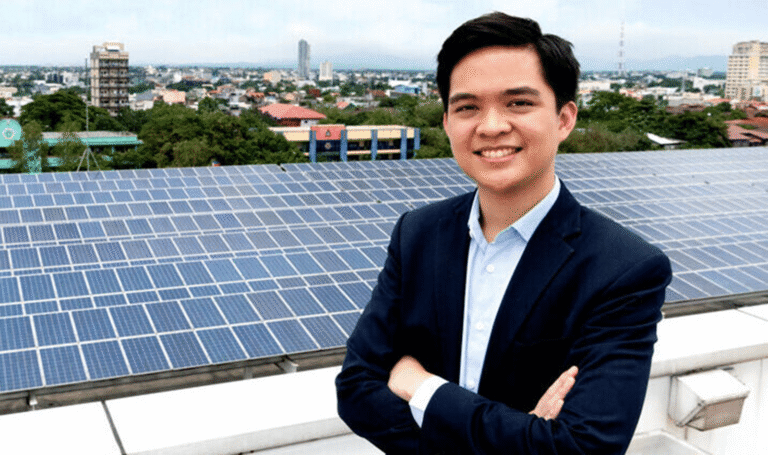
IN A NATION often mired in stories of stalled reforms, padded contracts, and political complacency, Gen Z is emerging not just as observers but as catalysts of change. Case in point: Leandro Antonio Legarda Leviste. Born in 1993 to Senator Loren Legarda and former Batangas Governor Antonio Leviste, Leandro carried both privilege and expectation—but he didn’t let either define his path. Instead, he carved one that blends ambition, conscience, and audacity, reminding the Philippines that a new generation can rewrite the rules.
Leviste’s early life hinted at promise. A precocious child featured in television commercials, he showed the curiosity and drive that would later define him. Unlike many heirs of political dynasties, he ventured beyond comfort zones. At twenty, he left Yale University, forgoing a political science degree to launch Solar Philippines—a bold enterprise aimed at lowering the nation’s crippling electricity costs. By 2021, he became the youngest chairman and CEO of a publicly listed company, and eventually the youngest Filipino billionaire—not through inheritance, but through calculated risk-taking.
But the story doesn’t stop at entrepreneurship. In 2025, Leviste carried his momentum into politics, winning Batangas’s 1st District congressional seat with a record-breaking 268,764 votes. His first bill proposed a monthly allowance for every Filipino student—a practical, populist approach to addressing inequality. And when he confronted corruption in the Department of Public Works and Highways, he did so boldly, orchestrating a sting operation that caught a district engineer red-handed with a bribe. In that act, Leviste proved that youth, wealth, or status do not have to come at the cost of integrity.
This is where the Lakaran concept resonates. In the recent production, Gen Z characters are portrayed as dynamic, socially conscious, and unafraid to challenge the status quo. Leviste is, in many ways, a real-life embodiment of that spirit: bold yet principled, entrepreneurial yet socially aware. He demonstrates that Gen Z is not content with passive observation—they are ready to engage, disrupt, and transform.
The lesson is profound for the Philippines. For too long, cynicism has dominated politics; for too long, corruption felt like an unchangeable constant. But Gen Z’s influence—through innovation, courage, and a refusal to be complicit—signals that the tide can turn. Leviste’s actions send a clear message: leadership doesn’t have to be transactional; vision can coexist with ethics; and a young generation can challenge entrenched systems while inspiring the public to hope again.
Gen Z gives hope because they remind us that change is not theoretical—it is actionable. Whether in politics, business, or social movements, they are proving that courage, creativity, and conscience can intersect to create meaningful impact. Leviste is one figure among many, but his story symbolizes a larger truth: the Philippines’ future lies in the hands of a generation unafraid to dream, act, and demand better.
In a country starved for reform and hungry for inspiration, Gen Z is not waiting for permission. They are the story-makers, the risk-takers, and the torchbearers of accountability. And with leaders like Leviste emerging, that hope is no longer abstract—it is real, tangible, and contagious.
ALEXANDRA EALA PRODUCED a jaw-dropping late comeback to carve her name in tennis history at the US Open on Monday, August 25 (Philippine time), as the 20-year-old Filipina stunned the tennis world by becoming the first Filipino player to win a Grand Slam singles match, toppling 14th seed Clara Tauson of Denmark in the opening round.
Eala, who hails from Quezon City, looked on the brink of defeat after falling behind 1–5 in the deciding set. But she fought back with grit and composure, eventually forcing a nail-biting tiebreak before sealing a 6–3, 2–6, 7–6 (13/11) triumph in just under three hours.
“I’m super over the moon with what I was able to do today, especially coming back in the third,” Eala said after the match. “It’s a very special win for me.”
The victory brought Eala to tears as she collapsed to the court, later revealing that past experiences— both triumphs and heartbreaks — helped her dig deep in the clutch moments.
A CAREER OF FIRSTS AND HISTORIC WINS
Eala’s latest triumph is the crown jewel of a career already filled with groundbreaking achievements for Philippine tennis.
Here’s a quick look at Alex Eala’s steady march to tennis stardom:
• Junior Grand Slam Success
• 2020 Australian Open girls’ doubles champion
• 2021 French Open girls’ doubles champion
• 2022 US Open girls’ singles champion – becoming the first Filipino to win a junior Grand Slam singles title, without dropping a set.
EARLY PROFESSIONAL TITLES
Turning pro in 2020, Eala quickly proved she could transition from juniors to the professional circuit. She picked up multiple titles on the ITF Circuit, including victories in W15, W25, and W50 tournaments, steadily climbing the WTA rankings.
MIAMI OPEN 2025 BREAKTHROUGH
Eala shocked the tennis world at the Miami Open, defeating Australian Open champion Madison Keys, 2017 Roland Garros winner Jelena Ostapenko, and world No. 1 Iga Świątek in succession.
This run made her:
• The first Filipino to beat a Top 10 player in the Open Era.
• The first Filipina to reach the semifinals of a WTA 1000 event.
• A top 100 debutante, climbing to world No. 75.
• Eastbourne Open 2025 Finalist
Weeks later, she reached the final of the Eastbourne Open, becoming the first Filipino—and first Southeast Asian since 2010—to contest a WTA singles final. Though she lost in a tight three-setter, she cracked the Top 60 in the rankings.
WIMBLEDON DEBUT
At Wimbledon 2025, Eala became the first Filipina in the main draw. She even played on Centre Court, where she won the first set against defending champion Barbora Krejčíková before bowing out in three sets. She marked the occasion by wearing a sampaguita hair tie, a proud nod to her heritage.
US OPEN 2025 MAIN DRAW VICTORY
Her dramatic comeback against Tauson now marks the greatest breakthrough yet: the first Grand Slam main draw singles victory for the Philippines.
CARRYING A NATION’S HOPES
“I’m so blessed to be the first to do this,” Eala said of her US Open victory. “I take so much pride in representing my country. It makes what I do bigger than myself, and it adds meaning to what I do.”
From her junior titles to giant-killing runs on the WTA Tour, Eala’s journey is one of milestones that transcend individual achievement. She is no longer just a promising young player—she is a trailblazer, carrying the hopes of millions of Filipinos each time she steps on court.
With her first Grand Slam main draw win secured, Alexandra Eala has cemented her status not just as a history-maker, but as the face of Philippine tennis on the world stage. (elamigo)
IF YOU THINK Boracay, Cebu, or Palawan hold the monopoly on the Philippines’ most breathtaking beaches, think again. There’s a quiet corner of Camarines Sur, at the southern tip of the Bicol Region, that rivals these famous names—without the crowds, the chaos, or the commercial sprawl. Here, powdery-white sands meet turquoise waters, limestone cliffs stand guard over secluded coves, and time itself seems to slow.
This is Caramoan —“The Hidden Paradise,” a place where the Pacific Ocean whispers secrets to the shore and where travelers come not just to see, but to feel.
UNTOUCHED NATURE
Once a secret known only to adventurous backpackers, Caramoan rose to international fame when the hit reality series “Survivor” in multiple franchise editions— chose its islands as its filming location. Yet even with the global spotlight, Caramoan has remained blissfully unspoiled, thanks in part to its remoteness.
Getting here is a journey by air, land, and sea which may deter the casual tourist but rewards the determined traveler with something far more precious: serenity.
It’s easy to see why it’s been dubbed the “Emerging Paradise of the Pacific.”
With over a dozen islands and islets scattered across the Maqueda Channel and Lagonoy Gulf, Caramoan offers a different kind of escape — one where island-hopping is not just an activity, but a way of life.
SCINTILLATING BEAUTIES
Each island here is a world of its own — Guinahoan Island greets visitors with rolling hills reminiscent of Batanes.
A short hike to its lighthouse rewards you with sweeping views of the Pacific’s restless waves and the quiet beauty of Liwan Beach.
On Matukad Island, you’ll find not just fine white sand but also a mysterious hidden lagoon, believed by locals to be enchanted. Across the way, Minalahos Islandoffers dramatic limestone cliffs, a solitary rock in its cove, and a secret passage for the daring.
Lahos Island is pure magic — two beaches divided by towering rock formations, vanishing entirely during high tide as if swallowed by the sea.
Cotivas Island stretches out in a coconut-lined embrace, while Manlawi Sandbar shifts between sun-soaked strolls at low tide and floating cottages when the water rises.
For snorkelers and divers, Cagbalinad Island is a nature’s gem with clear waters, rich marine life, and limestone formations that seem to have been carved for postcards.
LIFE BEYOND THE SHORE
Island-hopping here means more than swimming and sunbathing—it’s an immersion into Caramoan’s rhythm. Time is dictated by the tides, boats leave early and return before dusk, and meals are simple yet soul-satisfying. One local specialty you can’t miss is Pancit Bato, a humble noodle dish that’s as much about tradition as it is about taste—chewy, flavorful, and best enjoyed after a day under the sun.
GETTING THERE
Getting to Caramoan is an adventure in itself. From Manila, you can take an overnight bus directly to Caramoan or break the trip with a flight to Naga City, followed by a van to Sabang Port and a boat ride to Guijalo Port. The sea here can be rough during the southwest monsoon, so plan accordingly.
But the moment you set foot on its shores, the long journey fades into memory. The sound of the waves, the salt in the air, and the sight of endless blues will make you understand why people who “chase Caramoan” often find themselves coming back.
PARADISE OF TRANQUILITY
Caramoan is not for those who want neon nightlife or rows of high-end resorts. It’s for those who wantswhere the first thing they hear is the sea, wading through fresh crystalline waters, and evenings under a sky bursting with stars. It is for travelers who believe paradise should be explored and experienced.
In this alluring and captivating far-flung edge of Bicol, paradise still hides in plain sight—waiting for you to love and felt its tranquility.
AMID DEADLOCK over a maritime territorial dispute with the Philippines, China — a superpower that they claim to be — knew all along that their military prowess is no match against the barrage of equally formidable countries.
But more than military strength, China seemed more apprehensive on the truth behind their aggression to assert its claim over the entire South China Sea.
For one, the documentary film ‘Food Delivery: Fresh from the West Philippine Sea’ is not just an ordinary film for people to sit down and watch. It reflects Filipino struggle — it is about fathers sailing the sea, mothers waiting for food on the table and children whose future depends on what kind of country we have.
“It is about us, the Filipino nation. And that is why China is so afraid of it,” says civic movement leader and chairman emeritus Dr. Jose Antonio Goitia.
STOP FILM SHOWING
And fear, China has been relentless in trying to stop the film from being shown in cinemas because the movie in itself exposes what appears to be a “highly-classified” information embarking on lies.
“It shows how they treat our fishermen as if we do not matter. It shows the abuse they inflict, not in some distant place, but right here, in our own seas that legally and historically belong to us,” added Goitia invoking The Hague Tribunal which ruled in 2016 to dump China’s spurious nine dash line.
“Yet what has China done since? They ignored the law, they ignored decency and they ignored the dignity of every Filipino whose livelihood depends on the sea. They harass our fishermen, steal our fish, and act as if friendship means the right to trample on us,” the civic leader added.
CLEAR CONVICTION
Previously, defense secretary Gilberto Teodoro assailed China’s increasing presence near Ayungin Shoal with coast guard ships, fast boats, maritime militia, and even aerial drones and destructive weapons mounted on their craft to threaten Filipino soldiers stationed at the grounded BRP Sierra Madre.
“These are gross and brazen violations of international law,” Secretary Teodoro noted with his voice resonating in anger and firm resolve.
Earlier in the standoff, Chinese vessels used water cannons, steered dangerous maneuvers and engaged in high-speed collisions with Philippine boats, acts of aggression far beyond misunderstanding or miscommunication. Despite the danger, Filipino troops and the Philippine Coast Guard pressed on to protect what is deemed well within the 200-nautical mile Philippine exclusive economic zone.
CHINA EXPOSED
The film that China doesn’t want to be shown in cinemas exposed the day-to-day struggle of Filipino fishermen, who are not even sure of making it back safely on the Philippine shores after every fishing expedition.
It also shows heartbreaking scenes of mothers and children praying hard for the family man’s safe return. It humanizes the toll of a geopolitical chess game. That is why it matters—not only to watch it, but to share and talk and have it shown in schools.
Teodoro urged the public to support the film which he claimed could spark nationalism in the hearts of each and every Filipino.
“This is our sea. These are our stories. We deserve respect, not repression,” added the DND chief, emphasizing that claims of secret deals or ‘gentleman’s agreements’ with China, supposedly to de-escalate tensions at Ayungin, are nothing more than a propaganda designed to muddle an already dangerous narrative.
STAND FOR GIBO
In support of Teodoro’s pronouncements, Goitia stated that beyond laws and rulings, there is something deeper: “This is not just about borders drawn on a map. This is about real people.”
“Imagine a father who has nothing left to bring home because foreign vessels drove him away from waters that are his by right. Imagine a child asking why her father cannot fish anymore. Imagine families going hungry not because there is no food, but because a powerful neighbor decided to take what is not theirs. That is the human face of this conflict, and that is what this film captures so powerfully.”
He likewise explained that ‘Food Delivery’ matters because it gives voice to those who are usually silenced:
“It turns statistics into faces and headlines into human stories. Our fishermen are not just numbers. They are our brothers, our friends, our neighbors. Their pain is our pain. Their fight is our fight.”
FORCE OF TRUTH
According to Gotia, China is aware of the power of truth, for which billions are spent to peddle lies in the form of propaganda.
The film ‘Food Delivery’ is more than just entertainment — “When you watch this documentary, you are not only watching a story. You are standing with our people. You are defending our sovereignty. You are saying to the world: the Philippines is not for sale, and our seas are not for the taking.”
He called on families, schools, and communities to spread it, talk about it, and keep the conversation alive — “The more we speak, the less they can silence us. The more the world knows, the harder it becomes for China to pretend.”
“This is not just a film. This is our cry for dignity. This is our fight for justice. This is the truth of a small nation standing up against a giant that pretends to be a friend but acts like a traitor. China may have the ships and the weapons, but we (own) the truth and the truth will always be stronger. The West Philippine Sea is ours, and no ban, no intimidation, no lie will ever change that.”
THE BLESSED MOVEMENT, chaired by Herbert Martinez Antonio Martinez (3rd from left) expressed appreciation to Subic Bay Metropolitan Authority Chairman and Administrator Eduardo Jose L. Aliño (center) for the opportunity and support given to the movement’s proposal of an electric bus. According to Martinez, this is aligned with President Ferdinand R. Marcos Jr.’s vision to improve convenience for commuters. In this occasion, The BLESSED Movement also made a courtesy call to Customs District Collector Noel Estanislao. With Martinez in this visit were: Jovie Saddul of GET-Go Electric Transport; Jhenz Guiang SBMA Procurement,Antonietta Sangui SBMA Finance; AFHD Agriventures Corp., JT Aliño, and Gio Cariñoof Prodigy AE.
EVERY RAINY SEASON, Filipinos brace themselves for familiar scenes: highways submerged, families stranded on rooftops, schools converted into evacuation centers.
Indeed, flooding has become a way of life in the Philippines—a tragic normal that successive administrations have promised to solve.
Year after year, we hear about mega-billion-peso flood control projects. Massive contracts are awarded for pumping stations, dikes, river walls, and road elevation schemes, revetments, etc.
Yet, despite these shiny new infrastructures, one heavy downpour is enough to expose the cracks —both literal and figurative— in our approach to flood mitigation.
The uncomfortable truth is this: billions have been spent, but the water has nowhere to go.
THE MESS WE’RE IN
Many of these grand projects end up delayed, poorly maintained, or worse, riddled with corruption.
Headlines about “ghost” flood control projects or overpriced materials are not uncommon. The result is a cycle of wasted taxpayer money year in year out, unfinished structures, and communities that remain underwater.
But perhaps the biggest flaw lies not only in governance but in priorities. Authorities often equate flood control with concrete—walls, canals, and pumping stations—while ignoring the simple, cost-efficient, natural solution staring us in the face: DESILTATION.
When will we stop drowning in both water and wasted promises … and billions of flood money?
WHAT WE NEED TO KNOW
What is Siltation?
Siltation happens when fine particles—soil, sand, clay, and sediments—accumulate in rivers, lakes, dams, and esteros.
These materials are usually washed down from upland areas due to deforestation, mining, quarrying, and unregulated construction. Over time, the natural depth of waterways is drastically reduced.
Imagine a river that was once 10 meters deep but is now only 5 meters because of decades of silt build-up. Its water-carrying capacity is effectively cut in half. During heavy rains, the river overflows much faster, spilling into nearby communities.
The problem is compounded in urban areas, where waterways are further clogged by garbage and informal structures. Instead of free-flowing arteries that channel rainwater into the sea, our rivers have become shallow basins where floodwater stagnates.
ROLE OF DESILTATION
Desiltation is the process of removing these sediments and restoring waterways to their natural depth and capacity. It can be done mechanically through dredging or manually in smaller creeks and esteros.
The benefits are immediate and tangible:
Flood Reduction: By restoring rivers to their original depth, their volume capacity increases, reducing the risk of overflow.
Improved Drainage: Desilted esteros and canals allow rainwater to flow more freely toward bigger rivers and eventually to the sea.
Environmental Health: Clearing waterways revives aquatic ecosystems, allowing fish and other species to thrive again.
Agricultural Support: Irrigation canals free from silt provide farmers with consistent water supply for their crops.
In countries like the Netherlands, Japan, and Singapore —nations lauded for their flood management— regular desiltation and dredging form the backbone of their water management systems. It’s preventive, not reactive.
COST OF NEGLECT
Consider Metro Manila’s Pasig River, Marikina River, and the labyrinth of esteros that once served as the city’s drainage lifeline. Many of them are now half their original depth. Imagine the millions of liters of lost water capacity—that is floodwater spilling onto roads, schools, and homes.
Neglecting desiltation doesn’t just cause flooding; it also devastates livelihoods. Fisherfolk in Laguna de Bay, Pampanga, and Cavite have long complained of dwindling fish catches because of silted rivers.
Farmers lose harvests when irrigation canals are clogged. Families lose homes when rivers overflow.
A CALL FOR SHIFT IN PERSPECTIVE
Flood control should not just be about building more walls. It should be about restoring the natural capacity of our rivers and streams.
A comprehensive desiltation program, supported by local governments and communities, could save lives and billions in damage.
Yes, infrastructure has a role —but it must go hand in hand with clearing our waterways, relocating communities from danger zones, and enforcing strict environmental laws against dumping and encroachment.
The Filipino people deserve more than lip service and photo-op projects. We deserve real solutions—solutions that may not be flashy but are effective.
If the government is truly serious about addressing floods, it must start with the basics: clean our rivers, dredge our esteros, and restore the veins of our land.
Only then will we stop drowning in both water and wasted promises (and billions of flood money).
FOR MANY PAST administrations, the Villar family has become extremely powerful. Nobody dared disrupt the dynasty and its steady wealth accumulation, by whatever means.
In terms of positions in government, they virtually had it all and mentored the young ones to maintain the dynasty. With powerful positions came money that they did not have to work hard for, as money found its way to their direction.
The Villars accumulated companies, lands (some contentiously and using their positions and influence). But now, the dynasty is gasping for breath to keep going, clinging hard to perpetuate itself in power.
In the process of gulping companies and properties, some of the Villar investments – in public utilities like Prime Water – which they thought would keep their image afloat and in the top of mind of voters backfired because they did not deliver on their concession’s conditions.
The patriarch miscalculated, not realizing the countless headaches and charges that the family faces in its reputation and image. Now it wants out of Prime Water.
Even with the two new senators the clan produced, Mark, who used to be Duterte’s public works and highways secretary finds himself in a ridiculous and awkward position in the face of public clamor against ghost flood control projects during his term at DPWH that are being investigated in the Senate.
‘The SEC recently imposed a ₱12-M fine on Villar Land and its officers for repeatedly missing deadlines to submit its 2024 annual report and first quarter 2025 financial statement, despite multiple extensions.’
MILD PENALTY
Just recently, the Securities and Exchange Commission, led by Francis Lim, slapped administrative fines totaling P12 million on Villar Land Holdings Corp. and 11 of its directors and officers — including the country’s richest man Manny Villar and his three children — for repeated failure to file required financial reports and issuing misleading public disclosures.
The penalty is relatively minor compared to the originally contemplated suspension of the company’s registration statement, but it does not preclude the SEC from pursuing civil or criminal charges. This alone will be a big blow to their images.
In an order dated August 18, the SEC’s Markets and Securities Regulation Department (MSRD) said Villar Land (formerly Golden Haven) failed to submit its 2024 audited financial statements and first quarter report, despite several deadline extensions granted through June 30, Bilyonaryo reported.
“After due consideration of the foregoing, and the disclosures filed by the Company, this department finds the company’s explanation WITHOUT MERIT,” said SEC-MSRD director Oliver O. Leonardo. “The failure to meet these deadlines despite ample time and opportunities demonstrates a clear disregard for [SEC’s] regulatory obligations.”
“The timely submission of annual and quarterly reports is mandatory and non-negotiable under the Securities Regulation Code and its implementing rules and regulations,” Leonardo said as he emphasized that “these reports are critical for regulatory oversight, market integrity and protection of investor interests.”
NOT OUR FAULT
Villar Land blamed audit delays linked to its acquisition of approximately 366.34 hectares of land through subsidiaries Althorp Land Holdings, Chalgrove Properties, and Los Valores Corporation as well as its change in accounting policy to fair value measurement for investment properties.
The SEC flagged a March 28, 2025 disclosure stating that the company’s board had “approved and authorized the release of financial statements for the year ended December 31, 2024,” which reported fair value gains of P1.33 trillion and total assets of P1.37 trillion.
The disclosure was deemed “misleading” by the SEC as the audit had not yet been completed.
Leonardo stressed that such disclosures could “mislead the investing public, those transacting with the company, or the market in general,” noting a significant spike in share volume turnover right after the March 28 announcement.
Average volume turnover skyrocketed to P2.1 million between March 25 and March 31 compared to just P218,382.50 from March 3 to March 24, and P240,160 from April 2 to April 10.
“Given the nature, effects, and seriousness of the same act of the board and officers of the Company—that of causing the release of a public disclosure that is apparently false, inaccurate or misleading—there is reason to find them administratively liable for gross negligence or bad faith in directing the affairs of the Company pursuant to Section 158, in relation to Section 30 of RA No. 11232 or the Revised Corporation Code.
LENIENT POLICY
Considering that suspending the firm’s registration statement could “unintentionally harm stockholders,” the MSRD deemed it “more sound” to impose a P1 million fine on Villar Land and each of its 11 directors and officers, along with a P2,000 daily fine starting July 1, 2025, until the company submits the overdue reports.
Aside from Villar, other officers and directors named in the order include: Cynthia J. Alvarez (president); Paolo Villar; Senators Camille Villar and Mark Villar; Ana Marie V. Pagsibigan (independent director); Garth F. Castaneda (independent director); Estrellita S. Tan (CFO, CIO, treasurer, and Investor Relations Officer); Gemma M. Santos (Corporate Secretary); Ma. Nalen S.J. Rosero (Assistant Corporate Secretary); and Kate D. Cator (compliance officer).
The SEC has ordered the company and its officers to show cause within 10 days why they should not be held administratively liable for violating Sections 26.3 and 54.1(c) of the SRC, Section 8(c) of the Financial Products and Services Consumer Protection Act, and Sections 30 and 158 of the Revised Corporation Code. Failure to respond will be deemed a waiver of their right to be heard.
“At stake here is the integrity of our stock market. As I have said time and again, restoring investor trust and confidence is not the job of the SEC alone; it is a shared duty of all market players,” Lim emphasized.
FILING CIVIL CASES
The SEC recently imposed a P12 million fine on Villar Land and its officers for repeatedly missing deadlines to submit its 2024 annual report and first quarter 2025 financial statement, despite multiple extensions.
While the fine is less severe than a threatened suspension of the company’s registration statement, the regulator has reserved the right to pursue civil or criminal charges based on the outcome of its probe.
Villar Land explained that the delays were largely due to audit complications tied to the valuation of properties acquired in Villar City from subsidiaries Althorp Land Holdings, Chalgrove Properties, and Los Valores Corporation.
The company said it initially engaged E-Value Phils Inc. for property appraisals, with valuation reports consolidated from the subsidiaries’ auditors. However, its external auditor, P&A, rejected those valuations and requested new reports.
After E-Value completed the additional work, P&A brought in Crown Property Appraisal Corporation (CPAC) for expert validation.
Despite CPAC’s input, Villar Land said P&A continues to demand further appraisals, prolonging the audit process.
The SEC also flagged a March 28, 2025 disclosure by Villar Land stating that its board had approved financial statements for the year ended December 31, 2024, claiming fair value gains of ₱1.33 trillion and total assets of ₱1.37 trillion.
The regulator deemed the disclosure misleading since the audit was still ongoing, warning that the premature announcement may have put investors at risk amid a sharp surge in the company’s share price following the announcement.
Villar Land was given 10 days to respond to alleged violations of the Securities Regulation Code, the Financial Products and Services Consumer Protection Act, and the Revised Corporation Code.
GONE ARE THE days when bad elements could easily walk away after committing a crime just because cops would arrive late on public distress calls.
Thanks to the state-of-the-art Command Center which according to Philippine National Police (PNP) chief Gen. Nicolas Torre III does not only have the capacity to receive bulk calls at a time, but also gets to monitor cops’ snail-paced emergency response — if not sleeping on the job.
In a press briefing held at the PNP national headquarters in Camp Crame, PNP Command Center chief Supt. Ramon Pranada toured a little over a dozen journalists in what looks more like an “educational tour” as to how modernized the PNP Command Center has become.
HIGHLY CAPABLE
By his own admission, Pranada said that PNP’s 911 emergency hotline isn’t new.
He however boasted of the additional analytic system upgrading its capability to respond in the soonest possible time — five minutes or less in urban centers and a little over five minutes in remote areas by simply dialing 911 emergency hotline, toll free.
Pranada said the relaunch of the command center marks a major step forward in strengthening the PNP’s 5-minute response time by institutionalizing its monitoring system to efficiently serve the public.
“The very purpose of the 911 emergency hotline is to save lives, regardless of whether it be a crime in process, fire incidents, floods… as in kahit anong tawag na nangangailangan ng tulong,” he explained.
TECHNOLOGY-DRIVEN
According to Pranada, operationalization of a technology-driven police response mechanism is Torre’s first agenda when the latter assaulted the role of PNP chief.
“The PCC is actually the brainchild of our PNP chief. It reflects our commitment for a faster and more efficient, technology-driven police response, especially during emergencies and critical incidents,” he shared.
“The initiative also supports the nationwide standardization of the 911 emergency hotline in accordance with the PNP’s Standard Operating Procedures,” the police officer noted.
Situated at the heart of the PNP Headquarters in Camp Crame in Quezon City, the Command Center is equipped to provide real-time monitoring, rapid situational analysis and coordinated deployment of police units across the country’s 17 regions.
PCC MEDIA TOUR
“Its relaunch underscores the PNP’s strong commitment to achieving the Chief PNP’s goal of a 3 to 5-minute response time while enhancing its overall public safety services,” Pranada averred.
To showcase the center’s capabilities, the PCC chief conducted a media tour of the Center’s facilities, including its war room, server and technical installations.
The tour demonstrated how emergency information is received, processed and coordinated with field units to enable swift, synchronized responses. The activity highlighted seamless communication from the central command hub down to ground-level operatives.
“This Command Center is more than just a facility—it represents our unwavering commitment to serve and protect the Filipino people,” said Torre who came in after the tour.
CONFIDENT ENOUGH
“With this platform, we can monitor developments on the ground in real time and respond with greater speed and accuracy,” the country’s top cop boasted.
Torre proudly enthused that the PCC is the embodiment of their vow to provide genuine service and uphold their desire to move closer to the people through efficient police operations.
“This is what modern policing looks like—efficient, responsive and centered on the needs of the people. It significantly enhances communication, surveillance and rapid deployment capabilities—showcasing our continuous drive for operational excellence, people-centered policing and the modernization of public safety systems in the country.”
WHAT ARE WE in power for, is one adage, that former President Rodrigo Roa Duterte, had applied upon acquiring the powerful seat in Malacañang and awarding an P11.1 billion contract for infrastructure projects to his favorite cousin, Carlos “Charlie” Gonzales.
A story of Politiko on August 19, said Gonzales’ company, Ulticon Builders Inc, which was identified through posts on Reddit and an Instagram photo, bagged the P11.1-billion worth of contracts between July 2016 (the month Duterte assumed the presidency) and December 2017, said data from the Philippine Center for Investigative Journalism (PCIJ).
The secretary of DPWH in July 2016 was Rafael Yabut (June 2016 to July 31, 2016) and Mark Aguilar Villar was appointed by Duterte in August, where he served until 2021 until he was appointed COVID-19 pandemic isolation czar from 2020 to 2021. He was a representative of Las Pinas from 2010 to 2016.
The controversy comes amid a broader Senate probe into flood control projects, after President Ferdinand Marcos Jr. named 15 contractors that cornered the bulk of ₱545 billion in flood control funds from 2022 to 2025.
NOT IN THE LIST Ulticon, however, isn’t part of the list.
Davao-based Ulticon Builders Inc., owned by brothers, Carlos “Charlie” and Engr. Raul “Sonny,” was established in 1993 as a general construction business focused on construction, repair, rehabilitation and other works on roads and bridges, highways, piers, irrigation projects and building construction.
It had its focus on infra development, which it deemed vital to the socio economic development of the country, mostly in less developed provinces of Mindanao.
Noted for its prompt completion and high standard, its major project was the Cateel-Compostela Diversion Road, a 37-km with two bailey bridges that cut travel time from Davao City to Cateel Davao Oriental– a known NPA haven, by three hours.
Its current machineries and equipment pool has a base level construction capability ranging from P1 to P3 billion per construction per year.
FOR THOUSANDS OF Filipino students who ride the train daily, the beep of a turnstile is more than just the start of a commute— it’s also the sound of much-needed relief for families juggling tight budgets.
Since June 2025, students have been enjoying a 50-percent fare discount on Metro Manila’s MRT-3, LRT-1, and LRT-2 systems, thanks to a joint initiative of the Department of Education (DepEd) and Department of Transportation (DOTr).
The program, which runs until 2028, was rolled out under the directive of President Ferdinand Marcos Jr. to make commuting more affordable for learners.
‘When a family saves on transportation costs, there are more opportunities to buy books, learning tools, or even basic needs. It’s a real help for students and their parents…’
A BIG RELIEF The cut may seem small, but for families already stretching every peso, the savings are significant. A senior high schooler who spends ₱60 a day on train fares now spends only ₱30—a difference that could mean an extra meal, a notebook, or part of a week’s internet load. Multiply that by months of school, and the relief becomes clear.
Education Secretary Sonny Angara stressed that the initiative is about redirecting small but steady savings to more important needs.
“When a family saves on transportation costs, there are more opportunities to buy books, learning tools, or even basic needs. It’s a real help for students and their parents,” Angara said.
The discount applies to all students from kindergarten to graduate school, including those enrolled in the Alternative Learning System (ALS) and Special Education (SPED) programs. There are no caps on how often the discount can be used—every ride is half off.
EASING THE JOURNEY To make the benefit easier to access, the DOTr will roll out special white Beep cards by September. Students only need to show a valid school ID or enrollment form to get one. Once tapped at the station, the discount is automatically applied—no need to fall in line for single-journey tickets.
Transport Secretary Rex Dizon emphasized that affordability must go hand in hand with convenience.
“It’s not just the discount that matters. The President made it clear that students should not be burdened when they travel. If you’re a student, you should be able to get your Beep card right at the station and ride with ease,” he said.
The DOTr is also piloting “Libreng Sakay” programs in Cebu and Davao, using modern jeepneys and buses on select routes, with plans to expand the initiative to more cities.
LIFELINE FOR FAMILIES For parents, the program offers a rare assurance in a time when rising prices of food, utilities, and school supplies continue to squeeze household budgets. For students, it’s a reminder that their government sees their daily struggles—not just in the classroom but on the road to get there.
Commuting in Metro Manila can be exhausting and expensive. But with every discounted tap of a Beep card, families know they are saving a little more—day after day, year after year—until 2028.
As Angara put it, this is a step toward making education “less of a burden for Filipino families” and ensuring more young people can finish their studies.
It may only be half the fare, but for many Filipino households, it feels like double the hope.
UNDER THE GUARANTEED and Accessible Medications for Outpatient Treatment (GAMOT) program of the Philippine Health Insurance Corporation or PhilHealth, members can get up to P350,000-worth of out-patient medicines annually starting August 21 the current year.
All PhilHealth members may access the program through the eGovPH app or local PhilHealth offices where they will choose a Yaman ng Kalusugan Program para Malayo sa Sakit (YAKAP) clinic to get a prescription for the medicine before presenting to designated GAMOT facilities, according to PhilHealth’s Rey Baleña, acting vice president for corporate affairs group.
Listed among the said facilities are Vidacure with branches in Muntinlupa City and Quezon City, Pharma Gen Ventures (Generika Drugstore) with branches in Parañaque City, Navotas City, Quezon City and Taguig City, CGD Medical Depot at Vertis North, and the Chinese General Hospital in Blumentritt, Manila.
“Dapat irereseta iyon dahil mahalaga titingnan tayo ng doktor at malalaman kung hinihingi o kailangan ng kondisyon ng pasyente na siya’y ma-resetahan ng gamot,” Baleña explained.
He added that accreditation of drugstores is ongoing.
The GAMOT program includes 75 types of free medicines with an annual benefit limit of P20,000 per beneficiary.
“At Agoda, we’re thrilled to help people rediscover their favorite spots while making each trip even more memorable and rewarding,” said Andrew Smith, Senior Vice President, Supply at Agoda.
NO CITY IN the Philippines made it to Agoda’s list of Asian cities worth revisiting, at least for the first half of the current year.
Topping Agoda’s list of Asian cities or destinations worth revisiting are Bangkok, Tokyo, Seoul, Bali, and Osaka, each offering unique charms that keep travelers coming back for more.
These destinations prove that sometimes, a single trip just isn’t enough. Travelers often find themselves drawn back to their favorite destinations, whether it’s to explore more of what they missed the first time, revisit beloved spots, or simply soak in the familiar atmosphere. Agoda’s data shows that many travelers even return to the same destination multiple times within the first six months of the year, proving the magnetic pull of these unforgettable places.
The ranking also highlights other popular return destinations, including Taipei (Taiwan), Kuala Lumpur (Malaysia), Da Nang (Vietnam), Johor Bahru (Malaysia), and Hong Kong filling out the top ten. Each offers its own unique mix of attractions, from culinary delights to cultural experiences, ensuring there’s always something new to explore.
“There’s something magical about destinations that keep calling you back. Whether it’s Bangkok’s bustlingmarkets, Tokyo’s futuristic vibe, or Bali’s breathtaking sunsets, these places have a way of leaving travelers wanting more. At Agoda, we’re thrilled to help people rediscover their favorite spots while making each trip even more memorable and rewarding,” said Andrew Smith, Senior Vice President, Supply at Agoda.
PERRENIAL FAVORITES
Bangkok, the perennial favorite, continues to captivate visitors with its vibrant street life, world-class dining, and cultural landmarks like the Grand Palace and Wat Arun. Tokyo, in second place, attracts repeat visitors with its charming neighborhoods, renowned culinary scene, and seasonal attractions like cherry blossoms and cultural festivals. The magnetic appeal of Seoul, rounding out the top three, lies in the draw of K-culture, shopping havens like Myeongdong, and historic sites such as GyeongbokgungPalace.
Meanwhile, Bali, ranking fourth and often dubbed the “Island of the Gods,” enchants travelers with its serene beaches, lush rice terraces, and spiritual retreats. Completing the lineup of the top five is Osaka, with its reputation as Japan’s culinary capital, paired with its lively entertainment districts and proximity to Universal Studios Japan, makes it a must-return destination.
GLOBE TELECOM’S FIRST-half 2025 results are a reminder that in business, as in life, you don’t always get five bars—but the connection still holds.
Data remains Globe’s strongest signal. The company’s digital portfolio—mobile data, home broadband, and corporate ICT—now powers 88% of service revenues, up from 85% last year. In short: Filipinos may skip the call or text, but they won’t give up TikTok, GCash, or Netflix.
The mobile business, Globe’s bread and butter, clocked in ₱57.1 billion for the semester—slightly lower than last year, but with a quarter-on-quarter rebound in Q2. Mobile data, in particular, defied gravity, rising 2% year-on-year despite a slight dip in traffic. More strikingly, mobile data now makes up 86% of mobile revenues, reflecting how deeply the internet has woven itself into Filipino daily life.
Home broadband is slowly rewiring itself too. Fiber now dominates, with GFiber Prepaid growing 37% in just one quarter—proof that affordability, flexibility, and speed are a winning mix. Corporate data felt the pinch of cautious enterprise spending, but ICT services—from cybersecurity to IoT—offered a glimpse of tomorrow’s growth.
Then there’s GCash, Globe’s not-so-secret weapon. With ₱3.8 billion in equity earnings, it now accounts for 26% of pre-tax profit, more than double last year’s share. For a telco, having a fintech juggernaut in its pocket is like discovering you own the mall as well as the phone shop inside.
Yes, net income slipped 14% year-on-year to ₱12.4 billion. But peel away one-offs and higher costs, and the story is one of resilience: disciplined cost-cutting, EBITDA margins north of 52%, and a capex strategy that’s leaner but still future-focused. Globe isn’t overspending—it’s investing smart, with 91% of spend on data-centric infrastructure and a growing 5G footprint that now blankets almost all of Metro Manila and key cities nationwide.
The message? Globe is playing the long game: building digital highways, betting on fintech, and pushing fiber into Filipino homes. The numbers may have softened, but the strategy is clear—connectivity isn’t just a service, it’s the backbone of modern life.
In a market that’s maturing fast, Globe’s challenge is to keep innovating while keeping prices—and promises—within reach. Judging by the rise of GFiber Prepaid and GCash’s rocket fuel, it seems the company knows one thing for sure: in the Philippines, data is no longer optional. It’s life’s newest utility.
SULAT, EASTERN SAMAR — The familiar sound of bouncing balls, roaring cheers, and squeaking sneakers filled the covered court of Barangay Aguinaldo in General McArthur town as the Governors’ Cup Gen. MacArthur Intertown Basketball League officially tipped off this weekend.
The event, a brainchild of Eastern Samar Governor Ralph Vincent “RV” Evardone, brought together athletes, fans, and local officials for what promises to be a spirited celebration of basketball and community pride. Evardone, notably the youngest elected official in the Philippines today, said the tournament reflects his vision of empowering the youth through sports.
“Basketball has always been more than just a game for Filipinos—it’s a way to unite communities, to teach discipline, and to inspire our young people,” Evardone said during the opening program. “Through this league, we want to give our local athletes a stage to shine and our towns a reason to cheer together.”
‘For many residents, the Governors’ Cup is not just a sporting event but a reminder of the province’s resilience and unity. In a region often tested by natural disasters, the league offers a refreshing break—something to rally behind and celebrate together.’
A COMMUNITY EFFORT The league is made possible through the support of Municipal Mayor Joel D. Baldo, Vice Mayor Salvador Navidad, and SK Federation President Cres Adrian G. Paller, underscoring the joint effort of local leadership in promoting grassroots sports.
The opening day drew large crowds from neighboring towns eager to witness their homegrown teams compete. Supporters waved banners, beat makeshift drums, and erupted in chants as each squad was introduced.
THE CONTENDERS Six teams are vying for this year’s championship: Team Padayon, Salcedo Ballers, Gen. Mac, Balangiga, Fil-Am Team, and Hernani.
The Fil-Am Team—composed of local players with Filipino-American ties—adds an exciting dynamic to the mix, while Gen. Mac, the hometown squad, enjoys strong backing from the local crowd. Traditional rivals Salcedo and Guiuan also drew loud cheers during their opening clash, proving that the intertown rivalry is as alive as ever.
The tournament tipped off with a 10:30 a.m. showdown between Fil-Am Team and Gen. Mac, followed by a high-energy double-header in the afternoon featuring Salcedo vs. Guiuan and Balangiga vs. the winner of Game 1.
MORE THAN JUST BASKETBALL For many residents, the Governors’ Cup is not just a sporting event but a reminder of the province’s resilience and unity. In a region often tested by natural disasters, the league offers a refreshing break—something to rally behind and celebrate together.
“When our players hit the court, it’s not only about winning. It’s about representing our towns and showing our pride as Eastern Samareños,” said SK President Cres Adrian Paller.
The league is expected to run for several weeks, with knockout rounds and a highly anticipated championship game capping off the season.
As the first whistle blew in Gen. MacArthur, one thing became clear: the Governors’ Cup is more than just a basketball league—it’s a festival of community, youth, and the unifying power of sports.
Would you like me to also add a sidebar/profile piece on Governor Evardone—highlighting his background, achievements, and why his being the youngest elected official adds significance to the league? That would make the feature even richer.
Gov. RV Evardone — Youngest Elected Official In The Philippines
JUST 25, EASTERN SAMAR Governor Ralph Vincent “RV” Evardone holds the distinction of being the youngest elected official in the Philippines today— a milestone that reflects both a generational shift in politics and the growing voice of the youth in governance.
Evardone, who hails from a family of public servants from Barangay San Vicente, Sulat, Eastern Samar, has made it clear that his leadership style is anchored on fresh ideas, inclusivity, and youth empowerment.
His decision to sponsor the Governors’ Cup Gen. MacArthur Intertown Basketball League highlights his commitment to investing in the potential of Eastern Samar’s younger generation.
“The youth are not just the leaders of tomorrow—they are the leaders of today,” Evardone said in a recent message to his constituents. “Through sports, education, and active participation in governance, I want to help open more doors of opportunity for them.”
A ROLE MODEL Colleagues and local officials describe him as approachable, energetic, and highly visible in community activities. His hands-on involvement in initiatives —from education and disaster response to cultural events and now sports —has drawn strong support, especially among young Eastern Samareños who see him as a role model.
Observers say Evardone’s rise is symbolic: a reminder that young voices are reshaping Philippine politics and governance.
In the meantime, his focus on grassroots programs like the Governors’ Cup shows how he intends to use his platform—not just for policies, but for inspiring the next generation of leaders and achievers.
RV, is a son of former governor and congressman Ben Evardone. (El Amigo)
DESPITE THE ANNOUNCEMENT of the designation of an acting director for the National Bureau of Investigation (NBI) by Department of Justice (DoJ) spokesperson Mico Clavano IV, following the irrevocable resignation of former judge Jaime Santiago, Justice Secretary Jesus Crispin Remulla is firm he would not appoint anyone to be the officer-in-charge (OIC) of the Bureau until a permanent replacement is found.
Secretary Remulla clarified that Santiago would remain in office in deference to the resigned NBI director’s request that he would stay on until the appointment of his successor.
‘(The) former police officer stated in his resignation letter “(there were) detractors who have sinister interests” in his position (and) have “incessantly” made moves to besmirch his reputation.’
“As he said, his request in his resignation is that he will stay on until the appointment of his successor. So, the thought of an OIC has not crossed my mind. In deference to him and also concerning his request in his resignation,” Remulla disclosed in an ambush interview.
SINISTER INTERESTS Santiago resigned last week and in stepping down from his post, the former police officer stated in his resignation letter “(there were) detractors who have sinister interests” in his position (and) have ‘incessantly’ made moves to besmirch his reputation.
Remulla said he briefly spoke with Santiago after he quit his post and he would be speaking to him again regarding the latter’s resignation. He added that Santiago did not receive any threats which may have led to his decision to resign.
“No, there were no threats. None, nothing. There was a great deal of discomfort, in accordance with what he said . . . He wasn’t comfortable anymore,” the justice secretary pointed out.
EVER HAVE ONE of those days where you forget something small, and suddenly you’re spiraling like the world’s ending? Heart racing, stomach in knots, brain screaming at you?
The Back Story It’s usually over something tiny that didn’t deserve that much drama.
It’s not the mistake that’s wrecking you — it’s you being too hard on yourself over it.
Sounds familiar? We’ve all done it. Life gets messy, stuff piles up, and suddenly you’re sitting there being your own worst critic.
Replaying every mistake, thinking “why can’t I just get it right?” It’s exhausting.
Why We Beat Ourselves Up Tearing yourself apart doesn’t actually fix anything. It just makes you feel heavier.
So many of us do it anyway, because somewhere along the way we were told we had to be perfect, efficient, “on top” of everything, all the time.
No wonder we’re burnt out.
A Wake-Up Moment Think about this: if your friend forgot something, would you snap at them, make them feel awful, or put them in “time-out”? Of course not. You’d probably say, “It’s fine, don’t worry about it.”
So why don’t we do that for ourselves?
Small Steps, Big Change It doesn’t have to be huge. Forgot a task? Okay. Messed up? One slip doesn’t mean game over.
Next time you feel yourself spiraling, just whisper, “It’s not the end of the world.” (Yes, whisper it. It works.)
Bit by bit, you’ll feel lighter.
Celebrate Wins Instead of staring at what didn’t get done, look at what did. Checked a few boxes today? Celebrate that. Small wins count.
Shifting focus even a little can totally change your mood.
Stress Is Not A Badge of Honor Stress isn’t proof you’re working hard.
It’s your body begging you to pause.
Take five minutes. Breathe. Walk. Put your phone down. Seriously, your brain and body will thank you.
Life Isn’t Perfect Here’s the secret: nobody’s got it all figured out. Life’s not about being flawless, it’s about showing up, trying, and being kind to yourself when things go sideways.
One day doesn’t wipe out everything you’ve done right.
You’re human. Not a robot.
Tips And Techniques Keep going. Sometimes it’s not just a little slip. You lose something big, and it hurts. That’s real. But even then—the sun still rises. You carry what you’ve learned, you get stronger, and you keep going.
The next time you catch yourself spiraling over something small, pause. Breathe. Remind yourself—it’s not the end of the world.
What matters is how you respond, not how perfect you are.
Mistakes, slip-ups, off days—they don’t define you. What defines you is your ability to keep going, even when things feel messy.
Remember: Take the next step forward — choose progress over panic.
FOR AS LONG as I can recall, scavengers and those that scrounge through trash in land fills have been at these activities for their livelihood and to feed their families. Some have even succeeded in sending their kids to college, with quite a handful commendably finishing their degrees with Latin honors.
But for all those decades, the government was always absent, no help not even for capital to start their mini businesses.
Yet they thrived– thanks to sheer determination and sometimes luck (for having a good material pick from the rubbish)– and with help coming from local and foreign civic organizations who upgrade their status through training for micro small and medium enterprises.
It’s pathetic that the Department of Environment and Natural Resources, which closely monitors the health of air and land in the country– is just now stepping in to formally integrate informal waste workers in the government’s solid waste management system. It took the department a long period of time to realize these disdained subsector of society can be upskilled so they can uplift not just their lot but the country’s economy as well
During the time of President Gloria Macapagal Arroyo, there was so much fuss given to putting up in every public schools and government offices large metal bins to contain PET bottles and other recyclable plastics, which could be resold directly to users of PET bottles like beverage firms and water refilling stations.
Though most of the LGUs and public schools in provinces still have these bins, it is unsure if they earn from the stored PET bottles or if they just repurpose them as garden sets or pots for plants.
On August 16, the DENR said it would tap informal waste workers (why there is no such thing as formal waste workers except those employed by dump truck companies hired by the LGUs), often from marginalized sectors, to survive by scavenging and selling street wastes or those dug from landfill sites. These include waste reclaimers, itinerant waste buyers and small junk shop operators. Lacking safety gear and health safeguards, they work amid constant exposure to harmful materials, the STar noted.
“Informal waste workers operate without formal policies that ensure workplace safety, stable income, or access to social services. Exposure to hazardous materials puts them at risk of respiratory illnesses, infections and injuries,” the DENR’s Environmental Management Bureau (EMB) said in a statement.
TRAINING FOR SOCIAL INCLUSION
Through the DENR-EMB, the government seeks to provide training and financial literacy programs for informal waste workers to also “promote social inclusion” and give them a chance at an alternative livelihood.
“The informal waste workers remain excluded from the solid waste management value chain, yet their work is indispensable and forms the very backbone of a supply chain that advances environmental sustainability,” DENR Secretary Raphael Lotilla said.
As part of its efforts, the agency will provide monetary grants to 50 junk shops in Quezon City to purchase weighing scales and improve waste recovery. The DENR-EMB also seeks to connect them with businesses they could work with under the Extended Producer Responsibility law, which requires enterprises to manage and pay for the pollution they generate.
The government had already conducted lectures for informal waste workers in 2024, particularly catering to some 200 workers in Metro Manila, Central Luzon and Calabarzon.
The National Solid Waste Management Commission also issued Resolution 1655 in 2024, requiring local government units to integrate programs for informal waste workers into their 10-year solid waste management plans and to ensure their access to essential services.
LACK OF INTEGRATION
“The lack of integration into the formal waste management systems also leaves them vulnerable to social welfare benefits and limits their economic opportunities,” the DENR-EMB said.
“While Republic Act 9003 provides the legal framework for solid waste management, it does not yet establish clear protections or governance structures for the informal waste sector,” it added.
Solid waste management has also taken center stage in discussions over the country’s flood control, with critics questioning why billions in public funds have shown little to no improvement.
The worsening floods in urban areas are partly due to improper waste disposal, which leads to clogged drains and disrupted flow of water, said the Metro Manila Development Authority (MMDA).
The DENR-EMB (to which I agree) said the government lacks sufficient waste management infrastructure and with the prevalence of single-use plastics and limited access to sanitary landfills, waste disposal remains a pressing issue among Filipinos.
PHL IS TOP WASTE PRODUCER
In Southeast Asia, the Philippines ranks among the top waste producers, with an estimated 23.61 million tons expected in 2025, said the Climate Transparency Platform.
“By prioritizing the welfare of informal waste workers, the DENR-EMB seeks to build a waste management system that is not only environmentally sustainable but also socially just, ensuring that those who contribute to waste recovery and recycling receive the recognition and support they deserve,” the agency said.
The Marcos administration has been reviewing nearly 10,000 flood control projects from 2022 to 2025 and identifying top contractors to hold them accountable for their inability to abide by their contractual promises with local government units.
A STUDY THAT looked into the difference in key areas of regulated and unregulated online platforms in hosting online cockfighting or esabong showed that Facebook– despite a nationwide ban on esabong– is being actively used in promoting this banned esabong.
The Fourth Wall, a Filipino-focused sociocultural research firm, said “our audit findings confirm that several unregulated gambling platforms, including JOLIBET and OKEBET, still host esabong events years after the ban,” Business Mirror cited the report.
Fourth Wall said these games are sometimes “gated” by account registration but remain openly promoted, indicating ongoing demand and the “resilience” of illegal operators.
The study indicated that esabong agents use dedicated groups and private messages to invite players to ongoing events.
“This direct recruitment bypasses official channels, helping illegal operators maintain a steady inflow of players despite the prohibition,” it noted.
‘[R]ecent enforcement actions and raids against illegal online gaming hubs, employing coordinated use of payment controls alongside police operations, amplified disruption efforts by choking the revenue pipelines that sustain offshore and unlicensed platforms.’
MARKET EXPANDING With the market expanding and enforcement actions ongoing, the research firm said it examined how regulated and unregulated platforms differ in key operational areas—game offerings, promotions, affiliate structure, payment channels, KYC (know your customer), trust and safety, among others.
These differences, it noted, reveal not just “contrasting” business models, but also “varying levels” of player protection.
As to the number of games, the firm said regulated platforms have a “smaller” game catalog because each new title must pass the Philippine Amusement and Gaming Corp.’s (Pagcor) approval process.
“Games are audited for fairness and delivered by licensed providers, which may give players greater assurance about outcome legitimacy,” it said.
Some unregulated platforms feature game titles not found in regulated sites. However, this larger catalog includes several games that are not verified by third-party auditors, with some showing signs of being fake or manipulated.
HIGH-VALUE BONUSES In terms of promotions, players involved in unregulated online gambling would usually encounter “higher-value bonuses” of up to 108 percent when joining unregulated platforms, with new player promos, cashbacks, and rebates that outpace regulated competitors.
The research said these offers are often marketed “frequently and prominently” to attract and retain users.
In regulated online gambling, platforms still offer sign-up bonuses and occasional rebates, but the “frequency and size of these promotions are limited” up to 10 percent to 40 percent online. “Its aim is to support responsible play and limit high-risk spending,” the study read.
HIGHLY LUCRATIVE Affiliate programs run by many unregulated operators offer “highly lucrative” affiliate programs, sometimes offering 45 to 65 percent of gross gaming revenue to attract agents.
The study said the marketing rules appear “less restrictive and less transparent, facilitating possible aggressive recruitment and promotion.”
Affiliate programs of regulated sites “clearly describe” how the interested affiliate will qualify and how he/she will be paid, such as 747’s offer for websites.
On the Know Your Customer (KYC) process, the study said it is “minimal or entirely absent” in unregulated platforms.
For one, there is no Pagcor pop-up verifying the player’s eligibility, making it possible for players, including those under the legal age, to register.
In addition, these platforms only require “a little more than a phone number or email, and there is no verification at the end.”
“This level of anonymity may enable re-entry by banned or at-risk individuals,” the firm noted.
STRICTER PROTOCOLS Regulated platforms follow “stricter” protocols. Before a player can proceed, a Pagcor-branded pop-up appears to confirm that players complied with eligibility requirements and are not among those prohibited from playing under its regulations.
Regulated platforms also ask for basic details such as name, email, and contact number when registering an account.
Afterwards, these platforms verify identity with valid government IDs, age checks, and sometimes cross-checks with e-wallet registration details.
“These measures are designed to block underage access and enhance player accountability,” the research firm said.
PAYMENT CHANNELS Payment channels in unregulated platforms, the report noted, are “lower-friction” —players can use GCash, Maya, QRPH, cryptocurrencies, and bank transfers with no transaction limits.
This “ease of movement,” it said, may make them appealing, but it can also be used for money laundering and high-volume spending without restrictions.
Payment systems in regulated platforms support popular e-wallets and banks but limit transactions to comply with anti-money laundering and responsible gambling policies.
CIRCULAR ON EGAMBLING The draft Circular by the Bangko Sentral ng Pilipinas to tighten rules on mobile wallets underscores why regulated non-bank electronic money issuers should be retained as key enforcement tool rather than be disconnected from the gambling- related transactions, said PlaySafe Alliance Ph.
Alliance spokesman Mike Defensor said mobile wallets provide Know Your Client (KYC) data and transaction trails that enable authorities to trace flows, link accounts to suspected operator networks, and build cases that would be far harder to assemble if payments reverted to cash or unregulated channels.
Defensor noted that the BSP’s draft measures – including stronger identity verification, daily limits and mandatory monitoring for gambling related activity – create the legal and technical scaffolding needed for wallets to flag and block illicit transfers promptly.
He argued that the ability to freeze or temporarily restrict suspect e wallet accounts, when exercised under clear due process rules, can stop funds in transit and prevent rapid dispersion or laundering that often frustrates subsequent investigations.
Defensor said recent enforcement actions and raids against illegal online gaming hubs, employing coordinated use of payment controls alongside police operations, amplified disruption efforts by choking the revenue pipelines that sustain offshore and unlicensed platforms.
PERVERSE EFFECTS OF BAN Defensor cautioned that a total ban or unilateral disconnection of mobile wallets could produce perverse effects, driving bettors and operators toward cash couriers or emerging digital payment channels that are harder for domestic regulators to monitor and interdict.
He recommended that policymakers emphasize calibrated measures – stronger KYC, transaction thresholds, pattern based monitoring and mandated reporting – so wallets remain both convenient for consumers and ally for licensed e-gaming platforms.
The inclusion of built in consumer protection tools in wallet rules, such as self exclusion, voluntary spending caps and mandatory warnings, arguing these reduce harm while preserving the wallets’ investigative value.
He highlighted the global dimension, noting many illicit operators route funds through cross border payment arrangements and that retained, regulated wallets make it easier to cooperate with foreign counterparts and international AML mechanisms.
Defensor also called on regulators to publish clear protocols for when and how freezes are applied, including oversight, appeal mechanisms and data privacy safeguards, to maintain public trust while enabling rapid enforcement.
He acknowledged legitimate concerns that wallets can lower the friction of funding bets, and he advocated parallel measures to target operator behavior – penalties for facilitation, restrictions on in app promotional links, and tougher licensing checks – paired with payment controls.
Preserving regulated mobile wallets under stronger, well defined guardrails offers the best chance to reduce the prevalence of unlicensed online gambling by making illicit revenue streams traceable, interruptible and prosecutable while protecting ordinary users.
The PlaySafe Alliance, composed of 20 founding members, has earlier expressed its full support to BSP’s proposed Circular seeking to regulate online gambling payment services.
Defensor’s group of gov’t licensed operators is also advocating actively for strictest regulations on online gambling as part of their commitment for responsible gaming.