
Sunday, March 29, 2026
Home Blog Page 41

Deeper Scrutiny, Accountability! — Rep. Acidre Lashes At DOT

0

IN A SECOND public statement, Leyte Representative Jude Acidre renewed his criticism of the Department of Tourism (DOT), citing unresolved issues flagged by the Commission on Audit (COA) and what he described as a pattern of deflection by Secretary Christina Garcia Frasco.

“I had hoped Secretary Frasco would respond with facts and clarity,” Acidre said. “Instead, she framed oversight as a political attack. That does a disservice to the public.”

Acidre’s latest comments come weeks after his initial remarks raised concerns over the DOT’s budget performance and spending patterns. Instead of allaying doubts, he said, the department’s response only reinforced the need for deeper scrutiny.

SERIOUS CONCERNS

At the heart of Acidre’s criticism are the findings from the 2022 COA audit, which revealed questionable fund management and poor financial reporting from the DOT and its marketing arm, the Tourism Promotions Board (TPB). Among the most serious concerns:

• ₱483.8 million in unliquidated fund transfers;

• ₱618.7 million in receivables with discrepancies;

• ₱196.8 million in unused funds that were not returned to the National Treasury;

• ₱288.9 million in idle corporate funds with no stated purpose, and

• ₱4.8 million in foreign travel expenses flagged as excessive or unnecessary.

“These aren’t political talking points. They’re official audit findings,” Acidre said. “They point to systemic problems that deserve real answers—not public relations spin.”

MISLEADING NARRATIVE

Frasco had earlier touted that a ₱200 million tourism promotion budget generated ₱3.86 trillion in visitor receipts, citing it as evidence of DOT’s efficiency. But Acidre countered that this was a “misleading narrative,” explaining that the figure represented the broader tourism industry’s output and not a direct result of DOT spending.

“That number includes the work of airlines, hotels, LGUs, and even OFW visits. To present it as a direct return on promotion spending is inaccurate,” he noted.

Another area of concern, according to Acidre, is the implementation of the department’s flagship “Tourism Rest Areas” (TRAs). While intended to provide rest stops and services in key travel areas, several of these facilities were built in locations with little to no tourism traffic.

“These projects appear poorly planned and politically convenient,” he said. “Are we building for visitors—or for visibility?”

DEAFENING SILENCE

Adding to the weight of his critique is what Acidre calls a “deafening silence” from the administration itself. President Ferdinand Marcos Jr., who previously held the tourism portfolio under his economic team, made no mention of tourism in his recent State of the Nation Address.

“That omission is telling. It invites the question: Is the DOT truly delivering the impact we expect from such a vital agency?” he asked.

Frasco has since suggested that proposed budget cuts to the DOT were politically motivated. But Acidre quickly dismissed the claim, pointing out that her husband, Cebu Representative Duke Frasco, sat as Deputy Speaker during the budget deliberations.

“If the budget was unfair, why didn’t he object?” Acidre asked. “The facts don’t support the narrative that this is political targeting.”

The lawmaker emphasized that his critique was not an attack on tourism workers or the sector itself. In fact, he said, it was the opposite.

“Our tourism frontliners, entrepreneurs, and local partners deserve a department that leads with competence and vision,” he said. “Framing oversight as an insult to them is a form of misdirection. The issue is management, not the mission.”

AMPLE OPPORTUNITY

With the 2026 budget hearings approaching, Acidre said Secretary Frasco will have ample opportunity to defend her agency’s performance before the House.

“Those deliberations are the proper forum—not social media, not press statements,” he said. “If the DOT is confident in its performance, it should welcome scrutiny, not evade it.”

For now, Acidre’s stance remains firm: the public deserves clear answers, transparent records, and a tourism agency that spends wisely and delivers measurable results.

“Tourism is a key driver of jobs and growth. But to truly support the industry, we must first ensure that it is managed with integrity,” he said. “As the President said: ‘Mahiya naman tayo.’ It’s time for leadership marked by humility and accountability—not defensiveness.”

Bayanihan Sa Estero

0

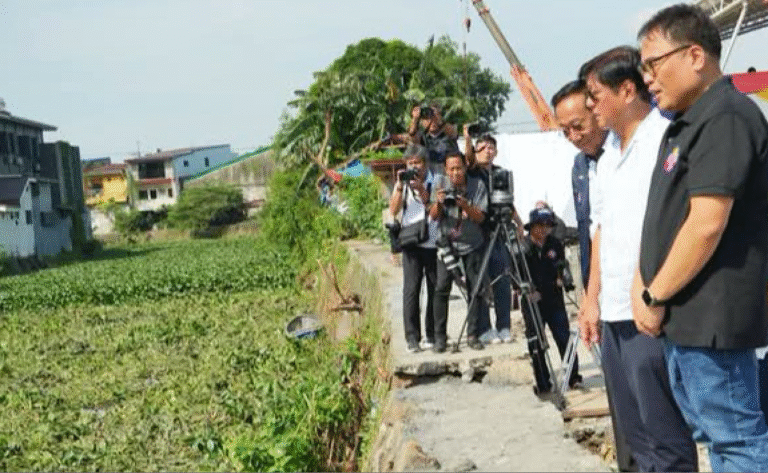
PRESIDENT FERDINAND MARCOS Jr. leads the launching of Metropolitan Manila Development Authority (MMDA)’s ‘Bayanihan sa Estero’ program at Buli Creek, Ilugin River in Pinagbuhatan, Pasig City on Saturday. Marcos was joined by Pasig City Mayor Vico Sotto, DILG Secretary Jonvic Remulla, MMDA Chairman Don Artes, and other government officials during the event. The project aims to intensify efforts to clean and maintain drainage infrastructure in Metro Manila to prevent clogging that contributes to severe flooding during the rainy season.

Voter Registration To Continue Despite Scheduled Signing Of Barangay Polls Reset

0

WITH THE RESETTING of the Barangay and Sangguniang Kabataan Elections (BSKE) to be formalized ten days from now, the Commission on Elections (Comelec) announced that it will still continue voter registration and election preparations as it awaits President Ferdinand Marcos Jr. to sign the measure that will postpone the polls from December to November next year. 

According Comelec chairman George Erwin Garcia, the Office of the Executive Secretary has informed them of the scheduled signing ceremony at 2:00 in the afternoon of August 12. 

The measure will officially reset the December 1, 2025 elections to an unspecified date in November 2026 even as the terms of barangay (village) and Sangguniang Kabataan (SK) officials will be extended from three to four years.

“If that’s the case, then it’s very clear that the elections on December 1 will not push through. But the Comelec will not stop the registration. We will continue all of this within the 10-day period,” Garcia disclosed during a voter registration event in Pampanga

‘The poll body expects a registration turnout that could reach around one million new voters, most of whom are projected to be from youth sector for the SK polls.’

NOT YET FINAL
The Comelec commissioner clarified, though, that the President’s signature does not immediately make the postponement final because “even after it is signed, the law must be published to take effect and it could still be challenged before the Supreme Court.”

So the poll chief rationalized that “if a TRO (temporary restraining order) is issued and (the Commission) is unprepared, (the country’s electoral process) could face a crisis.”

Comelec is holding a nationwide 10-day registration campaign that began on July 31. The drive will run until August 10 in local Comelec offices and mall registration sites, and until August 7 in mobile registration applications anywhere.

The poll body expects a registration turnout that could reach around one million new voters, most of whom are projected to be from youth sector for the SK polls.

“The special registration will allow even out-of-town voters to sign up. This is not a satellite registration. This is a special registration anywhere, meaning we’re accommodating voters even from other provinces,” Garcia noted while emphasizing the urgency of holding the registration after Comelec found itself to have no choice but to push through the poll preparations due to Congress’ delay in passing the postponement bill.

“If we don’t conduct registration, we won’t have 15- to 17-year-old voters eligible for the SK elections. These youth voters are essential and we must serve them,” he pointed out.

ONLINE REACTIVATION
Garcia reminded the public that submitting an application does not automatically guarantee voter registration because applications will still undergo review before being forwarded to the Election Registration Board in the applicant’s hometown for posting and possible objections.

Comelec will likewise allow online reactivation for deactivated voters who already have biometric records. However, new or first-time registrants must still appear in person due to legal constraints.

August Is History Month

0

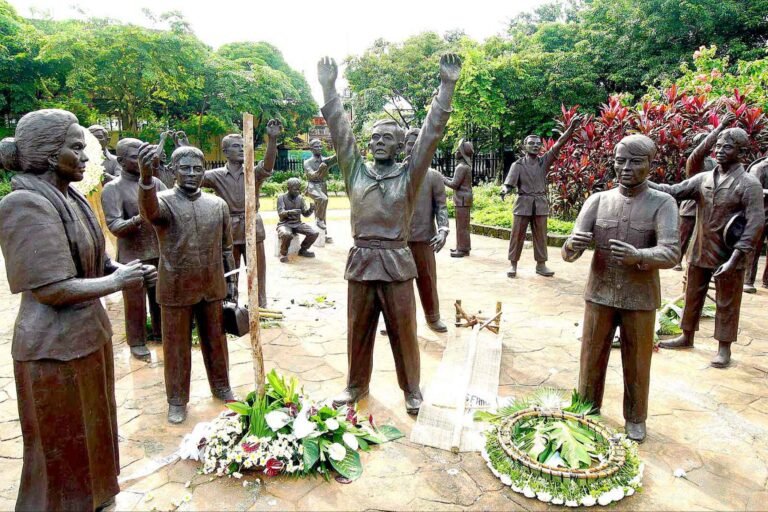
ON AUGUST 23, 1896, the Cry of Pugadlawin occurred. It was then when Andres Bonifacio and the members of the Katipunan began to revolt against Spain. On August 1st of 1898, Emilio Aguinaldo asked United States Government to recognize the revolutionary government of the Filipinos.

On August 13, 1898, the mock Battle of Manila between the Spanish and American Forces happened such that Manila would not go to Philippine forces. It ended the Spanish-American War and marked the beginning of American colonization not just of Manila but the whole archipelago. Filipino revolutionaries under Gen. Emilio Aguinaldo felt betrayed as they would already have gained independence but with the mock battle, the country was transferred from Spanish Rule to the Americans.

On August 19, 1916, the US Congress enacted the Jones Law or Philippine Autonomy Act of 1916.

On August 4, 1964, Philippine Independence Day was designated to be on the 12th of June.

On August 21, 1983, former Senator Benigno S. Aquino Jr. was assassinated and the event led to demonstrations and protests until EDSA People Power Revolution. And we can go on and on.

‘History Week used to be celebrated every 15th to the 21st of September every year by virtue of Proclamation 1304 in 1974. It was repealed, and transferred to August and renamed History Month…’

NATIONAL HEROES DAY
August is such an important month in terms of historical events, but it was on February 16, 2012 that the month of August was declared History Month by virtue of Proclamation No. 339 signed by former President Benigno S. Aquino III.

History Week used to be celebrated every 15th to the 21st of September every year by virtue of Proclamation 1304 in 1974. It was repealed, and transferred to August and renamed History Month “to emphasize the most significant turning points in Philippine history, and concludes on August 30th as National Heroes Day.”

HISTOEX 2025
For this year, the premier government agency in charge of the celebrations, the National Historical Commission of the Philippines (NHCP), has prepared HistoEx 2025 with performances, interactive exhibitions, lectures, talks, games, booksale, shops, and reenactments on August 1-3 at the Quantum Skyview of a mall in Quezon City. Other government and nongovernment agencies also have their own ways of celebrating.

Why is it important to have one month dedicated to history?

It helps us remember, recognize, and honor the contributions, the struggles and victories of the individuals and groups of people that have taken part in our history. It raises awareness on the vital roles of various communities, fostering empathy and solidarity. It preserves and promotes cultural heritage and identity, recognizing important events and promoting understanding and inclusivity. It educates about the past, inspires us with stories on overcoming adversity, and encourages us to work towards a more equitable society. It could even encourage people to discover and preserve their personal and family histories which in turn, may be beneficial to the country.

History month is a powerful way to promote understanding by highlighting the diverse experiences and contributions that shaped our country.

How about our local histories? Maybe we can help in writing one where there is none.

Water World

0

EXACTLY THREE DECADES ago, a blockbuster film embarking on what the Earth would look like in the future was shown on the big screen — a post-apocalyptic world submerged under ocean-deep water.

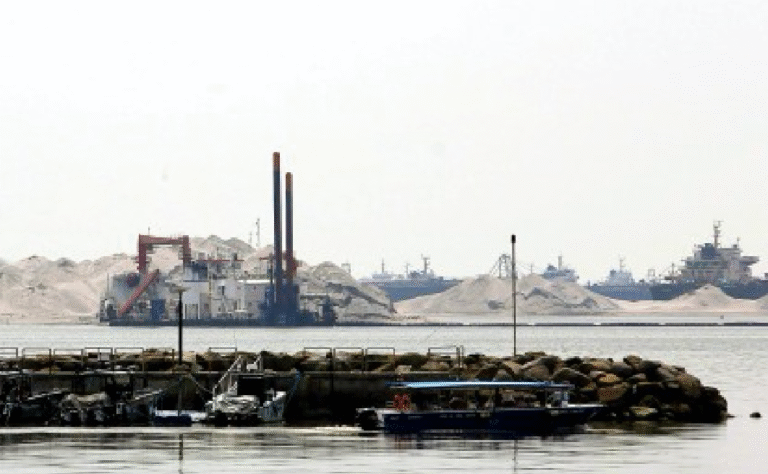
And from how it looks, Metro Manila and its adjoining provinces are slowly transforming to become more like the one in the scenes of the 1995 science fiction movie, even as the government has refused to recognize studies on the adverse effects of the massive “land developments” at the Manila Bay.

No less than the Department of Environment and Natural Resources (DENR) previously said the government cannot move forward with reclamation activities in Manila Bay.

The DENR particularly cited a cumulative impact assessment of Manila Bay reclamation projects which hinted at significant environmental and social consequences. The assessment highlights threats to biodiversity, marine habitats, and the livelihoods of coastal communities, while also noting potential impacts on flooding and pollution. 

SELECTIVE  STOPPAGE

Sometime in August 2023, President Ferdinand Marcos Jr. ordered the suspension of Manila Bay reclamation projects over impact concerns. But soon after the suspension, the government allowed two coastal development projects at the Pasay City side to resume.

In a statement that was farmed out by the Pasay City government, land development projects under the Pasay Eco-City Coastal Development secured an environment compliance certificate (ECC) from the DENR, which was then under former Secretary Maria Antonia Yulo-Loyzaga.

The Manila Bay reclamation at the Pasay City side was also able to get an area clearance from the Philippine Reclamation Authority (PRA).

Likewise given the green light to resume are the Bacoor reclamation projects.

FAVORED DEVELOPERS

The so-called Pasay City development plan includes two reclamation projects in Manila Bay known as “Pasay 265” and “Pasay 360.”

Pasay 265 is a joint venture with Pasay Harbor Corp. covering 265 hectares of offshore development of a “new cosmopolitan, eco-friendly and iconic waterfront city.”

The other reclamation project covering 360 hectares – undertaken jointly by the Pasay City government with SM Smart City Infrastructure and Development Corp. – will create three artificial islands connecting to the Mall of Asia complex, also of the SM Group.

Under its masterplan, the artificial islands are intended for mixed-use development including commercial, residential, institutional, and tourism estates. The project aims to enhance economic activity and create numerous job opportunities.

IMMINENT THREATS

According to the DENR, stricter guidelines would be implemented by the agency in response to the cumulative impact assessment findings  conducted by the University of the Philippines Marine Research Institute and the Marine Environment and Resources Foundation.

The cumulative impact assessment findings impacts on the livelihood of coastal communities and fisherfolks, and that of the threats to biodiversity and marine life.

More than livelihood, the study also hinted at exacerbation of flooding and pollution in coastal areas, absence of accountability from project proponents and government officials for the environmental and social impacts of reclamation and the need for ecosystem-based coastal protection and sustainable development practices. 

PROMISES, PROMISES

According to the DENR, the government intends to implement regular monitoring of water quality and shellfish safety to safeguard fisheries and public health while continuously reviewing 21 (although the PRA insists there are only 13) reclamation projects in Manila Bay. 

The environment department also promised to hold project proponents accountable for their actions and any violations of environmental regulations. 

By its own admission, the DENR cited the need to address the displacement and livelihood concerns of affected communities. 

The assessment highlighted the need for long-term planning and sustainable development strategies for Manila Bay even as it underscored the need for a more cautious and sustainable approach to development in Manila Bay, prioritizing environmental protection and the well-being of affected communities. 

CONGRESSIONAL PROBE

Following massive floods in Metro Manila, a member of the House of Representatives sought a probe into the DENR’s Manila Bay rehabilitation program.

Bicol Saro partylist Rep. Terry Ridon filed House Resolution 56 on July 16, seeking a legislative inquiry into whether the Manila Bay rehabilitation program was worth public funds and if it has truly contributed to flooding.

This comes after the Metropolitan Manila Development Authority’s (MMDA) made a sweeping claim that land development at the Manila Bay blocked major drainage outfalls in Manila, particularly in Faura, Remedios and Estero de San Antonio Abad. 

During the closure of these drainage outfalls, wastewater was reportedly redirected to a sewerage treatment plant that couldn’t handle the volume during heavy downpours.

BLAME THE NATURE

In response to the MMDA, the DENR blamed “changing weather patterns” influenced by climate change. 

“This noticeable shift in weather patterns has exacerbated the challenges faced by urban areas like Metro Manila, where heavy rainfall can overwhelm drainage systems and lead to significant flooding,” reads part of the DENR statement.

The DENR attributed flood risks to PAGASA’s meteorological data over the past decade, which showed an increase in the amount of rainfall in various localities. 

“As we confront the challenges posed by climate change, it is essential to adapt our urban planning strategies to safeguard our communities,” the DENR said.

Deferred But Not Defeated

FOLLOWING THE SUPREME Court decision which declared the Articles of Impeachment against Vice President Sara Duterte as “unconstitutional,” many seemed to have lost hope for accountability to prevail.

For one, the decision of the High Tribunal doesn’t mean Duterte is off the hook. The SC decision embarked on the so-called “legal technicalities,” particularly on the constitutional provision on the “one year ban.”

To recall, four impeachment complaints were filed at the House of Representatives against VP Sara — three in December 2024 and another one in February this year.  The last complaint, signed by over 200 congressmen, was transmitted to the Senate on the last session day  before the 19th Congress adjourned.

Then the saga began as the Senate refused to act on the complaint with utmost urgency as stipulated under the 1987 Constitution.

The Senate’s refusal gave Duterte’s camp to recalibrate its legal strategy. Hence, a petition seeking SC to declare the Articles of Impeachment as unconstitutional.

At the time the magistrates were “working” on the petition, members of the 19th Congress were busy campaigning for the May 2025 national and local elections.

Fast forward — the SC ruled to declare the Articles of Impeachment as unconstitutional. Most of us may have felt angry or disappointed with the SC.

To be perfectly clear, SC did not absolve the vice president of the charges. 

So what do we do next? Never lose hope. Keep the fire burning even if 13 of the 15 magistrates of the high tribunal were appointed by her father. 

Legal luminaries — including former SC Justices — stood firm that the impeachment court may commence trial as history shows that the Senate should reign supreme on impeachment matters.

In the case of the late Chief Justice Renato Corona’s impeachment, SC also intervened to some extent.

After issuing a temporary restraining order (TRO) against the opening of then-Chief Justice Renato Corona’s dollar accounts, the Supreme Court left it to the Senate to decide whether to comply. 

Sitting as the impeachment court, the Senate eventually voted to honor the TRO to avoid a constitutional crisis, while allowing the trial to proceed.

Romualdez Rides Poll Momentum, Vows To Push Deeper Reforms

0

FOR HOUSE SPEAKER Ferdinand Martin Romualdez, public trust isn’t just a number — it’s a responsibility.

Fresh from a favorable showing in the latest OCTA Research “Tugon ng Masa” second-quarter survey, the newly reelected House leader said the rise in his trust and performance ratings affirms the people’s growing support for the reform agenda he is pushing in the lower chamber of Congress.

“I welcome the results of the latest OCTA survey with gratitude and a clear sense of duty,” Romualdez said in a statement on Wednesday. “The increase in both my trust rating and performance rating is an encouraging sign that the reforms we’ve been working on in the House of Representatives — particularly on transparency, budget integrity, and service delivery — are gaining traction among the public.”

3-POINT JUMP
The OCTA survey, conducted from July 12 to 17, showed Romualdez posting a three-point jump in trust rating, now at 57 percent, and a four-point increase in performance rating, rising to 59 percent. 

These results put him among the few national leaders to post simultaneous gains — the other being President Ferdinand R. Marcos Jr., who saw his trust and performance ratings improve to 64 percent and 62 percent, respectively.

What makes Romualdez’s gains particularly notable, analysts say, is the consistency of the rise across all major regions and socioeconomic groups — from Metro Manila to the Visayas, and from the ABC class to the country’s poorest.

“This tells me one thing,” the House leader said. “People are paying attention. They want honest leadership and tangible results.”

WORKING QUIETLY
Romualdez, who also serves as leader of the supermajority coalition in the House, has long emphasized an approach anchored in quiet but decisive action. In recent months, he has overseen a legislative push focused on fiscal responsibility, better service delivery, and the streamlining of infrastructure initiatives.

Among the House’s recent priorities were the passage of key measures aligned with the Marcos administration’s socioeconomic agenda — including bills on digital infrastructure, disaster preparedness, and responsive budgeting. While these may not always make flashy headlines, Romualdez said they are the kinds of reforms that impact people’s lives.

“We’re not here to grandstand,” he added. “We’re here to deliver results, especially for communities that have waited too long for basic services. This is not a time to rest. There’s still so much to do.”

Survey Breakdown: Who Trusts the Speaker?
According to OCTA, Romualdez’s approval ratings show significant regional and class-based support:

By Region:

Visayas: 66 percent trust, 64 percent performance

Balance Luzon: 62 percent trust, 64 percent performance

Metro Manila: 59 percent trust, 59 percent performance

Mindanao: 36 percent trust, 43 percent performance

By Socioeconomic Class:

Class E (poorest): 61 percent trust, 63 percent performance

Class D: 57 percent trust, 59 percent performance

Class ABC (upper to middle): 49 percent trust, 51 percent performance

These numbers indicate solid gains in areas where public frustration has historically run high — especially with slow infrastructure development and perceptions of government inefficiency.

Political analysts note that the Speaker’s strong showing in the Visayas and among lower-income groups reflects effective grassroots communication and a growing appreciation for local-level programs led or supported by the House.

Looking Ahead: No Room for Complacency
Despite the boost, Romualdez insists there is no room for complacency.

“This is not a victory lap. It’s a reminder to stay focused, stay grounded, and stay accountable,” he said.

He reiterated his commitment to stricter oversight on how public funds are spent, faster implementation of government projects, and expanding the reach of legislation to uplift the marginalized.

One of the House’s upcoming priorities, he shared, is to enhance monitoring mechanisms to ensure infrastructure projects are not only delivered on time but also insulated from corruption. Additionally, he emphasized continued legislative work on education, healthcare, and job creation — sectors critical to sustaining the country’s long-term growth.

From Pulse to Policy
For Romualdez, the survey results offer more than just political validation — they serve as a gauge of public sentiment and a roadmap for where to steer legislative focus next.

“We’ve always said that public service must reflect public need,” he said. “The moment you stop listening is the moment you start failing.”

And as the House continues its work — from budget deliberations to long-term reforms — Romualdez said he and his colleagues are keeping their eyes on one goal: restoring and strengthening people’s faith in institutions.

“Trust is earned daily,” he added. “We will continue earning it — not through noise, but through action.”

Whole-Of-Nation Approach In Food Control

0

YES, THERE’S HUGE problem in “flood control.” There is in “food control” as well. 

The DA chief, (Secretary Francisco Tiu Laurel, Jr.,) fresh from his wellness leave, immediately ordered a relentless pursuit against all modalities of agrifishery smuggling and all forms of economic sabotage.

The department’s Inspectorate and Enforcement (DA-IE) responded and flagged tens and tens of containerized agrifishery goods misdeclared as general merchandise. 

Of late, the DA-IE, applying its Soft Touch Enforcement Protocols, rather than the conventional Hard Action/Reaction Display protocols, netted more than 50 containers of misdeclared agrifishery (A/F) commodities at the Port of Subic alone. 

‘The optical narratives of DA, DOH, and BOC officials during opening of misdeclared cargoes beginning June of this year are a testimony of the limitless potency of Soft Touch Endorcement Protocols.’

EVADING BORDER CONTROL

Similar fraudulent practices were flagged by the DA’s AGRIForcement operations in the Port Manila, Manila International Port, as well as in Batangas.

It will be noted that the scheme of choice by smugglers and fraudsters is to misdeclare imported goods as processed food when in reality these are A/F goods. This ploy is done to deliberately ward off DA TRA/FSRA port-based Quarantine Inspectors who are mandated to check on imported A/F goods only.  

Believing these misdeclared goods will be able to avoid or evade DA’s border control checks, they had the consignments declared as processed foods, imports that are falling under the turf of the DOH-Food and Drug Administration (FDA) and knowing the latter has no port-based enforcers or regulators. 


 Little these fraudsters know that the DA-IE had switched from HARD protocols to SOFT protocols, which enables it to pursue illegally entered goods beyond the port-zones. SOFT power is not done with firepower and boots on the ground, but with paper chasers demanding the documents covering the cargoes on the ground.

The optical narratives of DA, DOH, and BOC officials during opening of misdeclared cargoes beginning June of this year are a testimony of the limitless potency of Soft Touch Endorcement Protocols.

DONATION TO DSWD

Undersecretary Carlos C. Carag of the DA-IE is now training his outfit’s eyes on the shenanigans connected with the condemnation of seized and confiscated cargoes.

“Under the law, seized agrifishery goods should be immediately turned over to the DA regulatory agency for disposition,” Carag said. 

“Currently, we have asked our DA experts to determine the suitability for human consumption of these agrifishery goods. Fortunately, some 25 containers of mackerels, among others, were certified as still fit for human consumption, Carag added.

 The Agriculture Chief directed the immediate donation of these goods to the DSWD in compliance with the President’s directive.

“Coordinate with DSWD and have all these safely tested goods turned over to them. Bahala na DSWD. The President knows this already,” Secretary Laurel stresses.

BLESSED SUPPORT

As confiscations of A/F products at the port zones are expected to be a regular occurrence with the dynamism of Laurel’s agriforcement initiatives, plus the newly minted Anti-Agricultural Economic Sabotage Act, the DA-IE is crafting  a program to be dubbed as Project DAMAYAN (DA at Malacañan Para sa Mamamayan) where “all seized but still safe agrifishery goods” will be shared with targeted sectors of our society,” suggests Carag.

BLESSED Movement Chair Herbert Martinez expressed appreciation of the DA’s concern for the underprivileged, the vulnerable, and struggling members of our society. 

“We will definitely support this program. Our two million-strong members, supporters, and adherents throughout the country are willing to support DA’s initiatives through a whole-of-nation approach,” Martinez said.

Why Filipino Capitalists Get Wary Of Deals During ‘Ghost Month’

A COMMON MISCONCEPTION is that Ghost Month always begins on August 1 and lasts for 30 days. In reality, its timing shifts annually based on the Chinese lunar calendar.

This year, the seventh lunar month—traditionally regarded as the (Hungry) Ghost Month—begins on August 23 to September 21. According to the website, chus.vnJuly 2025 in the Gregorian calendar doesn’t coincide with the Ghost Month because 2025 has a leap 6th lunar month. Therefore, the Ghost Month (7th lunar month) shifts from August 23 to September 21 in the Gregorian calendar, completely separate from July (July 1-31).

Ghost Month is one of several Chinese cultural traditions observed even by non-Chinese Filipinos. 

Alongside it are celebrations such as the Lunar New Year, Feng Shui practices, and the Mooncake Festival. These customs reflect the profound cultural influence of the Chinese community in the Philippines, whose roots date back to the establishment of the world’s oldest Chinatown in 1594.

‘(Filipino-Chinese) entrepreneurs … often delay major transactions, contract signings, and new ventures during Ghost Month. Why? Because luck—or the lack of it—is believed to play a major role in business success.’

CENTURIES-OLD BELIEFS

Common question that crops up is: Why Are Filipino Business Owners Cautious During Ghost Month?

Filipino entrepreneurs, especially those with Chinese heritage or influence, often delay major transactions, contract signings, and new ventures during Ghost Month. Why? Because luck—or the lack of it—is believed to play a major role in business success.

While some of this caution may seem superstitious, it is rooted in centuries-old beliefs. 

In Chinese culture, the number seven symbolizes a blend of Yin and Yang and the Five Elements—Earth, Fire, Metal, Wood, and Water. Interestingly, the Mandarin word for seven, qi, also means “vital energy”—but it can phonetically resemble words like “cheat” or “deceit” depending on tone, which adds a layer of ambiguity and unease.

GHOSTS AMONG THE LIVING

The term “Ghost Month” refers to the belief that, during this lunar month, the gates of the afterlife open and the spirits of the dead—especially restless or hungry ghosts—roam the earth. These spirits are believed to seek food, entertainment, or retribution, and are thought to bring misfortune if disrespected or ignored.

According to Feng Shui master Hanz Cua, Ghost Month marks a period when the spiritual realm becomes more active and potentially hazardous. He has pointed to major tragedies that occurred during this time, such as:

• The Plaza Miranda bombing (1971)

• The assassination of Ninoy Aquino (1983)

• The death of Cory Aquino and Typhoon Ondoy (2009)

• The 9/11 terror attacks in New York City (2001)

While correlation doesn’t imply causation, the timing of these events has only deepened public wariness.

COMMON PRECAUTIONS 

During this period, many Filipino-Chinese businesspeople—and even ordinary citizens—opt to:

• Avoid launching businesses, signing contracts, or making large investments

• Postpone weddings, major travel, or surgeries

• Refrain from moving into new homes or starting construction projects

If such events are unavoidable, Feng Shui experts recommend several countermeasures:

• Burning paper money (joss paper) to appease spirits

• Offering food—often pork, chicken, and fruits—outside doors and windows

• Lighting red candles and saying prayers for the departed

• Wearing red, playing cheerful music, and keeping homes well-lit

• Displaying protective charms and symbols

It is believed that ignoring the spirits can provoke their anger. Children and the elderly, considered especially vulnerable, are advised to stay indoors after dark.

CAUTION OVER CYNICISM

Even for those who are skeptical about the idea of wandering spirits, many still choose to observe these practices out of respect—or out of caution. 

After all, as many would say in business, “Better safe than sorry!”.

No Talent? No Problem. Studio One Lets You Be a Star Without Leaving the Mall

NOT ALL OF us are headed for The Voice or trending on Spotify. Some of us just want to sing our hearts out, dance like no one’s watching, and walk away with a video that says: “Look, Ma—I made it.”

Enter Studio One—a pop-up-style recording studio now open in select malls that lets anyone, yes anyone, live out their popstar dreams. This isn’t your neighborhood videoke machine. It’s a mini stage, a production booth, and a personal concert rolled into one—complete with lights, sound system, costumes, and a camera crew who won’t judge you if you forget the lyrics halfway through.

You pick a song. You suit up with whatever glittery props or dramatic hats are available. You step into the spotlight. And just like that, you’re the headliner. No press tour required.

Currently open in SM City North EDSA (North Towers)SM BF Parañaque, and Sta. Lucia Mall, Studio One is turning everyday shoppers into full-blown performers—complete with a printed photo and a digital music video you can proudly post or bury in your hard drive for future laughs.

It’s Not About Being Good—It’s About Going For It

Studio One doesn’t care if you’re pitch-perfect or if you sound like you swallowed a kazoo. What matters is that you showed up. You dared. You channeled your inner diva, rock god, or frustrated ‘90s boyband member and gave the performance of your mall-going life.

It’s perfect for quick solo trips, barkada bonding, barkadaroasting, awkward but unforgettable office team-building sessions, or spontaneous couple dates that ditch the typical movie-popcorn routine.

The Dream is Packaged, Printed, and Ready for Upload

Each session ends with a keepsake—a 5R photo and a digital copy of your performance, polished with just the right amount of lighting magic to make anyone look about 10% cooler than they actually are. Staff are there to help you every step of the way. No panic, no pressure, and definitely no gatekeeping.

According to Cia Banaag, Marketing Head of Studio One, the goal is simple: make the dream of performing accessible. No expensive gear. No industry connections. Just walk in, sing, and go. “Filipinos love to sing,” she said. “We just wanted to make that love feel a little more real, a little more special, and a lot more memorable.”

And because it’s tucked inside malls, there’s no need to plan a whole production. You can drop by in your pambahay or post-coffee outfit and still walk out with something more exciting than groceries.

More Than Just a Solo Stage

Here’s the best part: Studio One isn’t just for aspiring divas or karaoke junkies. It’s open to schoolsCSOscommunity groups, and even LGUs. Think choir videos, advocacy jingles, dance team features, or anniversary tributes. If your organization has a message—or just wants to let loose—you now have a stage that requires zero logistics and zero permits.

So, here’s the pitch: Make a memory. Tell a story. Bring the whole team if you must.

If you’re a group, an org, a campus collective, or a barangay choir—don’t just post about your impact. Sing it. Record it. Make it unforgettable.

Follow Studio One online or visit any of their mall branches to get started.

Who knew your next best memory could come with auto-tune and a receipt?

How Rhea Inayan and #GCashStories Are Inspiring a Nation to Dream Again

WHEN THE LIGHTS dimmed at the regional premiere of #GCashStories: Pangarap Mo, Simulan Mo! in Bacolod City, no one expected tears to mix with applause. But that’s what happens when a story speaks directly to the soul.

The spotlight that night was not on celebrities, but on community champions. And in the heart of the show stood Rhea Inayan—a boutique owner, a grieving daughter, a COVID survivor, and a woman who chose to rise, not retreat.

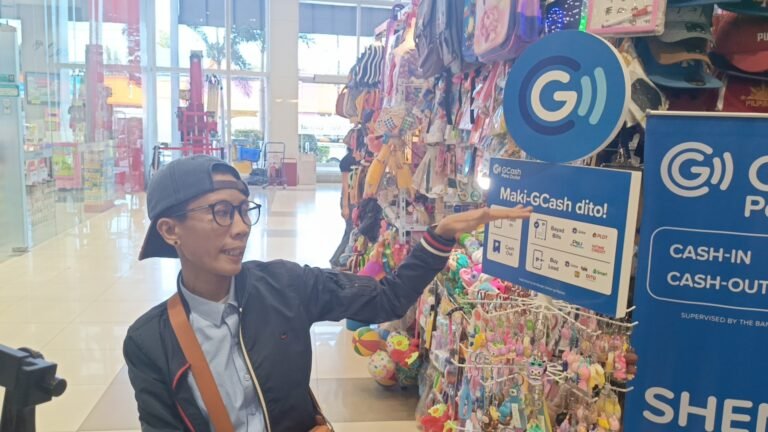
Rhea isn’t just part of the GCash Pera Outlet (PO) program—she’s become one of its most inspiring figures. From a single point of transaction, she now runs 12 cash-in and cash-out branches, serving not just her customers, but helping other small entrepreneurs from remote barangays launch their own micro-enterprises through a simple, powerful system of shared commission. Where there was once isolation and uncertainty, there is now cash flow, hope flow, and a flow of new beginnings.

This isn’t just business. This is bayanihan—with bandwidth.

From Grief to Grit

When the pandemic hit, Rhea was dealing with more than just market shutdowns. She was fighting for her health, and mourning the death of her mother—her anchor, her partner in prayer, and her constant supporter. Like many of us, she faced a silent question: What now?

Her answer came not with fanfare but with faith—and with a mobile phone. Through the GCash Pera Outlet program, she found a way to start again. One padala at a time. One barangay at a time. One heart at a time.

Her story—now the fifth featured in #GCashStories—joins a growing movement of real people with real struggles who found a way forward. A bartender who became a business owner. A drag queen who turned pandemic hardship into empowerment. A para-athlete who fundraised for dignity and dreams. And now, Rhea—who turned pain into purpose and became a lifeline for others.

GCash as Grassroots Power

More than just a payment app, GCash is quietly becoming a platform for grassroots resilience. Through features like PeraOutlet, Scan-to-Pay, GLoan, and GSave, it empowers the unbanked, the underserved, and the unseen. It’s about more than money—it’s about access, dignity, and a digital form of kapitbisig.

Because when cash can move, so can dreams.

And Now, It’s Your Turn

Rhea’s story is not an exception. It’s an invitation.
An invitation to start. To share. To believe.
Because behind every sari-sari store, every tricycle stop, every CSO or LGU barangay office lies a story of someone who dared to dream differently.

If you’re part of a community organization, a civil society group, or a local government unit helping others rise up—tell your story. If you’re a parent who built a business between laundry loads, a young person who created a digital side hustle, or a cooperative that changed a town’s fate through mobile finance—share your journey.

Let your voice be the next spark. Because your pangarap is not just personal—it can be powerful, communal, and catalytic.

Submit your story to #GCashStories and show the nation what bayanihan in the digital age looks like. All it takes is a phone. And a heart that refuses to quit.

Pangarap moSimulan mo.
Because someone out there needs to know it’s possible. Because someone out there is just waiting for your story to begin theirs.

Northehanons Find Salt Farming A Boost Livelihood

0

AS PART OF its Barangay Livelihood Empowerment and Sustainability (BLES) program, Northern Samar’s Provincial Economic Development and Investment Promotions Office (PEDIPO) conducted a hands-on salt farming workshop for members of the Sangputan Workers Association in Barangay Sangputan in the municipality of San Vicente. 

According to economic development and investment promotions officer Jhon Allen Berbon, the workshop and training was led by experienced salt-making practitioner Don Zeus Salvador who targeted to equip the participants with enough technical know-how and practical skills needed to engage in small-scale salt production as a sustainable livelihood.

Encouraged to acclivitize the lives of marginalized Northehanons, Salvador focused on on-site, real-time instruction in the salt crystallization process, proper equipment use and maintenance and environmentally sustainable production methods.

Participants engaged directly in each step of the salt-making process, with the guidance of the resource speaker and PEDIPO facilitators.

‘This learning-by-doing approach ensured that members gained not only theoretical understanding but also confidence in applying the techniques on their own.’

CONFIDENCE, COLLABORATION
This learning-by-doing approach ensured that members gained not only theoretical understanding but also confidence in applying the techniques on their own.

The activity was carried out in close coordination with the municipal government of San Vicente with the cooperation of the barangay officials of Sangputan, reflecting PEDIPO’s commitment to community-based collaboration and inclusive economic empowerment.

The Salt Farming Project in Barangay Sangputan is one of several livelihood initiatives under PEDIPO’s BLES Program which continues to strengthen local associations by providing them with the tools, knowledge and support necessary to develop viable and sustainable livelihoods and contribute to the broader development of Northern Samar.

GOV’T Selling More Assets

0

INSTEAD OF TRANSFORMING idle properties into revenue generating assets, the government is seriously considering selling infrastructures to raise funds covering the proposed 2026 national budget.

According to Department of Finance Undersecretary Domini Velasquez, the government is targeting to raise up to P105 billion until 2026 from the privatization of idle assets in view of the administration’s bid to generate non-tax revenues.

With only five months left in the current year, Velasquez said that the government may only be able to raise P5 billion. She however remains hopeful that they would be able to hit P100 billion in 2026.

“We also want to utilize non-tax revenue through privatization of, let’s say, some idle assets of the government, not just to increase revenues for the government, but also to add value to this area,” the DOF official was quoted as saying during a forum in Makati City.

‘What we do want is crowding of public investments in infrastructure to crowd in private investment, and what we’ve seen recently, there are a lot of interests.’

PRIVATIZATION
As per data collated from a report released by the Development Budget Coordinating Committee (DBCC), the government would somehow be able to generate P4.520-trillion revenue by the end of 2025 — and P4.983 trillion in 2026.

By DOF’s own admission, 28,665 government non-performing assets have already been turned over to the Privatization Management Office (PMO) for privatization.

On top of the list of assets that would be sold — in the guise of the so-called privatization, are P330-million worth of government assets in NLEX Corp., P820 million receivables from the Nonoc Mining and Industrial Corp., the Elorde Sports and Tourism Development Corp. worth P621 million.

Also considered for privatization are the Food Terminal Inc. valued at P40.46 billion, the Caliraya – Botocan – Kalayaan (CBK) Hydroelectric Power Plants with an aggregate value amounting to P36.26 billion, and SMC SLEX Inc. with an estimated value ranging from P12. to P24.8 billion.

COLLABORATION
Velasquez however stressed that DOF is also looking to collaborate with the private sector for more infrastructure projects under the public-private partnership (PPP) scheme.

“We’re allocating enough budget for infrastructure needs of the Philippines, but also, we’re tapping the private sector to join us in nation building,” she added.

“What we do want is crowding of public investments in infrastructure to crowd in private investment, and what we’ve seen recently, there are a lot of interests.” 

According to the Finance official, the government has been receiving quite a number of “unsolicited proposals” which are already under the procurement phase. These include  the Boracay Bridge Project, the digitized traffic enforcement for Bacoor City, the digitization of the physical apprehension of the traffic violations under the single ticketing system (STS), the national single window through an integrated facilitation, the operation and maintenance of Palayan City Hospital, the redevelopment of the General Santos City Public Market, and the South Luzon Integrated Terminal Exchange (SLITX). 

A Docu On A Battle-Scarred Ex-Davao City Police Officer

TIS THE SEASON of documentary films.

​While the provocative docu “Lost Sabungeros,” a foray into the missing cockfighting aficionados,directed by Bryan Kristoffer Brazil still has to see a commercial theatrerelease after a world premiere at the Quezon City International Film Festival (QCIFF) and special screenings in universities including the University of the Philippines Film Institute (UPFI), an equally controversial doc, “Food Delivery: Fresh from the West Philippine Sea,” a take on the struggles of Filipino fisherfolk and the Philippine Coast Guard (PCG) in the delivery of their basic needs in the disputed territorial and maritime WPS, helmed by Baby Ruth Villarama will have itspublic screening at the Power Plant Cinema on July 27, 2025, another audio-visual documentary is set to stir the imagination and consciousness of diverse audiences.

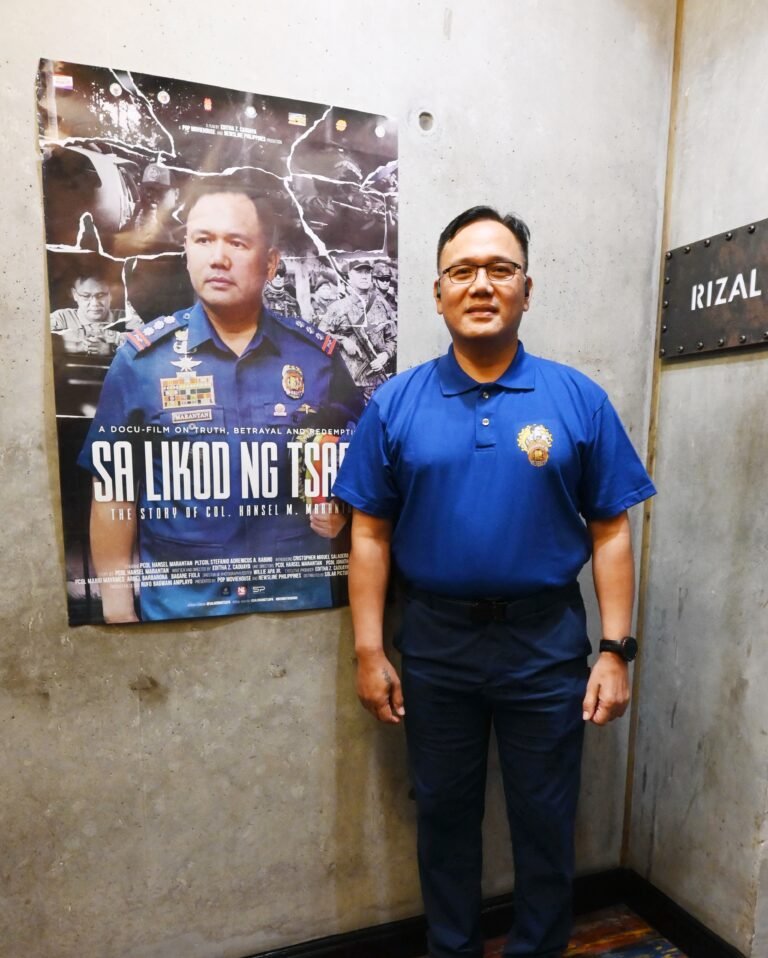
​“Sa Likod ng Tsapa: Beneath the Badge,” a docudrama on the exploits of Col. Hansel Marantan, is scheduled to hit nationwide cinemas on August 13, 2025.

‘[T]he movie is a dramatic presentation of events through file videos and re-enactments. Colonel Marantan himself is the main resource person and a fellow police officer, Col. Mario Mayames … is an interviewee as well in the narrative.’

THE TRUTH

​Colonel Hansel Marantan, who was recently acquitted of his involvement in the Atimonan, Quezon shootout in 2013, said he is ready to face up the various reactions to his story.

​“I don’t mean this to solicit sympathy for me. I am narrating my story to set out the truth, justice and redemption,” said the police office who was also involved in the serving of arrest warrants and raid at the house of the Congressman of the Third District of Negros Oriental Arnulfo Teves, Jr. and the operations in the capture of Apollo Quiboloy, founder of the Kingdom of Jesus Christ (KOJC) in Davao City.

​“There are six cases tackled in the docu,” volunteered Editha Caduaya, writer, director and producer of the film project from Pop Moviehouse and Newsline Philippines.

​Three of them are: the Atimonan encounter, the Teves raid and the Quiboloy capture which were reenacted onscreen. “May mga artista ako na kinuha (I got artists) to portray the various characters in the stories,” informed Edith. 

A NON-ACTOR

​But there is a non-actor featured in the film and he’s none other than Lt. Col. Stefanio Abrenicus Rabino, a subordinate of Marantan and a fellow law enforcer.

​Rabino plays the younger Marantan. “This is my first time to act before the cameras for ColonelMarantan,” he assured. 

​Caduaya, who is also a hard news journalist, said she got interested in filming the biography of Marantan—as a police officer in high profile cases— when he was assigned as the Chief of Police of the Davao City Police District (DCPD).

​“Sabi nila, mahirap umapak sa Davao City pero nagawa ni (They say that it’s hard to step into the Davao City soil he was done by) Colonel Marantan. So, ito ‘yon ‘kako kaya naging intresado ako (This was the man so I became interested),” recalled Editha.

​“Hindi ko nga alam kung paano niya ako nabola (I don’t know how she was able to sway me),” Marantanchuckled but immediately shifted to “a, kung paano niya ako nakumbinsi (oh, let me say, how she was able to convince me),” he smiled.

DRAMATIC PRESENTATION

​According to Caduaya, the movie is a dramatic presentation of events through file videos and re-enactments.

​Colonel Marantan himself is the main resource person and a fellow police officer, Col. Mario Mayames, who is a believer of the protagonist, is an interviewee as well in the narrative.

​“May thirteen resource persons pa rin kami (We also have them).” 

​Caduaya said these people will contribute to make up the whole story.

​At the time of the presscon on a rainy Tuesday evening, the official trailer of “Sa Likod ng Tsapa: Beneath the Badge)” was classified as “G” but the whole picture has yet to pass the Movie and Television Review and Classification Board (MTRCB).

​The film is distributed by Solar Pictures.         

Berated For ‘Sardinas’ Directive; DOTr, LTO Ignore The Issue!

0

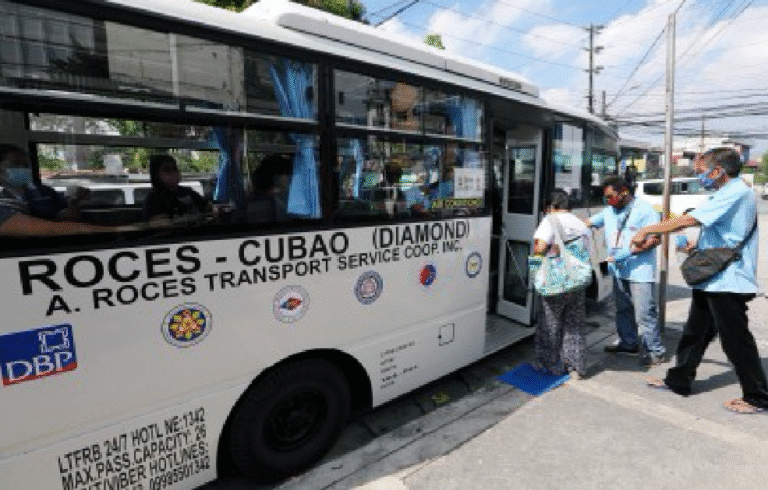
ONE CRAZY IDEA. This was how the new directive issued by the Department of Transportation and Land Transportation Office was tagged in their effort to apprehend all public utility vehicles — particularly UV express and other PUVs — that exceed seating capacity with passengers “packed (like) sardines”.

The directive would penalize not just the drivers but also the commuters and fine them at least P5,000 if boarded more than its registered capacity.

A column by Andrew Pearlman, a development consultant who has worked with INGOs, the UK government, the British Council, and the UN and is a permanent resident of the Philippines based in Metro Manila since 2016 in Rappler, said the directive “completely ignores the issue of supply.

‘A developed country is not a place where the poor have cars. It’s where the rich use public transportation. And why do they use it? Because it is cheap, clean, frequent, and reliable.’

JUST A GIMMICK?
Why do commuters cram into the one, solitary, jeepney they can find? It is not because they have some sort of armpit fetish, or a desire to contract COVID; it is because they need to get to the office, or to get home, and who knows when the next jeepney might come? Telling PUV drivers that they may be apprehended or be fined P5,000 if they board more than 32 persons (which they have done) is just not helpful.”

Pearlman, an active member of the Move As One Coalition, asked the LTO-DoTr to “stop the gimmicks, the ‘sardinas’ rules, blaming the jeepney drivers and commuters but to analyze why this practice persists.”

The LTO must realize that the issue is not greedy jeepney drivers or “undisciplined” Filipinos but is a classic supply-and-demand issue, citing the current stormy weather when public transport systems are hindered by traffic jams and floods forcing the commuter to hail any ride just to get home or to the office quickly, regardless if he risks his/her life.

“If the LTO is to be believed, his example Kiko’s story,  is the fault of the jeepney driver who lets their vehicles fill up irresponsibly, or Filipinos who crowd on without a care in the world for their fellow commuters,” he narrated.
 
A SYSTEMIC ISSUE
Pearlman chided the LTO that the problem is more about lack of (transport) supply and not overcrowding or the driver’s greed for bigger income. There are simply not enough buses or jeepneys to meet the demand. It is a systemic issue.

Pearlson’s prescription: “If you want to end the ‘sardinas’ issue, you need to improve supply. That requires investment in bus and jeepney services. Cities must be free to provide regular, frequent, reliable bus services that link business and transport hubs. This is not one bus every 30 minutes that departs once full; this is one bus every five minutes (or less) that runs to timetable, taking you from near your work to a hub. In Kiko’s case, from his work to the MRT.”

Originally from London, he shared that “the secret to the public transport network is not the overground and underground rail — although this moves millions every day — it is the buses that are timetabled, frequent and go everywhere.”
 

Cities here must be free to institute the same, yet there are Land Transportation Franchising and Regulatory Board restrictions on municipal governments doing just that.

FINAL-MILE TRANSPO
Some, like Quezon City, are trying, but it is a constant battle to work around rules put in place to disempower local government units, he said.

Some of the public transport works in the pipeline will help: the Metro Manila Subway, MRT7, the North-South Commuter Railway, restarting the cancelled Makati Subway. But there will still be a need for more buses and final-mile transportation services to get commuters home, on time and dry, he stressed.

“It is hard work, but it is possible to do it in Manila. Other cities in our region, such as Bangkok, have done it. So, this is a plea: Stop the gimmicks, the ‘sardinas’ rules, blaming the jeepney drivers and commuters. Start investing in municipal bus services, increasing jeepney franchises, and living the supposed commitment to public transport first,” Pearlson explained.

Gustavo Petro, the president of Colombia and former mayor of Bogota, is credited with saying: “A developed country is not a place where the poor have cars. It’s where the rich use public transportation.” And why do they use it? Because it is cheap, clean, frequent, and reliable.

No more gimmicks. If it can be done elsewhere, it can be done here. Well, here’s hoping anyway, his column concluded.

The Ghost Of PMS Past: Why Symptoms Linger After Menopause

0

SO, YOU’VE OFFICIALLY joined Club Postmenopause. Yehey! No more periods, no more pads, no more tracking your cycle like it’s a full-time job. You’re supposed to be free — dancing into your estrogen-free era with nothing but linen dresses and hot flashes, right?

But wait lang — bakit parang andiyan pa rin ‘yung bloating, mood swings, tender boobs, and sudden urges to bite your partner’s head off? Di ba tapos na ‘to?”

You’re not losing it. That’s just the Ghost of PMS Past, and yes, it’s real.

‘Even if your monthly visitor retired, your hormones didn’t exactly pack their bags and disappear. Estrogen and progesterone decline after menopause, but they don’t stay completely flat — they still wobble, spike, and occasionally throw a tantrum.’

1. Hormonal Echoes Are a Thing

Even if your monthly visitor retired, your hormones didn’t exactly pack their bags and disappear. Estrogen and progesterone decline after menopause, but they don’t stay completely flat — they still wobble, spike, and occasionally throw a tantrum.

Think of it like a karaoke bar that closed at midnight but someone keeps yelling “Bohemian Rhapsody” at 2 a.m. The party’s over, but the echoes linger.

2. Estrogen Was Doing More Than You Thought

Estrogen isn’t just for baby-making — it affects your brain, joints, skin, gut, and yes, mood. So when it dips, your body might still respond with all the greatest hits of PMS.

Welcome back, bloating, brain fog, and Why-am-I-crying-over-this-commercial syndrome.

3. Your Adrenals Are Trying — But Struggling

After menopause, your adrenal glands (the same ones handling your stress) take over estrogen production. Unfortunately, they’re not great at multitasking. If you’re already running on caffeine, rage, and two hours of sleep, they can’t keep up.

Result? More hormone weirdness. More PMS déjà vu.

4. It Might Not Be PMS — But It Feels Like It

Sometimes, the usual suspects sneak in dressed as PMS:

• Low thyroid function

• Blood sugar dips (thanks, missed lunch)

• Poor sleep

• Stress-induced cortisol chaos

• Gut issues or food sensitivities

These can all trigger mood swings, fatigue, bloating, and crankiness that feel suspiciously like your old monthly visitor. But plot twist — it’s not PMS. It’s midlife doing its best impression.

5. Traditional Chinese Medicine Blames Your Liver (Sort Of)

In TCM, the Liver is the diva of the organ world. When your Liver Qi is stuck — usually from stress or repressed emotions — you can experience breast tenderness, irritability, mood swings, and that familiar “don’t talk to me” energy.

Menopause or not, your Liver’s still in the drama club.

So… Is This Forever?

Nope. But it can take time for your body to fully rebalance. In the meantime, acupuncture, adaptogens, magnesium, deep rest, and giving zero f***s can all help.

And if your symptoms are intense, persistent, or just plain annoying? See an acupuncturist or a practitioner who gets midlife hormones (and isn’t just going to tell you to “relax”).

The Certified Prick Takeaway:

PMS after menopause?

Yup. It’s your hormones sending ghost texts: “U up?”

Block them with good sleep, better stress management, and maybe an acupuncturist who won’t judge your liver.

Then go live your best unbothered, bloat-free life.

Online Gambling: A New Filipino Malady

0

IT STARTED WITH a haircut. Or at least, it was supposed to. I sat at one of those familiar barber chains in SM Mall of Asia, where the chatter of scissors usually blends with the hum of fluorescent lights and gossip about basketball. But this time, the chairs were full, the queue long—and yet, no barbers in sight. Instead, there they were, a huddle of men, heads bent not over heads of hair but over a cellphone screen. Cheers, groans, fist pumps, and despair. They were watching online sabong.

“E-Sabong,” my barber muttered with a sheepish grin, as he finally came over. “They bet their whole day’s kita. Some go home with thrice the money, most go home with nothing.”

This isn’t a barber shop problem. This is a national malady.

‘The Filipino gambler must be saved from himself. And the Filipino dream must be rescued from the clutch of algorithms pretending to be destiny … It’s the country’s soul.’

LIKE TERMITES
Online gambling—particularly e-Sabong—has crept into Filipino life like termites into wood. Quiet at first. Then, everywhere. And then, suddenly, the house collapses. It has become the silent epidemic, infecting men from all walks of life: barbers, construction workers, seafarers, even government employees.

The stories abound, the kind that you dismiss until you realize they echo your neighbor, your cousin, your friend’s husband. A seafarer, six months at sea, bets away his hard-earned dollars before docking in Manila. Ashamed, he signs up for another tour, never going home. A father of four, who once dreamed of a sari-sari store, now dreams only of the next lucky cock.

BAKA SWERTE
We are a nation that believes in swerte. We live in the hope of winning big, of one lucky break to lift us out of poverty. “Baka ngayon,” we say. “Baka ito na.” And that hope—innocent, even noble at times—has been hijacked by a system designed to make us lose.

Research by social scientists has long revealed our cultural susceptibility to gambling: a mix of fatalism, economic desperation, and social bonding. In one study, it was found that 7 in 10 Filipino respondents knew someone personally addicted to online gambling.

A more chilling statistic: one in five admitted to gambling online themselves. And this was during the height of the pandemic, when jobs were scarce, and hope was scarcer.

ADDICTION WITHOUT PAUSE
What makes this vice so vicious is its accessibility. A cellphone. A GCash account. A few taps. And the illusion of control begins. But online sabong is not just a game—it’s a trap. It is engineered like a slot machine on steroids: 24/7 availability, endless matches, no cool-off periods, no mandatory breaks. And unlike the old cockpit sabong where at least one had to walk, sweat, and spend to place a bet, this one is inside your pocket, under your pillow, behind your child’s homework.

It is gambling without friction. Addiction without pause.

And it has real costs. Not just in pesos lost, but in families broken. In productivity drained. In the mental health crisis swelling in our silence.

Ask the barbers who lose their income. The jeepney drivers who skip meals after a losing streak. The mothers who pawn their last appliance to cover their husband’s debts. Or the retired government official who emptied his entire pension to save his son from gambling syndicates.

ALARMS SOUNDED
There are efforts, to be fair. Civil society groups have begun organizing forums and media campaigns to raise awareness. Church groups have returned to preaching about the evils of gambling—not just moral, but economic.

Psychologists have sounded the alarm, pushing for addiction services tailored to gambling, not just drugs. Some schools have quietly started embedding financial literacy modules into their curriculums, warning students not of bank loans, but of online bets.

Even a few LGUs—bless their courage—have passed ordinances banning internet shops from operating e-Sabong platforms within their premises.

PIECEMEAL EFFORTS
But these efforts are scattered. Piecemeal. And drowned by the billions made by operators who laugh all the way to the bank. Let us be clear: this is not just a vice. It is an industry. A well-oiled, algorithm-driven, data-fueled empire that thrives on our misery. It is enabled not just by smartphones, but by silence. And worse, by complicity.

The government, as usual, is late to the party it helped host. It taxes the industry and calls it regulation. It closes one site and five others sprout like mushrooms in the dark. It bans e-Sabong in name but looks the other way when apps and websites disguised as “games” flourish. There are no betting caps. No self-exclusion policies. No required warnings. No hotline for help. Just algorithms waiting for your next tap.

What we need is a complete overhaul. Regulation, not tolerance. Public health, not profit.

If we can ban cigarettes in schools and alcohol in buses, we can surely put limits on online gambling. If we can require warning labels on junk food, we can require digital guardrails on online bets. Caps on daily losses. Mandatory age verification. Real-time addiction tracking. A national helpline for compulsive gamblers. Programs in barangays to counsel families drowning in debt.

CULTURAL CONVERSATION
And perhaps, most urgently, we must begin a cultural conversation. One that redefines luck not as a miracle, but as a discipline. One that teaches our children that hard work isn’t the enemy of success. That gambling isn’t liberation—it is a new form of enslavement, delivered in high-definition and paid through GCash.

The Filipino gambler must be saved from himself. And the Filipino dream must be rescued from the clutch of algorithms pretending to be destiny.

Because it’s no longer just a haircut at stake. It’s the country’s soul.

Manhunt For A Media Slayer

0

If one could order a crime as one does a dinner, what would you choose? . . . Let’s review the menu. Robbery? Forgery? No, I think not. Rather too vegetarian. It must be murder—red-blooded murder—with trimmings, of course. 
                               — English author Agatha Christie, The A.B.C. Murder

I COUNT MYSELF lucky as I have survived three attempts on my life —once in 1997 in Bulacan when I was with then Doña Remedios Trinidad mayor Norma Rampas; second in Santa Cruz, Manila when I was with my photographer Romel Saniel, and next in Pasay City while celebrating the birthday of a colleague in a well-known nightspot at the corner of Antipolo Street and Roxas Boulevard. 

My friends and co-workers in People’s Journal Tonight, among them my mentor  and hard-hitting columnist Danny Hernandez of Sunday Punch and editor Berteni “Toto” Causing, used to joke after the third attempt that I still had six lives (if I were a cat).

Ironically, weeks after that last ambush, Boss Danny was killed, allegedly in a robbery executed by the notorious “ipit” gang. 

‘(Reporters Without Borders) ranks the Philippines as among the most dangerous countries for journalists in the world and in its February report, it stated that “violence and intimidation are daily realities for radio journalists in the Philippines…”

MORE KILLED
The foregoing flooded my memories as I read an article about journalists being killed like chicken here in the Philippines. Since 1986, a total of 147 journalists, including 89 radio journalists, had been murdered, according to the Paris-based global watchdog Reporters Sans Frontières (RSF), or Reporters Without Borders (RWB). 

The latest victim is radio journalist Erwin Labitad Segovia, 63, popularly known as “Boy Pana”, was gunned down two days ago, on July 21, and the police in southern Philippines have already launched a manhunt to nab the unknown attackers. Timeline for the arrest is also unknown, I’m sure—it’s not so easy to catch unknown suspects!
 
Segovia was attacked and killed at Bislig City, Surigao del Sur province in Mindanao Island, a Muslim-majority region infamous for insurgency and terrorism for decades. 

This is the second killing of a journalist in less than a month.

Former radio broadcaster and transgender rights campaigner, Ali Macalintal, was gunned down as well, again by unknown attackers in General Santos City, also in Mindanao, last June 23 the current year. 

Segovia hosted a popular radio program “Diritsahan!” (Direct) with Radio WOW FM, covering topics including local governance, community issues, and socio-political topics. He was on his way home when two motorcycle-riding attackers followed and shot him at close range.

SAFETY OF JOURNOS
The Presidential Task Force on Media Security (PTFoMS), the State-run watchdog formed during the presidency of Davao strongman Rodrigo “Rody’ Duterte and now headed by veteran media man Jose “Joe” Torres, said in a statement that it is joining with Philippine National Police Media Vanguards and the Media-Citizen Council to investigate Segovia’s assassination.

Torres immediately stated that “the safety of journalists remains a priority for the government and justice for victims of media-related violence continues to be a national concern.” 

“National concern my boot—We’re sure no one’s going to pay for the crime!” one of my radical media colleague reacted. 

And former Cantilan, Surigao del Sur mayor Carla Lopez Pichay also reacted to Segovia’s murder, declaring one million pesos (US$17,500) as bounty for information on the attackers responsible for the brutal killing. Segovia reportedly worked for Pichay during her bid for the congressional seat of Surigao del Sur during the mid-term election last May 12.

PH NOT SAFE FOR JOURNOS
RWB ranks the Philippines as among the most dangerous countries for journalists in the world and in its February report, it stated that “violence and intimidation are daily realities for radio journalists in the Philippines, who must constantly check if they are safe—even in their recording studios.”
 
The New York City-based Committee to Protect Journalists ranked the Philippines ninth in its 2024 Global Impunity Index, which tracks countries where journalist murders remain unsolved—and they truly remain “unsolved”. 

That is the sad reality. 

(FOR your comments or suggestions, complaints or requests, just send a message through my email at cipcab2006@yahoo.com or text me at cellphone numbers 09171656792 or 09171592256 during office hours from Monday to Friday. Thank you and mabuhay! )

Sabungeros’ Sad Saga

0

THE SAGA BEGINS with the many disappearing cockfight afficionados in various provinces way back in 2021. The total number of missing sabungeros by July 2025, as monitored by the press reached 34 (Inquirer). The families of the missing cockfighting enthusiasts reported their concerns to the PNP and other enforcement agencies, as soon as they learned about their relatives’ disappearances.

But what happened?

The aggrieved families gravely worried about the fate of their missing loved ones. Concerned, too, were the people who read or heard the breaking news. They wondered what the PNP generals and officials were doing about the missing persons.

Many citizens were alarmed and naturally expected their mayors, other public officials, and law enforcement agencies, given their mandate to serve the people, to immediately take action about the mysterious disappearance of so many sabungeros.

‘Why did it take a whistleblower to start an honest-to-goodness search for the truth and justice regarding the many missing Filipinos? … given this sad saga of the sabungeros, when will the Filipino people feel safe from criminals.’

EX-CLOSE AIDE
Suddenly, in mid-July 2025, a whistleblower, alyas “Totoy,” came out on TV, claiming that gambling tycoon Charlie “Atong” Ang and actress, Gretchen Barretto, and a number of retired and active PNP officials were responsible for the disappearance of the sabungeros. He claimed that the missing sabungeros were abducted and strangled to death by a cabal of policemen before their bodies were dumped in Taal Lake in 2021 and 2022.

“Totoy” eventually came out in the open, identifying himself as Julie “Dondon” Patidongan, (former) close aide of Atong Ang. He decided to be a whistleblower on the case, noting threats against his family. In his administrative complaint filed with the National Police Commission (Napolcom) on July 14, he named 18 active and dismissed policemen as involved in the case.

He identified two of them as Police Col. Jacinto Malinao Jr. and Lt. Col. Ryan Jay Orapa. He said, “They were the individuals tasked to kill people during the war on drugs before. That’s it.”

CONTRACTUAL KILLINGS
In a talk with reporters, Patidongan also tagged retired Police Lt. Gen. Jonnel Estomo as involved in the case, claiming “He was one of the people who urged Mr. Atong Ang to have me killed.”

In a live-streamed TV, in the presence of Napolcom Vice Chairperson and Executive Officer Rafael Calinisan and the family representatives of the victims, Patidongan confirmed what he already narrated in talks with reporters.

DOJ secretary Crispin Remulla, who monitored the situation as divulged by Patidongan said, “The people who undertake the contractual killings may intersect somehow with the drug war and with the ‘e-sabong.’ There are people involved in killing during the drug war and in e-sabong. That’s as far as we can trace right now, but we will have to establish clearer links to each other.”

IT TOOK SO LONG
The big question that is disturbing and truly alarming to all Filipinos of goodwill, particularly on peace and order, and justice, is: “Why did it take so long, more than 4 years, for the PNP, and the DOJ and other government law enforcement agencies to start looking seriously at the legitimate concern of the families of the missing sabungeros?

Why did it take a whistleblower to start an honest-to-goodness search for the truth and justice regarding the many missing Filipinos?

People cannot help thinking that the PNP, DOJ and the current Marcos-Duterte administration and its related justice-implementing arms have been sleeping on the job, or perhaps even deliberately delaying the investigation of the case.

Or, is this current administration unashamedly still enamored with the “Kill Kill Kill” policy of the murderer now detained in the ICC detention center in the Hague?

In a nutshell, given this sad saga of the sabungeros, when will the Filipino people feel safe from criminals, under this Bongbong Marcos-Sara Duterte leadership?

Drowning In Neglect

0

EVERY YEAR, THE government has been spending hundreds of billions for the so-called flood control projects but most of them — if not none at all — seemed to have served its purpose. 

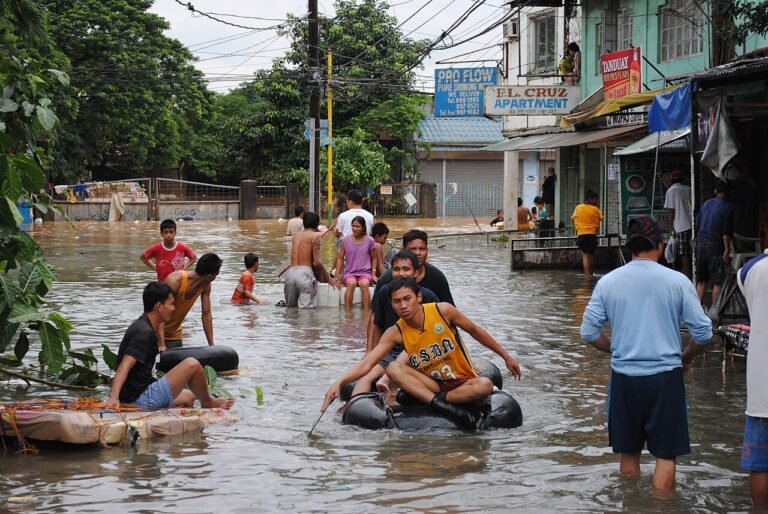
Deaths, injuries, rising waters, isolated communities, stranded people, stalled vehicles, submerged homes, and displaced families, to name a few. These are but the same scenario we see every year. 

There are various reasons behind the epic failure of these multi-billion projects funded using the hard-earned money we paid to the government in the form of taxes.

‘[F]lood control programs yielded no results, no audit, and zero accountability. As if these dilemmas aren’t enough …. the government blamed the Filipinos for the persistent flooding in most parts of the country.’

DEEPER CURRENTS
Beneath the floodwaters lie deeper currents: corruption, neglect, and a leadership void that’s been allowed to persist for far too long.

When Ferdinand Marcos Jr. took Malacañang by storm via a convincing victory on board the infamous UniTeam, his allies exposed systematic anomalies in the government flood control program in what seemed more like a PR stunt.

Moving forward, perennial flooding remains unresolved notwithstanding the fact that the not-so-new administration has burned more money than any other administration in the past.

Worse, flood control programs yielded no results, no audit, and zero accountability.

As if these dilemmas aren’t enough, nincompoops in the government blamed the Filipinos for the persistent flooding in most parts of the country. 
 
MMDA’s OFFICIAL ALIBI
A top official of the Metropolitan Manila Development Authority (MMDA) said that the lack of discipline among city folks caused massive floods in Metro Manila, while the man at the helm of the Department of Public Works and Highways (DPWH) hinted at the aging drainage system as the culprit.

Well, yes, there could be some truth behind the MMDA official’s alibi, but the truth remains — we don’t have in-city solid waste disposal facilities. We don’t have a reliable garbage collection system. We don’t have an effective implementation of Republic Act 9003 (Ecological Solid Waste Management Act). 

What’s irking though is the lousy excuse of the DPWH boss who hinted at the need to secure a loan to replace what he claimed as an aging drainage system. 

RESILIENCY?
If my memory serves me right, a huge chunk of the hundreds of billions spent by the DPWH annually on flood control projects were intended for the drainage system. 

The predicament we’re facing only goes to show that the people at the helm of DPWH failed to deliver results. They’re merely relying on our resiliency. Kayang-kaya naman daw natin bumangon pagkatapos ng unos.

Floods aren’t just a failure of infrastructure—they’re a failure of vision, patriotism, and moral leadership. This is not normal. It is not inevitable.