Monday, May 11, 2026
Home Blog Page 48

Whole-Of-Nation Approach In Food Control

0

YES, THERE’S HUGE problem in “flood control.” There is in “food control” as well. 

The DA chief, (Secretary Francisco Tiu Laurel, Jr.,) fresh from his wellness leave, immediately ordered a relentless pursuit against all modalities of agrifishery smuggling and all forms of economic sabotage.

The department’s Inspectorate and Enforcement (DA-IE) responded and flagged tens and tens of containerized agrifishery goods misdeclared as general merchandise. 

Of late, the DA-IE, applying its Soft Touch Enforcement Protocols, rather than the conventional Hard Action/Reaction Display protocols, netted more than 50 containers of misdeclared agrifishery (A/F) commodities at the Port of Subic alone. 

‘The optical narratives of DA, DOH, and BOC officials during opening of misdeclared cargoes beginning June of this year are a testimony of the limitless potency of Soft Touch Endorcement Protocols.’

EVADING BORDER CONTROL

Similar fraudulent practices were flagged by the DA’s AGRIForcement operations in the Port Manila, Manila International Port, as well as in Batangas.

It will be noted that the scheme of choice by smugglers and fraudsters is to misdeclare imported goods as processed food when in reality these are A/F goods. This ploy is done to deliberately ward off DA TRA/FSRA port-based Quarantine Inspectors who are mandated to check on imported A/F goods only.  

Believing these misdeclared goods will be able to avoid or evade DA’s border control checks, they had the consignments declared as processed foods, imports that are falling under the turf of the DOH-Food and Drug Administration (FDA) and knowing the latter has no port-based enforcers or regulators. 


 Little these fraudsters know that the DA-IE had switched from HARD protocols to SOFT protocols, which enables it to pursue illegally entered goods beyond the port-zones. SOFT power is not done with firepower and boots on the ground, but with paper chasers demanding the documents covering the cargoes on the ground.

The optical narratives of DA, DOH, and BOC officials during opening of misdeclared cargoes beginning June of this year are a testimony of the limitless potency of Soft Touch Endorcement Protocols.

DONATION TO DSWD

Undersecretary Carlos C. Carag of the DA-IE is now training his outfit’s eyes on the shenanigans connected with the condemnation of seized and confiscated cargoes.

“Under the law, seized agrifishery goods should be immediately turned over to the DA regulatory agency for disposition,” Carag said. 

“Currently, we have asked our DA experts to determine the suitability for human consumption of these agrifishery goods. Fortunately, some 25 containers of mackerels, among others, were certified as still fit for human consumption, Carag added.

 The Agriculture Chief directed the immediate donation of these goods to the DSWD in compliance with the President’s directive.

“Coordinate with DSWD and have all these safely tested goods turned over to them. Bahala na DSWD. The President knows this already,” Secretary Laurel stresses.

BLESSED SUPPORT

As confiscations of A/F products at the port zones are expected to be a regular occurrence with the dynamism of Laurel’s agriforcement initiatives, plus the newly minted Anti-Agricultural Economic Sabotage Act, the DA-IE is crafting  a program to be dubbed as Project DAMAYAN (DA at Malacañan Para sa Mamamayan) where “all seized but still safe agrifishery goods” will be shared with targeted sectors of our society,” suggests Carag.

BLESSED Movement Chair Herbert Martinez expressed appreciation of the DA’s concern for the underprivileged, the vulnerable, and struggling members of our society. 

“We will definitely support this program. Our two million-strong members, supporters, and adherents throughout the country are willing to support DA’s initiatives through a whole-of-nation approach,” Martinez said.


Why Filipino Capitalists Get Wary Of Deals During ‘Ghost Month’

A COMMON MISCONCEPTION is that Ghost Month always begins on August 1 and lasts for 30 days. In reality, its timing shifts annually based on the Chinese lunar calendar.

This year, the seventh lunar month—traditionally regarded as the (Hungry) Ghost Month—begins on August 23 to September 21. According to the website, chus.vnJuly 2025 in the Gregorian calendar doesn’t coincide with the Ghost Month because 2025 has a leap 6th lunar month. Therefore, the Ghost Month (7th lunar month) shifts from August 23 to September 21 in the Gregorian calendar, completely separate from July (July 1-31).

Ghost Month is one of several Chinese cultural traditions observed even by non-Chinese Filipinos. 

Alongside it are celebrations such as the Lunar New Year, Feng Shui practices, and the Mooncake Festival. These customs reflect the profound cultural influence of the Chinese community in the Philippines, whose roots date back to the establishment of the world’s oldest Chinatown in 1594.

‘(Filipino-Chinese) entrepreneurs … often delay major transactions, contract signings, and new ventures during Ghost Month. Why? Because luck—or the lack of it—is believed to play a major role in business success.’

CENTURIES-OLD BELIEFS

Common question that crops up is: Why Are Filipino Business Owners Cautious During Ghost Month?

Filipino entrepreneurs, especially those with Chinese heritage or influence, often delay major transactions, contract signings, and new ventures during Ghost Month. Why? Because luck—or the lack of it—is believed to play a major role in business success.

While some of this caution may seem superstitious, it is rooted in centuries-old beliefs. 

In Chinese culture, the number seven symbolizes a blend of Yin and Yang and the Five Elements—Earth, Fire, Metal, Wood, and Water. Interestingly, the Mandarin word for seven, qi, also means “vital energy”—but it can phonetically resemble words like “cheat” or “deceit” depending on tone, which adds a layer of ambiguity and unease.

GHOSTS AMONG THE LIVING

The term “Ghost Month” refers to the belief that, during this lunar month, the gates of the afterlife open and the spirits of the dead—especially restless or hungry ghosts—roam the earth. These spirits are believed to seek food, entertainment, or retribution, and are thought to bring misfortune if disrespected or ignored.

According to Feng Shui master Hanz Cua, Ghost Month marks a period when the spiritual realm becomes more active and potentially hazardous. He has pointed to major tragedies that occurred during this time, such as:

• The Plaza Miranda bombing (1971)

• The assassination of Ninoy Aquino (1983)

• The death of Cory Aquino and Typhoon Ondoy (2009)

• The 9/11 terror attacks in New York City (2001)

While correlation doesn’t imply causation, the timing of these events has only deepened public wariness.

COMMON PRECAUTIONS 

During this period, many Filipino-Chinese businesspeople—and even ordinary citizens—opt to:

• Avoid launching businesses, signing contracts, or making large investments

• Postpone weddings, major travel, or surgeries

• Refrain from moving into new homes or starting construction projects

If such events are unavoidable, Feng Shui experts recommend several countermeasures:

• Burning paper money (joss paper) to appease spirits

• Offering food—often pork, chicken, and fruits—outside doors and windows

• Lighting red candles and saying prayers for the departed

• Wearing red, playing cheerful music, and keeping homes well-lit

• Displaying protective charms and symbols

It is believed that ignoring the spirits can provoke their anger. Children and the elderly, considered especially vulnerable, are advised to stay indoors after dark.

CAUTION OVER CYNICISM

Even for those who are skeptical about the idea of wandering spirits, many still choose to observe these practices out of respect—or out of caution. 

After all, as many would say in business, “Better safe than sorry!”.

No Talent? No Problem. Studio One Lets You Be a Star Without Leaving the Mall

NOT ALL OF us are headed for The Voice or trending on Spotify. Some of us just want to sing our hearts out, dance like no one’s watching, and walk away with a video that says: “Look, Ma—I made it.”

Enter Studio One—a pop-up-style recording studio now open in select malls that lets anyone, yes anyone, live out their popstar dreams. This isn’t your neighborhood videoke machine. It’s a mini stage, a production booth, and a personal concert rolled into one—complete with lights, sound system, costumes, and a camera crew who won’t judge you if you forget the lyrics halfway through.

You pick a song. You suit up with whatever glittery props or dramatic hats are available. You step into the spotlight. And just like that, you’re the headliner. No press tour required.

Currently open in SM City North EDSA (North Towers)SM BF Parañaque, and Sta. Lucia Mall, Studio One is turning everyday shoppers into full-blown performers—complete with a printed photo and a digital music video you can proudly post or bury in your hard drive for future laughs.

It’s Not About Being Good—It’s About Going For It

Studio One doesn’t care if you’re pitch-perfect or if you sound like you swallowed a kazoo. What matters is that you showed up. You dared. You channeled your inner diva, rock god, or frustrated ‘90s boyband member and gave the performance of your mall-going life.

It’s perfect for quick solo trips, barkada bonding, barkadaroasting, awkward but unforgettable office team-building sessions, or spontaneous couple dates that ditch the typical movie-popcorn routine.

The Dream is Packaged, Printed, and Ready for Upload

Each session ends with a keepsake—a 5R photo and a digital copy of your performance, polished with just the right amount of lighting magic to make anyone look about 10% cooler than they actually are. Staff are there to help you every step of the way. No panic, no pressure, and definitely no gatekeeping.

According to Cia Banaag, Marketing Head of Studio One, the goal is simple: make the dream of performing accessible. No expensive gear. No industry connections. Just walk in, sing, and go. “Filipinos love to sing,” she said. “We just wanted to make that love feel a little more real, a little more special, and a lot more memorable.”

And because it’s tucked inside malls, there’s no need to plan a whole production. You can drop by in your pambahay or post-coffee outfit and still walk out with something more exciting than groceries.

More Than Just a Solo Stage

Here’s the best part: Studio One isn’t just for aspiring divas or karaoke junkies. It’s open to schoolsCSOscommunity groups, and even LGUs. Think choir videos, advocacy jingles, dance team features, or anniversary tributes. If your organization has a message—or just wants to let loose—you now have a stage that requires zero logistics and zero permits.

So, here’s the pitch: Make a memory. Tell a story. Bring the whole team if you must.

If you’re a group, an org, a campus collective, or a barangay choir—don’t just post about your impact. Sing it. Record it. Make it unforgettable.

Follow Studio One online or visit any of their mall branches to get started.

Who knew your next best memory could come with auto-tune and a receipt?

How Rhea Inayan and #GCashStories Are Inspiring a Nation to Dream Again

WHEN THE LIGHTS dimmed at the regional premiere of #GCashStories: Pangarap Mo, Simulan Mo! in Bacolod City, no one expected tears to mix with applause. But that’s what happens when a story speaks directly to the soul.

The spotlight that night was not on celebrities, but on community champions. And in the heart of the show stood Rhea Inayan—a boutique owner, a grieving daughter, a COVID survivor, and a woman who chose to rise, not retreat.

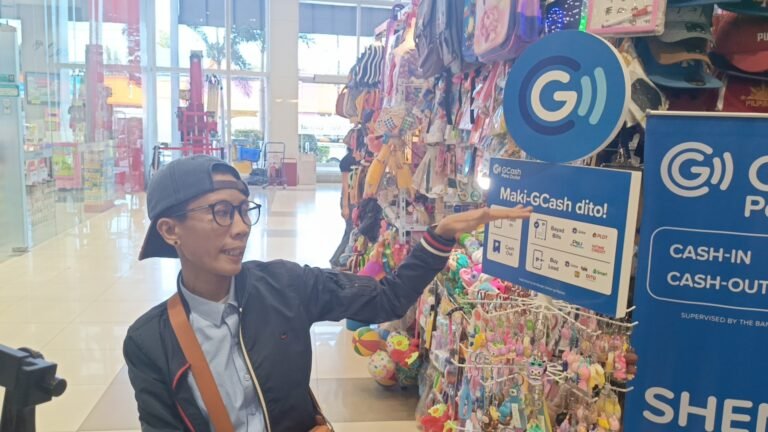
Rhea isn’t just part of the GCash Pera Outlet (PO) program—she’s become one of its most inspiring figures. From a single point of transaction, she now runs 12 cash-in and cash-out branches, serving not just her customers, but helping other small entrepreneurs from remote barangays launch their own micro-enterprises through a simple, powerful system of shared commission. Where there was once isolation and uncertainty, there is now cash flow, hope flow, and a flow of new beginnings.

This isn’t just business. This is bayanihan—with bandwidth.

From Grief to Grit

When the pandemic hit, Rhea was dealing with more than just market shutdowns. She was fighting for her health, and mourning the death of her mother—her anchor, her partner in prayer, and her constant supporter. Like many of us, she faced a silent question: What now?

Her answer came not with fanfare but with faith—and with a mobile phone. Through the GCash Pera Outlet program, she found a way to start again. One padala at a time. One barangay at a time. One heart at a time.

Her story—now the fifth featured in #GCashStories—joins a growing movement of real people with real struggles who found a way forward. A bartender who became a business owner. A drag queen who turned pandemic hardship into empowerment. A para-athlete who fundraised for dignity and dreams. And now, Rhea—who turned pain into purpose and became a lifeline for others.

GCash as Grassroots Power

More than just a payment app, GCash is quietly becoming a platform for grassroots resilience. Through features like PeraOutlet, Scan-to-Pay, GLoan, and GSave, it empowers the unbanked, the underserved, and the unseen. It’s about more than money—it’s about access, dignity, and a digital form of kapitbisig.

Because when cash can move, so can dreams.

And Now, It’s Your Turn

Rhea’s story is not an exception. It’s an invitation.
An invitation to start. To share. To believe.
Because behind every sari-sari store, every tricycle stop, every CSO or LGU barangay office lies a story of someone who dared to dream differently.

If you’re part of a community organization, a civil society group, or a local government unit helping others rise up—tell your story. If you’re a parent who built a business between laundry loads, a young person who created a digital side hustle, or a cooperative that changed a town’s fate through mobile finance—share your journey.

Let your voice be the next spark. Because your pangarap is not just personal—it can be powerful, communal, and catalytic.

Submit your story to #GCashStories and show the nation what bayanihan in the digital age looks like. All it takes is a phone. And a heart that refuses to quit.

Pangarap moSimulan mo.
Because someone out there needs to know it’s possible. Because someone out there is just waiting for your story to begin theirs.

Northehanons Find Salt Farming A Boost Livelihood

0

AS PART OF its Barangay Livelihood Empowerment and Sustainability (BLES) program, Northern Samar’s Provincial Economic Development and Investment Promotions Office (PEDIPO) conducted a hands-on salt farming workshop for members of the Sangputan Workers Association in Barangay Sangputan in the municipality of San Vicente. 

According to economic development and investment promotions officer Jhon Allen Berbon, the workshop and training was led by experienced salt-making practitioner Don Zeus Salvador who targeted to equip the participants with enough technical know-how and practical skills needed to engage in small-scale salt production as a sustainable livelihood.

Encouraged to acclivitize the lives of marginalized Northehanons, Salvador focused on on-site, real-time instruction in the salt crystallization process, proper equipment use and maintenance and environmentally sustainable production methods.

Participants engaged directly in each step of the salt-making process, with the guidance of the resource speaker and PEDIPO facilitators.

‘This learning-by-doing approach ensured that members gained not only theoretical understanding but also confidence in applying the techniques on their own.’

CONFIDENCE, COLLABORATION
This learning-by-doing approach ensured that members gained not only theoretical understanding but also confidence in applying the techniques on their own.

The activity was carried out in close coordination with the municipal government of San Vicente with the cooperation of the barangay officials of Sangputan, reflecting PEDIPO’s commitment to community-based collaboration and inclusive economic empowerment.

The Salt Farming Project in Barangay Sangputan is one of several livelihood initiatives under PEDIPO’s BLES Program which continues to strengthen local associations by providing them with the tools, knowledge and support necessary to develop viable and sustainable livelihoods and contribute to the broader development of Northern Samar.

GOV’T Selling More Assets

0

INSTEAD OF TRANSFORMING idle properties into revenue generating assets, the government is seriously considering selling infrastructures to raise funds covering the proposed 2026 national budget.

According to Department of Finance Undersecretary Domini Velasquez, the government is targeting to raise up to P105 billion until 2026 from the privatization of idle assets in view of the administration’s bid to generate non-tax revenues.

With only five months left in the current year, Velasquez said that the government may only be able to raise P5 billion. She however remains hopeful that they would be able to hit P100 billion in 2026.

“We also want to utilize non-tax revenue through privatization of, let’s say, some idle assets of the government, not just to increase revenues for the government, but also to add value to this area,” the DOF official was quoted as saying during a forum in Makati City.

‘What we do want is crowding of public investments in infrastructure to crowd in private investment, and what we’ve seen recently, there are a lot of interests.’

PRIVATIZATION
As per data collated from a report released by the Development Budget Coordinating Committee (DBCC), the government would somehow be able to generate P4.520-trillion revenue by the end of 2025 — and P4.983 trillion in 2026.

By DOF’s own admission, 28,665 government non-performing assets have already been turned over to the Privatization Management Office (PMO) for privatization.

On top of the list of assets that would be sold — in the guise of the so-called privatization, are P330-million worth of government assets in NLEX Corp., P820 million receivables from the Nonoc Mining and Industrial Corp., the Elorde Sports and Tourism Development Corp. worth P621 million.

Also considered for privatization are the Food Terminal Inc. valued at P40.46 billion, the Caliraya – Botocan – Kalayaan (CBK) Hydroelectric Power Plants with an aggregate value amounting to P36.26 billion, and SMC SLEX Inc. with an estimated value ranging from P12. to P24.8 billion.

COLLABORATION
Velasquez however stressed that DOF is also looking to collaborate with the private sector for more infrastructure projects under the public-private partnership (PPP) scheme.

“We’re allocating enough budget for infrastructure needs of the Philippines, but also, we’re tapping the private sector to join us in nation building,” she added.

“What we do want is crowding of public investments in infrastructure to crowd in private investment, and what we’ve seen recently, there are a lot of interests.” 

According to the Finance official, the government has been receiving quite a number of “unsolicited proposals” which are already under the procurement phase. These include  the Boracay Bridge Project, the digitized traffic enforcement for Bacoor City, the digitization of the physical apprehension of the traffic violations under the single ticketing system (STS), the national single window through an integrated facilitation, the operation and maintenance of Palayan City Hospital, the redevelopment of the General Santos City Public Market, and the South Luzon Integrated Terminal Exchange (SLITX). 

A Docu On A Battle-Scarred Ex-Davao City Police Officer

TIS THE SEASON of documentary films.

​While the provocative docu “Lost Sabungeros,” a foray into the missing cockfighting aficionados,directed by Bryan Kristoffer Brazil still has to see a commercial theatrerelease after a world premiere at the Quezon City International Film Festival (QCIFF) and special screenings in universities including the University of the Philippines Film Institute (UPFI), an equally controversial doc, “Food Delivery: Fresh from the West Philippine Sea,” a take on the struggles of Filipino fisherfolk and the Philippine Coast Guard (PCG) in the delivery of their basic needs in the disputed territorial and maritime WPS, helmed by Baby Ruth Villarama will have itspublic screening at the Power Plant Cinema on July 27, 2025, another audio-visual documentary is set to stir the imagination and consciousness of diverse audiences.

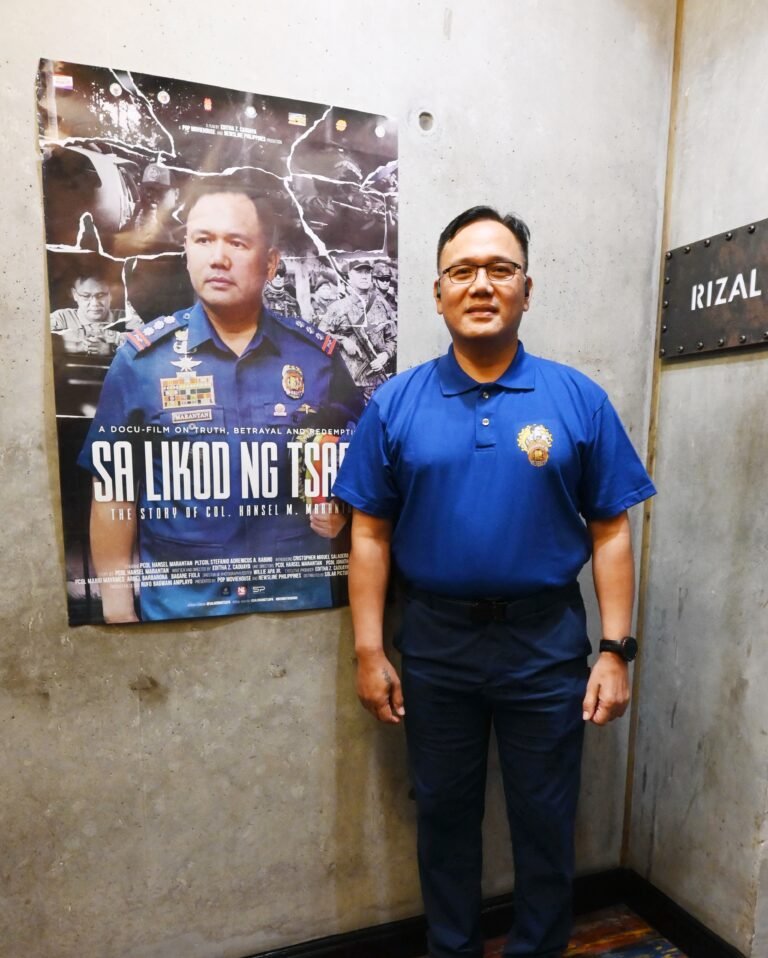
​“Sa Likod ng Tsapa: Beneath the Badge,” a docudrama on the exploits of Col. Hansel Marantan, is scheduled to hit nationwide cinemas on August 13, 2025.

‘[T]he movie is a dramatic presentation of events through file videos and re-enactments. Colonel Marantan himself is the main resource person and a fellow police officer, Col. Mario Mayames … is an interviewee as well in the narrative.’

THE TRUTH

​Colonel Hansel Marantan, who was recently acquitted of his involvement in the Atimonan, Quezon shootout in 2013, said he is ready to face up the various reactions to his story.

​“I don’t mean this to solicit sympathy for me. I am narrating my story to set out the truth, justice and redemption,” said the police office who was also involved in the serving of arrest warrants and raid at the house of the Congressman of the Third District of Negros Oriental Arnulfo Teves, Jr. and the operations in the capture of Apollo Quiboloy, founder of the Kingdom of Jesus Christ (KOJC) in Davao City.

​“There are six cases tackled in the docu,” volunteered Editha Caduaya, writer, director and producer of the film project from Pop Moviehouse and Newsline Philippines.

​Three of them are: the Atimonan encounter, the Teves raid and the Quiboloy capture which were reenacted onscreen. “May mga artista ako na kinuha (I got artists) to portray the various characters in the stories,” informed Edith. 

A NON-ACTOR

​But there is a non-actor featured in the film and he’s none other than Lt. Col. Stefanio Abrenicus Rabino, a subordinate of Marantan and a fellow law enforcer.

​Rabino plays the younger Marantan. “This is my first time to act before the cameras for ColonelMarantan,” he assured. 

​Caduaya, who is also a hard news journalist, said she got interested in filming the biography of Marantan—as a police officer in high profile cases— when he was assigned as the Chief of Police of the Davao City Police District (DCPD).

​“Sabi nila, mahirap umapak sa Davao City pero nagawa ni (They say that it’s hard to step into the Davao City soil he was done by) Colonel Marantan. So, ito ‘yon ‘kako kaya naging intresado ako (This was the man so I became interested),” recalled Editha.

​“Hindi ko nga alam kung paano niya ako nabola (I don’t know how she was able to sway me),” Marantanchuckled but immediately shifted to “a, kung paano niya ako nakumbinsi (oh, let me say, how she was able to convince me),” he smiled.

DRAMATIC PRESENTATION

​According to Caduaya, the movie is a dramatic presentation of events through file videos and re-enactments.

​Colonel Marantan himself is the main resource person and a fellow police officer, Col. Mario Mayames, who is a believer of the protagonist, is an interviewee as well in the narrative.

​“May thirteen resource persons pa rin kami (We also have them).” 

​Caduaya said these people will contribute to make up the whole story.

​At the time of the presscon on a rainy Tuesday evening, the official trailer of “Sa Likod ng Tsapa: Beneath the Badge)” was classified as “G” but the whole picture has yet to pass the Movie and Television Review and Classification Board (MTRCB).

​The film is distributed by Solar Pictures.         

Berated For ‘Sardinas’ Directive; DOTr, LTO Ignore The Issue!

0

ONE CRAZY IDEA. This was how the new directive issued by the Department of Transportation and Land Transportation Office was tagged in their effort to apprehend all public utility vehicles — particularly UV express and other PUVs — that exceed seating capacity with passengers “packed (like) sardines”.

The directive would penalize not just the drivers but also the commuters and fine them at least P5,000 if boarded more than its registered capacity.

A column by Andrew Pearlman, a development consultant who has worked with INGOs, the UK government, the British Council, and the UN and is a permanent resident of the Philippines based in Metro Manila since 2016 in Rappler, said the directive “completely ignores the issue of supply.

‘A developed country is not a place where the poor have cars. It’s where the rich use public transportation. And why do they use it? Because it is cheap, clean, frequent, and reliable.’

JUST A GIMMICK?
Why do commuters cram into the one, solitary, jeepney they can find? It is not because they have some sort of armpit fetish, or a desire to contract COVID; it is because they need to get to the office, or to get home, and who knows when the next jeepney might come? Telling PUV drivers that they may be apprehended or be fined P5,000 if they board more than 32 persons (which they have done) is just not helpful.”

Pearlman, an active member of the Move As One Coalition, asked the LTO-DoTr to “stop the gimmicks, the ‘sardinas’ rules, blaming the jeepney drivers and commuters but to analyze why this practice persists.”

The LTO must realize that the issue is not greedy jeepney drivers or “undisciplined” Filipinos but is a classic supply-and-demand issue, citing the current stormy weather when public transport systems are hindered by traffic jams and floods forcing the commuter to hail any ride just to get home or to the office quickly, regardless if he risks his/her life.

“If the LTO is to be believed, his example Kiko’s story,  is the fault of the jeepney driver who lets their vehicles fill up irresponsibly, or Filipinos who crowd on without a care in the world for their fellow commuters,” he narrated.
 
A SYSTEMIC ISSUE
Pearlman chided the LTO that the problem is more about lack of (transport) supply and not overcrowding or the driver’s greed for bigger income. There are simply not enough buses or jeepneys to meet the demand. It is a systemic issue.

Pearlson’s prescription: “If you want to end the ‘sardinas’ issue, you need to improve supply. That requires investment in bus and jeepney services. Cities must be free to provide regular, frequent, reliable bus services that link business and transport hubs. This is not one bus every 30 minutes that departs once full; this is one bus every five minutes (or less) that runs to timetable, taking you from near your work to a hub. In Kiko’s case, from his work to the MRT.”

Originally from London, he shared that “the secret to the public transport network is not the overground and underground rail — although this moves millions every day — it is the buses that are timetabled, frequent and go everywhere.”
 

Cities here must be free to institute the same, yet there are Land Transportation Franchising and Regulatory Board restrictions on municipal governments doing just that.

FINAL-MILE TRANSPO
Some, like Quezon City, are trying, but it is a constant battle to work around rules put in place to disempower local government units, he said.

Some of the public transport works in the pipeline will help: the Metro Manila Subway, MRT7, the North-South Commuter Railway, restarting the cancelled Makati Subway. But there will still be a need for more buses and final-mile transportation services to get commuters home, on time and dry, he stressed.

“It is hard work, but it is possible to do it in Manila. Other cities in our region, such as Bangkok, have done it. So, this is a plea: Stop the gimmicks, the ‘sardinas’ rules, blaming the jeepney drivers and commuters. Start investing in municipal bus services, increasing jeepney franchises, and living the supposed commitment to public transport first,” Pearlson explained.

Gustavo Petro, the president of Colombia and former mayor of Bogota, is credited with saying: “A developed country is not a place where the poor have cars. It’s where the rich use public transportation.” And why do they use it? Because it is cheap, clean, frequent, and reliable.

No more gimmicks. If it can be done elsewhere, it can be done here. Well, here’s hoping anyway, his column concluded.

The Ghost Of PMS Past: Why Symptoms Linger After Menopause

0

SO, YOU’VE OFFICIALLY joined Club Postmenopause. Yehey! No more periods, no more pads, no more tracking your cycle like it’s a full-time job. You’re supposed to be free — dancing into your estrogen-free era with nothing but linen dresses and hot flashes, right?

But wait lang — bakit parang andiyan pa rin ‘yung bloating, mood swings, tender boobs, and sudden urges to bite your partner’s head off? Di ba tapos na ‘to?”

You’re not losing it. That’s just the Ghost of PMS Past, and yes, it’s real.

‘Even if your monthly visitor retired, your hormones didn’t exactly pack their bags and disappear. Estrogen and progesterone decline after menopause, but they don’t stay completely flat — they still wobble, spike, and occasionally throw a tantrum.’

1. Hormonal Echoes Are a Thing

Even if your monthly visitor retired, your hormones didn’t exactly pack their bags and disappear. Estrogen and progesterone decline after menopause, but they don’t stay completely flat — they still wobble, spike, and occasionally throw a tantrum.

Think of it like a karaoke bar that closed at midnight but someone keeps yelling “Bohemian Rhapsody” at 2 a.m. The party’s over, but the echoes linger.

2. Estrogen Was Doing More Than You Thought

Estrogen isn’t just for baby-making — it affects your brain, joints, skin, gut, and yes, mood. So when it dips, your body might still respond with all the greatest hits of PMS.

Welcome back, bloating, brain fog, and Why-am-I-crying-over-this-commercial syndrome.

3. Your Adrenals Are Trying — But Struggling

After menopause, your adrenal glands (the same ones handling your stress) take over estrogen production. Unfortunately, they’re not great at multitasking. If you’re already running on caffeine, rage, and two hours of sleep, they can’t keep up.

Result? More hormone weirdness. More PMS déjà vu.

4. It Might Not Be PMS — But It Feels Like It

Sometimes, the usual suspects sneak in dressed as PMS:

• Low thyroid function

• Blood sugar dips (thanks, missed lunch)

• Poor sleep

• Stress-induced cortisol chaos

• Gut issues or food sensitivities

These can all trigger mood swings, fatigue, bloating, and crankiness that feel suspiciously like your old monthly visitor. But plot twist — it’s not PMS. It’s midlife doing its best impression.

5. Traditional Chinese Medicine Blames Your Liver (Sort Of)

In TCM, the Liver is the diva of the organ world. When your Liver Qi is stuck — usually from stress or repressed emotions — you can experience breast tenderness, irritability, mood swings, and that familiar “don’t talk to me” energy.

Menopause or not, your Liver’s still in the drama club.

So… Is This Forever?

Nope. But it can take time for your body to fully rebalance. In the meantime, acupuncture, adaptogens, magnesium, deep rest, and giving zero f***s can all help.

And if your symptoms are intense, persistent, or just plain annoying? See an acupuncturist or a practitioner who gets midlife hormones (and isn’t just going to tell you to “relax”).

The Certified Prick Takeaway:

PMS after menopause?

Yup. It’s your hormones sending ghost texts: “U up?”

Block them with good sleep, better stress management, and maybe an acupuncturist who won’t judge your liver.

Then go live your best unbothered, bloat-free life.

Online Gambling: A New Filipino Malady

0

IT STARTED WITH a haircut. Or at least, it was supposed to. I sat at one of those familiar barber chains in SM Mall of Asia, where the chatter of scissors usually blends with the hum of fluorescent lights and gossip about basketball. But this time, the chairs were full, the queue long—and yet, no barbers in sight. Instead, there they were, a huddle of men, heads bent not over heads of hair but over a cellphone screen. Cheers, groans, fist pumps, and despair. They were watching online sabong.

“E-Sabong,” my barber muttered with a sheepish grin, as he finally came over. “They bet their whole day’s kita. Some go home with thrice the money, most go home with nothing.”

This isn’t a barber shop problem. This is a national malady.

‘The Filipino gambler must be saved from himself. And the Filipino dream must be rescued from the clutch of algorithms pretending to be destiny … It’s the country’s soul.’

LIKE TERMITES
Online gambling—particularly e-Sabong—has crept into Filipino life like termites into wood. Quiet at first. Then, everywhere. And then, suddenly, the house collapses. It has become the silent epidemic, infecting men from all walks of life: barbers, construction workers, seafarers, even government employees.

The stories abound, the kind that you dismiss until you realize they echo your neighbor, your cousin, your friend’s husband. A seafarer, six months at sea, bets away his hard-earned dollars before docking in Manila. Ashamed, he signs up for another tour, never going home. A father of four, who once dreamed of a sari-sari store, now dreams only of the next lucky cock.

BAKA SWERTE
We are a nation that believes in swerte. We live in the hope of winning big, of one lucky break to lift us out of poverty. “Baka ngayon,” we say. “Baka ito na.” And that hope—innocent, even noble at times—has been hijacked by a system designed to make us lose.

Research by social scientists has long revealed our cultural susceptibility to gambling: a mix of fatalism, economic desperation, and social bonding. In one study, it was found that 7 in 10 Filipino respondents knew someone personally addicted to online gambling.

A more chilling statistic: one in five admitted to gambling online themselves. And this was during the height of the pandemic, when jobs were scarce, and hope was scarcer.

ADDICTION WITHOUT PAUSE
What makes this vice so vicious is its accessibility. A cellphone. A GCash account. A few taps. And the illusion of control begins. But online sabong is not just a game—it’s a trap. It is engineered like a slot machine on steroids: 24/7 availability, endless matches, no cool-off periods, no mandatory breaks. And unlike the old cockpit sabong where at least one had to walk, sweat, and spend to place a bet, this one is inside your pocket, under your pillow, behind your child’s homework.

It is gambling without friction. Addiction without pause.

And it has real costs. Not just in pesos lost, but in families broken. In productivity drained. In the mental health crisis swelling in our silence.

Ask the barbers who lose their income. The jeepney drivers who skip meals after a losing streak. The mothers who pawn their last appliance to cover their husband’s debts. Or the retired government official who emptied his entire pension to save his son from gambling syndicates.

ALARMS SOUNDED
There are efforts, to be fair. Civil society groups have begun organizing forums and media campaigns to raise awareness. Church groups have returned to preaching about the evils of gambling—not just moral, but economic.

Psychologists have sounded the alarm, pushing for addiction services tailored to gambling, not just drugs. Some schools have quietly started embedding financial literacy modules into their curriculums, warning students not of bank loans, but of online bets.

Even a few LGUs—bless their courage—have passed ordinances banning internet shops from operating e-Sabong platforms within their premises.

PIECEMEAL EFFORTS
But these efforts are scattered. Piecemeal. And drowned by the billions made by operators who laugh all the way to the bank. Let us be clear: this is not just a vice. It is an industry. A well-oiled, algorithm-driven, data-fueled empire that thrives on our misery. It is enabled not just by smartphones, but by silence. And worse, by complicity.

The government, as usual, is late to the party it helped host. It taxes the industry and calls it regulation. It closes one site and five others sprout like mushrooms in the dark. It bans e-Sabong in name but looks the other way when apps and websites disguised as “games” flourish. There are no betting caps. No self-exclusion policies. No required warnings. No hotline for help. Just algorithms waiting for your next tap.

What we need is a complete overhaul. Regulation, not tolerance. Public health, not profit.

If we can ban cigarettes in schools and alcohol in buses, we can surely put limits on online gambling. If we can require warning labels on junk food, we can require digital guardrails on online bets. Caps on daily losses. Mandatory age verification. Real-time addiction tracking. A national helpline for compulsive gamblers. Programs in barangays to counsel families drowning in debt.

CULTURAL CONVERSATION
And perhaps, most urgently, we must begin a cultural conversation. One that redefines luck not as a miracle, but as a discipline. One that teaches our children that hard work isn’t the enemy of success. That gambling isn’t liberation—it is a new form of enslavement, delivered in high-definition and paid through GCash.

The Filipino gambler must be saved from himself. And the Filipino dream must be rescued from the clutch of algorithms pretending to be destiny.

Because it’s no longer just a haircut at stake. It’s the country’s soul.

Manhunt For A Media Slayer

0

If one could order a crime as one does a dinner, what would you choose? . . . Let’s review the menu. Robbery? Forgery? No, I think not. Rather too vegetarian. It must be murder—red-blooded murder—with trimmings, of course. 
                               — English author Agatha Christie, The A.B.C. Murder

I COUNT MYSELF lucky as I have survived three attempts on my life —once in 1997 in Bulacan when I was with then Doña Remedios Trinidad mayor Norma Rampas; second in Santa Cruz, Manila when I was with my photographer Romel Saniel, and next in Pasay City while celebrating the birthday of a colleague in a well-known nightspot at the corner of Antipolo Street and Roxas Boulevard. 

My friends and co-workers in People’s Journal Tonight, among them my mentor  and hard-hitting columnist Danny Hernandez of Sunday Punch and editor Berteni “Toto” Causing, used to joke after the third attempt that I still had six lives (if I were a cat).

Ironically, weeks after that last ambush, Boss Danny was killed, allegedly in a robbery executed by the notorious “ipit” gang. 

‘(Reporters Without Borders) ranks the Philippines as among the most dangerous countries for journalists in the world and in its February report, it stated that “violence and intimidation are daily realities for radio journalists in the Philippines…”

MORE KILLED
The foregoing flooded my memories as I read an article about journalists being killed like chicken here in the Philippines. Since 1986, a total of 147 journalists, including 89 radio journalists, had been murdered, according to the Paris-based global watchdog Reporters Sans Frontières (RSF), or Reporters Without Borders (RWB). 

The latest victim is radio journalist Erwin Labitad Segovia, 63, popularly known as “Boy Pana”, was gunned down two days ago, on July 21, and the police in southern Philippines have already launched a manhunt to nab the unknown attackers. Timeline for the arrest is also unknown, I’m sure—it’s not so easy to catch unknown suspects!
 
Segovia was attacked and killed at Bislig City, Surigao del Sur province in Mindanao Island, a Muslim-majority region infamous for insurgency and terrorism for decades. 

This is the second killing of a journalist in less than a month.

Former radio broadcaster and transgender rights campaigner, Ali Macalintal, was gunned down as well, again by unknown attackers in General Santos City, also in Mindanao, last June 23 the current year. 

Segovia hosted a popular radio program “Diritsahan!” (Direct) with Radio WOW FM, covering topics including local governance, community issues, and socio-political topics. He was on his way home when two motorcycle-riding attackers followed and shot him at close range.

SAFETY OF JOURNOS
The Presidential Task Force on Media Security (PTFoMS), the State-run watchdog formed during the presidency of Davao strongman Rodrigo “Rody’ Duterte and now headed by veteran media man Jose “Joe” Torres, said in a statement that it is joining with Philippine National Police Media Vanguards and the Media-Citizen Council to investigate Segovia’s assassination.

Torres immediately stated that “the safety of journalists remains a priority for the government and justice for victims of media-related violence continues to be a national concern.” 

“National concern my boot—We’re sure no one’s going to pay for the crime!” one of my radical media colleague reacted. 

And former Cantilan, Surigao del Sur mayor Carla Lopez Pichay also reacted to Segovia’s murder, declaring one million pesos (US$17,500) as bounty for information on the attackers responsible for the brutal killing. Segovia reportedly worked for Pichay during her bid for the congressional seat of Surigao del Sur during the mid-term election last May 12.

PH NOT SAFE FOR JOURNOS
RWB ranks the Philippines as among the most dangerous countries for journalists in the world and in its February report, it stated that “violence and intimidation are daily realities for radio journalists in the Philippines, who must constantly check if they are safe—even in their recording studios.”
 
The New York City-based Committee to Protect Journalists ranked the Philippines ninth in its 2024 Global Impunity Index, which tracks countries where journalist murders remain unsolved—and they truly remain “unsolved”. 

That is the sad reality. 

(FOR your comments or suggestions, complaints or requests, just send a message through my email at cipcab2006@yahoo.com or text me at cellphone numbers 09171656792 or 09171592256 during office hours from Monday to Friday. Thank you and mabuhay! )

Sabungeros’ Sad Saga

0

THE SAGA BEGINS with the many disappearing cockfight afficionados in various provinces way back in 2021. The total number of missing sabungeros by July 2025, as monitored by the press reached 34 (Inquirer). The families of the missing cockfighting enthusiasts reported their concerns to the PNP and other enforcement agencies, as soon as they learned about their relatives’ disappearances.

But what happened?

The aggrieved families gravely worried about the fate of their missing loved ones. Concerned, too, were the people who read or heard the breaking news. They wondered what the PNP generals and officials were doing about the missing persons.

Many citizens were alarmed and naturally expected their mayors, other public officials, and law enforcement agencies, given their mandate to serve the people, to immediately take action about the mysterious disappearance of so many sabungeros.

‘Why did it take a whistleblower to start an honest-to-goodness search for the truth and justice regarding the many missing Filipinos? … given this sad saga of the sabungeros, when will the Filipino people feel safe from criminals.’

EX-CLOSE AIDE
Suddenly, in mid-July 2025, a whistleblower, alyas “Totoy,” came out on TV, claiming that gambling tycoon Charlie “Atong” Ang and actress, Gretchen Barretto, and a number of retired and active PNP officials were responsible for the disappearance of the sabungeros. He claimed that the missing sabungeros were abducted and strangled to death by a cabal of policemen before their bodies were dumped in Taal Lake in 2021 and 2022.

“Totoy” eventually came out in the open, identifying himself as Julie “Dondon” Patidongan, (former) close aide of Atong Ang. He decided to be a whistleblower on the case, noting threats against his family. In his administrative complaint filed with the National Police Commission (Napolcom) on July 14, he named 18 active and dismissed policemen as involved in the case.

He identified two of them as Police Col. Jacinto Malinao Jr. and Lt. Col. Ryan Jay Orapa. He said, “They were the individuals tasked to kill people during the war on drugs before. That’s it.”

CONTRACTUAL KILLINGS
In a talk with reporters, Patidongan also tagged retired Police Lt. Gen. Jonnel Estomo as involved in the case, claiming “He was one of the people who urged Mr. Atong Ang to have me killed.”

In a live-streamed TV, in the presence of Napolcom Vice Chairperson and Executive Officer Rafael Calinisan and the family representatives of the victims, Patidongan confirmed what he already narrated in talks with reporters.

DOJ secretary Crispin Remulla, who monitored the situation as divulged by Patidongan said, “The people who undertake the contractual killings may intersect somehow with the drug war and with the ‘e-sabong.’ There are people involved in killing during the drug war and in e-sabong. That’s as far as we can trace right now, but we will have to establish clearer links to each other.”

IT TOOK SO LONG
The big question that is disturbing and truly alarming to all Filipinos of goodwill, particularly on peace and order, and justice, is: “Why did it take so long, more than 4 years, for the PNP, and the DOJ and other government law enforcement agencies to start looking seriously at the legitimate concern of the families of the missing sabungeros?

Why did it take a whistleblower to start an honest-to-goodness search for the truth and justice regarding the many missing Filipinos?

People cannot help thinking that the PNP, DOJ and the current Marcos-Duterte administration and its related justice-implementing arms have been sleeping on the job, or perhaps even deliberately delaying the investigation of the case.

Or, is this current administration unashamedly still enamored with the “Kill Kill Kill” policy of the murderer now detained in the ICC detention center in the Hague?

In a nutshell, given this sad saga of the sabungeros, when will the Filipino people feel safe from criminals, under this Bongbong Marcos-Sara Duterte leadership?

Drowning In Neglect

0

EVERY YEAR, THE government has been spending hundreds of billions for the so-called flood control projects but most of them — if not none at all — seemed to have served its purpose. 

Deaths, injuries, rising waters, isolated communities, stranded people, stalled vehicles, submerged homes, and displaced families, to name a few. These are but the same scenario we see every year. 

There are various reasons behind the epic failure of these multi-billion projects funded using the hard-earned money we paid to the government in the form of taxes.

‘[F]lood control programs yielded no results, no audit, and zero accountability. As if these dilemmas aren’t enough …. the government blamed the Filipinos for the persistent flooding in most parts of the country.’

DEEPER CURRENTS
Beneath the floodwaters lie deeper currents: corruption, neglect, and a leadership void that’s been allowed to persist for far too long.

When Ferdinand Marcos Jr. took Malacañang by storm via a convincing victory on board the infamous UniTeam, his allies exposed systematic anomalies in the government flood control program in what seemed more like a PR stunt.

Moving forward, perennial flooding remains unresolved notwithstanding the fact that the not-so-new administration has burned more money than any other administration in the past.

Worse, flood control programs yielded no results, no audit, and zero accountability.

As if these dilemmas aren’t enough, nincompoops in the government blamed the Filipinos for the persistent flooding in most parts of the country. 
 
MMDA’s OFFICIAL ALIBI
A top official of the Metropolitan Manila Development Authority (MMDA) said that the lack of discipline among city folks caused massive floods in Metro Manila, while the man at the helm of the Department of Public Works and Highways (DPWH) hinted at the aging drainage system as the culprit.

Well, yes, there could be some truth behind the MMDA official’s alibi, but the truth remains — we don’t have in-city solid waste disposal facilities. We don’t have a reliable garbage collection system. We don’t have an effective implementation of Republic Act 9003 (Ecological Solid Waste Management Act). 

What’s irking though is the lousy excuse of the DPWH boss who hinted at the need to secure a loan to replace what he claimed as an aging drainage system. 

RESILIENCY?
If my memory serves me right, a huge chunk of the hundreds of billions spent by the DPWH annually on flood control projects were intended for the drainage system. 

The predicament we’re facing only goes to show that the people at the helm of DPWH failed to deliver results. They’re merely relying on our resiliency. Kayang-kaya naman daw natin bumangon pagkatapos ng unos.

Floods aren’t just a failure of infrastructure—they’re a failure of vision, patriotism, and moral leadership. This is not normal. It is not inevitable.

Since When Did Filipinos Become Ingrates?

ARE WE COPYING the culture of other countries? 

In most advanced economies, the elderly– those that cared for their children when they were young and helpless until they got old enough to stand on their own– are being left in the care of homes for the aged or worse removed from their own houses that they invested in so they have something to pass on to their children. Even worse, for those that have not had the fortune of having their own homes are thrown out in the streets to fend for themselves just like stray animals.

The Philippines, touted as a very Christian country packed with love for God and neighbor is apparently going in this direction if one were to peruse the bill filed by returning Senator Panfilo Lacson, entitled “Parents Welfare Act of 2025” which also prescribes penalties for such offenders.

Lacson said the bill is aimed at ensuring that elderly parents are not abandoned by their own children.

‘The care for the aged is neither an exclusively private matter to be left to the family nor an exclusively public concern best left to the government.’

INTRINSIC OBLIGATION
Seeing this made me remember the sad western movies that I saw where the elderly are altogether forgotten by their children and when they die, the offspring show pretentious tokens of love and gratitude, virtues they never displayed in the last few years of their parents.

But then others counter, why do some parents require the eldest kid to assume the burden of supporting the siblings upon getting a job, as if giving birth to them had an intrinsic obligation for the first born.

This is unfair, like one graduate (with Latin honors) of UP said in his commencement speech: “Bakit niyo ako pinanganak para ipasan ko ang obligasyon niyo sa aking mga kapatid. Hindi niyo naman ako tinanong nung ako’y niluwal niyo kung gusto ko bang magkaroon ng kapatid na papasanin?”

It is lamentable that an increasing number of kids (after the baby boomer generation) have the mindset of: “I didn’t ask to be born, so why oblige me to care for you or my siblings.”

WORKING UNTIL DEATH
Amid this backdrop, more elderly people these days refuse to be a burden to children and would rather work until they die than depend on one or all of them.

Battling against the retirement criteria of society, they would take on menial jobs just to support themselves and buy their own needs, esp. of medicines. 

Rural folks and many urban poor families are bringing forth children just like rabbits, conceiving them one after another for so long as they can reproduce. And the younger kids become the obligation of the elder ones. Passing on the burden of raising and schooling the younger kids is utterly unfair for the elder ones.

“While government is doing its best in providing support in the form of food and shelter as well as enacting legislations like the Senior Citizens Act, it cannot be over-emphasized that taking care of the elderly members of the society is not only the function of government, but rather it is a shared responsibility of government and the children of said elderly,” he stated.

“The care for the aged is neither an exclusively private matter to be left to the family nor an exclusively public concern best left to the government,” he added.

ABANDONING THE ELDER
Although Filipinos are known to have close family ties and an inclination to take care of the elderly, Lacson lamented that there are cases of elderly, sick, and incapacitated parents who were abandoned by their own children.

He lamented that sights of abandoned elderly in the streets have become “typical.”

“This proposed bill therefore seeks to further strengthen filial responsibility and to make it a criminal offense in case of flagrant violation thereof,” he declared.

“Abandonment of a parent in need of support shall likewise constitute a criminal act,” he added.

Under the bill, a parent who is in need of support may file a petition for support before a court.

Those who fail to comply for three consecutive months face imprisonment of one to six months or a fine of P100,000.

Also, persons who abandon their parents under their care and protection will face six to 10 years in jail and a fine of P300,000.

#abandoningtheelderly

#ingratitude

#Lacsonbill

#finesforabandoningtheoldpeople

#ThePhInsider

Floods, Are They Really Beyond Control?

0

FLOODING IN THE Philippines, particularly in Metro Manila, is an old wail year after year because, as somesay, Filipinos happen to be a resilient people who can hack a calamity with a smile, and of late even with a TikTok-worthy clowning.

​In the recent years, the acceptance somehow became easier as climate change, a globally natural phenomenon, became the “official” culprit.

But we know there are real and palpable reasons. Leaders and experts make attempts to control or manage the massive flooding, yet fumble till the rains stop and it’s another season of heavy rains lasting for days in one typhoon then the next.

‘If we can be more honest with ourselves, the blame for perennial and massive floods can be pinned down to one logical provocation: environment abuse by the human species …’

VOICES ON FLOODS

Veteran urban planner Jun Palafox recently saidthat solutions to the flooding being experienced lately in Metro Manila had been studied and proposed in the 1970s. Among the things that should have been done was the dredging of Laguna Lake and the Parañaque spillway. 

After the big flood in 1973, two projects emerged, he said, namely Metro Plan Manila funded by the World Bank and Manila Bay Region Strategic Plan funded by UNDP. Solutions were there that long ago but government implementation fouled up. He also blames rapid urbanization, 75 percent undersized drainage system, and 40-70 percent of infrastructure funds going to corruption (echoing Baguio City Mayor Benjamin Magalong).

Upon the jolt of typhoon Crising to start the flooding season (soon followed by Dante and Emong as of this writing), MMDA chairman Don Artes pointed to the closure of the three drainage systems in Metro Manila preventing the ideal flow of floodwaters to Manila Bay. This somehow nudged Bicol Saro party-list representative Terry Ridon to revive intereston the controversial Dolomite Beach at the baywalk. He has proposed a committee hearing on its necessity, cost, success in improving water quality in the bay, and possibly contribution to the recent floodings.   

FLOOD CONTROL BUDGET

​A more disconcerting issue during the suspiciouspolitical times is the surfacing of the huge flood control budget from 2011 to 2025 amounting to P1.47 trillion and the allocation of the second highest budget allocation in 2025 to DPWH for flood control, P1.007 trillion.

​With corruption now on spotlight mainly with the expose of VP Sara Duterte’s suspicious spending of confidential funds along with other impeachable offenses, the flood control budget faces close scrutiny as we suffer massive floods and their consequences to life, houses and infrastructures, traffic, business, the normal flow.

ENVIRONMENTAL IMPACT

​If we can be more honest with ourselves, the blame for perennial and massive floods can be pinned down to one logical provocation: environment abuse by the human species, from presidents and other politicians to ordinary folks. 

​Large-scale mining, excessive logging, unbridled urban development, ecosystems disrespect have sizably shaved our mountains, forests, farmlands. Fossil fuel dependence for a long time has excessively released and trapped toxic gases mainly causing global warming and extreme weathers. 

​Commercial greed as well as resulting overconsumption have produced solid wastes in quantity we can hardly manage. And oh yes, government leaders have poorly calculated the value of our natural resources and the costly, tragicconsequences of such myopic vision.

​Earth stewardship may really be a far thought.  

Crazier Things To Happen In EDSA

0

JUST BECAUSE PRESIDENT Marcos announced the need to prepare for the Philippines’ hosting of the 2026 ASEAN summit and his plan to revive the Love Bus, popularized by and to immortalize his mom, former First Lady Imelda, the departments of public works and highways and transportation have cooked up crazy ideas to ensure the implementation of these grand plans. 

DPWH said the major rehabilitation of EDSA, Metro Manila’s major artery– which had long been in a miserable state– would be postponed to ensure that preparations for next year’s ASEAN are undertaken earlier. 

The DoTr will also be launching in Metro Manila the Love Buses, to be offered free to the commuters (a good idea if I may say, provided it lasts) for MM and in other key cities of the country. (But for how long this would be free is a big question.)The plan would utilize existing bus networks operating in EDSA, possibly those already being used in the bus carousel program, all timed before ASEAN.

A good image for our neighbors

Both plans of course are designed to make the country look great and progressive before our neighbors, even at the expense of the budgets for existing social services like health, education and public safety.

DPWH Secretary Manuel Bonoan, in a post SONA forum, said the rehab for EDSA could be done in 2027 and that his recommendation is awaiting approval by the President at P15 billion.

“It may not be practicable to do it (EDSA rehab) now but maybe next year or 2027,” Bonoan was quoted by Bilyonaryo. But DPWH will explore construction technologies that would hasten the rehabilitation and minimize traffic disruption and inconvenience to the people.

Bonoan reiterated the President’s order of avoiding extended road closures on EDSA, a 23.8-kilometer thoroughfare connecting Pasay City in the south to Caloocan City in the north.

Bonoan said the department has something to recommend that would not require lane closures for long and could lead to slight reduction in cost. The President last June ordered the temporary suspension of EDSA rehab works because of concerns over the severe traffic congestion the project could cause, and to allow agencies to conduct a cost-benefit analysis and evaluate less disruptive approaches.

Love Bus Revival

The DoTr insists it would tap existing bus and modern public utility vehicle operators to run the revived “Love Bus” service as the project does not need buying new units. This would be done through service contracting agreements under the Love Bus brand. 

Transportation Secretary Vince Dizon said at his post-SONA briefing the Love Bus, introduced in 1975 by Marcos Sr. has become a cultural icon that introduced airconditioned, blue-colored buses to modernize MM’s transport system.

“We will work with existing operators along established routes to serve areas where the most commuters will benefit, particularly in major cities across Luzon, Visayas, Mindanao, and the NCR,” Dizon said. 

Launched in Cebu, Davao

The program will initially utilize routes already launched last week, including 100 modern PUVs in Cebu and about 15 buses in Davao, all to be rebranded under the Love Bus campaign. He clarified that there would be no retrofitting involved.

In Cebu and Davao, it’s already running. We will keep on expanding, he said.

The government plans to introduce the service gradually to other cities under a subsidy scheme similar to previous service contracting programs, ensuring commuters enjoy free rides as coverage grows nationwide.

For this year, Dizon said the budget for service contracts for the Love Bus will come from the Office of the President. He noted that the DOTr will request this line item for its budget in 2026.  Dizon said before the year ends, the DoTr will launch the Love Bus nationwide.

#MarcosSONA

#DoTr

#DPWH

#EDSArehabmoved

#2026ASEANsummit

#LoveBus

#FLImelda

Do Marcos And Recto See Eye-To-Eye?

“Kung datos lang ang pag-uusapan, maganda ang ating ekonomiya, tumaas ang kumpiyansa ng mga negosyante. Bumaba ang inflation, dumami ang trabaho. Ngunit ang lahat ng ito ay palamuti lamang, walang saysay, kung ang ating kababayan naman ay hirap pa rin at nabibigatan sa kanilang buhay,” said President Ferdinand Marcos Jr. in his 2025 SONA.

AFTER PRESIDENT FERDINAND Marcos Jr. said in this third State of the Nation Address (SONA) that macroeconomic figures can mean nothing if more Filipinos still have daily struggles, his finance chief still loves to rattle off numbers to show that the country’s economy is improving, as if gross domestic product growth (GDP) growth and lower inflation numbers can automatically solve poverty and income inequality.

During his recent SONA, Marcos made it very clear that despite the somewhat impressive macroeconomic figures the country’s economic has recorded this year, there are still many Filipinos who have daily struggles.

“Kung datos lang ang pag-uusapan, magandaang ating ekonomiya, tumaas ang kumpiyansa ng mga negosyante. Bumaba ang inflation, dumamiang trabaho. Ngunit ang lahat ng ito ay palamutilamang, walang saysay, kung ang atingkababayan naman ay hirap pa rin at nabibigatansa kanilang buhay,” he said.

(If we look at the data, our economy is doing good, investor confidence is up. Inflation went down, there were more jobs created. But these can be just all but decoration, or without sense, if our countrymen have struggles and hardships in their lives).

RECTO CITES ECONOMIC GAINS

In a post-SONA forum, Finance Secretary Ralph Recto proclaimed that the Philippine economy is among the fastest growing economies, quoting figures that Marcos said in his SONA could be nothing but decoration.

“Kung titingnan natin (If we look at it) we are of the fastest growing economies. We’re able to create jobs, and if we can grow by 6 to 7 percent annually for the next 10 years, that will double the size of the Philippine economy,” he said.

Recto said that Philippine GDP growth increased by an average of 5.9 percent since the Marcos administration took office in 2022. This makes the Philippines one of the fastest-growing economies in Asia, despite the external headwinds such as the Russia-Ukraine and Middle East conflicts that increased prices of food and fuel, and global trade uncertainties.

“Sabi ko nga kanina ang expectation ng ekonomiya ng buong mundo ay lalago ng 3 percent sa taong ito. Ang Pilipinas namaninaasahan natin na ang ating ekonomiya ay lalagong mahigit 6 percent (As I said earlier, the global economy is expected to grow by 3 percent this year. As for the Philippines, we expect our economy to grow by more than 6 percent),” Recto said.

He added that Philippines is on track to be a P37-trillion economy by 2028.

The Finance chief added that the Marcos administration managed to bring down the country’s inflation rate to 1.4 percent as of June this year and increase the number of employed Filipinos.

As of May 2025, the number of Filipinos in the labor force has reached an all-time high of 52.33 million, and wage and salary workers continued to comprise the majority of employed individuals, reaching 31.6 million.

ELECTION RESULTS

While Recto’s report on the positive macroeconomic figures is also good news, Marcos said in his SONA that much is still expected from the government. The chief executive even cited the result of the May 2025 polls where the administration’s senatorial bets did not dominate.

“Malinaw sa akin ang mensahe ng naging resultang halalan. Bigo at dismayado ang mga tao sapamahalaan, lalo na sa mga pangunahingserbisyo. Ang leksyon sa atin ay simple lamang: kailangan pa natin mas lalong galingan. Kailangan pa natin mas lalong bilisan,” Marcos said.

(To me, the message is clear from the result of the recent polls. The people feel they were failed, and are dismayed, especially in the provision of primary services. The lesson here is simple, we need to level up. We also need to speed up.)

Also, the way the Marcos administration is managing the country’s fiscal health remains a big question, as data from the Bureau of the Treasury showed the Philippines’ sovereign debt has ballooned to a record-high of almost P16.92 trillion at the end of May this year, as the government seeks funds to plug budgetary gaps. As of end-April, the country’s sovereign debt stood at P16.75 trillion.

In the final analysis, Marcos can be admired for saying the painful truth – that impressive macroeconomic figures – such as GDP growth and lower inflation – does not automatically mean a better life for most Filipinos.

Recto should also take note.

Is DOT Secretary Frasco On Her Way Out?

0

THE DEPARTMENT OF Tourism was nowhere to be found in President Ferdinand Marcos Jr.’s recent State of the Nation Address (SONA)—and for some in government, that silence spoke volumes.

“It’s hard to ignore what wasn’t said,” said TINGOG Party-list Representative Jude Acidre. “The absence of tourism from the President’s SONA sends a clear message: the sector is not delivering, and the DOT needs to do better.”

At the heart of the issue is Tourism Secretary Christina Frasco, who now faces mounting criticism over what lawmakers and industry stakeholders describe as an “underwhelming” performance in one of the country’s most vital economic drivers. For Acidre, the missed opportunities in the country’s tourism recovery are not just disappointing—they’re alarming.

Frasco, who took office with much fanfare in 2022, championed rebranding efforts and aggressive promotional campaigns abroad. But Acidre argues that numbers—not slogans—reveal the real state of Philippine tourism.

‘The implications of underperformance go beyond tourism figures … But how can we expect local tourism to recover if national leadership is falling short?’

QUESTION ON NUMBERS 

“In 2024, we welcomed only 5.95 million foreign visitors. That’s still far below our pre-pandemic figure of 8.26 million in 2019, and miles behind our neighbors,” he pointed out. “Thailand drew 35.5 million tourists. Malaysia had 25 million. Even Vietnam surpassed us. These numbers should set off alarms.”

The concerns don’t stop at foot traffic. According to Acidre, the country is also generating less revenue per visitor compared to its Southeast Asian peers. While the DOT reported ₱760.5 billion (roughly $13.1 billion) in tourism receipts, Thailand raked in over $39 billion and Vietnam pulled in $16 billion during the same period.

“It’s not just about quantity,” Acidre stressed. “It’s also about the quality of experience. Tourists are choosing to spend more elsewhere, and that says a lot about how we’re managing the sector.”

Frasco’s defenders argue that rebuilding tourism amid a volatile global economy takes time, and that infrastructure, connectivity, and global competition all present challenges. Yet critics like Acidre say that other countries in the region faced similar hurdles—and still managed to bounce back faster.

“Let’s be honest: our neighbors had the same pandemic setbacks. But they were quicker, more aggressive, and more focused in recovery. We can’t keep using COVID as a crutch,” he said.

In the post-pandemic world, tourism has been viewed as a key growth engine, especially for archipelagic nations like the Philippines. With its pristine beaches, rich heritage, and growing hospitality sector, the country has long been considered a sleeping tourism giant. But according to Acidre, the “giant” remains in slumber.

“The DOT has the budget. It has the mandate. It has the talent. What it seems to lack is urgency and direction,” he said.

UNDERPERFORMANCE

The implications of underperformance go beyond tourism figures. Acidre said tourism could be a powerful tool for regional development and inclusive growth, especially in underserved provinces. “Every tourist means jobs, income, and investment in communities far from Metro Manila,” he said. “But how can we expect local tourism to recover if national leadership is falling short?”

Some observers noted that Marcos Jr.’s omission of tourism in his SONA could be read as a quiet vote of no confidence. After all, the President highlighted successes in infrastructure, agriculture, and digital transformation—yet skipped over a sector that once brought in over $45 billion in direct and indirect GDP contribution.

FRASCO’S RESIGNATION 

While Acidre stopped short of calling for Frasco’s resignation, his statements signal deepening frustration within the administration’s legislative allies.

“We cannot keep rewarding mediocrity,” he said. “The tourism sector is too important to be sidelined. If the DOT cannot deliver, then we owe it to the Filipino people to demand accountability and course correction.”

In politics, such calls often foreshadow a shake-up. While there’s been no official word from Malacañang on whether Frasco’s post is at risk, her silence in the face of mounting criticism has drawn even more attention.

So, is DOT Secretary Christina Frasco on her way out?

That remains to be seen. But as lawmakers sound the alarm and the President signals disappointment through omission, the question is no longer whispered—it’s being asked outright.

For now, the tourism chief remains in her post, but pressure is clearly mounting. Whether Frasco can shift the narrative—or whether the administration is preparing to chart a new course for the DOT—will become clearer in the coming weeks.

One thing is certain: the tourism sector, once hailed as a “sunshine industry,” is under cloudier skies—and the public is watching closely to see who will take the lead in bringing it back into the light.

Ortigas Subway Station

0

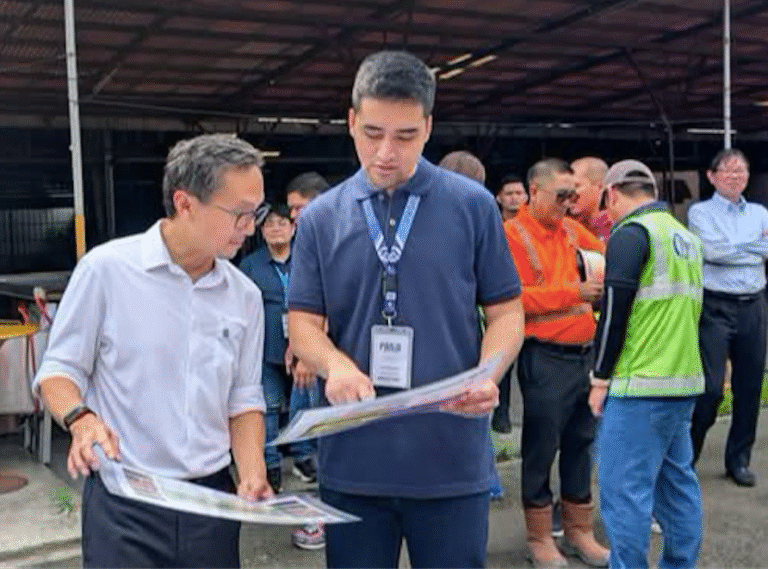
TRANSPORTATION SECRETARY VINCE Dizon and Pasig City Mayor Vico Sotto review the route where there exists a right-of-way problem in the construction of the Ortigas Station of the Metro Manila Subway Project, a flagship project of the Marcos Administration. This is expected to ease commuters’ traffic woes. Dizon said this is the only phase that has caused delay in the subway project. He said they are trying to achieve solutions so that construction could finally start. Sotto expressed appreciation to the DOTr and pledged to assist in facilitating resolve to the ROW concerns. The subway project is expected to be fully operational by 2028

A Challenge To LWUA

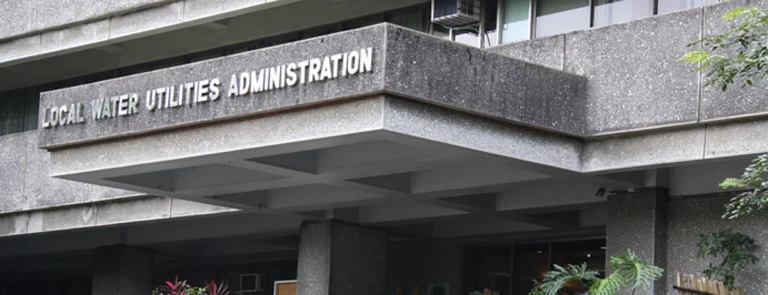
FOLLOWING PRESIDENT MARCOS’ orders to go after contractors of utilities and flood control projects that were half-done, did not materialize at all, or were overpriced despite the substandard materials used in constructing them, the Local Water Utilities Administration said it would purge underperforming water deals after 6 million customers had been shortchanged.

Let’s see how far this purge would go. Can they run after Prime Water– owned by the Villar family, with Senator Mark Villar now heading the Senate Public Works Committee and sister, Sen. Camille chairs the Senate committee on environment, natural resources and climate change, which oversees the Department of Environment and Natural Resources that grants water rights projects in watersheds and other protected areas.

LWUA Administrator Jose Moises “Joy” Salonga said at a post-State of the Nation Address (SONA) forum, that the government is preparing a coordinated plan to address failed joint venture agreements (JVAs) between local water districts and private firms that have left around six million Filipinos with poor or inconsistent service, and at this point, the Villar-owned Prime Water has the most number of published failed projects coming from aggrieved customers.

“Pag gumalaw kami, matitiyak niyong mararamdaman na nila,” Salonga warned as if the Villars and their contractors are easy targets.

Balikbayan boxes of complaints

He said his agency receives numerous complaints each day about the performance of local water districts and that LWUA had sent two balikbayan boxes filled with documents to Malacañang to illustrate the depth of the problem.

“Hindi lang ako makapagsabi pero detalyado ang strategy. Fina-fine tune na para maayos at mabisa ang galaw ng gobyerno,” he said.

Among the private operators in question is PrimeWater Infrastructure Corp., owned by ultra bilyonaryo Manny Villar, which entered into multiple joint ventures with local utilities, particularly during the tenure of Mark Villar at DPWH.

Salonga criticized these operators for failing to invest in infrastructure despite steady revenues from paying customers.

Gypping water consumers

“Nagbabayad ang mga tao religiously. Ang collection rate ay 99.4% sa probinsya, above 90% ang nagbabayad… Hindi natin alam kung saan napunta ang koleksyon nila,” Salonga said.

Salonga, who previously worked in the energy sector, noted that such high collection rates are rare and should have supported operational improvements.

He added that water districts involved in the troubled joint ventures have submitted catch-up plans.

“Nakatanggap na kami ng catch-up plan. That is an admission na may mga pagkukulang sila,” Salonga said.

SONA had no ‘wow’ moment

In his SONA, the President ordered the DPWH for a complete list of projects (their completion and timelines), the cost, contractors involved and other data to be published so that the people would know where their money went, or if they got lost from corruption.

Tough- talking as the President sounded, Arjan Aguirre, assistant Political Science Professor of Ateneo, found “no strong takes on the pressing issues of the day. There was no ‘wow’ moment when he would surprise or put the crowd in awe.”

“The closest that we can highlight here is the mention of the flood control project, which still did not sound convincing since everything would still depend on him — no mention of institutionalizing changes like mechanisms and safeguards in the process itself,”  Aguirre told Business World.

Flood control probe

In ordering an investigation on flood control projects, the President stressed the widespread corruption in infrastructure spending warning that criminal charges would be filed for those found guilty.  (He must include those that misappropriated public funds through insertions in the 2025 budget) This after the entire country suffered from massive flooding the whole of last week from successive storms and habagat rains.

He mentioned his recent inspections after the typhoons (Crising, Dante and Emong) and the southwest monsoon, which exposed the collapse and dysfunction of flood mitigation systems across the country.

“I saw firsthand that many flood control projects were poorly built, collapsed, or worse — never even existed. Let’s stop pretending. The public knows there was racketeering in these projects,” he said. (So why not prosecute and jail them?)

Marcos accused unnamed officials and contractors of pocketing public funds through “kickbacks, initiatives, errata, SOPs (standard operating procedures), for the boys censuring them “mahiya naman kayo.’

“You should be more ashamed for burdening our children with debt from money you simply stole,” he sternly said while asking the DPWH to immediately submit a list of all flood control projects launched or completed in the past three years across all regions.

He also called on the regional project monitoring committees to review the list to identify incomplete, substandard or ghost projects. “We will publish this list so the public can review them and shed light on the investigation.”

He added that an audit and performance review would accompany the probe to trace how public funds were used. “In the coming months, everyone found guilty in this investigation — along with their contractor accomplices — will face charges. There must be accountability for the damage and corruption,” he said.

#LWUA

#SONA

#plansonwaterdistrict

#balikbayanboxesfilledwithcomplaints

#floodcontrol

#corruption

#erringcontractorsandpoliticians

#mahiyanamankayo

#PresidentMarcos’SONA