


AI Proving To Be Better Than Humans?

Artificial intelligence (AI) is slowly proving to be better than humans, this time in the emotional sphere that was once thought as impossible for machine learning.
This, as a team of Swiss researchers reported that AI outperformed humans in a series of emotional intelligence tests.
“This suggests that these AIs not only understand emotions but also grasp what it means to behave with emotional intelligence,” said one of the researchers, Marcello Mortillaro, in a statement.
Specifically, teams from the universities of Geneva and Bern administered emotional intelligence tests—originally developed to assess humans—to six different AI systems.
‘‘We chose five tests commonly used in both research and corporate settings. They involved emotionally charged scenarios designed to assess the ability to understand, regulate, and manage emotions,’’ said Katja Schlegel, lecturer and principal investigator at the Division of Personality Psychology, Differential Psychology, and Assessment at the Institute of Psychology at Bern university, and lead author of the study.
The results were astounding, as the AI models gave correct answers 82 percent of the time, while the accuracy rate for the humans who participated was at 56 percent.
The five-part test series evaluated empathy and the ability to identify, manage, and regulate emotions. Among the emotionally charged scenarios included is when an employee’s idea is stolen at work.
Under the second phase of the study, ChatGPT was asked to generate new emotional intelligence tests.
Over 400 participants evaluated the AI-generated tests were that were found to be as realistic as those not created by humans.
With the results and findings of the test, experts suggest that AI, under expert supervision, can perform roles in functions that are seen as uniquely human, such as education, coaching, and conflict resolution.


Perceived Blunders Of Some Cabinet Members

President Marcos Jr.’s priorities are: food security, taming inflation, heeding and delivering services to the people, efficiency, and dedication to serve.
Yet many of these priorities have not been met, esp. that of food security and constantly rising food inflation– despite increasingly huge volumes of all types of food items– to the detriment of both local producers/farmers and consumers. No wonder, the axe could fall of Francis Tiu Laurel Jr., whose leadership at the Department of Agriculture was neither here nor there.
Another is the inability to properly communicate the President’s messages in a manner that people could relate to. Here we have the Jay Ruiz, the fourth Secretary of the Palace Communication’s Department, whose numerous blunders in statements and pronouncements have enraged the President.
MISUSE OF FUNDS
Next we have Antonio Lagdameo Jr., special assistant to the president and Presidential Management Staff Sec. Elaine Masukat, whose task it was to promote the Alyansa senatorial candidates but failed miserably in the results of the midterm election. Lagdameo a longtime friend of Marcos is said to have mishandled the campaign in BARMM– long considered a bailiwick of the Marcos administration, where not one of the 10 Alyansa candidates won, Politiko noted.
Another blunder of Lagdameo was the allegation in October 2024 of TESDA Director General Suharto Mangudadatu that Lagdameo received “billions of pesos” in misused BARMM funds.
Another item on Masukat is her closeness Alyansa campaign manager, Rep. Toby Tiangco, who is being blamed for the lackluster performance of Alyanasa in the midterm polls.Masukat, a longtime Tiangco aide, previously served as his COS in Congress and as Navotas city administrator during his mayoralty. She was appointed PMS secretary in January 2023, succeeding Zenaida Angping, who resigned amid controversy involving her husband’s alleged sexual misconduct in Thailand.
Executive Secretary Lucas Bersamin… is said to be in chopping block amid alleged issues of corruption and mismanagement in his office. Reports have reached the President detailing hires and oversight lapses within OES prompting concerns of his leadership…
POLITICAL FALLOUT
Sultan Kudarat Governor Pax Ali Mangudadatu directly blamed Lagdameo for the region’s political fallout, accusing him of prioritizing politics over governance. In a May 15 radio interview, Mangudadatu said project delays in Mindanao began as early as August 2024 due to politicking attributed to Lagdameo, who also has his beef with First Lady Liza Araneta Marcos.
Next, the weak defense in the legislature and the Supreme Court on the transfer of PhilHealth excess funds to the treasury by Finance Secretary Ralph Recto and Health Secretary Teddy Herbosa. The current state of public health is still miserably wanting.
Herbosa got flak for cozying up to big tobacco execs while public health systems continue to lag, Politiko added.
MISMANAGEMENT
Executive Secretary Lucas Bersamin (formerly a SC Associate Justice), the second little president in three years, is said to be in chopping block amid alleged issues of corruption and mismanagement in his office. Reports have reached the President detailing hires and oversight lapses within OES prompting concerns of his leadership, Politiko said citing grapevine sources.
The attention of Socioeconomic Planning Secretary Arsenio Balisacan has been repeatedly called for his pronouncements on poverty, the budget that a poor family can live on, and policies like the reduction of tariffs on imported food items that did not help control soaring inflation.
Labor Secretary Bienvenido Laguesma is being blamed for not supporting wage hikes that workers have been clamoring for and his failure to put an end to ENDO (or end of contract, a scheme used by big business to forego payment of fixed salaries and benefits).
Laguesma, a Marcos Sr. era veteran, may be on his final round as labor chief. The President said the public is dismayed with government’s poor service.
Among the first to file their courtesy resignations were: Social Welfare Secretary Rex Gatchalian, newly-appointed Transportation Secretary Vince Dizon, Budget Secretary Amenah Pangandaman, DICT Secretary Henry Aguda, and Tourism Secretary Christina Frasco.
FAVORING MINING FIRMS?
Environment Secretary Ma. Antonia Yulo- Loyzaga, who headed the DENR since 2022, has been mostly on travel pursuing her past advocacies on climate change. She is recognized for her science-based approach to climate resilience, environmental governance, and disaster risk reduction.
But she is being blamed for her lackluster performance in preserving natural resources and favoring mining companies.
Meanwhile, President Marcos also assured that Cabinet members who have delivered and continue to deliver “will be recognized.”
A recent appointment of the President is Rene Almendras who joins LEDAC (Legislative Executive Development Advisory Council) as private sector representative.
REMULLAS IN CABINET
Marcos is said to be considering a member of the influential Remulla clan to replace Bersamin. Currently, two Remulla brothers already serve in the Cabinet: Interior Secretary Jonvic Remulla and Justice Secretary Jesus Crispin “Boying” Remulla.
The President, however, is reportedly cautious about the optics of appointing a third “little president” since he took office in 2022.
Bersamin, a retired Supreme Court Associate Justice, was appointed to the powerful post after lawyer Vic Rodriguez resigned just three months into the job.
Bersamin reportedly proposed a limited reshuffle following the election setback, but Marcos was said to have rejected the suggestion in favor of a sweeping overhaul.
SUBSTANDARD
Public Works Secretary Manuel Bonoan could be axed on account of substandard materials in vital infrastructure projects and delays in completion of vital roads, highways, and bridges. Also reports of recent bridges collapsing and road accidents have become sore spots in the Marcos administration.
Looming Change In Leadership

AMID AN IMMINENT change in the Senate leadership, legislators forming part of the “not so new Duterte bloc” have yet to decide as to who they intend to back-up in time for the opening of the 20th Congress in June.
According to Senator Ronald ‘Bato’ Dela Rosa, a close ally of former president Rodrigo Duterte and former Philippine National Police (PNP) chief, the bloc is not out to replace the current Senate President.
He however hinted at efforts to consolidate the Upper Chamber’s mandated tasks and responsibilities in the next Congress.
When asked to elaborate, Dela Rosa told reporters that while they have yet decided on who among the senate wannabes they would support, the former Philippine National Police chief said that “there’s no problem with Senate President Francis Escudero.
“Wala, wala. Wala. So far so good naman kami. Wala naman kaming problema,” averred Dela Rosa who admitted “exchanging text messages” with the Senate President.
He, however, declined to provide details.
Notably though, Dela Rosa insisted that neither the forming the Duterte bloc nor establishing rapport with the senate leadership has anything to do with the impeachment trial against Vice President Sara Duterte.
AMBITIOUS ONES
Aside from Escudero, Dela Rosa dropped other names whom he claimed as fit and qualified for the top Senate post — Vicente Sotto III, Alan Peter Cayetano and Juan Miguel Zubiri.
“Basta mag-uusap pa kami, iyong bloc namin. Hindi kami maka-come up ng final decision dahil nandoon pa sa abroad ang kasamahan namin si Sen. Robin Padilla,” he added.
“I am sure mayroon pang iba d’yan na nag-aambisyon. Mayroon pang iba d’yan.”
Aside from Dela Rosa, other members of the bloc include the President’s sister Imee Marcos, Pardilla, Sen. Bong Go and former House Deputy Speaker and senator-elect Rodante Marcoleta.
Also joining the bloc (unofficially though) is senator-elect Camille Villar-Genuino.
Dela Rosa said they have yet to talk with Sotto and Panfilo Lacson. Both ran and won under the administration’s Alyansa Para sa Bagong Pilipinas.
Notably though, Dela Rosa insisted that neither the forming the Duterte bloc nor establishing rapport with the senate leadership has anything to do with the impeachment trial against Vice President Sara Duterte.
“No, hindi na yan magiging factor kasi immaterial na ‘yan. Titignan natin dito sa individual members of the Senate,” he noted.
IMPEACHMENT
The former PNP chief maintained that the impeachment trial against VP Sara should not push through.
“Mas maganda sana kung hindi na matuloy para maka-focus kami sa mga (. . .) development efforts para sa ating bansa at hindi (tayo) magkawatak-watak. Mas maganda sana kung hindi matuloy.”
For his part. Zubiri in a Facebook post enthused: “Sa usap-usapan ngayon kung sino dapat maging bagong Senate President ay sana maalala nila ito—that the Senate is the last bastion of democracy as history has shown and the independence must always be upheld.”
Quicker Cabinet Recalibration

So as not to disrupt government operations and decision-making, the Cabinet recalibration and shake-up must be done swiftly, but with proper selection of potential best and brightest for top positions, the business community urged President Marcos Jr.
In a statement published by the Star, the Philippine Chamber of Commerce and Industry emphasized the importance of finding competent leaders and announcing new appointments without delay to prevent uncertainty and instability that could disrupt economic activity.
The PCCI said it was surprised by the call for courtesy resignation of the entire Cabinet as it had noted that the department heads had been performing relatively well in managing the economy.
But the outcome of the midterm elections– where Alyansa candidates won only half of the coveted 12 senatorial seats– indicated the unhappiness and disappointment of the voters at large and which the President blamed for underperformance and inability of some Cabinet members to meet their targets.
“We hope that the courtesy resignations will bring in accountable and merit-based appointments,” PCCI said as it expressed hope that Cabinet officials who delivered and performed well would retain their positions and their reappointments be done “at the soonest time possible to avoid uncertainty and instability so as not to derail the economic continuity.”
FOCUS ON ECONOMY
As the country is trying to attract more investments with the passage of the CREATE MORE Act and the Public-Private Partnership Code, which the PCCI said are important to sustain economic growth and investor confidence.
The Management Association of the Philippines (MAP) expressed support for Marcos’ Cabinet reset and that it hopes the President will find the appropriate talents for those he decides to replace to execute his plans.
MAP President Alfredo Panlilio said a CEO needs to make difficult calls, such as replacing talents, with the primary objective of improving the performance of the organization. “Leadership involves making difficult decisions in the interest of establishing meritocracy and encouraging performance.”
Calixto Chikiamco, president of the Foundation for Economic Freedom said the Cabinet reshuffle may be part of Marcos’ strategy to focus on the economy in the remaining years of his term.
[T]he President should appoint… people who have unquestionable integrity and loyalty to him and his administration, who as alter ego can deliver their respective mandates to the people that we serve…
SENATORS FAVOR RESET
Senators generally welcomed Marcos’ call for his Cabinet’s courtesy resignation with Senate President Francis Escudero saying “I expressed support for the President’s call to set aside politics and focus on the needs of our people. I am thankful that he has acknowledged that there is a problem, displayed sensitivity to the sentiments of our countrymen, and humbly taken responsibility by addressing it and demanding accountability from the Cabinet tasked with implementing the vital programs of this administration.”
But Escudero warned the President to steer clear of “reckless allies” and distance himself from people who squandered his goodwill and burned through his political capital for selfish ends.
Senate President Pro Tempore Jinggoy Estrada said he finds sensibility to the President’s initiative in pursuit of assembling a leadership team that can deliver efficient, accountable, and responsive governance.
“As Chief Executive and appointing authority, he is simply exercising his discretion as provided under the Constitution. It’s a step in the right direction, as it appears to be part of a genuine reform effort to restore the people’s trust in our institutions,” Estrada said.
A GREAT MOVE
Senate Minority Leader Aquilino Pimentel III called the reset “a great move by the President,” which “allows him to regroup his team while sparing those to be affected from ‘intrigues.’”
“I urge the President to recruit those who still have idealism in them, and those who will focus on the success of his administration, by being more efficient and effective in helping the Filipino people – and not focused on their own political ambitions,” Pimentel said.
Senators JV Ejercito and Sherwin Gatchalian said it would impress on his officials that “they have to be on their toes from now on” and this should prompt them to reflect on their own performance. They should be reminded that it is the public which the government truly serves.”
At the Kapihan sa Senado, outgoing senator (incoming Makati mayor) Nancy Binay said the revamp should not affect the status of pending government projects.
“Cabinet secretaries serve at the pleasure of the President. I just hope for a speedy process in replacing Cabinet secretaries, because my concern is government programs may be delayed because of the courtesy resignations.”
Surigao del Norte Rep. Robert Ace Barbers said the President should appoint to the Cabinet people who have “unquestionable integrity and loyalty to him and his administration, who as alter ego can deliver their respective mandates to the people that we serve and will not think twice in condemning Chinese aggression in the West Philippine Sea and defend him on other national issues thrown against him and his administration.”
LGUs BACK SHAKE-UP
The League of Municipalities of the Philippines (LMP), led by JB Bernos, voiced support for the Cabinet shake-up saying “if LGUs conduct periodic performance reviews, so should the national government, especially of those entrusted to bring the President’s vision to reality.”
Bernos said Marcos should consider how each department has collaborated or supported municipalities in the past three years, as national-local partnerships strengthen governance in the country.
Former presidential spokesman Edwin Lacierda said “for me it’s a positive decision. Normally, you don’t change horses midstream but a number of factors would tend to suggest that it’s a good move on the part of the president. First, it is refreshing.”
Fr. Jerome Secillano, of the Catholic Bishops’ Conference of the Philippines, was more critical of the President and that he should not blame the Cabinet for his administration’s dismal performance for three years.
“President Marcos should be reminded that if the head truly works, everything else follows,” he said in an interview with church-run Radyo Veritas.
Carlos Isagani Zarate of Bayan Muna thinks that the President’s resignation call is a “mere political maneuver rather than a genuine effort to address the nation’s pressing issues.”
Zeekr 009 launched in PH

Zeekr, the luxury brand of China’s Geely, has launched in the Philippines its flagship model—the 009.
The brand distributed by the Autohub Group, which counts Mini and Lotus under its automotive umbrella.
“Since its premiere in late 2022, the Zeekr 009, a six-seater pure electric multi-purpose vehicle (MPV), has revolutionized the once-staid segment, establishing itself as the new benchmark through its avant-garde design, cutting-edge technology, and superior performance,” Zeekr said in its website.
For the Philippines, two variants will be offered: the seven-seater variant priced that will sell for P4.199 million; and the more luxurious six-seater offered at P4.399 million.
Equipped with silicon-carbide-powered e-motors, the top-tier variant of the all-new Zeekr 009 can accelerate from 0 to 100 kph in just 3.9 seconds, which is already the realm of sportscar performance.
The dual-motor all-wheel drive setup produces 777 horsepower and a whopping 810 Newton-meters of torque. Its range is a bit over 700 kilometers.
Beyond the more powerful e-powertrain, the chassis of all-new Zeekr 009 has also been thoroughly upgraded. A dual-chamber air suspension system, paired with CCD dampers, now comes as standard on the all-new Zeekr 009, providing a perfect blend of absolute comfort and ultimate driving pleasure.
The dual-motor setup produces 777 horsepower and a whopping 810 Newton-meters of torque, and its range is a bit over 700 kilometers. And all that power is transmitted to all four wheels.
In 2022, the Zeekr 009 Grand raised the bar for backseat opulence, and the 009 continues this tradition of luxurious comfort in the second row. The seats, upholstered in the finest NAPPA leather, offer an exquisite tactile experience.
“These warm and receptive seats are equipped with ventilation, massage and heating functions. What truly distinguishes the all-009 is its exclusive “lounge chair” mode. Inspired by the Eames Lounge Chair and Ottoman, this feature allows passengers to fully stretch out their legs with a leg bolster that elevates to horizontal status, offering a perfect remedy for travel fatigue,” Zeekr said in its website.
Also, the 009’s infotainment system features a 15.05-inch OLED screen with 2.5k resolution in the front, and a 17-inch OLED screen with 3k resolution and a 90Hz refresh rate in the back. Coupled with a Yamaha surround sound system, the vehicle delivers an utterly immersive audio-visual experience.
Top-notch technologies are a hallmark of the all-new Zeekr 009. Now powered by the large language model Zeekr’s evolving artificial intelligence (AI) interactive assistant has been enhanced to be capable of interacting intuitively with its owners in certain scenarios. For instance, when parked at home, the vehicle can predict the next day’s battery needs in advance based on commuting habits, and proactively remind the owner to charge it on time.
The 009 will be available at the Zeekr dealership in BGC, Taguig.
Palace rejects resignation of economic team

In what can be seen as a move to appease the business sector, the Palace announced on Friday that it is rejecting the resignation of country’s economic team.
Also retained was Executive Secretary Lucas Bersamin, who made the announcement.
“He (President Ferdinand Marcos Jr.) communicated to me I have his full backing, for as long as I wish to work for him. And that is a very good gesture of the President because that is a sign of his manifestation of his full trust and confidence in myself,” Bersamin said in a Palace press briefing.
Apart from Bersamin, Marcos also rejected the courtesy resignations of his economic team — Trade Secretary Maria Cristina Roque, Finance Secretary Ralph Recto, Budget Secretary Amenah Pangandaman, Economic Secretary Arsenio Balisacan, and Special Assistant to the President for Investments and Economic Affairs Frederick Go.
“These five will continue in their positions, serving our people, and you can expect that they will be sincere and dedicated to their sworn duties),” Bersamin said in Filipino.
Fifty-two Cabinet members and government heads have already submitted their courtesy resignations, upon the directive of Marcos as part of his bid for a government “reset.”
Marcos said there will be “more careful evaluation” of the performance of the heads of government agencies and offices.
BUSINESS GROUPS AIR CONCERN
On Thursday, an official of the Makati Business Club MBC Chairman Edgar Chua said that the current administration has a very good economic team.
“Although there is no perfect score to be given to the economic team, generally speaking, the President has a very good economic team. We can give them an 8 out of 10, particularly the Agriculture, Transportation, OSAPIEA (Office Special Assistant to the President for Investment and Economic Affairs), and the DTI, even if they are relatively new to their posts,” he added.
On the other hand, Makati Business Club president Apa Ongpin said his group does not expect a massive shake up in the economic team.
“Although they have submitted courtesy resignations, we expect at least two of them will be replaced, and others will be reappointed. These people are qualified, and we will be very surprised if President Marcos accepts their resignations and lets them go,” Ongpin said.
Toyota launches all-new RAV4

Toyota Motor Corporation has launched the all-new, 2026 RAV4, which will be introduced to 180 nations globally.
For its sixth generation, the best-selling compact SUV will be available in a choice of hybrid electric vehicle (HEV) or plug-in hybrid electric vehicle (PHEV) powertrains.
“The RAV4 had its beginnings in 1994, when sport utility vehicles (SUVs) were positioned as off-road vehicles. It pioneered the crossover SUV genre for both on-and off-road driving. Since then, the RAV4 has evolved into a beloved model around the world. For five generations, it has continued to meet the changing lifestyles of the times,” Toyota said in a statement.
Launched in 2019, the fifth-generation RAV4 was developed to further enhance its unique appeal as a model for new lifestyles. It was developed on the concept of a “Robust Accurate Vehicle with 4 Wheel Drive” as a sophisticated blend of the power and utility of an SUV. It also adopted a new platform based on the Toyota New Global Architecture (TNGA), Toyota’s structural innovation within the automobile manufacturing process. It delivered responsive driving performance with maneuverability and stability for any road surface.
Under the concept of “Life is an Adventure, this sixth-generation RAV4 seeks to become a vehicle that allows any driver to enjoy an active lifestyle. The unique driving experience of the RAV4, which was further improved in the fifth generation, has been advanced with a newly developed hybrid system that enhances acceleration. The result is an evolved RAV4 that feels like it can go anywhere and do anything, with functionality and cutting-edge intelligent technology focused on ease-of use for the driver. The key to advancing vehicle intelligence is Arene, Toyota’s first software development platform.
The 2026 RAV4 HEV debuts Toyota’s fifth-generation Hybrid system on an SUV model. Powered by a 2.5-liter 4-cylinder engine with the fifth-generation hybrid system, it has improvements to the transaxle, power control unit, battery, and other components, all of which contribute to its enhanced motor output.
A new PHEV will also debut on RAV4. It will have a 2.5-ltier 4-cylinder engine with two electric motors and high-capacity traction battery.
An increase in towing capacity on specific all-wheel drive (AWD) grades adds to RAV4’s overall utility. The HEV XLE, Woodland, SE, XSE, Limited and PHEV SE, XSE, and Woodland grades with AWD, will be capable of towing up to 3,500 pounds. All FWD models and the LE AWD model will have a 1,750-pound towing capacity.
Insurance penetration in PH remains low

Insurance penetration in the country remained low, demonstrating that Filipinos are still aware or are not ready to spend for insurance.
According to the Insurance Commission (IC), insurance penetration in the Philippines increased to 1.89 percent in the first quarter of the year from 1.78 percent in the same quarter last year.
The global insurance coverage is at 7 percent.
Insurance penetration represents the ratio of insurance premiums to the country’s gross domestic product (GDP).
Meanwhile, insurance density went up by 13.40 percent from P965.56 to P1,094.90 per capita.
Insurance density reflects the ratio of total premiums to the population.
The figures were obtained from the unaudited Enhanced Quarterly Reports on Selected Financial Statistics by 127 of the 129 insurers and mutual benefit associations as of the first quarter of 2025.
“The increase in insurance penetration is due to the faster growth in premiums than the GDP expansion of 7.80 percent, at current prices, during this review period,” Insurance Commissioner Reynaldo Regalado said.
“The growth in insurance density was mainly driven by a rise in total premiums that exceeded the population growth rate of 0.87 percent during the same period,” he added.
Data from IC showed that the total premiums of life and non-life insurers and MBAs grew by 14.41 percent from P108.53 billion to P124.17 billion this year.
Total net income rose by 7.09 percent to P15.30 billion, which the IC said underscores the sectors’ solid financial health.
The total assets of insurers and MBAs also increased by 4.13 percent to P2.48 trillion from P2.38 trillion in the first quarter of 2024.
High Time

FRUSTRATED BY THE outcome of the recent midterm elections where only six of the administration ticket candidates won, indicating that people are dissatisfied and disillusioned with the administration’s performance, President Marcos ordered the mass courtesy resignation of his Cabinet members to give him time to evaluate their performance, or lack thereof and replace them with new heads.
In an interview by Karen Davila, incoming Senator Erwin Tulfo lauded the President’s move calling it right and “high time” as the people have voiced their disappointment with the administration’s three years in office.
‘[W]hile many have served with dedication and professionalism, the evolving needs of the country require a renewed alignment, faster execution, and a results-first mindset.’
Tulfo also called commendable the President’s admission of mistake in the choice of his Cabinet and the policies they undertook as Tulfo cited the dismal performance of the Department of Agriculture in ensuring food supplies in the market, which led to continued rising prices of basic commodities like rice, meat, onions, salt and others and the Department of Public Works and Highways in terms of defective roads, bridges and flood control facilities.
RECALIBRATION MOVE
In a news briefing this morning, Malacañang said the President called for the courtesy resignation of all Cabinet secretaries to recalibrate his administration following the dismal performance of the administration senatorial slate in the last midterm polls.
“This is not business as usual. The people have spoken and they expect results– not politics, not excuses. We hear them and we will act,” the President said adding that “it’s time to realign government with the people’s expectations.”
“This is not about personalities —it’s about performance, alignment, and urgency.”
Marcos assured those “who have delivered and continue to deliver would be recognized. But we cannot afford to be complacent. The time for comfort zones is over.”
MERITOCRACY
The Palace, in a press release, said this step signals a shift from the early phase of governance to one centered on performance and results.
The President emphasized that while many have served with dedication and professionalism, the evolving needs of the country require a renewed alignment, faster execution, and a results-first mindset.
Marcos stressed that government services won’t be interrupted during the transition. Stability, continuity and meritocracy will be the guide in forming his leadership team from hereon.
In the debut of his podcast last Monday, the President emphasized that he ideally wants to be respected, but that fear might be more effective as the country’s top leader. “I want to be respected, but maybe fear is better,” Marcos said.
LACK OF FEAR
He made this remark in view of some government officials’ alleged disobedience and lack of fear to refrain from misconduct because of his “kindness,” Inquirer observed.
“The request for courtesy resignations is aimed at giving the President the elbow room to evaluate the performance of each department and determine who will continue to serve in line with his administration’s recalibrated priorities,” Rappler quoted Malacañang.
In the debut episode of his post-election podcast, the President acknowledged that the outcome of the polls sent a clear message: Filipinos are growing weary of political theatrics and now demand tangible progress.
“Ang mensahe, sa amin lahat – hindi lamang sa akin, kung hindi sa aming lahat – tama na ‘yung pamumulitika ninyo at kami naman ang asikasuhin ninyo,” the President said.
#PresidentMarcos
#Cabinetresignations
#midtermelectionresults
#peoplehavespoken
#nolongerbusinessasusual
#thephinsider
Rising Cost Of Living Force Multi-Family Housing

Over one in four Filipino households now extend to multifamily living arrangements because of high cost of living and a soaring backlog in affordable housing and the overconcentration in expensive condominium projects that further lead to land scarcity. Furthermore, housing policies barely catch up within population growth and housing trends
This is the finding of a recent study undertaken by state think tank, the Philippine Institute of Development Studies, a NEDA-attached agency, as it noted that more Filipinos now live with extended families, a sign that traditional family structures are shifting.
PIDS Supervising Research Specialist Tatum Ramos revealed that as of 2020, 28.8 percent of Philippine households are no longer the traditional nuclear type “veering away from the typical household head, spouse and a child because of rising rates of cohabitation among relatives and the growing role of shared economic survival strategies in household formation.”
“They have decided to join their relatives in a household to gain support in growing their own family or [to manage] living and housing expenses,” she said, citing the significant link between wealth and the likelihood of living in extended households.
‘They have decided to join their relatives in a household to gain support in growing their own family or [to manage] living and housing expenses… ‘
ADAPTIVE STRATEGIES
In extended family setup, there is sharing of resources and providing support for working young female adults who may not necessarily have the same amount of time for household management activities as before.
The study classified extended and multifamily households based on kinship and co-residency patterns, ranging from families living with parents or siblings to combinations of relatives outside the immediate family nucleus.
Ramos, however, does not view extended and multifamily households as problematic or symptomatic of poverty but representing adaptive social strategies.
Dr. Mary Racelis, UP Professorial Lecturer, called for “disaggregated data that reflects realities on the ground arguing that housing policies must move beyond abstract models to address the lived experiences of the bottom 60 percent of the population—or the underserved and priced- out of formal housing markets.
“We should recognize that the informal settlers are not the problem, they are the solution,” Racelis said, stressing that informal settlers are not mere passive aid recipients.
“Housing is the community setting… where people are working, where they’re getting their income… where their alliances are,” she stressed, adding that a holistic understanding is essential in designing sustainable and inclusive housing plans that reflect real economic and social conditions.
FUNDING GAPS AND ACCESS
Despite the 16 million members of Pag-IBIG (as of 2024), the uptake of government assistance for housing finance remains limited with only 4% of government assistance as financing source, noted NEDA OIC-Development Specialist Kevin Godoy.
Godoy underscored the importance of transport infrastructure, suggesting that long commutes, rather than urban congestion alone, are a major barrier to homeownership and household formation.
Godoy sought the urgent creation of a national rental housing program, since the Philippines is the only country in Southeast Asia with no national program on public rental, leaving local governments to experiment on rental solutions on their own in the absence of a national framework.
Executive Director Santiago Ducay of the Subdivision and Housing Developers Association emphasized the urgency of aligning housing plans with demographic realities pointing to the need for segmenting target beneficiaries like young professionals, the elderly and middle aged groups. “Each of these categories will have different concepts on sustainable housing,” he explained.
Ducay said that by 20240, the Philippines’ demographic structure will resemble a tree rather than a pyramid, with the growing aging population.
He asked for “forward-looking policies and programs towards the welfare of the elderly… not just normal vertical condominiums and subdivisions, but retirement villages.
Housing prices in the Philippines rose 6.7 percent in the fourth quarter of 2024 from a year earlier, based on data from the Bangko Sentral ng Pilipinas.
#housing
#NEDA-PIDS
#TatumRamos
#extendedfamily
#thephinsider
Investments Officers Head

J. Allen Berbon, Provincial Economic Development and Investment Promotions Officer (PEDIPO) of Northern Samar, officially assumed a new position as the founding President of the Philippine Association of Local Investment Officers (PALIO). The oath-taking ceremony was administered by Director Anna Liza F. Bonagua of the Bureau of Local Government Development (BLGD) of the Department of Interior and Local Government (DILG).
Berbon expressed appreciation to his fellow Provincial Economic Development and Investment Promotions Officers (PEDIPOs) “for placing their trust and confidence in me. Your support is invaluable.”
He also expressed appreciation to the Board of Investments (BOI) that served as the group’s technical adviso. This was in collaboration with the Department of Interior and Local Government.
“While the road ahead holds many challenges, I am confident that together, we can achieve great things. Let us move forward with determination and collaboration,” said Berbon.
The oathtaking was held at the DILG Building.
Got An Itch Antihistamines Can’t Get Rid Of?

HIGH CREATININE LEVELS can indicate that your kidneys aren’t functioning optimally. Pay attention to these seven signs that suggest you should have your creatinine checked:
1. ITCHY SKIN: An inability of the kidneys to regulate minerals like phosphorus can lead to their accumulation in the blood, causing intense itching.
2. CHANGES IN URINATION HABITS: Any significant alterations in how often you urinate (more or less), or changes in urine appearance (foamy, different color/smell), could signal kidney problems
3. PERSISTENT TIREDNESS OR WEAKNESS: A build-up of toxins in your blood, due to inefficient kidney filtering, can leave you feeling unusually fatigued.
4. SWELLING IN FACE, FEET, OR ANKLES: If your kidneys are struggling to remove excess fluid, you might notice swelling in these areas.
5. NAUSEA OR VOMITING: When waste products accumulate in the bloodstream from poor kidney function, they can upset your stomach, leading to dizziness and vomiting.
6. LOSS OF APPETITE: High toxin levels can also suppress your appetite, making you feel full quickly or not hungry at all.
7. PAIN IN THE KIDNEY AREA (Side or Lower Back): Persistent pain here, especially if it’s more than just a muscle ache, might indicate kidney inflammation or infection.
‘Certain individuals are more susceptible to kidney issues and should be particularly vigilant about their creatinine levels.’
Foods That Can Help Lower Creatinine
Incorporating certain foods into your diet can support kidney health and help manage creatinine levels:
- Protein Alternatives: Tofu and legumes (like mung beans and string beans) offer protein without the drawbacks of red meat.
- Vegetables: Carrots and cabbage are good choices as they are low in potassium and phosphorus. Cucumber and lettuce are also helpful due to their high water and low sodium content.
* Berries: Strawberries and blueberries are packed with antioxidants, which support kidney function.
- Fruits: Bananas (in moderation due to potassium), pineapple (contains bromelain), watermelon (high water content), and apples (contain pectin) are beneficial.
Foods and Habits to Avoid
To help prevent creatinine levels from rising further, it’s wise to limit or avoid:
- Instant Noodles and Canned Goods: These are often high in sodium and preservatives, which can strain the kidneys.
- Creatine Supplements: These can directly lead to falsely elevated creatinine readings.
* Red Meat and Processed Meats: High protein content can elevate creatinine.
- Soft Drinks and Sugary Beverages: They can increase blood sugar and put extra stress on your kidneys.
Who is at Higher Risk? - Certain individuals are more susceptible to kidney issues and should be particularly vigilant about their creatinine levels:
- Overweight or Obese Individuals: Obesity is a known risk factor for kidney problems.
* Family History of Kidney Disease: A genetic predisposition increases your risk.
- Diabetics or Hypertensives: Both diabetes and high blood pressure are major causes of kidney damage.
* Frequent Consumers of Red Meat and Processed Foods: These diets contribute to high protein and sodium intake, which can negatively impact kidney health.
- Frequent NSAID Users: Regular intake of pain relievers like ibuprofen can harm the kidneys
Global Construction Industry facing Numerous Challenges

While investment in infrastructure, data centers, and public projects are booming, the global construction industry is being increasingly threatened by mounting inefficiencies, spiraling budgets, and costly rework-challenges driven by outdated practices and disconnected technologies that hinder collaboration.
These are the findings of the research of Revizto, the leading integrated collaboration platform for architecture, engineering, construction and operations (AECO). It valued the global construction industry at $13 trillion.
“The construction sector is at a pivotal moment. With governments investing billions in infrastructure and the global market projected to reach $22 trillion by 2040, the opportunity is immense – but so is the risk. Our research shows that outdated practices and fragmented project delivery are costing the industry and public billions, underscoring the urgent need for smarter, more collaborative ways of working to help reduce waste and reworks on essential and complex projects,” said Arman Gukasyan, founder and CEO of Revizto.
The inaugural global study titled “Bridging the Gap: 2025 Digital Design and Construction Report” reveals a staggering 92 percent of global AECO professionals see significant budget changes during construction, despite contingency funds being built in. The most common increase is 11 to 20 percent above the original estimate, a reality faced by 42 percent in the US and 51 percent in the UK.
The report found that 41 percent of global industry leaders identify infrastructure as the top growth area in design and construction, yet 56 percent say change orders, client changes and scope creep are the primary causes of costly project rework. Closely followed by unexpected site challenges (53 percent) and design errors (45 percent).
Despite notable innovation and success among early adopters, technology uptake in construction remains limited, falling short of the industry’s broader ambitions. While 63 percent of AECO professionals are closely following technological developments in artificial intelligence (AI) and automation, technology integration and adoption was the most frequently-cited business challenge, with 27 percent of teams still relying on outdated tools like email, Excel, and PDFs for project delivery.
With global construction spend projected to hit $22 trillion by 2040, the opportunity is vast, but despite growing awareness of the problem, the sector is struggling to close the gap between technological ambition and operational reality. The report highlights a clear appetite for innovation, with the majority of industry leaders seeking solutions to bridge the gap.
Ford adds Ranger XL+ to pick up line up

Ford Philippines has added the Ranger XL+ to its pick-up line up, offering an upgraded and more functional version of the Ford Ranger XL.
The Ranger XL+ features notable enhancements that Ranger owners had to previously order and install separately, including a rugged bed liner, convenient side steps, and retractable cup holders. Combined with the Ranger XL’s standard power, comfort, and safety features, the Ranger XL+ has become more functional with accessories useful during a work or leisure drive.
“We see that a number of our customers will go out of their way to have accessories like bed liners and side steps installed in their Ford Rangers,” said Ryan Lorenzo, director, Retail Product Marketing & Business Growth at Ford Philippines.
“This made us offer the Ranger XL+ which now comes equipped with both accessories, and more. Once Ranger customers step out of the dealership with their new Ford Ranger XL+, all they have to worry about is where to go for their next great adventure,” he added.
For just an additional P10,000 from the Ranger XL, the Ranger XL+ gives more value to customers in terms of practicality and versatility, with genuine Ford accessories already installed upon purchase from the dealership. It also comes with complementary 5-year warranty, assuring customers of a worry-free ownership experience.
The Ranger XL+ is available at P1.279 million and comes in Absolute Black, Arctic White, and Aluminum Metallic colors.
With the addition of a bed liner, the Ranger XL+ makes cargo loading easier as well as protects the truck against damage and wear and tear. It also improves the overall look and appearance of the truck. Meanwhile, the side steps make it easier and more convenient to get in and out of the Ranger XL+ which boasts of superior ride height as a 4×4 pickup. The side steps also protect the truck’s exterior and interior from damage and dirt, while enhancing the truck’s overall look.
Lastly, cup holders provide a convenient place to store beverages, allowing drivers and their passengers to enjoy their drinks without worry of spills and ensuring the truck is clean and well-maintained.
When the going gets tough, the Ford Ranger steps up to the challenge as a reliable workhorse. The Ranger XL+ is equipped with a 2.0L Turbo Diesel engine, 4×4 drivetrain, and 6-speed transmission. It features a front suspension double wishbone chassis and rear suspension leaf spring that guarantees a smoother ride no matter the terrain.
Inside and out, this Ranger shows its signature toughness from its black grille and reflector headlamps to its coast-to-coast dash. Plus, the integrated 10″ colored portrait touchscreen with Apple CarPlay and Android Auto connectivity makes sure one is always connected and in complete control.
S&P says easing of US-China tariff and trade tensions good for global economy

The easing of tariff and trade tensions between the US and China has provided temporary relief to macroeconomic conditions globally, according to international credit rating agency Standard & Poor’s (S&P).
Also, the VIX Index, or the fear gauge that measures market volatility, dropped early last week since Washington’s sweeping tariffs were unveiled last month.
“This tariff climbdown improves our macroeconomic outlook, considering the direct effects of lower bilateral tariffs on the world’s two largest economies, reduced policy uncertainty, more buoyant asset prices, and some reopening of markets,” S&P said in a statement over the weekend.
It added that the latest positive developments between the US and China on tariffs and trade is a good development. However, the global trade environment will continue to put pressure on credit conditions although some risks have subsided for now.
China and the US issued a joint statement on Monday for the first time in many years after talks in Geneva, Switzerland over the weekend. Both countries said that they would temporarily reduce tariffs mutually by 115 percent for 90 days as of May 14.
Also, the US would reduce its tariff rate on China to 30 percent from 145 percent and China would reduce its rate against the US to 10 percent from 125 percent.
Relatedly, the VIX, which shows fluctuations in the S&P 500, fell 17 percent to 18.2 percent, reaching levels of the pre-tariff reciprocity period, or before April 2, the so-called Liberation Day.
To recall, the VIX index went up to 60.13 in April due to the effects of the tariffs and US negotiations with major trade partners.
Zafer Ergezen, a futures and commodity markets expert, said that the easing of tariff and trade tensions between the US and China eased some of the global uncertainties, pulling down the VIX Index.
“As the VIX declined, the US Dollar Index began to rise again and oil prices went up, while the safe-haven gold recorded significant losses with uncertainties waning,” he said.
“We have yet to see the full effect of the expectations to end the war in Ukraine, the easing of the conditions in the Middle East, and falling geopolitical risks but these have, so far, raised the optimism in the markets,” Ergezen added.
Young Filipino Develops Pili-based Sealant for Aviation Industry
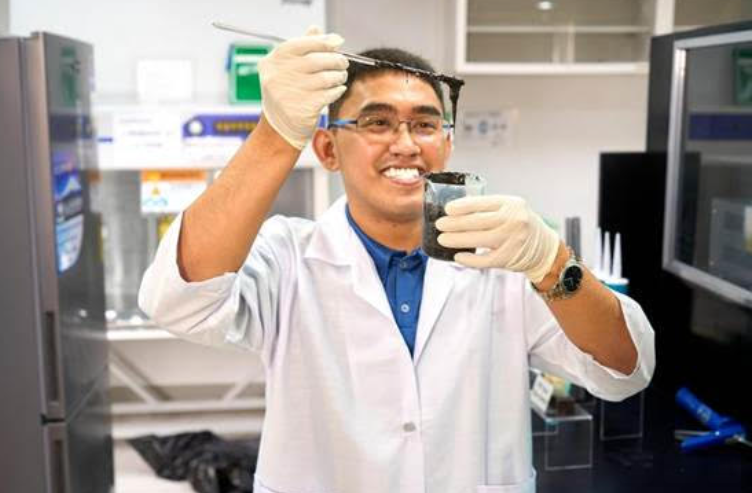
A 26-year old Filipino aeronautical engineer, Mark Kennedy Bantugon, has developed a material called Pili Seal, a bio-based alternative derived from the agricultural waste of the Pili tree resin.
The material, an aircraft sealant and adhesive, aims to improve workplace safety in the aviation industry and reduce environmental impact while offering a locally sourced, biodegradable option. Bantugon’s innovation has earned him a place as one of the ten global innovators in the Young Inventors Prize 2025, known as Tomorrow Shapers. They were selected from 450 candidates by an independent jury.
For over 50 years, polysulfide-based sealants have been the industry standard for preventing fuel leaks in aircraft. However, they may cause skin and respiratory irritation, and their disposal poses an environmental challenge, especially when heated or burned.
Hence, Pili Seal offers a safer alternative to some toxic petrochemical derived sealants and adhesives, using a by-product of the perfume industry. This two-part sealant and adhesive combines the agricultural waste Pili tree resin with a solvent and hardening agent, providing both sealing and adhesive properties. It withstands fuel exposure, heat and pressure, making it suitable for aircraft fuel tanks and other high-performance applications. The sealant has been thoroughly tested, with four formulations passing industry-standard flammability tests.
Beyond aviation, this invention has the potential to be used in construction, automotive, marine and defense industries, contributing to a circular economy by repurposing 155 million kilograms of agricultural Pili Tree resin waste generated annually in the Philippines, primarily from the perfume and food industries.
A JOURNEY STARTING FROM THE FARM
Bantugon’s early exposure to farm life in Batangas (Philippines) played a crucial role in his innovation journey. As a child, he and his siblings patched leaky roofs using chewing gum, sparking his curiosity about adhesives and sealants. This interest continued into his aeronautical engineering studies, where an internship at Lufthansa Technik Philippines exposed him to the hazards of conventional sealants and adhesives.
Determined to develop a safer and more sustainable alternative, Bantugon experimented with resins from six different trees before selecting Pili tree resin. The resin’s natural stickiness offers ideal adhesive properties, while its fragrant odor makes it easy to work with, especially in confined spaces. Overcoming multiple challenges, he refined 84 different formulations before achieving the final composition. To commercialize his sealant, Bantugon founded Pili AdheSeal Inc. in 2024.
“My mother, a public-school teacher, helped me understand the value of a strong and well-rounded education. My father, as a farmer, introduced me to the farm as a training ground—a place where I learned about different plants, animals, trees, and, most importantly, the potential in waste materials,” Bantugon explained.
The Young Inventors Prize celebrates worldwide innovators 30 and under using technology to address global challenges posed by the United Nations Sustainable Development Goals (SDGs). By transforming agricultural waste into a high-performance sealant, Mark Kennedy Bantugon is directly contributing to UN SDG 9 (Industry, Innovation & Infrastructure).
The prizes of the 2025 edition will be announced during a ceremony livestreamed from Iceland this June 18, 2025.
Turning Plastic Wastes Into Lesser Toxic Fuels

LAST FEBRUARY, THE Associated Press featured a Mexican startup company that converts plastic wastes into gasoline, diesel and other fuels, including for aviation.
Petgas, a startup firm, shreds plastic wastes in its recycling center in Boca del Rio, Mexico and can produce 1.5 tons of plastic into 356 gallons of fuel.
The company envisioned a circular economy, where plastic is no longer a waste but a resource for production of energy. Petgas donates the fuel it produces to the local fire department and food delivery services.
‘Many plastics are used for packaging. Every day, an equivalent 2,000 garbage trucks full of plastic are dumped into the world’s oceans, rivers and lakes.’
Petgas’ machine uses pyrolysis, a thermodynamic process that heats plastics in the absence of oxygen, breaking it down to produce gasoline, diesel, kerosene, paraffin and coke.
Petgas Chief Technology Officer Carlos Parraguirre Díaz said that the process does require propane to initiate the heating, but once the pyrolysis begins, the gas it produces is used to keep it going. Though the fuel it produces throws off carbon dioxide the company says its net impact is less than comparable fuels as the resultant fuel has less sulfur.
DUMPING PLASTIC
The UN had said that global plastic production of over 400 million tons yearly could surge by 70 percent by 2040 if policies don’t change.
Many plastics are used for packaging. Every day, an equivalent 2,000 garbage trucks full of plastic are dumped into the world’s oceans, rivers and lakes.
Last December, the 5th and final round of negotiations for a global treaty to end plastic pollution ended in Busan, South Korea without reaching an agreement. This was supposed to produce the first legally- binding treaty on plastics pollution, including in the oceans, by the end of 2024.
“The future is being able to really take production to a scale that has impact,” said Díaz.
AVIATION FUEL
SciTech Daily published last January a report by the University of Illinois at Urbana-Champaign of researchers developing a groundbreaking method to produce ethylbenzene, a crucial additive for sustainable aviation fuels, from waste polystyrene, to reduce the carbon footprints and reliance on fossil fuels resulting in cost savings of 50 to 60 percent in carbon emissions of the aviation sector.
A new study addresses a major obstacle in transitioning US commercial aircraft from heavy reliance on fossil fuels to sustainable aviation fuels.
Ethylbenzene — an additive that enhances the performance of sustainable aviation fuels — uses polystyrene, a durable plastic commonly found in consumer products.
The findings were published recently in the journal ACS Sustainable Chemistry and Engineering Fuels made from non-petroleum sources, such as waste fat, oil, grease, or plant biomass, often lack adequate levels of aromatic hydrocarbons.
These compounds are essential for maintaining fuel system performance by lubricating mechanical components and swelling seals to prevent leaks during normal operations, explained Hong Lu, a research scientist at the Illinois Sustainability Technology Center of Illinois University.
SUSTAINABLE FUELS
While ethylbenzene is an aromatic hydrocarbon and can be derived from fossil fuels, finding a sustainable way to produce it would aid the aviation industry’s conversion to sustainable jet fuels.
The US Departments of Energy, Transportation, Agriculture, and other government agencies created a roadmap for addressing the climate-related impacts of fossil-fuel-derived aviation fuels.
The Sustainable Aviation Fuel Grand Challenge sets ambitious goals for the production of domestic sustainable aviation fuels to 3 billion gallons per year by 2030, and 100 percent of projected aviation jet fuel use, or 35 billion gallons per year, by 2050.
Present standards require a minimum of 8.4 percent aromatic hydrocarbons be included in any blend of sustainable aviation fuels and fossil-derived fuels “to maintain compatibility with existing aircraft and related infrastructure,” the researchers reported.
While this rule increases the safety and efficacy of the overall fuel mix, it severely limits the use of sustainable fuels, which currently contain 0.5 percent aromatic hydrocarbons, Lu said.
“Currently, they use a blend of 20 percent to 30 percent sustainable aviation fuels and 70 percent to 80 percent conventional jet fuel,” he said, adding that the lag in converting to sustainable fuels stems from factors like the need for enough aromatic hydrocarbons in the mix; and qualities like the blend’s volatility, acidity, moisture content, and freeze point.
ALTERNATIVES
Lu and colleagues chose to develop ethylbenzene because it has a lower tendency to form soot upon burning than other highly aromatic compounds. They chose to start with polystyrene because it is rich in hydrocarbons and is abundantly available in the waste stream. “We produce in the U.S. about 2.5 million metric tons of polystyrene every year, and almost all of it is disposed of in landfills,” Lu said.
To convert the polystyrene to ethylbenzene, the team used thermal pyrolysis, heating it to break the polymer down into a styrene-rich liquid and then hydrogenation converted it into a crude ethylbenzene and later distillation yielded a product that was 90 percent pure.
When mixed with a sustainable aviation fuel, the polystyrene-derived ethylbenzene performed “almost as well as ethylbenzene derived from fossil fuels,” Lu said, explaining that further purification would improve its performance.
“We did a preliminary cost analysis, and we found that the ethylbenzene produced from waste polystyrene is cheaper than that produced from crude oil. And a lifecycle analysis of our ethylbenzene found it reduced carbon emissions by 50 percent to 60 percent compared with the ethylbenzene made from crude oil.”
Lu and his colleagues hope to further develop this additive to help expand the use of sustainable fuels in aviation.
Findings show Filipinos spent less on sari-sari store purchases in 2024

Filipinos spent less on purchases from sari-sari stores in 2024, the lowest in two years at P689 despite the ease of inflation, and reflecting a decline for the second straight year.
This is the latest finding from tech startup Packworks through its mobile sari-sari store app and business intelligence tool Sari IQ, which looked at over 1 million monthly sales transactions from its network of over 300,000 sari-sari stores across the Philippines.
It was observed that the average basket size of Filipino consumers from sari-sari stories went down since 2022, when the average basket size was P800. This decreased to P781 in 2023 and reached its lowest point last year.
This, despite Philippine headline inflation settling at 3.21 percent in 2024, the lowest in four years.
Comparing regions, Region I (Ilocos Region) experienced the largest decrease at -31 percent, resulting in a P570 monthly average basket, despite the region recording the lowest annual average inflation rate last year at 2.1 percent, This was followed by the National Capital Region (NCR) with a -28-percent decrease and a P702 monthly average basket, and Region VIII (Eastern Visayas) with a -25-percent decrease and a P508monthly average basket.
In contrast, Regions IV-A (Calabarzon) and IV-B (Mimaropa) notably spent the most on sari-sari stores with monthly basket sizes at P1,027 and P1,237, respectively. These figures can be attributed to the improved economies in the two regions.
Packworks’ data also showed that while Filipinos on average spent less, they visited sari-sari stores more frequently. Last year, its network of stores recorded an average of 18 monthly transactions nationwide, a 16-percent increase from around 15 transactions in 2023. Notably, Region I had the highest number of monthly transactions at 26, followed by Region IX (Zamboanga Peninsula) with 25, and Region V (Bicol Region) with 20.
Furthermore, Packworks’ business intelligence tool Sari IQ found that aside from declining sin products (cigarettes and liquor), seasoning and recipe mix items, detergent, powdered drinks, and hygiene products (shampoo and conditioner) were the most common goods that make up the typical baskets of a regular Filipino sari store.
A SHIFT IN TRENDS
Packworks Chief Data Officer Andoy Montiel said the data underscores a trending shift in the “tingi” type of buying behavior, which sees more frequent, smaller purchases, as a way for Filipinos to manage their purchasing power.
“The combination of Filipinos’ smaller basket sizes and more frequent visits to sari-sari stores points to a preference for buying in smaller, more affordable portions – the essence of the ‘tingi’ economy. This behavior likely stems from consumers needing to stretch their budget further, even in a lower inflation environment. They might be opting to buy only what they immediately need, rather than larger quantities less frequently to stock-up,” Montiel said.
For his part, Packworks CEO Bing Tan emphasized the crucial role of sari-sari stores in providing a snapshot of the broader economic activities in the country.
“At Packworks, we see sari-sari stores as more than just cornerstones of our communities but vital barometers of the Philippine economy. Our latest data shows how Filipinos have adapted to economic realities from a macro to micro barangay level – a crucial finding that can help in crafting measures in helping economic eases trickle down to the grassroots level,” Tan said.