Thursday, March 26, 2026
Home Blog Page 62

Q Fever Is Rife

Since before the 15th century A.D. goats were introduced to the Philippines by the Muslims mainly for trade and milk. But the Spaniards showed Filipinos the various uses of goat which expanded its popularity in Mindanao, Visayas, and Palawan.

Back then, Q (Query) Fever Disease was unheard not until June 2024โ€“ with the four changes in the leadership of the Bureau of Animal Industry, overseer of the livestock sector, and the changes in policies. 

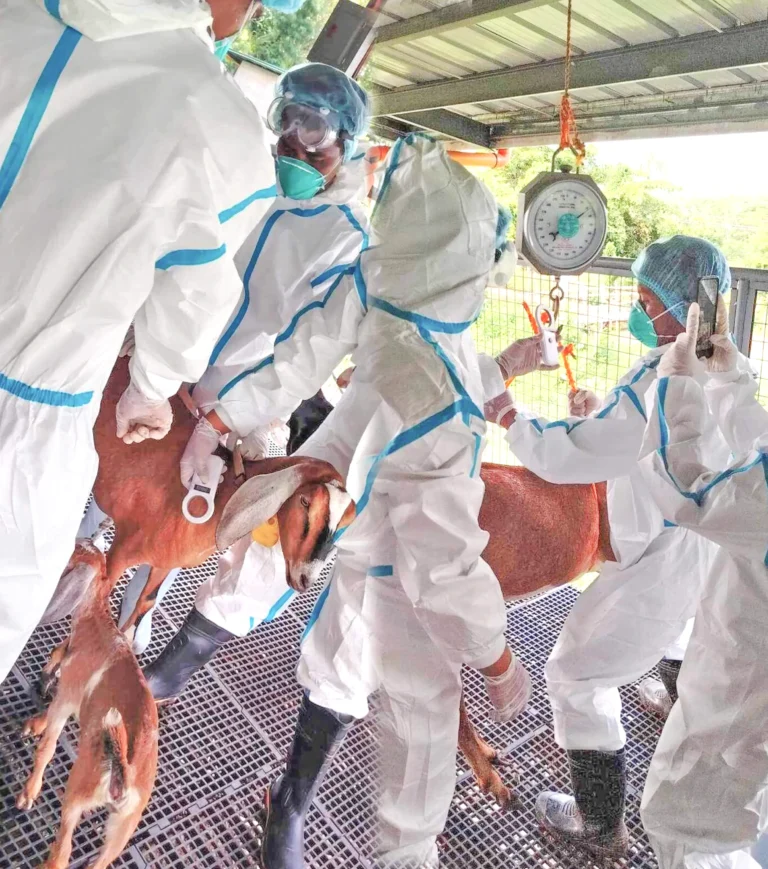
Q Fever first erupted from among the imported live goats from the US while in a farm in Pampanga and a government breeding station in Marinduque during 30-day quarantine prior to shipment to the south. 

THE OUTBREAK

The Department of Agriculture investigated the outbreak, suspended imports from the United States and culled the animals. Heads rolled yet no one could explain how the hardy organism got into the farms and affected the goats. 

The live goats were cleared by US regulatory agencies before being boarded into a plane that landed at NAIA in June 2024.

Q fever, a disease caused by the Coxiella burnetii bacteria, has been reported in many countries, including those in Asia, Africa, and Europe. Countries where Q Fever has been reported in goats include: Thailand, India, Nepal and Pakistan. Other countries where Q fever has been reported are Bulgaria, China, France, Australia, and The Netherlands. 

Except for New Zealand, C. burnetti prevalence is greatest in Africa and the Middle East. Reported rates of human infection are higher in France and Australia than in the US.

Cases of Q fever in travelers are most often reported in people who visited rural areas or farms with cattle, goats, sheep, or other livestock. During 1990โ€“2013, around 250 travel-related cases of Q fever were reported with examples of travel-acquired Q fever in soldiers deployed to rural areas, travelers with livestock contact and consumption of unpasteurized milk.

Q Fever first erupted from among the imported live goats from the US while in a farm in Pampanga and a government breeding station in Marinduque during 30-day quarantine prior to shipment to the south.

TRANSMISSIBLE

Q fever, a zoonotic disease, can be transmitted to humans through contact with infected animals and their excreta. 

Transmission to humans causes chills, fatigue, headache, coughs, vomiting, fever and muscle pain and, untreated, can develop into liver and heart complications.

Though the outbreak was contained last year, the risks are high that Q Feverโ€“ which can be transferred to humansโ€“ might be another epidemic waiting to happen with the unresolved questions about its origin and with the DA’s penchant for importing everything (live animals included). If an advanced nation like the US still does not have a vaccine for Q Fever, how much more for a Third World country like ours.

To prevent Q fever, travelers should avoid areas where potentially infected animals are kept and avoid consumption of unpasteurized dairy products. A human vaccine for Q fever has been produced and used in Australia but none is available in America.


PREVENTIVE MEASURES

In June, the US Center for Disease Control Yellow Book 2024  outlined preventive measures for Q Fever: โ€œ1) Avoid exposure to infected animals, 2)Follow safe food precautions and 3) avoid unpasteurized dairy products. It also said that vaccine (Q Vax) is available in Australia, but not in the US.

As of September 30, 2023, the goat count was at 3.86 million goats, declining from the previous year’s 3.94 million heads. About 99.2 percent of goats come from small-hold farms while semi commercial and commercial farms contributed only 0.39 percent and 0.37 percent, respectively.

The goats that tested positive for the disease were mostly in Santa Cruz, Marinduque and, fortunately, there is no confirmed human case yet, said Dr. Christian Daquigan, OIC of BAIโ€™s National Veterinary Quarantine Services Division.

Q Fever can be blown by the wind in long distances and only a few infectious aerosolized particles are necessary to cause serious illness,” the National Institute of Health explained, adding it can masquerade as other illnesses. 

The NIH highlighted the importance of laboratory testing for diagnosis and treatment. 

COOKING CHEVRON 

Properly cooking goat meat can prevent infection, said the Department of Health. 

Placenta from animals giving birth, especially those cared for by farm handlers or veterinarians, can be a source of Q fever transmission. 

Human-to-human transmission is very rare, said Health spokesman Assistant Secretary Albert Domingo.

Goat meat, or chevon, is said to be healthier than beef, pork and chicken as it has lower calories, cholesterol and saturated fat. Chevon can be sold as fresh or chilled. If chilled, it must be kept at 0 to 4 degrees Celsius (โ„ƒ) to prevent bacterial growth. 

The DA โ€”as frontliner in the food chainโ€” must guide importers about countries where livestock can be safely acquiredโ€ฆ unless it does not care about human health and safety.

What Is A Roving Commission?

0

IN LAW, A roving commission refers to โ€œa wide and sweeping authority that is not canalized within banks that keep it from overflowing.โ€ Put differently, it is an invalid delegation of legislative powers; a delegation of authority running riot.

Roving commissions have deleterious effects on our constitutional order because they violate the system of checks and balances designed by the framers of our constitution. Thus, time and again, the Supreme Court had invalidated many acts of the Legislature that possessed the trappings of โ€œdelegation gone riot.โ€

Of late, four seeming โ€œroving commissionsโ€ have preoccupied the minds of political leaders, students of political science, and some keen observers of the socio-political developments in the countryโ€™s major opinion corridors.ย 

They are: (1) the Bicameral Conference Committee (BiCam) of the 2025 General Appropriations Bill headed by their respective Chambersโ€™ leaderships together with the chairpersons of the House of Representativesโ€™ (HOR) Appropriations Committee and the Senateโ€™ Finance committee. Sometimes, this is euphemistically referred to as the โ€œThird Chamberโ€; (2) the โ€œSmall Groupโ€ of the โ€œBiCamโ€ composed only of both Chambersโ€™ heads and the chairs of the โ€œAppropriations Committeeโ€ of the HOR and โ€œFinance Committeeโ€ of the Upper Houseโ€”at times, this is known as the โ€œFourth Chamberโ€; (3) the office of the Secretary General of the House in so far as its ministerial duty to transmit Impeachment Complaints to the Office of the Speaker; and (4) the office of the Secretary of the Senate in so far as its non-discretionary duty to advise the Senate leadership of its receipt of the Articles of Impeachment transmitted by the HORโ€™s Sec-Gen.

[T]ime and again, the Supreme Court had invalidated many acts of the Legislature that possessed the trappings of โ€œdelegation gone riot.โ€

A NECESSARY CONSEQUENCE
For this episode, let us present without suggesting that a roving commission attended the BiCam on the 2025 budget.ย 

Note that a BiCam is not created by the 1987 Constitution. Yes, its provenance is not so provided by the Fundamental Law. But its existence is a necessary consequence of the bicameral nature of our legislature. Its main task or sole justification is to iron-out the disagreeing provisions between and among the HOR’s version and the Senateโ€™s version of legislative measuresโ€”not supplant, modify, let alone alter, the chamberโ€™s outputs. Their chambersโ€™ approved versions have to be fashioned out into a unified version will be acceptable to both chambers before they are given the final imprimatur of their respective plenum the last gavels before the unified version become what is known as enrolled bill.ย 

The need to harmonize disagreeing provisions is not present in a unicameral Congress.

The current practice of our bicameral Congress is for both chambers to send their chosen representatives to this BiCam for the latter to do the task of harmonizing or ironing out disagreeing provisions.

With particular reference to this yearโ€™s General Appropriations Bill (GAB) which is required to โ€œexclusively originateโ€ from the Lower House, there were serious disagreements not only on the items proposed, but also on the amount suggestedโ€”or, โ€œleft blank to be mysteriously filled in.โ€

Unfortunately, we can no longer discuss the merits of the 2025 General Appropriations Act (GAA) because it has been challenged before the Supreme Courtโ€”and it up for deliberation.

A REPRESENTATIVE DEMOCRACY

And while the jury is still out, we shall limit our discussion on the interplay of the tripartite separation of powers under our constitutional order: a representative democracy.

Yes, we operate through interdependentโ€”rather than independent, branches of government: the legislative branch upon which legislative power is exercised through the Senate and the HOR โ€”bicameral in structure; the Executive which implements or executes the laws through the President and his Cabinet; and the Judiciary which settles actual legal controversies through the Supreme Court and the lower courts.

But the Great Ordinances of the Constitution โ€œdo not divide the fields in black or white; even the more specific of them are found to terminate in a penumbra gradually shading from one extreme to the other.โ€

The budget law is one specific subject where the interdependence of the Great Ordinances are graphically manifested. 

Our budget law undergoes 4 stages: (a) the preparation by the Executive, (b) the authorization by the Legislature, (c) the execution by the Executive; and (d) the oversight or accountability phase by the Legislature and the constitutionally-independent Commission on Audit (COA).

In all this constitutional process of budgeting, some โ€œbig rocksโ€ cannot be pushed aside as Congress meanders its way in the legislative pathways, namely: โ€œ(1) The Congress may not increase the appropriations recommended by the President for the operation of the Government as specified in the budget. The form, content, and manner of preparation of the budget shall be prescribed by law.โ€ (Sec 25, Art VI, 1987 Constitution); and (2) paragraph (3) thereof provides, โ€œThe procedure in approving appropriations for the Congress shall strictly follow the procedure for approving appropriations for other departments and agencies;โ€ among others.

But, as said earlier, due to the pendency of the challenge before the High Court, we cannot delve into the merits and/or constitutionality of the 2025 GAA. 

DELEGATION OF POWER

We can only lay down some general principles or yardsticks on non-delegation of legislative powersโ€”not only in the area of budgetary matters but on legislative power in general, vis-a-vis the conduct of the โ€œThird Chamberโ€, the โ€œSmall Groupโ€ (Fourth Chamber?), and the HORโ€™s Printing Office (Fifth Chamber?).

Thus, said the High Court in the case of PAL v. CAB and Grand International Airways, Inc., G.R. 119528, March 26, 1997, 337 Phil. 254, [Second Division, Per J. Torres, Jr.], citing the eminent Justice Isagani Cruz:

“To be valid, the delegation itself must be circumscribed by legislative restrictions, not a “roving commission” that will give the delegate unlimited legislative authority. It must not be a delegation “running riot” and “not canalized with banks that keep it from overflowing.” Otherwise, the delegation is in legal effect an abdication of legislative authority, a total surrender by the legislature of its prerogatives in favor of the delegate.”

There we are!

And, by the way, have we seen the powerful Committee on Appropriations of the Camara Baja conduct a public hearing on its own budget proposal duly defended by the HORโ€™s Accounts Committee? Or, the latterโ€™s counterpart in the Upper House? 

Just like the way Congress deliberated on the Judiciaryโ€™s, the Ombudsmanโ€™s, and other constitutionally-independent bodiesโ€™ budget proposals, including the COAโ€™s?

Snatching Our Food,ย Robbing Our Energy

0

ITโ€™S BEEN OVER 20 years since China took radical steps to address its rapidly growing demand for food and energy, trying to find a solution in a maritime region named after the biggest communist state in the world.

Amid an extremely bloated population, China is compelled to find viable sources from where they could harvest food to feed its 1.42 billion people and siphon energy to power up its growing industries.

Moving forward, China masterfully asserted domination over the South China Sea where experts found an abundant supply of both food and the so-called black oil underneath the eastern strip of the maritime region.

However, the area they are looking at is well within the 200-nautical mile Philippine exclusive economic zone (EEZ).

DOMINANT GREED

But greed seemed more dominant behind Chinaโ€™s effort to feed its people and light up its industries. Oh yes, China seemed to want more as it created artificial islands where military installations were constructed.

Unmindful of the 73-year old Mutual Defense Treaty (MDT) between the Philippines and the United States, and a 2016 ruling issued by the Permanent Court of Arbitration, China stood firm on its claim over the entire South China Sea.

The motive is clear. China badly needs everything they could find in the disputed maritime region, not just to feed their population or energize industries but for world domination by controlling the international navigational strip which serves as a conduit for more than $3 trillion of annual ship-borne commerce.

China has what it takes to go to war, and in effect reap everything under the surface of the entire South China Sea, and benefit much from the Philippine governmentโ€™s oil exploration.

LIFE-THREATENING AGGRESSIONS

To prove my point, China has repeatedly shooed, shoved, water-cannoned and rammed Philippine vessels sailing a maritime region well within our exclusive economic zone.

In view of its aggression and wanton disregard of international laws, China has been at the receiving end of global condemnation over its behavior. 

I have already lost count as to how many diplomatic protests have been filed by the Department of Foreign Affairs (DFA) over โ€œlife-threatening aggressionsโ€ at the West Philippine Sea.

And the MDT? There’s a slim chance that the Donald Trump-led US would come and defend the Philippines.

A backdoor diplomatic channel is still the best option for the Philippines to deal with China. We canโ€™t afford to go to war, nobody wins a war.

On Administration Of Churchโ€™s Temporal Goods

0

PERCHANCE, IF NOT for sure, you could have come across with the proverbial satire about how a priest decides to use the collection money โ€“ how much is for the church (or God) and how much is for him. Well, according to the story, the allegorical priest says: โ€œI throw or toss the money way up in the air. Whatever hangs or remains in the air is for God (the church) and whatever lands on the ground is for me.โ€

Whoa, be the story apocryphal, exaggerated or outrightly spurious, it still rings true with stories about how rampant secular clerics mishandle churchโ€™s money. Admittedly, on my part, Iโ€™ve been hearing no end about the fond quip that priests have already replaced their vow of poverty with a โ€œvow of propertyโ€.

But, seriously, like many others perhaps, being lacking in knowledge about the Churchโ€™s canonical statutes on the administration of temporal goods, Iโ€™ve given priests the benefit of the doubt.

ON SHEPHERDING

Until I came upon Bishop Nolly Bucoโ€™s latest book, soon to be off the press by St. Pauls publishing, โ€œShepherding Christโ€™s Faithful: A Pastoral Guide on the Juridical Recognition of Pious Associations and Administration of the Churchโ€™s Temporal Goods.โ€

The book has two parts: Part I deals with juridical recognition of pious associations. Part II tackles about the administration of the Churchโ€™s temporal goods.

Undeniably, for purposes of this piece, it is Part II of the book that this columnist finds as superbly enlightening.

For one obvious reason. For the multitude of the laity, regulations or scheme of things concerning the temporal goods of the Church are a gray area, let alone the general assumption that whatever temporal goods (money, property assets, etc.) the priest receives are intended for โ€œGod and the good of the Churchโ€.

For the multitude of the laity, regulations or scheme of things concerning the temporal goods of the Church are a gray areaโ€ฆ ensuring clerical accountabilityโ€ฆ

ON SALVATION OF SOULS

In his book, Bp. Buco minces no words in providing the canonical regulations, purposes, succession, and proper administration of the Churchโ€™s temporal goods.

Citing the Canon Code, Buco underscores that the main goal for the Churchโ€™s temporal goods is โ€œbuilding the kingdom of God and the salvation of human souls.โ€ All partial purposes are designated to this one goal.

Interestingly, citing the pertinent canonical provisions, Buco points out that the cleric is duty-bound to observe some stern rules, among others: โ€œ1) to use such goods with a sense of responsibility, moderation, upright intention and detachment; 2) to abstain from lucrative activities not consonant with his ministry; and 3) to lead a simple life and abstain from whatever may smack of worldliness.โ€

What about priests who are committing financial anomalies or mismanagement, embezzlement, fraud, or improper handling of parish funds or assets?

ON CLERICAL ACCOUNTABILITY

In Appendix C of the book, Buco beautifully outlines the general principles and canonical provisions on โ€œensuring clerical accountability and addressing financial anomalies within parishes,โ€ particularly on 1) obligations of clergy; 2) investigation and reporting; 3) canonical penalties for financial misconduct; 4) prevention measures; 5) transparency and accountability; 6) and other Churchโ€™s norms on financial accountability, including Pope Francisโ€™ revisions to Canon 1376 and Canon 1397 to address financial misconduct in the Church.

Hurray, Bp. Bucoโ€™s book is an imperative reading.

Ayuda and AKAP: Pork?

0

THE PROPHETS OF today have spoken, loud and clear: โ€œThe CLERGYโ€™S CALL: SHIFT FROM โ€˜AYUDAโ€“DRIVEN BUDGET.โ€™ (INQUIRER headline) For many Filipinos, this call from the Catholic Churchโ€™s leaders is a fresh breath of air, as it were, given that this bold Pastoral Letter suddenly appeared, after a long hiatus of deafening silence since 2016, when a braggart from Davao said that โ€œGod is stupid,โ€ and went on a killing spree of more than 30,000 Filipinos, including innocent youths!  

The message to the so-called โ€œrepresentatives of the peopleโ€ is an indictment of their dynasty-centric and anti-people 2025 Budget for the country.  

More to the point, it also demands from these government officials, who are mandated to work for the benefit of the people, to start their work with an honest-to-goodness budget for programs geared to solving the main problems besetting the majority of the people. 

IN THE GUISE OF …

But, in the guise of solving the massive poverty suffered by more than half, perhaps a quarter, of the estimated 116 million Filipinos, they have traitorously allotted for themselves hundreds of billions of pesos for handing out to their constituents, as if the cash-out is coming from their pockets. And this scenario has been an SOP among dynastic candidates especially during the election period. 

The bishops, in the words of executive director Fr. Tito Caluag of Caritas Philippines (social action arm of the CBCP), said it best: โ€œWhile ayuda is needed for the poor not to get mired deeper in poverty, it is also important that we provide them with programs that will truly give strength and opportunity to empower them and to genuinely improve their lives and not need to depend on ayuda.โ€ This ayuda in the budget has long been a source of corruption. 

The dynastic candidates are actually making their constituents, particularly the poor in the ‘laylayanโ€™ communities, dependent on them (for their votes) with the Filipinosโ€™ deep-seated โ€˜utang-na-loobโ€™ enslaving them under a political patronage set-up! And the deception by the dynastic candidate is that: (1) the cash-out in the eyes of the receiver serves to relay the message that he or she is supposedly worthy of being a good public official deserving of being elected, and (2) the money given serves as a bribe, and the receiver cannot see that he is voting for a corrupt dynastic candidate.

The budget should enhance the capability of the people, with the right education and training, to have jobs and be empowered to think critically for themselves.

REEKING OF CORRUPTION

The 2025 Budget, as finalized by the secretive bicameral committee, reeks of corruption. The budget for DepEd, SUCs, UP and government-operated schools should have the biggest budget allotment, according to the Constitution. The Education System must be upgraded yearly, given that as of today, the Edcom Report 2 said that 2,000 schools have no designated Principals, and among other problems, there has long been the need for 16,000 classrooms. 

Along with the budget for Education, PhilHealth should likewise be given adequate funds for the healthcare needs of the poor, and adequate funding for hospitals and their medical staff and professionals.

CULTURE OF MENDICANCY

In a nutshell, the bishops are telling president Bongbong Marcos, VP Sarah Duterte, the senators and congressmen to craft a budget that is truly for the benefit of the people, particularly the millions of poor and vulnerable Filipinos. 

Their anti-poverty programs should โ€œnot promote a culture of patronage and mendicancy.โ€ The budget should enhance the capability of the people, with the right education and training, to have jobs and be empowered to think critically for themselves. 

In other words, the 2025 budget, the peopleโ€™s money, should not be for the self-serving interests of the legislators, but for the benefit of the vulnerable sectors of society.

Conflict Of Interest?

0

Questions on the possible legal concerns โ€”which could do more harm than good to the governmentโ€” were raised following Maharlika Investment Corporationโ€™s formal acquisition of equity holdings in the National Grid Corporation of the Philippines (NGCP).

According to House Senior Deputy Minority Leader and Northern Samar 1st District Rep. Paul Daza, the act in itself may trigger an imbalance in the governmentโ€™s function in view of conflict of interest.

“Remember, a strong regulatory oversight must always be in place to ensure fairness and efficiency in the power sector. For example, how can we now penalize NGCP for violations if we’re also part of the board?” Daza said in a story which appeared in the Manila Times.

However, Energy Secretary Raphael Lotilla doesnโ€™t seem bothered even as he insisted that securing a 20 percent stake in the NGCP is a welcome development for the governmentโ€™s pursuit of energy security.

โ€œThis is a step toward attaining our goal of ensuring security of supply, reliability, affordability, and promoting competition in the power sector,โ€ Lotilla said in reference to MICโ€™s acquisition of NGCP shares.

IN FULL CONTROL

Established in 2009 through Republic Act 9511, NGCP has exercised full authority over the management and operations of the nationwide transmission system, a critical public utility, under a franchise granted by the Philippine Congress. 

NGCP, a consortium of three corporations โ€“ Monte Oro Grid Resources Corporation, Calaca High Power Corporation, and the State Grid Corporation of China (SGCC) โ€“ transmits energy from the coal-fed power plants to the distribution utility companies like Meralco.

Itโ€™s in charge of operating, maintaining, and developing the country’s power grid and its related assets and facilities, controls the supply and demand of power by determining the power mix through the selection of power plants to put online.

And yes, NGCP could play God who gave us light. But unlike God, NGCP may opt to rephrase a line or so in the Bibleโ€™s Book of Genesis โ€” โ€œlet there be darkness,โ€ instead of โ€œlet there be light.โ€

WHOSE CONTROL?

During congressional hearings, legislators have expressed alarm over what they claimed as a pressing issue โ€” foreign control of the NGCP. 

Under existing laws, foreign ownership in public utilities like the energy sector is limited to 40 percent ownership, allowing the SGCC to โ€œinvestโ€ that much in the NGCP.

However, allowing a significant portion of the national energy infrastructure to fall under the influence of foreign entities may pose risk not only to the countryโ€™s energy security but also to national sovereignty amid Chinaโ€™s dominance and aggression in the West Philippine Sea.

NGCP insisted that the public utility firm is 60 percent Filipino-owned, but a closer look says otherwise. The fact that SGCC controls 40 percent of the NGCP is a direct affront to the foundational principles meant to dictate the ownership of the Philippinesโ€™ vital industries. 

Worse, the NGCP board is headed by a Chinese national as chairman, not to mention other key positions relegated to SGCC executives.

And yes, NGCP could play God who gave us light. But unlike God, NGCP may opt to rephrase a line or so in the Bibleโ€™s Book of Genesis โ€” โ€œlet there be darkness,โ€ instead of โ€œlet there be lightโ€.

TIMELY INVESTMENT

The governmentโ€™s decision to invest in the countryโ€™s power transmission is consistent with the Philippine Development Plan (PDP) 2023-2028 approved by President Ferdinand Marcos, Jr.

โ€œInvestment in transmission expansion offers enormous potential benefits for efficiency by increasing access to low-cost generation, improving reliability and counterbalancing market power,โ€ reads part of the statement issued by the Department of Energy (DOE).

The transmission lines are vital to the power sector as new generation projects rely on transmission wires to deliver electricity to customers, with NGCP responsible for such wires and facilities and the operation of the national power grid system.

NGCP decides when transmission wires and substations could operate and where, and MICโ€™s entry in NGCP will help address delays in completing transmission projects while providing for additional capital to help lower both the risks of power outages and higher electricity prices. 

MERALCO IS NEXT

During the time of the late former strongman Ferdinand Marcos, Sr., the government was in control of the energy sector โ€“ including the distribution utility companies like the Manila Electric Company (Meralco).

Is his son and namesake taking the same road? 

With the MICโ€™s acquisition of shares at the NGCP, there is a possibility that the government would set sight on Meralco which has long been a subject of complaints amid excessively high charges and other legal complexities.

Taking a closer look at the Meralco monthly billing statements would show only three percent of the amount weโ€™re supposed to pay goes to transmission. The biggest chunk is for generation and distribution. 

Assuming a household is paying an average of P14,000 per month, half of it corresponds to the consumed electricity. 

Distribution charges are pegged at 23 percent or around P3,200. Others reflected in the bill include system loss which compels consumers to pay for what Meralco lost from electricity theft, subsidies, government-imposed taxes, universal charges, the so-called FIT All, and the spurious โ€œother charges.โ€

Destined For A Mission

0

THEREโ€™s not much being said about Erik Martel or the sports discipline heโ€™s into. But thereโ€™s much to offer amid his ability to lead and bring the long overdue progress to a town which has become his home for the longest time.

For one, Erik Martel, or Kuya Erik to his constituents, isnโ€™t just into football. His ability to โ€œconnect the dotsโ€ made him into what he has become โ€” a successful businessman with a heart for which local folks are egging to see him take the helm and maximize the potentials of the coastal town of Abucay in the province of Bataan.

ABUCAY UP CLOSE

Despite an abundance of resources that could trigger growth, Abucay which is located at the northern part of Bataan, has remained a third class municipality with a meager revenue pegged at P165 million as of 2020.

Interestingly, the town recorded an expenditure amounting to P120.8 million and a liability of P103 million. Simple mathematics dictates that the amount that the local government has been raising isnโ€™t even enough to defray the cost of providing the needs of the local folks. 

According to the Philippine Statistics Authority, Abucay, which has a population of almost 46,000, recorded a little less than 8 percent poverty rate despite assets amounting to P494 million.

Abucay, which has an area of about 8,000 hectares, is also known as a fishing town and an agricultural haven. Secondary forests cover the western portion which is nearly 38 percent of Abucayโ€™s land area, where the famous Baguio City brooms come from. 

Existing fishponds, covering 1,282.5 has., cater commercial marine species. 

TIME TO SHINE

According to Kuya Erik Martel, Abucay has what it takes to shine, for which he cited the need to act with urgency, precision โ€“ and to some extent, โ€œformidable connections.โ€

Kuya Erik also took note of the need to boost employment, entrepreneurship, healthcare system, education, youth and sports development, a calibrated tourism program embarking on environment protection, agriculture among others.

โ€œIangat ang antas ng pamumuhay sa Abucayโ€ฆ yan po ang pangarap ko โ€“ maraming trabaho, malagong negosyo, maaasahan healthcare system at empowered na kabataan.โ€

MARTEL WHO?

“Kuya Erik” Martel is no stranger to politics and public service, which runs in his blood. His cousin is one of the countryโ€™s most powerful politicians โ€“ House Speaker Martin Romualdez.

He also happens to be the son-in-law of former Abucay Mayors Liberato Santiago and wife Ana Dominguez-Santiago. 

As an athlete, anything that has something to do with drugs is a big NO.

It’s Brilliance Overload For MMDA

0

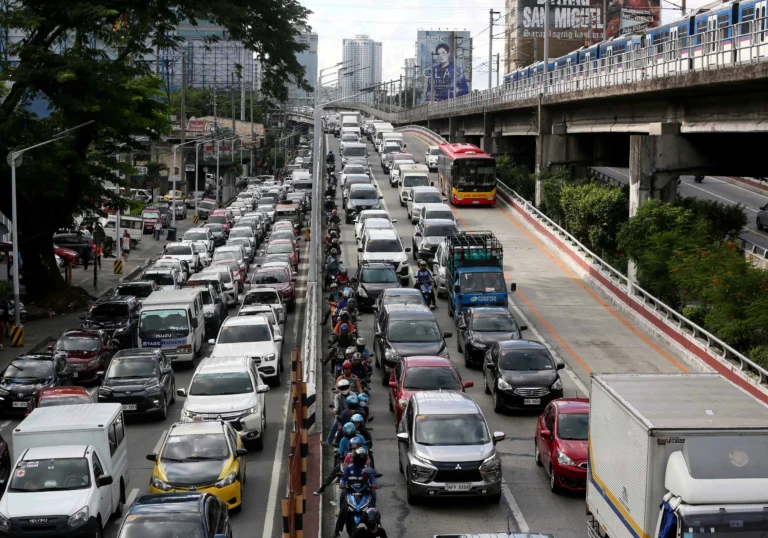
FROM THE LOOKS of it, the EDSA Busway โ€“ designed exclusively for buses plying the entire EDSA stretch called the Bus Carousel program โ€“ was an unplanned, whimsical program for the purpose of grandstanding by those in office and to raise funds that only the Metro Manila Development Authority knows where the income goes. 

With the fines starting at P5,000 for first offense, the busway has seen numerous violators โ€“ or those unauthorized vehicles taking the one-lane portion of the main highway. Many of them were identified as politicians, police officials, showbiz and business personalities, and scions of influential people. 

Obviously, some used the busway deliberately to gain media mileage. There were a few cases that boasted of huge payments (or payout) to MMDA’s highest officials.

Come to think of it, the busway now seems like more of a nuisance to public commuters. First, it made commuting experience doubly difficult for most as they had to cross and walk many meters to get to the footbridges to the area where they could take their ride at the designated Bus Carousel stops. Second, it cost them a lot more because the fares in the entire experiment (yes, I call it just an ill-planned experiment) is far more than the regular they used to pay when they could still take the buses at the designated stops at the outer lane of the road.

SCRAP THE ‘CAROUSEL’!

The MMDA hinted at a Palace briefing that the national government wants to scrap the EDSA Bus Carousel as it overlaps with Metro Rail Transit 3 route which makes no sense to me as one is elevated and the other is street level. 

But this could come only if MRT3 can handle all the passengers relying on the buses and if and when the country’s train system is fully interconnected.

See, this is how they work. Toss an idea, get a public pulse, and then decide. There is no actual consultation with experts and designers on the appropriate actions to take?

Concerned agencies must fix the traffic first in EDSA before imposing fees. This is only possible if there is already efficient mass transport system.

SEAMLESS RIDE

In 2024, claims the MMDA, 63 million people were served by the Bus Carousel, serving the same road system with MRT. But MRT’s 13 stations runs from North Avenue Station in Quezon City to Taft Avenue in Pasay City. While buses along EDSA traverses Monumento in Caloocan City to PITX in Paranaque City with 21 stops.

The EDSA Bus Carousel operates 24 hours seven days a week, serving late night and early morning riders. Under limited time, MRT-3 leaves the North Avenue station at 5:05 a.m. and at 10:09 p.m. for the last train.

Senator Grace Poe, former chair of the Senate Public Services Committee, pointed out that mass transportation should offer a seamless and comfortable ride to commuters to encourage vehicle owners to leave their cars at home.

EDSA REHABILITATION

In the meantime, EDSA would be rehabilitated beginning March in time for the ASEAN Summit 2026. But it faces challenges with potholes and drainage in EDSA, which had been flooding for years, where utilities like telcos and water and electric companies have cables that encroach over and below the EDSA stretch.

Once the rehabilitation is completed, smoother roads will ease congestion allowing vehicles to move faster and improve traffic conditions in the main thoroughfare. Alternate routes must also be identified for use during the rehab.

H.O.V. AT THE BUSLANE

The MMDA has another brilliant idea should the carousel project be stopped: convert the busway into a high-occupancy vehicle lane or those with three or more passengers, and an AI camera will take note of the passengers in motor vehicles. 

Tinted vehicles will be required to roll down the windows for the headcount. Violators will be fined. Another source of income, always about money.

Another road users tax? The old one was riddled with corruption, which is why it was stopped. Not another one again!

Senator Grace Poe told concerned agencies to fix the traffic first in EDSA before imposing fees.

That would happen if there are already alternatives and if there is already efficient mass transportation.

Espionage

0

IN THE WAKE of series of events that has been reported happening around the country for the last few weeks and months or so, it is quite alarming to note shocking news stories about the widening scope of the espionage scenarios within and outside the country.

There is no doubt that  after the successful joint intensified investigations and findings in unraveling the real truth behind the dismissal of Bamban, Tarlac Mayor Alice Guo, a.k.a. Guo Hua Ping, as an alleged potential Chinese agent is a clear evidence and indication that there are โ€œsleeper agentsโ€ or โ€œspiesโ€ that lurk and have been living with us for quite some time, secretly gathering and transmitting sensitive confidential information to China, which had posed imminent danger in our countryโ€™s national security.

SCOPE OF ESPIONAGE

The widening scope of the Chinese espionage in the country is clear evidence that our countryโ€™s vulnerability to Chinese espionage is real that the national government must not be complacent by putting the entire country at risk. 

The government must not take the matter for granted, as Chinaโ€™s continued political maneuvering of their discrete and malicious espionage underground mission, using their embedded โ€œspy agentsโ€, put the entire territory for possible all-out invasion if not fully controlled or eradicated from the main streams of our Society.

In May 2024, a BBC report, citing information from an unnamed Western intelligence official, estimated that Beijing had โ€œaround 600,000 people working on intelligence and security, more than any other state in the world.โ€

IMPLEMENT NEW ESPIONAGE LAW

So, it is necessary that the national government must resolve the current dangers that lurk within our communities. 

All government agencies and authorities involved in the full implementation of the new espionage law, must act decisively and wisely to fully terminate, if not put an end in the penetration and proliferation of Chinese espionage within the confines of the restricted economic zones, government military facilities and infrastructures of the country. 

Complacency has no place in our democracy, otherwise, the entire nation will suffer the consequences from the Chinese spying eyes. 

ALARMING REPORTS OF ESPIONAGE

President Marcos had indicated the problem could very well be wider and more serious.  He  said that he was “very disturbed” by the thought of Chinese sleeper agents operating in the country. 

Of course, as the Commander-In-Chief of the state, he has full prerogatives to issue directives to the Bureau of Immigration, NBI and AFP and all other involved agencies to apprehend and execute arrests on alleged suspected suspicious spy agents discretely conducting espionage activities within the state. 

The President was quite alarmed by the sudden apprehension and arrests of alleged โ€œsleeper agentsโ€ or โ€œspiesโ€ operating in Luzon and Palawan.

Complacency has no place in our democracy, otherwise, the entire nation will suffer the consequences from the Chinese spying eyes.

EMPOWER INTELLIGENCE CAPABILITY

National Security Adviser Eduardo Aรฑoโ€™s call to modernize espionage laws is sound and worth pursuing, but the greater imperative is to empower the countryโ€™s intelligence capability. 

Itโ€™s time that the government put those hard-to-audit intelligence and confidential funds to good use, instead of dolloping them out for political favors. 

However, Aรฑo assured the public that the government remains steadfast in its commitment to enforcing the law and holding those involved in espionage accountable.

APPREHENSIONS AND IMMEDIATE ARRESTS

Last January 17, the NBI apprehended Chinese national Yuanqing Deng outside a condominium in Makati City. He is suspected of being a “sleeper agent” who has allegedly been conducting espionage activities in critical infrastructure, specifically military camps, Enhanced Defense Cooperation Agreement (EDCA) sites, local government offices, power plants, stations and shopping malls located in Luzon. Deng Yuanqing, an individual described by the National Bureau of Investigation (NBI) as a man of many hatsโ€“a โ€œsoftware engineer,โ€ โ€œfinancier,โ€ and graduate of the Peopleโ€™s Liberation Army University of Science and Technology in Nanjing, who โ€œspecializes in control and automation engineering.โ€  

With the arrest of five Chinese allegedly โ€œsleeper agentsโ€ between January 24 and 25, 2025, are: Cai Shaohuang (Richard Tan Chua), Cheng Hai Tao (Lestrade),Wu Cheng Ting (Brawn), Wang Yong Yi (Watson), and  Wu Chin Ren. 

Recently, it was also reported that the NBI arrested five alleged Chinese spies who were purportedly monitoring activities of the Philippine Coast Guard and the Philippine Navy in Palawan.

The five will be charged for violating sections of an anti-espionage law that dates back to the Commonwealth era. In particular, the five will be charged for: โ€œunlawfully obtaining or permitting to be obtained information affecting national defenseโ€ and โ€œunlawful disclosing information affecting national defense.โ€ 

EMBEDDED FOR DECADES 

Last January 31, the Bureau of Immigration and the NBI, during a press media briefing, disclosed that five Chinese nationals allegedly involved in espionage activities in the country have been apprehended and “had been living in the Philippines for decades and embedded themselves within the Society.โ€

Immigration Commissioner Joel Anthony Viado said that the bureau recently checked the records of these suspected spies, and discovered that they have all been here for decades. “Some have been here as early as 2002,” he said. These recent discoveries will prove that these arrested embedded spies within our communities pose great threat not only to the homeland security but also the national territorial waters of the entire country.

The immigration bureau, in its mission to resolve the widening scope of espionage in the country, was working closely with the Department of Justice, NBI and the AFP to gather more information about the arrested suspects. It also urged citizens to report suspicious activities of foreign nationals that might affect national security.

Higher Car Sales and Income Inequality

0

IF THERE IS any indication of income inequality in the Philippines, it is the increasing vehicle sales.

For one, the latest Social Weather Stations (SWS) survey released last January showed that Filipino families who consider themselves โ€œmahirapโ€ or poor increased to 63 percent in the fourth quarter of last year. This is highest recorded self-rated poverty rate since the 64 percent in November 2003, according to the SWS.

Despite the feeling of increased poverty among Filipino families, automotive vehicle assemblers in the country posted record-high sales of 467,252 units in 2024, reflecting an increase of 8.7 percent from 429,807 units sold in 2023, according to the joint report of Chamber of Automotive Manufacturers of the Philippines, Inc. (CAMPI) and Truck Manufacturers Association (TMA).

MONEYED MOTORISTS?

The passenger car segment was a major factor for the overall vehicle sales last year, growing by 10.5 percent to 120,770 units from 109,264 units in 2023. Sales of commercial vehicles also went up by 8.5 percent year-on-year from 320,543 units to 346,482 units.

Commercial vehicles accounted for 74 percent of the total sales, while passenger cars shared 26 percent, showing that there are more moneyed motorists buying SUVs and pickup trucks.

However, the industry group fell short of its target of 468,300 to 500,000 unit sales for 2024.

In December 2024 alone, sales reached 42,044 units, or 2.8 percent up month-on-month and 7.4 percent higher year-on-year, demonstrating that many motorists went holiday shopping for cars at bargains offered by car dealerships.

LET GOV’T ADDRESS THIS

Clearly, the increased car sales last year demonstrates that the government has yet to address income inequality nationwide.

And income inequality has been a nagging people in the Philippines in the post-pandemic era.

This, as a 2022 report by the World Bank showed that the Philippines ranked 15th out of 63 countries in terms of income inequality, explaining that the top 1 percent of income earners contributed 17 percent of the national income. On the flipside, the bottom 50 percent of Filipinos captured only 14 of the country’s wealth.

Does this mean that the declaration of President Ferdinand Marcos Jr. that the Philippines will soon attain middle income country status by 2028 is nothing but hot air?โ€œWith strong macroeconomic fundamentals, we are confident that the country will be able to hit this year the GNI per capita range set by the World Bank to reach upper middle-income country status, coming off from an all-time high record registered in 2023 to the tune of $4,335 or P241,165,โ€ Marcos said in his toast remarks during the recent Vin dโ€™Honneur (French tradition meaning wine of honor) at Malacaรฑang Palace in Manila.

Can Acupuncture Heal A Broken Heart?

0

Ah, heartbreak โ€“ the ultimate excuse to eat an entire pizza by yourself, eat lots of ice cream, watch an embarrassing amount of rom-coms, and contemplate getting a dramatic haircut.

We’ve all been there โ€“ the tears, the tantrums, the hastily written breakup poetry that’ll inevitably end up on the internet and haunt you forever.

Youโ€™d think heartbreak would get easier as you accrue more relationship mileage, right?  Like youโ€™d develop calluses on your heart. Nope. Turns out, heartbreak is an evergreen experience, a timeless torment, a reliable source of inspiration for bad pop songs. 

Heartbreak isn’t just emotional; it’s also physical. “Broken Heart Syndrome” is a real medical condition that’ll have you crying so hard you’ll need oxygen therapy. It’s like your heart is staging a dramatic protest against your terrible taste in partners. 

A CHEMICAL COCKTAIL

More women than men experience it, which probably explains why rom-coms are a multi-billion dollar industry.

Symptoms include, but are not limited to:

– Crying until you dehydrate yourself (bye, electrolytes!)

– Sudden urge to buy a pet (usually a cat, because let’s face it, cats are the ultimate breakup companions)

– Inability to operate heavy machinery due to blurry vision from all the tears

– Persistent feeling that you’ll never love again (until you meet someone new and the cycle repeats)

Heartbreak is basically a chemical cocktail gone wrong. Itโ€™s like your brain decided to throw a party, but instead of champagne and confetti, itโ€™s serving cortisol and adrenaline.  These lovely hormones tighten your arteries, which can feel suspiciously like a heart attack. So, youโ€™re not just emotionally devastated, youโ€™re physically convinced youโ€™re dying.

Broken Heart Syndrome’ is a real medical condition that’ll have you crying so hard you’ll need oxygen therapyโ€ฆ More women than men experience itโ€ฆ’

PRICK YOUR BROKEN HEART

So, can acupuncture fix this hot mess? Can it glue your heart back together like a broken vase?

Well, yes Virginia, acupuncture can heal a broken heart (Or at least stop you from writing cringe-worthy poetry)

Acupuncture, that ancient practice involving tiny needles and the mysterious flow of โ€œchi,โ€ has been around for ages. Itโ€™s supposed to unblock stagnant energy, which sounds a lot like what happens when youโ€™ve been binge-watching rom-coms for three days straight.  It’s like giving your body a little nudge, a gentle “Hey, get it together!” via strategically placed needles.

The idea is that these needles send messages to your brain, which then releases endorphins โ€“ the โ€œfeel-goodโ€ hormones. Think of them as tiny happiness ninjas, stealthily attacking your sadness. 

NO MAGICAL HEALING

Acupuncture can improve your mood, release tension, and decrease pain. So, while it might not erase all those embarrassing texts you sent your ex, it could at least help you stop obsessing over them.

Some people feel amazing after one session, like theyโ€™ve finally achieved inner peace. Others need multiple treatments, which is probably because theyโ€™re still listening to that breakup playlist on repeat. Itโ€™s like trying to heal a broken bone while running a marathon.

Look, breakups are awful. They leave you feeling lost, confused, and like you suddenly have an encyclopedic knowledge of sad songs. Your brain needs time to rewire itself, to adjust to the new reality of being single. It’s a process.

Acupuncture might just be the thing to help you feel like yourself again. It might not magically bring your ex back (and honestly, do you really want them back?), but it could help you feel a little more like yourself again. And if not, well, there’s always pizza.

How About A Stage Play On Heidi Mendoza?

Heidi Mendoza who?

Heidi Mendoza, former commissioner of the Commission on Audit (COA), the whistle-blower since 2011 against public officials on the misuse of government funds.

How rich and colorful is Heidiโ€™s personal and professional life that could merit a live theater or a plastic art translation for all the world to witness, ponder and emulate?  

Is she larger-than-life? 

No matter.

As long as she is an inspiration.

A MOTIVATING CONCEPT

In a recent encounter with an ally and ardent supporter of Heidi, a bright and an interesting idea suddenly came up.

โ€œHow about a stage play about Heidi Mendoza?โ€ she exclaimed.

Why not?

Knowing, though, the nitty-gritty, gargantuan and meticulous preparations for a theater production to make it more compelling considering that the midterm elections is just around the corner, it cannot be a vehicle for campaign.

Knowing as well the frame of mind of the enabler and Heidi herself whom I have just met once personally but I could easily glean on her attitude and principles as a public servant and as a personโ€”basing my judgment on her stance on judicious budget spending among public officials and her long shot vision of service to the peopleโ€”an opportune time isnโ€™t a problem.

A stage play on her can take a while even after the polls, win or lose.

A LITERARY OUTPUT

In the pre-production stage of a theater play, for instance, a professional, credible and worthwhile company spends a year or so to brainstorm and concretize plans in seeing and shaping up a successful project from choosing of director and other creative crew to casting to marketing. 

Writing a play isnโ€™t a haphazard, overnight process as well although it also depends on the playwrightโ€™s work habits but well-meaning writers make sure that a literary output is a sensible and mighty proud one.

Tanghalang Pilipino was considered as a possible producer but it isnโ€™t as simple as one imagined it to be since it is an outfit that also has its own policies although Heidiโ€™s biographical sketches and advocacies are thought-provoking which could stir public consciousness and awareness.

‘Here is a brave soldier of the bureaucracy who put her life at the crossline in the name of transparency and accountability.’

IDEAL THESPIANS

Anyway, no actress to essay Heidi was in the pipeline yet but there are many competent and intelligent actors to portray like Sharmaine Centenera Buencamino, Madeleine Nicolas, Adriana Agcaoili, and so on and so forth.

Even regular movie and television thespians could be considered like Judy Ann Santos, Maricel Soriano, Sharon Cuneta, Marian Rivera, Angel Locsin, Bea Alonzo, Lorna Tolentino, Vilma Santos etc. (for a change as they havenโ€™t done theater yet, for crying out loud!).

Nora Aunor could be a choice.  

Heidi has a romantic life on the side and this is an intriguing part of her life.

Who would play her husband, Meynard Mendoza, a principled man?

In 2011, at the height of a series of expose on the corruption in high places of public funds, Heidi was the central figure of the controversy.

MOTHER LILY’S INSTINCT

Here is a brave soldier of the bureaucracy who put her life at the crossline in the name of transparency and accountability.

She was fearless. She was bold. She was an idol.

According to Heidi, the late matriarch of Regal Films, Mother Lily Monteverde, approached her get her permission to film her life.

โ€œNag-usap na kami noโ€™n (We already talked before),โ€ recalled Mendoza.

The progressive feminist award-winning writer Lualhati Bautista was commissioned to do the script.

Mother Lily was willing to pump in millions to the project.

Piolo Pascual was considered to star in it.

โ€œWe already have a pictorial with Piolo,โ€ Heidi chuckled.

The movie didnโ€™t push through, though. โ€œNagkaproblema (There was a problem),โ€ informed Heidi.

At this point that filmmaking as a business venture is expensive, a stage play is wiser, cheaper and more compactโ€”if the execution is rightโ€”in message.

Distorted Sense Of Compassion

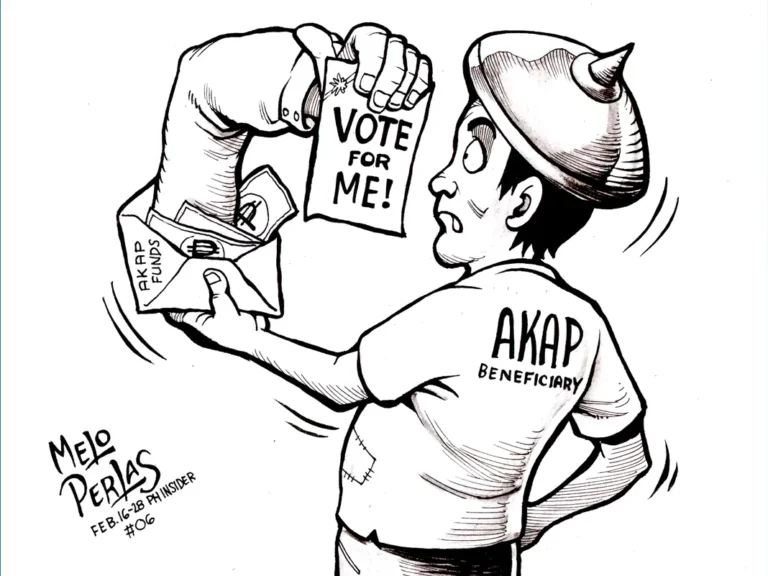
WITH THE UPCOMING elections fast approaching, legal experts have voiced grave concerns over the administration’s use of public funds to distribute financial aid — funds that should be driving long-term economic growth rather than serving as one-time handouts under the so-called Ayuda sa Kapos ang Kita Program (AKAP).

These budget allocations were intended to support crucial economic programs aimed at inclusive growth, not to function as election-season giveaways. The conspicuous presence of congressmen at AKAP fund distribution events only underscores their true motive: to keep voters dependent, effectively holding them hostage under the guise of compassion.

And speaking of a “distorted sense of compassion,” why are politicians even involved in selecting beneficiaries in the first place? The distribution of public aid should be an apolitical process, free from the influence of those seeking reelection.

Former Senate President Franklin Drilon has bluntly described the 2025 national budget as the “most corrupt” he has ever seen. 

The President’s power over budgetary decisions has been systematically eroded not by the opposition, but by his own allies, who have manipulated the General Appropriations Act to realign funds according to their own interests. The end result? A budget that deviates so far from its original intent that it barely resembles the National Expenditure Program from which it was derived.

Instead of financing essential economic programs, allocations have been distorted to serve as political “carrots,โ€ a means to boost reelection bids rather than stimulate national development. This raises a pressing question: Has Congress overstepped its mandate so severely that the President himself now appears to be merely a token leader?

The 1987 Constitution mandates that the state must develop a self-reliant and independent national economy — one that is firmly under Filipino control while encouraging private enterprise and investment. However, when lawmakers deliberately sabotage budgetary priorities, they deal a severe blow to the country’s long-term prospects.

The consequences are dire: Delays in crucial infrastructure projects for agriculture and energy; underfunded social services, particularly in education and public health; and an economy weakened by inflation, massive debt, and sluggish growth.

At a time when the nation desperately needs sound fiscal policies, we find ourselves stuck in a cycle of political opportunism trapped so long as the President allows his allies to dictate the course of our economy.

If we were to break free from this endless loop of corruption and incompetence, there is one clear solution: Vote out the trapos who orchestrated this scheme.

The future of the Philippines should not be dictated by those who see public funds as personal campaign tools. It’s time for Filipinos to demand accountability, reject deception, and reclaim the promise of real governance — one that prioritizes national progress over political survival.

Why The Rift Led To The Reef

0

โ€œAS CAESAR LOVED ME, I weep for him; as he was fortunate, I rejoice at it; as he was valiant, I honour him: but, as he was ambitious, I slew him,โ€ these words resonate not only with the learners in literature and poetry courses but among political science students as well. 

Yes, youโ€™re right, these were Brutusโ€™ words during the funeral for the slain Roman leader, Julius Caesar. 

I invite you to note wellโ€”nota beneโ€”the last phrase: โ€œbut, as he was ambitious, I slew him.โ€ All told, said Brutus, it was Caesarโ€™s ambition that did him in. 

To repeat: it was because of ambition that Julius Caesar met his endโ€”not in the hands of Romeโ€™s enemy but in the hands of Romans so known to him, whose unrestrained desires and aspirations conflicted with the logical consequences of Ceasarโ€™s exploits and conquests.

This admission of Brutusโ€”a close peer, associate, and fan of Caesar, sounds ominous today as it was when sounded by Brutus at the steps of that Great Roman Edifice centuries ago. Treachery? Disloyalty? Love of country? Clashing ambitions? 

Be the better judge!

And one thing led to anotherโ€”and the once formidable UniTeam was put asunder. Today, what remains flickering of the tandem is just a memory

HISTORICAL PARALLELISM

Are we witnessing the unfolding of a historical parallelism today with that infamous event that took place right inside the halls of the Roman Senate some decadesโ€”44 years, Before the Common Era?

Let me attempt to refresh our collective memory. 

Early into the 6-year term of a Presidential and Vice-Presidential tandem that was bruited by their supporters to be capable of spanning at least 12-years of UniTeamโ€™s supremacyโ€”with the jaundiced bloc having taken so much beating during the Duterte Administration (read: marginalized), what appeared to be a super-strong partnership and made stronger by the steely and alloyed resolve to hold on together, with the President providing mentorship to his Veep (after all, BongBong Marcos had no choice but to train his understudy as he, under the 1987 Constitution, is barred from seeking reelection) and Sara Duterte learning the basic ropes in statecraft and benefiting from a 6-year internship (which, by 2028, must have fortified her confidence level as Presidential heir-apparent), succumbed to its own rust and crumbled under the weight of unrestrained, nay clashing ambitions.

Indeed, as Neil Young & Crazy Horse sang: Rust Never Sleeps.

And the rust was provided by the ambitions of those who cannot wait for 12 yearsโ€” they who wanted badly to be in the order of succession right after PBBM. Ergo, Veep Sara must be yanked out of the ruling party. Pronto! Ahora! 

Consequently, even before the midterm 2025 elections, the once formidable tandemโ€”propelled by 32million votersโ€”headed for the rocks. So todayโ€™s reality: unless lightning strikes them into a reunion, no human force can mend the fissure. Theyโ€™re now after each otherโ€™s neck!

HOW IT STARTED
Let it not skip our memory that the current political hullabaloo had been triggered by the House of Representativesโ€™ (HOR) denying the Office of the Vice Presidentโ€™s (OVP) budgetary request for P500M confidential funds. The amount, the HOR felt, is not only unprecedented but irregular as wellโ€”the Veep being a mere spare tire in our constitutional order to be needing that much. So, deny the Veep, they did!

Ostensibly, the supporters of the Veepโ€”the former President included, did not like what the House leadership did to the second highest official of the land. Thus, FPRRD challenged the House leadership to apply to itself the very measure it wants the Veep to be subjected to: accountability. 

Put differently, the HOR should comply with their liquidation of expenses according to Hoyle. The former Chief Executive hollered: the HOR is the most corrupt agency in the government. He went ballistic saying that the HOR liquidates its expenses by way of a mere certificationโ€”a process agreed upon only by both chambers of Congress, and not in accord with COAโ€™s auditing rules and procedures. Hence, improper, illegal, unconstitutional.

To date, the HOR has yet to comment on the  constitutionality of its liquidation by certificationโ€”a mode that is outside the menu defined by the constitutionally-mandated state auditors: the COA.

CONSTITUTIONAL MOORINGS

Observers believe that FPRRDโ€™s demand has constitutional moorings. It should be noted that the Executive and the Judicial departments both observe the requirements of the State Auditing Code of the Philippines. This Code is religiously complied with by the Constitutional Commissionsโ€”including the COA itself, and even the Ombudsman. What then is the constitutional basis of both chambers of Congress for excepting themselves from the constitutionally-ordained COAโ€™s auditing rules and regulations? 

And one thing led to anotherโ€”and the once formidable UniTeam was put asunder. Today, what remains flickering of the tandem is just a memory.

Will the show of force engineered by the powerful religious sect knock some sense into the leaders of this country and put back the economy into its original trajectory where prosperity, national security, and human dignity were the pillars supporting the nation that constantly invokes the mantra: maka-Diyos, maka-tao, maka-bansa, maka-kalikasan?

Will the dying embers of the supposed smooth 6-year watch of the Marcos Junior under the former partnership be rekindled anew?

Was the sacking of AKAP poster boy Zaldy Co from the powerful HOR Committee on Appropriation a foreboding of something betterโ€”or bitter?

The X-Men In Our Midst

0

I feel respected because not only does somebody think I have a brain, they make me use it, too. โ€”From a retired senior citizen who was rehired to work once more

I am one of the X-Men โ€” among lots of friends and acquaintances who now lead lives being ex-policemen, ex-accountants, ex-engineers, ex-lawyers, ex-educators, ex-administrators, ex-judges, ex-marketing executives, ex-artists, ex-theater actors and ex-professionals who were once in demand in a past world who needed their talent and skills. 

All of us had been masters in their chosen careers and some were even in charge of entire departments at the center of operations in companies, corporations, organizations or institutions. 

Then, upon reaching the ripe old age of 60 to 65, we were mandatorily ex-cluded from productive society and relegated to one corner and forced to keep quiet and feel content that we are still alive โ€” although indicative of no longer being needed and at times a burden to society. 

In a lonely corner, we are expected to stay and wait for the dole outs, despite the pensions received by some of us, which barely cover the medicines, supplements, food and other necessities. 

UNIVERSAL SOCIAL PENSION

Recently, I joined fellow senior citizens, who rallied outside the Senate’s compound, to urge President Ferdinand “Bongbong” Marcos Jr.’s elder sister, lady senator Maria Imelda Josefa Remedios “Imee” Marcos-Manotoc, to take action on the Upper Chamber’s pending version of House Bill 20423, or the Universal Social Pension. 

This bill was passed recently in the Lower Chamber on third and final reading after gaining the nod of majority of members of the House of Representatives to push for the passage of the measure granting a monthly stipend of โ‚ฑ500 to all senior citizens (60 years old and above). 

Apparently, in spite the contributions we have given to our country in its development as a democratic nation, our lawmakers, particularly PBBM’s sister Imee, see us in our dotage as undeserving to even a miniscule portion of public funds that is actually worth only โ‚ฑ500 at the current situation. 

Thank you, Ma’am, for your “indifference” and “insensitivity”.

But what our legislators have overlooked is the fact that we would rather have the opportunity to earn on our own capacities than receive subsidies from the government. 

Rather than cash handouts, why not give us interest-free loans or funding assistance to turn our hobbies into worthwhile sustainable enterprises?

FUNDS FOR HEALTHCARE

It is a reality that most seniors would want to continue working beyond retirement age, for various reasons โ€” some miss the challenges and mental stimulation that go with having a job while others want to explore interests they were too busy to pursue previously, and, of course, many seniors want funds to pay for their growing health-care needs.

Instead of giving us privileges and entitlements, it is more appropriate for our leaders and officials to find ways to โ€œun-retireโ€ us. Laws and policies have to be created to give us retired seniors with opportunities to become productive once again, even as part-timers. 

Rather than cash handouts, why not give us interest-free loans or funding assistance to turn our hobbies into worthwhile sustainable enterprises? Or else, allow us to continue working beyond 65.


FOR your comments or suggestions, complaints or requests, just send a message through my email atย cipcab2006@yahoo.comย or text me at cellphone numbers 09171656792 or 09171592256 during office hours from Monday to Friday. Thank you and mabuhay!

Breakthrough in Book Publishing

0

WRITING A BOOK โ€” with a topic on the entertainment industryโ€”has always been my pursuit since Day One of my movie reporting venture.

Or even during my college days or prior to them, I already dreamt of writing a book on any subject, anyway.

I envied the anthology in Diwang Ginto and Diwang Kayumanggi, both books prescribed in secondary school curriculum, and thought I could be included in any of the collection in the future.

My medium then was solely Filipino which I thought would be an interesting read.

When I was already in the thick of things in movie journalism in the mid-70s, my interest in book writing had intensified especially when I came across the late Board of Censors for Motion Pictures Chief and Ferdinand E. Marcos, Sr.’s presidential assistant Guillermo de Vega’s “Film and Freedom: Movie Censorship in the Philippines.” In-depth, De Vegaโ€™s research was scholarly.

Alas, I found the right timing when UST initiated a program called “400 Books at 400,”โ€ฆ in celebration of the quadricentennial of the university in 2001.

400 BOOKS AT 400

My dream of writing a book became more apparent and intense when entertainment journalist Emmie G. Velarde launched her book “All Star Cast,” a collection of feature stories in English and Baby K. Jimenez came out with “Ang True Story ni Guy,” a biography on Superstar Nora Aunor in Filipino.

The misimpression that book authoring / publishing is expensive and laborious didn’t hinder my passion to pursue book authoring.

Alas, I found the right timing when the University of Santo Tomas initiated a program called “400 Books at 400,” a project of the UST Publishing House in celebration of the quadricentennial of the university in 2001.

UST alumni were qualified to publish their manuscripts provided they were approved by the head of the publishing house.

It was former chair of the Komisyon sa Wikang Filipino (KWF), the late Ponciano B.P. Pineda who advised me to submit my work to the publisher.

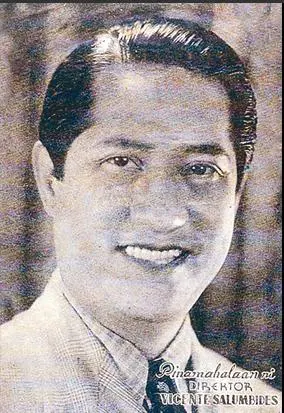
My project was a biography on the Filipino film pioneer Vicente Salumbides which I titled “Tio Ticong Pelikula at Pulitika Vicente Salumbides.”

SALUMBIDES OF LOPEZ, QUEZON

Without batting an eye, I immediately gathered all my thoughts and palpable materials about Salumbides which included, rare photos on and about him which I borrowed from his heirs for the documentary film I shot for the National Commission for Culture and the Arts (NCCA).

I applied my discipline in writing inspired by one of my Literature professors, the late poetess laureate Ophelia Alcantara-Dimalanta and soon started pounding on a gadget in a computer shop. 

To begin with, I had ample information and materials about Salumbides, who was my townmate in Lopez, Quezon.

After his primary and secondary education in Tayabas, now Quezon Province, Vicente went to the US and studied law at the Southern California University. He also took up directing, acting and writing in Hollywood while working as an usher in Kinema Theater. He was a member of the Famous Players Lasky Studios Lasky Players Studio in Hollywood.

Later, he quit school and joined World War I in France under General Pershing.

Salumbides finally finished his law studies in the Philippines.

OFF-PRESS, FINALLY

Well-equipped with creative and technical knowhow in filmmaking, Vicente did silent movies. Two of them, โ€œMiracles of Loveโ€ and โ€œFate or Consequenceโ€ in the early 1920s which were burned during the WWII battle in Manila. He went on to direct feature films for LVN Pictures like โ€œIbong Adarnaโ€ and โ€œFlorante at Laura.โ€ 

He was one of the delegates to the 1935 Constitutional Convention and fought for Filipino as National Language and womenโ€™s right to suffrage.

He also became mayor of Lopez during the Japanese occupation. 

โ€œPelikula at Pulitikaโ€ It was written in Filipino and eventually given a green light for publication by the late Micheline Manalastas, the UST Publishing House at the time.

Boy, I was so excited when the book was off-the-press and launched at UST.

It was the beginning of my book writing career.

A Big Blunder

0

The sales blitzes and gimmicks of  the Department of Agriculture and National Food Authority failed to dispose of the “aging” 300,000 tons rice in nearly 100 Kadiwa ng Pangulo outlets at cheap prices sans purchase volume quota. 

So, now a state of emergency for rice was slated for January 22 as recommended by the National Price Coordinating Council of the trade department.

The hype about reducing rice prices for NFA stocks through the Kadiwa flopped and now the DA wants an emergency to be declared to help NFA get rid of its buffer stocks.

In 2024 and in early 2025, the NFA incessantly complained of being unable to compete in palay procurement because of the higher prices and ready cash paid by traders at the farmgate leading to an increase of its palay procurement to P23 for clean and dry and P17 for fresh and wet.

Still, the farmers sold their palay to private traders, who paid in cash and picked up their produce, while NFA’s requirements were rigorous and payment processing was not instant time consuming. 

The spike in rice prices began in late 2023 and peaked in 2024. So where did the NFA get the huge inventory of aging rice?โ€ฆ People see all these as marketing gimmicks to sanitize the image of those in power

A SALES TOOL?

The spike in rice prices began in late 2023 and peaked in 2024.

So where did the NFA get the huge inventory of aging rice? 

Obviously, from importersโ€“ with some from confiscated stocks and others bought from legitimate importers for buffer stocking purposes.

This is the first time in the country’s history that an emergency is being invoked as a sales tool  and to keep local retail prices at bay. During the administration of Ferdinand Marcos Sr., a real rice (supply) crisis happened but never was an emergency declared. 

The current strategy of DA is not only flawed and myopic but it would have far-reaching dire consequences with no price reductions to be expected. At best, it would just be a ploy for politicians to give away rice for the midterm May elections.

The DA claims the stocks are nearly six months old and the NFA warehouses are filled to the brim worries NFA as it prepares for the coming dry season beginning February โ€“ to justify its billions of pesos of procurement funds, or it might not get the same, if not more, procurement budget for the coming years.

WAREHOUSES CONGESTED

Former Agriculture Secretary Leonardo Q. Montemayor, who now heads the Federation of Free Farmers, asked the NFA to disclose the real reason for the congestion of its warehouses.  

Montemayor said the NFA has nationwide network of warehouses with total storage capacity of 1.2 million metric tons of palay or rice form. 

โ€œIn what warehouses and locations are congestion happening?โ€ Montemayor asked. โ€œIf, say, in Occidental Mindoro, why werenโ€™t their stocks shipped out earlier to other areas within or outside Region 4-B?โ€ Montemayor said as he recalled that from July to December 2024, the Philippines was hit by a series of destructive typhoons.

The FFF also warned that the DA only wants the NFA to be allowed to sell its buffer stocks to local government units in Metro Manila at a cheaper rate โ€” supposedly to lower the retail price of rice and empty NFA warehouses just in time for the palay harvest season.

PNA File Photo

The DA wants to release the buffer stock to bring down prices and decongest NFA’s warehouses in preparation for the February harvest.

Since the Rice Tariffication Law bans the NFA from selling directly to the public, the stocks could be sold to local government units, the Armed Forces of the Philippines, the Philippine National Police, other government agencies and government-owned and -controlled corporations for as low as P36 a kilo next month, and by March, the selling price can decrease to P33.

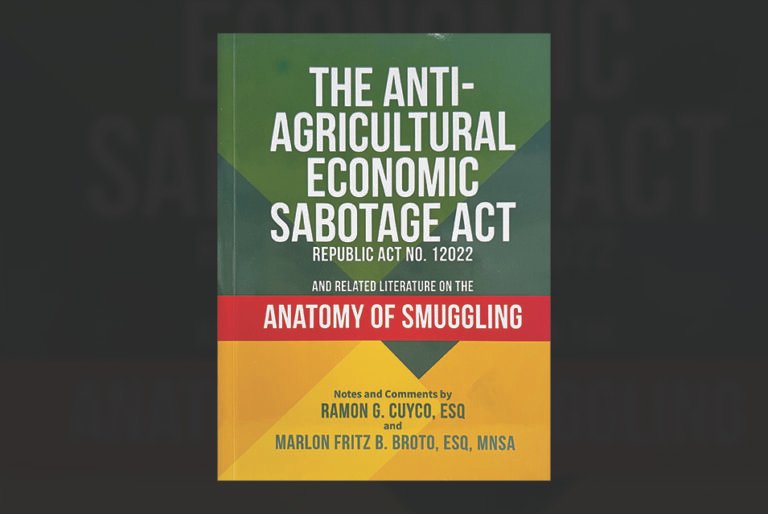
This would not solve the root cause of high rice prices, profiteering, in which case the DA can only use the Anti-Agricultural Economic Sabotage Act of 2024 and charge and jail those hoarding, profiteering and operating as a cartel, instead of the psychologically-distorting emergency situation.

โ€œRice prices remain high because of importers, wholesalers and retailers who are taking advantage of the market. It’s like saying, okay, we will let the profiteers be. Let’s just do something else to bring down prices. Let’s sell NFA rice,โ€ said FFF national manager Raul Montemayor, who also suggested that DA ask the help of the Department of Finance and the Bureau of Internal Revenue to investigate the profiteers.

He warned that selling NFA rice to local governments is prone to corruption and politicization (vote buying by seeking exemption from the election ban).

INEPT GOVERNMENT POLICIES

The steady elevation of rice prices is not just a rebuke of the government’s mandatory reduction in import tariff for rice โ€”from 35 to 15 percent since June 2024 โ€” it also showcases how inept government policies have become from production and marketing regulations for the staple.

It also shows that all the hype about Kadiwa operations have failed both consumers and producers because of the lack of vision, strategy and planning and their effective implementation. 

People see all these as marketing gimmicks to sanitize the image of those in power.

โ€œWhat we have is a failure of the government agencies to run after and discipline profiteering importers, wholesalers and retailers,โ€ he pointed out.

Subic Port Asย Starting Point

0

EIGHT years after the enactment of Republic Act 10863, or the Customs Modernization and Tariff Act, the governmentโ€™s bid to accelerate trade seemed moving slower than expected amid several factors โ€“ one of which is an โ€œembedded culture of corruption.โ€

TURNOVER. The symbolic flag of command is passed on to the new Port of Subic District Collector, Atty. Marlon Fritz Broto, (right) by officer in charge and Deputy Collector for Assessment Andrew Malcom Calixihan. Photo by BOC.

For one, this Act is primarily designed to modernize Customs rules and procedures for faster trade, reduce opportunities for corruption, improve the bureau’s service delivery and improve supply chain.

The enactment of RA 10863, however, would not suffice what is required for the trade to accelerate without the right men for the job.

Taking the case of Subic, smuggling activities ranging from rice, sugar, frozen meat, and cigarettes among others continues to thrive at the former American naval base, as claimed by Albay Rep. Joey Salceda in a report published in the Business Mirror.

THE SUBIC FREEPORT

From being an American facility strategically located in an area facing an open sea, RA 7227 effectively converted Subic Bay Naval Base into what is now referred to as the Subic Bay Freeport Zone (SBFZ).

The same law created the Subic Bay Metropolitan Authority (SBMA) with clear mandates: to develop the facility aimed at generating tax while extending duty-free privileges and incentives to business locators inside the countryโ€™s first freeport.

LANDMARK INITIATIVE. The Port of Subic, led by District Collector Atty. Marlon Fritz B. Broto, conducts its first-ever official Executive Committee meeting, a significant departure from the usual staff meetings. The Port adopts a more structured and strategic approach inspired by the Bureau of Customs Execom meetings held at the main office. Photo by BOC

No less than the Commission on Audit (COA) cited the crucial role of the SBFZ โ€œin the national governmentโ€™s efforts to achieve international competitiveness and provide for its integration with the global economy.โ€ 

With an active trade in place, the Bureau of Customs (BOC) has embedded a district collection office โ€”referred to as Port of Subic โ€” inside the facility for the purpose of ensuring tariffs and taxes are collected corresponding incoming and outgoing shipments. 

THE PORT OF SUBIC

While the law provides that freeports like the SBFZ are deemed separate customs territory, the fact that the facility hosts incoming and outgoing shipments in itself requires the presence of the BOC for proper facilitation and duties collection.

With overlapping functions under the laws which created both the BOC and the SBFZ, there is an urgent need for a collaboration which may only be possible under the helm of a person who has an impeccable familiarity in the issues hounding the freeport.

The good thing though is that Customs Commissioner Bienvenido Y. Rubio found the right man for the job with an impeccable record embarking on effective implementation of revenue collection, trade facilitation, and a keen eye on spotting fraud.

More than the conventional responsibilities of implementing the BOC mandate, the go-to person has to be someone who would be able to bridge the gap between the BOC and the SBMA in view of the overlapping functions.

(With Atty. Marlon Fritz Bogtong Broto, MNSA) at the helm, the Port of Subic hinted at enhancing its contributions to national progress while continuing to serve as a cornerstone of trade, economic growth, and security.

URGENT AND TIMELY

Earlier this year, acting Customs Deputy Commissioner Marlon Fritz Bogtong Broto, was tapped to take the helm as the new district collector at the agencyโ€™s freeport-based Port of Subic, raising eyebrows on what seemed more of a demotion. 

However, stakeholders inside the freeport donโ€™t see it that way. They are considering Brotoโ€™s appointment at the Port of Subic as urgent and timely in view of an imminent legal squabble arising from questions on whether or not BOC has jurisdiction over a secluded freeport zone.

Broto, a lawyer by profession, is no stranger at the Port of Subic where he once served as deputy district collector for operations, before being assigned acting deputy commissioner for the Management Information Systems and Technology Group of the bureau.

During his stint as deputy collector for operations, Broto shared BOCโ€™s various information and communications technology (ICT) projects which he intends to complete with his โ€œassumption.โ€

THE NEW DIRECTION

With Broto at the helm, the Port of Subic hinted at enhancing its contributions to national progress while continuing to serve as a cornerstone of trade, economic growth, and security.

โ€œMy commitment to the stakeholders and communities we serve is simple yet resolute: to lead with integrity, act with purpose, and uphold the highest standards in all that we do,” the new district collector was quoted as saying in a statement.

“Together, we will ensure that the Port of Subic continues to thrive, setting new benchmarks for excellence while contributing meaningfully to our nationโ€™s development,โ€ he quipped.

Promoting Progress, Building the Future

0

WHEN the Congress drafted a legislative bill that would effectively allow government takeover of US military installations in the Philippines, the idea was merely to make use of the vast area covering the American bases in anticipation of its decommissioning in 1992.

The enactment of Republic Act 7227, otherwise referred to as the Bases Conversion and Development Act, effectively created the Bases Development Conversion Authority (BCDA) which oversees the radical transformation of what used to be an exclusive enclave into special economic zones.

The same law created the Subic Bay Metropolitan Authority (SBMA) with clear mandates โ€” to develop the facility aimed at generating tax while extending duty-free privileges and incentives to business locators inside the countryโ€™s first freeport.

RADICAL TRANSFORMATION

Thirty-two years later, the 670-square kilometer former US naval facility in Zambales became a prototype of a bustling economy embarking on promoting a balanced development.

Referred to as Subic Bay Freeport Zone (SBFZ), the old military facility is now a self-sustaining tourism, industrial, commercial, financial, and investment center generating revenue for the government while providing jobs to 164,400 local folks with no less than the Subic Bay Metropolitan Authority (SBMA) as the driving force.

More than government revenues, the SBMA fostered a working relationship with a little less than 2,000 business locators inside the Subic Bay Freeport Zone with tax perks, incentives and duty-free privileges. 

Under the general business and investments are 372 business locators, 336 companies under the logistics cluster, 924 investors promoting leisure, 126 covering manufacturing and maritime, and 98 into information and communications technologyโ€ฆ

MULTI-FACET INDUSTRIES

A web-based list posted on mysubicbay.com.ph portal hinted at 1,856 investments (referred to by the SBMA as business locators) inside the SBFZ.

Investors at the Subic Bay are divided into five clusters โ€” General Business and Investment; Logistics; Leisure; Manufacturing and Maritime, and Information and Communications Technology.

Under the general business and investments are 372 business locators, 336 companies under the logistics cluster, 924 investors promoting leisure, 126 covering manufacturing and maritime, and 98 into information and communications technology.

In a news article published by the Manila Times, SBMA chairman and administrator Eduardo Jose Aliรฑo boasted of the SBFZโ€™s contribution to the governmentโ€™s employment program even as he claimed that the freeport zone has steadily provided jobs for no less than 164,000 Filipinos.

GROWING WORKFORCE

Aliรฑo also took note of a growing demand for Filipino workers as manifested in the annual increase in workforce โ€” from 156,811 in 2023 to 164,000 the following year.

The biggest chunk of โ€œnew recruitsโ€ has been recorded under the manufacturing cluster in view of the expansion of 110 companies which now employ 27,484 workers. The figure is roughly 20 percent higher than 21,433 employees in 2023.

The SBMA chief attributed the employment opportunities inside the SBFZ to “President Ferdinand Marcos Jr.’s aggressive efforts to bring more foreign companies to invest in the country since it has been his administration’s thrust to create more jobs for Filipinos through foreign direct investments.” 

SUBIC BAY BACKBONE

Employment opportunities inside the SBFZ is not limited to Zambales local folks. Taking cue from the figures coming from the SBMA, the workforce behind the freeport-based companies come from Olongapo City, Bataan, Zambales, Pampanga, Tarlac and as far as Metro Manila.

Interestingly, the Subicโ€™s services sector has the biggest number of workers with 116,776 employees employed by 4,014 companies in 2024. It recorded an increase of 1,134 workers from 2024’s 116,776 employees, compared to 115,642 recorded in the previous year.

The maritime sectorโ€” shipbuilding and marine-related servicesโ€” has 153 companies employing 6,187 employees; 5,512 male workers and 675 female workers. 

The number of employees in the construction sector reached 13,953 and employed by 320 companies.

SUBIC AS NEW HOME 

In May last year, the SBMA signed an agreement with the Department of Human Settlements and Urban Development (DHSUD) for the possibility of developing a housing project for Subic Bay freeport workers.

Under the agreement, the project would be a mixture of residential and commercial purposes under the Pambansang Pabahay para sa Pilipino (4PH) program with no less than the backbone behind the freeport zone as beneficiaries.

To start with, the SBMA will take care of preparing the technical, financial and documentary requirements, permits, and licenses required in the project’s implementation.

DHSUD for its part committed to assist the SBMA in complying with the documents and coordination with Pag-IBIG Fund to facilitate housing loan take-out and to pay the corresponding interest subsidy for the project.

SUBIC LIKE NO OTHER

Separately, Deputy Administrator Ronnie Yambao hinted at SBMAโ€™s capacity and operational efficiency to keep up with growing demand for multi-modal logistics in the Asian region, for which he believed would translate to more employment opportunities. 

Yambao emphasized three important pillars in enhancing Subic Bay Freeportโ€™s capacity and operational efficiency: automation, investment in infrastructure and equipment acquisition, and expansion.

โ€œSubic Bay Freeport is the only Freeport in the Philippines that has a complete logistics infrastructure in one location that is managed by the SBMA. It has an airport, and a seaport with a modern container terminal, and piers that can accommodate different types of cargo, to be connected to the Luzon Economic Corridor by a railway in the near future,โ€ Yambao said.

The Anti-Agricultural Economic Sabotage Act Republic Act No. 12022 and Related Literature on The Anatomy of Smuggling

0

THE BOOK, A cutting-edge dissection of R.A. 12022, focuses on the seemingly interminable scourge of agricultural smuggling, hoarding, profiteering, and cartel activity that has long undermined food security and stability of agricultural economies.

Part One introduces the salient features of the new law, R.A. 12022, as juxtaposed with the old one. Here, the authors mince no words in expounding and critiquing the intricate provisions, arguing that: โ€œHow to operationalize the โ€˜self-executoryโ€™ of the law โ€“ without the need for the issuance of implementing rules and regulations โ€“ is easier said than done. A reading of the law will tell us that some guidelines are necessary so that actual enforcement or implementation of some of its provisions can be carried out and pursued smoothly.โ€ (Comments, p. 12)

Under Philippine law, a smuggler is not simply someone accused of violating customs rulesโ€ฆ who, after a thorough judicial process, are proven to have engaged in illicit activities that undermine the nationโ€™s economic and social well-being.

Part Two tackles on the anatomy of smuggling, identifying the โ€œ8 Tollgates of Agricultural Smugglingโ€ and baring the โ€œInadequacies in Customs Clearance processesโ€.

Likely dissimilar to the pandering impression cast in congressional hearings, the bookโ€™s Afterword concludes with an apt definition of a Smuggler: โ€œUnder Philippine law, a smuggler is not simply someone accused of violating customs rules. They are individuals who, after a thorough judicial process, are proven to have engaged in illicit activities that undermine the nationโ€™s economic and social well-being.โ€ (Afterword, p. 108)

Verily, the authors โ€“ lawyers Ramon G. Cuyco and Marlon Fritz B. Broto, MNSA โ€“ draw from their veritable fields of expertise to โ€œlaymanizeโ€ R.A. 12022.

Down to earth, homespun, and uncondescending, the book is surprisingly wise.