

Agriculture Secretary Francisco Tiu Laurel, together with Department of Agriculture officials and consumers, leads a traditional boodle fight to sample the National Food Authority’s well-milled rice, priced at P20 per kilo. This was held during the launch of ‘Benteng Bigas Meron Na’ at the Bureau of Animal Industry in Quezon City last Thursday, May 15, 2025.
DND Commits Filipino Soldiers, Cops For UN Peacekeeping Missions
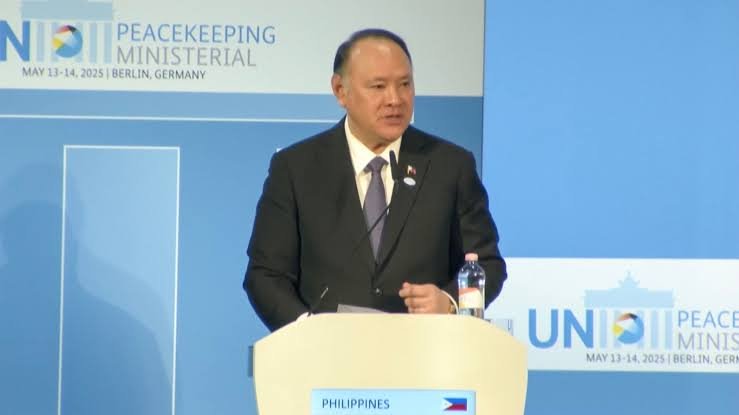
WHILE IN ATTENDANCE in the United Nations (UN) Peacekeeping Ministerial in Berlin, Germany, where he was given the floor to deliver a message, Defense Secretary Gilberto Eduardo Gerardo Teodoro Jr. announced the commitment of Filipino soldiers and policemen as field military observers and officers to support UN-mandated missions in conflict areas across the globe.
In committing to the participating world dignitaries in the pledging session, Teodoro pledged to provide military mobile training teams to enhance peacekeeper preparedness in addressing both emerging and persistent global challenges.”
He likewise vowed to increase the deployment of women peacekeepers, stressing that their inclusion in all rules and positions is essential to peace operations effectiveness, credibility and long-term success.
(Teodoro) vowed to increase the deployment of women peacekeepers, stressing that their inclusion in all rules and positions is essential to peace operations effectiveness, credibility and long-term success.
ALL-WOMEN CONTINGENT
The defense chief disclosed that a light infantry battalion and police unit of three platoons, most probably with an all-women composition, will be deployed for UN peacekeeping missions.
“The challenges facing UN peacekeeping today demand that we come together collectively to respond to the present challenges of peacekeeping operations, meet head-on to advance innovative and responsive solutions, and answer the call for investing in and sustaining peace,” Teodoro enthused.
He also recommended to representatives of the UN member states that a new peacekeeping model should be established amid the prevailing conflict, particularly in the Middle East involving Israel and Palestinians.
“There must be a clear outcome when we engage in a peacekeeping mission and that political outcome must be based on and in line with the United Nations Charter,” he noted.
“The UN fields its peacekeepers in conflict-stricken countries, to preserve its relevance and effectiveness, we must ensure robust political support and equip our missions to adapt and respond to complex and evolving threats,” he added to highlight the importance of peacekeeping missions in conflict areas even as he cited that the Philippines supports all efforts to revitalize and further strengthen peacekeeping missions.
“As a concrete expression of this commitment, we pledge to increase the number of Filipino peacekeepers deployed globally in the years to come,” Teodoro stated in conclusion to broadcast the country’s hosting this coming September of the 2025 ASEAN Peacekeeping Staff Exercise, which aims at preparing the regional bloc’s troops for safer and more effective UN peace operations.
Experts urge change to flawed housing policy
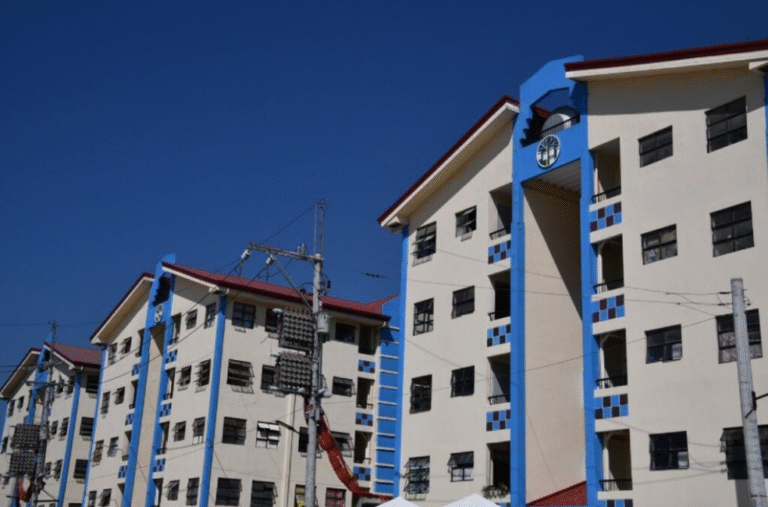
There is a need to review and revise the government’s housing policy to take into account the access of residents to work and social services, among others.
Dr. Mary Racelis, urban anthropologist at the University of the Philippines Diliman, urged policymakers to view housing beyond physical structure – especially in Metro Manila, where informal settlers account for about 35 percent of the population.
“The vast majority want to remain there because it makes total economic and family access to resources sense,” she explained during a forum on the issue in late April, highlighting how relocation programs often severe critical livelihood connections
“For the urban poor, housing is not just houses, right? It is not apartment dwellings,” Racelis emphasized. “Housing is the community setting environment of the economy, [it is] where people work, get their income, have access to social services, health services, and so on. So, housing must be seen in a much larger context.”
She cited examples of home-based workers—from welders to beauticians—whose incomes depend on staying in their current neighborhoods.
For her part, Philippine Institute for Development Studies (PIDS) Vice President Dr. Marife Ballesteros said that while working-age Filipinos often migrate from rural areas to urban centers, some later return to their provinces upon retirement – a trend referred to as “reverse migration.”
Racelis also pointed out that educated children of informal settlers often face difficult choices: remain in overcrowded cities to stay close to family, or move far away in search of affordable housing.
RETHINK HOUSING POLICIES
Racelis and Ballesteros called for a radical shift in how the government approaches housing development.
Ballesteros emphasized the need for data-driven policymaking that includes marginalized groups.
“We cannot continue planning without considering the most vulnerable… They have to be heard, they have to be seen in the data, and they have to be part of the planning process,” Ballesteros said.
She stressed that current approaches fail to account for the complex realities of “the elderly, persons with disability, women in rural areas,” whose needs must be prioritized in housing solutions.
On the other hand, Racelis urged policymakers to listen more closely to grassroots communities: “A city is not just its buildings—it is its people. If we continue ignoring the housing needs of 60 percent of our population, we are not just failing those communities, we are failing our collective future.”
Meanwhile, Housing Developers Association Executive Director Santiago Ducay also proposed concrete solutions to address these challenges.
Noting the rise of non-traditional living arrangements, he suggested, “Perhaps they can consider allowing loans not just for related individuals by consanguinity but also friends and other arrangements.”
Ducay also stressed the need to prepare for an aging population. This includes developing retirement communities with integrated healthcare services, designing adaptable housing units, and utilizing existing housing stock, noting “the government [owns] some 2 million housing units classified as acquired assets.”
“Limited access to decent housing would affect household formation and decisions to [have] children,” with long-term consequences for national development, Ballesteros warned.
What Next, Kingmakers?
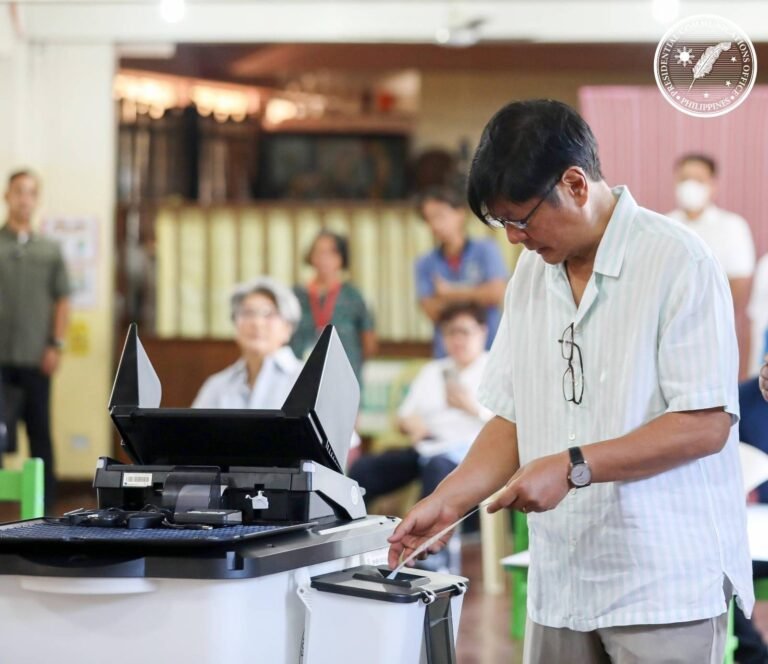
WHAT many thought would mark the fall of the so-called Duterte Magic turned out to be the other way around, as the administration failed to clinch a sweep.
Worse, candidates from the “other side of the fence” managed to secure formidable spots in the list of senatoriables who would soon be forming part of the impeachment court that is slated to convene in July for the trial of Vice President Sara Duterte.
The administration-backed House prosecution panel needs two-thirds of the Senate members to get rid of the vice president for good.
SHAKY POSITION
Of the 12 original administration-backed senatorial bets, only former broadcast journalist Erwin Tulfo (occupying the 4th spot as 12:28 pm of May 13) could be considered “safe.”
According to political experts, the number of votes garnered by former senators Panfilo “Ping” Lacson, Vicente “Tito” Sotto, reelectionist senators Pia Cayetano, Lito Lapid, and Las Pinas Rep. Camille Villar, is not a guarantee that they would win.
For one, they don’t enjoy comfortable leads over their partymates Bong Revilla, Abby Binay, Benhur Abalos, and Manny Pacquiao. It is also mathematically possible for independent candidate Ben Tulfo (Erwin Tulfo’s brother) to make it in the winning column.
Looking at all this, yes, there always exist the kingmakers who can manipulate elections… They take control in mind setting to sway public opinion, tipping the balance of power.
STURDY OUTSIDERS
Topping the partial unofficial result of the 2025 senatorial race is reelectionist Senator Christopher Lawrence “Bong” Go (PDP), who is closely identified with the administration’s most vocal bashers — the Duterte family.
With 97 percent of election returns already tabulated, Go, who spent decades working as special assistant of former President Rodrigo Duterte, accumulated a whopping 26.46 million votes.
At far second is Liberal Party’s Paolo Benigno “Bam” Aquino with a little more than 20 million votes, followed by reelectionist Senator Ronald “Bato” Dela Rosa. Former Senator Francis Pangilinan (LP) and SAGIP partylist Rep. Rodante Marcoleta ranked fifth and sixth, respectively.
Presidential sister Imee Marcos occupied the 12th spot as of this writing that already proclaimed around 90 percent of poll results.
POLITICAL MATURITY
To some, the entry of the two LP stalwarts is an indication of the Filipino voters’ political maturity.
The inclusion of Duterte allies like Go, Dela Rosa, Marcoleta, and Imee Marcos could be seen in two perspectives. It could prevent the Marcos administration from controlling the legislative branch of the government — or perhaps thwart VP Sara’s impeachment.
Meanwhile, Akbayan topped the partylist race with 2.75 million votes, followed by Duterte Youth which mustered 2.29 million markers. At the third spot is the Tingog partylist which was formed by House Speaker Martin Romualdez. Tingog’s first nominee is the House leader’s wife Yedda.
POLITICAL DYNASTY
The recent election also highlighted some improvement as a prominent member of a political dynasty failed to secure a win — outgoing Senator Cynthia Villar lost to Councilor Mark Anthony Santos.
Pacquiao’s relatives in Sarangani and General Santos City are headed for a win – but not him, who, as of this writing, holds the 18th spot.
Bong Revilla, who is considered the patriarch of the biggest political dynasty in the province Cavite, is also having a hard time entering the winning list, despite good standings in various pre-election commissioned political surveys.
With a little over 2,000 clustered precincts left, Makati City Mayor Abigail Binay may not be able to make it to the Senate’s Magic 12. She is ranked number 15.
WHAT NEXT?
After the proxy war between two political dynasties, Marcos seemed to have weakened his hold on the Philippine Congress with the entry of “outsiders” coming from various political spectrums.
Marcos’ most vocal critic, former President Duterte, who is detained in The Hague for the crimes against humanity resulting from a bloody drug war that killed thousands, handily won as mayor of Davao City, without even campaigning.
The fate of his daughter Sara, who is facing an impeachment trial, remains in the balance, even as the outcome of the senate race will somehow give a glimpse as to what will happen to her political career.
Sara is expected to run for president in 2028. A guilty verdict by the Senate acting as impeachment court would effectively ban her from politics.
POSTSCRIPT: KINGMAKERS
Looking at all this, yes, there always exist the kingmakers who can manipulate elections, particularly in systems where political power is heavily influenced by money, media control, or informal networks.
A kingmaker is typically an individual or group with significant influence who helps decide the outcome of an election without necessarily running for office themselves. They take control in mind setting to sway public opinion, tipping the balance of power.
In societies with transparent electoral processes, an active civil society, and independent media, the influence of kingmakers can be checked or diminished.
With the rise of social media and increased voter education, traditional power brokers are finding it harder to control narratives and outcomes. Ultimately, while kingmakers can play a powerful role in shaping elections, their influence is limited when voters demand accountability and fair processes.
Successive Deaths In Show Business

NAYSAYERS ARE AT it again. They say that death, if only bad luck, comes in threes.
After Asia’s Queen of Songs Pilita Corrales kicked the bucket, her balae (a Filipino term that pertains to parents of a couple, in this case Pilita was the mother of actor Ramon Christopher who married Lotlot de Leon, daughter of Nora Cabaltera Villamayor, real name of) Superstar Nora Aunor followed suit.
Not too long enough, the original Kilabot ng mga Kolehiyala (college girls’ heartthrob) Hajji Alejandro sang his swan song.
WEAK MATCHES
For a superstitious lot, this was ill luck among artists of the local Tin Pan Alley—a music industry tragedy, according to bearers of bad news, that foreboded if not foretold premonitions and negative vibes.
Come to think of it, though, Pilita, Nora and Hajji were not, especially Aunor, exclusively singers.
They were screen actors as well who dabbled in acting on TV and film. And theater, too.
Ate (a term of endearment to an older woman or sister by blood or affinity) Guy did three stage plays during her lifetime while Alejandro was part of the stage musical “Contra Mundum”–a stage adaptation of National Artist for Literature Nick Joaquin’s English play “A Portrait of the Artist as Filipino,” translated into Filipino as “Larawan” by another National Artist for Lit Rolando S. Tinio—one year about this time before his death.
The cynics would read it as a series of three weak matches.
‘[T]his was ill luck among artists of the local Tin Pan Alley—a music industry tragedy, according to bearers of bad news, that foreboded if not foretold premonitions and negative vibes.’
SUPERSTITION FOLLY
One showbiz denizen would even ask for exorcism to ward off evil spirits in the biz.
What the fuss?
I don’t know about it, much more believe in it, since in between the three deaths, there was the demise of gay actor, or better still, transgender actress, Ian Valdez.
That made four deaths in a row that would definitely dismiss or dispel the superstition or simply, folly.
Or just because Ian wasn’t in the league of Corrales, Aunor and Alejandro that her death was sidetracked or wasn’t counted in.
CULTURAL SNOB?
How can we be selective or simply, forgetful?
If that wasn’t cultural snobbery, I didn’t know what that was.
Or the industry didn’t know it has also a significant talent in Ian Valdez who was also known to be a good wardrobe designer.
Before Ian breathed her last, she was the fashion consultant of Premiere Water Plus Production’s launch of an all-female sing-and-dance group ala-Bini, Bodies Next Gen or simply, BNG.
Lately, popular actor Ricky Davao passed on and the entire world was agog with tributes of all shapes and sizes for him.
Practically, all show people seemed orphaned by Ricky’s death which should be the case because he showed excellence and professionalism in his craft and human relationship, a rare trait in the desert of ethical standards.
In contrast, did the community offer as much attention to the passing of character actor Romy Romulo who was also an important person and actor in our midst?
Romy was a pro of mostly screen antagonist role or goon mold but a film wouldn’t be complete without his villain or character acting.

Best Send Off
The kitsch and slapstick comedian Amay Bisaya, Robert Gloria Reyes in real life, bid adieu to show business after battling a lingering illness.
Amay, in his own unique if not fanatical way, had built his clique in his lifetime in the biz.
He was a diehard Marcos loyalist, FPJ ardent believer, Bong Revilla, Jr. follower and an avid fan of senior stars that made him sort of a vassal in neo-feudal set-up.
Amay was a good man, a loyal friend, and he deserved the best sendoff
Is It Stress Or Burnout? Here’s How To Tell

You’re tired. Like, pagod na pagod kind of tired. Your to-do list is longer than the line at LTO, and your brain is running on 3-in-1 coffee and prayers. Lately, you’ve been daydreaming about quitting your job and moving to the province to raise chickens while figuring out how Wi-Fi works in the middle of a rice field.
STRESS: You’re still pabibo, but tired.
- Juggling too much: work deadlines, family pakisuyo, planning the next reunion, avoiding EDSA traffic, and figuring out what ulam to cook tonight.
- Emotions are high, but present: you might be irritable, anxious, or prone to sudden urges to eat an entire leche flan.
- There’s light at the end of the tunnel: stress is often tied to specific triggers or periods. You know that once this project is done, or after this hell week, things might calm down.
- Coffee still works (mostly): that cup of 3-in-1 still gives you some semblance of life, enough to face your inbox.
‘Knowing the difference can help you choose the right path – whether it’s towards a better coping strategy or, eventually, that peaceful probinsya sunset.’
BURNOUT: You no longer care if your boss sees your deadpan face on camera
- You feel empty and detached: it’s not just tiredness; it’s a soul-deep exhaustion. You feel disconnected from your work, your colleagues, maybe even things you used to enjoy.
- Cynicism is your new best friend: everything feels pointless. You start rolling your eyes internally (or externally) at every new task, email, or overly cheerful colleague.
- Performance plummets (and you barely care): you’re not just procrastinating; you genuinely struggle to concentrate or muster the energy to do tasks you previously handled easily.
- Physical and emotional depletion: forget feeling irritable; you feel nothing, or just a constant, heavy dread. Sleep doesn’t refresh you. Coffee is just hot bean water.
So, What Now?
Recognizing the difference is key. Stress needs management: better boundaries, a vacation, exercise, maybe delegating that reunion planning. Burnout needs more serious intervention: extended rest, seeking support, re-evaluating your job or career path, and yes, maybe even considering that province life more seriously – but after you’ve recovered enough energy to actually pack.
Before you sell your condo and tell your boss where to stick it, take a breath. Whether it’s stress or burnout, please know this: you’re not alone. You don’t have to tiis ganda your way through life.
Take care of yourself like you’d take care of your friends. Knowing the difference can help you choose the right path – whether it’s towards a better coping strategy or, eventually, that peaceful probinsya sunset. Just promise me you’ll figure out the Wi-Fi situation before you move. Good luck!
Nickel Mining in Palawan Rendering IPs Homeless?

WHEN WE SPEAK of the indigenous people (IP), we are actually referring to the first settlers in our land. They are the group in actual possession of the land which they occupied even before the so-called development.
The land they have occupied, which has been classified as ancestral domain, are at their disposal, use and maintenance.
But not for the government, which approved nickel mining projects despite inadequate consultation and serious risks to communities’ health and environment.
LOSING ANCESTRAL DOMAIN
In a report made public by Amnesty International (AI) Philippines, there are over 20,000 IPs who stand to lose their ancestral domain amid efforts to ensure enough supply of nickel required in the government’s quest for renewable energy.
For one, nickel is an essential component of lithium-ion batteries needed in the production of electric vehicles.
AI expressed apprehension over the Philippines’ nickel boom which they claimed effectively renders IPs homeless even as the group cited the government failure to adequately consult local communities and obtain their consent.
Indigenous Peoples and rural communities are paying a heavy price for the world’s scramble for energy transition minerals, according to Veronica Cabe, chair of AI Philippines.
The P73.875-M royalty allocation for the use of the IP’s ancestral domain supports various developmental projects aimed at fostering sustainable progress within the region.
ADVERSE EFFECTS
IP and rural communities are paying a heavy price as the world scrambles for energy transition minerals, Cabe said.
“Not only did these communities undergo seriously flawed consultation processes – blighted by misrepresentations and a lack of information – they are now being forced to endure the negative impacts of these mining operations on their health, livelihoods and access to clean water.”
Cabe particularly cited Brooke’s Point, ancestral home to the Pala’wan Indigenous People in the island of Palawan where Ipilan Nickel Corporation (INC), MacroAsia Mining Corporation (MMC) and Lebach Mining Corporation (LMC) are set to expand mining operations embarking on nickel extraction.
Pala’wan or Palawano is one of the IPs of the island province.
HEALTH HAZARD
According to experts, nickel mining, regardless of its magnitude, poses risk of heavy metal contamination to the air people breathe, the water they drink and even in their food intake.
On-site interviews conducted by AI-Philippines also yielded results showing an increase in health issues since the nickel mining companies commenced operations.
Among the health concerns cited in the study included a sharp spike in the cases of asthma, coughs, breathing difficulties, and other respiratory issues, in addition to skin diseases and eye, throat and skin irritation.
They also reported how declining water quality – with several freshwater sources described as having turned a “reddish-brown” – has adversely impacted the livelihoods of fisher people and reduced crop yields.
SUSPEND MINING
“The Philippine government must suspend these mining operations until it has conducted an urgent investigation into human rights and environmental abuses, while nickel mine operators must put human rights at the center of their operations,” said AI’s Business and Human Rights researcher, Alysha Khambay.
“Without greater supply chain transparency, EV brands cannot say that their vehicles are free from the taint of human rights and environmental abuse in the Philippines. These brands must investigate their supply chains for links to nickel from the Philippines and make the results and any risk mitigation measures public.”
The research, conducted between September 2023 and October 2024, included interviews with 90 community members, as well as site visits and scrutiny of project documents, court records and images.
Interestingly, resistance among IPs mellowed down following the turnover of some P53 million in royal shares from IPC sometime in January this year.
IP groups in Brooke’s Point in Palawan received their “shares” from INC during a ceremonial turnover with no less than the local government officials and representatives from the National Commission on Indigenous Peoples as witnesses.
It is part of the total P73.875 million royalty allocation covering the period of September 2022, when the company began operations, up to September 2024. This amount is included in the Community Royalty Development Plan designed “to support various developmental projects aimed at fostering sustainable progress within the region.”
The Lifestyle Of A Pope

MANY PEOPLE ASK how much does the pope earn or how big is his compensation leading the Roman Catholic Church and its more than 1.3 billion followers?
In becoming the first American pontiff, Pope Leo XIV, erstwhile Cardinal Robert Francis Prevost, will receive a US$33,800 (approximately ₱1.87 million) monthly salary and unmatched perks.
The new pope has quickly made headlines across the globe with his historic appointment sparking worldwide attention, not just for its spiritual significance, but also for the salary and unique benefits that come with the role.
The Vatican confirmed Pope Leo XIV’s election shortly after the white smoke rose from the Sistine Chapel chimney, signaling the beginning of a new era for the Catholic faithful. Alongside his papal duties, he’ll receive a generous monthly paycheck of around €30,000, which converted to American dollars adds up to over US$400,000 (about ₱22.1 million) a year.
‘[T]he pope’s salary is only part of the picture because the job comes with extraordinary benefits that most world leaders don’t receive.’
ENTITLEMENTS
If Pope Leo XIV accepts the full salary, his earnings of about $405,600 per year would match or even exceed the pay of some of the world’s most powerful public figures. For instance, the President of the United States receives a base salary of US$400,000, along with an extra US$170,000+ annually for official duties, travel and entertainment.
But as pointed out by Vatican insiders, the role of the pope isn’t a job in the traditional sense—it’s a spiritual calling. This us probably why the late Pope Francis refused the salary, requesting instead that the money be redirected to charitable causes.
But aside from the huge salary, what perks does the Pope receive beyond his six-figure salary?
The truth is that the pope’s salary is only part of the picture because the job comes with extraordinary benefits that most world leaders don’t receive. LIving in the magnificent Apostolic Palace in the Vatican, the pope enjoys free housing, meals and daily essentials—all covered by the Catholic Church.
LIFESTYLE, ETC
He also has exclusive use of the Popemobile, private cars and a full fleet of vehicles. Security, healthcare, and even fashion are also taken care of.
The pope receives free healthcare through Vatican services, along with access to a private pharmacy, ensuring top-tier medical support during his time as the Church’s overseer.
And people also ask if the Pope gets a pension after retirement?
Yes, and it’s not just symbolic. Even in retirement, a former pope is financially secure. Pope Leo XIV, if he chooses to retire, will be entitled to a monthly pension of €2,500 (about US$3,300 or ₱155.9k). But the support goes far beyond that because the Vatican continues to cover all daily expenses, including food, housing and housekeeping services.
Retired popes also get to live within the Vatican’s walls, maintaining a peaceful and secure life away from public pressures.
SPIRITUAL LEADER
But people must remember that becoming the pope isn’t just a prestigious appointment—it’s a deeply spiritual role that holds global influence.
Unlike CEOs or politicians, the pope is not answerable to shareholders or voters but instead leads over a billion Catholics across the globe. And while the pope’s salary might turn heads, the position is far more about spiritual leadership than financial reward.
The perks—from free housing to a custom wardrobe—help the pope focus entirely on guiding the global Catholic community.
Still, with a salary matching heads of state and benefits that rival the best corporate packages, it’s clear that the Vatican spares no effort in supporting the pontiff’s ability to lead the Church with dignity and strength.
Enough Is Enough

DOES THE MERE mention of Villar connote fraud and flattery, as businesses supposedly owned by the richest Filipino have become subject of complaints by no less than the companies’ captured market.
Taking cue from the most recent developments hounding PrimeWater Infrastructure Corp, owned by the family of tycoon and former Senate President Manny Villar Jr., the family’s business venture takes the center stage in view of a Palace-backed investigation.
No less than Executive Secretary Lucas Bersamin ordered an investigation into the utility arising from an “overwhelming number” of customer complaints, for which various sectors sought the termination of its joint venture agreements (JVAs) with some 100 local water districts across the country.
According to Palace Press Officer Claire Castro, the government is “obliged” to act on the complaints, citing the need to address the concerns of an estimated 16 million customers.
“Let’s remember, the estimated number of people affected by the poor service of PrimeWater is now 16 million, so we really need to take action quickly,” Castro said in the vernacular.
‘Even before PrimeWater became notoriously famous for exorbitant fees amid poor services, the family’s real estate business has had its share of legal tussles…’
THE CONGLOMERATE
Villar family controls PrimeWater through its holding company Prime Asset Ventures, Inc. (PAVI) with the patriarch’s son Paolo as chief executive officer.
The family is known for its real estate businesses, particularly Vista Land and its subsidiaries. Property development, embarking on sprawling residential subdivisions, is their first business. Vista Land later on took on commercial projects
Through the years, their business expanded, as the family diversified to shopping malls, memorial services (chapels, crematoriums, and columbariums), to name a few.
During the previous administration, the family’s business empire went into utilities through PrimeWater.
In what appears to be an effort to boost its formidability, the family also went into casino operations. To start with, the family patriarch, former Senate President Manny Villar whose net worth rose to $17.2 billion (as of May 9, 2025), commenced the construction of two “big” casinos at the Villar City in Las Pinas City.
COMPLAINTS, COMPLAINTS
Even before PrimeWater became notoriously famous for exorbitant fees amid poor services, the family’s real estate business has had its share of legal tussles arising from cancelled housing projects after collecting down payments and monthly amortization from clients.
In an exclusive interview, Juan Antonio Fidel who worked as marketing manager of Bria Homes Inc., from September 2018 until April 2022, said that buyers under the so-called “pre-selling” scheme have yet to collect their payment even after the Rizal-based housing project was shelved.
Even in Las Pinas City where the family hails, businesses well within Villar’s ambit have reportedly incurred billions in obligations to the city government.
As for PrimeWater, complaints from consumers across the archipelago — Bulacan, Batangas, Cavite, Pampanga, Caloocan, Sorsogon, Bacolod, Leyte, Bukidnon, and Davao among others, have since piled up.
Prime Water has secured joint venture agreements (JVAs) with 130 local water districts across the country.
THE BROKEN SYSTEM
At the House of Representatives, militant legislators have filed a resolution urging a congressional investigation into the JVAs between PrimeWater Infrastructure Corporation and more 130 local water districts around the country.
In House Resolution 2279, the Makabayan bloc sought investigation on PrimeWater’s alleged failure to provide reliable, safe, and affordable water services, zeroing in on its contentious partnership with local water districts resulting in widespread public complaints over erratic water supply, excessive billing, and deteriorating service.
According to the resolution, consumers have suffered from water rationing during ungodly hours, tap water contamination, and soaring monthly fees. Despite this, PrimeWater reportedly raked in billions in profits, while the local water districts suffered a sharp drop in its net income.
PrimeWater is also the water provider in residential subdivisions developed by Vista Land and its subsidiaries.
“This broken system of water privatization cannot be allowed to continue. Water is a basic human need and must be managed publicly and democratically. We will continue pushing for the Anti-Privatization of Public Water Systems Bill to reclaim public control over this essential service,” Gabriela Rep. Arlene Brosas said.
ACCORDING TO C.O.A.
According to the Commission on Audit (COA), PrimeWater has been remiss on its obligation as provided for under the JVA. In its audit report, COA said that PrimeWater invested only 46.72 percent of its committed capital expenditure over five years.
The company also failed to complete a water treatment facility by the agreed deadline, prompting the agency to recommend penalties, including the forfeiture of a 12 percent performance bond.
Auditors likewise claimed that the agreement lacked a feasibility study and public consultation.
N. Samar’s Festival of Festivals

IBABAO FESTIVAL, ALSO known as Northern Samar Foundation Day, is considered as the province’s Festival of Festivals. This year on June 19, 2025, it will be the province’s 60th Foundation Day.
A gathering of different cultural festivals participated in by by the Northern Samar’s component towns, the date is a special non-working holiday in the entire province by virtue of Republic Act No. 9414 approved on March 24, 2007.
Ibabao Festival come from ibabao, which means upper location or a site located above another place. Ibabao was also the old name of Northern Samar in precolonial times, a land that stretched over the present-day towns Biri to Borongan.
Also, Ibabao is also a language with its speakers found in Barangay San Antonio in Biri, Barangay Cabadiangan in Batag Island in the municipality of Laoang, the towns of Mapanas, Gamay, and Lapinig.
Ibabao Festival was organized by the provincial government to bring Northern Samar in the calendar of country’s festivals, to celebrate its rich culture and heritage, and to promote the province as a tourist destination.
Come join the Ibabao Festival!
Symptoms Of A Broken Jail System

(Second of Two Parts)
The root of the problem with our jails is structural.
A lack of personnel, chronic overcrowding, and insufficient funding led to reliance on inmate governance systems. These, in turn, created a class of VIP inmates who receive privileges that undermine the principles of justice and security.
With the right connections, money, and influence, inmates can exploit the system. Over time, the lines between management and manipulation blur—facilitating criminal enterprises both inside and outside jail walls.
This problem is more acute in provincial jails.
While the BJMP has made significant strides since the 2010s in instituting strict protocols and professional standards, provincial jails remain largely unreformed. The BJMP has formally curbed many of these practices through professionalization and stricter oversight.
So, what can be done?
First, provincial jails should be transferred to BJMP management. This would ensure that staff are trained professionals, with four-year degrees and correctional training, rather than political appointees. It would also depoliticize appointments and ensure more consistent adherence to national standards.
Second, all jails and prisons must modernize their operations and align with the principles of effective correctional management. This means implementing risk assessments, assigning inmates to appropriate housing, providing targeted rehabilitation programs, and improving documentation and case management.
The continued reliance on the mayores system and gang-based segregation is a stopgap solution that has now become entrenched and counterproductive.
Third, resource support is essential. Overcrowding must be addressed. More trained personnel must be hired. Correctional facilities must be provided with adequate funding to support not just custodial services but also rehabilitation programs that reduce recidivism.
[A]ll jails and prisons must modernize their operations and align with the principles of effective correctional management. This means implementing risk assessments, assigning inmates to appropriate housing, providing targeted rehabilitation programs, and improving documentation and case management.
EMPOWERING COURTS
Beyond corrections, the broader criminal justice system also needs reform. Alternatives to incarceration should be expanded for low-risk, non-violent, and first-time offenders. This would free up space in jails for high-risk and repeat offenders.
Meanwhile, the courts must be empowered and restructured to expedite case resolution. At present, the Philippines ranks among the slowest in the world in disposing of cases—a key reason why jails remain packed.
Inmates getting out of jail without a court order is a serious issue. It erodes public trust, highlights systemic weakness, and undermines the very idea of justice.
But before rushing to judgment or posting angry tirades on social media, we must understand that this is not just about individual misconduct—it is about a system that is structurally flawed and historically neglected. To fix it, we must go beyond outrage and commit to comprehensive, long-term reform.
(Raymund E Narag, PhD, himself was a former inmate QCJ 1995-2002.)
Making Environment Hot After the Election

EXPECTEDLY, “ENVIRONMENT” WAS not a sizzling dish to serve voters in the just concluded election, as in the past. Being of science-and-education character, it is regarded elitist and even cerebral, lacking the punch, drama, and palpability of issues like basic commodity prices, unrealistic wages, housing, social services, education, transport costs, justice for the poor. Most candidates, unsurprisingly, had to connect to the stomach and heart above all, to lure the precious votes.
Only Loren Legarda can brag about pounding on it as candidate, senator, and congresswoman in over 25 years with her stellar TV journalism career helping her a lot to bring down the issue to the grassroots.
Later, Pia Cayetano then Cynthia Villar also got the environment committee chairmanship in the Senate but fell short in being branded as strong advocates for key environment issues. Though they authored or supported some landmark laws, their sincerity and credibility were also occasionally suspect due to their stands on non-environmental practices like reclamation projects and land conversion from rice fields to subdivisions.
MAJOR ENVIRONMENTAL LAWS
Over the years, a good number of environment laws have emerged from several congresses, with resolute lobby and resource support from advocates and academic experts. Major ones include the Clean Air Act, Ecological Solid Waste Management Act, Clean Water Act, and others addressing wildlife, toxic substances and hazardous waste control, climate change, food security, mining, and the national integrated protected areas system. (A complete list of environmental laws and policies in the Philippines is available at greendevsolutions.com.)
New laws are expected to be proposed due to the alarming climate crisis and the demands of an ongoing sustainable development path.
Voters, especially the youth (ages 18-44) which comprised over 60% of the election demographics… should keep watch and see they have not been wrong in their voting choices.
GREEN AGENDA 2025
Barely three months before the May 12 election, Caritas Philippines launched Green Agenda 2025, a comprehensive advocacy platform for the government to respond to urgent environmental problems that on the whole addresses environmental protection and sustainable development.
The Catholic Bishops Conference of the Philippines asserted it in a pastoral statement then a coalition of various civil society organizations emerged to promote the Green Agenda at two fronts, executive and legislative. Time though was too short to let it make a dent in the voter selection of environmental candidates in the ballot.
The 11-point Green Agenda 2025 identified preservation of ecological integrity and biodiversity, natural resource and land use management and governance, agricultural sustainability, waste management, climate justice, rejection of mining and other extractive activities, clean energy transition, pro-people and pro-ecology sustainable development, protection of Indigenous Peoples’ (IP) ancestral domains, building of disaster-resilient communities, and integration of sustainable development and Laudato Si’ in education.
There are laws also cited including climate and power-specific policies the coalition hopes to propose for the winning legislators to push.
CHALLENGES TO RECENT ELECTION WINNERS
With the election noise over and the streets almost cleared of campaign litters, the May 12 winners – senators, house representatives, and local government units – can soon get down to brass tacks and render public service, including in the area of environment protection.
Some pressing issues are related to climate change and energy use, food security, natural resources extraction, and disaster adaptation and mitigation.
Voters, especially the youth (ages 18-44) which comprised over 60 percent of the election demographics, and are the generation to suffer the consequence of an imminent climate crisis, should keep watch and see they have not been wrong in their voting choices.
Growth Of Agri Was Expected

WHILE THE DEPARTMENT of Agriculture could be celebrating the 1.9 percent growth in agricultural output (year on year) during the first quarter, the damper is that “this is to be expected” based on historical data.
It was aquaculture and fisheries that led the growth at 1.9 percent in January to March at P537.74 billion, faster than the 0.2 percent growth in the first quarter of 2024. This subsector had a turnaround from the revised 2 percent contraction in the last quarter of 2024, ending the three quarters decline.
“We are optimistic that the recovery in the first quarter signals momentum for the latter half of the year — especially as we bring new infrastructure online such as cold storage facilities and rice processing systems,” Agriculture Secretary Francisco Tiu Laurel, Jr. said in a statement.
AS EXPECTED
But former DA Fermin D. Adriano said the first-quarter agricultural output results were “expected.”
Adriano told Business World that “(This follows the) normal pattern of agri performance for first quarter of the year given the absence of typhoons and extreme weather occurrences… The harvest season extends in the first quarter of the year. Wait till the second quarter, which is planting (lean supply) season for rice and intense heat affects water supply for irrigation,” he told the paper.
Data from the Philippine Statistics Authority showed that the value of agriculture and fisheries production rose by 1.9 percent in the first quarter with crops, poultry and fisheries recording improvements while the livestock sector continued to decline in that period. The PSA cited constant 2018 prices. But at current prices, the value of production in agriculture and fisheries rose by 2.3 percent in the first quarter of P623.66 billion.
Crop production, which accounted for 57 percent of the total, increased by 1 percent to P249.61 billion in the January-to-March period. This was a turnaround from the 0.3 percent decline in the same period last year.
Palay or unmilled rice production inched up by 0.3 percent, an improvement from the 2 percent contraction a year ago. The volume of palay production went up to 4.7 million metric tons (MMT) in the period ending March from 4.69 million MMT in the same period last year.
[Secretary Laurel is] optimistic that the recovery in the first quarter signals momentum for the latter half of the year — especially as we bring new infrastructure…
OFFSETTING THE DECLINE
The DA said that yield reached a record high of 4.09 MT per hectare, offsetting the decline in rice-planted areas. It targets a record palay output of 20.46 MMT this year.
PSA data showed corn production declined by 5.1 percent in the first quarter, a reversal of the 0.5 percent growth last year.
Coconut output slipped by 0.3 percent, slower than the 3.3 percent decline in the same quarter in 2024.
Crops that saw a double-digit increase in the value of output include tobacco (80.4 percent), cacao (23.6 percent), sugarcane (19 percent), rubber (13.6 percent), coffee (10.7 percent) and mongo (10.1 percent).
Abaca value of production contracted 15.4 percent, sweet potato (9.4 percent), mango (7.5 percent), cabbage (6.4 percent) and calamansi (0.8 percent).
PSA data showed the poultry sector grew by 9.4 percent to P75.22 billion, contributing 17.2 percent to total farm production.
The value of chicken egg production rose by 12.1 percent, while chicken output increased by 8.7 percent and duck by 1.5 percent. Duck egg production declined by 2.2 percent in the first quarter.
“We can see a little shift in the consumption pattern of consumers to the poultry sector as a source of food protein due to higher prices of meat, especially of hogs,” Philippine Chamber of Agriculture and Food, Inc. President Danilo V. Fausto said. “This can be seen in the good performance of chicken and egg production and decrease in growth of the hog sector.”
THE TRUMP TARIFF
Fausto added that the local poultry industry may face challenges with increased imports from the US as it will experience headwinds “if the US will require the entry of more chicken to the country as a bargaining chip to reconsider the tariff imposed by Trump for Philippine exports to the US.”
The value of livestock production continued to decline in the first quarter. Hog production slumped by 3.7 percent in the first quarter, while carabao output dipped by 0.2 percent. Dairy production saw growth(10.5 percent), cattle (1.3 percent), and goat (1.2 percent).
PSA data showed livestock output slipped by 2.8 percent to P57.82 billion in the period ending March, although the pace of decline was slower than 3.5 percent in the same quarter last year. This accounted for 13.2 percent of the total farm output.
“Livestock contraction is expected as the much-vaunted ASF (African Swine Fever) vaccine of the DA is ineffective with little adoption by hog raisers,” Adriano said.
The DA in March said it was expecting the approval of the Food and Drug Administration by April for the commercial rollout of ASF vaccines from Vietnam “something not tested even in that country). “Hopefully, we could also begin later this year the commercial roll out of the long-awaited vaccine for ASF,” to kickoff the DA’s hog repopulation effort,” Laurel said.
Bureau of Animal Industry data as of April 11 showed ASF had been detected in 54 villages, up from 39 as of March 14.
Miseducation System
“PSA STUDY: 19M SHS GRADS ‘FUNCTIONAL ILLITERATE’” — Inquirer headline.
Functional illiterate senior high school students refer to those who could read, write and compute but could not understand what they read. This is the finding of the Philippine Statistics Authority’s periodic study, as found out in a hearing conducted in a Senate hearing.
As of last year, estimated number of Filipinos, age 10 to 64, who may be considered as functional illiterate, is 24.82 million.
Another 5.86 million Filipinos belonging to the same age group are “basic illiterate,” or unable to read, write and compute. Educator and Inquirer columnist Lynn Pinugu clarifies, “In more concrete terms, someone who is considered functional illiterate has very basic reading and writing skills but is unable to apply them effectively in everyday situations and contexts…for example they may be able to write their full name but they cannot properly fill out a job application form or understand complex written instructions.”
WHAT HAPPENED?
In other words, almost 25 percent of the more than 116 Filipinos are under-educated or miseducated, and are most likely unable to cope fully with facing life’s difficulties with the necessary critical decision-making skills, and values that make them see and do what is right, and avoid doing what is wrong.
In short, material and mental/cognitive poverty have stalked millions of Filipinos, subjecting them to the bane of political patronage during elections, promoted by the political dynasties – at the expense of good governance for the country.
What happened?
The former president who is now detained in Hague, Netherlands, in an International Criminal Court (ICC) detention cell, facing charges of “crimes against humanity” failed since 2016, to focus on improving the country’s education system. He concentrated, unfortunately for the country, on his brutal “War on Drugs,” enforced by his aides, current senators Bato de la Rosa and Bong Go, resulting in more than 30,000 extrajudicial killings (EJKs).
Severely unaddressed were the problems of lack of classrooms, low educational technological support, outdated curricula on values, patriotism and good citizenship, antiquated teacher education modules, and inadequate pay for teachers.
[M]aterial and mental/cognitive poverty have stalked millions of Filipinos, subjecting them to the bane of political patronage during elections, promoted by the political dynasties – at the expense of good governance for the country.
REMOVE ALL VISUALS!
Sadly, the current president, Bongbong Marcos (the son of the dictator, Ferdinand E. Marcos, who plundered the economy, amassed billions of ill-gotten wealth, suppressed the Freedoms of Speech, the Press and Assembly, and caused the illegal arrests, tortures, rapes, detentions, enforced disappearances, and massacres of more than 200,000 Filipinos), appointed his vice-president, Sara Duterte, as the DepED Secretary.
Result: a disaster – her first instruction to the schools, in the elementary and high school levels, was: “Remove all the visuals displayed on the walls of classrooms, because they are distractions.”
The netizens responded, the teachers among them: “Stupid Sara! Doesn’t she know that the classroom walls posted with the alphabet – A to Z, the numbers 1 to 20, and pictures of Lapu-Lapu, Tandang Sora, Jose Rizal, Andres Bonifacio, Diego Silang, and other Filipino national heroes, as well as those of the country’s presidents, are effective learning devices and reminders for the children?
The pictures of the national heroes, in particular, tell the story of how these courageous Filipinos fought off the oppressive regimes of the Spanish, American and Japanese colonizers. And the students are called on to nurture the same spirit of love of country, and their learnings are aimed at making them responsible citizens in their adulthood.
CONFIDENTIAL FUND
Worse, DepEd Secretary Sara Duterte focused on spending her budgeted confidential fund of P612.5 million, apparently in support of the notorious NTF-ELCAC, responsible for the killing and enforced disappearances of environment and reformist activists.
So, when will Filipinos enjoy a world-class education system?
Two Days In Talim Island

AT THE CENTER of Asia’s second largest freshwater basin is an “insulated island” where some 40,000 people hardly feel the sense of belonging insofar as government attention is concerned.
With an estimated area of 1,500 hectares, the people living in the island are experiencing dispossession of its natural resources – the lake and its hills.
The hilly island, which was formed out of a volcanic eruption thousands of years ago, is under the jurisdiction of two municipalities with the western side forming part of the municipality of Binangonan, and the eastern section within the radar of Cardona.
The island consists of 24 shoreline barangays — 17 of which form part of Binangonan and seven to Cardona.
EVERYTHING NATURAL
For one, most of the people living in Talim are highly dependent on the natural environment, thus, whatever happens to the natural elements like water and land would significantly alter the social and economic conditions.
Interestingly, Talim has the charm of becoming a tourist destination. In fact, I have received reports about frequent visits of groups of businessmen wanting to buy shorelands possibly for the development of resorts. To date, there are already eight private resorts on the island.
However, I find it rather imperative that the government come up with a study to prevent ecological degradation just like what happened to Boracay which suffered an environmental crisis in view of the absence of facilities designed to address an anticipated surge in solid waste.
The local folks are dumping their waste in an open trash dump located at the volcanic craters located at the hilly portion of the island.
CONCERNS OF FOLKS
Sometime last month, I took a ferry boat to visit the Cardona side of the Talim Island where I had the privilege of talking to residents whose revelations made me worry — the daily struggle for electricity.
According to an elderly resident living just beside the house where I stayed for a couple of days, power outages are taking place on a daily basis.
As I roam around six of the seven barangays at the Cardona side of the island, I also noticed the absence of many amenities usually provided by the local government unit.
Transportation is also limited until 4:00 in the afternoon. In the event of a medical emergency, chances are slim because there is no hospital at the Cardona side of the island.
Hours before my scheduled departure, I saw a ferryboat carrying a coffin. The sight triggered my curiosity, and so I asked a boatman. He told me – “walang punerarya dito. Pag may namamatay, bumabyahe pa yung bangkay papunta sa mainland… tapos dun papa-embalsamo, dadamitan, pupusturahan at ikakahon. Saka lang ibabalik dito sa amin. Pero meron naman kami sementeryo.”
20-YEAR OLD PROPOSAL
On my way home, I also noticed the sad plight of local fishermen as sprawling commercial fish pens, sanctioned by the Laguna Lake Development Authority, have literally taken over the communal fishing ground of the lake.
If my memory serves me right, a proposal to make Talim Island a separate municipality was discussed 20 years ago. The proposal however didn’t prosper as residents expressed desire for the island to maintain its unique culture and way of life.
The proposal to make Talim Island a separate municipality would require further discussions and considerations about the potential benefits and drawbacks of such a move.
Functional Illiteracy, A National Imperative

EDUCATION MUST EMPOWER, not just inform.
And one of the most pressing issues that remains under-addressed is functional illiteracy.
While the country’s education system boasts of high numbers in its official literacy —hovering around 94 percent. These probably refer to “schooled” Filipinos.
The Philippine Statistics Authority that conducted the 2024 Functional Literacy, Education, and Mass Media Survey or FLEMMS, shows that among “Filipinos aged 10 to 64 years, 93 percent had basic literacy, while 70.8 percent had functional literacy.” Even with this number, the FLEMMS interpretation is that “for every nine individuals… who can read, write and compute, two individuals have comprehension difficulty.”
Actually, this finding conceals a more troubling reality: that millions of Filipinos are unable to comprehend, analyze, and apply written information in daily life. This gap between basic reading ability and actual functional literacy poses a significant threat to national development.
Why use the term “functional illiteracy”? This refers to the inability to use reading, writing, and numeracy skills effectively in real-world situations. A functionally illiterate person can verily read a sentence but will be struggling to understand an employment contract, follow medical instructions, or compute basic expenses. Employing one could have far-reaching consequences like low productivity, poor health outcomes, limited civic participation, and entrenched poverty.
The root of the problem? It is persistent shortcomings of the public education system: overcrowded classrooms, underpaid teachers, lack of access to quality learning materials, and outdated curricula. As a result, many students become ill-equipped to navigate complex, information-rich environments.
It could also be that the COVID-19 pandemic exacerbated this crisis when students were forced into distance and blended learning.
Admirable reforms and programs that Department of Education introduced— “MATATAG” curriculum changes and the Alternative Learning Systems (ALS). These were steps in the right direction.
However, these could not stand alone and must be matched with genuine investment in teacher training, infrastructure, and community-based literacy initiatives. Public-private partnerships, greater parental involvement, and a shift in focus from rote learning to critical thinking are essential if we are to raise a generation capable of meaningful participation in society.
Therefore, functional illiteracy is not just an educational concern. It is a national imperative that needs concerted and immediate action.
If the Philippines were to compete in a global economy and build a more inclusive democracy, we must ensure that every citizen possesses not only the ability to read, but the skills to understand, reason, and contribute.
The PH Insider’s stand is clear: education must empower, not just inform.
Let us act before another generation is left behind.
PROCLAIMED


(Top photo) Quezon City Mayor Joy Belmonte and her vice mayor, Gian Sotto, at their proclamation by the Commission on Elections. With them is former Quezon City mayor Sonny Belmonte, Joy’s father. This May elections is both their third and final term. Photo below shows former Marikina First
SB19 Epic Comeback On The Wish Bus

VOCAL POWERHOUSE SB19 returned to the Wish Bus Roadshow held at the Eton Centris Grounds in Quezon City, recently to perform songs from their “Simula at Wakas (SaW)” EP (Extended Play).
The announcement of the quintet’s appearance on the Wish Bus in both the Eton Centris and Wish Bus pages prompted hordes of fans, collectively known as A’tin to flock to the site as early as 4 pm, despite the overcast skies and a slight afternoon drizzle. Eton Centris management estimated the crowd that attended the event to be about 6,000.
Among these fans was Judy who has been an A’tin since 2018, who came from her office at West Avenue and profess to have SB19 leader Pablo as her bias. Brianna, a fan since 2020, came all the way from Pangasinan for a chance to watch SB19 perform their latest tracks at the Wish Bus.
Angel with hubby TJ and son Tyler considered themselves lucky that they just live nearby so they were able to reach the venue quickly. They proudly proclaim their whole family as bonafide A’tin since the PPop group’s MAPA era.
‘It was a dream come true for them to performing on the Wish Bus. and they were ecstatic achieving this dream to the point of shedding tears afterwards.’
VIBE AND HYPE
The fans gathered around the Wish Bus with vibe and hype increasing while waiting for the arrival of SB19 members Pablo, Josh, Stell, Ken, and Justin. They were singing along the music videos of the group and of the members singing their respective solo tracks which were being shown at a giant screen on the side of the Wish Bus.
The members arrived before 7:00 pm and promptly settled down for a short interview to promote their latest EP and their upcoming two-day World Tour Kick-Off Concert at the Philippine Arena on May 31 and June 1, 2025.
When asked by DJ Adam if they still remember their first appearance at the Wish Bus, Pablo said that they clearly remember singing their song “Go Up” looking like Power Rangers since they were wearing jackets similar to the colors of the protagonists of the popular 90s TV show.
NEVER GIVE UP
It was a dream come true for them to performing on the Wish Bus. and they were ecstatic achieving this dream to the point of shedding tears afterwards.
Stell adds that every time they step on the Wish Bus, it is always a different experience since they always bring something different, like the songs from they latest EPs, but what is consistently present in each experience is the pre-performance jitters. and the presence of A’tin.
Josh is thankful for the people who have always been supportive and those who have believed in them ever since like their staff, their company 1Z Entertainment, their families and fans.
When asked what advice they can give to new groups who are aspiring to break into the PPop scene, Stell said that its quite simple: just never give up and believe in yourself.
Stell confirms that there will be rough roads along the way but don’t be scared to try, to which Justin added that there should be trust and respect among group members. But these cannot be imposed; trust and respect need to be earned.
Ken expressed on behalf of his fellow SB19 members that they are so thankful for the constant support that they have been receiving throughout their career for almost seven years.

INTERNAL STRUGGLES
The first song the group performed from their latest EP is the carrier single “DAM” which drove A’tin fans into a frenzy as they sang along. The powerful song is infused with heavy brass and hard hitting beats that blends hip hop and trap influences while incorporating indigenous elements of Filipino folk music with SB19’s unique rap style and lyricism. The song is about internal struggles and how one can exceed what has been achieved.
This was followed by the intensely emotional ballad “TIME” that highlights SB19’s extensive vocal range while prompting the listeners to make every moment in one’s life counts given the fleeting nature of time and life itself.
SB19 blew everyone away when they performed their third song, the high-octane “DUNGKA”, which is the group’s bold response to negativity through self-empowerment and resilience to adversity.
A first in Wish Bus history, this performance was done outside the bus through a makeshift stage. delivering a concert-like experience but with a touch of playfulness.
The quintet, carrying water guns to douse the audience, climbed the stage and performed the song not once, but twice due to the clamor of the crowd.
The Wish Bus, launched in August 2014, is a fully equipped mobile studio that was the brainchild of Wish 107.5 FM radio station in the Philippines.
It provides Filipino artists a unique and accessible platform to showcase and perform their music outside of traditional concert venues, directly to the streets and communities.
Artists appearances in the Wish Bus are strictly by invitation and their performances are always live. SB19 has been a perennial guest of the Wish Bus since they first performed their single “Go Up” in September 2020.
#sb19
#SB19DAM
#SB19TIME
#SB19DUNGKA
#WISHBUS
Emotional connections no longer viable in building trust

Connections built more or purely on emotions are no longer viable in forging trust among Filipinos, who are now more inclined to rely on evidence, and rational thinking, according to HAVAS Ortega’s latest Prosumer Report.
This is what the white paper, titled “Rebuilding Trust in a World of Misinformation and Disinformation,” highlights from its study of Filipino Prosumers – the 15 to 20 percent of the Filipino population who are early adopters of new media, trends, attitudes and beliefs, and technologies, who significantly influence mainstream trends.
“We are seeing the beginnings of a new trust paradigm – one built not just on feelings, but also on facts and rational scrutiny,” said Jos Ortega, Chairman and CEO of HAVAS Ortega. “However, this shift cannot occur in isolation. To fully realize this new trust landscape, it is essential that government, educational institutions, media, and the private sector collectively foster and actively nurture critical thinking among Filipinos.”
“Brands have a unique opportunity – and responsibility – to become pillars of trust,” he added. “By championing truth, transparency, and critical thinking, brands can help reshape societal norms and rebuild trust at every level.”
The white paper shows that 74 percent of Filipino Prosumers have a growing skepticism toward traditional institutions, including government and religious organizations. Yet, even with declining trust levels, 93 percent of the Prosumers affirm that mutual trust remains critical for national progress and societal harmony.
Historically, trust in Philippine society has largely been based on emotional ties and shared cultural experiences. However, with the rise of misinformation, disinformation, and content generated by artificial intelligence, this emotional foundation is becoming increasingly unreliable. This, as nearly one-third (35 percent) of Filipino Prosumers now doubt the existence of objective truth, highlighting a significant philosophical shift toward skepticism.
The white paper reveals a countertrend, or Filipinos, especially younger generations, are beginning to place a premium on intellectual rigor and verifiable evidence. Approximately 77 percent of Filipino Prosumers now indicate greater trust toward those with high educational attainment and proven expertise. Furthermore, nine out of ten Filipino Prosumers trust brands significantly more when they back their claims with scientific evidence.
It also calls on leaders across all sectors to work together in cultivating a culture of critical, analytical, and reasoned thinking, concluding that that collective action is essential to overcoming misinformation and establishing a resilient foundation of trust for the future of the Philippines.
2025 Election: Tainted with blood, marred by glitches
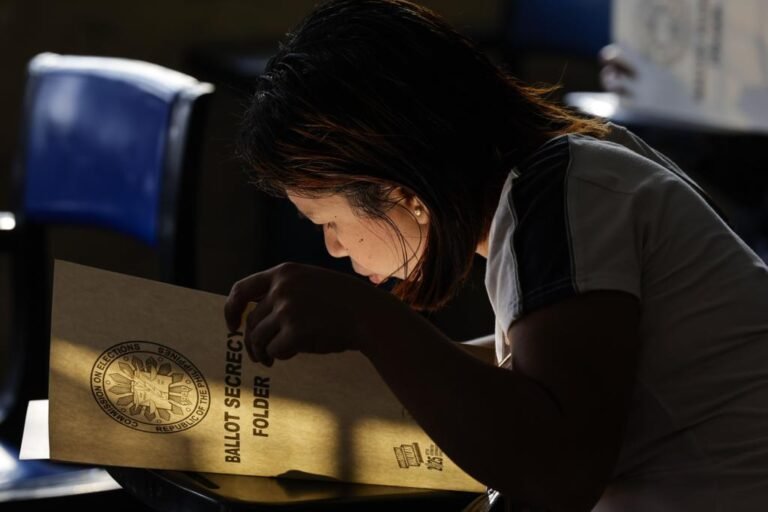
THE long and tedious preparations in time for the election fell short as blood and glitches marred the 2025 national and local election.
As per data collated by the Philippine National Police (PNP), 82 election-related violence resulting in death, injury and destruction of properties occurred since January. On the very day of the election, nine persons killed in separate incidents across the country.
MINDANAO, AS USUAL
Mindanao recorded the most number of bloodsheds in relation to the election.
In Basilan, two were slain, while two others were wounded in what the police claimed as a legitimate encounter with members of a private armed group in the municipality of Hadji Muhtamad.
Also in Basilan, four persons were killed in armed skirmishes in Hadji Mohammad Ajul town on election eve.
A candidate for a municipal council seat of Bayang town and his brother were killed in an attack by still unidentified gunmen in Lanao del Sur on Monday morning.
In Maguindanao del Sur, police arrested 84 individuals in two separate operations — the first operation netted 60 flying voters while the second sting resulted in the apprehension of four ex-armies who were allegedly commissioned to sow terror in Buluan town.
A civilian succumbed to death following a heated argument with the supporters of a mayoral bet in Maguing town, Lanao del Sur while waiting for his turn to vote.
ALSO IN VISAYAS
Tension also gripped Silay City in Negros Occidental as, two people were killed and five others were wounded in a shooting incident early Monday, in Barangay Mambulac.
Police identified one of the alleged assailants as Chairman Arnie Benedicto of Barangay Lantad. Police have yet to establish the identity of two companions who were caught on cam spraying bullets while passing by a political group’s headquarters.
A village councilor in the hinterlands of Bohol province was shot dead on the eve of the May 12 midterm elections.
Police collared two suspected assailants behind an election eve ambush in Sitio Kabukogan, Barangay Poblacion, Sibonga town, southern Cebu.
A similar incident occurred in Eastern Samar: five people were arrested at a checkpoint in Barangay Tangbo, Arteche town after police found firearms and illegal items in their vehicle.
Vote-buying was also recorded in Bohol, where two candidates will be made to face disqualification cases.
LUZON SKIRMISH
No less than President Ferdinand Marcos Jr. had a hard time as the ACM at the San Mariano Marcos Memorial Elementary School in Barangay Valdez, Batac City, Ilocos Norte, malfunctioned.
Former Sen. Ping Lacson, who forms part of the administration’s senatorial slate, claims to have experienced a minor glitch when he cast his vote in Imus, Cavite for the 2025 midterm elections.
Thirty two ACMs across Central Luzon were replaced because of malfunction.
Voters from Meycauayan City in Bulacan called out the Comelec hotline operators after they were told to just trust the system, as shaded ballots have not yet been fed to the automated counting machines.
In Camarines Sur, eight people were arrested for alleged vote-buying across several municipalities.
In Marikina, a man was caught distributing copies of a tabloid containing articles against suspended Mayor Marcy Teodoro.
SINISTER ERRORS
Thousands of voters have expressed disappointment upon learning they had unknowingly cast their votes for candidates they did not actually vote for, or worse, had their votes for a particular post invalidated.
According to Comelec, these glitches were caused by the ACM’s “high sensitivity” to extraneous marks and smudges on ballots.
Local election watchdogs reported a surge of complaints from voters that the ACMs indicated they overvoted even if there were only slight smudges in the oval of the candidates.
Interestingly, the pens used to mark the ballots are provided by the Comelec for the election day.
There were also complaints about the voter-verifiable paper audit trail (VVPAT) or the receipt printed by the ACM to allow voters to verify if their votes were cast correctly.