Friday, June 26, 2026
Home Blog Page 9

70s Matinee Idol Ed Finlan Dies

ED FINLAN, the Filipino-American actor who rose to popularity in the late 60s and early 70s, having teamed up with Nora Aunor, Vilma Santos, Hilda Koronel and their ilk, is gone.

This was announced by his son Martin.

“It is with a very heavy heart that I share the news of the passing of my father, Eduardo Valdez, better known to many as Ed Finlan,” said Martin as shared by entertainment writer Renz Spangler and a certain Rofel de la Cruz on social media.

“Dad, I am going to miss you more than words can say. I love you forever. I’m sorry for the times we struggled, and it hurts so much to see you go. You will always be in my heart.”

Ed was a matinee idol launched by Lea Productions as the leading man of Hilda Koronel in “Haydee” and Mildred Ortega in “Happy Hippie Holiday.”

No details yet of the cause of his death and  funeral wake.

Close Call: Journos Narrowly Escape Senate Standoff

BY THE VERY nature of the job, reporters covering beats are the frontline sources of information of the goings on in a department, a branch of government, public and private enterprises, among others.

Being the frontliners, mediamen are exposed to insurmountable risks during live coverage, including incidents of violence – just like the chaotic standoff that saw several journalists trapped inside the Senate building in Pasay City.

The source of the Senate standoff was the continued protective custody afforded by new Senate President Alan Peter Cayetano and the dozen senators who supported his power grab to their peer.

Beyond the power grab, fugitive Sen. Ronald “Bato” Dela Rosa, used the Senate as refuge to evade an arrest warrant issued by the International Criminal Court (ICC), in relation to his participation in the bloody war against drugs during the previous administration.

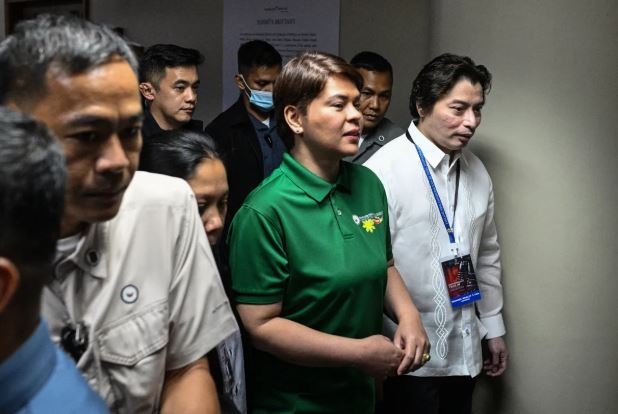
On Wednesday night, reporters covering the Senate beat scampered to safety after shots were fired inside the senate building.  

The volley of gunshots inside the Senate premises sent journalists scampering to safety, extricating themselves from the very source of mayhem but were prevented from doing so by the lockdown of the building. Panic and screams from journalists covering the Senate were heard.

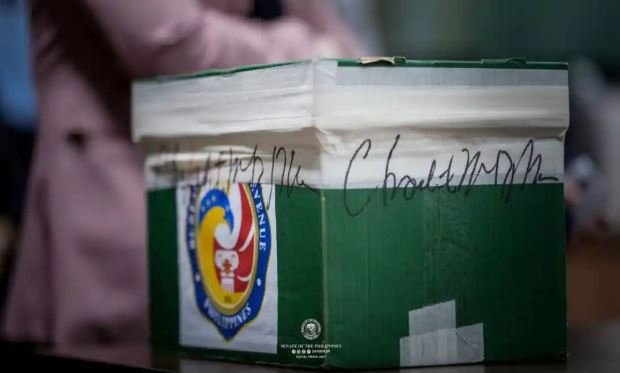
No one– not even Cayetano and the other senators– could say who fired but some netizens say it was obviously an inside job designed to muddle both the arrest attempts of Dela Rosa and the impeachment trial that the Senate should be working at forthwith as volumes of documents have been transmitted to the Senate building also last Wednesday.

A handful of senators and employees claimed to have heard drilling of a wall–a possible escape route that leads to the adjacent Government Service Insurance System (GSIS) compound.

Dela Rosa earlier said he believed his arrest was imminent and called upon his supporters to prevent it–which a disorganized but provocative mob did through vigils just outside the Senate building. Video footage showed some even trying to break the police barricades.

Dela Rosa, who served as the country’s top cop, is accused by the ICC of killing thousands during former president Rodrigo Duterte’s war on drugs. 

TV footage showed police commandos in fatigues entering the Senate building in Manila early on Wednesday evening, with shield-wielding anti-riot cops surrounding the perimeter.

Protesters outside the Senate demanded Dela Rosa’s detention and extradition to the Hague to stand trial with Duterte. His lawyers have appealed to the Supreme Court to block his extradition, but as of presstime, the tribunal has yet to issue a temporary restraining order (TRO).

The senate building has been locked down since the shots, and senators are holed up inside.

The government denied trying to arrest Dela Rosa, and says it is still investigating who opened fire.

Interior Secretary Jonvic Remulla said the president had given “strict instructions” to secure the senators – including Dela Rosa.

When the commotion subsided, Remulla made a categorical claim that the fugitive senator is safe — “We are not here to arrest Senator Dela Rosa but to protect him. Let that be clear. I made that clear to his family,” Remulla told the media.

NUJP STATEMENT

Journalists covering the intense standoff and subsequent gunfire at the Philippine Senate on the evening of May 13, 2026, faced significant danger, prompting an urgent safety alert from the National Union of Journalists of the Philippines (NUJP).

Despite the panic and chaos, no injuries to media workers were reported in the immediate aftermath. 

The NUJP advised all newsrooms to prioritize the safety of their personnel on the ground, urging them to drop to the ground during gunfire and ensure they were in safe areas.

Prior to the shooting, the NUJP raised concerns about the lockdown of the Senate, which restricted journalists’ access to and from the building, amidst attempts to arrest Senator Dela Rosa.

The firing of shots occurred during a highly volatile political situation, following a warning by the NUJP on May 3, 2026, that state repression and attacks against media workers remain a significant threat. 

The situation occurred during a high-stakes standoff concerning an alleged arrest order from the ICC. The Presidential Task Force on Media Security (PTFoMS) in related contexts has encouraged journalists to report threats for immediate assistance.

Previous statements by the senators in the Cayetano bloc seem to imply that NBI agents are pushing hard to effect the arrest of dela Rosa, at any cost. 

But when numerous shots were fired– destroying some walls– there were no visible NBI agents around– just Marines to protect the impeachment documents that the House sent for the impeachment trial, the members of the Office of the Senate Sergeant at Arms and several policemen. 

According to initial reports as of writing, tensions in the Senate building de-escalated around 9 p.m. with no individuals injured, the NUJP posted on Facebook.

The NUJP called for calm and media access at the Senate since Monday as it expressed concern over the lockdown at the Senate implemented since Monday afternoon.

According to information received from within the upper house, media workers inside the complex are not allowed to go out and those outside cannot enter.

The measures, reportedly prompted by an attempt to arrest Dela Rosa, have included barbed wire at the gate and the rolling down of roller doors at the main entrance.

It urged the Senate leadership to allow colleagues access to and egress from the chamber as they perform their duties.

NUJP also urged parties in the developing situation to resolve this issue “without putting our colleagues and others who are not involved at risk.”

Slippery Bato Escaped Under Remulla’s Nose

FUGITIVE Senator Ronald “Bato” Dela Rosa must have been elsewhere — and laughing out loud after successfully pulling off a vanishing act right under the nose of Interior and Local Government Secretary Jonvic Remulla.

In a news article which first appeared in politiko.com, Dela Rosa reportedly managed to leave the Senate complex in the early hours of Thursday morning (May 14), hours after a chaotic night marked by a lockdown, gunfire scare, and heightened tensions over reports of a possible International Criminal Court (ICC) arrest operation.

Citing its source, Dela Rosa allegedly left the Senate between 3:00 to 4:00 early today (May 14). He was reportedly accompanied by Sen. Robin Padilla.

However, lawyer Israelito Torreon in his capacity as Dela Rosa’s legal counsel, dismissed what he referred to as conspiracy theories that the shooting incident at the Senate was a “diversionary tactic” to allow the senator to escape the premises.

He also categorically shrugged off claims that what happened inside the Senate building was part of a plan primarily designed to allow Dela Rosa’s escape.

“Ito kasi yung crime scene,” Torreon said, referring to the area where the incident occurred while showing pictures on his phone. “So fake news yung mga diversion-diversion [tactic], di po totoo yan.”

When asked if Dela Rosa remains in the Senate building, Torreon replied: “Ang dami naming pictures. Gusto mo makita?,” adding that the senator has no plans to leave his current location.

“He has never left the Senate premises all along.”

According to Torreon, the DILG chief arrived at around 9:00 p.m. (May 13) in the Senate to manage the situation — “He personally conducted a clearing operation with the new Senate President.” 

“Inisa-isa niya pag check yung lugar. Building per building. Yung room. Dinaanan niya yung mga room,” the lawyer added.

Dela Rosa has been seeking refuge inside the Senate building since Monday night (May 11) after the complex was placed under lockdown following a scuffle and chase scene that saw the senator hurdling to reach the session hall.

He claimed to have been wrestled by the operatives of the National Bureau of Investigation (NBI) who were deployed to serve him an ICC-related arrest warrant tied to his role in former president Rodrigo Duterte’s bloody war on drugs.

On Wednesday night, gunshots were fired inside the Senate compound, causing panic among staff and the evacuation of media personnel.

Senate President Alan Peter Cayetano later confirmed in a Facebook Live broadcast that gunfire had erupted while senators were holding a caucus. He also claimed unidentified individuals were allegedly attempting to enter the building through the GSIS side of the Senate compound.

Bungled NBI Covert Ops Triggered 2nd Lockdown?

IN A DESPERATE attempt to arrest fugitive Senator Ronald “Bato” Dela Rosa, the National Bureau of Investigation (NBI) bungled a covert operation by ‘drilling’ a backdoor that could have allowed them to enter the Senate building, says Batangas Rep. Leandro Leviste.

In a video supposedly linked by sources from the Government Service Insurance System (GSIS), which owns the leased Senate building, Leviste claimed that operatives led by Atty. Jerome Bomediano, Chief of the NBI Anti-Organized and Transnational Crime Division (AOTCD).

He then presented a video of individuals drilling its way into the Senate premises.

Leviste then claimed that an NBI operative was arrested — and admitted acting on orders of Bemodiano.

“May nahuling taga-NBI… pinangalanan iyung NBI boss niya, si Atty. Jerome Bomediano… siya daw iyung nag-order sa kanila na lusubin ang Senado at dakpin si Senator Bato, anuman ang mangyari, sinuman ang masaktan,” reads his Facebook post.

However, neither the Senate nor the Philippine National Police (PNP) confirmed the supposed arrest.

SECOND LOCKDOWN

The Senate building was locked down with military personnel seen entering the premises where Sen. Dela Rosa has sought refuge amid an arrest warrant issued by the International Criminal Court

Moments later, rounds of gunfire were heard but authorities have yet to identify who fired the shots. They said there were no casualties.

Dela Rosa earlier admitted an imminent arrest for which he called on supporters to prevent what he described as an affront to national sovereignty. 

The senator, who is accused of killing thousands of Filipinos in the previous administration’s bloody war against drugs, is safe and with security personnel, officials said.

VERY LONG NIGHT

TV footage showed police commandos in fatigue uniforms entering the Senate building in Manila early on Wednesday evening, with anti-riot policemen with shields and helmets surrounding the perimeter.

Protesters outside the Senate demanded Dela Rosa’s detention, calling for him to be sent to stand trial with Duterte, notwithstanding a court petition, seeking to block his extradition.

The government has denied trying to arrest Dela Rosa. According to authorities, an investigation is in progress to identify who fired shots.

Interior Secretary Jonvic Remulla, who arrived at the scene hours later, said the president had given “strict instructions” to secure the senators — “We’re not here to arrest Dela Rosa… In fact, we are here to protect him. Let that be clear. I made that clear to his family.”

NEEDS MORE TIME

The Supreme Court (SC) on Wednesday deferred Dela Rosa’s urgent motion for a temporary restraining order (TRO) to prevent his arrest, detention, and transfer in connection with the arrest warrant issued by the ICC.

In its special session, the SC en banc has instead given respondents a non-extendible period of 72 hours to comment on Dela Rosa’s “urgent manifestation with omnibus motion and extremely urgent supplemental manifestation with motion” seeking to stop his arrest.

The court also directed Dela Rosa to file his reply within a non-extendible period of 72 hours from receipt of the respondents’ comment.

The SC said the resolution shall be deemed served on the parties and their counsels and shall be released upon its upload to eCourt PH and publication on the SC website.

WARRANT IS REAL

On May 11, the ICC confirmed the veracity of the arrest warrant against Dela Rosa, in connection with its investigations into the bloody war against drugs during the incumbency of former president Rodrigo Roa Duterte.

Dela Rosa, who served as the country’s top cop under the Duterte administration, sought a TRO, a writ of preliminary injunction, or a status quo ante order (SQAO) to prevent his arrest, detention, or transfer without prior judicial authorization.

On the same day, Dela Rosa filed the supplemental manifestation accusing the NBI operatives for preventing his entry into the Senate Session Hall and that former Senator Antonio Trillanes IV presented what he claimed to be a copy of an ICC arrest warrant against him.

ENFORCING WARRANT

Amid debates over whether dela Rosa should be arrested and turned over to the ICC, the DOJ maintained that existing law allows local authorities to do so.

Asked about the agency’s position on implementing the ICC arrest warrant against Dela Rosa, DOJ spokesman Polo Martinez said: “Yes. Same position. Under Republic Act 9851, we may surrender a suspected or arrested person in the Philippines to the appropriate international court or tribunal. The other mode is extradition.”

Martinez however kept mum on whether the agency would issue an order to the NBI to enforce the ICC warrant on the grounds he stated.

“We will address the public and answer questions from the press in due time. We are just gathering the necessary information,” he told reporters in a Viber message.

REPUBLIC ACT 9851

Under RA 9851 or the Philippine Act on Crimes Against International Humanitarian Law, Genocide and Other Crimes Against Humanity,  the government can turn over a person wanted by an international court or tribunal through extradition or surrender.

The same law was also cited by members of the Senate minority and Palace press officer Claire Castro as basis for the legality of enforcing the ICC warrant.

Martinez, however, maintained it would be “prudent” to wait for the decision of the Supreme Court (SC) on motions by Duterte and Dela Rosa, both challenging ICC jurisdiction over them, which were filed before Duterte was flown to The Hague in March 2025.

No Way To Avoid Politics in Showbiz

FIFTY YEARS AGO, when I was a professional neophyte in the movie reporting beat, I vividly remember the late veteran entertainment news hen Ched Gonzales telling us fellow newbies Lhar Santiago, Obette Serrano and Roland Lerum that we should not write something about showbiz that dealt with politics or simply, associate with politicians or cohorts and their activities.

According to Ate (a term of endearment to an older woman by affinity or sister by blood) Ched, we as movie reporters are only confined to writing purely showbiz news or features for fun and entertainment, no more, no less.

Anyway, after sometime that she said that, the Philippine Movie Press Club (PMPC) which we were part of as members, would welcome in one of our regular meetings through its president—the still missing TV host, talent manager, starmaker and columnist Boy C. de Guia—now Senator Imee Marcos, (daughter of the dictator Ferdinand E. Marcos, Sr.) and the late Marichu Vera-Perez—wife of the late Senator Ernesto Maceda and scion of Dr. Jose R. Perez, founder of Sampaguita Pictures.

Imee and Manay (a term of endearment from a Bicolano dialect) Ichu talked about the potent force of the entertainment press as a catalyst of change that in my impression could help propel the leadership in the Martial Law government at the time its image of encouragement of freedom of expression, respect for human rights, means to economic headways, among other pursuits, were eroding.

It might just be a concerted effort from the emissaries as an implicit order to be writing about the good side of the New Society program.

At the time, the Experimental Cinema of the Philippines (ECP) which was conceptualized by Ms. Marcos and the Manila International Film Festival (MIFF) spearheaded by her mom former First Lady Imelda R. Marcos were prime cultural projects of the Marcos, Sr. administration.

I kept on thinking, what do you call that integration of Marcos and Vera-Perez-Maceda with the movie press?

Socializing, true.

Coming to terms with the most maligned journalism lot, truer.

Politicizing the entertainment industry, even truest.

IMEE AND MANAY ICHU

Whatever the motives of Imee and Manay Ichu were, they were simply politicking and sympathizing.

Not a bad idea, after all.

Because politics isn’t a demon but a boon, an important and essential aspect of human life to advance the aspirations of a struggling society to attain progress for the common good.

But politicking or politics for whom?

For the preservation of the status quo—the oppressive order of the atrocities of the dictatorship while the bulk of the citizenry were deep in the quagmire of social divide, exploitation, unfair labor practice, poverty, discrimination, influence peddling, colonial mentality etc.?

Or the liberalization, democratizing and equalizing opportunities for all Filipinos anytime through mass media?

ROBIN-KIKO SQUABBLE

What do you call the altercation between Senators Robin Padilla and Kiko Pangilinan at the Senate Tuesday morning? 

To recall, Robin accused Kiko of shouting at him during interpellations over the jurisdiction of the ICC warrant against Bato Dela Rosa, a colleague charged with crimes against humanity and murders before the international tribunal as an accomplice in cases filed against his boss, the former Philippine president Rodrigo Duterte?

Isn’t it a show of force like highly-charged, cutting edge scenes in the movies between two persons, each of them with entertaining streaks, inherent and otherwise?

Robin is a full-fledged action star (even if he is a full time lawmaker) while Francis is a real-life actor married to Megastar Sharon Cuneta who was romantically paired off with the Bad Boy of Philippine Cinema.

Trivializing things here the way critics or cynics are condescendingly trivializing tidbits and hot news as they label them gossip but simply stating complex web of people, events and places (PEP)?

Like movies, these images are slices of life.

Showbiz has been politicized since time immemorial, for God’s sake.

Philippine theater as the primitive form of show business activity is an ancient delineation of rituals showing the political structure of the hierarchy in the barangay like datus or babaylans leading the chanting for weddings of natives, burying the dead or supplication for rains in planting or thanksgiving for harvests of crops.

Andres Bonifacio as a theater actor

Remember that Andres Bonifacio was a theater actor (stage as a live performance is show business) and General Emilio Aguinaldo, though he might not be acting on the stage, was a kind of a patron of the arts.

Bonifacio and Aguinaldo’s rivalry as political figures in a future sovereign republic was a glaring example of the intrigue and true-to-life drama politicizing the arts in practice with the latter as the emerging leader as he commissioned Julian Felipe to compose the Philippine National Anthem while the former as a sacrificial lamb in a fledgling nation killed by the followers of Aguinaldo.

In the Commonwealth era, Manuel Luis Quezon revived on his own terms Philippine cinema by producing films with pioneer Vicente Salumbides through First Lady Dona Aurora Aragon Quezon as investor in Salumbides Film Company and did the first screen version of “Florante at Laura.”

Quezon also collaborated with American filmmakers like Eddie Tait and George Harris to purchase their cameras and other shooting and lab equipment.

Manuel Roxas and Elpidio Quirino coordinated with Salumbides as the emissary of local moviemakers to meet up with them from the infant industry in nation-building.

In fact, Salumbides was the epitome of an auteur of the art and business of films as producer, distributor, director, actor, writer, editor, make-up artist etc.

FIRST ACTOR-POLITICIAN

Salumbides was the image and personification of the marriage between politics and showbiz of yore as the first ever actor-politician when he represented Tayabas, now Quezon Province, as an elected delegate to the 1935 Constitutional Convention.

During the Japanese war, Salumbides was the mayor of Lopez, Quezon debunking the idea that Rogelio de la Rosa was the first actor-politician.

Sergio Osmena was no different in defining showbiz as a conduit of political control and public image when he employed Jose Nepomuceno, Father of Philippine Movies as the audio-visual chronicler in the death of his first wife, Dona Estefania Chiong Veloso Osmena as a cinematic tribute. 

Under the administration of Ramon Magsaysay, the so-called Idol of the Masses was a frequent guest in the various socials of LVN Pictures hobnobbing with impresarios like Dona Narcisa Buencamino de Leon, better known as Dona Sisang, founder of the motion picture company and interacting with movie stars.

If that wasn’t politicizing or engaging political aspirations in show business, I wouldn’t know what that was.

Carlos P. Garcia wasn’t new in managing political machinery employing showbiz as a cultural intervention in his regime as a supporter of the Bayanihan Dance Troupe and other artistic pursuits.

During the Diosdado Macapagal and Ferdinand E. Marcos dispensations, they used popular culture to gain public support in elections like the feature film “Tagumpay ng Mahirap,” a biopic of Macapagal and “Daigdig ng mga Api,” a big screen platform to highlight his advocacy in land reform while Marcos launched his presidential bid in 1965 in his film bio “Iginuhit ng Tadhana.”

In so many instances, the tumultuous 60s and 70s found the power of showbiz as a premium in maintaining one’s political supremacy although in an atmosphere of strict censorship as long as escapist fares were churned out which was opposed by the Free the Artist Movement.

QUEEN OF ALL MEDIA

In the recapture of the democratic space, Cory Aquino, consciously or unconsciously, gave the public the so-called Queen of All Media Kris Aquino and other landmarks like showcasing no-nonsense liberal art works albeit the regime’s pronouncements that art wasn’t the state priority policy but economic recovery, the sex flicks of the pene movies (or actual penetration in sexual intercourse) etc.

In the succeeding occupants of Malacanang, showbiz wasn’t a far-fetched harbinger during the Fidel V. Ramos presidency instead players in the field were encouraged as well to contribute like the late presidential daughter, dancer and choreographer Jo Ramos became the wife of actor Lloyd Samartino.

As such, the political kingpins Estradas are engrained showbiz royalty while the Macapagal descendants were to be forced as a screen action star in Mikey Arroyo.

Gloria Macapagal-Arroyo capitalized on the late Nora Aunor as her campaign doppelganger.

Well, P-Noy was brother to Kris and “hilaw” brother-in-law to Phillip Salvador.

DU30 dragged in his family to court showbiz like assigning Liza Dino-Seguerra, daughter of his political ally (the late ex-barangay leader who was elevated as undersecretary of the Interior and Local Government) Martin Dino as Chairman of the Film Development Council of the Philippines (FDCP) and paving the way of Baste Duterte romancing Ellen Adarna.

PBBM has maintained all these years all his showbiz linkages.

In the hierarchy of the interplay of movies and governance, these are just icings on the cake but speak a lot of the social structures in relationships, definitions and nuances.

JOHN LLOYD CRUZ

The other stakeholders, social groups, sub-agents etc. in the other downward levels have also inter- and intra-connectedness and multidimensional combination of the binary more multifaceted, detailed and reflective of the socio-political attributes to diversified fields and their high profile or celebrity statuses.

In the age of Dutertismo, Marcos’ cult, Aquino clique, Leni Robredo influence etc., the politicalization of television, film, stage and multimedia stars is more apparent today than ever.

To wit: Celeste Legaspi, Mitch Valdez, Vice Ganda, Pat Castillo, Anne Curtis, Gardo Versoza, Adrian Alandy, Bibeth Orteza, Julia Barretto, Maris Racal, Jasmine Curtis-Smith, Lovely Rivero, Glenda Garcia et al might not be pro-Marcos but they are against corruption.

Ipe Salvador, Vivian Velez, Cesar Montano, Nick Nangit etc. are DDS.

In the oust Tito Sotto as Senate President campaign, media players like Lito Lapid, Raffy and Erwin Tulfo and Risa Hontiveros stuck it out with the Dabarkads while Jinggoy Estrada, Chiz Escudero (ex-Angel Radyo anchor), Loren Legarda and Padilla voted for Alan Peter Cayetano as the new Senate Prexy.  

Name dropping, positioning and identifying to easily relate to the general audience, lawmakers in Lower House like Congresswoman Gerville Luistro has underscored and attracted the crowd in a congressional hearing on the Sara Duterte impeachment by alluding to John Lloyd Cruz’s Popoy character in a pharma ad “Ingat” and the Tik Tok cult hit “Hawak ko ang Beat” in popularizing both the barefoot and high-heeled politics.

Merriam-Webster dictionary defines “politics” as “the total complex of relations between people living in a society.”

The nameless fans, supporters, followers and their ilk and other social classes also have their own conflicts and struggles in varying degrees in dealing with their idols and themselves.

Therefore, it is in the broadest sense of the complexity of the human agencies in Philippine society, in Filipino life, in general, that expresses the interdisciplinary reactions, interpretations, judgements and actions.

What else is new?

“Ang buhay ay showbiz, ang showbiz ay buhay (Life is showbiz, showbiz is life).”

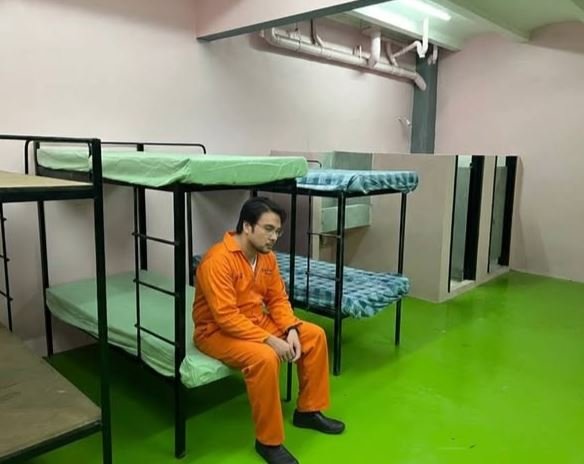
‘Non-Bailable’? Understanding Bail or Piyansa Under PH Law

RECENTLY, NEWS involving the arrest of former news anchor Jay Sonza caught public attention not only because of his arrest for alleged unlawful utterances under the Revised Penal Code, but also because of one particular phrase written in the arrest warrant:

“NON-BAILABLE”

This quickly triggered reactions online. Netizens instantly assumed that the offense charged was so grave that no bail could ever be granted. However, the court that issued the warrant later rectified the error.

That incident became an important reminder that many Filipinos still misunderstand the concept of bail or piyansa.

A lot of people think that bail is viewed as an escape route for the rich. Others think that once a person is arrested, release automatically depends on the kindness of the judge. Some even believe that all crimes are bailable.

We have to debunk these assumptions as they are inaccurate.

Under Philippine law, bail is not simply a privilege. In many situations, it is a constitutional right.

The 1987 Philippine Constitution provides under Article III, Section 13 that:

“All persons, except those charged with offenses punishable by reclusion perpetua when evidence of guilt is strong, shall, before conviction, be bailable…”

That constitutional provision is the very foundation of the right to bail in the Philippines. As a matter of fact, bail is the security given for the temporary release of a person in custody of the law, guaranteeing that the accused will appear before the court whenever required.

The purpose of bail is not to erase criminal liability. It is also not an acquittal.

Bail simply balances two important interests: the constitutional presumption of innocence and the State’s interest in ensuring that the accused appears during trial. After all, under our Constitution, a person accused of a crime is presumed innocent until proven guilty beyond reasonable doubt.

That is why, as a general rule, an accused person may apply for bail while the criminal case is pending before the court.

Let us now discuss the four types of bail under the Rules of Court.

First is corporate surety bond. This happens when an accredited bonding company assures the appearance of the accused in court. Instead of personally depositing the full amount of bail, the accused pays a premium to the bonding company, which then undertakes the obligation before the court.

Second is property bond. Here, real properties such as a parcel of land may be used as security for bail. The property must usually be sufficient in value and free from encumbrances. 

Third is cash bond. This is probably the most familiar form to ordinary Filipinos. The accused deposits cash with the court in the amount fixed as bail. Once the case ends and all court obligations are complied with, the cash bond may generally be returned or released.

Fourth is recognizance. This is the release of a person without the need to post cash or property, based merely on a written undertaking by a responsible person in the community guaranteeing the appearance of the accused in court. Under Recognizance Act of 2012, it is “a mode of securing the release of any person in custody or detention for the commission of an offense who is unable to post bail due to abject poverty.” 

The law also states that “the court where the case of such person has been filed shall allow the release of the accused on recognizance as provided herein, to the custody of a qualified member of the barangay, city or municipality where the accused resides.”

Now, let us go to one of the most important distinctions in criminal procedure: bail as a matter of right and bail as a matter of discretion.

Bail as a matter of right means the accused is entitled to bail. Generally, all persons in custody shall have the right to bail (a) before or after conviction by the Metropolitan Trial Court, Municipal Trial Court, Municipal Trial Court in Cities, or Municipal Circuit Trial Court, and (b) before conviction by the Regional Trial Court of an offense not punishable by death, reclusion perpetua, or life imprisonment.

On the other hand, bail as a matter of discretion means the court has the authority to decide whether bail should be granted based on circumstances provided by law and jurisprudence. This is normally applicable upon conviction by the Regional Trial Court for offenses not punishable by death, reclusion perpetua or life imprisonment.

In such cases, the court considers factors such as the risk of flight, the accused’s behavior during trial, and other relevant circumstances under the Rules of Court.

Now, what crimes are considered non-bailable?

Contrary to common belief, it is not merely the title of the offense that matters. Under the Constitution, the crucial consideration is whether: the offense is punishable by reclusion perpetua, life imprisonment, or death; and the evidence of guilt is strong.

Thus, offenses like rape, murder, serious illegal detention, or other illegal drug-related crimes may become non-bailable if the evidence of guilt is strong. While the accused may file a petition for bail, the court must still conduct a hearing to determine whether the evidence of guilt is indeed strong.

Ultimately, the law on bail shows a deeper principle in a democratic society: A criminal accusation alone does not automatically erase the constitutional rights of a person.

The justice system punishes guilt — but only after due process, fair trial, and proper determination by the courts. Until then, the Constitution continues to recognize the presumption of innocence and, in proper cases, the right to temporary liberty through bail.

Class dismissed!

Senate Pressed To Litigate Sara, Surrender Dela Rosa

THE SECOND week of May is perhaps the toughest time for the reorganized Philippine Senate with the transmittal of the Articles of Impeachment against Vice President Sara Duterte — and surrender Senator Ronald “Bato” Dela Rosa amid an arrest warrant issued by the International Criminal Court.

The leadership change from Senate President Tito Sotto to Alan Peter Cayetano, a known Duterte ally, is being critically observed by the people, along with its designation of committee heads– particularly the Blue Ribbon Committee – which just might move to abandon or ignore the entire findings on the flood control scandal, the biggest heist in Philippine history. 

This comes as committee heads identified with Sotto might just be replaced by the erstwhile ‘minority senators’ who are expected to ‘undo all’ that had been accomplished in several months.

What is most feared is that the Cayetano (new majority) bloc would resort to all tactics of delaying the trial of VP Duterte until such time that it would unilaterally archive the cases before the 2028 elections.

But this early, people are circulating in social media calls for People Power street protests to demand accountability and transparency for all erring officials, especially the newly- reorganized Senate.

As Business Mirror reported, the gates of the Senate premises in Pasay City may have opened Tuesday morning after Monday’s chaotic situation involving a leadership change and the botched arrest of Sen. Dela Rosa, but activists served notice they will press on with protests to prod the Senate to convene as an impeachment court for Vice President Sara Duterte.

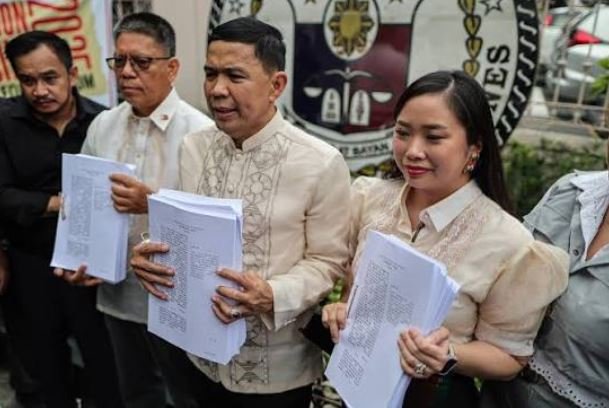
A day after the historic second impeachment by the House of Representatives against Duterte, the Akbayan Youth urged the Senate to “forthwith” start the impeachment trial as provided under the 1987 Constitution, amid what is seen as an attempt by the so-called “Duterte bloc” to hijack the trial.

“Hindi na dapat ito pinapatagal pa. Malinaw ang sigaw ng kabataan: Simulan ang impeachment trial at papanagutin si Sara Duterte [There’s no reason to prolong this further. The call of the youth is clear: start the impeachment trial and make Sara Duterte be accountable],” said Frank Araneta, Akbayan! Youth Deputy Secretary General for Luzon, Business Mirror reported.

By a vote of 257 affirmative, 25 negative and 9 abstentions, the House of Representatives voted on Monday to impeach Duterte on four charges: misuse and irregular liquidation of confidential funds, bribery, unexplained wealth, and grave threats and inciting to sedition.

Viral For Wrong Reasons

Sen. Anna Theresa “Risa” Hontiveros, who is with the minority, lamented, “The Senate is going viral for the wrong reasons. That affects everything and everyone: majority and minority, Senate employees, and most of all, the work that we do for the Filipino people. No one wins with this.”

She called on the new Senate leadership to “protect the dignity and reputation of the Senate,” adding that, “the people’s trust and respect in the Senate is lost when our powers and traditions are being misused to avoid accountability.”

Hontiveros continued: “As always, we can disagree. We must challenge each other. But the Senate must not become a mockery in the face of the Filipino people, especially when the public is looking to us to faithfully perform our constitutional duties.”

“Once and for all, proceed with the impeachment forthwith. The evidence is clear. From the bank records, to the PSA [Philippine Statistics Authority] certifications, it’s quite clear that Sara is guilty,” Araneta of Akbayan added, speaking in Filipino.

Araneta stressed that this is not a simple political war between blocs or parties, but a fight for accountability and the return of the credibility of a democratic institution.

Araneta recalled that former Senate President Francis Escudero had made a mockery of the impeachment process. “And now there’s Alan Cayetano and [Senator] Bato [Dela Rosa] who are adding to our shame before the whole world? Do we let people like these make us a laughingstock again?”

He protested the use of the Senate as a “waiting room” in the face of a clear call to make a sitting senator (Dela Rosa) accountable.

The groups are preparing protests to coincide with the transmittal of the Articles of Impeachment from the House to the Senate.

Under Close Watch

“WE are watching—the millennials and Gen Z are watching. We won’t stop until Sara Duterte is held accountable,” said Araneta.

Petitioners of the impeachment complaint led by Tindig Pilipinas, meanwhile, held a news conference to slam the change of leadership in the Senate which it deems a desperate attempt to block the impeachment trial from proceeding in the senate.

The groups also called for the immediate arrest of Dela Rosa, and for the Senate to stop protecting an accused mass murderer and an impeached plunderer.

Bato On The Run

After the NBI-led team failed to arrest dela Rosa last Monday—he ran and they gave chase—senators led by Dela Rosa himself and backed by Rodante Marcoleta demanded that the arresting party be cited in contempt (and were jailed briefly) for blocking a sitting senator from doing his job. 

As expected, Cayetano acceded by ordering the Office of the Sergeant at Arms to close all exits and detain the NBI-led team, sparking a scuffle between OSAA and the former. 

The Senate Sergeant at Arms, retired general Rene Sarmiento, resigned.

NBI Director Melvin Matibag and Cayetano eventually forged a compromise, with the NBI agents allowed to leave, and Dela Rosa staying in the Senate.

Senators approved a motion by Marcoleta to place Dela Rosa under Senate “protective custody” until he is able to exhaust all legal remedies to protect himself.” 

Legal luminaries opine that protective custody is given only to witnesses in criminal cases, victims of serious threats, or inmates whose safety is at risk in general population, sometimes resulting in 23-hour cell restriction. 

Late Monday, the International Criminal Court (ICC) confirmed it had issued a warrant of arrest for de la Rosa, the first PNP chief of ICC-detained former President Duterte. Dela Rosa was chief enforcer of the bloody anti-drug war believed to have carried out thousands of extra-judicial killings.

Warning Against Delay

Mamamayang Liberal (ML) Partylist Rep. Leila de Lima on Tuesday warned that Senate’s possible refusal or indefinite delay in convening as an impeachment court of VP Duterte could be challenged before the Supreme Court (SC). 

She said once the Articles of Impeachment are transmitted, the Senate assumes a ministerial duty—one that is mandatory and leaves no room for discretion—to formally receive the articles, convene as an impeachment court, and initiate the trial process.

She also said the timing of Monday’s leadership change in the Senate cannot be separated from the impeachment proceedings. Cayetano replaced Sotto after securing the support of 13 senators—a development widely seen as reshaping the chamber on the eve of a potential impeachment trial. De Lima said the public is justified in questioning the intentions of the new Senate majority.

“Of course, it happened because they had the numbers—13 senators. We cannot avoid suspecting that this is connected to the impeachment, especially since they knew the House would vote on it and that there was already a strong majority in favor,” she said.

She then asked: “What does this leadership change mean? What are their plans? That is what we want to know—what does the new majority intend to do with the impeachment process?”

Respect The Constitution

De Lima stressed that the Constitution leaves no discretion when it comes to the Senate’s duty to act.

“Will they immediately take up the Articles of Impeachment once these are transmitted? The House will send them without delay—if not today, then tomorrow. Will they accept the articles right away? They have no choice. Will they convene as an impeachment court? Again, they have no choice. The Constitution is clear that the trial shall forthwith proceed once the articles are received,” she said.

She clarified that while the actual trial proceedings may not begin immediately, the Senate must at once initiate the constitutional process by formally accepting the articles, convening as an impeachment court, and taking the oath as senator-judges.

De Lima noted that a recent Supreme Court ruling allows some flexibility in interpreting the term “forthwith,” meaning action must be taken within a reasonable period. However, she emphasized that this does not remove the Senate’s obligation to convene.

Court As Last Resort

She also outlined the legal remedy should the Senate majority attempt to halt the process entirely.

“If the proceedings are delayed indefinitely, especially if the majority decides not to convene at all, a petition for mandamus is available. Convening and conducting a trial is a ministerial duty under the Constitution. They have no option, no discretion, and no authority to refuse. They must do it. The proper course of action would be to file a petition for mandamus before the Supreme Court,” De Lima said, adding that refusal to convene would constitute a breach of constitutional duty.

“If they fail to convene, that would be a violation of their constitutional obligation. We will then have to determine what steps can be taken to hold them accountable,” she said, adding that a petition for mandamus would compel the Senate to act.

“A petition for mandamus simply compels them to convene as an impeachment court—that is what it is meant to do,” she said.

De Lima added that questions of possible administrative or criminal liability, including dereliction of duty, may be addressed later. For now, she said, the priority is clear: compel the Senate to fulfill its constitutional mandate.

“We continue to hope that the Senate, despite the leadership change, will act in accordance with the Constitution and uphold the principle of accountability,” she quipped.

Conversational Leadership: Connect More, Command Less

Have you ever noticed how some leaders connect more, instead of commanding? Conversational leadership is simple—you drop the “boss voice” in conversations. You talk like a real person. You ask, you listen, and you let people talk too. And funny enough, it gets better results.

The Back Story 

Talk human. Nobody likes talking to someone who sounds like a corporate instruction manual. 

  • Conversational leadership is more natural than that. 

You use simple, clear words people actually understand instead of trying to sound overly important or impressive.

Ask More. Tell Less.

Instead of always telling people what to do, you ask better questions. Things like:

  • “What do you think?” 
  • “How should we handle this?” 

That small change shapes the feel of the conversation.

  • People become more involved because they feel included instead of managed.

Actually Listen

Real listening matters. Not the fake kind where someone is just waiting for their turn to talk. 

  • People can feel when you’re genuinely paying attention. That’s where trust starts.

Safe To Speak 

Good conversations disappear fast when people feel judged or shut down.

  • Conversational leaders make it easier for people to speak openly — and that’s when they open up more.

They become more comfortable being honest, even when opinions are different. 

More Flow: Less Control 

The goal isn’t controlling every conversation. It’s guiding the flow so people can think together instead of feeling talked at. 

  • Less “My way.” 
  • More “Let’s figure this out together.”

Title Not Needed

You don’t need a big title to do this. Anyone can practice conversational leadership—with friends, family, teams, or even everyday conversations. 

  • It’s really a human skill more than a business skill.

Workplace Shift 

Situation: New task needs direction.

Before:

  • Manager: “Do it exactly like this. No changes.”
  • Andy: “Okay…” (quiet, unsure)

After:

  • Manager: “What’s your take on how we should approach this, Andy?”
  • Andy: “I think we can simplify it this way…”
  • Manager: “Nice, let’s build on that.”

Tip: Don’t assign first—ask first.

Idea Room

Situation: New campaign idea session.

Before:

  • Lead: “Here’s the idea. We’ll go with this.”
  • Team: “Okay…” (no energy)

After:

  • Lead: “What ideas are you all seeing here?”
  • May: “What if we flip the angle?”
  • Josh: “Yeah, and make it more personal.”
  • Lead: “I like where this is going.”

Tip: Let ideas show up before you shape them.

Guide Mode 

Situation: Teaching someone a new task.

Before:

  • Mentor: “Just do step 1, 2, 3 like this.”
  • Trainee: “Got it.” (but doesn’t really understand)

After:

  • Mentor: “What do you think the first step should be?”
  • Trainee: “Maybe start here?”
  • Mentor: “Yes—why that step first?”
  • Trainee: “Ohhh I see now.”

Tip: Ask so they think – don’t just tell so they copy.

TIPS AND TECHNIQUES 

Conversational leadership isn’t about sounding powerful. 

  • It’s about making people feel heard, included, and comfortable enough to join in.You’ll be surprised how things move when people feel part of it.

Remember: Conversational leadership creates influence.

Bato Is Anything But Hard, Tough

DURING HIS HEYDAY as President Duterte’s chief Philippine National Police and executor in the bloody war on drugs, Roland “Bato” Dela Rosa was hard as rock and his high-pitched panicky voice (when he is tensed, angry and agitated by people and events) was something to be feared.

But when he became senator– after the term of his chief patron Duterte – Bato realized he lost the very foundation of his power but persisted in projecting an image of being hard and tough.

Yet, when early news reports about an alleged warrant for his arrest came out late last year (exactly last November) Bato began contemplating and sought refuge in Davao and elsewhere in the country to evade being served the warrant.

It did not help any that the Remulla siblings (Ombudsman Jesus Crispin and Interior Secretary Jonvic) were clashing on the idea of the warrant already reaching our shore– which only provided a reason for Bato to go in hiding and not reporting to the Senate (making him the top absentee who continued receiving allowances, salaries and many more along with his family staff who were doing nothing but getting paid highly for just their physical presence).

When Bato finally returned to work on May 11– which coincided with a Senate coup that unseated Senate President Tito Sotto and replaced by Alan Peter Cayetano, the bible-quoting but generally unpopular with the people who is best remembered for his grossly overpriced P50 million cauldron (kaldero) project in 2019 for the SEA Games— Bato was surprised and shocked by the presence of agents of the National Bureau of Investigation accompanied by former Senator Sonny Trillanes to serve his arrest warrant issued by the ICC since November.

Just like a spoiled entitled brat he took the microphone and delivered a scathing report (making sumbong to his peers) about the supposed chase and mishandling of him, which he said was not legal and proper considering that the Senate was in session.

Before reaching the session hall, video clips showed him running fast like a child and falling to his knees while nervously navigating the stairs. He refused to leave the Senate ‘sacred’ grounds, slept overnight with Duterte loyalists senators protecting him. The Senate even went as far as filing before the Supreme Court an appeal for a temporary restraining order (TRO) to prevent the execution of his arrest warrant by an international tribunal. As of presstime, still no TRO or decision by SC.

The next day, he appealed to his supporters who held vigil outside the Senate grounds, to continue supporting him through their protest action.

Calling himself a constituent of President Marcos, Dela Rosa appealed that the president protect him and not hand him over to the ICC– the same way his former boss, Rodrigo Duterte, was handed over to the Hague’s prison– as he was ready to face justice in local courts.

“Fearing arrest and hunkered down in his legislative office for a second day, Senator Ronald dela Rosa said he had faithfully served his country,” said a Reuters report.

The ICC unsealed an arrest warrant on Monday for former police chief dela Rosa, dated November, on suspicion of crimes against humanity, the same crimes 81-year-old Duterte is accused of as he awaits trial in The Hague following his arrest last year, Reuters added.

Dela Rosa is still under protective custody of the Senate.

“I did everything for the country. I did not enrich myself. I worked faithfully,” he tearfully said, while warning that “Mr. President, (you) may one day face a situation like this. You may also encounter problems, and then you will understand, you will feel what I am feeling right now.”

Dela Rosa was Duterte’s top lieutenant and oversaw a fierce crackdown during which police say more than 6,000 suspected drug dealers were killed in official operations. Thousands of users were also gunned down in mysterious slumland murders blamed on vigilantes or turf wars.

The office of the president reiterated that the Philippines is no longer a signatory to the ICC’s founding treaty but can execute an ICC warrant if requested by Interpol, the same procedure as Duterte’s arrest.

DILG Secretary Jonvic Remulla told Reuters in a text message: “Only Interpol knows” (when it would come to arrest Bato).

The running episode at the Senate last Monday led to a meme, reels and satirical content frenzy in social media about his sliding down the stairs, a Bato Fun Run 2026, another meme with his official ID photo with a caption ARREST IN PEACE with more being posted in social media.

What began as a serious political development was rapidly reframed online through humor and commentary, Bilyonaryo said, adding that netizens also used AI-generated images and short video edits—some set to the track “Run Samson Run”—to amplify the trend.

Crisis To Go Beyond 2027

IF SURVEYS ARE any indication, more Filipinos should brace for an escalated hardship amid rising numbers corresponding unemployment, inflation, corruption and volatile political landscape.

In a survey conducted by the Social Weather Stations (SWS) covering the last week of March, personal optimism significantly dropped, with the 16 percent of adult Filipino respondents expecting their quality of life to worsen in the next 12 months rising to 16 percent, which is double than figures in a 2025 survey.

While the survey had 38 percent of Filipino adults hoping quality of life to improve in the next 12 months, the rest are compelled to adapt to poverty.

Interetingly, SWS classified the net personal optimism score as “high,” although it went down from the previous “very high” rating in November 2025.

As this developed, Senator Bong Go urged the administration for a sustained compassion, especially for families facing emergencies, loss of livelihood, rising costs, and other daily hardships.

“Panahon po ito para tulungan natin ang isa’t isa. Kung sino po ang may kakayahan, kahit maliit lang ang maibahagi, malaking bagay na po ‘yan para sa ating kapwa,” Go said in a statement.

The senator, who has been hopping from one place to another to personally handover assistance to communities in distress, called on fellow government officials to divert salaries to help.

By his own admission, Go said that the assistance he’s been providing is drawn from his own salary, even as he claimed that the Senate does not have a budget specifically allocated for personal assistance to communities in need.

“Sweldo ko po ang gamit ko rito. Wala po kaming budget sa Senado na pantulong sa ganitong paraan, kaya kusang-loob ko po itong ibinibigay sa inyo,” he averred.

The SWS survey was conducted face-to-face among 1,500 adults nationwide, with 300 respondents each from Metro Manila, the Visayas, and Mindanao, and 600 from Balance Luzon.

The sampling error margins were plus or minus three percent for national percentages, plus or minus six percent each for Metro Manila, the Visayas, and Mindanao, and or minus four percent for Balance Luzon.

The latest personal optimism results also came after an earlier SWS survey showing that 50 percent of Filipino adults believed their lives had worsened in the past 12 months, while 26 percent said their situation stayed the same.

Go said survey figures should remind public servants and private citizens alike that many Filipinos continue to struggle with daily expenses and crises.

“Marami pa rin pong kababayan natin ang nahihirapan. Kaya dapat patuloy tayong maging malasakit sa kapwa, lalo na sa mga nawalan, nasunugan, nagkasakit, o walang ibang malapitan,” he added.

The senator maintained that public service should remain grounded in direct assistance to ordinary Filipinos, particularly those affected by disasters and other difficult circumstances.

“Kung may pagkakataon po tayong makatulong, gawin na po natin. Minsan lang tayo dadaan sa mundong ito. Kung ano pong kabutihan ang kaya nating gawin para sa kapwa, gawin na po natin ngayon,” Go quipped.

CBCP Warns Senate Against Derailing Impeachment Trial

FOLLOWING a sudden change in leadership at the upper chamber, the Catholic Bishops’ Conference of the Philippines (CBCP) warned the Senate against any attempt to derail the impeachment proceedings against Vice President Sara Duterte.

In a strongly-worded statement, the CBCP urged the 24-member legislative body to convene the Senate as an impeachment court without delay, “to serve the common good in pursuit of justice and faith.”

“We appeal to the Members of the Senate to abide by what the Constitution directs: to proceed with the trial and to decide the case against the Vice President by summoning witnesses, hearing testimony, and voting according to the evidence and, above all, the demands of righteousness and justice,” reads the CBCP statement.

According to Archbishop Gilbert Garcera in his capacity as CBCP President, the elected senators are bound to abide by its mandate.

“We urge the Senators to avoid any act that may be perceived as evading their sworn duty or circumventing the requirements of the Constitution,” Garcera said.

Any delay, he noted, would mean depriving justice not just for the Filipinos but for the vice-president as well.

Members of the House of Representatives on Monday voted to impeach Duterte on allegations of culpable violation of the Constitution, graft and corruption, betrayal of public trust, bribery, and other high crimes.

Of the lower chamber’s 318 congressmen, 257 members voted in favor of the impeachment against the vice president, 25 logged in negative votes, while nine legislators opted to abstain.

“You now have this opportunity to restore our people’s faith and confidence in our public institutions that adhere to the rule of law and serve the common good in the pursuit of justice and truth,” he averred.

The CBCP likewise urged the public to remain vigilant if only to protect the truth and integrity of public discourse and to strengthen the country against misinformation, disinformation, and manipulation.

“To our fellow Filipinos, let us fulfill our civic duties and responsibilities by ensuring a fair and credible trial so that all may see and hear clear, verified evidence and arguments.” 

Previously, Senator Vicente Sotto III was ousted as Senate President. He was replaced by Senator Alan Peter Cayetano, who is known as a staunch ally and defender of the embattled vice-president.

Bato Takes Refuge In The Senate

NOT WITH STANDING a confirmed arrest warrant issued by Netherlands-based International Criminal Court, former Philippine National Police chief Senator Roland “Bato” dela Rosa took refuge in the Senate building– where he was absent from official duties since November until last Monday– to pitch his vote for a leadership change of the upper chamber to ensure that the Senate cannot begin trial on the impeachment articles submitted to it (also Monday) by the lower chamber.

Agents of the National Bureau of Investigation along with former Senator Antonio Trillanes went to the Senate to serve an arrest warrant on dela Rosa that led to some physical commotion that prompted the Senate to cite in contempt and detain those that served the warrant.

Dela Rosa’s lawyers went to the Supreme Court for a temporary restraining order against the arrest warrant while the Senate also issued a resolution meant to require that Dela Rosa can only be arrested by a local court order.

Dela Rosa and fellow senators stayed overnight in the locked down Senate building to ensure that he won’t be touched while inside the Senate hall– which some former senators and experts said should not be made to look like a safe haven for fugitives of any law (local or international).

As BBC narrated: “Dela Rosa was pictured fleeing into the Senate on Monday as officers chased after him. He narrowly escaped and was placed under protective custody.”

Police later said they would not arrest him while he was in custody of the Senate.

Dela Rosa is accused of the killing of at least 32 people between 2016 and 2018, as an “indirect co-perpetrator” in Duterte’s anti-drugs campaign, in which thousands of alleged drug dealers were shot and killed.

Former president Duterte has been in ICC custody in The Hague since his arrest in March 2025.

Security camera footage presented to lawmakers on Monday showed NBI agents chasing Dela Rosa up flights of stairs and a corridor in the Senate building after he arrived.

An ensuing standoff ended hours later with NBI chief, Atty. Melvin Matibag, telling reporters that they would not arrest Dela Rosa while he was in the custody of the Senate. Dela Rosa has said that he would remain within the Senate’s premises and “do everything” to avoid being taken to the Hague.

His lawyers say they have asked the Supreme Court to block his arrest in the absence of a valid Philippine judicial warrant.

Bato Turns To Supporters

This morning, Dela Rosa urged his supporters, who have gathered outside the Senate building, to “keep vigil in front of the Senate until the Supreme Court decides.”

He also called on President Ferdinand Marcos Jr, who is feuding with the Duterte political dynasty, to file a local case against him if he believed him to be guilty.

“If I have an obligation, I will answer it in the local court, not a foreign one,” he told reporters.

The chaos that has gripped the Senate comes as its 24 members, dominated by Duterte’s allies, elected Alan Peter Cayetano, a known Duterte supporter, as the new president– replacing Senate President Tito Sotto.

Cayetano told the media that the Senate would only act on arrest warrants from a Philippine court.

But it is Marcos’s allies who control the lower House of Representatives, which earlier in the day voted to impeach Vice President Sara, Duterte’s daughter for the second time, a first in Philippine political history.

The feud between the Duterte and Marcos dynasties have become increasingly bitter, after the collapse of the alliance which helped them to win the 2022 election.

Sara Duterte is the front-runner to succeed Marcos in 2028 and she accuses Marcos of using the ICC arrest warrants and her impeachment as political weapons to weaken her campaign.

The elder Duterte has refused to recognise the ICC proceedings, arguing that during his presidency in 2019 the Philippines had pulled out of the Rome Statute, the ICC’s founding agreement.

But last month, judges in the ICC’s Pre-Trial Chamber rejected that argument on the grounds that the alleged crimes had happened between 2011 and 2019 – while the Philippines was still a member of the ICC – paving the way for Duterte to stand trial, BBC said.

Pure Talk Jonvic On The Way Out

FROM DAY ONE of his appointment, Interior and Local Government Secretary Jonvic Remulla has consistently been blabbering on controversial issues deemed worthy for media consumption.

Interestingly, most of the talks he did yielded no tangent results. The likes of media slayer Gerald Bantag, notoriously famous Atong Ang, and fugitive Zaldy Co to name a few, have yet to be arrested.

Then in November last year, news broke out on the supposed arrest warrant issued by the International Criminal Court against Senator Ronald “Bato” Dela Rosa whose name has been dragged into the crimes against humanity perpetrated by the previous administration. He was the country’s top cop then.

Six months later, Jonvic (as usual) bragged about the idea of deploying 10,000 cops to arrest Dela Rosa in the event that an ICC arrest warrant comes. When the arrest warrant came, he hibernated. Jonvic kept mum in what looks more like an act of cowardice.

Worse, he insisted that “there is no official warrant” and even if there was, he will “implement the warrant only if it’s coursed through the Interpol.” According to insiders, Jonvic already had it as early as November last year.

No less than the ICC officially confirmed the issuance of the arrest warrant against the sitting senator. But the ICC, which must have realized that Jonvic is not capable of delivering results, opted to course through an agency that walks its talk.

On the claim of deploying 10,000 cops, neither Jonvic nor Philippine National Police (PNP) chief Jose Melencio Nartatez lifted a finger. Not one policeman backed up the NBI in trying to serve the arrest warrant against Dela Rosa.

To be perfectly honest, arresting Dela Rosa is easier said than done. Aside from the protective custody he’s enjoying, Bato is being shielded by an angry mob of Duterte supporters. 

Arresting Bato would entail a battalion — at least for the crowd control. NBI doesn’t have that much personnel. Jonvic’s PNP does.

No wonder, President Ferdinand Marcos Jr. seemed eager to find a replacement for Jonvic. He’s on a search for somebody who talks less — somebody like Nicolas Torre perhaps.

With Torre around, it could have been a different story. Torre came in when nobody dared take the challenge of arresting two of the most stubborn personalities — Apollo Quiboloy and former President Rodrigo Duterte.

Torre was forced to go “on leave” after the President relieved him as PNP chief following Jonvic’s machinations. Torre’s replacement, Gen. Jose Melencio Nartatez, won’t dare arrest Dela Rosa, who happens to be his former boss.

Caridad Sanchez’s Daughter Battling Breast Cancer

THE LATEST publicly-known person to have been afflicted by the dreaded cancer is Cathy Sanchez-Babao, a prolific writer and daughter of veteran and respected actress Caridad Sanchez.

In her social media spaces, Cathy revealed an uncomfortable truth about her battle with the Big C.

“I’ve been undergoing treatment for breast cancer,” said Sanchez-Babao.

Cathy’s straightforward revelation, obviously, carried with it courage, faith and self-assurance as she feels the victory over the malady. “These past few months, I’ve been walking a quiet path of healing, and through it all, in every moment, since mid-February, I have felt the Lord’s presence more deeply than ever before. His love has been my anchor in ways I cannot fully put into words,” she noted.

She promised as well to share to the general public her journey towards healing anytime. “In time, I will share more of this journey in my own way and at my own pace. But today, I simply want to say thank you—for God’s goodness and faithfulness, for the love and support of my family, for my dearest friends, and for the quiet grace found in ordinary days,” shared the artist.

“I’ll share more about my story later on. For now, my focus is on healing—in mind, body, and spirit. I’m still in the process of completing treatment, guided by an excellent medical team for whom I am deeply grateful. Thank you for honoring my need to heal quietly and peacefully,” she added.

Meanwhile, Cathy requested her female friends to heed to her cautionary call about the disease.

“And today, I also want to gently ask something from my women-  friends reading this.

“If you are between the ages of 40–75, please make your annual breast ultrasound and mammogram a top priority. Breast cancer remains one of the most common cancers among Filipinas, and age itself is one of the greatest risk factors. Early detection truly, truly saves lives. Please do not wait for symptoms before getting checked.

The loving daughter of Caridad, also known as Tita (a term of endearment to an older woman by affinity or aunt by blood) Caring, has requested words of encouragement from the public on her condition.  

“If you’re inclined, I would deeply appreciate your prayers. And as always, I hope we continue to find joy in life’s small, meaningful moments,” she quipped.

Lastly, she is emphatic for other women suffering from the same illness.

“I think, too, of the many others who find themselves in a similar season. And to them, I’d like to say this: ‘I pray that even on the hardest days, we will always choose faith above fear. One day at a time, by God’s amazing grace’.”

Sotto Coordinated With The NBI To Arrest Bato?

HOURS before the ‘action-packed’ scene at the Senate, operatives of the National Bureau of Investigation (NBI) already knew that Senator Ronald Dela Rosa would resurface after being absent since November last year.

According to Senator Imee Marcos, ousted Senate President Vicente Sotto III ‘sold’ Dela Rosa by coordinating with the NBI which immediately dispatched a team of operatives to the Senate.

Marcos told reporters that it was Sotto who allowed the NBI agents to enter the legislative premises, allowed to ‘kill time’ at the Office of the Senate President where lunch was served for the ‘visitors.’

“Ang nakakapagtaka eh talagang sinasabi ng mga NBI, hindi ko naman na kayang pagalitan, sabi nila nagko-coordinate daw sila sa Senado at hinayaan daw at kinumbida daw sila ng dating Senate President, pinakain pa dun sa kanyang opisina at inanyayahan na dun tumambay.”

In an incident report submitted by Senate Sergeant-at-Arms (Ret.) Maj. Gen. Edgardo Rene Samonte to the senate plenary, NBI National Capital Region Director Emeterio Dongallo Jr. met Sotto about the planned operation to serve Dela Rosa with an alleged arrest warrant.

At around 2 p.m. of the same day, the alleged arrest warrant was reportedly shown to Sotto hours before he was ousted as Senate President.

After Sotto’s ouster, newly-installed Senate President Alan Peter Cayetano presided over a plenary session. Accounts presented during the session, NBI operatives allegedly attempted to approach or serve an order involving Dela Rosa while he was inside the Senate. 

CCTV footage shown to senators reportedly captured individuals following the senator through a hallway, believed to be near a fire exit connecting the floors of the building.

The incident escalated after Dela Rosa was reportedly escorted into a room, which was then secured by Senate security personnel. Reports said NBI operatives attempted to enter the room but were blocked, preventing them from reaching the senator.

During the session, the new Senate President questioned the manner by which the NBI conducted the operation, even as he cited the need for the agency to coordinate first with the new Senate leadership instead of chasing Dela Rosa through Senate premises.

“The point I wanted to make is — assuming a fully coordinated yung arrest warrant — they should have approached Senator Bato and the Sergeant-at-Arms, give a copy of the warrant, and negotiate surrender, because they are inside the Senate premises,” Cayetano said.

“Pero instead, nakipaghabulan sila. They attempted to stop Senator Bato from attending the session,” he added.

After the incident, Dela Rosa was placed under Senate protective custody upon the motion of Senator Rodante Marcoleta.

Senator Joel Villanueva also moved to cite in contempt the NBI operatives involved in the alleged attempt to detain or approach Dela Rosa within Senate grounds.

The Senate later on cited the NBI personnel in contempt, and ordered the Senate Office of the Sergeant-at-Arms to take them into custody and detain them within the Senate premises.

However, NBI Director Melvin Matibag who came to the Senate later that day managed to strike a deal that resulted in the release of the NBI operatives cited in contempt on the condition that no arrest would be made, until after the Supreme Court decides whether or not to allow Dela Rosa’s arrest.

Dela Rosa, who served as national police chief during the previous administration, has a standing arrest warrant issued by the International Criminal Court in relation to the “crimes against humanity” filed before the international tribunal.

Dingdong Dantes in Netflix Series ‘The Master Cutter’ 

MULTI-AWARDED actor Dingdong Dantes is making waves in his masterful acting as the title character in the primetime television action-drama series ‘The Master Cutter,’ playing the role of a former Scout Ranger living a double life as a tailor and tracker-for-hire.

The series premiered first on Netflix last May 8—72 hours ahead of its local television debut on GMA Prime tonight—and prime time viewers are set to watch a different kind of narrative that follows the story of Anthony ‘Atoy’ Padua, a highly skilled former soldier trying to rebuild his life while secretly helping people track criminals, recover stolen property and seek justice.

In a pre-show media presentation hosted by Netflix, Dantes cited that the main role offered both a physical challenge and an opportunity to portray a character unlike any he has done before in his nearly three decades in show business.

“The challenging part is doing different kinds of characters. Because, of course, I did a clown character here, there’s also a nun. So, physically, it’s a bit challenging, but at the same time, it’s really fun to do. Because this is something that I haven’t done yet, even though I’ve done a lot of things on television,” the host of the popular nature series ‘Amazing Earth’ shared during the press conference.

Asked what convinced him to accept the project, he said, “Well, I think there’s no reason to say no if you’re given such a beautiful project like this. Especially when you’re with such a talented cast. One of the biggest casts, I think, that I’ve worked with in my entire career.”

But he also noted what made ‘The Master Cutter’ even more attractive for his taste, “at the heart of the story, more than the spectacle, and more than the action scenes that you see, is the heart of the story.”

“I think it’s all about a modern family story. It’s all about different types of relationships.” he enthused.

Meanwhile, director Dominic Zapata noted that while the series features large-scale action scenes and suspense-driven storytelling, one of its central inspirations came from a real-life tailor named Mang Delfin.

“There’s a character called Mang Delfin. He was an actual person. He was a master cutter. He used to work in Bergamo as a master cutter. Then, he started doing home service. He goes to you, gives you swatches, you choose a fabric, then it comes back after 10 days for fitting. And he was really good,” the veteran director recalled.

Zapata hinted at the compelling story of the main character who leads the double life of a peaceful tailor and high-adrenalin tracker. 

“There’s nothing more fulfilling than the character of Atoy when he is the master cutter or the tailor. For me, it’s very, very fulfilling,” Dantes asserted to describe some of his favorite moments that happen inside Atoy’s tailoring shop located in the fictional Barangay Tabanglupa, which becomes the center of the series.

“Atoy’s shop, Mang Delfin’s Tailoring, is situated in Baclaran. Baclaran has a very nice community, that’s where we shoot. You’ll see later on in the series, how fun, how colorful and how full of character the place is and much more, if you get to meet the characters.” 

In the end, Dantes praised his co-actors and actresses in the series: “There are a lot of talented characters that form the Barangay Tabanglupa. For me, it’s very fulfilling because Atoy, as a character, and as the tailor, and as the master cutter, he’s able to bring all of these characters together.

“Their lives are intertwined, in one way or another. I get to know their stories. I get to know what’s important in their lives,” he concluded.

Coffee Connect Brews Service Among Gerry Roxas Leaders

A MEANINGFUL CONVERSATION over coffee can often spark ideas that lead to lasting impact. This spirit of connection and purposeful dialogue takes center stage in Coffee Connect, a monthly gathering designed to bring together members of the Gerry Roxas Leadership Awardees (GRLAs) in an atmosphere of warmth, camaraderie, and shared mission.

The upcoming session will be held on Saturday, May 16, at Seattle’s Best Coffee – Unimart Greenhills, and every third Saturday of the month thereafter.

‘Coffee Connect recognizes that leadership flourishes not only in formal programs or public platforms, but also in intimate moments of honest dialogue and shared reflection (by GRLAs).’

More than an ordinary meet-up, Coffee Connect seeks to create a welcoming space where leaders can strengthen relationships, exchange ideas, and reflect on how they can collectively serve communities more effectively. Anchored on the values of leadership, collaboration, and nation-building, the initiative encourages participants to engage in relaxed yet meaningful conversations that inspire purposeful action.

The gathering is an opportunity for GRLAs to deepen their sense of belonging within the organization while nurturing friendships founded on mutual respect and shared ideals. Through regular monthly sessions over the next 12 months, Coffee Connect aims to sustain active membership engagement and cultivate stronger interpersonal connections among participants.

The initiative also hopes to generate concrete outcomes that extend beyond conversation. It is envisioned that the development of collaborative projects and practical initiatives will support community service and nation-building efforts. The GRLAinc gives particular focus to scholarship programs, mentoring initiatives, and the promotion of good governance—areas that remain central to the organization’s advocacy.

Coffee Connect recognizes that leadership flourishes not only in formal programs or public platforms, but also in intimate moments of honest dialogue and shared reflection. Attending GRLAs are encouraged to share experiences, insights, and aspirations to inspire collective action rooted in compassion, civic responsibility, and service to others.

Over coffee, the conversations are expected to do more than strengthen bonds—they aim to spark ideas and partnerships that can positively shape communities and contribute meaningfully to nation-building.

#CoffeeConnect

#GerryRoxasLeadershipAwardeesInc

#ExcellenceIntegrityService

#SeattlesBest

#UnimartGreenhills

#Camaraderie

House Impeach Sara For the Second Time

THE House of Representatives did it again – impeached Vice President Sara Duterte via staggering numbers. 

Information gathered by The PH Insider showed 255 congressmen in favor of the ouster, while 26 stood firm against the fresh bid to oust the second highest elective official in the land. Nine House members played safe, and opted to abstain.

Interestingly, the 1987 Constitution requires just 106 votes (equivalent to one third of the total number of House members) for the charges to be transmitted to the Senate which will act as impeachment court.

The grounds for impeachment include culpable violation of the 1987 Constitution, graft and corruption, betrayal of public trust, bribery, and other high crimes.

In 2025, the House of Representatives also voted to impeach Duterte with 215 yes votes. However, the Supreme Court declared the impeachment void in view of its “unconstitutionality.”

The House Committee on Justice in its report said that the Vice President committed the offenses based on the following articles of impeachment:

a. Systematic misuse, misappropriation, and irregular liquidation of confidential funds amounting to P500 million released to the Office of the Vice President (OVP) and P112.5 million released to the Department of Education (DepEd) during her tenure as Education chief

b. Amassing unexplained wealth manifestly disproportionate to her lawful income and earnings during her incumbency as a public official

    c. Failure to fully and truthfully disclose all her and her spouse’s assets, liabilities, and net worth in her statement of assets, liabilities, and net worth (SALN), including in her SALN for the years 2022, 2023, and 2024

      d. Failure to divest, and instead, willfully continued, all her business interests during her tenure as vice president for the years 2022, 2023, 2024, and 2025

        e. Giving monetary gifts or payments to DepEd officials to induce the violation and circumvention of procurement and other related laws

          f. Contracting for the assassination of President Ferdinand Marcos, Jr., First Lady Liza Marcos, and the former Speaker of the House and Leyte Rep. Martin Romualdez, by making grave threats, and by actively inciting sedition against the republic.

            Items a, e, and f constitute Articles 1, 3, and 4, while items b, c, and d are all subsections of Article 2 of the articles of impeachment.

            Justice committee chair Gerville Luistro, in her sponsorship speech, said Vice President Sara Duterte should explain the P6.7 billion in bank transactions involving her and her husband, Manases Carpio, which were not declared in their joint filing of Statement of Assets, Liabilities and Net Worth (SALN).

            According to Luistro, the Articles of Impeachment are purely based on evidence, not gossip.

            Senate Coup: Sotto Out, Cayetano In 

            THE PHILIPPINE Senate doesn’t seem to run out of surprises. In what looks more like a perfectly hatched plan, senators on Monday voted for a leadership change ahead of the possible transmittal of the Articles of Impeachment against Vice President Sara Duterte.

            The minority group managed to come up with more than enough numbers to oust erstwhile Senate President Vicente Sotto III.

            Thirteen senators rooted for Senator Alan Peter Cayetano, nine legislators tried to keep Sotto as Senate President, while two opted to abstain.

            Behind Cayetano’s rise to Senate presidency are his sister Pia Cayetano, Senators, Ronald “Bato” dela Rosa, Francis “Chiz” Escudero, Jinggoy Estrada, Bong Go, Loren Legarda, Rodante Marcoleta, Imee Marcos, Robin Padilla, Joel Villanueva, Mark Villar, Camille Villar, and surprisingly, Sotto himself.

            Meanwhile, Senators Ping Lacson, Kiko Pangilinan, Risa Hontiveros, Bam Aquino, Raffy Tulfo, Erwin Tulfo, Sherwin Gatchalian, Lito Lapid and Cayetano voted for Sotto.

            Senators Juan Miguel “Migz” Zubiri and JV Ejercito, abstained.

            Just In Time: Bato Finally Shows Up

            AFTER SIX MONTHS in hibernation, Senator Ronald “Bato” dela Rosa suddenly showed up the Senate Monday afternoon to attend the plenary session.

            It was the first time Dela Rosa went to the Senate after “news” broke out on an arrest warrant against him supposedly issued by the International Criminal Court in relation to the bloody war against drugs under the previous administration.

            Based on the Senate attendance sheet, Dela Rosa missed 31 plenary sessions.

            Upon arriving at the session hall, an emotional Dela Rosa assailed the National Bureau of Investigation (NBI) in what he described as a foiled bid to prevent him from entering the Senate premises.

            The NBI has yet to issue a statement as of this writing.

            The Philippine National Police – Criminal Investigation and Detection Group (PNP-CIDG) earlier issued a subpoena against Dela Rosa in connection with alleged summary killings during his stint as PNP chief under the previous administration.

            Meanwhile, the Senate granted a motion filed by Senator Rodante Marcoleta seeking to place Dela Rosa under the protective custody of the chamber at least until the beleaguered legislator exhausts all legal remedies in relation to his ICC case.

            “In the light of recent adoption of the Senate of Senate Resolution No. 44, I move that Senator Bato be placed under the Senate protective custody until he is able to exhaust legal remedies to protect himself and until this institution is able to do just the same,” said Marcoleta.