FOR the past several months, news about the supposed corruption of a congressional allocation referred to as confidential funds, has been dominating newspaper pages, television airwaves, and social media platforms.
For one, corruption has been a practice since days beyond recall.
In our beloved Philippines, statesmen from the distant past legislated Republic Act 3019, also known as the Anti-Graft and Corrupt Practices Act, which objective was to prevent corruption by not only public officials but also private individuals.
The law, which was approved on August 17, 1960, strictly prohibits pocketing or using government resources for personal gains, accepting gifts, influencing others to commit offenses, and divulging confidential information.
Penalties for violating the law include imprisonment and confiscation of wealth. As a precaution, the law also requires public officers to file a sworn statement of assets and liabilities each year.
Does the law guarantee a graft-free nation? Prominent government personalities behind the most controversial cases of corruption seemed to enjoy what looks more like immunity from criminal liability despite conviction.
In a rundown of the country’s biggest corruption cases, not one of them is behind bars.
Who would forget the biggest pork barrel scam? Renowned individuals, despite conviction for plunder — which by the way is a graver offense than graft and corruption — by no less than the Sandiganbayan somehow got off the hook. Others did not even spend an hour behind bars.
There are many more prominent names on the list of political personalities who to date have remained free – and perhaps enjoying whatever loot they managed to keep.
The latest, as if the list is not enough, members of the so-called super majority at the House of Representatives are asking the Department of Justice to seriously consider filing a plunder case against Vice President Sara Duterte for allegedly squandering hundreds of millions in government funds.
From how it looks, these congressmen are playing clean and are simply after public persecution, lest they have yet to read John 8:7 of the Holy Bible, “He who is without sin cast the first stone.”
WHAT used to be no more than a fictional film embarking on a philandering British secret service agent and highly-sophisticated gadgets, has become a reality. A sad reality that is for the Philippines in view of recent confirmation on Chinese espionage.
The suspected spy by the name of Deng Yuanqing, was arrested two days after being arrested by NBI agents for allegedly conducting surveillance activities in the country’s major facilities which include military camps, bases, power plants, offices of local government units, police camps, seaports, airports and even Enhanced Defense Cooperation Agreement (EDCA) sites.
Authorities described Deng Yuanqing as a “specialist in terms of control engineering and the automation and engineering discipline.” He is a graduate of the People’s Liberation Army University of Science and Technology, which is now referred to as Army Engineering University in 2017.
Likewise arrested were two Filipinos who had since executed extrajudicial affidavits that they were ordered to drive the Chinese and his equipment around specific areas in Luzon.
The Chinese embassy in Manila has yet to issue a statement.
SPYING SINCE 2019
Citing initial information gathered from the Bureau of Immigration, NBI Cybercrime Division chief Jeremy Lotoc, Deng Yuanqing — a software engineer – may have been spying on the country for at least five years.
“I think five years na siyang nandito or even more. And we believe that, well, hinagap namin siya as a sleeper kasi through our monitoring… yung galawan niya talagang nasa normal. Kaya niyang mag blend in sa iba’t ibang grupo nang hindi napapansin,” he said.
Initial investigations showed that the supposed spy team would spend time near the target facility and collate data using a remote application and sending classified information in real time.
Lotoc said the group had equipment such as a sensor that is capable of creating a 3D image of the target structure as well as a global navigation satellite systems real-time kinematic. The division chief said the equipment was capable of producing coordinates too.
AFP CONFIRMATION
Following the arrest of Deng Yuanqing, the Armed Forces of the Philippines (AFP) confirmed that the confiscated gadgets could be used for military purposes.
“It’s very possible that the coordinates and the topography could be used for military purposes, no? Military targeting purposes,” AFP chief Gen. Romeo Brawner said.
Brawner has since ordered that security in all facilities nationwide be further tightened even as he claimed that the military has already beefed up security at its camps, with strict checking of individuals entering AFP compounds and installations.
According to Lotoc, the group was eyeing to head to the Visayas and Mindanao after completing its “rounds” in Luzon.
“In fact, ang plano nila pagkatapos nila maikot yung buong Luzon, ang next target nila ay yung buong Visayas at Mindanao naman. So hindi na po namin hinintay na mag pro-proceed sila sa Visayas,” the NBI cybercrime expert averred.
NOT THE FIRST
Despite admitting a breach of national security, Brawner said that there is no cause for public alarm even as he claimed that the AFP is monitoring all espionage activities in the country.
To prove his point, the AFP chief said that Deng Yuanqing isn’t the first Chinese national to be arrested on suspicion of espionage. The AFP previously apprehended a Chinese national who was driving a vehicle with a similar setup and equipment.
“What we saw on the equipment were pictures of camps. Picture ng Fort Bonifacio, picture ng Camp Aguinaldo, picture ng Camp Crame and so on. So tinitignan po nami lahat ng koneksyon nitong mga ito,” the AFP chief was quoted in an interview.
“From the Ramford na nakuha natin ngayon, the Toyota Innova that we apprehended, we captured last year, at iba din po, kasama po ‘yung ibang equipment na narecover natin.“
ESCALATING TENSION
The Philippines and China are locked in a long-standing maritime dispute in parts of the South China Sea. President Ferdinand Marcos Jr has pushed back against China’s expansive claims over the waterway, angering Beijing.
As a result, China intensified its presence in the disputed maritime region by sending more Chinese vessels — including militia ships and that of China’s People’s Liberation Army – well within the 200-nautical mile Philippine exclusive economic zone
Early this month, Bloomberg News reported that Chinese-state sponsored hackers penetrated the executive branch of the Philippines government and stole sensitive data as part of a years-long campaign.
A spokesperson for China’s foreign ministry said Beijing has consistently opposed all forms of hacking and cyberattacks.
BREAKING THE IMPASSE
Sometime in July last year, China and the Philippines held a meeting aimed at easing the tensions in the South China Sea
In a statement, the Department of Foreign Affairs (DFA) said that Philippine Foreign Affairs Undersecretary Maria Theresa Lazaro and Chinese Vice Foreign Minister Chen Xiaodong met in Manila in line with the existing Bilateral Consultation Mechanism on the South China Sea.
According to the DFA official, both countries “affirmed their commitment to de-escalate tensions without prejudice to their respective positions.”
Soon after the meeting, Chinese ships, including research vessels swarmed the West Philippine Sea.
WITH elections taking place a few months from now, both the executive and legislative branch of the government are taking a radical shift in their priorities effectively decimating equally urgent concerns.
Since 2011, talks about “The Big One”, a tragedy waiting to happen, have been going on while experts have time and again warned that a killer temblor could turn the entire Metro Manila into Ground Zero.
The effect of an 8.2 magnitude earthquake —as claimed in the most recent study of the Manila Trench which conducts research in the Pacific region —could spell no less than 55,000 casualties, half of which could be “dead on the spot.”
Shouldn’t we brace up in anticipation?
For one, there’s no way to stop —or predict —an earthquake.
‘If we were to believe the Manila Trench report, “The Big One” could paint a doomsday scenario sometime soon… Indeed, the thought of a large-magnitude earthquake hitting these areas is a terrifying prospect.’
PRONE TO NATURAL HAZARDS
Located in the Pacific Ring of Fire, the Philippines has a history of large earthquakes and it is in the list of those most prone to natural hazards in the world, based on data released by the World Atlas.
Aside from the Philippines, other countries on the list include Japan, Indonesia, China, Iran, Turkey, Peru, the United States of America (USA), Italy, and Mexico.
Top quake-prone countries account for the majority of the world’s damages and casualties in earthquakes, the latest of which took place in Ishikawa, Japan with a recorded 7.5 magnitude tremor and that of Turkey’s 7.8 magnitude earthquake that killed no less than 55,000 people.
PREVIOUS PH TREMORS
The strongest tremor —Magnitude 8 on the Richter scale— in the country took place in Mindanao on August 16, 1976 with a death toll of 8,000.
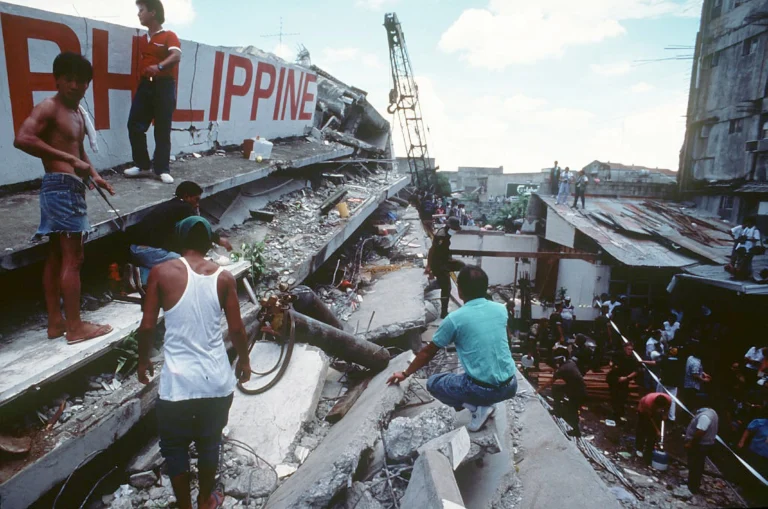
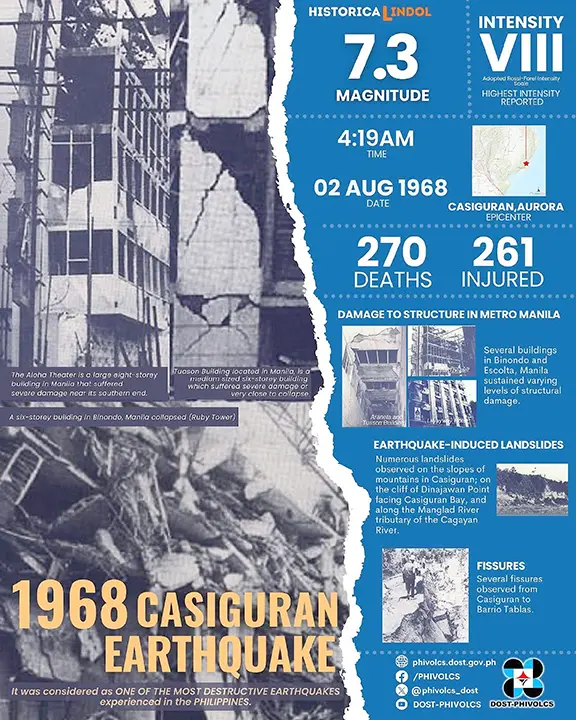
In 1968, an Intensity 8 quake hit Casiguran in Aurora province, killing about 270 people. It also caused the Ruby Tower in Manila to collapse.
In 1990, a 7.8 magnitude earthquake hit Luzon leaving 1,600 deaths and 4,390 injuries. Damage was pegged at P10 billion, an incident that featured Philippines in global news channels.
In 2012, a 6.7 quake resulting in the death of at least 500 individuals shook Negros, followed by a 7.2-magnitude tremor that also hit Bohol, killing 93 people.
COMPARATIVELY WEAKER?
The Philippine Institute of Volcanology and Seismology (PhiVolcs), mandated to mitigate disasters that may arise geo-tectonic phenomena, cited the urgent need to prepare for “The Big One” which could essentially wipe out Metro Manila and kill thousands in just a matter of minutes.
As compared to the tenacity of the previous temblors, “The Big One’s” 8.2 magnitude quake may not be as strong as it seems. However, PhiVolcs said that the areas along the West Valley Fault are of utmost consideration. It has a concentration of populace and high-rise structures.
DOOMSDAY SCENARIO
Another of urgent concern is the cycle: the West Valley Fault is moving every 357 years. The recurrence interval for the “Big One” to happen in the Philippines is 357 years.
Considering that the last major earthquake on the 100-kilometer West Valley Fault which crosses Metro Manila and nearby provinces, was in 1658. It has been 367 years since the this fault shook the region.
If we were to believe the Manila Trench report, “The Big One” could paint a doomsday scenario “sometime soon”.
“The entire Metro Manila, parts of Bulacan, Rizal, Cavite, and Laguna will experience an earthquake that is categorized as very destructive,” reported PhiVolcs supervising science research specialist and geologist Jeffrey Perez.
TERRIFYING PROSPECT
Indeed, the thought of a large-magnitude earthquake hitting these areas is a terrifying prospect.
From 2022 to 2024, PhiVolcs has recorded an average of 20 earthquakes daily.
According to the 2023 Metro Manila Earthquake Impact Reduction Study (MMEIRS) report on the Risk Analysis Project, if this occurs, around 55,000 could die, 14,000 people would suffer very serious injuries, an additional 112,000 cases of serious injury, and 385,000 slightly injured.
Destruction could cover 105,434,400 square meters while the 2013 report pegged an economic loss of around P2.269 trillion.
ANY TIME SOON
Amid an imminent killer earthquake, the government must aggressively take the lead in disaster preparedness.
Already, after taking the cue from the seismic experts, the government has drawn a comprehensive contingency plan that would put in place measures to minimize damages and casualties in view of a Magnitude 8.2 earthquake which may strike any time soon.
Studies showed the “Big One” could directly hit 84 barangays in Metro Manila and the adjoining provinces of Bulacan, Cavite, Laguna, and Rizal encompassing the East and West Valley Faultline.
There’s just one glitch though.
The 2025 budget failed to allocate a particular fund just for the “Big One” which is already nine years past the predicted “maturity.”
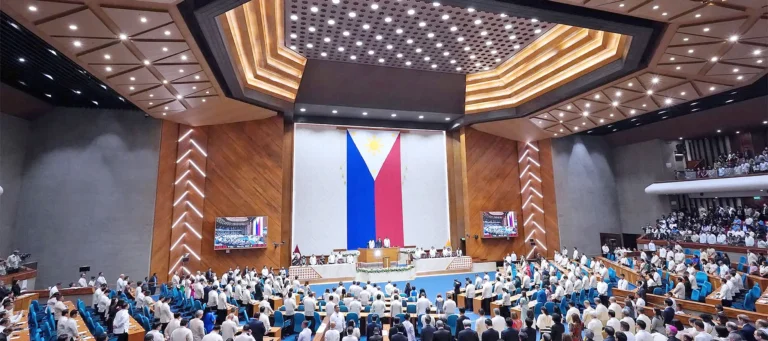
THE 2025 General Appropriations Bill that has been approved by both chambers under the guise of Bicameral Conference Committee looks more like a direct defiance of the 1987 Constitution.
For one, the 1987 Constitution explicitly listed down its top budget priorities which include education, health, social services and agriculture. Hence, the budget for these agencies should be receiving the biggest chunk of the annual national budget.
Likewise on the list are science and technology; labor; environment; indigenous cultural communities; intellectual property, and freedom of speech.
Pork Barrel, As Usual
However, the Philippine Congress allowed what looks more like multi-billion pork barrel insertions in the 2025 national budget, as the 2025 GAB slashed funds intended for the education sector as it pours resources to congressional pork barrel.
While the term “pork barrel” is nowhere in the 2025 GAB, the budget accorded to the Department of Public Works and Highways (DPWH) is from where the congressional representatives have been using to defray the cost of their infrastructure projects.
Notably, the persistent presence of pork barrel in the national budget has long been an issue hounding the integrity of the budget as government funds are at the discretion of the “powers that may be.”
Who could that be? Aside from the President who has the last say on big-bucket contracts, he maintains a circle of minions to whom he owes the presidency – and his political allies, of course.
DPWH Hosting
In a statement sent via email by former Senate President Franklin Drilon, he said: “Same as budgets before. Pork barrel is ever-present. And there is no denying about it. It is present and it is funded by removing allocations for education, social welfare, etcetera.”
The bicameral conference committee added a total of P288 to the DPWH’s allocation. Initially, the DPWH budget submitted by the President amounted to P825 billion, but after congressional adjustments, it surged to P1.113 trillion.
“This is the pork barrel in DPWH alone. We have not yet seen the extent of similar realignments in other agencies,” Drilon pointed out.
To make way for a P288 billion increase in the DPWH budget, the bicameral conference committee slashed allocations from critical social programs, including P10 billion from the Department of Education (DepEd), P50 billion from the Pantawid Pamilyang Pilipino Program (4Ps), P50 billion from PhilHealth subsidies, and P30 billion from the Commission on Higher Education (CHED), among others.
‘Same as budgets before. Pork barrel is ever-present. And there is no denying about it. It is present and it is funded by removing allocations for education, social welfare, etc.’
Pork Behind AKAP
Aside from the DPWH, the Department of Social Welfare and Development (DSWD) also plays host to another form of pork barrel — the so-called Ayuda sa Kapos sa Kita Program or AKAP.
Under the bicam-approved national budget, funds were removed in the Senate version but the bicameral conference committee restored half, or P26 billion, of the original P39 billion. The Senate earlier opposed it because the House of Representatives did not allocate funds for senators.
In the final version of the proposed budget, P21 billion was allocated to Congress, and P5 billion to the Senate. If the funds were divided equally among all representatives (including partylist congressmen), each would get P83 million. If the partylist congressmen are excluded, district representatives’ allocations will amount to P103 million.
In the Senate, each would receive up to P208 million.
House Speaker Martin Romualdez maintains that AKAP is an essential program designed to provide assistance to low-income families affected by inflation and other circumstances.
Duplicity With Others
Romualdez’s AKAP adds up to a long list of assistance programs embarking on what many referred to as “ayuda” – the Pantawid Pamilyang Pilipino Program (4Ps), Assistance to Individuals in Crisis Situations, TUPAD or Tulong Panghanapbuhay sa Ating Disadvantaged/Displaced Workers, special pension for poor senior citizens, Sustainable Livelihood Program, Medical Assistance to Indigent and Financially-Incapacitated Patients, and many others.
AKAP, which was first inserted into the 2024 budget, has been facing widespread criticism as funds were used to defray the cost of a nationwide signature campaign for charter change through a People’s Initiative.
AKAP and similar assistance programs are no different from the pork barrel funds congressmen and senators used for patronage politics.
They play a significant role in politics, especially with an election a few months away.
In the past, assistance programs have been used to secure the loyalty of representatives and senators, and to buy votes and influence.
Addressing Insertions
The current system of pork barrel allocation differs from last year’s budget, where unprogrammed funds were inflated to accommodate realigned projects. In next year’s budget, pork barrel insertions are in the line agencies particularly the DPWH.
The Constitution clearly provides that the education sector (not just the DepEd) shall have the highest priority in the allocation of public funds in the budget.
To address the issue of budget insertions in the 2025 General Appropriations Bill, the President has two options – either to veto the bicam-backed bill on the national budget, or ask Congress to reconvene the bicameral conference committee if only to make some “adjustments,” if only to ensure that this complies with the constitutional mandate.
NOTWITHSTANDING reforms infused by one administration after another, the Bureau of Customs (BOC) has consistently been ranking on top of the list of government agencies with highest incidence of corruption.
For one, BOC is the second highest revenue-generating agency in the Philippines. Collected funds in form of tariff are used to finance national projects, such as social services, infrastructure development, and other government programs.
However, not all has been spent for the purpose it was raised. A significant chunk of its collection goes to somebody else’s pockets, while the bigger slice corresponds to losses incurred by the government from illegal smuggling, undervaluation and misdeclaration of shipments.
Share of Expenses
No less than Finance Secretary Ralph Recto admitted the importance of the BOC in providing funds to defray the cost of the government projects, programs and socioeconomic plans.
“The BOC is more than the landing point of trade in our country. It is also the starting point of our nation’s progress. For it is in the BOC that emanates the revenues that fund our nation’s dreams and secure its future,” Recto said in a message during the BOC’s 122nd Founding Anniversary in February this year.
With the BOC contributing no less than P1 trillion, the government hopes to raise P4.3 trillion this year.
Taking cue from data coming from the Department of Finance, Recto referred to models corresponding to consumptions.
According to the DOF chief, BOC has been bankrolling a long list of government priorities, including 20 percent of the salary due to some 228 policemen, cost of constructing roads, and classrooms. The BOC also shoulders 20 percent of the medical expenses incurred by poor patients – including those undergoing chemotherapies.
Not Good Enough
Established in 1902 by what was then referred to as the Philippine Insular Government, BOC was responsible for the collecting of customs duties, excise duties, and other indirect taxes on all imports and on certain exports.
The agency is mandated to work with the consistent exchange of goods, which will improve the process of carrying on with business and in the end lead to additional investments entering the country.
In 2023, BOC revenue nearly breached the one trillion mark as it collected P883.213 billion in revenue, which is 2.41 percent higher as compared to the previous year.
Revenue boost, according to Customs Commissioner Bienvenido Rubio, could as well be attributed to several factors, including the shift to digital operation, streamlined customs processes, improved trade facilitation, global recognition, intensified anti-smuggling campaign, heightened border control and security measures.
However, the mere fact that the local market is flooded with cheap and unbranded commodities speaks well of the continued proliferation of illegal smuggling in the country.
Vulnerable to Smuggling
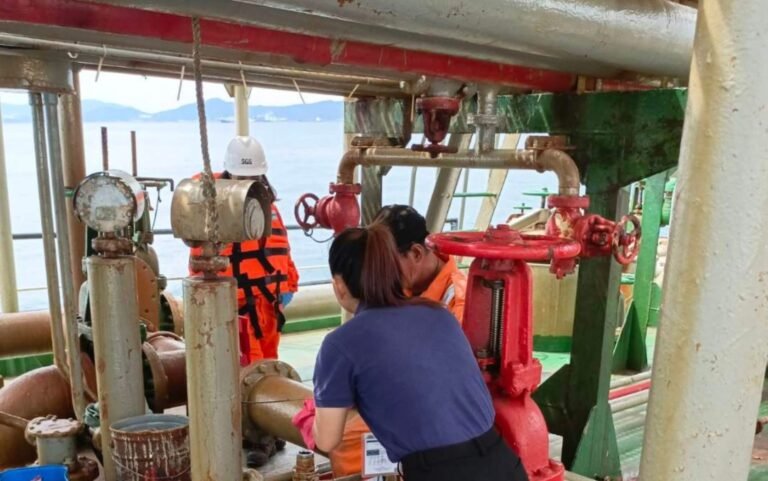
CUSTOMS personnel inspect smuggled dried tobacco worth around P1.9 million. Photos Courtesy of the Bureau of Customs Facebook Page
Its strategic location in the heart of Southeast Asia and its dynamic economy, the Philippines has become one of the fastest-growing economies in Southeast Asia, and a leader in the Association of Southeast Asia Nations (ASEAN).
However, the country’s position as a vital maritime gateway in the region, coupled with its robust economic activities, has rendered it susceptible to a spectrum of illicit practices.
From counterfeit goods flooding local markets to the underground movement of smuggled products, the illegal wildlife trade, and the intricate networks of money laundering, the Philippines faces significant challenges in its ongoing battle against these illicit activities.
Smuggled cigarettes, cars, toxic toys, substandard appliances, gadgets, agricultural products, fuel and illegal drugs to name a few are flooding the local market – the amount of which translates to revenue losses for the government.
BOC’s Unsung Heroes
Amid the relentless anti-illegal smuggling efforts are the unsung heroes of the bureau.
The Manila port for one, a bustling epicenter of global commerce, teems with life and industry. Towering cranes move with mechanical precision against a backdrop of an endless sky, while the chorus of engines and voices fills the air.
But not everything seemed well as corruption and illegal smuggling remained. The good thing though is that there are still a handful of BOC personnel who are doing what they are supposed to do – maintain vigilance, diligence, and integrity by protecting the nation’s economic lifelines.
The silent guardians deserve recognition for their exceptional contributions to the nation. They’re not merely tax collectors; they are custodians of the nation’s security and economic prosperity.
Every shipment they inspect, every document they review, and every regulation they enforce represents a battle against illicit trade, smuggling, and threats to public safety. These officers work tirelessly to ensure that legitimate trade flourishes while preventing harmful goods from entering the country.