Thursday, March 26, 2026
Home Blog Page 12

Atong Ang Fled Before Warrant Came Out

2

THE NOTORIOUSLY FAMOUS gaming tycoon behind the abduction and death of over 100 “missing sabungeros” is already out of the country, claims whistleblower Julie Patidongan.

In a radio interview, Patidongan, who has previously admitted working for Ang for the longest time, said that his former boss left the country as early as December last year. 

He however clarified that what he had just squealed is just his own belief.

“No one told me that, but for me, I believe that is what he will do,” Patidongan was quoted as saying.

TRUSTING NO ONE

He likewise confirmed that Ang has quite a number of properties across the archipelago where he  could hide — but insisted that his former boss is not the type who would put himself at risk.  

Despite reported links with former and present government officials, won’t ask help from those people to cover up his hiding because he doesn’t share his personal secrets to anyone.

“For me, Mr. Atong Ang can look after himself and will not look for help from others… If he will do that, that’s his own secret. If he is still in the country, he may be hiding in a property in one of the exclusive subdivisions he owns,” he noted.

INTERPOL NOTICE

Ang is facing criminal cases with no bail provisions — 15 counts of kidnapping and serious illegal detention and four counts of kidnapping with homicide.

The Philippine National Police – Criminal Investigation and Detection Group (PNP-CIDG) recently said that an International Criminal Police Organization (Interpol) red notice, or a request to locate and “provisionally arrest” a person pending legal action, has been requested for Ang. 

Aside from Ang, 21 others were indicted by the Department of Justice (DOJ) in December 2025 over the case of “missing sabungeros.” 

The DOJ based its indictment from the testimonies of Julie, and his brother Ellakim, who served as close-in securities of the businessman. 

MONETARY BOUNTY

The Department of Interior and Local Government (DILG) earlier offered a P10 million reward for any information that will lead to the arrest of Ang.

More than the bounty, DILG Secretary Jonvic Remulla likewise gave Ang a notorious tag — No. 1 most wanted person in the country.

When asked as to where the reward money would come from, Remulla didn’t provide a categorical answer. He claimed that funds were “pooled.”

“Any information leading to the conclusive arrest of Atong Ang will merit a P10-million reward, no questions asked,” Remulla told a news briefing in Quezon City.

POLICE COHORTS

As most of Ang’s accomplices are police officers, the National Police Commission (Napolcom) announced that 11 PNP members whose names were included in the indictment list have already been dismissed from service.

The basis — alleged involvement in the disappearance of the sabungeros, based on the sworn statement of Julie himself.

Administrative complaints were previously filed against Ang’s uniformed cohorts.

Bonoan Is Back, Ready To Tell All?

0

THE MAN AT the helm of the graft-ridden Department of Public Works and Highways (DPWH) is back — and reportedly keen on the idea of “spilling the beans” when the Senate Blue Ribbon Committee resumes the congressional investigation over the so-called flood control scandal.

According to the Bureau of Immigrations, former DPWH Secretary Manuel Bonoan arrived Sunday morning (January 18) at the Ninoy Aquino International Airport (NAIA) Terminal 3 following his trip to the United States.

From the US, Bonoan flew to Taipei from where he took China Airlines flight CI0701 bound for Manila. He reportedly alighted the plane without a companion.

SIGNIFICANT FIGURE

Bonoan, who has been dragged into the flood control scandal, left on November 11, 2025 to accompany his wife for a medical procedure in the US.

He however failed to return on December 17, for which Ombudsman Jesus Crispin Remulla hinted at the possibility of the Philippine government requesting its American counterpart to consider the idea of deporting Bonoan.

Bonoan’s name formed part of the BI’s lookout bulletin order in connection with his alleged involvement in flood control corruption during his tenure as DPWH chief.

TIES TO CONTRACTORS

Sometime in September 2025, Bonoan was implicated in the anomalous flood control projects amid ties to several infrastructure contractors, including one company owned by his daughter’s business partner.

The Independent Commission for Infrastructure in November recommended the filing of multiple criminal complaints against Bonoan.

BI Commissioner Joel Anthony Viado said they have forwarded information surrounding Bonoan’s return to the Department of Justice.

SENATE HEARING 

The Senate Blue Ribbon Committee led by Senate President Pro Tempore Panfilo Lacson will resume its hearing on the flood control scam on Monday (January 19).

Lacson has yet to issue a statement as to whether or not Bonoan would appear in the “congressional investigation in aid of legislation.”

Reduced Gov’t Spending Means Less Hiring

0

THE ECONOMIC SLOWDOWN brought about by reduced government spending that leads to less opportunities for labor is making business leaders worry a lot.

At the World Economic Forum, business leaders claimed that a job shortage has since emerged, a sign that economic growth risks are falling short of what’s needed to absorb workers in the next two years.

Philippine executives ranked weak public services and social protection as their second concern in the WEF’s 2026 Global Risks Report, with respondents citing shortcomings in education, infrastructure and pension systems.

THREAT TO ECONOMY

Business leaders also flagged the spread of misinformation and disinformation, unintended effects of artificial intelligence, and inflation as key threats to the economy, the report was cited by Business World.

Economics professor Leonardo A. Lanzona of Ateneo de Manila University said the Philippine executives’ concern over jobs reflects the recent economic slowdown.

“As the economy screeches to a slowdown as a result of the decrease in government expenditures, aggregate demand decreases,” he said.

The lack of additional opportunities is also causing a number of businesses, particularly micro, small, and medium enterprises, to fail, Lanzona added.

“Consequently, this economic slowdown brings about significant unemployment,” he added.

2.25 MILLION JOBLESS

In the first 11 months of 2025, the unemployment rate averaged 4.19 percent or equivalent to 2.25 million jobless Filipinos. This is higher than the 3.9 percent jobless rate, which is equivalent to 1.66 million in the same period in 2024, Business World reported.

“As most of the budget is eaten by debt, the situation is aggravated by lower social protection, political infighting, and a labor-saving technology such as AI (artificial intelligence) that can further reduce labor demand,” Lanzona said.

The WEF report said that globally the biggest risk over the next two years remained geoeconomic confrontation.

The WEF’s Global Risks Perception Survey captured insights from over 1,300 experts worldwide.

OTHER GLOBAL RISKS

Other top risks cited by global business leaders included misinformation and disinformation, societal polarization, extreme weather events, and state-based armed conflict.

“Geoeconomic confrontation has emerged as the most severe risk over the next two years, while economic risks have experienced the sharpest rises among all risk categories over the two-year timeframe,” WEF Managing Director Saadia Zahidi said.

Rising inflation and potential asset worries rose as countries face high debt burdens and volatile markets amid growing concerns over an economic downturn, she averred.

FEARLESS FORECAST

The WEF noted that 18 percent of surveyed participants identified geoeconomic confrontation as the top risk likely to trigger a material global crisis in 2026.

This was followed by state-based armed conflict (14%), extreme weather events (8%), societal polarization (7%), misinformation and disinformation (7%), and economic downturn (5%).

Survey participants said that over the next 10 years extreme weather events would become more severe and their impact would be unimaginable.

BIR Resumes LOA Issuances

0

EQUIPPED WITH MORE safeguards, the Bureau of Internal Revenue is resuming the issuance of Letters of Authority (LOAs) to investigate tax deficiencies, outright fraud and other tax evasion schemes usually involving big businesses.

The BIR suspended the LOA issuances late last year to prevent abuse during the Christmas holidays amid proliferation of abuse by no less than revenue officials and personnel, for which the business sector made recommendations.

DATA-DRIVEN LOA

Finance Secretary Frederick Go said the BIR’s resumption of LOA issuances will be more controlled and data-driven to prevent abuse.

“The BIR, after suspending the letters of authority last November 24, is now looking at the digitized, risk-based, data-driven audit system that minimizes discretion, strengthens accountability, and prevents arbitrary or abusive audits,” Go said during a briefing on the “Big, Bold Reforms” event for businesses at Shangri-la the Fort.

“Two of the clear goals when we resume are that we will reduce the number of departments authorized to issue letters of authority as well as reduce the number of letters of authority a taxpayer can receive in any given year,” he added.

EFFICIENT MECHANISM

LOAs are legal documents authorizing specific revenue officers to examine a taxpayer’s books and records for a defined period and specific taxes, marking the start of a formal audit or investigation, reported Bilyonaryo.

From January to November of the previous year, the revenue bureau collected P2.906 trillion, which translates to nearly nine percent higher than the P2.668 trillion reported in the same period in 2024.

The BIR’s 2025 collection target is P3.13 trillion, according to Revenue Memorandum Order No. 014-2025.

THE CALATA CASE

Similarly, the BIR was said to have failed to prove having properly notified Melvin Calata, brother of controversial businessman Joseph Calata of his alleged tax liability of P11.5 million.

In a January 14, 2026 ruling, the Court of Tax Appeals’ Second Division rejected BIR’s tax assessment and its accompanying Warrant of Distraint and/or Levy (WDL) issued against Melvin Calata.

Melvin, an officer of the now-delisted Calata Corp, said he never received BIR’s Formal Letter of Demand or Final Assessment Notice and only learned of the alleged liability when the enforcement warrant was served.

The CTA ruled that BIR failed to prove proper service of the assessment– a procedural lapse that makes collection legally impossible. 

REGISTRY RECEIPT

BIR’s case rested on a registry return receipt bearing a nearly illegible signature that appeared to read “San Ignacio.” The BIR could not identify the signatory, establish any connection to Calata or show that the person was authorized to receive official tax notices, Bilyonaryo reported.

The court rebuked the BIR for “bypassing personal service without explanation, despite rules that allow service by registered mail only when personal delivery is not practicable.”

With the assessment void, CTA said the collection measure based on it could not stand. It cancelled the assessment notices, voided the WDL and barred the BIR from collecting the alleged tax liabilities.

DELISTED, ABSOLVED

“All told, considering that the WDL springs from an invalid assessment and that the same was improperly served upon petitioner, such warrant must necessarily be declared void and cannot be validly enforced against petitioner,” the decision penned by CTA Associate Justice Maria Rowena Modesto-San Pedro said.

Calata Corp. was delisted from the Philippine Stock Exchange in 2017 over repeated violations of trading and disclosure rules, which were affirmed by the Securities and Exchange Commission.

EMERGENCY RESPONSE TRAINING

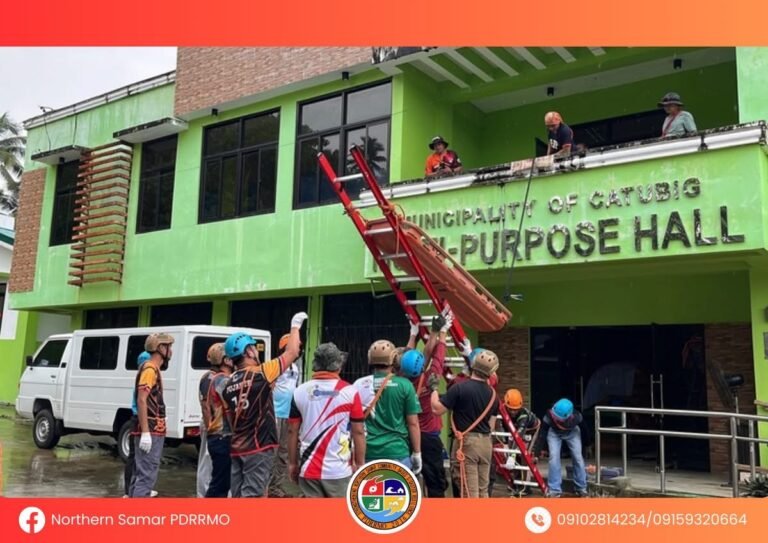
Strengthening emergency response a training on Urban Search and Rescue Skills was held by the Northern Samar Provincial Disaster Risk Reduction and Management Office among members of the Catubig Rescue Team recently. This continuous training held in Catubig town was in collaboration with the Bureau of Fire Protection – Special Rescue Force facilitated the USAR – Firefighting Operations.

PSE Should Act Fast 

0

AFTER WE EXPOSED another grand scheme involving a presidential kin, and a leading construction brand, the Philippine Stocks Exchange found itself in a dilemma.

For one, colliding with the so-called powers that be, isn’t good for the business. 

But PSE will have to do what they are supposed to do.  It’s a damn if you do, damn if you don’t situation to save their reputation — and the Philippine stocks trading system as well. 

Let’s cut the rhetorics. While EEI Corporation is as big as it can be, its financial statement says otherwise. It’s actially on the verge of extinction.

“It has been established that much of the flood control insertions in the national budget took place during his watch as Speaker of the House of Representatives. A similar shenanigan must be implied in the EEI situation.”

COMING TO THE RESCUE

At a time when EEI  was incurring heavy losses and drowning in debt came a knight in shining armor by the name of Martin Romualdez. 

Through his company RYM Business Management, Romualdez acquired 20% of EEI’s common shares amounting to P1.2 billion.

And then just months after, Romualdez demanded a buy-out of his EEI stocks for the amount of P3.75 billion.

How was it possible that a company wallowing in debts was able to accommodate Romualdez’s demand for a P3.75 billion payment for the buy-out of his P1.2 billion investment?

In the first place, granting a negative financial standing of EEI prior to Romualdez’s purchase of 20% of its common shares, how was it possible for EEI to pay P3.75 billion as Romualdez demanded when EEI liquidity at the time was only P1.2 billion, what Romualdez invested for 20% of EEI’s common shares.

A BAILOUT SCHEME

It has been established that much of the flood control insertions in the national budget took place during his watch as Speaker of the House of Representatives. A similar shenanigan must be implied in the EEI situation.

Some observant quarters, particularly serious analysts of Philippines Stock Exchange, discern a scenario whereby having learned of the EEI travail, then Speaker Romualdez approached the Yuchengco patriarch and offered a bailout scheme. 

With Romualdez facilitating everything, funds could be raised, say P3.75 billion, P1.2 billion to represent RYM investment in EEI by which to qualify him to demand a buy out.

To cut the long story short, Romualdez got what he wanted. P3.75 billion for stocks he bought at P1.2 billion — in less than a year.  

This alone should be more than enough for PSE to move fast if only to prevent stocks trading from an imminent collapse.

No More BPO Recruitment On SocMed

0

TRUE ENOUGH, FILIPINOS are known for spending significant time daily on Facebook, TikTok and others, but that doesn’t mean we believe everything that is posted on social media.

For one, social media platforms are basically for “social purposes” as it connects people from all walks of life in cyberspace.  

But not for Metro Manila job hunters who have had enough of scammers flooding the social media with click bait in the guise of recruitment for Business Process Outsourcing (BPO).  

Even the BPO industry based in Metro Manila is aware that “all’s not well in a platform where anything goes.”

MARKED SHIFT

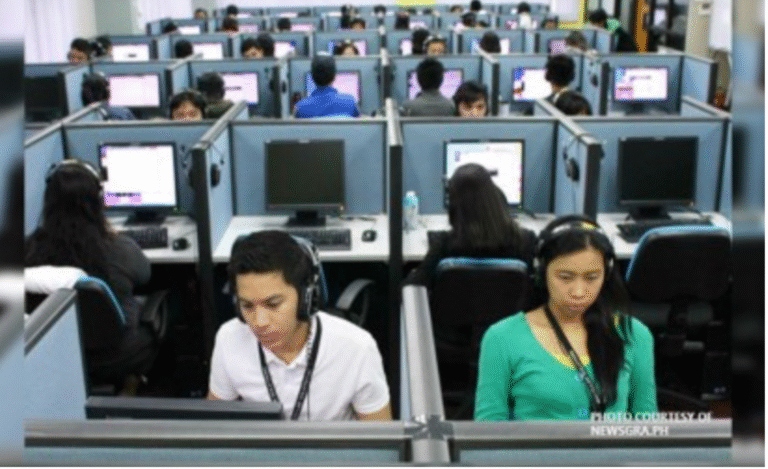
A marked shift is underway in the country’s BPO sector, as hiring for thousands of monthly openings across Makati, Quezon City, BGC, Pasig, and Alabang increasingly moves from informal social media channels to verified digital job platforms. 

Citing the need for efficiency and applicant demand for clarity, large BPO employers with major Manila hubs—including industry leaders like “Teleperformance, Concentrix, EXL, Foundever, Alorica, and Accenture”—are increasingly visible on structured hiring channels. 

The trend comes in response to widespread applicant fatigue with the opacity of community Facebook groups and the inefficiency of walk-in systems, challenges echoed by recruitment professionals across the sector.

DECLINING TRUST

For years, Facebook groups brimming with unvetted job posts defined the BPO application process. Job seekers now report significant friction: duplicate or outdated posts, uncertainty over recruiter legitimacy, and a lack of application status updates.

“The noise on social media groups became counterproductive,” noted a Manila-based recruitment lead for a major BPO firm. “We saw qualified applicants missing genuine posts amid the clutter.”

To manage scale, employers are utilizing dedicated BPO hiring platforms offering employer-verified posts and centralized communication. MyGlit, a Philippines-focused portal, exemplifies this shift.

TALENT SEARCH

Internal pilot data from a Manila employer’s recruitment team indicated a reduction in median time-to-offer of approximately 40 percent for applications sourced through a structured portal versus traditional methods. 

The Methodology—Internal analysis of a participating Manila BPO employer’s hiring data, Q4 2023. Trend analysis is based on recruitment practices observed across the sector.

“When applicants come through a coordinated platform, the entire process is more predictable,” said a Talent Acquisition Manager at First Source Philippines. “It allows our teams to focus on interviewing, which improves the experience for everyone.”

NOTHING TO HIDE

For candidates, the appeal is straightforward. Clear information on the employer and a trackable process outweigh the sheer volume of social media options.

“I spent weeks applying through Facebook, never sure if my application was seen,” shared Miguel R., recently hired for a Quezon City-based role. “The portal I used showed the exact company and sent updates. It took the anxiety out.”

In many documented instances, recruitment on social media has turned nasty. Some applicants were either conned, or ended up as human trafficking victims — flown to neighboring countries to work as scammers. 

HIRING MATURITY

This convergence shows maturity of Metro Manila’s BPO hiring landscape. As regulatory attention grows, the pivot to auditable digital channels appears poised to accelerate.

“The scale of hiring in the National Capital Region demands tools that bring order,” observed an independent analyst covering the Philippine outsourcing sector. “Platforms that verify employers are becoming essential infrastructure.”

In 2026, Who’s In, Who’s Out?; What’s In, What’s Out?

WHAT MAKES AN idol, or simply, an individual person, or a thing, an all-time favorite and a perennial winner among the crowd?

However, what makes an object, a human being, a star (the subject at hand), lose its glow, fandom, and then, sadly, fade into oblivion?

What comes and what goes?

Today, one is on top of the world, the next day, on the cellar, or perhaps, in the middle of the road.

Anyway, what makes one always in?

The answer lies on several factors.

Some of them durability, consistency, sustainability, staying power etc.
One can be durable when a talent combines foresight, planning, public support, pursuit of prominence, innate tendencies etc. to last forever.

Being consistent, on the other hand, is a conscious yet instinctive device as well to realize a given projection and to repeat the same act positively (that which conforms with the former), with likelihood and fairness.

‘[S]ustainability is a conscious effort to maintain from within one’s stature in any given time.
And staying power is both an intuitive and a learned weapon to conquer and reconquer a market or an audience.
Being “out,” meanwhile, is one negative space only the crazy dwells in.’

STAYING POWER

Meantime, sustainability is a conscious effort to maintain from within one’s stature in any given time.

And staying power is both an intuitive and a learned weapon to conquer and reconquer a market or an audience.

Being “out,” meanwhile, is one negative space only the crazy dwells in.

In 2025, there are people, events and places which were right on top of the heap but, somewhere along the way, slid down to the base or remained at cliffhanger.

Would they still regain the once occupied prime place under the sun?

UPS AND DOWNS

Here are our showbiz elevator’s ups and downs from previous years to 2026:
ALLTV in, other networks out–When ABS-CBN shows (block timing due to disenfranchisement) were and are still airing in GMA Network, Zoe Broadcasting Network, TV5, among others, they have contributed and still contributing a large slice to the pie and prominence of these stations.

Therefore, ABS-CBN’s current collaboration and comeback to its original frequency Channel 2 with ALLTV in 2026 would advance the latter’s spot in the broadcast industry’s ratings game because of the popularity and bigness of its programs especially newscasts and teleseryes.

Quality movies in, potboilers out–It is a vision steadfast of the local film industry and its various stakeholders year in, year out.

QUALITY ENTRIES

With the good performances of the eight festival quality official entries, namely “Call Me Mother,” “Shake, Rattle & Roll: Evil Origins,” “Unmarry,” “I’mPerfect,” “Manila’s Finest” “Love You So Bad, “Rekonek” and “Bar Boys After School,” in the recently concluded national film fest that commenced on Christmas Day and ended on January 14, 2026, they resonated in the box-office and critical acclaim. 

They delighted not only the organizer, the Metro Manila Development Authority (MMDA) and its annual project, the Metro Manila Film Festival but the general audiences as well.

Vice Ganda, other showbiz rallyists in, Nepo Babies out–The series of anti-corruption street protests last year showed the firm commitment of show people against anomalous scandals in government where they believed taxes they religiously paid are being robbed by politicians, public servants and private contractors. Glitz and glam stars like Vice Ganda, Maris Racal, sisters Anne Curtis and Jasmine Curtis-Smith, Carmi Martin, Julia Barretto, Catriona Gray, Gardo Versoza, Adrian Alandy et al are turning militants and the seasoned street parliamentarians like Juana Change, also known as Mae Paner, Madeleine Nicolas, Celeste Legaspi et al are becoming more aggressve and feistier in speaking up for truth and justice.

AMAZING DIVA

While the Nepo Babies such as Claudine Co etc. or shall we consider Heart Evangelista as a conduit?

As is, Heart has slowed down her fashionista stint here and in Europe.
Armida Zuniga in, Armida Zuniga out–They are one and the same person, Armida Zuniga, the so-called Amazing Diva.

The Armida Zuniga in the past is the frivolous woman who wouldn’t be focused of what she wanted but the Armida Zuniga now is the hungry artist who wants to satisfy her curiosity of what awaits in her journey to fame, glory and fortune through music.

The Philippines’ Alluring Scenic Islands

OFTEN CALLED THE “Pearl of the Orient Seas,” the Philippines is a tropical masterpiece that continues to enchant travelers from across the globe. Composed of 7,641 islands, this Southeast Asian archipelago offers an extraordinary blend of powder-white beaches, turquoise waters, dramatic landscapes, and a warmth of hospitality that lingers long after the journey ends.

For those seeking scenic splendor and island escapism, few destinations rival the Philippines. Its islands consistently rank among the world’s most beautiful, celebrated by international travel publications, seasoned adventurers, and first-time visitors alike.

PALAWAN: NATURE AT ITS MOST MAJESTIC  

El Nido Islands

At the heart of global admiration is Palawan, particularly its northern gems—El Nido and Coron. Frequently topping “World’s Best Island” lists, El Nido is a stunning cluster of 45 limestone-fringed islands crowned with emerald lagoons and crystalline waters. Towering karst cliffs rise dramatically from the sea, creating a landscape that feels almost otherworldly.

Island-hopping adventures reveal iconic sites such as Big Lagoon, Small Lagoon, Secret Lagoon, Seven Commandos Beach, and Snake Island—each offering postcard-perfect views. Upscale eco-resorts in Miniloc, Lagen, and Pangalusian Islands complement the natural beauty, blending luxury with sustainability.

Coron Islands

Just north lies Coron, equally mesmerizing and famed for its World War II shipwreck dive sites, freshwater lakes, and serene bays. Kayangan Lake, often cited as one of the cleanest lakes in Asia, is a highlight, surrounded by jagged limestone cliffs and glass-clear waters that reflect the sky.

Boracay: Icon Of Tropical Perfection  

No list of Philippine island wonders is complete without Boracay. Globally acclaimed for its powdery white sand beaches, Boracay’s White Beach has earned countless accolades as one of the best beaches in the world. Its sunsets—golden, fiery, unforgettable—are legendary.

Beyond its lively beachfront, Boracay offers quieter escapes. Bulabog Beach, on the island’s windward side, is a haven for kiteboarders and those seeking a calmer coastal vibe, where colorful kites dance against wide blue skies.

Bohol: Beauty Above And Below  

In the Visayas, Bohol captivates visitors with diversity. Offshore lies Panglao Island, known for pristine beaches like Alona Beach and thriving marine life. Inland, the iconic Chocolate Hills—over a thousand cone-shaped formations—transform from green to chocolate-brown during the dry season, creating one of the most unique landscapes in the world. Add to this the island’s lush countryside and the world’s smallest primates, the tarsiers, and Bohol becomes a destination of contrasts and charm.

Beyond The Famous Names 

Other islands continue to gain global attention:

• SIARGAO – the country’s surfing capital, pairs powerful waves with tranquil lagoons and natural pools.

• SIQUIJOR – charms with waterfalls, secluded beaches, and a mystical allure.

• BATANES – offers a strikingly different beauty—rolling hills, stone houses, and rugged coastlines reminiscent of Scotland.

Why The World Falls In Love With ThePhilippines? 

The enduring appeal of the Philippines lies not only in its landscapes but in the total experience it offers. Situated at the heart of the Coral Triangle, it boasts unparalleled marine biodiversity, making it a paradise for divers and snorkelers. Its natural wonders include UNESCO-listed sites such as the Puerto Princesa Underground River, Tubbataha Reefs Natural Park, and the ancient Banaue Rice Terraces.

Add to this a rich cultural heritage shaped by Malay, Spanish, and American influences; thrilling adventures from volcano hikes to canyoneering; and an affordability that allows travelers to enjoy world-class experiences without excess—and the allure becomes irresistible.

Above all, it is the Filipino people—warm, welcoming, and genuine—who complete the journey. In the Philippines, every island tells a story, and every visit becomes a memory worth returning to.

Desecration Of Scenic Sites Continues

0

OUR COUNTRY HAS an abundance of cretin and mindless businessmen, whose only concern is profit even to the extent of desecrating our  pristine natural resources and scenic spots. In practically every province of our country, where there are beautiful and lush green-covered mountains and hills, the marine rich dive sites, white sand beaches, there are poachers, illegal loggers, illegal quarrymen and gold diggers and illegal miners, hunters and wildlife smugglers.

The Chocolate Hills in Bohol, the dive sites in Siargao, with its coral reefs a marvel to humans and a useful food source and habitat for marine life; the white sand beaches of Boracay and the continuing desecration of El Nido in Palawan and now the quarrying on the slopes of majestic Mount Mayon.

‘A pastoral statement issued last Corpus Cristi Sunday by Bishop Joel Baylon and the diocesan clergy urged government officials and the public to take responsibility for what they called an escalating environmental crisis… 
Addressing public officials, the diocese called for integrity and transparency in governance.’

SYSTEMIC NEGLECT

The government’s continued failure to protect and preserve these rich natural resources from despoilation, perhaps because some officials are on the take from these unscrupulous and greedy businessmen even if nothing would be left of such resources for future generations of Filipinos, is a major contributor to the disastrous effects of climate change. 

Communities surrounding these resources are powerless, though not voiceless, in denouncing such criminal acts against nature.

Take for instance, the diocese of Legazpi, Albay has been vociferously denouncing and exposing the ecological crisis caused by quarrying on the slopes of the perfect cone of Mt. Mayon.

In an article of Business Mirror, the diocese condemned the worsening environmental degradation in Albay province– thanks to the inutility of the Department of Environment and Natural Resources under the ousted DENR secretary–  because of the irresponsible quarrying, deforestation and a lack of public consultation on infrastructure projects as evidence of “systemic neglect.”

WHO BENEFITS?

A pastoral statement issued last Corpus Cristi Sunday by Bishop Joel Baylon and the diocesan clergy urged government officials and the public to take responsibility for what they called an escalating environmental crisis.

“Do not allow development to become an excuse for destruction…Albay deserves better—and we can still choose to do better,” part of the statement reads.

Addressing public officials, the diocese called for integrity and transparency in governance.

“When public projects ignore environmental safeguards, override communities, or enrich only the few, they betray the common good,” it said.

The diocese criticized ongoing quarrying activities on the slopes of Mount Mayon—a protected area—and warned about the consequences of clearing forest cover and altering waterways.

It also raised concern over infrastructure projects encroaching on geologically– sensitive and heritage zones “with little regard for ecological impact or the long-term welfare of residents.”

“In various towns, our people have begun to ask: Who benefits from these projects? Why are those most affected rarely consulted?” the statement said.

UNDER THREAT

Albay was designated a UNESCO Biosphere Reserve in 2016—a status the diocese said is now under threat due to ecological degradation.

In the pastoral letter, the diocese apologized for not always speaking out forcefully in the past.

“For the times we remained silent when we should have spoken…we sincerely ask forgiveness,” the clergy wrote. “This is a moment for repentance and renewal, not only in words but in witness,” wrote the CBCP News.

Translacion: Faith And Safety

0

THE FILIPINO FAITHFUL’S devotion to Jesus the Nazarene, the Black Nazarene, is truly astonishing. For nearly 31 hours, the faithful join the Traslacionprocession, enduring heat, hunger, exhaustion, and pain for the chance to touch a rope, a cloth, or any object that has brushed against the image. In their belief, this touch brings luck, healing, peace, or relief from whatever affliction—physical or spiritual—they bear.

In phenomenological terms, this is their lived reality. This is how faith is experienced, embodied, and made real. The Traslacion is not merely a ritual to be observed; it is an encounter to be endured. It is how devotion is lived in the body. For many, it is an annual penance they must undergo—barefoot, vulnerable, yet sustained by belief.

From a distance, the spectacle is overwhelming and beautiful: millions of bodies moving as one, shouting Viva! with a fervor that defies fatigue. But beneath this awe lies danger. The very intensity that makes the Traslacion powerful also makes it perilous. People push and shove. They climb, they stumble, they trample. Bodies are bruised. Devotees become dehydrated. Some struggle to breathe. Others collapse from exhaustion. A few succumb to heart attacks. If media reports are accurate, four people died in connection with this year’s Traslacion.

‘In phenomenological terms, this is their lived reality. This is how faith is experienced, embodied, and made real. The Traslacion is not merely a ritual to be observed; it is an encounter to be endured. It is how devotion is lived in the body. For many, it is an annual penance they must undergo—barefoot, vulnerable, yet sustained by belief.’

FEAR OF CROWDS

Watching the videos, fear is unavoidable. Not fear of faith, but fear of crowds. A single commotion—a fall, a shout, a wave of panic—could have triggered a stampede. And a stampede in a crowd of this magnitude would not mean four deaths. It would mean hundreds, perhaps thousands. It was a tragedy waiting to happen. That only four died suddenly feels like relief—not because four lives are expendable, but because we narrowly avoided something far worse.

I do not wish to dampen the faithful’s passion to express their devotion. This devotion is real, sincere, and deeply rooted in our collective soul. But it would be irresponsible to ignore the obvious: the Traslacionhas become a major public health and public safety concern. Its growing popularity suggests that even more people will join in the years to come. Faith, however sincere, does not suspend the laws of crowd behavior, human physiology, or gravity.

The good news is this: tragedies of this scale are not inevitable. Around the world, massive religious gatherings—from pilgrimages to festivals—have learned, often painfully, that lives can be saved through planning grounded in science, experience, and humility. Crowd management research is clear. Dense crowds become dangerous when movement is uncontrolled, access points are limited, and emergency responses are delayed.

PROTECTING THE FAITHFUL
There are practical steps we can take—without diminishing faith—to protect the faithful:

First, change the venue to a much larger area, one that can safely accommodate a million or more people. Crowd safety experts emphasize space per person as the single most important factor in preventing crushes and stampedes.

Second, stagger the event across multiple days. Instead of concentrating devotion into a single, overwhelming surge, a multi-day Traslacion with defined stages would reduce peak crowd density and give devotees the chance to plan their participation more safely.

Third, incorporate multiple venues. The Catholic Church can designate several local parishes as simultaneous sponsors of the Traslacion, decentralizing the crowd while preserving the spirit of devotion. This approach has been used successfully in other large-scale religious events worldwide.

Beyond these, best practices suggest clearly marked routes, controlled entry and exit points, real-time crowd monitoring, rapid medical response teams, hydration stations, and constant communication with participants. None of these weaken faith. All of them honor it by valuing life.

AN ACT OF FAITH

We long for a spirit-filled, safe, and violence-free Traslacion. In a country aching for salvation—from the corruption of government to the delubyo of storms, volcanic eruptions, and earthquakes—the Traslacionremains an event dear to the Filipino heart. It is a collective prayer made flesh.

Faith should not demand unnecessary death. Penance should not end in tragedy. With foresight, humility, and cooperation between Church and government, the Traslacion can remain what it is meant to be: a powerful expression of devotion, and not a roll call of preventable loss. 

If we truly believe in the Nazarene, then protecting His people is itself an act of faith.

Stewardship Through Mangrove Reforestation

0

THE TREE-PLANTING FEVER is not happening only on flat lands, uplands, and other earthy spaces like parks and highways. In many degraded coastal areasaround the country, mangroves are being planted or restored in growing numbers. Mangroves (or “bakawan”, the generic term in Tagalog) are salt-tolerant trees and shrubs that grow in tropical/subtropical coastal wetlands. 

The activity is more aptly termed as mangrove reforestation. It is part of the National Greening Program to increase overall environment protection and help address the impacts of climate change. 

MANGROVE REFORESTATION: Whys and Hows

​As a tropical and archipelagic country, the Philippines has a strong need for a healthy mangrove ecosystem. Mangrove benefits: act as natural buffers against storm surges and coastal erosion; provide habitat and nurseries for fish, crabs, and marine species thus preserving biodiversity (aquatic as well as terrestrial – birds, bees, wildlife, other trees); capture and store significant amounts of carbon to help mitigate climate change; provide for livelihoods of communities through fisheries, ecotourism, harvesting of natural resources like wood, and other sustainable projects.

​This kind of reforestation involves techniques like planting and transplanting seedlings, promoting natural regeneration, and engaging community effort and technology.

‘How do residents earn from mangrove reforestation? Tour organizers buy seedlings from them which they source free from surrounding trees. The residents nurture the seedlings in a nursery about a kilometer away and transport them a day before to the planting site. Then they co-plant with the visitors and help in related activities.’

A MANGROVEPLANTING DAY

​For urban dwellers who may be sponsored by a corporate group or an academic institution travelling in vans to a mangrove site, greater stamina and discomfort may be more expected than in a regular treeplanting on dry land. 

For one, they may have to take off from Manila as early as 3am to reach a coastal destination about 3-4 hours away. Then it’s walking on muddy wetlands in rubber aqua shoes and bending to plant seedlings on a long stretch of the coast then doing tree potting and coastal clean-up after.

​One Non-Government Organization engaged inreforestation (mangrove, upland) is Nature Awareness and Conservation Club, Inc. They package tours whichinclude meals on site, joint community work, and an orientation on Creation, Community, Climate, and Conservation for better appreciation of the activity.NACC has ongoing reforestation (mangrove and upland) activities in Tanay, Rizal; Norzagaray,Bulacan; Calatagan and Lemery, Batangas; Bataan, and pursuing more.

According to its Social Responsibility Specialist, Violet Imperial, the success of reforestation can be measured not by how many trees are planted but byhow many lives are engaged in protecting them (from the community, government, non-government, corporate and institutional sponsors, or as individuals). Collective stewardship, in short.

RESILIENCY AND SUSTAINABILITY

At the heart of mangrove reforestation is a community along a coastal area. Here, families live mostly in “kubo” shanties, survive on daily fishing harvests, fear weather-caused calamities (like “habagat” storms with high tides), and count on mangrove reforestation as their lifeline towards resilience and sustainability.

How do residents earn from mangrove reforestation? Tour organizers buy seedlings from them which they source free from surrounding trees. Theresidents nurture the seedlings in a nursery about a kilometer away and transport them a day before to the planting site. Then they co-plant with the visitors and help in related activities. With fees for all these services. The enterprising ones can also sell packed food and handcrafted souvenirs.

Participation in mangrove reforestation is one rewarding exercise of earth stewardship and humanity.

2026 Budget For Corrupt Legislators 

0

“P43-B GOV’T FUND TRANSFER TO AFFECT WORKERS’ PERKS.”–Inquirer headline. In effect, Congress believes it’s alright to delay pay increases and retirement benefits for teachers, civil servants and uniform personnel, by moving the said amount in mandatory allocations to unprogrammed appropriations. 

Another Inquirer headline: “BUDGET WATCHDOG URGES VETO OF ‘LAST-MINUTE’ P319B.” Social Watch Philippines wants deleted “last-minute insertions and lump-sum appropriations.” Moreover, the Makati Business Club “wants more than verbal assurance that assistance funds and other ‘constitutionally questionable’ allocations will be shielded from patronage politics.”

The Filipino people have clearly expressed their outrage about how the legislators have not been doing their jobs to honestly represent them in crafting pro-people laws. 

The record shows that they have often come up with self-serving legislations, particularly in crafting the 2026 budget. This budget will further enrich themselves, satisfytheir greed for money and for retaining their selfishpolitical and economic power not just over their respective constituents, but more so the Filipino people at large. 

‘After the corruption practically abetted by the past budgets of 2024 and 2025 were confirmed by the legislators themselves in their live-streamed Committee investigations of the DPWH’s flood-control and other infrastructure projects, the budget for 2026 should have been crafted responsibly and intelligently, without concerned people’s organizations raising objections.’

POWER OF THE PURSE

Billions of the people’s money has been stolen by the legislators, as they have held “the power of the purse.” 

Such robbery has been carried out for the people ghost and substandard flood-control and infrastructure projects,courtesy of the DPWH. 

This is not to mention other budgeted millions under other government agencies, which have not been investigated live-streamed as Congress had done in the case of the DPWH. For example, confidential-intel funds have been “secretly” budgeted for certain civilian government institutions, especially from the time ICC jailbird Rodrigo became president. 

And such practice, treacherously, has continued on with the “love-hate” tandem of President Bongbong Marcos and VP Sara Duterte, since they came to power in 2022, via a rigged election by Comelec’s use of Smartmatic, as claimed by the IT experts, TNTrio, other IT professional groups and individual IT experts.

What was quite scandalously expensive and painful for the Filipino people is that VP Sara Duterte dared spend, without any explanation, to have spent P215 million in 11 days, when she likewise served, or rather more accurately, took personal advantage of her concurrent position as DepEd secretary, even while doing nothing to upgrade the country’s education system. 

CONFID-INTEL FUNDS

Likewise questionable for the Filipino people, regarding the budgets for confidential-intel funds – why are some civilian agencies (like the Department of Education) allotted suchfunds in their budgets, when they are not mandated to do intelligence work, which is the exclusive field of expertiseand assignments of specific AFP/PNP units?

What is worse and may be considered as an anti-people budget allocation is the excessive amount granted to the notorious NTF-ELCAC. This government agency created by the ICC jailbird, former president Rodrigo Roa Duterte, has been claiming the clear decimation of NPA guerillas in the various regions, but it is still actively continuing its red-and terrorist-tagging operations.

Such has resulted in the illegal arrests and even killings of environmental activists and other reformists. Evendevelopment NGOs helping the Indigenous People (IPs)have their funding stopped and development work among the poor severely crippled, if not completely discontinued.

After the corruption practically abetted by the past budgets of 2024 and 2025 were confirmed by the legislators themselves in their live-streamed Committee investigations of the DPWH’s flood-control and other infrastructure projects, the budget for 2026 should have been crafted responsibly and intelligently, without concerned people’s organizations raising objections.

With their representatives in Congress, confirmed as greedyfor the peoples’ money, as they shamelessly aspire for re-election, and more wealth and power, the people cannot help but cry out, “IKULONG NA MGA MAGNANAKAW!”  

Your Body Clock Is Drunk: Circadian Rhythm, Insomnia, and Why You’re Awake at 2 A.M.

0

LET’S CLEAR SOMETHING up.

If you’re exhausted all day but wide awake at night, you’re not cursed, possessed, or secretly nocturnal.

Your circadian rhythm is just a hot mess.

Think of your body clock not as a sleek smartwatch, but as a drunk uncle at a wedding—shouting “ONE MORE SONG!” at midnight while everyone else wants to go home.

‘Sleep happens when melatonin rises and your brain gets the memo that it’s nighttime. The problem? Modern life keeps yelling “IT’S STILL DAYTIME!” at your nervous system.
Bright lights. Phones. Late dinners. Netflix’s emotional manipulation via autoplay.’
 

The Science (Yes, There Is Some)

Your circadian rhythm is a roughly 24-hour cycle that regulates:

o Sleep and wake timing

o Hormones (melatonin and cortisol)

o Body temperature

o Metabolism

o Mood and mental sharpness

Sleep happens when melatonin rises and your brain gets the memo that it’s nighttime. The problem? Modern life keeps yelling “IT’S STILL DAYTIME!” at your nervous system.

Bright lights. Phones. Late dinners. Netflix’s emotional manipulation via autoplay.

Congratulations—you’ve gaslit your own pineal gland.

WHY THIS INSOMNIA HITS DIFFERENT

This isn’t stress insomnia.

This is the “I’m tired but not sleepy” flavor—the most irritating kind.

Classic signs:

o You lie in bed exhausted, staring at the ceiling

o You feel most alert at night (hello, revenge bedtime procrastination)

o Mornings feel like a personal attack

o Sleep improves if you go to bed at 3 a.m. (but society disapproves)

That’s not laziness. That’s misaligned biology.

LIGHT: THE ACTUAL VILLAIN

Melatonin doesn’t care about your bedtime routine.

It cares about light.

Your brain evolved to read:

o Sunlight = daytime

o Darkness = nighttime

But now we live under LED suns until midnight and act surprised when our brains refuse to shut up. Late-night screens suppress melatonin like a professional hitman. No melatonin, no sleep signal. Chamomile can’t save you.

THE HARD TRUTH EVERYONE HATES

You don’t fix insomnia by forcing an earlier bedtime.

You fix it by controlling wake-up time and morning light.

Your circadian rhythm resets from when you wake—not when you sleep.

Yes, even after a terrible night.

Yes, even on weekends.

Yes, this part sucks.

Complaints may be submitted to evolution.

HOW TO UN-DRUNK YOUR BODY CLOCK

1. Morning Sunlight (Non-Negotiable)

Within one hour of waking, get 20–30 minutes of real sunlight.

Not through a window. Not from your phone. Actual sun.

This anchors melatonin 12–14 hours later. Skip this and nothing else works.

2. One Wake-Up Time to Rule Them All

Pick a wake-up time and stick to it—even after bad sleep.

Weekends included (±1 hour max). Your brain needs consistency, not vibes.

3. Dim Your Nights

After 8–9 p.m.:

Lights down

Warm lighting only

Screens off or heavily filtered

Your home should look less like an operating room and more like a cave.

4. Eat and Move Like an Adult

Late meals and workouts tell your body it’s still daytime.

Last heavy meal: 3 hours before bed

Exercise: ideally before 7 p.m.

Your metabolism has a clock too—and it holds grudges.

5. Supplements: Calm Down

Melatonin is not candy.

Dose: 0.3–1 mg, taken 2–3 hours before target bedtime.

More = groggier, not sleepier.

Magnesium may help relaxation, but it won’t fix a wrecked clock.

When Stress Hijacks the System

Chronic stress locks your nervous system in fight-or-flight, which laughs in the face of melatonin. This is where integrative approaches—including acupuncture—can help calm the autonomic nervous system and support circadian realignment.

No, it’s not magic.

Yes, there’s neurophysiology behind it.

And no, needles don’t mean suffering (that part is optional).

FINAL CERTIFIED PRICK VERDICT

You’re not broken.

You’re not weak.

You’re not “bad at sleeping.”

Your body clock is drunk, overstimulated, and confused.

Fix the light.

Fix the timing.

Respect biology instead of fighting it.

Sleep isn’t a luxury.

It’s a rhythm.

And right now, yours just needs to sober up.

— Gwenn, The Certified Prick

Serving health truths with sarcasm and zero apologies.

Discaya’s Frustration Is Ours Too

0

I TOTALLY AGREE with the sentiment of Pacifico “Curlee” Discaya against government investigators, who despite their cooperation in telling all in the flood control scandal, is still being singled out by the government, as though they were the only ones into the mess.

In a story of the Tribune, Discaya– through a close friend– intimated why he and wife, Sarah, and other officials and engineers of the Department of Public Works and Highways are the only ones being punished– while the big politicos– the legislators that paved the way for huge sums to fall into their hands and those of favored contractors– are still freely roaming around and boasting about their supposed innocence of this largest scandal ever to hit the Philippine budget process.

The Tribune story entitled “Politicians escape; we pay price — Discaya Regrets naming those who got kickbacks”— the contractor (whose family had amassed great wealth through the years and had the nerve to flaunt it in two vlogs of veteran broadcasters) expressed “his deep frustration with the government, claiming that despite exposing the corruption in flood control projects, he and other contractors have been punished, while politicians allegedly involved remain untouched.”

Discaya feels he has sacrificed everything, including his safety and reputation, to expose a system that exploits both the people and the contractors.

“They are making us the big fish. They keep talking about (our) P180 billion in projects, but that was over 20 years. Yet they make it seem as if we just got it all now,” Discaya lamented.

After all the loud pronouncements by no less than President Marcos, Ombudsman Jesus Crispin Remulla and Public Works Secretary Vince Dizon about politicians going to be jailed before Christmas– everything, at this point, is just hot air– nothing more.

They make us believe that our hope of big fish will be hauled and put behind  bars to make them accountable and pay for their misdeeds just to keep their images clean and worth believing.

Those senators and congressmen who were responsible for the huge budget insertions for flood control projects in their chosen districts and favored contractors, with their hefty kickbacks, are still marching in senate and congress halls claiming purity of hearts and souls, as if they had any to speak of.

Not even the most publicized fugitive congressman Elizaldy Co could be arrested, even with a red or blue notice with Interpol. Why so? This is to protect him from dragging any bigger names in the crime, which he would certainly spill if they lock him up and charge him.

Not even his number 1 cohort in the lower house, Speaker Martin Romualdez– with his extravagant lifestyle and infamous wealth here and abroad, is even talked about seriously and with sincerity. Yeah, his name gets to be mentioned, every once in a while, but that is just meant to whet the appetites and hopes of us, taxpayers, that his judgment day is coming. 

Recalcitrant offenders in the upper chamber are busy hyping their pending bills– to save face before the citizenry that they are doing something worthwhile so their crime of insertions and kickbacks could be erased– only serve to rub insults on our faces each day that they live in utmost freedom  and impunity.

Yes, some government offices like the AMLC (anti money laundering council) and the BIR (Bureau of Internal Revenue) have been freezing their assets in the formal banking system and even solid properties – but mind you most of their loot has already been sent abroad in safe money havens– and filing tax fraud cases against them. Yet, these bold actions by the government can easily disappear when vigilance against the plunderers wane.

And what about the architect of the DPWH cheating– Manuel Bonoan and his predecessor, Mark Villar— why are they not being investigated vigorously and Bonoan seems to have just vanished like a bubble. Bonoan was said to have fooled the President in his budget proposal by presenting misleading projects and budgetary figures, according to Senate Blue Ribbon Committee Chair Panfilo Lacson.

As of this time, only small regional officials and engineers of DPWH are behind bars and some contractors. 

Discaya is right about why only few of the 15 contractors enumerated in the President’s list unleashed in the SONA are being publicly tried and punished. 

He also expressed regret about naming politicians who allegedly received kickbacks.

“Maybe we shouldn’t have named them. Maybe we should have just gone along with the system. But when we exposed these corrupt practices, we ended up being seen as the bad guys,” Discaya said.

According to Tribune’s source, Discaya criticized the Senate inquiries for focusing only on projects from 2022 onward, although sometimes they went back to 2016 to include politicians from previous administrations.

“They acted as if all the issues started recently, but it was really a longstanding system of corruption,” he said.

Discaya revealed the personal toll his whistleblowing has taken, including the imprisonment of his wife, Sarah, over accusations of a “ghost project.”

“If we hadn’t named the politicians, my wife wouldn’t be in jail. The project she’s accused of ghosting actually exists,” he said, adding that their legal team is prepared to prove the project’s existence.

Despite these setbacks, Discaya noted that exposing the system has led to positive changes.

“Now contractors are more cautious. The standard operating procedure (SOP) extortion by politicians has dropped to 10 percent. Contractors are more careful and less brazen. In that sense, our actions helped expose the system,” he said.

PROJECT PHASES

Discaya explained that flood control projects were never truly unfinished but implemented in phases due to funding limitations.

“Every flood control project is ongoing. Phase 1 is done first, then Phase 2, Phase 3, and Phase 4 follow when funds are available. The system is designed this way,” he said.

He also bared the unfair advantages given to contractors willing to give kickbacks.

THE SOP SYSTEM

“Contractors who refuse to pay SOPs are disqualified, even if their work and equipment are sufficient. Those who pay are allowed to proceed, even if they have used equipment,” Discaya said.

DPWH regional directors and district engineers often complied with politicians’ orders out of fear for their careers. “They abandoned us. They didn’t defend us. They let us take the fall,” he said.

Discaya believes that despite the hardships, revealing the system was necessary.

“We may have been blamed, but at least we exposed the SOP extortion and how politicians manipulate projects. Other contractors now see the system for what it really is,” he said.

However, he lamented being singled out while other contractors were not investigated.

“Of the 15 contractors called in, only we were left behind. Why are we the ones being blamed when all contractors were paying SOPs?” he asked. “Other contractors have seen what happened to Sarah and decided to stay silent. Speaking up just makes you a target.”

THE WAY OUT

For these politicians involved in budget insertions and demanding kickbacks, their easy way out was to either resign or request for medical travel, with no intention of returning to the country until after the outrage had died.

A lot of them– Bonoan included– are now abroad supposedly for medical treatment– (Isn’t it satirical that the guilty always resorts to medical props like wheelchairs, walkers and neck braces to support their alleged illnesses or they invoke their (or a family member’s illnesses)– as a reason to fly out.

A more classic and morbid way out though is the death (if true) of DPWH Undersecretary Catalina Cabral, who was supposed to appear before the Independent Commission for Infrastructure a week prior to her death (or was it murder) at the ridge of the mountain leading to Baguio City last December. At least now, the case dies with her as far as her involvement and participation is concerned. The Cabral list is now being muddled by politicians like Rep. Leandro Leviste.

December came and went, and we are now in the middle of the first month of 2026– yet, there is nothing to make us hopeful that the scandal would be resolved with utmost credibility.

Bayan Iyan — Our Country, Our Shared Responsibility

0

WHAT IF GOVERNANCE wasn’t just the work of government?
What if it was something we build together—one table, many voices, shared responsibility?

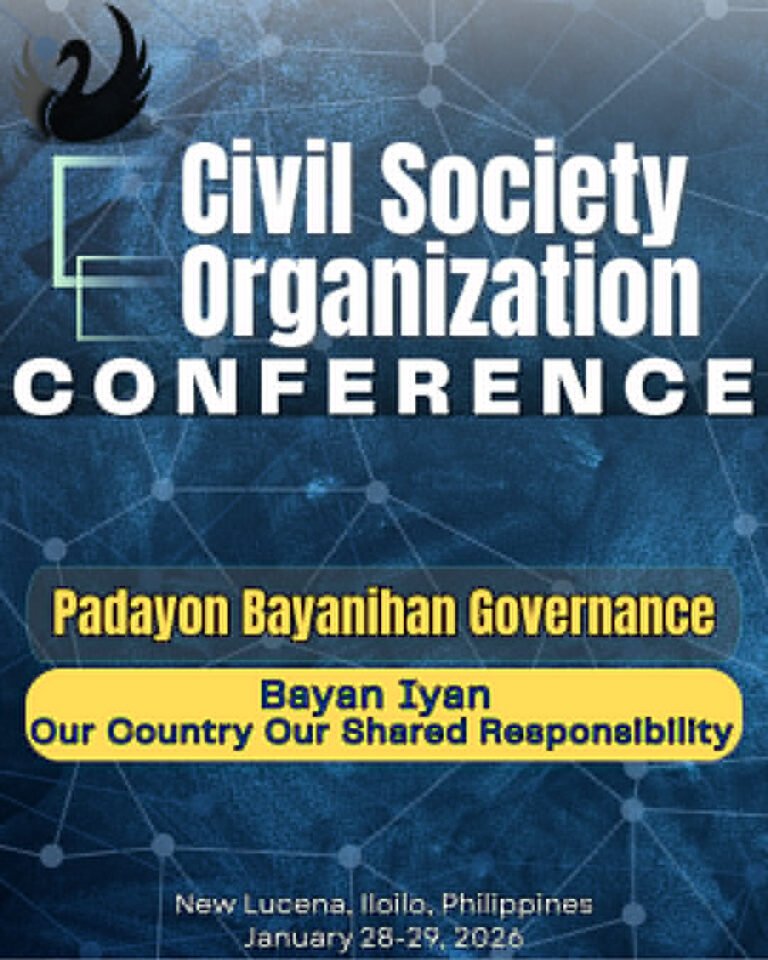
Padayon Bayanihan Governance is a national governance conference of Solution Ecosystems Activator (SEA), Inc., inspired by the vision of the late Nicanor Perlas and made possible with the support of Lifebank Foundation. More than a conference, it is a gathering of people who believe that nation-building begins in our barangays, our organizations, and our daily choices.

With the theme “Bayan Iyan — Our Country, Our Shared Responsibility,” the conference calls on local government leaders, civil society organizations, youth groups, academe, and the private sector to move beyond parallel efforts and step into genuine collaboration.

This is an invitation to sit at one table, break silos, build trust, and turn shared visions into shared action.

Why Join Padayon Bayanihan Governance?

Because governance works best when:

• CSOs don’t just demand—but help build

• LGUs don’t just lead—but listen

• Businesses don’t just profit—but participate

• Citizens don’t just observe—but co-create

Through plenary discussions, workshops, and dialogue spaces, participants will explore how bayanihan governance transforms advocacy into action, leadership into service, and partnerships into lasting impact.

What to Expect

DAY 1: Finding Our Common Ground

Building Trust, Shared Vision, and Collaborative Leadership

• A grounding opening ritual that gathers the voices of change

• Messages of support from national, provincial, and local leaders

• A powerful Keynote Address on how bayanihan becomes nation-building

• Plenary Session:
“Beyond Advocacy: When CSOs Help Build, Not Just Demand”

• The Bayanihan Governance Framework explained—how LGUs, CSOs, and business can truly work together

• Interactive workshops on breaking silos and building bridges

• Reflection sessions that turn insights into shared commitments

DAY 2: Turning Shared Vision into Shared Action

Accountability, Leadership, and Sustainable Impact

• Conversations on leadership that listens and trust as the real currency of governance

• A timely and relevant session on
Public Relations for Governance and Social Impact
how PR strengthens transparency, trust, and collaboration across sectors

• Hands-on workshops where participants design real bayanihan projects

• Local stories of collaboration from LGUs who made it work

• A commitment session where participants say:
“Our Bayan, Our Promise.”

Fellowship & Awards Night

Bayanihan Beats: Celebrating Collaboration, Commitment, and Creativity”

Because governance should also celebrate people.

An evening of music, recognition, storytelling, and shared dreams—honoring:

• Exemplary Governance Leadership

• Collaborative CSO Initiatives

• Innovative Public-Private Partnerships

With live music, fellowship activities, and a reminder that joy, culture, and connection are part of sustainable governance.

This Is Your Invitation

If you believe that:

• Governance is not owned by one sector

• Change is stronger when shared

• Bayanihan is still alive—and still works

Then Padayon Bayanihan Governance is for you.

Come not just to listen, but to participate.
Not just to network, but to commit.
Not just to talk about change, but to build it—together.

Bayan iyanPananagutan ta. Padayon kita.

For inquiries, confirmations, and partnership coordination, you may contact the Padayon Bayanihan Governance Secretariatthrough Ms. Angela Betita at angelabetita99@gmail.com, or visit www.solutionecosystems.net for more information and updates.

We look forward to building this journey of shared responsibility and collective action with you.

Padayon.

Homecoming Awaits Atong Ang 

0

GAMING TYCOON Charlie Atong Ang is bound for a second ‘homecoming’ following the issuance of an arrest warrant by a regional trial court in Sta. Cruz, Laguna in connection with non-bailable cases arising from the controversial ‘missing sabungeros.’

Based on a court document dated January 13, RTC Branch 26 found probable cause to order the arrest of the accused, whose listed addresses span parts of Muntinlupa City, Laguna, and Batangas.

Aside from Ang (Charlie Tiu Hay Ang), also ordered arrested for kidnapping with homicide, are 17 other individuals – Rogelio Teodoso Borican Jr., Jezrel Lazarte Mahilum, Mark Carlo Evangelista Zabala, Rodelo Antipuesto Anging, Emman Cayunda Falle, Julios Tagalog Gumolon.

The warrant covers Ronquillo Pacot Anding, Ryan Jay, Eliab Orapa, Aaron Ezrah Lagahit Cabillan, Mark Anthony Aguilo Manrique, Anderson Orozco Abary, Michael Jactin Claveria, Edmon Hernandez Munoz, Farvy Opalla Dela Cruz, Renan Lagrosa Fulgencio, Alfredo Uy Andes, Joey Natanauan Encarnacion.

“The bail for the release of the accused in this case is fixed at NOT BAILABLE for kidnapping with homicide,” reads part of the court order that was signed by Presiding Judge Mary Jean Cajandab – Ongalso.

The court also directed law enforcement officers to strictly follow the Rules on the Use of Body-Worn Cameras during the execution of the warrant, requiring at least one body camera and an alternative recording device to document the arrest process.

Interestingly, all suspects, except for Ang, are already under police custody.

“Yes po, Mr. Atong Ang na lang ang kasalukuyang under manhunt operation,” said CIDG spokesperson Police Major Helen dela Cruz.

In 2007, Ang was convicted by the Sandiganbayan after pleading guilty to “corruption of public officials in relation to indirect bribery.” He was sentenced to a maximum of six years in jail. He however was released after two months after his application for probation was approved.

Comelec To Hold Antipolo Special Polls in March

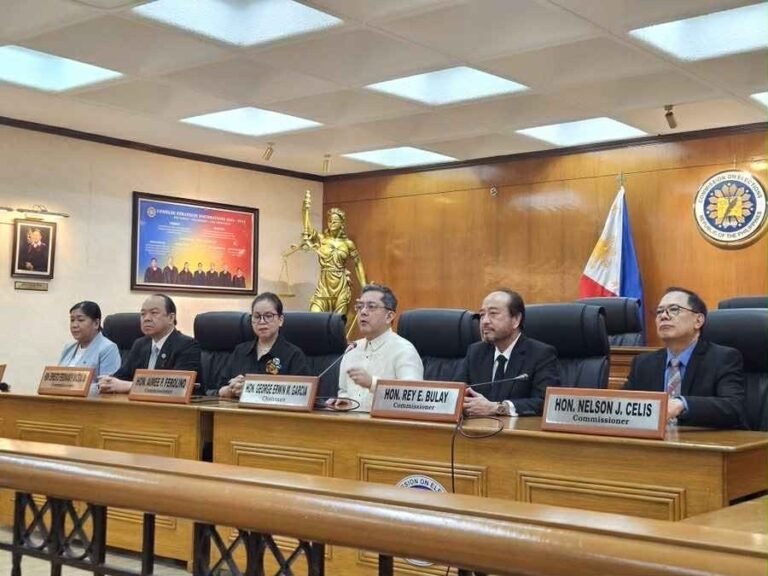
FOLLOWING the death of Antipolo City 2nd District Rep. Romeo Acop on December 20 last year, the Commission on Elections (Comelec) has set its sight on the conduct of a special election to fill up the void.

In an announcement, Comelec Chairman George Garcia said the target date for the elections is March 14, roughly two months from now. 

But unlike the previous congressional elections, the Comelec chief hinted at conducting a manual voting, which would require the poll body to shell out roughly P98 million.

“Wala kaming pera para ipangontrata at wala tayong panahon para sa procurement. Sa isang halalan na ganito, lagi itong manual na halalan,” averred Garcia.

He however clarified that the poll body has already requested funding for the special polls from the Office of the President’s contingency funds, as the commission only has around P11 million for special elections in this year’s national budget.

Acop, 78, died of a heart attack.

Prior to joining the political fray, Acop was a police officer and lawyer. As a politician, he served as congressman for the second district of Antipolo from 2010 to 2019, and again in 2022 to 2025.

He was educated at the Philippine Military Academy, serving as chief superintendent of the Criminal Investigation Service from 1994 until his resignation in 1995 following the Kuratong Baleleng rub-out. 

He entered Congress in 2010 and served three full terms before being succeeded by his wife, Resurrecion.  Following her death, Acop returned to Congress and served for another two terms.

Acop and AGHAM Partylist Representative Angelo Palmones filed a resolution to conduct an inquiry into the acquisition of 59,904 9-millimeter pistols for the Philippine National Police, costing P1.2 billion. He was one of the 56 representatives in the 16th Congress (out of 290 members) with a perfect attendance.

During a House inquiry into Vice President Sara Duterte’s confidential funds in 2024, Acop flagged the name “Mary Grace Piattos,” sharing the monikers of a restaurant chain and a potato chip brand, as an allegedly fictitious signatory on an acknowledgement receipt for confidential expenses. 

On November 28, 2025, Acop was discharged after receiving a kidney transplant.

He was found unconscious at his residence on December 20, and died on the same day at the Assumption Specialty Hospital and Medical Center in Antipolo City.

His remains were cremated and brought to the House of Representatives for a requiem mass and memorial service for him on December 29.

Cebu Trashslide Tragedy Was Inevitable

0

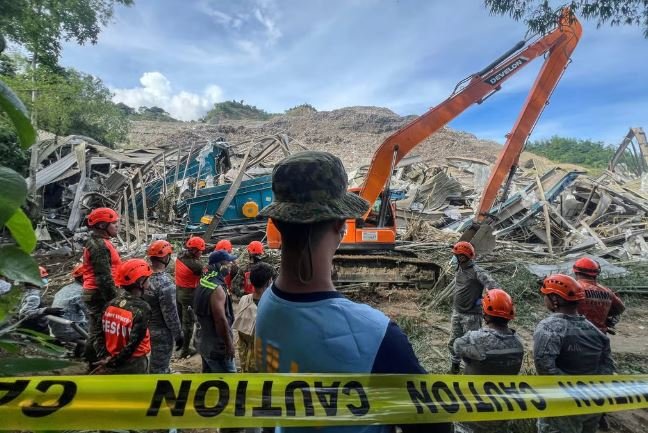
JUST LIKE THE trash explosion in Payatas, Quezon City in 2000 where at least 200 were killed, the trashslide that happened in Binaliw, Cebu last week was inevitable amid a huge pile that kept on absorbing rains and floods in late November until December 2025 and the unabated scavenging and erection of shanties in the area.

Much like the open pit mining tragedies, the trashslide in both Payatas (in 2000) and Binaliw 25 years later, could not sustain the elevation (when most global landfills use deep surfaces as base, rather than ground level) plus the pressure of heavy rains and floods in previous months– leading to accidents waiting to happen.

BBC reported that the death toll in a collapsed 25-hectare landfill owned by the Razon Group in the central Philippines has risen to 11, although hopes of finding more survivors at this point seem negligible. At the time of the accident, Binaliw landfill had over 100 workers on site.

Rescuers have so far extracted 18 still being treated at the hospitals from the debris, but at least 28 more are said to be missing. One local fire official had earlier told AFP that it was unlikely for “people to still be alive” three days after “tons of debris and trash had collapsed over them.”

USUAL TEMPLATE

The government, as usual, recommended an investigation on the cause of collapse and  review of the country’s waste management systems. 

The Department of Environment and Natural Resources (DENR), ever the last to take action on every environmental catastrophe, ordered Prime Integrated Waste Solutions Inc. to suspend its activities at the site.

The company, which is reportedly controlled by the country’s richest man – Enrique Razon, was asked to “submit a compliance plan within 90 days,” the DENR regional office said in a statement on Monday.

The department also said it would conduct an investigation into the cause of the collapse and hold to account the responsible parties.

As expected, grandstanding legislators like Sen. Imee Marcos, called for reviews of the country’s waste management system and working conditions of waste workers. “This should have never happened. We have seen similar tragedies before, yet the same dangers persist,” BBC quoted her saying.

“The lives lost in Cebu demand clear answers and real reforms.”

EARLY WARNINGS

Bienvinido Ranido, who lives near the landfill and whose wife worked there, told Reuters that he saw people fleeing from the site last week, saying the “garbage exploded.”

“I quickly took my motorcycle and rushed to the landfill. When I got there, I saw the collapsed building and it was buried by the garbage. I just screamed.” he said. Rescuers retrieved his wife’s body the next day.

Interestingly, the local Mines and GeoSciences Bureau (MGB) blamed nature, or the continuous rainfall in recent weeks, which made the rubbish heavier, along with other engineering factors, local media reported.

Landfills are common in major Philippine cities like Cebu, which is the trading centre and transportation gateway of the Visayas, the archipelago nation’s central islands.

BINALIW TIMELINE

Last Sunday, Sun Star Cebu said the operations of the landfill in the mountain barangay of Binaliw, Cebu City, have faced controversy, management changes and environmental violations. Residents, environmental regulators and city officials scrutinized the facility for years before the deadly collapse that drew global attention.

The DENR issued the ECC (environmental clearance certificate) to the landfill on November 3, 2017  to ARN Central Waste Management Inc. (ACI), the landfill’s original operator. The certificate required compliance with environmental safeguards for waste disposal.

In April 2018 the landfill development moved forward after the Cebu City Zoning Board approved a special land use permit to ARN Builders, the mother company of ACI, to develop a 10-ha. private sanitary landfill in Sitio Kainsikan, Barangay Binaliw, pending City Council approval.

Binaliw residents and nearby communities attended public hearings, where some sought safety assurances and fencing. Project consultants told officials the facility would follow sanitary landfill standards, including the phased use of two dumping pits with projected lifespans of five and 15 years.

FLAGRANT VIOLATIONS

By May to June 2019, environmental violations were flagged. The environmental management bureau (EMB7) issued violation notices against ACI for improper garbage hauling and missing monitoring reports. 

The operator acknowledged the deficiencies and said corrective measures were underway. Barangay officials and residents complained of foul odors and health risks during the same period. Some questioned if actual operations matched the approved permits.

By June 2019, debates over partnership with the city government through the Department of Public Services (DPS), signing a P65-million contract with ACI after the company won the bidding process. City officials debated the partnership’s long-term viability. 

The DPS said the contract addressed immediate waste management needs, but officials said the incoming administration of Mayor-elect Edgardo Labella would decide the site’s future.

BELOW STANDARDS

Councilor Joel Garganera, a landfill critic who later chaired the council’s environment committee, said in privilege speeches that the facility failed to meet sanitary standards.

He criticized the design and said operators were effectively “mining” the mountain to create a new “mountain of garbage,” likening the operation to an open dumpsite.

A month later, the city began dumping waste at the Binaliw landfill after then-mayor Tomas Osmeña signed the disposal contract with ACI, despite unresolved environmental concerns.

Exactly a year later, the ECC was amended by the DENR on June 3 imposing additional conditions and safeguards, which ACI committed to, including enhanced monitoring systems, under continued regulatory oversight.

RAZON STEPS IN

In January 2023, Razon’s Prime Integrated Waste Solutions Inc. (PWSI), a subsidiary of Prime Infrastructure Capital Inc., took over landfill operations. Prime Infra completed the acquisition of ARN Central Waste Management Inc. giving PWS operational control.

In March 2024, the automated MRF (materials recovery facility) was launched, touted as the Philippines’ first, to reduce landfill residue to 20 percent.

In August 2024, again violations were flagged by the Cebu City Solid Waste Management Board, finding the landfill violating the Ecological Solid Waste Management Act during an August 30 inspection.

Officials said portions of the site resembled open dumping, which raised compliance concerns. 

The City handled the issue with kid gloves and only ordered corrective measures and continued monitoring rather than outright suspension, drawing criticism from environmental groups and residents.

In September 2024, over 150 residents protested asking the city to do something about the persistent foul odors, health risks and fly infestations. Then-acting mayor Raymond Alvin Garcia gave operators one week to address odor and wastewater issues.

STERN WARNING

On June 7, 2025, a closure warning was issued by Mayor-elect Nestor Archival that he would shut down the landfill if environmental violations, including untreated wastewater and foul odors, persisted. He said protecting public health and nearby communities would be his administration’s priority.

Last January 8, 2026, the landfill collapsed at past 4 p.m., triggering a landslide that buried workers and structures. Rescuers responded immediately. The incident caused multiple fatalities and injuries.

Authorities suspended operations, disrupting waste disposal in Cebu City and neighboring areas. The collapse renewed calls for stricter environmental law enforcement and a comprehensive review of regional waste management systems.

EXPECTED RESULTS

Just like the case of Payatas dumpsite on July 10, 2000, the affected residents sued the city government, which was found liable.

The tragedy spurred the passage of the Ecological Solid Waste Management Act of 2001(RA 9003), mandating closure of open dumpsites.

Payatas was converted into a controlled disposal facility, with slope stabilization, improved drainage and methane control measures. The event highlighted the vulnerability of marginalized communities and led to ongoing efforts to manage the site and support affected residents.

The Payatas tragedy became a stark symbol of urban poverty, environmental neglect, and the dangerous conditions faced by informal settlers, prompting significant policy changes and long-term rehabilitation projects for the dumpsite. 

MAYOR SLIDES BACK

When Mayor Archival warned last June 7, 2025 that he would close the landfill if environmental violations, including untreated wastewater and foul odors, persisted, then why did he not do it?

Was he afraid of Razon; or did the tycoon resort to shortcuts to forego further costs in its operations or was there corruption in this case? 

How many more lives must be lost before we act? What were the laws following the Payatas disaster for– just for Quezon City? 

If Mayor Archival stated that protecting public health and nearby communities would be his administration’s priority, I can’t help but wonder what happened to this pronouncement.


More To Come: Dizon Fires 8 DPWH Officials

0

MONTHS after news broke out on the involvement of officials of the Department of Public Works and Highways (DPWH), Sec. Vince Dizon started grinding his axe anew by firing eight engineers from its regional and district offices.

In a media briefing, Dizon said among those relieved from their positions were four regional directors (RDs), two assistant RDs and two district engineers (DEs).

The list includes the controversial husband of Quezon Governor Helen Tan.

Ordered relieved were RDs Ronnel M. Tan (Region 1), Jovel G. Mendoza (Region 4A), Virgilio C. Eduardo (Region 5) and Danilo J. Villa (Region 7); Assistant RDs Neil C. Farala (Region 4-B), Annie S. Dela Vega (Region 5) and DEs Ruel V. Umali (Metro Manila 3rd District Engineering Office (DEO) and Manny B. Bulusan (South Manila DEO).

“We are officially relieving today for various reasons specifically because there are ongoing investigations here, which I cannot fully disclose to you, but suffice it to say we are investigating a lot of people in the department,” Dizon said in his announcement.

Likewise relieved were three local officials who had failed to meet the qualifications imposed by the Civil Service Commission — officer-in-charge District Engineers (DEs) Sherylann Gonzales (La Union 1st DEO), Roy Pacanan (Iloilo City DEO ) and Peter Scheller Soco (Leyte 4th DEO).

In a related development, Dizon said he would testify in the Sandiganbayan trial of the flood control case against former lawmaker Zaldy Co set on Jan. 20.

“I don’t know what the rules of the Sandiganbayan, if it is open. I’m not sure, I’m just announcing to you that I will testify in the case in Oriental Mindoro of former Cong. Zaldy Co.” 

“We will give you updates on my sworn testimony in that case. Since I am the complainant in many of these cases, you will see me testifying in many cases in the coming weeks, months. It is part of the process of holding those who should be held accountable,” he quipped.