Thursday, March 26, 2026
Home Blog Page 15

Corruption Is In The Filipino DNA: Intergenerational Curse

0

PRESIDENT BONGBONG MARCOS raised a call to scrutinize contractors who raked in billions for flood-control projects that turned out to be nothing but dikes of sand. Roads that collapse before the paint dries, drainage that turns streets into rivers, projects unfinished yet already “completed” on paper. Then the inevitable revelation: politicians—congressmen, senators—were behind these contracts. These were their pork. Their magic wand. Their piggy bank.

The scheme is old as time. Politicians divest their names on paper, but the companies remain theirs in spirit. Conflict of interest? It is not a conflict; it is the VERY business model. Despite the supposedly stringent rules of the Bids and Awards Committees, the winners were always the politicians’ preferred bidders. And the payoff is clean: gargantuan campaign donations come back their way, ensuring the wheel keeps turning, the dynasty keeps ruling. A firm with capitalization smaller than a sari-sari store can land projects worth billions, so long as it knows which hands to grease.

The corruption is not confined to the high towers of Malacañang or the Senate. It drips down to the barangay hall, the street corner, the jail canteen. Power is not wielded to govern; it is weaponized to extract.’

This is what scholars call “rent capitalism,” what activists name “bureaucrat capitalism.” I call it systemic plunder. It is not accident or anomaly. It is the bloodstream of the republic.

The corruption is not confined to the high towers of Malacañang or the Senate. It drips down to the barangay hall, the street corner, the jail canteen. Power is not wielded to govern; it is weaponized to extract.

A traffic enforcer waves down a driver. The fee is P2,000. “But for P500, you can go now.” A Bureau of Internal Revenue agent sits with a taxpayer. “Pay me directly and I’ll wipe your record clean.” A mess officer in a jail inflates the cost of rice by half, then splits the take with suppliers. Even in universities, a professor can be bought with a case of beer. “Sir, inumtayo mamaya, lapit na ang exam.”

We have a thousand euphemisms for it: pakikisama, team player, sumunod sa agos, kung ano ang tugtog, ’yun ang sayaw. All mean the same thing: survive by cooperating in the corruption.

Even noble projects are not immune. In our own community bail bond program meant to help first-time offenders, one staff member ran off with bail money despite strict prohibitions. NGOs are corrupted, charities are corrupted, churches are corrupted. The culture consumes everything.

The Filipino talent for rationalization is unmatched. “If someone thanks you with money, why not accept?” The prisoner’s family slips you an envelope—“it’s just gratitude.” You help secure a permit, and someone sends you a lechon—“it’s just appreciation.” But when gratitude becomes currency, it ceases to be gratitude. It becomes corruption, whether paid in pesos, in pork, or in principle.

The slope is greased further: “Okay lang tumanggap ng pera galing sa pulitiko tuwing eleksyon—pera naman natin ’yan.” With that shrug, we justify the very system that enslaves us. It ensures that only the richest, most corrupt politicians can keep winning.

We have seen this script before, over and over. The pork barrel scam under Janet Napoles, where lawmakers funneled public funds into ghost NGOs. The fertilizer fund scam of the Arroyo years, where billions meant to help farmers went into campaign war chests. The overpriced lampposts in Cebu during ASEAN. The Northrail project that never took off, but took off with billions.

Each scandal follows a ritual. A tragedy or exposé surfaces. Public outrage explodes. The government promises a crackdown. Committees are formed, hearings held, witnesses called. Headlines blare. Then—silence. No one is held accountable. No one is punished. The corrupt are not destroyed—they are upgraded. They grow more sophisticated, more inventive, more shameless. They master the new laws meant to curb them, and they weaponize them instead.

Why does this keep happening? Because the ground is fertile. Everyone despises corruption in the abstract, but when opportunity arises, everyone participates. The businessman who pays under the table to win a contract is just as guilty as the official who accepts. The citizen who sells his vote justifies the dynasty that enslaves him.

And the perversity of the culture is this: those who try to stay clean are mocked. Speak against corruption and you are branded naïve, nasa ere, not grounded in the “realities.” “Keep quiet,” people say. “Don’t join politics, lahat naman sila magnanakaw.” Worse, they will say “your principled stand will be twisted by corrupt politicians who weaponize your words against their rivals. You are not rewarded—you are used.” Thus, people who jeer my work said I am just being used. 

This is the tragedy. Corruption is not merely practiced; it is normalized, romanticized, passed down like inheritance. Children grow up watching their fathers hand over bribes to the police, their mothers slip “pabaon” to officials, their barangay captain dole out cash during campaigns. It becomes the expected, accepted way of life.

Do the right thing, and you are the odd one out. You are punished for honesty, ridiculed for integrity, sidelined for refusing to play along. In a lawless society, to be lawful is to be the outlaw.

Is corruption in the Filipino DNA? Perhaps not biologically, but culturally, socially, politically—it may as well be. It is encoded in the way we transact, the way we excuse, the way we survive. It is not genetic fate, but it is intergenerational curse.

The president’s call to investigate corrupt politicians and contractors is welcome, but it is also wearying. We have heard it too many times before. What is needed is not investigation, but conviction. Not hearings, but jailings. Not speeches, but systemic surgery. Until then, every flood will not only drown our cities, it will drown our faith in this republic.

The question is not whether corruption is in our DNA. The question is whether we have the will to mutate, to evolve, to cut it out before it consumes us whole.

Or perhaps, it has consumed as whole.

Reflecting On The ICC Resignations

0

THE RESIGNATION OF three stalwarts behind the Independent Commission for Infrastructure (ICI) seemed more like an indication that the probe into the so-called flood control scandal is just for a show.

It is not meant to dismantle the systemic culture of corruption but a selective purge primarily designed to make the administration look good in the eyes of the Filipinos.

When President Ferdinand Marc Jr. created the ICI, many were under the impression that big time crooks behind the flood control scandal would be hauled in jail, made accountable for the anomalous infrastructure projects under the Department of Public Works and Highways (DPWH).

Or so we thought.

The resignation of three of the four members of the ICI speaks well of the administration’s intent. Damage control, that’s what it is.

People with integrity behind the ICI walked away not because they were done, but because of the drumbeating made by no less than the President’s trusted lieutenants who have openly cleared the main man behind the fiasco.

The Remulla brothers — Boying and Jonvic, have spoken. According to the “dynamic duo,” there’s no proof that presidential cousin and former House Speaker House Speaker Martin Romualdez is involved in the P1.7-trillion fund mess.

Looking at the timeline, Marcos promised accountability after his third State of the Nation Address (SONA), which made the people extremely angry. Then Marcos said something has to be done. 

Hence, the ICI was formed by virtue of an executive order. Named members of the ICI were former Supreme Court Justice Andres Reyes Jr. as Chairperson, former DPWH Secretary Rogelio Singson and Rossana Fajardo as commissioners and Baguio City Mayor Benjamin Magalong as Special Adviser and Investigator.

But months after ICI was created, people tasked to uncover the truth started walking away — Magalong, who has long been exposing dubious schemes at the DPWH, tendered his resignation even before the President was able to fire him. The reason — ties with the Duterte camp.

On December 15, Singson also resigned, citing health issues and security concerns. Then Rossana Fajardo also left.

The only man left standing is the ICC Chairman Andres Reyes, but not for long as Ombudsman Crispin Remulla previously hinted at the imminent disbanding of the ICI. 

From a taxpayers’ point of view, the dissolution of the ICI seemed meant to prevent the scandal from serving beyond its purpose — a selective purge against small fries.

To recall, Marcos said big shots involved in the flood control mess would be jailed before Christmas. “They will not have a Merry Christmas,” he said in November. 

He however did not specifically say what year would cover his “Christmas ultimatum.”

In fairness, there were some who were made to spend the holidays behind bars — sacrificial lambs named Sarah and Curlee Discaya and nine DPWH engineers. 

The likes of Senators Joel Villanueva, Jinggoy Estrada, Francis Escudero and former Senator Bong Revilla who wielded power to insert billions into the budget, the ones who allegedly collected 25–30 percent kickbacks have remained free. 

So as former Ako Bicol partylist Rep. Zaldy Co who has gone hiding somewhere in Europe.

Romualdez, the cousin of the sitting president, doesn’t seem headed to jail. He had already been cleared by the Remulla brothers.

ICI is a failure not because its members didn’t do what they’re supposed to. It’s because the commission doesn’t wield enough power to prosecute and send crooks (including the cousin of the President who created the ICI) to jail. 

ICI, which operates on a restrained budget, is limited to recommending cases to the Ombudsman Remulla, who has the power to decide whether or not to file charges at the Sandiganbayan.

SSS Sets Pension Hike, Microloan

0

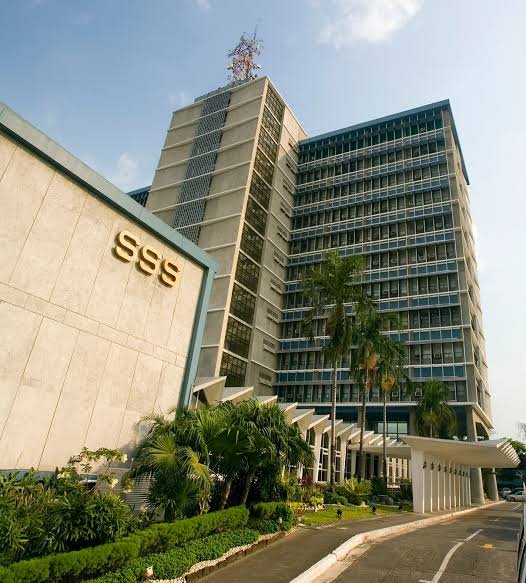
AT THE ONSET of 2026, the Social Security System (SSS) boasted of its new and improved services and programs, combining new financial initiatives, nationwide and overseas branch openings, and the continuation of the multi-year pension reform program that was launched in the last quarter of 2025.

This comes as the agency mandated to promote social justice and provide meaningful social protection, announced its upcoming priorities for the year.

“We look forward to 2026 where we continue the implementation of existing programs, develop new ones, strengthen member servicing, and expand the footprint of SSS nationwide and abroad,” SSS president and chief executive officer Robert Joseph Montes de Claro said in a statement.

PENSION HIKE

At the core of the 2026 agenda is the second tranche of the SSS Pension Reform Program, a three-year phased initiative that began in September 2025.

Under the agency’s reform agenda, SSS pensioners will receive another round of benefit increases by September 2026, including a 10 percent increase for retirement and disability pensioners, and a five percent hike for death or survivor pensioners.

According to SSS, the multi-stage adjustment aims to gradually raise pension adequacy without compromising the long-term stability of the fund, while giving beneficiaries a long-awaited boost amid rising living costs.

The pension reform program is expected to benefit 3.8 million pensioners without increasing contributions.

By the end of the program in 2027, total increases will reach about 33 percent for retirement and disability pensioners and 16 percent for death and survivor pensioners.

NO TO LOAN SHARKS

In addition to the pension reforms, SSS will launch a new microloan program in early 2026 to provide affordable, short-term credit to members who need immediate financial assistance.

The program will offer microloans at relatively low interest rates, targeting workers who often rely on informal lenders charging excessively high interest rates.

“With guidance from Finance Secretary Frederick Go, SSS is looking to implement this microloan program through partner institutions very soon as a safer and affordable option to borrow cash for short-term needs, with a 15- to 90-day tenor and an interest rate of eight percent per annum, or 0.67 percent per month,” De Claro said.

The initiative is part of SSS’s strategy to expand its loan portfolio and steer members away from predatory lending practices.

EMERGENCY LOAN

Complementing the microloan initiative is the continued implementation of the SSS Emergency Loan Program, which will remain available through 2026 for members affected by natural disasters and major emergencies.

The agency earlier announced that the emergency loan facility would stay active until late 2026, or until government calamity declarations are lifted, ensuring continued support for workers in a country highly vulnerable to severe weather events.

EXPANSION PLANS

SSS is also preparing for a major expansion of its physical presence, both domestically and internationally.

For 2026, the agency plans to open 10 new local branches across the Philippines, improving accessibility for workers in underserved or high-population areas.

Strengthening its regional presence has long been a challenge, with many members reporting long queues and slow processing in several high-traffic SSS service centers.

INTERNATIONAL OFFICES

To bolster its international footprint, SSS will open Foreign Representative Offices in Madrid, Spain, San Francisco, USA, and Macau.

These outposts aim to provide direct services to overseas Filipino workers (OFWs)—one of the largest contributors to SSS membership and collections—particularly those needing assistance with benefits, contributions, and compliance.

To support these expansions, SSS also announced that it will hire approximately 1,800 new personnel in 2026 to reinforce frontline services, handle increased member transactions, and accelerate digital transformation initiatives.

Hero’s Welcome For OFW Rhodora

0

WHEN RHODORA Alcaraz Tunacao finally set foot on Philippine soil, it was not just a homecoming — it was the nation embracing a modern-day hero.

This comes as President Ferdinand Marcos Jr., and First Lady Liza Araneta-Marcos, personally welcomed the 28-year old Hong Kong blaze hero survivor at the Tambayan Food Hall in NAIA Terminal 3, as part of the 2025 Presidential Pamaskong Salubong Para sa mga Bagong Bayani ng Bansa.

The moment symbolized national gratitude for a Filipina who risked her own life to save another’s.Rhodora, an overseas Filipino worker from San Pablo City, Laguna, became an international symbol of courage after rescuing a three-month old Chinese baby during the deadliest residential fire in Hong Kong in nearly eight decades.

UNCOMMON VALOR

The fire that engulfed Wang Fuk Court in Tai Po on November 26, 2025 claimed at least 161 lives and trapped hundreds in thick, toxic smoke.

Barely a day into her new employment, Rhodora was faced with a nightmare.

As flames spread rapidly and smoke filled the apartment, she refused to flee. Instead, she wrapped the infant in a wet blanket, held the baby close to her chest, and used her own body as a shield—enduring hours of smoke inhalation until firefighters rescued them.

TEARFUL HOMECOMING

She survived, but not without consequence. Rhodora suffered severe carbon monoxide poisoning, pneumonia, and emotional trauma.

She arrived in Manila on December 16, on a wheelchair — still frail, yet dignified — met by the President, senior government officials, and members of her tearful family.

“Katulad ni Rhodora, ang bawat OFW natin ay nagsisikap para sa mas magandang kinabukasan ng kanilang pamilya sa kabila ng panganib,” President Marcos said, praising her selfless bravery and reaffirming the government’s commitment to migrant workers.

HEAD OF THE FAMILY

Rhodora is the eldest among eight siblings.

The daughter of a fisherman, she chose to work abroad to help lift her family out of poverty.

Today, she is back home in Laguna, spending Christmas and New Year with her six-year-old son, partner, and siblings — recovering both physically and emotionally.

HEROINE’ REWARD

Government agencies quickly rallied behind her. The Department of Migrant Workers (DMW) and the Overseas Workers Welfare Administration (OWWA) provided financial assistance and pledged continued medical and psychological care.

OWWA also committed a college scholarship for her brother — ensuring that her sacrifice opens doors for her family’s future.Her employer in Hong Kong expressed profound gratitude, crediting Rhodora for saving not only the infant but also the child’s elderly grandmother.

Former employers and members of the Filipino community echoed the same sentiment: her care went beyond duty — it was love.

NOT AS LUCKY

Another Filipina worker, Maryan Pascual Esteban, tragically lost her life in the same fire while attempting to save a child under her care.

Together, their stories reflect the quiet heroism of Filipino workers abroad — acts of courage performed without expectation of recognition.

Rhodora Alcaraz Tuñacao did not carry a badge, a uniform, or a weapon. She carried a child in her arms. And in that moment, she carried the soul of a nation.

Lingering Fury, Selective Purge

0

TWO ADMINISTRATIONS — those of Rodrigo Duterte and Ferdinand Marcos Jr. — exposed the massive systemic corruption at the Department of Public Works and Highways (DPWH), shaking the nation over the grandiose scale of plunder of public funds.

One did nothing other than exposing it, the other promised the country that those guilty would be jailed before Christmas and forced to return stolen public funds. 

Christmas came and went, only a few small fries were jailed while some returned small fractions of stolen money and assets. 

Legislators that paved the way for massive plunder– through budget insertions and abuse of unprogrammed funds– are still mouthing their supposed innocence and flaunting their continued exemptions from investigations by ICI and the Senate Blue Ribbon Committee on account of inter parliamentary courtesy.

SELECTIVE PURGE

Only those beneath them face public persecution as though the crime stopped at the levels of DPWH personnel and officials and the erring contractors. 

In fact, most of the legislators involved in the massive scandal have left the country or are applying for travel permits and visas in the hope of siphoning their funds in foreign banks and other money laundering schemes. 

Marcos’ expose in July of the 15 contractors cornering huge public works contracts (mostly flood control projects) that failed to protect people from destructive and fatal floods, was at first hugely welcomed by the citizenry, as a token of his innocence and sincerity in cleaning up the bureaucracy. 

TOOTHLESS, UNFUNDED

Interestingly, public optimism is rapidly eroding, as members of the toothless Independent Commission for Infrastructure (ICI) have been resigning in succession.

The resignation of three ICI members in a span of three months has been mainly attributed to the failure of President Ferdinand Marcos Jr to equip the commission with sufficient power to prosecute.

Since its creation (by virtue of an executive order) the ICI has yet to receive funds, which made it doubly hard for the commission to deliver results.

ICI was decimated to a fact-finding commission that is limited to submitting recommendations to the Ombudsman and the Department of Justice (DOJ) for the filing of appropriate criminal and civil cases.

THE GRAND THEFT 

Since 2022, the state budget watchdog– the Commission on Audit– failed miserably to raise red flags or hold accountable those behind the plunder of DPWH surging funds as the Duterte administration stifled most oversight agencies from performing their tasks. 

It was under his term that public work funds, particularly flood control projects, zoomed beyond the imagination of contractors and local governments’ absorptive capacity, thus ending up with mostly ghost or imagined projects, incomplete projects and annually repeating funds for the same projects (many of them imagined or on paper only).

But the DPWH projects increased even more under Marcos– with then Secretary Mark Villar, and his successor the media-hyped Manuel Bonoan– with opaque terms like allocable funds (inaalok) being adopted and abused to the max. 

PUBLIC DISTRACTION

Not even the still unresolved death (was it suicide or murder?) of the late DPWH Undersecretary Catalina Cabral made people temporarily forget her involvement in this grand theft.

The largest single-year increase came in 2022, the first full year under Marcos’ administration, when Sunwest secured P16.9 billion in project contracts. This surge continued through 2023 and 2024, reinforcing the company’s dominant role in Bicol’s infrastructure program, the Inquirer reported.

The scale of these awards placed Sunwest at the top of flood-control contractors from July 2022 to May 2025, according to the Malacañang-backed Sumbong sa Pangulo report. During that period alone, the firm obtained ₱10.15 billion across 79 flood-control projects, the paper added.

FINDINGS MATTER

These findings mattered not just because of the amounts, but because flood-control projects are funded, approved, and implemented through a system that relies heavily on congressional appropriations, district engineering offices, and contractor accreditation—layers where political proximity can quietly translate into repeated awards.

The COA only came to life after the probes done by both chambers of Congress– where its complicity through a commissioner’s wife bagging many flood control projects in 2025– was sternly lambasted by the Blue Ribbon Committee. 

Even the state-owned Land Bank was vigorously berated by senators for allowing the withdrawal of hundreds of millions of pesos in flood control funds in a single transaction, without raising the red flag.

DECEMBER REPORT

COA began filing 30 fraud audit reports on flood control projects, specifically in DPWH Bulacan district offices, only by December 17. It submitted 21 reports to the ICI and 9 to the Ombudsman covering projects worth P2.5 billion.

The reports described ghost projects or those fully paid but can’t be located, structures built in locations different from those specified in the contracts, and flood-control works whose materials or dimensions did not match those billed.

Many of these projects, auditors said, were awarded to contractors belonging to the same small group identified in Malacañang’s review, including Discaya-owned Amethyst Horizon Builders and General Contractor and Development Corp., as well as firms whose owners were summoned in Senate hearings, such as SYMS Construction Trading owned by Sally Santos and Wawao Builders owned by Mark Allan Arevalo, the Inquirer reported.

PEOPLE’S AUDIT

In Malolos City, residents and local officials conducted their own audit. 

Of 106 flood-control projects inspected across 30 barangays, only 54 were either completed (27) or ongoing (27). The rest were classified as nonexistent or “ghost” projects, as they could not be located, while others were found to have substandard materials, were incomplete, or had a reduced project scope.

In a small coastal barangay of Calero, with just 100 households, auditors counted 13 flood-control projects worth P1.4 billion — raising questions on proportionality, planning, and oversight.

Malolos Mayor Christian Natividad—who heads the Malolos City People’s Audit Team (MCPAT) — ordered all suspected ghost and incomplete projects to be declared “crime scenes,” as he also directed all village officials to ban all construction activities, which would just be attempts to cover up suspected anomalies.

TOKEN RESTITUTION

From the estimated P546-billion plundered DPWH funds intended for 10,000 projects, the government has only recovered from restitutions (in exchange for being a state witness) only:  

  • Luxury vehicles owned by the Discaya couple auctioned in November and December worth P47.7 million for five of the 11 owned by the controversial contractor couple, aside from the seized Rolls-Royce Cullinan and a Bentley Bentayga (both unsold).
  • DPWH former assistant district engineer Brice Hernandez’s luxury vehicles, who despite a P70,000 monthly salary had a P30 million Lamborghini Urus and P10.8 million Toyota Supra, which he surrendered to the ICI out of “sincerity,” a black GMC Yukon Denali SUV worth P12 million and P30 million Lamborghini Urus worth P30 million 
  • Former DPWH Usec. Roberto Bernardo’s bank account containing P7 million
  • Bulacan district engineer Henry Alcantara’s P110 million that was surrendered to the DOJ as part of the P300 million he admitted receiving as kickbacks from flood control projects.

FREEZE ORDERS

The government also froze by December P20.3 billion worth of assets, comprising 6,538 bank accounts, 367 insurance policies, 255 motor vehicles, 178 real properties, 16 e-wallet accounts, and three securities accounts, due to suspected ties with dubious public works. 

The figures rose steadily with each new court order.

As freeze orders took effect, several figures linked to the flood control controversy began returning large sums they admitted were kickbacks from anomalous infrastructure projects — marking the first concrete recoveries in a scandal that has otherwise been defined by staggering losses.

In November, Acting Justice Secretary Fredderick Vida told reporters that the total restitution figure of P300 million was based on transactions Alcantara acknowledged in his sworn statements. For the remaining P190 million, Vida stated that payment should also be made in cash.

From the DOJ, the cash was transferred to the Bureau of the Treasury, where representatives from Land Bank counted and validated the bills and checks to determine if they were counterfeit or not.

EASY WAY OUT?

The returns continued into December, perhaps for fear of being jailed, as declared by President Marcos.

On December 16, DPWH-NCR engineer Gerard Opulencia returned P40 million in cash to the DOJ in partial fulfillment of P150 million, which he admitted to having skimmed from funds intended for DPWH projects during his term as NCR director.

Prosecutor General Richard Anthony Fadullon said that among the cases under preliminary investigation were flood control projects awarded to SYMS Construction in the towns of Balagtas and Pandi in Bulacan. 

He clarified, however, that Opulencia did not receive money from the Bulacan projects but had knowledge of what transpired in Bulacan. 

The restitution of funds was based on the transactions he was involved in when he was NCR director,” he added.

SMALLEST FRY

One of the most potential witnesses also followed the trend by returning what she earned from being an errand to the Bulacan district engineers. Her name — Sally Santos.

Santos owned SYMS Construction Trading, which was used by the Bulacan district engineers in the ghost projects. She returned P15 million to the government.

DOJ spokesperson Jose Dominic “Polo” Martinez said the amount formed part of the memorandum of agreement (MOA) between the government and applicant witnesses in the anomalous flood control projects under investigation. 

She got funds for renting out to other contractors her company’s license for which she charged three percent in royalties.

MONEY LAUNDERING

The money trail did not end with cars. In September, Senate President Pro Tempore Panfilo Lacson disclosed documents showing that five DPWH officials and contractors — the Bulacan Group of Contractors, or dubbed the “BGC Boys” — incurred P950 million in gross gambling losses across 13 casinos in Metro Manila, Cebu, and Pampanga.

The so-called BGC Boys include Alcantara, Hernandez, Mendoza, DPWH Engineer II Arjay Domasig, and a contractor identified as Edrick San Diego. The group was found to be using fake driver’s licenses under aliases or assumed identities to gain entry into a casino.

“They weren’t just betting chips; they were betting the people’s money. And instead of building flood control projects, they were building their casino aliases—and possibly laundering money in the process,” Lacson said.

Citing records from the Philippine Amusement and Gaming Corp., Lacson detailed billions of pesos in cash-to-chip and chip-to-cash transactions from 2023 to 2025 — amounts far beyond what mid-level government salaries could sustain.

FAR BEYOND GRAFT

Finance Secretary Ralph Recto estimated that anomalous flood-control projects cost the Philippine economy P42.3 billion to P118.4 billion from 2023 to 2025 — the equivalent of 95,000 to 266,000 jobs that could have been created, wages that could have been earned, and livelihoods that never materialized.

Put together, the figures tell a story that goes beyond corruption cases and court orders — P545.64 billion was spent; more than P350 billion lacked clear descriptions; P100 billion flowed to just 15 contractors; P31 billion clustered in one contractor network and P15.7 billion in another; P2.5 billion was flagged as ghost projects; P950 million vanished into casinos; about P1 billion was allegedly moved in suitcases; and around P20 billion has since been frozen, the Inquirer reported.

As has been reported, an estimated P3 trillion had been lost to corruption from 2016 to 2025 – including the billions of pesos in unprogrammed funds and insertions by legislators for their favored districts and contractors with of course an expected SOP (kickback as their share of the loot).

So far just a few have been jailed and even less were formally charged in court.

THE UNTOUCHABLES

Interestingly, the proponents to the dubious scheme have remained free — the legislators laughing their way to the banks and exiting the country to hide their money in havens for illicit funds.

Some have even invested in cryptocurrency, which is harder to trace and confiscate.

Will our country be any better in 2026 considering the return of insertions (under a different name and form) despite the public’s rage against this practice”? 

Maybe, but only after five or 10 bigtime corrupt legislators (including the pork barrel honchos) are jailed.

LGUs Lagging In Digital Push 

0

AS THE PHILIPPINES accelerates its digital transformation, a critical question emerges: Are local government units (LGUs) ready to adopt artificial intelligence (AI)?

According to a recent policy study by the Philippine Institute for Development Studies (PIDS), the answer—for now—is not yet.

In its discussion paper dubbed as “How Ready Are LGUs for AI Adoption?,” PIDS revealed that most LGUs across the country remain low to moderately prepared for AI integration. 

Based on the AI Readiness Index, LGUs scored only 30 to 35 out of 100, reflecting serious gaps in digital infrastructure, technical skills, institutional capacity, and funding.

STRUCTURAL DILEMMA

Authored by Francis Mark A. Quimba, Christopher Ed C. Caboverde, and Alliah Mae C. Salazar, the study explains that LGUs face a structural dilemma. 

Local officials are often compelled to prioritize immediate public services—such as health, social welfare, and basic infrastructure—that deliver visible political returns, over long-term investments like AI systems that require time, skills, and sustained funding.

Among the most pressing barriers identified are:

  • Shortage of ICT and AI-related skills
  • Weak last-mile internet connectivity
  • Limited budgets for digital initiatives

Income level plays a significant role. First-class LGUs tend to score higher on AI readiness, yet the study notes that strong leadership and clear policy focus allow some lower-income LGUs to outperform wealthier counterparts.

REGIONAL INEQUALITY

PIDS also warned of growing regional disparities in AI readiness. While the National Capital Region (NCR) leads, areas such as BARMM, Eastern Visayas, the Cordillera Administrative Region (CAR), and MIMAROPA lag far behind.

Without targeted interventions, the study cautions, AI adoption could deepen existing inequalities, leaving already marginalized regions further excluded from digital governance gains.

RECOMMENDATIONS

To close the readiness gap, PIDS calls for coordinated national and local action. Key recommendations include:

  • Removing regulatory barriers to digital infrastructure by eliminating legislative franchise requirements for connectivity providers, data centers, and cloud services.
  • Integrating AI and data literacy into education, starting at the K–12 level by 2026, in line with the Philippine Digital Workforce Competitiveness Act (RA 11927).
  • Establishing a unified National AI Strategy, supported by an executive order, with clear institutional leadership and defined agency roles.
  • Mandating ICT budget allocations for LGUs—at least 2% by 2026 and 3% by 2028—to ensure sustained funding for digital and AI initiatives.
  • Creating a National LGU AI Readiness Fund, prioritizing lower-income municipalities through equity-based grants.
  • Promoting inter-LGU collaboration, allowing clusters of provinces and municipalities to share AI infrastructure and services.

The study also emphasizes responsible AI adoption—calling for data governance standards, energy efficiency, inclusion safeguards, and a robust monitoring framework.

GROUNDWORK LAYING 

At the national level, groundwork is underway. Initiatives such as the National AI Strategy Roadmap, the proposed Center for AI Research (CAIR), and the Philippine Development Plan 2023–2028 signal strong policy support for AI-driven growth.

However, PIDS noted that policy ambition has yet to translate into general local-level adoption, especially among LGUs and MSMEs still in early stages of digital transformation.

DEFINING MOMENT 

As the country observes the 23rd Development Policy Research Month (DPRM) 2025 with the theme “Reimagining Governance in the Age of AI,” the PIDS study offers timely guidance.

AI, the authors stress, can boost productivity, reduce costs, and improve public service delivery—but only if LGUs are empowered, equipped, and included.

The message is clear: AI readiness is no longer optional. For Philippine LGUs, the challenge now is turning policy vision into local action—before the digital divide becomes a permanent one.

NTA Shares For LGUs Up by 15%

0

LOCAL GOVERNMENT UNITS  (LGUs) across the country are poised to receive one of the largest fiscal boosts yet, with the Department of Budget and Management (DBM) confirming a projected P1.2 trillion National Tax Allotment (NTA) for 2026.

The expanded allocation, which is equivalent to 15 percent increase from P102 trillion, signals the continued recovery of government revenues following the pandemic and reinforces the national government’s commitment to fiscal decentralization under the Local Government Code of 1991 and the landmark Mandanas-Garcia ruling.

In a budget memorandum issued on December 26, the DBM said the indicative NTA shares should guide LGUs in crafting their respective financial plans for 2026, as they prepare budgets aligned with the proposed P6.793-trillion National Expenditure Program (NEP).

DISTRIBUTION FORMULA

The NTA represents 40 percent of national tax collections, based on revenues collected three years prior—in this case, 2023, when government revenues rose by eight percent to P3.82 trillion.

For 2026, the NTA distribution will be allocated as follows:

  • Municipalities: P404.49 billion
  • Cities: P274.1 billion
  • Provinces: P273.82 billion
  • Barangays: P238.1 billion

Allocations are expected to benefit 83 provinces, 149 cities, 1,491 municipalities, and over 41,900 barangays nationwide. Adjustments were made following the adoption of the 2024 Census of Population, ensuring that population shifts are accurately reflected in local funding shares.

REVENUE AND GROWTH

Of the projected P1.2 trillion NTA for 2026, 73 percent (P868.65 billion) will come from the Bureau of Internal Revenue (BIR), while P321.79 billion represents LGU shares from the tariff collected by the Bureau of Customs (BOC).

Some P66.21 million will be coming from other government agencies.

The DBM noted that the increase reflects improved revenue performance as the economy sustained its post-pandemic rebound, strengthening LGUs’ fiscal capacity to meet devolved responsibilities.

FOR HEART PURPOSES

With higher fiscal space, LGUs are expected to further strengthen their HEARTS priorities—health, education, agriculture, environment, roads and infrastructure, technology and security, and social protection.

“These increased allocations mean greater capacity for LGUs to improve the delivery of essential services to their constituents,” the DBM said, emphasizing the government’s continued support for meaningful devolution.

Under existing rules, LGUs are mandated to allocate at least 20 percent of their NTA for development projects, 10 percent for the Sangguniang Kabataan, and a minimum of five percent for local disaster risk reduction and management.

LGU budgets must also support programs for gender and development, senior citizens, persons with disabilities, HIV prevention and care, and child protection.

BIGGEST GAINERS

Among the regions, Calabarzon (Cavite, Laguna, Batangas, Rizal, Quezon) is set to receive the largest allocation at P141.15 billion, followed by Central Luzon (P115.9 billion), Metro Manila (P71.57 billion), and the Bicol Region (P71.53 billion).

On the lower end, allocations will go to the Cordillera Administrative Region (P35.64 billion), Caraga (P46.15 billion), and SOCCSKSARGEN (P50.16 billion).

By law, NTA funds will first cover the cost of providing basic services and facilities, ensuring that development remains anchored at the grassroots level.

TURNING POINT FOR LGUs

Since the full implementation of the Mandanas ruling, LGUs have been receiving a broader share of national taxes—including collections from both the BIR and BOC—marking a significant shift from the previous system that relied solely on BIR collections.

As LGUs assume expanded responsibilities, the P1.2-trillion NTA in 2026 stands as both an opportunity and a test—challenging local leaders to translate increased fiscal resources into tangible improvements in governance, public services, and inclusive local development.

COA Detects Compromised Sequestration

0

THE INEPTNESS OF the Presidential Commission on Good Government (PCGG) to “properly secure” over 1,000 hectares of lands seized from the dictator’s cronies could result in losses worth P3 billion for the state.

The Commission on Audit (COA) particularly identified problematic sequestration covering 296 real estate assets covering 1,107.2 hectares valued at P3.11 billion. 

According to the state auditors, seized properties remain unregistered to the government, not covered by a proper title, or bore no annotation of lis pendens.

A notice of pendens is a legal warning to potential buyers that a property is tied up in litigation or being claimed by the State.

SECRETLY SOLD

COA has discoverèd that 11 properties from the same list with a combined land area of 17.048 hectares worth P641.537 million have been sold, even though these were still locked cases pending before various courts.

State auditors explained that one of the principal mandates of the PCGG is the sequestration and management of assets deemed part of the ill-gotten wealth of members of the Marcos family and their cronies. 

“By not registering and annotating lis pendens on the titles, the PCGG allows the sale or transfer of properties without informing the public about the ongoing legal disputes involving the properties. These resulted in the same or transfer of at least 11 parcels of land amounting to 641.537 million,” auditors pointed out.

Tracking by the audit team revealed that the secret sale of the supposedly sequestered properties has been going on for decades, with the earliest one recorded in May 1990 and the most recent one on June 14, 2018.

AUDITORS’ LIST

Based on a list drawn by the state auditors, the untitled, unregistered or unannotated sequestered properties consist of a 113-hectare fishpond valued at P305.27 million; a 3.41-hectare beachfront property with resthouses and no assigned value; and 267 parcels of land with a combined area of 990.69 hectares worth P2.804 billion.

Efforts by the audit team to trace the titles to the sequestered properties turned up more problems.

There were 202 land titles covering 212,116 square meters of land assessed at P352.94 million that were already foreclosed by the Los Baños Rural Bank, dating back to January 6, 1987, beating the filing of government lawsuits for recovery by just a few months. This was disclosed only on August 15, 2024, Malaya reported.

BUNGLED SEIZURES

There were also 27 parcels of land corresponding to 169,264 sq. m. with an estimated value of 708.64 million that were not even included in the monitoring list. Three were found to have already been disposed of by sale.

Six land titles with notices of lis pendens in 2016 and 2017 and requests for registration and annotation to various registry of deeds were issued new titles. 

However, in at least two instances, the new titles no longer reflected the lis pendens notice on the dorsal portion. One of these was sold in 2000 without the required annotation.

Follow up with the Land Registration Authority regarding unsubmitted titles piled up more troubles for the PCGG, as some could no longer be located on the LRA’s database, making tracing them doubly difficult.

“Out of the 470 titles submitted by the PCGG, 124 or 26 percent were either not found in the selected RD (registry of deeds) in the LRA’s database or the indicated owner/s did not match or the title itself never existed,” the audit team said.

WHAT TO DO

The COA recommended that the PCGG facilitate the annotation of lis pendens on the existing titles, clean up and update its database regarding the status of all sequestered properties and file charges against persons or parties behind the secret disposal by sale of the sequestered land.

Solo vs. Together: Cooperation vs. Collaboration

0

NOTICE HOW SOMETIMES a team gets work done — everyone focused on their own task. Nothing feels alive… Solo. Other times — people swap ideas. Energy sparks. Things come alive… Together.

The Back Story 

Here’s the thing: finishing tasks alone keeps things moving, but it rarely sparks anything new. Each person does their part, checks off their list, and moves on. Cooperation.

  • Useful? Yes. 
  • Memorable? Not really.

Collaboration shifts that experience. When people think together, the same work suddenly feels alive — and the results actually matter.

Cooperation — Solo, but moving

Picture a project with a tight deadline. Everyone has their own assignment. I finish my slides. You finish your report. Someone else updates the spreadsheet.

  • Everything gets done.
  • And that’s the point — everything gets done.

But it’s quiet. Separate. Each person stays in their lane. No shared thinking. No surprises. No spark. Everyone did their job… alone.

You see this happen outside of work too. One person cooks. Another cleans. Someone else runs errands. 

  • Helpful? Absolutely. 
  • Connected? Not so much. 

It’s efficient, polite, and functional — but still solo.

Cooperation is great when clarity and speed matter. 

  • Tasks are clear
  • Roles are defined
  • Everyone knows exactly what to do. It keeps things moving.

Collaboration — Together, all the way

Now shift the scene.

Same project. Same people. But this time, someone throws out an idea. Another person adds to it. Someone tweaks it. Someone questions it. Back and forth. Ideas start to build instead of sit still.

Suddenly, the outcome looks different:

  • Stronger
  • Sharper
  • More interesting than anything one person planned alone

It’s like cooking together. One person starts. Another tastes and adjusts. Someone else adds a twist. You talk, laugh, experiment. The final dish reflects everyone’s input — and it’s better because of that.

Even simple moments feel different. Planning a weekend. Solving a small problem. Making a decision together. 

When people think together, the result carries: 

  • More energy
  • More ownership
  • More life

That’s collaboration. Not faster — richer.

The Difference

  • Cooperation: Everyone contributes separately
  • Collaboration: Everyone contributes together

Solo keeps things organized.

  • Together creates momentum.

Solo completes tasks. 

  • Together shapes outcomes.

Which one should you use?

Both matter.

Use cooperation when the path is clear and speed is the goal.


Choose collaboration when the outcome matters, creativity is needed, or energy feels flat.

The real skill isn’t picking one forever — it’s knowing when to switch.

Remember : Go solo to get things done. Come together to make them come alive.

Aid To Stranded Fisherman, Just A PR Stunt?

0

GENUINE SAMARITANS don’t publicize help extended to the needy, says a civil society group which calls itself Atin Ito Coalition.

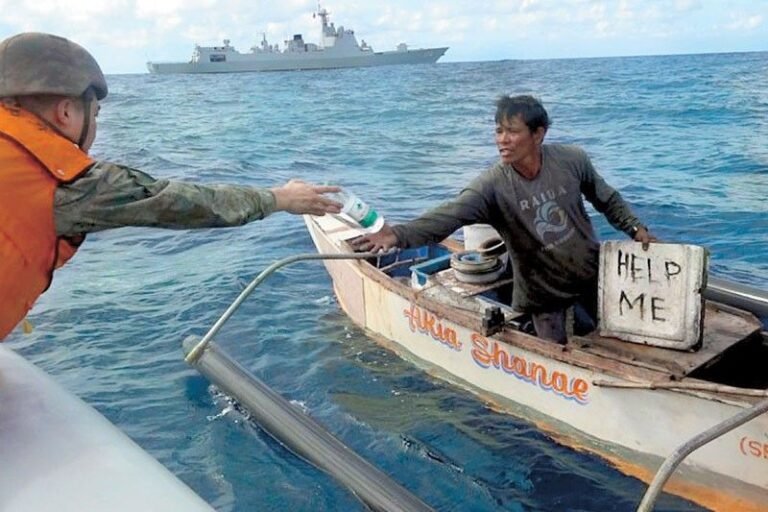
In a statement, the coalition took a swipe at what has been referred to as “another PR stunt showcasing Chinese soldiers coming to the aid of a stranded Filipino fisherman on Christmas Day.

The group, which has led several civilian missions to the West Philippine Sea, said it “strongly rejects China’s deceptive, self-serving and propaganda-driven public relations campaign following its so-called assistance to a distressed Filipino fisher on Christmas Day.”

“We recognize the universal duty to assist people in distress at sea. But what China did was not humanitarianism, it was image management. It is propaganda-driven assistance meant to distract us from years of harassment, violence and illegal incursions,” said Atin Ito co-convenor Rafaela David.

David, who is also the concurrent president of the Akbayan Party, decimated China’s |”act of kindness” that doesn’t align with established facts in their so-called humanitarian assistance incident.

Citing a previous clarification issued by the Philippine Coast Guard, the group slammed China for making it appear that the fisherman had been missing for three days.

The PCG earlier said that he (fisherman) had been safely anchored to a payao (fish aggregating device) for less than 24 hours, waiting for retrieval by his mother boat.

“This raises the most basic and unavoidable question. Why was China patrolling inside the Philippines’ exclusive economic zone in the first place? No act of assistance, however welcome, grants permission to trespass. No gesture of kindness erases repeated acts of harassment and violence in our waters.” 

Atin Ito warned against China’s attempt to allegedly sanitize its long record of abuse through a single, highly publicized incident.

“China should stop pretending that a bottle of water and a pack of snacks can wipe away years of harassment,” David said, recalling that days earlier, China Coast Guard vessels water-cannoned Filipino fishers in Escoda Shoal and carried out coercive maneuvers that damaged two fishing boats.

According to Jay Tarriela, in his capacity as PCG spokesperson on matters related to the West Philippine Sea, the fisherman, identified as Larry Tumalis, felt threatened by the approaching People’s Liberation Army (PLA) Navy ship, hence his placard saying “HELP ME.”

“When he saw the PLA Navy warship, he was afraid because he was alone, thinking he might be harassed since China launched (a rigid-hulled inflatable boat, or RHIB),” Tarriela said during a radio interview.

“I want to know from the Chinese Ambassador, are they now recognizing and respecting the rights of Filipino fishermen?” he quipped.

Lacson Upset Over Marcos’ Failure To Jail Crooks 

0

PROMISES DO MATTER, especially if it comes directly from the President, says Senator Panfilo Lacson.

Lacson, in his capacity as Senate President Pro Tempore and chairman of the Blue Ribbon Committee, didn’t mince words as he expressed his disappointment over the administration’s failure to fulfill its promise of catching the “big fish” in the flood control corruption scandal before Christmas day.

According to Senator Lacson, “who else will believe in the government if promises were not kept and fulfilled?”

“Some have been jailed, but not those our people want to see behind bars,” the senator pointed out during a radio interview. 

“I share the disappointment of the citizens about what’s happening,” he added while noting that the Senate Blue Ribbon committee probe he led had already uncovered damning evidence of corruption.

Lacson said that Christmas day went by with only flood control contractor Sarah Discaya behind bars over the alleged P96.5-million ‘ghost’ flood control project in Davao Occidental.

Sadly, no senator, congressman or Cabinet official have been put behind bars even as President Ferdinand Marcos Jr. stated that high-profile suspects perceived to be part of the flood control scandal would “not have a merry Christmas” as they would be jailed soon. 

Among the high profile personalities, only resigned Ako Bicol partylist representative Elizaldy ‘Zaldy’ Co has so far been charged before the Sandiganbayan, for which the Sandiganbayan ordered his arrest.

Interestingly, the government has yet to arrest Co who has been hiding  abroad.

Lacson lamented the slow pace of the investigation that culminated in the untimely passing of former Department of Public Works and Highways (DPWH) Undersecretary Catalina Cabral, who allegedly committed suicide over perceived pressure on her not to tell all.

Lacson disclosed Cabral and her lawyer have approached him to express willingness to testify before the Blue Ribbon committee probe, where he had wanted Cabral to speak about ‘allocables’ or budget ceilings set aside for lawmaker-proponents of flood control projects.

While she did not participate in the investigation, Cabral left Lacson with some of her files, such as a December 27, 2024 special allotment release order for P50 billion in unprogrammed funds, P30 billion of which went to mostly ghost flood control projects.

The Truth Behind EEI-Romualdez Buy-Out

0

IF ONE IS to believe the financial statement submitted by the EEI to the Securities and Exchange Commission (SEC), the corporation which was once regarded as one of the country’s most formidable has started to show indicators of an imminent “sign off.” 

EEi, a Yuchengco-controlled construction company, is on a skid — incurring losses and drowning in debt. It is for this very reason that EEI in mid-2023 sold 20 percent of their common shares amounting to P1.2 billion.

The buyer — RYM Business Management, a company owned and controlled by former House Speaker Martin Romualdez. Hence, the deal was signed.

For one, having Romualdez as a shareholder meant a lot for EEI and other struggling companies. Afterall, the power he wields could bring EEI back on track by securing chunky government contracts. 

But in early 2024, Romualdez suddenly had a “change of heart.” The former House Speaker told EEI that he wanted a “buy-out.” There’s nothing wrong with the buy-out though except for the ill motive.

But with a company that has yet to recover, there’s no way they could afford the amount Romualdez wanted — P3.75 billion for common shares he bought for P1.2 billion.

But for some reasons, EEI was able to pay the amount that the presidential cousin demanded. Oh yes, Romualdez got exactly what he wanted — P2.55 billion profit in just eight months. 

However, the supposed “buy-out,” which was done in a haste, raised the eyebrows of stock market analysts. According to seasoned PSE analysts, “buy-outs” were used to streamline control of a company that had too many stakeholders. 

It’s one potential financial solution to the “too many cooks in the kitchen” problem, and one that shareholders are probably fairly open to as it maintains the status quo. 

The overall issue is that EEI has been trash since the RYM stake sale was announced. Back then, the stock pumped 118% in just a few weeks on that news, but never really seemed to get any traction. 

Aside from a rally in early 2024, EEI’s market value has steadily dropped back down to the pre-RYM level. 

Given these premises, the Securities and Exchange Commission, the agency in charge with the registration and supervision of corporations and securities, as well as capital market institutions and participants, should seriously consider complying with its mandate.

Perhaps an honest-to-goodness investigation would be a good start. How would a company which has declared losses and billions of debt, manage to pay off Romualdez.

And to think they agreed to pay Romualdez P3.75 billion for something that they sold to him at P1.2 billion.

I smell something fishy, especially involving Romualdez.

Let Us Not Forget Our Heroes

0

f Allah finds any goodness in your hearts He will give you that which is better than what has been taken away from you. 

                               — Quran 8:70

YESTERDAY, DECEMBER 23, I will be on my 70th year of a fulfilled life graced by God in his kindness and unending blessings. 

To celebrate my birthday (yesterday) , I had my right forearm tattooed with the ‘Shahadah’ to profess my faith in the Almighty Father (Allah) who created the world and gave us life to live to the fullest. 

Thank you to all those who greeted me and may the blessings of our God be as plentiful as the sands on the beach and stars on the evening sky. 

Alhamdullilah! 

* * *

A week from today, we will commemorate the 129th death anniversary of our (so-called) national hero, Dr. Jose Patricio Mercado Rizal, or Pepe, who was executed by musketry on December 30, 1896 at Bagumbayan (now Rizal Park). 

But little do we know about others like Rizal who were also executed by musketry for upholding their love for patrimony and the desire for freedom and independence from the tyranny of Spain. 

Eleven days after Rizal was killed, thirteen ordinary Filipinos were likewise executed by the Guardia Civil also in Bagumbayan. But only a worn out marker at the place of their execution reminds us of their bravery and heroism. 

I passed by this lonely reminder, only to feel sadness at how our love of country has gone so low that our leaders now are now embroiled in scandals that benefit only themselves and satisfy their greed without thinking about the welfare of each Filipino. 

They say Filipinos are a race of warriors and heroes, but in the last century, we have become thieves and criminals who know nothing about dying for the Mother Land. 

The Thirteen Martyrs of Bagumbayan (in Spanish, Trece Mártires de Bagumbayan), were Filipino patriots who, like Rizal, were executed by musketry on January 11, 1897 They were killed on orders of the Spanish authorities for cooperating with the Katipunan during the Philippine Revolution against Spain.

And the martyrdom of our forgotten heroes do not end there. Before Rizal’s death, 13 earlier martyrs were executed by firing squad on September 12, 1896 in what is now the de facto capital of Cavite, Trece Martires, which has been named so to honor their ultimate sacrifice for freedom. 

In Bicol, 15 patriots were executed on January 4, 1897 and in Aklan, nineteen other martyrs sacrificed their lives in order to advance the cause of the Katipunan.

Remembering these our heroes, we are saddened because our current leaders in government have become thieves and criminals. 

* * *

FOR your comments or suggestions, complaints or requests, just send a message through my email at cipcab2006@yahoo.com or text me at cellphone numbers 09171656792 or 09171592256 during office hours from Monday to Friday. Thank you and mabuhay!

AKAP Funds Went To The Wrong People?

0

AN ASSISTANCE PROGRAM primarily designed to help the poor could have benefitted the wrong people, says the Commission on Audit (COA) in reference to the Ayuda Para sa Kapos Ang Kita Program (AKAP) covering election year 2024.

In its latest audit report, COA flagged “irregularities” in the distribution of some P926 million AKAP funds under the Department of Social Welfare and Development (DSWD).

The state auditor particularly cited an “abuse in the system” which effectively allowed inclusion of tens of thousands of unqualified recipients as beneficiaries. COA likewise spotted double payments.

COA specifically flagged a P108.34 million that went to “repeated or overlapping AKAP beneficiaries,” P48.74 million that was disbursed to ineligible recipients including high school and college students, and P768.73 million collected by persons with invalid IDs, defective or incomplete documentation, or dubious employment records.

WEAPONIZING AYUDA 

Speaker Martin Romualdez, AKAP Program targets below minimum wage earners and other near-poor Filipinos, or groups who are receiving assistance from the Pantawid Pamilyang Pilipino Program (4Ps), Assistance to Individuals in Crisis Situations (AICS), and Tulong Panghanapbuhay sa Ating Disadvantaged/Displaced Workers (TUPAD).

Payouts include rice assistance, medicine and laboratory cost assistance, and food assistance, which are given every three months. Eligible individuals may also avail funeral assistance, and hospital bills assistance, among others. 

COA recommended that the DSWD “create a centralized national beneficiary verification platform” that would include real-time syncing, flagging of suspect entries, enable real-time eligibility checks, among others, to “verify the payment status of a beneficiary before releasing assistance to prevent duplicate or erroneous disbursements.”

CROSS BENEFICIARIES

Despite provisions embarking on “strict guidelines” in the process of identifying beneficiaries, the program missed its target — the marginalized sector.

According to COA, there were AKAP recipients whose names were also included as “beneficiaries” in other government assistance programs, even as the state auditor claimed that the people who received AKAP funds were also getting payouts from other government assistance programs. 

“Audit of the disbursements of AKAP benefits revealed instances of beneficiaries receiving the same financial assistance within the day from different SDOs (special disbursing officers), due to simultaneous payouts and without the list of validated beneficiaries,” reads part of a Rappler report.

VOTE-RICH REGIONS

In the National Capital Region (NCR), auditors said over 19,501 persons received multiple assistance in three months, totalling over P69.44 million.

In Ilocos Region, auditors said 1,239 persons collected from both AKAP and AICS — an amount totaling over P4.56 million. Another 307 individuals received AKAP food assistance several times, amounting to P1.3 million.

Some 3,565 recipients in Cagayan Valley got cash from both AKAP and AICS, totaling P12.13 million. 

Under Central Visayas DSWD, multiple payouts reached over P12.57 million. 

In Calabarzon (Cavite, Laguna, Batangas, Rizal and Quezon) region, the amount spent for multiple payouts hit P3.95 million. 

COMPROMISED PROGRAM

All told, COA noted that P108.3 million in financial aid “was compromised due to various lapses including duplication of aid, erroneous disbursements, and misidentification of eligible beneficiaries.” 

Students — who are not supposed to be recipients of AKAP — were also able to receive payouts, state auditors found. 

“The assistance was granted directly to students instead of their parents or guardians, contrary to the program’s intent and guidelines.” 

“In cases where parents were identified as beneficiaries, there was no supporting documentation to establish that they were low-income earners or minimum wage workers,” COA noted.

FIRST-TIME VOTERS

In Cagayan Valley, over 10,439 senior high school and college students who have reached the voting age, were paid P32.52 million under AKAP — even if they were not supposed to be recipients.

In the province of Agusan del Sur in CARAGA, 2,559 college students got payouts totalling P7.68 million. 

In the Calabarzon region, students from different provinces collected P8.54 million in AKAP funds

SCREENING PROCESS

COA also flagged the DSWD’s shortcomings in screening procedures, leading to over 100,000 individuals getting cash under AKAP despite being unable to present valid IDs or reliable employment records.

“Based on the documented deficiencies, the AKAP financial assistance program by the DSWD exhibited significant lapses in eligibility assessment, documentation, and internal controls. 

Across various FOs (field offices), a total of P768,732,995.92 in assistance was disbursed despite issues such as incomplete and unverified supporting documents,” said COA.

The DSWD, through its Program Head for Operation of AKAP, vowed to improve their systems for verification, in coordination with agencies like the Bureau of Fisheries and Aquatic Resources, the Department of Agriculture, or with local transport organizations. 

AUDITORS FLAGGED 

In NCR, P245.35 million in cash was released to 81,858 recipients despite invalid IDs, mismatched employment records, undisclosed income and work details, unverified barangay list, and pre-filled up certifications.

Under the DSWD Central Office, P83.74 million in payouts were released to persons with “unverifiable certifications from unidentified federations” and whose declared occupations showed various inconsistencies.

DSWD Calabarzon released P25.32 million even if farmers or fisherfolk could not be found in local lists, or had discrepancies in their signature and listed addresses.

In DSWD Mimaropa, P25.5 million was released despite the same discrepancies in Region 4A.

In Zamboanga Peninsula, some P54.56 million for 18,186 recipients were released despite shortcomings in documentation. 

DSWD Western Visayas released P32.32 million to 6,409 beneficiaries again despite the lack of documentation.

Meralco Imposing Higher Charges Starting January

0

AS IF THE dilemmas aren’t enough, power consumers in Metro Manila and adjoining regions should brace for a tougher year ahead as the Energy Regulatory Commission(ERC) approved Meralco’s petition seeking the imposition of additional charges to bankroll its renewable energy initiatives.

According to ERC chairman and chief-executive-officer Atty. Francis Saturnino Juan, Meralco has been allowed to recover some P30.7 billion due to the termination of several power supply agreements while a P0.0371 per kilowatt-hour Green Energy Auction Allowance (GEA-All) will be added to the consumption billing statements beginning January.

Juan explained that “[they] are not just fixing the rate setting of power distribution utilities moving forward [but] are also fixing the ones in the past.”

‌“The reason why we have this process is in order to determine if they are charging the right amount back then so that we can arrange refunds later for consumers if needed,” he noted.

However, the timing of the recovery is still being discussed even as the ERC cited the need to include provisions to ensure that Meralco’s bid to recover “losses” will not impact so much the electricity consumers.

Still, it was clarified that the GEA-All will be tagged as a separate line item in consumer bills that are used to compensate the developers of renewable energy projects. It will be similar to the feed-in tariff allowance (FIT-All) which will be lowered to P0.2011 per kilowatt-hour beginning January from the current P0.2073.

Q3 GDP Growth Down to To 4% Amid Scandal 

0

WHILE EARLIER projections by private and government economists indicated very little impact on the country’s economic growth, actual third quarter gross domestic product (GDP) slumped to 4% because of wide-scale corruption in flood control that dampened government spending and household consumption.

According to ANZ Research economist Arindam Chakraborty, the figure represents the slowest growth seen in over four years or since the contraction of 3.8% from the pandemic during the first quarter of 2021.

The economist said in the think tank’s Asia Economic Outlook report government spending will likely remain slow until the first half of 2026 as governance issues linger, dragging economic growth below target until 2027.

“Public infrastructure spending is unlikely to rebound until governance issues are resolved, probably in the second half of 2026,” Business World quoted Chakraborty’s report for the first quarter of 2026.

He said that as of September, GDP growth averaged 5%, below the government’s 5.5-6.5% target.    

“The primary drag came from a contractionary fiscal stance arising from governance failures in public infrastructure projects,” Chakraborty said. 

AFFECTED BY SENTIMENTS

“This change in fiscal stance has not only disrupted capital formation but also weighed heavily on sentiment, with businesses reluctant to commit new funds and households deferring discretionary spending.”

Government spending fell for a third straight month in October to P430.6 billion, down 7.76 percent from the P466.8-billion expenditure recorded a year ago.

Household consumption also slowed down in the third quarter, growing by 4.1 percent from 5.3 percent in the previous quarter and 5.2 percent a year earlier, as the corruption scandal weighed on consumer sentiment.

ONLY BY 4.8% IN 2025

ANZ sees the Philippine economy expanding by 4.8 percent this year, before gradually picking up to 5 percent in 2026 and 5.6 percent in 2027.

If all three projections hold true, the Philippines will miss its growth targets until 2027 or for five years in a row.

The government targets 6-7 percent GDP growth from 2026 until 2028.

ENDING EASING CYCLE

Despite projections, ANZ expects the Bangko Sentral ng Pilipinas (BSP) to end its current easing cycle with one final 25-basis-point (bp) cut in the first quarter of next year.

“We maintain our forecast for one additional 25-bp cut in Q1 2026, as economic momentum is expected to remain weak at least until the second half of next year,” Mr. Chakraborty said.

The Monetary Board capped off the year with a fifth straight 25-bp reduction at its December policy meeting, bringing the benchmark interest rate to an over three-year low of 4.5 percent. It has so far lowered key borrowing costs by a cumulative 200 bps since August 2024.

BSP Governor Eli Remolona Jr. earlier said that they could deliver another 25-bp cut next year that would likely end the current easing cycle, depending on economic data.

The Monetary Board will hold its first meeting of 2026 in February.

PESO REMAINS SLUGGISH

Chakraborty said the increased remittance inflows amid the holidays failed to significantly prop up the peso, noting that the local unit may face more pressures as the remittance season nears its end.

The peso recently hit a fresh low of P59.22 against the greenback on December 9, surpassing the previous record of P59.17 recorded on November 12.

The ANZ economist added that they expect the peso to further weaken to the P60-a-dollar level by end-March next year amid persisting domestic pressures.

“We expect the currency to depreciate to 60 against the USD (US dollar) by the end of Q1 2026 before staging a gradual recovery through the remainder of the year,” he said. “Prolonged economic weakness and a deeper-than-expected BSP rate-cut cycle represent key downside risks to Philippine peso’s trajectory,” the report added.

Skills Over Titles: Competence Wins

0

HAVE YOU EVER met someone with a fancy title, a string of letters after their name, or a corner office so big it could host a small concert… only to realize they can’t actually get anything done? 

The Back Story 

Money can buy the look of status, but it can’t buy the skill, guts, or brainpower to actually lead.

  • Titles are easy. 
  • Competence? That’s earned.

When Titles Lie

Situation: Your company hires a “Director of Innovation” because they’ve got connections, a fat salary, and a sparkling résumé. Everyone nods like they’re brilliant.

  • But as projects roll out… yikes! They don’t understand the process, ignore the team, and their decisions… questionable. 

The title screams “Director,” but results whisper “rookie.” Teams sigh. Progress stalls.

TIP: Watch what people do, not what’s printed on their business card. Titles wow at first glance. Actions? That’s the truth.

All Flash, No Substance

We all know someone who flaunts wealth, fancy gadgets, or big-name friends. Looks successful, right?

  • But when you actually need advice, guidance, or practical help… zero. 
  • Money bought attention, not wisdom or reliability.

TIP: Judge by ability to deliver, not shiny appearances. Competence builds trust. Titles alone? Nope.

Talkers vs Doers: Who Wins?

Local leaders or influencers with awards and public praise might look impressive. But when it’s time to organize events, help people, or make a real difference… uh-oh.

  • Money can buy influence, but not real capability or respect earned from actually doing.

TIP: Pay attention to who actually makes things happen. Results never lie.

Skills Over Status: The Real Power

Money can hand someone a title, but it can’t buy curiosity, persistence, or actual skills.

Competence comes from experience, effort, and showing up. 

  • Training helps, yes, but only if the person actually applies it.

Tips And Techniques 

  1. Look past the title: Observe behaviors, not business cards.
  2. Value competence over credentials:Skills, not letters after a name. Always.
  3. Learn from doers, not show-offs: People who deliver teach more than people who just talk about delivering.

Next time you see a shiny title or fancy accolade, ask yourself: 

  • Do they actually deliver? 

If not… smile, nod, and move along. Titles fade. Competence lasts.

Remember:  Choose substance over sparkle.

Bid To Bail Out Contraband Foiled

0

IN WHAT LOOKS more like an effort to quell a bad reputation embarking on a culture of corruption, the Philippine National Police (PNP) pulled off a surprise operation that saw lawmen turn down what could have filled their Noche Buena table sumptuous food that only the rich and famous can afford.

On December 17, operatives from the Highway Patrol Group (HPG) Special Division with other units of the Philippine National Police (PNP) intercepted two trailer trucks along Araneta Avenue in Quezon City.

What was supposed to be a ramdom check on the vehicles’ registration, yielded P143-million worth of smuggled cigarettes.

COORDINATION IS KEY

According to HPG director Brigadier General Hansel Marantan, the operation that led to the confiscation of the smuggled cigarettes was done in close coordination with the Bureau of Customs (BoC) headed by Brig. Gen. Nolasco Bathan.

In a statement, Bathan attributed the successful bid to thwart the illicit trade to acting PNP chief Lieutenant Gen. Jose Melencio Nartatez Jr.’ strict implementation of a policy warranting operational coordination.

Inspection on the trailer trucks revealed that the vehicles were unregistered and carrying an estimated 2,000 boxes of undocumented cigarettes believed to be illegally imported without paying the required tariff.

CONTRABAND TRAIL

Initial reports disclosed that the smuggled shipment was allegedly picked up from Bauan, Batangas and was bound for Valenzuela City for which the HPG units immediately coordinated with the BoC and other partner agencies to secure the cargo, preserve evidence and trace the network behind the shipment.

Authorities underscored that the prompt coordination ensured that the case was handled deliberately and in accordance with established legal procedures.

On the same day that the trucks were flagged, authorities received verified information regarding attempts to bribe in exchange for the release of the smuggled cigarettes.

P5M BRIBE ATTEMPT

At around 3:35 p.m., personnel of the Regional Highway Patrol Unit 3 conducted an entrapment operation at Camp Olivas in San Fernando, Pampanga.

During the second operation, suspects allegedly offered ₱5 million for the in exchange for the release of the impounded trucks.

Three individuals were arrested and the marked money was recovered. Those arrested were identified as Gener Manzanero Gonzales, 58, Rogie Aycardo Rueda, 40, and Loreto Andal Gertes Jr., 48.

NO WAY TO BEND LAW

In a statement following the seizure of the contraband cigarettes, interior and local government Secretary Jonvic Remulla reiterated that the government will never allow public roads to be used for illegal trade nor tolerate bribery or attempts to undermine law enforcement.

For his part, Gen. Nartatez vowed to continue to reinforce its institutional line through the enforcement of decisions governed by law and not influence and attempts to corrupt police officers.

The Tribute Hotel QC: Where Tomas Morato Gets A Little More Fabulous

0

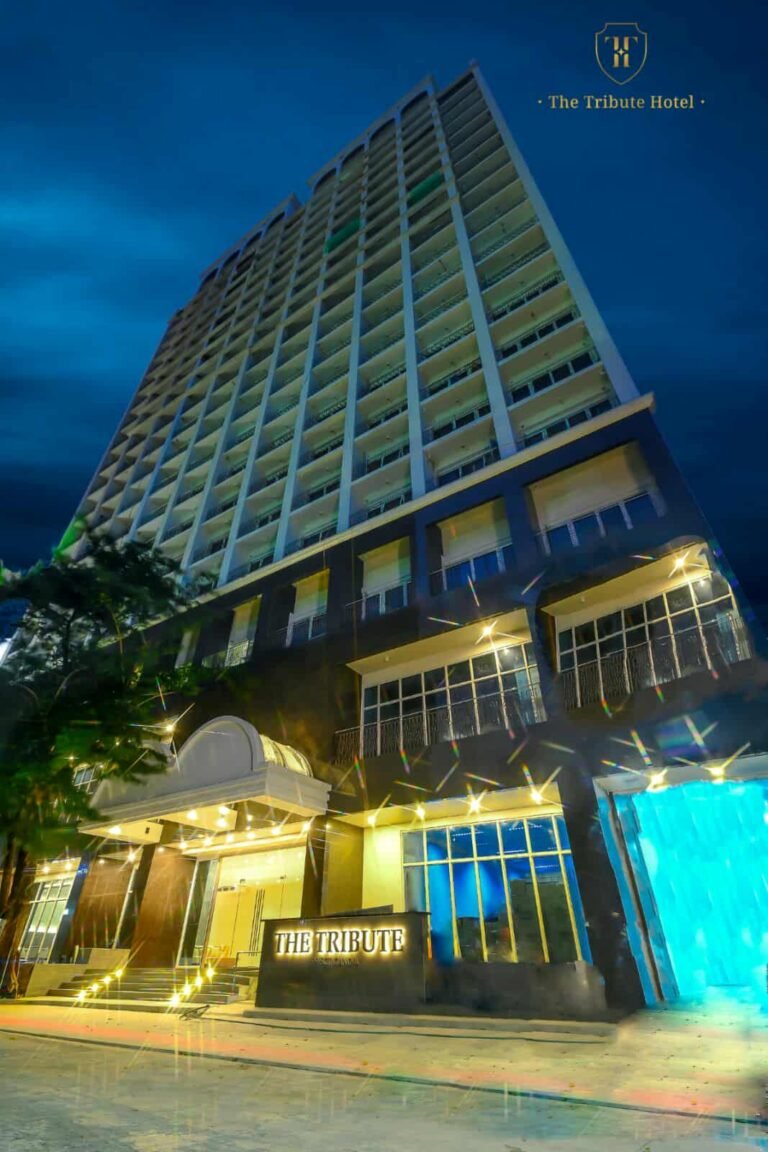
IF TOMAS MORATO had a new calling card, it would look a lot like The Tribute Hotel Quezon City—stylish without trying too hard, cozy without feeling basic, and perfectly placed in what many still proudly call the Entertainment Capital of the Philippines.

Tucked along Scout Gandia, The Tribute Hotel quietly opened its doors in November 2024, and since then, it has been building buzz as Quezon City’s newest go-to for staycations, celebrations, and those “we deserve a nice place” moments. It’s the kind of hotel that doesn’t shout for attention—but once you step inside, you get why people are talking.

Comfort, But Make It Chic

The Tribute Hotel hits that sweet spot between modern design and everyday comfort. It caters equally well to business travelers who need functionality and leisure guests who want to unwind in style. Currently, guests can choose between Deluxe Rooms and Superior Twin Rooms, both thoughtfully equipped with the essentials: flat-screen TVs, unlimited Wi-Fi, safety deposit boxes, mini refrigerators, kettles, and complete bathroom amenities.

Deluxe Rooms raise the bar with a bathtub and flexible bed options—twin or queen at the same rate—while Superior Twin Rooms keep things sleek with a modern shower setup. Add access to the pool and gym, plus breakfast for two already included, and you’ve got a stay that feels sulit in the best way. A Junior Suite, set to open next year, promises even more room to stretch out and settle in.

More Than a Stay—It’s a Celebration Space

What truly sets The Tribute Hotel apart is its versatility. This isn’t just a place to sleep; it’s a place to gather. With three function rooms—Ibiza, Valencia, and Mallorca—the hotel is ready to host everything from boardroom meetings to birthdays, anniversaries, and life’s big milestones.

Ibiza, the largest at 165 square meters, can welcome up to 120 guests, while Valencia and Mallorca are perfect for more intimate affairs. Banquet menus come from the hotel’s in-house kitchen and can be tailored to fit different tastes, themes, and budgets—proof that celebrations here don’t need to feel cookie-cutter.

A Taste of Spain, Tomas Morato Style

Adding flavor to the experience is Don Tomas, the hotel’s signature restaurant. Serving Spanish fusion cuisine, it reimagines classic flavors with a modern twist in a space that feels stylish yet comfortably familiar. It’s the kind of restaurant that works whether you’re dressed up for dinner or just dropping by after work.

Just in time for the holidays, The Tribute Hotel is hosting Christmas buffet dinners on December 24 and 31, from 6:00 p.m. to 10:00 p.m., priced at Php 2,000 nett per person—a festive option for families, friends, or anyone who wants to toast the season without the stress of hosting.

A Glimpse of Its Future as a Social Hub

The hotel recently gave a preview of its potential as a social hotspot when it hosted the annual Christmas gathering of the Filipino Bloggers Network (FBN)—a respected community of some of the country’s most influential bloggers.

The evening felt less like a formal event and more like a warm reunion—filled with shared stories, good food, and easy laughter. It was exactly the kind of atmosphere The Tribute Hotel seems to be built for: relaxed, welcoming, and community-driven. Thoughtful service and inviting spaces turned a simple gathering into a genuinely memorable night.

The FBN also expressed its heartfelt gratitude to all the generous sponsors whose support helped make the celebration a success. Their collaboration and trust brought the event to life and set the tone for more meaningful partnerships in the future.

The Verdict

The Tribute Hotel Quezon City is carving out its own space in the local hospitality scene—not by being loud, but by being thoughtful. With its central location, comfortable rooms, flexible event spaces, and growing dining experiences, it offers more than just accommodations. It offers a place where stays feel intentional, celebrations feel personal, and everyday moments feel just a little more special.

The Tribute Hotel Quezon City is located at 99 Scout Gandia, Brgy. Sacred Heart, Tomas Morato, Quezon City.
For bookings and reservations, visit their Facebook and Instagram pages, email reservations@thetributehotel.ph, or call 0977 203 3805.

In a city that never runs out of places to go, The Tribute Hotel proves that sometimes, the best destination is the one that simply feels right.

Human Rights Violations In PH

0

THE UNIVERSAL DECLARATION of Human Rights states that: Art.3 Everyone has the right to life, liberty and security of person; Art. 5 No one shall be subjected to torture or to cruel, inhuman or degrading treatment or punishment; Art. 9 No one shall be subjected to arbitrary arrest, detention or exile.

The current regime of the tandem of Pres. Bongbong Marcos, Jr – VP Sara Duterte downplays the significance of a December 10 International Human Rights Day. There was no mention even by the mainstream media of a government official recognizing the importance of reminding the people about their Human Rights. 

Only the usual Human Rights defenders among the perennial street parliamentarians have reminded government officials to carry out their mandate of seriously implementing the Constitution’s special focus on Human Rights, and relatedly more broadly, Social Justice.

“At least 571 civilians presented as armed rebels have also been forced to join fake surrender ceremonies, just so the Marcos Jr. regime could claim ‘accomplishments’ in its counterinsurgency war without touching on the deep-seated political and economic roots of the armed conflict.” 

INTENSIFIED TERRORISM

Mainstream media failed or neglected to mention that December 10 is recognized as “International Human Rights Day.”

This administration’s non-recognition of this important day of giving special focus on Human Rights reflects its clear stand of downplaying, if not a deliberate negligence of, carrying out a program to protect the human rights of Filipinos. 

To confirm this government’s program of deliberate violation of human rights of Filipinos, there has been “Intensified State Terrorism against the Filipino people under Marcos Jr.” This is according to the human rights watchdog, Karapatan Alliance Philippines.

RED TAGGING

In its official publication of April-June 2025, Karapatan Monitor, it claims that “Militarization reared its ugly head in rural areas, engendering numerous violations of human rights and international humanitarian law (IHL).” These illegal acts were in accordance with Marcos Jr. blueprint, dubbed “National Action Plan for Unity, Peace and Development (NAP-UPD) 2025-2028,” practically strengthening “the notorious National Task Force to End Local Communist Armed Conflict (NTF-ELCAC)” to press onward its red/terrorist-tagging operations. 

Documented incidents of human rights violations as of June 2025 under this blueprint, NAP-UPD 2025-2028 include, “1,206 victims of bombing; 67,204 victims of indiscriminate firing; and 45,097 victims of forced evacuation.” 

Karapatan also reported that “At least 571 civilians presented as armed rebels have also been forced to join fake surrender ceremonies, just so the Marcos Jr. regime could claim ‘accomplishments’ in its counterinsurgency war without touching on the deep-seated political and economic roots of the armed conflict.”

HOPELESS WISH

Some facts of human rights violations: three environmental activists — Elgine Mungcal, Norman Ortiz, and Lee Sudario have forcibly disappeared, that is after having been arbitrarily designated as “terrorists,” under the Anti-Terrorism Act (ATA); trumped-up cases, by the NTF-ELCAC, of financing terrorism have been filed against six Cagayan Valley activists: Jackie Valencia, Isabelo Adviento, Cita Managuelod, Agnes Mesina, Walter Villegas, and Deo Montesclaros; 

In Masbate, elements of the 2nd Infantry Battalion of the PA, the CIDG, Regional Intelligence Unit, Military Intelligence and Civil Operations and the PNP-Palanasshot and killed Joey Saludaga Oas, falsely claiming that Oas fired back as they were about to serve him a warrant; in Eastern Samar, elements of the 63rd IBPA killed 16-year old Jayson Grafil Padullo in an indiscriminate shooting incident in Sitio Bagong Barrio. There are many other HR violations by the AFP. 

President Bongbong and VP Sara should stop the human rights violations of the AFP – a hopeless wish?