Friday, March 27, 2026
Home Blog Page 23

When the Rain Comes, Let It Find Us Ready

2

TYPHOON TINO DID not knock.
No polite warning, no gentle drizzle.
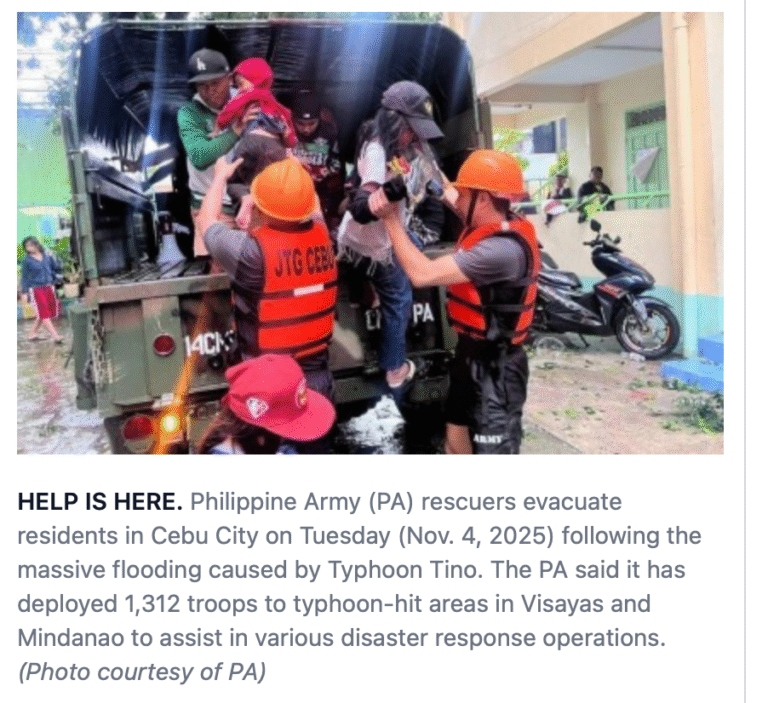
November 2, 2025, it entered our waters — and by the dark hours of November 4, it slammed into Southern Leyte, then tore through Cebu, Negros, Dinagat, and the rest of the Visayas.
Homes disappeared. Roads became rivers.
Thousands displaced. Many never came home.

And yet, here is the wound we keep reopening:

We are a nation that can afford a concert.

We know how to rent LED walls the size of buildings, fly in performers, blast fireworks that could light whole sitios for a week.
We pour millions into festivals — Sinulog, Dinagyang, barrio fiesta kahit saan — and we clap proudly as confetti rains and the mayor smiles for the drone shot.

But when Tino came, how many towns had a single working rescue boat?
How many barangays had first aid kits that weren’t expired?
How many families had to rely on a neighbor’s banca because the LGU could not provide one?

And then we hear it — like salt on open wounds —
that billions were poured into flood control projects in Cebu alone.
Some of them, we are told, were ghost projects.
Imaginary.
Paper bridges over real drowning.

Tell me — how do you comfort a mother whose child was taken by the current when the funds meant to protect that river were stolen into wallpaper contracts and cement that washes away in the first hard rain?

This is not an attack on culture.
Art matters. Festivals matter. Joy matters.
But preparedness matters more.
And the truth is: we can afford both — if no one is stealing.

So to every official, organizer, sponsor — and yes, to every voter who cheers from the stands:

Accountability is not drama.
It is duty.

The mayor who buys pump boats and trains rescue teams
should be applauded louder
than the mayor who hires a celebrity singer for the grand finale.

And to us — the people who clap, vote, and move on —
we are not just victims of the flood;
we are victims of the priorities we tolerate.

Tino will fade from the news.
But the grief it left will not.

So when the next storm forms — and it will —
let it find us not just praying,
but prepared.

Not just loud in celebration,
but loud in demanding answers.

When the rain comes next time —
let it find us ready.
Not waiting for rescue that will never arrive,
but living in a country that decided
its people are worth saving.

Caraga Is At The Mercy Of Nickel Miners

0

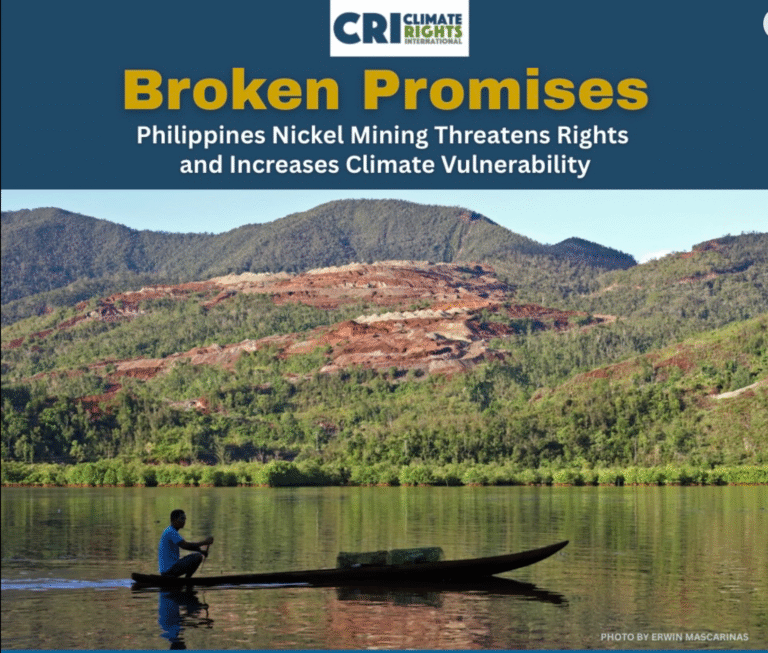
TO SATISFY THE global need for alternative energy supply through nickel, the Caraga region with all its 23 operating nickel mines, is at greater risk of climate crisis, environmental degradation, human rights abuses and destruction of its fishing and farming livelihoods.

According to global organization Climate Rights International’s November 3 report, the Philippines is the top exporter of raw nickel ore and the world’s second largest producer of nickel, a mineral used in batteries for electric vehicles and energy storage.

CRI asked the government, nickel mining companies and downstream users of nickel, including EV and battery companies, to take immediate steps to prevent and remedy environmental degradation and human rights abuses resulting from nickel mining. 

Its 125-page report entitled “Broken Promises: Philippines Nickel Mining Causes Rights Abuses and Increases Climate Vulnerability” interviewed 57 residents and workers who live near nickel mines in Dinagata Island and Surigao del Sur with respondents claiming destruction of their fishing and farming livelihoods, severe environmental pollution that threatens drinking water and health, increased rates of food insecurity, new difficulties accessing education, lack of accountability for harms, and attacks, killings, criminalization and intimidation of those who speak out, including environmental and human rights defenders.

‘Nickel mining operations drive deforestation and the loss of species that provide climate resilience, such as terrestrial and mangrove forests. When deforestation occurs, carbon stored in both plant matter and soil may be released into the atmosphere, turning a carbon sink into a source of emissions.’

HUMAN RIGHTS ABUSES

CRI previously reported similar abuses on humans, the environment and climate harms linked to nickel mining and processing in Indonesia where multinational companies benefited from the nickel supply chain but did not bother to address documented harms and abuses in Indonesia.

In the Philippines nickel mining is destroying fishing and farming livelihoods, creating food insecurity, and causing noxious pollution of drinking water,” said CRI researcher Krista Shennum.

“Environmental and human rights defenders face attacks, criminalization, and even death for speaking out. The government must prioritize the rights and well-being of frontline mining communities—who bear no responsibility for the climate crisis—by holding companies accountable for abuses and environmental harms.”

ENVIRONMENTAL DESTRUCTION

Nickel mining operations drive deforestation and the loss of species that provide climate resilience, such as terrestrial and mangrove forests. When deforestation occurs, carbon stored in both plant matter and soil may be released into the atmosphere, turning a carbon sink into a source of emissions.

Residents in Tubajon, Diinagat Island described how forest and mangrove losses drove their communities more exposed to storm surges, high winds, and flooding during extreme weather events like the devastating Super Typhoon Odette in 2021. 

Pollution from nickel mining posed existential threat to the fishermen’s way of life. In Dinagat Island and Surigao del Sur, fisherfolk told CRI how water pollution from mining areas has harmed fisheries and made it impossible for people to continue fishing.

Farming became more difficult, even impossible, because of loss of farmland, frequent flooding of fields from mining- choked rivers, and dust and water pollution from nearby mining activities. The lowland crop, rice, is particularly affected by flooding and siltation. Poor mining practices threaten the fundamental right to food.

Pollution from nickel mining and its resultant negative impact on livelihoods make it tougher for families to feed themselves, said 46-year old mother, Analiza, of Tubajon, Dinagat Island. “It is now hard to feed my family. We are hungry most of the time,” lamented the mother of four.

Siltation and runoff from mining operations have polluted their drinking water. The residents of Dinagat and Surigao told CRI they have developed health problems, including respiratory and skin ailments because of pollution from nearby mines.

MOST DANGEROUS COUNTRY

The Philippines is Asia’s most dangerous country for land and environmental defenders.

The respondents told CRI of knowing individuals whose killings they believe were linked to their anti-mining activities or who had experienced attacks, harassment, or intimidation themselves. 

Some individuals in the Caraga Region and across the Philippines who have challenged mining companies have faced Strategic Lawsuits Against Public Participation (SLAPPs) that they believe are intended to silence their activism. 

Despite the lucrative mining operations, companies have not been giving just compensation to residents of Dinagat Island for the use of their land, destruction of their crops, or use of their homes and other structures. 

Shennum said people living in mining communities face harms from powerful companies who act with almost total impunity. “As one of the countries most impacted by the climate crisis, the government should hold companies accountable and ensure that the nickel industry isn’t exacerbating the impacts of climate change on local communities. 

A general lack of transparency by many mining companies impacts the ability of local governments and communities to actively participate in approving mining projects or monitoring mining impacts. Despite ongoing complaints from local communities, those directly impacted face a lack of accountability and remedies for the harm they have suffered.

STOP ISSUING NEW PERMITS

CRI asked the government, particularly the Department of Environment and Natural Resources and the Mines and Geosciences Bureau, to fully enforce and strengthen laws and regulations to minimize the impacts of nickel mining on communities, by stopping new mining permits until the industry meets domestic and international environmental standards, including management of mining waste. 

CRI said many nickel mining companies in the Caraga Region are linked to active and former politicians, politically- connected families, and wealthy businessmen. Nickel companies should take immediate steps to remedy water and air pollution caused by their operations and properly dispose of mine waste to minimize environmental pollution.

Companies producing EV cars and batteries must use their leverage to ensure suppliers’ end and remedy rights abuses, clean up water and air pollution, and protect the rights of environmental and human rights defenders. EV companies must improve transparency by providing public information about all companies in their transition mineral supply chains.

Shennum suggested that EV vehicle and battery companies must demand that the mining industry cleans up its act. “Their customers are environmentally- conscious and will decide to buy from companies with the cleanest record. If EV companies want to position themselves as global leaders in the fight against climate change, they must demand that mining companies in their supply chains respect the rights of communities and end environmentally destructive practices.”

Typhoon Tino Exposes Greed, Negligence

0

GREED AND NEGLIGENCE, not nature alone, killed the victims of Typhoon Tino, especially in Cebu.

While Typhoon Tino is a natural disaster, many netizens online argue that a political disaster is the real cause of the devastation.

FLOOD CONTROL

With all the talk about ghost and substandard flood control projects, many wonder if the tragedy could have been avoided had those projects been done properly.

According to data from the Department of Public Works and Highways (DPWH), Cebu had 343 flood control projects built from 2016 to 2022, and 168 more from 2023 to 2025.

QM Builders, one of the top 15 contractors for flood control projects named by President Ferdinand Marcos Jr., is based in Cebu.

NOTORIOUS CONTRACTORS

The company bagged some of the biggest projects in the province, including 13 worth ₱1.54 billion along the Mananga River in Talisay City.

A.S.T. Builders and Quirante Construction Corporation (formerly Quirante Construction) also secured projects along the same river worth ₱173 million and ₱377 million, respectively.

QM Builders and Quirante Construction are separate entities but related—QM owner Allan Quirante is the uncle of Quirante Construction CEO Jonathan Quirante.

Cebu Governor Pam Baricuatro also took to social media, posting: “₱26 billion of flood control funds for Cebu, yet we are flooded to the max.”

According to her, all flood control projects in Cebu since 2019 are either ghost or substandard.

‘According to the OCD, at least 91 people have died, 10 were injured, and 75 remain missing as of their latest report on November 5. Authorities fear the numbers will continue to rise in the coming days… The entire province of Cebu, comprising 53 cities and municipalities, has been placed under a state of calamity due to the extent of the damage.’

LATE INVESTIGATION

Following the deep and raging floodwaters in Cebu, President Marcos Jr. ordered an investigation into the effectiveness of the province’s flood control projects.

“Iyan po ang dahilan kung bakit po nagpapaimbestiga ang Pangulong Marcos Jr. dahil nakita niya po iyong epekto—may mga budget na inilaan para dito pero parang hindi gumagana,” said Palace Press Officer Undersecretary Atty. Claire Castro.

As of writing, 48 people have been reported dead and 119,000 displaced in what has been described as one of the worst floods in Cebu’s history.

Interestingly, today also marks 100 days since the flood control scandal was exposed, yet no major players or “congtractors” have been put behind bars.

For the 48 people who lost their lives, and the irreplaceable damage caused, there remains little promise of justice.

CONFLICT OF INTEREST

The investigation faces a potential conflict of interest.

According to the Philippine Center for Investigative Journalism (PCIJ), Jonathan Quirante donated ₱1 million to Marcos’ presidential campaign.

While that was the only documented donation from Quirante, there are reasons to believe he may have contributed more, given the government benefits his firms received afterward.

PCIJ found that contractors who donated to Marcos saw a steep increase in government contracts.

“The most dramatic example is that of Quirante Construction, whose total solo and joint contracts leaped to ₱3 billion in 2023—a billion-peso increase in just one year after the election,” PCIJ reported.

LEADERS MISSING

In Cebu’s Fifth District, flooding wasn’t the only issue. Reports say Representative Duke Frasco and several mayors from the district were all abroad during the disaster.

The Office of the Governor confirmed that several mayors from the Fifth District had filed for Foreign Travel Authority from November 1 to 7, just a week or two before the typhoon.

CAMPAIGN TIME?

Netizens also took notice of Frasco’s absence. His office has been distributing relief goods branded as “Frasco Boxes” due to the large “FRASCO” text printed on them.

“Allegedly nasa Europe si Congressman Duke Frasco habangnilulunod ng super typhoon ang Cebu pero wow, may pa-ayudapa ring kahon na punong-puno ng “FRASCO,” parang brand ng tubig, hindi ng tulong. Galing ah, pati tinta ng apelyido, taxpayers ang bayad — magkano kaya kada print nun? (Allegedly, Congressman Duke Frasco was in Europe while Cebu was drowning, yet his office managed to distribute boxes filled with the name “FRASCO’—like a water brand, not a relief pack. Amazing. Even the ink for his surname was paid for by taxpayers—how much per print, I wonder?)” wrote blogger Nutribun Republic on Facebook.

DEVASTATING AFTERMATH

According to the Office of Civil Defense (OCD), at least 91 people have died, 10 were injured, and 75 remain missing as of their latest report on November 5.

Authorities fear the numbers will continue to rise in the coming days.

The disaster has affected 706,549 individuals, or 203,595 families, across seven regions.

Of these, 348,554 individuals are staying in 3,894 evacuation centers; 88,357 are sheltering with relatives or friends; and 215,190 residents were preemptively evacuated before the typhoon made landfall.

The entire province of Cebu, comprising 53 cities and municipalities, has been placed under a state of calamity due to the extent of the damage.

HELICOPTER CRASH

Meanwhile, a Philippine Air Force helicopter crashed in Agusan del Sur while transporting humanitarian aid to provinces affected by the typhoon, killing six people.

The aircraft, a refurbished unit acquired from the United States in 2011, had been reconfigured to meet operational and airworthiness standards, according to the Air Force.

Investigations are ongoing.

PSE Worse Ever Under Marcos Crony?

0

THERE IS NO way for foreign investors to gamble in a place hosting the world’s worst stock exchange, according to an infrastructure mogul.

In a report which first came out in Bloomberg, billionaire Sid Consunji particularly hinted at the lackluster performance of the Philippine Stock Exchange (PSE) since a Marcos crony took its helm.

According to Consunji, foreign investors have already been ignoring the PSE under Ramon Monzon. Monzon is the PSE’s President and Chief Executive Office (CEO) in the last eight years.

“Foreign investors have largely stopped paying attention to the PSE, which has become one of the world’s worst-performing stock markets after eight years of Monzon. Foreign investors don’t pay attention to the Philippine stock market. The Philippine economy is weak; we can’t do anything about it,” Consunji was quoted as saying.

DIVERTING THE BLAME

Bloomberg reported that the Philippines PSE Index dropped about 17% over the last decade while many Asia-Pacific peers climbed roughly 70% owing to structural problems—limited market diversity, sluggish turnover, and a dearth of new listings, in addition to the flood-control corruption scandal that has further eroded investor confidence.”

Instead of finding ways to reverse the tide, Monzon went on to blame the market’s stagnation on sentiment, “as if the troubles began only with last June’s flood-control scandal,” Consunji noted.

At one point, Monzon – PSE president and Miss Earth Philippines organizer – pointed his fingers at the judiciary’s corruption, which enabled corruption to thrive “with impunity because there is no fear of retribution or punishment.”

“I think blame has always been put on the executive, on the legislative. But somebody’s got to look at the judiciary. You have people that have been charged with very clear evidence of, let’s say, plunder, and they get off,” 73-year old Monzon told ANC in a recent interview.

“We had the PDAF (Priority Development Assistance Fund) scam in 2014 or something. Why has it recurred, at a bigger scale, because nobody got punished for that. Only the principal perpetrator on the private side is in jail (but was recently acquitted).” 

During the Trillion Peso March against corruption, Monzon led a PSE delegation at the People Power Monument.

He said he would only be satisfied if the probes (flood control scandal) lead to jail time. ”It’s the only way to prove that you’re really sincere in implementing the necessary reforms. Otherwise this scandal or this issue is going to recur. You’ve got to put the fear of God in all these grafters and punditers,” said Monzon.

MONZON’S BAGGAGE

Monzon was once in the middle of the biggest corruption cases of the Marcos years. He admitted to being a “dummy” of Imee Marcos in state-run networks RPN, IBC, and BBC during Marcos Sr.’s regime — a central allegation in the ₱102-billion forfeiture case against the Marcos family and their cronies.

Monzon cooperated with the government in the ill-gotten wealth probe and executed a 1987 affidavit admitting he fronted for Imee. However, prosecutors failed to present the original document, and Monzon did not authenticate the photocopy — rendering his testimony of little value in court.

The Sandiganbayan dismissed the forfeiture case in August 2019 for lack of evidence, including the failure to present Monzon’s original affidavit. The court said the document was “hearsay” and “cannot be accorded probative weight and value.”

With Marcos’ exile, Monzon was among those charged by the Presidential Commission on Good Government when in 1992, he struck a deal with then-PCGG chief David Castro, agreeing to cooperate with investigators to surrender ₱151 million in assets and deposits at Traders Royal Bank.

In his court testimony, Monzon said he was recruited in 1984 by Imee’s ex- husband, Tommy Manotoc, to run RPN-9, IBC-13, and BBC-2, which he initially believed belonged to crony Roberto Benedicto, until Imee began issuing orders — including directing that company funds be used for her personal expenses.

“Ramon revealed that Imee also ordered some of the networks’ funds to finance her personal expenditures, to which they willingly obliged since it was an order from the owner of the corporations and the funds were private funds of the networks,” the Sandiganbayan ruling said.

Despite his testimony, the court found the prosecution failed to prove how Monzon and other defendants ( Rafael Sison, Placido Mapa, Jr., Don M. Ferry, Jose Tengco, Jr., Generosa Olazo, Cynthia Cheong, Ma. Luisa Nograles, Leopoldo Vergara, Jose Africa and Rodolfo Arambulo) acted as Marcos dummies or benefited from behest loans allegedly ordered by the late dictator. The decision, penned by Associate Justice Lorifel Pahimna, also found no evidence linking the group to the establishment of California Overseas Bank, which was supposedly used to funnel dollars abroad.

Given all his baggage, Monzon’s jab at the courts lands with heavy irony. The man whose unauthenticated affidavit helped a major Marcos case fall apart is now blaming judges for letting corruption slide, Bilyonaryo reported.

CONFIDENCE VANISHED

Consunji says foreigners have tuned out of PSE because of “confidence deficit” resulting from Monzon’s appointment in 2017, “as investors railed against the lack of accountability in scandals such as the R&L Investments stock fraud and the Abra Mining share scam, and the PSE’s opacity in running its own affairs—including IPO pricing that tends to favor underwriters. He has done little to inspire investors to put money back into the market.”

Newly appointed Securities and Exchange Commission chair Francis Lim has likewise pointed to structural and integrity issues as central to the market’s malaise.

Nine months ago, the Bilyonaryo news channel said PSE was facing growing scrutiny and concern with its performance and leadership, that led to its consistent decline in average daily turnover, dropping from P9 billion to just P6.1 billion in 2024, while foreign transactions have increased, but foreign investors continued to offload more stocks than they have purchased.

This trend, coupled with waning local investor confidence, has led to a stagnant market, with the number of local stock accounts showing little growth. Engaging retail investors remains a challenge for the PSE, which is crucial for stimulating market activity.

HIGH-PROFILE MISCUES

Columnist Den Somera pointed to Monzon as the focal point of criticism, with many blaming his inability to drive market growth and ensure effective regulation.

Somera believes the tipping point came with a series of high-profile missteps, including the controversy surrounding Abra Mining’s unregistered share sale, which has sparked widespread dissatisfaction and further damaged the PSE’s credibility.

In his column for Rappler, Somera highlighted the Abra Mining scandal as one of the most glaring issues to have plagued the PSE in recent years. Between 2015 and 2019, the company, led by president James Beloy, issued 169.05 billion shares— far exceeding its authorized capital. These unregistered shares were sold to the public, in direct violation of PSE rules.

Although the PSE launched an investigation, it has yet to provide clear answers, leaving investors frustrated. This mishandling of a major regulatory issue only deepened concerns about the PSE’s ability to effectively oversee the market.

Somera also points to PSE’s neglect of small-cap companies. The “small board” remains underdeveloped, and family-owned businesses—often viewed as key IPO candidates—continue to avoid the exchange.

There’s also the issue of IPO pricing, which many believe has been skewed in favor of underwriters and issuers, often leaving investors with losses when stocks trade below their offering prices.

FOCUS ON SMALL CAPS

Somera said the PSE needs to focus on attracting more small-cap companies and offering a wider variety of investment opportunities. Encouraging family-owned businesses to list could be a game-changer, as these companies often bring significant growth potential.

He also suggested expanding access to IPOs for local small investors, which would diversify the investor pool and inject new energy into the market.

Without real, meaningful change, the PSE risks remaining stagnant and irrelevant. However, If it can effectively regulate the market and offer a wider range of investment opportunities — there’s still hope for a recovery.

Monzon urged big business groups such as the Philippine Chamber of Commerce and Industry (PCCI) to lead protest rallies, reminding them that “we don’t live in an ivory tower. We’re getting affected. The market’s getting weighed down by this corruption.”

Beyond rallies, Monzon is also pinning his hopes on the planned ₱34-billion Maynilad initial public offering—“probably the third-biggest” in local history—with the International Finance Corp. and Asian Development Bank as anchor investors, and the UK’s Mobilist program among cornerstone backers. “If, by the time they list, there are positive results from the ICI (Independent Commission for Infrastructure), that could help reverse the trend,” he said.

WEAK LEADERSHIP

Analysts say corruption is not the sole reason for the PSE’s woes — it’s been festering for years under his leadership, across two administrations. 

Since he replaced banker Hans Sicat in 2017, the PSEi has fallen from 8,558 to around 5,900, with thin volumes, few IPOs, and persistent trust issues. Enforcement lapses, such as the ₱700-million stock theft involving Venture Securities and R&L Investments in 2019 and the Abra Mining “fake shares” fiasco, have further eroded confidence.

Critics argue that before lecturing others about integrity, Monzon should reckon with his own record — and with a PSE that has languished, not because of corruption alone, but because of years of inertia and missed reform.

They insisted that the market’s malaise cannot be blamed solely on the recent flood-control corruption scandal. It has been festering throughout Monzon’s tenure, spanning two administrations, marked by thinning liquidity, a lack of new listings, and eroding investor confidence.

For retail investors, the biggest impact of a market slump is psychological. It’s unnerving to see your portfolio balance drop, especially when headlines reinforce the fear about billions disappearing. But as long as you don’t sell, your losses remain paper losses, and they can reverse as easily as they appeared.


Fallen Captain’s Bravery Remembered

0

POLICE CAPTAIN JOEL Deiparine would always be remembered as a dedicated officer exemplifying courage, integrity and a deep sense of duty—qualities that define the kind of individuals forming part of the Philippine National Police (PNP). 

In a rare instance, acting PNP chief Lieutenant General Jose Melencio Nartatez Jr., led the nation in paying tribute to the fallen member of the Criminal Investigation and Detection Group (CIDG)’s Regional Field Unit 7. 

What could have been a riding career as police officer was cut short when Deiparine’s life was tragically taken by an assassin’ s bullet in a deadly ambush while he was performing his duty in Barangay Sudlon 2 in Cebu City.

The Chief PNP personally visited the funeral home where the CIDG captain was laid in state in Talisay City, Cebu. With Nartatez were PNP Region VII director Brigadier General Redrico ‘Red’ Maranan and senior police officials as he paid his final respects to the policeman, husband and father. 

The general extended his condolences and gratitude to the bereaved family, honoring Deiparine’s loyalty and dedicated service to the national police.

Nartatez also turned over financial assistance to the Deiparine family to reaffirm the PNP’s commitment of caring for its personnel and their families, both in life and in loss.

“Captain Deiparine was a police officer who served with heart, courage and commitment—a true reflection of the ideals that define the Philippine National Police,” the general enthused to describe the fallen comrade. 

He recounted that Capt. Deiparine, who was serving as assistant chief of intelligence of the CIDG RFU 7, was leading a surveillance operation on October 25 when he and his companion, Master Sergeant Artchel Tero, were ambushed by unidentified assailants in Sitio Balaw in Barangay Sudlon 2. 

“The attack was sudden and merciless, (yet Deiparine) stood firm in his duty—a testament to his bravery and commitment to the mission—and (after a brief gunfight) was fatally wounded, while Tero survived with minor injuries,” the general narrated. 

Nartatez previously offered a ₱500,000 reward for any information that would lead to the arrest of the perpetrators.

Last October 29, one of the suspects, identified as Leonardo ‘Jun’ Manto Jr., surrendered to the authorities in Pasig City. Manto admitted involvement in the ambush during a radio interview, saying he voluntarily gave up because he “felt the pressure” by the nationwide manhunt. 

Manto, who remains under police custody, is set to fly to Cebu to face charges.

Social Curiosity: The Spark That Connects

EVER NOTICE SOME people just get you? They ask simple questions, really listen, and make you feel seen and heard. 

That’s social curiosity — not nosy, not forced. It’s the spark that makes people notice what others think, feel, and do. 

  • Great conversations don’t just happen — they start with curiosity.

When you use it, even ordinary conversations turn into meaningful exchanges. 

  • Every chat becomes a chance to understand, connect, and make someone feel valued.

The Back Story

Social curiosity isn’t something we’re born with — it’s something we practice. It’s about pausing, noticing, asking with care, and listening beyond the words. 

  • Curious people don’t just collect information; they understand motivations, emotions, and perspectives. 

And the best part? 

  • When you do it, you both walk away feeling good.

Meet the Curious Kind

Curious people don’t just talk to fill silence. They genuinely want to know what’s happening in someone else’s mind and heart. 

  • Their questions aren’t rehearsed or forced — they’re natural, thoughtful, and invite real sharing.

Situation: In a team meeting, instead of zoning out, you ask, “How did you tackle that challenge last week?”

People open up, share ideas, and collaborate better.

Gains: You build trust and rapport. Others feel valued, safe, and heard.

Not Nosy, Just Interested

Being curious doesn’t mean prying or interrogating. It’s noticing what’s happening beneath the surface — thoughts, feelings, and intentions that aren’t always obvious. 

  • Approaching conversations this way creates space for honesty and connection.

Situation: A friend seems quiet. You ask, “What’s on your mind?” They open up, and you get a clear sense of what’s really going on.

Gains: You deepen understanding and empathy. The other person feels acknowledged and supported — a win-win for connection.

What Really Happens

When curiosity leads, walls drop. Conversations stop being surface-level and start being real. 

  • People feel comfortable sharing their real thoughts, and interactions naturally grow richer and more meaningful.

Situation: At a networking event, instead of talking about yourself, you ask about someone’s recent project. 

They light up, share their story, and the conversation feels real for both of you.

Gains: You grow socially and emotionally. Others feel seen and appreciated. Social curiosity sparks connection for both sides.

Make It Real in Your Life

Social curiosity isn’t just for meetings or big events. It works in small moments — a neighbor passing by, a colleague at lunch, or even a chat in a queue. 

  • Thoughtful questions and attentive listening turn ordinary interactions into meaningful ones.

Situation: Instead of “Hi, how are you?” try, “What’s been keeping you busy lately?” A quick hello can turn into a real connection.

Gains: You strengthen bonds and enjoy richer conversations. Others feel understood and valued, making future chats easier.

Curiosity in Action

Why it works for both:

  • For you: You communicate better, build trust, and grow socially aware.
  • For others: They feel heard, seen, and understood.

Social curiosity is your superpower. It turns:

  • Small talk into real conversation
  • Strangers into allies
  • Acquaintances into friends

Next time you have a conversation:

  • Ask with interest
  • Listen with care
  • Let curiosity lead

The spark is there — all you need to do is start.   

Remember: Social curiosity is the spark — use it to start real connections. 

Town Inside The City

0

IN WHAT LOOKS more like an effort to promote southern cuisines, the Manila City government hinted on the idea of coming up with the so-called Halal Town in Quiapo, Manila.

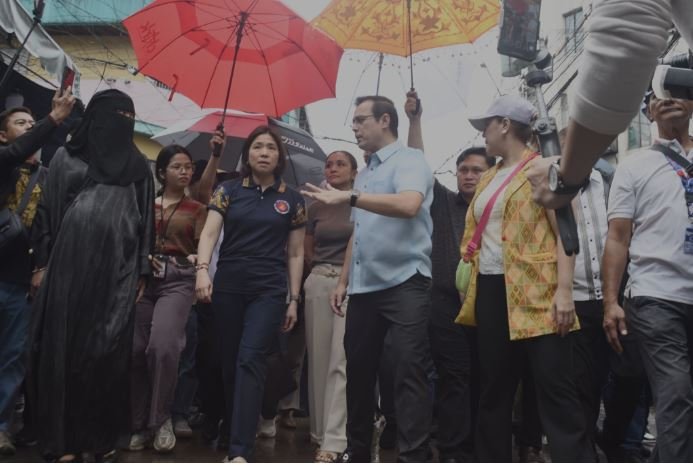
To begin with, Manila City Mayor Isko Moreno took Department Budget and Management (DBM) Secretary Amenah Pangandaman to a field inspection along the Arch of Globe De Oro at the Quiapo Mosque to discuss and present plans for the proposed Halal Town.

At the same time, they tasted food served to Muslim brothers and sisters in the area. Among those in attendance were Vice Mayor Chi Atienza and Cristal Bagatsing Head of the Department of Tourism Culture and Arts of Manila. (ITOH SON)

The High-Living Trio Of Surigao 

0

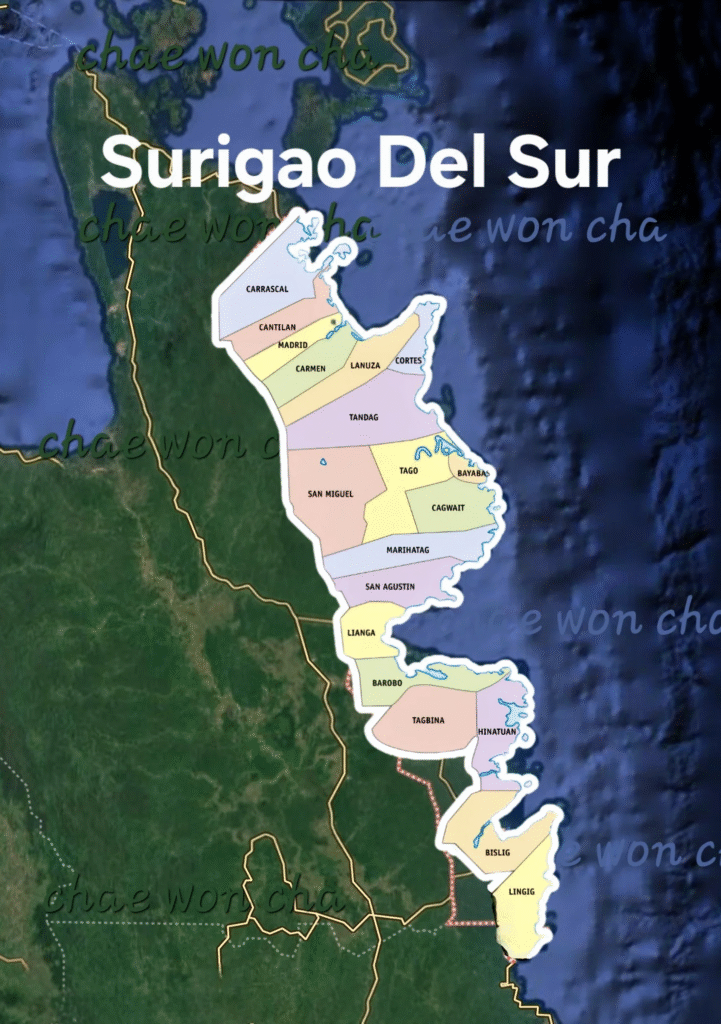
SOCIAL MEDIA IS abuzz about three very powerful billionaires in Mindanao, whose family-owned businesses have reportedly been cornering public works contracts in Surigao del Sur solely because of the influence as legislators in their respective districts.

The three are being accused by netizens– and some of their constituents– of conflict of interest (using their positions as legislators) and for perpetuating families and clans in power to ensure the sustainability of their businesses. Some say they have literally transformed political positions to further their business interests.

In particular, former congressman, now Surigao Governor Johnny Ty Pimentel is under attack over his eight imported luxury vehicles that are housed in a newly-built state-of-the art P1 billion garage in one of Pimentel’s properties.

The photo of the garage in social media was matched with the architectural design of a reputable interior design company with that of a footage of Pimentel’s conference with the Department of Health CARAGA during the launch of the Philippine multisectoral nutrition project in his province, according to a report of Bilyonaryo News Channel.

PIMENTEL’S TELL TALE

A subsequent post showed Pimentel owning a construction company, the J & L Construction Corp., which the Philippine Construction Association Board confirmed as wholly owned by the governor as the authorized managing officer.

Pimentel was a former congressman representing the second district of Surigao del Sur from 2016 to 2025 — having served as deputy speaker of the House from 2019 to 2020. He was also the vice governor of Surigao from 1995 to 1998 and later governor from 2010 to 2016.

A native of Tandag, Surigao Pimentel’s father, Vicente Pimentel Sr., has two brothers– Vicente Jr and Alexander, who take turns in sharing the different political positions with him in maintaining their hold of the province. 

From 2001 to 2010, during the gubernatorial term of his brother, Vicente Pimentel Jr., he served as the provincial administrator.

In 2016, Pimentel, running as the LP candidate, won a congressional seat and officially transferred his voter’s registration to Bislig. He secured a second term in 2019 and was elected Deputy House Speaker in July 2019 and was designated spokesperson in the house for PDP-Laban but was ousted on December 7, 2020 and appointed chair of the House Special Committee on Strategic Intelligence. 

Pimentel was elected governor in 2025.

GRANDIOUS GARDIOLA

Gardiola is a civil engineer and transport executive — having  chaired the Jam Liner and PhilTranco.  He is currently serving as first nominee of the CWS Partylist in the House. CWS stands for Construction Workers Solidarity. Records show he owns a P300-million mansion in Newport. 

Gardiola was born in Mataasnakahoy, Batangas and finished civil engineering from the National University in Manila. He owned several construction and real estate firms, including the JSG Construction (named after his wife, Judy Silva Gardiola) and Virkar Realty Corp.

In 2009, the Philippine Center for Investigative Journalism (PCIJ) reported that JSG Construction is owned by Gardiola and his wife Judy. Edwin’s brother Elmer and the latter’s wife Elaine are owners of E. Gardiola Construction, while Elmer is also listed as an incorporator of JSG. 

The PCIJ reports that JSG and E. Gardiola Construction was among the top ten contractors working with the DPWH from 2000 to 2008 under the administration of former President Gloria Macapagal-Arroyo.

In a 2014, a House inquiry showed that Gardiola’s firm, JSG Construction was implicated in: a) P6 billion worth of unreported DPWH projects during the Arroyo administration; b) Securing “Triple A” contracts despite only possessing a “B” license from the Philippine Contractors Accreditation Board (PCAB).

First elected as CWS partylist representative in 2022, Gardiola was given the Committee on Public Works and Highways and Committee on Transportation. And in 2024, he again won as CWS first nominee, despite a disqualification case filed against CWS in Batangas. 

In an event of gubernatorial candidate Jay Manalo Ilagan, Gardiola at the Barako Fest in Lipa sponsored three sedan cars as raffle prizes, an act that constituted vote buying. 

In 2012, the Bureau of Internal Revenue filed criminal complaints against Gardiola and his companies for: a) Purchasing undeclared luxury vehicles (including BMW, Lexus, and Jaguar models) between 2006–2009 despite declaring minimal income; 2) Unpaid dues for the purchase of three Lexus vehicles in 2009 as a corporate officer of Woodheights.

MOMO AKA SUPREMO

On Sept. 24, Surigao del Sur Rep. Romeo Momo (1st district) denied allegations of conflict of interest in his role as legislator and his family’s construction business which secured government infrastructure contracts

“There is none because I am not part of the corporation, and besides, they are not doing business in my district,” Momo told the Inquirer. But his son, provincial board member Ruel Momo owns the Surigao La Suerte Corp.

Momo, as chair of the House committee on public works and co-chairs the House infracom that is  currently investigating alleged irregularities in flood control projects of the DPWH. Momo has worked with DPWH and became its undersecretary in charge of Mindanao.

On September 22, Momo took to social media to deny owning a private plane, a claim that went viral in a post showing him with Butuan City Rep. Jose Aquino and Misamis Oriental Rep. Bambi Emano aboard the aircraft, which he clarified is registered to Palawan Rep. Pepito Alvarez. The plane’s tail number was RP-C2226. He branded the viral post as “fake news” and claimed it was operated by a dummy account of his political rivals.

Momo debunked allegations that he funneled ₱1.1 billion worth of projects to his son’s company, saying the projects mentioned were located in the second district when Gov. Johnny Pimentel was still its congressman. 

He explained that DPWH records showing La Suerte Corp. bagging projects in District 1—including a ₱4-million road project in Carmen (2022), a ₱9.7-million road project in Tandag City (2021), and a ₱19.3-million slope protection structure in Cortes (2022)—were awarded before he was elected congressman of the first district. 

Momo stressed that the contracts were part of the 2021 budget under then-Rep. Prospero Pichay, although at the time he was already a party-list representative of the Construction Workers Solidarity.

The lawmaker also denied being involved in so-called budget “insertions” allegedly made with Ako Bicol Rep. Rizaldy Co, chair of the House appropriations committee, now at the center of congressional hearings on the alleged “flood control scam.”

“The so-called ghost projects can only be carried out by DPWH personnel in charge of implementation,” he said, adding that contractor payments require the approval of at least 10 DPWH officials.

Still, questions linger over his family’s business interests. A Bilyonaryo News Channel report last September 12 said Surigao La Suerte Corp., owned by his son Ruel, cornered 31 DPWH projects worth ₱1.1 billion across Caraga from 2017 to 2024. Momo’s wife is also the vice mayor of Tandag City.

Despite this, Momo expressed openness to Akbayan Rep. Jose Manuel Diokno’s proposal to make lawmakers’ Statements of Assets, Liabilities, and Net Worth (SALNs) public. Diokno and other legislators filed House Resolution No. 271, directing the House secretary-general to release all members’ SALNs.

NSCR System To Solve Traffic Decongestion?

0

GRAPPLING WITH METRO Manila’s notorious traffic—ranked among the world’s worst by the 2025 TomTom Traffic Index—the ₱229-billion North-South Commuter Railway (NSCR) Project represents a pivotal step toward modernizing the country’s railway system. 

According to the Department of Transportation (DoTr) Secretary Giovanni Lopez, the modernization promises economic boosts to several provinces like Bulacan, Pampanga and Laguna through enhanced connectivity and job creation.

Currently, the Manila-Clark segment (Phase 1) of the NSCR project has breached 65 percent completion level. 

The NSCR is the country’s most ambitious rail project yet, aimed to cut commute times and ease congestion in Metro Manila and surrounding provinces. 

However, the project has repeatedly been snagged in view of right-of-way (ROW) issues and site obstructions, but progress continues steadily, with clearing and dismantling operations accelerated to push the project forward.

ROW issues in six key areas from Calumpit, Bulacan to Clark, Pampanga have already been cleared, paving the way for faster completion. 

Here’s a detailed status of the project based on the latest information from the DoTr:

– Tutuban to Malolos segment: around 43 to 78 percent completion depending on source and date.

– Malolos to Clark segment: around 33 to 50 percent completion as of mid-2024 to 2025.

– Manila to Calamba segment: Completion is much lower, around 7 to 12 percent (this is the toughest segment due to ROW and challenges from informal settlers.

The NSCR’s design, featuring speeds up to 130 kilometers per hour, draws inspiration from efficient systems like Dubai’s elevated tracks, aiming to improve connectivity.

The railway will accommodate up to 800,000 daily passengers—featuring modern Japanese ‘Shinkansen-inspired’ technology, including automatic train control systems and earthquake-resistant designs.

Beyond congestion relief, the NSCR aligns with the government’s ‘Build, Better, More’ infrastructure agenda under President Ferdinand Marcos Jr.

Fresh Takes & Flavorful Breaks at Healthy Kitchen Café

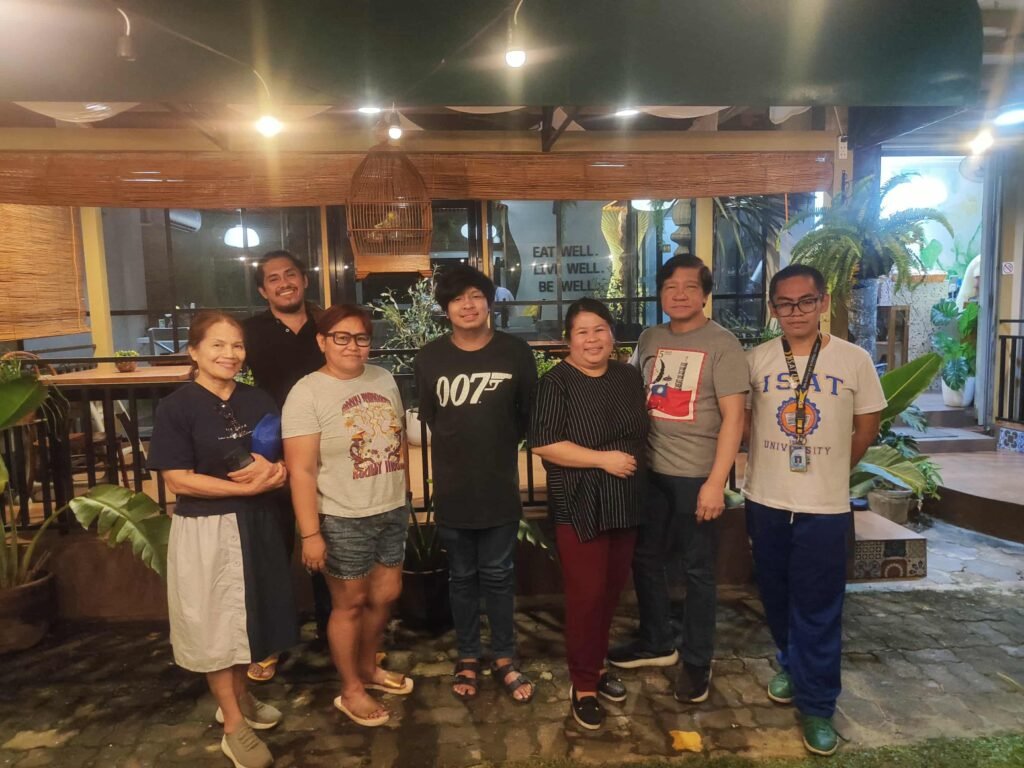
WHEN A CREATIVE team fueled by passion meets a café powered by freshness, magic (and a bit of mayhem) happens! That was the delicious reality when Lakaran Productions, led by Cheryl M. Luis, Head of Lakaran Productions and Support Manager of SEA Inc., together with Direk JP NinalgaLodgie NinalgaJoshuaLie, and the ever-gracious Ms. Leony Garcia, visited the beloved Healthy Kitchen Café in Q. Abeto, Mandurriao, Iloilo City.

It wasn’t just a meal—it was a culinary scene-stealer, complete with vibrant plates, hearty laughs, and that warm Iloilo charm that makes you say, “Let’s shoot the next film here!”

Scene 1: Where Health Meets Heart

Tucked along the calm streets of Mandurriao, Healthy Kitchen Café instantly captures you with its laid-back, green-and-glow aesthetic. It’s the kind of place that reminds you to breathe, slow down, and eat with purpose.

Their mission? To make healthy food taste like a treat, not a task. And trust us—mission accomplished.

Scene 2: The Roll Call of Freshness

We started light with three orders of Mixed Fresh Spring Rolls (5 pcs each)—little bundles of joy wrapped in rice paper, filled with farm-fresh veggies that practically crunched back in gratitude. The peanut sauce dip? Addictive. Even Direk JP, who usually prefers meaty bites, said, “Okay, this one’s a star.”

Scene 3: Pasta, Please!

Next came the crowd-pleasers: Creamy Mushroom Pasta and Fish Parm Pasta—both delicious enough to earn their own billing.

The Creamy Mushroom Pasta was rich and aromatic, with that homemade flavor that feels like comfort in a bowl. Meanwhile, the Fish Parm Pasta surprised us all—golden, tender fish with a crisp parmesan crust over a bed of light tomato sauce. Lodgie called it “a reel-worthy meal,” and everyone agreed.

Scene 4: Pizza Party, Iloilo Edition

We couldn’t resist the temptation of three assorted pizzas—each one with a unique storyline.

• The Veggie Pizza was a fresh explosion of colors and crunch.

• The Classic Cheese and Herb delivered nostalgia in every bite.

• And the Sweet-Savory Mix (our personal favorite) struck the perfect balance between indulgent and wholesome.

It was a full cast of flavors—each slice stealing the spotlight in its own way.

Scene 5: Sweet, Simple, and Seriously Good

Just when we thought the curtain had closed, dessert took center stage.

The Apple Pie Roti was the surprise hit—flaky, buttery, and warmly spiced. One bite in, and I (Cheryl) declared, “This deserves a slow clap.” The Mango Float, on the other hand, brought a tropical twist of creamy sweetness that made everyone grin like it was fiesta day in Iloilo.

And to top it all off, we raised our seven glasses of Cucumber Calamansi Juice—refreshing, tangy, and perfectly paired with everything on the table. It was the kind of drink that makes you feel instantly lighter, like a reset button for your taste buds.

Final Scene: A Toast to Taste, Teamwork, and Wellness

Between bites and bursts of laughter, we realized this visit wasn’t just about food—it was about connection. About finding joy in nourishing meals, in good company, and in slowing down between projects and productions.

For us at Lakaran Productions, under SEA Inc., this was more than a food stop—it was a creative recharge. Healthy Kitchen Café reminded us that being “healthy” isn’t a restriction; it’s a celebration—of freshness, flavor, and feeling good inside and out.

So if you ever find yourself in Iloilo craving something clean, colorful, and utterly satisfying, head straight to Healthy Kitchen Café. Trust us—it’s a scene worth repeating.

Healthy Kitchen Café – Q. Abeto, Mandurriao, Iloilo City
Facebook: Healthy Kitchen Café Iloilo

DOH Distributing Fake Anti-Rabies Vaccines?

0

IN THE PHILIPPINES, vaccine hesitancy could be attributed to several factors — trypanophobia (intense fear of medical procedures involving needles) and concerns on vaccine safety following the death of 14 children who were injected with Dengvaxia vaccines bought by the Department of Health (DOH) using public funds.

Ten years later, the DOH doesn’t seem to have learned from the Dengvaxia nightmare amid reports on the proliferation of fake anti-rabies vaccines being distributed to the local government units.

If reports are true, there’s no way for Health Secretary Ted Herbosa to find a valid excuse to avoid legal repercussions arising from the procurement of the so-called Purified Chick Embryo Cell Culture Rabies Vaccine (or Vaxirab N for brevity).

A doctor by profession, Herbosa should at the very least be aware that consumption of fake medicines or vaccines pose great risks.

No less than the Food and Drugs Administration (FDA) has repeatedly issued advisories which emphasized “stern warning” against “purchase and use of counterfeit versions” of Vaxirab N.

The first advisory against the fake Vaxirab N came out on June 4 2024, November 13, 2024 and December 9, 2024. For the current year, the FDA issued a similar advisory against buying, selling, distributing or using Varirab N. These advisories were dated on July 18, August 7, September 29, October 22 and October 28.

Despite these warnings, the DOH went on to procure (using public funds again) Vaxirab N. 

For one, there’s nothing wrong with buying anti-rabies vaccines. There’s just one glitch though — “enterprising” people from the DOH mixed fake Vaxirab N in the bulk of supplies being delivered to the LGUs, public hospitals and health centers.

Worse, these “enterprising minions” are pulling one trick after another under Herbosa’s very nose. It makes me wonder whether the Health Secretary is unaware — or just playing dumb.

From the time President Ferdinand Marcos Jr. appointed him as Health Secretary, Herbosa has already figured in quite a number of blunders — the expiration of P11.5-billion worth of medicines and vaccines, the two-year lull in the treatment of tuberculosis, PhilHealth zero-subsidy, and ghost health centers, to name a few.

With fake vaccines being mixed in the bulk of legit Vaxirab N, Herbosa should seriously consider seeking divine intercession so that nobody gets killed by the fake anti-rabies vaccines forming part of the supplies they’re distributing.

Assuming nobody gets killed by the fake Vaxirab N, Herbosa would still be liable for violating Republic Act 9711 (Food and Drugs Administration Act of 2009) and RA 8203 (Special Law on Counterfeit Drugs).

Amid these blunders, Herbosa should seriously consider the idea of stepping down as Health Secretary. That is if there’s a little decency left under his sleeves.

Herbosa is an intelligent person but let me remind the doctor whom I once admired that resigning doesn’t mean absolution.

2025 Undas: Steady Hands, Safe Roads 

0

WITH MILLIONS OF Filipinos travel anew after paying respect to their departed ones, the Philippine National Police (PNP) has maintained its full alert status for Undas 2025.

PNP acting chief Lieutenant General Jose Melencio C. Nartatez Jr., said all police units have been placed on heightened alert under Oplan Ligtas Undas 2025, following the directive of President Ferdinand Marcos Jr. to guarantee the public’s security and convenience during the observance.

Thousands of officers have been deployed to cemeteries, transport terminals, churches and major highways to maintain peace and order and also assist travelers and ensure their safety. 

“We’ve instructed our personnel to maintain visible police presence and work closely with local government units and barangay officials to prevent burglary and other crimes,” Nartatez said in an earlier statement.

“Make sure all doors and windows are locked, unplug appliances, and inform trusted neighbors or barangay officials if you’ll be away,” he reminded the public.

Known for his steady and composed leadership, Nartatez has emphasized that public safety during major holidays relies not only on strict enforcement but also on teamwork and cooperation.

Under his direction, the PNP has strengthened coordination with local governments, transport agencies, and civic groups to ensure smooth traffic flow, quick emergency response, and the safety of all travelers.

Nartatez personally inspected police deployment points across the country to ensure readiness on the ground, reaffirming that the objective is to make the public’s journey safe, comfortable, and peaceful.

“We are checking if the preparations we made for this year’s Undas are properly implemented on the ground. The goal is to ensure safe and comfortable travel for all our kababayan,” Nartatez said.

His calm yet decisive leadership continues to inspire confidence within the ranks—a reminder that effective command is built not on volume, but on discipline, clarity, and unity of purpose.

PNP spokesperson and Public Information Office chief Brigadier General Randulf T. Tuaño assured the public that all stations are fully manned and ready to respond to emergencies.

“If you need assistance or notice something suspicious, approach the nearest police assistance desk or call the Unified 911 hotline. Our police officers are on duty 24/7,” Tuaño said.

He also appealed for public cooperation, noting that the success of Oplan Ligtas Undas 2025 depends on community discipline and vigilance. 

Beyond ensuring security, the PNP is also reminded everyone to practice patience and courtesy on the road, avoid conflicts and remain watchful of their personal belongings in crowded areas.

“Safety begins with calmness, cooperation and respect for one another,” Nartatez quipped.

₱31 M. Allen Town Hall Completed Under Supplemental Appropriation

0

AMIDST IRREGULARITIES IN several infrastructure projects across the country, the provincial government of Northern Samar (PGNS) has announced the successful= completion of the three-storey Allen municipal building amounting to ₱31 million under the 2023 Supplemental Appropriation.

According to Northern Samar Rep. Edwin Marino Ongchuan, the initial funding for the project came from local funds during the term of former mayor Joey Suanand former vice layor Arturo Dubongco in 2019.

However, due to limited resources, the municipal government of Allen sought assistance from the provincial government, which was subsequently approved by the provincial government.

“This partnership paved the way for the project’s completion under the present administration. The municipal building’s completion includes the installation of a 250 KVA standby generator, CCTV security system and air-conditioning units,” Ongchuandisclosed.

In addition to the said facilities and to make the building inclusive and PWD-friendly, a lift elevator was also installed with other scope of work covering the tiling, interior and exterior painting, plumbing works, ramps for accessibility and provision of complete building accessories such as comfort rooms (CRs), fully furnished offices, and a social hall.

“These ensure that the new municipal building is fully functional, accessible and conducive to efficient public service,” the governor added.

Under Republic Act 7160, or the Local Government Code of 1991, provincial governments are mandated to extend assistance to municipalities, particularly in areas requiring technical, financial, and infrastructure support. This initiative exemplifies the spirit of inter-LGU cooperation envisioned under the law, wherein the province plays a crucial role in supporting municipalities in implementing development projects that advance efficiency, accessibility and transparency in local governance.

Meanwhile, the provincial government continues to extend assistance to the ongoing construction of the Catarman municipal building located in Barangay Macagtas.

Under the leadership of Governor Harris Christopher Ongchuan, it remains steadfast in its commitment to strengthening local governance and enhancing the delivery of public services, even at the municipal level.

The Oscars Of The Travel Industry

THE PHILIPPINES HAS once again illuminated the world tourism stage, capturing six major honors of excellence at the 2025 World Travel Awards (WTA) Asia and Oceania Gala Ceremony held on October 13 in Hong Kong.

These latest triumphs reaffirm the country’s position as one of Asia’s most beloved destinations—where natural beauty, heartfelt hospitality, and cultural warmth converge into unforgettable experiences.

‘The Philippines’ consistent victories at this global platform reflect not only its natural splendor but also the indomitable Filipino character—warm, resilient, and ever welcoming to the world … (It’s) The Filipino brand of service.’

A CELEBRATION 

For the eighth time, the Philippines was hailed as Asia’s Leading Beach Destination, a recognition that underscores its breathtaking coastlines and crystalline waters. From the powdery white sands of Boracay to the untouched shores of Palawan and Siargao, the country continues to captivate global travelers seeking serenity and adventure.

The Philippines also clinched its seventh consecutive win as Asia’s Leading Dive Destination, a testament to its flourishing marine biodiversity and spectacular underwater landscapes. Completing the country’s triumphant streak is its back-to-back award as Asia’s Leading Island Destination, further solidifying its standing as a tropical paradise like no other.

RECOGNITIONS OF PRIDE

The six major recognitions earned by the Philippines are:

1. Asia’s Leading Beach Destination – Philippines

2. Asia’s Leading Dive Destination – Philippines

3. Asia’s Leading Island Destination – Philippines

4. Asia’s Leading Luxury Island Destination – Boracay

5. Asia’s Leading Meetings and Conference Destination – Clark Freeport Zone

6. Asia’s Leading Tourist Board – Department of Tourism (DOT), Philippines

A TRIBUTE TO THE PEOPLE

Tourism Secretary Cristina Garcia-Frasco expressed that the awards serve as a tribute to the Filipino spirit.

“These recognitions reaffirm our country’s place among the world’s premier destinations. Beyond the accolades, they honor the dedication of our tourism frontliners—the guides, hospitality workers, artisans, and countless others whose warmth and resilience inspire travelers worldwide,” Frasco said.

She added that the DOT remains committed to building a sustainable, inclusive, and globally competitive tourism industry that empowers communities and preserves the environment.

THE WORLD TAKES NOTICE

With Boracay hailed again as Asia’s Leading Luxury Island Destination and Clark Freeport Zone recognized as Asia’s Leading Meetings and Conference Destination, the Philippines continues to rise as a dynamic hub for leisure, business, and eco-tourism.

Established in 1993, the World Travel Awards is regarded as the “Oscars of the Travel Industry,” honoring destinations and organizations that set the gold standard for excellence.

The Philippines’ consistent victories at this global platform reflect not only its natural splendor but also the indomitable Filipino character—warm, resilient, and ever welcoming to the world.

Frasco proudly declared, “The Filipino brand of service—with warmth, care, and genuine hospitality—remains our strongest asset. These awards are for every Filipino who makes our guests feel at home.”

Indeed, as the Philippines shines brighter on the world tourism map, it carries with it a message of hope, unity, and pride—that amid challenges, the Filipino spirit remains the true destination of every traveler’s heart.

END

Is Your Blood Type Aging You Faster? Science Says… Maybe.

1

LET’S START WITH the obvious: most of us blame aging on the usual suspects — stress, sugar, and the cruel passage of time. We moisturize, detox, and pray to the skincare gods. But what if the secret culprit behind your fine lines and fatigue isn’t your lack of sleep… but your blood type?

Yes, darling. That same letter printed on your Red Cross ID may be quietly dictating how fast your cells throw in the towel.

The O-Type Show-Offs

If you’re Type O, congratulations — you might just be nature’s favorite. Studies (the real kind, not TikTok science) show that O’s tend to have:

• Lower risk of heart disease and stroke

• A bit more resistance to certain cancers

• Blood that flows better and clots smarter as you age

Translation? O’s may experience a slower physical decline over time. Your cells basically have a better warranty.

But don’t get cocky, O’s. That “advantage” can vanish faster than your willpower at a buffet if you abuse it with bad habits. Even superior blood can’t outsmart nightly tequila shots, 2 packs if cigarettes a day and three hours of sleep.

A, B, and AB: The Inflammation Nation

Now for the rest of us mere mortals. If your blood type is A, B, or AB, your body might be hosting a little more drama — the kind that happens under the microscope. Research suggests you’re more prone to chronic inflammation, aka the slow burn that accelerates aging, damages cells, and invites every disease to the party.

These types are also slightly more at risk for:

• High blood pressure

• Age-related neurological issues

• The “why does my body hate me” phase of adulthood

But here’s the kicker: you’re not doomed. It just means your body needs a bit more TLC — and less TLC from Food Panda.

Pro tip: focus on anti-inflammatory diets, stress management, and maybe start talking to your liver like it’s your best friend, because you’ll need it to stick around.

Oxidative Stress: The Real Villain Behind Aging

Picture your cells as overworked employees. Every day, free radicals (tiny molecular hooligans) punch them in the face. Over time, this causes oxidative stress — the biological version of burnout.

Turns out, blood type affects how well your body handles that chaos. Some types have stronger antioxidant defenses, meaning their cells age slower and stay snatched longer. Others? Not so lucky. Their cells give up faster than a diet on a Friday night.

Immune response plays a role too. Depending on your blood type, your body might be better — or worse — at fighting off infections and inflammation. In short, your blood type helps decide whether you age like J.Loor like that banana you forgot in the fridge.

Chill, It’s Not All in Your Blood

Before you start demanding a blood transfusion to become Type O, let’s be clear: lifestyle still calls the shots. Your blood type might set the stage, but you decide how tragic or triumphant the show becomes.

So regardless of what letter you bleed, here’s the Certified Prick’s anti-aging gospel:

• Eat like you love yourself. More greens, less grease. Antioxidants are your real besties — berries, green tea, turmeric, and anything that stains your Tupperware.

• Move your ass. Walk, lift, stretch — just don’t let your muscles atrophy into decorative tissue.

• Sleep like it’s sacred. Seven to eight hours, no negotiation.

• Stress less, laugh more. The world’s already chaotic — don’t let your cortisol add to the mess.

• Check yourself before you wreck yourself. Regular checkups are cheaper than medical bills.

Aging gracefully isn’t about expensive serums or genetic luck. It’s about knowing what your body’s made of — literally — and treating it like it deserves a few more birthdays.

So next time you curse your crow’s feet, remember: maybe it’s not just time catching up with you. Maybe it’s your blood type throwing shade.

Either way, live clean, laugh often, and don’t forget — your cells are listening.

—The Certified Prick

The Health Column That Doesn’t Sugarcoat (Unless It’s About Diabetes)

Transparency And Credibility

0

A lack of transparency results in distrust and a deep sense of insecurity.

                               — 14th Dalai Lama Jetsun Jamphel Ngawang Lobsang Yeshe Tenzin Gyatso

IN WHAT CAN be said as truth and reality, Public Works Secretary Vivencio “Vince” Dizon highlighted the importance of transparency in government transactions even as he committed to utilize modern technology in the fight against corruption and systemic problem in overhauling various agencies of government, particularly the Department of Public Works and Highways (DPWH). 

Putting this in simpler words, Dizon stressed that “systemic problems require systemic solutions” while emphasizing that long-standing problems in governance stem from lack of transparency in several aspects that focus most especially in procurement and implementation and budget appropriation and allocation. 

The truth is that solutions to these problems are technology, transparency, accountability and active private sector engagement. 

‘[S]ystemic problems require systemic solutions while emphasizing that long-standing problems in governance stem from lack of transparency in several aspects that focus most especially in procurement and implementation and budget appropriation and allocation.’ 

IT’S ESSENTIAL

Quoting from the secretary, “transparency is essential; when things are done in secret, with only a few people involved, accountability disappears.” 

In this, blockchain technology can make a difference by making government documents publicly accessible, transparent, and immutable. 

This can likewise be considered as a key tool for positive and effective reforms.

The new technology was clearly explained by Blockchain Council of the Philippines propenentDonald Patrick Lim and Integra Negra’s Jonathan Bocaling at the Kapihan sa Manila Bay media forum hosted by our dear colleague and veteran lady journalist Marichu Villanueva. 

According to Bocaling, blockchain technology can curb widespread corruption in government. 

He cited that “government systems are still scattered and disconnected (with) each agency running its own database” and thus resulting with gaps, overlaps and loopholes. He described the situation: “Billions of pesos move through these systems every day, but not all of them can be monitored and tracked from end to end.” 

By using blockchain, one source of truth can be created and everyone can see data and information while no one can change or manipulate secretly. With this technology, data that is entered becomes permanent and verifiable, meaning that trustwill no longer depend on people but on proof. 

This is the kind of system our government, businesses and people deserve. But to make this work, however, the Philippines must establish its own national digital brain that can securely connect all major government systems under one framework. 

* * *

FOR your comments or suggestions, complaints or requests, just send a message through my email at cipcab2006@yahoo.com or text me at cellphone numbers 09171656792 or 09171592256 during office hours from Monday to Friday. Thank you and mabuhay! 

A Poetic Justice

0

RECENTLY, INTERIOR AND Local Government Secretary Jonvic Remulla visited the New Quezon City Jail Male Dormitory and declared it would serve as the detention site for those involved in the flood control mess. He walked through the spartan living spaces, inspected the bunks, peered at the laundry areas, and even noted the drinking water provisions. He expects that at least two hundred people will be indicted in the next three weeks. His reason for choosing the place was simple: the New Quezon City Jail in Payatas is the nearest and most accessible jail to the Sandiganbayan, where the cases will be heard and litigated.

The new Quezon City Jail in Payatas is no small facility. It is a sprawling complex designed for 5,000 Persons Deprived of Liberty (PDLs)—the largest in the country in terms of building size, number of jail cells, and available rehabilitation facilities. It is composed of three five-storey buildings with 440 cells. It was meant to be the most modern jail in the Philippines, a symbol of what correctional reform could be if we dared to dream beyond overcrowding and neglect.

HOW IT BEGAN
I remember how it began. Around 2015, then-Warden Ssupt Randel Latoza of the old Quezon City Jail in Kamuning approached me for a training program. I was then a visiting professor at UP-NCPAG. Together, we developed a course curriculum on a human-rights-based approach to jail management—integrating modern practices such as risk assessment, classification, housing segregation, treatment programming, and case management and documentation. 

The late Warden Latoza had a vision: a new kind of jail that would end overcrowding, dismantle the gang and mayores systems, and replace the old preso hierarchy with professionalism and humanity.

‘This should be a welcome development. The jail officers will treat them professionally; no special favors, no VIP cells, no air-conditioned quarters. They will be treated like everyone else—like the thousands who languish there for lesser sins. But if the government is serious, it must address the jail’s unfinished business.’

DIGNITY AND ORDER

We trained all Quezon City Jail officers for four months at the UP-NCPAG campus. After the program, the officers drafted their collective vision for a new Quezon City Jail—a place that would restore dignity and order. 

We presented our output to the Quezon City government, and Mayor Herbert Bautista agreed to donate a 2.4-hectare lot in Payatas. In 2016, the International Committee of the Red Cross joined us to develop the architectural design. And with the Build Build Build program of President Duterte, a budget was alloted to the construction of the new facility. 

And so the new facility rose, complete with isolation areas for the sickly, quarantine zones for new arrivals, medical clinics, recreational and visitation spaces, and even laundry and cooking areas for PDLs. It was, in form and intent, a model of what jails in this country could become.

TWO PROBLEMS

Except that two problems remain—two problems that betray the promise of the whole endeavor.

First, the fences. The fence is incomplete; it is also built at uniform height despite the hilly terrain. In some areas, the fence towers high; in others, the fence is low enough to jump over. The result? PDLs cannot leave their cells without supervision. 

Most of the time, they are padlocked inside, deprived of sun, air, and movement. Many have told me during my interviews they would rather return to the old, crowded Kamuning jail where, at least, they could roam freely during the day. It was a substandard design.

Second, the damage done during the pandemic. In 2020, when COVID-19 hit, the unfinished facility was converted into the “Ligtas COVID Center” of Metro Manila. Certain cells temporarily held new detainees from across the region. 

Locked inside 24 hours a day, many inmates protested in the only way they could—they destroyed plumbing, clogged toilets, cut electric lines—just to draw attention and be transferred elsewhere. Ironically, the punishment turned out to be a relief. But the damage lingered: malfunctioning pipes, broken fixtures, and a drainage system that barely worked. To this day, jail officers have to repair what was broken, often with their own hands.

To their credit, the BJMP wardens and jail officers have done all they could. They cleaned the cells themselves, since PDLs cannot be used for maintenance without the security of a proper fence. They worked double and triple shifts to maintain order in a facility that was never fully finished.

A WELCOME DEVELOPMENT
Now, with the flood control contractors soon to be detained here, the spotlight turns once again to the New Quezon City Jail in Payatas. This should be a welcome development. The jail officers will treat them professionally; no special favors, no VIP cells, no air-conditioned quarters. They will be treated like everyone else—like the thousands who languish there for lesser sins.

But if the government is serious, it must address the jail’s unfinished business. Complete the fences. 

Repair the pipes and toilets. Fix the drainage. Make the place livable—not for comfort, but for decency. Address the substandard design and construction. Without these, rehabilitation, recreation, and education programs will remain limited, and the promise of modern correction will wither behind padlocked doors.

SUBSTANDARD FACILITY

Perhaps there is some poetic justice in all this. 

The DPWH contractors who built substandard bridges and drainage systems may now live in a substandard jail facility. They will, at last, know how it feels to suffer the consequences of their own handiwork—to live amid crumbling walls, leaking pipes, and failing systems.

Let them experience what they built.

Maybe then they’ll understand that corruption, like poor construction, always collapses in the end.

#thefilipinocriminologist

Nuclear Energy, Really?

0

JUST WHEN WE thought the “cons” had knocked out the “pros’ on the issue of nuclear energy for the country about two decades ago, the idea is back. 

On October 2, the Philippine Department of Energy released a comprehensive framework for the integration of nuclear energy into the country’s power generation mix with Secretary Sharon Garin earlier unveiling its roadmap for 2023-2050 in Vienna, Austria. The agency has also signed an agreement with Koreans to do a feasibility study on the white elephantBataan Power Plant and plans to build small modular nuclear reactor plants. Target operation start is 2032.

WHY, WHY NOT?

Easily, the energy crisis, climate change, and the competitive challenge of modernization, all global in scope, are fuelling this new wind. Expectedly, the most progressive and competitive countries lead the race to this transition – United States, China, France, Russia, South Korea, Japan, Canada, Spain, India, and the United Kingdom. 

At the surface, these are the basic arguments:

Favoring NE: It is cleaner and greener than fossil fuels as it has no carbon emissions that contribute mainly to climate change which can cause an earth system collapse by 2050. Also, with the depleting fossil fuels as well as their rising costs, NE will be a good alternative.

Against NE: With its radioactive nature, it poses high risks and threats to life and infrastructure. With its very high building and operating costs, it will also financially burden the government. Not to forget, we have renewable energy – solar, wind, hydropower, geothermal – that can still be further harnessed.

‘Nuclear power is not the solution to the climate crisis and to our power needs … it is not safe, not cheap, not sustainable, is expensive to insure if at all possible, will not provide energy security, will saddle our country with radioactive waste,” Green Convergence … sums up in its position paper signed by some member networks, organizations, and individual of the coalition.’

CIVIL SOCIETY POSITION

Over the years, civil society groups have consistently opposed nuclear as a power source. “Nuclear power is not the solution to the climate crisis and to our power needs … it is not safe, not cheap, not sustainable, is expensive to insure if at all possible, will not provide energy security, will saddle our country with radioactive waste,” Green Convergence for safe food, healthy environment and sustainable economy(GC), sums up in its position paper signed by some member networks, organizations, and individual of the coalition.

They also argue that using nuclear to address our power needs ignores the fact that our tropical, mountainous, volcanic and archipelagic nature gives us bountiful natural resources with which we can craft genuine sustainable development. 

“Our country faces numerous hazards from typhoons, earthquakes, volcanic eruptions and storm surges. The tremendous risks posed by nuclear power plants will be superimposed on these natural hazards, ”GC stresses.

HAUNTS FROM THE PAST

Some of us would still have memories or knowledge of three of the most disastrous nuclear plant tragedies – in Three-Mile island in Pennsylvania, US;Chernobyl in northern Ukraine; and Fukushima in Japan. 

     ​The long-abandoned, unused, probably outdated Bataan Nuclear Power Plant may even have its own eerie foreboding of danger. 

​Honestly, I can’t imagine how our still struggling country can handle both the high risks and costs of going nuclear when it can’t even tame the floods.

Ikulong Na Yan!

0

“IKULONG NA YAN!” — shouted in cadence marked the September 21, 2025 rallies carried out in NCR –Luneta/Rizal Park, Mendiola, and People Power Monument in Edsa, and in a number of schools. But such has not died down as Soc Med still carries the same ear-splitting cry, obviously meant to remind the Filipino people, and more directly and specifically, President Bongbong Marcos, the newly-installed Ombudsman Crispin Remulla and other law enforcement agencies, to investigate the anomalies found in the government’s flood-control and other infrastructure projects budgeted and supposedly carried out since 2016. 

More pointedly, the “E – KULONG NA YAN” refers to the senators and congressmen, and others who got, or rather stole, millions or billions from the budgeted amounts for the government projects handled by the DPWH.

The rallyists’ loud stinging call serves as  a strongdemand for President Bongbong Marcos and appropriate government authorities to investigate, convict, if found guilty of corruption, with a jail term or the appropriate penalty, senators Joel Villanueva, Jinggoy Estrada, Francis Escudero, Mark Villar, Bong Go, former senators Bong Revilla and Nancy Binay, congressmen Elizaldy Co, Martin Romualdez, former representative Mitch Cajayon-Uy, and others who alsomay be found really corrupt. In other words, the demand of the people to President Bongbong Marcos is to act forthwith, as a government official holding the highest position in the bureaucracy, and the most important position of public trust, in finding the truth and “Ikulong ang mga magnanakaw ng pera ng bayan!” 

‘With his political governance background, President Marcos, Jr. may fail to jail one corrupt senator or congressman to jail, and get back the people’s stolen money. Still, hopefully, “Mga Politikong Magnanakaw, MAPANAGOT!”

INTEGRITY ISSUES

There might be a hitch, however: is President Bongbong Marcos really capable of doing the job of conducting an honest-to-goodness investigation? Will he call to account, particularly the suspected senators, congressmen, and other government officials, and apply the appropriate penalties in accordance with the Rule of Law?

Integrity issues keep hounding President Marcos, Jr. There have been many speculations, if not actual facts, about himself and his family which he, his mother and siblings have not admitted publicly. Namely, the brutal Martial Law record of his dictator-father, that is, of economic plunder, ill-gotten wealth, illegal arrests and detentions, tortures, rapes, massacres of more than 200,000 Filipinos, and other acts of oppression against the people. 

Under the administration of his predecessor, currently ICC jailbird, Rodrigo Roa Duterte, who went on a killing spree (estimated to be more than 30,000 Filipinos) with his “War on Drugs, Operation Tokhang,” aggressively implemented by his aides, now senators Bato de la Rosa and Bong Go, his daughter VP Sara Duterte, and others, then Senator Ferdinand R. Marcos, Jr never said a word of objection, kept mumall the while, in effect, actively condoning Rodrigo’s bloody human rights violations. 

SERIOUS QUESTIONS

More recently, with the national elections of May 9, 2022, when the tandem of Bongbong Marcos and Sara Duterte supposedly won as president and vice president, respectively, serious questions were raised about the possible rigging of the elections by Comelec under Chair George Erwin Garcia, with the use of Smartmatic, the automation technology applied for the counting of votes. 

This has been the serious claim by IT expert trio,former DICT secretary retired General Eli Rio, Jr, former Comelec Chair Gus Lagman and former FINEX president Franklin Ysaac. Other professional IT organizations and an IT expert/IT auditor/lawyer Vice-Mayor Harold Respicio (of a Nueva Vizcaya town) had the same conclusion after much review and study, about how Comelec managed the May 9, 2022 national elections.

With his political governance background, President Marcos, Jr. may fail to jail one corrupt senator or congressman to jail, and get back the people’s stolen money. 

Still, hopefully, “Mga Politikong Magnanakaw, MAPANAGOT!”  

Reforming Systems Amid Flood Control Scandal

0

IN A WAY, the exposé by President Marcos of the multibillion flood control projects fund scandal is leading to reforms in government’s regulations.

The scandal has enraged the people to a point where politicians, the President included, have been forced to make serious efforts to introduce reforms in the system– from budget approval, to regulating contractors, instituting measures against shell companies being used by money launderers and more.

The revival by Ombudsman Jesus Crispin Remulla of access to SALNs of government officials now brings a promise to the people of transparency and hopefully even accountability within government – national and local. But vigilance by the people is of utmost concern as local officials, whose mindset is that their distance to the capital, would make it hard for them to be monitored and sanctioned to toe the official line.

Slowly, the lawmakers are now formulating guidelines to comply with statement of assets, liabilities and networth or SALN, which was quashed to oblivion by the predecessor of Remulla, Ombudsman Martires, whose loyalty to the former president made him rule against public access to SALNs. Martires claimed are being weaponized against the incumbents.

Sen. Risa Hontiveros and Rep. Chel Diokno madeavailable their SALNs as a show of support to the public’s clamor on transparency and accountability. Hopefully, more lawmakers would open their SALNs as a sign of sensitivity to people’s aspirations.

S.A.L.N. DISCLOSURES  

Speaker Faustino “Bojie” Dy III formed a committee to review the chamber’s guidelines on releasing net worth statements, amid calls for greater government transparency. 

The memorandum, effective immediately, directs the committee, chaired by Deputy Speaker Rep. Ferdinand Hernandez (Cotabato) with Iloilo Rep. Lorenz Defensor and Marikina Rep. Romero Federico Quimbo as deputies, to begin reviewing the House’s rules on publicizing lawmakers’ SALNs.

Dy, who released his SALN last week, said the lawmakers are open to releasing theirs, following Ombudsman Jesus Crispin C. Remulla’s reversal of Martires’ restrictions to such documents. Republic Act 6713, the Code of Conduct and Ethical Standards for Public Officials and Employees, assigns multiple custodians for SALNs across government branches and regions.

Dy declared a net worth of P74 million, including 11 agricultural lots, two residential lots, and three houses plus assets like P25.18 million cash, P29.6 million investments and P12 million worth of jewelry and personal items. 

“Slowly, the lawmakers are now formulating guidelines to comply with statement of assets, liabilities and net worth or SALN, which was quashed to oblivion by the predecessor of Remulla, Ombudsman Martires, whose loyalty to the former president made him rule against public access to SALNs. Martires claimed are being weaponized against the incumbents.”


A REPOSITORY

The Ombudsman is the repository of net worth statements of the President, Vice-President and heads of Constitutional offices. The Office of the President holds those of the Cabinet, presidential appointees and high-ranking military officials. Legislators file theirs with their respective chambers, while judges and justices submit theirs to the Office of the Court Administrator and the Supreme Court’s Clerk of Court, respectively.

Political Science lecturer, Hansley Juliano, told Business World that the House SALN release policy should not be too complicated and be bogged down with bureaucratic processes. 

“As long as it is consistent with lobbied standards for Freedom of Information (FOI) requests, and as long as it provides the relevant information, we should not complicate the process and we should not involve too many politicians,” Juliano said.

Juliano said it would be easier for the House to just pass an FOI law to ease government requests, like SALN releases. “They’d garner more with that legislation.”

Remulla also opened his SALN last Tuesday and President Marcos also indicated his intention to release his SALN.

TIGHTER GRIP ON FIRMS 

The Securities and Exchange Commission (SEC) is drafting new rules requiring companies to reveal the true owners of the firm to boost accountability in the financial system. Under the proposal, corporations must report any change in beneficial ownership within seven days. The SEC is pushing a crackdown on dubious ownership structures associated with money laundering and tax evasion.

The SEC would not hesitate to give timely data access to authorized personnel, including law enforcement agencies, competent authorities, and other government bodies.

Penalties for untruthful disclosures are: Stock corporations with retained earnings of less than ₱500,000 will pay ₱50,000 for first violation until ₱500,000 for the fourth. Non-stock corporations face ₱25,000 to ₱250,000 for similar violations.

False ownership data could cost companies up to ₱2 million and even lead to dissolution. Corporate officers, trustees, and directors who neglect their duty to ensure compliance will also be fined, starting at ₱50,000 and rising to ₱1 million for repeated offenses.

CONFLICT OF INTEREST

The Department of Trade and Industry, which recently took over the graft-ridden  Philippine Contractors Accreditation Board, which grants license to contractors, prohibits PCAB members from owning construction companies themselves due to a “conflict of interest,” 

DTI Secretary Cristina Roque said PCAB has been linked to the massive corruption in the flood control projects of the DPWH as all companies require a PCAB license to participate in bidding.

Comebacking Blue Ribbon Committee chair, Sen. Panfilo Lacson has called for PCAB’s overhaul as he described it as a “low-key yet corrupt-ridden regulatory body” following allegations of licenses being sold.

CASH WITHDRAWAL LIMIT

Shocked by the hundreds of millions of pesos that a contractor withdrew from a flood control project fund deposited with the Land Bank branch in Bulacan, the Bangko Sentral is now limiting cash withdrawals over the counter to only P500,000.

It has reminded banks of their mandate to be vigilant about possible infractions to the money laundering and dubious accounts that criminals might use for arms and drugs financing.


BSP Gov. Eli Remolona, who chairs the AMLC, said the agency has already issued over 700 freeze orders covering bank accounts, insurance policies and other assets of individuals linked to the flood control scandal. More are expected in the coming days.