Friday, March 27, 2026
Home Blog Page 26

Free Burial, But Not Much For The Sick?

0

AN OUNCE OF prevention is with all certainty better than  cure — except in cases when the cure is also prevention.

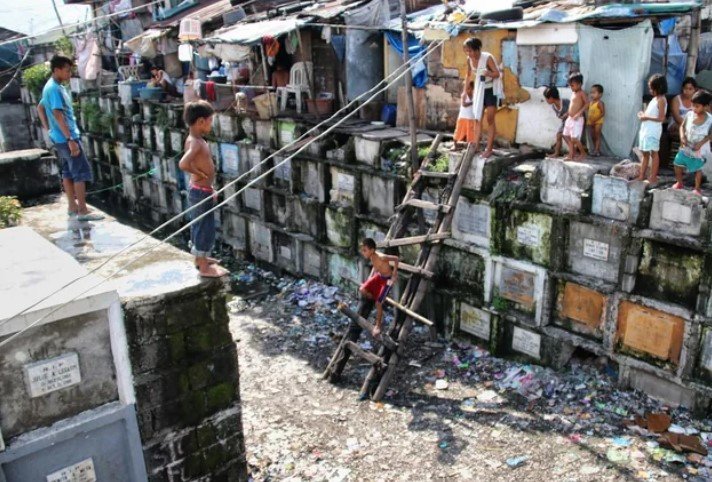
In what looks more like a law that is way beyond morbid, if not totally disparaging, Malacanang boasted of a new law embarking on free funeral services for those who have less.

In a statement, the Presidential Communications Office claimed that under the new law, poor Filipinos no longer have to worry about the cost of funeral to burial services.

The new law — Republic Act 12309 (Free Funeral Services Act) however hardly mattered for the poor families who may have lost a relative due to lingering illness.

In the comment section of a social media post, an obviously pissed off netizen finds it rather absurd for the government to come with such an idea that would see the government pay for the funeral service and burial of a pauper, who may have died of an ailment that would have been cured had the government prioritized an honest-to-goodness healthcare program.

For one, a huge chunk of the country’s population can’t even afford proper healthcare. Hence, many Filipinos die without undergoing treatment. 

DECENT BURIAL

The Free Funeral Services Act, lapsed into law on September 28, 2025 after President Ferdinand Marcos Jr. failed to act on the measure within the prescribed 30-day period.

The law allows indigent families with a combined monthly income below ₱15,000, as well as families affected by calamities or emergencies to avail of free funeral services through the Department of Social Welfare and Development (DSWD).

The coverage includes preparation of funeral documents, embalming, burial or cremation, inurnment, provision of a casket or urn, and transportation of remains.

To qualify, families must present a valid ID, death certificate, funeral contract, and a social case study report prepared by a licensed social worker.

NOT SO UNIVERSAL

Six years after the passage of the Universal Health Care (UHC) Act of 2019, the promise of “healthcare for all” remains far from reality.

According to the Philippine Statistics Authority (PSA, 2022) data, there are 440 government hospitals with 50,966 beds nationwide, compared to 849 private hospitals with 58,927 beds.

“Private healthcare costs significantly more than public healthcare. Confinement in a private hospital averages P70,568, more than 2.5 times the P27,136 mean cost in public facilities,” Ibon Foundation reported.

This burden “disproportionately affects the poor and low-income families who make up 60–75 percent of the population,” the group added.

Meanwhile, medical costs are projected to rise by 18.3 percent by the end of 2025, according to the WTW Global Medical Trends Report.

UNEVEN FOCUS

Ibon Foundation’s recent analyses also highlight how uneven healthcare access remains across the Philippines.

Of the 17 regions, only Metro Manila (NCR) and the Cordillera Administrative Region (CAR) were able to meet the World Health Organization’s (WHO) recommended ratio of 10 doctors per 10,000 population.

The national average is five doctors per 10,000 population.

In terms of hospital beds, only NCR met the WHO standard of two beds per 1,000 people, even though it also has the lowest poverty incidence.

The disparity also extends to medical technology: There are only 4.3 CT scan machines and one MRI machine for every one million people, with most of them concentrated in NCR and CALABARZON.

“The urban-centric public health system hinders the Filipinos’ right to health,” Ibon said. “Most public hospitals are in the highly-urbanized regions of NCR, Central Luzon, and CALABARZON. Poorer areas such as BARMM and the Zamboanga Peninsula have far fewer facilities.”

JUST A DREAM

In his fourth State of the Nation Address, President Marcos promised a zero-balance billing policy for patients in Department of Health (DOH) hospitals.

“Uulitin ko, wala nang kailangan bayaran ang pasyente basta sa DOH hospital dahil bayad na po ang bill ninyo,” he said.

While zero-balance billing and free funeral services sound promising, they remain far from reality.

Even Health Secretary Teodoro Herbosa admitted that many Filipinos still can’t benefit from the policy because of the lack of DOH-run hospitals and limited public bed capacity.

According to Herbosa, hospital beds nationwide are 60 percent private and 40 percent public, yet 80 percent of patients go to public hospitals due to financial constraints. 

“When I came in as Health Secretary, I discovered there are 40 provinces without a DOH hospital. Only 42 have one,” he added.

He cited Bukidnon as an example where residents have to travel to Northern Mindanao Medical Center in Cagayan De Oro to avail of zero-balance billing.

Ironically, DOH came out with a report showing around 300,000 beneficiaries since May, representing P26.4 billion worth of payments under the zero-balance billing program.

CHANCE TO LIVE

There is nothing wrong with providing free funerals for those who can barely afford a decent burial.

But if the government can humanize death, why can’t it humanize healthcare?

While most Filipinos welcome the Free Funeral Services Act, its passage without genuine efforts to fix the healthcare system feels more like a consolation than a solution.

Basically, it says if you’re poor and get sick, you can’t count on the country’s healthcare system to save you but don’t worry, the government will bury you for free when you die.
DPWH Chief’s Go-To Guy Talking With Contractors?

0

THERE IS NO way that the Marcos administration would ever win its war against corruption if entrusted officials are surrounded — if not contaminated —  by the same breed of crooks that the government is running after.

This comes as a “rookie” politician dropped what looks more like a bombshell dragging the name of a high-ranking official from the Department of Public Works and Highways (DPWH).

According to Batangas Rep. Leandro Legarda Leviste, Undersecretary Arrey Perez is “talking with private contractors,” an act undermining the integrity of an agency which has commenced a purge of crooks among its ranks.

Perez, whom DPWH Secretary Vince Dizon assigned in the procurement and bidding of big-bucket infrastructure projects, is part of the team probing anomalies in the government flood control projects.

RAW DISCLOSURE

In a radio interview, Leviste refused to divulge more details about Perez’ relationship with the contractors but hinted at the urgent need for Dizon to investigate people close and around him.

“Narinig ko na ipapahawak daw sa kanya ang procurement or bidding ng mga malalaking proyekto sa Central Office ng DPWH,” Leviste was quoted as saying in a news report which appeared in Abante.

By his own admission, Leviste would not say whether or not Perez committed an act constituting corruption.

“At hindi ko naman po sinasabi na magkakaroon ng bigayan ng kickback sa itong indibidwal o ‘yang indibidwal na yan pero mahirap po kasi talagang iwasan ang korapsyon sa DPWH,” he added.

“‘Pag bago kang na-appoint na undersecretary, I’m sure marami nang contractors na lumalapit sayo kahit hindi ikaw yung lumalapit sa kanila. Kahit hindi ka humihingi, baka sila ay may inaalok.” 

PROBING A PROBER

Upon hearing the news, Dizon said he won’t take chances even as he hinted at investigating people “close and around him” provided that Leviste would divulge the identity of the DPWH official that the young legislator is referring to.

Hence, the young congressman dropped one name — Usec. Perez.

“Ang sinabi ni Dizon sa kanyang press conference kahapon, handa siyang mag-imbestiga. Just name names, so I gave him one,” Leviste was quoted in the report.

“Actually, I can name names of others… during the press briefing, I received a phone call from another high ranking member of DPWH and ayoko naman po kasing pangalanan ang iba pang miyembro ng kanyang team at i-disclose ang iba pang mga narinig ko tungkol sa mga pag-uusap nila sa mga contractors at ang alegasyon na meron daw pang mas malalim na koneksyon ang mga contractors sa kanila.”

NO SACRED COWS 

However, Leviste finds it rather imperative for Dizon to go beyond investigation, as the Barangas congressman urged the DPWH chief to inform the public on the details of contractors Perez talked to.

He likewise asked Dizon to compel all the members of his team to disclose which contractors they are in touch with since the beginning of his term and, if possible, who are the other contractors they are familiar with.

“Para kung makinabang sila sa DWPH sa mga susunod na panahon, malalaman natin na may koneksyon pala ang mga opisyal ng DPWH sa mga kontratistang ito.”

He however clarified that he has full confidence in Dizon as a reformer and an advocate for transparency, Leviste maintained that  it is relevant for the people to know if such meetings were held by DPWH officials outside the department in the past months.

According to Leviste, his only agenda is to push reform in the system to ensure the judicious use of public funds allotted for government infrastructure projects.

WAS LEVISTE BRIBED?

In August 2025, Leviste made headlines over the arrest of Engineer Abelardo Calalo of the Batangas First Engineering District for allegedly bribing the neophyte congressman.

According to Leviste, Calalo offered P3,126,900 in cash for him to abandon the flood control probe in the district. Calalo denied the allegation.

Leviste however insisted that Calalo supposedly admitted collecting “donations” to give to “Congressman Leandro Leviste… in support of his projects in the first district.

But Calalo, who has since been dismissed from the DPWH, has a different story. The engineer claimed that as early as May, another lawmaker had instructed him “to collect donations from construction contractors with existing 2025 DPWH projects within the 1st District of Batangas as a show of support for the projects and programs of Leviste.”

In a previous news article exclusively published in The PH Insider, Calalo dragged the name of Senator Loren Legarda as the “lawmaker” who instructed him to collect from private contractors.

Casa Alegria: Where Peace Meets the Sky

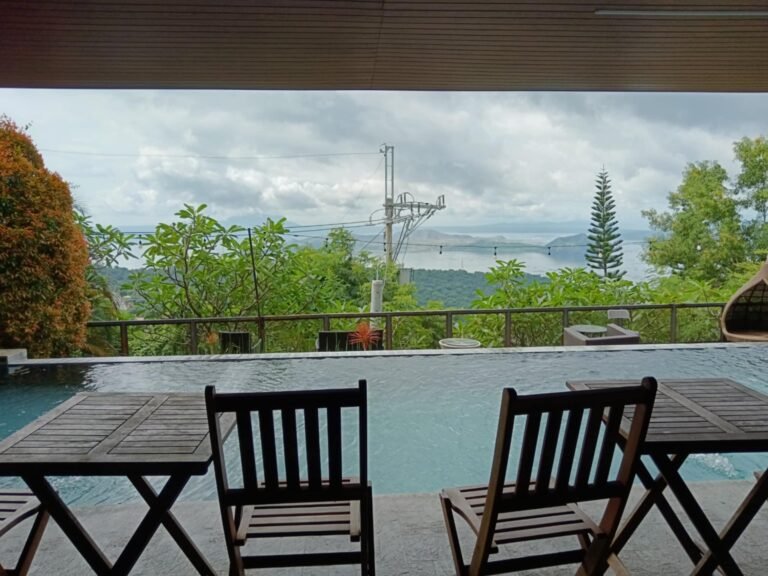
PERCHED HIGH ON a steep hill with a front-row view of the world-famous Taal Lake and Volcano, Casa Alegria is more than just a stay—it’s a soulful escape. With its eight well-appointed rooms, a cozy dining area for hearty breakfasts and dinners, an infinity pool that seems to spill into the horizon, and a jacuzzi that bubbles away the city noise, this Tagaytay gem invites families, friends, and dreamers to breathe in the town’s all-time cool, misty air.

Built amid a forest-like setting, Casa Alegria is both a sanctuary of rest and a statement of purpose—a living, breathing space for peace, regeneration, and sustainability. It’s the kind of place where you arrive to unwind but leave a little more inspired.

And now, this haven of harmony is taking its commitment to the next level. In recognition of its unwavering dedication to environmental stewardship, sustainability, and peace-building, Casa Alegria Tagaytay will be officially conferred as a United Nations Association Peace Center.

As if that weren’t enough, Casa Alegria will also become a Global Citizens Hub of the United Network of Global Citizens (UNGC)—a vibrant space where changemakers, innovators, and leaders can come together to nurture dialogue, strengthen cooperation, and shape a shared future for all.

Chosen as a UN Peace Center for its active role in promoting peace, culture, and sustainable tourism, Casa Alegria stands as proof that local destinations can do more than just host—they can heal. This milestone comes in time for the United Nations’ 80th Anniversary, celebrating communities like Casa Alegria that bring the Sustainable Development Goals (SDGs) to life in tangible, heartfelt ways.

Adding to the celebration, Casa Alegria’s founder, Sir Alvin Carranza—visionary entrepreneur, environmental advocate, and restless dreamer—has been invited to join the Advisory Board of the World Changers Academy (WCA). His leadership and life’s work embody what the Academy stands for: nurturing global citizens and future-ready leaders with compassion, creativity, and conscience.

This dual recognition paints Casa Alegria not merely as a retreat for rest, but as a beacon of unity, peace, and global citizenship—a place where beauty meets purpose, and where every sunrise over Taal whispers hope.

A special conferment ceremony will take place on October 18, 2025, at Casa Alegria, Tagaytay, gathering voices from government, civil society, business, academe, faith communities, international organizations, and media. Together, they’ll celebrate a vision that rises above the clouds—one that proves peace can, indeed, have an address.

Casa Alegria Tagaytay: A sanctuary for the soul. A home for world changers.

Tasting Tomorrow

IN A QUIET town nestled in Iloilo’s 3rd District, a flavorful revolution is taking shape. The Slow Food Community in Bingawan is proving that sustainability can taste as good as it feels — and that preserving heritage is just as important as feeding the future.

Officially recognized by Slow Food International in October 2023, after its founding in late 2022, the Bingawan group has quickly become a model of grassroots innovation. Its members — a vibrant mix of farmers, cooks, and food artisans — are united by one belief: that food should be Good, Clean, and Fairfor all.

A Movement with Roots

After international recognition, Bingawan slow Food Community were part of the Philippine delegate at Terra Madre Salone del Gusto 2024 in Turin, Italy — the world’s largest gathering of food communities and advocates. Inspired by the experience, the Bingawan delegates returned home with stronger resolve to advance agroecology, local heritage, and food sovereignty.

“Terra Madre showed us that our small stories matter in the global table,” says one member. “Our local dishes carry the wisdom of our ancestors — and that deserves to be celebrated.”

Heritage on Every Plate

At the heart of Bingawan’s Slow Food movement is a commitment to protect traditional recipes and indigenous ingredients — including the town’s pride, Darag na Manok(Native Chicken), now recognized under the Ark of Taste, a global catalogue of endangered heritage foods.

It’s a dish that speaks of simplicity and soul: native chicken wrapped in banana leaves, simmered with herbs like labog — an aromatic plant that adds both flavor and healing value. Alongside it are local delicacies such as gintaan nga dahon sang balinghoy, showcasing Bingawan’s deep relationship with the land.

Here, farmers are not just cultivators — they are storytellers, preserving the taste of home in every harvest.

Looking Ahead to Terra Madre Asia & Pacific 2025

The community is now gearing up for another milestone — Terra Madre Asia & Pacific 2025, happening from November 19–23, 2025, at the Negros Occidental Provincial Capitol in Bacolod City.

There, Bingawan’s Slow Food advocates will once again showcase their signature flavors — from the Nilabugan ngaManok to herb-infused dishes that highlight the richness of Iloilo’s soil and the creativity of its people. Visitors can expect lively conversations, cultural exchanges, and a taste of Bingawan’s distinct blend of tradition, innovation, and community spirit.

A Shared Table for the Future

The Slow Food Community in Bingawan is more than a local initiative — it’s a reminder that the future of food depends on how we honor the past. Their story reflects a growing movement across the Philippines: one that values biodiversity, fair livelihoods, and the joy of eating together.

As the community continues to grow, its mission remains simple yet powerful: to inspire a heritage of taste and sustainability — one meal, one farm, one story at a time.

Connect with the community:
📍 Facebook: Slow Food Community Bingawan
📧 Email: slowfood.bingawan@gmail.com
📞 Contact: +63 917 7995380 / +63 945 1728378

For global movement updates, visit Slow Food International.

Infra Projects Just For Espina’s Roving Premier? 

1

THE MAN OF the hour — Secretary Vince Dizon — has suddenly found unlikely whistleblowers in his search for infrastructure irregularities across the archipelago.

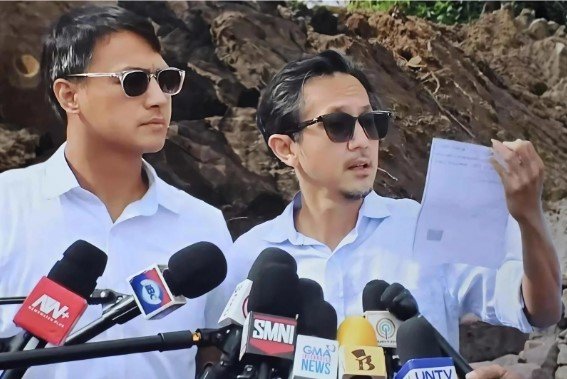
In a story which first appeared on the Bilyonaryo news portal, a French-Filipino businessman by the name of Christophe Bariou and celebrity actress Nadine Lustre urged Dizon to consider looking into Siargao where crooks in the guise of public works are “breeding graft” in cahoots with local politicians.

“I respectfully call on Secretary Vince Dizon of the DPWH, whose ongoing efforts to address corruption seem genuine, as well as on every national agency investigating the misuse of public funds, to include Siargao Island among their priorities for review and reform,” Bariou said.

ENDURING HARASSMENT

Bariou, who has lived on the island for 11 years, said he decided to break his silence after enduring years of harassment, intimidation, and alleged extortion attempts from local politicians. 

According to him, behind the beautiful island beauty lies a mystery, which if investigated would drag prominent families.

“Everyone accountable must be investigated and exposed if found guilty.”

He said corruption has long undermined Siargao’s development, environment, and people’s welfare — “Siargao deserves accountability… Silence only helps the guilty,” Bariou added.

UNION-MALINAO BRIDGE

Barrio recounted how he and actress Nadine Lustre opposed the Union-Malinao Bridge project, which he claimed had falsified approval documents and lacked the legally-required environmental impact assessment. 

Amid red flags, the Department of Environment and Natural Resources (DENR) was forced to step in — and eventually stopped the project over environmental and procedural violations.

“Before the elections, individuals claiming to represent certain politicians approached Nadine and me, offering to ‘resolve’ the bridge issue if we provided P50 million in cash,” Bariou averred.

“When that obviously failed, they proposed, ‘join us and support us during these local elections and maybe we can sit down and talk about the bridge.”

He said their refusal led to waves of harassment, including random business inspections, delayed permits, and unauthorized soil testing on his property. “My business permit renewal was unlawfully put on hold.” 

UNDERCOVER PROBE

“When ARTA (Anti Red Tape Authority) investigated further and sent hidden agents on site, investigators from Manila were shocked by the level of violations, lawlessness, and absence of due process rampant here.”

Bariou said that during  the 2021 Typhoon Odette’s aftermath, relief goods were allegedly diverted and repackaged for political purposes, while logging operators from outside the island were given special permits to exploit locals and harvest remaining trees.

“I am disgusted by the cycle of corruption, political bullying, both online and offline, and vote-buying funded by public money,” an obviously pissed off Baiou sighed.

“For decades, these acts have rigged local elections, compromised the future of an entire generation, and damaged the environment.”

He ended his post with a direct appeal for justice and reform. “No Filipino, especially those most vulnerable, should live in fear of speaking out or demanding accountability from those they elect and trust to serve them.” 

NOT JUST SIARGAO

In Biliran, one of the country’s smallest and newest provinces in Eastern Visayas, Vice Gov. Roselyn Espina-Paras owns percent of the Roving Premier Contractors Inc., which she co-founded. She has been in public office since  2022.

Roving Premier Contractors Inc. has bagged P1.03 billion in DPWH projects since 2020, all of them in Biliran. That amount represents 45 contracts, 44 of which were awarded to the company by the lone district engineering office of Biliran. 

Another project that went to Roving Premier was funded by the Region 8 office. Roving Premier, meanwhile, exclusively oversees public works projects in Biliran.

Three construction firms have secured slightly higher contract values than Roving Premier in Biliran, but all are based outside the province and have established good business in other parts of Eastern Visayas.

Except 2007 to 2010, Biliran has been represented in Congress since 1995 by the Espinas. Since 2019, Roselyn’s brother, Gerardo Espina Jr., then vice chair of the appropriations committee. 

Rappler has repeatedly reached out to Vice Governor Espina-Paras via her Facebook account, Rep. Espina via his office-provided email address, and Roving Premier via its SEC-listed email address. Interestingly, not one responded.

NO OUTSIDERS ALLOWED

Roving Premier has total assets worth P112 million as of August this year and began bagging contracts with DPWH in 2020.

In its first year, it won P105 million worth of projects, its biggest year so far was in 2022, when it got P350 million in projects. That year also coincided with elections.

For the first eight months of 2025, Roving Premier obtained P281 million contracts, with 38 of 45 contracts related to flood control and the rest are road projects.

Roving Premier holds a category B license with the Philippine Contractors Accreditation Board, valid until July 2026 that allows it to undertake projects with contract costs of up to P150 million. Its license rating means the company has met the minimum net worth of P10 million, and has completed a single project valued up to P75 million.

Out of its 45 projects, the biggest is a flood control structure in Biliran town in joint venture with EZJones Construction. Roving’s largest project without a partner is the construction of another flood control structure along the Biliran circumferential road in the capital town of  Naval.

Based on the DPWH’s online tracker, eight projects are still tagged as ongoing even though the deadline for completion has already lapsed.

TIGHT FAMILY FIRM

Based on the Articles of Incorporation filed with the Securities and Exchange Commission (SEC), Roving Premier has five incorporators, essentially the founders of the company. 

  • Vice Governor Roselyn Espina-Paras
  • Irving Doyle Paras, husband of the Vice Governor
  • Asuncion J. Espina, mother of the Vice Governor
  • Bernaldita Paras
  • Mierven Daniel

As of August 2025, the owners are the following, based on the company’s General Information Sheet filed with the SEC: Vice Governor Espina-Paras – owning 40 percent, her husband Irving Doyle Paras, son Jose Antonio E. Paras, Jose Gerardo Ong and Jacqueline Rose E. Paras with 15 percent apiece.

Prior to her position as vice governor, Roselyn was a provincial board member from 2022 to 2025. She did not divest her shares in Roving Premier for the duration of her term. Her clan is deeply embedded in the political fabric of Biliran.

AN ESPINA EMPIRE

Her siblings are also occupying elective positions in the province — Gerardo “Gerryboy” Jr. is congressman, and Rogelio “Roger” Espina is the incumbent governor.

Their other sibling Rudy Espina is mayor of Kawayan town, with his son Jake Espina as his vice mayor.

Governor Espina’s daughter Gretchen is the incumbent mayor of Naval, Biliran. The Vice Governor’s son, Jose Antonio “Anton” Paras, still president of Roving Premier as of its latest filing, is a councilor in the same municipality.

The scandal has ignited interest in conflicts of interest, which the law says, public officials should avoid.

President Ferdinand Marcos Jr. has identified as a priority measure a bill that disqualifies relatives of government officials up to the fourth degree of consanguinity from participating in the bidding of government projects.

Lean COA Team Drafts Reforms To Deter Graft

0

UNDERMANNED COMMISSION ON Audit (COA) after finding itself in a fix from one of its commissioners, drafted measures and collaborated with other agencies to strengthen its regulatory powers to prevent a repeat of graft and corruption on account of its overworked audit staff.

This was the commitment made by COA chair Gamaliel Cordoba amid findings that the contract for a new COA building at its Quezon City headquarters was awarded to a contractor with ties — if not directly linked – to the wife of Commissioner Mario Lipana, who has gone abroad “on medical leave” August 1.

Records reviewed by the Right to Know, Right Now (R2KRN) coalition showed that the Department of Public Works and Highways (DPWH) awarded in 2021 the P959-million contract for the new COA building in Quezon City to the joint venture of R.U. Aquino Construction and Development Corp. and Le Bron Construction.

Le Bron Construction, a sole proprietorship, is the main joint venture (JV) partner of Olympus Mining and Builders Group Phils. Corp., a construction company headed by the commissioner’s wife Marilou Laurio-Lipana.

A review of Olympus’ DPWH contracts from 2023 to 2025 showed that it entered into JVs with Le Bron in nine out of 22 contracts during that period, said a recent Inquirer report.

Le Bron’s authorized managing officer, Moises Nicdao, is also among the incorporators of another firm, Iron Ore, Gold and Vanadium Resources Inc. (IOGVRP), where Mrs. Lipana, using her maiden name Marilou G. Laurio, was listed as president based on an offshore mining project scoping document in 2021.

Ramon Aris Lipana is also listed as IOGVRP incorporator based on Securities and Exchange Commission records, though his connection to Commissioner Lipana remains unclear.

Le Bron holds a substantial public works portfolio of 235 DPWH contracts across Luzon and the Visayas from 2016 to 2025 worth a total of P15 billion, based on the DPWH infrastructure website.

BUSINESS AS USUAL

R2KRN noted that the firm was blacklisted from July 31, 2017 to July 7, 2018, but was still awarded 21 contracts worth P514.3 million between 2017 and 2018.

“There is little question [that] the Lipanas and Nicdao have ties that they have parlayed into a web of contracts across multiple types of infrastructure projects and supplies of various goods and services, usually as joint-venture partners,” R2KRN said.

R2KRN is a network of advocates from the academe, labor sector, the youth, civil society organization and media campaigning for the passage of the Freedom of Information (FOI) law and the promotion of FOI practice in the country.

CONFLICT OF INTEREST

Commissioner Lipana was not yet part of COA when the new COA building contract was awarded, R2KRN noted but that he was then a senior COA officer.

Before his appointment as commissioner, Lipana headed the COA regional office in Calabarzon (Cavite, Laguna, Batangas, Rizal, Quezon or Region IV-A) and concurrently led the Intelligence and Confidential Fund Audit Office, which reviews the liquidation and use of confidential and intelligence funds by national and local agencies.

Republic Act 6713, or the Code of Conduct and Ethical Standards for Public Officials and Employees, requires divestment upon assumption of office and forbids the transfer of interest to spouses and relatives within the fourth degree of consanguinity.

“Viewed against these legal standards, the circumstances surrounding Commissioner Lipana and his wife raise serious questions of conflict of interest,” Inquirer cited the R2KRN report written by Nepomuceno Malaluan, Malou Mangahas and Jenina Joy Chavez.

Even if Commissioner Lipana had no role in auditing DPWH projects involving his wife’s company, R2KRN insists that it “still stands that the new headquarters of the nation’s audit institution was awarded to a contractor that had a business association with the family of one of its senior officials.This betrays the deeper institutional entanglements that now confront COA,” it said. 

“Indeed, while a new home for the country’s supreme audit institution was being built, the very foundations of its independence were being eaten away like wood by termites from within.”

LONGER PARTNERSHIP

The Le Bron-Olympus partnership extended far beyond the COA compound, the coalition added.

From 2016 to 2025, Olympus bagged P1.89 billion worth of infrastructure projects from the DPWH—mostly flood control structures and access roads in Bulacan—including nine JVs with Le Bron Construction.

Many of these projects fell under Bulacan’s first district engineering office, whose former officials Henry Alcantara and Brice Ericson Hernandez have admitted before the Senate blue ribbon committee to kickbacks, bid rigging, and substandard and “ghost” projects.

Alcantara told the Senate on September 23 that Commissioner Lipana personally requested a list of flood control projects for Bulacan and later managed to insert P500 million worth of these into the 2023 unprogrammed appropriations, followed by P400 million in 2024 and another P500 million in 2025.

Former DPWH Undersecretary Roberto Bernardo confirmed in an affidavit that Lipana had sought introductions to Bulacan DPWH officials.

The Office of the Ombudsman earlier confirmed that it has started conducting a fact-finding investigation into Commissioner Lipana since these allegations surfaced.

IMPEACHABLE OFFENSE

Meanwhile, Sen. Francis Pangilinan expressed belief that such an act could constitute an impeachable offense for Lipana, who was appointed by former President Rodrigo Duterte in 2022 with a term expiring in 2027.

R2RKN challenged the COA to “to apply its own ethical and administrative standards impartially. Whether through formal inquiry, recusal, or administrative review, its leadership and personnel must address questions that reach deeply into its own credibility as the nation’s guardian of fiscal integrity.”

The coalition asked the DPWH to review the contracts involving Olympus and its JVs and related contractors, and for Congress to exercise its exclusive authority to initiate impeachment proceedings if the facts establish ethical or constitutional violations.

It also asked the Independent Commission for Infrastructure to look into the connection between Lipana, COA, Olympus and Le Bron, especially since one of the contracts involved one of COA’s own infrastructure.

SWEEPING REFORMS

COA chair Cordoba told the Senate Finance panel that they have launched internal investigations and sweeping reforms to strengthen transparency and restore public trust.

Cordoba confirmed that the agency is now investigating its own auditors for possible negligence or complicity in the irregularities flagged in several DPWH projects.

The results of the probes are being turned over to COA’s Internal Affairs Office for possible sanctions. In some cases, findings have already led to the suspension of DPWH engineers “implicated in ghost or non-existent projects” through the Office of the Ombudsman.

He cited the DPWH Bulacan First District Engineering Office as a key focus of the probe, where resident auditors handled 11 municipalities and three cities—an extensive coverage that may have led to oversight gaps.

“We are looking at every layer of accountability. Those who failed to act or allowed wrongdoing to happen will be held responsible,” Cordoba said.

Periodic reshuffles to avoid familiarity with the agencies they monitor will also be undertaken and COA officials and personnel will be required to declare any personal or financial interests tied to their assignments to prevent conflicts of interest.

“We recognize the limitations in manpower, but we are instituting stronger oversight systems. Our fraud auditors will conduct random checks to ensure resident auditors are doing their jobs,” he said.

MANDATORY GEOTAGGING

Among the most significant changes: mandatory geotagging for all infrastructure projects implemented by national agencies, state corporations, and local governments.

COA Commissioner Douglas Michael Mallillin said the audit body is preparing a memorandum circular requiring the use of geotagging for all infrastructure projects, not only those under DPWH but also the National Irrigation Administration (NIA), Department of Health (DOH), government-owned and controlled corporations (GOCCs), and local government units (LGUs).

“Alam natin na ang DPWH, NIA, DOH, and not only national agencies pati mga GOCC, pati mga LGU po ay may infrastructure projects,” Mallillin said.

The move follows earlier COA investigations into several DPWH projects in Bulacan, where auditors discovered that some contractors had falsified geotags—using actual project photos but linking them to incorrect locations. “We will pursue criminal charges against anyone found tampering with geotags or falsifying documentation,” Mallillin warned.

COA will now use satellite-based verification for greater accuracy and deploy fraud auditors to conduct surprise inspections.

To prevent another corruption scandal COA is eyeing geotagging and pre-audits in the implementation of infrastructure projects and system integration with departments on infrastructure in the country.

“We are also discussing system integration with the departments involved in infrastructure. This means that the systems of DPWH, PCAB, PhilGEPS, SEC, and BIR will be unified to function as a single portal.”

“If we establish this portal, all agencies will be able to verify with the SEC and BIR the contracts, such as their NFCC (Net Financial Contracting Capacity) and LCC (Legal and Contracting Capacity), so everything will align).”

Lastly, he disclosed that COA is also looking at a pre-audit of projects by examining government transactions before funds are disbursed to ensure that projects will not be hounded by irregularities.

COA recently submitted four new Fraud Audit Reports (FARs) to the Independent Commission for Infrastructure (ICI), uncovering more ghost and mismatched flood-control projects in DPWH Bulacan’s 1st District Engineering Office (DEO).  The latest batch amounting to P360 million in total — covers projects implemented by M3 Konstract Corp., SYMS Construction and Trading, and Amethyst Horizon Builders and General Contractor and Development Corp.

Flagged, Dragged

0

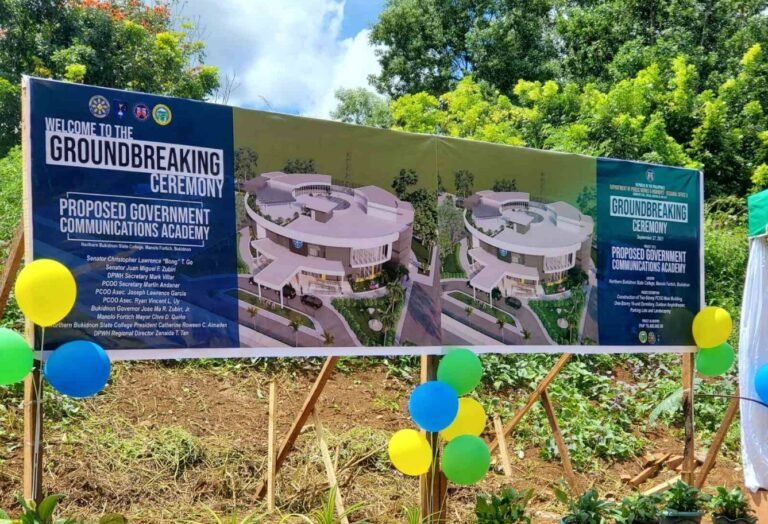
FROM HOW IT looks, another political appointee under the previous administration will be made face the Independent Commission for Infrastructure (ICI) for the construction of a building in Bukidnon.

The political appointee referred to is former Presidential Communications Office (PCO) Secretary Martin Andanar, who is neither an engineer nor connected to the Department of Public Works and Highways (DPWH).

Citing documents obtained from the Commission on Audit (COA), Senator Sherwin Gatchalian flagged an ongoing construction of a “training building” in Bukidnon.

According to Gatchalian, PCO has no business going into construction, even as he cited the purpose for which the PCO (formerly referred to as Office of the Press Secretary) was created.

Under its mandate, the PCO is tasked “to develop and manage the strategic communications of the President and the Administration to ensure a whole-of-government approach through the implementation of unified messaging.”

COA 2024 REPORT

Citing COA 2024 report on the PCO, Gatchalian said the agency contracted the DPWH in 2019 for the construction of the Government Communication Academy in Bukidnon (Phase II) worth P45.7 million.

The senator however finds it rather unusual for COA to find a similar project but with an amount so much bigger than what has been stipulated in the 2019 contract. 

COA’s 2020 to 2023 report listed a similar project amounting to P79 million. The facility has no budget allocation for 2026, as funds have already been allotted for the completion of the remaining 10% of construction, according to Gatchalian.

“Bakit may communications office ang PCO sa Bukidnon?” a visibly pissed off senator asked.

PCO  RESPONDS

For his part, PCO Secretary Dave Gomez, who has yet even breached his first 100 days in office, said, “I completely agree with Sen. Gatchalian’s opinion.”

“The previous administration should have not engaged in such a public works project that falls outside our core responsibility,” Gomez averred.

The PCO earlier said the project, initiated under the Duterte administration, was originally intended as a training center for communication offices under Malacañang and its attached agencies.

Andanar, who was the PCO secretary when it contracted the DPWH for the project in 2019, has yet to issue a statement regarding the matter.

Gatchalian said, “We’ve already spent P124 million, and the project is 90% complete. If we don’t finish this, it becomes a white elephant.”

NO USE TO PCO

In what looks more like a “damage control,” PCO hinted at donating the facility to the Northern Bukidnon State College as soon as the structure is finally completed.

“The building’s donation to the Northern Bukidnon State College is already being finalized. Maraming mga mag-aaral sa atin state college sa Bukidnon ang makikinabang dito,” Gomez said. 

Good Enough, Ain’t Enough

0

MONTHS AFTER BEING dropped from the greylist of countries notoriously famous for money laundering and terrorism financing, the Philippines seemed on its way back into the roster amid suspicions that trillions of pesos lost to systemic government corruption are finding its way into financial institutions elsewhere.

Speaking before the Financial Executives Institute of the Philippines (Finex), business tycoon Manuel V. Pangilinan expressed apprehensions over the issues of systemic corruption in the Philippines.

Pangilinan particularly hinted at the Philippine political landscape amid allegations of systemic corruption hounding government flood control projects.

According to Pangilinan, failure to address anomalies in the government could adversely affect the country’s credit rating, possibly resulting in slower economic growth — especially if “institutional responses are regarded as inadequate.”

Efforts to lure foreign investors may also be sidelined despite measures primarily designed to ease stiff requirements in doing business in the country.

CREDIT RATINGS

For one, credit ratings are deemed essential for investors seeking funds from financial institutions. Poor credit ratings prevent businesses from borrowing funds.

Interestingly, Standard & Poor’s credit rating for the Philippines currently stands at BBB+ with a positive outlook, inching it closer to its dream “A” rating.

Notwithstanding the BBB+ rating, the Management Association of the Philippines (MAP) claimed investor sentiment remains bearish because of corruption surrounding anomalous flood control projects.

According to Alfredo Panlilio in his capacity as MAP president, the public expects the government to take concrete action and show that it “means change and means to clean up itself,” to help improve local and foreign investors’ perception.

But the Department of Economy, Planning and Development doesn’t seem to agree even as it claimed that credit ratings won’t be affected by the scandal with the creation of the Independent Commission for Infrastructure (ICI) with a marching order to dig into the “systemic corruption” that President Ferdinand Marcos Jr. exposed.

LACKING COMPETENCY

Despite assurances from the government, Pangilinan expressed belief that the “massive corruption” in the government can be solved, but over the long term and in parts.”

According to the tycoon who forms part of the country’s lists of 50 wealthiest individuals, the problem facing the government is not limited to corruption even as he hinted at the need for the government to come up with “competent financial executives.” 

“If we want better governance in our country, we must have competent financial executives all round. It isn’t just about catching crooks—it’s filling the gaps with financial executives with competence and integrity. Corruption survives not because bad people are smart, but because good people are absent.”

LOOSE CHANGE

In the process of the ICI investigation, the Anti-Money Laundering Council (AMLC) secured freeze orders on “illegally amassed wealth” by personalities forming part of what former Senate Blue Ribbon Committee chairman Panfilo Lacson referred to as a well-entrenched syndicate.

“Several of these properties are linked to a former high-ranking government official suspected of playing a central role in the procurement process of the questioned flood control project contracts,” it said.

A total of 1,671 bank accounts, 58 insurance policies, 163 motor vehicles, 99 real properties, and 12 e-wallet accounts have been ordered frozen since the first freeze order was issued by the CA last Sept. 16.

“The total estimated value of frozen assets has reached P4.67 billion, with the figure expected to rise as additional orders are secured and new leads are uncovered,” AMLC said in the statement.

However, the amount of the assets “secured” by the AMLC remains far from the trillions of pesos that the government lost in ghost flood control projects alone.

BIZMEN AS PARTNERS

He however clarified that the problems besetting the country would not have happened with businessmen in cahoots with crooks. 

“Businesses are inescapably part of public life, meaning they are not free from accountability and scrutiny.”

Pangilinan also urged fellow businessmen and business leaders to join critical institutions, including media, the academe, courts and the Church, to apply “pressures against coercion and corruption.”

“It will lessen the cost of doing business, the inequities in wealth created by corruption.”

Wet Season May Last Until February 2026

0

THE PERENNIAL PROBLEM on floods brought about by the rainy days — and the government’s failure to come up with “existent” flood control projects, may last until the first quarter of next year.

This comes as the Philippine Atmospheric, Geophysical, and Astronomical Services Administration (Pagasa), urged Filipinos to prepare for above-normal rainfall as La Niña phenomenon would likely affect the Philippines.

Citing its own data, Pagasa experts observed its presence in the tropical Pacific Ocean condition since September.

La Niña is a weather phenomenon embarking on unusually cooler than average sea surface temperatures in the central and eastern equatorial Pacific.

The sea surface temperatures, according to the government weather bureau, showed signs of cooling before it eventually reached the La Niña threshold last month.

Pagasa said climate models indicate that this La Niña episode may last at least until March — or February at the very least, with the east section of the country at the receiving end of the above normal rainfall.

“This can be due to increased chance of tropical cyclone activity within the Philippine Area of Responsibility (PAR) and combinations of rain-bearing weather systems, which may cause floods, flash floods, and rain-induced landslides,” the weather bureau said.

With still two and a half months before 2025 comes to close, the Philippines already had 17 tropical cyclones. 

While the annual average number of typhoons entering the Philippine area of responsibility is 20, Pagasa said that such would go beyond “the usual,” based on the agency’s projections.

For the current month, Pagasa hinted at the possibility of the Philippines being hit by two to four tropical cyclones, three in November, two in December and one a piece in the first three months of 2026.

The weather bureau previously provided the following estimates for the number of tropical cyclones that may develop within or enter PAR in the next six months:

Aside from tropical cyclones, inclement weather disturbances like low pressure areas, the intertropical convergence zone, easterlies, the shear line, localized thunderstorms, and the northeast monsoon or amihan (which is expected to begin soon) may also occur.

Environmental Excellence Award

CLARK DEVELOPMENT CORPORATION is honored to receive the Environmental Excellence Award (Large Company Category) from the Metro Angeles Chamber of Commerce and Industry, Inc. (MACCII). The recognition was presented during the MACCII Green Summit held on October 10, 2025, at the Widus Grand Ballroom in Clark, Pampanga. This meaningful distinction affirms CDC’s commitment to sustainable and responsible development. CDC is headed by Atty. Edgardo D. Pamintuan as chairman and Atty. Agnes Devanadera, president and chief operating Officer. 

Ongchuan’s Transformative Leadership 

0

AWAY FROM THE ignoble performance of high-ranking officials in government and even lawmakers in both Houses of Congress now embroiled in the flood control scandal, there still exist lawmakers for their sterling work and transformative leadership. 

For one, former governor and current Northern Samar representative Edwin Ongchuan  received two presidential recognitions for his effort to improve the business climate and for pioneering the Local Green Lanes for Strategic Investments in his province.

In Eastern Visayas, where there are 136 municipal local chief executives (LCEs), 7 city LCEs and 6 provincial LCEs, the Civil Service Commission (CSC) chose Ongchuan as the awardee of the 2025 Gawad Lingkod Bayan ng Pangulo, one of the highest honors bestowed upon public officials in the country.

The recognition significantly strengthened Northern Samar’s investment landscape through a combination of strategic policies, inclusive programs and dedicated peace-building efforts. 

A standout initiative when he was governor was the Kauswagan Village, a project that not only provided housing but also integrated livelihood opportunities for residents that  wove together the threads of peace, stability and economic empowerment, elevating Northern Samar as an emerging hub for sustainable development in the region.

According to the Provincial Economic Development and Investment Promotion Office (PEDIPO) led by it’s director John Allen Berbon, the award marks a significant milestone in the province’s investment journey. 

The Gawad Lingkod Bayan ng Pangulo is awarded to exceptional public servants whose contributions embody integrity, excellence, and unwavering dedication to the Filipino people.

Look Ma, She Gives Birth To A Movie Projector

MAKING THE IMPLAUSIBLE plausible.

As long as one is gifted at defying tradition, rule, logic etc. logically, why not?

That’s the wonder of cinema no matter the era.

That director Shirin Dalisay (Nour Hooshmand) has given birth to a movie projector that pours out black and white images from its reddish mouth at the end of the film is possible?

CINEMALAYA ENTRY

It’s an intriguing denouement in Sari Dalena’s “Cinemartyrs,” one of the entries to the 2025 Cinemalaya Independent Film Festival.

“Cinemartyrs,” a foray into the recreation in film of massacres in Philippine history, isn’t only an allegory; or a symbol; or as the young filmmaker Dalisay would describe as a “poetic documentary” (in her sort of defense as a proponent for a grant from an art and culture agency), it is an amalgam of modern screen approaches if not partly an avant-garde piece.

It is a creative doc as well in its entirety of the many unknown heroes, reel or real, who haven’t been given enough care, much less recognition, not only by the citizens (read: moviegoers) but by the Philippine movie industry itself.

WOMEN AS MARTYRS

Too, it is a tribute to Filipino woman-directors of yore (martyrs in their own way) like two of the pre-war film pioneering artists Carmen Concha and Consuelo P. Osorio and post-war lady helmer Susana C. de Guzman.

In a triptych panel interview simultaneously conducted by Prof. Lena (Raquel Villavicencio, who also portrayed and was made up as the three ladies), Concha confessed that she sacrificed her directing career with only one movie titled “Dream” because she married early.

De Guzman said she got her break in directing for LVN Pictures when she agreed to direct Tony Arnaldo (a matinee idol during the time) who became her husband.

Osorio and de Guzman disclosed that they were trusted by their actresses more than their male counterparts who would probably court these screen goddesses.

POETIC LICENSE

Incidentally, luckily, interestingly, Dalena got an exclusive voice material of Susana as interviewed by the late film archivist Teddy Co who had preserved an authentic tape conversation artefact that lends veracity and depth to the homage.

In Dalisay giving birth to a gadget is more than “poetic license” for Dalena knows how to put her art where her mouth is. They both are iconoclast. They know the meaning of innovation, common sense and finetuning. 

In so many scenes, the feminism in them suffices like unofficially assigning on-the-spot the assistant director understudy to a local named Medsfar (Bong Cabrera), an interpreter, because Dalisay is informed that in the Islamic community of the Tausug, a woman isn’t allowed to command anyone, for one.  

What is more engrossing in “Cinemartyrs” is the employ of historical facts, presented in an engaging manner like the Philippine-American war where the Filipino patriots fought with fortitude only to be massacred by the fully-armed Americans.

HEROISM EXEMPLIFIED

 However, defeated, the heroic deeds of the revolutionaries are exemplified if only and above as Philippine cinema martyrs.

 Another forgotten war where Filipinos battled was the Bud Dajo mayhem in Jolo on March 5, 1906 where thousands of Muslims, male and female, young and old, were slaughtered mercilessly by American soldiers.

Dalena doesn’t run out of artistic devices to interpret Philippine history—animation, dance, film within a film etc.

Even the howling ghosts of murdered Filipinos received from audio sets of soundmen aren’t deus ex machina but a foreshadowing of supernatural elements to wreak havoc.

The use of different types of cameras, if only to limit the setting of the narrative, is apparently a conscious play of Rashomon effects or simply to illustrate the fast-changing modes of film tech.

Notarized Notoriety

0

Truth is not only violated by falsehood; it may be equally outraged by silence.

                               — Swiss philosopher Henri-Frédéric Amiel

MORE THAN TWO weeks ago at the hearing of the Senate Blue Ribbon Committee on anomalous flood control projects, former Philippine Marines staff sargeant Orly Regala Guteza, a witness presented by Sen. Rodante Marcoleta, testified that he delivered suitcases containing money to the residence of former House Speaker Ferdinand Martin Romualdez and resigned Ako Bicol party-list representative Elizaldy “Zaldy” Co.

Shortly after Guteza submitted his affidavit to the committee, lawyer Petchie Rose Espera, whose signature and notarial seal were in the document, issued a statement denying “notarizing, signing or participating in the preparation of the said document.” 

She further disclosed that the affixed signature in the affidavit and notarial details attributed to her were falsified and unauthorized.

Espera’s disclaimer cast serious doubts about the credibility of Guteza and his allegations, including the integrity of the people who had a hand in his sudden appearance in the hearing.

But in an apparent effort at damage control, the ex-Marine sargeant’s handlers stated that even if the notarization was falsified, his statements deserved consideration because he was sworn to by the committee before he read his testimony.

WORTHY OF BELIEF? 

Obviously, the attempt to make it appear that his statements were made under oath before a notary public was aimed at giving them the credibility usually accorded to or is enjoyed by notarized documents.

The common perception of those documents is that their contents are truthful or worthy of belief because their affiants know that they could be held liable for perjury if their statements were later proven false.

Accordingly, the unabashed falsification of the notarial certification submitted in the Senate proceeding has drawn public attention, triggering recollection in the already diminished level of confidence in the trustworthiness of documents submitted to government offices and business establishments, in particular, banks and financial institutions.

ACCEPTABLE SYSTEM

In previous times, when official and commercial papers that bore the signatures of the parties were submitted, the genuineness of the signatures was presumed and no additional documents were needed to authenticate them.

But not anymore.

Still, I recall during my bachelor days when I worked as a clerk with my dad in the law office Atty. Julian Tubig on Pasadena Street near the Pasay City Hall complex on F.B. Harrison. There, I witnessed first-hand the several sheets of signed documents that were either “fill-in-the-blanks” or simply without details and filled in later as affidavits later on. 

Frankly, this has been the wont of most notary public lawyers as this system of accepted trend gives him the time to perform other tasks outside his office or gallivant else where while still aware that his office earns it’s daily bread. 

Added to this now is the proliferation of fake and falsified documents that have been made easy through the use of computer-generated signatures and other AI (artificial intelligence) techniques, no longer makes that trusting attitude acceptable.

IT’S S.O.P.

Today, it is standard operating procedure that signatures in commercial or business documents must be accompanied by a photocopy of a government-issued identification card (or sometimes two depending on the significance of the document) of the signatory that bears his or her signature.

And below that, the signatory must sign three times and indicate the date of his or her signing. These requirements are aimed at ensuring that the document was really signed by the person whose signature appears on it.

These requirements apply even if the document is notarized by a notary public or sworn to before a government employee who is authorized to authenticate documents. 

With that incident in the Senate hearing, notarization may cease to be looked at as a reliable measure of the truthfulness or credibility of statements made in notarized documents. It looks like the threat of being held liable for perjury or making false statements under oath no longer makes telling the truth an essential element in the preparation and submission of sworn statements.

This would be unnerving for transactions that, for example, involve huge amounts of money or require compliance with some obligations in long-term contracts that are based on commitments made under oath.

WHO’S THE MASTERMIND?

In light of the misuse of the notarial process, some businesses cannot be faulted if they adopt stricter rules in the submission of documents that are required to be duly notarized. That may include giving a copy of the notary’s notarial commission to make sure he or she is authorized to perform the notarial act and, like the signatories, a photocopy of a government-issued identification that bears his or her signature.

If that happens, the blame should go to the mastermind of that poorly conceived caper in the Senate hearing. Oh, for the good old days when the Senate was composed of men and women of proven probity and integrity—not actors or celebrities whose credentials do not include knowledge of the law and Constitution and the only reason they were elected is because of their popularity. 

FOR your comments or suggestions, complaints or requests, just send a message through my email at cipcab2006@yahoo.com or text me at cellphone numbers 09171656792 or 09171592256 during office hours from Monday to Friday. Thank you and mabuhay! 

The Day My Body Betrayed Me (and My Eyelids Told the Story)

0

YOU EVER LOOK in the mirror and think, “Wow, I look exhausted,” except you’re not? You slept eight hours, downed two espressos, and still look like your eyelid’s done with life. Congratulations, diva — your muscles are ghosting you like an ex with commitment issues. Meet Myasthenia Gravis (MG) — the condition where your body literally stops replying.

What The Hell Is It, Exactly?

In a normal, well-behaved body, nerves tell muscles, “Move!” and the muscles politely do it.

In MG, your immune system crashes the party, blocking those signals with rogue antibodies. The result? Weakness, fatigue, and a droopy eyelid that looks like it just got bad news.

It’s not contagious. It’s not “just tiredness.” And no, it’s not multiple sclerosis in disguise. It’s its own brand of chaos — rare, sneaky, and dedicated to turning brushing your teeth into a CrossFit event.

Symptoms: When Your Body Hits Airplane Mode

With MG, your muscles don’t just get weak — they get unreliable. The more you use them, the faster they peace out. Rest helps, but who has time for that when gravity’s already winning?

Droopy eyelids (ptosis): Your eyelids unionized and went on strike.

Double vision: Fun for dessert, deadly for driving.

Weak arms and legs: Groceries become an extreme sport.

Slurred speech or swallowing issues: You sound like your Wi-Fi’s buffering.

Breathing problems: When MG goes full drama queen.

Symptoms fluctuate — you can look fine at breakfast and by dinner your face is melting like cheap mascara in Manila humidity. People assume you’re tired or drunk. Spoiler: you’re neither — your muscles just ghosted again.

Diagnosis: CSI—Body Edition

Because MG is rare, diagnosis feels like starring in a long episode of CSI: Human Edition. You bounce from doctor to doctor while everyone blames “stress,” “aging,” or “screen time.”

When someone finally suspects MG, the plot thickens:

Blood tests check for those misbehaving antibodies.

EMG tests send tiny electric zaps to confirm your muscles’ betrayal.

CT or MRI scans see if your thymus gland is secretly running the show.

When your doctor finally connects the dots, they’ll look like they just solved a Netflix mystery. You’ll just be relieved someone finally believes your eyelid isn’t being dramatic.

Treatment & Prognosis: No Cure, But Plenty of Comebacks

No magic pill, no TikTok hack — MG’s that clingy ex who won’t leave. But it’s manageable. With the right meds and pacing, you can live a long, semi-glitchy, caffeine-fueled life.

Pyridostigmine helps your nerves yell louder.

Steroids or immunosuppressants calm your immune system when it acts like a toxic coworker.

Thymectomy (removing the thymus) can help, because that organ loves drama.

A myasthenic crisis — when breathing muscles take a vacation — is serious but treatable. Most folks with MG work, travel, flirt, and thrive. Just with more naps and stronger boundaries.

The Acupuncture Angle: When East Meets “Eh, Why Not?”

Acupuncture won’t magically “un-ghost” your muscles, but some MG patients swear it helps — and honestly, who argues with a few thousand years of organized poking?

Science isn’t conclusive, but some report:

Less fatigue

Better sleep

Less stress (and stress flares MG faster than chismis in a group chat)

Think of it as your sidekick, not your savior — Robin to your neurologist’s Batman. If your doctor’s cool with it and your wallet’s game, it might just help you feel more human.

The Certified Prick Bottom Line

Myasthenia Gravis is that unreliable friend — sometimes shows up, sometimes doesn’t, always brings drama. It’s inconvenient, unpredictable, and occasionally terrifying — but not a death sentence.

Yes, your muscles will ghost you. Your eyelids will mutiny. But MG doesn’t get to run the show — you do.

Take your meds. Befriend your neurologist. Try acupuncture if you’re curious. Rest without guilt.

Because even when your muscles ghost you, your willpower doesn’t have to. You’re still the main character — droopy eyelid, trembling hand, and sarcastic wit intact.

—The Certified Prick

The Health Column That Doesn’t Sugarcoat (Unless It’s About Diabetes)

Limitless Chaos

0

AFTER THE REVELATION of the Discayas’ billions of profits, theacquisition of more than 30 luxury cars and P7.1 tax evasion, given their business of providing supposed flood control projects and other infrastructure improvements for flood-prone Philippines, the Inquirer headlines “FARM-TO-MARKET ROADS ‘OVERPRICED’ BY UP TO 70%.” 

More, another front-page news: DPWH INFRA PROJECTS FOR AFP ALSO FLAGGED.” 

Everybody now knows that many other private infrastructure contractors with the Department of Public Works and Highways (DPWH) have been in the same kind of corrupt profit-making for many years now. And, most likely too, during the incumbency of Mark Villar as DPWH secretary, this so-called SOP between the Congress’ “Honorable Gentlemen” and private infrastructure contractors have been the ‘routine procedure’ all along. This is most likely connected to the fact of questionable insertions by the senators and congressmen in finalizing the country’s yearly trillion-peso budgets, carried outduring the secretive congress bicameral assembly.  

PEOPLE’S MONEY

One impact that disturbs the Filipino people about this “stealing of their money” in these DPWH projects is that a district engineer can afford to lose a billion in one night of casino gambling! 

More disturbing given the corruption in DPWH projects is the lack of budgets for the improvement of the country’s Education and Healthcare systems. 

Moreover, how will government provide the necessary cash to provide appropriate assistance in helping the jobless set up livelihoods for themselves, or extra cash assistance for the farmers and fishermen?

To address the corruption in the DPWH, President Bongbong Marcos created the Independent Commission for Infrastructure (ICI). 

RELEVANT QUESTIONS

BUT well-meaning public officials, and social media netizens have expressed doubts about the ICI’s credibility to truly unearth the anomalies in the operations of the DPWH, and call to account the guilty senators and congressmen involved in the corrupt practices that have plagued infrastructure projects for the government. 

Relevant questions have been raised: “Many civil society organizations and people of goodwill want transparency in the ICI’s deliberations for a credible conduct of the ICI members in their investigation, but why the refusal?”  “How did these corrupt practices happen when there were supposed to have been built-in in government projects the scrutinizing eyes of the Commission of Audit (COA)Representatives.”

“Most disastrous of all, how did the DPWH Secretary manage his people, especially those officials handling sensitive positions to ensure government projects are completed on time and without any hitch?” “Didn’t President Bongbong Marcos do his own job of making sure his “alter-president” handling the DPWH portfolio carried out his department honorably, without any tint of corruption?” “Shouldn’t as chief executive of the country, President Bongbong Marcos should have taken the most appropriate serious anti-corruption stance regarding the performances of his cabinet secretaries?” “He aimed to fix up a country with so many problems by running for president (despite having been convicted by the Court of Appeals in the 1980s for non-payment of realty taxes worth millions, butallowed to run for president by Comelec whose reputation remains questionable as claimed by IT experts), but why the costly delay in discovering the corruption in the DPWH?” 

PEOPLE’S APPEAL

Countless problems of the country still remain – high unemployment; unfair wages of laborers, farmers and fishermen;no help for the Lumads and other IPs; countless homeless people; drug smugglings and marketing; red-tagging by the NTF-ELCAC, resulting in enforced disappearances, illegal detentions, and EJKs; more than 750 political prisoners still languishing in jail; China’s relentless attacks on the country’s sovereignty in the WPS; the missing P20/kg of rice; etc. 

The people’s appeal, rather, demand: “Mr. President, limit or end this chaos! Stop corruption! Work intelligently, OK?”    

Develop, Implement An Anti-Corruption Program

0

THE POINT OF awakening has come. At long last, the Filipino people have seen corruption not as an abstract evil, not as a distant crime whispered in congressional hallways, but as floodwaters seeping into their homes, as collapsed buildings burying their loved ones, as broken roads and bridges cutting their towns in half, as schools without classrooms, as hospitals without medicines. Corruption now has a face. It is not some faceless official pocketing kickbacks; it is the mud in our streets, the ruin in our lives.

And so, rightly, the people are outraged. We demand accountability.

BRAZENNESS IS BOUNDLESS

But here lies the tragedy: even as the flood-control scandals occupy the headlines, the same sordid corruption thrives in every other agency, shameless and unrepentant. BIR officers are still caught extorting money from small businesses. Land Transportation employees continue to demand grease money from ordinary drivers. Kotong cops still ply their trade along the highways. 

Bureau of Fire officials still demand bribes in exchange for positions. In jails, food for inmates is still shaved off to feed personnel. The list is endless, and the brazenness is boundless.

While we rage at flood-control scandals, the corrupt elsewhere simply smirk, emboldened by the spotlight shining away from them. They know the public anger is narrow, episodic, easily distracted. They carry on, business as usual.

Yet not everyone in government is corrupt. 

NOW IS YOUR MOMENT

Many employees are competent, committed, bleeding silently as their names are stained by the crimes of others. They were afraid before. They kept their heads down, silenced by the threat of reprisal. But now, the tide has turned. They have behind them not just their consciences but the outrage of the Filipino people.

And so the challenge: to every head of every government agency, now is your moment. 

Use this outrage, harness this momentum, and launch a campaign that is not token, not ceremonial, but real. Clean your own house. Don’t wait for the Ombudsman or the ICI or Malacañang to act. Do not outsource integrity.

Build programs that bite. Establish integrity training programs that not only identify but also monitor corrupt practices. Create early-warning systems to spot those drifting into temptation and remove them before they metastasize. 

Protect whistleblowers with ironclad guarantees so they need not fear retaliation. And most of all, lead by example. Integrity is not taught by lectures but by lives lived in the open.

This is not theory. There are anti-corruption models that work. Hong Kong’s Independent Commission Against Corruption (ICAC) broke a culture of systemic bribery by combining strict enforcement, citizen engagement, and public education. Indonesia’s Corruption Eradication Commission (KPK) proved how even the mighty can be humbled if investigative bodies are empowered and protected from politics. The Philippines can adapt these lessons. An independent anti-corruption body is vital, yes—but just as vital is the cleansing from within: every agency reclaiming the dignity of its office, every profession reclaiming its honor.

KICK OUT THE CORRUPT

To the honest people in government: unite. Reformers who have long been forced into silence, step forward. This is your time. Speak in your own backyards, in your own hallways, in your own agencies. Kick out the corrupt.

Because corruption does not fall like rain. It is planted, watered, and harvested by people. And it can be uprooted by people. 

The Filipino people have finally seen corruption for what it is: the rot that weakens every bridge, the crack that splits every school wall, the leak that drowns every household. The people are angry. And this anger, if seized and shaped, can cleanse.

Heads of agencies, the call is clear: cleanse your ranks. Reclaim your honor. Stand with the Filipino people.

Ecological Conversion Called Anew

0

IN THE OPENING of the “Raising Hope for Climate Justice”international conference in Rome on October 1 marking the 10thanniversary of the landmark encyclical Laudato Si of Pope Francis, Pope Leo XIV cited the global impact and influence ofhis predecessor’s advocacy on the environment. He then affirmed that the book’s key message of “care for our common home” is more relevant now than 10 years ago, as the challenges are not only of a social and political nature but first and foremost, a spiritual one that calls for conversion. 

RETURN TO THE HEART

The new pope, echoing the phrase “ecological conversion”used by Pope Francis suggesting a change in the human-nature relationship, added that to be true, “it must move from collecting data (on an environmental problem like climate change) to caring, and from environmental discourse to an ecological conversion that transforms both personal and communal lifestyles”. His advice: “Return to the heart, the locus/ place where external reality has most impact, where the deepest searching takes place, where the most authentic desires are discovered and ultimate identity is found … and ecological conversion can take place.” Also, he rallied for “unity and collaboration as we are one family… we inhabit the same planet and must care for it together.”

POLITICAL AND SOCIAL ACTIONS

Beyond spiritual exhortation, the pope also called on all people to “put pressure on governments to develop and implement more rigorous regulations, procedures, and controls …. and for citizens to take an active role in political decision-making at national, regional, and local levels”. Calling on all sectors down to the youth, he asserted that for the common good, there is no room for indifference or resignation.

The conference was attended by representatives from church, government, and civil society, with the Philippine delegation led by the chairperson of the Laudato Si movement, Yeb Sano who had figured prominently years before in an international conference on climate change.

PHILIPPINE CONTEXT

A largely Catholic nation, Filipinos should easily be able to grasp the spiritual meaning of caring for God’s creation – the earth our home, its awesome nature, the varieties of life, other human beings especially the poor and marginalized. But looks like the ways of the world easily blind us. Like in thinking humans are the special and dominant species, and nature only serves as resources with utilitarian and economic values leadingus to abuse them to our hearts’ content. Like leaders and influentials can steal public funds or ignore laws to satisfy their lusts with disregard to the injustice and misery they will inflict on the country and other citizens. 

In closing his speech, Pope Leo XIV posed a question he said God will ask later: If we have cultivated and cared for the world He had created for the benefit of all and future generations. 

Closing Resorts In Marikina Watershed Is Best

0

A WATERSHED LIKE that in Marikina– which not only supplies us with potable water but also shields us and our water resources from silts and sediments– should be protected, no matter what.

Watersheds are important because they regulate freshwater, providing a natural system for water storage, filtration, and distribution for communities, agriculture, and ecosystems. 

They support biodiversity by providing habitats for wildlife and plant life, offer recreational opportunities, and contribute to economic activities like food and tourism. 

Maintaining healthy watersheds is crucial for preventing pollution, controlling floods, and ensuring a sustainable future by preserving natural resources.  

Healthy watersheds are essential for providing and regulating fresh water for drinking, irrigation, and industrial use. They act as natural filters by removing pollutants and sediments, which help maintain clean water sources and reduces treatment costs for communities.

Watersheds offer numerous ecosystem services, including nutrient cycling, soil formation, and carbon storage which are vital for a healthy environment. 

The soils and vegetation in watersheds absorb and store rainfall, releasing it gradually to help control floods and prevent water scarcity. 

DENR’S BEST MOVE

The closure by the Department of Environment and Natural Resources of three resorts within the Marikina watershed– which lies within the National Capital Regions thus bolstering its importance to millions residing in Metro Manila– is the best move.

Not all economic activity is good, especially if this encroaches on a precarious natural resource like the watershed. 

The Star recently reported that DENR, under the leadership of proactive Secretary Raphael Lotilla (who assumed last June) that The Department of Environment and Natural Resources (DENR) has shut down three resorts found illegally operating within the Upper Marikina River Basin Protected Landscape in Rizal. (Like I said watersheds are protected so anything or anyone operating there are illegal structures).

The Danum Baker Resort, Erin’s Place and Lihim na Batis had been given cease and desist orders for operating without the required permits from the DENR.

CLOSED BUT NIT PADLOCKED

The closure order was served on Oct. 3 by a composite team led by DENR Assistant Secretary for legal affairs and enforcement Norlito Eneran, DENR-Calabarzon director Nilo Tamoria and Rizal provincial environment and natural resources officer Ramil Limpiada.

After coordinating with the local government of Baras, the DENR team padlocked the main gate of the Danum Baker Resort in the presence of the resort caretaker.

The team installed a chain and signage marked “CLOSED,” reinforcing an earlier notice of violation issued by the DENR.

At Erin’s Place and Lihim na Batis, which share a common entrance, the team found the main gate already locked and unattended.

To allow residents from nearby communities who rely on the route to pass through, the team opted not to padlock the gate.

Instead, a signage marked “CLOSED” was also attached on the common gate of the establishments to inform visitors and excursionists that the resorts are no longer available.

The three resorts were among nine establishments operating within the protected area that were issued either cease and desist or show-cause orders.

The DENR said that among the facilities ordered to stop operating, only the Danum Baker Resort, Erin’s Place and Lihim na Batis were found to have defied the closure order.

The remaining six establishments have since complied and ceased operations.

The Upper Marikina River Basin Protected Landscape, a critical watershed supplying water to Metro Manila and nearby provinces, has long been under environmental pressure due to illegal structures and tourism activities.

Walk Your Talk, Boying

0

EVEN BEFORE HE was appointed as Ombudsman, then Justice Secretary Crispin Remulla managed to make an impression on the members of the Judicial Bar Council (JBC) administering the selection process.

JBC recommends appointees to the Judiciary and from among the nominees, the President appoints judges and justices without need for confirmation by the Commission on Appointments.

What exactly compelled the JBC to include Boying’s name in the Final Seven from where the President made a pick?

When asked as to what he intends to do should he be appointed as ombudsman, Boying hinted at allowing access to government officials’ statements of assets and liabilities (SALN).

CIRCLE OF TRUST

Moving forward, Boying, who falls well within the President’s trusted circle, was named as the new ombudsman.

During his first day in office, Boying hinted at issuing a memorandum soon to reverse the access restriction on SALNs imposed during former president Rodrigo Duterte’s administration.

However, there’s a twist in his new position for which I seriously doubt his conviction.

“Baka ma-weaponize,” was Remulla’s reply to a media query during a press briefing, in reference to his presumption on the possibility of public officials being harassed.

If I remember it right, his predecessor retired Ombudsman Samuel Martires used the same alibi. Hence, Martires issued a policy which effectively restricted SALN for public scrutiny.

PUBLIC SCRUTINY

A lawyer that he is, Boying knew for himself that a provision under Republic Act 6783 (Code of Conduct and Ethical Standards for Public Officials and Employees) mandates each and every person in the government to make their SALN available for public scrutiny.

To be perfectly candid, wala naman dapat ikatakot kung wala silang itinatago. And besides, people in the government are called public officials because their salaries are drawn from public funds from taxes being paid by the general public.

SALNs contain the summary of government officials’ and employees’ assets and properties. This mechanism is essential to monitor public servants’ wealth. 

Previously, the public had access to officials’ SALNs, but the policy stopped when Martires came in. Martires went as far as restricting media access to SALNs for “news and communications media for dissemination to the general public.”

Discaya Couple Opts Out Of ICC Probe

0

THE SO-CALLED King and Queen of ghost projects are no longer cooperating with the investigation being conducted by the Independent Commission for Infrastructure (ICI) into the flood control scandal.

The probable reason — the Discaya couple (Curlee and Sarah) must have realized that they were duped by a former top official of the Department of Justice who promised to make them state witnesses.

In a press conference held immediately after Curlee and Sarah Discaya’s third appearance at the commission’s hearing, ICI executive director Brian Keith Hosaka admitted that the couple has opted to “invoke their right to self-incrimination.”

“Upon the advice of their counsel, they invoked their right to self-incrimination and manifested that they will no longer cooperate with the investigation being conducted by the ICI,” Hosaka told reporters.

WRONG NOTION

When sought to elaborate on the couple’s sudden decision, Hosaka hinted at the statement issued by former Public Works and Highways Secretary Rogelio Singson in his capacity as ICI member.

Hosaka disclosed part of what the Discayas said during the ICI hearing.

“Actually, they were thinking that when they cooperate with the ICI, they’ll be getting a favorable recommendation from the commission as state witnesses.”

The contractor couple allegedly took a swipe at a recent interview of journalist Karen Davila with ICI member Singson.

CANDID SINGSON

During the interview, Singson was asked to speak about the commission’s recommendation of state witnesses, for which the ICI member candidly replied — “They’re not least guilty. They are not. They are principal players.”

“Nakinabang na yang mga yan. Tama na. Nagalit na ang mga tao dahil sa kanila tapos bibigyan mo ng state protection to be able to get away from further cases and enjoy from benefits of their anomalous practice, wag naman,” he added.

Interestingly, Singson was quick to clarify that what he had just said was his personal opinion and not of the three-member body.

REBUKING DISCAYA

A visibly pissed off Hosaka then took a swipe at what looks more like a bargaining chip being used by the Discaya couple to get away from the criminal liability arising from the anomalous transactions embarking on government-funded public infrastructures.

“So because of that, they are now saying that they will no longer appear before the commission and cooperate,” he added.

Hosaka however noted that the ICI will still use the evidence, testimonies (under oath), and affidavits of the contractor couple in the past commission hearings.

Curlee is currently billeted at the Senate detention center after being cited in contempt by the Blue Ribbon Committee.

NO COMMENT MUNA

Lawyer Cornelio Samaniego III in his capacity as legal counsel of the Discaya couple refused to answer the queries of the media. 

“No comment muna,” said Samaniego, who assured that they would call for a press conference. He however did not elaborate as to when or where the press con would take place.