Saturday, March 28, 2026
Home Blog Page 36

Drug Use In The Senate

1

SENATOR ROBINHOOD PADILLA’S Political Affairs Officer, Nadia Montenegro, a former actress, was reported in an August 13 incident report, filed by a Senate security officer, as having been in two alleged instances of “an unusual scent/odor…coming from the ladies’ comfort room near the senators’ extension offices.” She resigned on Aug. 15, saying that such “should not be misconstrued as an admission of guilt – it is not.” (Inquirer).

Media/social media, always on the alert about developments particularly in the Senate, naturally picked up the story for the information of the public.

Whether true or not, that a senator’s staff or employee has been caught using a prohibited drug in the Senate offices, does not speak well of supposedly one of the most important and highly respected institutions in the government bureaucracy. This august government body, in fact, has been touted as one of the ‘last’ bastions of democracy in the country.

SHAMELESSLY SUSPICIOUS
The people’s focused attention on the Senate for the past months has been extraordinary. This is given its dilly-dallying, if not shamelessly suspicious, decision especially on its mandate to be an impeachment court to try the president’s election partner, VP Sara Duterte, for alleged violation of the constitution, betrayal of public trust, unexplained robbery (?) of the people’s money in the amount of more than P612 million in 11 days, publicly threatening to have the first couple assassinated, among other crimes. The street parliamentarians – concerned citizens, partylist groups, NGOs, CSOs, People’s Movements, and various activist organizations, including active and retired military officers, and church leaders like bishops, priests, pastors and religious leaders/groups – have been clamoring for a Senate to “Litisin na si VP Sara Duterte Now!”

“Prohibited drugs have been taken by one senator’s staff or employee in the offices of the Senate?” – a big question indeed that cannot but alarm all Filipinos of goodwill, seriously concerned about good governance. If there’s anything good at all about this disturbing incident being disseminated nationwide, it probably made more Filipinos aware that they have to be more watchful about the behavior and pro-people performance records, if any, of their representatives in the Legislature.

‘What’s the PDEA doing about the drug problem? Or, are the PNP and other law enforcement agencies of the administration of President Bongbong Marcos and VP Sara Duterte sleeping on the job?’

PDEA, PNP’s ROLE
As expected, however, the people cannot help thinking aloud, as gleaned from social media: “Ano ba, akala natin nasipa na ang ‘Drugderte Kultura’ dahil nakulong na sa ICC prison sa Hague, Netherlands ang No. 1 drug lord ng Mindanao? Di ba dapat limitado na o wala na ang prohibited drugs sa mercado?” ”Bakit meron pang mga droga, at meron sa Senado mismo?” “How in the world, seriously speaking, that the number-one-elected senator has his key officer in charge of political affairs allegedly caught taking prohibited drugs in the Senate?”

What’s the PDEA doing about the drug problem?

Or, are the PNP and other law enforcement agencies of the administration of President Bongbong Marcos and VP Sara Duterte sleeping on the job? Or their mindset retains the ICC-detained former president Rodrigo Roa Duterte’s ‘Kill Kill Kill’ policy of his fake ‘War on Drugs’ pursued in the past by his aides, senators Bato de la Rosa and Bong Go, among others?

CHANCE TO BE SOLVED
Why are President Marcos and his VP Sara Duterte abroad almost every month, instead of making sure that at least one big drug lord is apprehended by the PNP?

Is President Bongbong Marcos just following his SONA, where he avoided talking about the country’s “War on Drugs,” and about his administration’s human rights violations by the AFP/PNP, as illegally pushed by the NTF-ELCAC’s red-tagging policy?

Is there any chance within the year or the next, the drug problem, at least, will be solved?

The Folly Of Long-Term MOUs

0

IN JANUARY 2024, President Marcos signed a rice supply agreement with the government of Vietnam for our country’s  food security, as we were having production shortfalls coming from a prolonged dry spell and El Niño. The government to government (GTG) agreement was for five years or from 2024 to early 2029.

Just this month, the President also declared a 60-day stop in rice importations to protect Filipino farmers, who are reeling from very depressed farmgate prices, which the government suspects is caused by imports and its reduced tariffs (which EO 62 reduced from 35 to 15 percent until 2028).

Because of the declared policy of stopping imports for 60 days, the Vietnamese rice traders/exporters reacted negatively, which Agriculture Secretary Francisco Tiu Laurel Jr. found inappropriate and warned the Philippines could buy rice from other countries.

He might not realize that a GTG agreement is binding and any unilateral move can be contested in the courts. Under the MOU, Vietnam agreed on a five-year trade commitment to supply, through its private sector, white rice to (the) Philippine private sector, amounting to 1.5 million to 2 million metric tons (MT) per year at a competitive and affordable price

‘Laurel … blames the debacle of the local rice sector to the Rice Tariffication Law, which removed caps on rice imports but imposed tariffs that proponents said would help local rice farmers compete.’

BLAMING THE R.T.L.
Laurel made the warning during a House Committee on Agriculture and Food hearing on August 20 that the Vietnam rice industry can’t challenge the Philippines’ decision to suspend all rice imports, as the Philippines may choose to stop buying from Vietnam altogether, after which he mentioned his recent India trip where he talked to its rice exporters.

But he later clarified to the media he meant Vietnam’s local industry. “I also would like to openly warn Vietnam — please do not try to do this to the Philippines. We have to protect our farmers. We will do what is needed. Under the WTO (World Trade Organization) rules, superior ang national interest… Kung talagang pipilitin nila ‘yan, we’ll find ways. Hindi tayo bibili sa Vietnam. Ganoon kasimple lang ‘yun,” Laurel said at the hearing. 

Laurel also blames the debacle of the local rice sector to the Rice Tariffication Law, which removed caps on rice imports but imposed tariffs that proponents said would help local rice farmers compete.

Laurel asked the Senate Committee on Agriculture, Food and Agrarian Reform on Wednesday to look into rising prices of food and basic agricultural commodities, and make amendments through legislation.

“We must revisit, amend and when necessary replace the laws that no longer serve our farmers and consumers. Foremost among these is the Rice Tariffication Law, which he said drifted away from its noble goals by fully liberalizing rice imports,” he said.

“As currently written, the RTL does not reform the rice industry, it threatens to kill it,” he added.

The RTL was signed in 2019 to remove quantitative restrictions on rice imports.

MORE FUNDING FOR AGRI SECTOR
Laurel said the lack of resources is a challenge. Although they are grateful for the increase in the 2026 budget of the DA, the scale needed dwarfs what it currently has.

“If we are to leapfrog into a future of self-sufficiency and agri-industrial strength, our investments must match our ambition,” Laurel said.

The upcoming 60-day suspension of rice imports, is raising concerns among local vendors who fear potential shortages and disruptions to their businesses.

Some rice vendors are worried that their supply of imported rice may not last for the two-month period.

Imported rice, particularly the Coco Pandan variety priced at P49 per kilo at Kamuning Market, is a popular choice for consumers due to its affordability and quality.

The Vietnam Food Association earlier called on its trade ministry to challenge the Philippines’ decision to temporarily stop rice importation with traders, saying this could decrease Vietnamese prices further. 

To cushion the potential blow of banning rice imports coming from Vietnam, Laurel said India showed interest in taking a “big share” of the Vietnamese market. 

He said importing from India could be cheaper, but shipping is likely to take a longer time. 

Transport would take just 8 to 10 days if the rice comes from Vietnam, but this would take 25-30 days coming from India, he explained. 

Laurel also confirmed the possibility, if needed, of extending the import ban to 90 days so farmers could recover. 

MY PERSONAL TAKE
The Vietnamese rice traders would not react as they did, if Laurel did not issue a double-bladed statement — hinting at India as the alternative supplier.

We don’t just drop our friends and neighbors like that — having found an alternative, they are willing to flaunt a new supplier.

Let’s talk less and act more — whether on plans, programs and strategies. Like they said:less talk, less mistakes.

The West Philippine Sea, In Filmmakers’ Eyes

0

I’VE LONG BEEN a follower of the West Philippine Sea story from 2012 when the late President Benigno S. Aquino III, with his patriotic heart, dared to tell the world it’s ours grounded on the parts in the South China Sea which are within our exclusive economic zone. I then cheered our victory over superpower China at the arbitral ruling in The Hague, Netherlandsand hanged on to that even if succeeding president Rodrigo Duterte belittled the feat. 

Am glad the subject has remained fresh and afloat,mainly due to the persistent interest and actions of China, thanks in large part to former Supreme Court Associate Justice Antonio Carpio and to a number of advocates who love their country as much.

Cinema Verite

The film documentary, Food Delivery (Fresh from the West Philippine Sea) shown recently in cinemas and special screenings, was certainly most welcome. Directed by Baby Ruth Villarama under Voyage Studios, it brought the political issue down to the stomach, maybe to draw more grassroots understanding and support for the cause.

The main actors are fisherfolks (in the village near the Bajo de Masinloc in Zambales which is the current seat of tension between the Philippine and China Coast Guards) who in calm and tumultuous weathers set out to the high seas in small boats, to be able “to feed their family and the country”. Also in the cast are members of the Philippine Navy and Coast Guard watching out for the intruder ships. The interaction between these two groups, their sharing of the day’s catch in mealsand of slices of life (their sacrifices, dreams, family stories) is a glimpse of a brotherhood sealed by the flag flapping in the wind. Smart casting that makes the 1 hour and 25-minute documentary palpable and gripping.

Main attraction too are the fishes – an abundance and variety of them underneath, caught in the nets, and laid down in a central market for the bulk haggling and buying by traders from different places.

CORE MESSAGES

Of course, the core messages had to be delivered. Thankfully, there is no oratory to disrupt the flow. You know these are Millennials and Gen Zs in the production team adept at computer technology and art. 

I recall the scope/composition of the WPS;distances among them; the stands on the WPS of presidents GMA, BSA, RRD, and BBM. They are superimposed on the cinematic shots of the seaincluding the blue skies and the green underwaters.

The film is being considered for the country’s entry to the Oscar Awards which may further grab global attention to the West Philippine issue and the Philippines-China tension at the sea.

Below, let me add two reasons why we should treasure and defend the WPS, portrayed but not spelled out by the film.

Economic and Environmental Values

​There are 71 species of fish in WPS. About 70 to 80percent of galunggong supplied in Metro Manila comes from the area. It is also one of the migratory spots for tuna. WPS contributed some 10.8% to the total fish production of the country from 2018 to 2022. Food security and contribution to the economy with such abundant biodiversity is ensured in the future.

The rich coral reef ecosystem of the WPS serves as habitats and breeding grounds for the numerous and widely diverse fish species. Defending the territory thus calls also for preventing habitat loss, coral destruction, excessive overfishing, and other factors that may affect its overall health. 

Oh yes, the WPS is also believed to be rich in oil and natural gas reserves.

There are records that the China encroachment has caused damage to the WPS ecosystem estimated at billions prompting Senator Risa Hontiveros to recently announce that she will file a bill to demand compensation.

Mayor Magalong: A Roar For The People

0

MAYOR MAGALONG HAS done his part. He has sketched corruption’s portrait: the silhouette, the contours, the ugly shape of it. He has described the choreography of theft—the neat partitioning of loot, the slicing of the public pie before the oven is even lit. He has shown, from experience, how projects are bent, twisted, milked dry. He spoke with the precision of a soldier and the restraint of a scholar

And what does he get for his trouble? Suspicion. He is branded a partisan hack. He is mocked for being too general, and then demanded to cough up the specifics. He is asked to testify under oath, to name names, to point fingers, to do what Congress itself should have done decades ago.

As if Congress needed him. Congress, after all, has everything at its fingertips: the DPWH’s list of contractors, the SEC’s list of owners, the BIR’s ledgers of taxes paid, the Comelec’s records of campaign contributions. It has the NBI, the PNP, the Ombudsman, and every investigative body on speed dial. It has the keys to every vault, the passwords to every account.

If Congress really wanted to investigate, it could expose every phantom road, every ghost bridge, every hole-in-the-ground project in a week. But of course, Congress does not want to investigate—because Congress would be investigating Congress.

‘Because corruption is not a partisan disease — it is the national plague. It seeps into every presidency, every Congress, every barangay hall. It thrives under dictatorships and democracies alike.’

PASS THE BURDEN
So the trick is simple: pass the burden to Magalong. Demand receipts. Demand names. Demand the kind of proof that can only be produced if you already sit on the throne of power. It is the classic defense: when you cannot deny the crime, demand the documents.

Critics sneer that Magalong was silent before. Fair enough. His silence then should temper his halo now. But at least he is speaking. At least he is breaking the silence. And that is more than can be said of the politicians who, when asked about corruption, respond only with the sound of their forks scraping their plates.

And so his efforts, imperfect as they are, should be supported.

Because corruption is not a partisan disease — it is the national plague. It seeps into every presidency, every Congress, every barangay hall. It thrives under dictatorships and democracies alike. Even the best presidents are not spared the worst operators under their roofs.

SILENCE OF CONGRESS
Which is why Magalong matters. He has pointed to the cancer. And the response of Congress is telling: instead of cutting it out, they want to cut him down.

But here is where hope lives. Every crack in the wall, no matter how small, lets the light in. Every voice that dares to speak, no matter how late, makes it harder for silence to rule. Magalong may not have all the answers, but he has asked the right questions.

And questions are dangerous things. They multiply. They unsettle. They spread. One man asking “why” can lead to thousands asking “how long?” One man saying “enough” can lead to millions roaring “never again.”

The silence of one man may be weakness. The silence of Congress is conspiracy.

But the roar of a people—that is revolution.

Audacious Hypocrisy 

0

FILIPINOS HAVE LONG been in a fighting mood against systematic corruption mostly perpetrated by the political families at the helm of power.

To be perfectly honest, it’s far from the biblical story about David and Goliath. Filipinos with an empty stomach could not possibly wage — much less win a war against greedy politicians relentlessly siphoning our hard-earned contribution in the form of taxes.

All we could do for now is watch hypocrites masquerading as public servants. In the Senate, we’d probably notice Mark Villar during the congressional inquiry on ghost infrastructure projects. 

Well, there’s nothing wrong with Villar attending the Senate “investigation in aid of legislation” regarding the massive corruption at the Department of Public Works and Highways. Afterall, he’s a sitting senator, but a former DPWH secretary too.

During his DPWH stint, billions disappeared.

‘The Senate found that Manny Villar manipulated the road’s alignment so it curved around Villar-owned properties, instead of taking the direct route, which allowed their business rake in P6.22 billion even without a single sale.’

INTIMIDATING SURNAME
With Mark Villar inside the Senate hall, invited resource persons — including those from the DPWH, contractors and other witnesses would think twice before speaking up. His surname alone is intimidating.

Mark Villar’s appointment to DPWH in 2016 does not mean he’s tailor-fit for the job. It was merely a political accommodation of former President Rodrigo Duterte to the richest individual in the country — former Senate President Manny Villar who was “instrumental” in Duterte’s presidential bid during the 2016 national election.

To some, it’s a dynasty meant to utilize government position to advance family’s business interests. Their empire in real estate gained from every road alignment and project approval. His father Manny Villar had already written the playbook with the C-5 extension mess.

The Senate found that Manny Villar manipulated the road’s alignment so it curved around Villar-owned properties, instead of taking the direct route, which allowed their business rake in P6.22 billion even without a single sale.

The value of corporations like Adelfa Properties, Golden Haven Memorial Park, and Azalea Real Estate Corporation sharply went up. 

INHERITING THE SYSTEM
When it was time for his father to take the sideline, Mark Villar inherited more than wealth. He inherited the system of impunity.

No less than Senator Panfilo Lacson spotted P469-billion worth of red flags at the DPWH. From 2016 to 2021, DPWH was marred with insertions, re-insertions, repeat funding and ghost projects. 

Mark Villar doesn’t have the moral ascendancy to attend congressional inquiries into ghost infrastructure projects.

He, however, may attend if his peers would invite him as a resource person and probably shed light on the massive and systematic corruption during his time.

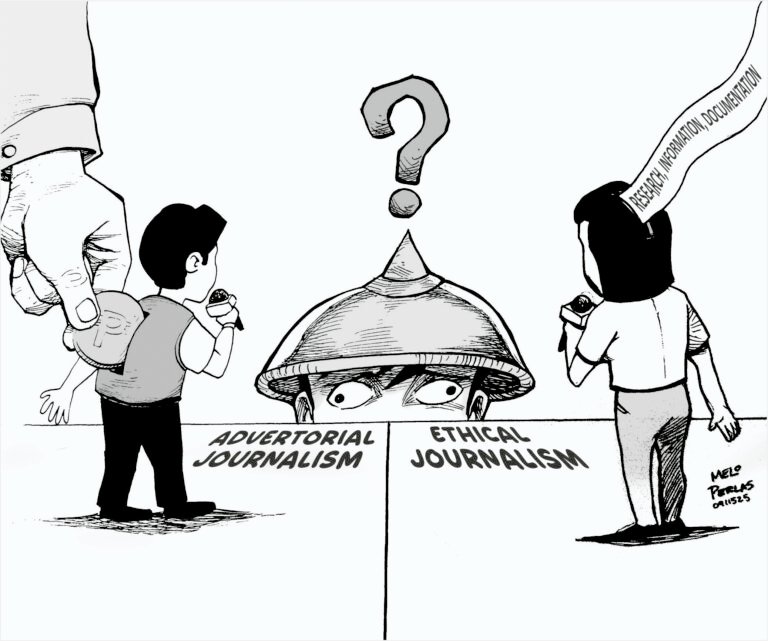
Truth, Credibility In Advertorials vs Ethical Journalism

In an era where information constantly floods our screens and papers, the difference between paid content and independent reporting has never been more important. Too often, the line between advertorials and journalism is blurred and confusing —sometimes deliberately, sometimes carelessly— leaving readers and viewers unsure of what or who to trust.

Advertorials are paid pieces of content, crafted to resemble news or editorial articles, but ultimately designed to promote a product, service, or brand. They are advertisements in disguise —cleverly crafted to sound authoritative, yet funded with commercial interest. The main purpose is persuasion, not impartiality.

Ethical journalism, on one hand, serves an entirely different purpose. At its core, journalism is about truth-telling, accountability, and public service. Ethical reporting requires independence from financial or political influence, transparency with audiences, and a commitment to accuracy above all else. It is not meant to sell but to inform; not to manipulate but to empower citizens with knowledge.

The danger arises when advertorials are presented in ways that mimic legitimate journalism without clear labeling. Such practices exploit the public’s trust in news outlets, erode credibility, and fuel cynicism about the media as a whole. 

A reader who cannot distinguish between an ad and an investigation will soon conclude that all reporting is suspect —a perilous outcome in democratic societies that depend on a free and trusted press.

This is not to suggest that media organizations cannot host advertising. Financial realities make it unavoidable. But integrity lies in separation and transparency. Paid content should be clearly marked and never masquerade as independent reporting. Readers deserve to know who is speaking to them and why.

The media cannot fulfill its vital role as watchdog if its voice is indistinguishable from those it ought to scrutinize. 

The difference between an advertorial and ethical journalism is not cosmetic —it is between persuasion and truth, between commerce and conscience. And in an age of misinformation, maintaining that distinction is nothing less than their duty to their publics.

Youth Outraged Over China’s Abuses in WPS 

0

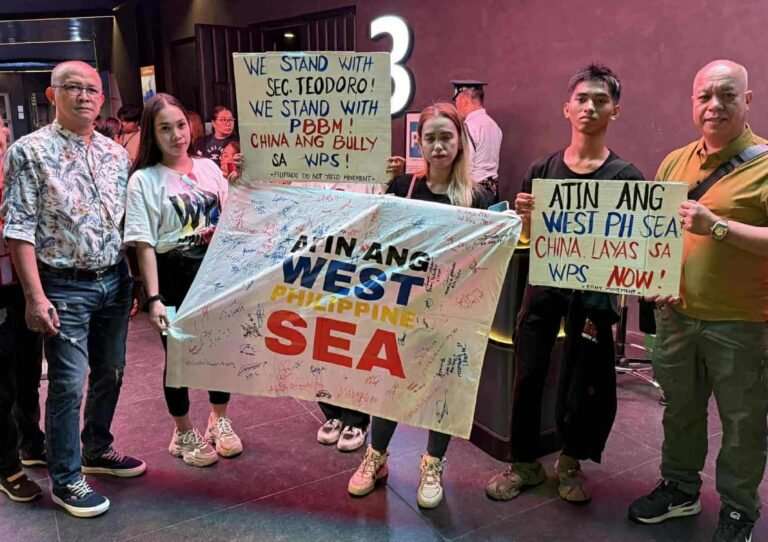
TRINOMA, Quezon City — The real measure of success of the docu-film ‘Food Delivery: Fresh From the West Philippine Sea’ is not in numbers nor in the praise given to it formal reviews but rather in the raw emotions shown by those who viewed the documentary.

In a statement following the rescreening of the film, Filipinos Do Not Yield (FDNY) Movement chairman emeritus Dr. Jose Antonio ‘Ka Pep’ Goitia enthused that what he witnessed in the movie theater’s audience was more than enough to give him hope that the youth of today are no longer asleep.

“Looking at the video taken inside the screening hall, you could feel the tension rise as scenes of harassment at sea and the struggles of Filipino fishermen unfolded on screen. Students leaned forward in their seats, whispering in disbelief, shaking their heads in anger,” Goitia shared. 

“When the lights came back on, the room was no longer silent. Questions poured in, urgent, pointed and unafraid,” he continued. 

A young man, waving the Philippine flag, asked, his voice breaking: “What are we doing about this?” 

Another added to query: “Why are we letting them get away with this?” 

These were not the words of a generation indifferent to politics—these were a clear declaration of a generation refusing to stay blind.

Goitia noted the shift in attitude among the youths present and with pride he described the scenario: “You can see it in their eyes. They are not just angry, they are ready. They refuse to remain passive. They know this fight is not just about territory, it is about justice.”

Thus, from outrage has grown a deeper resolve with many young people standing to speak up and stress that they have a duty to act, to spread awareness, to speak the truth and to stand against lies. 

One student leader put it simply: “We can’t just rely on others to fight this battle. This is our fight too.”

For Goitia, the moment marked a turning point: “We are witnessing history in the making. The so-called apathy of (our) youth is gone. What we see now is a generation unafraid to speak, unafraid to challenge lies, and unafraid to defend our nation’s dignity.”

In the end, ‘Food Delivery’ was more than just a film—it us now seen as a mirror that has prompted a generation to confront the realities of our long suffering fishermen, the violations of our sovereignty and China’s propaganda distorting the truth.

The block screening of the documentary was made possible through the efforts of Blessed Movement chairman Herbert Martinez, together with other co-sponsored by those groups who stood firmly in support of the film’s message and the cause it represents, among them the Alyansa ng Bantay sa Kapayapaan at Demokrasya (ABKD), People’s Alliance for Democracy and Reforms (PADER), Liga Independencia Pilipinas (LIPI) and FDNY. 

“Disney Princess Nepo Babies”: Sparkle Without Substance?

FILIPINOS LOVE FAIRYTALES. Who doesn’t want a happily-ever-after filled with gowns, tiaras, and a castle with WiFi strong enough for Instagram reels? But lately, the fairytales trending online aren’t from Disney—they’re from the feed of our very own “Disney Princess Nepo Babies.”

These are the young heirs and heiresses who live like royalty not because they’ve built anything, but because their surnames do the heavy lifting. Their résumés? Short. Their Instagram stories? Endless.

Claudine Co: From Aesthetic to Audit

Enter Exhibit A: Claudine Co.

On social media, she had it all—Paris OOTDs, jet-set vlogs, luxury on tap. The life of a modern princess, right? Until netizens—ever the digital detectives—started digging. They found that her family’s fortune was tied to billions of pesos in government flood-control projects.

Suddenly, her designer bags weren’t just #blessed—they looked suspiciously like they were bought with taxpayer misery.

The internet backlash was so sharp, Claudine’s Instagram was wiped cleaner than a palasyo floor before a state visit. But the damage was done. She had become the face of unchecked privilege in stilettos.

And she’s not alone. Many other “Disney Princesses” from political dynasties and old-money clans are guilty of the same thing: flaunting privilege with zero accountability. Sparkle on the outside, substance missing on the inside.

Kris Aquino: The OG Nepo Baby Who Paid Her Dues

Now, let’s be fair. Nepo babies aren’t automatically villains. Case in point: Kris Aquino.

She was the original nepo baby—the youngest daughter of President Cory Aquino, sister to President Noynoy Aquino. Her last name was a master key. But here’s the twist: Kris didn’t just walk into the castle—she put in the work to run the whole kingdom.

In the 2000s, you literally could not escape her. She was everywhere: Morning shows, Evening game shows, Blockbuster movies, Late-night tell-alls, and Weekend showbiz roundups

And on top of that? Endorsements galore. From fried chicken to fabric softener—Kris Aquino sold it all. She was called the “Queen of All Media” for a reason: she hustled.

But here’s what makes her different: she left receipts. Literal, BIR-certified receipts.

Between 2008 and 2015, Kris Aquino paid ₱322,098,558.74 in income tax.

Highlights:

• 2008: ₱25.4M (Top #8 taxpayer)

• 2011: ₱49.87M (Ranked #1 taxpayer in the Philippines)

• 2014: ₱54.53M (Top #6)

• 2015: ₱61.74M (massive, even without a ranking)

Pause for effect: Kris Aquino paid more in one year than some billionaires who hide behind accountants and shell companies. She didn’t just reign in showbiz—she did her civic duty.

What This Says About Us

Claudine’s downfall shows us one truth: privilege without accountability is ugly. People will always call it out.

Kris, on the other hand, proved that if you’re born into privilege, you can still earn legitimacy—through hard work, transparency, and yes, paying the taxes that most elites try to dodge.

Names open doors, but hustle builds legacies. The problem with today’s “Disney Princesses” is that they confuse glitter with grit.

And here’s the kicker: our culture enables it. We like watching them flaunt privilege on TikTok because it feels like a fairytale. But fairytales without responsibility just turn into expensive soap operas—and we’ve had enough of those.

Reality Check

Today’s feeds look like a Disney Channel marathon: princesses posing with designer bags, sipping champagne at 21, hashtagging #blessed. The plot twist? The fairy godmother is actually your taxpayer money.

Meanwhile, Kris Aquino in her prime was paying more in taxes than some taipans, juggling five shows, enduring scandals, and still telling us about her allergies in detail. Love her or hate her, she earned her tiara.

The new batch of “Disney Princess Nepo Babies” are fun memes. But they also reveal something rotten about us—we celebrate privilege, not performance.

Kris Aquino? She proved a nepo baby can flip the script: from sparkle to substance, from privilege to productivity, from name to legacy.

So the next time a new “princess” trends, ask: Is she paying ₱50M in taxes—or just paying for her next Chanel?

Because in the Philippines, true royalty isn’t about tiaras. It’s about tax receipts.

Press Freedom Gets ALift, At Least In Manila

0

WHILE the Philippines has remained on the list of countries where being a journalist is far from safe, a prominent mayor made a sweeping claim exempting the City of Manila, where members of the Fourth Estate are free and safe from the so-called occupational risks.

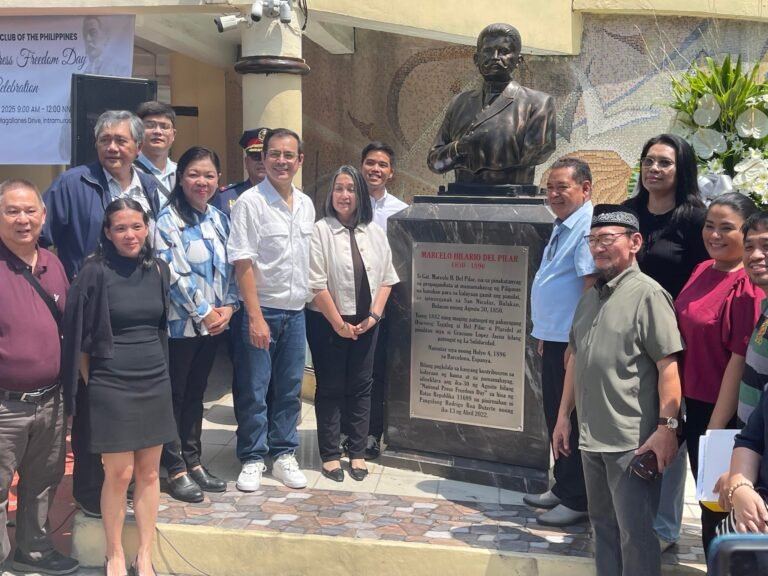
Speaking before a bunch of Filipino journalists at the National Press Club (NPC) in Intramuros, Manila City Mayor Isko Moreno cited the important role of the media, even as he gave a premium on the need to protect the Freedom of the Press.

“Rest assured, journalists are free in Manila,” Moreno said during the commemoration of the National Press Freedom Day, while renewing his commitment to uphold the fundamental right to free expression.

Organized by the NPC, the event brought together esteemed journalists, government officials, and stakeholders to commemorate the vital role of a free press in a democratic society.

He went on to highlight the crucial role of journalists in exposing corruption and promoting good governance, not just in government but also in private organizations.

“Your work is to report the truth, and my job is to ensure that our city’s programs and initiatives are transparent and accountable to the public,” he added while underscoring the symbiotic relationship between a free press and effective governance.

He likewise called on his peers in the government to uphold transparency and accountability.

“As public officials, we are accountable to the people, and it’s our duty to serve the public interest. Journalists, on the other hand, play a vital role in holding us accountable and informing the public about important issues.” (BENJAMIN CUARESMA)

Pope Leo Urges People To Be Careful With What To Say And Do

0

ON THE FEAST day of Saint Augustine, from the Holy See, Pope Leo XIV sent a video message to the Augustinian province of St. Thomas of Villanova in the United States to invite everyone to listen to God’s loving voice, which alone can bring peace to the whole world.

The Pope marked the Solemnity of Saint Augustine by recalling with affection that the local parish is dedicated to Saint Thomas of Villanova, the Augustinian friar and bishop remembered as Father of the Poor.

He also expressed his gratitude for the conferral of the Saint Augustine medal.

“To be recognized as an Augustinian,” he said, “is an honor held dearly. So much of who I am I owe to the spirit and the teachings of Saint Augustine. I am grateful to all of you for the many ways your lives exhibit a deep commitment to the values of veritas, unitas, caritas.”

[T]he Pope invited the Augustinian family to embrace a spirit of listening while encouraging all to filter out the noise and division of the world in order to hear God’s loving voice, which alone can bring peace.’

FULL OF TRIALS, ERRORS
The American pontiff reflected on the saint’s life, noting Augustine’s journey as “full of trial and error, like our own lives,” yet through grace, the prayers of his mother Monica, and the witness of the community around him, he discovered “the way to peace for his restless heart.”

Leo likewise underlined that Augustine’s witness calls every Christian to recognize their God-given gifts and to offer them “in loving service to God and to our neighbor.”

He then turned to the Augustinian presence in Philadelphia, home to one of the oldest Catholic communities in the United States, recalling the missionary zeal of Fathers Matthew Carr and John Rossiter in serving immigrants at the end of the 18th century.

“That same spirit calls us today to carry on a legacy of loving service. Jesus reminds us in the Gospel to love our neighbor,” he stressed, urging all to look at one another with the eyes of Christ and to rediscover (everyone’s) identity “as sisters and brothers in Him.”

Quoting Augustine’s words, he enthused: “Do not have your heart in your ears, but your ears in your heart.”

Before ending his message, the Pope invited the Augustinian family to embrace a spirit of listening while encouraging all to filter out the noise and division of the world in order to hear God’s loving voice, which alone can bring peace.

“Before we speak, we must listen. When we hear that reassuring voice, we can share it with the world as we strive to become one in Him.”

Leo concluded by entrusting the Augustinian family to the Virgin Mary, Mother of Good Counsel, praying that “God bless (. . .) all and bring peace to (. . .) restless hearts and help (. . .) continue to build a community of love, one in mind and heart, intent upon God.”

The Flood Control Project Mess Begins With DPWH Ignoring LGUs

0

MOST, IF NOT all, the flood control projects erected haphazardly sans coordination with local government units, have led to more flooding in the metropolis and major population centers.

It was not just Quezon City Mayor Joy Belmonte who lambasted the Department of Public Works and Highways for its arrogance and refusal to coordinate and plan such projects with LGUs. Many more LGUs are voicing their frustration over DPWH for the ill-planned and defective flood control projects. 

The attitude of a national government office, like DPWH, stems from the fact that since they are the ones funding the project, they owe no one an explanation, help and guidance. These national agencies also think that they do not need to seek permits from LGUs to build or destroy anything within the LGU’s jurisdiction.

‘The attitude of a national government office, like DPWH, stems from the fact that since they are the ones funding the project, they owe no one an explanation, help and guidance.’

JOY’S LAMENT
In an interview with Business World, Belmonte mentioned 254 flood control projects implemented by DPWH, none of which acquired a certificate of coordination (COC) from the mayor’s office before construction.

Although the city’s ordinance has worked well with vertical projects (buildings), flood control projects have not applied for COC and were not coordinated. “That’s why I do not know about the flood control projects,” said Belmonte.

“As a mayor, I always think we have a law and they will respect it because they are part of the government, but they did not follow it when it comes to flood control. In 2022, the QC government implemented an ordinance that requires every government-funded project to coordinate with the city’s infrastructure committee prior to construction,” she explained.

“It’s important that if there’s a project from the national government in our city, it aligns with the city’s plans. But if we’re not aware of the projects, there’s the threat of wasting public funds, duplication or overlapping, and it may also be inconsistent with the city’s plans,” she stressed.

PUMPING STATION
Belmonte cited the Matalahib Creek pumping station, built over a creek, as one project that violated the city’s ordinance and Water Code.

“We wrote letters to them to halt the project and discuss first if it’s right to continue, but they did not stop and continued it. Now it caused much more flooding to its surrounding barangays,” she vented.

“If there were more coordination with us… We could’ve worked together to come up with a better flood control solution,” she added.

TERMINATE IT
The P350-million Matalahib Creek pumping station project in Barangay Talayan is being petitioned by the QC government to be terminated immediately.

“I’m pushing to terminate it since it’s still in phase one, and they are blocking the creek,” the city’s mayor said. “Demolish what was built on the creek, and the remaining P250 million let us implement a different intervention for flood control.”
 
OUTDATED FLOOD CONTROL PROJECTS
She said the flood control projects by the DPWH are undersized and outdated, based on the assessment of urban planner and globally-renowned architect, Felino A. Palafox, Jr.

“It’s outdated. 75 percent are undersized. Because it’s 25-year return, the 100-year typhoons are now happening every year,” Palafox explained.

“They are not designed for a 100-year return of flooding in typhoons,” he added.

Palafox said that the government must review its existing flood control design to improve efficiency. “They need to revisit the solutions established in the mid-70s and continuously upgrade them.”

IGNORED RECOMMENDATIONS 
Palafox said he gave 150 recommendations to President Marcos Jr. to help improve the flood control and urban planning in Metro Manila, but they were ignored.

“From Marcos Sr. to Digong, I was invited to Malacañang. This one, never. I even write to him every week, texted him one time, to say ‘corruption is worse now because there’s no more factor of fear.”

Early this month, Marcos said that flood control projects nationwide had cost P545 billion in public funds since July 2022. Of these projects, around 20 percent or P100 billion, went to only 15 contractors. Out of those 15 contractors, five have contracts covering the entire Philippines.”

Stop Chasing Perfect: Choose Progress

WHAT IF I told you the secret to a happier life isn’t raising your standards—but lowering them?

The Back Story

We live in a world that shouts: aim higher, do more, be the best. The message is everywhere—never settle, never slow down, never be satisfied.

The Endless Chase

Let’s be real—that constant push for perfect isn’t making us better. And it’s definitely not making us happier.

You hit one goal, and instead of enjoying it, you immediately raise the bar again. You look at your life and instead of saying “this is good,” you think, “this isn’t enough.”

  • The chase never ends—and neither does the stress.

The Hard Truth

Here’s the truth: 

  • Perfection doesn’t add joy. It steals it.

You spend so much time fixing, tweaking, and comparing that you forget to enjoy what’s already here.

The Better Way

Lowering your standards doesn’t mean you’re lazy. It means dropping the weight of impossible expectations.

  • It means letting good enough actually be enough.

And when you do that? Life feels lighter, calmer, and way more fun.

Progress Over Perfection

Work isn’t about flawless slides or emails polished like they’re going into a museum. 

  • Most of the time, clear and done beats perfect but late.

Lower your standards. Focus on progress, not perfection.

Ordinary Is Underrated

Love doesn’t have to look like a highlight reel. It’s not about constant grand gestures.

The good stuff is in the small moments:

  • Laughing at dumb jokes
  • Sharing takeout
  • Just being yourselves

Lower your standards. Stop expecting your relationship to look like a movie.

Real Beats Instagram

A perfect-looking life only leaves you tired, broke, and stuck comparing yourself to strangers online.

The real joy?

  • A cozy home
  • A random trip
  • A quiet night with people you love

Lower your standards. Life doesn’t need filters to be meaningful.

The Shift

Choosing progress over perfection is not laziness—it’s wisdom. It’s saying:

  • I don’t need to prove anything to anyone.
  • I just need to live in a way that feels real.

Ask yourself:

  • Does this really need to be perfect?
  • Is good enough already enough?
  • Am I chasing approval—or peace?

Most of the time, good enough is already more than enough.

Tips And Techniques

Perfect is heavy. It keeps you tense, restless, always reaching for the next “better.”

  • Progress is lighter. It lets you move, breathe, and enjoy the moment.

Nobody’s going to remember you for spotless kitchens or flawless reports.

They’ll remember how you made them feel—your kindness, your laughter, your presence.

  • Let go of perfect
  • Embrace progress
  • Start living lighter—today

Remember: Choose progress—and keep going.

BSP Delivers Another Interest Rate Cut

0

“The policy rate itself is at our Goldilocks rate, neither too high, not too low. I would characterize this as still dovish but slightly less so than before in terms of the forward guidance. We came to this decision after weighing many different scenarios,” BSP Governor Eli Remolona Jr. added.

IN WHAT CAN be considered a move to prop up the Philippine economy, the Monetary Board (MB) of the Bangko Sentral ng Pilipinas (BSP) on Thursday delivered another 25 basis points (bps) reduction in interest rates.

In total, the central bank has so far reduced policy rates by 150 bps since last year.

This brings the BSP’s reverse repurchase rate to 5 percent while the interest rates on the overnight deposit and lending facilities to 4.5 percent and 5.5 percent, respectively.

BSP Governor Eli Remolona Jr. said that the inflation rate for the current year and 2026 will stay within their projects, prompting the rate reduction by the MB.

“Based on the latest data, I think this puts us at our sweet spot for both inflation and output. The projected inflation rate over the next year or so is where we wanted to be. Output is moving to where we think our capacity is,” he said.

“The policy rate itself is at our Goldilocks rate, neither too high, not too low. I would characterize this as still dovish but slightly less so than before in terms of the forward guidance. We came to this decision after weighing many different scenarios,” Remolona added.

WITHIN TARGET INFLATION RATE

The BSP sees the Philippine inflation rate settling at 1.7 percent this year, which according to Remolona is “very manageable.”

Meanwhile, the projections for 2026 is 3.3 percent and for 2027 3.4 percent.

Remolona, however, is harboring a positive view that the cumulative rate cuts the MB has made so far will help boost the country’s economic growth.

“Are the rate cuts significant enough? I think so. As you know, we don’t just move the rate and reverse ourselves. Usually it goes in the same direction and the cumulative effect of that is significant enough to strengthen output growth for example,” Remolona said.

For his part, BSP Assistant Governor Zeno Abenoja said the policy rate cuts would help in attaining the lower end of the government’s economic growth target.

“Given the cumulative policy rate cuts that we’ve had since August, we think that the target numbers could be feasible this year. The low end is about 5.5 percent , we think we could be there. The further impact of those policy actions could also be felt moving forward,” he said.

‘Shame Campaign’ Impinges On Commuters’ Legal, Privacy Rights

0

THE DEPARTMENT OF Transportation (DOTr) is drawing fire from legal advocates and commuters’ rights groups over its proposed “shame campaign” against traffic violators—a plan critics warn could trample due process, violate privacy laws, and open the government to lawsuits.

At the center of the controversy is a directive from DOTr Secretary Vince Dizon for the Land Transportation Office (LTO) to study the feasibility of publishing the names of repeat or grave traffic violators as a deterrent. The proposal, while pitched as a bold move to discipline erring motorists, is now under heavy scrutiny.

LAWYERS PUSH BACK HARDER
The Lawyers for Commuters Safety and Protection (LCSP), a group that has consistently advocated for safe, fair, and lawful transport policies, has come out strongly against the idea.

“This scheme has no basis in law and directly undermines both the rights and dignity of Filipino motorists,” declared Atty. Albert N. Sadili, LCSP spokesperson. “What the DOTr is proposing is not just illegal—it is reckless, disproportionate, and dangerous.”

According to LCSP, the penalties for traffic violations are already clearly laid out under Republic Act 4136, or the Land Transportation and Traffic Code, as well as Joint Administrative Circular No. 2014-01. These include fines, suspension or revocation of driver’s licenses, and suspension or cancellation of franchises for public utility vehicles. Nowhere in these provisions, the group stressed, is public shaming listed as a sanction.

‘If the DOTr truly wants to protect commuters, then it should strengthen institutions, improve road safety infrastructure, and ensure that law enforcers do their jobs consistently and fairly.’

PRIVACY, DUE PROCESS
Beyond the absence of legal grounding, LCSP warns that the proposal could directly clash with the Data Privacy Act of 2012, which protects personal information from unlawful disclosure.

“Publishing the names of supposed violators without final adjudication is not only irresponsible but potentially libelous,” Sadili noted. “Imagine the reputational damage if a motorist is wrongly accused. This could affect their employment, their families, even their safety.”

He further argued that the scheme fails to uphold due process, a constitutional guarantee that individuals must be heard before being penalized. “To shame someone publicly without establishing liability through proper investigation is unlawful,” he emphasized.

FLAWED DETERRENCE
The DOTr’s rationale for the shame campaign is deterrence —using humiliation as a tool to discourage future violations. But LCSP dismisses this logic as both “misguided and ineffective.”

“Public humiliation has no place in modern governance,” the group said in its statement. “It is neither professional nor proportional. Discipline on the road must be built on fair enforcement of laws, not on spectacles designed to embarrass people.”

LCSP maintains that the more sustainable solution lies in the consistent enforcement of existing rules, not in introducing legally questionable shortcuts.

POTENTIAL LEGAL BATTLES AHEAD
If pursued, the shame campaign could also trigger legal action against the government itself. Lawyers point out that motorists who are wrongfully shamed may file civil cases for damages, or even criminal complaints for libel.

“The government would be exposing itself to an avalanche of lawsuits,” warned Sadili. “Instead of fixing traffic, it will clog the courts with cases and erode public trust in our transport institutions.”

PUBLIC REACTION DIVIDED
On social media, public opinion is split. Some frustrated commuters, tired of reckless drivers and repeat offenders, expressed support for the idea, saying violators deserve to be exposed. Others, however, echoed LCSP’s concerns, calling the plan authoritarian and prone to abuse.

“Sure, we want safer roads. But do we really want to live in a society where the government can plaster your name publicly without proof?” wrote one commenter.

A CALL FOR REAL REFORM
For LCSP, the bigger issue is not the lack of penalties but the lack of consistent enforcement. Traffic violators, they argue, are often emboldened not because the penalties are weak, but because enforcement is uneven and sometimes marred by corruption.

“What we need is not shame campaigns but professional, sustained, and corruption-free enforcement of traffic laws,” said Sadili. “If the DOTr truly wants to protect commuters, then it should strengthen institutions, improve road safety infrastructure, and ensure that law enforcers do their jobs consistently and fairly.”

THE ROAD AHEAD
The DOTr has yet to release a final decision, with the LTO currently studying the proposal’s legality. But with the strong opposition from legal circles, privacy advocates, and commuters’ groups, the road ahead for the shame campaign looks rough.

For now, LCSP has made its position crystal clear: public shaming is not the answer.

“Traffic discipline should be pursued within the bounds of law and human dignity,” Sadili concluded. “Anything less is a betrayal of the very public the DOTr claims to protect.”

ANOTHER HEAD ROLLS

0

Atty. Rafael Vicente Calinisan, vice chairperson and executive officer of the National Police Commission (Napolcom), responds to media questions on the “preventive suspension” of Police Brigadier Gen. Romeo G. Macapaz, former chief of the Criminal Investigation and Detection Group in relation to the missing sabungeros case. Napolcom alleged that this has something to do with “mishandling of evidence.” Macapaz was responsible for the arrest of Elakim and Jose Padigongan, brothers of whistleblower Julie. The latter accused Macapaz of deleting certain information in the brothers’ mobile phones. The press briefing was held at the Napolcom head office in Quezon City.

Flood Control Issues Getting More Murky Each Day

0

THE MORE I read about the flood control projects mess, the messier and murkier they get. Practically every government institution dipped into those bogus, substandard, incomplete and ghost flood control projects and their funds (which ballooned because of budget insertions) that the exercise of investigating or appearances to probe them leads to all directions— Malacañang, Senate, Congress, the police, local government officials, favored contractors, and many more.

The ultimate losers: us, TAXPAYERS, whose dutiful compliance to paying or declaring the right taxes and giving money to the government for all the goods and services we buy (through VAT) are being diverted to private pockets of our own leaders every minute each day. Mind you, they all have the temerity to feign innocence over these obscene wrongdoings. 

Supposed investigations by the legislative and executive branches of government and the personal inspections of anomalous flood control projects by the President are now being seen as senseless exercises as the people’s anticipated outcome– charging in court, fining and jailing those involved (public officials and contractors)  would never materialize.

Everything is a grand zarzuela!   

ENDLESS BLAME GAME
Just last Wednesday, Bicol Saro claimed that the two substandard flood control projects in Bulacan, that was inspected by President Marcos recently, were part of the 2022 and 2023 National Expenditure Program (NEP) submitted by Malacañang to Congress, reported Politiko.

This was revealed by House Committee on Public Accounts chairperson and Bicol Saro party-list Rep. Terry Ridon, who provided the media a copy of the 2022 and 2023 NEP and the 2022 and 2023 General Appropriations Act.

The project, Rehabilitation of River Protection Structure along Bulusan, Calumpit, was allocated by the Duterte administration P100 million in 2022 and was implemented by the Department of Public Works and Highways (DPWH) and awarded to St. Timothy Construction Corp. (who is in the President’s notoriety list) for P96.4 million.

Though it was in the 2022 national budget, the project was completed on February 2, 2023, during the Marcos administration.

Another project, the construction of flood mitigation structures along Barangay Frances, Calumpit, Bulacan, was proposed and allocated P80 million in 2023. Wawao Builders got the contract for P77.19 million. The 2023 budget was crafted and implemented by the Marcos administration.

In Leyte, meantime, Matag-ob Mayor Bernie Tacoy, lamented the failed month-old flood control project, constructed with the knowledge of Leyte 4th District Rep. Richard Gomez, that was damaged by the low pressure area-induced rains and “threatening homes and livelihoods.

The municipality faces perennial flooding even with an LPA, not even a typhoon. “The month-old flood control project was supposed to protect but failed at the first sign of flood,” he lamented, as he asked for assistance from the national government and the Department of Public Works and Highways.

He said Gomez gives them only limited support and they continue to persevere through discipline and resilience. He said he only saw in Facebook live the groundbreaking of the project, which apparently was done without permission and coordination with the LGU.
 
“Groundbreaking na wala ang municipal officer, wala ang engineering dept, na-bypass ang LGU ng DPWH sa project sa distrito, walang coordination sa LGU line agencies,” Rappler reported.

“It is high time that the ongoing flood control projects in our district were brought to light. I call on the Department of Public Works and Highways (DPWH) for complete transparency and accountability. The public must be told: Who are the contractors of these projects?,” he said as he demanded a clear timeline for completion, updates on the current status, the total funds allocated, and exactly how much has been spent.

“Transparency is non-negotiable. Accountability is the people’s right. Public service means loyalty to the people, not to any politician. For the people of Matag-ob, for the town I love, we demand the truth,” said Mayor Tacoy.

Gomez said the project was still under construction when it was damaged by the rains and will be repaired “at no cost to the government.”

Stories of defective flood control projects are frequently reported, highlighting issues like budget inflation, nonexistent projects, and collapsing infrastructure, often linked to collusion between officials and contractors. Recent examples include massive budget overruns for the Candaba flood control and Bauang River Basin projects, where funding surged significantly without proper results, and nonexistent projects were funded in Oriental Mindoro. 

DEFECTIVE PROJECTS 
Examples of defective projects include the Candaba Flood Control, which cost soared from P20 million to P274 million due to repeated, unnecessary repairs awarded to the same contractors; the Bauang (La Union) River Basin with an allocation that surged from P100 million to P1.6 billion through insertions in the final budget; Oriental Mindoro Flood Control from nearly P19 billion funds over three years yet some completed dikes collapsed after rains and a P193 million project was found to be non-existent; a ghost project in Bulacan which Sen. Panfilo Lacson identified at 30 in all with funds released but no actual construction took place.

The common causes/patterns of these irregularities are: 1) budget overruns and inflation where projects frequently exceed initial costs from repeated repairs and inflated allocations; 2) collusion between contractors, local officials and internal factions within DPWH; 3) ghost projects where funds are allocated and released but are never built indicating a deep-seated corruption, and 4) poor quality and collapse of projects built on substandard quality leading to infrastructures like dikes collapsing shortly after completion.

The consequences of such anomalies are: a) wasted public funds; b) continued flooding, and c) erosion of public trust.

DE LIMA’S CALL
To prevent conflict of interest, Mamayang Liberal Partylist Rep. Leila De Lima has called for an independent body (not the house, senate or the executive) to look into corruption in flood control projects.  The House just created three committees to conduct a joint probe of projects earlier flagged by the President. Rep. Joel Chua, chair of the House Committee on Good Government, agrees with De Lima.

She said the independent probe body must consist of people with probity, competence, integrity to be fair and objective. She hinted at a former jurist with known competence, integrity and probity and exposure to how government projects are undertaken. It could include former Audit Commissioner Heidi Mendoza and former DPWH Secretary Rogelio Singson.

It must also have experts including an engineer, businessman with expertise in government projects but not involved in any corruption case. The body should be backed by an inter-agency committee with members from the National Prosecution Service, NBI, PNP, DPWH and other relevant government agencies. It could be created by an EO or a law that the president would certify as urgent. 

LIFESTYLE CHECKS
People have reservations of lifestyle checks as they usually dwell only on the SALNs (statement of assets, liabilities and networth) of a state employee or official but no actual check on deposits, properties and others. Also most of these checks are confined to low-salaried personnel up to below middle managers. People want the lifestyle check to go all the way to the top– up to the President, Vice President, the legislators, the judges and justices and GOCCs, all agencies and armed service. No one must be spared, otherwise this would just be another moro moro or a farce.

As Vice President Sara Duterte said the checks must be a “deep dive” and go beyond SALNs and must apply to all appointed and elected officials. She also said the check must also extend to so-called dummies of those holding positions of power.

Konektadong Pinoy Act: Connectivity Without Safeguards

0

ON AUGUST 24, THE Konektadong Pinoy Act lapsed into law. On the surface, the measure seems like a long-awaited breakthrough: expanded digital access, more competition, and the promise of faster, cheaper internet. But scratch beneath the surface and the risks become clear—risks that could compromise cybersecurity, destabilize the industry, and weaken the very safeguards meant to protect Filipinos.

Globe Telecom, one of the country’s largest players, has expressed its concern. “We shall work with the government on how we can make better the standards in the industry to safeguard the public,” said Globe General Counsel Atty. Froilan Castelo. The company’s position reflects a broader truth: it is not against the aspiration of greater connectivity; it is the absence of guardrails that is alarming.

Cybersecurity Gaps

Telecommunications networks are not just commercial utilities; they are strategic assets. Weaknesses in these systems expose the nation to both economic and security threats. Yet the Act allows new entrants a two-year grace period before complying with cybersecurity certification.

This is not benign flexibility—it is a loophole that opens a prolonged window of risk. Existing laws such as the Cybercrime Prevention Act and the Data Privacy Act were designed for immediate protection, not delayed compliance. In today’s environment where cyberattacks are sophisticated and constant, a two-year exemption is simply untenable.

Spectrum Risks

The law also permits satellite operators to use spectrum without adequate regulation. On paper, this promotes wider access. In practice, it risks interfering with critical frequencies already assigned to defense and disaster-response agencies.

This is not a hypothetical hazard. In times of crisis—when typhoons batter provinces or when rescue operations are underway—communication channels are lifelines. Allowing unregulated use of frequencies threatens to undermine those lifelines at the very moment they are needed most. Worse, it risks putting the Philippines in breach of international treaty obligations, inviting legal and diplomatic consequences.

Market Instability

The Act’s removal of the Congressional franchise requirement is equally problematic. For decades, the franchise served as a mechanism of oversight, ensuring accountability and public interest in a sector critical to national development. Eliminating this safeguard opens the door to uneven competition.

Incumbents, who built networks under rigorous regulatory conditions, will now be forced to compete with new players exempt from the same burdens. The result is an uneven playing field. For investors, this uncertainty erodes confidence. Telecommunications is one of the most capital-intensive industries, requiring long-term commitments. If regulatory stability is sacrificed, capital will look elsewhere—and the cost will be borne by consumers in the form of slower upgrades and weaker service quality.

The Path Forward

The Konektadong Pinoy Act carries noble intentions. Connectivity is not optional in today’s economy; it is the backbone of education, commerce, governance, and daily life. But good intentions are not enough. Access must be expanded responsibly, without creating vulnerabilities that could harm consumers, destabilize markets, or expose the nation to risks.

What is needed now is corrective action. The law can still be refined into a framework that both widens access and preserves security. That means closing cybersecurity loopholes, clarifying spectrum management rules, and restoring oversight mechanisms that protect both the public and investor confidence.

Connectivity is a national imperative. But connection without safeguards is not progress—it is a gamble. The Philippines cannot afford an open-door policy that compromises security, stability, and trust.

In building our digital future, speed matters. But prudence matters more.

Surfing The Future

WHY GEEKS ON a Beach Matters More Than Ever

Picture this: flip-flops in the sand, laptops on the table, and some of the brightest minds in tech brainstorming under the Cebu sun. Welcome to Geeks on a Beach (GOAB), the Philippines’ quirkiest yet most powerful gathering of innovators, entrepreneurs, investors, and policymakers. It’s not just another tech conference—it’s a movement that proves world-changing ideas can grow even where the Wi-Fi signal might compete with the sound of the waves.

From its debut in 2013, GOAB has become the launchpad for Philippine startups. Deals have been struck over coconuts, partnerships sealed in boardshorts, and bold ideas given wings that carried them as far as Silicon Valley. Eight years on, GOAB has matured into more than an event—it’s the beating heart of the country’s innovation ecosystem.

And on October 1-3, 2025, GOAB 8 is back in Mactan, Cebu, with a theme that couldn’t be timelier: building a resilient future with technology.

Why it matters now

We’re living in a world reshaped by global disruptions and the relentless rise of Artificial Intelligence. It’s thrilling, yes—but also terrifying if you’re unprepared. GOAB is the rare space where startups, investors, governments, and dreamers don’t just talk about the future—they start building it together.

Organizers call it the “GOAB magic.” It’s not just the panels, pitches, or masterclasses (though this year’s AI deep-dives sound). It’s the serendipity of collisions: a coder meets a policymaker, an investor meets a scrappy founder, and suddenly the next billion-peso startup is born.

Tina Amper, GOAB’s visionary organizer, says it best: “If you want to see where the future of startups and technology is being built, you’ll find it at GOAB.”

What’s new this year?

• GOAB Beach Club: A year-round membership platform so the energy doesn’t fade when the tents come down.

• Startup Demos: More entrepreneurs, more pitches, more chances to turn raw ideas into game-changing ventures.

• AI Masterclasses: From beginner-friendly GenAI sessions to advanced integrations for developers and execs.

• Global + Local Experts: A powerhouse lineup—from Silicon Valley veterans to Filipino founders building the future right here at home.

And yes, it’s still on the beach. 

The bigger picture

GOAB isn’t just about startups. It’s about resilience. It’s about teaching communities and companies alike to adapt, collaborate, and thrive in an unpredictable world. With strong support from DICT, DOST, DTI, and powerhouse venture firms, GOAB shows what happens when government, business, and civil society row in the same direction.

That’s not a conference. That’s a blueprint for the future.

Why you should care

Because the next life-changing app, the next sustainable enterprise, or the next Filipino unicorn might just start here—in flip-flops, on the sand, with a crazy idea scribbled on a napkin.

If you think tech and startups are only for geeks, think again. GOAB is proof that innovation belongs to all of us. And whether you’re an entrepreneur, investor, policymaker, or just a curious dreamer, this is your invitation to surf the future.

See you at the beach. 

Tickets: geeksonabeach.com

Relieved For Rejecting P8B Budget Insertion?

4

NO AMOUNT OF accomplishments, honesty and dedication could protect honest-to-goodness public servants from being sacked, just like what happened to General Nicolas Torre III, who was unceremoniously relieved over what many thought was a simple turf war.

Taking cue from documents obtained by The Philippine Insider, Torre’s removal is more like “insurbordination” after he refused to affix his signature on an “accomplished request” for an P8-billion funding for an arms procurement deal.

The request – if Torre agreed to affix his signature – would have been brought to House Speaker Martin Romualdez who wields the power to include (if not insert) P8 billion for the PNP’s 2026 budget.

According to sources, Torre earned the ire of Interior and Local Government Secretary Jonvic Remulla for refusing to obey the orders.

Hence, Torre’s 85-day stint as the country’s top cop has become the shortest since the creation of the Philippine National Police (PNP) in 1991. He took over the reins from twice extended (retired) Gen. Rommel Francisco Marbil, the 30th chief of PNP.

Torre refused to sign the document because PNP, he explained, is a civilian agency and buying 80,000 units of 5.56mm assault rifles is something that should be a concern of the Armed Forces of the Philippines (AFP).

FOR INTERNAL SECURITY

The memo however justified the “Request for Endorsement and Budget Support” would help the PNP in its Firearms Capability Enhancement.

The justification for acquiring the assault rifles — is because the PNP is now focused on internal security operations (ISO) and would thus need such an armory, while the Armed Forces is focused on external defense. 

“The shift in operational landscape, however, has exposed critical gaps in our force readiness, most notably in firepower capability. While the PNP remains committed to fulfilling its mandate, the current inventory of basic assault rifles is insufficient to meet the growing demand of ISO units across all operational areas,” the memo said.   

It stated: “We believe this proposal aligns with national priorities on peace and order, public safety and territorial integrity.”

WHEN NOBODY DARES 

His appointment as PNP chief came right after he successfully forced former President Rodrigo Roa Duterte, hesitatingly board the plane bound for the Hague, to face trial over charges of crimes against humanity. 

Torre, who has had his share of blunders, headed the PNP’s Criminal Investigation and Detection Group.

Previously, Torre (then a regional director) led the police contingent that captured fugitive Pastor Apollo Quiboloy, in view of criminal charges including human trafficking, and sexual abuse among others, as the latter hid in the comforts and security of his sprawling estate in Davao City.

Malacanang on Tuesday released Torre’s relief order without any explanation, prompting Rep. Leila de Lima to say “there better be a good reason for it (his ouster as PNP Chief).

TORRE OVERREACHED?

Senator Panfilo Lacson, who served as PNP Chief under the Estrada administration, surmised that Torre might have overreached his functions by relieving his deputy without consulting the President.

The President, Lacson explained, is the ultimate head of PNP and relieving his deputy — Lt. Gen. Joe Melencio Nartatez may have angered the National Police Commission (Napolcom), which later invalidated Torre’s radical style of PNP reorganization.

Napolcom instructed then PNP chief to reinstate Nartatez. Torre however refused to cave in.

Born in Jolo, Sulu, Torre is the first graduate from the Philippine National Police Academy, Tagapaglunsad Class of 1993, to be designated PNP chief. 

BRUSH WITH BASTE

During his short but certainly illustrious career as PNP chief, Torre is best remembered for accepting a fistfight dare by Davao City Mayor Sebastian Duterte — but with a twist.

The PNP chief arranged a pay-per-view boxing match with proceeds going to the victims of vicious typhoons that struck the country in July. 

Despite Rizal Coliseum filled to the bleachers, the young Duterte didn’t show up, for which the police general was declared winner by default. As per Mayor Duterte’s own admission, he flew to Singapore.

More than Torre’s effortless boxing match win, the event generated some P16 million sponsorship and ticket sales which were given to calamity-affected families, through the Department of Social Welfare and Development.

5-MINUTE RESPONSE

The last — but certainly not the least of Torre’s feat is his 5-minute response policy through a state-of-the-art 911 emergency hotline manned by tech-savvy cops forming part of the PNP Command Center.

A brainchild of Torre, the PNP Command Center does not only have the capacity to receive bulk calls at a time, but also gets to monitor cops’ snail-paced emergency response — if not sleeping on the job. 

In a press briefing held at the PNP national headquarters in Camp Crame, PNP Command Center chief Supt. Ramon Pranada toured a little over a dozen journalists highlighting a modernized police response system.

The PNP Command Center has been equipped with an additional analytic system which effectively upgrades its capability to respond in the soonest possible time — five minutes or less in urban centers and a little over five minutes in remote areas by simply dialing 911 emergency hotline, toll free.

#PNP
#Torre
#JonvicRemulla
#BudgetInsertion
#NationalBudget

Money In The Air: The Kuratsa Tradition And The Debate Over Generosity In Hard Times

0

THE PLAZA WAS alive with music, laughter, and the rhythmic stomping of feet. On the dance floor, a pair swayed and chased each other in playful steps, while the crowd cheered. 

Then, as if on cue, bills fluttered down — orange and red hues of twenty- and fifty-peso notes filling the air. Children darted at the edges of the crowd, catching loose bills that missed the dancers.

For us Waraynons, it was a familiar scene. For outsiders watching the viral clip online — especially one that showed Samar Governor Sharee Ann Tan taking part — it was fodder for criticism. 

Was this extravagance? A lavish party disguised as a cultural rite? Or simply a window into a tradition deeply embedded in the life of Waray-Warays?

A DANCE OLDER THAN MEMORY
For us, locals from Samar and Leyte, the Kuratsa is no mere dance. It is, in many ways, the heart of Eastern Visayas’ fiesta celebrations. Believed to have evolved from Spanish courtship dances introduced during the colonial period, it mimics the push-and-pull of courtship: the man’s eager pursuit, the woman’s playful resistance, the eventual harmony of union.

Over the centuries, the Kuratsa became more than entertainment. It turned into a social ritual — the centerpiece of weddings, town fiestas, and even birthday celebrations. To perform it is to participate in a living tradition, one that connects communities across generations.

At ‘ika sa amin na mga Waraynon, ‘pag hindi ka marunong sumayaw ng kuratsa, you are an outsider.

Cultural historian Nilo S. Oquendo once described the Kuratsa as “a courtship of the community itself — a dance where everyone is both audience and participant, each bill tossed a token of solidarity.”

THE GALA: SHOWER OF BLESSINGS
At the heart of the Kuratsa is the gala — the money shower. In earlier times, it wasn’t paper currency but goods: rice grains, pieces of cloth, or coins thrown as tokens of prosperity. By the mid-20th century, as cash became the common currency of daily life, peso bills replaced older offerings.

The act of tossing money may appear to outsiders as wasteful display, but to locals, it carries symbolic weight. Bills pinned on the dancers or thrown onto the floor are not for frivolity. They are offerings of blessing, communal giving, and in practical terms, a way of supporting the host family or the newlyweds.

Most of the time, the bills are modest: ₱20s, ₱50s, sometimes ₱100s. Rarely more. Yet their collective value can add up — enough to offset fiesta expenses or provide a newly married couple with a nest egg to begin their life together.

“Diri ini hambog,” said 68-year-old fiesta-goer Lilia from Catbalogan. “Diri pagpasikat. Amó ini an aton paagi hin pakig-usa — pagbulig. [This is not showing off. This is our way of coming together, of helping].”

WHEN TRADITION MEETS SOCIAL MEDIA
The viral video of Governor Tan performing the Kuratsa with money raining down (and flooding the floor) brought this tradition into an arena it was never designed for: the court of social media opinion.

Inside the town plaza, where nearly everyone knows the meaning of the ritual, the money shower is festive, almost sacred. Online, stripped of context, it looked different: politicians surrounded by flying bills in a region where nearly one in three people live in poverty.

The contrast is stark. According to the Philippine Statistics Authority, Eastern Visayas consistently ranks among the poorest regions in the country. The symbolism of tossing money — even in small denominations — plays differently in a digital age where images travel farther than explanations.

“Once you put tradition in front of the camera, it no longer belongs to the community alone,” observed Dr. Aileen Bautista, a cultural anthropologist. “It belongs to the wider audience, who interpret it with their own biases, their own realities.”

A MOMENT FOR REFLECTION
The controversy has sparked conversations in Samar and beyond: Should the Kuratsa’s gala continue in its current form, or should it adapt to modern realities?

Some cultural advocates insist that to tamper with the ritual risks eroding heritage. “The Kuratsa has survived colonization, war, and migration. It is resilient because it is ours,” said historian Oquendo. “To strip away the gala is to strip away the soul of the dance.”

Others believe the ritual can evolve without losing its essence. Suggestions include channeling the gala toward public causes — scholarships, church renovations, or aid for the poor — while retaining the symbolic act of giving.

“Tradition should not blind us to the needs of the present,” said youth leader Marianne R. from Tacloban. “Maybe it’s time to rethink. Instead of throwing bills, why not pledge donations for community projects in the spirit of the Kuratsa? That would keep the symbolism alive while meeting the realities of hardship.”

BETWEEN CELEBRATION AND STRUGGLE
For the Waray-Waray, the Kuratsa remains a living thread of culture — joyous, vibrant, communal. But in the age of smartphones and viral videos, the dance now carries layers of interpretation it never did before.

In one sense, the viral clip of Governor Tan did what tradition always does: it sparked conversation about identity, values, and belonging. But it also forced a reckoning. Can a dance born of abundance still resonate in a time of scarcity?

As the fiesta drums quiet down and the plaza empties, the questions linger. The Kuratsa is here to stay — of that, few doubt. Yet the money shower at its heart may need to take on new meaning, one that bridges the past with the pressing realities of the present.

For now, as bills flutter in the air over the dance floor, each note still carries with it what it always has: a wish for prosperity, a gesture of solidarity, and a reminder that even in hard times, generosity remains at the core of Waray identity.

 “Perhaps, while removing the traditional ‘gala’ (throwing money) altogether may seem anathema, it should at least be practiced in moderation amid the widespread financial crisis affecting most Filipinos.”