Saturday, March 28, 2026
Home Blog Page 38

Nortehanon Youth Support Entrepreneurship Forum 

0

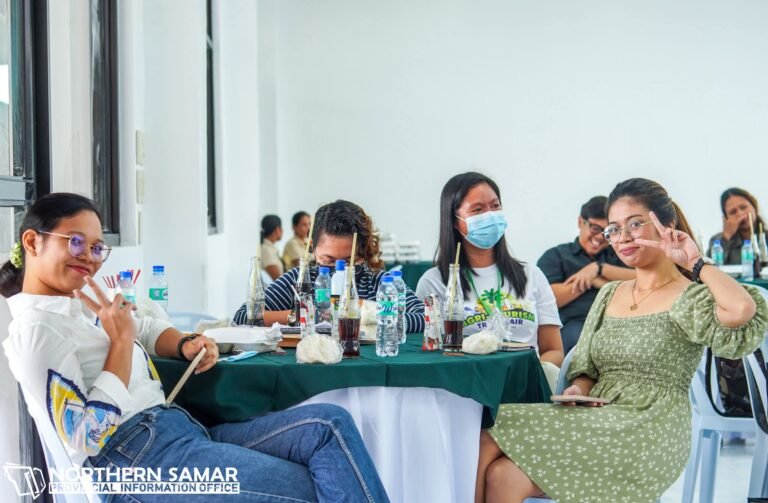
CATARMAN, NORTHERN SAMAR — In line with its developmental program for the youth, the provincial government of Northern Samar, through the Provincial Youth and Development Office (PYDO), conducted recently ad Youth Entrepreneurship Forum to enjoin young adults and fresh graduates to join Northern Samar’s initiative in nation-building through business education. 

The activity aimed to help the youth develop innovative ideas with the help of business experts and mentors, develop entrepreneurial skills and inspire and empower young entrepreneurs in Northern Samar to pursue their business aspirations and achieve entrepreneurial success. 

It also introduces to the youth the programs and services of different agencies related to business and entrepreneurship and establish business linkages.
  
For the local different youth development officers (LYDO) and other youth groups, it also opened opportunities to share their updates and concerns regarding their different groups and organizations in terms of youth entrepreneurship.

INNOVATIVE IDEAS
Gracing the event as resource speaker, Mr. Emil Nicolas Ongchuan II, owner and chief-executive-officer of the popular dessert concept group known as The Lost Bread, shared his experience as a young entrepreneur on how and when his business started and how he had come up with innovative ideas to cope with unavoidable losses in his business. 

Ongchuan likewise shared strategies for young entrepreneurs to keep up with the constant changes in the world and about what to avoid when starting their own business venture. 

Among the other presentors in the forum were Technical Education and Skills Development Authority (TESDA) provincial director Engr. Zosimo De Asis, trade and industry development specialist and Youth Entrepreneurship Program (YEP) focal person Ralph Delizon, and Department of Science and Technology provincial focal representative in Northern Samar Raymund Xavier Naboya. 

When Pageantry Meets Purpose: Mister and Miss Good Shepherd Ambassadors 2025 Takes Off

FORGET THE TIARAS and glittering gowns for a moment. The recently launched Mister and Miss Good Shepherd Ambassadors 2025 is proving that pageantry, when done right, can be more than just a beauty contest—it can be a pulpit of purpose.

Last August 10, the Cathedral-Shrine and Parish of the Good Shepherd turned into a stage where 25 hopefuls—armed not only with poise but also advocacy—battled it out in the Preliminary Competition. From early-morning interviews to a high-voltage talent showdown at night, the candidates showed that the crown is not for the faint of heart (or voice).

The day kicked off with the dreaded closed-door interview—where charm without substance has no chance of survival. Facing the candidates were seasoned judges: from a Lions Clubs past district governor-slash-former Mrs. World Philippines to a parish pastoral worker and a Q&A trainer who probably knows how to spot a rehearsed answer from a mile away. In short: no room for fluff.

Then came the press presentation—because what’s pageantry without a bit of media glitz? Here, candidates were stripped of pageant patter and given a chance to present their advocacies. By late afternoon, the competition had shifted gears into a talent extravaganza hosted by Miss Global Universe Philippines 2025 Alyssa Mildred Villariña and singer Mike Villamor. From powerhouse voices to spirited dances, the stage became a test of both guts and grace.

By night’s end, the cream began to rise. Mariano Lipayon III, John Paul Juanillo, and Lorry James Moneño stood out among the men, while Mary Grace Lumactod, Catherene Olarte, and Stephanie Kyle Eleogo claimed the spotlight for the women. The “Best in Talent” nods may not yet mean a crown, but let’s be honest—it’s a solid early bragging right.

But what makes this pageant different from the countless others dotting the Philippine calendar? For one, it’s anchored on advocacy, service, and faith. This isn’t just about who walks the cleanest pasarela; it’s about who can walk the talk—literally and figuratively—for the causes of the Novaliches Cathedral.

The real showdown is still ahead. Coronation Night on August 24 at the Celebrity Club promises not only gowns and tuxedos but also star-studded guests like Binibining PilipinasInternational 2021 Hannah Arnold and entertainment journalist Lhar Santiago. Expect the glitz, but also expect substance.

Because here, Mister and Miss Good Shepherd Ambassadors isn’t just a title—it’s a mission wrapped in sequins, smiles, and service.

Philippines Drowning In Flood and Debt

0

“The funds we allocate in our national budget should not be imaginary or left idle. They should be visible, functional, felt, and truly helpful to our fellow citizens,” said Budget Secretary Amenah Pangandaman.

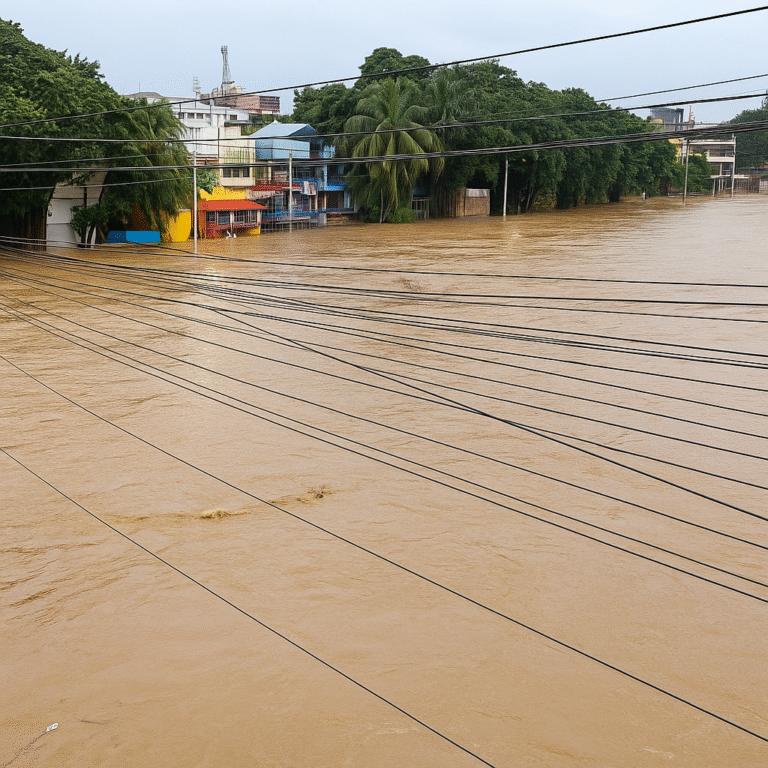
AS THE RECENT storms flooded parts of the country, the Philippines is drowning in debt.

This, as data from the Department of Budget and Management (DBM) showed that the government’s outstanding debt is expected to balloon to P19.06 trillion next year.

This amount is a lot higher compared to the P17.359 trillion forecast for 2025 and the P16.05 trillion logged at end-2024. 

The sad thing is the ballooning debt of the government comes at a time when alleged massive corruption is being uncovered in government-funded flood projects, with no less than President Ferdinand Marcos Jr. being very vocal on the issue.

The failure of numerous flood control projects came to light during the successive storms that hit the country in the latter part of 2024. The perception that there is alleged massive corruption in flood projects was magnified days prior to the third State of the Nation Address (SONA) of Marcos, as the storms that visited the archipelago caused flooding anew in many parts.

Marcos did one thing that perhaps nobody expected in his latest SONA, calling out those who have benefitted from corruption in flood control projects.

“Mahiya naman kayo sa mga kabahayan natingnaanod o nalubog sa mga pagbaha. Mahiya kayo lalo na sa mga anak natin na magmamana ng mga utang na ginawa ninyo na binulsa nyo langang pera (Be ashamed of those whose homes were washed away, or submerged in the floods, especially to our children who will inherit the debts you incurred only to pocket funds),” he declared.

Marcos has disclosed that about 20 percent of flood control projects worth P100 billion went to only 15 contractors, with allegations flying a number were close or actually owned by top lawmakers.

30-PERCENT KICKBACKS 

The flood control budget for this year is around P350 billion and P244 billion for 2024. On the other hand, the flood control budget for the whole of the Aquino administration was P182 billion.

Anti-corruption crusader and Baguio City Mayor Benjamin Magalong alleged that only 30 percent of the actual budget allocated for infrastructure works are spent on real works, and that amounts to P105 billion for flood projects this year.

He alleged that 30 to 40 percent of the cost or price of infrastructure projects goes to the pockets of lawmakers, and this may range from P105 billion to P122 billion.

To put those amounts in context, the overall budget of the Department of Agriculture in the past two years is P155.6 billion in 2025, and a proposed P176.7 billion for 2026. And many farmers remain poor or part of the country’s poorest of the poor.

Due to the public and social media outrage over failed or faulty flood projects, Budget Secretary Amenah Pangandaman said that the flood control budget next year will be slashed to P275 billion.

She added that the government was aware of failed or faulty flood projects, resulting in billions wasted.

“We do not want a repeat of what happened during the past storms when most areas in the country turned into swimming pools due to the deep floods, and some cars ended up like submarines. This caused a lot of inconvenience to our fellow Filipinos,” she said in a recent media interview.

“The funds we allocate in our national budget should not be imaginary or left idle. They should be visible, functional, felt, and truly helpful to our fellow citizens,” Pangandaman added.

However, utilizing properly funds allocated for flood control may not be felt in the next months when powerful storms are set to visit the Philippines anew.

THE DEBT ISSUE

Meanwhile, paying the government’s ballooning debt stock is proving to be a headache, with a total of P2.01 trillion allocated next year for debt payments. And this is unforgivable given alleged massive corruption in government flood projects.

Nearly half of that amount or P950 billion is projected to be budgeted for interest payments, with P707.5 billion for domestic debt and P242.5 billion for foreign obligations.

For principal amortization, P1.06 trillion has been planned, which is lower compared to the P1.21 trillion this year. About P889.3 billion be for domestic debt while P166.3 billion will be for external debt.

While the government says its debt stock is “manageable” at P16.75 trillion as of end-April, it is obvious that debt servicing amounting to the trillions of pesos can result in lesser delivery of social services and development projects for the Filipino people.

Furthermore, less development projects means more areas drowning in floods when storms strike the archipelago, as flood control projects is not the only solution to control flooding. Other projects such as permanently relocating residents from flood-prone areas and providing them housing should also be funded adequately.

And things can get worse if flood project funds just flood the pockets of corrupt officials and contractors.

“The funds we allocate in our national budget should not be imaginary or left idle. They should be visible, functional, felt, and truly helpful to our fellow citizens,” said Budget Secretary AmenahPangandaman.

Too Many Voices vs. eGambling, Lacking Political Will

0

TALKS TO STOP altogether electronic or egambling and esabong — though the latter is already banned in the country— will remain just that TALKS. There simply is no political will to stop these menaces from eroding the moral fiber of the country because the government needs the revenues either for economic growth or politicians back them for their pockets alone, at the expense of the ordinary masa or hoi poloi, who once addicted to them resort to crimes.

Numerous legislative measures pending in Congress are mostly designed to regulate, not stop, egambling because the tax revenues are direly needed for the economic growth of the country (and to cater to the whimsical fantasy of government officials for the country to join the ranks of upper middle income status nations).

There are so many sides that cater to the egambling industry— those that invested in the electronic infrastructure (both ewallets and telcos and internet providers), businessmen who trade egambling companies or affiliates of egambling firms in the stock market, the government for tax revenues, some politicians to line their pockets.

Notice all these sectors mentioned are being protected by the government over that of the moral impact on those addicted to them (which includes students who use their school baon for the fleeting enjoyment of winning pittance.

Those who are strongly lobbying against it now, believe me, in the end they would be joining the chorus once their ewallets or leather wallets get the bounties from any of the above industry players. Soon, the clamor would die down.

‘So far, the BSP … ordered all ewallets, banks and other supervised institutions to remove in-app gambling assets, including any links that direct users to gaming or gambling websites.’

REGULATORS’ INEFFICIENCY
Since its predecessor, the National Telecommunications Commission and now the Department of Information and Communication Technology, nothing much has changed in terms of regulatory inefficiency or inutility.

Either this government branch has inadequate facilities to regulate the telcos and those involved in ICT, or it lacks the capable and determined upright personnel to work in it, or the department just turns a blind eye towards industries’ bad practices and shenanigans. Either way, its laxity and sheer lack of political will has served to undermine the moral fiber of society.

As Bilyonaryo reported, the DICT would be in hot water when Senate investigates the proliferation of egambling, which Senator Erwin Tulfo says DICT has “full control” over the country’s internet space, yet illegal gambling sites, including the banned esabong platforms, remain accessible years after esabong was outlawed.

SENATE HEARING
Tulfo presided on Thursday over the Senate hearing on the proposed ban on online gaming jointly held by the committees on games and amusement; banks, financial institutions and currencies; youth; economic affairs; and ways and means.

He summoned PAGCOR, Department of Finance, National Bureau of Investigation and the Philippine National Police, ewallet companies, GSIS to explain their roles in the proliferation of illegal gambling.

Those that also testified were suicide victims’ families— whose self annihilation was directly caused by addiction to egambling —the academe, and parent groups. Bilyonaryo said a congressman from North Luzon has emerged as the new kingpin of illegal e-sabong, with a top Malacañang official allegedly backing the operation.

The group is said to be handing out millions in weekly payola to the PNP top brass to look the other way. The President has sustained the nationwide suspension of e-sabong under Executive Order No. 9 of December 2022, citing an “urgent need” to protect public health, morals, safety, and welfare.

The directive halts all forms of online, remote, or off-cockpit betting on live cockfighting matches, and live-streaming of such events outside official venues, regardless of the betting platform’s location to plug loopholes that illegal operators have exploited since the original ban.

EWALLETS AND BSP
So far, the BSP on Thursday ordered all ewallets, banks and other supervised institutions to remove in-app gambling assets, including any links that direct users to gaming or gambling websites.

“The BSP directive is issued in light of the surge in online gambling transactions and its impact on the financial health of consumers and their families, and considering the broader social cost,” BSP said in a statement.

The BSP said the suspension will remain in place until its guidelines for online gambling payment services are finalized, Business World reported.

GIVEN 48 HOURS
BSP Deputy Governor Mamerto E. Tangonan said these financial firms were given 48 hours to remove the links that redirect users to gambling websites.

In separate statements, GCash and Maya said they will comply with the BSP’s directive immediately. E-wallets such as GCash and Maya have integrated gambling-related services in their apps, making it easy for users to access online casinos. This has helped fuel the popularity of online gambling in recent years.

Concerns over rising gambling addiction and mounting debt have prompted lawmakers and regulators to consider measures to ban or restrict online gambling in the country.

Senator Alan Peter S. Cayetano questioned why it would take 48 hours to remove the links to online gaming sites when it could be done immediately, which Tangonan said is sufficient time for ewallet operators to remove all links to online gambling sites.

Another reason is to give time for the customers to withdraw their funds from the online gaming account, once they learn that we are already removing the links from the mobile payment applications and websites,” Tangonan added.

“The suspension of the in-house links from the mobile apps is an immediate measure, while we are finalizing regulations (on online gaming sites),” he said, to include banning the use of credit cards to pay for online bets. 

BIOMETRIC CHECKS
The BSP also plans to include biometric ID checks, daily transaction limits, time-based payment restrictions, and user tools for spending caps, voluntary breaks, and self-exclusion all designed to curb addiction, fraud, and financial harm while encouraging responsible use of digital finance.

Filomeno S. Sta. Ana III, coordinator of Action for Economic Reforms, said that the BSP should utilize advanced technologies and artificial intelligence (AI) to monitor fraudulent activities linked to online gambling.

Marcos earlier said that a ban may drive people toward illegal gambling platforms. He called for a broad consultation involving various stakeholders before making a decision.

For its part, PAGCOR said that it was still studying if it would impose higher collection rates for licensed gaming operators.

Nicanor Perlas: The Man Who Planted Responsibility in Our Hearts

2

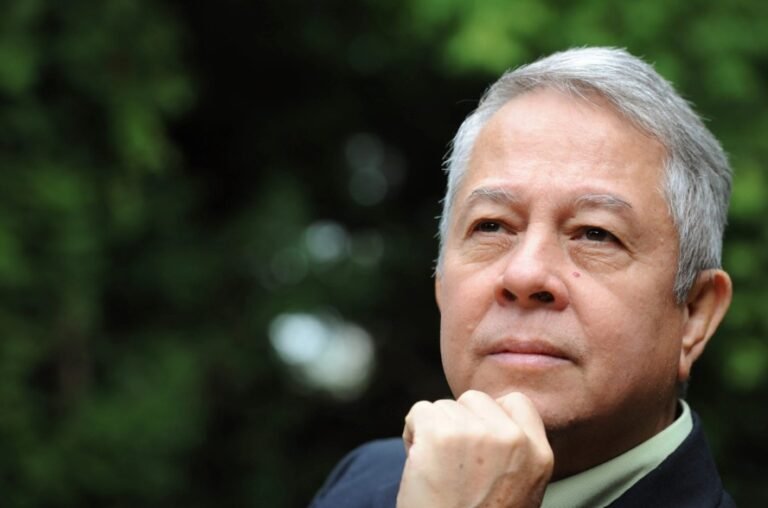
THERE ARE LEADERS who give speeches, and then there are people like Nicanor “Nicky” Perlas — the kind of man who changes the soil beneath our feet, both literally and morally.

I write this not as a distant observer but as someone who walked beside him, listened to him, and had my heart cracked open by him. He taught me that real governance does not begin in air-conditioned boardrooms or in the marble corridors of power — it begins in the sweat-soaked backs of farmers, the stubborn hope of barangays, and the untold quiet struggles of communities.

In the truest sense, Nicky Perlas is a modern Rizal. Not because he wrote novels that scholars endlessly dissect, but because he lived with reason, conscience, and a relentless ethic of service — stitching together the moral fabric of a nation one act, one farmer, one policy at a time.

A Trilogy of Courage: Agronomist → Activist → Moral Architect

Perlas’s life feels like a trilogy written against all odds.

He walked away from the safe path of academia to take on the monstrous Bataan Nuclear Power Plant. He pushed the Philippines toward banning dangerous pesticides, championed organic and biodynamic farming, and drafted Philippine Agenda 21 (PA21) — a bold roadmap that insisted sustainable development must prioritize people, culture, and nature, even when elite globalization sneered otherwise.

These weren’t abstract victories. They were shields that protected farmers, villages, and future generations. They were scaffolding on which millions could stand without fear.

If you’ve ever eaten a vegetable without worrying what poison clung to its skin, that’s partly Nicanor Perlas. If your town has a PA21-inspired community initiative, that too carries his imprint. This is the work of a man who measures success not in applause but in whether a child can eat dinner without fear of toxins.

The Vision of Threefolding: Common Sense with a Pulse

But Nicanor Perlas wasn’t content with farming victories alone. He built frameworks for human dignity.

His idea of threefolding — bringing together government, business, and civil society in genuine partnership — may sound like policy jargon at first. But look closer: it is a manifesto for decency. A way to keep commerce honest, politics accountable, and culture alive.

His book Shaping Globalisation: Civil Society, Cultural Power and Threefolding has become a handbook for students, activists, and leaders who dare to imagine globalization as humane rather than brutal. For Gen Z, it may look like a theory on paper. But for a farmer, a barangay leader, or a community worker, it feels like common sense translated into action.

The Candidate Who Ran on Conscience

In 2010, Nicanor Perlas ran for president. He wasn’t after power — he was answering a moral emergency.

His campaign was improbable, almost quixotic. But it was also deeply principled. He ran not on slogans but on conviction that politics must reflect moral imagination. That leadership is not about dominance but about responsibility, service, and inner clarity.

The Inner Revolution

And this is perhaps the most radical lesson he taught: true revolution begins inside us.

At his Right Livelihood Award acceptance, he declared:
“Spiritual revolution must have happened first within us before we can create the new world we all long for.”

To some, those words might sound lofty. But to Perlas, they were practical truths. He taught farmers to see themselves as custodians, not mere producers. He taught students to pair outrage with discipline. He encouraged elders to pass on stories and seeds with equal reverence.

This is why his influence ripples across generations — from wrinkled hands bent over rice fields to Gen Z organizers buzzing with fire in campus grounds.

A Mentor Who Turned Seeds into Futures

As his writer and mentee, I remember afternoons when his words made the air feel heavy and holy. He never sugarcoated the difficulties of grassroots work. He named them. He dissected them. But then, like a farmer pocketing seeds, he turned those difficulties into something you could plant.

He reminded me that policies are not ink on paper. They are invitations — invitations to love our neighbors into a better future.

The Call That Still Rings

And now, I leave you with his words — words that feel both like a trumpet blast and a whispered prayer:

“NO! RATHER IT ABOUT AFFIRMING THE SENSE OF THE RESPONSIBILITY THAT IS NOW CLEARLY INCUMBENT WITH S.E.A. IN MAKING A DO-OR-DIE EFFORT TO CREATE A BETTER COUNTRY WHERE A SOLID INNER CONDITION IS THE SINE QUA NON FOR SUCH A RENEWAL OF THE COUNTRY.” — Nicanor Perlas

Read it again. Let it pierce you. Civic duty without inner discipline is a ship without ballast. What he is asking is simple but terrifying: will we take responsibility?

The Modern Rizal We Needed All Along

His work made older generations feel seen. It gave farmers dignity. It showed Gen Z that activism is not just marching or tweeting — it is in planting, cooking, educating, healing, caring.

If you ask me whether Nicanor Perlas is a hero, I hesitate. “Hero” feels too neat. He is more than that: a craftsman of courage, a stubborn optimist, a teacher of responsibility.

He proved that the most revolutionary act is to tend what is fragile — soil, seeds, people, conscience.

So read his books. Visit a PA21 project and solutionecosystems.net website. Talk to a farmer touched by his vision. And then, most importantly — plant something. Not for social media, but for the stubborn habit of caring.

That, in the end, is his secret: nations are not made by slogans or declarations but by daily acts that turn strangers into neighbors, and soil into sustenance.

If you cry reading this, good. That’s the water. Now let’s plant the seed.

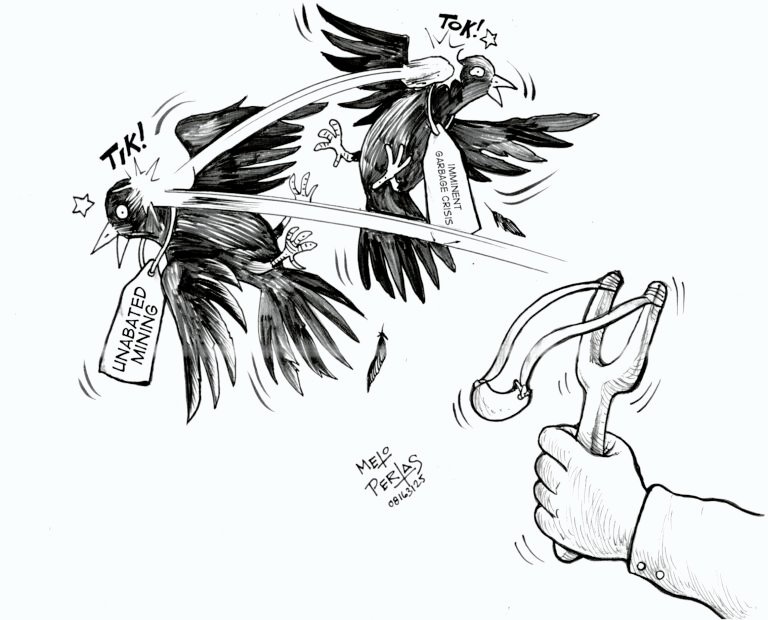
Hitting Two Birds With One Stone

OVER THE PAST several weeks, local government units across the country have been calling for a halt in quarry operations in view of the massive floods that left scars of destruction on agriculture, livelihood and infrastructure.

Admittedly, aggregate products are deemed essential in the government’s infrastructure program — bridges, roads, schools, and hospitals among others were built using gravel and sand. However, the practice which dates back since time immemorial has its saturation point.

And even before blue rock deposits are completely depleted, the government should seriously consider the idea of finding — and institutionalizing a sustainable alternative — like plastic waste.

For one, plastics are lightweight, versatile, and abundantly available in rivers, creeks and drainage canals. Most of all, it’s free.

The utilization of plastic has become a necessary facet of our day-to-day lives, and its production has risen exponentially in the last 50 years. Simultaneous with the growth of the plastics industry is an increase in the generation of plastic waste.

Studies have shown that utilization of recycled plastic in concrete is an effective solution to enhance sound and thermal insulation. The aggregate comprises the largest and heaviest portion of concrete, which accounts for 85 percent of its weight.

Besides, the plastic has a low density compared to the aggregate. As a result, the use of plastic waste as a partial replacement (50 percent to 75 percent) for the total aggregate significantly boosts the efficiency of thermal and sound lightweight concrete insulation.

In addition, the cost of its manufacturing is drastically diminishing in comparison to that of ordinary concrete, and plastic can be installed and utilized quickly with less labor due to its lightweight nature.

Plastic waste may be considered a typical material for the production of lightweight green concrete that can be used as a non-structural component in building construction.

Reintroducing plastic waste into aggregate construction material doesn’t only address the country’s solid waste concerns as the idea may also turn out to be the turning point for LGUs calling for a cease in quarry operations.

Man On A Mission: NDCP Extols Broto 

0

GREATNESS is not measured by sheer publicity, but by the virtues of perseverance, dedication and commitment to serve, according to the National Defense College of the Philippines (NDCP) Alumni Association. 

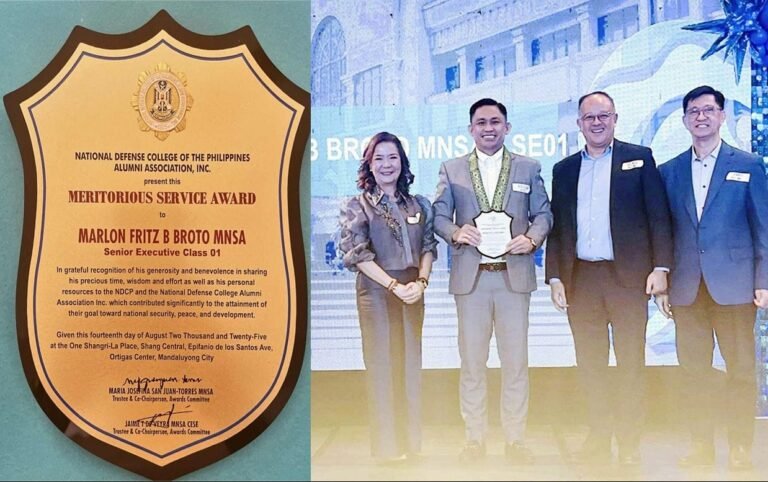
At the 62nd NDCP Founding Anniversary held at the One Shangrila Place in Mandaluyong City, the NDCP Alumni Association cited lawyer Marlon Fritz Broto for “his generosity, dedication, and selfless service… devoting his time, expertise, and resources to the NDCP and its Alumni Association, significantly contributing to their mission of advancing national security, peace, and development.”

Interestingly, Broto works as Director of the Bureau of Customs (BOC) where he brought in innovations which resulted in positive notes.

After receiving the Meritorious Service Award, he admitted that the recognition “is not his alone but is shared with the Bureau of Customs and the dedicated men and women of the institution, whose collective efforts continue to safeguard the nation’s borders and support initiatives for peace and progress.”

Broto earned his Masteral Degree in National Security Administration (MNSA) at the NDCP. He was the valedictorian of his batch with the best thesis.

A program offered by the NDCP,  MNSA is a degree course designed for military officers, government officials, and private sector leaders. It aims to equip them with the knowledge and skills necessary to address national security challenges. 

The MNSA program is the NDCP’s main academic program and is a key component of its curriculum. It involves various forms of learning, including classroom work, case studies, local and foreign academic travels, and a thesis. Civilian graduates of the program are commissioned as Lieutenant Colonels or Commanders in the AFP Reserve Force.

HAUNTED

0

NOT SO FAST, says Senator Panfilo Lacson to the Department of Public Works and Highways (DPWH) over calls to secure another loan to address the country’s “aging and dilapidating flood control system.” 

In an interview with a digital news platform hosted by Korina Sanchez, Lacson rebuked DPWH’s claim that the supposed “aging and dilapidating flood control system” should not entirely be blamed for the massive floods in Metro Manila, Central Luzon and other parts of the country.  

This comes as Lacson hinted at “what looks more like ghost projects,” which according to the senator could be just a tip of the iceberg.

‘[H]alf-bake” and “no bake at all” (meant) … that some of their projects didn’t meet stipulated specifications — and in some instances, were just “photo ops” showing a backhoe on the river.’

GHOST SPOTTED
To start with, the legislator hinted at a P200-million “ghost flood control project,” for which he cited the need for a “congressional investigation in aid of legislation.”

“Meron kaming meeting ng mga staff kasi binubuo ko yung aking isasagawang privilege speech tungkol sa mga flood control projects all over the country. At mukhang may natisod na at least isang ghost project,” Lacson told the program anchor.

“Bina-validate pa namin pero parang doon papunta na halagang almost P200 million. Wala naman nagawang proyekto. So chine-check namin, nire-recheck kung ito ba ghost project talaga o mali lang yung lugar na napuntahan ng aking team,” he added.

OPEN SECRET
In an exclusive interview with The PH Insider, a private contractor engaged in government flood control projects admitted that most of the contracts he secured during the previous administration were either “half-baked” or “no bake at all.”

When asked what he meant by “half-bake” and “no bake at all,” the contractor explained that some of their projects didn’t meet stipulated specifications — and in some instances, were just “photo ops” showing a backhoe on the river.

“Sa dami at laki ba naman ng kailangan bigyan, maski sinong kontratista mapipilitan tipirin and project cost… otherwise malulugi pa kami. There’s not much we can do, nakareflect yun sa BIR (Bureau of Internal Revenue) report namin.”

“Yung sa ghost projects, baliktad, kami naman ang may komisyon, 80 percent of the project cost sa kanila yun,” he added.

BREEDING GRAFT
For the longest time, the DPWH has been a subject of public scrutiny over a culture of corruption embarking on alleged kickbacks from various infrastructure projects, including flood control programs.

In a report released by the Presidential Anti-Corruption Commission (PACC) during the previous administration, DPWH topped the list of 10 most corrupt government agencies.

Then PACC chairman Dante Jimenez said  the commission received 411 complaints, 59 of which were classified as “verified.”

“Verifiable complaints are complaints supported by documents whose veracity can be readily checked. The Department of Public Works and Highways had the most number of verifiable complaints received, topping the list,” Jimenez said.

The DPWH Secretary then was Mark Villar, now a sitting senator.

TEMPLATE ALIBIS
Responding to Lacson’s statement, DPWH Secretary Manuel Bonoan assured the public that the supposed ”ghost” flood control projects, as claimed by Sen. Lacson, would be validated and investigated. 

”This is something that we have to validate po kung mayroong ghost project na sinasabi kasi one to one ‘to eh. Kung halimbawa, nirereport namin at hindi makita ‘yung project na ‘yan then that’s the only time we can see na mayroong ghost project,” Bonoan said in a radio interview.

President Ferdinand Marcos Jr. earlier vowed that his allies would not be spared if found to be involved in corruption on flood control projects.

Marcos warned government personnel who steal public funds, such as those for flood control projects, that they will be dealt with under the law.

CHECK AND BALANCE
Interestingly, the DPWH admitted that it has no monitoring system in place for some flood control projects — specifically those inserted by lawmakers into the national budget without undergoing technical vetting.

However, a check by The PH Insider showed that the DPWH has an Infra-Track App, which uses geotagging and drone monitoring of the agency’s infrastructure projects.

Other than the Infra-Track App, the DPWH also has a Civil Works App which verifies and validates legal, technical and financial requirements primarily designed to eliminate human intervention in compliance monitoring.

The DPWH has also adopted a centralized database system referred to as Project and Contract Management Application capable of providing “real-time” field updates and accelerated analysis and problem resolution at the project or contract level and full analytics at the construction program level.

Livelihood Empowerment For Northehanons

0

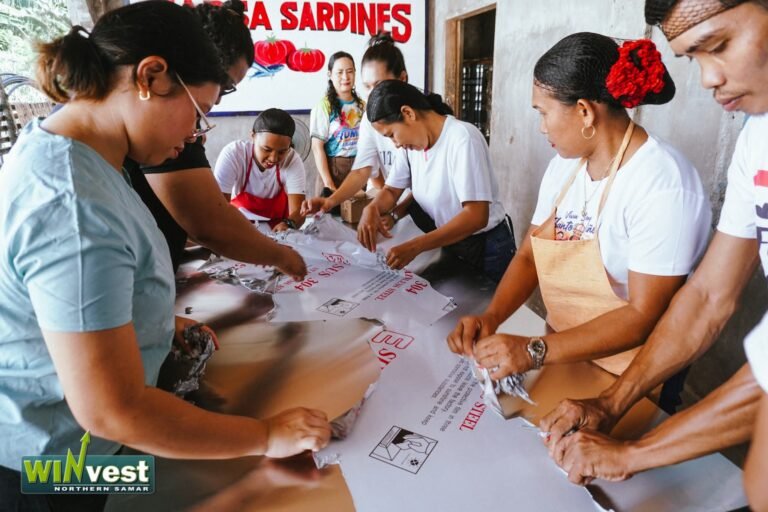
THROUGH THE BARANGAY Livelihood Empowerment and Sustainability (BLES) program of the Provincial Economic Development and Investment Promotions Office (PEDIPO), led by its economic development and investment promotions officer Jhon Allen Berbon, a hands-on training on sardines production was successfully held in partnership with the Technical Education and Skills Development Authority – Balicuatro College of Arts and Trade (TESDA-BCAT) for the Sangputan Workers’ Association (SWA). 

Conducted in Barangay Sangputan in San Vicente, Northern Samar, the training was focused on practical sardines processing techniques such as fish cleaning and preparation, spicing, bottling and sterilization. 

Engr. Josephine Magdaraog, Food Processing NCII trainer of TESDA-BCAT, facilitated the sessions, ensuring that all of the participants who joined the workshop seminar acquired the proper methods that aligns with food safety and quality standards.

SUSTAINED COMMITMENT
Berbon shared that this livelihood training initiative is part of PEDIPO’s broader mission of promoting inclusive and sustainable livelihood opportunities through the BLES program which aims to build the capacity of local communities through skills development and enterprise support.

“By equipping the Sangputan Workers’ Association with value-adding skills, the training will empower them to venture into small-scale food processing that can lead to long-term income generation and economic self-sufficiency,” he pointed out. 

Magdaraog cited that the training reflects PEDIPO’s sustained commitment to promoting livelihood opportunities at the grassroots level by equipping local associations with practical, income-generating skills. 

“Through continuous collaboration with agencies, PEDIPO reinforces its mission to empower communities, enhance local productivity, and support the development of small-scale enterprises across Northern Samar.”

Why Study Rizal?

0

DR. JOSE P. RIZAL lived in the 61st year of the 19th century. Why would Philippine hero Jose Rizal be relevant now?

On August 16, 1956, Republic Act 1425 or Rizal Act was enacted into a law, requiring all educational institutions in the Philippines to include a course about the life, works, and writings of Jose Rizal into the curricula, until today.

It is supposed to inspire students, to understand his vision for the country, the sacrifices he had done, and to see him as an exemplary Filipino: to emulate him and ignite nationalism among the students, give them a model for patriotism, be like the hero in terms of love for country and fellowmen. He dedicated his life for the Philippines.

LIVING LIKE RIZAL
Has the inclusion of Rizal’s life and works in the educational curriculum been effective?

Why are some leaders siding with evil instead of leading the people to the path of development?

Well, Rizal Law may not have anything to do with it but if the teachings are so effective there should be no room for these circumstances. Because Rizal was one of the best examples of how a citizen should be. Why can’t we be like him?

If Rizal course is effective, why are some Filipinos so fanatic to the point of loving and fighting for the politicians instead of fighting for what is right and what is good for the country? Why do some Filipinos betray fellow citizens in exchange for money? Rizal was never like that!

‘Rizal was one of the best examples of how a citizen should be … If Rizal course is effective, why are some Filipinos so fanatic to the point of loving and fighting for the politicians instead of fighting for what is right and what is good for the country?’

READING RIZAL
Is the pen still mightier than the sword? As a journalist, I should believe this. But maybe there are also times when a more active reaction is needed.

More action enough to shake those who abuse us, who do not take responsibility for their misdeeds, those who are corrupt and using their position for personal gain. Or maybe, the life of Rizal is not enough.

What if we include the lives of other heroes, popular and not so popular? Will it make a difference? Maybe we are not in a situation we are now where abuses are done by the leaders we voted to hold government positions.

Look at the national scene: the Supreme Court, the Senate, and the Congress: how many are Rizal-like in terms of patriotism? Look at the local scene: how many leaders are like him? Look at the ordinary citizens… do we have the qualities of Rizal? Did we ever learn anything from his works and writings?

Maybe we read him, but did we ever act like him?

Let me go back to the question now: has it been effective? All who finished college had Rizal course by virtue of the law.

All who studied high school learned about Noli Me Tangere and El Filibusterismo, two novels of Jose Rizal. Even in elementary school, we have learned about one of our national heroes, Rizal. Yes, we have several national heroes!

WHERE WE WENT WRONG
Here we are: politicians are playing us. They see us merely as voters to get them to the positions they wanted. From the father mayor to the wife mayor to the child or children mayors.

Our fellow citizens keep electing politicians convicted for plunder. Even the highest positions are no example to good governance, except for a handful good leaders. And they just get away with their wrongdoings. Then we wonder why we are so poor, trying to keep both ends meet everyday, every year, and the cycle just goes on and on and on.

Where does Rizal Law apply? Where did we go wrong? Review our education. Make it effective.

In Life As In Death, Info Is Scarce On Trevor Magallanes, Hubby Of Rufa Mae Quinto 

IT’S BEEN ALMOST three weeks since the reported death of Fil-Am Trevor Magallanes in the US and no announcement of the details have been publicly conveyed.

​His wife, actress and comedienne Rufa Mae Quinto had promised that she would be the one to deliver the narrative of the sad event to the curious audience especially to the local entertainment industry which she is significantly part of, and of course, her fans and followers who love and care for her, notwithstanding the entire nation because this is a story worth its salt in the migration history of Filipinos elsewhere, especially to US, in whatever aspirations, but she has not fulfilled it yet.

​It’s not mainly to fan controversies and blow them into proportions or merely to gossip around because the people involved are celebrities and high-profile social animals but simply, to objectively present their worlds.

​What gives?

‘[G]rounded on limitations, I looked into all possible sources, first, on the cause of Trevor’s death but until now, I haven’t come across reliable wellsprings of accounts on the unfortunate incident.’

GROUNDED ON LIMITATIONS

​As an entertainment writer who attempts to investigate the case, albeit superficial or otherwise, grounded on limitations, I looked into all possible sources, first, on the cause of Trevor’s death but until now, I haven’t come across reliable wellsprings of accounts on the unfortunate incident.

​The only basic and concrete things about Trevor was his love to Rufa Mae, his giving her diamond rings and marrying her on November 25, 2016 in an exclusive wedding in a posh events hall in Quezon City with the bride already heavy with a child that she gave birth in 2017 and named their daughter Alexandria Athena Magallanes. In the Spring of 2014, Trevor graduated as a Dean’s Lister from the University of San Francisco School of Management.  

​That the Magallaneses migrated to the US and lived there for years until late last year when showbiz observers noticed that the actress was back in the thick of things in the biz.

DIVORCE ISSUE

​Incidentally, Rufa Mae was implicated in an investment scam early this year and an arrest order was served.

​A “divorce issue” cropped up as well which Trevor intriguingly posted in his social media pages cryptic messages we quoted the phrase “…that marriage s–t show” from news online accounts.

​In the end, no divorce or annulment happened.

​What went wrong before and immediately after the pandemic when Trevor would post loving notes to his wife?

Still, there are scarcity of Information.

Even Magallanes’ former boss, Interim Chief Paul Yep of the San Francisco Police Department in California hasn’t included the cause of the death of his ex-subordinate but only to reveal and condole with his family, former colleagues and friends.

Yep, though, has provided us additional background on Trevor like the Film-Am joined the SFPD on September 24, 2018 as member of the 263rd Recruit Academy Class and hence served the communities of the Mission, Tenderloin, Central, and Taraval Districts.

Yep praised Trevor’s performance as dedicated and committed.

According to the officer, Magallanes concluded his service with the Department in February 2023.

When did he become a financial analyst as indicated in his obit?

In a Mabumbe website, Trevor’s date of birth isn’t publicly disclosed although there was a netizen who wrote that the guy was thirty years old. His early life is private and details on his family are scarce.

SOLVING THE JIGSAW PUZZLE

Surfing in his Instagram, though, which is luckily still up, visuals speak louder than voice.

​Let semiotics do the talking like photos of Trevor with his daughter he seemed to be the center of his universe; pictures of his family, obviously photographed in the Philippines and US; his stint as a policeman in San Francisco but they aren’t enoughpieces to solve a jigsaw puzzle.

Zero Billing Only For A Few Public Hospitals?

0

FOR THE LAST 14 years, Filipinos are under the impression that the so-called “zero-balance billing” policy that the government has been bragging covers all public hospitals.

The truth, however, is that it isn’t.

No less than Department of Health (DOH) Secretary Teodoro Herbosa admitted that the policy only applies to 80 of the 721 public hospitals across the archipelago.

In principle, the zero balance billing policy covers room and board charges; professional fees of doctors, nurses, and specialists; laboratory tests and imaging (e.g., X-ray, CT scan), under case rates; use of operating rooms and hospital equipment, and medicines and medical supplies available in the hospital.

Plus diagnostic tests, surgery, and antidotes which form part of the PhilHealth benefits.

‘Aside from the fact that not all public hospitals are compelled to apply the zero-billing policy, the program only covers “basic medical services,” which leaves patients suffering from serious ailments in limbo.’

PURELY P.R. STUNT

During his fourth State of the Nation Address (SONA), President Ferdinand Marcos Jr. announced that charges for basic accommodation and medical services at DOH-run hospitals are now fully covered — or simply zero balance billing upon discharge.

The President in his speech emphasized that patients are no longer required to pay out-of-pocket for eligible medical services, adding that the bills are already covered by the government.

In addition to existing Philippine Health Insurance Corporation (PhilHealth) benefits, the expanded coverage is made possible through the Medical Assistance to Indigent and Financially Incapacitated Patients (MAIFIP) program —in partnership with other agencies— and through direct allocations to DOH hospitals.

TERMINAL AILMENTS 

However, full implementation of the zero billing policy (meaning the patient should not be made to pay a single centavo) doesn’t really exist as most DOH-run hospitals are facing challenges.

Aside from the fact that not all public hospitals are compelled to apply the zero-billing policy, the program only covers “basic medical services,” which leaves patients suffering from serious ailments in limbo.

Interestingly, the zero-billing policy does not cover specialty hospitals where terminal cases are usually brought. The list includes the National Kidney and Transplant Institute, Lung Center of the Philippines, Philippine Heart Center, and Philippine Children’s Medical Center, which are under the auspices of government-owned and controlled corporations (GOCCs).

FISCAL CONDITIONS

While “zero balance billing” literally translates to free, the policy may not necessarily be true amid persistent factors and circumstances.

Among the factors hampering an honest-to-goodness include hospitals running out of medicines or supplies for which patients are compelled to buy elsewhere.

There are also some procedures or medications which are not covered by PhilHealth. In most cases, patients are not aware of the government’s zero-billing policy in DOH-run hospitals..

In the event of underfunding or delays in the reimbursement, DOH-run hospitals are forced to impose “necessary charges,” which effectively bumps off the government’s zero balance billing policy.

For this year’s national budget, PhilHealth was given zero subsidy allocation.

BROADER UHC LAW

The health department said that the policy aims to provide completely free hospitalization for patients admitted under basic accommodation in DOH-run hospitals.

Herbosa however emphasized that the policy covers individuals (regardless of socioeconomic status) confined in “basic accommodation” rooms or wards under DOH-run medical facilities nationwide.

He noted that the policy, previously available only to indigent patients, has now been expanded with the goal that all patients receiving treatment in basic accommodations under DOH hospitals will no longer pay a single centavo.

To qualify, Herbosa stressed that patients must choose “basic accommodation,” if only to ensure full coverage of hospital expenses in DOH-run facilities.

The DOH chief however clarified that the coverage excludes private hospitals, patients who choose private rooms, and those undergoing elective procedures.

SELECTED HOSPITALS

For clarity, all DOH hospitals are public, but not all public hospitals are DOH hospitals.

DOH hospitals are public facilities directly operated and funded by the Health Department. They are typically tertiary or regional medical centers—larger, better equipped, and capable of offering specialized and referral services. 

These hospitals are expected to implement DOH policies, like “zero balance billing,” more strictly.

Public hospitals, in general, include DOH hospitals, LGU hospitals (run by provincial, city, or municipal governments), military hospitals, and public university hospitals. All are government-funded and serve the public, often at low or no cost.

Customs Economic Operators’ Meet

0

TO PROMOTE SECURE and efficient cross-border trade, and enhance cooperation with international partners, the Bureau of Customs’ sustained efforts on its Authorized Economic Operator (AEO) Program was underscored in the successful AEO Officers Meeting in Port Area, Manila. Atty. Jenny P. Diokno, Chief of the AEO Interim Office, gathered 31 attendees, including key officers and program implementors. Highlighted in the meeting was a comprehensive Status Report of AEO Partners, providing updates on companies, applicant-firms at the pre-screening clearance stage, and applicants with ongoing evaluations. A key outcome was the creation of a Consultation Team tasked with supporting the planned expansion of the AEO Program to Customs brokers, Freight forwarders, and Customs Facilities and Warehouses.

Healthcare Workers Yet To Be Paid

0

THE IDEA OF free hospitalization is good, but who’s gonna take care of the patients if doctors, nurses and other healthcare workers in public hospitals are not around?

In what appears to be an ironic twist of fate, a sizable number of Filipino healthcare workers who have rendered beyond the “call of duty” during the COVID-19 pandemic, have yet to collect their health emergency allowances  as mandated under the law.

Referred to as Republic Act 11712 (Public Health Emergency Benefits and Allowances for Health Care Workers Act), the law grants mandatory continuing benefits and allowances to public and private healthcare workers during the COVID-19 pandemic and other future public health emergencies.

‘The law which covers “all healthcare and non-healthcare workers, regardless of employment status,” provides benefits including monthly health emergency allowance during the state of public health emergency based on the risk exposure as defined under RA 11712.’

SERVICE RENDERED
The failure of DOH to pay the remaining P6.7-billion health emergency allowance compelled the Senate Committee on Health under the 20th Congress to call for a public hearing concerning the government’s unpaid obligations.

According to committee chairperson Senator Bong Go many eligible healthcare workers have remained unpaid five years after rendering services.

“Service rendered na po ito,” Go stressed. “Kaya nananawagan ako sa DBM (Department of Budget and Management) at DOH na tugunan po ito at bayaran n’yo po,” he urged.

Go however did not provide details as to how many healthcare workers have yet been paid, but admitted that some P27 billion was released last year by the DBM to settle part of the government  obligation.

TEDIOUS PROCESS
Renewing calls to the Department of Budget and Management (DBM) and the DOH to expedite the payment of the health emergency allowance, Go assailed the long process before substantial amounts were finally disbursed to beneficiaries.

“Nagkaroon na po tayo ng 14 hearings sa Senado tungkol sa health emergency allowance ng ating mga healthcare workers. Finally last year nabayaran na yung P27 billion. Dahil services rendered na po ito, pinaghirapan at pinagpawisan na nila,” he stressed.

Go underscored that last year’s release of P27 billion was the result of persistent hearings and appeals from the healthcare community, but also revealed that unresolved claims remain.

OBLIGED TO PAY
The law which covers “all healthcare and non-healthcare workers, regardless of employment status,” provides benefits including monthly health emergency allowance during the state of public health emergency based on the risk exposure as defined under RA 11712.

Those deployed in “low-risk areas” shall be given at least P3,000.00, P6,000 for those in “medium-risk areas” and P9,000 for healthcare workers in “high-risk areas”.

The same law categorically states that health emergency allowance shall  be received on top of other existing benefits that the healthcare and non-healthcare workers are receiving, provided that they render at least 96 hours of service every month.

The government is also obliged to pay additional compensation to those who have contacted COVID-19 in the line of duty.

How Scalp Acupuncture Is Helping Stroke Survivors Regain Control

5

LET’S START WITH the hard truth: a stroke can change everything in an instant. One moment, you’re sipping coffee or scrolling your phone—and the next, you’re in a hospital bed struggling to move, speak, or even remember who you are.

Recovery is tough. The brain, after all, is complicated. But what if I told you there’s a needle—yes, a needle—that could help reconnect those broken neural pathways?

Enter scalp acupuncture, a powerful, underappreciated therapy that’s been quietly changing lives in stroke rehabilitation.

‘It’s time we stop thinking of acupuncture as just some “alternative” therapy and start recognizing it for what it truly is: a scientifically grounded, brain-boosting tool that belongs in every stroke recovery plan.’

SO, WHAT IS SCALP ACUPUNCTURE?

Scalp acupuncture is a specialized technique that involves inserting ultra-fine needles into specific areas of the scalp that correspond to different parts of the brain. It’s not the same as regular body acupuncture. This method taps directly into the central nervous system—right where the damage from a stroke usually hits hardest.

Imagine rebooting a computer by tapping on just the right keys. That’s what scalp acupuncture aims to do: stimulate brain cells, improve blood flow, and jumpstart recovery by tapping into your brain’s natural ability to rewire itself—a phenomenon called neuroplasticity.

WHAT CAN IT HELP WITH?

Studies and real-world cases show that scalp acupuncture can help improve:

• Paralysis or weakness on one side of the body

• Speech problems like slurring or aphasia

• Memory and cognition

• Balance and coordination

• Emotional regulation (because post-stroke depression is very real)

Patients who undergo regular scalp acupuncture often notice improved mobility, sharper mental clarity, and better quality of life—even when conventional therapy had reached a plateau.

WHY IT WORKS (WITHOUT SIDE EFFECTS)

Stroke disrupts the brain’s communication network. Scalp acupuncture acts like a signal booster, enhancing circulation and stimulating damaged neurons to start talking again. And here’s the kicker: it does this without any of the side effects you’d expect from medications.

No drowsiness. No liver damage. No foggy brain.

Just small, strategic pokes that help the brain heal itself.

IS IT SAFE?

When done by a trained acupuncturist, scalp acupuncture is incredibly safe. The needles are tiny (you’ll barely feel them) and the process is typically painless. In fact, some patients feel immediate relief—like a heaviness lifting off their limbs or a sudden clarity in their thoughts.

FINAL THOUGHTS: HOPE COMES IN SMALL NEEDLES

Scalp acupuncture isn’t a miracle. It’s not a one-and-done cure. But for stroke survivors who’ve been told, “This is as far as you’ll go,” it offers something powerful: hope.

Hope that movement will return. That words will come back. That life can be lived on your own terms again.

It’s time we stop thinking of acupuncture as just some “alternative” therapy and start recognizing it for what it truly is: a scientifically grounded, brain-boosting tool that belongs in every stroke recovery plan.

Because healing doesn’t always come in pills or surgery.

Sometimes, it comes one needle at a time.

Investing In People

0

Many of life’s failures are people who did not realize how close they were to success when they gave up.
                               — American inventor and businessman Thomas Alva Edison

IN THE VISAYAN province of Northern Samar, the provincial government under the able leadership of Gov. Edwin Marino Ongchuan is not just implementing developmental projects but are also investing in people as a means of attaining progress and prosperity.
 
This aligns with part of the message of President Ferdinand “Bongbong” Marcos Jr. (PBBM) in his Fourth State of the Nation Address (SoNA) last May 12, during which the chief executive reaffirmed his administration’s commitment to uplifting Filipino lives through inclusive economic empowerment. 

He declared: “𝘐𝘱𝘢𝘨𝘱𝘢𝘱𝘢𝘵𝘶𝘭𝘰𝘺 𝘯𝘢𝘵𝘪𝘯 𝘢𝘯𝘨 𝘱𝘢𝘨𝘣𝘪𝘣𝘪𝘨𝘢𝘺𝘯𝘨 𝘱𝘶𝘩𝘶𝘯𝘢𝘯 𝘴𝘢 𝘮𝘢𝘴 𝘮𝘢𝘳𝘢𝘮𝘪 𝘱𝘢𝘯𝘨 𝘯𝘦𝘨𝘰𝘴𝘺𝘢𝘯𝘵𝘦 𝘱𝘢𝘳𝘢𝘮𝘢𝘬𝘢𝘱𝘢𝘨𝘴𝘪𝘮𝘶𝘭𝘢 𝘯𝘨 𝘮𝘢𝘭𝘪𝘪𝘵 𝘯𝘢 𝘯𝘦𝘨𝘰𝘴𝘺𝘰 𝘰𝘮𝘪𝘤𝘳𝘰𝘦𝘯𝘵𝘦𝘳𝘱𝘳𝘪𝘴𝘦, 𝘴𝘢 𝘮𝘢𝘣𝘢𝘣𝘢𝘯𝘨 𝘪𝘯𝘵𝘦𝘳𝘦𝘴𝘵 𝘢𝘵 𝘸𝘢𝘭𝘢𝘯𝘨𝘬𝘰𝘭𝘢𝘵𝘦𝘳𝘢𝘭. 𝘗𝘢𝘵𝘪 𝘯𝘢 𝘳𝘪𝘯 𝘢𝘯𝘨 𝘬𝘢𝘱𝘪𝘵𝘢𝘭 𝘢𝘵 𝘱𝘳𝘰𝘵𝘦𝘬𝘴𝘺𝘰𝘯 𝘱𝘢𝘳𝘢𝘴𝘢 𝘮𝘨𝘢 𝘺𝘢𝘮𝘢𝘯𝘨-𝘪𝘴𝘪𝘱. 𝘈𝘵 𝘱𝘢𝘳𝘢 𝘴𝘢 𝘮𝘨𝘢 𝘵𝘪𝘯𝘢𝘵𝘢𝘨𝘶𝘺𝘰𝘥𝘯𝘢𝘵𝘪𝘯 𝘮𝘶𝘭𝘢 𝘴𝘢 𝘬𝘢𝘩𝘪𝘳𝘢𝘱𝘢𝘯, 𝘱𝘢𝘵𝘶𝘭𝘰𝘺 𝘵𝘢𝘺𝘰𝘯𝘨 𝘯𝘢𝘨𝘣𝘪𝘣𝘪𝘨𝘢𝘺𝘯𝘨 𝘭𝘪𝘣𝘳𝘦𝘯𝘨 𝘵𝘳𝘢𝘪𝘯𝘪𝘯𝘨 𝘢𝘵 𝘱𝘶𝘩𝘶𝘯𝘢𝘯 𝘱𝘢𝘳𝘢 𝘮𝘢𝘬𝘢𝘱𝘢𝘨𝘵𝘢𝘺𝘰𝘴𝘪𝘭𝘢 𝘯𝘨 𝘴𝘢𝘳𝘪𝘭𝘪𝘯𝘨 𝘯𝘦𝘨𝘰𝘴𝘺𝘰.”

These words were more than just a national policy statement as they echo the very principles that guide the thrusts of the Provincial Economic Development and Investment Promotions Office (PEDIPO) of Northern Samar led by its dynamic head Jhon Allen ‘JA’ Berbon.
One of PEDIPO’s local programs is the Barangay Livelihood Empowerment and Sustainability (BLES) Program, which embodies the national thrust of “investing in our people.” 

“Through BLES, we provide up to ₱100,000 worth of grants to barangay-based associations, cooperatives, and community groups. These grants cover essential tools, equipment, raw materials, and supplies to help them start or scale up their local enterprises,” Berbon disclosed. 

‘This is our shared mission with the national government: to fuel microentrepreneurship, promote inclusive local development, and ensure that no one is left behind in our province’s journey toward prosperity.’

PATHWAY TO SELF-RELIANCE
But beyond funding, BLES also offers a pathway to self-reliance as it empowers communities by helping them create income-generating activities that are sustainable, culturally grounded and aligned with the potentials of their locality. 

“Just as the President emphasized in his address, PEDIPO through its Business Development Division ensures that beneficiaries are not only given capital but also the capability through year-long mentoring, skills training and technical support to transform their ideas into real economic opportunities with our supportive partner agencies,” Berbon added. 

PEDIPO is being supported by several national government agencies such as the departments of labor and employment, science and technology, trade and industry and agriculture and others like the Bureau of Fisheries and Aquatic Resources (BFAR). 

PROCESSING COOPS
As of 2025, the provincial government of Northern Samar is actively assisting some 246 barangay-based associations that represent a broad spectrum of sectors from farmers and fisherfolk, to women’s groups, youth organizations and marginalized community cooperatives in the province. 

“From fisherfolks in the coastal barangays to farmers forming processing cooperatives in the upland areas and to women-led associations creating homemade delicacies, the BLES Program is proof that government support, when targeted, strategic and inclusive, can change lives and stimulate grassroots economic growth because each one is working toward economic resilience and self-sufficiency,” Berbon enthused. 

This is our shared mission with the national government: to fuel microentrepreneurship, promote inclusive local development, and ensure that no one is left behind in our province’s journey toward prosperity,” the economic development and investment promotions officer asserted in conclusion. 

FOR your comments or suggestions, complaints or requests, just send a message through my email at cipcab2006@yahoo.com or text me at cellphone numbers 09171656792 or 09171592256 during office hours from Monday to Friday. Thank you and mabuhay! 

The People’s Cry: Impeach Sara Now!

2

“IMPEACH SARA DUTERTE!” This was the message of 215 Representatives last February 2025. It was a serious irrevocable demand by the elected officials of the lower house in accordance with their mandate to call for accountability of VP Sara Duterte for her unexplained spending of P125.5 million of the people’s money (confidential funds budgeted under her care as the Vice President and Secretary of the Department of Education), culpable violation of the Philippine Constitution, bribery, betrayal of public trust, death threat against the first couple, and other high crimes, as declared in the live-streamed official hearing of Congress’ QUAD Committee on Good Governance.

But the Senators who were called upon by the Constitution, under Article 11, “forthwith” to institute themselves into an Impeachment Court in February, dilly-dallied practically for 4 months, and shamelessly kept resetting the date of hearing the Articles of Impeachment.

Senate President Chiz Escudero, and his colleagues, have a lot of explaining to the lower house and, more so, to the Filipino people, given their mandate as Senators to implement the Philippine Constitution, in effect, to call to account erring public officials, and in this case, the second highest official of the country!

BRAZEN BETRAYAL
What is even most disconcerting is a brazen betrayal of the people’s right to receive justice from their public officials, paid monthly in millions with the people’s tax money. Senators Bato de la Rosa and Francis Tolentino dared to stop the institution of the Impeachment Court, by coming up with an absurd resolution for their colleagues to approve, and in effect prejudge VP Sara Duterte as innocent of the charges against her.

Constitutionalist Christian Monsod couldn’t stomach this unconstitutional action by the two senators, that he called for them to inhibit themselves from becoming senator-judges of the Impeachment Court. A “Second the Motion” could be heard from netizens, and by countless lawyers and legal luminaries nationwide.

The people are alarmed and feeling disgusted, with such delaying or actual attempt by the Senate to disregard facing the truth of VP Sara Duterte’s guilt and proof of her betrayal of her mandate under the Rule of Law and the Constitution itself.

And this is despite the loud and clear demand by various coalitions of democratic organizations and civil society movements to “Litisin na si VP Sara Duterte!”

LACK OF POLITICAL WILL
The people are asking, “Are the senators dumb, or afraid even at this time of a ‘DDS attack’ (knowing fully well the patriarch-killer is in faraway ICC detention cell in the Hague) and so shameless to allow themselves to violate their constitutional mandate to fulfill their judicial function as an Impeachment Court?”

Surely, all Filipinos of goodwill cannot tolerate such cowardice or lack of political will or clear impartiality in the case of a Duterte accused of committing crimes, while holding an official position of public trust.

The impeachment of VP Sara Duterte should not distract President Bongbong Marcos, his cabinet secretaries and all government officials from addressing the long-time sufferings of the Filipino people.

GOOD GOVERNANCE
Why the delay in marketing the P20/kg of rice and affordable food?

From 2016 onwards up to the present, why have the Duterte/Marcos regimes failed so far to address the myriad problems of the country’s defective Education System, under-budgeted Health System, corruption in the bureaucracy, AFP/PNP continuing pursuit of red-tagged killings, illegal arrests and extrajudicial killings (EJKs), millions of drugs still marketed, the POGOs-generated crimes of human trafficking, various forms of scamming, kidnappings and other illegal activities, and the continuing aggressive attacks on our territorial sovereignty in the West Philippine Sea (WPS)?

Good Governance, where art thou? Coming soon?

Reforestation: Doing It Right

0

RAINY SEASON, IT’S the best time to plant. Beyond rice, which an old childhood song popularized as never fun to plant, our tropical country has abundant vegetation yet still has a big need to sow and grow. Not just in the fields but more so in the forests where trees offer very diverse and significant values.

WHY REFOREST?
The Philippines has experienced a dramatic decline in forest cover, dropping from 70% in the 1900s to around 24 percent today. Contributors to this state which we call deforestation, aside from natural disasters, are human activities like urbanization and development, commodity-driven deforestation (conversion to agriculture, mining, and other productive industries), illegal logging, and mining. Serious consequences are climate change, biodiversity loss, and soil erosion which manifest in the environmental and economic crises of the times.

There is big hope in trees and forests. Trees, apart from the amazing beauty humans behold, offer significant value both environmental and economic. They provide clean air and water, combat climate change by absorbing carbon dioxide the excess and entrapment of which cause climate change, and support biodiversity by providing habitat for various species.

‘Challenges remain in balancing economic development and environmental protection. But we also see organizations and individuals pushing passionately for reforestation …’

Also, they keep our economy rolling with their bark, trunk, fruits, saps and seeds serving as raw materials for food production, construction, pharmaceutical and folkloric medicines, and many other industries.

To restore and renew our forests to health, reforestation is obviously the standard method, the key activity of the government’s National Greening Program. In environmental science, reforestation is more than planting trees; it considers forest as a whole ecosystem – trees, wildlife, community, the relationship of living organisms with the environment of atmosphere, air, water, soil, rocks.

SELECTING TREES
There was a time mahogany became the popular tree to plant. I remember being awed by the man-made forest in Bilar town in Bohol some 20 years ago with slim mahogany trees towering along a two-km stretch road toward the Tarsier Sanctuary near Loboc. Then later I learned mahogany is not a native tree and is not good for the healthy growth of other trees in the forest. (It remains though the species of choice in reforestation projects, being less costly and easier to plant and grow.)

Organizations who want to do tree-planting, some within a corporate social responsibility program, must seriously consider the ecological aspects of a forest ecosystem. As a starter, they should count on experts – ecologists, botanists, foresters, forest researchers.

And likewise, the indigenous people in the community who are the natural stewards of the forest biodiversity. All would be the best guide on the right and wrong trees to plant. Native trees are compatible with the soil and are non-invasive to the existing biodiversity in the area. Some excellent choices are narra, kamagong, yakal, tangile, lauan, and katmon. Exotic trees (from other countries) are largely invasive.

Another consideration in selecting trees is the climate resilience of the species: choose those which can be most tolerant of changing weather patterns.

CHALLENGES
Challenges remain in balancing economic development and environmental protection. But we also see organizations and individuals pushing passionately for reforestation – from environmental foundations and NGOs, corporations, academe, church to plain nature lovers.

Bottomline, how can we not love those greens stretching beautifully to the sky and making us breathe clean air on earth?

A Country That Presumed Guilt: The Cancer Of Our Bail System

0

THERE IS A quiet tragedy unfolding in the shadows of the Philippine justice system. It’s not the kind that makes front page headlines. It does not scream or wail. It festers. Slowly. Silently. It lives in the faces of the faceless, in the broken backs of those made to wait—for years, not for their punishment, but for their chance to prove they deserve none.

It jails more people who have not been convicted than those who have. Sixty-five percent of our jail population—yes, sixty-five—is made up of people who are still awaiting trial. Most of them are poor. Most of them are powerless. And most of them have no business being in jail in the first place.

Here’s the grotesque math of our penal arithmetic: if you’re poor and accused of a crime—any crime—you’re almost guaranteed jail time, even if you’re innocent. If you’re rich, you’re almost guaranteed release, even if you’re guilty. It’s not the gravity of the crime that seals your fate. It’s the depth of your pocket.

And that is the cancer at the heart of our bail system.

‘Here’s the grotesque math of our penal arithmetic: if you’re poor and accused of a crime .. you’re almost guaranteed jail time, even if you’re innocent. If you’re rich, you’re almost guaranteed release, even if you’re guilty.’

THE SYSTEM IS RIGGED
The country still clings to a financial bail regime so iniquitous it punishes the poor for being poor. A street vendor caught playing cara y cruz can rot in jail for months. A well-connected drug lord? He posts bail and goes home. A first-time offender in jail. A repeat offender in freedom. That’s the way the system is rigged. It’s not justice. It’s extortion with a legal name.

Even more absurd is how we’ve mangled our own Constitution. The Constitution is clear: bail is a matter of right. Yes, even for capital offenses—unless the prosecution can prove that the evidence of guilt is strong. The burden lies with the State. That is what the framers said.

But in practice, we do the opposite. We arrest, detain, and let the defense prove that the evidence is weak. The accused gets to meet the judge for the first time—if he’s lucky—after three months in jail. Bail petitions for capital offenses take an average of a year to resolve. In that time, the accused has already served a sentence for a crime he might not even be guilty of. And that’s if he’s still alive.

This legal sleight of hand incentivizes something worse: overcharging. Turn a homicide into murder. Turn an act of petty theft into robbery. Inflate the charges so the accused is locked up longer, tortured by time, and pressured to plead guilty just to end the suffering. Justice, in this country, is not blind. It’s blackmailed.

And we wonder why our jails are bursting at the seams.

NEEDNG BAIL REFORM
We need to start from first principles. We need bail reform.

For non-capital offenses, we must abolish financial bail. Most countries have moved on from this barbaric practice. Judges there assess if an accused is likely to appear in court. If yes, he is released on a simple promise to appear. No cash. No bond. Just a presumption of innocence that actually means something.

If the accused is considered a flight risk or a danger to the community, he is released with supervision. Jail is the last resort, not the default. The system works because it trusts the principle it is built upon—that people are innocent until proven otherwise.

We also need something our courts have long ignored: custodial hearings.

Elsewhere in the world, custodial hearings happen within 48 to 72 hours of arrest. A magistrate judge—not a prosecutor, not a police officer—determines if the arrest was legal, and if the accused should be detained. The criteria are clear: is the person a flight risk? Is he a danger to the public? If not, he goes home. If yes, he stays.

WHO HOLDS THE WHIP
The Revised Penal Code allows for this. But in practice, it’s the prosecutors who hold the whip. They decide if the police arrest was valid. They determine the charges. They recommend bail based on a Bail Bond Guide from 2018—one that knows nothing about inflation, poverty, or mercy. The result? Even indigent, non-violent, first-time offenders are locked up. The presumption is not of innocence but of guilt.

Worse, it takes months before the case is raffled to a judge. Then more months before a pre-trial hearing is scheduled. Then more months to ask for bail reduction—or a bail hearing at all. By the time the system coughs up a response, the accused has already served time he didn’t deserve.

We need to reverse the logic. A custodial hearing must happen immediately—48 to 72 hours after arrest. Let a judge decide. Let that judge apply the law, not the whims of a prosecution with a bloated docket and a tendency to punish before it proves. Let the judge ask the only questions that matter: is this man a danger? Will he run? If not, let him go.

WE NEED THE WILL
Coupled with the end of financial bail, this could bring sanity back into our justice system. Preventive detention becomes the exception, not the norm. Accused persons get to live and breathe and work and be with their families while the slow wheels of justice turn. Only 10 percent—those who are truly a threat—will remain detained. Everyone else goes home. As they should.

These are not radical ideas. These are basic, humane, constitutional. They exist in countries that take liberty seriously. We need not invent the wheel. We only need the will.

The tragedy is not that our jails are full. The tragedy is that our conscience is empty.

Bail reform now!

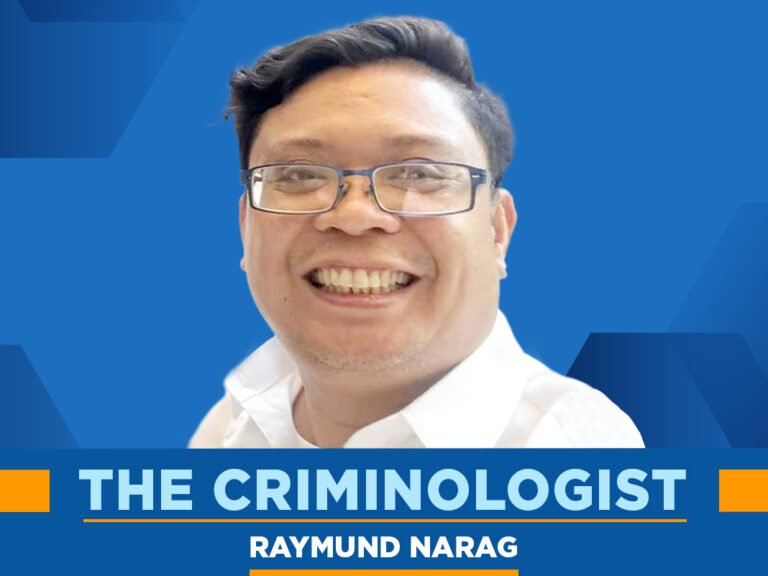
(Editor’s Note: Dr. Raymund E. Narag is an associate professor at the Criminology and Criminal Justice Department at the Southern Illinois University. He had his undergraduate courses at the University of the Philippines in Diliman, Quezon City.)

Expose ‘Em All!

0

IT ISN’T ENOUGH for President Marcos Jr. to keep fuming about money (foregone/cancelled  foreign and local loans, counterpart funding being continuously paid for such loans by current and future generations) being lost to corruption.

The oldest and most influential business group– the Philippine Chamber of Commerce and Industry Inc.– recommends  a follow through, which to ordinary folks like me, means exposing them (crooks) to the people– politicians, lawyers, judges, businessmen and contractors.

Shame them and file appropriate charges against them so they get slapped with penalties (cash and jail terms). In older civilizations, those that violated laws and traditions were shamed in public and punished by guillotine and stoning!

The President again fumed in a TV interview over the cancelled loans for infrastructure projects because of corruption and for which our grandchildren and their children will continue paying for in interest, penalties and other charges.

‘(PBBM) warned that lawmakers and contractors behind substandard or corrupt government projects will soon be blacklisted and held accountable—regardless of political ties. “They know who they are!”’

BUDGET INSERTIONS
First, he swiped at such flagrant stealing with the cancellation of “most critical foreign-backed infrastructure projects, which he said is not just reckless but downright shameful.” He said the country did not just lose loans but also its reputation.

The President was referring to nearly P1 trillion worth of insertions by senators and congressmen in the 2025 budget, most of which were funneled into flood control projects widely seen as hotbeds of corruption, Bilyonaryo reported.

Worst part is that substandard or questionable projects sometimes get financed through unappropriated funds– money that hasn’t gone through proper budget approval and is often sourced through borrowings. 

THEY KNOW WHO THEY ARE
Marcos said these projects weren’t just defunded but were repackaged as unappropriated meaning they will be financed through borrowing and warned that lawmakers and contractors behind substandard or corrupt government projects will soon be blacklisted and held accountable—regardless of political ties.

“They know who they are!”

The President has some names of contractors. “We will put them on a blacklist to be barred from contracts with the government.”

ANOMALOUS PROMOTIONS
Senators, meantime, criticized the “anomalous” promotion at DPWH of officials responsible for the epic collapse of the Cabagan-Santa Maria Bridge in Isabela that left taxpayers footing the P1.2 billion bill.

Senators Joseph Estrada and Rodante Marcoleta said the bridge was funded three times– first for the original construction, then for retrofitting worth P285 million and finally for additional repairs worth P400 million, only to collapse just weeks later in February. 

Yet no one was held accountable, worse the DPWH officials involved were promoted, including three undersecretaries who were given more power and responsibilities.

Named in the interpellation were: 1) Loreta Malaluan – Promoted from Region 2 Director to Assistant Secretary for Luzon. She recommended ₱233.5 million in retrofitting funds in 2021 and initiated epoxy crack repairs. In 2022, she formally requested reclassifying the project from a replacement to a retrofitting-strengthening effort due to persistent structural issues;

2) Mary Bueno – Elevated from Region 2 Director to Assistant Secretary for Visayas and Mindanao. She allegedly ignored early warnings of bridge failure flagged by Project Engineer Felipe Lingan;

3) Eugenio Pipo Jr. – Promoted from Asec to Undersecretary despite glaring red flags in construction. DPWH engineers flagged shifting columns and sheared boards as early as 2018, and

4) Ador Canlas – Promoted to Undersecretary for Technical Services. He approved the ₱285 million retrofitting plan on Dec. 19, 2023, and a revised version on May 22, 2024;

5) Maria Catalina Cabral –As Undersecretary for Planning Service and Public-Private Partnership, she approved the ₱400 million retrofitting budget even though the bridge was still under warranty.

BLESSINGS OF SUPERIORS?
Estrada said these officials could not have acted alone and likely had the blessing of their superiors.

The DPWH secretaries who served during the bridge’s construction include Rogelio Singson (2010–2016), Rafael Yabut, Mark Villar, Roger Mercado, and incumbent secretary Manuel Bonoan.

With deep frustration, Estrada mentioned that no DPWH official was suspended or investigated, even after a Senate Blue Ribbon probe. He blamed the tragedy on a flawed and unprecedented design that was approved without proper technical vetting.

The project, he mentioned, was awarded to R.D. Interior Junior Construction (RDIJC) even though none of the bidders had the required experience to build a complex steel bridge.