IN A RECENT new developments, the Philippine National Railways (PNR) has announced that it has committed to revive railway transport services between Camarines Sur Region and the Quezon province following the repair of one of the damaged bridge connecting the two provinces.
PNR General Manager Geovanni Miranda said that the agency has completed the repair of the Binahan Bridge in Ragay, Camarines Sur, inching it closer to reactivating commuter trips between Bicol Region and Southern Tagalog.
The Binahan Bridge sustained extreme damage from Typhoon Kristine in November 2024, and it took the PNR two months to reconstruct it. The bridge is one of the crucial structures requiring PNR restoration to pursue its plan of resuming Bicol services to Southern Tagalog. The agency’s Engineering Repair Crew had enhanced the durability of the bridge by replacing its wooded ties with synthetic alternatives.
‘Let’s hope the PNR is not just rebuilding bridges and railways, but also public trust. If there’s one thing the Filipino commuter deserves after decades of waiting, it’s a ride that finally arrives on time.’
MORE BRIDGES RESTORED The PNR will move on to restore other bridges and structures that have to be fixed in the alignment.
The agency aims to extend train services to Ragay, Camarines Sur and, eventually, Tagkawayan, Quezon. Once the PNR finishes repair works, it would be able to recommission a 99-kilometer line from Naga, Camarines Sur to Tagkawayan, offering commuters another mode of transport to Bicol and Southern Tagalog.
The 99-kilometer Naga to Tagkawayan route, soon to be reactivated, will not just reduce travel time—it will restore a sense of connectivity to the Southern Tagalog and Bicol regions.
For rural communities and urban centers alike, this railway offers more than convenience; it offers opportunity. Students, workers, farmers, and small traders will gain a safer, more affordable way to travel and do business.
REVIVING MORE LINES And there’s more good news. The resumption of the Legazpi-Naga route shows that this revival is not limited to one line.
With ongoing repairs and a planned increase in trips, the railways are slowly chugging back to life, with PNR making inclusive transportation a reality.
Affordable fares—ranging from ₱20 to ₱155, with discounts for students, PWDs, and senior citizens—make it a far cry from the daily expenses of provincial bus fares or fuel costs.
Recently, France expressed interest to bankroll the railway as conveyed by French Minister Delegate for Foreign Trade and French Nationals Abroad Laurent Saint-Martin during his visit in April.
GAME CHANGER Furthermore, the much-anticipated South Long Haul railway project—stretching from Muntinlupa to Sorsogon—should not remain a pipe dream. If executed with transparency and urgency, it could be a transformative game-changer for regional development and national logistics.
The newly inaugurated PNR station in Pili, Camarines Sur—complete with tactile pathways, breastfeeding stations, and clean facilities—signals a shift in how we see public infrastructure: no longer just utilitarian, but humane and inclusive.
“We will continue to revitalize the existing PNR lines from Quezon to Camarines Sur to provide safe, reliable and affordable mass transportation to fellow Filipinos,” Miranda said.
PUBLIC TRUST The PNR is currently operational only in the Bicol Region after shutting Metro Manila services in 2024 to make way for the construction of the P873.6-billion North-South Commuter Railway.
Yes, the tracks are being laid again. But the question remains—will we, as a nation, stay the course this time?
Let’s hope the PNR is not just rebuilding bridges and railways, but also public trust. If there’s one thing the Filipino commuter deserves after decades of waiting, it’s a ride that finally arrives on time.
Without loyalty, you won’t accomplish anything. — Youngboy Never Broke Again
BEING ONE OF the poorest regions in the Philippines and the least industrialized, Eastern Visayas (Region VIII) has failed to catch the national government’s attention despite having proven their loyalty to President Ferdinand “Bongbong” Marcos Jr. (PBBM).
The truth is that the Marcoses failed to alleviate the socio-economic conditions of the region’s six provinces, namely Biliran, Leyte, Northern Samar, Samar, Eastern Samar and Southern Leyte.
Particularly, Northern Samar had been loyal to the Marcoses, including the Romualdezes, but the political dynasty hasn’t been loyal to the Samareños as no visible evidence of progress and development is seen in the province.
And with the NPA in the hinterlands of Samar island and the peripheries of Leyte and Southern Leyte, it appears that whatever support has been given to the Warays does not trickle down to its poverty-stricken people.
‘[I]t may be recalled that Marcos lost to Vice President Maria Leonor “Leni” Robredo in four out of six component provinces of the region: Samar, Northern Samar, Eastern Samar, and Southern Leyte. It was only in Biliran and Leyte that BBM won.’
GLORIOUS PAST Presumably, Malacañang has forgotten that historically, Samar had a glorious past being the first island that the Portuguese-Spanish conquistador Fernão de Magalhães, or Ferdinand Magellan, saw in the archipelago on March 16, 1521. It was also this island that prevented him from returning to Spain.
Currently, the three Samar provinces are expected to turn their backs on the Marcoses as they have been ignored and forgotten for far too long. If one can see the political pattern here, the Ilocos Region rose while economically, the Samar-Leyte corridor remain among the poorest regions in the country.
So, what does that say of the Marcoses who controlled these provinces the longest?
IMELDA’s BAILIWICK For the longest time, the Marcoses have always described Region VIII, claimed by the Marcos matriarch Imelda Marcos as her bailiwicks, as faithful in always following the direction of the Solid North’s political loyalty.
Yet counting the turn of events, this will no longer be true, especially in 2028 when the country conducts the presidential elections.
Actually, it may be recalled that Marcos lost to Vice President Maria Leonor “Leni” Robredo in four out of six component provinces of the region: Samar, Northern Samar, Eastern Samar, and Southern Leyte. It was only in Biliran and Leyte that BBM won.
FOR your comments or suggestions, complaints or requests, just send a message through my email at cipcab2006@yahoo.com or text me at cellphone numbers 09171656792 or 09171592256 during office hours from Monday to Friday. Thank you and mabuhay!
LET’S BE REAL! If you’re a man over 40 who’s suddenly tired for no reason, cranky before breakfast, and now has a belly that jiggles more than it should — you might be experiencing male menopause.
Yes, it’s real! And no, it’s not just your midlife crisis or a phase that ends with you buying a motorcycle, dyeing your hair, or joining a basketball league with guys half your age.
The official name is andropause — and it’s your body’s way of quietly saying, “P’re, wala na tayo sa kalendaryo.”
‘[Y]ou don’t need to pop supplements … or invest in “masculine” gym memberships you’ll abandon after a week. One of the best ways to ease through andropause is — tadaaah… acupuncture.’
WHAT THE HECK IS ANDROPAUSE? Starting in your late 30s or 40s, your testosterone levels begin to take the slow EDSA crawl downhill. Unlike female menopause, which can come in like a hormonal typhoon, male menopause is sneakier — like your cholesterol test results.
You might notice:
Energy: Gone by merienda time.
Mood: Masungit one minute, senti the next.
Sleep: Parang WiFi signal sa bundok — unstable.
Belly: Somehow it’s growing faster than your investment portfolio.
Muscle tone: Replaced by soft taba.
Libido:… Hello? Hello? Is this thing on?
Memory: “Wait…what were we talking about?”
You’re not broken — just… biologically confused.
ACUPUNCTURE: NOT JUST FOR YOGA MOMS. Here’s the twist: you don’t need to pop supplements like candies or invest in “masculine” gym memberships you’ll abandon after a week. One of the best ways to ease through andropause is — tadaaah… acupuncture.
Yes, acupuncture. The thing with the tiny needles. No, it doesn’t hurt (hindi siya mangkukulam).
Yes, even tough guys do it — ask your quiet office seatmate who now sleeps better than your snoring labrador.
In Traditional Chinese Medicine (TCM), this hormonal rollercoaster is seen as a natural stage. Acupuncture helps bring your body back into balance — naturally, and with no weird side effects.
HERE’S WHAT IT CAN ACTUALLY DO
1.Balance Hormones. It helps reset your endocrine system — especially the pituitary and hypothalamus, the “bossing” glands in charge of hormones. Less mood swings, more steady lang.
2.Boost Mood. It increases your serotonin and endorphins — basically your body’s happy hormones. You might even stop scolding the kids over who left the rice cooker on.
3.Sleep Better. Acupuncture helps calm the nervous system. Finally, you can sleep without needing to watch three episodes of your favorite Netflix TV series first.
4.Recharge Energy. TCM believes in restoring your “Kidney Qi” — let’s call it your inner kuryente. More stamina for work, walking the dog, or dancing at your niece’s debut (minus the shortness of breath).
5.Bedroom Confidence. Yes, it helps there too. No miracle potions — just better blood flow and less anxiety. Let’s just say you’ll stop blaming the aircon for the cold.
Final Thoughts: You’re Not Broken – You’re Evolving
NOT LESS OF A MAN Andropause doesn’t mean you’re “less of a man.” It means your body is changing, and instead of pretending nothing’s happening (classic macho move), maybe give it some love and support.
Acupuncture is safe, natural, and honestly — relaxing. You get to lie still for 30 minutes while someone helps you reboot. That’s basically spa day for men who’d never admit to needing one.
One Last Thing… Look — you can’t stop aging. But you can stop blaming your mood swings on “Mercury in retrograde” or your pants shrinking in the dryer.
If your body feels like it came with a surprise software update and nothing works the way it used to, don’t panic.
Just reboot.
Acupuncture won’t turn you into Superman… but it might just stop you from turning into a grumpy old man.
Arrest the tambay playing cara y cruz on the sidewalk. The kargador flicking coins during break time. The retired factory worker shuffling cards under a mango tree. Do it in the name of peace and order. Report the arrests. Count the coins seized—₱164,080 in all. Announce, proudly, that 1,090 souls were rounded up in just three months in Quezon City alone. Call it a success. Call it progress.
But really, who’s winning here?
Certainly not the jail who now have to feed, clothe, and detain these “criminals” at ₱85 a head per day (70 for food and 15 for medicines).
Not the justice system, already creaking under the weight of overcrowded jails and snail-paced courts. Not the families of the detained, who lose breadwinners, however modest their wagers. And definitely not the gamblers themselves, now branded as criminals, now exposed to prison gangs like Batang City Jail and Bahala Na Gang, now inducted into a real underworld far worse than anything they saw on the streets.
‘The same presidential decree used to jail these street gamblers is almost never used against the financiers who run the games. It is the poor who get caught; the syndicates remain invisible. Why? Because the law has eyes—but only for the powerless.’
UNWAVERING DEDICATION The Police may call it “unwavering dedication.” But it is more accurately described as flailing. As casting a net wide enough to catch the weak and poor, but conveniently missing the big fish. It is a performance of order, not its pursuit.
Because, let’s be honest, these arrests are not about crime control. They’re about optics. Numbers. Metrics. Headlines. Pogi points. The Routine Activity Theory tells us crime happens when opportunity and motive meet without guardians around. But what happens when the guardians themselves misunderstand their role? When they become enforcers of poverty, rather than protectors of peace?
You don’t need a PhD in criminology to know what drives street gambling: boredom, desperation, the need to escape. Tong-its and cara y cruz are not vices—they are symptoms. Of broken systems. Of a lack of parks and recreation centers. Of neighborhoods without playgrounds but with plenty of police checkpoints. Strain Theory already told us this: when legitimate paths are blocked, people take the crooked ones. Especially when the straight ones are guarded by toll gates.
SPELL HYPOCRISY And yet, we criminalize these small-time bets while building palaces for the rich to gamble in.
Casinos sparkle under government permits. POGOs operate under the radar. We tax their winnings and thank them for the revenue. But catch someone tossing coins in the gutter, and we slap them with a criminal case and ₱36,000 bail. Can you spell hypocrisy?
The law, it seems, is less about justice and more about class. It protects the few, punishes the many. The same presidential decree (PD1602) used to jail these street gamblers is almost never used against the financiers who run the games. It is the poor who get caught; the syndicates remain invisible. Why? Because the law has eyes—but only for the powerless.
Worse, the very system used to enforce the law is rotting. Detainees whisper stories of cops demanding “bail money” under the table. Of charges dropped for a fee. Of extortion masked as enforcement. This, too, is gambling—but the stakes are higher, and the house always wins.
What’s the alternative? We don’t need more jails; we need more basketball courts. We don’t need more arrests; we need more opportunities. Instead of quotas for collaring offenders, why not metrics for conflict mediation, community assistance, and youth engagement? Instead of criminal records, why not warnings, citations, or community service? Not every misstep deserves a cell.
HOUSE ALWAYS WINS The PNP could learn a thing or two from community-oriented policing. From treating citizens not as suspects but as partners. From being visible not just during raids, but during festivals, clean-up drives, or even just quiet afternoons in barangay halls. Trust, after all, is not seized — it’s built.
But trust cannot grow in soil watered with fear and hypocrisy. As long as the law targets the poor and pampers the powerful, peace and order will remain a fantasy.
Arrest the gamblers, yes. But be ready to lose more than you gain.
Because in this game of justice, the way we’re playing it?
The house always wins.
And the people always lose.
(Editor’s Note: Dr. Raymund E. Narag is an associate professor at the Criminology and Criminal Justice Department at the Southern Illinois University. He had his undergraduate courses at the University of the Philippines in Diliman, Quezon City.)
PICTURE AN IMMENSE land area teeming with plants looking up the sky for sunlight and rainshowerand where animals freely roam. And a water body as seemingly infinite as the sea and as small as a pond where fishes dance to their lungs’ content. Terrestrial and aquatic ecosystems they are, where diverse living organisms interact with each other and the surrounding environment.
The Philippines is blessed with beautiful natural ecosystems but sadly, some of them are drifting away from their pristine state. And more sadly, it’s the rational human species largely causing the harm through massive extractive, polluting, and toxic activities.
THE VALUE OF ECOSYSTEMS
In the past decades, there are two global concerns prompting the urgency to protect or save our ecosystems: climate change and loss of biodiversity. (Climate change is a change in global or regional climate patterns attributed largely to the increased levels of atmospheric carbon dioxide produced by the use of fossil fuels. Biodiversity refers to the variety of all living things – the different plants, animals, fungi and microorganisms, the genetic information they contain and the ecosystems they form.)
The trees in the forests are considered the best carbon sink, a mitigation method to reduce the impact of greenhouse gas emissions. Biodiversity preservation in both terrestrial and aquatic systems will securecontinuing nutrition and health for humans. Thus, these responses will result in our planet’s and humanity’s sustainability.
Since my heart is more for forests and I have direct experience in conservation activities particularly for the Sierra Madre mountain range which spans from the north to east and south of Luzon, I will dwell more on this ecosystem.
RESTORATION AND REGENERATION
A long-time Ecology professor at the graduate school of Miriam College, Donna Paz Reyes, PhD, described the two methods of renewing the health of forest ecosystems. “Restoration is reverting back to the natural state of a forest. This will be an assisted natural regeneration like planting new and native species with knowledge of what will conform to the original species in the area and not destroy them.
“Regeneration is based on the fallow concept of leaving a farmland unsown for a period of time and its fertility will be restored on its own. Indigenous people know this too well.”
Dr. Reyes does not only formally educate but also leads activities that promote conservation and preservation of ecosystems. Like, she has authored a book on her native province with partly an Ilocano title, Salimetmetan ti Gameng: Protecting andPreserving the Natural Heritage of Ilocos Norte.
SUPPORT FOR CRITICAL ECOSYSTEM
A leading environmental organization, the Forest Foundation of the Philippines, has identified the country’s most critical forest landscapes which are Sierra Madre, Palawan, Samar and Leyte, and Mindanao (mainly Bukidnon and Misamis Oriental).For them and other natural land areas, FFP provides grants to organizations and individuals that empower people to protect and conserve the forests.
At the 5th Philippine Environment Summit in Iloilo last February, organizer Green Convergence had other organizations present their programs for healthy ecosystems to address the urgent and long-term need for climate resiliency and the planet’s sustainability.
All these supportive efforts for our ecosystems certainly seek to build a resilient Earth, one out of gratitude to the Creator and another, to sustain humanity and its common home.
WHAT USE WILL supplying all local government units (LGUs) with patient travel vehicles (PTVs) — designed for non-life-threatening cases, such as scheduled medical visits, routine checkups, and hospital discharges, which are prohibited from using emergency blinkers and sirens — if the recipient hospital would only shun the patient away because the government has not been paying the refunds from advances incurred by hospitals during the epidemic as PhilHealth and the Department of Health have not been giving so hospitals can provide better care?
What use would the President’s aspiration of zero out-of-pocket expenses for healthcare, especially for indigent patients, if all these pronouncements are just lip service with no corresponding financial assistance, from PhilHealth and from the Philippine Charity Sweepstakes Office.
We have been making pleasant pronouncements and good optics but nothing in implementation. People are getting tired of promises and assurances, when all this government could offer are band-aid solutions like ayuda, which only drains the coffers with no sustainable solutions in sight.
It is good to hear from the Palace that it wants hospitalization and healthcare to be at no cost to the people, especially the marginalized. Socialized healthcare has been doing great in other countries, even in Asia, which is why it puzzles me why it never seems to get off the ground in our country.
The President said recently that he had already distributed 680 units of ambulances (which are just being used by barangay officials as private family vehicles instead of emergency vehicles) since he became president in June 2022.
‘(De Lima) warned that unresolved claims compromise the ability of hospitals to provide quality healthcare, leading some to stop honoring guarantee letters for indigent patients—or worse, shut down.’
EXPANDING HEALTH INSURANCE He spoke of plans to expand the insurance coverage. But first return the money to PhilHealth so it can reimburse the hospitals from their Covid-19 expenses and distribute the hazard and risk pays of hospital staff, which were promised to them..
The President noted that if the government successfully reduces patient contributions and fixes the economy, “then maybe we can reach the point where patients won’t have to contribute anything anymore.” (Easier said than done, Sir).
The pandemic exposed several gaps in the country’s healthcare system. These lessons are now being applied to build stronger systems. Marcos added he approved a P2.2-billion budget to procure and distribute 1,000 PTVs nationwide. Each unit is equipped with essential medical tools, including a stretcher, oxygen tank, blood pressure monitor, and other supplies to ensure safe and timely patient transport.
PROBE ON PAYMENT BACKLOGS Bagong Henerasyon partylist Rep. Roberto Gerard L. Nazal, Jr. asked the House Committees on Health, on Good Government and Public Accountability, and Appropriations to jointly investigate the extent and impact of payment backlogs of the DoH, PhilHealth and other related agencies.
Last June 6, the Private Hospitals Association of the Philippines, Inc. (PHAPI) said that several of its member hospitals no longer honor guarantee letters for indigent patients because of the P530-million unpaid claims, including a staggering P94 million owed to just one hospital in Batangas.
“These are not theoretical debts … (for) emergency surgeries completed, infants delivered, chemotherapy administered, and lives momentarily saved — now threatened by bureaucratic neglect,” Nazal said in his resolution. “Every unpaid claim represents a person denied care.”
Healthcare reform isn’t just about policy declarations but about timely service delivery. When reimbursements to hospitals and health workers are delayed or withheld, the system fails and people suffer, Nazal explained.
Nazal is calling for full accountability and transparency in addressing the crisis.
He urged his colleagues to examine the root causes of the delays, such as flaws in digital claims processing, inefficient fund release procedures, and outdated internal controls.
Nazal is also pushing for a probe into the abuses under the case-rate system, including reports of hospitals overcharging or submitting fraudulent claims. He recommended systemic safeguards, including regular audits, harsher penalties, greater billing transparency, and the establishment of independent grievance mechanisms.
DE LIMA’S RESOLUTION House Resolution 46, filed by Mamamayang Liberal (ML) Party-list Rep. Leila M. de Lima resulted from revelations from PHAPI that 43 hospitals in Batangas alone are awaiting payment for P530 million, with one incurring reimbursement of P94 million.
“We need to get to the bottom of this to protect the rights of patients and their families and ensure that the government fulfills its duty to pay its obligation to hospitals and clinics over unsettled bills,” said De Lima.
She warned that unresolved claims compromise the ability of hospitals to provide quality healthcare, leading some to stop honoring guarantee letters for indigent patients—or worse, shut down.
IN VIEW OF the President’s continuing purge of “inefficient” cabinet officials comes a call for the immediate resignation of Health Secretary Teodoro Herbosa over multiple red flags — including frequent foreign travels.
If my memory serves me right, it was for the same reason that Maria Antonia Yulo-Loyzaga was fired as Secretary of the Department of Environment and Natural Resources (DENR).
When he attended the 78th World Health Assembly (WHA) in Geneva, Switzerland, Herbosa tagged along a large Philippine delegation, including some supposedly non-essential personnel, which translates to bigger not-so-essential expenditure drawn from our taxes.
To be perfectly honest, Herbosa doesn’t need that many minions beside him. Afterall, the invitation says it all. It’s addressed to the Health Secretary – unless the President has appointed multiple department chiefs.
‘In a country where hungry Filipinos end up in jail over a loaf of bread, the group who claims strong connections with Secretary Herbosa should be slapped with the fullest extent of the law.’
FREE WORLD TOUR Herbosa flew to a long list of countries for what he claimed as official foreign travel.
Aside from the free world tour, his name is also being dragged by a group claiming strong connection with the DOH chief. Their scheme — recycling COA-flagged expired medicines.
Previously, these expired medicines found their way to Bacacay town in the province of Albay — and perhaps to many other poor localities which could hardly afford to buy medicines for their health centers.
Admittedly, distributing expired medicines is despicable as the act in itself compromises public safety. It’s criminal liability under the existing laws.
Interestingly, these medicines form part of the P11-billion worth of drugs, medicine, and supplies that was flagged by the Commission on Audit (COA). In short, bayad na yun.
According to sources, these expired medicines were “recycled” and presented as newly-procured ones for distribution to the barrios.
Local government units (LGUs) and health facilities which previously refused to accept these medicines were made to believe that what they got were new and potent ones.
For one, wasting even a single peso of public money isn’t acceptable but finding ways to make use of something that is no longer safe to consume should never be an option to prevent wastage.
ACCOUNTABILITY In a country where hungry Filipinos end up in jail over a loaf of bread, the group who claims strong connections with Secretary Herbosa should be slapped with the fullest extent of the law.
The Health Secretary should also be made accountable for something that was committed under his very nose. But if he has a little decency left under his sleeves, he should consider stepping down.
“P1.7-m ilegal na drogang idineklara bilang cosmetic products naharang ng BOC sa Port Of Clark,” “P749-m shabu nasamsam ng customs at PDEA sa MICP,” “PBBM ibinida ang aniya mapayapang kampanya kontra droga ng kanyang administrasyon.”
ALMOST EVERY DAY, news watchers are faced with such frontpage headlines above, affecting many cities and provinces.
Concerned citizens are naturally reminded of former PNP Col. Eduardo Acierto’s claim: “Rodrigo Roa Duterte, Bong Go, and Bato de la Rosa are protecting and are integral to the security of the illegal drugs network operating in the country. They allowed the entry of large volumes of illegal drugs through our ports and supported the syndicates by defending them, targeting those that go against them, and playing dumb to true justice.”
Likewise, people remember from the TV live-streamed hearing/investigation of the Congress’ Quad Committee on Good Governance, that PCol. Jovie Espenido asserted that the PNP under the former president “is the biggest crime syndicate”.
‘[H]ave PBBM and VP Sara Duterte ever thought of the drug problem as a health issue? … (Or) set up Drug Rehabilitation Centers nationwide to cater to citizens suffering from drug addiction?’
PESTERING PROBLEM “What’s the TRUTH?” What have PBBM and his VP Sara Duterte been doing about this long-drawn out drug problem since way back when VP Sara Duterte’s father (now awaiting trial for the charge of “crimes against humanity” and now detained in an ICC jail in the Hague), was bragging as the President in 2016 to solve the drug problem in a few weeks?
Also, what have current incumbent senators Bong Go and Bato de la Rosa been doing to help out on finally putting an end to this pestering drug problem?
Needless to say, what have the DOJ, PNP, PDEA, and other drug enforcement agencies done to control and stop known drug lords (that is, if they have actually identified and confirmed certain persons as drug lords)?
Or, more importantly, have PBBM and VP Sara Duterte ever thought of the drug problem as a health issue? And that their administration has set up Drug Rehabilitation Centers nationwide to cater to citizens suffering from drug addiction?
PBBM’s ACCOMPLISHMENTS Indeed, the Filipino people are seriously bothered with how PBBM and VP Sara Duterte have been serving as the top leaders of the country. PBBM will be delivering his SONA in late July. What has he accomplished?
Aside from the failed attempts to eliminate or at least minimize the drug problem, why is the P20/kg of rice available only in a few selected areas in the country, considering the more than 55 million poor and marginalized Filipinos struggling to eat 3 or at least 2 meals a day?
When will the countless jobless Filipinos find employment or given opportunities to have a livelihood? When will the workers, farmers and fishermen enjoy fair wages? When will the country’s high school graduates be considered as fully educated in terms of language /reading comprehension, proficiency in math, and critical thinking?
Why are China’s vessels in the WPS?
A HUMANE SOCIETY While VP Sara Duterte is traveling to the Hague, visiting her ICC detainee-father in the Netherlands and to Australia for some vague errands, the people cannot see how such ‘missions’, if at all, are part of her “service to the people.”
The people are concerned, for years now, how much has she been spending their money as her salary, being the country’s vice president. Particularly when she was the DepEd secretary, was she able at least to raise a notch higher the country’s educational standard to an international level?
Given her dismal track record, amounting to serious betrayal of public trust and culpable violation of the Constitution, “Litisin na si VP Sara Duterte” has understandably reverberated nationwide.
The question remains: “When will the people enjoy a humane and just society?”
Even if newscaster Angelique Lazo is currently one of the top honchos of People’s Television PTV-Channel 4’s News and Public Affairs, she is still identified as an ABS-CBN baby.
Angelique has contributed a lot, primarily her talent and cutting edge entertainment news materials, in the rise of the Kapamilya station when she anchored the “Star News” portion of the network’s primetime news show “TV Patrol” in the 80s and 90s.
Likewise, ABS-CBN has given her the wide and steady exposure to shoot up her popularity that catapulted her as the darling of the masses.
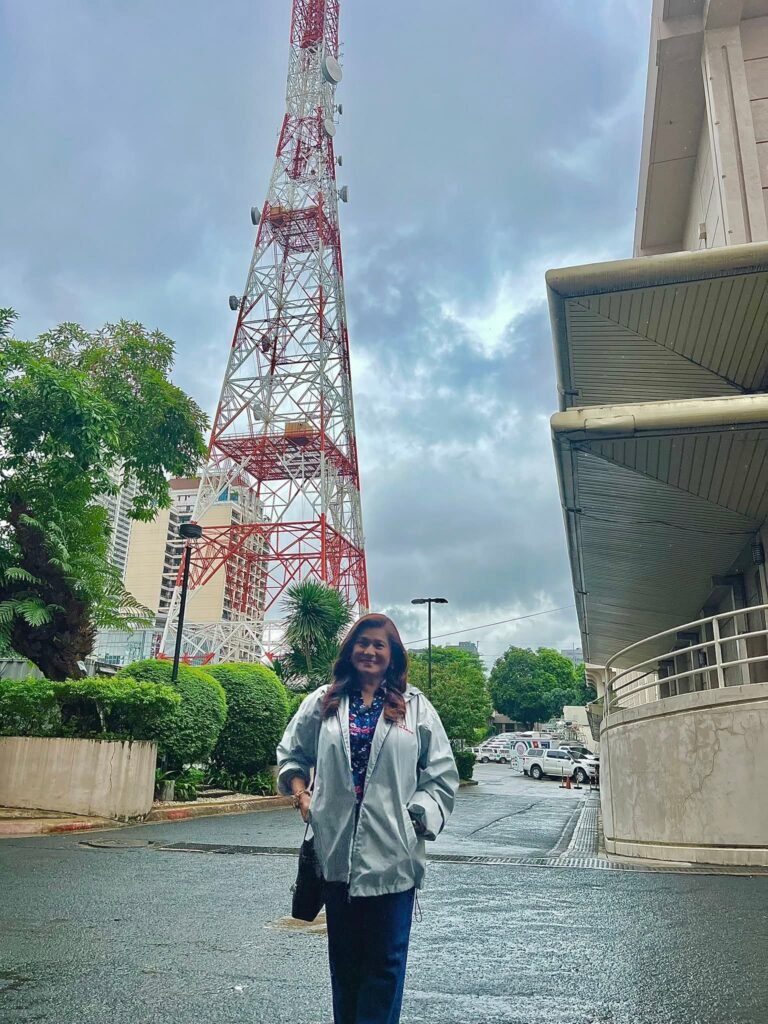
‘[S]he is disheartened and sad when the ABS-CBN transmitter and tower is demolished anytime to give way to new structures under new ownership of the particular site … the portion of the Lopez property sold and being developed by Ayala Land.’
Although she left ABS-CBN at the height of her famed broadcast career because of some disagreements with image building concepts and principles, the Star Network still considers her member of the network’s royal family.
It in this context that she is disheartened and sad when the ABS-CBN transmitter and tower is demolished anytime to give way to new structures under new ownership of the particular site.
SOLD! The iconic ABS-CBN tower is located along Sgt. Esguerra Avenue which is the portion of the Lopez property sold and being developed by Ayala Land.
“Although the other properties of ABS-CBN are in place, the transmitter evokes memories,” said Jik, Angelique’s pet name.
“Many of the loved shows of ABS-CBN were beamed through the transmitter and it pains me to realize that it was also part of my broadcast career,” she lamented with sadness in her eyes.
Aside from “TV Patrol,” the other programs hosted by Angelique transmitted by the tower in millions of households throughout the country and the world were “Overseas Unlimited” with Noli de Castro, “The World Tonight,” among many others.
Lazo after newscasting for Channel 4 in the mid-80s moved to ABS-CBN immediately after the 1986 EDSA Revolution when the Lopezes revived the network during the return of the demicratic space.
Along with Angelique, the other talents from Channel 4 who were employed by ABS-CBN were Korina Sanchez, Mel Tiangco, Arlene de Jesus, among others. Jik started as one of the anchors of the primetime newscast of ABS-CBN in 1986, “Balita Ngayon,” the precursor of “TV Patrol” with Mel and the late Robert Arevalo.
IN A BID to prevent the misuse of financial services provided and implement closer monitoring, the Bangko Sentral ng Pilipinas (BSP) will be setting up a strict system to tighten regulations on online gambling payments.
This came amidst call to totally ban online gambling even as the central bank posted a draft circular on its website that aims to establish regulations on online gambling payment services.
According to the BSP, the proposed rules aim to “promote responsible use of digital financial services, strengthen financial consumer protection, uphold financial health, and mitigate the social and financial risks associated with online gambling.”
“Towards this end, it is imperative to ensure that digital payment services of payment service providers (PSPs) are not misused for activities that are socially harmful and detrimental to financial health,” it cited.
‘The country’s booming gaming industry is now drawing heightened scrutiny as several cause-oriented groups … expressed concern over the rising addiction and financial problems becoming prevalent among Filipinos.’
BOOMING GAMING INDUSTRY The country’s booming gaming industry is now drawing heightened scrutiny as several cause-oriented groups, including religious organizations and a number of lawmakers, expressed concern over the rising addiction and financial problems becoming prevalent among Filipinos.
In an earlier statement, the Department of Finance (DoF) proposed a tax on online gaming as well as other possible measures to lessen the public’s access to digital gambling platforms, such as imposing limits on paying time or cash-in.
Under the BSP’s proposed circular, these regulations could cover PSPs engaged in these services as well as operators of payment systems (OPSs) serving as payment acquirer or aggregator of the online gambling operator.
The BSP proposal also aims to establish standards and expectations for PSPs in the provision of online gambling payment services and set the enhanced know-your-customer measures to uphold applicable legal prohibitions on access to and participation in online gambling.
SECURE B.S.P. PERMIT Under the draft rules and guidelines of the proposal, PSPs and OPSs engaging or intending to engage in online gambling payment services must secure prior authority from the central bank.
It added that payment service providers must likewise maintain a minimum capitalization of ₱300 million and a composite rating not lower than three based on the BSP Supervisory Assessment Framework.
PSPs and OPSs must also have strong anti-money laundering and counter-terrorism financing (AML/CTF) risk management; robust fraud management system and a board-level committee on AML/CTF compliance.
In addition, PSPs that offer or facilitate online gambling payment services shall not be allowed to provide links to online gambling websites or otherwise provide any functionality that will redirect a user to an online gambling operator’s platform.
AS ALWAYS, NEGOTIATIONS with foreign governments on trade, particularly involving agricultural products, are done without any consultations — genuine or token — with the sectors involved.
Which is why a farmers’ group — the Samahang Industriya ng Agrikultural (SINAG) said that it rejects any response that leads to a race to the bottom — slashing tariffs on key agricultural commodities, weakening labor protections or compromising environmental standards.”
It should be noted that the Philippine negotiating team that would negotiate for reduced tariffs on the country– led by (economic super czar) Secretary Frederick Go, the President’s adviser on investment– are leaving this week to meet with the economic team of US President Donald Trump to negotiate for better tariff concessions and trade deals.
SINAG said any tariff concessions extended to the US on agricultural goods will only favor “privileged importers” while harming the lowly workers and the environment, Business World noted.
“Trade policy must be shaped by the national interest, not by external pressure or short-term market gains of a few privileged importers,” it said.
‘[A]ny tariff concessions extended to the US on agricultural goods will only favor “privileged importers” while harming the lowly workers and the environment…’
RUSHING WITHOUT CONSIDERING Economic officials of the Philippines are set to fly to the US this week (as advance team for the President) for negotiations to convince Trump not to impose a 20 percent tariff on imports from the Philippine exports starting Aug. 1.
Go said last week that the Philippines is pursuing a bilateral deal with the US, up to and including a free trade agreement.
SINAG noted that negotiators from the Philippines have failed to consult farmers.
“We strongly caution against rushing into such a deal without considering its broader implications for our domestic economy,” he said.
The proposed 20 percent US tariff rate for Philippine goods was higher than the 17 percent rate announced by Trump in April.
At that time, the Department of Agriculture (DA) said it was diversifying the markets for its agriculture exports in preparation for higher US tariffs.
INT’L ACCESS EXPANDS In a July 7 statement, the DA noted that “international market access is expanding” for Philippine farm goods.
“Durian, mangoes, and avocados have secured new export approvals, while tamban (a type of sardine) has been officially recognized by the EU Codex, paving the way for broader sardine exports.”
The Philippines charges a 34 percent tariff on US goods. Its trade surplus with the US amounted to $4.9 billion in 2024. Cainglet said Philippine exports that will be affected the most by the new US tariff rate are semi-processed goods like coconut oil, desiccated coconut, canned pineapple, and coconut water.
REDUCE TARIFF BARRIERS The Philippine Coconut Authority (PCA) said in a statement on Sunday that it met on July 8 with chief executives of leading coconut processing firms, who “stressed the importance of continued negotiations with the US to reduce tariff barriers.”
“Major processors pledged to back PCA’s replanting initiatives, assuring international buyers that the Philippines can maintain a stable supply of high-quality coconut products,” it said.
While global demand for coconut products “continues to grow,” climate change and international trade regulations “present new challenges for producers,” it added.
“A unified strategy is key to protect farmer livelihoods and maintain the country’s dominant market position.”
Cainglet urged the government to prioritize the welfare of producers over that of importers and traders in its negotiations with the US.
“The US tariff should be viewed as a signal of how the US is protecting its own farmers, manufacturers, and domestic markets,” he said.
“Tariffs, when used strategically, can serve as essential tools to support local agricultural production, promote industrial growth, protect jobs, and preserve rural livelihoods.”
EXTENSIVE TRADE PACT SINAG, an umbrella organization of 32 agricultural stakeholders, called the idea of an extensive trade pact with the US a “false narrative,“ arguing that it will instead favor importers and international traders over local producers, manufacturers, and workers.
Past trade agreements which focused on market access have undermined local industries, impaired food production capacity, displaced workers, and weakened rural economies, the group pointed out.
The government must otherwise think of a strategic use of tariffs to help boost local agriculture, support industry growth, and protect jobs, particularly rural livelihoods, Sinag said, noting that national interest should always be the priority.
“Trade policy must be shaped by national interest, not by external pressure or short-term market gains of a few privileged importers,” it emphasized.
Any future trade agreements should strengthen the country’s production capacity and support inclusive and sustainable economic growth, Sinag said.
THE BANNER STORY of Manila Times on the Maltese passport of Defense Secretary Gilberto Teodoro Jr. — which the DND explained had been surrendered and divulged to all agencies way back in 2021 when he ran for senator under the People’s Reform Party — comes at a time when Teodoro has been verbally lashing at China’s encroachment and continued bullying to our soldiers and fishermen in the West Philippine Sea.
It will be recalled that Teodoro, on October 7, 2021, while in isolation after testing positive for Covid-19 and through a proxy, filed his certificate of candidacy as senator for the 2022 election. He was named to the UniTeam senatorial slate.
In response to the Time’s shouting headline, DND spokesman Arsenio Andolong said in a brief statement that Teodoro’s Maltese passport was disclosed to relevant government institutions namely the Bureau of Immigration, the Commission on Election and the Committee on Appointments prior to his confirmation hearings for the DND position.
“The alleged existing Maltese passport of Sec. Gilberto C. Teodoro, Jr. was surrendered and renounced prior to the filing of his certificate of candidacy in 2021 for the 2022 elections,” Andolong said, highlighting that such a passport was never hidden from relevant agencies.
‘Public office is a public trust … The moment you take an oath to another flag, even by investment, you compromise the very foundation of your public duty.’
SECURITY RISK Since Teodoro oversees the country’s defense, military strategy and national security, his dual citizenship could pose a threat to the country’s security, considering that the passport was granted as a transaction for rich people of the world to invest in Malta, the Times said.
Teodoro was issued passport No. 1259234 on Dec. 22, 2016, valid for 10 years (or until 2026) listing his full name as Gilberto Eduardo Gerardo Cojuangco Teodoro Jr., born on June 14, 1964, and place of birth in the Philippines.
Under Philippine law and constitutional doctrine, dual citizenship is prohibited for public officials, particularly those with Cabinet-level positions.
The Times quoted legal experts warning that Teodoro’s foreign citizenship may not only be a technical violation, but a serious breach of national security, with possible consequences ranging from disqualification to constitutional litigation.
Teodoro was appointed secretary of the Department of National Defense (DND) by President Ferdinand Marcos Jr. in June 2023. He held the same post from August 2007 to November 2009. Below are excerpts from the Times story:
GOLDEN PASSPORT Teodoro may have acquired Maltese citizenship through Malta’s controversial citizenship-by-investment program. The “golden passport” system has been condemned by the European Union because it grants citizenship to wealthy foreigners in exchange for substantial financial investments.
Reports said Malta’s scheme requires a minimum contribution of €600,000 (roughly P39,642,000) to the Maltese government, the purchase or long-term lease of property, and a donation to charity.
Those granted citizenship are required to take an oath of allegiance to the Republic of Malta.
Legal experts said that would directly violate the core principles of Philippine law and constitutional norms demanding exclusive national allegiance, particularly for those holding sensitive, security-related positions in government.
In a landmark 2024 decision, the European Court of Justice (ECJ) declared Malta’s golden passport scheme illegal under EU law, stating it “amounts to rendering the acquisition of nationality a mere commercial transaction.”
The ruling followed a complaint from the European Commission, which argued that selling citizenship to foreign nationals without requiring genuine ties to the country threatens the integrity of European citizenship and introduces risks of corruption, money laundering and foreign interference.
The court warned that the program “jeopardizes mutual trust among member states” and fundamentally undermines the concept of citizenship as a bond of political and cultural identity, not a product for sale.
Malta’s government has pledged to review the scheme, but defended its benefits, claiming the program has generated over €1.4 billion since 2015.
COMPROMISED LOYALTY The implications for the Philippines are no less serious. By potentially participating in a scheme condemned by Europe’s highest, Teodoro may have exposed himself to perceptions of compromised loyalty, or worse, susceptibility to foreign influence.
“Malta’s scheme was never about cultural integration. It was about creating backdoor access to Europe for the ultra-wealthy. If a Philippine defense official took this route, it raises red flags — not just legally, but diplomatically,” Times cited an unnamed source in the diplomatic community.
Unlike countries that grant dual citizenship automatically by birth or descent, Malta’s program is transactional — citizenship in exchange for money. Under its framework, applicants are screened financially.
DUAL ALLEGIANCE Republic Act (RA) 9225 and the Constitution both declare that dual allegiance is “inimical to the national interest.”
If Teodoro did not formally renounce this allegiance prior to assuming office, his presence at the helm of the DND may be legally untenable.
Under RA 9225, also known as the Citizenship Retention and Re-Acquisition Act of 2003, natural-born Filipinos who reacquire their Philippine citizenship after naturalizing in another country must formally renounce their foreign citizenship before holding public office.
Section 5 of RA 9225 is explicit: “Those appointed to any public office shall … renounce their oath of allegiance to the country where they took that oath.”
The Civil Service Commission (CSC) has further clarified that the requirement applies strictly to individuals whose foreign citizenship was acquired through naturalization.
Without such renunciation, a dual citizen’s appointment to public office would be constitutionally infirm and legally questionable.
NOT JUST ABOUT A PASSPORT In an interview, Arnedo S. Valera, a Washington D.C.-based constitutional lawyer and international law scholar, said the issue is not merely legal, it’s existential for Philippine sovereignty.
“This is not just about a passport. This is about the integrity of the Republic. Cabinet members sit in meetings involving national defense, foreign policy, and classified intelligence. You cannot have a defense secretary who has sworn allegiance to a foreign country — especially one whose passport grants him free movement across the European Union.”
Valera emphasized that the Constitution demands exclusive allegiance from public servants, particularly those in executive positions. Citing Article XI, Section 1 of the 1987 Constitution, he said.
“Public office is a public trust. That means you must be loyal to one — and only one — sovereign. The moment you take an oath to another flag, even by investment, you compromise the very foundation of your public duty.”
“This is a Cabinet Secretary. The public has every right to demand transparency. The President, the Department of Justice, and the Commission on Appointments must ask: Has he renounced? If not, then why is he still in office?” Valera said.
SECURITY RISKS Apart from the legal ramifications, analysts warned of national security risks. As Defense secretary, Teodoro has access to classified military information, foreign defense agreements, and intelligence briefings.
A dual citizen in such a position, some experts argued, represents a point of vulnerability, especially with increasing geopolitical tensions in the Indo-Pacific.
“You can’t wear two flags on your sleeve when the nation’s fate is on the line,” Valera said. “If we don’t draw the line here, then we no longer know where the line is.”
If Teodoro did not renounce his Maltese citizenship before assuming office, several legal consequences may ensue: his appointment may be voided, retroactively invalidating his decisions and actions as defense secretary.
He may also face administrative and criminal liability for misrepresentation or non-disclosure, and a Senate investigation or Supreme Court petition may be filed to determine compliance with the Constitution and RA 9225.
So, I raise my suspicion that China has a hand in such a disclosure, considering its suspicious timing.
WE’VE ALL HEARD: Follow your dreams. Never give up. Just be yourself. Sounds nice, right? But it doesn’t stick. Why? Because it sounds like every other talk we’ve heard.
THE BACK STORY
Too many speakers say what sounds right, not what feels real. Their answers are smooth, but not personal.
The result? People hear the words… but they don’t feel anything.
If you want to be remembered, make the story your own.
STORIES OVER SOUNDBITES
Engage to connect. First, grab their attention. Then go deeper. Be real. Be personal.
Don’t drop a quote—tell a story.
Show what you learned the hard way. That’s what sticks. That’s what people connect to.
THE PROBLEM WITH PREDICTABLE
Lots of speakers mean well. But when asked things like these—they go into safe mode.
“What advice would you give young people?”
“What’s your secret to success?”
The answers sound polished – but also kind of empty. Nothing personal. Nothing new.
Cliché answers are just background noise. People might smile and nod, but they’ll forget it right after.
Here’s the truth:
People want real stuff.
They want to hear the messy parts, the doubts, the little wins that never made it to social media.
That’s when someone in the audience goes, “Hey… me too.”
FROM SPEAKING ‘AT’ TO SPEAKING ‘WITH’
There’s a big difference between talking atpeople and talking with them.
Talking at means giving a polished speech with practiced lines.
Talking with means showing up as a real person—flaws, awkward stories, weird moments, and all.
You don’t need to be perfect. You just need to be honest.
Say stuff like:
“I totally bombed a presentation once. I didn’t read the room.”
“I used all the right words in one talk… but no one cared. I realized I wasn’t being myself.”
Suddenly, people lean in. They feel you.
TIPS AND TECHNIQUES
Ditch The Cliché – And Speak With Impact
Here’s how to make your words count:
Pause Before You Answer Ask: “Is this true for me, or does it just soundgood?”
Share Something New Even a small, real story beats a big, fancy quote.
Be Honest About What You’re Still Figuring Out People respect real talk. “I’m still learning this” goes a long way.
Connect First, Then Teach Let them see you before you give advice.
Bring It All Together
If someone hands you the mic, don’t just say what sounds safe. Say something real.
Cliché answers don’t connect You’re not a poster. You’re a person.
Engage to connect Tell the story only you can tell.
AT 67, WHO would ever think that veteran actress and a grandmother with two grown-up kids (she already has grandkids with son, actor Gabby Eigenmann) as Irene Celebre could still fall in love again.
Not only because Irene is a lovable person despite her senior citizenship but simply because love is sweeter and prettier as one ages.
When singer Archie Perez de Tagle (the son of the Queen of Kundiman Sylvia Latorre), aged 69, looked for Irene zealously on Facebook, he was decisive to make the most of it.
When he finally found her name and profile on the digital space, Archie didn’t mince words and leave no stone unturned in verifying the account.
Irene affirmed she’s indeed the actress.
“But I kept of thinking who this Archie Perez de Tagle be. Then all of a sudden I remembered that I almost yelled, ‘oh! Archie Perez de Tagle, my first boyfriend’,” Irene blurted out.
That jumpstarted it all.
‘When Archie Perez de Tagle … aged 69, looked for Irene (67) zealously on Facebook, he was decisive to make the most of it … he finally found her name and profile on the digital space…’
COLOR OF EXCITEMENT Archie immediately gave her a video call and voila, the world seemed to paint the most wonderful color of excitement.
“It seems we have the same fate. He found a new love, settled down and raised a family. I also found a new love and raised my own family. Then we were separated from our respective relationships and now, we are free to love again. That’s it,” recalled Celebre animatedly.
Archie was still in the Philippines at the time when he and Irene had a romance.
Perez de Tagle was just launched by Vicor Music Corporation as a singer.
The couple was sweet and loving with each other.
Until a series of events ensued, though, that rendered them no communication at all.
Archie migrated to the US with his family while Irene had to continue her acting career here in the Philippines.
This time around, Archie and Irene will start a new life.
BIRTHDAY PROPOSAL During her recent birthday, the guy kneeled before Irene, wore a ring on her finger, propose marriage and sang beautiful and romantic songs to her.
They plan to walk down the aisle in the very near future.
Archie is the dad of Hollywood star Anna Marie Perez de Tagle.
ABOLISHING THE PERVASIVE padrino system in the country – so utopian and idealistic– is much like other bills calling for taxing the rich and enforcing the law on statements of assets, liabilities and networth of public officials. Sounds good on paper, but not enforceable because of the lack of political will.
A bill introduced by an equally controversial partylist Rep. Robert Nazal (a wealthy businessman who first joined politics as a representative of commuters through Pasahero Partylist, then farmers or Magsasaka Partylist until finally the Bagong Henerasyon in the last midterm election) has good optics but nothing much, as it goes against the pervasive culture of padrino or more realistically called as “connections, sponsor or patron.”
‘Patronage politics is one of the oldest and most deeply embedded ills in Philippine governance … public office has too often been treated as a reward for loyalty rather than a trust for merit.’
PADRINOS AMONG POLITICOS Regardless, he filed the bill in the House calling his peers to support the measure touted as restoring credibility and public trust in state institutions. But take note. The first ones to practice the padrino system are the politicians themselves.
In a statement on Sunday, Nazal (lone representative of Bagong Henerasyon) said his proposal aims to dismantle the patronage system often seen in public sector hiring or promotions, emphasizing the need to prioritize merit over personal connections.
A copy of the bill was not immediately available. (As a businessman who heads seven corporations, including a contractor of seaports, roads and bridges and his mother’s YSA Skin Care Corp) Nazal could have personally experienced the hassle of dealing with bureaucratic red tape and corruption.
“Patronage politics is one of the oldest and most deeply embedded ills in Philippine governance,” he said. “For decades, public office has too often been treated as a reward for loyalty rather than a trust for merit,” he theorized.
“This practice undermines efficiency, demoralizes career public servants, and erodes public confidence in our institutions,” he added.
The bill proposes an “Anti-Padrino Oversight Unit” that would oversee government institutions, conducting audits within the rank-and-file and investigating complaints of nepotism or cronyism.
It would have the authority to recommend administrative or criminal charges against erring officials. Perhaps he is not too convinced about the oversight functions of the Commission on Audit, the Civil Service Commission, and other relevant government agencies.
PATRONAGE POLITICS And speaking of patronage politics, no example beats that of guarantee letters issued by congressmen and other political officials to hospitals for patients who have asked for assistance in their hospital treatments and confinement bills, which in the end would tie them to the guarantor for life during elections.
This was brought to the fore by a statement of concern issued by several groups contesting the continued deprivation of PhiHealth of funds for socialized healthcare, especially the indigent patients.
The petitioners called on the lawmakers to ensure proper funding for PhilHealth instead of institutionalizing patronage politics in public healthcare and challenging the legality of the government’s transfer of P89.9 billion PhilHealth funds to the National Treasury in 2024.
AID TO POOR PATIENTS This year, the state health insurer did not receive any subsidies from the government. At the same time, the Medical Assistance to Indigent and Financially Incapacitated Patients (MAIFIP) program of the Department of Health was allocated P41.160 billion.
“The central role of PhilHealth is to serve as the national purchaser of individual-based health services intended to provide the benefits entitled to every Filipino and prevent the fragmentation of funds. This prevents patients from relying on ‘pagmamakaawa’ (begging) for medical assistance,” the petitioners said.
This came after private hospitals were reported to be hesitant in accepting guarantee letters issued by politicians to indigent patients, as payments of receivables from the MAIFIP Program are delayed, according to the Private Hospitals Association of the Philippines, Inc.
DEFUNDING PHILHEALTH A guarantee letter is a document issued by politicians and government agencies to indigent patients to settle the costs of hospitalization, medical procedures and medicines.
The MAIFIP program, apart from being “complex” and “adding a burden” to the patients and their families, is subject to political patronage, thus perpetuating and normalizing the use of public funds for patronage politics.
“Ensuring that PhilHealth receives the mandated allocations to cover vulnerable populations and expand benefits is critical to protecting patients from catastrophic, out-of-pocket health expenditures,” they added. Just recently, the President announced programs that would reduce the out-of-pocket expense of people for healthcare services.
They said encouraging patients to seek healthcare in public hospitals does not solve the deeper and systemic issues in the public health system, as state facilities handle only 35 percent of healthcare services in the country.
“Defunding PhilHealth and prioritizing funding for MAIFIP will drive patients to public facilities, leading to overcrowding in already understaffed hospitals that also lack adequate facilities and equipment,” the petitioners argued.
“There is an even greater need to strengthen the capacity of public health facilities, including ensuring sufficient funds to support and sustain healthy human resources,” they added.
The petitioners said they hope that the Supreme Court will render its decision on the PhilHealth fund transfer case as the budget legislation process nears.
The petitioners are former Finance Undersecretary Maria Cielo D. Magno, lawyer and professor Dante B. Gatmaytan, urban poor leader Ernesto Ofracio, former Rep. Ibarra M. Gutierrez III, Ophthalmologist; Ma. Dominga “Minguita” B. Padilla, the Philippine Medical Association, the Public Services Independent Labor Confederation, and the Sentro ng mga Nagkakaisa at Progresibong Manggagawa.
HISTORY IS ESSENTIAL. Just like food, water, shelter, and clothing, the knowledge of history is a basic need for human beings. History is what makes us understand our existence.
We live through connections. The present time has its roots from the past. The community and society in which we are part of has a history that provides context to what has been happening currently and it will continue to have a connection to the future of our nation.
Those shared experiences that we had should make us understand that history helped shape our identities as we are a product of what has become of our country through the years.
Cliche? Not really, since alot of people still disregard history and view it as something remote and irrelevant to the present time, thinking that it only matters in the academe.
‘Choose to fight where there is injustice, when freedom is compromised, when there are abuses; even against our very own kababayan if need be.’
UNDERSTANDING HISTORY
Not realizing that by understanding history, we gain a deeper appreciation of the world and make informed decisions when the need arises. Looking back illuminates the path to a better future. Remembering the past can inspire, and encourage people to do better.
There is no single textbook that discusses the whole history of the Philippines extensively. One has to go through various sources in order to understand.
What is most challenging these days is the spread of fake news and historical distortion. This makes it difficult to decide which reference materials to trust. One sure way is to read real historians as they are the most credible, even if they too may have some differences in their scholarly researches.
PROCESS INFORMATION
As better citizens, it is our duty and responsibility to be informed.
One hundred and thirty-three years ago, on the 7th of July 1892 when the Philippines was under Spanish rule, six young men whose ages ranged from 26 to 44, founded the Kataastaasang Kagalanggalang na Katipunan ng mga Anak ng Bayan, a secret society that would fight for Philippine independence through armed revolution.
Andres Bonifacio, Deodato Arellano, Ladislao Diwa, Teodoro Plata, Jose Dizon, and Valentin Diaz committed themselves to a cause that would change the course of our nation, even if it meant giving up their lives just for the country to be free.
How do we process these information to be entertained and listened to by the common tao outside the academe?
Imagine how young is the age of 26 to be thinking of liberating the country from colonial rule! Think of how only a few started the Katipunan and how massive the membership had become!
They were determined to fight to achieve what they set themselves to do.
DO WHAT IS RIGHT
Unity, cooperation, leadership, strength, perseverance and patriotism are but few of the values we gain in the study of the KKK.
Everything that they did can be emulated although in a different time and space, even in dealing with day-to-day battles and struggles. A study on the life of our heroes will reveal that they were also like us in many ways.
How do we become heroes in our own right? How do we achieve the Katipunan spirit as we take active part in the present Philippine setting?
Choose to fight where there is injustice, when freedom is compromised, when there are abuses; even against our very own kababayan if need be.
Always do what is right. Then we have learned from history.
Katipunan is in our midst. Spread history in simplest manner to everyone.
Make it part of a casual conversation. Because always, the easiest historical detail to understand is what retains in the memory. Make it simple, consumable for all.
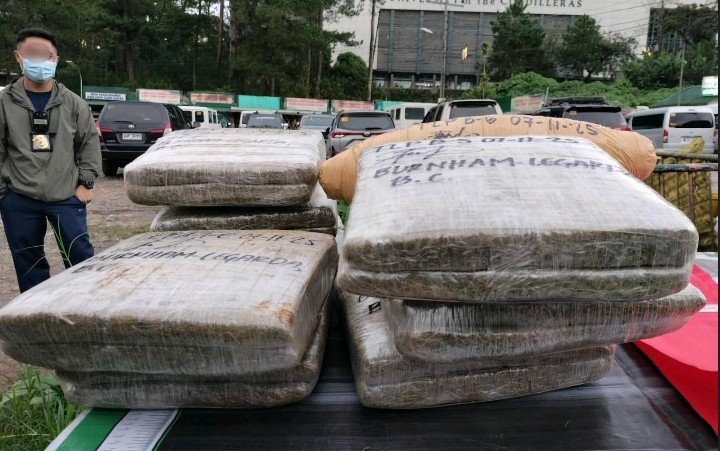
TWENTY-ONE KILOGRAMS of dried marijuana leaves worth P2,520,000 were seized while two drug personalities were arrested during a buy-bust operation of the Philippine Drug Enforcement Agency-CAR Baguio/Benguet and Mt. Province Provincial Office in Burnham-Legarda, Baguio City on July 11. The suspects, 43 and 52 years old, whose names are withheld, were caught with 20 pieces of dried marijuana bricks and one elongated form after engaging in a transaction with an undercover agent. Regional Director Derrick Arnold C Carreon said the suspects are from Bakun, Benguet and Cabanatuan, Nueva Ecija. They are currently in the custody of the PDEA-Cordillera, and charges are being filed against them for violating Republic Act 9165 or the Comprehensive Dangerous Drugs Act of 2002.
FROM ALL INDICATIONS, Transportation Secretary Vince Dizon has become the most “popular” cabinet secretary. He gets to appear on front pages of major dailies and eating up airtime in television news programs on an almost daily basis.
These past few weeks, the DOTr chief prominently figured while taking a rail transit, commuting in one of the buses at the EDSA busway, going after thrill-seeking race car drivers, penalizing a vlogger over a traffic violation that almost caused multiple accidents, or inspecting a subway, rail project or any of ongoing transport infrastructure.
He never runs out of Instagrammable ideas, FB shorts/reels and news for the mainstream and bloggers. Some have even opined that he is positioning himself well to be in the political radar for 2028, where he could — with diligence and total public service — win even a senate post. To me this high (media) profile is working to make him very popular and top of the mind of commuters (which we all are, one way or another).
After all, Vince is not new to the political realm. After his undergraduate studies at De La Salle, he worked as economic staff of Senate President Edgardo Angara, from 1996 to 1998.. He also served as his chief of staff from 2002 to 2004.
‘Dizon suspended the licenses of the supposed race car drivers behind the viral road stunt video in Tagaytay City.’
POLITICS IN 2028? Vince Dizon reentered government during the time of President Benigno Aquino III, when he became an undersecretary at the Office of the Political Adviser under the Office of the President.
Dizon served in that position until 2013, when he then became a consultant to Senate Majority Leader Alan Peter Cayetano, until July 2016.
Prior to his being the 41st DoTr secretary in 2025, he also served as President Duterte’s adviser on flagship programs and projects, deputy chief implementer of the National Action Plan Against Covid-19, and president and CEO of the Bases Conversion and Development Authority.
With such a background, would we still wonder if politics in 2028 is far from his mind?
ROAD STUNTS Of late, Dizon suspended the licenses of the supposed race car drivers behind the viral road stunt video in Tagaytay City.’
He ordered the Land Transportation Office (LTO) to suspend their licenses for their involvement in the sports car racing incident in Tagaytay as it intensifies its crackdown on reckless driving.
Dizon’s 90-day suspension order is now the subject of LTO Executive Director Gregorio Pua Jr.’s efforts to identify the drivers involved as “the incident could endanger the lives of road users, and we are now in the process of identifying all the drivers involved.”
The investigation began with the issuance of show cause orders (SCOs) to the registered owners of six sports cars caught on video speeding through public roads in a convoy. The vehicles include two Mazda MX-5s, a Ford Mustang V8, a Nissan Z, a Chevrolet Camaro, and a BMW M4.
Pua said, “Maaring ‘yung registered owner ang mga ‘yun, o ibang mga driver. Wala silang kawala dito dahil may video.”
LICENSES SUSPENDED In the orders signed by LTO Intelligence and Investigation Division chief Renante Melitante, the registered owners were asked to explain why they should not be held liable for reckless driving and be deemed improper persons to operate a motor vehicle.
The LTO has already moved to suspend the licenses of those directly identified in the video footage, pending further investigation.
Pua said the registered owners were also asked to present the cars’ registration papers and other relevant documents for verification.
“Let this serve as a warning that we will not tolerate this behavior on the road—naka-sports car ka man o motor o tricycle (whether you’re driving a sports car, a motorcycle, or a tricycle),” Pua said. “Umayos tayo sa daan, yun ang gawin natin araw-araw para wala kayong problema sa LTO.”
WHAT LOOKED LIKE ordinary balikbayan boxes meant for families back home turned out to be part of a large-scale drug smuggling attempt. The Philippine Drug Enforcement Agency (PDEA) and the Bureau of Customs (BoC) seized more than 110 kilograms of suspected shabu worth an estimated ₱749 million during an interdiction operation conducted at around 11:30 a.m. on July 7, 2025, at the Manila International Container Port in Tondo, Manila. The operation was carried out inside Container Facility Station 3, where four balikbayan boxes arriving from California were inspected and found 106 vacuum-sealed plastic packs filled with white crystalline substances carefully concealed in boxes of cereal, snack packs, and instant noodles.
IN DECIDING TO defer any decrease in the current tariff on rice imports until at least November, the newly-renamed Department of Economy, Planning and Development (nee National Economic and Development Authority) said its consultations with the Department of Agriculture were not meant to recommend changes in the tariff structure but just to find out what happened.
The DepDev said because inflation has been easing, it sees no need to recommend to the President lowering the current 15 percent tariff on imported rice, to the chagrin of local farm groups that have been pushing for the return of tariffs to 35 percent to better protect their interests.
DepDev said it wants the tariff unchanged until November as it seeks for a “win-win” solution that balances inflation control with protecting local farmers, reported Reuters.
“Not in the immediate [term], but most likely by November,” said DEPDev Undersecretary for Policy and Planning Rosemarie G. Edillon on Wednesday. “After four months, we will submit the study to the President.”
SLASHED IMPORT DUTY The lower tariff is contained in Executive Order (EO) No. 62, which took effect in July 2024 and slashed the import duty on rice to 15 percent from 35 percent until 2028. The EO mandates a review every four months to assess its impact, Business World noted.
The announcement comes amid a petition from farmer groups, including the Samahang Industriya ng Agrikultura, to go back to the original 35 percent duty to shield local producers from the influx of cheaper rice imports.
‘The lowered tariff appears to be achieving its inflation-control goals. Rice prices dropped by 14.3 percent in June, improving from the 12.8 percent decline in May … It was the sharpest drop since 1995.’
GRADUAL INCREASE The Department of Agriculture, meanwhile, said it would recommend a gradual tariff increase during the next harvest season.
Edillon said they met to discuss the review and petition, and they agreed that the periodic review is meant to report on what has happened, not to make recommendations at this stage.
The lowered tariff appears to be achieving its inflation-control goals. Rice prices dropped by 14.3 percent in June, improving from the 12.8 percent decline in May, according to the local statistics agency. It was the sharpest drop since 1995.
STABLE SUPPLY Rice supply also appears to be stable. As of June, the country’s rice inventory reached 2.24 million metric tons (MT), 3.5 percent more than a year earlier. “Most of them are still in the warehouses. And we had the bumper harvest, actually, for the first half,” Edillon said.
She added that the rice import volume would be capped at 3.5 million MT for the year.
The government is also exploring more measures to support farmers, including enhanced access to the Rice Competitiveness Enhancement Fund, which provides planting assistance.
The DEPDev is also participating in discussions on whether to restore the regulatory powers of the National Food Authority (NFA), which was stripped of many functions following the Rice Tariffication Law.
DRAFT BILL Speaker Ferdinand Martin G. Romualdez said the House of Representatives is ready to act on a draft bill that seeks to reinstate the NFA’s market functions once it reaches the chamber.
The DA has said the draft legislation includes provisions for the NFA to manage buffer stocks, regulate rice marketing and set floor prices for rough rice.
“I think at that time, the context was different. So NFA was so much in debt. It was really bleeding, hemorrhaging,” Edillon said, referring to the agency’s former monopoly on imports. “It was not really fulfilling its mandate… What we need to consider now is how the market has adjusted to the new regime.”
She also acknowledged the challenges in setting floor prices. “It will be very tricky though, operationalizing it and even estimating it. But yes, that’s something that we’re studying as well.”