
Thursday, March 26, 2026
Home Blog Page 57

Cold Carbs, Hot Bod

2

We’ve all had that moment. You open the ref, a halo-halo of containers, and let out a sigh. “Tira-tira” (more commonly known as “Pangat”), you mutter, a word usually associated with culinary disappointment and the faint, lingering smell of last Tuesday’s questionable pancit bihon. But what if I told you those humble leftovers, specifically your reheated rice and pasta, are secretly superheroes in disguise? Yes, you heard right. Your “bahaw” is basically a fitness influencer in carb form.

Science, in its infinite wisdom, has discovered that cooked and cooled carbohydrates undergo a magical transformation. This process, known as retrogradation, turns some of the digestible starches into resistant starches. Think of it as the carb version of a superhero origin story: they get chilled, they get tough, and they fight the good fight against blood sugar spikes.

RESISTANT STARCHES

So, why are resistant starches the carb equivalent of a superhero? 

Well, they resist digestion, meaning they don’t get absorbed into your bloodstream as quickly. This translates to a lower glycemic index (GI), which essentially means your blood sugar doesn’t skyrocket like a caffeinated toddler on a sugar rush. Instead, it rises gently, like a hot air balloon on a calm morning.

This slow and steady release of glucose is your body’s best friend. It prevents those dreaded mid-afternoon energy crashes that leave you craving a sugary snack and questioning your life choices. Plus, it keeps you feeling full for longer, meaning you’re less likely to succumb to the siren call of your food delivery service app.

PREBIOTICS IN YOUR GUTS

Think of it this way: fresh, hot rice is like a sugar-fueled race car, zooming straight to your bloodstream. 

Reheated, chilled rice, or more commonly known as “bahaw,” on the other hand, is like a wise, old tortoise, taking its sweet time and keeping your blood sugar steady.

But the benefits don’t stop there! Resistant starches also act as prebiotics, feeding the good bacteria in your gut. Yes, your leftovers are basically a party for your microbiome! Imagine tiny, happy bacteria dancing the hip-hop to the rhythm of your digestive system. It’s a glorious, microscopic rave.

‘BAHAW’ AND PASTA

Now, let’s talk practicalities. Reheating your leftover rice or pasta isn’t just about saving money and reducing food waste; it’s a strategic health move. You can whip up a batch of rice on Sunday, chill it overnight, and enjoy it in stir-fries or even fried rice throughout the week. You’re basically a meal-prepping diva, armed with the power of resistant starch.

And pasta? Cold pasta salads are not only delicious but also a fantastic way to enjoy your carbs without the guilt. Add some veggies, a light dressing, and you’ve got a healthy, satisfying meal that’s perfect for a snack or a quick lunch. 

So, the next time you find yourself staring at a container of leftover rice or pasta, don’t despair. Embrace the chilled carbs! They’re not just leftovers; they’re a secret weapon in your quest for stable blood sugar, a happy gut, and a guilt-free carb indulgence. 

You’re not eating old food, you’re eating science and turning “bahaw” into wellness.

Rio Locsin: Simplicity Is Beauty In Albert Figueras’ Gown

AS THEY SAY, clothes make the man.

That is precisely how acclaimed actress Rio Locsin showed her way as she walked the red carpet of the 2025 ABS-CBN Ball at the Solaire North recently.

Rio, not known for being a  fashion plate, has impressed a lot of spectators both online and in-person during and even after the star-studded affair.

Thanks to the sartorial wisdom of both Locsin and her designer, the iconic Albert Figueras.

SIMPLICITY

I’ve known Ojie (the actress’ pet name) for the longest time from her wardship under the late controversial talent manager Dr. Rey dela Cruz.

We may not see each other often but Rio always crosses my mind as the simplest woman in the complex world not only of showbiz but the entire universe.

Her simplicity was shown in her early stage as show girl.

If she was a complicated person, she would have stayed longer beneath the wings of the enigmatic dela Cruz who was known for his theatrics in handling stars.

SHE WALKED OUT

A very vivid scene off-screen: When Rio, Maria Theresa Rosario Nayve in real life, left unceremoniously from dela Cruz’s management, he, in my presence, was on cue looking out faraway and crying sans camera by the window at the second floor of his optometry clinic in Quiapo.

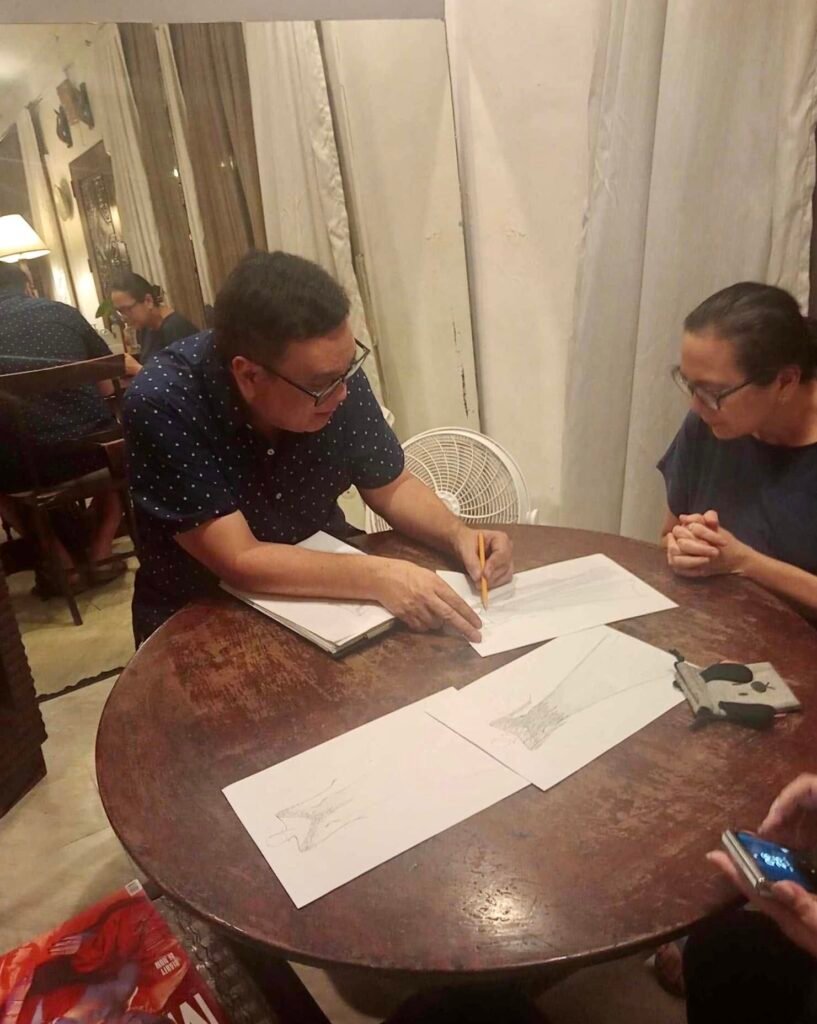
Albert Figueras and Rio Locsin (Photo Credit: Albert Figueras/Facebook) 

“Boy, iniwan na ako ni Ojie (She already left me),” Rey lamented disarming me right at that very moment.

Simply, Locsin walked out from his shady deals.

She just wouldn’t want to be part of Rey’s convoluted practice.

VERY RIO

Go figure Rio’s distancing from the maddening crowd until now.

It reflects her sense of dressing that compliments Albert Figueras’ taste for her personality.

More than that, the Pygmalion-Galatea team-up is perfect to convey the spring formal motif of the Kapamilya ball.

A pastel colored overall sprinkled, as if hand-painted, with patches of white flowers and green twigs make for a simple dress fit for her age and status in life.

Very Rio Locsin, an adorable yet unembellished name resounding a line from an OPM ballad “Langit na Naman” popularized by the band Hotdog in the 80s and covered in the millennium by singer Rico Blanco.

SIMPLE, GLAMOROUS

This is not the first time that Figueras clothed Rio.

This means that they click with each other since he did her gown at the GMA Network ball last year.

Always, the actress is gratified for Albert’s transforming her into a glamorously simple dresser.

In her thank you note in the digital space, she noted: “Maraming-maraming salamat po, Sir Albert Figueras sa kabutihan po ng loob mong ipagkatiwala sa akin ang kasuotan na likha ng mayaman mong imahinasyon (Thank you so very much for your kindness in trusting me to wear your creation from your rich imagination).”

UNASSUMING

Rio’s unassuming demeanor was again displayed amid the younger set of stars’ equally classy garbs and still, she stood out. 

Janine Gutierrez (Photo Credit: Janine Gutierrez/Instagram)

Janine Gutierrez in her leather-like, leather-textured Mark Bumgarner frock was striking but Locsin’s effortless wearing of her spring imagery could sit well side-by-side with Janine despite their age difference. Nadine Lustre in Rajo Laurel and Kathryn Bernardo in Anthony Ramirez, all beautifully created, although Rio can give them a run for their gowns

Rio’s simplicity is contagious.

Killing Addicts Based On Poor Evidence And Flawed Reasoning

0

ONE OF THE most enduring arguments among Duterte Drug War supporters is that drug addicts kill, rape, rob, and inflict all kinds of harm on innocent, peaceful people. 

Addiction, they claim, makes users inhuman—vermin to be eradicated immediately. Killing all addicts is considered a natural act of self-defense to protect law-abiding citizens. For them, it is better to kill thousands of addicts than to let an equal number of peaceful citizens suffer from their deranged actions. 

NATIONAL PRESERVATION?

Duterte’s actions are seen as acts of national preservation. He alone, they argue, had the courage to stand up against the eventual criminality of drug users. 

Even if addicts have not committed a violent crime yet, it is acceptable to kill them to prevent future violent offenses.

This argument is echoed even by educated individuals—professionals, government employees, and even actors within the criminal justice system. 

DO NO HARM

Medical professionals, despite adhering to the “do no harm” principle, support this view. Lawyers, who are trained to uphold the rule of law and due process, tolerate shortcuts in police operations that lead to the deaths of drug users. The sentiment cuts across social divisions—rich and poor alike demand safe streets. If killing addicts is the solution, then so be it.

Yet, this argument has rarely been analyzed or dissected. Its assumptions are seldom challenged, and a serious fallacy that underpins it is never exposed. The popularity of this view is rooted in its emotional appeal for the punishment of the flesh.

Killing addicts is a popular idea among those who seek instant retribution. When drug users are portrayed as perpetrators, there is a natural desire for vengeance. A bloody execution is seen as justice…

REALITY BITES
Let us first examine reality. 

The causes of violent crimes—such as murder, rape, and robbery—are multifaceted. Drug addiction is just one among many risk factors. Research shows that individuals from broken families, those who lack education and employment, those exposed to delinquent peers, individuals with antisocial personalities or mental health issues, and those with criminal thinking patterns are equally likely to commit violent crimes. 

In fact, chronic alcohol users are more likely to be overrepresented in the population of prisoners than chronic drug users. A 2024 survey of 500 newly committed prisoners in the Bureau of Corrections showed that only 13.6 percent had a history of chronic drug use, while 18.6 percent had a history of chronic alcohol use. Yet, there is no widespread call for the killing of alcohol users. Why?

Imagine this. While some drug users do become violent criminals, the majority are non-violent offenders. Many violent criminals are not drug users but suffer from other criminogenic needs such as alcoholism, lack of employment, exposure to delinquent peers, poor family background and other social ills. 

DUTERTE AND HITLER

By labeling all drug addicts as violent threats to society, all addicts become candidates for elimination. This was clearly illustrated when Duterte called for the killing of 3 million addicts, likening his policy to Hitler’s killings of the Jews. This is illogical reasoning based on hasty generalizations. 

Addicts are then demonized and stripped of their right to due process. Even reformed drug users or those falsely accused by neighbors become targets of state-sanctioned killings.

This is not to suggest that those who commit heinous crimes should go unpunished. They must be held accountable—but for the right reasons. 

When a drug user commits murder or rape, they should be imprisoned for life—not because they are drug users, but because they committed heinous crimes. Likewise, if an alcoholic, an unemployed person, or someone from a broken home commits the same crimes, they should also be punished—not for their background, but for their actions.

INSTANT RETRIBUTION

Killing addicts is a popular idea among those who seek instant retribution. When drug users are portrayed as perpetrators, there is a natural desire for vengeance. A bloody execution is seen as justice—fueled by raw emotion.

Victims of violent crimes must be supported. The government must provide medical and psychological assistance. Victims deserve justice through the timely resolution of cases and the conviction of offenders.

Most offenders are homeless, unemployed, come from poor family and community background, lack education, alcoholics—and yes, some are also drug addicts. We must protect society from these potential criminals. But instead of resorting to violence, the government must address the root causes of homelessness, unemployment, alcoholism, and addiction by providing long-term solutions.

Killing addicts is a short-term solution, built on poor evidence and flawed reasoning.

Road Rage Triggered By Pricked Pride?

0

AT 5 P.M. LAST March 31, along Marcos Highway in Antipolo, a case of road rage occured. Starting in a verbal and physical confrontation, this escalated into a shooting spree where one died and three injured. Is this an example of how man’s pride and arrogance control his temperament. The suspect is now charged with murder and frustrated murder and violation of the election gun ban. His license was suspended for 90 days.

Worldwide, road rage — esp. accompanied by gun- carrying individuals — always ends up in fatalities, properties destroyed, and strained relations, which could have been avoided had some humility and restraint stepped in.

THINGIFIED

An interesting article by psychotherapist Barry Markell discussed a study that estimates that over half of all drivers have experienced a surge of road rage at some point, although not all resulted in violence. 

He attributes all aggression to overcrowding. But road ragers don’t see the offender as a person. “They ‘thingify’ the person,” Markell says.

Psychologist Ava Cadell, instructor in San Francisco, agrees. “The heavy metal of a car is a safe haven. Road ragers don’t think about the consequences or even about other people on the road as real people with real families.”

Citing a study, Cadell explained that road ragers are selfish, power hungry, angry and vindictive, with the average offender raging at least 27 times.

‘Besides overcrowding on the highway, the rager may be violent in other parts of their life, like at home or with a family, contributing to the tension of the commute.’

ROOT CAUSE

Besides overcrowding on the highway, the rager may be violent in other parts of their life, like at home or with a family, contributing to the tension of the commute.

Another is that a road rager may be angered by the absent-minded/ stupid driving of those talking on cell phones, which is common. Verbal confrontations on the phone could verily lead to confrontations on the road. It works both ways, Cadell opined.

Tens of thousands of accidents happen each year because of aggressive driving.

ROAD RAGE CASES

Last April 1, ABS-CBN enumerated a few celebrated road rages: In 1991 in San Juan City, Rolito Go, a construction magnate shot and killed Eldon Maguan, 25, a La Salle University student. Go was convicted of murder and sentenced to life; he managed to escape in 1993 and recaptured in 1996; 

In 2009 in Quezon City, Jason Aguilar Ivler killed Renato Ebarle Jr., a Palace official’s son. Ivler had been previously charged for road rage in 2004 where former Malacanang adviser Nestor Ponce Jr. was killed. He was sentenced to life; 

In May 2004, a fatal altercation on EDSA-Ayala Tunnel between 34-year old Mercedes Benz driver and a 65 year old family driver ensued, resulting in the shooting of the elderly driver; 

In June 2016, a cyclist was shot dead in Quiapo Manila after a heated confrontation with a motorist. The latter’s gunfire ricocheted hitting an 18-yo bystander;

In October 2022, a 60-yo jeepney driver was critically injured after being shot by a man who confronted the former over his driving behavior in Las Pinas City;

In August 2023, a police officer, Wilfredo Gonzales, cut off a biker near the Welcome Rotonda in Quezon City. He pulled and totted his gun on the cyclist and slapped him. The case was settled between the two but the incident irked other motorists, nonetheless, and

Last March 20, the Cebu Freeman reported a road accident where a pick-up truck with two people hit the suspect’s (a police officer) vehicle. This resulted in a heated argument. A witness said the shooter fired away until his gun was empty. A passenger was hit and now in critical condition. The shooter surrendered.

TACKLING ROAD RAGE

The World Health Organization recommends full enforcement of traffic laws on drink-driving, seat-belt, speed limits, helmets, and child restraints to reduce road traffic fatalities and injuries.

Police Chief Gen. Rommel Francisco Marbil said traffic congestion is bad, as it is, “so we really need patience.”

The PNP, Marbil said, will collaborate with Highway Patrol Group in manning checkpoints  and choke points for better enforcement in the country to reduce, if not completely deter, road rage. Also, a revisit to requirements in gun possession and ownership that includes neuro-psych test and to make it an annual requirement. 

My personal take? To all road users, lower pride and build more courtesy, empathy, modesty, and patience.

Suffering Suffrage

WITH an election happening a few weeks from now, the fate of the country would once more depend on the behavior of the Philippine electorate. More often than not, Filipino voters end up regretting the choice they made. 

Come May 12, some tens of millions of registered voters would be swamping voting precincts to elect candidates vying for 18,215 national and local posts in time for the 2025 midterm elections.

For one, the right to suffrage is embodied in three instruments – the Universal Declaration of Human Rights (UDHR); the International Covenant on Civil and Political Rights; and in the 1987 Constitution which states “sovereignty resides in the people and all government authority emanates from them.”

True enough, Filipino voters have the power to decide, for which politicians have been resorting to a long list of gimmickry (legal or otherwise) to win a democratic process referred to as “election.”

Prior to the election proper, candidates are given reasonable time to launch an effective campaign and present political platforms, government plans and a truckload of empty promises.

Filipino voters have the power to decide, for which politicians have been resorting to a long list of gimmickry (legal or otherwise) to win a democratic process referred to as “election”.

FILLING THE SEATS

Except for the position of the President, Vice President and barangay officials, the 2025 midterm polls will cover: 12 senators; 254 district congressmen; 63 partylist representatives; 82 governors; 82 vice-governors; 800 provincial board members; 149 city mayors; 149 city vice mayors; 1,690 city councilors; 1,493 municipal mayors; 1,493 municipal vice mayors, and 11,948 municipal councilors. 

Senatorial and partylist aspirants started hopping from one province to another as early as February 11. Campaign period for district congressmen and local candidates commenced March 28. 

Just like in the previous elections, an effective campaign requires much more than qualifications. Notably though, placement of political ads, production of campaign posters, commissioning rolling jingles, give-aways, and allowances of local leaders as well as poll watchers don’t come cheap.

JUST FOR THE RICH

Time and again, the Commission on Elections (Comelec) has been issuing stern warnings against candidates who would be spending more than the limits as stipulated under the Omnibus Election Code.

But how much does it really cost to run for public office? Under the Omnibus Election Code, candidates vying for national positions are only allowed to spend P10 pesos for every voter. 

With 68.6 million registered voters (based on Comelec data), each senatorial bet would only be allowed to spend a maximum of P686 million. 

Interestingly, at least five senatorial candidates have earlier been reported to have spent beyond the benchmark even before the campaign period started. The biggest spenders – Camille Villar, Imee Marcos, Francis Tolentino, Abby Binay, and Benhur Abalos.

According to a report published by the Philippine Center for Investigative Journalism, Villar has spent over a billion for her political ads way before she filed her Certificate of Candidacy in October 2024.

RED FLAGS FOR VOTERS

Lavish spending for the realization of political ambition however isn’t limited to national candidates. 

On the local level, political dynasties are headed for a walk in the park in many parts of the country. Provinces ruled by political clans are the poorest in the country. 

There are also candidates who consider public office as an investment which promises high profits — just like in Pasig City where a contractor dared to go against incumbent Mayor Vico Sotto.

According to sources, the mayoralty bet is actually throwing her hat into politics for two reasons — to wield power amid tax cases, and secure the P12-billion contract for the construction of Pasig Smart City Hall building.

There are also candidates banking on wealth, popularity, allegiance, sectoral endorsements, greed and political compromise, to name a few.

ELECTION ISSUES

Electoral integrity has time and again been questioned over alleged vote-buying electoral fraud, political dynasties, black propaganda (fake news) via the social media, and the use of guns, goons and gold.

The absence of genuine programmatic political parties drives campaign costs because there is a need to dispense patronage goods and fund a political machine.

Political families and clans that control the legislative branch of government are composed of dynasties. That political dynasties occupy 80 percent of the seats in the House of Representatives is only part of the problem. The same political dynasties usually control local government units of the districts they represent.

It is not uncommon to find the provincial governorship, the mayoral and councilor positions occupied by members of the same family. To stay in power, a combination of personalistic politics and a political machine that thrives on giving dole-outs, both in cash and in-kind, drives the cost of running for public office. 

The “supply-side” of vote-buying as campaign spending is typically dynastic families who keep communities dependent on dole-outs rather than institutionalized public delivery of services.

Family Feud Sees End Of Political Dynasties

0

IN POLITICS, THERE are no permanent friends, and soon enough, no permanent family ties too. 

Taking the case of the Marcoses, there’s no way to cover up the rift between the President and his sister who has openly admitted  that she hasn’t had a conversation with her brother, President Ferdinand Marcos Jr., in a long time.

In an interview, the senator admitted that she was only able to talk to him during public gatherings.

With reelectionist Senator Imee Marcos abandoning her younger brother’s political bandwagon, their chit-chats during campaign sorties may as well come to an end.

Could the rift trigger the collapse of the country’s most powerful dynasty?… How I wish all other clans would also self-destruct, if only to spare the country from being held hostage by the “powers that may be”.


WHAT TRIGGERED RIFT?

Amid the supposed rift between them, there are several speculations as to what triggered what looks more like a family feud. 

By her own admission, the senator claims that their strained relationship was caused by the people surrounding the President. Without dropping names, Senator Imee seemed to be referring to no less than the president’s wife — her sister-in-law, Liza Araneta-Marcos.

However, people past their sixties are toying on another story as the possible cause of the rift — that Senator Imee is not a “genuine” Marcos. During the time of the late strongman Ferdinand Sr. until the 90s, there were gossips that Ferdinand Sr. isn’t her biological father.

So do “tales” on Bongbong. According to the rumor mill, the “real” Ferdinand Jr. allegedly died in a ruckus while studying in London and that the person who has become the President is a copycat.

These are buzzes.

PALACE CLAIM

Another reason that could have agitated the strain is Senator Imee’s closeness to the Vice President Sara Duterte who has assumed the role of the opposition. 

Interestingly, VP Sara is the daughter of the man who allowed Ferdinand Sr. to be laid to rest at the Libingan ng mga Bayani.

Worse, Senator Imee even initiated a Senate probe on what she claimed was an orchestrated move by the Marcos administration — from the arrest to the transit of the former president to The Hague.

Could the rift trigger the collapse of the country’s most powerful dynasty? 

No, says a Palace official who insisted that the President has no rift with his sister despite the withdrawal from her brother’s Alyansa Para sa Bagong Pilipinas senatorial slate.

How I wish all other clans would also self-destruct, if only to spare the country from being held hostage by the “powers that may be.” 

Earth Day, Global And Personal

0

THE INDUSTRIAL AGE which dawned in Great Britain in the mid-18th century, characterized by power-driven machines and mass production, has led to today’s modern world. Not surprisingly, it also heralded problems which threaten Planet Earth. 

From that scenario, the Earth Day event every April 22, now coordinated by Earthday.org (formerly Earth Day Network), came about in 1970 in the highly industrialized United States and henceforth grew fast into a global event.  There are now 192 countries including the Philippines marking the day and even the whole month of April.  

EARTH DAY, APRIL 22, 2025

This year’s global theme is Our Power, Our Planet. It focuses on renewable energy and tripling global electricity generation from renewable sources (the clean electricity) by 2030.  That certainly is on point with the urgent need to reduce carbon from fossil fuels as a key action to prevent the possibly catastrophic effects of climate change. 

Some popular actions during the month include tree-planting, Nature walks, group biking in city roads, art exhibits, field trips for school children, concerts, bazaars of eco-friendly products, recycling demos. It is also an opportunity to draw people to make donations and pledges in support of environment protection initiatives.

In lieu of the go-to tree planting (which is not advised during the very hot summer), the Forest Foundation of the Philippines is offering Earth Day partnership opportunities to companies in its Conservation Pathways. This year, it prioritizes the Kaliwa River Forest Reserve, an important watershed for NCR and home to mostly indigenous communities and rich biodiversity.

There will be an Earth Day Run (5k, 10k, and 21k categories) for fitness buffs at the SM Mall of Asia on April 27 by Race Roster in partnership with a global humanitarian organization, Tzu Chi Philippines.  The activity will underscore the importance of reducing carbon footprints and conserving resources. 

Nature Awareness and Conservation Club, which heeds the call to regenerate ecosystems, will hold mangrove tree-planting events with coastal clean-ups for three companies during the month. To prepare the participants, a talk on the science of tree planting will be given.

More activities have been planned by other advocate groups and at school and community levels.

The challenges to the planet’s sustainability have become more threatening as civilization advances… In each of us is the power to save the planet we have been blessed to be our home.

EACH DAY FOR EARTH

On its 55th anniversary, Earth Day cannot but sustain thematic activities across the globe. 

The challenges to the planet’s sustainability have become more threatening as civilization advances. Mechanization has immensely advanced technological innovations that may further robotize human skills, and not remotely, blunt the spirit to care for Nature. 

Yet, we don’t necessarily have to hit the ceiling in imagining ways to protect Earth. It is in the way we live day to day, lifestyle we call. Simple things like saving on energy at home and on the commute to work. Learning to reduce, re-use, recycle. Avoiding products that damage the soil, air, and water. 

In each of us is the power to save the planet we have been blessed to be our home.

Questions On Trumps’ Trade War

2

U.S. PRESIDENT TRUMP’S radical economic policies on trade with 86 countries demands answers from our government under President Bongbong Marcos and his VP Sara Duterte. 

Given that 27.2 percent of Filipinos have experienced hunger, according to the latest SWS survey, how will this Marcos-Duterte administration address this food security issue? 

What production sectors will be affected adversely, and those that will somehow benefit, if at all? 

So too, what particular businesses will be hard up, and those that will manage probably to make a killing, going forward?

HIGHER TARIFFS

The Filipino people are expecting immediate answers and clarifications on the impact of “higher tariffs” on our export and import products. For the ordinary housewife with just enough cash for 2 or 3 meals a day, how will she and her husband get by, especially to feed 3 or 5 kids? 

The school year is about to end, and there will be expenses parents will have to shoulder, not to mention the coming 2025-2026 school year. How will parents cope with any increases in the educational requirements of their children? 

Employed parents may have a fighting chance in meeting the food needs of their families, and perhaps the education expenses of their children. But would they have cash for contingencies like their health needs, or coping with possible disasters like flooding during the rainy season, or fires that may strike their homes or communities? 

How about the millions of jobless Filipinos, how is the government responding to this basic problem, considering Trumps’ trade war? Isn’t this a fundamental task of the government – to provide employment or livelihood to all working-age Filipinos? The more Filipinos holding decent jobs and fair wages, the better for the country’s economy to propel towards real progress for the country. 

While this administration has to face head-on the economic impact of Trumps’ trade war, it has also to consider that it’s election fever. Myriad questions are in the minds of the voters.

ELECTION FEVER IS ON

While this administration has to face head-on the economic impact of Trumps’ trade war, it has also to consider that it’s election fever. Myriad questions are in the minds of the voters. 

Dynastic candidates have taken the lead with their campaigning, and have in fact already spent millions of pesos, to assure themselves of visibility to voters nationwide. Huge billboards, tarpaulins, TV exposures, and all sorts of campaign materials have saturated the cities and towns, dominated by the Marcos administration and the Duterte-PDP candidates. 

Netizens are not surprised, knowing that the Marcoses and Dutertes, along with their fellow dynastic allies in government, have long accumulated and kept unimaginable huge election campaign war chests. 

But aren’t these candidates, especially those currently still in government, like Senators Bong Go, Bato de la Rosa, Francis Tolentino, Imee Marcos, Pia Cayetano, Bong Revilla, Lito Lapid, and others, have been in power for years now under the Bongbong Marcos – Sarah Duterte leadership? What have they done so far for a more progressive society? Why are they making promises when they could have already done those while already in power as senators? They should be helping President Bongbong Marcos with their suggestions, if any, on this latest President Trumps’ “Trade War” policy.  

UNANSWERED QUESTIONS

Regarding the candidacies of re-electionist Senators Bato de la Rosa and Bong Go, aren’t they suppose to be with their boss Mr. Rodrigo Roa Duterte in the Hague’s ICC detention cell, having been active in the bloody implementation of the drug war, since RR Duterte was the Davao city mayor? 

On the elections, is Comelec, which failed to erase doubts on the rigging of the May 9, 2022 elections, as IT experts claimed, trustworthy enough to handle the elections fairly?   

Too many questions today need to be answered by this administration – for the peoples’ peace of mind!

Devotees in Droves For Alay-Lakad

FOR the longest time, the Antipolo Cathedral, now referred to as the National Shrine of Our Lady of Peace and Good Voyage, has been considered a center of Catholic devotion.

Unlike any other religious shrines, the Antipolo Cathedral takes the center stage three times a year — the feastday of the Immaculate Conception on December 8, the month-long May festivity for which Antipolo is known for, and the traditional Alay-Lakad which takes place every Maundy Thursday of the so-called “Holy Week.”

This year’s Alay-Lakad though is taking a step further as Antipolo Bishop Ruperto Santos hinted at something bigger — a Guinness World Record for the category of “Largest Gathering for a Walking Spiritual Pilgrimage in 12 Hours.”

“It is our plan to apply for the Guinness World Record for the category of having the ‘Largest Gathering for a Walking Spiritual Pilgrimage in 12 Hours,’ from 6 p.m. of Maundy Thursday to 6 a.m. of Good Friday,” Bishop Santos said in a news report.

MORE THAN ELIGIBLE

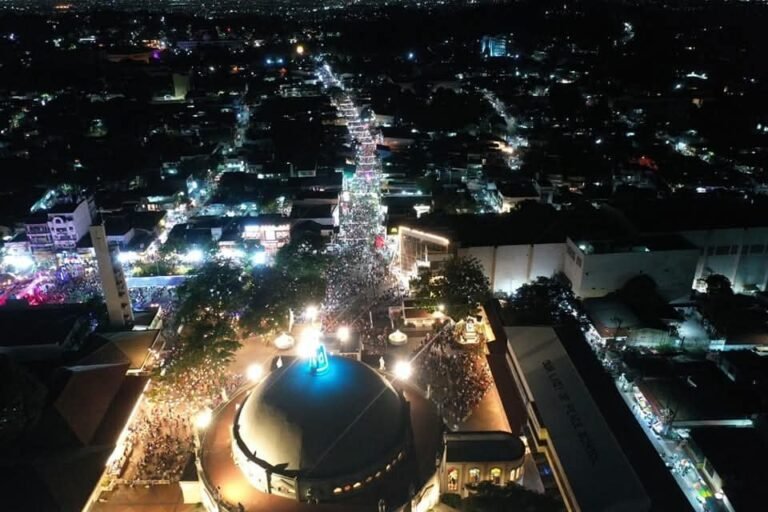
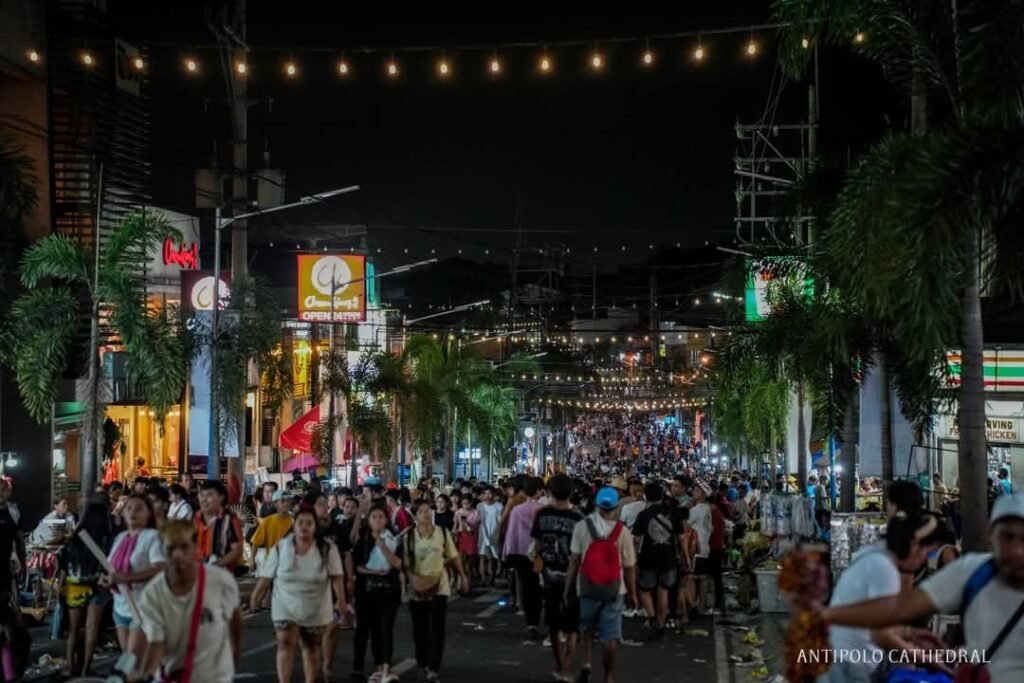
Citing data from the Rizal Provincial Police Office, last year’s Alay-Lakad recorded a whopping 7.4 million devotees who came in droves for which not even a bike would be able to pass through what looks more like a “sea of humanity.”

Taking cue from the Guinness list of world records under the “pilgrimage category,” there are only three countries dominating the category – Iran, Iraq and India.

This comes as Bishop Santos called on the Catholic faithful to take part in the 17-kilometer pilgrimage walk (from EDSA Shrine located at the corner of EDSA and Ortigas Avenue) to the International Shrine of Our Lady of Peace and Good Voyage in Antipolo City, if only to secure a place in the elite list of pilgrimage capitals across the globe.

Interestingly, the Philippines managed to secure two spots in the list under the category of the most number of attendees in religious holidays – the 2025 Feast of the Black Nazarene which logged 8.1 million participants and the Sto. Nino de Cebu which recorded 3.1 million in attendance in January 2014.

ALAY-LAKAD UP-CLOSE

Streaming along the streets like water from a gushing river, Catholic devotees from Central Luzon, Metro Manila and the Calabarzon region tirelessly walk to reach a domed cathedral at the top of a hill in upland Antipolo, Rizal province.

The phenomenal Alay Lakad forms part of the Holy Week religious activities which kicks off on Palm Sunday until Easter Sunday. 

Other Holy Week activities include processions, reading of the passion (pabasa), passion play (senakulo), church visitation (Visita Iglesia), crucifixion rites, lenten retreats, reunion of the mother and son (salubong), easter vigil and Sunday mass coinciding with the Christ rising from the dead.

Interestingly, devotees (mostly young Catholics) come to the pilgrimage capital of the Philippines as a gesture of gratitude for the blessings they have been receiving, for intercession – and for some, a tradition that was passed from one generation to another.

DEVOTEES TESTIMONIALS

According to 53-year old devotee Leonidez Velasquez from Pasig City, he has been joining Alay-Lakad since he was 13 years old.  

For Velasquez who works in a petshop in Barangay Pinagbuhatan, walking 14 kilometers is nothing compared to the sacrifice of Jesus Christ.  

Another devotee by the name of Boyet Mariano, a former government jail personnel, shared his personal “encounter” with faith. According to Mariano, he would have been dead a long time ago if not for his faith. 

“I once had a happy family – a wonderful wife and two kids. I have a job, my wife runs our small business… everything seemed perfect, until I got hooked on drugs for which I lost my job, and my family,” Mariano said in the vernacular.

At 64, he lives alone in a house owned by his elder sister. By his own admission, living alone is hard especially under his condition. He is suffering from bone cancer.

“Mahirap pero nakakaraos kasi nga God always provides,” said Mariano who used to join the yearly Alay-Lakad until he developed an illness which limited his movement.

DEVOTION, NOT VACATION

However, the Catholic Bishops Conference of the Philippines (CBCP) finds it more prudent to give a premium on penance and faith while preserving the tradition.

The CBCP doesn’t support syncretization with elements of ritual practices not sanctioned by the universal Church, superstitions associated with the occasion and the wrong notion that Holy Week is the best time to go to tourist destinations for a long vacation.

More than devotion, Alay Lakad is something that an Antipolo village chief considers as an ideal time to show some compassion.

“Taga rito na kami sa Antipolo kaya wala na yung elemento ng sakripisyo sa paraan ng paglalakad ng malayo. Pero maraming paraan para maging bahagi ng Alay-Lakad,” says Chairman Jeff Naval Fernan of Barangay Dela Paz, where the long Alay-Lakad trek ends.

He also reminded people in attendance the purpose behind Alay-Lakad – “taimtim na pagninilay sa sagradong paglalakbay.”

Will Hyping Help Farmers, Consumers?

GOING THROUGH THE website of the Department of Agriculture, I read a press release that hyped the accomplishments of the National Food Authority– in terms of having the highest buffer stock in years, improved operations and reduced deficit despite challenges from a leadership change and ongoing Ombudsman investigation.

The PR said these achievements were realized under the able guidance of DA Secretary Francisco Tiu Laurel Jr. and Administrator Larry Lacson, which to farmers and consumers seem insignificant as the services rendered to these sectors are way below expectations.  

Right now, retail prices have not behaved despite all the pronouncements of palliatives being undertaken and DA-NFA continues to harp on the need to revert the NFA to its power and glory so it can do much more. 

What helped it was the NFA Council’s decision raising the palay procurement price… helped attract more rice farmers to sell their produce to NFA, ergo the dramatic increase in buffer stocks.

MONOPOLISTIC DAYS

Ironically, reviewing NFA’s history showed that during its monopolistic days, NFA built numerous warehouses –that later became white elephants– as farmers refused to sell to the agency with all its rigorous requirements like unreasonable moisture content  and the red tape before they get paid. 

With all its trucks, the farmers still had to bring their palay via hired tricycles and jeeps at very stiff rates and they had to wait so long before their products are dried and they could finally get their checks.

Apart from restoring the glory of NFA, the DA is also lobbying for higher palay procurement  budgets; purchasing more trucks and rehabilitating/building more warehouses. Hence, the polishing of its image so lawmakers won’t hesitate to give in to DA-NFA’s demands.

With the suspension of 139 erring NFA officials and employees by the Ombudsman, the NFA had to struggle competing with private rice traders in purchasing palay. 

What helped it was the NFA Council’s decision raising the palay procurement price from a range of P16 to P23 per kilo to P17 to P30 per kilo. This decision, the PR said, helped attract more rice farmers to sell their produce to NFA, ergo the dramatic increase in buffer stocks. (Field interviews with farmers noted otherwise: they would rather sell to private traders who would pick up their fresh produce at their farms).

The NFA said that as of February, its palay inventory stood at 399,701 metric tons (nearly 8 million bags), sufficient to cover eight days of supply, a big leap from its previous one day of buffer stock before Lacson’s assumption.

MODERN SUPPLY CHAIN

It also undertook measures to modernize its supply chain, through the Masagana Agri-Food Infrastructure Modernization Program (MAFIM) — a multibillion-peso nationwide initiative to build new post-harvest facilities — to reduce annual wastage by P10 billion, benefiting both farmers and consumers. 

NFA also avoided around P631 million expenses in 2024 through strategic measures, including the incorporation of the Buffer Stock Incentive (BSI) for farmers under the PRICERS program, by adopting a “less movement” policy for rice stocks, reducing logistics costs and saving an additional P172.3 million. These cost-cutting measures helped reduce NFA’s deficit to P3.753 billion in 2024 from P6.097 billion in 2023.

The agency said it strengthened its workforce, with 543 new appointees as part of an ongoing restructuring. These appointments was intended to improve employee morale, productivity, and overall efficiency.

It further streamlined operations through a fast-lane service for small farmers selling fewer than 50 bags of palay reduced waiting times and eliminated the re-bagging of 20 percent of its total palay procurement, which saved around P215.4 million in operational costs for the coming year. (To recall when NFA sold last year its “aging” stocks, it authorized the select private traders to rebag the aging stocks in commercial labels).

For 2025, NFA said it plans to buy 90 new trucks to be augmented by 150 trucks scheduled for 2026, to ensure that farmers in remote areas can sell their produce to NFA. (This has been a long-standing promise of NFA).

ADDRESSING CORRUPTION

Lacson also prioritized addressing corruption by ordering its legal office to file administrative and criminal cases against erring officials, to restore public trust, transparency and accountability.

Laurel stressed the need to restore NFA’s powers (including importation) so it can influence the rice market. “We simply cannot fight these battles with one hand tied behind our backs. We need to restore NFA’s powers to regulate rice retail and manage stocks more effectively.” 

Despite the amendment of the Rice Tariffication Law, NFA is still restricted from importing grains to boost stocks or directly selling rice to the public,” Laurel maintained.

For 2025, the NFA vows to procure 880,000 metric tons of palay to meet the higher buffer stock requirement of 555,000 metric tons, or 15 days of national rice consumption for emergencies.

Suzuki PH unveils all-new Dzire Hybrid

Suzuki Philippines made a strong mark at the 2025 Manila International Auto Show (MIAS) held from April 10 to 13 with the launch of the all-new Suzuki Dzire Hybrid, a stylish and smart compact sedan now equipped with Suzuki’s hybrid system.

“We are proud to unveil the All-New Dzire Hybrid—a vehicle designed to give every Filipino a stylish yet practical driving experience. With advanced features, hybrid efficiency, and premium styling, it redefines what a compact sedan can be,” said Suzuki Philippines Director and General Manager for Automobile Division, Norihide Takei.

He also emphasized Suzuki’s continuing efforts to offer innovative, fuel-efficient vehicles tailored for the Filipino market.
The all-new Dzire Hybrid showcases a more refined exterior with a redesigned front fascia, chrome-accented grille, and multi-light LED headlamps. Its sleek silhouette and sculpted body lines flow seamlessly into its new rear combination lamps, giving it a bold and elegant presence on the road.

Inside, the Dzire features a spacious cabin with a premium, dual-tone interior accents, improved ergonomics, and a driver-centric dashboard layout. The GLX variant is equipped with a 9-inch touchscreen display audio system – compatible with Apple CarPlay and Android Auto – delivering both function and connectivity. Rear passengers benefit from ample legroom, airconditioning vents, and a foldable center armrest for added comfort.

ENGINE AND SAFETY FEATURES
Under the hood is Suzuki’s new 1.2-liter Z12E 3-cylinder gasoline engine paired with a hybrid system and a continuously variable transmission (CVT). This setup enhances both driving performance and fuel efficiency, while the hybrid system enables energy-saving features like auto start-stop and electric motor assist.
Drivers can expect smoother acceleration and quieter operation—ideal for both city and highway drives.
Safety remains a top priority with the all-new Dzire Hybrid, with six airbags now standard across all variants—including front, side, and curtain airbags for comprehensive occupant protection.

The other safety features include electronic stability program (ESP), anti-lock braking system (ABS) with electronic brakeforce distribution (EBD), hill hold control, and rear parking sensors with a camera. Combined with its reinforced body structure, these advanced safety features have earned the Dzire a prestigious 5-Star Global NCAP Safety Rating for Adult Occupancy, offering confidence and peace of mind on every drive.

The all-new Dzire Hybrid will be available nationwide at all Suzuki dealerships by the end of the month, with prices set at P920,000 for the GL CVT Hybrid and P998,000 for the GLX CVT Hybrid.

Trump tariffs meant to squeeze Europe, stop China, says analyst

The reciprocal tariffs being slapped by the United States on orders of President Donald Trump may be meant to make Europe weaker and give Russia more power, according to a Brussels-based trade analyst.

Also, Trump is using tariffs to stop China’s rising dominance in the economic sphere. To recall, the US slapped 145-percent tariffs on imports coming from China except for a number of electronic devices like smartphones.

“We need to recognize the arisen geopolitical and geostrategic shifts and realities,” said Weick. “Trump and Russian President Vladimir Putin basically have the same agenda — a Europe squeezed between the US and Russia,” said Johann Weick.

“Neither Trump nor Putin wants a self-assertive Europe that is economically and eventually deterrent-defensive military strong, between them,” he added.

During the recent months, Trump has been sharply criticized for giving Russia more leverage in ending the Russo-Ukraine war that continues to rage.

However, Weick sees US and the EU possibly uniting to form a tariff alliance against China through negotiations, as the US wants to bring jobs, especially in the manufacturing sector, back to the country.

Weick said Trump is planning to form “a geostrategic security alliance with Europeans against China at some point” to unite “the common cause” against Beijing and the president’s sudden move to pause tariffs for 90 days was “a bargaining tactic.”

“The only thing Trump definitely does not want is an economically-dominating and militarily strong China,” he said.

Weick mentioned that Trump will get what he wants in terms of trade and emphasized that the trade dispute between the EU and the US will be resolved at some point as both sides, with their long and deep history, need each other, while China will seek alternatives amid this new environment in which exporting products to the US has become difficult — a shift of focus to Europe may be on the agenda, as well as price-dumping.

He noted that Trump has had a long history of bargaining and negotiations, especially in the real estate industry, and the EU could benefit from negotiations at more technical levels instead of having direct contact with him at the head of state level.

Weick noted that EU Commission President Ursula von der Leyen is “too often at the forefront of the debate” and countries like France and Italy, which are in bilateral talks with Washington, make Europe look fragmented, which then strengthens Trump’s position.

However, the downside to that is Trump’s tariffs essentially will give rise to prices and the end consumer has to pay the high prices.

Weick noted that firms, when investing, expect predictability from the government, noting the 1930s trade protectionism and the following Wall Street Crash in the New York Stock Exchange, even though Trump insists tariffs provide an attractive environment.

TRADE WAR LOOMS

0

WHEN PRESIDENT TRUMP announced his global reciprocal tariff rates to be effective April 10 except for China at 127 percent, the world reacted with a warning of a looming trade war that began manifesting itself in the stock market on the day the tariffs were announced.

But in the Philippines, which was slapped 17 percent, officials from both government and business sectors downplayed the impact of such tariffs saying that “ours is lower than that of our neighbors.”

The expressed optimism later turned into cautious statements with the largest and oldest business group, the  Philippine Chamber of Commerce and Industry (PCCI), saying “retaliatory measures that other countries may take following Washington’s announcement of the reciprocal tariffs could badly hit Philippine small businesses, particularly those in agriculture and food processing.”

Even the Asian Development Bank revised its growth projection for the Philippines to 6 percent instead of 6.2 percent just last week saying despite the country’s strong macroeconomic fundamentals, heightened trade policy uncertainties and their spillover effects could dampen its growth.

If the impact of trade policy uncertainty on investments, financial markets, financial volatility and global risk aversion worsens, this could be a huge downside risk to the Philippines’s economic growth …’

RECIPROCAL TARIFF
The revulsion towards Trump’s tariffs caused him to flip flop (his usual strategy) on the rates saying he would now apply a uniform 10 percent for its allies but for China 125 percent. More as a reward tactic, he said the effectivity of the new rates for 90 days for countries that would not retaliate but would negotiate with the U.S.

Beijing, meantime, announced a reciprocal tariff of 84 percent on U.S. goods effective last April 10 and issued a new travel warnings for its citizens about visiting the U.S.

Trump, in his Truth Social post announcing the 90-day tariff pause, said that “more than 75 Countries” have called U.S. officials seeking to strike new trade deals.

The ADB said it revised downward its forecast to 6 percent (lower end of government’s target of 6 to 8 percent) because of the increased uncertainty due to shifts in trade and investment policies, increased protection that would “damage market sentiment and dent growth.”

DOWNSIDE RISK
If the impact of trade policy uncertainty on investments, financial markets, financial volatility and global risk aversion worsens, this could be a huge downside risk to the Philippines’s economic growth, and that of Asia and the world, according to Abdul Abiad, director of ADB’s Macroeconomic Research Division.

The PCCI in a statement Tuesday, said that while the US has yet to announce the exact coverage of goods that would be slapped with additional tariffs.

“We are wary at the potential impact of the actions other countries may take in response to the US’ reciprocal tariffs. Retaliatory measures can disrupt global supply chains, increase costs, and create uncertainty for businesses and consumers, bringing about a broad negative effect on economic growth.”

RIPPLE EFFECT
For a remittance- and consumer-driven economy like the Philippines’, the “ripple effect” of having to absorb extra costs will be hardest on small businesses, particularly those in agriculture and food processing, it noted.

Trade and Industry Secretary Cristina Roque said the economic team will discuss options, including concessions, as it prepares to negotiate with US officials over the 17 percent tariff on the country.

Based on the list of additional duties of Trump, the Philippines charges 34 percent tariffs on goods being sourced from the U.S. This rate takes into account “currency manipulation and trade barriers.”

PCCI chair George Barcelon said even though the Philippines would be slapped with one of the lower additional duties in ASEAN, “we have to do our homework and see what sectors can benefit from this.”

Meanwhile, the Bangko Sentral ng Pilipinas (BSP) is expected to continue its monetary policy easing at a “much more gradual pace” expecting the real interest rates to remain above neutral during 2025, just to help anchor inflation expectations and to manage the capital outflows.” 

A Call For Discernment

JUST WEEKS BEFORE the much-anticipated 2025 midterm elections, many of us remain uncertain about what lies ahead for our nation—a country with a long-standing legacy of resilience and struggle for democracy.

At the heart of any true democracy is the voice of the people—more powerful than wealth, fame, or the so-called powers that be.

We do not need a bloody revolution to make a difference. What we need is to express ourselves within the bounds of the law—most especially through our vote. The 18,215 candidates vying for both national and local positions pale in comparison to the 68.6 million registered voters. The power rests in our hands.

Yet, many view the upcoming elections less as a democratic exercise and more as a proxy war between the country’s two most dominant political figures.

On one side, Junior, the incumbent President, has fielded certain candidates perceived to have been linked to scandals and offenses, among others.

Opposing them are the so-called gladiators of Rowdy Rody, with allegations of misdeeds ranging from protection of drug lords, money laundering, and even extrajudicial killings.

Beyond these two camps are a few lesser-known but highly qualified candidates—individuals with integrity and impressive public service records. 

Unfortunately, commissioned surveys still show a disturbing trend: the electorate seems to favor familiar names, even if those tainted by past failures and controversies.

How did we get here? Have we lost our collective discernment?

In a landscape shaped by poverty, evolving political culture, and modern technology, many Filipinos are drawn to candidates who offer immediate, tangible benefits. 

Social media has become a critical player in shaping public perception—often irresponsibly.

As in past elections, we continue to grapple with systemic issues: rampant vote buying, the misuse of public funds, and widespread disinformation. Campaigns have become more polarized and confrontational, amplified by social media platforms where truth and accountability are increasingly hard to find.

Deepfakes and AI-driven propaganda are now more prevalent than ever, while major tech platforms lack sufficient motivation to regulate content or verify facts.

Despite all this, we must not let these manipulations dictate our decisions.

Your vote is sacred. Use it with wisdom. Choose leaders guided by integrity, competence, and compassion—not just name recall or empty promises.

Now more than ever, we are called to discern.

Kilig Alert: Kim Ji Soo Charms His Way Through Bahay ni Kuya (and into Our Hearts!)

Hold onto your hearts, mga bes! The oppa invasion just reached a whole new level—Kim Ji Soo, Korean heartthrob and certified scene-stealer, just made Pinoy Big Brother history as the first-ever non-Filipino guest to grace Kuya’s iconic house. And let me tell you: it was not just a cameo, it was a full-on kilig fest!

On April 7, 2025, Ji Soo waltzed into the PBB Celebrity Collab Edition like a walking K-Drama plot twist—complete with charm, wit, and just the right amount of pa-cute. His grand welcome? A live, pasabog P-Pop remix of “Sikat Ang Pinoy” by the ever-energetic female housemates. Kung may red carpet lang, baka may confetti at slow-mo hair flip pa!

But Ji Soo wasn’t just there to look pretty (though, hello, he does that effortlessly). He quickly became Kuya’s honorary resident kulit king, throwing jokes left and right, organizing impromptu skits, and gamely diving into the madness that is the PBB experience. One moment, we were watching him laugh with the gang, the next—BOOM!—he was recreating a classic K-Drama meet-cute with housemate Esnyr. Cue dramatic background music and the legendary line: “I love you.” Yes, he said it. Yes, we died a little.

And if that wasn’t enough kilig to send Twitter into a meltdown, enter Klarisse de Guzman. The two shared sweet, borderline fairy tale moments—including a playful princess carry and unexpected hugs. Housemate Josh Ford, clearly the ultimate wingman, even coached Ji Soo to say the golden words: “Mahal na mahal kita.” I mean, sana all, right?

But beyond the harutan and hugot-worthy moments, Ji Soo showed genuine warmth. In an exclusive interview, he opened up about the bond he formed with housemate Michael Sager—his day-one bro in the house—and his growing kuya instincts toward Josh, who helped him navigate life inside Kuya’s quirky domain. And in true Ji Soo fashion, he made ramen for the whole house. Budget meals? Who cares, as long as it’s made with oppa love.

Though his stay was short—just three days!—Ji Soo left a lasting impression. Not just on his fellow housemates, but on every Filipino viewer glued to their screens, giggling like teens on their first crush. His brief visit gave fans a peek into a more relaxed, unscripted version of the Korean celeb—someone who can dish out jokes, drop Tagalog lines, and feel right at home among kapamilya strangers.

More than just a fun guesting, Ji Soo’s stint in PBB is proof that cultural borders mean little when there’s a genuine connection. Whether you’re a K-Drama junkie, a PBB loyalist, or just someone who lives for the kilig, one thing’s for sure: Kim Ji Soo didn’t just visit Bahay ni Kuya. He moved into our collective hearts.

Power Surge

0

In a world where innovation moves fast and tech continues to shape the future, GCash—the Philippines’ top finance superapp—is making sure women aren’t just included in the conversation. They’re leading it.

At She Can 2025, GCash went beyond the usual recognition rites and turned the spotlight on the resilience, influence, and powerhouse leadership of its female employees. This wasn’t your typical awards event—it was a bold celebration of grit, growth, and game-changing impact.

More Than Titles

The campaign started with an open call for stories, and what came in were 78 moving narratives of women breaking barriers, lifting others, and redefining what leadership looks like in tech. From that pool, 12 phenomenal women emerged—each one honored under three categories: She Can Lead, She Can Inspire, and She Can Conquer. Think: changemakers with courage, smarts, and serious staying power.

Wisdom from Women Who’ve Been There

The celebration featured the She Can Empowerment Forum, where seasoned journalists Ces Drilon, Bernadette Sembrano, and Jacque Manabat shared candid, heartfelt advice about navigating life and leadership. Manabat, known for her fearless reporting, struck a chord with this gem:

“Iba ang lakas ng babae. We don’t let our scars define us—we nurture them to create impact.”

That message? A rallying cry for women to embrace discomfort, chase purpose, and own their growth.

A Culture of Commitment

GCash President and CEO Martha Sazon summed it up perfectly:

“At GCash, we don’t just celebrate women—we invest in their success.”

And it shows. Women make up 47% of GCash’s workforce and 49% of its leadership—a stat that blows past industry norms. Add to that its 2023 partnership with Connected Women to equip Filipinas with STEM skills, and you’ve got a company walking the talk.

Lighting the Way

Each honoree received a plaque that symbolized light and strength—fitting, because their stories shine with clarity and courage. Through initiatives like She Can, GCash is building more than a business. It’s nurturing an ecosystem where women thrive, lead, and leave legacies.

Because when women rise, everyone rises.

Read more at www.gcash.com.

Summer 2025: Turning Up the Heat—and the Hope

Summer 2025 has arrived in the Philippines not with a gentle breeze, but with a blazing reminder that climate change is no longer a distant threat—it’s here, it’s hot, and it’s personal. From Iloilo to Manila, the heat index has soared to dangerous levels, prompting school closures, health warnings, and a collective reevaluation of how we live, work, and adapt in a warming world.​

The Heat Is On

In recent weeks, temperatures have reached alarming highs, with Metro Manila recording heat indices up to 46°C, leading to widespread class suspensions and health advisories. The Department of Health (DOH) has responded proactively, issuing updated guidelines to combat the health impacts of extreme heat. These measures include the establishment of cooling centers—air-conditioned or well-ventilated spaces accessible to the public, especially vulnerable groups like the elderly and children—and hydration stations providing clean drinking water during peak heat hours.

The Office of Civil Defense (OCD) has also stepped up, urging citizens to limit outdoor activities, stay hydrated, and avoid beverages that can exacerbate dehydration, such as alcohol and caffeinated drinks. They’ve emphasized the importance of scheduling strenuous activities during cooler parts of the day and using protective gear like umbrellas and hats when outdoors. ​

Government Initiatives: A Coordinated Response

Recognizing the severity of the situation, local governments are taking action. In Manila, Mayor Honey Lacuna has directed city departments to develop a comprehensive heat index action plan. This plan aims to provide clear guidelines on when to suspend outdoor activities, adjust work schedules, and implement water conservation measures during extreme heat events.

On a national level, the Asian Development Bank (ADB) has approved a $500 million loan to support the Philippines in enhancing climate resilience across key sectors like agriculture, energy, and transportation. This funding is part of a broader commitment to allocate $10 billion in climate finance to the country from 2024 to 2029.

Community Action: What We Can Do

While government initiatives are crucial, individual and community actions play a significant role in mitigating the effects of extreme heat:

  • Stay Informed: Regularly check heat index forecasts from PAGASA and heed advisories.
  • Hydration is Key: Drink plenty of water and avoid sugary or alcoholic beverages that can lead to dehydration.
  • Dress Appropriately: Wear light-colored, loose-fitting clothing to reflect heat and allow air circulation.​
  • Limit Outdoor Activities: Schedule strenuous tasks during cooler parts of the day, typically early morning or late evening.​
  • Utilize Cooling Centers: Take advantage of designated cooling centers in your area, especially during peak heat hours.​
  • Community Support: Check on neighbors, particularly the elderly and those with health conditions, to ensure they’re coping with the heat.​

Looking Ahead: Building a Resilient Future

The current heatwave underscores the urgent need for long-term strategies to combat climate change. Urban planning must prioritize green spaces, which can significantly reduce urban heat island effects. Implementing reflective roofing materials and increasing tree cover can also help lower ambient temperatures.

Moreover, investing in renewable energy sources, such as solar power, can reduce greenhouse gas emissions and lessen our reliance on fossil fuels. The Philippines, with its abundant sunlight, is well-positioned to expand its solar energy capacity, contributing to a more sustainable and cooler future.

As we navigate the challenges of Summer 2025, it’s clear that while the heat is intense, our collective resolve is stronger. Through coordinated efforts, community engagement, and a commitment to sustainable practices, we can not only weather the current heatwave but also build a more resilient and climate-conscious Philippines.

What’s With Bianca? 

0

We are in danger of destroying ourselves by our greed and stupidity. We cannot remain looking inwards at ourselves on a small and increasingly polluted and overcrowded planet.

                               — English theoretical physicist Stephen Hawking

TAKING THE HINT from celebrity actress Bianca Gonzalez, if her name was Lisa or Sara, she would have opted to run for public office as she has the brains and beauty to back this up and coupled with her popularity and charm, it would be a cinch to add politics in her rising career as a public figure and movie star. 

But Bianca says no to any such thing. 

QUALITY HEALTH CARE

The “Pinoy Big Brother” host turned to social media to clarify that she has no intention to run for public office. She felt the need to make things clear as she shared a photo of her taken at the headquarters of the World Health Organization (WHO), where she was invited as a speaker for World Health Day. 

Her caption to the photo: “Helping build a world my daughters can thrive in, one action at a time. “

And before drawing speculation about her caption, she stressed: “No, wala akong balak tumakbo for public office.”

Her speech during the World Health Day celebration at WHO Western Pacific was inspiring as she highlighted the importance of maternal and newborn care. 

From her words we draw that it is true, “too many women in the Philippines and around the region do not have access to quality healthcare while they are pregnant and when they give birth, and that needs to change.” 

MOVE, WOMEN LEADERS!

So what are our women leaders we have in government doing about this?

So many of them are in the Upper and Lower Chambers of Congress—we have Arlene, Imee and Liza and much more—and in the local government—we also have Honey, Abby, Joy and many others—and yet despite their educational attainment, mental and intellectual skills, talent and experience, they remain, at the least, inutile in concocting ideas, policies and strategies that would help make our country a better place to live with equality, equity, integrity, justice, fairness and honesty prevailing over the ills of our materialistic world. 

It’s apparent that it is not really public service which is the reason why they are in position.

This is clearly shown in the legislation, execution and implementation of program, projects and policies that instead of being practical and beneficial are personal and expose a hint of greed.

A DIFFERENT MINDSET

Added to this mix of indifference and idiocy, their mindset is set of preserving their position of influence and power. 

And how do they do this, you ask? Simple, by getting elected or else promoting a dynastic line that would perpetuate clan members to be in position for decades. 

Take the case of billionaire Manny Villar, who is currently the richest man in the Philippines and was a former member of the illustrious Senate.

Now out of politics, Villar was also former Senate president, is married to incumbent Senator Cynthia Villar and is father to Senator Mark Villar. His daughter, Camille, is seeking a Senate seat in the 2025 midterm elections.

So, we have three Villars in power in the government sector and the patriarch in control of the private sector. 

Aside from the Villars, we also have the Calixtos of Pasay City (five are in juicy government positions), the Malapitans of Caloocan City, the Duterte’s of Davao, the Umalis of Nueva Ecija, the Gatchalians and a host of other political families. No need to complete the list as it would fill up at least fifty pages of long bond paper. 

But let’s go back to Bianca.

In spite her beauty, intelligence and empathy, she claims she has no ambition in politics. Well and good, after all, people need not be in government to be helpful and charitable. 

Trump exempts smartphones, some electronic devices from tariffs

US President Donald Trump’s administration has exempted smartphones, computers and several other electronic devices from a sweeping set of reciprocal tariffs.

The US Customs and Border Protection (CBP) issued a notice Saturday announcing the exemption of select electronics, such as smartphones, laptops, personal computers (PCs), servers and semiconductor equipment, from the reciprocal tariffs, including the 125 percent levies imposed on Chinese imports.

The exclusions apply retroactively from April 5, it added.

The latest decision is expected to ease concerns across the global tech industry about surging prices, as many of those products are manufactured in China. Also, the move also benefits companies like Apple, which rely heavily on manufacturing in China.

China said it was evaluating the impact of the exclusions, with its Commerce calling the move a “small step by US to correct its wrong practice of unilateral ‘reciprocal tariffs’.”

Wedbush Securities analyst Dan Ives called tech exclusions “the most bullish news we could have heard this weekend.”

“There is still clear uncertainty and volatility ahead with these China negotiations…. Big Tech firms like Apple, Nvidia, Microsoft and the broader tech industry can breathe a huge sigh of relief this weekend into Monday,” Ives said in an industry note.

Trump had initially planned to implement steep reciprocal tariffs on most countries, but he announced a 90-day pause on the scheme last week.

Instead, the US has imposed a blanket global tariff of 10 percent. For imports from China, the exemption applies only to the 125 percent reciprocal tariffs. Previous duties of 20 percent on all Chinese imports, which Trump said were related to the US fentanyl crisis, will remain in effect, according to foreign media 

China imposes 125% tariffs on US imports

The China-United States trade war took a turn for the worse as Beijing slapped 125% tariffs on US imports effective early Saturday.

China’s 125% tariffs on US imports took effect after the Trump administration raised tariffs to 145% on Chinese imports. However, Beijing has said it will no longer raise tariffs even if the US takes further steps.

US President Donald Trump has rocked global markets with his “reciprocal tariffs,” claiming Beijing was “abusing” trade practices with the US.

While Trump decided to pause the imposition of tariffs for 90 days, the US still pushed through with its 145% tariff on Chinese imports.

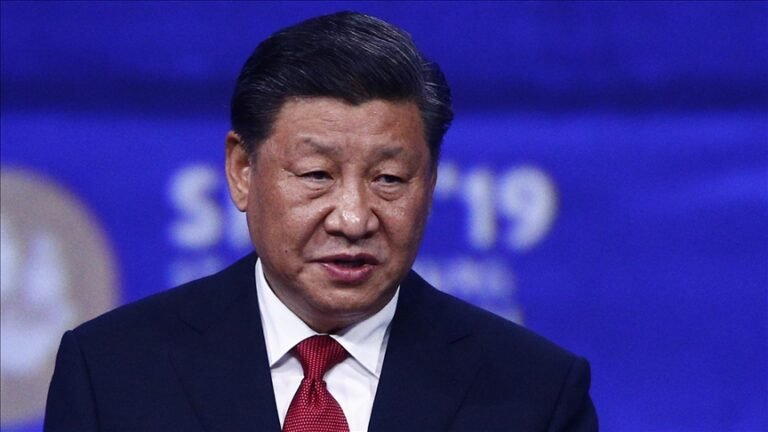
In a video statement, posted by Chinese Foreign Ministry spokesperson Mao Ning on X, the Chinese president, apparently speaking at an event, said the Chinese people have never bullied, oppressed, or subjected the people of any other country, and never will.

Chinese President Xi Jinping also warned never to underestimate the strong resolve of the 1.4 billion Chinese people to defend their interests.

“By the same token we will never allow any foreign force to bully, oppress or subjugate us,” Xi said without naming the US or Trump, who started the trade war with Beijing.

“Anyone who would attempt to do so will find themselves on a collision course with a great wall of steel forged by over 1.4 billion Chinese people,” Xi also said.

China has also filed a fresh lawsuit with the World Trade Organization against the Trump administration’s latest tariff hikes, according to the country’s Commerce Ministry.

Meanwhile, there are analysts who said that Trump’s imposition of higher reciprocal tariffs was meant to make the trading partners of the United States to go to the negotiating table.