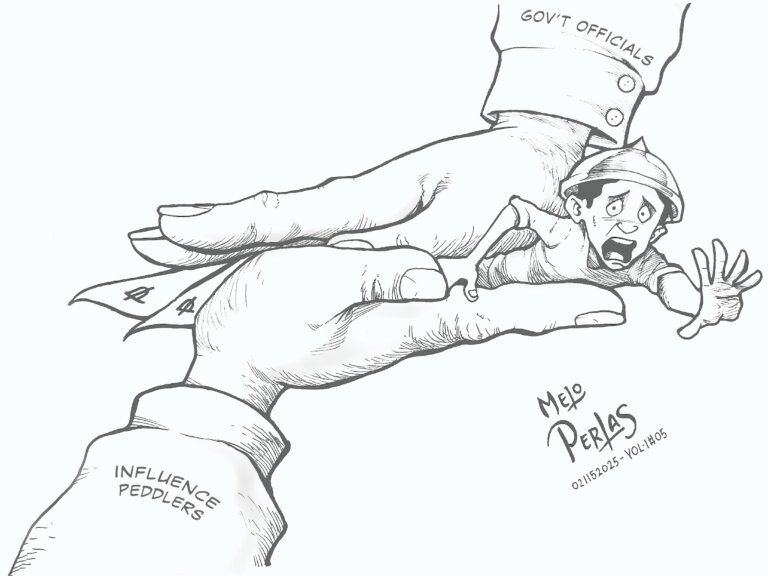
A crowd of almost two million, members of the Iglesia ni Cristo (INC) gathered at the Luneta rallying for “peace”. It was purportedly organized to tell the government, particularly addressed to the Congressmen, not to impeach the country’s second highest public official.
There have been three calls for her impeachment by various people’s organizations and concerned citizens because the Congress Quad committee had found her probable misuse (or robbery?) of millions of the people’s tax-money, while concurrently heading both the Office of the Vice President and the Department of Education. More specifically, the rallyists did not want the people’s representatives to push for the said official’s impeachment, because there are more pressing problems the country faces that need to be resolved as a priority.
What the well-meaning Filipino people of goodwill on the sidelines, who have been observing the Quad committee for weeks now, know and understand is that the people’s tax-money was probably misused or stolen for personal gain. Thus, the erring top official, under the law, needs to be impeached, a venue where she can fully explain the issues against her. Others felt she should be charged for “plunder”.
[P]eace in the Philippines can be achieved only when every Filipino or at least the majority of Filipinos, enjoy good governance — SOCIAL JUSTICE.
FOR SOCIAL JUSTICE
If the crowd really wanted peace, then they could have called on the government to make sure the country’s public officials, especially in this case, the vice president, to serve as models of observing the law, particularly in spending the people’s money judiciously.
Aside from calling for justice and accountability for public officials’ stealing the people’s money, or engaging in corrupt practices, the crowd could have also called to account VP Sara’s father for his “crimes against humanity” for implementing his brutal “war on drugs” resulting in more than 30,000 victims of EJKs and Red-tagging.
In this connection, they could have also cited the active participation in Rodrigo’s “war on drugs” killing spree of his then Davao Police chief, now Sen. Bato de la Rosa, close colleague Sen. Bong Go, several PNP/AFP generals, his son Rep. Polong Duterte, and others.
Indeed, if peace was the real concern of the crowd in Luneta, then they could have called for the government to work seriously for Social Justice, where the decades-old income inequality or massive poverty have plagued more than half of their fellow 119 million Filipinos.
They could have called on the government to provide jobs for the jobless and decent wages for the laborers, farmers, fishermen, informal workers and the IPs.
Then Filipinos will no longer consider themselves poor, if they are able to buy a kilo of rice for P20, because they are employed with decent jobs and fair wages, plus having their own home, and enjoy a situation where the education of their children is assured, as well as adequate healthcare for their families.
In short, PEACE in the Philippines can be achieved only when every Filipino or at least the majority of Filipinos, enjoy good governance — Social Justice.
THE PHILIPPINE REVISED Penal Code embarks on jail terms for those who have messed up, as an approach primarily designed to reform people found guilty by any court of law for commission of criminal acts.
As to how the penal system in the Philippines could reform people behind bars is another question.
The government figures on congestion of jail facilities under the auspices of the Bureau of Corrections (BuCor) and the Bureau of Jail Management and Penology (BJMP) says it all. Deplorable is an understatement to describe the inhumane condition of thousands of inmates billeted in 477 jail facilities across the archipelago.
Interestingly, there are two jail classifications. BuCor hosts seven facilities for people who have been convicted of crimes.
The rest of the jail facilities are for those who remain innocent until proven guilty. These jails include holding centers in police stations, provincial jails under the auspices of the host province and the BJMP jails.
The concept of the jail system is reformation… so when the right time comes, they would be (ready for)… reintegration to the society where they once were part of.
COMMON DENOMINATOR
There’s one common denominator in the country’s 477 jail facilities — congestion. The prisoners, referred to by the government as Persons Deprived of Liberty (PDL), are cramming up for space and services in facilities where they are supposed to remain until the jail time is served.
Interestingly, many are under the impression that spending time in jail is a punishment. Well, maybe to some extent.
The concept of the jail system is reformation. PDLs are supposed to undergo reformation embarking on various approaches, so when the right time comes, they would be well enough and ready for the so-called reintegration to the society where they once were part of.
So what’s keeping PDLs from being released? For sure, neither BuCor nor the BJMP would allow an inmate to walk out of the facility unless the court says so.
SNAIL-PACED PROCESSING
According to a group which calls itself Aid-Dalaw Nationwide International Movement (AIM), more than 10,000 convicts billeted at the New Bilibid Prisons (NBP) in Muntinlupa City have spent more than the jail time prescribed by the court in its decision.
The group blamed BuCor for its snail-paced processing of release orders for PDLs who have served their time in accordance with the court decision.
Same predicament hounds PDLs in BJMP-supervised jail facilities. Oh yes, they too have been there long enough — and beyond the jail time corresponding to the penalty of the crime had they pleaded guilty on their first day in court.
The judiciary could hardly comply with the 180-day trial period because of the volume of cases collecting dust in various courts.
To note, there are only 959 courts sprawling Luzon, Visayas and Mindanao. There’s no way they could wrap up hearings with tens of thousands of cases filed on a day to day basis.
IN THE 4TH QUARTER 2024 survey of business executives, their top worry is still corruption, followed by education, the economy, ease of doing business (EODB), climate change, cybersecurity, and dealing with local government units.
These concerns were voiced at the 77th inaugural meeting for newly-elected president Alfredo S. Panlilio of the Management Association of the Philippines last January 16.
The survey, conducted late last year, showed fewer MAP members or 45 percent saying that corruption is a top concern for 2025. This was slight down from the previous survey where 47 percent said corruption as a top concern.
Education followed with 38 percent of MAP members identifying it as a top concern, rising from only 25 percent in the previous survey.
Another 33 percent of MAP members said they are concerned about the economy this year, a big reduction from the 40 percent being concerned in 2025 compared to the results of the previous survey.
Last year’s cluster… has been merged… not so much because there is less to do, but because our hope is that in focusing, we sharpen impact.
FOUR THRUSTS
Panlilio thus cited four thrusts for MAP to address the top concerns namely: member engagement; country competitiveness; environmental, social, and governance (ESG) and shared prosperity, and investing in the youth.
“Last year, there were five thrusts. This year, we will merge it into four. Last year’s cluster on innovation, technology, and digitalization has been merged into the cluster on country competitiveness,” he said as he explained that “not so much because there is less to do, but because our hope is that in focusing, we sharpen impact.”
Panlilio said the MAP will also continue working with the Anti-Red Tape Authority to address issues on corruption, EODB, and LGUs.
MAP members also expressed concerns about dealing with LGUs, versus 13 percent in the previous survey.
He recalled that when he was still in PLDT Inc. during the pandemic, “we had some issues also, but ARTA came in a big way to help us. Actually, there was a directive by the President then to improve connectivity, and one of the hindrances at that time was the licensing and business permits.”
“There were like, 30-plus signatures that were needed to do a project. And because of ARTA, we were able to cut that process down,” he added.
He noted that any project that requires LGU involvement typically experiences delays.
“It is hard. We are talking about telco, power, and any project related to some involvement with LGU where there’s always a delay,” he said.
VITAL REFORM PROPERTIES
Panlilio said that during his term, MAP will continue to participate actively in ARTA’s programs to address corruption and ease of doing business.
Member engagement will continue to ensure the “relevance” of the topics and issues covered in the MAP general membership meetings or GMMs in order to engage the membership in a more meaningful way.
“We will cover relevant topics and developments so as to benefit the members, their companies and the economy. We will hold 1 to 2 GMMs outside Metro Manila, so we can engage our members in the Visayas and Mindanao,” the MAP president noted.
MAP will also pursue “vital policy reforms” through executive or legislative action that will eliminate corruption, improve ease of doing business, ensure food security through agricultural productivity, and sustain an enabling business environment for local and foreign investors.
On ESG and Shared Prosperity, he assured the public that MAP will continue advancing environmental, social and governance principles and “fostering Shared Prosperity” as a key strategic thrust for the year.
“By integrating sustainable practices, promoting ethical leadership, and driving inclusive growth, we aim to create long-term value for MAP members and all other stakeholders. We will continue pushing for the discourse and activities to champion responsible business, uplift communities, and contribute to a resilient and equitable future for the Philippines,” Panlilio added.
On investing in the youth, MAP will continue campaigning against malnutrition and child stunting and advocating for the government and the private sector to pursue relevant education, health and wellness programs, particularly for the youth.
“The objective is for the youth to become productive members of society, with competitive skills and capacity that will ensure a progressive economy of the future,” he said.
ABRAKADABRA…WHAT THE HECK! ‘Tis just a hoaxical, nonsensical word blurted out by magicians – or so we think.
But, mind you, the word has a deep and fascinating etymological history, more than we thought of.
From my past seminary study of theology (whence we studied Hebrew, Latin, and Greek), I’ve learned about the following etymological meanings of “Abrakadabra”:
1. Abrakadabra in Hebrew means “I will create as I speak.”
2. In Aramaic, “Avra Kehdabra” means “I create like the word.”
3. The gnostic term “abraxas” turns up in both Latin and Greek; and it’s similar to the first letters of the Greek alphabet, Alpha-Beta-Gamma-Delta.
4. The word’s origins likely stem from the Hebrew word for God, “Ab” or “Abba” (Father); “Ben” means son; and “Ruach Acadosch” means the Holy Spirit.
Thus, no wonder, further to my past learnings, in Hebraic perspective, “uttering the word” does not make any distinction between the “utterer” and the “word”. In other words, there is a necessary unity between the “spoken word” and the “speaker”, between the “messenger” and the “message”.
With these etymological ramifications, I’m impelled to draw some insights on the ineffable power of words… They are meant to create, not to destroy.
In the Bible, hence, for God to create the world, it only took Him to utter, “Let there be light…etc.”
With these etymological ramifications, I’m impelled to draw some insights on the ineffable power of words.
One, be careful with our words we must. They are meant to create, not to destroy.
In my past graduate studies in Mass Communication, I’ve learned one basic principle: Communication is irreversible or unrepeatable.
This principle applies to interpersonal as well as organizational and mass communication. In the interpersonal level, a hurting remark on a colleague, intentional or not, can spell a broken relationship. In the organizational sphere, a badly written or tactless memo can trigger an employee to resign or even seek legal redress. In the realm of broadcast and print media, no amount of “erratum” rejoinder or correction notice can erase or undo an erroneous (factual or otherwise) print or broadcast news story. This is true likewise with the ever-pervasive social media – and thus we have the proverbial forewarning, “Think before you click!”
Similarly, in our interpersonal life, negative or harsh words can, apart from breaking up relationships, leave a lasting and unforgettable scar on others – even if they are forgiven.
Proverbs 18:21 rightly said it: “The tongue has power over life and death, those who like speaking will eat its fruit.”
Two, minding about the awesome power of words, we can harness them to promote the greater good in us and in others. Sincere verbal affirmations meant for ourselves and others are never wasted – they have always remained “magical” for us, for others, for the world.
Lastly, the “greatest or highest good” that words can offer are those for God (prayer) and of God. Remember, “Heaven and earth will pass away, but my words will never pass away (Matthew 24:35).”
In sum, the following lines are truly spot on:
“Watch your thoughts, for they become words.
Watch your words, for they become actions.
Watch your actions, for they become habits.
Watch your habits, for they become character.
Watch your character, for it becomes your destiny.”
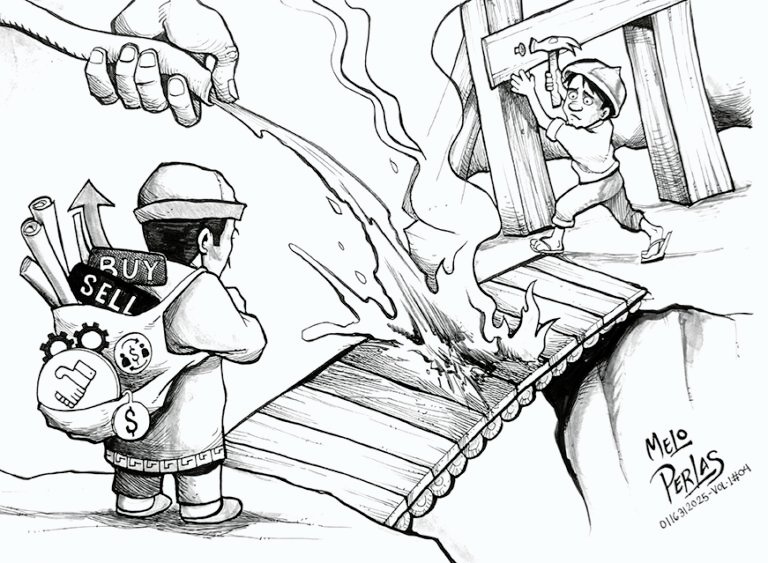
CITING the humongous cost of governance amid duplicity in functions among government agencies, a proposed legislative measure that was filed last year has emerged into a congressional priority seeking to streamline the bureaucracy.
While the Senate Bill 890 or Rightsizing National Government Act, never delved on politics of compromise, patronage, and convenience, the legislative proposal seemed logical as politicians —local and national— have transformed government positions into some sort of reward. Or, maybe, it is a payback in lieu of supporting a candidate.
In some cases, enterprising crooks standing close to the “powers that may be” facilitated government appointment at cost, lest we forget the controversial “appointment for sale” which dragged the name of former executive secretary Vic Rodriguez into the brouhaha.
For one, there is truly a need to streamline government operations to improve efficiency and ensure that resources are utilized effectively.
Taking cue from the figures coming from the Senate —where the bill was filed— government personnel had ballooned from 1,590,757 in 1998 to 1,968,855 in 2022. The data doesn’t include positions in the local government including casual and temporary employees.
The government has grown so much that it consumes money that we could have spent on services badly needed by the poor and suffering citizens.
According to Sen. Francis Escudero who authored the bill, government spending for personnel services had bloated from P205 billion in 1998 to P1.397 trillion in 2022.
Such an enormous amount is almost three times as much as the 1998 national budget.
Speaking of rightsizing, Escudero’s legislative proposal should not be focusing on the bloated government workforce but must instead take a closer look into the duplication, if not overlapping functions and jurisdictions among agencies.
One perfect example perhaps is the case of the national government agencies like the Bureau of Customs which has previously been entangled in a peculiar situation inside the Subic Bay Freeport Zone.
Under the Republic Act 7227 which converted the former US Naval Base into a freeport zone, Subic is considered a separate customs territory. As such, it is beyond the taxing or assessment function of the BOC.
However, RA10863 or the Customs Modernization and Tariff Act mandates the BOC to collect revenue, protect the country’s borders, and facilitate trade embarking on incoming and outgoing shipments, which we all know is taking place inside the freeport zone.
METRO Manila’s rapid development is good, especially for adjoining provinces as it rolls economic activities that could no longer be accommodated in the densely populated National Capital Region (NCR).
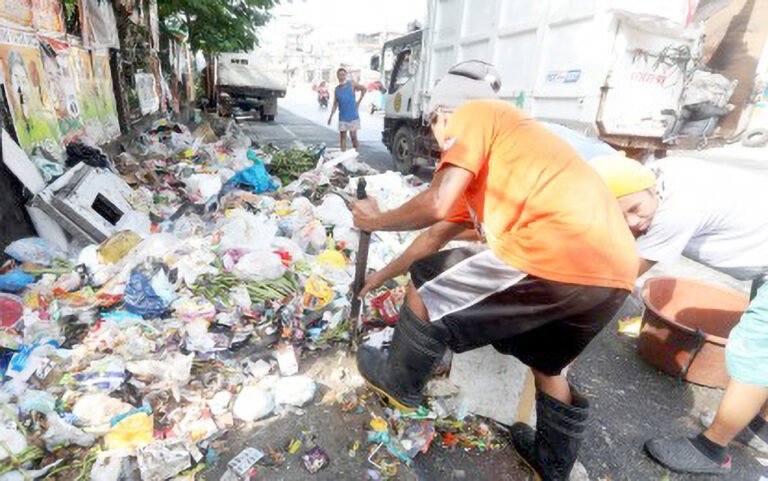
Aside from these, Metro Manila also gets to accumulate 16,000 tons of garbage per day being dumped somewhere – in “engineered landfills” located in Montalban town and another in Navotas City.
Interestingly, the Rizal Provincial Sanitary Landfill in Montalban is located adjacent to an old repository of Metro Manila garbage – the Payatas dumpsite.
HUMONGOUS GARBAGE
Solid waste management remains a major challenge specifically in urban areas. Improper waste disposal, inefficient collection and lack of dumping facilities are among the dominant concerns.
Unless addressed, wastes generated from various sources will have seriously impact on the environment such as ground and surface water contamination, flooding, air pollution, and spread of diseases.
In the 2020 estimates, NCR alone generated over 16,000 tons of waste daily. Solid waste volume is expected to double by 2030. A sizable proportion of the refuse is openly burned, further worsening the quality of the city’s already heavily polluted air, or dumped in rivers, creeks, and the Manila Bay.
Quezon City, based on Metro Manila Development Authority’s database, contributes 3,600 tons of garbage daily. This is the biggest representing 29 percent of the daily solid waste output in the metropolis. The cities of Manila and Caloocan follow.
The constant increase (in garbage bulk) could be attributed to the “frail enforcement and compliance with the law”.
SHUNNING SEGREGATION
The tremendous volume of garbage coming from Metro Manila goes to Montalban dumpsite in mixed forms. This means wastes are not segregated in violation of Republic Act 9003 of 2000 or the Ecological Solid Waste Management Act.
While existing laws mandate that non-organic waste like metals and plastics must be segregated and channeled to accredited materials recovery and recycling facilities (MRF), the truth is that the government does not have the capability to process the bulk of Metro Manila’s garbage.
In the absence of government-operated MRFs, the bulk of metals and plastics goes to junk shops that sell these to factories manufacturing and remanufacturing plastics, metals and other non-biodegradable trash.
But not all non-biodegradable garbage could be sold to the junk shops. Rejects are believed to be dumped in open trash pits or in waterways.
ENGINEERED LANDFILLS
RA 9003 aims to reduce waste through a policy framework for local government units.
The objective of the law is to reduce waste by 25 percent, establish integrated solid waste management plans, develop effective local strategies, and build partnerships with other stakeholders. Nowhere in the law prescribes the need to construct the so-called “engineered landfills.”
The law also embarks on effective waste management, including collection, treatment, and disposal of solid waste. This measure promotes recycling, composting, re-use, and recovery; waste diversion and recycling, requiring segregation at source and separate collection system.
PARTIALLY INEFFECTIVE
In May of 2023, the Commission on Audit (COA) described RA 9003 as “partially ineffective.”
It has failed to achieve its goal: to reduce generated waste. Instead, COA observed a “steady increase” in solid waste generation through the years.
The constant increase, COA reported, could be attributed to the “frail enforcement and compliance with the law.” The government agency cited political, financial, and technical limitations of LGUs and other implementing agencies.
MORE INCONSISTENCIES
“Inconsistent implementation” of waste segregation and waste diversion was also noted by COA. A significant presence of mixed wastes had been found in landfills.
The condition, the COA reported, reduced the capacity of MRFs for diversion, “causing the waste volume in landfills to exceed capacity and shorten serviceable lifespans.”
As of 2011, the country only had 11,637 total MRFs that served 16,418 — 39.05 percent — out of 42,046 barangays.
Some 245 total operational sanitary landfills only catered to 478 or 29.25 percent out of 1,634 LGUs. As a result, operation of the illegal dumpsites could not be avoided.
The pandemic left a lasting mark on our collective consciousness, reshaping how we live, work, and relate to nature. In Iloilo, a surprising but delightful trend emerged amidst the chaos: the rise of “plantitas,” “plantitos,” and local farmers.
What started as a therapeutic escape for many Ilonggos soon bloomed into a profound movement—a rediscovery of the ancient wisdom that planting our food is one of the most sustainable ways to uplift provincial life.
This realization is particularly evident in the Municipality of New Lucena, where Mayor Liecel Mondejar-Seville’s dynamic leadership continues to inspire sustainable living through innovative programs. Her Liderato nga Masaligan sa Serbisyo(LMS) program, in collaboration with SEA Inc. and other Civil Society Organizations, underscores a pivotal message: backyard farming isn’t just about growing food; it’s about cultivating resilience, community, and a sustainable future.
A WAKE-UP CALL
For many Ilonggos, the pandemic was a wake-up call emphasizing self-reliance and environmental stewardship. With food security becoming a global concern, backyard farming emerged as a practical and empowering solution.
Urban homes turned into green sanctuaries, while rural families revitalized traditional farming practices. What began as a trend now serves as a blueprint for resilient living—a culture of growing your food, conserving resources, and fostering community collaboration.
Eco-cultural tourism, a movement that aligns with Iloilo’s identity, adds another layer to this story. In New Lucena and other towns, the blend of ecological preservation and cultural heritage has become a cornerstone for economic recovery.
Tourists are no longer just spectators; they are participants in sustainable lifestyles. From joining farm-to-table activities to engaging in hands-on planting workshops, visitors get to experience the interconnectedness of nature, culture, and community.
With food security becoming a global concern, backyard farming emerged as a practical and empowering solution.
The Eco-Cultural Tourism Connection
New Lucena’s farming initiatives also weave seamlessly into the town’s eco-cultural tourism narrative. Visitors are invited to explore local farms, learn traditional planting methods, and even savor dishes made from homegrown ingredients. This approach not only highlights the municipality’s agricultural prowess but also promotes the cultural heritage of Iloilo.
This not only strengthens local food systems but also fosters a culture of healthy living that complements Iloilo’s eco-tourism identity.
FOR SUSTAINABILITY
The success of New Lucena’s programs serves as a valuable blueprint for other towns and provinces. To amplify these efforts, several prescriptive steps can be considered:
1. Scaling Partnerships: Collaborating with more NGOs, private sector stakeholders, and government agencies can provide additional resources and innovations. For instance, introducing microfinancing for small-scale farmers or tech-driven solutions like soil sensors can further empower local agriculture.
2. Educating the Youth: Schools can incorporate agricultural education into their curricula, ensuring that the younger generation understands the importance of food security and sustainability.
3. Strengthening Eco-Tourism: Towns can develop farm-to-table tourism packages that combine immersive farming experiences with cultural performances, turning eco-tourism into a multi-faceted attraction.
4. Incentivizing Sustainability: Local governments can offer tax breaks, grants, or recognition programs to households and businesses that actively promote backyard farming and eco-tourism.5. Promoting Indigenous Crops: Highlighting the cultural and nutritional value of native plants ensures biodiversity while creating a unique identity for Iloilo’s food tourism.
Let’s be real! Right after New Year’s Day, on January 2nd, it feels like the day after an epic “walwalan”. You wake up, eyes still blurry from a holiday cheer hangover and those New Year’s resolutions feel like a distant memory. You vowed to become health-focused, conquer Mt. Pulag, and eat only air (joke, but you know what I mean). But by mid-January, the gym membership gathers dust, and the “healthy eating” plan disappears faster than you can say “leche flan”!
Why do we always fall off the wagon?
1. We aim for the impossible.
“This year, I’m running a marathon!” (Newsflash: you haven’t even run up a flight of stairs without huffing and puffing).
2. We think willpower is magic.
“I’ll wake up at 5 AM every day and do yoga! No problem!” (Spoiler alert: you’ll hit the snooze button at least five times). Your brain says yes, but your body says no.
3. We bail faster than a two-year-old kid’s attention span.
Most people become disheartened at the tiniest inconvenience and let their entire plan fall apart. “Eh, maybe next year.”
[D]itch the “all or nothing” attitude … stick to your goals (or at least try!).
This year, let’s try something different.
1. Start small, like really small.
Instead of becoming a gym rat, resolve to exercise for 10 minutes daily. If you make it to 5, congratulations! You’re already ahead of last year. You may also try walking to the neighborhood mini-mart instead of driving or taking a tricycle.
2. Find your “bakit”.
What’s your real reason for wanting to change? To fit into that old pair of jeans? To finally impress your crush? Write it down and stick it on your fridge (or better yet, your bathroom mirror). Remind yourself why you started. Whatever it is, keep that motivation close!
3. Make a plan.
Schedule workouts like you would a chikahan session with your friends. Get a workout buddy for support, preferably one who’s “makulit” and loves nagging. Positive peer pressure!
4. Track your progress (without obsessing).
Use apps like WeightWatchers or MyFitnessPal to monitor your food or workouts. But don’t weigh yourself daily. Don’t let it stress you out.
5. Forgive yourself (seriously).
Life loves throwing plot twists. Did you miss a workout? Indulge in a plate of chicharon bulaklak or down can of soda? Don’t give up! It’s okay! Tomorrow is a new day.
Here’s the secret to success:
Forget relying on motivation (it’s as reliable as the traffic along EDSA):
1. Focus on creating habits that stick. Anchor new habits to your routine.
Exercise after brushing your teeth, or pack your gym bag the night before.
2. Reward yourself (but not with food!).
Treat yourself to something nice (new shoes, a massage, or a day at the beach) when you accomplish a goal.
The bottom line? Your New Year’s resolutions won’t demand superpowers. No need to save the world; just save yourself some time for self-improvement. It’s about making small, sustainable changes.
Every step, even if it’s just taking the stairs instead of riding the elevator to the next floor, or adding one veggie to every meal, counts. So, ditch the “all or nothing” attitude, and let’s make this year the year you actually stick to your goals (or at least try!).
Maligayang Bagong Taon! (And hopefully, a healthier one!)
Malacañang’s last-minute tweak of the P6.326 trillion budget for 2025 is still unpopular and viewed by many as the “most corrupt” in history as they vowed to challenge it before the Supreme Court, especially since only P26 billion of the P288 billion congressional insertions, aka pork barrel, still deprives the education sector. The Constitution mandates that the bulk of budget for any given year goes to education, healthcare, and social services.
President Marcos signed the budget bill into law on December 30, not 10 days earlier as scheduled, touting the record-high spending program to spur economic growth and reduce poverty.
Marcos vetoed P194-billion worth of items from the Department of Public Works and Highways — the usual “parking lot” of congressmen for their pork barrel funds — and unprogrammed funds (another source of corruption), which can be easily funded depending on their importance and impact.
However, analysts and stakeholders are not convinced that the veto would address irregularities and inequities as the budget failed to meet the constitutional requirements to prioritize health and education.
EDUCATION AND HEALTH
The education budget was made to look bloated by including funds allocated for non-primary and secondary education, like those for the police and military academies, technical-vocational institutions, and others. But in reality, P10 billion for computerization programs of the Department of Education were slashed.
The budget also slashed completely the proposed P74-billion subsidy for the Philippine Health Insurance Corporation (PhilHealth), which subsidises the medical expenses of paying members and shoulders the costs for non-paying indigent groups.
In essence, members paying monthly premiums are being made to shoulder the entire cost of PhilHealth subsidies for non-paying members when the government must be shelling out premiums for them.
With the reduction, the entire 2025 health budget is only P267.8- B, only the fifth highest among all sectors.
Pro-health advocates are set to contest this soon as this violates the universal healthcare and sin tax laws which both mandate allocation to PhilHealth of annual funds from tobacco products and sweetened beverages.
Malacañang may already be preparing for any constitutional challenge that may arise from this…
BEYOND THE PRESIDENT’S POWER
Economist Dr. J.C. Punongbayan said: “I think this is an opportunity for the Supreme Court to lay down the rules concretely because the computation for the education sector’s budget has been a matter of tradition rather than any concrete rule.” The President has no power to restore funds slashed by Congress.
Most of the budgets for education, healthcare and social services were diverted to local infrastructure projects like roads and bridges in the legislators’ districts and unconditional cash transfer like AKAP. Others surmised that this could be for political ambitions.
Under AKAP, minimum wage earners and poor Filipinos get P5,000 each to tide over inflation with a total allocation of P20 billion in 2024. In the budget, this was hiked to P26 billion.
LEGISLATED ELECTIONEERING
As budget analyst Zysa Suzara explained, pork barrel — the practice of allocating public funds for local projects in exchange for constituents’ support for the legislator — is a “legislated electioneering designed to fool the citizenry.”
Suzara also counters Marcos’ claim that the 2025 budget promotes human capital development as “this claim is difficult to reconcile with significant reductions in health and education.”
Marcos’ assurance that AKAP guidelines would be carefully crafted by the departments of labor, social welfare, and economic development was deemed “too late as lawmakers have already been promoting and implementing AKAP since 2024,” Punongbayan stated.
Over the years, he added, that most legislators have ties with construction companies concerning government infrastructure projects.
Punongbayan told the Straits Times: “So I expect the level of patronage in the run-up to the 2025 elections will be quite colossal.”
ANTI-POOR PROVISIONS
The defunding of PhilHealth and reduction in DepEd’s budgets were perceived as “anti poor.” Budget allocations and provisions disproportionately disadvantage the marginalized and neglecting the needs of the poor, worsening current inequalities.
Reduction of the budget for the Office of the Vice President to P733 million was seen as “political persecution” of Sara Duterte and the potential implications for the coming 2028 presidential polls.
Apart from criticizing the budget “as a manifestation of systemic corruption,” it also showed government’s failure to fulfill its commitment to transparency and equitable development, said economist Dr. Anna Rosario Malindog-Uy. Former Sen. Panfilo Lacson, who is running in the administration’s senatorial slate in May, said: “Malacañang may already be preparing for any constitutional challenge that may arise from this — both before the Supreme Court and the court of public opinion.”
There seems to be no stop to the increase of the country’s cash supply and equivalents, according to latest data from the Bangko Sentral ng Pilipinas (BSP).
However, the government is seen continuining struggling with a budget deficit, according to a unit of a credit rater.
As of October this year, the BSP said that domestic liquidity (M3) grew by 5.5 percent year-on-year to about ₱17.7 trillion in October, the same pace as in the previous month (as revised). On a month-on-month seasonally-adjusted basis, M3 marginally increased by about 0.5 percent.
Domestic liquidity refers to cash, and other assets that can be converted to cash such as listed equities.
Not surprisingly, the increased domestic money supply saw increased lending by financial institutions to consumers.
The BSP said consumer loans to residents grew by 23.6 percent in October from 23.4 percent in September, driven mainly by increased credit card and motor vehicle loans.
STRUGGLING WITH CASH
And while the Philippines in general is expected to still have a lots of cash next year, the same cannot be said of its government.
This, as the national government still continues to incur budget deficits, necessitating the borrowing of funds from local and international sources.
As of the latest, Bureau of Treasury (BTr) said that the budget deficit during the first nine months of the current year, or from January to September, amounted to P970 billion, which is 1.35-percent lesser compared to the P983.5 billion logged in the same period last year.
The government incurs a budget deficit when spending exceeds its revenues.
The actual budget deficit for the period was lower than the P1.1-trillion target, said BTr. “The total deficit for the first three quarters was 9.08 percent short of the P1.1 trillion program for the nine-month period and is at 65.36 percent of the P1.5 trillion revised full-year program.”
Admittedly, the Philippines’ fiscal recovery has already fallen behind regional counterparts and the latest budget certainly does not help this cause.
GRAPPLING WITH DEFICIT
Nonetheless, BMI Research, a unit of the Fitch Group, warned in October that the Marcos administration will have to grapple with a growing budget deficit.
The government has set this year’s budget deficit ceiling to equivalent of 5.6 percent of total economic output, and lower to 5.3 percent next year. The ultimate aim is to lower it to 3.7 percent by 2028.
“Admittedly, the Philippines’ fiscal recovery has already fallen behind regional counterparts and the latest budget certainly does not help this cause,” BMI said, adding the scenario will reverse the fiscal consolidation gains of the government.
When it comes to overall debt, BMI said the Marcos administration will likely fail to achieve its goal of having a debt to gross domestic product (GDP) ratio of 55.9 percent by 2028. “We believe this target is unlikely to be met.”
DRAMATIC FISCAL ADJUSTMENT
The country’s debt-to-GDP ratio stood at 61.3 percent as of November, which is above the 60-percent threshold for developing nations. The highest debt-to-GDP ratio of the Philippines was logged in September 2004 or at 72.3 percent while the lowest was recorded in December 2019 at 39.6 percent.
The BTr itself said in its recently released 2023 annual report that a return to the pre-pandemic debt-to-GDP ratio of 39.6 percent is “technically and politically infeasible.”
It also claimed that this would require a more dramatic fiscal adjustment where the NG must run consistent budgetary surpluses, which would deprive the country of the needed public investments to take advantage of its demographic trends and structural reforms to improve its business climate.
THE GOOD NEWS …
The good news is the government is less dependent on foreign borrowings, or with its overall debt comprising 75 percent owed to domestic sources. Its total debt stock stood at P16 trillion as of end-October.
And with the country’s liquidity remaining robust, this means that the government can easily source borrowings locally.
In fact, the latest Treasury bills auction by the BTr was oversubcribed by almost four times, and easily fetched P15 billion, indicating that money seems to be overflowing in the Philippines in general.
“Every society gets the kind of criminal it deserves. What is equally true is that every community gets the kind of law enforcement it insists on.” — Robert Francis Kennedy
DURING HIS TERM in office as the country’s chief executive, former President Rodrigo ‘Rody’ Duterte insisted that the Philippine Offshore Gaming Operators (POGOs) were beneficial to the Philippines as it generated much needed revenue for government and created employment opportunities for unemployed Filipinos who desperately needed income in order to provide for their families and give them a decent life.
But this wasn’t so because it turned out that most of those who were employed by the POGOs were foreign nationals and moreover, instead of doing legitimate business, the POGOs got involved in criminal activities like human trafficking, illegal drugs, cyber scams and prostitution.
The proliferation of the POGO hubs became a thorn which jeopardized the well-being of Filipinos and even corrupted government and police officials who were lured to them because of big bribes and payouts that reportedly reached hundreds of millions of pesos.
This is now realized as a bitter pill that has given us serious lessons that we hope our government should have learned from and must avoid in the future.
Our government should by now have found the obvious lessons from the POGO fiasco, among them the need to legislate a law that screens and scrutinizes new industries or business platforms considered “alien” or “first-of-its-kind” before they enter and establish themselves in the country.
Same principle applies at the local level — dad, mom, son, and daughter and in-laws — at the helm of the purse.
AN INDUSTRY CZAR
Due diligence must be done to study the pros and cons of their existence rather than just embrace them or become ecstatic based on the rosy picture of the positive economic impact, job creation and opportunities, inclusivity and tendency to spawn allied businesses that they offer.
However, if an existing law or policy is already in place, perhaps amendments should be made to address potential problems and issues by installing safeguards and preventative measures. This is akin to some industry practices (e.g., manufacturing) where if any change or “something new” is introduced in an existing process (i.e., personnel, material, method, and environment), a thorough evaluation is needed before any change is approved.
And depending on the nature of the “new industry” being introduced, appropriate agencies should be chosen to do the task that covers doing the standard review process of business or industry plan based on existing procedure, assessing support and compliance based on country’s resources, environment, infrastructure, existing laws and regulations and establishing protocols and flow to prevent or mitigate potential problems and issues with assigned agencies to handle.
Aside from these, the government should initiate to set a benchmark with other countries with a similar industry to learn from them about problems and issues experienced while assigning a lead agency or “industry czar” that would spearhead and coordinate the above tasks and finally, submit a summary report on findings and recommendations subject to review and approval by the President.
FOR your comments or suggestions, complaints or requests, just send a message through my email at cipcab2006@yahoo.com or text me at cellphone numbers 09171656792 or 09171592256 during office hours from Monday to Friday. Thank you and mabuhay!
THE last five decades saw the deterioration of democracy in the Philippines as elections have been limited to the rich and famous, especially in Congress where politicians —mostly — are relegated as “benchwarmers.”
Taking the case of the Senate, not one represents the genuine poor. Worse, the Chamber has become a family affair of the Villars (Cynthia the matriarch and son Mark), the Ejercitos (Jinggoy and half brother JV), and the Cayetanos (Alan Peter and sister Pia).
All others except for three are direct descendants of political dynasties lording over turfs outside the Senate hall.
Senate President Francis Escudero’s family is lording over Sorsogon, while Sen. Juan Miguel Zubiri is believed to be the kingpin of Bukidnon. Others on the list include Francis Tolentino whose family has expanded its control over the entire Cavite Province.
We also have Sen. Aquilino Pimentel III of Cagayan de Oro trying to annex his turf to Marikina City, Nancy Binay whose family has been lording over Makati City since 1986, Sherwin Gatchalian who has effectively turned Valenzuela City as their playground, and Loren Legarda whose family remains prominent political force in Batangas.
There’s also presidential sister Imee Marcos in the Senate, along with Sen. Bong Revilla whose family is deemed the biggest political dynasty in Cavite, Sen. Raffy Tulfo who is expected to be joined soon by his brothers Erwin and Ben, Robin Padilla of Camarines Norte, and Joel Villanueva of Bulacan.
Same principle applies at the local level — dad, mom, son, and daughter and in-laws — at the helm of the purse.
MORE DYNASTS
The same principle applies to the members of the House of Representatives, where at least 90 percent are direct descendants of political clans lording over the provinces where they came from.
In view of an upcoming election, politicians forming part of dynasties have mastered the art of putting one over the 1987 Constitution and that of Republic Act 7160 (Local Government Code of 1991) which provides term limitation.
How? They swap posts, just like Sen. Cynthia Villar who is eyeing to represent Las Piñas City at the Lower House and her daughter Las Piñas Rep. Camille Villar who is running for senator replacing the outgoing matriarch.
Much like the Villars are the Binays – outgoing Sen. Nancy wants to take over Makati City as her younger sister Abby sets sights on her Ate’s Senate slot.
Such practice has long been a norm among politicians at the House of Representatives — Speaker Martin Romualdez representing Leyte and wife Yedda Marie representing a partylist group, former Quezon City Rep. Alfred and younger brother PM trading positions, and others whose names may not be able to fit in the space allotted for my column.
Same principle applies at the local level — dad, mom, son, and daughter and in-laws — at the helm of the purse.
I guess Filipinos are not yet ready for principled politics.
CONSUMERS OF GOODS and services pay transaction fees for almost everything. Using an ATM (automated tellering machines) not of their bank branch; sending money to others (whether through ATM or digital banking); paying bills and ordering goods online (using GCash or Pay Maya), and sending money to another person — all these have transaction fees tucked in.
In all these, banks and digital banks reap the benefits — not even doing anything, unlike the bygone years of physical branch banking.
Whether such fees are ethical and moral is not the question, the point remains consumers or users of such technological advancements are being made to pay so high a price for such services.
ONE-TIME SUBSCRIPTION FEE
It’s a good thing, and kudos to Bangko Sentral Governor Eli Remolona, for even considering replacing transactions fees with one-time subscription fees, with the former being slapped on us per transaction which further reduces our hard-earned income only for banks to get very rich.
Remolona broached the idea of adopting a subscription fee model in a speech before the Rotary Club in Makati recently.
He said BSP’s goal is to boost financial inclusion. “A subscription fee … can help maximize these externalities.”
Remolona defined externalities as: “If you look at the payment system, every time you add one more participant, that’s a cost. It’s a small cost, but that extra participant adds value to the whole system. You have a bigger network of participants. That’s what we call a network externality.”
BSP earlier said it wants to remove transaction fees for person-to-person electronic fund transfers and payments to small businesses. “Since 2023, it has been encouraging banks to formalize the removal of these fees to help boost digital payments,” Remolona said noting a certain pushback from banks. Well, of course, they would lose millions on these.
A shift toward subscriptions would reduce reliance on transaction fees and provide a more stable pricing structure for both consumers and merchants, he added.
P2P E-FUND TRANSFER
The BSP has also been pushing for the removal of transaction fees on person-to-person (P2P) electronic fund transfers and payments to small businesses to encourage wider adoption of digital payments. Now that online transactions are being taxed heavily, why add more burden to the merchants?
Remolona noted that for transactions between individuals, BSP is considering zero transaction fees up to a certain threshold, which have yet to be decided through consultations.
While transaction fees have been a common model in digital payments, Remolona stressed that focusing solely on these fees is not the optimal approach. “It’s not about the fees per transaction. I think that’s the wrong model.”
The BSP is currently in discussions with key digital payment providers, including GCash and Maya, to explore the feasibility of a subscription-based payment system. Remolona said that the central bank would work with industry stakeholders to develop an effective solution.
THE RIGHT DIRECTION
BSP data showed the value of transactions done through automated clearing houses InstaPay and PESONet jumped by 35.2 percent to P15.62 trillion as of end-November from a year ago.
Digital payments made up 52.8 percent of the volume of retail transactions in 2023, higher than the 42.1 percent share in 2022.
The central bank wants online payments to make up 60-70 percent of the country’s total retail transaction volume by 2028, in line with the Philippine Development Plan, Business Mirror said.
Yes, hope is meaningful both to theists and atheists alike.
Marxist philosopher Ernst Bloch defines hope as “an urge to happiness, freedom, non-alienation, the golden age, the land of milk and honey, a perpetual ‘elsewhere’, the ‘new heaven and new earth’, the ‘homeland’.”
Philosophers agree that hope is rooted on “desire”, and have wantonly scoured among the crowd of desires for the “primary one” – the one that keeps history going and is powerful to overturn the structures of society.
Freud pegged such on the basis of sexual desire; Adler invoked will-power; Jung pinpointed the vaguer need for intoxication; and others appealed to the need for self-preservation.
But for Bloch, the driving force or elementary energy of hope is hunger – which is the source of constant improvement, a revolutionary force that makes necessary the ceaseless search for new structures to satisfy it.
Hope is a virtue by which we desire the kingdom of heaven and eternal life as our happiness placing our trust in Christ’s promises and relying on the help of the Holy Spirit.
Thus, for Bloch, hope is possible even without God – the kind of hope that is based on “militant optimism”, one that is neither passive expectation nor venturesome activism, but emerges from society’s repressed elements.
Now, let’s segue to Christendom’s Jubilee of Hope 2025, as declared by Pope Francis.
No denying, this easily resonates with the Filipinos’ lofty sense of hope, augured by such expressions like “Habang may buhay, may pag-asa”, “May awa ang Diyos” or “Diyos na ang bahala”.
Though dismissed by others (foreigners particularly) as fatalistic or defeatist, truth is – as has been proven time and again – our deep religiosity and faith in God have imbued us with an enduring hope which no calamity or catastrophe can crush or extinguish.
But, what’s exactly the Jubilee of Hope 2025’s essence or reason for being?
CBCP president, Pablo Virgilio Cardinal David, in his “Pastoral Reflection for the Jubilee of Hope 2025”, explains:
“Pope Francis chose the theme ‘Pilgrims of Hope’ for this Jubilee Year to restore a climate of hope and trust, to fan the flame of hope that has been given us, and help everyone to gain new strength and certainty by looking to the future with an open spirit, a trusting heart and far-sighted vision. Hope does not disappoint because it is anchored on the love of God that been poured out into our hearts through the Holy Spirit (Rom. 5:3-5). WE HAVE HOPE BECAUSE WE ARE LOVED. He has loved us first (1 Jn. 4:10). His boundless love is the source of our infinite hope.”
And, lastly, hope is not only geared on our present dispensation but for eternity. “Hope is a virtue by which we desire the kingdom of heaven and eternal life as our happiness placing our trust in Christ’s promises and relying on the help of the Holy Spirit.” (CCC #1817).
In sum, the following lines from St. Teresa of Avila are truly spot on:
“Hope, O my soul, hope. You know neither the day nor the hour. Watch carefully for everything passes quickly, even though your impatience makes doubtful what is certain, and turns a very short time into a long one. Dream that the more you struggle, the more that you prove the LOVE THAT YOU BEAR YOUR GOD and the more that you will REJOICE ONE DAY WITH YOUR BELOVED, in a happiness and rapture that can never end.”
WHILE THE ENTIRE nation is busy with fast and furious developments in the political front, a controversy is also brewing between government regulators, and the many players and stakeholders of the burgeoning vape industry.
According to a study conducted by U.S. and India-based think tank Grand View Research, the Philippines e-cigarette and vape market size was valued at US $113.6 million in 2023.
The same study said that the local vape industry is estimated to grow at a compound annual growth rate (CAGR) of 18.7 percent from 2024 to 2030.
This growth trajectory reflects the increasing popularity of vaping especially among young Filipinos, which could hasten the demise of the local tobacco industry that is already on death throes.
Among the factors that contribute to the rapid growth of the vape industry in the Philippines is the huge investment in marketing by big manufacturers, primarily focusing on presenting vaping as a lesser harmful option than traditional tobacco products.
Moreover, the availability of diverse flavors and product types, from e-liquids to vape pens, that caters to a wide range of preferences, also contribute to enhancing their consumer appeal.
THE HARD TRUTH
For its part, the Philippine government has apparently already accepted the hard truth that vape products are here stay.
So, it has crafted laws and regulations aimed at controlling the sale and distribution of vape products to protect public health, and also collect proper taxes from their manufacturers and suppliers.
Under Republic Act 11900 or the Vaporized Nicotine and Non-Nicotine Products Regulation Act, manufacturers or importers must register their products and secure licenses to operate.
They are also required to adhere to packaging standards and pay duties and taxes, and were earlier given an 18-month transition period to comply with the regulations laid down in the Vape Law.
But vape industry insiders say that majority of manufacturers and suppliers have yet to secure their Philippine Standard (PS) Quality and/or Safety Mark and Import Commodity Clearance Sticker from the DTI, because of what they described as cumbersome process.
As a result, many of them have resorted to operating illegally which they eventually learned to embrace, especially since the scheme effectively frees them from paying required duties and taxes to the government.
ILLICIT PRODUCTS According to Customs Intelligence Division Chief Leon P. Mogao, they have already seized P6.5 billion worth of illegal vape products, mostly from China, as of the end of August 2024.
For his part, Minimal Government Thinkers president Bienvenido S. Oplas, Jr. said the government is losing around P5 billion yearly from the sale of illicit vape products.
Authorities expect the situation to worsen in the coming months amid the emergence of various forms of smuggling which illegal traders employ to avoid paying required taxes.
This alarming situation prompted various organizations among them the health advocacy group SafeVape PH to step forward and call on vape industry players and stakeholders to be more responsible.
The group made the call as the Department of Trade and Industry’s (DTI) Office for the Special Mandate on Vaporized Nicotine and Non-Nicotine Products’ (OSMV), recently approved the application for accreditation of Guandong Boopower Industry Co. Ltd. (GBPI), and its local agent One Tech Ventures OPC.
SafeVape PH pointed out the fact that GBPI managed to obtain its license would belie claims by some suppliers and manufacturers that the process of accreditation was almost impossible to comply.
“GBPI’s case was clear example that securing licensed certificate from OSMV is not impossible as some industry players want the public to believe,” SafeVape PH said in a statement.
It added that just like any other regulatory agency, OSMV requires applicants to submit all necessary documentary requirements before they are granted certifications and licenses.
TRANSPARENCY AND ACCOUNTABILITY SafeVape PH pointed out that it is imperative that everyone in the vape industry must comply with the requirements of the law to ensure the health and safety of the general public, especially young adults who comprise the majority of vape users.
It also advocates for transparency and accountability while also supporting educational campaigns to inform the public about the risks and benefits of vaping, product safety, and responsible usage.
The Bureau of Internal Revenue (BIR) meanwhile, has been running after illegal retailers and resellers to discourage vape smugglers from bringing in their products into the country.
BIR Commissioner Romeo D. Lumagui Jr. said illegal vape dealers continue to ply their illicit trade despite multiple warnings, prompting them to conduct regular raids and product seizures.
However, because of potential huge money that could be made, many suppliers still dare to operate without the necessary licenses, undermining government regulations and posing risks to consumers.
Indeed, the vape industry represents a significant economic opportunity, with a rapidly expanding market and a growing consumer base.
REGULATED ENVIRONMENT
But the challenges posed by illegal suppliers and the need for stringent regulations cannot be overlooked.
As the government continues to enforce laws and crack down on unlicensed sales, the future of the vape industry will likely depend on balancing growth with public health considerations.
By fostering a regulated environment, the Philippines can support a sustainable vape market that prioritizes consumer safety while allowing businesses to thrive.
EVERY TIME AN inquiry on agricultural smuggling is conducted, the congressional probers almost always demand a list of big-time smugglers, not the small fry. They would brusquely stress: “Give us the names of the biggies,” they insist in jostling and clamorous fashion. Exasperation is written on their faces, and, in no time at all, decibels are raised to much higher levels than is necessary. Sometimes, they even ignore their own rules. And they tend to forget their real role: to investigate in aid of legislation or to pursue their collective oversight power. In either case, the rights of resource persons are supposed to be respected, nay, protected, under the fundamental law of the land.
Yet, we often see how these probers have disrespected the rights of witnesses and resource persons. Some behaved as if they could just licentiously go beyond the bounds of decency and reason—they yelled, they hollered, they insulted, and at times, they even threatened their invited resource persons.
What happened to the old notion of chivalry markedly present and observed in both houses of Congress in the days of yore? Has raising voices during legislative inquiries been proven to effectively ferret out “the truth, the whole truth, and nothing but the truth? When has the truth ever become a function of decibels?
Or, is anyone ready to defer to Sulla, who asked the Roman Senate: “When did the Senate ever represent the people?”
But the congressional probers’ impatience over the slow progress of their investigation is not misplaced. For, despite the awesome powers of Congress, the economic saboteurs—and their “indispensable partners” in government, still run rings around these legislative committees. In not so few instances, government witnesses and resource persons were noticed to have mastered the art of stonewalling, of feigning ignorance, of opting to be labeled as tanga rather than to be implicated as kasama in shenanigans being investigated. These stuffs when strutted before the solons will certainly get someone’s goat. And understandably so, because the legislators are—just like us, enraged by the ebb and flow of agricultural smuggling.
Big-time smugglers include those individuals whose identities ring a bell that reverberates in every nook and cranny of the customs zone, albeit their names do not appear on customs documents. And for the Customs authorities to not know them, identify them, let alone hold them accountable for the systemic fraud on customs is—to the legislators—unacceptable. And it doesn’t sound like a valid excuse that the biggies’ names do not appear on customs papers.
Put simply: if it looks like a duck, walks like a duck, quacks like a duck, smells like a duck, in all likelihood, it is a duck! Cast the dragnet pronto!
Hence, this question: Is it, at all, possible for anyone whose name does not appear in any customs document, to be indicted for agricultural smuggling—large scale or otherwise?
The Customs Modernization and Traffic Act (RA 10863), the new law that expressly repealed the 1978 Tariff and Customs Code of the Philippines may be instructive, thus:
“Smuggling refers to the fraudulentact of importing any goods into the Philippines, or the act of assisting in receiving, concealing, buying, selling, disposing or transporting such goods, with full knowledge that the same has been fraudulently imported, or the fraudulent exportation of goods. Goods referred to under this definition shall be known as smuggled goods.” [Emphases ours.]
Verily, one does not need to be the one who fraudulently imported the goods—the “act of assisting in receiving, concealing, buying, selling, disposing or transporting such goods, with full knowledge that the same has been fraudulently imported,” will make one liable for smuggling, as defined by the CMTA.
RA 10863 classifies the commission of smuggling into two (2) types, namely:
“Outright smuggling [which] refers to an act of importing goods into the country without complete customs prescribed importation documents, orwithout being cleared by customs or other regulatory government agencies, for the purpose of evading payment of prescribed taxes, duties and other government charges.” [Emphases supplied.]
and,
“Technical smuggling [which] refers to the act of importing goods into the country by means of fraudulent, falsified or erroneous declaration of goods to its nature, kind, quality, quantity or weight,for the purpose of reducing or avoiding payment of prescribed taxes, duties and other charges.” [Emphases supplied.]
Clearly, smuggling, in its many nuances, is predicated on fraud—actual fraud. And, devoid of any pretentious habiliment, the fraud contemplated by law “must be intentional fraud, consisting of deception willfully and deliberately done or resorted to in order to induce another to give up some right,” said the Supreme Court in CTA v. Farolan. But, then, again: must the author of the fraud have to be named in the accompanying importation documents for him to be indictable?
FOR the longest time, China and the Philippines have maintained quite a formidable partnership which dates back to the 12th century.
The partnership drove many of the Chinese traders to marry locals and settle down in the country where they established businesses. Their concentration established in 1594 in Binondo, Manila, the oldest Chinatown in the world.
Referred to as Chinoys, they enjoy the legitimacy of being Filipino citizens.
Moving forward, Chinoys proved quite an indomitable factor in the Philippine economy amid thriving business and providing employment to locals.
When former President Rodrigo Duterte took helm at the Palace, the government’s foreign policy paved the way for more Chinese to enter the Philippines – some of whom were even appointed in the government.
Under his administration, Chinese businessmen cornered juicy government contracts for which Duterte went under fire for “favoring” Chinese over the Filipino entrepreneurs.
When Ferdinand Marcos Jr. assumed the presidency, citizenship procedures were eased and many Chinese became citizens. Ironically though, the government purge against Philippine Offshore Gaming Operators (POGO) somehow affected this and the tourism sector.
Tourism Secretary Cristina Frasco averred there is, indeed, a significant decrease in the arrivals of Chinese nationals visiting the country — from one million in 2021 to just 300,000 currently.
Drawing conclusions from the DOT data, the suspension of the electronic visa adversely affected the Chinese market for the Philippines.
In May of last year, the Philippines tightened its visa requirements for Chinese tourists amid a high number of fraudulent applications received in its embassy and consulates in China.
During his third State of the Nation Address (SONA) in July 2024, Marcos declared a total ban on POGOs as their operations had been linked to criminal activities.
Aside from tourism, also shaken was employment of Filipinos working for Chinese POGOs.
The purge created a negative perception among legitimate Chinoys. Some are now being accused of price manipulation, hoarding and profiteering via competition-decimating cartels — not to mention the escalating tension at the West Philippine Sea.
From how it looks, the administration seemed overreacting to the detriment of the Philippine economy, unless the government has a viable contingency plan that would cover the losses that the Philippines would incur as a result of the sweeping purge.
Burning bridges with China doesn’t resolve the problem.
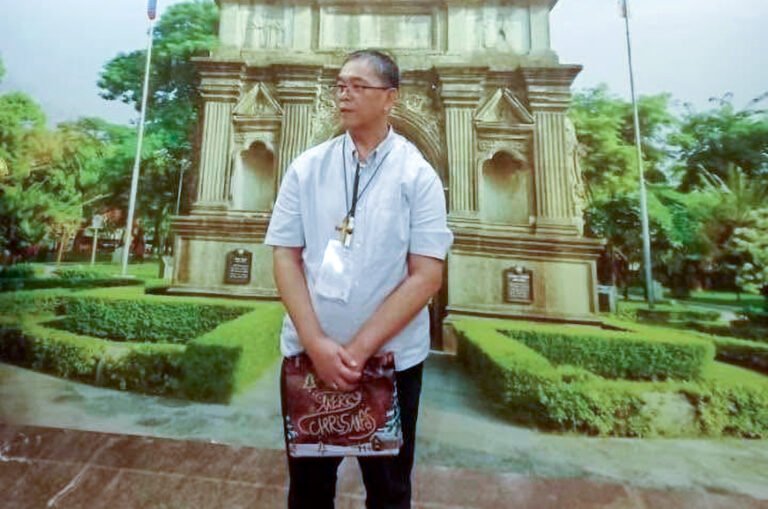
anuary 15, 2025 is the installation rites day of Canon Law expert Bishop Nolly C. Buco as the new bishop of Catarman diocese to be held at the Our Lady of Annunciation Cathedral in Catarman, Northern Samar.
Simply named“Nolly”, this resonates very well with his persona: humble, unassuming, and magnanimous.
Paradoxes Along The Way
Rightly so. Because his journey from his seminary formation to the priesthood was hatched in humble beginnings. A lowly probinsyano from Southern Leyte, Bishop Nolly’s journey to the episcopate is full of paradoxes: 1) While he failed to qualify in entering two theology seminaries, he later ended up earning a Master’s degree in Dogmatic Theology, a Licentiate in Canon Law, and two Doctorate degrees in Canon Law (JCD) and in Juridical Science (JSD);
2) Erstwhile hopping from one seminary to another and spending a regency period out of the seminary to work in a government agency, he unexpectedly ended becoming a bishop, and even as chairman of CBCP’s Episcopal Commission on Canon Law, and 3) while he struggled with poverty and could hardly afford to pay his seminary fees, he still survived it all to climb the ladder of episcopacy, and becoming the Judicial Vicar of the National Tribunal of Appeals of the Catholic Bishops’ Conference of the Philippines.
Buco took his AB Philosophy from Sacred Heart Seminary in Palo, Leyte, and upon graduation, he was expecting to be sent by his Bishop to Cebu’s San Carlos Seminary for Theologate. But, as his first travail, he was not recommended for admission.
After spending some few months with the diocese, Bishop Nolly decided to come to Manila and look for a job. He landed as a Development Officer of the Department of Social Welfare and Development (DSWD) NCR office, and was assigned in Tanay, Rizal, where he met the late Bishop Protacio Gungon, the first bishop of Antipolo diocese.
A lowly probinsyano from Southern Leyte, Bishop Nolly’s journey to the episcopate is full of paradoxes…
Strong Vocation
In early 1989, after two years with DSWD, he approached Bishop Gungon and expressed his intent to continue his priestly studies. Gungon thus recommended him to take the entrance examination at the San Carlos Seminary in Makati City. Again, for the second time, he was deemed not qualified.
Gungon then advised the young Buco to apply at the Immaculate Conception Theology Seminary, Guiguinto, Bulacan, where he spent four years of theological studies.
Bishop Nolly recalls his first year of Theologate at the Bulacan seminary: “When I entered the seminary, my initial payment for my board-and-lodging came from the minuscule separation pay I received from DSWD. My parents could not even afford to provide my monthly allowance for my miscellaneous needs.” He was able to finish his Theology formation through the support of a kind benefactor.
On October 18, 1993, he was ordained priest by his gracious mentor, Bp. Gungon.
Further Studies
Throughout his priestly journey, he laboriously pursued several studies: finished his Master’s degree in Dogmatic Theology; earned his Licentiate in Canon Law (JCL) at UST Manila; obtained his Doctorate in Canon Law (JCD), also from UST, in 2004; attended the PhD program in Anthropology at the University of the Philippines, Diliman, and obtained his Doctorate in Juridical Science (JSD) from San Beda University Graduate School of Law.
Bishop Buco is author of the recently published book, “Freeing Distressed Couples From Guilt: The Need for State Recognition of the Church’s Declaration of Marriage Nullity.” His upcoming book is “Shepherding Christ’s Faithful: A Pastoral Guide on the Juridical Recognition of Pious Associations and Administration of the Church’s Temporal Goods.”
Bishop Nolly Buco. From humble beginnings to the Episcopal See of Catarman.
WHAT was once admired for its “check and balance,” the so-called democracy has significantly deteriorated in view of the recent developments that saw the Philippine Congress forcibly taking over the “purse” of an agency mandated to promote public health.
For one, the 1987 Constitution clearly defines the separation of powers among the pillars of government – the executive, the legislative, and the judicial branches. However, the constitutional provision embarking on the separation of powers doesn’t seem to apply under a predominantly politicized government.
Looking Back
Prior to the congressional deliberation, the Philippine Health Insurance Corporation (PhilHealth) was at the receiving end of nasty remarks over the transfer of its P60 billion unused funds to the National Treasury.
Next came P89.9 billion also in unused funds, which however was stopped by the Supreme Court in October when it issued a temporary restraining order.
According to Sen. Bong Go, in his capacity as chairman of the Senate committee on health and demography, such a transfer is uncalled for even as he cited the law which created PhilHealth.
Go stood firm that health funds should not be used for any other purposes.
National Budget
As both chambers – the Senate and the House of Representatives via the Bicameral Conference Committee, hurdled on passing the 2025 General Appropriations Bill (GAB), P6.352 trillion national budget was approved.
Now, with the 2025 GAB already approved by both legislative chambers, PhilHealth ended up being whipped by the legislative branch which decided not to give a dime to the agency. Nadah, zero-subsidy.
To some extent, there are reasons to believe that PhilHealth underperformed as manifested in its own data which shows low absorptive capacity, or its inability to dispense funds for mandated projects and programs due to systems inefficiency, sans the imperative digitization, principally in the provinces.
Biggest Loser
Taking the case of the late Ramon Angelo of Angono, he died of a curable ailment just because he couldn’t afford the cost of treatment. He was an employee of the Philippine Long Distance Company Co. (PLDT) until he retired.
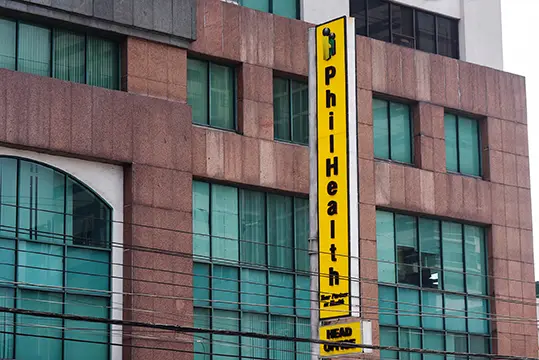
Joel Larain of Pasig City also died because his family doesn’t have much left after paying rent, utility bills, and food. Both Angelo and Larain are PhilHealth members.
It only goes to show that the people are the biggest loser in what appears more like a political maneuver to get hold of the proposed P74 billion PhilHealth subsidy, for which the House of Representatives was able to double funds at their own discretion.
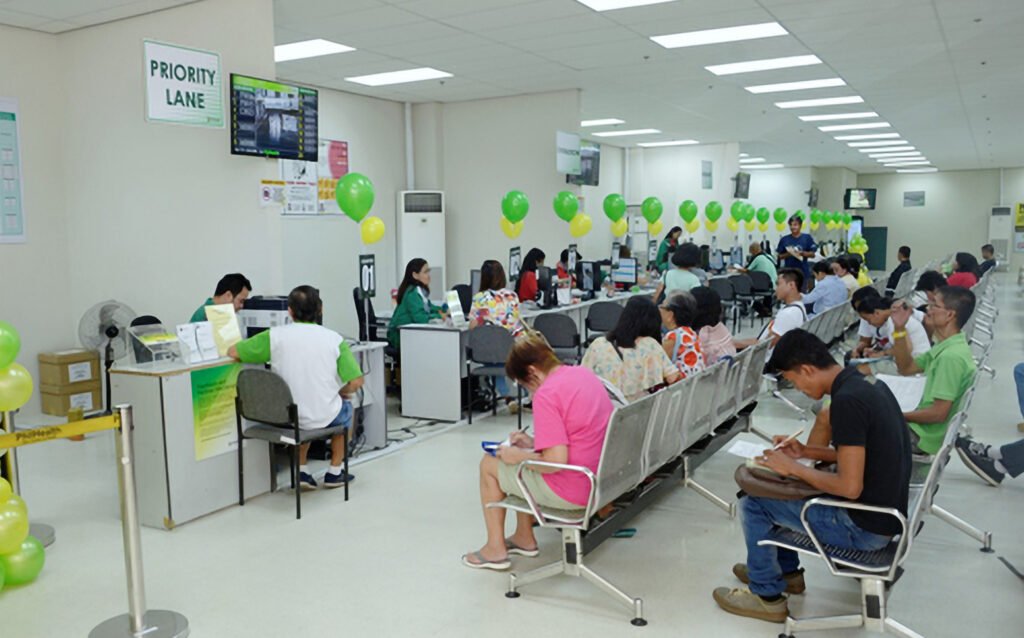
And to think, no less than the President himself has admitted that the people in the province wait endlessly in vain for PhilHealth assistance for their healthcare needs because the system is clogged.
From how it looks, the Philippine Congress is demolishing PhilHealth because it does not do its job well…
Compelling Figures
Under the 2025 National Expenditure Program (NEP) that was submitted to Congress in June by the Department of Budget and Management (DBM), the House of Representatives proposed P16.3 billion.
After the closed-door bicameral conference, the lower chamber emerged as the biggest winner as House leaders were able to secure twice as much – a whopping P33.7 billion.
What’s more alarming though is the amount for the so-called “unprogrammed funds. Under the DBM’s 2025 NEP, the administration proposed P158.7 billion. After the bicam convened, the amount bloated to P531.57 billion.
Thanks to PhilHealth and other vital government agencies which were made to suffer budget cuts four months away from the midterm election.
Reinvented Pork
Where would this erstwhile subsidy/budget of Philhealth go?
Naturally to the unprogrammed funds, which are disguised as priorities of local governments. In other words, patronage funds for the 2025 midterm polls or Pork Barrel 2.0.
Prof. Cielo Diaz Magno-Gatmaytan, former finance undersecretary, wrote an appeal to the senators to reconsider with a dire warning that this would further endanger the healthcare insurance system of the country – for the premium payments of the elderly, the PWD and indigents – and the working class who have been chipping in an escalating Philhealth premium (with no share from the government) in monthly contributions to the system that they have not even availed of in their lifetime.
Her appeal was ignored.
Not Much Left
In trying to justify the zero-subsidy slapped on PhilHealth, several senators claimed that the state insurer has reserve funds amounting to P600 billion.
However, what these senators failed to check are the liabilities incurred by the agency — the mounting current (and future) liabilities with hospitals dating back from the first quarter of 2020. It was during these trying times that most patients are being turned away unless they are paid by the agency in full.
Just because Philhealth members are forced to pay monthly premiums, then the agency can manage with what it can collect, a very flawed assumption.
The goal of setting up Philhealth is to reduce out of pocket expenses for healthcare of the citizenry that even with Philhealth, people still pay 50 to 60 percent for their healthcare out of their pockets.
Philhealth also requires emergency room services before it can reimburse the patient. Outpatient, laboratory, medicines and dental care are also not covered. In reality, Philhealth only shoulders 10 percent of medical bills of patients. So who really benefits?
Demolishing PhilHealth
From how it looks, the Philippine Congress is demolishing Philhealth because it does not do its job well, in which case leadership change with people who can improve the system is more appropriate than to completely remove its funding.
Remittances due to Philhealth from the Sin Tax Law, PAGCOR and PCSO are being channeled to Medical Assistance for Indigent and Financially Incapacitated Patients (MAIFIP) – where those who have less are forced to beg with politicians for funding of their healthcare, a tedious documentation process which require finding padrinos to get a bigger chunk to cover their medical expenses.
With the 2025 midterm election fast approaching, such a process translates to patronage politics, short of vote buying. Since 2023, funding for Philhealth has been decreasing while MAIFIP has been ballooning, which is hidden in the budget of the Department of Health and government hospitals.
MAIFP is absolutely not transparent, discretionary and depends on the relation of politicians to the appealing patients.
Viable Options
One recourse is to again ask the Supreme Court, come January, to declare the congressional whip as unconstitutional, particularly on the decision of both chambers not to give a dime of subsidy to PhilHealth.
Under existing laws, PhilHealth gets a slice from the government collection from the sin taxes paid for by cigarette and alcohol companies, as well as shares from revenues generated by the Philippine Charity Sweepstakes Office (PCSO and the Philippine Amusement and Gaming Corporation (PAGCOR).
Another option is the presidential veto. However, chances of reinstating PhilHealth subsidy seemed slim as no less than President Ferdinand Marcos Jr. has already made his position clear by justifying the removal of Philhealth subsidy — unless PhilHealth gets to beg on their knees and strike a compromise deal.
It’s this time of the year when local Tyches, fortune tellers, seers, and even naysayers err, soothsayers, declare their prophecies, doom or boon.
Madam Suzette Arandela, a famous psychic and feng shui expert, has joined the crowd of prophets to present the oracle of 2025 to the public.
What is in store for the Filipinos in the Year of the Wooden Snake?
Intriguing, Mysterious
According to Madam Suzette, a Gumaca, Quezon-born Fortuna, the Year of the Wooden Snake is quite intriguing.
Contrary to common beliefs that snakes are backbiters and evil, these reptiles, according to her, symbolically, are also tender and passionate like a sweet lover as a tamed cat hugging a human like the romance pictorial of Hollywood actress Nastassja Kinski with a python curling in her whole body or Filipino actor Harold Montano caressing a serpent in a photoshoot while it is coiling to his face, neck and his entire body.
For people who are born in the Year of the Snake, says Madam Suzette, “their characteristics are being mysterious, secretive but warm and compassionate, especially in romance.”
Engagement and Marriage
Madam Suzette warns that Snake people have a bad side to themselves. “The negative trait of snake people is being unpredictable,” she said.
Snake years are 1929, 1941, 1953, 1965, 1977, 1980, 2001, 2013, and 2023.
The Year of the Wooden Snake starts January 29, 2025 and ends February 16, 2026.
Also a geomancer, Madam Suzette predicts that this year is not-so-good for marriage as it entails a lot of challenges, travails and failures. “It’s not a good year for marriage,” Arandela proclaims.
There is the other side of the coin, though. “But proposal for engagement is a lucky one,” Arandela quips.
“2025 is a mix of positive and negative traits.”
Contrary to common beliefs that snakes are backbiters and evil, these reptiles… are also tender and passionate like a sweet lover as a tamed cat…
Economy and Environs
In her layman’s viewpoint, the seer sees a successfully mild economy. “Our economy needs careful and wise planning and thinking. The officials and the ordinary citizens must think twice before they pursue certain business ventures.
“In investing in an open business, think twice because financial growth is slow especially during the first and second quarter of the year.
“Beware of scams. It will be worldwide in scope,” gushes Madam Suzette.
“Business will be profitable if one invests in fashion, online store, health, fitness and wellness, home care services, food entrepreneurship, beauty enhancement and cyber security services.”
The country will continue to experience natural and man-made catastrophes.
Positive Side of ShowBiz
In show business, Madam Suzette predicts colorful and awe-inspiring events like the popularity of Alden Richards and Kathryn Bernardo which she says is insurmountable. “Gagawa pa sila ng third episode ng kanilang pelikula. Kung matagimpay ang ‘Hello, Love, Goodbye’ at ‘Hello, Love, Again,’ mas magiging matagumpay ang ikatlo nilang pagtatambal.”
She also gives credence to the reel and real-life relationship of Dingdong Dantes and Marian Rivera. “Mas magiging matagumpay pa rin ang mag asawang Dingdong at Marian kahit saanmang larangan.”
Madam Suzette pins hopes on former popular stars. “Ang mga dating sikat na mga bituin ay sisikat pa rin bagamat hindi na masyado. Sa mga young ones na nakatutok ang interest ng publiko. Kaya huwag mawawalan ng pag-asa ang mga sikat noon pero hindi na pinapansin ngayon dahil sa kanila na babaling ang publiko.”
Ugly Side of ShowBiz
On one hand, she says, 2025 will be the year of breakups and separations between couples, married or not.
“It’s sad but they will happen. Many celebrities will be caught unaware of their private lives. Many of them will be overtaken by their own controversies. More scandalous private lives of celebrities will happen in the Year of the Wooden Snake. Kahit na anong gawin ng mga taong nakapaligid sa kanila, wala ring mangyayari dahil ang nagdedesisyon sa kanilang mga ginagawa ay ang kanilang mga sarili mismo. Mas sinusunod ng mga artista ang kanilang damdamin kaysa kanilang isip kaya nagkakaganyan ang karamihan sa kanila. Sobrang nakakalungkot,” laments Madam Suzette.
But she suggests that prayers can do a lot of miracles. “Kaming mga psychic ay gumagabay lamang sa kanila (We the psychics only guide them through our pieces of advice).”
Lucky and Compatible
Lucky colors of the year, according to Madam Suzette, are brown, purple, yellow, and red.
Compatible signs for people who are born under the Year of the Snake are Ox, Snake and Rooster.
For animal zodiac signs, lucky this year are those whose signs are Monkey, Rooster, Horse, Rat, and Dragon. For average luck, Ox, Sheep, Snake, Tiger, Rabbit are the frontrunners while the not-so-lucky signs are Pig and Dog.