Sunday, May 10, 2026
Home Blog Page 7

Leaders Gather for Awardees’ Assembly 2026

A DYNAMIC GATHERING of purpose-driven leaders will take center stage at the upcoming Awardees’ Assembly 2026, scheduled on April 18 from 2:00 PM to 4:00 PM at the Quezon City Sports Club on E. Rodriguez Avenue, featuring a highly anticipated “Inspirational Sharing” segment led by distinguished speakers from the Gerry Roxas Leadership Awardees community.

The assembly aims to bring together awardees from across generations in a shared space of reflection, learning, and renewed commitment to public service.

‘The Gerry Roxas Leadership Awardees community continues to play a vital role in shaping leaders dedicated to ethical governance and social responsibility. Events such as the Awardees’ Assembly reinforce this mission by strengthening connections and encouraging collaboration among its members.’

The “Inspirational Sharing” segment, a highlight of the program, will showcase leaders whose lives and work exemplify integrity, excellence, and transformative leadership.

Organizers emphasize that the event is more than a ceremonial gathering—it is a platform for meaningful exchange, where personal narratives of resilience, leadership, and service are shared to inspire continued nation-building efforts.

“Through this assembly, we hope to reignite the spirit of leadership that binds our awardees,” said Anna Liza Gaspar, president of the Gerry Roxas Leadership Awardees, Inc (GRLAinc). “By hearing directly from individuals who have led with purpose and conviction, we aim to inspire others to persevere in their own journeys of service.”

Invited speakers are recognized not only for their professional achievements but also for their enduring commitment to uplifting communities and fostering principled leadership. Their participation is expected to provide valuable insights and spark deeper engagement among attendees.

The Gerry Roxas Leadership Awardees community continues to play a vital role in shaping leaders dedicated to ethical governance and social responsibility. Events such as the Awardees’ Assembly reinforce this mission by strengthening connections and encouraging collaboration among its members.

Please scan the QR code to register.

Sea Of Humanity In Antipolo City

FOR THE LONGEST time, Filipinos have managed to bounce back from all forms of adversities. More than resiliency, the Philippines is also known for immense religious gatherings, which draws millions annually.

Not far from the capital city is a center of Catholic devotion — the Antipolo Cathedral, now referred to as the National Shrine of Our Lady of Peace and Good Voyage.

Unlike any other religious shrines, the Antipolo Cathedral takes the center stage three times a year — the feast day of the Immaculate Conception on December 8, the month-long May festivity for which Antipolo is known for, and the traditional Alay-Lakad which takes place every Maundy Thursday of the so-called “Holy Week.”

The Alay Lakad to the Antipolo Cathedral is a massive annual penitential pilgrimage which starts on the evening of Maundy Thursday. Catholic faithfuls walk their way to church enroute the rolling hills.

RECORD TURNOUT

The highest attendance for the Antipolo Alay Lakad was recorded in 2024 with approximately 7.4 million pilgrims in attendance.

This massive turnout, deemed significantly higher than previous years, compelled the Diocese of Antipolo in 2025 to seek a Guinness World Record for the “Largest Gathering for a Walking Spiritual Pilgrimage in 12 Hours.” 

However, the quest was only able to yield an estimated 5.1 million devotees. The decline from the previous year was attributed to extreme heat.

PREVIOUS YEARS

Data collated by The PH Insider showed a declining number of Catholic faithfuls joining the annual Antipolo pilgrimage after posting a record-high of 7.4 million pilgrims in 2024 

In 2023, about 6 million participants joined as the tradition resumed after being suspended for two years due to the pandemic. Prior to the pandemic, attendance was estimated at 4.2 million. 

Interestingly, the number of devotees joining the pilgrimage seems to be increasing every time the country is facing difficulties.

5.6M AND RISING

As of 3:00 early morning of April 3, 2026, the Antipolo Cathedral estimated some 5.6 million pilgrims had reached the shrine. The initial figure surpassed the 5.1 million attendance that was recorded last year.

Traditionally, the journey starts from Quiapo Church in Manila City to symbolize the historical return of the Virgin’s image to Antipolo in 1954. In recent years though, the EDSA Shrine located at the corner of EDSA and Ortigas Avenue, has become the starting point 

Upon arrival, pilgrims offer prayers, attend mass, and some sleep on the cathedral steps or grounds as part of their devotion.

SEA OF HUMANITY

Citing data from the Rizal Provincial Police Office, this year’s Alay-Lakad saw droves of devotees coming from all directions. Pilgrims perform the walk as an act of penance, sacrifice, and thanksgiving. 

The crowd, it added, is “so thick” that not even a bike would be able to pass through what looks more like a “sea of humanity.”

Taking cue from the Guinness list of world records under the “pilgrimage category,” there are only three countries dominating the category – Iran, Iraq and India.

The Philippines appeared under the category of the most number of attendees in religious holidays – the 2025 Feast of the Black Nazarene which logged 8.1 million participants and the Sto. Nino de Cebu which recorded 3.1 million in attendance in January 2014.

BUSY HOLY WEEK

The phenomenal Alay Lakad is just part of the Holy Week religious activities which kicks off on Palm Sunday until Easter Sunday. 

Other Holy Week activities include processions, reading of the passion (pabasa), passion play (cenakulo), church visitation (Visita Iglesia), crucifixion rites, lenten retreats, reunion of the mother and son (salubong), easter vigil and Sunday mass coinciding with the Christ rising from the dead.

Devotees (mostly young Catholics) come to the pilgrimage capital of the Philippines as a gesture of gratitude for the blessings they have been receiving, for intercession – and for some, a tradition that was passed from one generation to another.

CALL FOR PENANCE 

The Catholic Bishops Conference of the Philippines (CBCP) finds it more prudent to give a premium on penance and faith while preserving the tradition.

The CBCP doesn’t support syncretization with elements of ritual practices not sanctioned by the universal Church, superstitions associated with the occasion and the wrong notion that Holy Week is the best time to go to tourist destinations for a long vacation.

More than devotion, Alay Lakad is something that an Antipolo village chief considers as an ideal time to show some compassion.

“Taga rito na kami sa Antipolo kaya wala na yung elemento ng sakripisyo sa paraan ng paglalakad ng malayo. Pero maraming paraan para maging bahagi ng Alay-Lakad,” says Chairman Jeff Naval Fernan of Barangay Dela Paz, where the long Alay-Lakad trek ends.

He also reminded people in attendance the purpose behind Alay-Lakad – “taimtim na pagninilay sa sagradong paglalakbay.”

Crucifixion Of Juan Dela Cruz


EVER SINCE THE war in Iran was staged in February by Israel with the full backing of America, poor countries and their dirt poor citizenries have had to go through the suffering and crucifixion of high prices of food, declining availability of mass transport because of high fuel cost and the government’s lethargic response to the crisis that affects the majority of Filipinos.

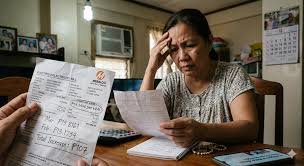
Up to this time, rice prices have been rising almost daily– leaving very little funds for the ordinary people to afford the leaps in prices of vegetables, cooking oil, fish, egg and meat and LPG ,the common cooking fuel– for their families’ use.

Newspapers and television harp on what government officials pronounce about their attempts to improve the situation, but hardly do they make an analysis of how the spiralling prices have been causing more people to cut on their meals, leading to more nutritional and financial hunger, poverty and escalating hopelessness.

Everyone– from market vendors,grocery operators and consumers– are complaining about the daily price escalations but it seems like the government seems to not care about the plight of the general public. There’s too much talk about plans but very little, if any, about real actions on the ground.

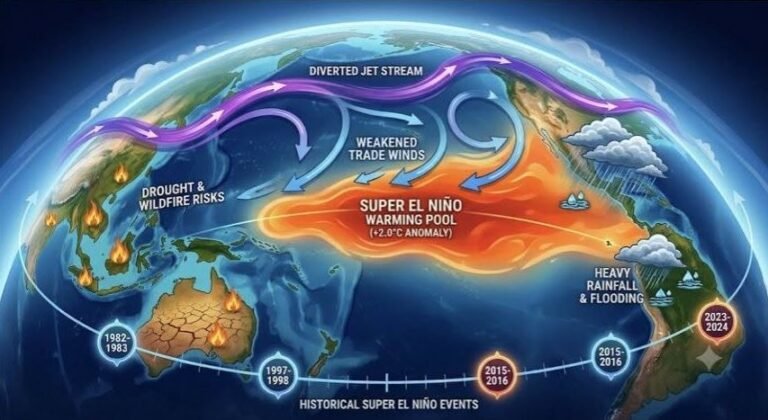
Should the Middle East crisis rage longer reaching the second half of 2026, the country is facing the specter of El NIno– prolonged dry spell– which would add to scourging and misery of the common tao in terms of higher water bills, scarcer water drops from the taps and irrigation water for farms and higher health diseases from dry tongues and throats to rising skin cancers.

PIDS STUDY

A study of government think tank– Philippine Institute for Development Studies– noted that the poorest Filipinos are hit hardest by the global oil shock, not at the pump but at the dinner table, as higher fuel costs ripple through food prices.

A policy note by Adoracion M. Navarro, a senior research fellow at PIDS said the impact of rising oil prices goes beyond transport and electricity but on food costs that could further squeeze household budgets, especially among low-income groups.

While fuel inflation is the initial shock, the bigger risk lies in how higher transport and production costs feed into food prices, which carry a heavier weight in household spending.

The 2021 Family Income and Expenditure Survey of the Philippine Statistics Authority (PSA) showed that the poorest decile spends 64.1 percent of its budget on food as against the 30.9 percent of the richest decile.

This means any increase in food prices is “inherently regressive,” the report said.

“The poorest households, with their high food expenditure shares and limited income flexibility, bear the brunt of second-round inflation effects. In contrast, higher-income households are relatively insulated,” it also said.

The Bangko Sentral reported that March inflation hit 3.1 to 3.9 percent.

PIDS urged policymakers to look beyond aggregate indicators such as GDP growth, inflation, and the current account, warning that these may “obscure the unequal burden” of the shock but more on targeted measures, including direct income or consumption support for poorer households, subsidies for vulnerable sectors, protection of real wages, and efforts to stabilize food supply.

“Ultimately, the central policy problem is not pump prices per se and how to subsidize oil consumption through universal fiscal absorption of the price shock (which benefits higher-income groups more than the poor). The central policy problem is how to address distributional asymmetry to mitigate the socioeconomic impacts of the crisis,” it said.

DA eyes price cap on rice

The Department of Agriculture said it is seriously considering putting a price cap on rice– now retailing beyond government’s SRP (suggested retail prices)– at over P56 and above per kilo, from just P45 a few months ago.

The President said he would soon issue an Executive Order approving the proposed price cap on rice– suggested by the DA and the National Price Coordinating Council of P50 per kilo for imported rice.

Similarly, the price of cooking gas in the country is going up by P10 per kilogram (kg), or P110 for an 11-kilogram cylinder, reported Business Mirror from an interview with LPG Marketers Association (LPGMA) president Arnel Ty with the first hike due today (April 1) initially for P5 per kg or P55 per 11kg cylinder and another upward adjustment on April 7 also for P5 per kilo. “We already implemented a P20 increase recently due to the increasing freight cost or what we call the shipping cost. That and the new contract price are the factors that led to the increase,” Ty said.

LPG prices in Visayas and Mindanao are more expensive due to higher transportation costs. “It is ranging from P100 to P150 per cylinder more expensive than the ones sold in Luzon,” said Ty.

With the increase, the standard retail price of LPG would range from P1,350 to P1,400 per tank in Luzon and around P1,600 per tank in Visayas and Mindanao. Ty said the country’s LPG supply will last until mid-May this year.

P20/k rice now in 627 Kadiwa centers

While the DA proposed a price cap of P45/kg to P48 in 36 major markets of Metro Manila, a check with the markets would show no retailer carrying this rate. Nothing can be found lower than P50 in public markets.

The president called such incidents as “profiteering”  that happened with the surge in pump prices after the United States and Israel attacked Iran last February. “When the price of oil goes up, the price of food follows. That’s what we don’t want to happen,” Marcos said.

He said the Development Budget Coordination Council (DBCC) will meet this week to show their study on the possible impact of the Republic Act 12316, giving him the power to suspend or reduce the excise tax on petroleum products to help the government reduce the price of oil amid the Middle East crisis.

To ensure fresh agricultural and marine products remain accessible to consumers, the government has expanded its P20 rice program, now implemented in 627 centers nationwide. It will also start distributing fuel subsidies to 40,000 farmers and fuel vouchers to almost 100,000 fisherfolks.

El Nino

A looming El Niño in the second half of 2026 threatens to exacerbate the Middle East war’s impact on the global agriculture sector, according to BMI.

BMI, a unit of Fitch Solutions, made the pronouncement after a recent forecast of the National Oceanic and Atmospheric Administration (NOAA) for the El Niño-Southern Oscillation (ENSO).

The NOAA expects El Niño to emerge with a 62-percent probability over June to August 2026 and persist until the end of the year. It also assigns a 33-percent likelihood of a “strong” El Niño to develop in the fourth quarter of 2026.

“An El Niño occurring in H2 2026 would raise drought and flood risks in several major economies, with impacts varying depending on local conditions,” BMI said in its latest report.

On average, the research firm said the last three El Niño events to occur in the reference period have “more than doubled” the share of cropland exposed to droughts in Colombia and Indonesia, while it “nearly doubled” in Australia, Bangladesh, Peru, Thailand, Vietnam, and others.

It added that El Niño also increases the risk to more drought-exposed cropland in markets such as Egypt, Spain, and South Africa.

“Agriculture accounts for a substantial share of national income and employment in many of the affected markets, implying higher risks to economic growth in Q4 2026 and in 2027,” BMI said.

Victory Of ‘Pinikas’ At Sinag Maynila Decentralizing Filmmaking In PH?

HAS THE WINNING of the Visayan film “Pinikas” at the 8th Sinag Maynila Film Festival awards night recently created a gap between Manila-centric and regional filmmaking?

Has it stunted the development of a national cinema scheme?
Or has it cultivated alienation among filmmaking societies in the Philippines? 
Yes and no.

Let us count the ways.

“Pinikas,” translated and subtitled by its filmmakers as “Halved,” is a Visayan-language project about a woman who cares for a fisherman, grapples with poverty and still dreams of a “foreigner father” to save her from bondage won the Best Film plum at the recent Sinag Maynila independent film event.

JURY HEAD JEFFREY JETURIAN (Photo Credit: Armando A. Reyes/Facebook)

Cinema has its own language, to begin with, one that is not explicitly expressed just seen and felt from various elements of the audio-visual experience like lighting, aural design, camera angles, mise-en-scene etc., which is entirely different from a language or dialect spoken by its characters or written onscreen.

‘Cinema has its own language, to begin with, one that is not explicitly expressed just seen and felt from various elements of the audio-visual experience like lighting, aural design, camera angles, mise-en-scene etc., which is entirely different from a language or dialect spoken by its characters or written onscreen.’

In this case, could the indigenous speech create barriers among non-Visayan speakers or listeners?
There are subtitles alright but viewers generally get distracted by reading the character generations at the bottom of the screens.

But since the purpose of a film narrative is to convey meanings to form ideas and impressions, subtitles are inevitable.
They are also ways to integrate in the multilingual local and international film markets.

REGIONAL FILMMAKING

The cinematic language of ‘”Pinikas” brings closer to fellow Filipinos the cultures and other realities of regions for common understanding, a pursuit vis-a-vis aim of the country’s search for national language to achieve progress and national identity.

Film aids as well in the process of assimilation to foster unity that is why the idea of regional filmmaking has reemerged in recent memory.

Which brings to mind: It isn’t true that regional filmmaking has just found it’s space only recently in the main currents of national moviemaking.

Regional filmmaking has existed even before the Pacific War.

In Cebu City alone, there were already movies being produced in the 30s and 40s.

Cebuano filmmaking was alive even in the 50s, 60s, 70s, especially the latter decades when Gloria Savilla was tagged as the Queen of Visayan Movies that paved her way to conquer Manila filmmaking as an actress and later, as producer.

Even Iloilo and Davao had local filmmaking businesses after World War II.

Baguio has Eric de Guia, later known as Kidlat Tahimik, now National Artist for Film, who pioneered filmmaking in the city in the 70s.

Some of the cast and creatives of ‘Pinikas,’ Best Film (Photo Credit: Armando A. Reyes/Facebook)

In Lucena City in Quezon Province, Ven Zoleta and F.V. Alfon did, also in the 70s, the first version of the life of the province’s local hero, Apolinario de la Cruz, also known as Hermano Pule, titled “Hermano Pule.”

In these cases, except for a one or two Sevilla starrers, their productions, sadly, were not screened in cinemas in Manila.

PROVINCIAL FILMMAKING

Here lies the beef.

Filmmaking, in its general sense, isn’t only casting popular stars, promoting them, investing money in productions, using attractive materials etc. it includes booking, distribution and other socio-political underpinnings for economic survival.

Until now, imperial Manila has been the concentration of showing, booking and distribution of Filipino films.

Provincial filmmaking has been segregated, mostly confined to its homebase.

The advent of independent filmmaking, though, has created a playing field more democratized in showing regional outputs in commercial cinemas in Manila.

Thanks to film festivals, albeit still wanting.

Indeed, Manila-centric studios have been lording them over the likes of “Pinikas” but the latter and its cohorts have persisted.

Regional filmmaking has started decentralizing showbiz.

Let “Pinikas”’s producer Sunny Toys Entertainment, director and writer Cris Fuego, actors Angela Villarin and Jade Makawili, musical scorer Maria Luisa Calveros and editor Jay Hernando—all winners chosen by Head of Jury Jeffrey Jeturian at the 8th Sinag—exert more effort for struggle to hegemonize.

The DDS Are In A Bind — And Their Lawyer Just Tightened The Knot

THERE IS A tragic poetry to the spectacle now unfolding.

For years, the catechism of the Duterte faithful was simple and savage: the drug war was necessary. It kept the streets safe. Addicts were vermin. Better them than your own children. If an addict rapes or kills, does he deserve to live? They hurled this at us not as argument but as moral intimidation. It hit the gut, not the head. It was meant to silence.

Now comes Duterte’s lawyer, Nicholas Kaufman, speaking in defense of his client before the world. And what does he say? That Duterte’s “kill, kill” pronouncements were merely warnings. That they were rhetorical flourishes. That the former president did not literally order the killings.

Notice what he did not say.

He did not deny that killings happened. He did not challenge the allegation that thousands died. He did not claim the bloodshed was fabricated.

Instead, he justified it. The drug problem was severe. The country was drowning in narcotics. Only Rodrigo Duterte had the courage to confront it head-on.

In other words: yes, people died — but it was necessary. It was only the critics, the traditional media, the human rights groups, the political opposition, and the “western colonialists” who made it appear otherwise. 

And there lies the bind.

‘They are trapped in a bind of their own making. If they admit the killings were wrong, they betray the myth that sustained them. If they continue to justify the killings, they help build the legal architecture that will convict their hero.’

ONE TIME, BIG TIME
For years, the defenders of the drug war glorified the body count. “One time, big time.” They cheered the “32 in one day.” They applauded the spectacle. When Duterte joked that he wanted more “32 a day,” they laughed along. They posted memes. They called it decisive leadership. They called it political will.

Now, before the ICC, the tune must change. Suddenly, the words were metaphors. Suddenly, the speeches were warnings. Suddenly, the police acted on their own.

But you cannot build a political movement on blood and then wash your hands of it when the reckoning comes.

This is not merely legal strategy. It is psychological survival. Kaufman’s statements are clearly meant to appease and reassure the base. To tell them: do not panic, we are still standing by the righteousness of the cause. The drug war was good. The intention was pure. The outcome justified the means.

But here is the brutal irony: the more they justify the killings, the more they strengthen the prosecution’s case.

ISOLATED ROGUE ACTS

Crimes against humanity are not about isolated rogue acts. They are about widespread or systematic attacks against civilians. They are about policy. They are about intent. They are about public pronouncements that signal permission, encouragement, protection.

And what have the DDS been doing for years?

They have been proclaiming that the killings were systematic. They have been celebrating that they were widespread. They have been arguing that they were necessary and deliberate.

Every time they say, “Yes, addicts deserved to die,” they concede the moral architecture of the crime. Every time they insist, “It was the only way,” they affirm intent. Every time they claim the drug war produced good outcomes, they admit it was purposeful.

They think they are defending Duterte.

NO! They are testifying against him.

In my previous writings, I have said that the most dangerous feature of the drug war was not only the killing itself but the normalization of killing. The transformation of state violence into civic virtue. The conversion of police bullets into badges of patriotism.

We saw how the police were assured protection. We saw how “nanlaban” became a ritual incantation. We saw how operations like Tokhang and Double Barrel were institutionalized. We saw how fear replaced due process.

The DDS cheered all of this.

They said preemptive killing was justified. They said addicts were beyond reform. They stripped entire communities of humanity for the comfort of feeling safe.

Now, their own lawyer says Duterte did not really mean “kill.” He was just warning.

But which is it?

A GLORIOUS CAMPAIGN
Was the drug war a glorious campaign that saved the nation — or was it a misunderstood set of rhetorical excesses?

You cannot have both.

If Duterte merely warned, then the killings were rogue acts, crimes committed by police officers acting without presidential blessing. In that case, why defend the drug war as righteous? Why celebrate the dead?

If, on the other hand, the killings were necessary and justified responses to a grave threat — then you concede they were intentional, systematic, and policy-driven.

That is the trap.

Silence would have been smarter. If they truly wanted Duterte released, they would stop glorifying the bloodshed. They would stop calling the victims names. They would express remorse. They would say mistakes were made. They would humanize the dead.

But they cannot.

THEY DOUBLE DOWN
The movement was built on the premise that killing was strength. That brutality was authenticity. That compassion was weakness. To abandon that now is to admit that the entire moral crusade was a lie.

So they double down.

They insist the killings were for a good purpose, produced a good outcome, and therefore were justified. They cling to this creed in cult fashion, as if repetition could turn blood into policy success.

Yet international law does not measure morality by applause. It measures conduct by evidence.

And the evidence is not only in police reports or forensic files. It is in speeches. It is in public assurances. It is in the pattern. It is in the repeated declaration that criminals would be killed, that the president would protect those who did it, that human rights were obstacles to be brushed aside.

The defense’s dilemma is clear. They cannot deny the killings happened; too many graves, too many widows and orphans, too many testimonies. So they minimize the language. They soften the verbs. They call “neutralization” a warning, not an extermination.

But words matter.

When a head of state repeatedly says he will kill, encourages killing, promises protection to killers, and thousands die in operations that follow that script, those are not stray metaphors. They are signals.

And here is the final irony: the more the DDS insist the drug war was necessary, the more they reinforce the argument that it was systematic. The more they say it saved the nation, the more they imply it was policy. The more they glorify it, the more they prove intent.

They are trapped in a bind of their own making.

LEGAL ARCHITECTURE
If they admit the killings were wrong, they betray the myth that sustained them. If they continue to justify the killings, they help build the legal architecture that will convict their hero.

This is what happens when politics becomes blood sport. When governance is reduced to slogans and bullets. When a nation is told that safety requires surrendering its soul.

The DDS want to have it both ways: to celebrate the violence and deny responsibility for it. But history is not so easily manipulated. Nor is international law.

Every chant that the drug war was necessary is another brick sealing the cell. Every defense that it was justified is another confession by proxy.

And so the bind tightens.

Tiangco Is A Big Disappointment

I USED TO ADMIRE Congressman Toby Tiangco for his brilliance in economics and for having been an economic adviser to former President Gloria Arroyo.

Not anymore now, because he has been behind so many unsubstantiated accusations against his colleagues of kickbacks and bribery, which I am pretty sure he is not completely without sin in this regard.

His ambition for a higher post– perhaps on the prodding of FPGMA who is said to be eyeing to run as Sara Duterte’s vice president since she herself played a big advisory role for Luzon in Sara’s campaign for vice president– and maybe Tiangco is pinning his hopes that should the tandem succeed he would get the speakership.

Tiangco has served four non-consecutive terms as congressman for the lone district of Navotas as of early 2026. He previously held the seat for three consecutive terms (2010–2019) and returned to Congress in 2022, holding the seat during the 19th Congress, following his term as mayor (2019-2022).

‘[I]n the end, accountability must rest on evidence and due process. (Acidre said) “I did not sign the impeachment complaint because it was easy. I signed because it was right, and no amount of noise, accusation or political theater will change that”.’

CATEGORICALLY FALSE

Now, he is busy exposing his colleagues on alleged bribery of lawmakers in pushing the impeachment of Sara, which was strongly refuted as “categorically false” for which he is being challenged to present proof by Tingog partylist group Jude A. Acidre, who also chairs the House Committee on Higher and Technical Education.

“The claim of Rep. Toby Tiangco that members of the House were bribed with funding allocations to support the impeachment complaint against Vice President Sara Duterte is categorically false,” Acidre was quoted by Business Mirror.

“There was no bribe. There was no deal. There was no exchange,” Acidre said, adding that “if there is evidence, present it. If there is none, stop misleading the public.”

Acidre also dismissed insinuations that House leadership, including former Speaker Ferdinand Martin G. Romualdez, influenced lawmakers through funding or favors.

“Let me be clear: at no point was there any instruction, inducement, or pressure from the leadership to secure signatures through funding or favors,” Acidre said.

“To suggest otherwise is not only false—it is a serious allegation that demands proof, not propaganda,” he added.

PROPER FORUM

Acidre urged Tiangco, a first cousin in-law of both President Marcos and Romualdez, to bring his claims to the proper forum.

“If such a claim were true, the proper course is obvious: file the appropriate cases, present the evidence, and prove it in the proper forum,” he said.

“But until that happens, these claims remain exactly what they are: unsubstantiated accusations designed to cast doubt, not to reveal truth,” he said.

Acidre described the allegation as an affront to the integrity of the House and its members.

“To allege that Members of Congress sold their judgment in exchange for funding is not just false—it is a reckless and baseless accusation that insults the integrity of the House and the intelligence of the Filipino people,” he said.

He maintained that support for the impeachment complaint was based on evidence presented during committee proceedings.

“What there was, plain and simple, was evidence to support the impeachment complaint. I know this because I was there,” Acidre said. “I sat through the hearings. I listened to the testimonies. I reviewed the documents.”

NOT ABOUT LOYALTY

Acidre also underscored that his decision was not made lightly, noting his previous support for Duterte.

“I campaigned for Vice President Duterte in 2022. I supported her candidacy. I believed in her. That is precisely why this decision was not easy,” he said. “But leadership is not about loyalty to personalities – it is about fidelity to the truth.”

“When the evidence became clear, the conclusion became unavoidable: there were compelling grounds to support impeachment. I signed not out of convenience but out of conviction,” he said.

He warned that attacks on the process could distract from the substantive issues raised in the impeachment proceedings.

“At a time when serious questions are being raised, when evidence is being examined, and when accountability is being demanded, some have chosen not to answer the questions but to attack the process itself,” Acidre said.

“To dismiss all of that as ‘manipulated’ simply because one disagrees with the outcome is not a defense—it is an evasion,” he said.

Acidre said that in the end, accountability must rest on evidence and due process.

“I did not sign the impeachment complaint because it was easy. I signed because it was right, and no amount of noise, accusation or political theater will change that,” Acidre said.

Can Twins Really Have Different Fathers?

6

HERE’S THE KIND of sentence that makes people stop mid-bite and look up: “Twins can have different fathers.”

Give it a second. Someone will laugh. Someone will say, “Impossible.” And someone—usually the most confident person at the table—will start explaining why it can’t happen.

Except… it can.

A 19-year-old woman in Brazil recently gave birth to twin boys. At first, one man believed he was the father of both. Reasonable assumption, right? Twins, one mother, one partner—case closed.

Not quite.

DNA testing later revealed something unexpected: he was the father of only one child. When another man was tested, the results showed he was the father of the other twin.

Same pregnancy. Same birth. Different fathers.

‘This isn’t a moral issue. It’s a timing issue.Biology doesn’t check your relationship status before doing its job. It doesn’t pause to ask if the situation will be socially acceptable. It simply follows its own rules—quietly, efficiently, and sometimes inconveniently.’

IT’S BIOLOGY

If that sounds like something out of a soap opera, I promise you—it’s not. It’s biology. And it has a name that sounds like it belongs in a medical exam you forgot to study for: heteropaternal superfecundation.

What’s actually happening here is surprisingly straightforward once you strip away the shock factor.

During ovulation, a woman can release more than one egg. That’s how fraternal twins happen in the first place—two eggs, two sperm, same father. But sperm can survive inside the body for several days. So if intercourse with different partners happens within that window, each egg can be fertilized by sperm from different men.

Two eggs. Two fertilizations. Two fathers.

It’s rare—very rare—but it’s real.

And yet, every time a story like this surfaces, people react as if the laws of nature just broke. The comments fill up with judgment, disbelief, and the occasional “This is why the world is going downhill.”

Let’s take a breath.

This isn’t a moral issue. It’s a timing issue.

Biology doesn’t check your relationship status before doing its job. It doesn’t pause to ask if the situation will be socially acceptable. It simply follows its own rules—quietly, efficiently, and sometimes inconveniently.

THE HUMAN SIDE

What makes this case hit harder isn’t just the science. It’s the human side.

Imagine thinking you’re the father of two children, only to find out you’re biologically related to one. That’s not just a scientific revelation—that’s an emotional one. Plans shift. Assumptions fall apart. Reality gets a little more complicated overnight.

But here’s the part we don’t talk about enough.

Being a father isn’t just about DNA.

Biology can tell you where a child came from, but it doesn’t decide who shows up, who stays, or who raises that child day after day. Those things aren’t written in a genetic code. They’re choices.

And maybe that’s why stories like this make people uncomfortable. Not because they’re unbelievable—but because they challenge the neat, predictable version of life we prefer.

We like things simple. One mother, one father, one clear story.

But biology doesn’t always cooperate with our need for clean narratives.

Every now and then, it throws in a reminder that life is messier than we think. That certainty is sometimes just an assumption we haven’t tested yet. And that nature, in its own quiet way, can still surprise us.

THAT’S IMPOSSIBLE

So yes—twins can have different fathers.

It’s uncommon. It’s complicated. And it’s very, very real.

And if nothing else, it should make us a little less quick to say, “That’s impossible.”

Because sometimes, the most unbelievable stories are simply the ones we haven’t caught up to yet.

The Certified Prick  Stay curious, question confidently, and never underestimate biology’s ability to humble even the loudest opinions.

VP Sara’s Presidential Bid

There is nobody more boring than the undefeated.

                               — British-American journalist Tina Brown

WITH TWO MORE years ahead, Vice President “Inday” Sara Duterte-Carpio is already gaining huge support from her father’s loyalists even as several politicians have expressed their desire to join her team when she bids for the presidency in the upcoming national and local elections on May 8, 2028.

This was learned in a chance interview of the eldest daughter of former president Rodrigo “Rody” Duterte, who is presently incarcerated in the Scheveningen Prison in The Hague, Netherlands and undergoing trial before the International Criminal Court on charges of crimes against humanity. 

VP Duterte was asked about the composition of her team and if there were some politicians who want to join her senatorial slate and she replied, “Four already,” in the vernacular. 

But she maintains she has desire, though, to invite anyone: “I am allergic to politicians right now. So i-consider lang nila ako (they will consider me).

Last month, she announced that she will run for president in the 2028 polls and geopolitical analysts believe that despite the impeachment complaint filed against her, she is a strong contender and may even win to succeed her erstwhile ally, incumbent President Ferdinand “Bongbong” Marcos Jr. 

‘Cebu’s political machinery is critical for consolidating votes in the Visayas, pointing to the vice president’s core support base of 30 to 35 percent in the region and overall preference ratings of 43 to 53 percent. Control of Cebu’s machinery is tantamount to controlling a major region.’

NO ONE IS STOPPING SARA

Meanwhile in Cebu City, Inday Sara’s supporters at the launch of the Cebu Alliance for Duterte 2028 declared that “no force could stop Vice President Sara Duterte from becoming president of the Philippines.” 

In fact, FPRRD’s former chief presidential legal counsel and spokesman Atty. Salvador ‘Sal’ Panelo enthused that the vice president is destined for the country’s top seat in Malacañang.

“Matagal ko nang sinasabi na si Inday Sara magigingsusunod na presidente. Itinakda siya magigingpresident (I have long said that Inday Sara will be the next president. She is destined to become president),” Atty. Panelo told Cebu reporters while citing that the (. . .) impeachment proceedings in the House of Representatives will (most) likely fail in the Senate, as only a few senators are anticipated to support it.

MOVING FORWARD

Earlier this month, the House Committee on Justice declared the third and fourth impeachment complaints against Sara Duterte sufficient in substance, allowing the proceedings to move forward. 54 lawmakers voted in favor of both complaints, while only Quezon City District IV representative Jesus “Bong” Suntayopposed them and none abstained.

The third complaint, filed by clergy members and lawyers led by Reverend Father Joel Saballa of the Diocese of Novaliches, cited six grounds including alleged misuse of confidential funds, corruption, assassination plots, unexplained wealth and acts of political destabilization.

The fourth complaint, filed by lawyer Atty. Nathaniel Cabrera, raised seven grounds, covering similar allegations of misuse of public funds, bribery, assassination plots and a pattern of abuse and misconduct.

The two earlier complaints were either withdrawn or set aside, leaving the third and fourth as the active proceedings.

STRATEGIC SIGNIFICANCE

Veteran political analyst Malou Tiquia highlighted the strategic significance of Cebu and the Central Visayas in national elections. While Luzon holds 56 percent and Mindanao 24 percent of registered voters, the Visayas accounts for 20 to 21 percent of the electorate and Central Visayas has a consistently high voter turnout, averaging 85.1 percent.

Tracing four election cycles in 2016, 2019, 2022 and 2025, Tiquia illustrated the sustained support for the Duterte network in Cebuano-speaking provinces such as Cebu, Bohol and Leyte and she noted that Ilongo- and Waray-speaking areas in Western and Eastern Visayas tend to favor opposition candidates, describing this linguistic-cultural divide as “the most durable feature of Visayan electoral politics.”

The analyst likewise pointed to the collapse of the One Cebu alliance of former governor Gwendolyn “Gwen”Garcia in the 2025 midterms election as an example of how fractured local machinery can create vulnerabilities, underscoring the importance of volunteers and community-level organization.

“Cebu’s political machinery is critical for consolidating votes in the Visayas, pointing to the vice president’s core support base of 30 to 35 percent in the region and overall preference ratings of 43 to 53 percent. Control of Cebu’s machinery is tantamount to controlling a major region,” she stressed.

FOR your comments or suggestions, complaints or requests, just send a message through my email at cipcab2006@yahoo.com or text me at cellphone numbers 09171656792 or 09171592256 during office hours from Monday to Friday. Thank you and mabuhay! 

Pollution By War

0

NO DOUBT, WAR is the most devastating incident that can befall a civilized world. On the third week of the US-Israel war attacks on Iran, this is a snapshot of losses according to The Guardian: about 1,500 lives; more than 40,000 civilian buildings (some, culturally significant; nearly 300 medical facilities) and 10,000 homes; and likewise, critical energy facilities in someUS-allied Middle East countries due to the Iran retaliation. Of course, many parts of the world economy are being hit by skyrocketing oil prices, Iran being ranked the 6th largest in oil production, and with the country’s restriction in the Strait of Hormuz (where 20% of oil ships pass through) for US-Israel allies. 

With no surrender or enemy wipeout in sight, it is predictable that statistics will still rise.

‘As warned by scientists and environmentalists, planet Earth systems may collapse by 2050 due to climate change greatly caused by how extensively and wantonly we use energy to fuel our everyday life. Energy, that same dividing and strategic issue in the current conflicts.’

ENVIRONMENT, A CASUALTY

There’s also an almost unquantifiable casualty, the environment, whose destruction will be as much a haunting nightmare. Imagine ballistic missiles flyingon open space, black smoke going up from bombed-out buildings and oil infrastructures, dregs of physical destruction and oil spills flowing down to bodies of water. 

What a surefire way to pollute the air, cause massive greenhouse gas emissions, contaminate marine life and disrupt habitats, degrading/destroying natural ecosystems – forests, rivers and other aquatic bodies, agricultural fields. With consequences not only to the present generation but way into the distant future.

The World Health Organization has warned that the environmental impacts of attacks on oil infrastructures could have severe health effects on children, older people, and those with pre-existing conditions. An Iranian humanitarian NGO said recently that they had received 70,000 calls from people seeking “mental health support, guidance, and counselling”.

THE DESTRUCTIVE PATH

Sadly, millennia after the creation of the universe, humans have not totally moved on from a life of savagery. There remains the lust to assert power, build weapons to conquer, go beyond moral and political boundaries. Christian or Muslim, democratic or communist, “war” is a definitive resort in declaring superiority or an insatiable ambition. Either democratic Trump is right to quell Iran’s threat of being a nuclear superpower or the Khameneis are right in defending their sovereignty and Islamic culture, but life and the world are too high a price to stake.

Let’s keep the newswatch while we can. Yet, let’s not forget the earth is in great peril even without this military fighting. 

As warned by scientists and environmentalists, planet Earth systems may collapse by 2050 due to climate change greatly caused by how extensively and wantonly we use energy to fuel our everyday life. Energy, that same dividing and strategic issue in the current conflicts.

Worsening Chaos

HOLDING ON TO the long-eschewed concept of “might is right” in international relations, and ignoring Pope Leo IV’s appeal to stop the worldwide carnage, the US-Israel war machine, even as it mercilessly commits genocide in Gaza, continues to violate the UN Charter and International Law, with its unprovokedbombing attacks on Iran’s sovereignty last February 28, 2026. And it continues its bombings on Tehran, having assassinated early on Iran’s Supreme Leader Ayatollah Ali Khameni, followed up with the killings of other top officials. 

In retaliation in defense of its sovereign rights, Iran, with its new Supreme Leader Mojtaba Khameni, has been launching its own missile attacks, targetingspecific US Miliary bases, housed in the UAE, Saudi Arabia, Kuwait, Quatar, Iraq and other Middle Eastcountries. International Human Rights Groups have declared the US-Israel sustained attacks as amounting to “War Crimes.”

Countless civilians have been killed, millions displaced from their homes and desperately seeking relief from hunger, homelessness and lack of medical attention. 

Worse, the critical free movement of goods and services around the world has been severely disrupted.The free flow of oil that has fueled the economies of countries around the globe has created instability in most nations.

‘Countless civilians have been killed, millions displaced from their homes and desperately seeking relief from hunger, homelessness and lack of medical attention. Worse, the critical free movement of goods and services around the world has been severely disrupted.’

FACING THE WORSE CRISIS

The International Energy Agency has warned “the world could be facing the worse energy crisis in history.” 

The Philippines, naturally, could not escape this ongoing worldwide disaster. 

How has the Marcos-Duterte administration been coping with this global chaos, to save the Filipino people from suffering the disruptions and problems in their daily lives? 

The Filipino people have been harping almost daily in the streets on accountability of public officials involved in the widespread corruption in the flood control projects. Identified suspects include ex-DPWH secretaries Samuel Bonoan and Mark Villar, and senators Joel Villanueva, Joseph Estrada, former Sen. Ramon Bong Revilla, and many other DPWH officials. 

Resigned Congressman Zaldy Co, who has implicated former speaker Martin Romualdez in the flood control mess, is still enjoying his freedom abroad. 

Also called out for accountability are alleged violations of Comelec election laws by senators Chiz Escudero and Rodante Marcoleta. 

Still in people’s minds in calling for accountability isthe impeachment of VP Sara Duterte for her betrayal of public trust, unexplained spending of more than P600 million, public call for the assassination of Pres. Bongbong Marcos and her First Lady Liza Araneta,and other serious crimes. 

HUMAN RIGHTS VIOLATIONS

Rising prices, especially of oil, and of basic food items, have led jeepney associations and other transport groups, to launch protest strikes, calling for urgent solutions to the oil crisis. 

While jeepney drivers and other transport groups have asked for increased fares, commuters have demanded, in turn, retention of current fares.

Human Rights Violations have persisted, given the government’s continuing support of the notorious National Task Force to End Local Communist Conflict (NTF-ELCAC), which has been illegally red-tagging activists and reformist groups helping marginalized communities, resulting in harassments, illegal arrests, detentions, enforced disappearances and killings. 

More than 770 political prisoners are still languishing in jails waiting for justice. The widespread poverty and social injustices that has plagued Philippine society for decades continue to inflict much suffering to millions of poor/marginalized Filipinos.

In a nutshell, can the Filipino people hope, with confidence, that the brains of President Bongbong Marcos along with the presumed expertise of his current Cabinet Secretaries and allies in both houses of Congress make sense out of this global chaos, and provide realistic intelligent solutions to the myriad problems specific to the country, so that stability in the country’s politics and economy will be achieved soonest?

BSP Sees March Inflation Reaching Almost 4 Percent

“Inflation risks have intensified with upward price pressures arising from the significant increase in domestic petroleum prices, higher rice prices, increased electricity charges in Meralco-serviced areas, and depreciation of the peso,” the BSP said in a statement.

HIGHER OIL AND fuel prices caused by the Middle East conflict are seen pushing the country’s inflation rate to between 3.1 to 3.9 percent in March, the Bangko Sentral ng Pilipinas (BSP) said Tuesday.

The projected range is higher than February’s 2.4-percent inflation. The year-to-date inflation rate has settled at
2.2 percent.

“Inflation risks have intensified with upward price pressures arising from the significant increase in domestic petroleum prices, higher rice prices, increased electricity charges in Meralco-serviced areas, and depreciation of the peso,” the BSP said in a statement Tuesday.

However, the BSP observed that while fuel prices have increased dramatically, with diesel now in the P110 to P130 per liter level, the price of food products have yet to go up. As of the latest, diesel prices increased by up to P12.50 per liter.

With that, the central bank noted that “the anticipated lower prices of vegetables, fish, and meat may help temper inflation, but upside pressures continue to warrant close monitoring.”

The BSP said it also remains watchful of evolving risks and global developments.

“The BSP will remain vigilant and guided by incoming data, specifically on inflation and growth prospects. We will continue to monitor recent developments in the Middle East for their implications on inflation and economic activity,” it said.

The BSP’s latest projection of higher inflation comes after it announced last week it was maintaining key interest rates.

During the off-cycle meeting last week, the BSP, citing the impact of higher oil prices and their spillover effects on commodities and services, raised its inflation outlook for this year.

From an earlier projection of 3.6 percent, the BSP expects inflation this year to accelerate to as much as 5.1 percent—well above the government’s 2 to 4 percent target range.

For next year, inflation is projected to average 3.8 percent, higher than the previous estimate of 3.2 percent.

For his part, BSP Deputy Governor Zeno Abenoja said the previous inflation forecast was based on lower global crude prices for this year and next year.

“Previously, we were looking at around $64 to $65 per barrel. Now, we have updated them. Based on the futures prices, the average international oil prices could hover at around $85 on average for this year. And next year, about $76 per barrel,” he said.

The BSP also factored in higher transport fares, possible electricity rate hikes, rising fertilizer costs, and the temporary suspension of oil excise taxes.

Converge’s Lousy, Erratic Internet

BEFORE THE ONSET of a modern-day techlogy aptly referred to as the internet, I forced myself to be content with dial-up connection in transmitting my stories to the newspapers I wrote for. Service was not just intermittent but at least I was able to send my pieces.

Then our first internet service provider, Globe, gave us at first a very good service, for which we stayed quite long with the company’s system… UNTIL it ventured into forming a team to compete in basketball.

That was when the service became lousy perhaps because investments were diverted to the team, rather than improving the services they are providing to subscribers like us.

Fortunately, Converge was then a newbie and we immediately jumped into its hyped fast and reliable internet. We were content for over four years UNTIL it, too, invested in a basketball team and just like Globe’s declining service quality, Converge became a lousy internet provider.

Imagine last week, it deprived me of my work from 4 a.m. to 9 p.m., which discouraged me from writing and submitting my stories and columns for The PH Insider – which comes out daily online and twice a month in print.

I could not research and read up from the mainstream papers and television feeds because my phone and tablets and those of my children (one of whom does his work from home), depend on the P4,500 per month subscription to Converge.

What gets our goat calling Converge’s customer service hotline is that the CS agent gives us only a stock answer – the voice prompt keep asking for our details and then tells us to wait for an assistant to jot down our concerns.

Once an agent answers our call, all he/she would say is that he/she would talk to the technical crew to investigate the matter and will get back to us. We waited one hour or more, no one gave us an update, neither do we see a technician visiting us to check our unit and the electric post where the box is attached.

Can the agent not go directly to the technicians – while we wait on the line for confirmation – and then tell us what time the internet can be restored or when a technician would visit and repair whatever is wrong with the net?

The agent would give us a queue number and that’s it, as if we could depend on this number for a timely and prompt response to our woes.

We pay good money, on time and without any hassle for the company at all, and yet this is the kind of below average service we get?

My son got so mad, he shouted that maybe you are putting all your money in that goddamn basketball team using our subscription.

Believe me, we don’t mind the company embarking on a popular sport to promote itself and its product, but heck can they not invest their own money and give us the appropriate service that we pay for, and not just empty promises and press releases!

We got the fastest subscription to Converge with a lock-in period of up to November 2027. Sadly their fastest Internet speed is NADAA– meaning No Assurance (on) Dependable (service and reliability) At All.

I read about Pampanga’s billionaire Dennis Uy’s plans to expand and diversify Converge’s market and reach – haha – and get more furious reactions from its customers for a very unreliable and lousy service.

The social media now has several Converge haters just like PLDT. What else do they need for them to improve their services? A total boycott in paying them?

They give rebates so slow but we don’t look forward to rebates, what we need is good, reliable service.

Yahoo Mail: Search, Organize, Conquer

Invisible Genius: Intelligence Without Impact

EVER BEEN THE smartest person in the room… but nobody knows it? If no one hears it, feels it, or understands it, you might as well be invisible.

The Back Story 
Being smart alone does not create impact. Speaking up does.

Invisible Thinking. You’ve got brilliant ideas. Clever solutions. Even life-changing insights.

But if they stay in your head?

  • No one sees it.
  • No one uses it.
  • No impact.

Speak for Impact
Impact does not just happen. It starts when you speak

  • When you show what you can do.
  • When people actually feel the value of your thoughts.

That is when things move.

Connection Beats Perfection
You do not need perfect.

  • Not a perfect plan.
  • Not a flawless argument.
  • Not a groundbreaking speech.

You just need to share what matters.

  • In a way that people can understand and use.

No Communication, No Value
Intelligence without communication is like a superpower with no signal.

  • Nice to have… but useless.

That is why speaking up—at work, in love, or in your community—is not optional. It is necessary.

Why This Matters More Than You Think
Here’s what most people get wrong.

  • Staying quiet is not humility.
  • It is invisibility.

People cannot appreciate what they do not see. They cannot use what they do not hear.

And opportunities? They do not go to the one who knows the most.

They go to the one who can

  • Express clearly
  • Connect quickly
  • Contribute openly

From Thought to Action
Your voice is not just for talking.

  • It builds trust.
  • It creates clarity.
  • It moves things forward.

Every time you choose silence over sharing – you delay progress.

Not just for you.
For others too.

And no—this is not about talking more.

It is about sharing what matters… when it matters.

  • One clear thought.
  • One honest sentence.
  • One moment of courage.

That’s all it takes.

Invisible intelligence… turns into real impact. 

Work Smart, Speak Up
Situation: Team brainstorming session at work

  • Before: Bob keeps his great idea to himself, thinking it’s not the right time.
  • After: He speaks up and shares it. The team loves it and implements it.

Tip: Your ideas don’t matter if you don’t share them

Love Grows When Shared
Situation: You notice something small bothering your partner

  • Before: Leila stays silent, afraid it will start a fight
  • After: She calmly shares her feelings. Her partner listens and they find a solution together

Tip: Silence doesn’t help love grow. Speak your heart.

Community Impact
Situation: Neighborhood meeting about safety

  • Before: Matt notices a solution but keeps quiet
  • After: He shares his idea. The community adopts it and streets become safer

Tip: Impact starts when you speak, not just think

Tips And Techniques 
Make Your Genius Matter. Ideas alone do nothing. Shared ideas create impact.

Your ideas, your insights, your brilliance— they only matter when you share them.

  • Speak up.
  • Connect.
  • Show the world what you know.

Because your thoughts? They can change things.

Remember: Speak up and share ideas. Make impact.

Snobbing Prelim Probe May Spell Sara’s Doom 

0

BY ALL INDICATIONS, the refusal of Vice President Sara Duterte to attend the preliminary investigation to establish probable cause over the impeachment charges is a dangerous indication that she respects no rules or laws governing a co-equal branch of government.

To some, her action — intentionally snobbing the clarificatory hearing called for by the House Justice Committee — was her distaste for accountability and truth. 

In her absence, Sara sent a team of lawyers composed of 10 academic elites who questioned the rules governing the Justice Committee’s “mini trial” which according to them is the function of a trial court — or the Senate acting as an impeachment court.

Her non appearance could have been based on precedents like former President Estrada and other impeachable officers, who did not show up in said House hearings because their cases were brought directly to the Senate. “So VP’s team could claim they did not disrespect the House,” said ANC anchor Karen Davila.

Even if she or her legal team would go to the Supreme Court to contest the impeachment proceedings that she failed or persist in not attending, the High Tribunal would ask her why she opted not to defend herself during the preliminaries or fact-finding proceedings, Luistro said. 

Justice Committee chair Rep. Gerville Luistro took pains explaining to news anchors that while the House has met the parameters for sufficiency in form and substance, the committee is now tackling sufficiency in grounds or probable cause for an impeachment case, which is why the need for subpoenaing Atty. Michael Poa, her legal counsel and spokesperson.

By probable cause, it only means justification to proceed to trial, Luistro explained.

As justice committee members, legislators can investigate all statements, evidence and other materials related to the complaints filed before a formal impeachment complaint can be transmitted to the senate, as a trial court.

The impeachment against the Vice President was endorsed to the justice committee by Rep. Leila de Lima with Reps. Chel Diokno and Tinio and many others as members of the justice committee. 

She said the next clarificatory investigation would be held on April 14 and while Congress is in session after that, following the 60 calendar rules laid out by the Supreme Court in its January 2026 decision on the earlier impeachment complaint filed by the lower house on the VP, which the High Tribunal rejected. 

The justice committee has subpoenaed the Ombudsman for the Vice President’s statement of assets, liabilities and net worth (SALN) in support of the three grounds stated in the impeachment complaint namely: confidential funds misuse, the threat against the President, the former House Speaker and First Lady and unexplained wealth.

Luistro remains positive that the 60-day rule of SC on impeachment would be met without taking a whole year to complete and submit to the Senate the formal impeachment complaint for its trial. 

Dubious Data Guesstimates 

I ALWAYS RELUCTANTLY refer to the production data being reported (or peddled as far I am concerned) by the Department of Agriculture and the Philippine Statistics Authority. 

Whenever I go to the field, I hear farmers complain that whatever is being reported is highly inaccurate and they question how such production estimates are being arrived at (to me they are all guesses or guess-timates).

Which is why I am so delighted that Senator Francis Pangilinan (who must already have been exhausted in trying to find a middle ground in the production– both historical and future– forecasts of both agencies) urged them both to harmonize and reconcile their data especially as price crunch hits the farmers terribly.

He was wary over the onion production which the DA said stood at 245,988 metric tons in 2025 while PSA– citing certain factors for the discrepancy in survey methodology – said onion output that year was 308,661 MT.

In short the DA’s onion output in relation to demand showed a deficit (understandably to accommodate the surging request of industrial users like hotels, resorts and restaurants for more imports of onions citing local production shortfalls) while the PSA’s data showed surplus.

With the daily per capita consumption at about 731 MT, PSA’s figures would result in a surplus, while the DA’s would lead to a deficit.

It is not just with onions that such data discrepancies are highlighted but in almost all food items that can be produced by local farmers, but which for reasons known only to DA and its bureaus, are being peddled as always in short supply thereby harping on the urgency to import more. 

Our rice imports have never gone down– but always exceed market demand and yet retail prices never fall; our sugar imports plus artificial sweeteners have been discouraging local planters to keep producing the crop; our vegetables are being dwarfed by imports and all our meat products, including eggs, are being imported, when local supplies are sufficient to feed our people. 

Our fishery products are abundant yet we opt to buy from China– particularly the galunggong and mackerels that were fished right at the West Philippine Sea. In Tagalog, ginigisa tayo sa sarili nating mantika.

We even import salt, garlic, and most fruits when we have an abundance of our local products.

Why the penchant for imports– obviously some parties are raking it in and your guess is as good as mine.

Pangilinan told both agencies that unless they can present a signed memorandum of agreement (MOA) harmonizing their data on projected yield, supply, consumption, and deficit their proposed budgets for 2027 might not breeze through easily in his committee.

The move comes as farmgate prices of the crop in Occidental Mindoro have plunged to a low of P23 per kilo, which has triggered the government to issue a raft of interventions to cushion its impact on farmers, reported Business Mirror.

“I’d like to see that MOA signed before we approve your [respective] budgets for 2027,” Pangilinan said during a hearing of the Committee on Agriculture, Food and Agrarian Reform on Thursday.

“You need to talk and come up with a middle-ground data based on both your respective research. There should be joint data based on DA and PSA understanding of the onion supply, estimated consumption.”

ELIMINATE THE GAP

Agriculture Secretary Francisco Tiu Laurel Jr. earlier voiced his wish to eliminate the gap between farmgate and retail prices by 30 percent to temper volatility and ensure that prices remain stable for farmers and consumers.

He is banking on the agency’s command center to gather real-time farmgate prices of farm products nationwide. The central platform is designed to fast-track data collection and aid the agency in policymaking.

“We do have real-time farmgate prices, but it’s in patches. We need more regular farmgate data from every province or every municipality, if possible,” Tiu Laurel previously told reporters.

He cited the “clear gap” between farmgate prices of onions at around P35 to P50 per kilo and retail prices ranged at P100 to P120 per kilo.

Laurel said this will enable the DA to monitor the trend between farmgate and retail prices, study what causes the gap in between, keep track of the traders, and where farm products end up.

“So, at the end of the day, it’s possible that retail prices will go down in the market and the farmgate prices for farmers will increase,” he said.

Reduce Terminal Fees, Mall Owners Told

0

COMPASSION should not be limited to lip service through press releases, according to the Land Transportation Franchising and Regulatory Board (LTFRB), in reference to transport terminal fees being collected from public utility vehicles.

This comes as LTFRB chairman Vigor Mendoza appealed to mall owners and operators to reduce the fees it has been charging on transport terminals within its grounds.

For one, tycoons who own malls can absorb such ‘losses’ with their wide revenue streams.

Interestingly, mall operators have so far shown their cooperation with the government’s effort to conserve energy by shortening their mall operating hours. 

Other malls have gone ahead with their solar panels as additional– if not alternative energy sources to light up their spaces and provide mall goers with ease of navigating such spaces through escalators, elevators and walkalators.

The LTFRB on Thursday asked mall operators and other establishment owners to cut terminal rental fees for public utility vehicles (PUVs) by at least 50 percent, as the government haggles to cushion the transport sector from the financial fallout amid surging global oil prices driven by the ongoing Middle East war.

Mendoza II previously said the LTFRB board has sent letters to owners and managers of establishments hosting PUV terminals, appealing for the rental reduction as a form of relief to operators struggling with mounting operational costs.

Public vehicles parking at malls in designated route areas are UV Express and vans, jeepneys, buses (which only picks up passengers but must leave at once to give space to incoming buses), and taxis.

“We have already sent letters to as many owners and managers of establishments with PUV terminals to reduce the rental fees as a way of assistance to the public transport sector,” Mendoza said.

All LTFRB regional directors have already been instructed to coordinate with terminal owners and operators within their respective jurisdictions. They were also directed to report developments as discussions continue on how to further extend assistance to the sector.

“The assistance that would be provided by the establishment owners will greatly contribute to easing the financial strain currently experienced by the transport sector,” Mendoza said, adding that the move would help sustain the delivery of reliable public transport services to commuters.

The national government has rolled out several relief measures for the transport sector, including an ongoing P5,000 fuel subsidy for drivers in Metro Manila and reductions in expressway toll fees.

The LTFRB has also separately asked government financial institutions to waive penalties for delayed monthly amortization payments on modern jeepneys.

“The national government is continuously finding ways to cushion the effects of this challenge. On the part of each and every Filipino, let the spirit of bayanihan and malasakit prevail for us to succeed in facing this economic challenge,” Mendoza averred.

During the transport strike of jeepney drivers, the Department of Transportation (DOTr) fielded buses and other transport vehicles to give free rides to commuters who were stranded by the strike.

The DOTr also told the Land Transportation Office and LTFRB to deploy available service vehicles for the free ride program.

The LTFRB said it had deployed 20 service vehicles, with 10 units assigned to the Fairview-Quiapo route and another 10 covering the SM Masinag-Quiapo corridor.

The LTO contributed 12 units to assist passengers at key points along Philcoa, Commonwealth, Aurora Boulevard, Monumento, Quirino Highway, and Fairview.

The vehicles from both agencies are separate from the buses earlier deployed by the Office of the President, the Philippine Coast Guard, the Police, and the Department of Energy, which are covering the routes of Philcoa-Cubao, Welcome Rotonda-Cubao, Lawton-Welcome Rotonda, Lawton- PITX, Nagtahan-Cubao, and Commonwealth-Fairview.

The DOTr said both agencies must continue the free ride service in the coming days even in the absence of a transport strike, to provide continued relief to commuters.

Transport groups staged strikes from Tuesday to Friday in protest to the suspension of the fare hike implementation.

Indeed, Sinag Maynila Endured Tides, Storms Within The Film Industry

IT SEEMS TOO long since the Sinag Maynila Film Festival was born in 2015. It has persisted and how.

Officially, though, the Sinag Maynila Film Festival event is now being observed in its eighth year this season instead of eleventh because of disruptions, both natural and man-made.

In those spans of time, it has seen the best and the worst in the film art and business as well as the country’s state of affairs.

Apparently, it has fully recovered this year after being in limbo—together with other national film fests—although its last two years were signs of getting back to its feet however gradually.

COVID-19 PANDEMIC

The most crucial if not dismal periods affecting its celebration were during the emergence of the COVID-19 pandemic when everything was on hold.

Who would ever know how long would that hell out of the health crisis end?

Not even the phalanx of the filmmaking leaders and their followers would suffice.

Theaters were shut down, online was the mode of screening, movie productions were halted, deaths came to creatives, piracy was still prevalent despite deadly threats of the virus, censorship, exorbitant entertainment taxation reigned, colonial mentality hegemonized, unequal distribution between foreign and domestic films existed digitally, etc.

Since the vision of Sinag Maynila is to promote the local film industry, specifically, the independent filmmaking movement, to, at least, keep the local tentpole afloat, the Filipino film fiesta must and should go on, to survive in spite of challenges.

Since the vision of Sinag Maynila is to promote the local film industry, specifically, the independent filmmaking movement, to, at least, keep the local tentpole afloat, the Filipino film fiesta must and should go on, to survive in spite of challenges.’

MADELEINE NICOLAS stars in ‘Lanaya’ (Photo Credit: Madeleine Nicolas/Facebook)

2009 PALME D’OR BEST DIRECTOR

As a startup, 2009 Cannes International Film Festival Palme d’Or Best Director Brillante Ma. Mendoza and Solar Entertainment honcho Wilson Tieng collaborated on a tough local event at the time the Philippine movie industry was in doldrums (which sadly, still is, categorically) vis-a-vis the country’s economic instability.

It has produced, more or less, no nonsense films not only tailor made for local consumption but targeted international exposure as well.

Most of them have subscribed to the social realist mold.

While the Filipino nation is drowning in the uncontrollable floods of anomalous projects, gas, petroleum, daily needs and goods’ prices keep on soaring that keep moviegoers away from buying movie tickets instead placing their premium on purchasing food, arbitrary censorship, political bickering and government debacles, Sinag Maynila, and additionally, separate film fests continue, its vision of resuscitating the dying industry.

At the opening of this year’s Sinag Maynila, Brillante was at the reception no one had noticed except when I claimed my festival pass from the table.

A Solar Entertainment staff was heard calling my name passed on by Dante Mendoza.

At that particular moment, Mendoza acted as the top man in the absence of his partner Wilson.

“Dito lang ako sa (I’m just here at the) reception,” he humbly said chuckling.

He was the leader of the band of moviemakers and their cohorts.

2026 Sinag Maynila promises to be another show window of indie films which triumph the social realist tradition, the fest remains.

ROBB GUINTO, SUE PRADO, MERCEDES CABRAL, ET AL

Here’s the official entries to the Full-Length Category of the 8th Sinag Maynila:
“Desperada,” about a young woman who was traumatized by her past bitter experiences and rescued, sent and treated in a mental institution that gave her love and shelter that stars Robb Guinto, Mack Morales, Sue Prado, Mercedes Cabral, among them, directed by Louie Ignacio from LDG Productions.

VINCE TANADA in ‘Ang Bangkay’ (Photo Credit: Vince Tanada/Facebook)

“Ang Bangkay,” about the death of the wife of a funeral parlor owner who after the tragedy was discovered to have skeletons in the closet including an incestuous relationship with her daughter that features Vince Tanada, Mercedes Cabral, Johnrey Rivas, among others, directed by Vince Tanada from Philstagers Films.

I’ve seen this film a couple of years ago and it’s a shocking watch.

“Lanaya,” about a detective who enlists a nursing student to find out if an old lady murdered her husband which top bills Shaun Salvador, Madeleine Nicolas, Jun Nayra, Rolando Inocencio, among others, directed by Clyde Capistrano from CMB Film Services.

MADELEINE NICOLAS, THEATER ACTRESS

According to Madeleine, who took time to send us information and photos about the film, aside from her, Shaun who graduated Theater Arts from UP, and Rolando are all stage actors.

Nicolas also informed that their film won Best International Feature Film at the 2025 Saskatchewan International Film Festival in Canada.

“Pinikas,” about a teen breadwinner from a Philippine fishing village who finds hope in the digital world which stars Angela Villarin and Jade Makawili with other regional actors Kevin Reams, Michael Bacalso, Randolph Valmoria, Dion Seco Cecilio, Jolaica Amiana, Ellah Mae Cuaton and Arvin Cabajes directed by Cris Fuego from Sunny Toys Entertainment.

“All About Her,” about a police investigation that came to a deadlock as a newly crowned beauty queen who is found dead but all the testimonies don’t match which showcases Tony Labrusca, Yuki Sonoda, Kelley Day, Itan Rosales, Marco Gomez, Angelica Cervantes and Jim Pebanco directed by Joel Lamangan from 3:16 Media Network.

ARCI MUNOZ, KOREAN ACTOR KANG DONGGUN, WILLIAM LORENZO ET AL

“Sweet Escape,” about a medical professional caught in a tragic malpractice incident who enters a secret surrogacy arrangement in Bohol and forms an unexpected bond with a Korean entrepreneur and together, they navigate past secrets, family interference and personal redemption which presents Arci Munoz, Korean actor Kang Donggun, William Lorenzo, Matet De Leon, Ayeesha Cervantes, Ana De Leon, Brylle Parzuelo and Alex Chang directed by Rommel Ricafort from RR Entertainment Production.

Entries to Short Film Category: “Azazel—Ang Kabron” by Randy Villanueva and Utes Salazar; “Blind Date” by Victor Villanueva; “Flora” by Francis Ner Marañon; “Hoy! Pili ka na!” by Banjo Hinolan; “Inang Reyna” by King Louie Palomo; “Kaon” by Miguel Dimaiwat; “Magindara” by Ryand Angelo Ugalde; “Pagbalik Sa Lawod” by Lee Joshua Sardoma & Elaiza Marie Empat; “Paon” by Seb Valdez; “Relyebo” by Paul Ocampo Untalan; “Sakaling Malimutan Kita” by Ivan Villacorta Gentolizo; “Tanan Nga Makita Kag Indi Makita” by Glydel Beatisula; “Tonton” by Charlene Mead Tupas and “Twenty Years Never Passed: by Fahleen Fang Casidsid.

Entries to Short Film Student Category: “Aglibas” by Louie Canieso and Yohan Yapchiongco; “Alamat ng Anik-Anik” by Jann Gabaldon; “Ang Paboritong Anak ni Tatay” by Jun Randel Solvia; “Baga-Baga” by Mark Jerome Orque; “Bagz” by JD Mardo; “Bilanggo ng Kinahinatnan” by Euxim Valonzo Garcia; “Crossings—We Shall Return” by Josiah Tollison; “Duros” by Harvey Gozado; “Hataw” by John Paul Soriano and Francis June Bayangos; “Isa ka Higayon” by Chelsea Tasic;  “Layo ra’s Tinai” by Klark Marquez; “Lugud” by Jarno Malonzo; “Mag Unsa Na Lang Ta Ani?” by Keith Nemenzo;

“Mga Ulol” by Vince Ivan Vesiete; “Odds” by Joshua Antiporta; “Re: Living Kalipay” by Mariel Joanachim Rovero; “Sa Pag-uwi” by Margareth Buendia; “Sino Kamukha Ko?” by Darlene Ballano; “Suffer Extra” by Mark Delos Santos; “Sunbird” by Kate Biazon; “Tililing E-Motion Sickness” by Dranreb Cimatu; “Under The Table” by Branden Josh Domingo; “Unggoy-Ungguyan” by Mark KC Alcaraz and “Young Heart” by Janine Icamen and Angela Legaspi.

Entries to the Documentary Film Open Category: “Del Mundo” by Rommel Tolentino; “Hope for the Dawn to Come” by Monsi Alfonso Serrano; “Mga Muni-Muni sa Gitna ng Ambon” by Gio Gonzalves; “Nomo Kween: The Last Woman Standing” by L.A. Oraza and “Wordplay” by Che Tagyamon.

Entries to the Documentary Film Student Category: “Asa ang mga Salida sa Leyte?” by Lebron Ponce and Linus Masandag; “Cemento” by Justine Borlagdan; “Di Lalim Di Lalum” by Nicole Reyes; “Lila sa Gitna ng Asul” by Cristina Iscala; “As the Gong Finds Us” by Joe Macky Bib Canal and “Shalom” by Kiah Resureccion.

Lost Town Of Ilocos Norte Finally Found

0

THE SECOND DAY of April had just been declared the Foundation Day of our barangay. 

In my search for materials about our place in Salpad(formerly Diaton) now P.F. Alviar, Barangay 17 in Vintar, I came across the article on the three lost towns of Ilocos Norte namely Bangbang, Adang, and Vera; said to be indicated as visita or under the jurisdiction of Bacarra on the 1702-1759 baptismal records (Bacarra Box 1) found and rescued from flood in 2015.

First mention of these lost towns, as written by Leilanie Adriano, was when Fr. Ericson Josue was on a study trip to Spain in 2010. The box containing those records were in the Diocese of Laoag. 

Based on the article, Fr. Josue said Bangbang may have been a valley near the river with the same name in Bangui. He further stated was that at the center of the barangay (Banban) is a forest and church ruins. On the other hand, Adang could possibly be Adams town. 

‘The newfound data led me to revisit another reference material, the Historical Data Papers at the National Library of the Philippines. Did the 1950s material mention Vira too? Bacarra’s historical data states that the town had three settlements namely Baranio on the western part, Parparia on the central part, and Bira on the eastern part.’

WHAT ARE THE ODDS

Online search revealed that January 14 this year was the latest post on social media that says that Vera, the third of the missing towns, has not yet been found.What are the odds? 

I had another agenda, but curiosity and luck played tricks on me. Browsing various sources for historical data on the internet, I stumbled upon the National Memory Project of the National Historical Commission of the Philippines (NHCP) which bears the U.P. Diliman Luther Parker Collection. 

There was Box 1 Folder 13 for Bacarra, Ilocos Norte. Inside the folder are handwritten accounts by differentauthors on the local history of the town.

On pages 12-13 Historical Note by Epifanio Acosta, he mentions that Bacarra town was divided into two divisions —Bangbanglo and Vira— which had separate flags. 

An agreement between the settlers of the two places was that when someone from Bangbanglo fills the captaincy, someone from Vira had to be the Teniente Mayor who replaces the former at the end of his term. The arrangement continued until the town was named Bacarra.  

MINOR DIFFERENCES

In another account on pages 16-17 written 106 years ago on March 29, 1920 by Maria C. Albano and Eustacia A. Singson, it was noted that Bacarra proper was the western side of the town while the eastern side was called Vira. 

The newfound data led me to revisit another reference material, the Historical Data Papers at the National Library of the Philippines. Did the 1950s material mention Vira too? Bacarra’s historical data states that the town had three settlements namely Baranio on the western part, Parparia on the central part, and Bira on the eastern part. 

From at least three different reference materials, Vera, Vira, or Bira referred to the eastern part of Bacarra. Variations or minor differences in spelling are not unusual in old documents. 

It’s really no secret. Sometimes, historical gems are just there, waiting silently somewhere to be found at the perfect time. The last of three of the “lost towns” of Ilocos Norte, Vera, has finally been found! 

THE VIRA TOWN

Now I have to get back to my research about Salpad. 

Incidentally, our town Vintar, the largest municipality in the province, also lies on the eastern side of Bacarra. I am not really sure if there is a mountain called Vira here as I read in one of the comments online, but that is another topic to explore.

45-Day Fuel Buffer Ain’t Much

0

A 45-DAY fuel buffer isn’t something that the Department of Energy (DOE) should be proud of, says a former official of the Energy Regulatory Commission (ERC). 

According to former Commissioner Atty. Josefina Patricia Magpale-Asirit, an assurance for a 45-day supply should not in any way be a guarantee since there is nothing coming in to boost its buffer for all types of fuel – diesel, gasoline, LPG, kerosene and aviation fuel. 

“So we have no idea as to the inventory for each fuel type,” Magpale-Asirit was quoted in an interview with the Bilyonaryo News Channel.

AWKWARD SITUATION

Unlike COVID-19, which was a medical illness and the entire country was on a quarantine/lockdown, the former ERC Commissioner said that the country is facing an economic lockdown.

“The (continued) rising cost of fuel will definitely affect all sectors of society,” continued Magpale-Asirit who spent 17 long years in the energy sector.

She served as ERC Commissioner under the administration of the late former President Benigno Aquino III. After serving a full seven-year term at the ERC, she served as undersecretary of the DOE.

“We have never seen this kind of situation before and I  wouldn’t want to be in the shoes of those in the energy sector now,” she said.

STILL MANAGEABLE

President Marcos on Wednesday disclosed that the country’s buffer of 45 days is manageable and that fuel supply could last beyond this despite the disruptions caused by the Middle East war. The government is lining up different alternative sources of fuel to ensure that existing contracts are met. 

He further claimed that authorities are moving fast to make sure deliveries under previously signed contracts continue to reach the country, even as uncertainty initially froze communications with oil suppliers.

“In the beginning, our suppliers could not even tell us what was happening, and they couldn’t give us prices,” he told a livestreamed briefing.

“But through constant engagement and by putting new systems in place, supply has continued to come in.”

ALTERNATIVE SOURCES

Global oil markets have been jolted by escalating tensions in the Middle East, a key supply region, raising concerns over shortages and higher prices for fuel-importing countries such as the Philippines. 

The country relies almost entirely on imported petroleum products, Business World reported.

The President said the government is not relying solely on traditional suppliers in the region but is also reaching out to other sources unaffected by the conflict, though he cautioned that it is still too early to say whether new contracts have been finalized.

“It would be premature to say that everything has been perfected. But things are beginning to open up,” he said, adding that he is very confident in saying that we have sufficient supply.”

MARCOS HOPEFUL

The energy department on Tuesday said the Philippines has an average fuel inventory equivalent to about 45 days of supply, though levels vary by product.

Marcos expressed confidence that additional shipments would arrive before stocks run low, ensuring a steady flow rather than isolated deliveries.

“We can be fairly confident that after 45 days, we will already have oil arriving here in the Philippines,” not just one or two deliveries but “a flow of petroleum and petroleum-related products,” he boasted.

Marcos credited the country’s diplomatic ties for helping secure continued access to fuel, noting that good relations with partner countries have played a key role in keeping supply lines open.

CROWDSOURCING 

Authorities would continue exploring new sourcing arrangements while monitoring global developments, as energy prices remain vulnerable to further geopolitical shocks.

He and Energy Secretary Sharon Garin earlier claimed that the country is in talks with China, Russia, the US, South American countries, Brunei, South Korea, Japan and India for oil supply, noting the discussions yield positive results.

As a net oil importer, the Philippines is particularly vulnerable to disruptions in global oil supply and volatility in prices. It imports nearly all of its crude oil from the Middle East, with Saudi Arabia as its top supplier.

The Department of Budget and Management (DBM) has approved the release of P20 billion to the DOE to secure fuel supply for the country.

MALAMPAYA FUNDS

The funds were released on March 24 through a Special Allotment Release Order (SARO) and Notice of Cash Allocation (NCA), which was sourced from the Malampaya Gas Fund under the Special Account in the General Fund (SAGF), Business World quoted the DBM statement.

The P20 billion will fund the “strategic procurement of fuel products — including diesel, gasoline, and liquefied petroleum gas (LPG) — to boost national fuel inventory, stabilize pump prices, and ensure uninterrupted operations across transport, logistics, agriculture, emergency response, and other critical sectors.”

It will be implemented by the Philippine National Oil Company-Exploration Corporation, which has already started procurement.

NO NEED TO PANIC

The President also on Tuesday evening placed the country under a national state of energy emergency under Executive Order (EO) No. 110, noting the ongoing war’s imminent threat to the country’s energy supply. The order will be in effect for a year.

He however clarified that the declaration was only a “precautionary tool” and that only the energy sector was covered by the state of emergency.

“I want to assure everyone that this does not mean that we should panic. It means that we are doing everything that we can to assess and to alleviate the situation,”  he said.

Under the EO, the President created the Unified Package for Livelihoods, Industry, Food, and Transport (UPLIFT) committee for a coordinated response in stabilizing fuel supply, sustaining economic activity and protecting sectors most exposed to rising energy costs.

SUPPLY AND PRICE

The EO also allows authorities to focus interventions on ensuring adequate energy supply and mitigating price spikes while mobilizing government resources more efficiently.

“The source of the problem is the supply and the price of energy, and that is what we need to address directly… The reason that I declared an energy emergency is to provide the government with more options should the need arise,” Marcos said.

Transport workers pursued their planned two-day strike beginning today to protest surging oil prices and demand a fare hike, which he rejected last week. 

They also want him to cut or halt excise taxes on petroleum products to lessen oil prices, after the President signed into law Republic Act 12316, which effectively gave him the power to temporarily suspend or reduce excise taxes on petroleum products.

Marcos Declares Nat’l Emergency

AFTER more than three weeks, President Ferdinand Marcos Jr. finally admitted that there’s a crisis that requires drastic measures if only to prevent the country from drowning.

This comes as Marcos declared a national emergency at a time when everything that the government worked hard for seemed to be falling apart – skyrocketing prices of fuel, food, utilities, among others are either scarce or unaffordable in view of the escalating war in the Middle East.

People have started complaining about everything.

The President declared the state of emergency– even after he had prepositioned aid programs for public utility drivers and indigent families whose meager means could hardly buy a decent meal.

EXECUTIVE ORDER 110

Through Executive Order No. 110, the President said the emergency declaration is meant to address the imminent danger of the Middle East conflict on the availability and stability of the country’s energy supply.

The government through the UPLIFT program (or the Unified Package for Livelihoods, Industry, Food, and Transport will adopt a coordinated, whole-of-government response framework to ensure stable domestic energy supply, uninterrupted essential services, and continued economic activity and protecting the welfare of the citizens, especially in vulnerable sectors.

The framework includes energy supply management measures to be implemented by the Department of Energy and its attached agencies, the Inquirer reported.

The Uplift Committee will be chaired by the President with the following Cabinet secretaries as members – the executive secretary, and the secretaries of energy, transportation, social welfare and development, agriculture, finance, economy, planning and development, and budget and management.

The Department of Economy, Planning, and Development shall serve as the secretariat of the committee and provide the essential technical and administrative support.

PRECISE CALCULATION

Among its functions are monitoring and ensuring the continued and orderly movement, supply, distribution, and availability of fuel, food, medicines, agricultural products, and other essential goods; checking the continuity of the operation of public transportation, public services, public utilities, health-care facilities, and other critical establishments and infrastructure; and safeguarding economic stability while protecting vulnerable sectors from adverse impacts and severe disruptions caused by the ongoing crisis in the Middle East.

The committee is also mandated to ensure the timely, efficient, unhampered delivery of public services; formulate longer-term demand-side solutions and strategies to decrease consumption of petroleum products; constitute subcommittees as may be necessary, and invite other departments to support the effective implementation of EO 110.

Marcos instructed DoE to take appropriate measures to protect the stability and adequacy of the country’s energy supply and cushion the adverse effects of disruptions in global energy supply markets.

YEARLONG UNCERTAINTIES

The country is currently under a year-long state of national calamity, following Marcos’ declaration in November last year as a result of the devastation caused by Typhoon “Tino” (international name: Kalmaegi).

Among the conditions specified by a pending measure granting the President the authority to reduce or suspend the fuel excise is the declaration of a national calamity or emergency and the Mean of Platts Singapore (MOPS), or the daily average of fuel prices traded in the city-state, reaching or exceeding $80 per barrel for one month, the Inquirer reported.

The House on Tuesday transmitted to the Senate the final version of the fuel excise measures, House Bill No. 8418 and Senate Bill No. 1982.

House Bill 8418, transmitted yesterday to the Senate, authorizes the President to suspend or reduce fuel excise taxes during emergencies. It aims to reduce high fuel prices caused by global market volatility, specifically targeting relief for consumers when oil exceeds $80 per barrel.

The bill empowers the President to suspend or reduce fuel excise taxes upon recommendation of the Development Budget Coordination Committee and the DoE.

Suspensions can be effective for up to six months, extendable for a maximum aggregate of one year, with authority remaining until Dec. 31, 2028.The bill was certified urgent by President Marcos, approved by the House with a 247-3-0 vote on March 16, 2026.The Philippines had an average of 45 days’ supply of fuel as of March 20, down from 55 to 57 days’ supply when the war in the Middle East started nearly a month ago, Energy Secretary Sharon Garin said. In a press conference on Tuesday, March 24, Garin said the country’s supply of LPG was at 23 days, jet fuel at 38 days, diesel at 45 days, gasoline at 53 days, fuel oil at 61 days, and kerosene at 97 days. Philippines fuel supply calculations are all based on the Philippines’ average daily demand from April to September 2025. “Kung tataas po ‘yan, iiksi po ‘yung number of days natin. Kung steady lang siya, 45 days ‘yan,” Garin said, adding that fuel conservation by everyone can prolong the supply.(If consumption goes up, the number of days’ supply goes down. If steady, 45 days’ supply.)She said the situation was not yet alarming since the average supply had not gone down to 15 days. Garin described the supply as still “manageable.” She said the state-owned Philippine National Oil Company (PNOC) was working to increase buffer stocks by 1 million barrels of oil worth P10 billion, good for an additional week.The PNOC has already contracted an additional 400,000 barrels of fuel and is negotiating another 600,000 barrels.She said the government has had “successful dialogues” with South Korea, India, Japan, and even China on increasing the Philippines’ fuel inventory. Garin appealed to the public and private sectors to conserve fuel, and for petroleum businesses not to engage in profiteering. In terms of prices, the energy chief said the price increase this week would range from P8 to P12 per liter for gasoline, P15 to P18 per liter for diesel, and P12 to P22 for kerosene. These increases would result in the pump prices ranging from P82.60 to P102.5 for the cheapest gasoline, P107 to P134 for diesel, and P114.99 to P144.20 for diesel plus