


THE SUMMER HEAT isn’t just making your halo-halo melt faster—it’s turning classrooms into sweat lodges and putting students at risk. With the heat index soaring to absurd levels, it’s time to ask: Should we really be sending kids to school when their biggest lesson of the day is how to avoid heatstroke?
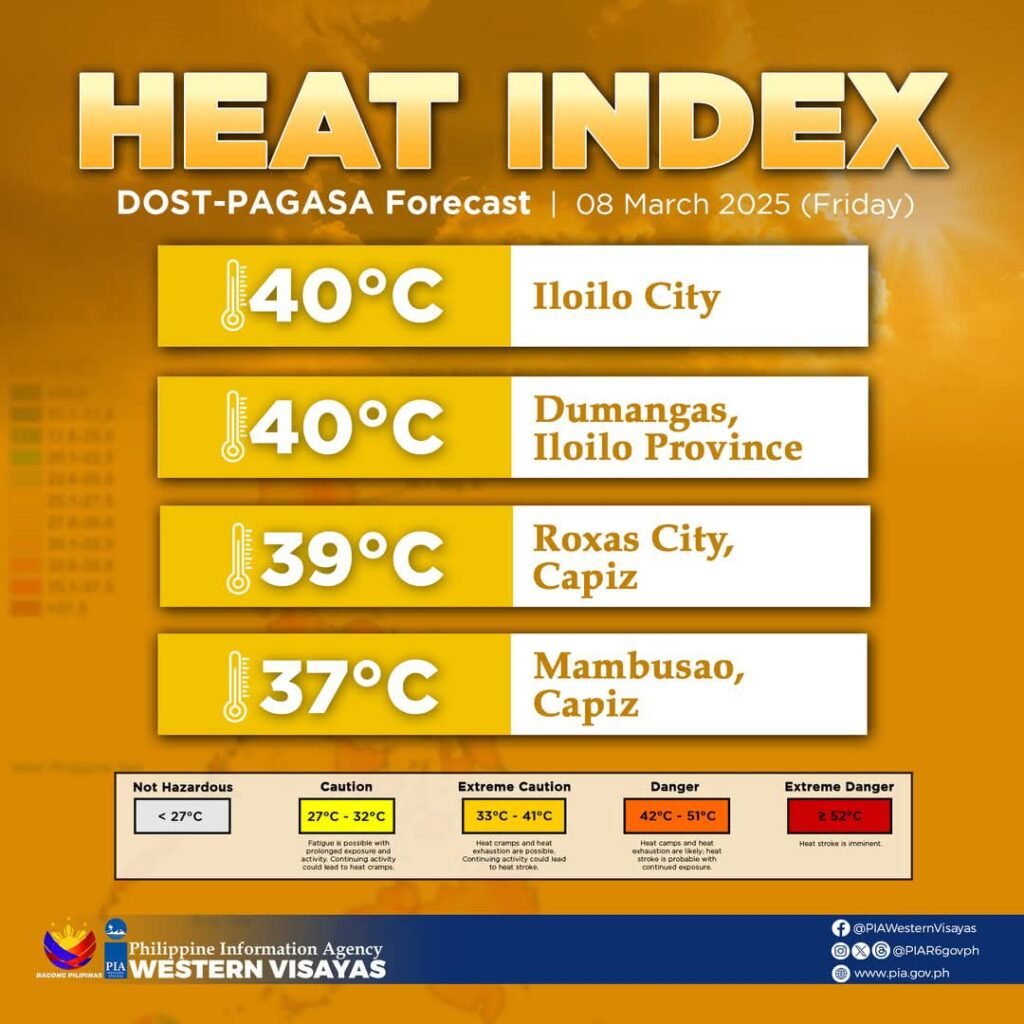
A high heat index doesn’t just mean it’s hot; it means it’s dangerously hot. It’s the perfect recipe for dehydration, dizziness, and in extreme cases, a fast pass to the emergency room.
Now, imagine sitting in a packed classroom with no air conditioning, trying to focus on algebra while your brain feels like it’s simmering in a slow cooker. Sounds miserable, right? That’s why some cities are finally stepping up and doing something about it.
Iloilo City has taken a proactive approach, introducing a heat index-based class suspension protocol.
The rules are simple: if the heat index hits 40°C based on PAGASA’s 5:00 PM advisory, school heads can either adjust schedules—starting early and ending before noon—or shift to remote learning in the afternoon. But if the heat index reaches a blistering 42°C, there’s no debate: face-to-face classes are automatically suspended, and schools must shift to alternative learning modes.
Even universities are encouraged to do the same. Because let’s face it—if it’s too hot to walk barefoot on the pavement, it’s too hot to sit in a cramped classroom.
Meanwhile, Metro Manila isn’t exactly chilling in this heat. San Juan City, under Mayor Francis Zamora’s directive, has reshuffled class schedules, pushing students to wake up at dawn for classes from 6:00 AM to 10:00 AM, and then again from 3:00 PM to 7:00 PM to avoid the worst of the midday inferno.
Marikina, under Mayor Marcelino Teodoro, has gone a step further, declaring automatic face-to-face class suspensions at 42°C. Valenzuela City has a similar policy—once the temperature crosses that red line, students and teachers head home, and online learning takes over.
Of course, some might argue that shifting to remote learning isn’t ideal, but let’s be real: neither is trying to absorb lessons while drenched in sweat. Alternative Delivery Modes (ADM) ensure students keep learning without risking heat-related illnesses.
Whether it’s online classes, modular learning, or other flexible setups, the goal is clear—education shouldn’t come at the cost of students’ well-being.
As climate change continues to push temperatures to new extremes, heat index-based suspensions aren’t just a temporary fix; they’re a necessary adaptation. Schools must prioritize health and find smart ways to keep learning going without forcing students to endure classroom saunas. So, while the debate on class suspensions continues, one thing is certain: if the heat doesn’t let up, neither should our efforts to protect students from it.