


THE LATEST THREAT stalking Filipino wallets isn’t loud, dramatic, or even obvious. It’s quiet. Square. Innocent-looking. A QR code. And behind it, a fast-growing scam now known as quishing—a digital trap that turns a simple scan into a financial ambush.
To its credit, GCash (www.gcash.com) isn’t playing catch-up. It’s going on offense.
More than 4,900 fraudulent merchants have already been blocked—accounts tied to fake payment pages, dummy businesses, and impersonation schemes designed to siphon off money from unsuspecting users. That’s not just a statistic; it’s a signal. The platform is drawing a hard line: zero tolerance, no gray area.
And frankly, it’s about time.
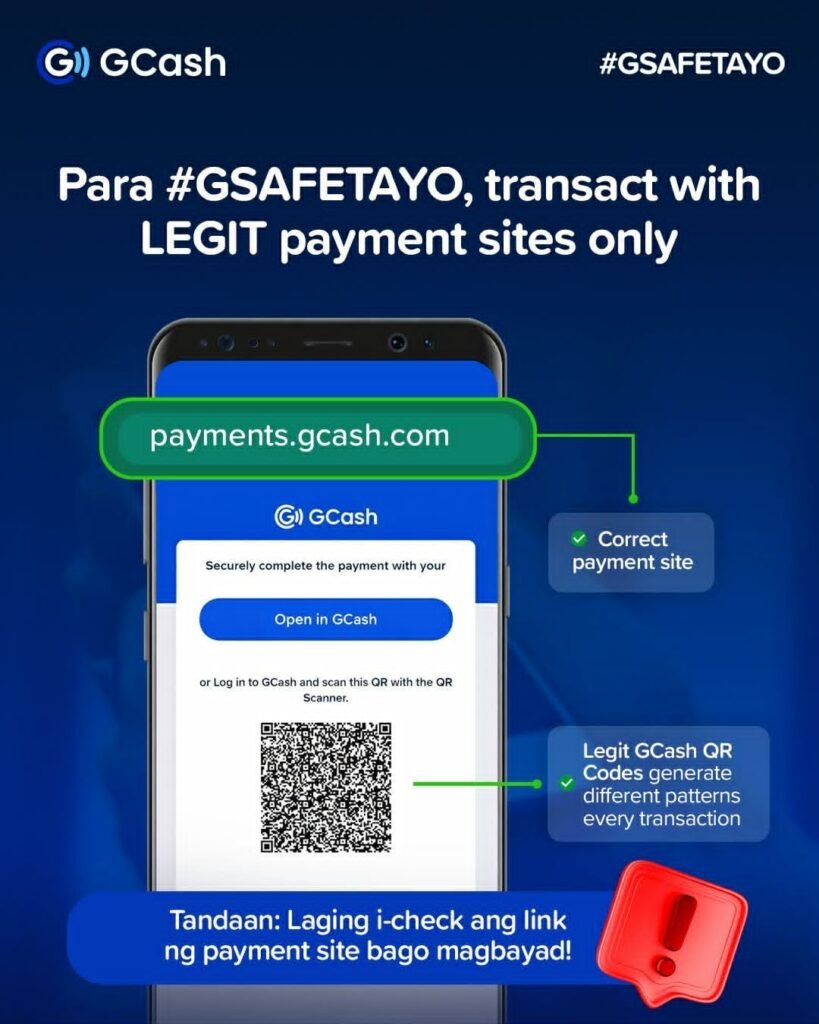
The scam that looks like convenience
Here’s what makes quishing dangerous—it hides behind habit. We’ve been trained to trust QR codes. Scan to pay. Scan to order. Scan to move on.
But scammers are now weaponizing that trust.
They plant fake QR codes in places we don’t question—posters, receipts, emails, even chat messages. One scan can redirect you to a counterfeit payment page that looks almost identical to the real thing. Same logos. Same layout. Same “Send Money” button.
Except the money doesn’t go where you think.
In worse cases, it doesn’t just steal your payment—it steals your data.
The Bangko Sentral ng Pilipinas has already flagged this as an emerging threat, and the warning couldn’t be clearer: familiarity is now part of the scam.
Red flags people ignore (until it’s too late)
Let’s be blunt. Most scams don’t succeed because they’re brilliant. They succeed because people are in a hurry.
So slow down and watch for the tells:
• URLs that almost look right but aren’t
• Merchant names that feel random, generic, or suspiciously coded
• Payment pages that look “off” if you actually take a second look
If something feels even slightly wrong, stop. No transaction is so urgent that it’s worth gambling your money on a guess.
Enforcement is working—but it’s not enough
Blocking thousands of fraudulent merchants is a strong move. Partnering with agencies like the Cybercrime Investigation and Coordinating Center strengthens that effort. Campaigns like GSafe Tayo are pushing awareness forward.
But here’s the uncomfortable truth: platforms can only do so much.
Security is now a shared responsibility.
You can have the most aggressive fraud detection in the country, but if a user willingly scans a fake QR code and authorizes a payment, the system sees a “valid” transaction. That’s the loophole scammers exploit—not technology, but human behavior.
Every peso deserves protection
Right now, Filipinos are more intentional with spending. Every commute costs more. Every grocery trip stings a little harder. Which makes this kind of scam not just criminal—but predatory.
It targets discipline. It punishes trust.
That’s why vigilance isn’t optional anymore—it’s survival.
Verify the URL. Check the merchant. When in doubt, don’t proceed. And if something slips through, report it immediately—to GCash, to the Philippine National Police Anti-Cybercrime Group, or to the CICC.
Because in this new digital economy, protecting your money doesn’t stop at earning it.
It starts with knowing when not to scan.