
Thursday, March 26, 2026
Home Blog Page 10

Why Not Require Officials To Commute Once A Week

0

IT IS DELIGHTING to read about government officials– regardless of positions (although the higher their post, the better)– commuting to work through the Metro Rail Transit or the Light Rail Transit or even the bus traversing EDSA through the Bus Carousel at least once each week.

This is to make them grounded about the difficult realities facing the ordinary taxpayers and commuters and reduce the gasoline expenses for being ferried to office or their appointments for the day and back home. 

Of course they would argue that it would be demeaning for their positions. But who said commuting is such a shameful effort when this reality is what brings out actual facts about our daily transport woes.

The problem with our government official is that when they reach the top post, they think they are entitled to perks and incentives not otherwise available to the ordinary public servants, whose pay come from the taxpayers– and that is from all of us, including the poorest of the poor who pay for value added tax for every item or service they avail of in society.

They should realize that as servant leaders, they must exude humility and genuine interest in the affairs of the general public than just aspire to always be pampered by virtue of their position.

“In Metro Manila, it is not unusual for commuters to experience snake-like queues and jampacked public utility vehicles (PUVs) and trains while traveling to and from work … for a stricter immersion in public transport systems, public officials must imbibe humility and the desire for genuine public service. After all, a great leader is a great follower and a humble servant.” 

CACDAC DOES IT

Last January 23, a Reddit user posted the photo/caption of Migrant Workers Secretary Hans Cacdac standing holding a handrail inside the MRT on his way to Shaw from Ayala Avenue. He captioned the photo on his FB account: “Yesterday evening, MRT at rush hour. Ayala to Shaw in 15 minutes (smiling emoticon).”

It was clear from the photo that people around him did not recognize him as no one looked at him, they were busy conversing with each other.

The Reddit user wrote: “Seeing public appointed officials commuting with the public is something that I see as a good move to let them immerse on the hardship ng mga taong nasa laylayan ng lipunan.” 

“I still do wish that more *ehem HoR [House of Representatives], *ehem Senate, *ehem Malacañang public officials do the same. Just sharing lang, and to Sec. Cacdac, kudos po,” the Redditor added.

Others also took to the discussion thread to praise Cacdac’s initiative.

“Very good example nonetheless,” another Redditor said.

“Pero ito na sana [‘yung] good start sa mga head ng government para maramdaman nila gaano kahirapmag-commute. lalong lalo na head ng DOTr (Giovanni Lopez),” the Reddit user added.

“Sana magkaroon ng batas na lahat ng government officials are mandatory to only use public transportation going to work daily,” still another Redditor commented.

NO SPECIAL TREATMENT

Another one noted that Cacdac had “no security [and] no special treatment? If that’s the case, then this is great. Sana dadaming government officials ang mag-public commute rin frequently, hindi ‘yong for picture-picture lang,” another user commented.

“That’s good! I-level up sana nila ‘yung pagmo-monitor. Isama nila sa time ‘yung lakad, plus, time sapagpila… Lalo na sa Ayala [Station], ang liit-liit ng platform dun, parang hindi pa peak ng rush ‘yung nasapicture,” wrote another.

“Allow people like him to normalize and set an example kasi the more of them use it, the more it becomes possible na malaman nila woes ng common people,” another Reddit user suggested.

“More Cabinet members should be commuting regularly. Good job, Sec. Cacdac,” another said.

UNCOMMON FOR PUBLIC EXECS

It is uncommon for government officials to take public transportation, as most prefer to use their service/office or private vehicles for convenience and reduced security risks.

The MRT is the busiest rail line because it traverses EDSA, a major highway in Metro Manila that passes through six cities where many Filipinos work.

As a result, it is among the most congested train lines, serving thousands of passengers daily.

Last year, there was a push for “stricter immersion” of government officials in public transportation after Acting Transportation Secretary Giovanni Lopez ordered executives of the Department of Transportation (DOTr) to commute at least once a week on their way to work.

The initiative required department officials to use available public transportation weekly from their residences to their places of work.

Lopez said the program aimed to allow DOTr officials to gain “first-hand experience in the operations of various modes [of] public transportation to better understand the predicaments of the community or riding public.”

In Metro Manila, it is not unusual for commuters to experience snake-like queues and jampacked public utility vehicles (PUVs) and trains while traveling to and from work.

I think for a stricter immersion in public transport systems, public officials must imbibe humility and the desire for genuine public service. After all, a great leader is a great follower and a humble servant. 

A Croatian Who Won The Hearts Of Filipinos

0

People are like stained – glass windows. They sparkle and shine when the sun is out, but when the darkness sets in, their true beauty is revealed only if there is a light from within.

                               — Swiss-American psychiatrist Elizabeth Kubler Ross

CERTAINLY ONE OF the prettiest faces in tennis today, Croatian netter Donna Vekic has won the hearts of Filipino fans as seen in the unexpected support given to her by the local crowd that cheered for her in her Philippine Women’s Open debut at the Rizal Memorial Coliseum Tennis Center. 

The Monaco-based world’s number 70, as of December 2025, dazzled the Filipino crowd as she swept opposition from Japanese rival Kyoka Okamura (Ranking No. 181), 6-2, 6-2, amid a rain delay.

Filipinos had grown accustomed to Vekic, who recently lost to local rising star Alexandra “Alex” Eala twice in the Auckland Savings Bank (ASB) Classic in New Zealand and the Kooyong exhibition in Melbourne earlier this month. 

“Filipinos had grown accustomed to Vekic, who recently lost to local rising star Alexandra “Alex” Eala twice in the Auckland Savings Bank (ASB) Classic in New Zealand and the Kooyong exhibition in Melbourne earlier this month. 
Locals have been playfully calling the 29-year-old Vekic ‘Tita Donna’ on social media.”

Locals have been playfully calling the 29-year-old Vekic ‘Tita Donna’ on social media.

“It’s very nice. I feel very welcomed, and hopefully I can stay here the whole week because it’s really a big pleasure playing in front of them,” she enthused in an interview by the media.

“It was great to play today. The crowd was amazing and it was a good match, so I’m really happy with the performanc,” she added, flashing her beautiful smile that has captivated most Filipinos.

“I didn’t have that many wins and matches recently, so every win is huge for me right now. This is why I’m here, to try to get as many matches as possible and to build some confidence.”

* * *

FOR your comments or suggestions, complaints or requests, just send a message through my email at cipcab2006@yahoo.com or text me at cellphone numbers 09171656792 or 09171592256 during office hours from Monday to Friday. Thank you and mabuhay! 

All Tax Audits To Be Done Only Inside The Office

0

BECAUSE MOST OF coercion, extortion and unlawful/illegal tax settlements are done outside the offices of the Bureau of Internal Revenue, Commissioner Charlito Martin Mendoza ordered that no tax audits must be undertaken in restaurants, coffee shops and other public places.

Commissioner Mendoza prohibited tax examiners from such tax audits outside the revenue offices and enjoined the taxpayers not to entertain such audits and assessments of accounting records in restaurants, coffee shops, and other public venues. 

Revenue Memorandum Order 1-2026 of Commissioner Mendoza mandated that the examination of books of accounts and financial records must be performed exclusively at revenue offices or the taxpayer’s registered place of business.

“[W]hile these informal venues may have been used in the past to facilitate discussions, they are no longer permissible under the updated guidelines.
The move is seen as part of a broader effort to standardize audit procedures and ensure that all official business is conducted in a controlled, professional environment.”

STANDARDIZED AUDIT

The directive aims to eliminate the informal practice of meeting in eateries and cafes, which some revenue officials noted had become a common occurrence due to the perceived convenience and relaxed atmosphere of such settings, the Manila Bulletin reported.

Mendoza said that while these informal venues may have been used in the past to facilitate discussions, they are no longer permissible under the updated guidelines.

The move is seen as part of a broader effort to standardize audit procedures and ensure that all official business is conducted in a controlled, professional environment.

Recognizing the logistical challenges posed by large-scale audits, Mendoza provided a degree of flexibility for cases involving voluminous records. 

In instances where transporting physical documents to a BIR office would be impractical or excessively burdensome for the taxpayer, revenue officials have been directed to give the taxpayer the option to choose the audit venue, provided it remains within the taxpayer’s business premises.

The circular further streamlined the audit process by addressing the proliferation of administrative paperwork.

CONSOLIDATING LOAs

Taxpayers who have been issued multiple Letters of Authority, including electronic versions, are now permitted to request the consolidation of these documents into a single LOA. This change aligns with the bureau’s standing policy of issuing only one LOA per taxpayer per year, reducing the administrative weight on both the government and the private sector.

Beyond venue restrictions, the new regulations authorize the issuance of mission orders and Tax Verification Notices to enhance enforcement. In a significant structural shift, Mendoza also ordered the abolition of special task forces.

The functions previously handled by these specialized units have been returned to the BIR regional and district offices, a move intended to decentralize operations and empower local tax jurisdictions.

Hala Bira! When Dinagyang Learned To Headbang (and It Worked)

0

IF DINAGYANG 2026 needed a mic drop, G Music Fest delivered it—loud, neon, and right on beat. By the time the drums of the Ati Tribes Competition faded and the awards were handed out, Iloilo City didn’t slow down. It simply switched playlists.

Held on January 25, 2026, Globe’s G Music Fest turned Sunburst Park into a glowing playground where tradition met TikTok-era energy. Think: feathered headdresses by day, glowing wristbands by night. The morning belonged to the school-based tribes—yes, the mighty Tribu Paghidaet and the ever-energetic Tribu Pan-ay—but when the sun dipped, the youth and the “modern Ilonggo” clocked in.

This wasn’t just a concert; it was the after-party Dinagyang deserved.

Manila hits? Check.
Local Ilonggo talent? Double check.

Rob Deniel crooned his retro-pop love songs like he was serenading the entire city, while The Dukes cranked up the indie-rock energy and reminded everyone that moshing is, in its own way, a cultural expression. Add a lineup of local bands, and suddenly it was clear: Iloilo’s music scene doesn’t just drum—it grooves.

Even before the main event, Globe knew how to warm up a crowd. The Globe Booth at Bonifacio Drive turned festival-goers into happy, competitive humans with “EnergyTok” and “Hypermove” challenges—proof that prizes, WiFi, and bragging rights are a powerful combo.

What made this edition special was how it lived up to the theme “Bugay sang Ginoo, Bugal sang mga Ilonggo.” G Music Fest wasn’t a break from Dinagyang—it was an extension of it. Tourists and locals danced side by side, some still in black body paint, others fresh from Calle Real, all vibing under the same stars.

And that seamless flow—from Sadsad straight into the mosh pit? Chef’s kiss. With Sunburst Park just steps away from the historic streets, 2026 became one of those rare moments where tradition didn’t compete with technology—it partied with it.

So yes, Dinagyang is still sacred.
But thanks to G Music Fest, it’s also loud, youthful, and unapologetically fun.

Hala bira gid. Same soul. New sound.

US FDA Approves Once-Daily Oral Drug For Body Weight Control

0

THE US FOOD and Drug Administration (FDA) has approved a once-daily oral GLP1 medicine from Novo Nordisk to help people reduce excess body weight and maintain weight loss over the long term. 

The Novo Nordisk treatment marks a milestone in medical obesity care by offering the convenience of a pill with weight-loss results comparable to therapies that have typically required injections. The approval provides a new option for patients who need medical support for obesity but have been reluctant to use needles.

Although the GLP-1 pill is expected to reach the US market in January 2026, the development signals where obesity treatment is heading globally.
“The pill is here. With the approval of our once-daily oral GLP-1 treatment, patients will have a convenient pill option that can help them achieve weight loss comparable to injectable therapy,” said Mike Doustdar, president and CEO of Novo Nordisk. 

“As the first oral GLP-1 treatment for people living with overweight or obesity, this new option provides patients with a convenient choice to start or continue their weight loss journey. No other current oral GLP-1 treatment can match the weight loss results delivered by this therapy, and we are very excited for what this will mean for patients,” he added.

Data from the global OASIS 4 clinical trial showed the once-daily pill delivered significant weight-loss results. Participants lost an average of 16.6percent of their starting body weight after about a year of consistent treatment. One in three patients achieved weight loss of more than 20 percent—a level that can translate into meaningful improvements in daily functioning and quality of life for people living with obesity. The findings suggest the oral option can deliver weight loss comparable to the once-weekly injectable version already available.

REDUCING HEART DISEASE

Beyond weight loss, the therapy is also approved to reduce the risk of serious heart and cardiovascular problems, including heart attack and stroke, in certain patient groups. Clinical data showed approximately a 20 percent reduction in cardiovascular risk among patients with heart disease who also have obesity or overweight. This means obesity management with this therapy addresses more than appearance—it offers meaningful protection for heart health and the potential to extend lifespan.

Experts emphasize that obesity is a complex, chronic disease—not simply the result of a lack of willpower or discipline. In people with obesity, hormonal systems that regulate hunger and fullness are often disrupted, causing the body to resist weight loss and defend a higher weight. GLP1–based treatments work by mimicking a natural hormone that acts on appetite centers in the brain, helping people feel fuller for longer, reduce food intake, and achieve gradual, more sustainable weight loss.

Visa Applications From PH Rise 8% in 2025; Fueled By Confidence of Travelers

0

VISA APPLICATION VOLUMES from the Philippines rose by 8 percent year-on-year rise in 2025, as travelers gained confidence to explore global destinations, according to VFS Global.

Popular destinations preferred by travellers from the Philippines in 2025 were Australia, Canada, Germany, Greece, Japan, Kingdom of Saudi Arabia, Switzerland, The Netherlands, and United Kingdom (in alphabetical order).

“This healthy rise in visa applications from the Philippines last year indicates that travelers’ confidence has been restored and people exploring their favorite global destinations again. We are confident that this positive travel momentum will sustain in 2026 as well. We urge applicants planning to travel overseas from the Philippines to apply for their visas in advance to avoid the last-minute rush,” said Atul Lall, Regional Head – North Asia, VFS Global, a global leader in trusted technology services, empowering secure mobility for governments and citizens.

Strong demand for personalized services, designed to enhance convenience for visa applicants, continued to be a defining trend in 2025 visa application patterns. Visa At Your Doorstep (VAYD), a service that empowers applicants to complete their entire visa application submission process from the comfort of their homes or any other location of their choice, registered a significant 62 percent year-on-year increase in 2025. 

SERVICES AVAILABLE IN 18 COUNTRIES

VFS Global offers doorstep visa services for 18 countries in the Philippines – Australia, Austria, Belgium, Croatia, Czech Republic, Denmark, Finland, Germany, Greece, Hungary, Japan, Malta, Kingdom of Saudi Arabia, Slovenia, Switzerland, Türkiye, UK, and The Netherlands. VFS Global also offers its highly flexible Mobile Visa Application Centre (MVAC) facility for visa applicants for the above listed countries, providing enhanced customer convenience, security features, and expanded network reach.

Similarly, the demand for Premium Lounge, an optional service which provides end-to-end personalized assistance with visa application submission from the comfort of a lounge, is rising with the rise in application volumes. Another service named Prime Time, which allows visa application submission outside of working hours and even on weekends, has seen a healthy adoption since pandemic. 

“We continue to see a healthy adoption of personalized services such as VAYD and Premium Lounge by discerning travellers post the pandemic due to health considerations. These services enhance the overall visa application experience for applicants by avoiding the need for them to stand in a queue. We foresee higher demand for such premium services prioritizing safe travel this year as well,” added Lall. 

ICC Rules: Duterte Fit To Stand Hearing 

0

AT 80 YEARS old, former President Rodrigo Duterte remains sharp — and fit to stand judicial hearings by the International Criminal Court (ICC).

In a statement, ICC judges ruled to hold pre-trial hearings for the confirmation of charges on February 23.

Duterte’s defense team earlier had argued that the former President, who is being held in The Hague over crimes against humanity for thousands of deaths during his war on drugs, could not stand trial due to cognitive decline.

Judges cited a report by independent medical experts that found Duterte as “fit and able” to understand and participate in the hearings of the case against him.

ICC earlier maintained that, for someone to be deemed fit to take part in proceedings, it is sufficient that they have a broad understanding of the procedures, not that they operate at their highest level.

“The Chamber is satisfied, in law, that Mr. Duterte is able effectively to exercise his procedural rights and is therefore fit to take part in the pre-trial proceedings,” the judges said.

For the longest time, ICC stood firm that suspects — regardless of age, are fit for trial, despite petitions. Duterte was the Philippine President from 2016 to 2022. He was arrested and flown to The Hague last March.

Meanwhile, Duterte’s counsel Nicholas Kaufman expressed disappointment after being denied the chance to present the defense panel’s own medical evidence and to question the findings in court.

“The defence will seek leave to appeal this decision and argue that Mr Duterte was denied due process,” Kaufman said.

According to ICC prosecutors, Duterte created, funded and armed death squads during his war on drugs, when thousands of alleged narcotics peddlers and users were killed.

Judges also set a new date for his confirmation of charges hearing. Prosecutors want to charge Duterte with three counts of murder as a crime against humanity involving more than 75 victims, but under the ICC system judges must confirm the charges after separate hearings before the case can move to trial.

According to police, 6,200 suspects were killed during anti-drug operations under Duterte’s presidency. Activists say the real toll was far higher, and the ICC prosecutor has said as many as 30,000 people may have died.

Duterte has repeatedly insisted that his instruction to kill drug suspects was only in self-defense.

Rewarding Cronies Via Maharlika Funds

0

THE MAHARLIKA INVESTMENT Fund, aka sovereign wealth fund, was originally designed to address capital limitations for infrastructure projects by providing access to foreign capital that would augment government’s resources.

Its capitalization– which became a public outrage– was originally to come from pension funds held by the Government Service Insurance System, Social Security System, savings from the Bangko Sentral ng Pilipinas and Philippine Amusement Gaming Corp. People vociferously demanded that pension funds not be used for such as it is their savings for the future.

In December 2022, a press release from Marcos’ economic team  declared that the MIF as the sovereign wealth fund would be invested in a wide range of outlets like foreign currencies, fixed income instruments, domestic and foreign corporate bonds, commercial real estate and infrastructure projects among others.

As stated by the team, the sovereign wealth fund with P250 billion start up investments will be supplemented by annual contributions from BSP, the Department of Finance and other sources. 

The team assured the people that MIF would not go the way of the failed 1Malaysia Development Berhad (1MdB) fund, which had a single signatory, because of the built-in checks and balances in MIF.

With the long time MIF corporation took to recruit what it called technical investment experts, who by the way are as highly-paid as Bangko Sentral staff and officials, a lot of its investment decisions in the 3-year old company seems to favor more the rich than the start-ups and infrastructure projects that badly need financial capital.

INVESTMENTS OR BAIL OUT?

Under the leadership of MIC president and chief executive officer Rafael Consing Jr., MIC had invested in Asian Terminals, National Grid Corp., Makilala Mining and bailing out foreign interests of the Emirates DP World, a country far wealthier than ours – which are highly-capitalized and better left in the hands and resources of foreign investors, rather than the struggling MIC. 

Consing faced intense criticism for his plan to spend P2.9 to P8 billion to acquire a stake in Asian Terminals Inc. 

Critics have argued that the move effectively bailed out Emirati-owned DP World and benefitting wealthy stakeholders including Marcos crony, Yosi Tanco, rather than funding new national infrastructure, Bilyonaryo reported. 

MIC’s investment in ATI coincided with its voluntary delisting from the Philippine Stock Exchange, a process that has come under scrutiny for potentially-disadvantaged minority stakeholders. Opponents like urban planner Felino Palafox Jr. and various business groups questioned why a state sovereign fund is being used to buy into a mature, profitable private utility instead of pioneering greenfield projects.

SOVEREIGN STEWARDSHIP

Though MIC defended the move as “sovereign stewardship” of a strategic port asset, detractors view it as a misuse of public funds to favor politically-connected elites and foreign corporations, Bilyonaryo stated.

The deal, they said, reignited fears of Maharlika Fund’s lack of transparency with observers calling for closer investigation into the valuation of the tender offer and the strategic need for the buyout.

The MIF– created to boost the state’s earnings from publicly-accessed  capital (state banks) to ensure economic growth, has been funding floundering firms of the rich to ensure a board seat for wealth fund officials while endangering people’s money.

As I wrote last December 19, the ATI investment is MIC’s third major investment in two years, after a ₱4.42 billion bridge loan to Makilala Mining Co. and a ₱19.7 billion investment in the National Grid Corporation of the Philippines, both privately-owned.

NOT FOR THE PEOPLE

Its investments in shaky businesses is in exchange for shares of stocks and board seats that would benefit the shareholders of such companies and those of the Maharlika Fund.

“This is not an investment for the people. This is a bailout for private corporations at the expense of taxpayers,” said Bagong Alyansang Makabayan (Bayan) as it urged Congress and the public to scrutinize MIC’s investment in ATI.

Bayan said the fixed-price tender offer mainly rewards the private owners while shifting risk to the public.

Once ATI is delisted, it will no longer be bound by Philippine Stock Exchange disclosure and governance requirements, making it easier to operate with less sunlight, Bayan said.

ATI SHAREHOLDERS

The biggest shareholders are: DP World Australia (POAL) Pty. Ltd., ATI Holdings, Inc., Pecard Group Holdings Inc., and the Philippine Seaport Inc, with significant stakes from entities like DP World and local groups though recent filings show firms like Thunder Fze and others. MIC plans to acquire a substantial stake of up to 11.2% of ATI, as reported in December 2025 for strategic investment.

ATI disclosures show MIC will launch a tender offer for 101.189 million shares, about 5.6% of the company, at ₱36 per share, or roughly ₱3.64 billion.

MIC’s target is about 200 million shares, around 11.1%, which would take the bill to as much as ₱8.4 billion, as it joins DP World, Tanco and other major holders in buying out the remaining public float.

“MIC will plunk in P3.6 billion in public funds in a private company in which it will have no controlling stake, no role in operations, nor guaranteed income at a time when the government is cutting back ayuda for the poor, it is giving money to the rich,” Bayan lamented.

MARCOS CRONY TANCO

DP World, through its Australian subsidiary, owns about 17.4% of ATI. DP World is a Dubai-based global ports and logistics group with about $20 billion in revenue and $49.7 billion in assets in 2024.

Tanco, who owns about 32.3% of ATI, is listed among the Filipino billionaires with an estimated net worth of $1.1 billion, buoyed by the surge of online gaming firm DigiPlus, where he serves as chairman. 

Other major ATI shareholders are Pecard Group Holdings of (19%) and ATI Holdings (14.6%).

For critics, the question is simple. If ATI’s biggest owners have the cash and the clout, why is Maharlika being asked to show up with the people’s money.

ATI manages and operates the Manila South Harbor, the Manila Inland Clearance Depot, Port of Batangas, Batangas Supply Base, and Tanza Barge Terminal. It also owns 35.71 percent of South Cotabato Integrated Port Services Inc., which operates the Makar Wharf in General Santos City.

TROUBLING PATTERN 

Bayan also pointed to what it called a “troubling pattern” in the fund’s early deals.

“From being touted as a vehicle for national development, the Maharlika Investment Fund is now exposed as a vehicle for subsidizing privatization, lining private pockets with public funds,” said the group.

Bayan questioned why billions of pesos are being channeled into private deals without clear guarantees of returns, especially as the government trims some social spending and poverty remains a major problem.

MIC responded by saying that the proposed stake in ATI reflects its focus on the “real economy,” noting that the port operator plays a central role in Philippine trade and logistics. 

Of late, Consing said MIC would look at investing in agribusiness firms, especially those into export-oriented products, within the first semester of 2026. Still not even close to the list of sectors requiring urgent financial support from the government. 

TARGETING AGRIBUSINESS

Consing announced that MIC hopes to close investment deals with agricultural companies with the prospective recipients of its funding possessing strong export and job-creation potential.

“Our goal is to back companies ready to scale — providing the resources to improve efficiency and increase export volume, which in turn secures and generates vital employment,” MIC said on Monday.

He added that the sovereign wealth fund, launched in 2023, is advancing into agriculture with a focus on “special situations” and deals with the potential to result in “strategic mergers and acquisitions.”

“The fund is targeting enterprises with strong export promise and a significant labor component, aiming to close deals within the first half of 2026,” it added.

The MIC also said it considers “promising agri-businesses” a key priority and seeks to unlock their full potential.

STRATEGIC PILLAR

In the Philippines, agricultural exports accounted for 11.7% of total exports in November, according to the Philippine Statistics Authority.

For the first 11 months, the agricultural trade deficit totaled $10.3 billion, narrowing about 4.6% from a year earlier. Agricultural exports at the end of November amounted to $8.33 billion.

Last year, the MIC announced a memorandum of understanding with Thai conglomerate Charoen Pokphand Group Co., Ltd.

The fund also agreed to establish a private equity fund to raise up to $1 billion for investments in agriculture and food production, digital innovation, and sustainable energy.

Agriculture is among the MIC’s four strategic pillars alongside energy, logistics, and mining.

“Beyond its contribution to national output — including the 5% GDP growth target — the (mining) sector serves as a long-term strategic hedge for MIC, helping preserve capital value against long-term currency volatility and global inflationary pressures,” it said.

In addition, the MIC said it will deploy a “sectoral and tactical” approach that will prioritize assets that address structural chokepoints and unlock export capacity.

“By marrying ‘intelligent capital’ with national imperatives, MIC will contribute to a more diversified and resilient Philippine economy,” Consing said.

The MIC posted income of P2.68 billion in 2024, up from P154.3 million a year earlier. It remitted P1.45 billion to the Treasury. 

Dinagyang Goes Digital: How Globe 5G Is Elevating The Festival Experience

0

DINAGYANG HAS ALWAYS been loud—in the best way possible. Loud drums. Loud faith. Loud Ilonggo pride. This Dinagyang2026, however, there’s another kind of buzz in the air: fast, invisible, and powerful enough to carry every shout of “Viva Señor Sto. Niño!” straight to the rest of the world.

Welcome to Dinagyang in the age of Globe 5G—where culture meets connectivity, and tradition dances comfortably with technology.

When the Streets Go Live

Festivals today don’t end at the parade route. They live on screens, timelines, group chats, and livestreams—sometimes all at once. Dinagyang is no exception.

With Globe 5G, festival-goers can post photos, upload videos, and go live without the dreaded loading wheel that usually shows up right when the drums hit their peak. Parades are no longer just witnessed; they’re shared—in real time.

As a Globe representative aptly put it,

“Connectivity today is about enabling people to share meaningful moments as they happen, not after the moment has passed.”

For Ilonggos abroad or families watching from afar, that means Dinagyang doesn’t feel distant. It feels immediate, alive, and personal—like being there without fighting the crowd on Calle Real.

Less Hassle, More Hala Bira

Anyone who’s attended Dinagyang knows the drill: packed streets, last-minute schedule changes, meetups that somehow never meet up. This is where strong connectivity quietly saves the day.

Powered by Globe 5G, festival-goers can quickly check event schedules, use maps to navigate closures, book rides, message friends, or look for the nearest coffee (or comfort room—let’s be honest). Technology steps in not to steal the spotlight, but to clear the way so people can actually enjoy the celebration.

Or as one Globe executive described it,

“When connectivity works seamlessly, people stop thinking about technology and start focusing on the experience.”

Exactly the way a festival should feel.

Storytelling at the Speed of the Beat

Dinagyang is not just performed—it is told. And today’s storytellers include journalists, vloggers, influencers, and everyday Ilonggos with a good camera and great timing.

Globe 5G empowers real-time storytelling even in the most crowded areas. Livestreams stay smooth. High-quality videos upload faster. Updates go out while the energy is still fresh. The result? Dinagyang’s story travels farther, faster, and more vividly than ever before.

“Fast and reliable connectivity allows creators to capture culture as it unfolds, not after the moment has faded,” a Globe spokesperson shared.

In a festival built on movement, rhythm, and emotion, timing matters—and so does signal strength.

Built for a Digital Generation

Today’s festival-goers plan online, connect online, and relive everything online. Globe 5G supports this digital-first lifestyle by making engagement effortless—from coordinating barkadameetups to discovering side events across the city.

Visitors explore Iloilo more confidently. Friends stay connected throughout the day. Communities amplify the Dinagyang spirit beyond physical boundaries. Connectivity becomes part of the journey, not a distraction from it.

Tradition, Amplified—not Replaced

Let’s be clear: Dinagyang is still about faith, heritage, and Ilonggo identity. Technology doesn’t rewrite that story—it simply gives it a bigger stage.

Through Globe 5G, the beat of the drums, the devotion of the dancers, and the pride of the city reach wider audiences without losing their soul. As Globe emphasized,

“Technology should never replace culture—it should help it be seen, heard, and appreciated by more people.”

This Dinagyang 2026, Globe 5G doesn’t change the heart of the festival. It brings people closer to it—creating an experience that is more connected, more immersive, and unmistakably modern.

Hala Bira, Iloilo—now streaming in 5G.

From Chalkboards To QR Codes: Why GCash In Ateneo de Iloilo Is More Than Just Convenience

0

THERE WAS A time when “enrollment season” meant long lines, sweaty folders, missing receipts, and that one parent who always asked, “Pwede next week na lang?” In Philippine schools, cash has long been king—and chaos its loyal sidekick.

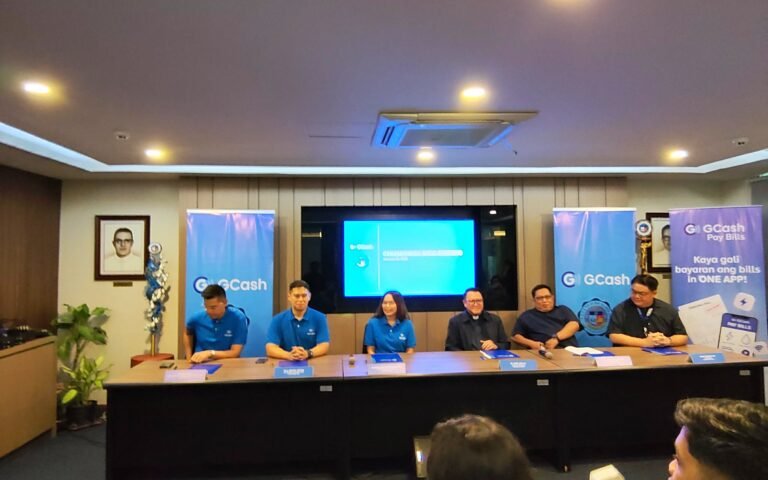
So when Ateneo de Iloilo – Santa Maria Catholic School formally signed a memorandum of agreement with GCash on January 22, 2026 to adopt digital payments, this wasn’t just another tech upgrade. It was a quiet but meaningful statement: education is finally catching up with how Filipinos actually live, pay, and plan today.

With this partnership, Ateneo de Iloilo becomes the third Ateneo campus, after Naga and Davao, to embrace cashless innovation. And fittingly, it’s happening in Iloilo—where tradition runs deep, but progress, when it arrives, tends to stay.

Less Lines, More Learning

At the most basic level, the benefit is obvious. Parents can now pay tuition and school fees straight from their phones—no traffic, no queues, no “Sir, balik na lang po buas.”

As Paul Vincent Albano, GCash vice president and B2B general manager, put it plainly:

“Parents can now pay for the tuition and other school fees of their children enrolled in this school digitally through the convenience of their GCash app. They will save a lot of time, drive a lot of efficiencies.”

Efficiency may sound like a corporate buzzword, but for working parents, it translates to fewer half-days off work and fewer headaches during enrollment week. For schools, it means cleaner records, faster reconciliation, and fewer envelopes stuffed with mystery amounts of cash.

Beyond Bills: Teaching Financial Sense Early

What makes this partnership more interesting is that it doesn’t stop at payments.

Albano hinted at a broader vision—one that nudges students toward financial literacy early on.

“We can help learners budget their finances and save at an early age through the GCash Junior Accounts and enable the disbursement of salaries and allowances of school staff through the convenience of the application.”

That’s a big deal. Financial education in the Philippines is often reactive—learned after mistakes, not before them. Introducing students to digital wallets, budgeting, and saving within a school ecosystem quietly prepares them for real-world responsibilities.

Or as Albano ambitiously summed it up:

“We will go and truly transform the Ateneo de Iloilo community into a truly cashless campus.”

A Values-Based Take on Technology

To Ateneo de Iloilo’s credit, the school is not treating this as a mere payment shortcut.

School president Fr. Arnel Ong emphasized that the partnership invites exploration beyond transactions:

“We need to explore many things other than just bill payment.”

And more importantly, he grounded the move in service to the community:

“With GCash now available as a payment option for tuition and other school fees, our parents, guardians, and students will benefit from a more efficient, secure, and user-friendly payment system.”

That word—secure—matters. Digital payments, when done right, reduce risks tied to cash handling while offering traceability and transparency. In an age where trust in institutions is fragile, small system improvements like this quietly rebuild confidence.

Who Signed, and Why It Matters

The agreement was signed by key leaders on both sides:
For GCashBarbara Dawn Dapul, COO of G-Xchange, Inc.; Paul Vincent Albano; and Miguel Polido, Visayas business lead for MSME and enterprise.
For Ateneo de IloiloFr. Arnel OngFr. Braulio Dahunan(school chaplain), and Mark Anthony Yap (treasurer).

Their presence signals something important: this is not a pilot done halfway. It’s a strategic commitment—from governance to operations.

The Bigger Picture

This partnership reflects a larger truth: digital transformation doesn’t have to be loud to be impactful. Sometimes it looks like a parent paying tuition while waiting for coffee. Or a student learning how to save before learning how to borrow. Or a school choosing systems that respect both time and trust.

From chalkboards to QR codes, Ateneo de Iloilo’s move with GCash shows that progress and tradition don’t have to compete. They can, in fact, scan the same code—and move forward together. (KRT)

Intellectual Humility: Curiosity Beats Certainty 

EVER NOTICE HOW needing to be right feels powerful… until it quietly blocks learning? It’s that moment when certainty turns into a mental dead-end.

The Back Story 

Here’s the truth most of us learn the hard way: 

Being wrong isn’t a personal failure. It’s the entry fee for learning. 

  • Curiosity gets you further than confidence ever will. 
  • And intellectual humility? That’s the secret sauce.

The Trap of Always Being Right

Many people grow up thinking that being wrong equals being weak. So they defend ideas like their identity depends on it. 

  • Dig in. 
  • Push harder. 
  • Ignore anything uncomfortable.

Before: Alex argues his point, refuses to budge, and tunes out opposing views.

After: He pauses and thinks, “Maybe I’m missing something.”

Tip: Awareness. Notice when defensiveness shows up. That pause is where growth begins.

Why Being Wrong Is Actually Progress

Being wrong isn’t failing—it’s feedback. 

  • Every mistake you catch early is a free lesson.

Before: Maya sees mistakes as embarrassing.

After: She treats them like useful information.

Tip: Openness. See mistakes as data, not damage.

From Certain to Curious

Intellectual humility is simply knowing you might be wrong. Not because you’re incapable—but because your brain has:

  • Limits
  • Biases
  • Blind spots

Everyone does.

Before: Jordan assumes his knowledge is solid gold.

After: He holds ideas lightly and stays open.

Tip: Flexibility. Let ideas evolve instead of defending them.

Ideas Are Drafts, Not Tattoos

Strong thinkers treat ideas like pencil notes—erasable, flexible, revisable.

Situation: During a team meeting, Sam confidently presents a strategy. Later, new data contradicts it.

Before: Sam ignores the evidence and pushes forward anyway.

After: He adjusts the plan, earns trust, and improves the outcome.

Tip: Curiosity. Ask, “What might I be missing?” before clinging tight. 

When Curiosity Builds Trust

Intellectual humility fuels:

  • Empathy
  • Open-mindedness

When you accept that you might be wrong, you start listening differently.

Before: Lina dismisses alternative viewpoints.

After: She asks questions and sees angles she missed.

Tip: Reflection. Pause before responding. Understanding builds credibility.

The Real Flex: Changing Your Mind

Strong minds bend, not break.

Here’s the bottom line: 

  • Intellectual humility isn’t about shrinking yourself.

It’s about balancing

  • Curiosity over certainty
  • Flexibility over ego
  • Learning over defending

Tips And Techniques Growth doesn’t happen when we cling to certainty.

  • Real learning comes when curiosity wins.

Every mistake, every oops, every “I could be wrong” moment proves that:

  • Being open gets you further than being rigid.

Here’s your move:

  • Ask questions
  • Listen deeply
  • Rethink boldly

Remember: Stretch your curiosity. It’s your superpower. 

18 Dead In Basilan Sea Mishap

0

AT LEAST 18 died after an inter-island vessel with at least 359 persons on board, sank off Basilan Island in the southernmost tip of the country, according to a Philippine Coast Guard (PCG) report.

Initial information relayed by the PCG showed 317 rescued, amid a sustained search and rescue operation for 28 unaccounted individuals.

Authorities claimed that the M/V Trisha Kerstin-3 was not overloaded and the sea was “manageable” when tragedy occurred. The ferry sailed from Zamboanga City to Jolo with 332 passengers and 27 crew members, the Coast Guard in southwestern Mindanao reported.

The government is in the process of investigating what caused the M/V Trisha Kersti-3 to sink. Among the factors being looked upon by the authorities is the weather condition at the time of the incident.

Basilan Governor Mujiv Hataman, in his Facebook account, pledged to continue efforts to find the missing passengers as relatives and friends appealed for help.

FREQUENT SEA MISHAPS

Tragedies on Philippine seas, known for its aging fleet and infrastructure, often happen during storms or due to collisions. 

In June 2008, more than 800 people died after M/V Princess of the Stars capsized as typhoon Fengshen lashed the central Philippines. In 1987, M/V Dona Paz collided with an oil tanker, killing more than 4,000 people in what’s regarded as the world’s worst peacetime shipping tragedy, BBC reported.

Then in 2023, over 25 people died when a vessel capsized near Manila due to strong winds.

VICIOUS AND ROUGH

“Based on the account of some survivors, the waters in the area were rough at the time,” PCG spokesperson Noemie Cayabyab said in a televised interview.

A Facebook video of Basilan Governor Mujiv Hataman showed survivors wrapped in blankets as they disembarked from a rescue boat.

Rescuers have been overwhelmed by the influx of survivors, Basilan emergency responder Ronalyn Perez told a foreign press — “The challenge really is the number of patients that are coming in. We are short-staffed at the moment,” Perez was quoted by Bloomberg.

Sea mishaps in the Philippines are usually caused by poor maintenance and overloading but many Filipinos still travel by ferry because it’s way cheaper than airfare.

PREVIOUS TRAGEDIES

In May 2023, 28 people died after a passenger ferry caught fire. The fatalities included three children, among them a six-month-old baby.

The year before that, at least seven people died after a fire in a high-speed ferry carrying 134 people.

In June 2025, a boat sank during the Lupi Festival fluvial parade in In Lumban, Laguna. The boat had 40 people on board as it submerged into the water and gradually sank.

A video captured by the police showed some of the passengers swimming to the riverbank while others hung on the partially submerged boat, the Manila Bulletin reported.

The Lumban Municipal Disaster Risk Reduction Management Office and the Philippine Coast Guard rescued all passengers. No serious injuries were reported and there were no children on board the boat.

The fluvial procession is part of the traditional Paligong Poon during the Feast of San Sebastian Martir.

Researchers: Younger Microbiota May Be Key To Rejuvenating Gut

0

WHEN IT COMES to gut health, we may be only as “old” as the bacteria living in our intestines.

In research published on January 22, 2026 in Stem Cell Reports, a research team from Cincinnati Children’s and Ulm University in Germany demonstrated that transferring young microbiota to the intestines of older mice helps boost the stem cells that make new tissue. This in turn can speed healing when intestines are damaged by causes ranging from surgery and radiation treatments to disease, infections and the natural wear and tear of aging.

“As we age, the constant replacement of intestinal tissue slows down, making us more susceptible to gut-related conditions. Our findings show that younger microbiota can prompt older intestine to heal faster and function more like younger intestine,” said corresponding author Hartmut Geiger, PhD, director of the Institute of Molecular Medicine at Ulm University and former member of the Division of Experimental Hematology and Cancer Biology at Cincinnati Children’s.

While a variety of prebiotic and probiotic products have surged in popularity, this study involved controlled experiments involving a mix of bacteria not available in consumer products. The researchers emphasized that these microbiota require delivery via fecal transfer.

The power of young bacteria

In a series of experiments involving mouse models, the team demonstrated that aging results in changes to the mix of commensal (or helpful) microbiota in the gut. This specifically reduced key signaling involving the gene Ascl2 and WNT signaling among the intestinal stem cells (ISCs) within the intestine lining.

“This reduced signaling causes a decline in the regenerative potential of aged ISCs,” said co-author Yi Zhengm PhD, director, Division of Experimental Hematology and Cancer Biology at Cincinnati Children’s in the United States. “However, when older microbiota were replaced with younger microbiota, the stem cells resumed producing new intestine tissue as if the cells were younger. This further demonstrates how human health can be affected by the other life forms living inside us.”

Zheng and Geiger have collaborated on previous projects focused on rejuvenating blood stem cells. They also are co-founders of a related start-up company calledMogling Bio. This study involving intestinal stem cells extends some of their previous work, Zheng said.

The research team stressed that more study is needed to confirm the benefits also occur in humans, including determining safe dosing levels and further investigation of the ideal combination of microbiota species to include in fecal transfers.

Several other Cincinnati Children’s experts collaborated on the study, including first author Kodandaramireddy Nalapareddy, PhD, David Haslam, MD, and Theresa Alenghat, VMD, PhD. The Research Flow Cytometry Facility and the Comprehensive Mouse and Cancer Core at Cincinnati Children’s also contributed to this project.

Funding sources included grants from the US National Institutes of Health and the Baden-Württemberg Foundation in Germany.

AI And Asia To Influence Global Investments This Year

0

“Policy support and interest rate cuts have given capital markets a strong start, but as we move into 2026, we remain cautious of fiscal challenges, shifting global trends, and concentrated bets in AI,” said Jason Kuan, Director, Investment Research and Advisory at Chief Investment Office, CIMB Singapore.

GLOBAL INVESTMENTS THIS year will be defined by the growing influence of artificial intelligence (AI) and Asia’s rising investment appeal, according to CIMB, one of Southeast Asia’s leading banking groups.

While technology giants pour billions into AI capacity, history cautions against exuberance, underscoring the need to focus on highquality largecap tech and AI supply chain leaders. At the same time, Asia’s expanding role in AI and ongoing market reforms are creating a supportive backdrop for earnings and valuations. 

Against this dynamic landscape, CIMB highlights opportunities in resilient Asian equities, quality corporate bonds, and diversified portfolios enhanced with hedging strategies to navigate volatility and deliver sustainable returns.

“Policy support and interest rate cuts have given capital markets a strong start, but as we move into 2026, we remain cautious of fiscal challenges, shifting global trends, and concentrated bets in AI,” said Jason Kuan, Director, Investment Research and Advisory at Chief Investment Office, CIMB Singapore. 

“Investors may want to be more selective than just focusing on the US market. US stock prices are currently quite high, and uncertainty around trade policies and government spending could create more volatility. Because of this, we expect more investors to look beyond US markets and explore opportunities in Asia. Singapore, in particular, stands out as a safe and stable investment destination, supported by reforms that have boosted confidence and driven strong returns,” he added.

At the same time, gold has surged to new highs as investors seek safety amid global tensions. While corrections may present opportunities to add positions, CIMB believes gold should be part of a diversified portfolio, but caution against chasing the rally simply on recent gains.

AI to shape market narrative

Leading technology companies are investing billions to meet the surging demand for AI compute capacity. While AI continues to stand out as a powerful long-term investment theme, current market dynamics call for measured caution. History shows that periods of exuberance often precede the adoption of truly transformative technologies. 

In this environment, CIMB recommends focusing on high-quality large-cap technology companies and AI supply chain leaders, which are better positioned to withstand volatility and deliver sustainable growth.

Two key forces are shaping the next phase of Asian equities: the region’s expanding role in the global AI supply chain and market reforms across major economies that are enhancing governance, liquidity, and creating a more supportive backdrop for earnings and valuations.

Beyond the US, Asia is playing an increasingly important role in the global AI supply chain. The rise of DeepSeek in China, coupled with sustained demand for semiconductors and AIrelated hardware in Taiwan region, South Korea, and Japan, underscores the region’s growing technological capabilities.

At the same time, structural reforms are strengthening capital markets. Japan and South Korea are driving improved capital allocation and shareholder returns, China is channeling more institutional capital into domestic equities while supporting buybacks and tightening oversight of listed companies, and Singapore is implementing measures to revitalize the equity market, attract investment, and boost liquidity in small- and midcap stocks.

Padayon sa Pagbabago: Walking the Talk for a Better Philippines

1

Three days. Many voices. One call: it’s time for the Philippines to move—from ideas to action, from speeches to moral courage. Padayon sa Pagbabago brought together leaders, thinkers, and changemakers who believe that real reform is not just systemic—it’s personal.

Day 1: Rizal at 70 — More Than a Hero on a Wall

The opening of Padayon sa Pagbabago was more than ceremonial patriotism—it was a wake-up call. Fr. Tito D. Soquino, OSA, led the Doxology, followed by the Santiago Trillana Academy Concert Chorus in a stirring Bayan Ko / Impossible Dream. The message? Wake up. Pay attention. Act.

MCs Chenny Galano and Susie De Leon set the tone: this was a space for courage, not comfort. Former Secretary-General Del. Jose Leviste Jr. reminded everyone that a nation is both inheritance and unfinished vow—completed only by those willing to take responsibility.

Former Supreme Court Associate Justice and Ombudsman Conchita Carpio-Morales added the moral anchor. Rizal, she said, was never meant to be framed—he was meant to be lived. Laws crumble when conscience fades. Corruption thrives when citizens stop caring.

The afternoon dug deeper into the systems behind the headlines. Maria Belinda Villavicencio explained why reforms fail when they treat symptoms instead of causes. Del. Lilia de Lima called out political dynasties as “corruption factories,” while Dr. Maria Cielo Magno emphasized that prosecution alone cannot fix governance—real reform requires changing relationships, incentives, and institutional design.

Day 2: The Hero’s Journey — Youth, Hope, and Systems That Work

Day 2 spotlighted the youth as the true heroes of national transformation. Senator Paolo Benigno “Bam” Aquino IV reminded participants that ang kabataan ang pag-asa ng bayanis only real when systems equip hope to act.

Aquino highlighted the largest education budget in Philippine history—but warned that transparency is still missing. Enter the CADENA Act: Blockchain the Budget. With it, citizens can track public funds down to the last centavo. His point? Money of the people must be protected. AI may detect corruption—but only humans have the courage and conscience to act.

The day closed with reflection and remembrance. A tribute to Nicanor Perlas, screening of Lakaran: Ang Banal na Tadhana ng Pilipinas, and journaling exercises reminded participants that moral courage is human-only. Technology can assist, but it cannot replace conscience.

Day 3: Business With Purpose

Day 3 shifted to the marketplace. Under the theme Ecosystem Leaders Investing Across Sectors (ELIAS), participants explored how business can drive national transformation. Mindfulness circles set the tone, grounding the day in presence before action.

The “Business as a Force for Good” panel delivered a clear message: social enterprise isn’t just profit—it’s purpose. Elvin Uy, Executive Director of Phil. Business for Social Progress; Raf Dionisia, Founder MAD Travel Inc; and Louie Gutierrez, Silverworks CEO, Founder Urban Farms, BGC stressed that business serves workers, communities, and the nation. Profit is necessary—but purpose is non-negotiable.

U-Process clinics, dialogue walks, and the Tree of Intention turned reflection into commitment. The question became: “What will I do, with whom, and starting now?”

One Lakaran, One Call

Three days, countless conversations, one truth: reform is systemic, moral, and collective. Rizal did not live for polite applause. Nicanor Perlas did not teach so we could stay comfortable.

They walked—so we would walk our talk.

Padayon ang Lakaran. Padayon sa Pagbabago.
The important thing is—keep moving.

Zaldy Co, Tough Mouse To Catch

0

EVEN AFTER authorities have positively spotted the residence of fugitive Elizaldy Co in a Forbes Park-like enclave in Portugal, the lack of an extradition treaty with the host country has made it tougher to catch a fleeting mouse like Co.

Since he went there on an investor passport 10 years ago, and his conviction by the court came only recently, extradition — even with the help of a red notice from the International Police– is a tough option. A law offender can only be extradited if the court has sentenced him long before being granted a passport by that country.

As such, the government is compelled to dig up possible offenses of Co before 10 years ago — when he still was not in possession of a Portuguese passport.

But Interior and Local Government Secretary Jonvic Remulla told GMA News that Co’s situation is rather pathetic. 

“He’s a poor man with a lot of money. Lahat ng pera niya hindi niya ma enjoy. Hindi siya lumalabas ng bahay, hindi siya naglalakad. Nakakulong lang sa mala-mansyong bahay niya na para rin siyang preso sa ibang bansa.”

Remulla said reports claim that Co — through some religious priests — have intimated that he wanted to return and secure a dialogue with the government. But then again “such feelers are akin to a Maritess, or a gossip, that we cannot act on.” Such feelers came from third hand source —  “kaibigan ng kaibigan.”

Still, Co’s lawyer, Atty. Ruy Rondain said: “As far as I know, I am the only person authorized to speak for Rep. Co. I made no such overture. So unless they spoke with him directly, I must say that those were unauthorized feelers.”

The National Bureau of Investigation said it is pursuing talks with the Interpol for the arrest of Co. In addition, the NBI claims to be working for the cancellation of Co’s Philippine passport.

Malacanang said it is open to discussing with Co. But it leaves the case to the Ombudsman.

The Sandiganbayan, anti-graft court, upheld its decision cancelling the passport of former Ako Bicol representative Zaldy Co, declaring him a fugitive from justice in a nine-page decision by the court’s 5th Division. 

With his Philippine passport cancelled, Co has no legal basis remaining in another country and being declared a fugitive from justice, he cannot avail of relief from the courts.

Rappler quoted the decision penned by Zaldy Trespeces (and concurred by Associate Justices Gener Gito and Kevin Narce Vivero): “It is undisputed that accused Co remains beyond the reach of the court. He has not voluntarily surrendered or submitted to arrest. In view of his status as a fugitive from justice… the court was unable to entertain accused Co’s pleadings and defenses and applied the fugitive disentitlement doctrine.”

The court emphasized that, as long as Co is at-large, he is not entitled to any judicial relief, including motion for reconsideration.

Co’s lawyer claimed their camp was not duly furnished by the prosecution with a copy of its motion to seek the cancellation of Co’s passport. They said they were surprised when they received a copy of the Court’s December 10 resolution, ordering the cancellation of the passport.

Co is facing graft and malversation cases over irregularities in the P289.5-million flood control project in Naujan, Oriental Mindoro. Included in the charges are officials of the Department of Public Works and Highways in Mimaropa and executives of contractor Sunwest, his company, Rappler said.

This is the first flood control-related case to reach the court.

Ethics Chair Now Facing An Ethics Complaint

0

TWO NEOPHYTE HOUSE members have found themselves in an awkward situation, facing ethics complaints for making too much noise. But at the higher chamber, a sitting senator got himself in trouble for saying nothing.

According to Marvin Aceron, the lawyer who previously filed an ethics complaint against former Senate President Francis Escudero, Senator Joseph Victor Ejercito is not fit to head the Committee on Ethics and Privilege.

Beyond nasty remarks, Aceron went as far as filing another ethics complaint against the Senate ethics committee chair himself.

CAUGHT SLEEPING

In his ethics complaint, Aceron cited Ejercito’s gross neglect of constitutional duty for supposedly sitting on the complaint againstEscudero in connection with the P30-million campaign donation he received in 2022 from a contractor.

Previously, Ejercito in his capacity as chairman of the Senate ethics committee, admitted receiving Aceron’s complaint against Escudero over the P30-million campaign donation he received in 2022 from contractor Lawrence Lubiano.

In the complaint, Aceron cited the period in which Ejercito didn’t act on his complaint.

“Despite the passage of 109 days since the filing of the ethics complaint against Sen. Escudero, respondent has failed to assign a case number, failed to provide any notice or communication, failed to take any action whatsoever,” Aceron stated.

“This failure is not mere negligence or administrative delay. After 109 days of complete inaction, it constitutes willful Gross Neglect of Constitutional Duty—a deliberate refusal to perform a mandatory duty,” he added. 

EJERCITO’S ALIBI

Interestingly, Ejercito claimed that there is no way for the committee to hold hearings because it has yet to be constituted. Its members, he added, have yet to be formally manifested and completed.

“On being named in the complaint, we recognize that everyone is entitled to their own opinion and has the right to raise concerns or seek appropriate remedies under the law. That is how democracy works. But I would also like to stress that we are a government of laws, and we will proceed in accordance with Senate rules and due process.” Ejercito said in a statement. 

He however assured Aceron that the ethics committee will convene and commence hearing pending cases once it is fully constituted, and that cases will be heard in order of filing.

CHIZ-LUBIANO LINK

In October last year, Aceron filed an ethics complaint against Escudero over the P30-million campaign donation he received in 2022 from contractor Lawrence Lubiano.

Lubiano, president of Centerways Construction and Development Inc., previously told a congressional inquiry that the donation came from his personal funds and not from the company.

He said Escudero also disclosed his donation and his name as a campaign donor in the senator’s statement of contributions and expenditures.

Escudero had filed a manifestation explaining his side, saying that the donation was “legal, fully declared, and follows long-standing practice.” 

In November 2025, the Commission on Elections’ Political Finance and Affairs Department (PFAD) cleared Escudero and Lubiano of the case, after finding that Lubiano and Centerways are distinct legal entities.

ELECTION CODE

Under Section 95 of the Omnibus Election Code, “natural and juridical persons who hold contracts or sub-contracts to supply the government or any of its divisions, subdivisions or instrumentalities, with goods or services or to perform construction or other works” are prohibited from making political donations. 

Ang Picks Life, Gives Up Guns

0

KNOWN FOR A lucrative business raking much from bets, Charlie Atong” Ang doesn’t seem inclined on taking chances with his very own life at stake.

After being classified as “armed and dangerous,” Ang – through his lawyer Gabriel Villareal, surrendered five of his six firearms following the revocation of its licenses.

Firearms surrendered to the Mauway Police Sub-Station in Mandaluyong City include one Colt 5.56 rifle, a Glock 9mm pistol, a Sig Sauer 9mm, a Smith and Wesson .38-caliber revolver and a Battle Arms Development 9mm pistol.

“In compliance with the foregoing directives and without prejudice to any remedies available to him under the law, our client has peacefully surrendered the following firearms through his duly authorized representative,” Villareal said in a letter to Firearms and Explosives Office director Brig. Gen. Jose Manalad Jr.

Interestingly, his sixth firearm — a .260 caliber rifle — was allegedly lost sometime in October last year.

“In this connection, we further respectfully emphasize that the subject incident should not, in any manner, be used as a basis for the malicious, arbitrary or unwarranted application for the issuance of a search warrant, considering that our client has acted in good faith,” reads part of Ang’s affidavit.

Previously, Interior Secretary Jonvic Remulla directed police officers to employ all means necessary to arrest Ang, who is considered “armed and dangerous.”

The DILG chief however clarified that no police officers (active and retired) connected with Ang are coddling the gambling tycoon. “We see nothing conclusive that they’re aiding him,” Remulla told reporters.

Citing Ang’s earnings of around P1 billion a day or about P300 billion a year from his gaming business, Remulla admitted that the gaming tycoon could easily pay his way out of justice’s reach.

The Philippine National Police has so far searched six of Ang’s properties but have been unable to find him. Remulla said Ang was last seen in one of his residences in Mandaluyong.

Aside from the police, also running after Ang are operatives from the National Bureau of Investigation (NBI). 

Whistleblower and state witness Julie Patidongan expressed belief that his former boss fled the country even before the arrest warrants were issued. 

But as far as the Bureau of Immigration is concerned, there’s no record of Ang leaving the country.

Mas Makulay, Mas Hapos Ang Dinagyang—Upodang Globe

0

Iloilo City doesn’t just celebrate Dinagyang—it lives it. And as the city gears up for Dinagyang 2026 from January 23 to 25, one thing is clear: when culture meets technology, the celebration becomes even more makulay and definitely more hapos.

This year’s theme, “Bugay sang Ginoo, Bugal sang mga Ilonggo” (Blessings from God, Pride of the Ilonggos), rings true not only in the thunder of drums and swirl of colors, but also in how people connect, share, and experience the festival. Enter Globe, quietly but powerfully working behind the scenes to make sure Dinagyang moments don’t buffer, freeze, or disappear into “no signal” zones.

From Street Dance to Story Upload—In Real Time

Dinagyang isn’t the kind of festival you keep to yourself. It’s meant to be shared—live videos of tribe performances, quick messages to friends lost in the crowd, and instant uploads that say, “Ari ko diri!” Globe strengthens its 5G and mobile network across key areas in Iloilo City, making sure festival-goers can capture memories and post them as they happen. No delays, no dropped signals—just pure Dinagyang energy, straight to your feed.

Partnering with the Heart of the Festival

Globe’s partnership with the Iloilo Festivals Foundation Inc. (IFFI)—the official steward of all Dinagyang activities—goes beyond branding. It’s about supporting the people who keep the festival alive, ensuring that the experience is seamless for locals, visitors, performers, and organizers alike.

Add to that Globe’s collaborations with Leslie Snacks, Jollibee, and GCash, and you get a festival ecosystem that’s not only festive but rewarding. Think fun activations, shared moments, and experiences that make Dinagyang feel more inclusive and accessible.

Media, Meet 5G

One of the standout activations this year is Globe’s invite-only 5G Passport experience for media partners. With dedicated high-speed zones for livestreaming, uploading, and interviews, Globe puts storytelling on fast-forward. The result? Dinagyangstories told in real time—raw, vibrant, and exactly as they unfold on the streets of Iloilo.

Music, Community, and Connection

No Dinagyang celebration is complete without music, and Globe delivers with the G Music Festival on January 25 at Sunburst Park. Featuring performances by Rob Deniel and The Dukes, the concert brings together sound, soul, and signal strength. Powered by Globe’s reliable network, concert-goers can stream, post, and share the experience live—turning one night into thousands of shared moments online.

More than entertainment, the G Music Festival is a reminder that connectivity doesn’t replace human connection—it amplifies it.

Technology with a Local Heart

Beyond concerts and media hubs, Globe rolls out interactive on-ground and digital activities that celebrate Ilonggo identity, creativity, and community. It’s tech with purpose—designed not to overshadow tradition, but to support and elevate it.

As Globe Chief Marketing Officer Roche Vandenberghe puts it:

Dinagyang reflects the heart of the Ilonggo—faith-filled, creative, and deeply connected. Through reliable connectivity, Globe helps people experience the festival more fully and share their stories as they happen.”

In a city that continues to grow as a hub of culture and digital readiness, Globe stands as a partner in both progress and tradition. This Dinagyang 2026, the drums beat louder, the colors shine brighter, and the stories travel farther—because when connection is seamless, the celebration truly belongs to everyone.

Mas makulay. Mas hapos. Mag Dinagyangupod ang Globe.

Stronger Policy Amid Snags In Delivery Apps

0

AMID LOUDER HOWLS of extreme dissatisfaction over issues of delay, poor customer service and other problems hounding delivery apps, a cause-oriented group urged the government to come up with stronger policies to protect consumers from fraud and poor service.

Citing documented incidents of delay, poor customer service and other problems that include missing or incorrect products, the Filipino Consumers for Reform (Filcore) cited the urgent need to regulate delivery apps and further protect the public from fraud or poor service. 

During the past holiday season, Filcore noted a rising number of complaints often centering on late or missing orders, incorrect items, unresolved concerns and unhelpful agents, wrong branding of products and hidden fees or billing issues. 

FALSE PROMISES

According to Filcore spokesperson Tracy Cabrera, the public’s frustrations stemmed from app promises which often fall short of reality, impacting both users and drivers who face low pay after expenses, leading to calls for better resolution channels.

Filcore particularly hinted at the need for the Department of Trade and Industry (DTI) to put up local offices if only to ensure prompt resolution to consumer complaints.

In recent times and as a knee-jerk reaction to resolve these problems, the DTI has tried to appease the complaints through an online dispute resolution (ODR) system which allows electronic filing consumer complaints, enabling the parties to resolve their dispute without the need for physical presence during the proceedings. 

The system complements traditional offline dispute resolution mechanisms, such as small claims courts and alternative dispute resolution (ADR) schemes, and plays a critical role in increasing consumer empowerment and access to redress in the country’s continuing evolution in the digital economy.

LENIENT CONSUMERS

Cabrera, however, cited that in the concern over delays in delivery, most consumers have exercised some understanding as delivery or fulfillment is often postponed beyond the original estimated time due to various issues like weather, supply chain problems, logistics, high demand, or incorrect information, but it’s still on its way, not lost. 

“Common reasons include carrier capacity, customs, holidays, labor shortages or unexpected global events, with ‘delayed in transit’ meaning it’s moving, just slower,” Cabrera said.

“There are also logistical and supply chain issues, among them port congestion, carrier capacity, warehousing bottlenecks, and last-mile challenges aside from weather and natural disasters: Severe conditions can halt air, sea, and ground transport,” he added.

UNTENABLE CASES

The Filcore mouthpiece also cited untenable situations focusing on factors of high demand during peak seasons or sales events that overwhelm shipping networks even as incorrect Information like typo errors in addresses or phone numbers, customs and regulatory issues and labor shortages such as insufficient staff to pick, pack or deliver orders must all be looked into and addressed. 

In the end, Cabrera underscored the important role of the government, especially the DTI and also the Bureau of Customs and other related agencies, in formulating policies and measures that would ensure consumer protection.