Thursday, March 26, 2026
Home Blog Page 16

Cabral Died With All The Secrets?

0

WHEN NEWS broke out on what seemed implied as a suicide by a main character of the flood control saga, many are inclined to believe that the incident would exonerate the “superstars” behind the biggest scandal to have hit the Philippines.

For one, former Public Works and Highways Undersecretary Catalina Cabral is no pushover. The 30 years she spent at the Department of Public Works and Highways (DPWH) is more than enough reason to believe that Cabral has the familiarity with the ins and outs of the agency — including schemes that made quite a number of his former bosses extremely rich.

Her death made headlines, with many speculating foul play involved since Cabral is believed to be keeping critical information on some very powerful people tagged in the anomalous flood control scheme.

BENGUET POLICE REPORT

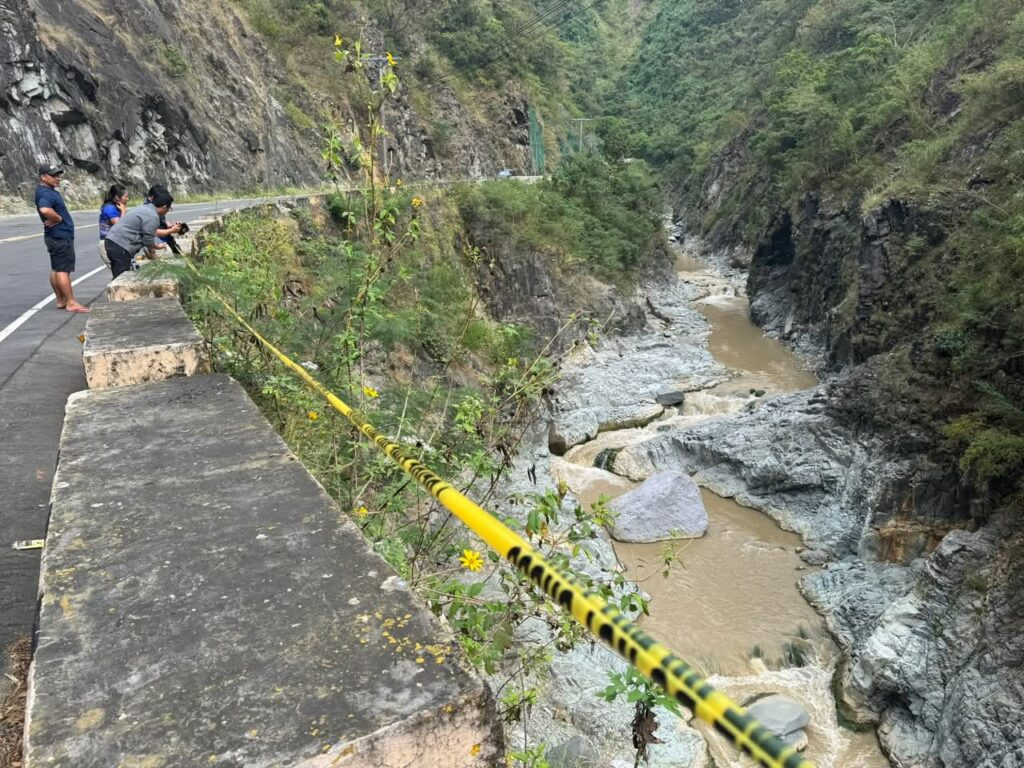
Cabral, who was one of the most senior career officials ever to serve in the agency — and one of the last central figures investigators were still trying to question, was found lifeless along the Bued River near Kennon Road in Benguet.

Initial reports hinted that she allegedly fell off a ravine along Kennon Road in Tuba, Benguet.

In a report, the Benguet Police Provincial Office said Cabral’s driver sought for assistance around 7 p.m. Thursday, December 18, 2025, after he failed to find her in the area where she asked to be left alone in Barangay Camp 4 around 3 p.m.

“The victim dismissed the driver, who then proceeded to a nearby Milo Gasoline Station. According to the driver’s statement, he returned to the victim at about 5 p.m. but failed to see her and searched the area of the incident,” the police said.

The Department of Interior and Local Government (DILG) however finds it rather strange as to why the police were not able to preserve the crime scene.

BUNGLED CRIME SCENE

No less than DILG Secretary Jonvic Remulla admitted lapses in the handling of the death of Cabral even as he ordered an autopsy and DNA testing to rule out foul play.

Remulla said the site where Cabral’s body was found should have been treated as a crime scene and that evidence, including her cellphone and other gadgets, should not have been released to the family before complete documentation.

“There were lapses on the part of the investigators,” Remulla told reporters. “Any death of that nature is considered a crime scene. There is a mandatory holding period, and that was not followed.” 

Remulla said police are seeking to retrieve Cabral’s cellphone and other electronic devices from her family for forensic analysis. Access to her computers, he added, would require a subpoena from the Office of the Ombudsman, the Sandiganbayan or the National Bureau of Investigation.

RECOVERING EVIDENCE

Philippine National Police acting chief Jose Melencio Nartatez Jr. said investigators are working to recover all pieces of evidence, including Cabral’s cellphone, to dispel speculation of a cover-up.

“We don’t like stones left unturned,” Nartatez said. “Through science — an autopsy and DNA — we want finality on what really happened.”

Nartatez said police officers involved would be reminded of proper procedures, including securing vehicles and items found at or near a crime scene.

Any accountability measures, including relief of personnel, would depend on the outcome of the investigation, he added.

Despite concerns that evidence may have been contaminated while in the family’s custody, Nartatez said forensic methods could still yield usable data.

CATALINA CABRAL WHO?

A little known government official that she was, Cabral had been tagged as the supposed brains behind the massive budget insertions in last year’s national budget.

Her familiarity with the “procedures” paved the way for alleged kickbacks and commission fees for the benefit of several lawmakers. Hence, a multibillion-peso kickback scheme that siphoned public infrastructure funds meant to develop the country’s flood mitigation systems.

During her stint as undersecretary for planning, oversaw the programming and allocation of infrastructure funds, including flood control projects. During the previous administration, she worked closely with incumbent Sen. Mark Villar, a former DPWH chief.

“The funding of all projects was cleared through [Undersecretary] Cabral for approval by [Secretary] Villar. From time to time, [Undersecretary] Cabral would ask me to submit [a] detailed list of projects regarding lump-sum fund allocations of DPWH which she sometimes approves herself or forward to Secretary Villar for approval,” resigned DPWH Undersecretary Roberto Bernardo said.

When Manuel Bonoan took the helm of the DPWH, she was also made to work closely with the Secretary.

CABRAL KEPT SECRETS

The Independent Commission for Infrastructure (ICI), which was formed precisely to look into the flood control scandal, called on law enforcement authorities to secure and preserve all of Cabral’s belongings, gadgets, and computers that could prove to be useful for digital forensics examinations.

The ICI earlier recommended the filing of administrative complaints against the former undersecretary as her name floated around congressional hearings looking into the scheme.

She was also said to have had a list of all of the people involved in the anomalous budgetary insertions on various dubious infrastructure projects, according to the Office of the Ombudsman.

Assistant Ombudsman Mico Clavano earlier noted that Cabral visited the Office of the Ombudsman to discuss the potential charges she would be facing more than two weeks before her death.

NO SUICIDE SCENARIO

Only her driver was reported to be with her during the time of Cabral’s death, and he is already in police custody.

“Until after the autopsy and after all the witnesses, everyone is considered a suspect na kasama niya (that she was with) beforehand,” the DILG chief said, citing his agency’s initial probe into the death.

He also dismissed a suicide scenario for Cabral who has fear of heights.

Remulla said Cabral was last seen asking her driver to drop her off along Kennon Road to inspect something, a routine move according to the driver.

She was later found at the bottom of a ravine around 8 p.m. There were no CCTV cameras in the area, which is prone to landslides, he said.

The driver and others who were with Cabral before her death are being treated as persons of interest.

Maharlika: Welfare Fund For The Rich?

0

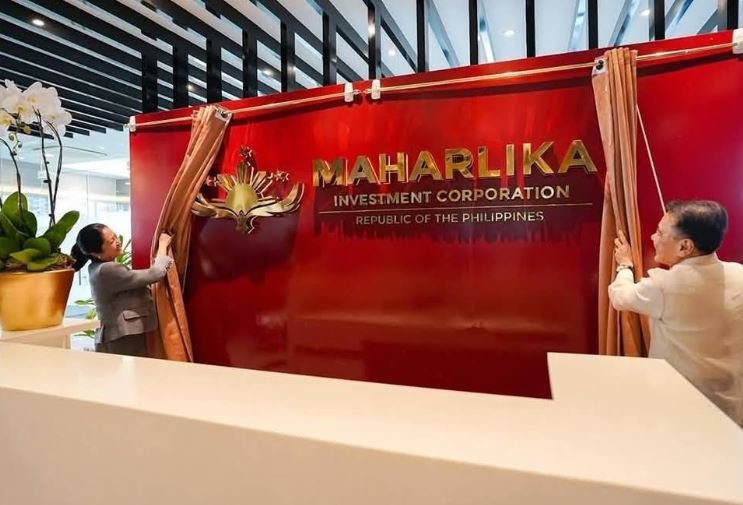
THE COUNTRY’S wealth fund, created to boost the state’s earnings from publicly- accessed  capital (state banks) to ensure economic growth, has been funding floundering firms of the rich which only assures the wealth fund of board seats while endangering people’s money.

The ATI investment would be MIC’s third major investment in two years, after a ₱4.42 billion bridge loan to Makilala Mining Co. and a ₱19.7 billion investment in the National Grid Corporation of the Philippines, both privately-owned.

Its investments in shaky businesses is in exchange for shares of stocks and board seats that would benefit the shareholders of such companies and those of the Maharlika Fund.

Of late, Maharlika bailed out Emirati-owned DP World, Marcos backer Yosi Tanco, Architect Felino Palafox Jr. with the delisting of ATI (Asian Terminals Inc.).

A story from Bilyonaryo said “why give money to the rich? Consing’s use of Maharlika Fund draws fire for bailing out these people as ATI delisting comes under scrutiny.”

P8.4 BILLION TO ATI

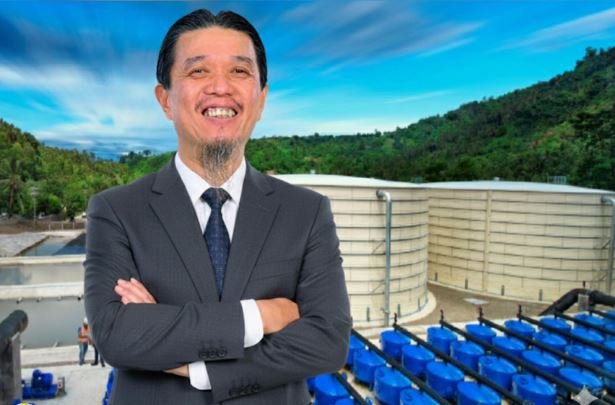
By picking up part of tab, Maharlika Fund plans to sink P8.4 billion to get one board seat in ATI and its underachieving president/CEO Joel Consing is pitching the deal as an investment in “critical utilities” that would help the economy and build a steady, cash generating portfolio. But critics say that is the sales pitch.

Critics argue that a taxpayer-backed fund capitalized by Land Bank and Development Bank of the Philippines is being used as a convenient extra wallet for ATI’s controlling shareholders, led by UAE logistics giant DP World led by chairman and CEO Sultan Ahmed bin Sulayem, billionaire Eusebio “Yosi” Tanco, and architect and urban planner Felino “Jun” Palafox Jr. as they finally push through a long-desired plan to take ATI private via a delisting.

FREE FROM SCRUTINY

“This is not an investment for the people. This is a bailout for private corporations at the expense of taxpayers,” said Bagong Alyansang Makabayan (Bayan) as it urged Congress and the public to scrutinize MIC’s investment in ATI.

Bayan said the fixed-price tender offer mainly rewards the private owners while shifting risk to the public.

Once ATI is delisted, it will no longer be bound by Philippine Stock Exchange disclosure and governance requirements, which Bayan said would make it easier to operate with less sunlight.

“This buy-in consolidates and protects ATI’s private shareholders while shielding them from public scrutiny and accountability,” BAYAN said.

ATI SHAREHOLDERS

The biggest shareholders are: DP World Australia (POAL) Pty. Ltd., ATI Holdings, Inc., Pecard Group Holdings Inc., and the Philippine Seaport Inc, with significant stakes from entities like DP World and local groups though recent filings show firms like Thunder Fze and others. Maharlika Investment Corporation plans to acquire a substantial stake of up to 11.2% of ATI, as reported in December 2025 for strategic investment.

ATI disclosures show MIC will launch a tender offer for 101.189 million shares, about 5.6% of the company, at ₱36 per share, or roughly ₱3.64 billion.

MIC’s target is about 200 million shares, around 11.1%, which would take the bill to as much as ₱8.4 billion, as it joins DP World, Tanco and other major holders in buying out the remaining public float.

NO SURE REVENUE

“MIC will plunk in P3.6 billion in public funds in a private company in which it will have no controlling stake, no role in operations, nor guaranteed income at a time when the government is cutting back ayuda for the poor, it is giving money to the rich,” Bayan lamented.

DP World, through its Australian subsidiary, owns about 17.4% of ATI. DP World is a Dubai-based global ports and logistics group with about $20 billion in revenue and $49.7 billion in assets in 2024.

Tanco, who owns about 32.3% of ATI, is listed among the Filipino billionaires with an estimated net worth of $1.1 billion, buoyed by the surge of online gaming firm DigiPlus, where he serves as chairman. 

Tanco is a campaign backer and close associate of President Marcos Jr., and his EDSA building served as Marcos’s campaign headquarters in the 2022 election.

PEOPLE’S MONEY

Other major ATI shareholders are Pecard Group Holdings of (19%) and ATI Holdings (14.6%).

For critics, the question is simple. If ATI’s biggest owners have the cash and the clout, why is Maharlika being asked to show up with the people’s money.

ATI manages and operates the Manila South Harbor, the Manila Inland Clearance Depot, Port of Batangas, Batangas Supply Base, and Tanza Barge Terminal. It also owns 35.71 percent of South Cotabato Integrated Port Services Inc., which operates the Makar Wharf in General Santos City.

TROUBLING PATTERN

BAYAN also pointed to what it called a “troubling pattern” in the fund’s early deals.

“From being touted as a vehicle for national development, the Maharlika Investment Fund is now exposed as a vehicle for subsidizing privatization, lining private pockets with public funds,” said Bayan.

Bayan questioned why billions of pesos are being channeled into private deals without clear guarantees of returns, especially as the government trims some social spending and poverty remains a major problem.

MIC responded by saying that the proposed stake in ATI reflects its focus on the “real economy,” noting that the port operator plays a central role in Philippine trade and logistics.

MIC FUNDAMENTALS

“Maharlika’s investment in Asian Terminals Inc. is anchored on its mandate to deploy capital into strategic, real economy assets that are fundamental to national development,” said Neil Chua Goy, assistant vice president of MIC’s Investment Management Group.

“As a primary gateway for Philippine trade, ATI is a critical component of the country’s logistics infrastructure, with a direct linkage to GDP growth, supply chain resilience, and long-term economic security,” he added.

LASTING INTEREST

Goy said the investment would give MIC a lasting economic interest and limited governance rights in what it described as a vital national asset, while allowing ATI to remain operationally independent.

“Through this investment, MIC secures a permanent economic interest and minority governance rights in a vital national asset, while allowing ATI to preserve its operational independence,” Goy said.

He added that the proposed tender offer price was backed by an independent fairness opinion. “The offer price of ₱36.00 per share is supported by an independent fairness opinion, ensuring the transaction is undertaken on a market-validated basis,” Goy said.

According to MIC, the deal is consistent with its broader investment strategy.

“This approach reflects Maharlika’s strategy of sovereign stewardship, generating stable, long-term, cash-generative returns in support of national progress,” Goy was quoted by Bilyonaryo.

Retail Giant Takes Villar’s PrimeWater

CONSIDERING THE huge financial and operational burdens of PrimeWater, a company owned by the Villar Group but has been widely criticized for inefficiency, why would retail giant, Lucio and Susan Co of Cosco Capital Inc.– who owns and operates popular supermarket brands, Puregold, S&R and Merkado – be so determined to buy a bankrupt water company?

The only thing certain is that Mr. and Mrs. Co are passionate and visionaries who would risk everything to serve a bigger base of people– especially those failed by the Villars.

NOT SO FAST

But as far as the Palace is concerned, the Villars would still have to comply with their responsibilities under the 25-year concession agreement, especially the failed systems in their concession areas.

In a press briefing, Palace Press Officer Claire Castro said PrimeWater Infrastructure Corp. must still honor its existing concession agreements and may be still held accountable for its previous lapses even under its new ownership.

Previous reports hinted that the Villar group has decided to sell PrimeWater to the Lucio Co Group, who owns the supermarket chain Puregold Price Club Inc., reads part of a report published by the Business Mirror.

UNDER PROBE

The change in PrimeWater management comes after the water concessionaire faced an extensive investigation from the Local Water Utilities Administration (LWUA) earlier this year due to its alleged unreliable and exorbitant services.

LWUA launched its probe in May after at least 20 of the water districts served by PrimeWater filed complaints on the services provided by the water concessionaire.

Aside from the water districts with whom PrimeWater has an existing Joint Venture Agreement (JVA), the Villar company has been at the receiving end of nasty remarks from consumers who felt being robbed of the limited resources they have.

“Ambilis maningil pero walang matinong serbisyo… pamilyang perwisyo,” reads one of the comments in a social media post.

MORE CONCERNS

Castro allayed concerns that the new development may lead to service disruption for PrimeWater customers. 

“According to [LWUA Administrator] Jose Moises Salonga, they will come out with a memorandum circular this month to make sure the water services of the concessionaires will not be disrupted,” she said.

As for PrimeWater customers who did not receive any service from the water concessionaire, she said they should not be charged. “So let us wait for the memorandum circular which will be issued by LWUA about that,” Castro added.

Castro said the government will continue to look into PrimeWater’s alleged past lapses. The Senate said it would also investigate the sale and unresolved issues.

LOOKING BACK

Last July, Castro announced the Office of the President already started reviewing the staggering volume of pieces of evidence on PrimeWater’s alleged poor service. 

She said the President concurred with LWUA’s recommendation to address the said complaints.

LWUA’s Salonga earlier said they are considering terminating the approved government agreements with PrimeWater and LWUA would temporarily provide reliable and clean water to customers failed by PrimeWater.

SILENT RICH

Interestingly, Lucio Co and wife are not even on the Forbes’ list of the world’s billionaires, but looking into web-based sources, the Co couple are worth of $3 billion as of mid 2025, making them the 9th richest in the Philippines with their wealth from retail, liquor, real estate and other businesses under Cosco Capital.

But their 100% purchase of PrimeWater, through Crystal Bridges Holding Corporation is covered by a definitive agreement and would take over in the middle of multiple investigations and local governments wanting to preterminate all over the country. 

In Bacolod City, for instance,  consumers are frustrated by the sale.

EASY WAY OUT

“Now that PrimeWater is in hot water, it is simply being sold to another private entity. Is this the solution? Where is the accountability? Will PrimeWater be allowed to walk away without consequences? Is this yet another attempt to fool the Bacolodnons?” the Bacolod City Water District Employees Union said in a statement.

Bacolod City just averted a major water crisis this weekend. PrimeWater had not paid three months of outstanding bills to its water supplier, and the subcontractor had threatened to cut the water line. Emergency negotiations ended in a clutch commitment by PrimeWater to pay on Saturday, December 13, or a day after the deadline, reported Rappler.

PrimeWater not paying its subcontractors is not an isolated incident with Rappler citing another contractor involved in at least two water districts. 

SENATE PROBE

Aside from the LWUA, the Senate has likewise been investigating the Villar family business’ fiasco.

Senator Raffy Tulfo, chair of the Senate public works committee investigating PrimeWater’s failure of obligations in at least half of its nearly 80 joint venture agreements, had also cited another case of an unpaid contractor.

The Villar group confirmed on December 16 that 100% of PrimeWater had been acquired by Crystal Bridges Holding Corporation, the investment firm of Puregold tycoon Lucio Co., owned by Co’s children, with Puregold heir Vincent Co as chairman and president, according to the company’s 2025 general information sheet.

TRANSPARENCY

In Himamaylan, Negros Occidental, the local council wants full transparency of what the Co group’s acquisition will entail. 

Vice Mayor Justin Dominic Gatuslao told Rappler that the local government was not informed beforehand, and that “it turns out even the members of the board of the water district were not aware of the transaction.”

Gatuslao said the next move of the council will be to ask the water district for the strategy with the Co group. “What are our non-negotiables and what is it that we want to push considering that we want to take this as a new opportunity, a fresh start so that we can finally take off from a solid foundation?” said Gatuslao, who described the Villar group operation as “definitely a failure.” 

DISSOLVE DEAL

In San Fernando, Pampanga, Mayor Vilma Caluag told Rappler that they are not keen on giving PrimeWater a second chance even with different management. The mayor appealed to the new owners, “Palayain na nila kami, pakawalan na nila kami, nagmamakaawa ako sa kanila para naman mabawasan naman ang challenges namin sa siyudad ng San Fernando.”

Caluag unilaterally suspended PrimeWater’s business permit in her city, which is now being pitched as a blueprint for other localities that want out of the 25-year deal. The water district, which is under LWUA, had also preterminated the contract, Caluag was quoted as saying.

IMPROPER FORUM

Sen. Tulfo in a hearing said PrimeWater’s technique has always been to take to court whoever attempts to break free, and “most of the time,” they win.

Caluag said PrimeWater had been allowed three catch-up plans in San Fernando, but services did not improve. Since doing a full offensive on PrimeWater, Caluag said the constituents have experienced some relief in water services.

“We don’t want a legal battle anymore, we don’t stand a chance. So, I hope they let us go so we can move on, and we can get to work,” Caluag said.

LEGAL BATTLE

In metropolitan La Union, the water district is still locked in a legal battle over pretermination. The Water for the People Network La Union said the sale was just a “pure business transaction” that “did not answer fundamental questions” about the joint venture.

“We should not allow the Villars to get away with the damage they have caused the community. They should be made to pay damages to consumers deprived of good water service,” the group said.

Hospitality business owners in surf town San Juan, La Union, who have been impacted by the water disruptions, said that while the sale “may invite reassessment, the sale of PrimeWater does not extinguish existing service obligations.”

“Consumers must not be made to shoulder the cost of PrimeWater’s operational and management failures,” said Monalisa Luebben-Binlot, president of the San Juan Resort Restaurant and Hotel Association.

BEFORE THE SALE

Prior to the acquisition, PrimeWater was wholly- owned by Prime Asset Ventures of Manuel Paolo Villar, son of tycoon Manuel Villar and brother of senators Mark  and Camille Villar. 

It was during the time of Mark Villar as secretary of the Department of Public Works and Highways under the Duterte administration when PrimeWater rapidly grew, increasing its joint venture agreements by five-fold. From 15 JVAs by the end of 2015, they now have 77 JVAs nationwide.

Half have been wanting to forfeit PrimeWater’s performance bond, according to Rappler’s analysis of audit reports, and half have been wanting to preterminate the contracts, according to Tulfo’s survey of its partner water districts.

SYNDICATED ESTAFA

Kabataan Representative Renee Co told Rappler in an earlier interview that PrimeWater under Villar should be criminally investigated “for estafa, syndicated estafa, and graft, if officials are involved.”

“The government should freeze assets and require performance bonds to make sure contractors, water districts, and consumers get paid and protected,” said Co. 

House Assistant Majority Leader and Las Piñas City Rep. Mark Anthony Santos expressed concern over the sale of PrimeWater Infrastructure Corporation, which controls numerous local water districts, to Crystal Bridges Holding Corp.

NO CONSULTATION

According to Santos, the sale is alarming because control of such a critical public service has shifted to a private entity through a corporate deal conducted largely outside public scrutiny, with minimal consultation with consumers or local governments.

“Let’s be clear: PrimeWater is not an ordinary company. It directly operates local water districts, which are inherently public utilities. These water districts should not be treated like shares that can be bought and sold as ordinary assets,” Santos said.

The lawmaker said that customers in the service area covered by PrimeWater have long complained about intermittent and inadequate water supply, unsafe and contaminated water, delayed or insufficient infrastructure improvements, and rising rates despite poor service.

“Now we are told there is a new owner and that improvements will automatically follow. But a change in ownership does not automatically fix the system,” he added.

NOT THE VILLAIN

Santos clarified that he is not against the private sector.

“We need investment and technical capacity in water infrastructure. But it’s a different matter when we’re talking about an essential service. When it comes to water, people have no choice. You can’t just tell them to switch providers,” he explained.

“If PrimeWater was sold for a high price, who would recover the costs? Consumers, through higher rates? Will the public pay for a corporate deal they had no say in?” Santos asked.

Santos cited that Congress must ensure the protection of consumers.

“Will long-standing joint venture contracts with known issues be reviewed? How will regulators ensure that service comes first, not profit? Do local governments and water districts still have a real voice, or are they merely signing off on boardroom decisions?” he asked.

EXPENSIVE WATER

“We are simultaneously facing climate change, aging water systems, a growing population, and communities still relying on water trucks. Yet water is being traded in corporate transactions. That is dangerous,” he added.

Santos also underscored that “Water is life. And life should not depend solely on corporate deals.”

“If this sale results in better service, more affordable rates, and wider access, then we welcome it. But if it leads to higher costs, weaker service, and reduced accountability, then Congress must act,” Santos added. “We are not here to defend conglomerates. We are here to defend every Filipino family—one faucet, one community, one right at a time.”

NOTORIOUSLY FAMOUS

Bacolod Rep. Alfredo Abelardo “Albee” Benitez said PrimeWater has been the subject of numerous complaints nationwide for its alleged poor service. It entered into a joint venture agreement (JVA) with the Bacolod City Water District (Baciwa).

The Villar Group’s water utility firm took over Baciwa’s operations in 2020 following the signing of a 25-year JVA.

In a radio interview, Benitez said that the Villar Group has sold PrimeWater and that a new owner is set to take over with the sale concluded last week.

Benitez said that when he became mayor of Bacolod, PrimeWater’s water supply was at 60 to 70 million liters per day (MLD), short of the 100 MLD target. This has since been achieved, he was quoted by Inquirer.

He noted that another major issue is the need to replace old pipes and other facilities in Bacolod’s water system.

ANYONE BUT VILLAR

Baciwa has estimated that P1.5 billion is needed for the modernization and improvement of water services in Bacolod, he said, adding  that the new firm must invest in modernization.

“I told Baciwa to avoid a messy court case. It should convince the new owner of PrimeWater to improve the provisions of the JVA, which is a bit one-sided,” he added.

He said that the new owner aside from having experience in the water business also possesses the necessary technical and financial capability. “The new firm is definitely much better than PrimeWater of the Villars,” Benitez said.

Benitez also said he has no problem with other water concessionaires entering Bacolod, noting that increased competition would benefit consumers.

INTERESTED TAKERS

PrimeWater, a subsidiary of Prime Asset Ventures, Inc., serves over 1.7 million households and supplies about 500 million liters of water per day across more than 100 partnered water districts nationwide. Its operations span multiple provinces, including Bulacan, Batangas, and Laguna.

Some big companies, including Pangilinan-led Metro Pacific Investments Corp., had expressed interest to acquire the water company after billionaire Manuel B. Villar, Jr. said he wanted to dispose of PrimeWater, saying the company is “being used against us in politics” amid mounting criticism of its services.

China Bank Capital Corp. Managing Director Juan Paolo E. Colet said that the tycoon’s takeover of the water utility would work due to his resources and network.

Governance Rests With Topmost Leaders

1

THE TYPHOONS IN the recent past have caused the loss of billions or trillions worth in agricultural and food products, among others. Such were causeddirectly by ghost and sub-standard flood control and other infrastructural projects, resulting likewisenationwide in the loss of livelihoods or employment of countless breadwinners, homelessness, and widespread destructions of roads, office buildings, schoolclassrooms and other structures.

This chaos impacting the Filipino people today, due tothe corruption (as publicly exposed in the live-streamed investigations in the Senate and House of Representatives), carried out by senators, congressmen, cabinet secretaries, LGU officials and AFP/PNPofficers, is essentially the fruit of misgovernance by President Bongbong Marcos and VP Sara Duterte. That’s the basic principle of command responsibility.

As president and vice-president—Bongbong and Sara— having been children of the country’s past presidents, should have learned at least the basics of management. They could have learned how best to avoid their fathers’ serious mistakes and failures, and more appropriately, even learn from their good decisions, if any, in the face of critical national political, economic and socio-cultural issues adversely affecting the nation at crucial times in their incumbency.  

So far, however, Bongbong and Sara, as holding the top two highest national positions in government, have miserably failed the Filipino people, since their installation (highly questionable as claimed by IT experts) as president and vice president of the countryin 2022.

NOT GOOD MANAGERS

One big reason, perhaps for their inability to be good managers in the face of the countless problems facing the country, is that they are naturally “bobos,” as soc med netizens often brand them. And, more relevantly, Bongbong and Sara, are considered as “corrupt and cheaters,” much alike their fathers, as presidents in the past. This is most likely the main reason why these two topmost leaders of the country simply could not and cannot overturn or eschew the corrupt and cheating nature of their fathers’ misgovernance character. 

The people really wonder why these two leaders cannot see or know what is right and what is wrong in their decision-making at the highest level of governance over the country. 

Bongbong and Sara somehow cannot understand that when they took their oaths of office, they were to observe and promote the Philippine Constitution and the Rule of Law in whatever they decide on how to address any crisis situation the country is facing at any time.

Apparently, they are too ignorant to know or perhaps, deliberately neglect to comply with their basic mandate “to build a just and humane society.” They worked as a team to be elected into office (as they cheated with Comelec chair George Erwin Garcia and Smartmatic, as discovered by the IT experts, TNTrio and other professional IT groups and individuals), but given their own inherent personal dynastic self-serving character of greed and corrupt-mindset, they could not work as a team eventually.

WHAT DO YOU EXPECT?

So, what can the people expect in the coming months? 

More problems, probably, such as the presidential baby, Independent Commission on Infrastructure (ICI), which netizens have opined will likely be unable to jail one corrupt senator or congressman.  

To publicly emphasize that their partnership has been a sham all along, VP Sara Duterte has kept mouthing in mainstream media that President Bongbong is to be blamed for all the problems facing the nation. 

It’s an ironical stupid stance, because she herself has been responsible for zero-performance as VP and as DepED secretary.  

The truth is, given her bloody stint as Davao Citymayor, she deserves to join her father in the Hague.    

US Survey Reveals Older Adults’ Need For Proper Nutrition, Healthy Habits, And Related Info

0

OLDER ADULTS NEED proper nutrition and healthy habits but may  need education in those areas, according to a recent survey conducted in the United States by the National Council on Aging (NCOA) and supported by the BOOST brand, a trusted leader in adult nutrition, highlights 

“Overall, the findings paint a picture of older adults who are informed and proactive about their health, yet they still need guidance on specifics like protein intake and calorie adjustments,” said Gretchen Dueñas-Tanbonliong, MS, MPH, RDN, MCHES, Associate Director of Health and Wellness at NCOA. “These insights highlight opportunities for education and resources that empower healthy aging. Our collaboration with the BOOST brand makes it possible to increase nutrition education efforts for our communities.”

The latest survey from NCOA and the BOOST brand reveals both strengths and gaps in that knowledge.

• Nearly all respondents (97 percent) agree that eating lean protein like eggs, beans, fish, or chicken is essential for older adults, underscoring widespread awareness of its role in healthy aging. At the same time, confidence in the details lags behind; while most know protein matters, only 59percent feel confident about how much they need each day.

• Nearly 60 percent say appetite declines over time, and more than half recognize the need to consume fewer calories as they grow older.

• The survey also sheds light on physical activity. Three-quarters of older adults expect joint discomfort as they age, yet the majority reject a persistent myth: 82 percentdisagree that being active worsens joint pain, signaling a clear understanding that movement supports mobility and comfort.

• Nutrition support is another area of focus. Three in four respondents believe nutritional drinks or supplements can help maintain health, reflecting trust in convenient solutions to meet changing dietary needs.

Based on these findings, the NCOA has published new educational materials to provide older adults and caregivers with scientifically-backed nutrition information specific to protein intake and nutrition. 

The survey included more than 2,100 respondents nationwide and explored attitudes toward nutrition, physical activity and aging-related health concerns.

Founded in 1950, the National Council on Aging (NCOA) is the national voice for every person’s right to age well. Working with thousands of national and local partners, we provide resources, tools, best practices, and advocacy to ensure every person can age with health and financial security. 

BOOST is a leading nutritional beverage brand that helps provide balanced nutrition, including protein, calories, and essential vitamins and minerals. For adults looking to up their protein intake and help fuel their exciting next chapter, BOOST nutritional drinks are a convenient, nutrient-packed snack or mini meal to help individuals reach their nutrition goals.

‘Insertion’ Itch Bites New House Leaders

0

NO MATTER THE change in leadership, the itch for budgetary insertions bit the new House leaders who, like their predecessors allocated hefty sums for their districts.

As in the past, the House leadership gets more in “insertions,” according to the Philippine Center for Investigative Journalism.

The district of the new speaker, Isabela Rep. Faustino “Bojie” Dy III, received the most insertions in the House-proposed 2026 budget for the graft-ridden Department of Public Works and Highways at P23 billion. 

The districts of Nueva Ecija Rep. Mikaela Suansing, who replaced resigned House appropriations committee chair Elizaldy Co, and her sister, Sultan Kudarat Rep. Bella Suansing, ranked second and third, respectively.

Insertions are additional projects or allocations lodged into the budget by lawmakers during congressional hearings. These were not originally included in the DPWH-proposed budget.

In September, the DPWH had allocated P1.1 billion to Dy’s district. But when the House passed its version of the 2026 budget, that amount was tripled to P3.8 billion. 

Suansing’s district was originally allocated P1.6 billion in DPWH funds but this more than doubled to P3.4 billion after House budget deliberations. Her sister Bella ranked third in insertion amounts, with her district being given P3.9 billion after an insertion of P1.6 billion. 

Regardless of the people’s outrage toward kickbacks and budget insertions, the new House leadership seemed unaffected by the fury by endowing their districts undeserved largesse in keeping with the traditional habits of their predecessors. At the very least their action borders on greed and public apathy.

PROPOSED DPWH BUDGET

The proposed 2026 budget for the DPWH is said to be the lowest under the Marcos administration– from P880 billion as proposed by resigned Secretary Manuel Bonoan, it was pared to P625 billion by new Secretary Vince Dizon, which the House further cut by P1 billion, as a token of sincerity to be more mindful of public funds. Yet, the final amount still carried hefty pork for the three top House officials.  

The Senate further slashed the DPWH budget to P570 billion by removing what Senate President Pro-Tempore Panfilo Lacson referred to as “questionable items.” 

The final budget amount will be determined by the bicameral committee composed of members of both houses. Yielding to public clamor, Congress for the first time in history, opened to the public the bicam meetings.

The question: Can the bicam rein in the old practices that led to the biggest corruption scandal in recent memory?

SPOTTING PORK BARREL

There are indicators that could determine whether or not a budget allocation contains pork barrel. 

Two-thirds of the House-proposed DPWH budget can be considered “pork.” Despite exposés showing massive payoffs to legislators and other public officials, the House still allocated some P400 billion in “pork” in the budget of the graft-prone DPWH. 

District representatives, in cahoots with the executive branch, determine how these funds, called “allocables,” are going to be spent. Such discretionary spending is one characteristic of pork.

The Supreme Court in 2013, in the wake of a corruption scandal, banned pork (by any other name) from the budget.

In addition, P100 billion in “non-allocable” projects— initiated by the DPWH were tucked in, that legislators and other officials can influence who gets the contracts for them. The total DPWH budget proposed by the House for 2026 is P624 billion. 

The Senate version of the budget, however, has reduced the DPWH allocation to P570 billion. The bicam is expected to reconcile the House and Senate proposals.

MAINTAINING CLOUT

By now, the Bicam must have already realized that the former Speaker (Martin Romualdez) still has clout over the budget. 

Despite resigning from the speakership and being accused of receiving billions of pesos in kickbacks, Romualdez’s district was given the biggest chunk—P6 billion of the P500 billion in “allocable” and “non-allocable” DPWH funds.

This amount is actually reduced from the P9.9 billion the DPWH originally proposed for Romualdez’s district.

The only other district who received more than his is the 2nd district of Misamis Oriental, represented by Yevgeny “Bambi” Emano, which received P6.35 billion.

Advocates of good governance have called for an equitable distribution of the infrastructure budget, depending on a locality’s population and poverty rate. But Emano and Romualdez’s districts are not necessarily the ones with the highest population or poverty incidence in the country.

Zamboanga del Norte is the country’s poorest province. And yet, the total proposed budget allocation for all of its three legislative districts, which is at P6.33 billion, is just slightly on par with Emano’s single district, PCIJ noted.

PH Seen Receiving 127 Cruise Ship Calls Next Year

0

THE PHILIPPINES IS set to receive an estimated 127 cruise ship calls in 2026, the Department of Tourism (DOT) said Tuesday, citing continued interest and “sustained engagement” from global cruise operators.

The initial projection comes as the government steps up collaboration with cruise stakeholders to support the sector’s recovery and long-term growth.

“Cruise tourism, for us in the Philippines, is not only about arrivals. It is about the entire Philippine experience—the jobs created, the businesses sustained, and the communities empowered,” Tourism Secretary Christina Frasco said.

Through the end of 2025, the DOT expects 136 cruise calls to bring 43,369 passengers to Philippine ports. Manila remains the country’s primary cruise gateway, followed by Puerto Princesa and Boracay.

Speaking at the Asia Cruise Cooperation (ACC) Annual Regional Meeting, hosted by the Philippines on Monday, Frasco underscored the importance of regional coordination in shaping the next phase of cruise tourism growth in Asia.

She said closer collaboration among destinations, ports, and cruise lines is critical to ensuring growth that is sustainable, inclusive, and beneficial to host communities.

“If there is one lesson the ACC teaches, it is this: no destination succeeds alone,” Frasco said. “Collaboration across ports, cruise lines, and governments ensures every traveler’s experience is seamless, enjoyable, and meaningful.”

The Philippines will continue to engage cruise operators as partners in itinerary development, deepen the exchange of market insights and operational best practices, and better align the end-to-end visitor journey across destinations, she added.

Frasco also pointed to the rapid expansion of Asia’s cruise market, noting that millions of travelers are increasingly seeking distinctive experiences across the region.

“This meeting allows us to chart a course for cruise tourism that supports communities, generates jobs, and strengthens connections across Asia,” she said.

At the same gathering, Frasco highlighted Manila’s efforts to strengthen cruise tourism policy and infrastructure. The DOT said nearly 7,000 cruise visa waivers have been issued to date, easing entry requirements and improving accessibility for cruise passengers.

Port infrastructure upgrades are also underway. A cruise terminal in Jubang, Dapa, Surigao del Norte has been completed, while construction continues in Coron, Aklan, Camiguin, and Puerto Galera. Improvements are also ongoing at Manila South Harbor.

Looking ahead to 2026, Frasco said the government will reconstitute the Cruise Tourism Development Committee to enhance inter-agency coordination and advance the implementation of the National Cruise Tourism Development Strategy.

N. Samar Gets P20 Billion Wind Energy Investment

The Northern Samar Provincial Government welcomed the decision of Singapore-based Vena Energy’s local unit, Gemini Wind Energy Corp. (GWEC), to invest P20.2 billion to build a 304-megawatt  (MW) wind farm in the province. The farm is located on the border that covers San Isidro, Northern Samar, and Calbayog City some 235-km north of Tacloban City, the regional capital. The wind farm will introduce 38 wind turbine generators and was targeted to be operational last Monday, December 15, 2026.

Pork By Any Other Name Is Still Bad Fat

0

A NEW BUZZWORD known only by the former higher-ups of the Department of Public Works and Highways, is ALLOCABLE funds — first bared to the public at the hearing of the Blue Ribbon Committee chaired by Sen. Panfilo Lacson.

Upon hearing this buzzword, the first thing that came to my mind is alukable — meaning offered (with conditions) funds— a name coined by ex-DPWH Secretary Manuel Bonoan (someone I thought I respected coming from the private sector) and executed by Undersecretary Ma. Catalina E. Cabral of Planning and PPP, previously a highly-recognized model of “Women in Infrastructure.” Her image was that of a trustworthy civil servant, dedicated to her career.

In the confession before the BRC by resigned DPWH Undersecretary Roberto Bernardo he said that there was no clear formula on how the allocable funds are computed. More often, he said, Cabral tells him that all the allocable funds have already been allocated in the National Expenditure Program, when in reality Cabral sets aside some funds for herself and Bonoan.

Bernardo himself carried an awesome demeanor, at least among DPWH people and the contractors. He was the real boss of district engineers Henry Alcantara and Bryce Hernandez, who turned out to be the  messengers of “papers and funds” of kickbacks to be given to the legislators and industry allies.

‘We must end corruption, which is rooted in political dynasties and patronage politics, and the practice of SOPs and kickbacks. These practices have made our rich country poorer by the year making us lag miserably behind our poorer neighbors — Myanmar, Vietnam and Laos.’

NEVER HEARD

A video of Rappler’s interview with former congressman and ex-Budget Secretary Butch Abad showed that he never heard of the term “allocable” and what formula is used in partitioning these funds to intended recipients among LGUs. Being something new and opaque, no one but Cabral and Bonoan, have engineered and benefited from the allocable funds.

Abad, DBM Secretary under President “Noynoy” Aquino III, spearheaded major budget reforms like GAA-as-Release Document and Performance-based Budgeting and the highly-controversial Disbursement Acceleration Program, another term for pork barrel that was outlawed by the Supreme Court. 

ANO INAALOK?

When Rappler interviewed one congressman, he surprisingly answered: ano inaalok? This response is a natural reaction by any Filipino.

Fantastic how people landing at the top positions are able to invent and reinvent pork barrel into different schemes and nomenclatures only to circumvent the final ruling of the Supreme Court that pork barrel is unconstitutional and illegal.

Not even during the time of the most corrupt president (post Martial Law) Rodrigo Duterte invented/engaged in allocable funds.

I wonder if this is the anointed money-making venture of Junior to ensure that his family would live well enough for the rest of their lives?

For how can we explain to the people that these top officials who have had good reputations in the past have been so corrupted to destroy the entire bureaucratic systems.

WHOS CABRAL

As USec for Planning and Public-Private Partnership (PPP), Ma. Catalina Cabral oversaw DPWH’s infrastructure planning and programming and all PPP projects of DPWH, A licensed engineer with two doctorate degrees in Business Management and Public Administration and has a Ph.D. candidate in Urban and Regional Planning at the University of the Philippines. She also holds three master’s degrees and certificates from Wharton, Harvard Kennedy School, and Mohamed Bin Zayed University in areas like data analytics, digital

transformation, and AI.

She made history as the first female President of the Philippine Institute of Civil Engineers (PICE) and later served as National President of the Road EngineeringAssociation of the Philippines. In 2021, she held the Professional Chair in Engineering Science and Technology at PUP.

Her excellence has earned her numerous awards, including the 2021 PEZA Galing Pinas Ecozone Partnership Award, the 2020 Excellence Award from the Philippine Federations of Professional Associations, and the 2021 PRC Outstanding Additionally, the JCI Senate Philippines named her one of the Five Outstanding Filipino (TOFIL) Awardees Laureates for Government and Public Service in 2022. She also received in 2024 the Circle of Excellence ASIA-CEO Women of the Year.

Cabral has been nominated for several international awards, including the World Federation of Engineering Organization’s GREE Women in Engineering Award in 2019, the United Nations Public Service Awards for SDG 5 – Gender and Equality in 2022, the Asian Civil Engineering Coordinating Council (ACECC) Achievement Award in 2022. She has also recently been

nominated for the 2024 Women’s International Network on Disaster Risk Reduction (WIN-DRR) and the Presidential GAWAD CES Award.

WHO’S ROBERTO BERNARDO

No less than Sen. Ping Lacson, BRC chair, described USec Bernardo as “the powerful padrino of Henry Alcantara and Brice Hernandez, DPWH engineers now on the hot seat of the ongoing flood control mess.”

Bernardo was among the DPWH executives whom the Discayas earlier mentioned as among those involved in the web of corruption — supposedly soliciting money from contractors like them after securing the projects.

In his privilege speech, Lacson linked Bernardo and Bonoan to a contractor of flood control projects in Bulacan — MBB Global Properties Corp., of which the children of Bernardo and Bonoan are among the owners.

As USec for regional operations in the Visayas, NCR and Region IV-B, he had supervision and control of all infrastructure projects. He has the most to explain how these substandard, ghost or overpriced projects happened under his watch, whether or not his boys went rogue or if he himself had any involvement.

Star business editor Iris Gonzales said rumors say Bernardo may have already left the country last November even as DPWH Secretary Vince Dizon earlier requested the issuance of an immigration lookout bulletin order on contractors and DPWH officials, including Bernardo.

Bernardo, a long-time veteran at DPWH, might be the missing link between his two men, Alcantara and Hernandez, and perhaps the rest of the BGC Boys in DPWH and the politicians who were involved in this dizzying corruption saga.

He rose from the ranks in DPWH with 30 years of work experience to boot. He started as a civil engineering aide in 1986.

Bernardo received the prestigious Most Outstanding Alumnus Award for Government Service from the Mapua Institute of Technology, the institution where he completed his Bachelor of Science in Civil Engineering in 1984.

OTHER SCANDAL PLAYERS

The DPWH bigwigs and contractors, on their own, cannot create pork. The pork is built around the budget– either through unprogrammed funds where insertions from the budget can fund imagined or real projects.

In other words, the bigger players are those in the legislature and the palace– where budgets are first proposed, expounded/propounded and funds can be diverted from priority programs and projects to this item of unprogrammed funds.

It takes both chambers to toy with the budget—taxpayers’ money— which they play with as if they owned the funds in the first place.

Using the bicam and the special (secret) committee, they insert their projects for funding– and usually they already have clear ideas of where and which contractor to allocate them to, of course with the usual SOP (standard operating procedure or commonly known as kickbacks).

This corrupt practice has been with us since the Chinese traded with us, then the Spanish, Japanese and Americans “gifted” us with progress-cum-corruption and now our legislators have fine-tuned them into so many forms, formats and names.

We must end corruption, which is rooted in political dynasties and patronage politics, and the practice of SOPs and kickbacks. These practices have made our rich country poorer by the year making us lag miserably behind our poorer neighbors — Myanmar, Vietnam and Laos.

Boosting Green And Digital Skills

0

THE 11TH ADB International Education and Skills Forum, held in the institution’s Manila headquarters this December 3-5, revolved on applying a fresh lens to unlock the power of human capital. It was premised on the inescapable and unstoppable reign of technology -Artificial Intelligence (AI) mainly – all the way to the future which poses a big and creative challenge to individuals and institutions. 

Moving on from the trendy discourse on the necessity and safety of AI, the sessions explored how AI and humans can co-create for better outcomes in teaching and learning, in support of sustainable development. This demands that the triple helix – government, university (or academe), and industry – must have a symbiotic relationship like one ecosystem.Collaboration, knowledge transfer, funding support among them can result in a dynamic system for innovation.

‘Panelists discussed the growing demand for workers with combined green and digital skills. Questions remain about whether education systems are equipping learners with the skills for more and better jobs. And where are the green jobs?’

GREEN AND DIGITAL SKILLS

Not surprisingly, environment (my column’s lens) is one field/sector eyed as critical not only for survival but as well for sustainability. Think of forests getting denuded, biodiversity being decimated, alternative energy as urgent, and of course, climate change that can collapse the earth system in just over two decades.   

Generally, presenters expressed that governments have put in place programs and policies to protect our planet.  Industries have evolved and are evolvingaccording to the call of the times – clean, green, efficient, inclusive, society-sensitive. The academe has integrated environment in the curriculum, from foundational learning stage to post-graduate level.

Across Asia and the Pacific, however, green infrastructure investments were said to risk underperforming without parallel development of the workforce, skills and institutions needed to support them. Panelists discussed the growing demand for workers with combined green and digital skills. 

Questions remain about whether education systems are equipping learners with the skills for more and better jobs. 

And where are the green jobs? 

Renewable energy, energy-efficient construction, waste management and recycling, modern transportation, organic farming, land and forest management, conservation and environmental protection, research and consulting, are some of the fertile fields. As environment work is largely science-based, technology will certainly be of big help in data gathering, assessment, and application.  

FUTURE-READY?

Transformative ideas have been shared by education ministers (among them Philippine Education Secretary Sonny Angara), educators, industry leaders, IT innovators, and top honchos of multi-lateral organizations (like ADB and World Bank) which fund very promising and necessary projects, coming fromthe Asia-Pacific, Europe, North and South America, and some island states. It was a most enlightening and engaging forum, a celebration of the brightest ideas, a shared goal of a better future, and inclusivity.

But a most heartwarming thought at the end of the 3-day gathering is the reassurance among presenters, facilitators, and the audience that the human brain and heart are still the driving force wherever technology can take us.

Which incidentally, is the lens I keep clear and untinted.

Will The 2025 MMFF Finally Rake In Billions This Christmastime?

0

FOR THE LAST six years, the annual Metro Manila Film Festival (MMFF), a pet project of the Metro Manila Development Authority (MMDA), has been performing dismally at the box-office.

​Worst, it had altogether ceased to report publicly concrete estimated—at least—figures of its overall earnings, especially at the height of the COVID-19 pandemic when its entries were screened digitally.

​In 2019, when the viral rush was still on the sideline, the festival had failed to reach its one-billion-peso target when it only grossed P955M, as per MMDA press release, as compared to the P1.060B mark in 2018.

​In 2020, the online edition of the fest gathered only P31M, according to the official announcement from seemingly unofficial results.

​Meanwhile, the succeeding years saw an uphill battle of recapturing the bailiwick of the film fiesta—the return of moviegoers to cinemas amid a hybrid of online screening and theater exhibition during selective seasons although the last two or three years, the festival has found a setting of a full showing in cinema houses.

‘Will this year’s film festival finally gain momentum to its optimum maximizing its potential on the quality entries selected by the committee? Banking on the eclectic lineup, the 51st MMFF is touted to be among the bests in the current local filmmaking that combines, again, “art” and “business.” ‘

ENERGY AND MONEY

​Still, MMFF and MMDA have to grapple with the gradual increase—with no exact and concrete figures released—in the rise of higher receipts at the cashier.

​After all, the success of the event is perennially and typically gauged in the income generated by it.

​Or to toe the line of the usual suspect—so that it can sustain the program and the producers are inspired to pump in energy and money the next time around. 

​Mostly, the pronouncements were safe and customary like “this year’s box-office records are higher than last year” or “MMFF performed better than the combined results during the pre and post-pandemic atmosphere” or “Hollywood movies had overtaken the prospects of the local titles” etc.

​Will this year’s film festival finally gain momentum to its optimum maximizing its potential on the quality entries selected by the committee?

​Banking on the eclectic lineup, the 51st MMFF is touted to be among the bests in the current local filmmaking that combines, again, “art” and “business.”

GLORIOUS DAYS

​Offhand, the names of the projects might be in the mold of independent filmmaking especially the employ of English titles and their directors are mostly coming in from the cutting-edge indie spirit, and although the outfits are the usual commercial movie manufacturers, the effort to bring back the glorious days of the fest is palpably felt.

​Here are the eight chosen few of the post-golden years of the annual fest:   

    “Call Me Mother” (Jun Robles Lana, dir., Star Cinema, IdeaFirst Company and Viva Films), a family drama starring Vice Ganda, Nadine Lustre, Carmi Martin etc. 

​“Rekonek” (Jade Castro, dir., Reality MM Studios), a family drama featuring Carmina Villaroel, Gerald Anderson, Gloria Diaz, Zoren Legaspi, Alexa Miro etc.

​“Manila’s Finest” (Raymond Red, dir., Cignal TV Inc.), a crime thriller showcasing Piolo Pascual, Rica Peralejo, Enrique Gil, Ashtine Olviga etc.

​“Shake, Rattle & Roll: Evil Origins” (episodes “1775”: Shugo Prako; “2025”: Joey de Guzman; “2050”: Ian Lorenos, dirs., Regal Entertainment), a horror, supernatural anthology headlining an ensemble cast headed by Carla Abellana, Janice de Belen, Luisa Andallo, Francine Diaz, Seth Fedelin, Richard Gutierrez, Ivana Alawi, Manilyn Reynes, Fyang Smith, JM Ibarra, Dustin Yu etc.

     “I’m Perfect” (Sigrid Andrea P. Bernardo, dir., Nathan Studios), a social romance presenting Down syndrome actors Krystel Go and Earl Amaba with other performers etc.

​“Loe You So Bad” (Mae Cruz-Alviar, dir., Star Cinema, GMA Pictures, Regal Entertainment), a romance drama top billing by Bianca de Vera, Will Ashley, Dustin Yu etc.

​“Bar Boys After School” (Kip Oebanda, dir., 901 Studios), a drama featuring Carlo Aquino, Kean Cipriano, Enzo Pineda. Rocco Nacino etc. and

​“Unmarry” (Jeffrey Jetiruan, dir., Quantum Films, Cineko Productions), a drama starring Angelica Panganiban, Zanjoe Marudo, Eugene Domingo, Solenn Heussaf etc.

​MMFF 2025 opens on Christmas day, December 25 in cinemas nationwide with a Parade of Stars on December 19 in Makati City. 

​Good luck!  

Accusations, True?

0

FORMER REP. ZALDY CO of Ako Bicol is facing charges of plunder, graft, bribery, anomalous flood control project in Oriental Mindoro, and conflict of interest at the Office of the Ombudsman. 

This was in connection with the firm FS CO Builders Supply. But he is not in the country at the moment, and his whereabouts is unknown. However, he has made himself very visible to the Filipino people, and more so to President Bongbong Marcos. 

In a series of recorded videos, Co had accused the president and former Speaker Martin Romualdez, and some cabinet members of making “insertions” worth P100 billion in the 2025 national budget. “He also claimed that he delivered P56.4 billion in cash hidden inside pieces of luggage from 2022 to 2025 to the residences of Mr. Marcos and Romualdez.” (Inquirer)These accusations have been denied by both government officials.

‘[T]he fugitive former congressman, Zaldy Co, safely abroad in a foreign country, boldly revealed the facts of PBBM’s actual role in enabling senators like Jinggoy Estrada, Joel Villanueva, Mark Villar, former senators Bong Revilla, Nancy Binay, and Grace Poe to receive kickbacks from the government’s flood-control projects.’

PAINFUL BUT TRUE

Moreover, Co also issued another video claiming that the first lady intervened to halt two separate House investigations into the sudden spike of onion prices and alleged rice smuggling. “This may be painful to hear, but this is the truth. The first family itself is involved in these corrupt systems. From the President, to the first lady, they are the ones who dictate, control and benefit from transactions that should have been for the benefit of the people.”

As expected, President Bongbong denied any wrongdoings, and even pushed back by claiming that Rep. Zaldy Co tried to blackmail him to prevent the cancellation of his (Co’s) passport. Co’s lawyer, in response, denied the president’s blackmail claim. 

In short, President Bongbong and Rep. Zaldy Co, both high government officials, have been accusing each other of betraying the people’s trust, with specific actions unbecoming of their high government positions – in fact, serious actions that are clearly covered under the Anti-Graft Law.

PEOPLE’S TRUST

How are the people looking at this spectacle of two top government officials, mandated supposedly to work for their benefit, publicly accusing each other of corrupt practices and betraying the people’s trust?

The people cannot help but believe that President Bongbong and then Rep. Zaldy Co were friends, or acquaintances, before the problem of kickbacks worth millions in flood-control projects were exposed in theseparate investigations of the Committees on Good Governance of the Senate and of the House of Representatives. Both knew that flood-control projects have been among the major programs of thegovernment, given the regular yearly visits of typhoons. 

Such projects requiring private contractors, selected and supervised by the Department of Public Works and Highways (DPWH), were generally recognized as needing billions of pesos to be budgeted by Congress. Both knew that the bicameral assembly, composed of selected senators and congressmen, reconcile the differences in the two versions of the yearly budget.And both knew the “insertions” made then. 

In fact, President Bongbong Marcos has been approving the yearly budgets since becoming president. This means that he has approved, for all intents and purposes, the amounts for kickbacks, the money stolen eventually by the corrupt senators, congressmen and private contractors.

SAFELY ABROAD

Thus, the fugitive former congressman, Zaldy Co, safely abroad in a foreign country, boldly revealed the facts of President Bongbong Marcos’ actual role in enabling senators like Jinggoy Estrada, Joel Villanueva, Mark Villar, former senators Bong Revilla, Nancy Binay, and Grace Poe to receive kickbacks from the government’s flood-control projects.

Thus, the people can only speculate, “The accusations must be true!” “Mga magnanakaw, ikulong na!” “Mga kurakot, panagutin!”

The Hidden Link Between Stress, Immunity, And Shingles

2

YOU SURVIVED CHICKENPOX as a child. Tiny red dots. Oatmeal baths. You thought you’d paid your dues. You thought you were free.

Wrong.

Decades later, your immune system blinks — distracted by stress, poor sleep, a bad diet, menopause, aging, or just life — and your childhood virus comes roaring out of retirement like a washed-up celebrity demanding a comeback tour.

That, my dear, is shingles.

This is not “just a rash.” This is the varicella-zoster virus — the same polite little germ that caused chickenpox — waking up and choosing violence. It doesn’t knock. It kicks the door in, sets your nerves on fire, and rearranges your plans.

Because it has a flair for drama, shingles usually attacks one side of the body, tracing the path of your nerves like a malicious art project. One moment you’re fine. The next, your skin feels branded.

‘Acupuncture isn’t a magical delete button for the virus. But it can calm an overexcited nervous system and tone down pain signals.Research suggests it can reduce chronic nerve pain, improve sleep, ease burning and stabbing sensations, and support overall nervous system balance.’

Common symptoms include:

▪ A painful, blistering rash

▪ Burning, tingling, or stabbing sensations

▪ Extreme sensitivity to touch (your clothes become the enemy)

▪ Fatigue, mild fever, and strong “Who did I anger in a past life?” energy

The blisters eventually dry up. They crust. They heal. Congratulations. 

But sometimes, the real nightmare is just getting started.

Postherpetic Neuralgia: The Souvenir Nobody Asked For

Meet Postherpetic Neuralgia (PHN) — the uninvited guest that refuses to leave. It’s chronic nerve pain that can last months… even years after the rash disappears.

Shingles doesn’t just annoy your nerves. It damages them. And damaged nerves become theatrical divas, firing off fake pain signals. 

PHN can feel like:

▪ Persistent burning

▪ Electric shock sensations

▪ Sharp, random stabbing pain

▪ Allodynia — pain from things that shouldn’t hurt:

▪ Bedsheets

▪ Clothing

▪ A light breeze

▪ Even a loving hug (rude)

It’s not imagination.

It’s not weakness.

It’s neurological chaos caused by a virus with unresolved childhood issues.

Your risk increases after 50 because the immune system doesn’t age like fine wine. It ages like milk abandoned on the counter.

Long-term effects may include:

▪ Chronic, life-interrupting nerve pain

▪ Sleep problems (because pain does not respect bedtime)

▪ Mood changes, anxiety, and depression

▪ Vision problems if the face or eyes are affected

▪ A serious decline in quality of life

This isn’t rare. This isn’t dramatic. This is medical reality.

Can Acupuncture Help?

Acupuncture isn’t a magical delete button for the virus. But it can calm an overexcited nervous system and tone down pain signals.

Research suggests it can reduce chronic nerve pain, improve sleep, ease burning and stabbing sensations, and support overall nervous system balance.

It works best as an adjunct medical treatment — not a replacement for antivirals or doctor-prescribed therapies. And if needles scare you, remember: so does feeling like invisible bees are electrocuting you.

Prevention: Stop Ignoring It

There is a shingles vaccine, and it significantly lowers your risk of both shingles and long-term nerve pain. It’s generally recommended for adults 50 and over.

People skip it because: “I feel fine.”

“I don’t like injections.”

“It won’t happen to me.”

Know this, the virus doesn’t care. When it shows up, it arrives unannounced, uninvited, and completely unbothered by your opinions.

Final Reality Check

If you’ve had shingles and the pain is still hanging around, that’s not you being dramatic. That’s nerve damage demanding attention.

Talk to your healthcare provider about antiviral medication, nerve pain therapies, supportive treatments (including acupuncture), and the shingles vaccine if you never had it.

Early treatment matters. Waiting it out is not a personality trait.

Your body remembers things you’d rather forget. The virus definitely does. And your nerves? They are not letting this go.

By The Certified Prick — Serving health truths with sarcasm and zero apologies

Anti-Political Dynasty Law: A Crack In The Intra-Elite Struggle And What To Do About It 

0

AS THE INTRA-ELITE struggle continues to dominate Philippine politics like a never-ending telenovela—same surnames, same feuds, different years—the country suddenly finds itself staring at an unexpected plot twist. 

The current president, Ferdinand Bongbong Marcos, neck-deep in the preservation of his regime and in fending off political predators circling overhead, has pivoted to an earthshaking proposal: the passage of the long-awaited, long-desired Anti-Political Dynasty Law. 

This is the surprise of surprises. The president who has luxuriated in the dominance of his own family dynasty—the same one that has held Luzon in a political chokehold since the 1960s, or more than 60 years—is now the one calling for this reform. It is like watching the architect of the flood control mafia suddenly denounce corruption, or the undersecretaries we wrote about—those white-collar bagmen of bureaucratic plunder—launch a crusade for clean government. You do not know whether to laugh, applaud, or check if hell has frozen over. 

Pundits, sharper than ever, say this is merely his attempt to keep controlling the narrative, to set the agenda, to survive the many and emerging attempts to remove him from office. It is survival disguised as reform. Strategy disguised as moral awakening. But even then, we take what we can get. It is a welcome development. 

‘While the political elites are squabbling, this—this moment—is the people’s opportunity to seize control of their political direction. Before the window closes again for another 60 years.’

THIS IS ONE OF THEM

When a regime begins to convulse from all sides—attacked from within, squeezed from without, exposed by the cracks of its own making—sometimes it produces gestures of desperation that the people can seize. And this is one of them. 

This gamble from an elitist president must be taken on by any progress-loving Filipino. We should push for this and jump with the current inertia. Family political dynasties remain the root cause of corruption in Philippine politics, bureaucracy, and even business. They are not mere symptoms—they are the disease. 

As I have written in previous columns, they are the mechanism for collusion: family members and allies strategically placed across government positions, negating checks and balances, smothering accountability, turning public office into a family enterprise. 

BLIND LOYALTIES

Dynasties breed incompetence and reward blind loyalties. 

Whatever laws we pass—even the most stringent—can easily be bypassed when two or more colluding members of the same clan use their power and clout to bend rules, break systems, and bulldoze institutions. In the bureaucracy, dynastic padrinos dictate appointments like feudal lords distributing land titles. 

And the bureaucrats comply, not out of respect, but out of fear—fear of losing jobs, budgets, promotions, and careers. 

In a nation where up to 80 percent of political positions are related to dynasties, priorities will always be distorted. Public funds will continue to be siphoned. And elections will remain auctions: votes bought, loyalty traded, conscience pawned. From the Ramos, Macapagal-Arroyo, Aquino, Duterte and to the Marcos Jr. administration, we have seen how dynasties effortlessly transfer influence, redirect funds, and partake in corruption—most notoriously in the flood control projects we have repeatedly discussed. This is not the exception; this is the ecosystem. 

PUSH CONGRESS, SENATE

Thus, the Anti-Political Dynasty Law must finally be passed, and the people must rally behind it. 

Yes, this is the president’s gamble to remain in control, to keep his regime intact. But it is also a rare opening, a crack in the armor of elite continuity. We must take advantage of it. 

All anti-corruption activists should stop bickering, stop arguing who among the current politicians is more corrupt—as if comparing shades of rot produces any enlightenment. 

I have said it again and again: our elitist political establishment, dominated by dynastic clans, is to blame. Push Congress. Push the House. Push the Senate. Push until the provision that has gathered dust since the 1987 Constitution is finally, irrevocably, enacted. 

While the political elites are squabbling, this—this moment—is the people’s opportunity to seize control of their political direction. Before the window closes again for another 60 years.

#thefilipinocriminologist

Social Presence: The Vibe You Bring

0

HAVE YOU EVER walked into a room and felt instantly at ease — or instantly tense — without a single word being exchanged?

The Back Story 

Nothing dramatic happened. No conflict. No announcement. No performance.

Yet your body knew. That’s social presence.

Before anyone says a thing, presence already sets the tone. It tells people whether they can relax — or brace themselves.

And yes — some folks think walking tall, wearing fancy clothes, or even wearing a hat equals presence. Wrong.

  • Clothes don’t give presence. 
  • Feeling safe, seen, and respected does.

What Presence Really Is

Social presence isn’t about charm. 

  • It’s not confidence.
  • It’s not being loud, flashy, or “cool.”

Social presence is the emotional footprint you leave behind.

It’s how people feel when you’re around:

  • Calm or tense
  • Seen or ignored
  • Energized or drained

That feeling matters more than words ever will.

Work Vibes Matter

Even in silence, social presence shows up clearly.

Situation 1:
A colleague quietly organizes shared files, keeps energy steady, and respects deadlines.

Impact:

  • The team feels safe and focused. 
  • Work flows. 
  • People relax.

Situation 2:
Someone in a designer suit sighs loudly, slams a drawer, or rolls their eyes.

Impact:

  • Tension rises. 
  • Team energy drops. 

Clothes don’t save this moment.

Community Energy

In shared spaces, presence speaks volumes.

Situation 1:
Someone waits patiently, stays aware of others, and moves with calm consideration.

Impact:

  • People feel respected.

Situation 2:
Someone pushes ahead, ignores personal space, or acts entitled.

Impact:

  • People feel uncomfortable — even without a word.

Relationships That Feel Good

Silence doesn’t cancel presence — it reveals it.

Situation 1:
Distance or quiet time, but no coldness, no tension, no punishment.

Impact:

  • Trust stays strong.

Situation 2:
Silent withdrawal, stonewalling, or disinterest.

Impact:

  • Relationship energy drains.
  •  Friends feel invisible.

Dull vs Dynamic 

Some folks are dull.

  • No awareness
  • No energy
  • No consideration
  • Flat, heavy, forgettable

Dullness drains. 

  • Presence energizes. 

Choose wisely.

Why Presence Wins

Skills, intelligence, charm — all helpful.

  • But if your presence creates tension, people don’t stay open.

Social presence allows:

  • Teams to function
  • Communities to coexist
  • Relationships to feel safe

It’s not about doing more.

  • It’s about being aware of the energy you bring.

Boost Your Social Presence 

Notice your energy.

  • Pause and check how you feel in the space.

Respect boundaries.

  • Give people physical and emotional space.

Stay steady.

  • Calm energy spreads calming energy.

Be aware, not perform.

  • Presence is felt, not shown off.

Small gestures count.

  • A smile, nod, or simple acknowledgment speaks volumes.

Avoid dullness.

  • Disengaged, flat, heavy energy drains others.

Tips And Techniques 

Your presence speaks before you do.

  • Dullness drains.
  • Presence energizes. 

Choose wisely.

  • Don’t focus on saying the right thing.
  • Small changes. 
  • Big impact. 

Remember: Be the kind of presence people feel good around.

A Ring That Works As Hard As You Do

0

FOR WORKERS CONSTANTLY on the go—catching early rides, juggling deadlines, skipping meals, and pushing through long days—health often slips to the bottom of the priority list. We promise ourselves we’ll get checked soon, rest next week, or start healthier habits after this busy season. But busy seasons, as we know, never really end.

That’s why health solutions that blend seamlessly into everyday life matter more than ever. Not flashy, not complicated—just practical. This is where the mWell ECG Ring, the Philippines’ first wellness ring with built-in ECG monitoring, quietly makes its case.

Health That Doesn’t Slow You Down

Launched by mWell, the country’s leading health and wellness mega app under Metro Pacific Health Tech Corporation, the mWell ECG Ring is designed for people who don’t have the luxury of constant checkups but still want to stay on top of their health.

It builds on the success of the original mWell Ring, introduced in May 2024, which helped many Filipinos understand their health through sleep and lifestyle data. By tracking light, deep, REM, and total sleep, and translating these into a simple mWellness Score, the ring turned complex health data into something easy to understand—even on the busiest days.

Now, the ECG Ring takes things further by focusing on what matters most: the heart.

Why Heart Monitoring Matters—Every Day

Heart disease remains the leading cause of death in the Philippines. For workers balancing multiple responsibilities, regular health screenings aren’t always realistic. Appointments take time. Clinics have lines. Life gets in the way.

Wearable tools like the mWell ECG Ring help close that gap. By enabling everyday heart monitoring, users can stay aware of their condition without disrupting their routine. ECG results can be viewed directly in the mWell app, stored securely in the mWell Health ID, and shared as a PDF with doctors via email or messaging apps—making medical consultations faster, clearer, and more informed.

As mWell Chairman Manuel V. Pangilinan puts it, preventive healthcare should be accessible and affordable. Health decisions shouldn’t happen only when we’re already sick—they should happen daily, in small but meaningful ways.

Turning Prevention Into a Habit

According to Chaye Cabal-Revilla, President and CEO of mWell, the ECG Ring supports continuity of care by allowing users to track progress over time. Instead of relying on memory—Was my heart rate higher last month? Did I feel this tired before?—the data is already there.

For Dr. Raymond Francis Sarmiento, mWell’s Chief Operating Officer, wearable devices like the ECG Ring represent a shift in how care is delivered. They help detect early warning signs and make prevention part of daily life, not something reserved for annual checkups.

For workers who rarely slow down, that shift can make a real difference.

Premium Features Without the Premium Hassle

Globally, many smart rings cost significantly more—and still don’t offer ECG monitoring. The mWell ECG Ring stands out by offering built-in ECG monitoring with no subscription fees, making advanced health insights more accessible.

Crafted from titanium with a scratch-resistant finish, the ring is lightweight, water-resistant (IP68), and designed to last up to seven days on a single charge. It’s discreet enough for work, durable enough for daily wear, and stylish enough to feel intentional—not medical.

The ring is available at a special introductory price of ₱12,999(regular price ₱13,999), with free shipping and no monthly fees.

One Ring, A Bigger Health Ecosystem

The ECG Ring is part of mWell’s growing ecosystem of wearables, including mWell Smart Watches that support over 100 sports modes and track blood pressure, heart rate, and blood oxygen levels. All devices connect to the mWell app, creating one place where health data becomes easier to understand—and easier to act on.

For People Who Are Always Moving

For workers who are always on the go, health doesn’t have to be another complicated task on an already full to-do list. Sometimes, it starts with something simple—something you put on once and let work quietly in the background.

Because taking care of your health shouldn’t require you to stop your life. It should move with you.

Legislate Unprogrammed Funds To Shun Insertions

0

THE MOST SENSIBLE proposal to ensure that the 2026 budget onwards would be free of insertions that usually end up pocketted by legislators, Supreme Court Justice Ramon Paul Hernando proposed that unprogrammed funds be legislated.

“At the core of this controversy lies an undeniable truth: Unprogrammed funds in the GAA (General Appropriations Act) are unconstitutional,” SC Justice Hernando said.

Legislating unprogrammed funds would prevent more dubious budget insertions in future budget deliberations, and legislating it with a special appropriations law would make everything transparent.

Hernando raised this proposal in agreement with his 14 SC colleagues to declare unconstitutional the executive department’s impounding of P60 billion from Philippine Health Insurance Corp. funds, which the SC ordered returned to PhilHealth coffers last Dec. 3.

In a 33-page concurring and dissenting opinion – the dissent of which delved on the unconstitutionality of unprogrammed appropriations as a source of corruption – Hernando, the senior magistrate, noted that such funds “do not relate to any appropriation for expenditures” and are thus “prohibited” in the charter.

“Instead, unprogrammed appropriations should be legislated through a special appropriations law,” he wrote, specifically citing Article 6 Section 25(2) of the 1987 Constitution, that bars any provision from inclusion in the General Appropriations Bill, unless there is specific particularity.

“At the core of this controversy lies an undeniable truth: Unprogrammed funds in the GAA (General Appropriations Act) are unconstitutional, reported the Philippine Star.

They create an unregulated space where discretion replaces discipline and where the temptations of greed and corruption inevitably find room to operate,” Hernando said.

In his review of congressional wisdom where he cited deliberations among lawmakers, which included constitutional commission hearings in the 1935 Constitution and the Administrative Code of 1987, Hernando also discovered “structural defects” in unprogrammed funds.

“As presently conceived, they have no place in a constitutional order that requires appropriations to rest on defined sources of financing and prohibits riders in the GAA.

Fidelity to that trust requires that every peso collected for health be spent for health and for no other purpose,” he reiterated.

Newbie Rep. Robert Nazal, of Bagong Henerasyon partylist, welcomed and commended Hernando’s dissenting opinion, saying it “strengthens” their “long-standing call to remove unprogrammed funds from the national budget starting 2026.”

“Justice Hernando’s opinion makes clear what we have been warning all along – this mechanism is prone to abuse and should no longer appear in the 2026 budget,” Nazal said.

LACSON BEGS OFF

Senate President Pro Tempore Panfilo Lacson criticized the funding approval for the controversial Medical Assistance to Indigent and Financially Incapacitated Patients, which has been criticized as the “new face of pork barrel.

Lacson refuses to sign the ratification of the 2026 budget if the bicameral conference committee pushes through with a large funding increase for controversial aid programs and multibillion-peso allocations for farm-to-market roads.

Lacson told dzBB on Sunday the approval of the P51.6 billion allocation for the Department of Health (DOH)’s controversial Medical Assistance to Indigent and Financially Incapacitated Patients (MAIFIP), is the “new face of pork barrel.”

“Sorry, unless rectified in its final version, I cannot sign to ratify a bicam report with P51 billion for MAIFIP, with nothing but guarantee letters from politicians and is not compliant with the Universal Health Care Act,” Lacson said.

The Senate had earlier sought to realign much of MAIFIP’s funding toward Universal Health Care, citing long-standing concerns that the program could be vulnerable to political patron-age. The House version placed MAIFIP at P49.2 billion.

Lacson noted that MAIFIP should have been realigned to the Universal Health Care Act.

“Unless we adequately fund the UHC programs such that they cover all barangays and ensure zero billing, among others, we cannot fully implement the UHC law that we passed. All health-related funds must be subsumed under the Universal Health Care program of the Department of Health. Guarantee letters from politicians will only guarantee patronage politics but not the health care needs of Filipinos, especially the indigents,” he stressed.

He said safeguards could still be introduced through special provisions while bicam deliberations are ongoing, particularly to prevent assistance from being directed without proper assessment.

DOUBLING FMR FUNDS

Lacson will not also sign because of the doubling to P33 billion (instead of the P16 billion sought by the President) of the funds to the Department of Agriculture for farm-to-market roads, which the bicam allocated.

“I will not associate myself with the P33 billion spending for unplanned and unvetted farm-to-market roads,” he said.

The bicam debated for an hour last Saturday night over the proposed funding for FMRs, with senators raising concerns that these would be the next target for infrastructure corruption and congressmen insisting on doubling the funding.

Sen. Erwin Tulfo said he had objections due to a lack of assurance regarding safety measures in its implementation.

“This is such a huge amount. While I know that our farmers need this, the problem is that the public might think that we may have removed the flood control projects, but we replaced it with farm-to-market roads,” Tulfo said during the debates.

“The Filipino people who are watching us right now cannot help but think that there might be problems with this. That the issues in flood control will only transfer to farm-to-market roads,” he added.

Sen. Pia Cayetano, pointing out the large increase, underscored that the budget for FMRs for 2026 might be bloated to as high as P43 billion because of the P11 billion unreleased funds from 2025.

“That’s a lot. And we have to remember that this amount is (originally) roughly around P16 billion. It’s almost times three. I am surprised that the masterplan has yet to be developed,” Cayetano said.

Nueva Ecija Rep. Mika Suansing, House appropriations committee chair, clarified that the masterplan is already extensive but some far-flung areas are not yet included.

Sen. Francis Pangilinan backed doubling the FMR budget now that the DA has complied with technical requirements such as coordinates and specifications.

Sen. Loren Legarda noted that FMRs must be “according to the needs of the area, based on population, land area and others, and not through politically divided districts.”

The bicameral conference committee is still reconciling final provisions of the proposed 2026 General Appropriations Bill, which will be returned to both chambers for ratification, once finalized.

PNP Bags ₱176-M Illegal Drugs

0

EFFICIENCY IN THE enforcement of the law is not measured by how often one speaks in public—it is shown in what gets done and its chilling effect on the government effort against lawlessness.

This comes as police operatives bust what looks more like a big syndicate in a drug sting which resulted in the arrest of five high-value targets.

LESS TALK POLICY

Under Lieutenant General Jose Melencio Nartatez Jr., the Philippine National Police (PNP) has taken a quieter but more deliberate approach and one that prioritizes operations, discipline and outcomes rather than optics.

And the PNP’s focus has been consistent: Do the work, do it right and let the results speak.

According to Brig. Gen. Randulf Tuaño, Chief of the PNP Public Information Office, the approach was evident on December 13, 2025 as a joint anti-illegal drug operation was carried out along C6 Aura Duterte Street in Barangay Napindan, Taguig City.

The operation, which was led by the PNP Drug Enforcement Group through its Special Operations Unit NCR, with support from the Southern Police District Intelligence Division and PDEA NCR, was executed in compliance to proper pre-operations procedures and was based on developed intelligence.

Five high value targets were arrested during the operation. They were identified as John Walter Bernaldo Carlos, Danny San Jose Ordoñez, Joniel Coricor Almeda, Alvin Zabala Escovidal, and Elmer Rabanes. Investigators said the group played key roles in an organized drug distribution network, and their arrest disrupted ongoing illegal drug activity in Metro Manila and nearby areas.

Authorities seized more than 25.5 kilograms of suspected shabu, about 1.77 kilograms of high-grade marijuana kush, 140 marijuana oil cartridges, and assorted smuggled cigarettes recovered during the operation. With an estimated value of over ₱176 million, the seizure represented more than just a large haul. It cut into an active network and removed a serious threat from the streets.

Operatives also recovered a Glock 17 firearm with ammunition, buy-bust money, mobile phones, and identification cards. All suspects and non-drug evidence are now under the custody of the PNP Drug Enforcement Group, while the seized drugs have been submitted for forensic examination. Alternative recording devices were used throughout the operation, reflecting the administration’s emphasis on proper documentation, transparency, and accountability.

More than the volume of drugs seized, the operation showed how the organization is being run. Under Nartatez, units are given clear direction and expected to deliver, with emphasis on coordination, command responsibility, and trust in field operatives.

“The result was not accidental. It came from preparation, discipline, and leadership that stays focused on execution,” Tuaño said.

“At a time when public attention often gravitates toward statements and press conferences, this operation is a reminder that real leadership often works quietly. Under Chief Nartatez, the PNP continues to show that progress is built through sustained action, not applause, and through results that hold long after the cameras are gone,” he quipped.

Baguio City Flagged For Dubious Land Acquisitions

0

THE  BAGUIO CITY local government unit has much explaining to do on its purchase of atrociously-overpriced parcels of land in Tuba, Benguet in 2024, says the Commission on Audit (COA).

According to its audit report, the Baguio city government bought two parcels for P103.46 million — way above the zonal value of the Bureau Internal Revenue (BIR).

The BIR zonal value is P10 per square meter but the price at which the LGU bought them was at P1,500 per sq.m. — or 154 times more than the BIR value.

Clearly, the excess funds must have been pocketed or shared among the local officials even when such procurements were charged in the city’s Development Fund on the 2020 Supplemental Budget unanimously passed by the Sanguniang Panlungsod under Ordinance Number 42, series of 2020.

“The City’s purchase price paid with a total of P101,465,425.53… is excessively higher than the BIR Zonal Valuation of P635,850 and the Fair Market Value per Tax Declaration of P141,190,” the audit team pointed out.

PRIORITY DEV’T PROJECTS

COA cited the Joint Memorandum Circular No. 1 of the Department of Budget and Management (DBM)-Department of Finance (DOF)-Department of the Interior and Local Government  (DILG) dated November 4, 2020, that the 20% Development Fund shall be utilized to finance the local government unit’s priority development projects.

Such priority projects however must be included in the LGU’s local development plan, medium-term, and annual investment program.

The DBM-DOF-DILG Joint Circular further defined the projects under the 20% Development Fund as those that are “necessary, appropriate, or incidental to the efficient and effective local governance, and those which are essential to the promotion of the general welfare of the people.”

City Mayor Benjamin Magalog, in a letter to the city council requesting for the Supplemental Budget, declared that the lot to be purchased is part of the city’s “land banking strategy for future sale or development.”

“Review of the City’s Local Development Investment Program and other Plans disclosed that there is no specific development project that was identified/planned/programmed requiring the purchase of the Topinao lots,” COA said.

The Topinao lots in Tuba, Benguet, a 6.5 hectare property in Sitio Topinao, Poblacion Village, are owned by businessman William Tan Jr. and his daughter Hazel Dominique before being acquired by Baguio City with Mayor Magalong as the buyer.

As declared, the acquisition is for land banking purposes in preparation for a housing project which led to graft complaints against Magalong, but was cleared by the Ombudsman in July 2025 finding no probable cause for indictment.

Former City Councilor Mylen Yaranon had accused Magalong of graft and grave abuse of authority in her complaint filed before Christmas last year, alleging that the mayor proceeded with the purchase in 2023 without an endorsing city council ordinance or public bidding, reported Inquirer earlier.

She also claimed Magalong ignored the need for geological testing due to the lots’ topography, as well as a property dispute involving one of Tan’s lots that had been disclosed to the city council.

Sold through a negotiated P95-million deal, the Topinao lot is currently being evaluated by the Department of Human Settlements and Urban Development as a potential site for the government’s Pambansang Pabahay para sa Pilipino Program, Magalong said during a July 9 City Hall briefing. The site is projected to house 5,500 families.

NO NEED FOR BIDDING

The Ombudsman’s Special Panel of Investigators, headed by lawyer Maria Olivia Elena Roxas, dismissed on July 15, 2025 Yaranon’s complaint, concluding that the land acquisition did not require a mandatory bidding process and was already approved in 2020 through an ordinance endorsing that year’s Annual Investment Plan — which included a P120-million allocation for land banking.

The panel also cleared Magalong of Yaranon’s allegation that he gave the Tans undue advantage over other private land offers and of consummating the transaction within days, despite an understanding that half of the payment could be made on a staggered basis within two years after the sale.

The panel cited Tan’s original sales offer to City Hall dated January 4, 2020 — before the COVID-19 outbreak — which allowed for either full payment in cash or 50 percent upon execution of the deed, with the balance payable within two years in 24 equal monthly installments.

The panel added that the court dispute involving one of Tan’s Topinao lots began a few days after the Deed of Absolute Sale was executed, indicating that there were no adverse claims at the time of sale.

It also noted that the 2022 Property Valuation Report provided City Hall with sufficient information to determine the “merits and viability of the lots purchased.”

The panel’s resolution was issued on February 24, but the city government only obtained a copy on July 4.

The same panel had issued a separate joint resolution on February 18 dismissing criminal and administrative complaints previously filed by Yaranon, who had claimed Magalong gave contractor Khatib Construction “unwarranted benefits” despite the firm’s poor track record in constructing a multipurpose government building in Baguio’s Irisan village.

That project was partly financed by a P50-million grant from the Department of Public Works and Highways.

The panel noted that Magalong had later terminated Khatib’s contracts for two other projects due to delays and “serious defects,” the Inquirer reported.

The Ombudsman then Samuel Martires, whose term ended on July 27, 2025. 

The first lot measuring 35,407 square meters is located in Tupinao, Tuba, Benguet while the second one covering an area of 36,514 square meters is situated in Takian, Tuba, Benguet.

AS PER BIR VALUATION

Attached to the disbursement voucher on the payment for Capital Gains tax and Documentary Stamp tax on the purchase of both lots was the computation by the BIR of the total Fair Market Value (based on the tax declaration) of P141,190, while the Zonal Value was pegged at P635,850 or P10 per square meter. 

“These two amounts are way lower than the City’s purchase price of P1,500 per square meter,” COA said. 

In its reply to the audit observations, Baguio City said the properties have been identified as the area for social housing projects. 

In its defense, it pointed out that due consultations were made with various local government officials including Sangguniang Panlungsod members. It added that the COA was likewise consulted. 

“The good faith and the due diligence exercised by the city officials accompanied with the exigency of taking advantage of the offered price justifies the acquisition of the Topinao lands,” the LGU said. 

It added that the transaction was previously halted when the COA issued a Notice of Suspension and only pushed through when the same Notice was lifted. The city government said it believed it had already fully complied with the requirements to warrant such lifting.

IBON: Privatization Breeds Corruption 

0

THE MARCOS ADMINISTRATION has intensified the privatization of public services so that bureaucrats and private entities can operate and manage facilities to enrich themselves and stay in power. 

At least this is the perception raised by several groups at Monday’s media forum entitled “Beyond Corruption: How privatization steals from the people.”

KADAMAY secretary general Mimi Doringo and IBON research head, Rosario Guzman tackled how intertwined privatization is with corruption– which they said are mechanisms of bureaucrat capitalism– or running the government like a business for private gain.

Rampant privatization of public services is another way the Marcos administration and big corporations rob the people of their rights and needs. 

Public funds and resources continue to be used by bureaucrats and private entities to operate and manage public facilities to enrich themselves and stay in power,” they said.

Guzman explained that politicians or bureaucrat capitalists do not only use their positions of power to steal billions of pesos in public funds through pork barrel or from kickbacks, but also to gain the favor of big local and foreign businesses by implementing neoliberal policies, such as privatization.

By brokering and turning over public services, public assets and natural resources for private firms to profit from, bureaucrat capitalists maintain their positions of power while enriching themselves and advancing their own businesses, at the expense of ensuring the peoples’ welfare and genuine development.

Inefficient, Unaffordable

Panelists who formed part of the discussion shared the impact of privatization on communities and livelihoods such as the privatization of local water districts, the Ninoy Aquino International Airport and the transport sector and electricity and oil.

They pointed out that when public services and resources are privatized, these become inefficient and unaffordable. 

Yet the government guarantees the profits of private firms’ big-ticket projects despite the lack of benefits for the public, using the taxes and higher user fees squeezed from the majority of ordinary struggling Filipinos. 

Militants Join Call

With Guzman in the panel were Leo Espelimbergo of the Water for the People Network (WPN), Arlene Castillo of Migrante Philippines; Nanoy Rafael of Para Commuters Network; Mody Floranda of PISTON; and Michael Beltran of Pinoy Media Center (PMC).

Gabriela Women’s Partylist (GWP) House Representative Sara Elago discussed the measures and alternatives to end privatization, and ensure transparency, accountability and genuine public control of services. 

Amihan Mabalay of the SUKI Network concluded with a synthesis of the forum noting the importance of greater collaboration between the media, researchers, educators, campaigners and the people’s movement, and leading participants in a chant of “Serbisyo sa Tao, Huwag Gawin Negosyo!”

Various media groups and campaigners  attended. The forum was organized by IBON, SUKI Network, Para Commuters Network, KADAMAY, Migrante PH, Water for the People Network, Makabayan, PISTON, Altermidya, and PMC.