
Friday, March 27, 2026
Home Blog Page 18

Leandro Leviste Finds Fault So He Can Be Famous

0

IT PAINS ME to call him Representative Leandro Leviste (Batangas) because he has shown not once, but more times, that like his mom, Sen. Loren, he would do anything to keep the name afloat in people’s minds, even if it meant finding fault in people and institutions so he becomes famous, politically.

First, he accused District Engineer Abelardo Calalo of the Department of Public Works and Highways of attempting to bribe him for P10 million, which is just partial payment. Calalo was arrested in an entrapment with supposedly marked money.

Calalo claimed the money was a donation instigated by Leandro for his mom’s project. He was arrested last August, for giving Leandro about $3.1 million cash to stop an investigation into DPWH probes on projects in Batangas. Leviste was widely hailed in social media for this.

Next, he accused a newly-appointed DPWH Undersecretary Arrey Perez (a trusted man of DPWH Sec. Vince Dizon) and other new appointees of having connections with contractors, though he has not named specific contractors.

He urged Dizon to disclose any such relationships to promote transparency, warning he would release evidence if the agency did not do so first. Dizon denied but admitted that some members of his team have had meetings with contractors outside the DPWH office but that these meetings were for work-related purposes and not for favors.

To spruce his image, Leviste claimed his main goal is to push for systemic reform in the DPWH and advocate for a 25% reduction in project costs to eliminate kickbacks. 

Out of delicadeza (which Leviste and his mom lacks), Perez resigned (after only 18 days at DPWH) shortly after such accusations. In the end, Leviste ended up apologizing for his mistake. But this came too late, he had tarnished the image and dignity of another person.

‘The solar power law, thanks to his mom, catapulted his company to greatness but on his own, Leandro has much to prove … Perhaps, it would do him well to be more humble and not play hollier-than-thou with each of his  thoughts, words and actions so that he would not look and sound like a greedy opportunist.’ 

DEFENDING REP. BARZAGA

Another character I find difficult to accept as a lawmaker is Rep. Francisco “Kiko” Barzaga, who was voted out with a 60-day suspension by a clear majority of the House of Representatives based on the findings of an ethics committee that heard his case for two months, the first hearing of which he snubbed because he slept late from an all-night video game.

On December 1, HoR voted 249 (approvals) – 5 (dissenters) to suspend Cavite’s 4th district Rep. Barzaga for 60 days without pay and allowances.

Leandro was among the five who dissented citing that Congress should be ashamed for acting on Barzaga’s case with haste while alleged corruption charges of CWS Rep. Edwin Gardiola remained unaddressed.

The statement worked emotionally, but the public record tells a different story, according to a Facebook post.

TIMELINE UNDERCUTS HIS PREMISE

On November 26, the Independent Commission for Infrastructure (ICI) and the Department of Public Works and Highways (DPWH) formally submitted criminal and administrative charges against Rep. Gardiola to the Office of the Ombudsman, with submissions that included a) a 45-page report of around 1,300 DPWH projects worth P92 billion; b) documentation linking projects to lawmakers who own or control construction firms, and c) evidence that companies tied to Gardiola handled 211 projects worth P24.6 billion.

The Ombudsman accepted the findings for fact-finding and preliminary investigation and requested travel bans for dozens of officials tied to the flood control scheme.

Since August 2025, the Ombudsman had opened a probe into Gardiola’s construction dealings where investigative reports mapped out billions in contracts secured by firms linked to his family. House sources described recruitment attempts involving DPWH kickback arrangements.

Barzaga’s case was an internal ethics matter that required a House vote. Gardiola’s case was a criminal matter that required Ombudsman action. They do not overlap. They do not compete. And they do not cancel each other out.

Barzaga was suspended not as punishment for dissent as Levista claimed but for:  1) Lewd and degrading posts; 2) display of wealth; 3) statements that triggered complaints, and 4) conduct unbecoming of a legislator.

Barzaga’s official accounts included photos such as a woman’s thighs wrapped around his neck, which was condemned by the Philippine Commission on Women, he shared images of cash and luxury items which were careless just when the country is reeling from despair over massive systemic corruption; he posted remarks about the Batasan being set on fire, adding that documents and personnel should be evacuated. The CIDG filed a case of inciting to sedition and rebellion complaints based on these posts.

He snubbed his first ethics hearing; he vlogged during plenary sessions; he jumped on his seat shouting ambitions of becoming Speaker; he was dismissed from the army reserve months after joining.

Leviste claimed Barzaga’s suspension was done in “haste” because the committee report was circulated on the same afternoon as the vote. But the ethics complaint was filed on September 15, 2025 and the vote took place on December 1.

If the timing truly compromised due diligence, the remedy would have been a motion to defer the vote. He did not file one, a blogger posted.

The objection he raised relied on perception rather than the actual procedural options available.

HOW CLEAN IS LEVISTE?

Aside from being a younger son of Sen. Loren Legarda (a known political butterfly who shifts allegiances to stay in power, a reality that his elder son, Lorenzo, rebukes and hates), Leandro’s claim to fame, his solar power company only zoomed because of the strings that his mom pulled. 

The solar power law, thanks to his mom, catapulted his company to greatness but on his own, Leandro has much to prove. 

But for now, people see him as just a senator’s son, who benefitted from the machinations of his mother. 

Perhaps, it would do him well to be more humble and not play hollier-than-thou with each of his  thoughts, words and actions so that he would not look and sound like a greedy opportunist.  

Filipina’s Uncommon Act Of Bravery

0

WHEN FIREFIGHTERS FORCED their way into a smoke-choked flat inside Hong Kong’s Wang Fuk Court, they found a young Filipina domestic worker unconscious on the floor—her arms still wrapped tightly around the three-month-old baby she had fought to protect.

Just days into her new job in Hong Kong, Rhodora Alcaraz made a choice that would define her life: she refused to let go of the infant even as flames roared, smoke thickened, and survival became uncertain. Her instinct was not to escape, but to shield the child with her own body.

The baby survived. Rhodora, however, remains in intensive care, clinging to life on a ventilator.

‘Many see (Rhodora’s) act of courage as a shining reminder of the sacrifices migrant workers make every day—quietly, dutifully, and often heroically. In a city haunted by loss, one woman’s final instinct—to protect a child who depended on her—has emerged as a symbol of hope and humanity amid despair.’

HERO IN THE DARK

Rhodora’s family in the Philippines learned of the fire in the most agonizing way—through a frantic video plea recorded by her sister and shared on social media while the blaze was still raging. Hours later, firefighters reported that they had found Rhodora collapsed but steadfastly cradling the infant.

Her act of selflessness quickly spread across Hong Kong and the global Filipino community. Messages of gratitude poured in, praising her courage in a moment when instinct would have driven anyone to flee.

Her former employer, Rhoda Lynn Dayo, described her as hardworking, gentle, and devoted. “People are recognizing her bravery,” Dayo said. “You fight for your own life, but the fact that she never let go of the baby—even when it wasn’t her own—says everything about who she is.”

A CITY IN MOURNING

The Wang Fuk Court conflagration has become Hong Kong’s deadliest building fire in decades, with over 148 fatalities as authorities continue to identify remains and account for the missing. Multiple high-rise blocks in Tai Po were engulfed on November 26, sending towering plumes of smoke across the district and trapping residents on upper floors.

Crowds swelled across Hong Kong in the days that followed. At a park near the charred buildings, thousands lined up for more than a kilometer to lay flowers, offer prayers, and grieve. Candlelight vigils were held in Victoria Park and the central business district, many attended by migrant workers who had their Sunday rest day.

Among the victims confirmed by the Philippine Consulate General (PCG) was Maryan Pascual Esteban, an OFW who perished while taking care of her employer’s child. Her 10-year-old son told DMW Secretary Hans Leo Cacdac that he wanted to be a firefighter “so no one else will die in a fire.”

SEACHING FOR ANSWERS

Hong Kong authorities have launched an interdepartmental task force, while the city’s anti-corruption watchdog arrested 11 people linked to the tragedy. Police also made a sedition arrest after reports of individuals distributing flyers calling for accountability and an independent probe.

Investigators are working to determine whether systemic failures or negligence may have fueled the devastating spread of the blaze. The Buildings Department has halted work on 30 ongoing private construction projects as part of safety assessments.

GRIEF ACROSS BORDERS

The Philippine government is extending full assistance to the families of affected OFWs. Of the 83 Filipinos registered as residents in the affected blocks, 70 have been confirmed safe, while 12 remain unaccounted for.

For Rhodora Alcaraz, who is now fighting for her life, the Filipino community has rallied in prayer. Many see her act of courage as a shining reminder of the sacrifices migrant workers make every day—quietly, dutifully, and often heroically.

In a city haunted by loss, one woman’s final instinct—to protect a child who depended on her—has emerged as a symbol of hope and humanity amid despair.

Hitting GDP Growth Target Unlikely

0

“HONESTLY, THAT’S VERY unlikely now.”

That was the statement of Department of Economy, Planning and Development Secretary Arsenio Balisacan that the Philippine economy, as measured by gross domestic product (GDP), will grow by at least 5.5 percent for full-year 2025.

To recall, third quarter GDP growth came in at a disappointing 4 percent, which was blamed on government withholding infrastructure spending due to the flood control project scandal worth billions of pesos.

To meet the full-year growth target of 5.5 to 6.5 percent, the economy would need to expand by 7 percent in the last quarter, Balisacan said in a briefing.

However, Balisacan acknowledged that reaching this level would be challenging due to recent natural disasters and the ongoing investigation into questionable flood control projects.

He admitted that the probe into anomalous infrastructure projects has had some impact on economic performance, but stressed that domestic fundamentals remain solid. Also, it is crucial to sustain past gains to ensure continued stability.

Balisacan said the inter-agency Development Budget Coordination Committee (DBCC) will meet on Dec. 9 to assess the latest developments and their implications for economic targets.

“We want to ensure that projects—especially those essential to economic recovery and social protection, including post-disaster and post-typhoon initiatives—move quickly,” he said.

“With strong macroeconomic fundamentals and ongoing structural reforms, we are laying the foundation for an economy where investments thrive and progress is broadly felt. Sustaining this path requires credible institutions, transparent governance, and policy environments that foster public trust—because trust is not merely a result of development; it is a prerequisite for it,” Balisacan added.

Freeze Frame: Why Guests Panic On Air

IT’S NOT THE microphone. It’s the magnifying glass. You’d think being invited on TV or radio feels like honor, excitement, spotlight, applause. But for many, it triggers something closer to inner alarm bells — not joy.

The Back Story

Strangers as Audience. 
Talking to the host is comfortable.
Talking while imagining:

  • Millions listening
  • Strangers judging
  • Screenshots forever

That’s not conversation. It feels like performance with a critique panel.

Truth Underneath

People don’t fear microphones. They fear:

  • Misinterpretation
  • Looking unprepared
  • Revealing too much
  • Being forgettable

They want to be heard, yes — but they also want to be heard for what they’re really trying to say.

What if I say the wrong thing?

Most aren’t scared of speaking.
They’re scared of being replayed.

Live Moment:
A guest on live radio casually jokes about being late because of traffic.
The host responds: “Oh, that’s not what your assistant said.”

Suddenly the guest freezes. Was it harmless? Yes.

  • Did their brain think: Oh no, what did people hear? Did I sound irresponsible? YES.

This isn’t fear of talking. It’s fear of public interpretation.

The Camera Doesn’t Just Watch — It Zooms

In real life, blinking too much, breathing loudly, swallowing nervously… nobody notices.

On camera? That tiny blink becomes a high-definition tremor.

On-Air Flash:
A CEO, confident on stage with 500 employees, sits on a morning show couch. One question about “company layoffs” later, his lip twitches, voice dips.

He’s perfectly fine — but viewers start commenting:

  • “He looks guilty.”
  • “Why is he shaking?”

Suddenly, he doesn’t see a camera.
He sees judgment multiplied.

Perfection Myth

People think they must sound polished, witty, flawless. They imagine:

  • Zero stutters
  • Zero pauses
  • Zero fillers
  • TED Talk control
  • Oprah-level answers

Reality: humans naturally umm, pause, rethink mid-sentence.
But on TV, people believe imperfection is their downfall.

Quick Reality:
A first-time radio guest answers a question, then corrects herself, then laughs nervously.

The host moves on smoothly — no issue.
But she leaves thinking: 

  • I messed up. They’ll never invite me again.

Meanwhile the audience? They liked authenticity.

No Safety Net

In face-to-face chats, you can:

  • Rephrase
  • Restart
  • Hide
  • Leave

On air? No pause. No delete. No edit. That alone makes th.e heart do a drum solo.

Tiny Tale:
A guest shares a childhood story, realizes midway it’s too personal, and cannot retract.

A smile stays on the face, but internally:

  • I didn’t mean to say that much… oh no…

Past Disasters Live On

A clip of a clueless guest circulating online becomes a cautionary tale.

Even confident people whisper to themselves:

  • I don’t want to be THAT meme.

You don’t freeze because you lack ability — you freeze because you care how you’re seen.

Tips And Techniques

When invited on air, don’t chase perfection. Drop the must impress mindset.

  • Think connection, not performance.
  • Think conversation, not exposure.

When pressure drops — clarity rises.

In the end, the broadcast isn’t about how you look — it’s about how true you were while being seen.

Remember: The audience doesn’t need perfect. Be you.

Tech Industry Is Consuming Our Water

0

ARTIFICIAL INTELLIGENCE and robots might not take over the world after all, because one finite resource essential to their production might run out long before any sci-fi invasion happens.

From appliances to smartphones to electric cars to AI, most technologies need a semiconductor chip to function.

A semiconductor chip is a thin, fingernail-sized square of silicon that looks like a tiny metallic tile, and inside it are billions of microscopic switches that work together to run everything from your phone to cars to supercomputers.

It comes in different types depending on its purpose, such as logic chips, memory chips, AI chips, power chips, communication chips, and microprocessors or CPUs.

THE CHIP GIANT

In the city of Hsinchu, Taiwan, lies the biggest manufacturer of semiconductor chips in the world: Taiwan Semiconductor Manufacturing Company Limited (TSMC).

In 2024, it reportedly captured 64 percent of the global market, dominating the industry while its closest competitor, Samsung Foundry in South Korea, lagged far behind at second with 12 percent.

Reports also say that in 2020, TSMC’s market value was equal to half the size of Taiwan’s entire economy.

Another report suggests that TSMC produces over 90 percent of the world’s most advanced semiconductors.

Safe to say, without TSMC, the tech industry wouldn’t be as thriving and advanced as it is today.

QUIET CONTROVERSIES

One of its clients, Apple, has faced backlash for allegedly running sweatshops in countries like China, reviving debates on the harms of capitalism and corporate responsibility.

But since TSMC mostly works in the background, manufacturing chips for major brands, it often escapes the spotlight on sustainability issues and climate harms.

While the use of massive amounts of water and energy, as well as contributions to the climate crisis, are technically public knowledge, discussions and pressure on semiconductor companies remain quieter than they should be.

HIGHLY WATER-RELIANT 

In chipmaking, layers of different materials are built up and washed repeatedly using Ultra Pure Water (UPW) or water stripped of every mineral, gas, or pollutant that could damage the chip.

Turning normal water into UPW requires huge amounts of energy and creates significant wastewater.

It takes roughly 1,400 to 1,600 gallons of water to produce 1,000 gallons of UPW.

According to the Valuing Water Initiative, TSMC uses more than 150,000 tons of water every day.

Meanwhile, the World Economic Forum reports that an average chip manufacturing facility uses 10 million gallons of UPW per day, equivalent to the water consumption of 33,000 US households.

Aside from semiconductors, AI data centers also need water for cooling their servers.

AI’s projected water usage may hit 6.6 billion m³ by 2027, signaling an urgent need to address its water footprint.

TECH OVER CROPS

In 2020, Taiwan experienced abnormal weather. The country saw no typhoons and unusually low rainfall.

By 2021, Taiwan was in a severe drought, but instead of halting chip production (which would have caused massive economic losses), the government halted irrigation of farms so large chip factories could use the water.

Later, manufacturers were ordered to reduce water use by 15 percent, forcing factories to rely on reserves and purchase truck-delivered water.

Farmers also fear losing farmland to solar farms needed to power chip facilities.

Meanwhile, Arizona, home to several semiconductor factories, experienced its own severe drought, with the first-ever water shortage at the country’s biggest reservoir declared in April 2021.

WATER SCARCITY

About 1.1 billion people worldwide lack regular access to clean water, and 2.7 billion experience water scarcity for at least one month each year.

Inadequate sanitation affects 2.4 billion people, exposing them to diseases like cholera, typhoid fever, and other waterborne illnesses, while two million people, mostly children, die from diarrheal diseases annually.

According to a United Nations Environmental Report, nearly two-thirds of the world’s population experiences severe water shortages for at least one month a year. By 2030, almost half of the global population may face severe water stress.

To avoid such a fate, the report says water use must be “decoupled” from economic growth, meaning policies and technologies must reduce or maintain water consumption without sacrificing performance.

RISING DEMAND

With AI rapidly evolving, demand for chips is skyrocketing, and governments like the US and the European Union want a stake in the industry.

Both have passed legislation supporting domestic chip production. TSMC is already investing $12 billion in a factory in Arizona.

However, experts argue that building in drought-prone Arizona is a risky plan.

In 2022, the EU announced plans to increase Europe’s share of global semiconductor manufacturing to 20 percent by 2030, prompting TSMC and Intel to unveil new plants in Germany and Poland, with Intel later postponing its plans due to financial losses.

A study by the research firm Interface suggests that if Europe achieves the 20 percent target, its semiconductor emissions would increase eightfold, clashing with sustainability efforts like the Green Deal.

INNOVATIONS ON THE WAY?

In response, companies are exploring innovations to conserve water and survive both economically and environmentally.

TSMC has built a water treatment plant in Taiwan. Samsung cleans its wastewater and claims to reuse 35 percent of its water daily.

Tech company Gradient has developed wastewater cleaning processes that reportedly allow semiconductor plants to recycle 98 percent of the water they use.

However, a 2023 survey of 100 senior decision-makers in semiconductor companies found that 73 percent consider natural resources, including water, as the greatest environmental risk to their business.

In the end, water has limits, but corporate demand rarely does.

Imported Rice Flooding PH Despite Import Ban 

0

TO SOME EXTENT, former President Rodrigo Duterte was right when he categorically described his successor Ferdinand Marcos Jr as a “weak president.”

Citing Executive Order 93 warranting a 60-day suspension in the issuance of importation permits from September 1 until October 30, Federation of Free Farmers (FFF) chairman Leonardo Montemayor claimed that the Bureau of Plant Industry (BPI), an agency under the Department of Agriculture, openly defied the President’s directive.

He particularly hinted at the BPI’s issuance of importation permits to rice traders during the period that the supposed restriction was in effect. Hence, shipments continued arriving in ports under the auspices of the Bureau of Customs (BOC).

But even before the 60-day period would end, the agriculture department announced an extension of the rice importation ban following Marcos’ issuance of EO 102 which effectively prolonged the restriction until December 2025.

BOC’S LOUSY ALIBI

Montemayor, who once served as Agriculture Secretary, said that during the first month of the ban in September, BPI still allowed 340,000 tons of rice to enter the country, nearly matching August’s import volume when no ban was in effect. 

“Last September 2025, the first month of the ban on rice imports, the DA—through its Bureau of Plant Industry—and the Bureau of Customs allowed the importation of 340,000 metric tons of rice. This quantity was about 90% of the legally imported volume in August 2024,” Montemayor was quoted in a news report.

However, the BOC insisted that there’s no way that they could refuse a shipment that was already on the high seas and on its way to the Philippines.

By its own admission, BOC said that the bureau permitted imports until September 15 — and only for shipments already at sea, arguing that they could not reject cargo in transit when the ban was announced.

Montemayor questioned how such a large quantity of rice managed to slip through despite a ban in effect.

DANGEROUS FORMULA

The FFF has warned that the combination of the import ban and lower rice tariffs could tighten supply in January, when local harvests decline and imports traditionally fill the gap, according to a news article which appeared on Bilyonaryo.

Farmers’ groups have opposed the moratorium on rice imports and instead called for the government to consider restoring rice tariffs to 35%, saying the cut to 15% in June 2024 has reduced government revenue for farmer-support programs.

The rice importation ban was primarily conceived “to allow the domestic market to absorb local palay (unhusked rice) supply, stabilize prices for farmers and consumers, and help Filipino farmers sell their produce at a fair price” during the harvest season.

Interestingly, the government missed providing technical assistance and agricultural infrastructures to boost local palay production. Worse, funds intended for the construction of farm-to-market roads were depleted in view of the so-called “ghost projects.”

IMPORT ALLOCATIONS

As this developed, Agriculture Secretary Francis Tiu Laurel issued a public warning about a scam involving solicitations for fraudulent rice import allocations.

Laurel said his office has received reports of certain individuals offering a scheme that would allow importers to bring in rice into the country starting this month.

“This is fake, a scam,” Tiu Laurel stressed, noting that the modus operandi targets rice millers, importers and traders in Cebu, who are given forms to sign with supposedly guaranteed import allocations.

However, Montemayor rebuked Tiu Laurel’s PR stunt, even as he took a swipe at a problem that the government itself created.

The FFF chair said that the DA is partly to blame for a scam involving fake rice import allocations amid the country’s ongoing import ban.

“If some rice traders are falling for this reported fake import scam, the government may be partly to blame,” Montemayor said, noting that inconsistencies in the implementation of the ban created opportunities for scammers.

Rookie Solon Takes A Whip

0

THE PHILIPPINE CONGRESS is neither a carnival nor showbiz talk show where vulgarity is deemed a common norm.

This comes as the House of Representatives ruled to slap a 60-day suspension against Cavite 4th District Rep. Francisco Barzaga over an ethics complaint embarking on social media stunts bordering on libel and sedition.

However, what struck peers at the House of Representatives were his repeated attacks against an institution which he’s part of — and his daring call for the ouster of no less than the President himself.

IN BAD TASTE

His explosive antics — including calls for burning the building or destroying the institution altogether — however drew the ire of fellow legislators, who considered Barzaga’s acts as disrespectful and in “bad taste.”

Based on the ethics committee report, only five of the more than 300 House members voted against the recommendation to suspend Barzaga for 60 days without pay and allowance.

The committee also ordered Barzaga to take down social media posts that disrespects and maligns the House. Failure to do so would lead to more severe penalties.

UNBEFITTING ACT

During the plenary session on Monday, 4Ps partylist Rep. JC Abalos read the committee’s recommendation– the 60- day suspension without pay and allowances against Barzaga. 

“Ultimately, Mr. Speaker, based on these standards of conduct, the committee finds the social media posts on Facebook […] unbefitting of a House member. The respondent’s reckless, offensive, and irresponsible use of his social media platform tarnishes the name, integrity, and reputation of the House of Representatives,” Abalos said.

“Mr. Speaker, after a thorough deliberation on the case, the committee finds that the actions of Rep. Barzaga imposing incendiary social media contents on his Facebook accounts and retaining and failing to remove publicly-viewable inappropriate and indecent photos to be unparliamentary and unbecoming of a House member.” 

“Taken in their entirety, the actions of Rep. Barzaga brings contempt, discredit, and disrepute to the name of the House,” he added.

HOUSE VERDICT

The recommendation was put to a vote, where 249 lawmakers voted in favor of adopting the committee report, five voted against it, and 11 abstained.

“Consequently, the committee finds respondent Rep. Kiko Barzaga of the 4th District of Cavite guilty of disorderly behavior by violating Section 141(a), Rule 20 of the Rules of House of Representatives, 4(c) of RA 6713 or the Code of Conduct and Ethical Standards for Public Officials and Employees […] and recommends the penalty of 60 day suspension from office without the benefit of salaries and allowances during the period of suspension,” Abalos said.

The ethics complaint against Barzaga was filed by several National Unity Party (NUP) members, including chairperson and Antipolo City 1st District Rep. Ronaldo Puno, over the Cavite solon’s alleged violation of the conduct expected of House members.

Abalos even cited that the ethics committee invited Barzaga to defend his actions during the first ethics hearing, which he snubbed as he slept late from playing video games.

LEWD PHOTOS

Last September 15, Puno said that Barzaga’s social media posts, including lewd photos and an alleged ostentatious display of wealth, will be used as pieces of evidence for the ethics complaint.

One of the photos presented by Puno included a photo of a scantily-clad woman who wrapped her thighs around Barzaga’s neck.

Puno said the following violations were committed by Barzaga:

-Not acting in a manner that reflects creditably on the House

-Engaging in acts contrary to law, good morals, customs and public policy

-Conduct that incites seditious activity

-Conduct prejudicial to the best interest of the service and unbecoming of a Member of Congress

TRIVIAL PURSUIT

Puno clarified they are not going after Barzaga for criticizing the government, but because there are several misleading implications of his posts that seem to trivialize issues involving the House.

Barzaga was once a member of the NUP, but he left in September after he was supposedly accused of soliciting signatures to remove former House Speaker Ferdinand Martin Romualdez from his previous post.

After leaving NUP, Barzaga started posting different criticisms against House members, cabinet officials, Senate President Vicente Sotto III, and even President Ferdinand Marcos Jr.

There were also insinuations from Barzaga, asking alleged “protesters” not to burn the Batasang Pambansa complex down until before they have evacuated employees and documents.

But aside from this, Puno said that Barzaga stormed the office of Majority Leader Ferdinand Alexander Marcos, telling lawmakers inside to “sit down” before narrating his plans for Congress if he becomes Speaker.

Puno said it appears the Cavite lawmaker is “unwell” as his actions have not been what is normally expected of a government official. 

Bato Gone Into Hiding?

0

FOLLOWING REPORTS THAT the International Criminal Court (ICC) has already issued an arrest warrant against him, Senator Ronald “Bato” Dela Rosa may have already gone into hiding as he has yet to report to the Senate for work since November 11.

This comes as a youth organization — the Samahan ng Progresibong Kabataan (SPARK), cited the need for the Senate leadership to consider the idea of sanctioning Dela Rosa over continued absence.

“It is unbecoming of a public servant to not attend plenary sessions and defend his committee’s budget on the 2026 General Appropriations Act,” reads a statement issued by SPARK.

Dela Rosa’s long absence prompted Sen. Sherwin Gatchalian to take over and defend the 2026 budget as committee chairman of the Department of Defense and the Philippine Drug Enforcement Agency.

“If a worker does not show up to work, they get no pay and may even be suspended if they continue to miss work for longer days. Meanwhile, senators such as Dela Rosa continue to receive wages from people’s taxes despite not showing up at work,” the group added.

The youth organization said that as public servants, the same sanction should also apply to absentee senators, even as the group dared Senate President Vicente Sotto III to lead the filing of an ethics complaint against Dela Rosa, whom they claimed didn’t even bother to notify the upper chamber on what looks more like an “indefinite leave.”

“We challenge Senate President Sotto: If you value your leadership and the integrity of the Senate as Senate President, you should lead in filing an ethics complaint against dela Rosa rather than airing it to social media and let the Ethics committee deliberate the merits of the complaint.”

Dela Rosa, who served as chief of the National Police during the previous administration, has previously admitted following orders from former President Rodrigo Duterte in relation to the war on drugs which resulted in the death of thousands of suspected drug users and pushers.  

Duterte is currently in prison at The Hague, the Netherlands awaiting trial for crimes against humanity.

PNP Control Tamed Trillion Peso March

0

FAR FROM THE raucous protest action against corruption in September, the second sequel has been significantly reduced to a tamer version as the Philippine National Police (PNP) shunned complacency as it took full control of the streets leading to the converging points in Metro Manila.

Acting PNP chief Lt. Gen. Jose Melencio Nartatez however insisted that there’s nothing extraordinary with the way cops handled the Trillion Peso March on November 30.

According to Nartatez, steady coordination, coupled with preparedness did the trick in ensuring an orderly conduct of a democratic practice guaranteed under the 1987 Constitution.

He particularly hinted at the operationability of the PNP command center to the streets, as detailed police officers worked as one team—alert, organized and fully engaged.

Inside the command center, officers (including Nartates himself) monitored real-time updates from drone feeds, CCTV footage and field units across Metro Manila. The atmosphere was calm and focused, with teams quickly assessing situations and adjusting deployments when needed. 

“All we did was to do what cops should be doing — serve and protect civilians,” said Nartatez who personally called shots and provided guidance, ensuring every unit stayed on track without overshadowing the larger team effort. 

Aside from Nartatez, Interior and Local Government Secretary Jonvic Remulla also took part in the monitoring, reinforcing the strong coordination between national leadership and the police. His presence, according to Nartatez, helped ensure that decisions were not only quick but informed and well supported.

“On the ground, the coordination was clear. Traffic stayed manageable, police visibility was consistent yet unobtrusive and potential concerns were addressed early. Officers assisted participants, guided motorists, and helped maintain a safe, calm environment without escalating tensions.”

“What stood out wasn’t any single individual but the institution of the PNP as it showed discipline, preparation and teamwork at every stage of the operation. Whether inside the command post or out on the streets, personnel worked smoothly together, showing a level of readiness that reassured the public,” he quipped.

Mindanao Republic: Secession Bordering on Sedition?

0

DESPERATE TIMES CALL for desperate measures — at least that’s what Duterte ally, lawyer, and musician Jimmy Bondoc seems to be doing as he calls for the secession or separation of Mindanao from the Philippines to form its own republic.

Following the rejection of former President Rodrigo Duterte’s appeal for interim release before the International Criminal Court (ICC), Bondoc posted, “Republic of Mindanao, coming soon.”

“Naging malinaw lang po kasi pagkatapos ng very expected na decision ng ICC appeals chamber ay nagkaroon po ng dalawang reaksyon, and it really reveals na dalawa po talaga ang Pilipinas,” Bondoc said in an interview with Bilyonaryo.

“Para sa akin, it is these kinds of developments in our laws and in our history that keep pushing us apart.”

His post received around 56K positive reactions and 14K laugh reactions, while comments mostly from pro-Duterte supporters agreed with Bondoc.

“Please let’s make it sooner… lahat ng naniniwala kay tatay Digong, dito na kayo tumira sa Mindanao,” one commenter said.

Some are even calling for Visayas to be included in the secession.

TWO KINDS OF PH

Bondoc further explained that the ICC decision highlights the “polarization” caused by politics.

He cited how many former critics of President Ferdinand Marcos Jr. are now “agreeing” with his administration, or at least not calling for his resignation, while those opposed to the president, such as DDS supporters, remain firmly on the opposite side.

This, he said, intensifies the call for Mindanao’s secession.

“Katulad po ng sentiments ng kaibigan kong si Congressman Kiko Barzaga, he has been pushing for the secession of Mindanao, and I really think it’s not just about revolting against the current situation but rather recognizing na dalawa po talaga ang Pilipinas.”

Even without considering the current administration, Bondoc said it is evident that Filipinos want two different leaderships.

EXTRAORDINARY DIFFERENCES

Asked how the situation in Mindanao goes beyond the beauty of democracy, which allows citizens to have differing views, Bondoc said what is happening is an extraordinary level of difference.

He said the differences are not only political but also cultural, and claims that calls for secession go back to the Spanish colonial period.

“The system is killing us because ‘yun pong nasa malalayo, hindi po talaga nabibigyan ng karampatang atensyon.”

He said it is “a matter of management and economic structure more than anything, and of course a matter of control.”

CHARTER CHANGE

Asked how he would approach the legality of secession as a lawyer, Bondoc said it would definitely be extra-constitutional but not immoral.

“In international law naman, laging may mga bansa na nagse-self determine, ika nga, so we cannot talk about it along constitutional grounds because this exactly is about changing the Constitution. In fact, it’s about changing the territory, the population, the very definition of our country.”

MERE SUGGESTION

But near the end of the interview, Bondoc seemed to soften his stance from confident to merely suggestive.

“Hindi ko pinipilit na solusyon, but I’m recognizing a very strong call and a very persistent call dahil marami tayong kilala na taga-Mindanao, and I just think it’s a viable option. I’m not saying we should do it immediately, but it is something worth considering,” he said.

“We should at least talk about it, we should at least recognize it, kasi ang lakas na ng panawagan ng secession.”

BACKLASH, RIDICULE

However, his call for secession failed to gain momentum and instead received backlash and ridicule from other lawyers.

“Abugado pero nagtatawag for the dismemberment of the territorial integrity and unity of the Philippine Republic. Nanumpa pa ‘yan to uphold and defend the Constitution — Article 1 of which states the national territory, which includes Mindanao,” said Lawyer Jesus Falcis.

He called Bondoc’s statements “inciting to or conspiracy to commit sedition or rebellion” and urged that the lawyer-musician be disbarred.

Many netizens and bloggers shared the same sentiment, adding that Bondoc is proof that not all bar passers are smart.

NOT THE FIRST TIME

This is not the first time that members or allies of the Duterte clan have been accused of sedition or rebellion.

Veteran journalist Ramon Tulfo earlier claimed knowledge of a destabilization plot allegedly led by the Dutertes and Chavit Singson.

WHO IS BONDOC?

Bondoc is a known singer-songwriter from the early 2000s before pursuing law in 2017 at San Beda University. He transferred in 2019 to the University of the East and passed the bar in 2023.

He campaigned for Duterte in 2016 and was rewarded with a position at PAGCOR.

He is most known for his breakup song “Let Me Be the One.”

COA Flags VP Sara’s Spurious Livelihood Beneficiaries

0

AS IF SQUANDERING hundreds of millions isn’t enough, the Office of the Vice President is taking centerstage anew – this time for “spurious” beneficiaries under its Mag Negosyo ‘Ta Day (MTD) livelihood program.

According to the Commission on Audit (COA), not one of the 128 individuals and 10 non-government organizations (NGOs) selected by the OVP for inclusion as beneficiaries in its MTD livelihood program underwent the required assessment of the proposed business enterprise. 

The assessment is a mechanism which validates whether or not a livelihood proposal would survive or otherwise.

In the 2024 audit of the OVP released today (December 1), state auditors noted that the lack of feasibility and economic viability assessment by the Department Trade and Industry (DTI) and the Philippine Deposit Insurance Corporation (PDIC) was a violation of the rules that the OVP itself imposed.

Under the MTD Manual of Operations all beneficiaries, whether an individual or an NGO, are required to submit their proposals for evaluation on feasibility and viability.

Item B, Section 7 (a) of the same Manual made it mandatory that the beneficiary “shall complete capacity building/training on financial literacy, skills training and other related developmental activities provided by the DTI and PDIC.”

After such training, the beneficiary is supposed to submit the project proposal within five working days.

“The feasibility and economic viability of the project proposals of the 138 beneficiaries both individuals and NGOs/CSOs (civil society organizations) were not reviewed by the PDIC and DTI due to the absence of any evaluation or assessment report,” the audit team said.

Neither could the DTI or PDIC simply step in as it was learned that the OVP did not prepare a written agreement that would delineate the responsibility of the two agencies in reviewing the project proposals.

The feasibility and viability assessment was intended to ensure that public funds that the OVP will distribute to the selected beneficiary will help them start a business and that the money will not simply go to waste.

Under the Mag Negosyo ‘Ta Day program, each chosen individual beneficiary will receive P15,000 in cash assistance.

For group beneficiaries, P100,000 will be given if the organization has 20 members or less; P150,000 for those with 21 to 100 members; and P200,000 for those with more than 100 members.

Recommendation for approval was entrusted to the OVP Director of Operations while the final approval was made discretionary to the OVP Chief of Staff or, in his/her absence, a designated assistant chief of staff.

However, aside from zero viability and feasibility assessments, auditors found that after releasing the money, the OVP visited only 11 out of 73 individuals and 10 NGOs funded to check the status of their investments or micro-enterprise.

Again, under OVP’s own Manual for Operations for the MTD program, it was a compulsory requirement for the Satellite Office (SO) or Special Projects Division (SPD) to do a home visit three months after the release of funds.

“Review of the post activity reports …disclosed that only 11 out of the 183 samples of beneficiaries who implemented the MTD program were visited for monitoring three months upon the release of funds. In order to evaluate and ensure that the seed capital is used for micro-enterprise development, monitoring and evaluation activities should be regularly conducted and properly documented,” COA stated.

In the absence of such monitoring, the COA pointed out that the OVP may not be able to determine if the cash releases actually helped to improve the lives of its chosen beneficiaries. 

In its reply to the audit observation, the OVP simply excluded the requirement for a DTI and PDIC assessment and transferred the said function to its own staff.

It informed the COA that the evaluation for feasibility and viability will now go through a “Project Assessment Tool” it created to take the place of DTI and PDIC.

Meaning, Opportunity, And Music Take Center Stage At The Philippine Disability Expo 2025

0

IF THERE IS one thing the Philippine Disability Expo 2025 is set to prove, it’s that inclusion is not a footnote to progress—it’s the headline. And this year’s celebration, happening on December 2–4, 2025 at SM Megamall’s Megatrade Hall, reads like a bold declaration: disability inclusion is no longer a feel-good initiative. It’s a movement powered by meaning, sustained by opportunity, and—yes—amplified by music.

Hosted by the National Council on Disability Affairs (NCDA) in partnership with Project Inclusion Network (PIN) and the Philippine Business and Disability Network (PBDN), the Expo doesn’t settle for being just another event on the International Day of Persons with Disabilities calendar. It aims higher. It reframes the conversation: from “What do PWDs need?” to “What do PWDs offer?” And that shift—simple but seismic—is exactly what modern inclusion looks like.

Let’s be clear: the Philippine Disability Expo 2025 is not a job fair in disguise, nor a recruitment drive with more decor than substance. It’s a living, breathing classroom—one where learning is shared, advocacy is lived, and collaboration isn’t a corporate checkbox but a communal responsibility. The real currency exchanged here? Insight. Practical, actionable, usable insight. How do we build workplaces that aren’t just accessible on paper? How do we create systems that adapt to people instead of expecting people to adapt to systems? These are the questions the Expo dares to ask—and answer.

With up to 80 participating organizations—from enterprises to PWD-led ventures to government institutions—the Expo transforms Megatrade Hall into a vibrant marketplace of ideas. Visitors don’t just see booths; they see possibilities. They see accessible innovations, inclusive programs, assistive tech, and most importantly, the faces and stories behind them. Because inclusion is not a policy—it’s people.

But perhaps the brightest spark of this three-day movement comes on December 4 at 7:00 PM, when the #PwedengPWDe Dito! Benefit Concert takes the spotlight. Produced by PIN and PBDN, the show unites PWD artists with beloved Filipino music acts like Leanne & Naara, Sugarcane, and I Belong to the Zoo. It’s not just a concert—it’s a cultural statement. A reminder that representation doesn’t end at ramps and HR policies. It continues in art, in sound, in visibility. Inclusion is as much about opportunity as it is about celebration.

And the best part? Every note sung, every ticket bought fuels programs that directly uplift persons with disabilities—proof that music can move more than emotions; it can move systems.

Together, NCDA, PIN, and PBDN are shaping a future where barriers aren’t just broken—they’re redesigned entirely. They champion a society that stops measuring people by limitations and starts recognizing them for potential, creativity, and impact. Because when inclusion is done right, it doesn’t just empower those often left behind—it elevates all of us.

The Philippine Disability Expo 2025 is not simply an event. It’s an invitation. To listen. To learn. To engage. And most of all, to imagine what our country could look like if opportunity were truly universal.

And if we’re lucky, maybe that future starts with a song.

For media inquiries or partnership opportunities, contact Nieva Repolona, Event Public Relations Head (PIN), at disabilityexpo@projectinclusion.ph or 0977-819-3249.

2nd Trillion Peso March Badly Missed Uniformity

0

UNLIKE THE SEPTEMBER 21 anti-corruption protest which compelled the administration to come up with “promising solutions,” the sequel failed to muster enough supporters embarking in a singular message deemed crucial to force the government to fulfill its promises.

The EDSA rally called for speeding up of prosecution and penalizing of prominent personalities behind the massive and systemic government corruption, on top of the sustainable reforms on transparency and accountability of public officials.

The concerted effort likewise called for the abolition of political dynasties deemed responsible for the miseries confronting the nation.

STARK DIFFERENCES

The Luneta rally and another one along Claro M. Recto Avenue in Manila were more radical in calling for the removal or resignation of all officials– from president, vice president, senators and congressmen who have been involved in the corruption that sucked the very resources of progress: the national budget– from reaching the people and creating vital infrastructure.

Interestingly, the Manila protest actions hardly left a dent amid heavy barricades and checkpoints where police effectively blocked protesters from the provinces. For “early birds,” the protest was forcibly ceased by noon.

The rally at the EDSA People Power Monument, dominated by people donning white clothes (the dress code prescribed by the Catholic Church) was substantially smaller than the Sept. 21 Trillion Peso March for accountability, transparency and good governance.

Their battlecry — concrete results from the corruption investigations soonest notwithstanding the President’s promise to haul crooks to jail before Christmas.

POWER OF THE CHURCH

For a country predominantly populated with Roman Catholic believers, the Catholic Church is highly regarded as influential to some extent. It could sway Filipinos the way it did in February 1986 in a spontaneous call for People Power.

Thirty nine years after, the Catholic Church stood anew, but not against a dictator but against a culture of corruption for which former strongman Ferdinand Msarcos Sr. was overthrown.

The historic People Power Revolution saw people from all walks of life in droves to EDSA to join the “bloodless revolution” — including elderly people and physically-impaired individuals.

Incidentally, the dictator that was overthrown in 1986 is the father and namesake of the incumbent President. 

SYSTEMIC REFORMS

While all the rallies held last November 30 were after systemic reforms, the approaches to such a message were different. EDSA demonstration rally advocated more for changes in policies through more open bidding and audit systems, open investigations and destroying political dynasties through legislation (and actual adoption).

Activists who joined the Luneta and CM Recto rallies were more of changes in political leaders (removing the president and vice president) and the legislators behind the corruption in public funds.

A motley group was pushing for the removal of Marcos Jr., whom they accused of being the mastermind behind the massive corruption for the last three years.

In the event that Marcos Jr. is booted out of office, which will effectively install Vice President Sara Duterte (who is also facing corruption allegations) following the constitutional line of succession. The group behind the plan to oust Marcos, insiders claim, is being funded by legislators and contractors being implicated in the flood control fund scandal.

POLITICAL OBSERVATIONS

Political observers believe that the November 30 rally manifested more the people’s desire to wait for the results of the probe and to check if Marcos’ assurances that many will be jailed before Christmas would materialize.

Beyond jail time for the crooks, the latest anti-corruption protest action referred to as Trillion Peso March wants more stability in the Marcos leadership than allowing the Vice President to take over the helm, which would be akin to jumping from the frying pan to the fire.

Still another observation is that people are beginning to lose hope of changes in the system and that just like the pork barrel scam during the PNoy presidency, those guilty will also be acquitted from such charges and freed eventually.

Without mentioning names, among those being referred to include former Presidents Joseph Ejercito Estrada and Gloria Macapagal Arroyo. Also on the list are Senators Juan Ponce Enrile (who died recently), Jinggoy Estrada, and Bong Revilla. 

A TV network kept referring to the CM Recto rally as Mendiola rally, which is erroneous, as the militant rallyists did not even reach the Mendiola bridge, which leads to the Palace, but were kept at bay at the corner of Legarda and CM Recto Avenue.

MENDIOLA MISCONCEPTION                                                       

Bagong Alyansang Makabayan (BAYAN) president Renato Reyes said holding a protest in Mendiola is part of their call for accountability.

“We need to continue our protest because that’s part of the message. If we say everyone is accountable, it means that includes Malacañang.

Protesters destroyed a huge effigy called the “Buwayang Dalawahan – The Marcos–Duterte Bureaucrat-Capitalist Monster” depicting President Ferdinand Marcos Jr. and Vice President Sara Duterte. 

The assembly later sang “Bayan Ko” as part of their program.

LONGER PATIENCE SOUGHT

Malacanang meanwhile asked the extremely exasperated Filipinos for patience in the corruption cases, citing the need to adhere to the so-called due process.

Although it was not the stated goal of the event, some protesters who joined the Baha sa Luneta 2.0 rally on Sunday called for the removal of President Ferdinand Marcos Jr. and Vice President Sara Duterte, with a transition council floated as an “option” should both positions become vacant.

National Union of Peoples’ Lawyers secretary general Ephraim Cortez said that while a transition council is not provided for under the Constitution, the charter begins with the phrase “We, the sovereign Filipino people.”

“It means the people set the Constitution, and it is also the people who will set the kind of government who will govern them. If the people want that, that is sovereign will,” the lawyer said.

Filipinos In US: Of Dreams And Fears

0

I’M HERE IN the United States again and, looking back, it has been 37 years of travel back and forth since I first set foot on this land of “American Dream” on a scholarship and study leave from Manila Bulletin. There were only about three million Filipinos then in US and that rapidly grew to 4.6 million as of this writing.

The atmosphere for Filipinos and ethnic groups then and the years that followed was full of promise and opportunities for a better future. 

This time, it is the opposite – marked by constant fear as US 19 an immigration crackdown. Ironically, US is a country made robust by immigrants.

VOLUNTARY DEPORTATION

Traditional and social media reports indicate that even US citizens, green card holders and others who are here legally, Filipinos include, are watched, arrested or detained by US authorities reportedly to meet their 3,000 daily quota. 

Philippine diplomats admitted that about 100 Filipinos have been collared since the crackdown started. But immigrant advocates claim a higher figure of 300 or more as they bewail the authorities’ alleged failure to protect Filipinos.

Surprisingly, Philippine Ambassador to the US, Jose Manuel Romualdez, even advised Filipinos to go on voluntary deportation. There are reportedly 350,000 undocumented Filipinos in US today out of 15 million from different countries.

Romualdez has been Philippine envoy to Washington DC since 2017 when he was appointed by President Rodrigo Duterte. He was re-appointed in 2022, this time by his cousin, President Ferdinand Marcos Jr., which some sectors alleged as a violation of the law on “nepotism.” At this time, he is already one of the longest serving ambassador to US after Eduardo Romualdez (1971-1982) and Carlos P. Romulo (1952-1953, 1955-1962).

ADVERSE EFFECTS

Aside from fears of arrest and detention, Filipinos are worriedly anticipating the adverse effects of losing US citizenship by birthright if US President Donald Trump wins his case before the US Supreme Court where his executive order has been questioned by California and several states.

As soon as President Trump assumed at the White House for his second term, he issued on January 20, 2025, Executive Order (EO) 14160 entitled “Protecting the Meaning and Value of American Citizenship,”  
 denying citizenship to persons born from a mother who was unlawfully present in the United States and the father was not a U.S. citizen or lawful permanent resident (LPR) at the time of said person’s birth, or when that person’s mother’s presence in the United States at the time of said person’s birth was lawful but temporary (such as, but not limited to, visiting the United States under the auspices of the Visa Waiver Program or visiting on a student, work, or tourist visa) and the father was not a U.S. citizen or LPR at the time of said person’s birth. 

TRUMP’S POLICIES

Prior to Trump’s EO, anyone born in US and US territory automatically becomes a US citizen in keeping with the 14thAmendment of the US Constitution, regardless of the status of the mother who gave birth in US, and sustained by a Supreme Court ruling. The Fourteenth Amendment states:  “All persons born or naturalized in the United States, and subject to the jurisdiction thereof, are citizens of the United States and of the State wherein they reside.” 

Trump’s EO set forth these policies:
 (a)  It is the policy of the United States that no department or agency of the United States government shall issue documents recognizing United States citizenship, or accept documents issued by State, local, or other governments or authorities purporting to recognize United States citizenship, to persons:  (1) when that person’s mother was unlawfully present in the United States and the person’s father was not a United States citizen or lawful permanent resident at the time of said person’s birth, or (2) when that person’s mother’s presence in the United States was lawful but temporary, and the person’s father was not a United States citizen or lawful permanent resident at the time of said person’s birth.

(b)  Subsection (a) of this section shall apply only to persons who are born within the United States after 30 days from the date of this order.
Filipinos and other nationalities are concerned with two more Trump orders – imposition of $200 additional fee to the $185 US visa application fee and five percent tax on dollar remittances to family and loved ones in the Philippines. We will discuss these two in the succeeding columns. (alfredgabot@aol.com)

JETOUR And Discovery Channel Teams Up Anew For Cheetah Program

FOLLOWING THE GLOBAL success of the environmental documentary Return of the Cheetah, JETOUR has once again joined hands with Discovery Channel and the Cheetah Conservation Fund (CCF) to relaunch the “Return of the Cheetah” initiative.

This second phase focuses on the Horn of Africa — one of the world’s key hotspots for cheetah trafficking — calling for global attention and collective action to protect endangered wildlife and promote coexistence between people and nature.

Continuing the Spirit of Return of the Cheetah

In 2024, JETOUR and Discovery co-produced the documentary Return of the Cheetah, filmed in Namibia, which followed CCF’s rescue and rehabilitation work and raised global awareness of endangered species.

Building on that success, JETOUR is extending the film’s message from screen to field, channeling corporate responsibility into real conservation action.

In 2025, the renewed campaign turns its focus to the Horn of Africa. Working with the Cheetah Conservation Fund, JETOUR will help raise awareness about the threats facing cheetahs in the region and support community education programs aimed at reducing illegal wildlife trade. JETOUR also announced the adoption of rescued cheetahs to assist rehabilitation and long-term care efforts.

G700 Leads the Journey: Practicing “Travel + Responsibility”

The G700 will accompany this year’s journey, combining off-road performance with environmental purpose. As the first premium model under JETOUR’s “Travel +” strategy, the G700 represents responsible exploration.  Its powerful all-terrain capabilities, combined with intelligent driving systems, ensure safe operation. The energy management system provides sustainable power support for the rescue team, ensuring continuous operation in remote areas and showcasing JETOUR’s innovation in smart and new-energy mobility.

For JETOUR, travel means more than exploration — it is also a commitment to giving back. From cheetah support programs in Africa to education initiatives in the Middle East and inclusive sports in South America, JETOUR continues to demonstrate social responsibility through meaningful action.

Looking ahead, JETOUR remains committed to its global vision — In Somewhere, For Somewhere, Be Somewhere — connecting travel with sustainability.

As Return of the Cheetah reminds, protecting nature is not a single act but an ongoing journey. Through its “Travel + ESG” mission, JETOUR aims to inspire global awareness and ensure that every journey contributes to a greener, more sustainable planet.

Patapat Viaduct In Agoda’s List Of Must-Visit Bridges In Asia

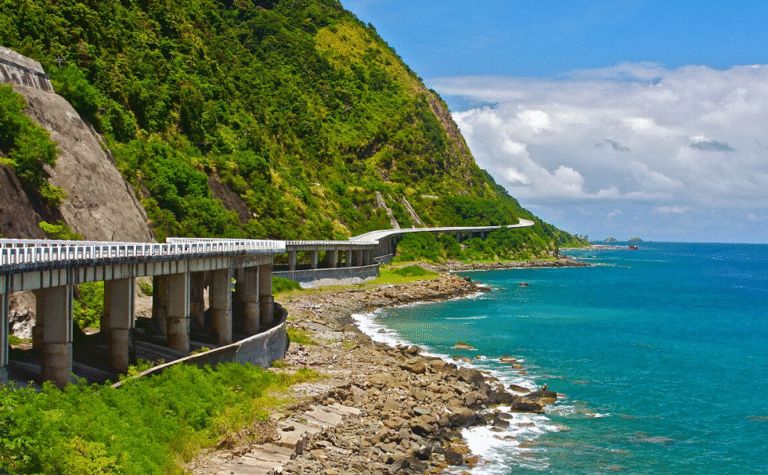
THE FAMED PATAPAT Viaduct made it to the list of Agoda’s “must-visit bridges across Asia,” reinforcing its status as one of the most popular tourism sites in the Philippines.

“Bridges are gateways to new adventures and cultural discoveries. At Agoda, we make it easy for travelers to explore these unique architectural sights with our fantastic deals and seamless booking experiences. Whether you’re chasing sunsets or seeking cultural immersion, Agoda is your perfect travel companion,” said Jun Dong, Associate Vice President at Agoda.

Agoda said that the Patapat Viaduct is a scenic coastal bridge that stretches along the northern tip of Luzon, offering breathtaking views of the rugged coastline and the West Philippine Sea. 

“Travelers can enjoy the natural landscapes and explore nearby attractions such as the enchanting Kabigan Falls and the historic Cape BojeadorLighthouse,” it added.

According to Agoda, Bridges have long been more than just functional structures; they are symbols of connection, history, and artistry. For travelers, visiting these bridges offers a unique glimpse into the heart of a region, blending scenic views with cultural experiences

The other curated list of destinations with unique bridges in the list of Agoda that promise unforgettable travel experiences are.

1. Dragon Bridge, Da Nang, Vietnam – Known for its dragon-shaped design, this bridge breathes fire and water during weekend nights, creating a spectacular show. It spans the Han River, offering views of Da Nang’s vibrant cityscape. Nearby, visitors can explore the Marble Mountains or enjoy the local cuisine at the bustling night markets.

2. Lover’s Bridge, New Taipei City, Taiwan
Located in the picturesque Fisherman’s Wharf, Lover’s Bridge is a romantic spot known for its sunset views. The bridge, illuminated at night, offers a magical atmosphere perfect for evening strolls. Nearby, travelers can explore the vibrant Tamsui Old Street, filled with local snacks and crafts, providing a taste of Taiwanese culture.

3. Seri Gemilang Bridge, Putrajaya, Malaysia – This grand bridge is an architectural masterpiece, featuring intricate designs and majestic arches. It connects the core island of Putrajaya to the mainland, offering panoramic views of the city. Visitors can also explore the nearby Putra Mosque and the lush Putrajaya Botanical Gardens, making it a perfect blend of nature and architecture.

4. Banpo Bridge, Seoul, South Korea – Famous for its Moonlight Rainbow Fountain, Banpo Bridge transforms into a vibrant spectacle at night. The bridge spans the Han River, offering views of Seoul’s skyline. Travelers can enjoy a leisurely walk along the riverbanks or visit the nearby Banpo HangangPark, a popular spot for picnics and outdoor activities.

5. Longevity Bridge, Hong Kong – This ornate, Chinese-style footbridge is surrounded by lovely coastal views and steeped in local legend, claiming to add three extra days to one’s life with each crossing. It offers a peaceful spot for reflection and is tucked away at the southern point of Repulse Bay Beach, where visitors can soak up the sun and explore nearby cultural landmarks.

Agoda offers over 6 million holiday properties, more than 130,000 flight routes, and over 300,000 activities, all of which can be combined in the same booking. Discover the best deals on Agoda’s mobile app and start planning your next adventure today.

Confidence Begins With A Glow

IF LIFE FEELS like a nonstop sprint between deadlines, dinners, dreams, and drama — congratulations, you’re human. And yet somehow, amid the chaos, our skin is expected to stay bright, calm, and radiant… even when we aren’t. Because nothing kills confidence faster than dull skin trying to wave a white flag.

So here comes a refreshing truth: radiance doesn’t just belong to models gliding down a runway — it belongs to you, on any given Tuesday, in traffic, or trying to find your phone inside the abyss of your bag.

This year, Cetaphil Bright Healthy Radiance stepped onto the SoFA Design Institute Graduation Show runway — not just to celebrate fashion talent, but to make a statement: confidence begins with the skin you live in. And if you’re going to face the world like it’s your personal catwalk, your skin better feel as good as your outfit looks.

The partnership was a colorful love letter to creativity, individuality, and that quiet kind of courage we all admire — the kind that says, “I glow on my terms.” Models, designers, and artists strutted with stories stitched into every garment, proving that radiance isn’t a spotlight; it’s a state of being.

And just offstage? Cetaphil Bright Healthy Radiance working like an invisible glam team, keeping skin bright, healthy, and stress-proof — because confidence starts before the makeup, before the outfit, before the applause.

Gentle Radiance Is the New Power Move

Let’s retire the old belief that brighter skin requires aggressive treatments or skincare bravado. The truth? Kindness works. Gentle works. Science-backed softness works.

Cue: the Cetaphil Bright Healthy Radiance Perfecting Serum — the star of the lineup, powered by Niacinamide, Sea Daffodil, Vitamin C, and Advanced Peptides. It’s 7x the radiance boost without the drama, delivering brighter, healthier-looking skin in as fast as two weeks. Yes, even if you’ve been stressed, sun-exposed, or clinging to caffeine for survival.

As dermatologist Dr. Gaile Robredo-Vitas puts it, true radiance comes from consistency and care, not harshness. Your skin doesn’t become stronger by punishment — it thrives on patience.

And for full-body brilliance? The entire Bright Healthy Radiance line keeps you glowing from cleanser to lotion, from AM hustle to PM unwinding.

Radiance Has a Spokesperson — and She Knows Her Glow

Catriona Gray, the brand’s ambassador and queen of effortless luminosity, swears by the Perfecting Serum for its brightening and skin-health benefits. Fresh off the runway, she shared how it gives her that extra lift — banishing dark spots and boosting confidence before facing the camera, the crowd, or the world.

Where Real Life Becomes a Runway

The SoFA Graduation Show dazzled with artistry, dedication, and fashion bravado. But beyond the runway, Cetaphil Bright Healthy Radiance is championing something bigger: everyday skin confidence.

Because radiance isn’t reserved for events or cameras. It’s for school runs, Zoom calls, late-night deadlines, and everything in between. When your skin feels bright and healthy, the day feels a little lighter, and suddenly — the world becomes your runway.

So go on. Glow gently. Walk boldly. Let your skin brighten every space you enter.

Shop Cetaphil Bright Healthy Radiance at Watsons, Mercury Drug, Lazada, Shopee, and TikTok. For updates, follow @cetaphilbrighthealthyradiance on Instagram.

PLDT Enterprise and Nabstract Declare War on OTP Fraud — Finally, We Can Stop Playing “Guess That Code

0

LET ‘S BE HONEST: the age of OTPs has gone on long enough. How many times have we fumbled through texts, squinted at six-digit codes, or fallen victim to that classic scammer line—“Sir, pa-send po ng OTP”? In a digital world where criminals move faster than our thumbs, something had to change. Thankfully, PLDT Enterprise and global tech enabler Nabstract have stepped into the arena with a tag-team move worthy of a cybersecurity smackdown: SmartSafe SilentAccess.

If OTPs were the rusty padlocks of old-school digital security, Silent Access is the smart, sleek fingerprint scanner that doesn’t just lock the door—it reads your intentions. This flagship security tool from the soon-to-launch SmartSafe API suite quietly (and instantly!) authenticates users straight through Smart’s network. No texts. No codes. No cybercriminals lurking in the corner. Just seamless, invisible security that works before you even think about it.

The brains and builders behind this partnership lined up for the official handshake moment, including PLDT Enterprise’s top product strategists and innovators—Mark Dommel Geronimo, Mickey Ruiz, John Gonzales, Noemi Santos, and the rest of the powerhouse team—alongside Nabstract’s director and founder, Vaibhav Mehta, the mastermind behind the intent-based network strategy that makes SilentAccess tick.

And Nabstract isn’t just another tech partner with a fancy acronym. Through their expertise in network exposure and GSMA Open Gateway-compliant APIs, they’re giving businesses—from banks battling fraud to e-commerce platforms fighting cart abandonment—the kind of superpower every modern enterprise dreams of: real-time intelligence with zero friction.

“Future-proof” is an overused buzzword, but for once it actually fits. With Smart’s Service Exposure Platform built deep into the network and PLDT Enterprise’s newly-earned GSMA Open Gateway Certification, SilentAccess isn’t just a security upgrade—it’s a paradigm shift. It’s the country’s telcos saying: We can outsmart the scammers. And we will.

Nico Alcoseba, PLDT Enterprise’s First Vice President and Head of Product Management, puts it plainly: this is PLDT Enterprise doubling down on innovation, security, and trust. Because in an age where fraud evolves by the minute, you don’t just react—you reinvent.

Meanwhile, Nabstract’s Vaibhav Mehta calls the partnership a pivotal leap toward scalable, secure, and future-ready API solutions. Translation? Businesses finally get a weaponized shield against fraud without sacrificing user experience. A rare, beautiful win-win.

And here’s the best part: this milestone isn’t just about smarter logins. It supports broader goals—strengthening digital trust, enabling safer financial inclusion, and contributing to the UN SDGs by building a digital economy that’s not only connected, but protected.

Silent. Seamless. Scam-proof.

It’s about time. For more on SmartSafe SilentAccess, visit: https://bit.ly/pldtenterpise-nabstract-partnership-pr

Sampaguita Resto Somewhere In Quezon

LET ME TAKE you down memory lane.

It was the 1960s and Sampaguita Pictures of the Vera-Perezes was at the height of its supremacy in the local celluloid world.

Yes, the Sampaguita Pictures of the legendary star maker, Dr. Jose R. Perez, or simply Doc Perez, its honcho, and his scions, among them, the late Manay (a Bicolano term of endearment to an older woman—or sister—by blood or affinity) Ichu Vera-Perez Maceda—besides, the Veras are from Pandan, Cantanduanes—and former lawmaker Gina de Venecia whose wealth of cultural heritage is being passed on to their descendant Congressman Christopher de Venecia of Pangasinan but that’s another story.

The film kingdom at the time was heralded by Philippine Movie Kings Eddie Gutierrez and Romeo Vasquez and Queens Susan Roces and Amalia Fuentes, and princes Pepito Rodriguez, Dindo Fernando, Bert Leroy, Jr., Ramil Rodriguez and Edgar Salcedo and princesses Rosemarie Sonora, Loretta Marquez, Gina Pareno, Shirley Moreno and Blanca Gomez, damselsand lads, second fiddles all, collectively known as Stars ’66.

At the time, they were all prized possessions of the studio in Gilmore in Quezon City.

‘Standing across the wooden cinema was a restaurant where most moviegoers also bought their provisions … to be nibbled inside the theater while watching (movies) … to escape from harsh realities at that moment like looming hostilities in the social order echoing from imperial Manila. I recalled my kababayans calling the place Sampaguita Restaurant.’

THE RESTAURANT

Most of their movies were hits in the regional towns and provinces not excluding Lopez, Quezon.

At the center of Lopez town, along Real Street,was the Vilar Theater where most of Sampaguita Pictures’ releases were screened.

Standing across the wooden cinema was a restaurant where most moviegoers also bought their provisions (if my memory serves me right), like siopao or hopia or sinanday (local pretzels) to be nibbled inside the theater while watching “Mga Reyna Engkantada” of sisters Susan and Rosemarie or “Mga Batang Bakasyunista” of Stars ’66, to name just a few titles of fantasy and adventure genres enough to swoon over ideals of these demi-gods and goddesses or to escape from harsh realities at that moment like looming hostilities in the social order echoing from imperial Manila.   

​I recalled my kababayans calling the placeSampaguita Restaurant.

THE MOVIE OUTFIT

It might have been influenced as well by the popularity not only of the manufacturer of local movies but the fame and honor being attributed to the National Flower when grade schoolers like us at the time was required to memorize all the national symbols decorating the country when Order of National Artist was not yet enacted as a law—Narra as National Tree, Anahaw as National Leaf, Bangus as National Fish, Tinikling as National Dance and so on and so forth.

​But I vividly remembered the colloquial name of the resto—Lim Tong—its tables and backrests tall and wide, one could hide off with secret dates. 

Yes, it’s more popularly known as Lim Tong than Sampaguita.

Oh! Lim Tong was a picturesque gourmet shop of the olden days like romantic images of lovers sipping soft drinks from one straw or a heroine defying conventions etc. oozing from the silver platter, err, screen.

The Chinese moniker was most probably derived from the Chinese ancestry of the owners of the place, the Lees whose progeny include Elsa Lee Pangaruy, Helen Lee Dinglasan and Carlito Lee.

Lim Tong was the go-to resto if one wanted to order and savor their specialty—Chinese noodles or pancit (miki or bihon or mixed), a dish very authentically Lim Tong especially hotly served or taken home, its sauce mouth-watering.

​It was and still is a masterpiece like no other with a little culinary tweak here and there.

BUSINESS AWARD

​At the time, there were other eateries that catered to the taste buds of Lopenzes or Lopensenos (depends on what you want to call a native of Lopez because they’re both appropriate although there are disagreements or debates on the correct and official reference to a Lopez resident).

​Anyway, there was Cozy Nook by the Mascardos, Zurbano’s Halu-Halo which was to die for, Celebrity by the Tardecillas, to name only a few.

​Most of them were patronized by the whole town.

​When they faded into oblivion and there’s amushrooming of countryside food hubs, Sampaguita Restaurant, despite its successive location transfers, has prevailed.

​No wonder it was recently awarded the Longest Running Business (restaurant) in Quezon by theQuezon Business Awards in Lucena City.  

Anti Red Tape 

0

CITIZENS ARE ENTITLED to an efficient government service.

Yet, we often hear: Balik na lang po kayo bukas. So many requirements, it leads to delay and even to corruption. 

Here are some scenarios that illustrate the requirements of the Anti Red Tape Act. By knowing these principles, we can demand better services from the government. 

SCENARIO 1: THE HIDDEN FOURTH REQUIREMENT

A local business permit office publicly posts the required documents and processing time:

• Requirements: Application form, barangay clearance, lease contract

• Processing Time: 3 working days

However, applicants regularly discover—only when they are already at the counter—that the office requires an additional “endorsement letter” from an internal division. Obtaining this endorsement adds another 5–7 days, although it is not on the posted Citizen’s Charter.

When confronted, the division chief says: “We intentionally don’t list it para di magdagsaan. Internal requirement ‘yan.”

Key ARTA Issues Illustrated

• Violation of the Citizen’s Charter transparency rule

• Imposition of unlisted, additional documentary requirements

• Creation of unnecessary layers leading to delays

• Unreasonable discretion of internal offices

Correct Response

Remove all unlisted requirements, update the Citizen’s Charter, and discipline personnel introducing unapproved steps. Conduct a process review to eliminate unnecessary endorsements.

SCENARIO 2: BOTTLENECK AT THE ONLY APPROVING OFFICER

In a provincial office, every document—from travel orders to procurement papers—requires the signature of a single division head who is frequently absent due to field activities.

Backlogs pile up for weeks, causing delayed releases of salaries, equipment purchases, and service delivery. Staff are afraid to escalate the issue, saying:

“Si Sir lang talaga ang pwedeng pumirma. Ganun na‘yan for years.”

Because of the long queue, a culture forms where some pay “express routing fees” to staff who have access to the division head.

‘Introduce a delegated approval structure, limit the documents requiring top-level sign-off, track processing times digitally, and create monitoring dashboards for accountability.ARTA trainings are key to efficient service.’

Key ARTA Issues Illustrated

• Failure to implement workflow continuity (absence of an alternate signatory)

• Inadequate reengineering of internal processes

• Fixer vulnerability due to bottlenecks

• Unreasonable processing times due to unnecessary centralization

Correct Response

Appoint an officer-in-charge or next-in-rank alternate signatory; revise the internal delegation matrix; ensure processing continues despite absences; eliminate unnecessary points of approval.

SCENARIO 3: THE QUEUE THAT NEVER MOVES

A frontline service office serving walk-in clients has a number queuing system, but the monitors routinely show “Now Serving: Counter Closed.”

Personnel are inside, but:

• Some are processing personal online orders

• Some are idle because their computers are “under repair” for weeks

• Only one window is consistently open

• Supervisors avoid the area to prevent confrontation with irate clients

Citizens wait 4–5 hours, and senior citizens faint in line.

Key ARTA Issues Illustrated

• Failure to provide adequate frontline service

• Underutilization of personnel, causing artificial delays

• Non-compliance with the “No Noon Break” and full-service obligation

• Creation of undue burden on vulnerable clients

Correct Response

Reassign staff to frontline counters, ensure full deployment, repair equipment immediately, enforce full operation of windows, and implement strict performance monitoring.

SCENARIO 4: CONFLICTING AND CHANGING INSTRUCTIONS

A government branch issues clear guidelines in the Citizen’s Charter for firearm licensing. After applicants submit documents, the receiving officer says: “Sir, ibana po ang requirements—kailangan ng neuro exam from our accredited partner clinic only.”

When applicants protest that the new requirement is not posted, the officer insists that they “just follow verbal orders from the regional office.” Applicants must now pay ₱2,800 for the exam instead of the usual ₱1,200 from other accredited providers.

Key ARTA Issues Illustrated

• Unannounced rule changes not reflected in Citizen’s Charter

• Restriction of choices leading to possible collusion

• Lack of consistency and transparency across field offices

• Increased financial burden on citizens

Correct Response

Suspend unposted requirements, update the Citizen’s Charter properly, investigate the unilateral restriction to a single clinic, and require written directives for any procedural change.

SCENARIO 5: INTERNAL DELAYS MASQUERADING AS “BACKLOG”

A public housing agency has a posted processing time of 7 days for occupancy certificates. In reality, documents sit in the inbox of a mid-level supervisor for 3–4 weeks because he prioritizes internal events (team building, sportsfest committees, etc.).

To handle complaints, the office posts a sign: “Due to heavy backlog, processing time may extend to 30 working days.”

Key ARTA Issues Illustrated

• Unauthorized extension of processing time

• Poor internal workflow, creating artificial backlogs

• Masking internal inefficiency as “heavy volume”

• Violation of the office’s own Citizen’s Charter

Correct Response

Conduct time-and-motion evaluation, realign staff workloads, enforce accountability for internal delays, and restore the legal processing time.

SCENARIO 6: RED TAPE IN DIGITAL TRANSFORMATION

An office launches an online application system, but after submitting online, applicants are still required to:

• Print the same documents

• Submit them physically

• Get them stamped

• Wait for another online confirmation

The combined process takes longer than the old system. Some clients who cannot visit frequently end up hiring “online fixers” who offer to “push the online application internally.”

Key ARTA Issues Illustrated

• Failure to streamline processes during digitalization

• Duplication of online and physical requirements

• Increased opportunities for intermediaries

• Poor integration of ICT solutions

Correct Response

Remove redundant steps, validate documents electronically, establish backend integration, and ensure online submission replaces physical submission.

SCENARIO 7: THE DISAPPEARING EMPLOYEE

A frontline office has “No Noon Break” posted on the wall. But from 11:30 AM to 1:30 PM, all personnel disappear, leaving only a security guard who keeps saying: “Sir/ma’am, balik na lang po kayo mamaya.”

Clients who cannot return (especially those who traveled far) lose an entire day.

Key ARTA Issues Illustrated

• Violation of continuous frontline service policy

• Poor scheduling and workforce management

• Disregard for Citizen’s Charter indicators

Correct Response

Implement staggered break schedules, ensure at least one window remains open, assign a break-time supervisor, and enforce accountability for disappearing personnel.

SCENARIO 8: INTERNAL “ROUTING SLIP ECONOMY”

To process a document, the applicant must get signatures from seven offices scattered across three floors. Employees tell them: “Wala kaming messenger. Kayo na lang magdala para mabilis.”

Each office’s staff demand “facilitation snacks” or “pang-load” to sign the routing slip. Even internal staff from other divisions suffer from the same burden.

Key ARTA Issues Illustrated

• Creation of unnecessary physical movements and excessive signatories

• Violations of ARTA’s requirement for streamlined processes

• “Hidden costs” imposed on applicants

• Development of a culture of petty corruption due to complexity

Correct Response

Automate routing, reduce signatories, create a single receiving and releasing unit, and prohibit frontline offices from requiring applicants to manually route documents.

SCENARIO 9: THE MYSTERY OF THE MISSING QUEUE NUMBERS

The office releases queue numbers only at 7:30 AM. However, by the time citizens arrive at 7:45 AM, all numbers for the day are gone—even though the office opens at 8:00 AM.

Rumors circulate that employees reserve queue numbers for:

• Relatives

• “Preferred clients”

• People who pay fixers operating outside

CCTV shows staff handing queue stubs to individuals before opening hours.

Key ARTA Issues Illustrated

• Manipulation of queueing system

• Failure to ensure fair and transparent service

• Opportunity for fixer operations

• Breach of ARTA’s equal access standards

Correct Response

Implement digital queueing or time-based appointments, investigate personnel, require queue release only upon opening hours, and standardize queue distribution procedures.

SCENARIO 10: THE “FOR YOUR SIGNATURE ONLY” SYNDROME

An office receives public complaints about slow processing. Upon audit, it is discovered that 65% of the delay happens at the stage where documents are awaiting the department head’s signature.

The department head claims: “I am protecting integrity. I need to review everything myself.”

However, documents pile up endlessly, with some languishing for months.

Key ARTA Issues Illustrated

• Over-centralization of approval authority

• Unreasonable processing delays

• Lack of delegation

• Misunderstanding of ARTA’s requirement for streamlined internal processes

Correct Response

Introduce a delegated approval structure, limit the documents requiring top-level sign-off, track processing times digitally, and create monitoring dashboards for accountability.

ARTA trainings are key to efficient service.