Thursday, March 26, 2026
Home Blog Page 3

CCPI Presents Five Pillars for National Renewal: A Historic Institution Reawakens

0

AT 140 YEARS OLD, the Chamber of Commerce of the Philippine Islands (CCPI) remains vibrant and forward-looking. Founded in 1886, the institution is the historic originator of the Philippine Chamber of Commerce and Industry (PCCI), the country’s more visible and influential business organization today.

Despite its long history, CCPI is proving that age does not diminish purpose. Instead, it draws strength from its legacy as it launches a bold initiative to help the Philippines regain its economic momentum.

To this end, the chamber is convening more than 200 experts from various sectors of society to craft a roadmap for national renewal—an initiative centered on five strategic pillars designed to guide the country’s economic and institutional future.

The Economic Compass: Five Pillars for Change
The initiative, called the Economic Compass Pillars 5 (ECOMP-P5), aims to transform broad national aspirations into concrete, coordinated, and actionable strategies.

Scheduled on April 18 at University of the Philippines Bonifacio Global City, the whole-day summit will gather thought leaders, policy experts, educators, and business innovators. Participation is limited to the first 180 online registrants, ensuring a focused and productive exchange of ideas.

The program will include:
        •       An overview of the Economic Compass and its five pillars
        •       A plenary working lunch featuring collaborative discussions
        •       Presentations of implementation frameworks for each pillar
        •       A consolidation session to map the path forward

Through this gathering, CCPI hopes to align the insights of experts into a unified strategy for national development.

When The Philippines Led Asia
The Philippines once stood among Asia’s leading economies. Throughout much of the 1960s, the country was widely regarded as one of the region’s most promising economic powers.

In fact, the Philippines ranked second only to Singapore in ASEAN and second to Japan in parts of Asia in terms of economic performance. At that time, it was ahead of economies that would later surge ahead—China, Taiwan, and South Korea.

CCPI proudly recalls that its early advocacies and initiatives played a role in shaping this era of growth, when the Philippines earned its reputation as the “Pearl of the Orient.”

A Period of Decline
However, the nation’s trajectory shifted dramatically in the decades that followed.

The imposition of Martial Law in the Philippines marked a period of profound disruption to the country’s economic and institutional development. During this time, CCPI itself receded from public engagement, taking a backseat from 1977 until 2014.

By the mid-1980s, the Philippine economy had fallen from second to fifth place in ASEAN, overtaken by Singapore, Brunei, Malaysia, and Thailand. The downward slide continued in subsequent decades.

By 2021, the country ranked seventh in ASEAN, surpassed by Singapore, Brunei, Malaysia, Thailand, Indonesia, and Vietnam. Economies that once trailed the Philippines—China, Taiwan, and South Korea—had surged ahead, transforming into global economic powerhouses.

Rediscovering Its Historical Role
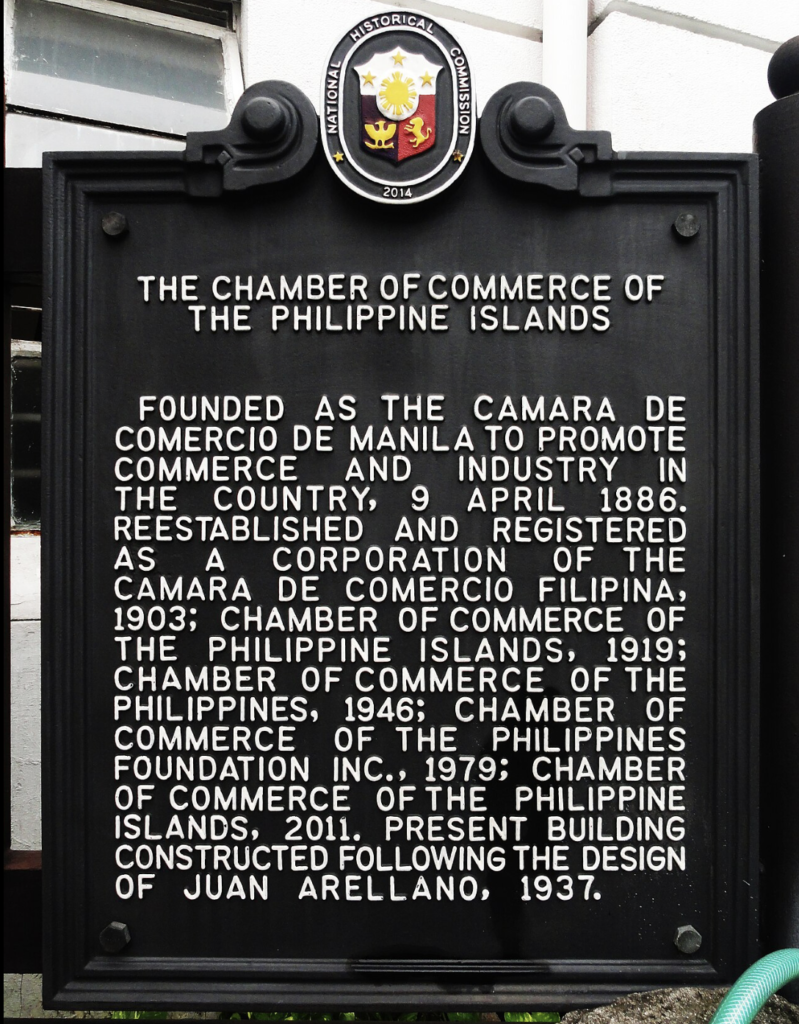
In 2014, CCPI’s historic importance was formally reaffirmed when the National Historical Commission of the Philippines recognized the chamber’s legacy and installed historical markers at its site.

The markers—written in Spanish, English, and Filipino—symbolize the chamber’s journey through different eras of Philippine history. The recognition helped rekindle the institution’s mission as what it now calls the “Provenance Chamber of History,” guided by the theme:

“History Builds the Future.”

The Five Pillars of the Economic Compass

Drawing on lessons from eight historical epochs since 1886, as well as global experiences of economic transformation, CCPI has formulated five guiding pillars for national renewal.

Pillar 1: The Filipino and Education — “Top of the World.”
This pillar focuses on nurturing world-class Filipino talent through transformative education and human capital development.

Pillar 2: Industries and Businesses — “Globally Competitive.”
The goal is to strengthen Philippine industries and enterprises so they can compete successfully in international markets.

Pillar 3: Government — “Good Governance with 12 Traits.”
This framework seeks to promote integrity, accountability, and effective public leadership as the backbone of national progress.

Pillar 4: Infrastructure and Environment — “Heaven on Earth.”
Balanced development is envisioned through modern infrastructure while preserving the country’s natural resources and ecological heritage.

Pillar 5: The Economy — “Diverse, Self-Reliant and Wealthy.”
The final pillar aims to build a resilient economy characterized by diversification, national self-reliance, and broad-based prosperity.

Charting The Way Forward
According to CCPI President, Jose Luis U. Yulo, Jr., the ECOMP-P5 initiative is not merely an intellectual exercise. It is a call to action.

By convening leaders from business, government, academia, and civil society, the chamber hopes to reignite the spirit of national ambition that once propelled the Philippines to the forefront of Asia’s economies, Yulo added.

More than a reflection on history, the initiative represents a determination to ensure that the country’s past achievements serve as a compass—guiding the Philippines toward a future of renewed growth, confidence, and global competitiveness.

Stark Disparity In Reporting Joblessness 

0

WHEN THE PHILIPPINE Statistics Authority (PSA) was created by virtue of law, its mandate is to collect, compile, analyze, and publish statistical information on economic, social, demographic, political affairs, and general affairs of the people.

Beyond numbers, PSA does the civil registration functions in the country.

Part of its mandate is to collate data on employment status in the country, but from how it looks, the data it’s been releasing doesn’t seem to reflect the real score.

In its January 2026 figures, the PSA pegged the number of unemployed to 2.96 million, for which an independent research institution cried foul — if not fake.

According to thinktank IBON Foundation, unemployment stands at 7.2 million as of December last year.

IBON FOUNDATION

Formed in 1978, IBON Foundation, a non-profit organization, has been providing socio-economic research and analysis on issues affecting the country. It also contributes to people’s empowerment through education and advocacy support. 

Part of its advocacy is to come up with data-driven information on various issues — including unemployment in the country.

IBON, which emphasizes on people’s issues and support for the capacity building of people’s organizations in research, education, information and advocacy work, uses participatory methodology through community-based people’s action research. 

It also runs its own The Databank and Research Center that has been managing quarterly surveys, in which it gathers data on people’s economic conditions and opinions on multiple concerns — including unemployment.

COMPELLING FACTORS

With an untarnished reputation, the people have every reason to believe the data coming from the IBON Foundation rather than what the PSA has released. There are factors that PSA may have missed in its most recent data depicting minimal dent on the country’s unemployment.

●The ongoing armed conflict in the Middle East that affect supply chains, prices of bunker fuel and other basic imported goods

●The growing adoption of artificial intelligence that is displacing tens of thousands of BPO workers

●Inadequate manufacturing facilities compared with the unemployed and the fresh job seekers

●An economy that for all intents and purposes is suffering the brunt of high inflation and less income opportunities 

●Possible displacement of OFWs that got repatriated from war-torn places in the Middle East. 

AFTER THE HOLIDAY

The Philippine unemployment rate climbed to its highest level in more than a year in January, as temporary holiday jobs disappeared and economic uncertainty weighed on hiring.

PSA data showed that the jobless rate rose to 5.8% in January, equivalent to 2.96 million unemployed Filipinos. That was a sharp increase from 4.4% or 2.26 million unemployed in December, Bilyonaryo reported.

In terms of the number of unemployed individuals, the 2.96 million recorded in January was also the highest since June 2022’s 2.99 million.

PSA assistant secretary Divina Gracia L. Del Prado told reporters that around 306,000 additional Filipinos in the labor force were actively looking for work but unable to find jobs.

Historically, the number of available jobs falls by January after the Christmas season,” Del Prado said, referring to the end of temporary positions created to meet heightened holiday demand.

EXTERNAL PRESSURES

Economists say the rise in unemployment comes at a time when external pressures are also threatening to strain the Philippine economy.

Global tensions and conflict have triggered economic shockwaves, leaving oil supply uncertain and pushing up energy prices. Higher fuel costs could intensify inflationary pressures, eroding household purchasing power.

But IBON Foundation argued that the official Philippine unemployment figures mask a “labor market in crisis,” characterized by 7.2 million effectively jobless Filipinos as of late 2025 (including 1.5– 2 million discouraged workers). 

The group argued that 71% of jobs are informal, and that declining unemployment rates hide a trend of Filipinos leaving the labor force due to lack of opportunities. 

THE REAL NUMBERS

The think tank estimates the true jobless number is closer to 7.2 million (December 2025), far higher than the official 2 million, when including 3.3 million unpaid family workers and 1.5 — 2 million discouraged workers.

It characterized the economic situation as “job-losing growth” or “jobless growth,” where economic expansion does not result in quality employment.

Approximately 35 million, or 71% of the 49 million employed, are in informal work with low pay and no security.

A decline in the labor force, observed in late 2023 and 2024, indicates that many have given up looking for work. Significant job losses have been recorded in manufacturing, mining, and construction. 

There has been very little serious effort on the government to fund and push manufacturing in the country, opting instead for more imports as an easy way out of supply shortages, especially in agriculture. 

IGNORING REALITY

The thrust in mining and other extractive industries is to increase raw material production and export, rather than more value adding through local processing, which generate stable and sustainable jobs and economic growth.

Property rules are being tweaked to encourage foreign investments through long-term use that deprive locals from owning properties and drive away local creativity in land use and agricultural production.

IBON contends that the government’s narrative of a “strong” labor market ignores the reality of widespread, low-quality, and precarious employment.

The Subtle Way Of Firing Frasco

THERE’S A thousand and one ways to skin a cat, so goes a famous quotation from where President Ferdinand Marcos Jr. must have learned the art of firing incompetent people in his Cabinet.

Recently, the Palace announced the appointment of Christina Frasco as  Presidential Adviser for Sustainable and Resilient Communities. 

Her marching order involves dealing with communities withstanding the shocks from climate disasters or socioeconomic disruptions by integrating green energy, robust and accessible public services and strong social networks. 

For one, the President wields the power to appoint. But in the case of Frasco, it looks more like a subtle way of firing an appointee for failure to deliver results.

TOURIST ARRIVALS

Prior to the Palace announcement, Frasco was the Secretary of the Department of Tourism (DOT). She was personally handpicked even before Marcos formally assumed the presidency.

But after almost four years, Frasco failed to deliver. She missed a year on year target for tourism arrival. 

In her first year in office as DOT chief, Frasco reported a dismal 2.65 million foreign tourist arrivals. Her excuse over the laggard performance — lack of funds to promote the country’s tourism program.

In 2023 the Tourism boss got what she wanted. The President haggled Congress to allocate more funds for the DOT, for which resulted in 5,450,557 international tourist arrivals in 2023, exceeding the DOT target of 4.8 million and marking a significant post-pandemic recovery, or so we thought.

For 2024, DOT was given more. The huge resources however yielded just a little more than the previous year — 5.65 million which is way below the 7.7 million target international tourist arrivals.

Last year, the DOT under Frasco was only able to lure in 6.48 million international visitors despite getting a lion’s share in the 2025 General Appropriations Act.

TOURISM CAMPAIGN

Sometime in June 2023, the DOT made a grand launch of the “Love the Philippines” tourism campaign. Topbilling in its launch is a video which seemed fine at the first look. However, the video turned out to be a fraud.

The promotional video was found to have used stock footage of tourist attractions in other countries, including Indonesia, Thailand, Switzerland, and the UAE. 

The launch video, produced by DDB Philippines, included scenes of rice terraces in Bali, a fisherman in Thailand, a Swiss airplane, and sand dunes in the UAE.

DDB Philippines apologized, stating the video was intended as a “mood video” for internal stakeholders and not for public release. Frasco terminated the contract with DDB Philippines, noting that no public funds were paid for the specific, controversial video.

Despite the backlash, the DOT kept the “Love the Philippines” branding, amid calls for congressional “investigation in aid of legislation” and widespread criticism regarding the authenticity of the campaign. 

The campaign aimed to shift focus toward “authentic experiences,” but was overshadowed by the scandal, with some lawmakers calling the multimillion-peso campaign “unsalvageable” due to the negative publicity.

PROMOTING HERSELF

As if the two controversies weren’t enough, Frasco again found herself at the receiving end of nasty remarks after being accused of self-promotion that saw her image featured in tourism-related materials

No less than Senator Raffy Tulfo criticized her for allegedly highlighting herself—rather than tourist destinations—in some tourism promotion materials.

During a senate hearing, Tulfo presented slides of magazines and other materials in which photos of Frasco were prominently featured — “I’m very sorry, Secretary Frasco. Parang lumilitaw na parang nagiging vlogger na kayo. It will not sell if the marketing materials are filled with your face. It shouldn’t happen,” Tulfo said.

Citing a magazine circulated in Japan, Tulfo said the material was a “missed opportunity” to promote Philippine tourism abroad.

“For example, there’s this magazine in Japan. I think it’s a free publication. It was supposed to be an opportunity to showcase our tourism industry in Japan,” he said.

“Instead, it’s you who appears—just you, even during the groundbreaking ceremonies,” the senator added.

“In other countries like Vietnam, Korea, Malaysia, and Japan, you don’t see the faces of their tourism secretaries in promotional materials.” 

GENTLE TERMINATION

With Frasco’s appointment as presidential adviser, Marcos named Undersecretary Verna Buensuceso as officer in charge, with the palace clarifying that she did not resign but was just given a new position.

As presidential adviser for sustainable and resilient communities, she would be working in the field — integrating green energy, robust and accessible public services and strong social networks. 

But taking into consideration her protected and secured social standing, Frasco might not be able to cope with the rigors of her new position.

“As many areas across the country face increasing climate-related hazards and disruptions that affect local economies and livelihoods, the president has tasked Secretary Frasco to take on this role to help strengthen the implementation and sustained follow-through of priority national initiatives at the community level,” Palace Press Officer Claire Castro said in a press briefing.

“The president expressed his appreciation for her service at the Department of Tourism and conveyed confidence that her experience working closely with local governments and communities will continue to support the Administration’s priorities,” the presidential mouthpiece added.

Study Shows OFWs Expect Effective Response During Crisis

0

“Our findings show a clear trend. When documentation is slow, when hotlines are unresponsive, or when agencies fail to coordinate during an emergency, migrants don’t turn to ‘administrative complexity’ but to national leadership. In the eyes of the OFWs, the quality of their service signals their government’s priorities,” John Brylle L. Bae, Research Director at The Fourth Wall, said.

A NEW STUDY suggests that overseas Filipino workers (OFWs) are looking at the effectiveness of the Philippines’ migration governance system not by bureaucratic mandates, but by the visibility and decisive action of leaders during crises, such as conflict, evacuation, or mass repatriation.

The study, “From Economic Importance to Leadership Readiness,” from Filipino-focused sociocultural research firm The Fourth Wall examines the governance conditions required for credible OFW advocacy, focusing on the relationship between leadership credibility, institutional performance, and migrant trust in government support systems.

“Our findings show a clear trend. When documentation is slow, when hotlines are unresponsive, or when agencies fail to coordinate during an emergency, migrants don’t turn to ‘administrative complexity’ but to national leadership. In the eyes of the OFWs, the quality of their service signals their government’s priorities,” John Brylle L. Bae, Research Director at The Fourth Wall, said.

“This gap is magnified during times of heightened geopolitical risk. In volatile environments, OFWs are not looking for policy mandates, but a clear, visible, and decisive presence from their government. Thus, they often look for credible champions—leaders who can mobilize institutions quickly and visibly when workers face risk abroad,” he added.

OFWs require attention

Data from the Bangko Sentral ng Pilipinas (BSP) showed that remittances from Overseas Filipino workers (OFWs) reached $35.63 billion in 2025. This accounts for 7.3percent of the country’s gross domestic product (GDP), proving OFWs remain a critical pillar of the national economy. Yet, the study emphasizes that this economic contribution demands a corresponding level of governance.

The Philippines has moved beyond treating migration as a temporary issue by implementing one of the most comprehensive migration governance frameworks in the world, with the establishment of key government agencies such as the Department of Migrant Workers (DMW) to handle end-to-end migration processes from recruitment to reintegration. However, the research identifies a clear disconnect: OFWs do not experience “policy”; they experience “service.”

The study highlights that because the institutional infrastructure is already in place, the primary variable for success has shifted from policy design to execution discipline. Leadership now serves as the “coordinating force” that makes a fragmented network of agencies function as a functional, protective shield for OFWs.

The study also analyzed public discourse, OFW narratives, and service experiences to identify recurring patterns in how migrants perceive government support, service delivery, and leadership credibility. It notedthat OFWs perceive “championing” through a set of leadership conditions, including reliable service delivery and process discipline, strong cross-agency coordination, visible on-the-ground responsiveness during distress cases, and other leadership traits associated with credible migrant advocacy.

Building on these operational traits, the research identifies representational legitimacy as a core expectation among migrant workers. The data suggests OFWs seek leaders who demonstrate a deep understanding of the “lived realities” of working abroad and can credibly echo migrant concerns. For the migrant sector, empathy and familiarity are perceived as the essential foundations that allow leaders to effectively reform and improve the system for those they represent.

The Fourth Wall concludes that the government does not need to expand its mandates or increase the size of its bureaucracy. Instead, it needs to focus on the reliability of existing structures.

The study outlines policy considerations, including strengthening coordination among agencies involved in migration governance, improving accessibility and responsiveness of OFW assistance channels, simplifying documentation and service processes across agencies, ensuring consistent protection and support across overseas posts, and strengthening reintegration pathways for returning OFWs.

“Migration has become a structural pillar of the country’s economy. Leadership readiness is not an abstract quality but a governance function that serves as the deciding factor in whether migration policy translates into timely protection and support for Filipino workers abroad,” Bae said.

The Fourth Wall is the pioneering research and analysis firm that interprets data through the Philippines’ unique sociocultural lens. It delivers clear insights and practical, actionable solutions tailored to the local context.

Saving The PH Sugar Industry Thru Biofuel

0

TEMPORARY AS THE war in Iran may look like and the sugar sector currently at the mercy of surging importations of alternative sweeteners that have been flooding the local markets, it would be to the best interest of the country if the government would embrace fully sugar as a biofuel source to save the country both from savage swings in crude oil prices and a collapsing sugar industry.

Sugar millers are urging stronger government support for biofuels, saying bioethanol blending can help cushion the Philippines from volatile global oil prices.

In a statement, the Philippine Sugar Millers Association (PSMA) said using bioethanol in gasoline reduces reliance on imported petroleum products and helps stabilize pump prices.

“Every liter of bioethanol blended into gasoline displaces a liter of imported oil exposed to geopolitical risk,” PSMA Executive Director Jesus L. Barrera said.

Barrera said the increased use of bioethanol, which is primarily derived from sugar and molasses, will provide an “immediate and practical buffer” for motorists and the broader economy from global supply disruptions, the Business World quoted him saying.

The PSMA noted that the global oil markets have become increasingly volatile due to the fighting in and around Iran.

The Biofuels Act of 2006 — which the government inconsistently incorporated in its energy plans and programs depending on oil price fluctuations — requires all liquid fuels sold in the country for use in motors and engines must be blended with biofuels. Since 2012, gasoline has been sold as a 10% bioethanol blend.

Aside from reducing reliance on imported oil, the PSMA claimed bioethanol also improves gasoline quality by serving as an oxygenate and octane enhancer that promotes cleaner combustion and better engine performance.

Compared with imported synthetic additives, bioethanol is cleaner and more cost-effective, the group added.

According to the PSMA, the biofuel program also provides economic support to the domestic sugar industry and rural communities.

Aurelio Gerardo Valderrama Jr., president of the Confederation of Sugar Producers Associations, said the biofuel industry serves as a stable market for sugarcane-derived products and supports the livelihoods of sugar farmers.

“Maintaining the domestic bioethanol blending mandate ensures that fuel expenditures stay within the local economy while sustaining the livelihoods of farmers and workers,” reads part of his statement.

Separately, the Sugar Regulatory Administration (SRA) disclosed meeting with various industry participants, including millers and producers, to discuss suggestions for establishing government-mandated minimum farmgate and millgate prices for sugar.

The SRA in a recent statement said sugar producers are also urging the government to control imports of artificial sweeteners and to roll out a sugar-buying program at pre-determined prices. 

The SRA said it is collating recommendations from sugar producers on measures that the government can take to mitigate the effects of the war in the Middle East.

“The groups anticipate the increase in fuel, fertilizer, and other input costs, and how the government could possibly help,” the SRA quipped.

Jeepney Drivers On Forced Leave

FOR THE LONGEST time, the Metropolitan Manila Development Authority (MMDA) has been trying to find a viable solution that would somehow ease the perennial traffic congestion in the National Capital Region.

Number coding, truck ban, bike lanes and the EDSA carousel didn’t quite solve the problem — until news broke out in the imposition of what looks more like an oil price shock, which compelled public utility jeepney drivers to stop plying routes.

In a television news report, transport group leader Obet Martin said that jeepney drivers and operators are already feeling the effects of rising fuel prices. Martin is the national president of the Pinagkaisang Sangguniang Manila and Suburbs Drivers Association (PasangMasda).

“Kahapon, kausap ko po itong isang grupo ko – Tayuman, Blumentritt – talagang napakabigat po,” Martin was quoted as saying.

CHANGE IN CAREER

According to the transport group leader, his peers are seriously considering the idea of finding other means to survive — “Ang sabi nila sa akin, hindi na nila kaya… magko-construction workers o magtitinda na lang muna sila ng mga barbeque,” he added. 

Some jeepney drivers in Malolos, Bulacan are also considering taking other jobs in the meantime — “Dahil yung isang biyahe namin ay mahigit P100 lang kinikita namin, P80 pa ang hulog namin. So mapipilitan muna huminto yung iba na mamasada, paubaya muna sa mga operator habang naghihintay ng ayuda sa gobyerno,” said Malolos, Bulacan-based jeepney driver Rogelio Carlos. 

Even a motorcycle taxi driver by the name of James Noog admitted that his perseverance is no match to the daily oil price hike — “Sisipagan na lang kaso ganun pa rin. Kahit sipagan mo, mauubos din kasi gas mo, pipila ka ulit,” Noog was quoted in the GMA News report. 

SUBSIDY AIN’T ENOUGH

Meanwhile, various transport groups led by the Pagkakaisa ng mga Samahan ng Tsuper at Operator Nationwide (Piston) protested against the fuel price hike. 

Protesters called for the junking of the Oil Deregulation Law, and the removal of the value added tax and excise tax. 

“Hindi na kaya ng mga drayber at operator. Hindi na rin kaya ng ating mga ordinaryong manggagawa dahil sa karampot na sahod. Hindi na rin sapat ang maliit na kita ng ating mga drayber at operator,” said Piston president Mody Floranda. 

President Ferdinand Marcos Jr. earlier ordered various government agencies to extend subsidies to those affected by the oil crisis, but Floranda took a swipe at Marcos’ offer.

“Ano ang saysay ng fuel subsidy kung tuloy-tuloy na tumataas ang presyo ng petrolyo?” he added. 

MINIMUM FARE HIKE

This developed as Transportation Secretary Giovanni Lopez confirmed an imminent fare hike that would consider the recent and anticipated oil price adjustments.

”Mayroong nakabinbin na petisyon, the process usually is for the LTFRB (Land Transportation Franchising and Regulatory Board) to make a recommendation. They submitted a recommendation po sa DOTr, binalik ko po yesterday,” Lopez told Palace reporters.

“Sabi ko you have to recompute your numbers, you have to re-crunch your numbers, mukhang hindi tugma,” added Lopez, even as he claimed that the LTFRB will resubmit the recommendation within the week. 

This fare hike comes amid the escalating tension in the Middle East, which gravely affects oil prices worldwide. 

Marcos Jr. already ordered the immediate release of P5,000 cash assistance for public utility vehicle drivers to ease their burden on oil price shocks. The rollout will begin next week in Metro Manila.

Tale Of The Tapes: 50,000 GI Joes Vs. 2M Iranian Troops

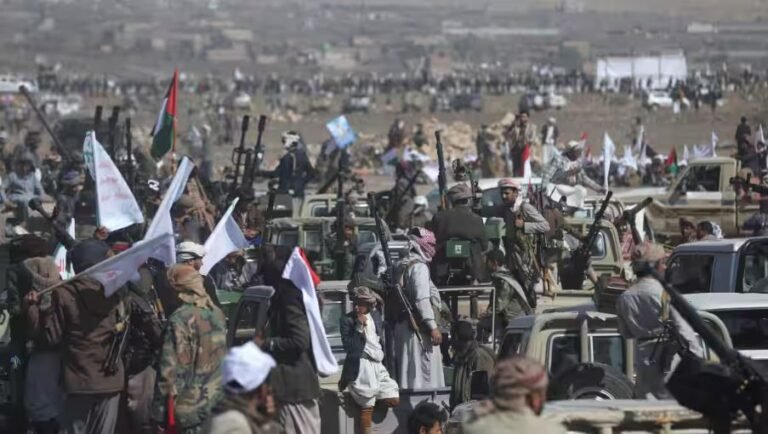
EQUIPPED WITH THE most sophisticated weapons of destruction, the United States doesn’t seem bothered pitting a lean team of American soldiers against Iran’s over two million troops who are willing to die in the name of “glory.”

In a report which first appeared in Al Jazeera, the US government, as early as June last year, has deployed around 40,000 to 50,000 American troops across 19 sites surrounding Iran.

The report back then said the troops are deployed either in US-controlled bases in operation for at least 15 years or in other sites with US military presence. 

SHOCKING ATTACK

Eight months later, US and Israel attacked multiple Iranian cities, prompting a fierce response from Tehran, which launched missiles at Israel and towards US military bases in neighboring countries in the Middle East where American forces operate.

Anticipating a worse case scenario in view of an intense exchange of projectiles, countries surrounding Iran were forced to shut down their airspace, and even grounded ships being used in delivering crude oil across the globe.

Many countries have, in recent days, cautioned their diplomats and citizens in the region about the prospects of a military escalation between Iran and the US. Some countries had even asked their citizens to evacuate.

Iran had previously warned that if it were attacked, it would respond by targeting US military facilities across the region.

AMERICAN PRESENCE

For the longest time, the US has been maintaining military bases in the Middle East. According to the Council on Foreign Relations, the US operates a broad network of military sites, both permanent and temporary, across at least 19 locations in the region.

Of these, eight are permanent bases, located across Bahrain, Egypt, Iraq, Jordan, Kuwait, Qatar, Saudi Arabia and the United Arab Emirates.

The US’ first deployment of soldiers in the Middle East was in July 1958, when combat troops were sent to Beirut during the Lebanon crisis. At its height, there were almost 15,000 Marines and Army soldiers in Lebanon. 

As of mid-2025, there are about 40,000 to 50,000 US troops in the Middle East, comprising personnel stationed in both large, permanent bases and smaller forward sites across the region.

SCATTERED US TROOPS

The countries with the most US troops include Qatar, Bahrain, Kuwait, the United Arab Emirates and Saudi Arabia. These installations serve as critical hubs for air and naval operations, regional logistics, intelligence gathering and force projection

Below are some notable bases in the region.

●Established in 1996, the 24-hectare Al Udeid airbase in Qatar is the largest airbase used by the US military in the Middle East, accommodating almost 100 aircraft and drones. This base, which houses some 10,000 troops, serves as the forward headquarters for US Central Command (CENTCOM) and has been central to operations in Iraq, Syria and Afghanistan.

●The Naval Support Activity, NSA in Bahrain sits on the site of the former British naval installation, HMS Jufair. It hosts approximately 9,000 defense personnel, including military and civilian staff. Home to the US Navy’s Fifth Fleet, the base provides security to ships, aircraft, detachments and remote sites in the region. The Bahrain airbase came under attack on February 28, the country’s military confirmed.

●Constructed in 1999, Camp Arifjan in Kuwait is a major US Army base located about 55 kilometers southeast of Kuwait City. It serves as the primary logistics, supply and command hub for US military operations in the Middle East, particularly within the US CENTCOM area of responsibility.

●The strategic Al-Dhafra airbase in the United Arab Emirates focused on reconnaissance, intelligence gathering and supporting combat air operations. The base hosts advanced aircraft such as the F-22 Raptor stealth fighters and various surveillance planes, including drones and airborne warning and control systems (AWACS).

●Not to be left behind is the Erbil airbase in Iraq. Erbil is used by US forces for air operations, particularly in northern Iraq and Syria, where troops advise Kurdish and Iraqi forces.

Charisma: The Power of Authenticity

YOU KNOW SOMEONE who just feels good to be around? You enjoy having them around. They start talking. And suddenly, people are listening. Not because they’re the loudest. Not because they’re trying hard.

People just feel comfortable with them. That’s charisma.

But here’s the thing. Real charisma isn’t about being flashy. It’s not about clever lines or impressive speeches.

Real charisma comes from something simple: authenticity.

  • When people sense that you are real, they relax.
  • And when they relax, connection happens.

That’s the quiet power behind charisma.

The Back Story

Some people think charisma is all about being smooth, dramatic, or charming. That’s usually just performance.

True charisma is different.

It’s when people feel that what you say… matches who you are.

  • Your words feel natural.
  • Your reactions feel honest.
  • Your presence feels comfortable.

People trust you because they sense something important:

  • You are not pretending.

And that’s magnetic. People feel authenticity before they hear words.

Meeting Gets Real

Situation
A team meeting is stuck in long, complicated discussions about priorities.

BeforeLiam tries hard to sound impressive:

  • “Let me articulate a strategic perspective regarding our operational direction moving forward.”

People nod politely, but inside they’re thinking:

  • What exactly did that mean?

It feels rehearsed, a little forced, a little distant.

AfterNina speaks:

  • “Here’s what I think. We’re overcomplicating this. Let’s focus on one priority and do it well.”
  • Clear. Honest. Direct.

The room pays attention. Why? Because it feels real.

Tip

  • Stop trying to sound fancy.
  • Say what you actually mean.
  • Use normal words.
  • Speak like you would to a friend.

Friend Gets Honest

Situation
You’re having a heart-to-heart with your friend, Theo, about something sensitive.

Before

  • “I feel that perhaps your approach to the situation might be somewhat less than optimal.”

Theo smiles politely… but he doesn’t feel understood.

After

  • “I’m worried about this, and I want to understand what you’re feeling.”
  • Honest. Direct. Real.

Theo relaxes, and the conversation opens up.

Tip

  • Say what you feel.
  • Keep it simple.
  • People connect when you’re real.

Community Connects

Situation
At a neighborhood gathering, people are discussing a community project.

BeforeHarper says:

  • “Our collective endeavor should be aligned with the overarching vision and executed with utmost efficiency.”

People smile… but the energy drops.

AfterJordan speaks:

  • “Hey everyone, I think we can make this simple. Let’s pick one small goal this week and start there.”

People lean in. The mood changes. Participation goes up.

Tip

  • Keep it simple.
  • Keep it real.
  • People feel it.

The Secret Behind Charisma

When someone is authentic, a few things happen almost immediately.

  • People relax.
  • They trust faster.
  • They feel included.

Authentic communication feels human, not scripted.

That’s why the most charismatic people are often the most natural ones.

If you want stronger presence in conversations, here’s the secret:

  • Stop trying to sound impressive.
  • Say what you actually mean.
  • Use normal words.
  • Speak like you would in a relaxed conversation.

Authenticity isn’t about saying everything on your mind — it’s about letting your real voice show.

Charisma isn’t performed. It’s felt.

Tips And Techniques 

Every day, people hear thousands of messages. Perfect words are everywhere.

But something rare still stands out:

  • Real people.

Authenticity cuts through the noise. It builds trust. It creates connection.

The next time you step into a conversation, remember this:

  • You don’t need to perform.
  • You don’t need to impress.

Just be clear.

  • Be unapologetically you.

Because in the end, the most powerful charisma comes from one thing: being real.

Remember: Be authentic. People feel it. That’s charisma. 

When Connectivity Comes Home: Lessons From The Globe Caravan

FOR MANY FILIPINO families, learning has always started at home — at the dinner table, in quiet conversations with parents, or through the daily lessons of survival and resilience.

Today, however, the home is also becoming something new: a small digital classroom, a mini marketplace, and sometimes even a livelihood hub.

As the saying goes, “When one door closes, Wi-Fi opens another.”

Across the country, more families are discovering that the internet is no longer just for scrolling, watching videos, or chatting with relatives abroad. It is slowly becoming a tool for learning skills, building small businesses, and finding new ways to earn.

But here lies the challenge: curiosity about the digital world is growing fast, yet guidance on how to actually begin remains uneven. Many families, especially in communities outside major cities, want to explore online opportunities but simply do not know where to start.

This is where Globe’s Globe Caravan enters the picture.

Instead of waiting for people to figure things out on their own, the Globe Caravan brings digital learning directly to communities. Think of it less like a seminar and more like a traveling classroom that meets families where they are.

Recent stops in Iloilo and Cebu showed how something as simple as a community session can open doors to new ideas. Parents and households were introduced to beginner-friendly ways of using digital tools for skills development and income opportunities such as live selling and social commerce.

For many participants, the biggest realization was simple but powerful: connectivity at home can be more than just a monthly bill.

As Globe Chief Marketing Officer Roche Vandenberghe puts it:

“Progress starts at home. The Globe Caravan brings learning, connectivity, and opportunity closer to Filipino families so they can see how being connected can support education, livelihood, and everyday life.”

In other words, the internet is not just about access anymore. It is about what families can do together once they are connected.

And perhaps that is the quiet strength of initiatives like the Globe Caravan. It recognizes that technology alone does not change lives — people do. But when communities are given the right tools and a little guidance, families begin to see possibilities they may have never considered before.

A parent may learn how to sell products online.
A child may discover new learning platforms.
A household may find ways to earn together.

As Vandenberghe further explains:

“Connectivity today is no longer just about access. It’s about what families are able to do together once they are connected.”

The Globe Caravan also reflects a larger truth about development: progress should not always begin in big cities. Sometimes the most meaningful change starts in barangay halls, community centers, and neighborhood gatherings where people learn side by side.

Because in the Filipino spirit of bayanihan, growth is rarely a solo journey.

By bringing digital learning closer to communities, Globe is helping families see connectivity not just as technology, but as an opportunity — one that can support education, livelihood, and shared progress at home.

The Caravan continues its journey across the country, with its next stop scheduled in Cabanatuan in March 2026, where more families will gain the chance to learn, earn, and grow in an increasingly connected world.

After all, in today’s digital age, the most powerful signal is not just the strength of the internet —

it is the strength of the families using it to move forward together.

Fertilizer Scandal Haunts DA Again

0

AS IF THE flood control scandal isn’t enough, the administration is saddled with similar irregularities which once haunted the Department of Agriculture.

By his own admission, Agriculture Secretary Francis Tiu-Laurel said that his agency has been receiving numerous complaint over dubious fertilizer procurement deals.

Laurel however assured that the agency is looking into allegations against five suppliers of poor quality fertilizer products meant to boost harvest of local farmers.

Showing a similarity to the scheme where infrastructure projects are done with substandard materials, the DA probe covers five firms suspected to have brought in low quality fertilizer products that are far below the government’s standard requirements.

Under scrutiny are the Agri-Victorius Trading Corporation, DQB Green Agricultural Products Trading, Valap Incorporated, Dos Asia Chemical Trading Corporation and Rova Fertilizer Manufacturing.

All five suppliers have been previously flagged during quality tests at the Fertilizer and Pesticide Authority (FPA).

Denouncing their alleged unfair practices, the agriculture secretary explained that the investigation aims to prove whether or not the products met government standards.

“We agreed to pay the price they bid, yet they delivered substandard products. That is highway robbery, and we will not allow it. They have no shame,” Laurel pointed out even as he claimed that the five suppliers have already been suspended pending the outcome of the investigation.

He likewise ordered the suspension of fertilizer distribution until the completion of the review and the issuance of a clearance from the Office of the Secretary.

Agriculture employees must also report pending deliveries, ongoing transactions and related documentation to enable a thorough evaluation.

Dad’s Waterloo Haunts Junior

FROM MARCOS SR. and now Marcos Jr., the oil crisis had haunted their leadership. 

During Marcos Sr., it was the OPEC (Organization of Petroleum Exporting Countries) that dictated supply and prices of fuel oil in the world.

The former strongman’s son and namesake Ferdinand Jr. is being scrutinized as to whether or not he would be able to find ways to address local concerns following the closure of the Strait of Hormuz due to the  ongoing war between Iran and Israel (backed by the United States).

The Strait of Hormuz traverses the Persian Gulf and the Gulf of Oman, the only sea passage from the Persian Gulf to the open ocean and is one of the world’s most strategically important choke points.

During the time of Marcos Sr., the oil industry was still under the control of the government and because of OPEC’s unilateral decisions on supply and prices of fuel oil, the country had experienced not just a fuel crisis but a subsequent dollar crisis– prompting the regulation by the Central Bank of foreign exchange payments for imports, borrowing and travel and setting a maximum amount of dollars (through letters of credit) that can leave the country.

Under Marcos Jr., the Bangko Sentral is closely watching the foreign exchange reserves should a prolonged war in the Middle East drain whatever reserves are left in the country.

STILL ENOUGH

Although the dollar reserves are still ample, analysts are warning that prolonged conflict in the Middle East, particularly possible hikes on global oil prices, could gradually drain the country of its buffers against such external shocks.

Business Mirror quoted Jonathan L. Ravelas, senior adviser at Reyes Tacandong & Co., saying  amid the conflict in the Middle East, the country’s dollar reserves “may ease at the margin, but a sharp decline is unlikely unless we see a prolonged oil shock or a sudden loss of market confidence.”

This was echoed by Philippine Institute for Development Studies (PIDS) Senior Research Fellow John Paolo R. Rivera, who explained that while latest data from the Bangko Sentral ng Pilipinas (BSP) showed that the current reserve level of the country can cover 7.5 months’ worth of imports of goods and payments, “sustained” geopolitical conflict could slowly put pressure on the country’s reserves, the paper added. 

HIGHER CRUDE

“Since the Philippines is a net oil importer, higher crude prices increase the country’s import bill, meaning more dollars are needed to pay for energy imports,” Rivera said.

“This raises demand for forex currency and may widen the trade deficit. If BSP intervenes in the forex market to prevent sharp PHP depreciation, it may use part of the GIR to supply USD to the market,” added the senior research fellow of the state-run think tank. 

Rivera further noted that episodes of “global risk aversion” may trigger capital outflows, which could also put pressure on reserves. 

Local experts raised these points even as preliminary BSP data showed the country’s Gross International Reserves (GIR) reached an “all-time high” of $112.72 billion as of end-February 2026.

ROBUST BUFFER

The BSP said this level provides a “robust” external liquidity buffer, equivalent to 7.5 months’ worth of imports of goods and payments of services and primary income. 

“GIR consists of foreign‑denominated securities, foreign exchange, and other reserve assets, including gold. These reserves serve as a buffer against external economic shocks, enabling a country to pay for its imports, service its foreign debt obligations, and stabilize its currency,” the BSP explained.

The country’s $112.72-billion reserves as of end-February 2026 is .1 percent or $105 million higher than the $112.61 billion as of end-January 2026. This is also nearly 5 percent higher than GIR’s level in February 2025 of $107.395 million.

Despite raising the concern of a potentially protracted conflict in the Middle East, analysts noted that the BSP has sufficient reserves.

“The BSP has ample reserves and has been clear it won’t burn GIR just to fight global pressures like higher oil prices or a strong dollar. Intervention will stay measured and tactical,” Ravelas said. 

“I don’t expect a significant drawdown in GIR,” he also noted.

IMPORT COVER

Rivera shared that “at 7.5 months of import cover, the reserve level is well above the commonly accepted adequacy benchmark of around three months.”

“This gives BSP enough room to smooth excessive forex rate volatility, stabilize investor confidence, and ensure that the country can continue paying for essential imports even during periods of global uncertainty, such as the current tensions in the Middle East,” he added.

Rivera underscored that the current GIR level provides a significant cushion, so while reserves could fluctuate due to higher oil imports or forex interventions, PH remains well-positioned to absorb external shocks in the near term.

Rizal Commercial Banking Corp. (RCBC) chief economist Michael L. Ricafort said the monthly increase in the GIR to new record highs again is largely due to the continued month-on-month increase in gold holdings, by $2.4 billion or an 11.6-percent increase to a new record high of $23.1 billion.

Ricafort also explained that foreign exchange holdings went up by 7.57 percent or by $92 million month-on-month to $1.307 billion. 

However, foreign investments saw a 2.8-percent decline or a reduction of $2.737 billion to $83.650 billion. Ricafort traced this to the increased US/global market volatility in view of geopolitical risks since January 2026 such as events involving Iran, Greenland, Venezuela, among others.

Kerosene Price Hike Affects The Poorest 

FOR THE LONGEST time, news about oil price hike has always been regarded as earthshaking amid resistance from the public transportation sector.

Just over the weekend, the Department of Energy – Oil Industry Management Bureau (DoE-OIMB) announced a huge adjustment on the price of petroleum products — plus P9 per liter for gasoline, additional P19 for diesel and P31 per liter for kerosene.

The add-ons, which is equivalent to around 20 to 40 percent increase as compared to the average price per liter in February, made consumers– meaning all of us– noisy because of its impact on mobility, ability to buy food and other basic commodities, pay utilities and enjoy comfort.

The final oil price hikes will be announced today but oil firms have been adjusting their pump prices every week to reflect movements in the world oil market.

From March 6 to 9, gasoline products range from P49 to as high as P76.5 per liter, diesel costs anywhere from P49 to P79.90 per liter, while kerosene price is at least P78.9 to as high as P99.89 per liter.

POOR MAN’S FUEL

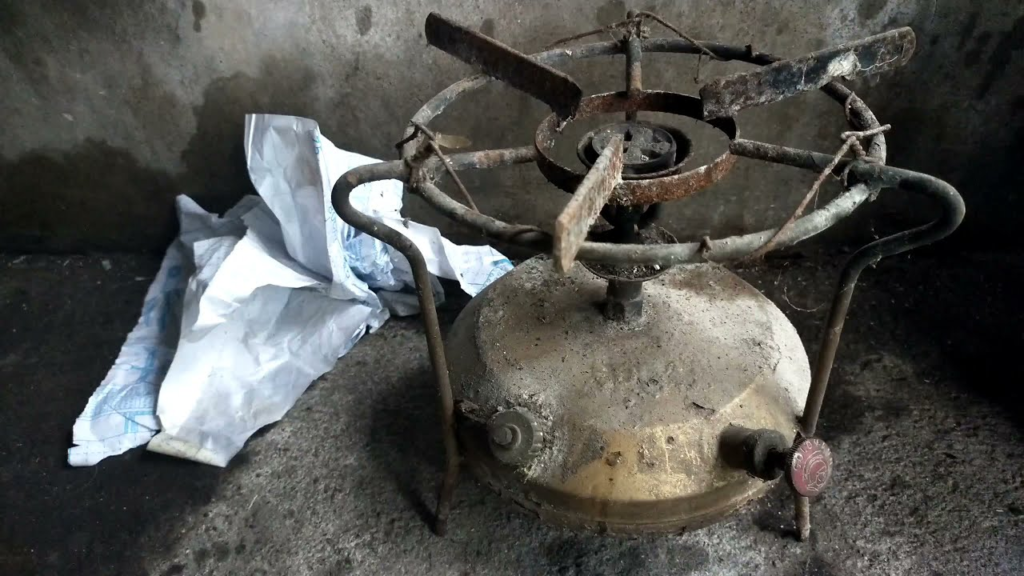
Kerosene is the most used item in the remote areas of our country, rural communities depend on kerosene for cooking and lighting their homes. 

Being the poorest of the poor, they are the ones carrying the heaviest brunt of oil price adjustments because of instabilities in geopolitics and ongoing global armed conflicts. They, too, have the most inaudible voices in our society.

We hear the loudest and most vehement cries from urban populations who use mostly diesel for public transport (motorcycles, tricycles and even diesel-fed  PUVs) and gasoline for the most affluent people whose SUVs outnumber public transport on our roads, thus adding to the daily angst of the urban poor and struggling middle class.

HISTORICAL TREND

Based on historical trends and recent DoE data, kerosene prices in the Philippines have not always been higher than diesel and gasoline since the Marcos Sr. era. 

While kerosene is currently often priced higher per liter than both gasoline and diesel (as of 2025–2026), this is a function of current market conditions, specific tax structures, and, historically, lower demand volumes compared to transportation fuels. 

Below is the breakdown of the historical and recent price dynamics:

1. Marcos Sr. Era (1965–1986) saw a fuel crisis marked by significant and sharp increases in oil prices because of the global oil crisis of 1973 and 1978, rather than a consistent, higher-priced hierarchy for kerosene.

During this period, the oil industry was not yet deregulated and the government controlled and dictated oil prices. 

Kerosene, often considered a household staple for lighting and cooking, was sometimes subject to subsidy or price-fixing to protect lower-income households, keeping it cheaper than automotive fuels. 

2. Post-Deregulation (1988) to Present. In recent years, particularly during times of high volatility, kerosene has become more expensive than diesel and gasoline. For example, as of early 2026, kerosene prices were reported in the range of P71to P81 per liter, often exceeding both.

Kerosene is often higher now because it is not used as widely as gasoline or diesel and is thus treated as a specialty product with less competition and lower volume, leading to higher retail margins. It is also often subject to different excise tax rates under recent tax reform laws (like TRAIN).

SUPPLY AND DEMAND

Prices shift rapidly. There are instances where gasoline or diesel prices have risen faster than kerosene due to high demand or supply shortages, leading to situations where diesel becomes more expensive than kerosene temporarily. 

In Metro Manila for instance, between 2022 and 2026, kerosene was always priced highest per liter at P71 to P81. Diesel fluctuates heavily sometimes exceeding kerosene during supply shocks like P83 to P92 in June 2022.

Gasoline is often slightly cheaper or the same as diesel prices but is frequently lower than kerosene depending on octane.

The narrative that kerosene is always higher is a more recent phenomenon, whereas, during the Marcos Sr. era, all fuels surged together during crises, with government intervention heavily influencing the relative prices.

FAIR PRICING POLICY

“We recognize that the industry operates under challenging global conditions, and we appreciate  those who continue to act responsibly. At the same time, we will not allow any party to take  advantage of the situation. Fair pricing and adequate supply are a commitment to every Filipino  whose daily needs depend on it,” DoE Secretary Sharon Garin told the Business Mirror.

Senator Sherwin Gatchalian urged the DoE to strictly monitor retailers and oil companies for possible profiteering amid what he described as an “energy crisis” stemming from the escalating conflict in the Middle East.

Current oil industry inventory is good for 50 days, the DoE said, adding that the industry should not jack up pump prices that quickly.

Data from Sen. Gatchalian’s office show that from January to March 4, gasoline pump prices increased by 13.7 percent, from P55 to P62 per liter. Diesel prices rose by 41.4 percent, from P54 to P76 per liter, while kerosene prices went up by 43 percent, from P79 to P114 per liter. 

GREEDY RETAILERS

The DoE has already sought the assistance of the Department of the Interior and Local Government (DILG) and the Philippine National Police (PNP) in intensifying monitoring activities at gasoline stations nationwide. 

The DoE field offices in Luzon, Visayas and Mindanao have ramped up on-site inspections to verify compliance with fuel pricing directives and the responsible sale of petroleum products. 

It also enjoined oil companies, gasoline stations, and downstream oil industry participants to comply with existing fuel pricing rules and anti-hoarding regulations amid continued monitoring of global oil market developments. 

President Marcos Jr. ordered the DoE to ensure the orderly sale and distribution of petroleum products and to prevent hoarding, profiteering, and any premature or unauthorized price. The government will not tolerate any attempt to exploit the present situation at the expense of the Filipino public. 

UNAUTHORIZED HIKES

Gasoline stations are not allowed to implement unscheduled or unauthorized price increases outside established pricing adjustments. 

Oil companies have likewise been directed to ensure that company-owned and dealer-operated stations strictly comply with DoE directives, including any duly authorized staggered price adjustments, where applicable.

Batas Pambansa Blg. 33, as amended by Presidential Decree No. 1865, prohibits hoarding and other abnormal or illegal sales practices involving petroleum products. 

In line with this, the DoE reminded all concerned establishments that acts intended to withhold supply, manipulate distribution, or circumvent lawful pricing and sales practices are subject to corresponding administrative and criminal sanctions under existing laws. 

All retail stations must dispense petroleum products in accordance with existing rules and safety regulations to prevent any hoarding activities. 

EXTRA CONTAINERS

To prevent panic-buying, hoarding and other similar acts, the government cited the need for gasoline stations to dispense fuel products directly to the vehicle’s built-in fuel tank, even as the DoE hinted at restricting loading of petroleum products in separate containers.

The agency warned against practices such as improper container loading, “bote-bote” sales, and the filling of drums, gallons, or other containers for purposes of stockpiling to ensure and preserve the fair distribution of fuel in the market.

Violations may result in the revocation of the certificate of compliance or license to operate, suspension or cancellation of business permits, and the imposition of other applicable administrative  or criminal penalties under existing laws and regulations. 

ELECTRICITY MARKET

The Energy Regulatory Commission (ERC) recently met with the Independent Electricity Market Operator of the Philippines (IEMOP) to discuss electricity market simulations assessing the potential impacts of escalating tensions in the Middle East on Philippine power prices.

IEMOP presented projections indicating that higher global fuel prices could place upward pressure on electricity prices in the Wholesale Electricity Spot Market (WESM), particularly if global supply disruptions persist.

The simulations examined scenarios involving increases in international coal, oil, and liquefied natural gas (LNG) prices, as well as possible supply constraints in the power system. The analysis indicated that higher fuel costs could lead to increased WESM clearing prices as generators reflect higher fuel costs in their market offers.

“This is part of our proactive approach,” ERC Chairperson and CEO Atty. Francis Saturnino C. Juan said, adding that such stress tests enable them to understand possible risks early and ensure that consumer protection mechanisms are in place should global fuel volatility persist.”

Global fuel markets have experienced volatility amid heightened geopolitical tensions affecting global oil and LNG supply routes, including developments around the Strait of Hormuz—a key maritime corridor through which about one-fifth of global oil and LNG shipments pass. 

PH’S ENERGY MIX

The Philippines’ energy mix relies significantly on coal and LNG, making the power sector sensitive to international commodity price movements.

According to IEMOP’s analysis, higher fuel costs alone may exert upward pressure on prices in the WESM, where electricity is traded in real time. Price pressures may intensify under scenarios involving forced outages of large generating units, which could tighten supply.

A forced outage refers to the unexpected shutdown of a power plant due to technical issues. When supply becomes constrained, more expensive generators may set the market price.

The ERC emphasized that existing regulatory safeguards and market protection mechanisms remain operational, including the secondary price cap (SPC) mechanism, which is automatically triggered if sustained price spikes breach regulatory thresholds.

The commission also directed IEMOP and ERC Market Operations Service (MOS) to closely monitor market activities and promptly report any unusual or suspicious behavior in the market. The directive aims to ensure that no participant abuses market power or takes advantage of prevailing market conditions, particularly during periods of heightened global fuel price volatility.

The ERC added that early assessment of potential market scenarios allow the ERC to prepare mitigating or contingency measures, if warranted, to help cushion the impact of external shocks on electricity consumers. 

“Our priority is to protect consumers from undue price volatility while ensuring a stable and reliable power supply. Preparedness remains important given the Philippines’ exposure to global energy markets,” said Juan.

Highest Paid Non-Performing Public Official


A NON-PERFORMING PUBLIC official, and considered the second highest paid in government, is doubtless the ICC jailbird ‘s daughter, Sara Duterte, the vice-president of the country. 

Chosen to serve as the secretary of the Department of Education (DepEd) a few months upon her inauguration as vice-president, her first departmentorder to school teachers was called by many people,especially the teachers, “STUPID!” 

Her order was to remove all posters and educational visual aids in the classrooms, reasoning out that these distract the school children and youth from paying attention and listening to the teachers. 

STUPID DIRECTIVE

People considered this a “stupid directive” because, from time immemorial, classrooms especially for pre-school, kindergarten and grade school students, the alphabet and numbers, prominently displayed on the walls of the classrooms have served as helpful visual learning tools.

These remind the students daily of the fundamental building blocks of learning language/reading skills, and understanding the world of numbers and mathematics in daily life. 

Posters of national heroes remind the children of national heroes (like Lapu Lapu, Jose Rizal, Andres Bonifacio, Emilio Jacinto. Antonio Luna, Diego Silang, et al) who lived exemplary lives of fighting for the country’s freedom and independence from the exploitation and oppression of past colonizers, Spain, the United States and Japan.

 
“People considered (Sara’s order) a “stupid directive” because, from time immemorial, classrooms especially for pre-school, kindergarten and grade school students, the alphabet and numbers, prominently displayed on the walls of the classrooms have served as helpful visual learning tools.”

ZERO CONTRIBUTION

VP Sara Duterte resigned from her job as DepEd secretary a few months later, leaving zero contribution of raising the country’s educational system to a simple notch higher to approximate international educational standards. 

The classroom shortage of thousands, especially in the provinces, were not addressed. Countless schools werewithout the management and guidance of principals. 

Severe lack of teachers was neglected. 

Also unaddressed were the provision for necessary assistance to teachers, in their financial needs as well as materials/facilities (like laptaps) to facilitate their daily grind of making sure their students really learn from their active presence in the classrooms, or as required, in online teaching modes. 

THE TRAVELER

VP Sara Duterte has been travelling around, particularly to the Hague, Netherlands, to visit her father, ICC jailbird, Rodrigo, who is awaiting trial for the charge of crime against humanity – for his Extra Judicial Killings (EJKs) of more than 30,000 Filipinos under his failed “War on Drugs – Tokhang.”

On certain significant dates, like on Christmas, or Rizal Day, VP Sara Duterte would issue public statements of advice to the Filipino people about observing the spirit of Christmas, and of celebrating and emulating the patriotism of the national heroes (“Hypocrite!”- Netizen comment). 

Meanwhile, she is enjoying as the country’s vice-president – her millions-worth monthly pay-check. This appears to fit the cries in the streets, addressed to the ‘kurakut’ senators and congressmen, “Ikulong nayan!”

SHAMELESS BETRAYAL

As a non-performing government official, VP Sara Duterte has been found to be fooling the Filipino people from the start, since becoming vice-president.

As publicly revealed live-streamed on TV, the Congress’ Committees on Good Government have exposed the crimes of VP Sara Duterte – unexplained spending of more than P612 M of her budgeted confidential funds, malversation of public funds, betrayal of public trust, violation of the Constitution and other crimes. 

She was impeached by the House of Representativeslast year, but the dominant pro-Duterte Senate archived it. 

But today, as of March 2026, the House of Representatives has found the impeachment charges filed by civil society and other public officials as sufficient in form and substance. 

The Senate will thus form itself as an Impeachment Court to try VP Sara Duterte for not doing her job as a public official, and shamelessly betraying the Filipino people.

US Study Shows More Affordable Food Contain More Additives

“Products with fewer additives and better nutritional profiles are consistently more expensive, while cheaper options are more heavily loaded with additives, sugar, and sodium. As a result, access to healthier food is constrained by price, turning basic nutrition into a privilege rather than a standard,” said Julie Chapon, Co-Founder of Yuka. 

NEW FINDINGS OF a study conducted in the United States showed that food that is more affordable is likely to contain more additives and is less nutritious.

The groundbreaking study by Yuka and Harvard Law School’s Food Law and Policy Clinic analyzed over 800 food products. It shows that across 12 of the most common processed food categories, the cheapest options contain 2.6 times more additives, 21 percent more sugar, and 10 percent more sodium than more expensive products. 

“This study highlights a two-tiered system within the American food industry,” said Julie Chapon, Co-Founder of Yuka. “Products with fewer additives and better nutritional profiles are consistently more expensive, while cheaper options are more heavily loaded with additives, sugar, and sodium. As a result, access to healthier food is constrained by price, turning basic nutrition into a privilege rather than a standard.”

The pattern is consistent across everyday staples. In store-bought bread, the cheapest loaves contain nearly four times more additives than higher-priced options. In breakfast cereals, which are products heavily marketed to children, the cheapest options contain 77 percent more sugar, with a single serving reaching more than half of the World Health Organization’s (WHO) recommended daily limit.

When Americans shop for food, price is undeniably a decisive factor. Products withouthigh-risk additives cost, on average, 63 percentmore than those that contain them, placing healthier options beyond what many households consider affordable. With nearly 70 percent of the nation’s packaged food supply now ultra-processed, supplying more than half of adults’ daily calories and nearly two-thirds of children’s, this price discrepancy reveals a food system where affordability and health are fundamentally misaligned.

FAILING CONSUMERS

This inequality is not accidental. It is the result of a US food safety regulatory framework that is fundamentally reversed: instead of regulators imposing strict limits, food manufacturers are allowed to decide what is safe—an approach that often favors profits over public health.

“Urgent reform is needed to fix the US food regulatory system,” said Emily Broad Leib, Clinical Professor of Law and Faculty Director of the Food Law and Policy Clinic at Harvard Law School. “Weak oversight and loopholes like the GRAS designation allow substances to enter and remain in the food supply without independent safety review, even when they are restricted or banned in many of our peer countries. Protecting public health requires stronger rules, greater transparency, and a regulatory framework that prioritizes nutrition over convenience.”

The health toll is staggering. Diet-related diseases now cost the United States more than $1 trillion annually, and recent estimates suggest that about one American dies prematurely every four minutes from conditions linked to ultra-processed foods – often high in additives, sugar, and sodium.

In addition to its findings, the report includes a detailed set of policy recommendations addressing the structural weaknesses in the US regulatory system that allow potentially harmful chemical substances to remain widespread in the food supply, particularly in lower-cost and ultra-processed foods.

These recommendations pursue two complementary approaches:

• Modernizing food additive oversight through regulatory reform to strengthen accountability, close longstanding regulatory gaps, and increase transparency of the substances in food.

• Reducing exposure to additives and ultra-processed foods through schools, public institutions, and fiscal policy measures (tax incentives) that improve access to healthier options.

Founded in 2017, Yuka is an entirely independent impact project. The app lets users scan the barcodes of food and cosmetic products to assess their health impact, with the aim of bringing more transparency to product composition and empowering consumers to make better choices for their health. Today, the app has over 80 million users worldwide, including 25 million in the United States.

The Art Of Starting Over: Finding Joy In The Now

IN THE CONSTANT hustle of our lives, we often get caught in a relentless cycle of “doing.” We’re always planning for the next hour, the next week, or that next big milestone, mistakenly believing that happiness is a destination we’ll finally reach once our problems are solved.

But true fulfillment follows a different rhythm. To “Enjoy Life! …in the right sense” is to realize that joy isn’t a reward for a perfect life; it’s a grace available to us in the messy, imperfect “now.”

I learned this lesson most powerfully thirty-four years ago. I was serving as a Vocation Promoter in the Northern Province and had just arrived at our seminary in Tagaytay for an ordination. I must have looked exhausted because a fellow priest, Fr. Among Ricafort, SVD, looked at me and said, “Glenn, don’t take what happened to your family too seriously.” I was stunned. “What happened?” I asked. He looked surprised that I didn’t know: “Your family home burned down.”

“The biggest obstacle to this joy is the weight of yesterday. We carry around heavy luggage—past regrets or losses—allowing them to anchor us to a version of ourselves that’s gone. To enjoy life in the right sense, we have to master the spiritual art of starting over.”

I rushed home to San Jose, Occidental Mindoro, expecting to find my parents in despair. Instead, I found a vibrant, unshakable faith that stopped me in my tracks. They hadn’t told me because they didn’t want me to worry about material things while I was on my mission. Standing there in the heat, smelling the lingering scent of ash, my Dad looked at the ruins and actually joked, “Don’t mind it, Glenn! We only lost the rats and the cockroaches! Your two nephews were safe.”

His laughter was a total defiance of tragedy. He wasn’t mourning wood and stone; he was celebrating the life and family that remained. That is the thrill of a soul that knows how to begin again with God.

The biggest obstacle to this joy is the weight of yesterday. We carry around heavy luggage—past regrets or losses—allowing them to anchor us to a version of ourselves that’s gone. To enjoy life in the right sense, we have to master the spiritual art of starting over. Every morning is a “holy beginning,” a chance to reset how we see the world.

How do we find that joy today?

• Stop the mental rehearsal. Quit replaying the past or “pre-living” the worries of tomorrow. Just focus on the mission right in front of you.

• Be present. Joy starts when we stop rushing. Take a second to breathe and realize you are loved, exactly as you are.

• Count the grace. Fulfillment isn’t about what we’ve lost; it’s about the grace that’s still standing.

Drop the heavy baggage. You don’t need a perfect life to have a joyful one. You just need the courage to start over, right here and right now.

Enjoy life… in the right sense!

President Orders 4-Day Work Week

0

CONSISTENT WITH THE administration’s energy conservation efforts amid an ongoing Middle East crisis, President Ferdinand Marcos Jr. ordered the temporary implementation of a four-day workweek in some executive branch offices starting March 9.

In a video message, Marcos cited the urgent need to conserve energy and reduce fuel use amid rising global oil prices. The President said the policy will apply to selected offices under the executive branch.

“Para naman sa bahagi ng pamahalaan: Simula sa Lunes, ika-9 ng Marso, pansamantala nating ipapatupad ang four-day work week sa ilang tanggapan ng ehekutibo,” Marcos said.

Shortly following the President’s announcement, Malacañang released Memorandum Circular 114, which provides additional details on the implementation of the directive.

Memorandum Circular 114 states that the order will cover all national government agencies, government-owned or -controlled corporations (GOCCs), local government units, constitutional bodies, state universities and colleges, and other government instrumentalities.

“There is an urgent need to adopt strict energy conservation measures, to further reduce the energy footprint of government operations and optimize the use of public resources,” reads part of the memorandum circular.

The President, meanwhile, stressed that agencies that provide essential and frontline services will continue normal operations. These include offices responsible for health services, public safety, and emergency response, such as the police, firefighters, and other frontline agencies.

In addition to the shortened workweek, President Marcos directed government agencies to cut their electricity and fuel consumption by 10 to 20 percent.

Under the memorandum, government offices are instructed to maintain air-conditioning at 24 degrees Celsius, adding that non-essential lights and electronic equipment must be turned off during lunch breaks and after office hours. Office equipment should also be set to sleep mode when not in use.

The Chief Executive likewise ordered a temporary suspension of non-essential travel and activities, including study tours, team-building activities, and meetings that can instead be conducted online.

Aside from energy-saving measures, the President also announced several other measures to cushion the impact of expected oil price increase including possible tax adjustments on petroleum products and fuel subsidies.

PH Business Confidence Dives Deep

FOR AS LONG as the administration doesn’t make true on its promise to send crooks behind the so-called flood control scandal to jail, there is no way to reverse the negative public perception of how untrustworthy the government has become.

Taking cue from recent surveys, President Ferdinand Marcos Jr. became the first Philippine President to register a negative three percent trust rating.

Aside from Marcos Jr., the surveys also showed declining trust ratings on Marcos’ economic managers, cabinet officials and allies in both the Senate and the House of Representatives.

BIZMEN IN DOUBT

With the corruption issue blown beyond proportion, even the business sector seemed to be having second thoughts, even as the Bangko Sentral ng Pilipinas reported a 0.9 percent business confidence, as of January 2026.

Though still in the positive realm – as optimists still outpaced pessimists– it marked a sharp decline from 29.7 percent in the last quarter of 2025, reported Inquirer.

The result was culled from BSP’s inaugural monthly business expectations survey, part of a shift away from quarterly polling aimed at effectively capturing any shifts in sentiment amid rapidly changing domestic and external developments.

Each monthly round now covers about 500 firms nationwide, roughly a third of the 1,500 companies surveyed under the previous quarterly format.

DRASTIC MEASURES

Businesses appeared less confident as the economy faces a high-profile corruption scandal that has implicated several public officials and stalled government spending. 

The confidence shock prompted the BSP to lower its key rate to an over three-year low of 4.25 percent, though the central bank acknowledged that its capacity to support the sluggish economy may be reaching its limits, the Inquirer explained.

This despite BSP’s efforts to spur bank lending and economic activity, still those surveyed expected tight cash positions and credit access in January. The financial condition index and the credit access index came in at -19.2 percent and -0.6 percent, respectively.

Respondents likewise cited stiff domestic competition, insufficient demand and sticky interest rates as major constraints to business activities in the first month of the year.

MODEST OPTIMISM

The survey noted that companies found modest optimism in higher consumer demand for select products and services—including garments, education, loan products, mailing and shipping services and motor vehicle parts—as well as in ongoing business process improvements.

Looking forward, businesses expect improvements for the near and medium term. The three-month-ahead confidence index (CI) rose to 33.3 percent, while the year-ahead gauge climbed to 38.6 percent, signaling stronger confidence for the next quarter and over the next 12 months.

Hiring intentions also remained positive as 14.1 percent of industry firms plan expansion next quarter and 24.3 percent expect growth over the next year.

Businesses anticipate inflation to rise in January, in the second quarter, and over the next 12 months, though still within the BSP’s 2 to 4 percent target range, the BSP said.

Adopting Voucher System To Solve Agricultural Gaps

0

BACK IN 2023, then Undersecretary for Rice Program, Leocadio Sebastian launched a comprehensive strategy to ensure that rice farmers would get what they requested from the DA field offices in their choice of subsidized seeds, fertilizers (organic, chemical and soil ameliorants and nitrogen-fixing fertilizers), farm machineries and other subsidies using a corruption-free voucher system and the IMCs (intervention monitoring cards).

Both IMC and voucher system were contained in the Masagana Rice Industry Development Program, that also called for the practical consolidation of farmers’ holdings into a cooperative, which would forward their wish list to the DA RFUs and their choice materials will be sent to them and paid for in IMCs (containing the date, volume and name of merchants) for validation under MRIDP. 

Using this program, no favoritism and over/under deliveries will ensue and payments are paid direct by farmers to the merchants through an ATM-like system.

When proposed to Congress for funding, the MRIDP took a lot of time for the DA to convince the legislators on this worthy system, which eventually got the funding it needed. It was later hailed by the legislators as a more transparent game changer for the sector.

With the entry of DA Secretary Francisco Tiu Laurel in November 2023 and his appointment of his chief engineer, USEC for operations, Engr. Roger Navarro, the entire MRIDP and its crucial elements were all but shelved.

The DA stuck instead to the graft- prone traditional system of determining and allocating the inputs per RFU, supplies coming from their choice of seeds, inputs and machinery suppliers and the allocations of the subsidized materials depended on the regional field unit directors and the municipal/provincial agriculturists, all employed by the LGU.

Using the old devolved system, farmers were neither given their choice of seeds and other inputs best suited for their farms nor were they allowed to pick the inputs’ suppliers they trust. It was a one-size fits all approach to farmers. 

Also political patronage played a big role with farmers not close to the incumbents (mayors, barangay officials and agriculturists of LGUs) did not get their share of subsidized inputs that sometimes were given to non-farmers close to the incumbents, which again was resold by the recipient to legitimate farmers are higher rates.

They paid for whatever was allocated to them, even against their choice, and more often than not, the production failed because the inputs were not entirely suited for their lands and their farming practices/systems. 

The voucher system was designed to consolidate farmers’ land areas into the desired 20 hectares (at least) so that credit, inputs, machineries and other subsidies could be given to a legitimate group and paid for by collections from its members.

The IMCs which operate like an ATM contains the details of payments made, volume of inputs purchased, merchants and farmers’ name and ID photo and date of purchase.

Using both systems it was easy to track loopholes along the way and field validators can just check on the officers of the cooperative.

Since December 2023 when they reverted to the traditional graft-prone system, farmers have been complaining about irregularities with the non-farmers receiving such subsidized inputs while those legitimate landholders and tillers not close to the powers-that-be in the LGUs and DA RFUs bought their requirements in the open market at higher prices.

Field Review Begins

Of late, Laurel ordered a nationwide survey of farmer-beneficiaries as it escalates its probe into alleged substandard seeds, questionable fertilizer grades, and unreliable farm machinery distributed under government programs, Business Mirror reported.

Laurel said complaints raised by a farmers’ group are being taken seriously, though regular audits have not flagged systemic irregularities. Still, he ordered a sweeping region-by-region survey of recipients of machinery, post-harvest facilities, seeds, and fertilizers distributed by the DA and attached agencies, including the Philippine Center for Postharvest Development and Mechanization,(PhilMech, a DA attached agency).

Also, cooperatives will be asked about equipment performance, spare parts availability, after-sales service, and overall satisfaction. “We want to hear from the actual beneficiaries,” Tiu Laurel said. “If there is a problem with after-sales service or if the equipment has defects, it will show up in the survey.”

He said DA cannot rely on unsubstantiated complaints, even as allegations of corruption and graft surface. “The (farmers’) group is to replace anecdotes with verifiable data,” he added.

Laurel downplayed the claims that procurement favored a single supplier saying that machinery has been sourced from multiple global brands, including Kubota and Yanmar, and rice processing technologies from Buhler Group and Satake.

He also acknowledged reports of isolated breakdowns, including a Chinese-brand combine harvester cited in media interviews, adding that each case would be reviewed. Suppliers with weak service networks or contract violations could face penalties or blacklisting.

The review also covers seeds and fertilizers, Laurel added.

While rejecting proposals for a voucher-based seed system, Laurel said DA has started using Intervention Monitoring Cards (IMCs) under an improved system as a more transparent and accountable mechanism for delivering fertilizer assistance.

He said the agency will conduct a pilot this year in Southern Leyte, with a full nationwide rollout planned in 2027 if the system proves feasible at the national level.

The DA aims to complete the probe this month and submit a formal report to President Marcos Jr. and the Congressional oversight committees in Agriculture after the Holy Week.

“We are not sweeping anything under the rug. If there are shortcomings or wrongdoings, we will address them,” Laurel declared.

Anti-Dynasty Bill Won’t Be Enough

0

THE COUNTRY’S marginalized sectors will remain at the mercy of traditional politicians even if the 20th Congress gets to approve what seemed more like a token legislative proposal meant to subdue an angry mob.

UP political science professor Jean Encinas-Franco particularly cited the proposed anti-political dynasty bill that was filed at the House of Representatives, where most of its members are direct descendants of political clans lording over the province where they came from.

According to Encinas-Castro, the House version of the proposed anti-political dynasty bill is not enough to resolve the issues plaguing this social ill even as she claimed that voter education alone cannot stop dynasties from manipulating politics in the country. 

Ending political dynasties in the Philippines, she explained, goes beyond voter education or simple prohibition of blood relations to run for election because both have continued influence on the Filipino masses.

Encinas-Franco pointed out that Filipinos have become accustomed to seeking help from politicians for basic services needs, which in effect makes voter education ineffective to restrain families exercising influence on local politics and governance. 

“Ang pinaka-solution talaga nito ay maging efficient ang gobyerno sa pagbibigay ng social services. Kasi kung ang lahat ay di kailangang pumila, di kailangan lumapit sa politiko, napaka-ideal ng sitwasyon na yon,” the UP professor said.

A recent report by the Philippine Center for Investigative Journalism (PCIJ), showed that 113 out of 149 cities across the archipelago are controlled and lorded over by political dynasties, many of whom are already preparing for their reelection bid — or swapping of positions with other family members— with still two years before the next election.

PCIJ cited former president Rodrigo Duterte as an example. Duterte, who has been behind bars in the Netherlands on charges of crimes against humanity, is reportedly bent on seeking reelection as Davao City mayor — with his son Davao City acting mayor Sebastian Duterte as his running mate.

The former President’s daughter Vice President Sara Duterte, who also held the mayoral position several times, has confirmed gunning for the presidency in 2028. 

Likewise expanding its political prowess is the Tulfo clan — Raffy and younger brother Erwin are sitting senators. Their brother Ben could have been the third Tulfo in the Senate, after narrowly missing the so-called Magic 12.

At the House of Representatives, the ACT-CIS partylist group has two congressmen, one of whom happens to be Senator Raffy’s wife. Their son is also a member of the House of Representatives, representing a congressional district in Quezon City.

Interestingly, the senate also hosts pairs of legislators carrying similar surnames — Mark and Camille Villar, Jinggoy and JV Ejercito, Alan and Pia Cayetano.

2 Killed, 4 Wounded in Condo Shooting Spree 

0

NOT EVEN THE supposed exclusivity of a posh condominium complex seemed enough guarantee of safety. 

At the Azure exclusive complex which hosts high-rise condominium buildings, a 59-year old whacko fired upon 10 people resulting in the death of two individuals and injuring four others in what witnesses claimed as a shooting rampage.

The gunman casually fled on foot to Barangay Marcelo Green after the incident

The Paranaque City Police claimed they already have the information of the suspect, including his identity but would still obtain the motive for firing at the victims.

“While the victims and witnesses were playing basketball at the basketball court at Azure Residence, they heard a loud noise,” the police report was quoted by Inquirer.

“Suddenly, the suspect entered through the main gate of the basketball court and started shooting [at a] group of people playing basketball,” it indicated.

After the incident, which occurred nearly 8:00 Wednesday night, the suspect ran out the condominium complex’s main gate and walked toward a nearby mall, according to the police. 

In a police report later on Thursday, the National Capital Region Police Office (NCRPO) said two of the victims were declared dead on arrival at 8:44 p.m. and 11:12 p.m. at the Ospital ng Parañaque District 2.

The four injured victims are in stable condition at the Ospital ng Parañaque and the Parañaque Doctors Hospital. Four other basketball players who witnessed the shooting were unharmed.

Investigators recovered two deformed fired bullets, three metallic fragments and nine fired cartridge cases from a caliber 9mm pistol.

The local police is conducting follow-up operations, backtracking security footage and coordinating with adjacent police units, including authorities on the nearby Skyway, to locate and arrest the suspect.

The gunman is a unit owner in one of the posh towers owned by the Century Pacific Group.

Paranaque Police Chief Nicolas Pinon told GMA7 that the footage showed that the gunman entered the basketball court, opened fire and fled the scene.

In a statement, the Azure Property Management said they are now coordinating with the authorities regarding the matter. 

“Management is fully cooperating with the police and remains committed to supporting the ongoing investigation. The safety and security of all our residents continue to be our highest priority,” it said. 

“We are extending our full support to the victims and their families, coordinating with the proper channels to ensure they receive the necessary care and attention during this difficult time, the Azure statement added.