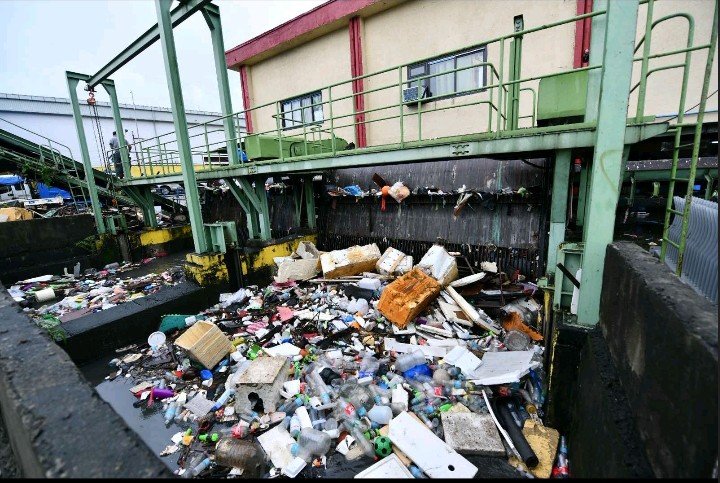
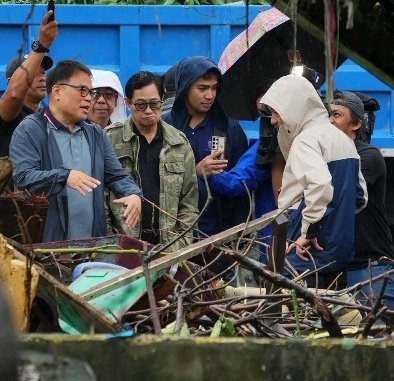
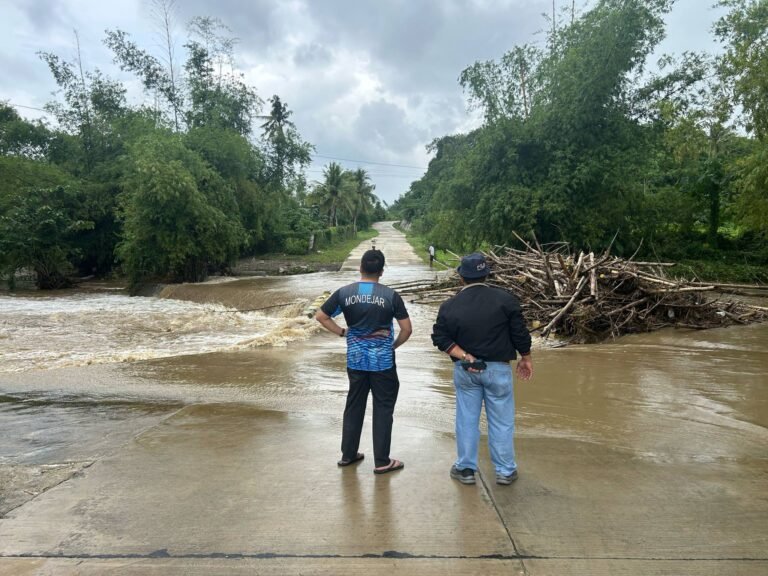
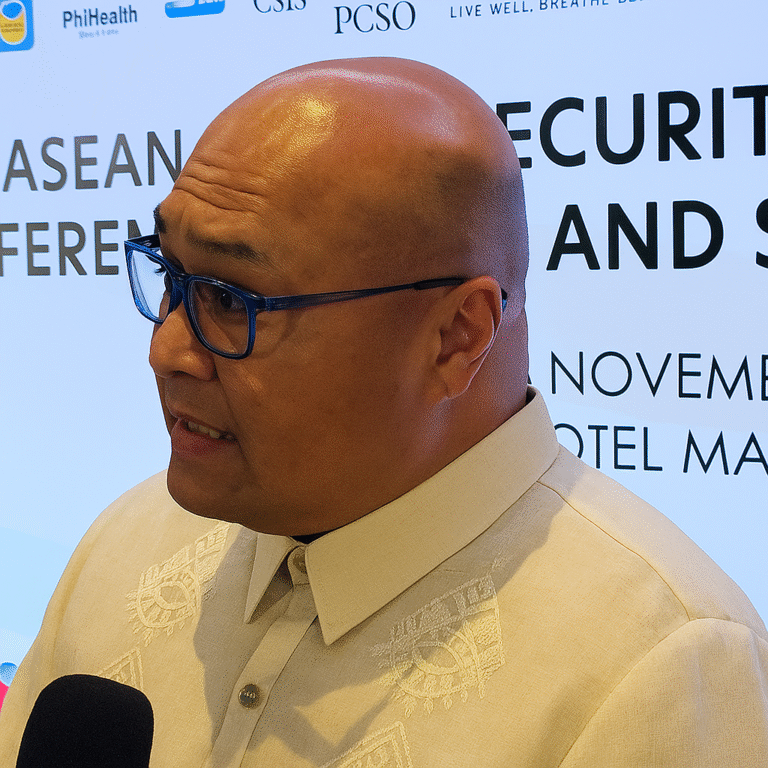
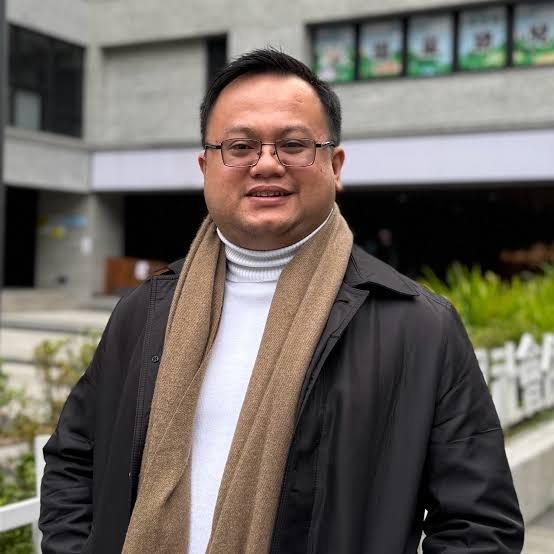
THE METROPOLITAN MANILA Development Authority (MMDA) inspects the Tripa de Gallina Pumping Station in Pasay City. It is the largest pumping station in the National Capital Region. The move, according to MMDA Chairman Don Artes, is to ensure the unhampered operations of Tripa de Gallina Pumping Station in view of the inclement weather, as the President ordered concerned government agencies to implement proactive measures and ensure complete readiness as many communities are dealing with the effects of southwest monsoon or habagat. In the visit, the MMDA witnessed heavy loads of garbage that are sucked into the pump. These get coiled in the engine, resulting in overheating and eventual damage. Artes also noted the NCR’s outdated drainage system as part of the problem, assuring that all 71 pumping stations are working at full capacity.
STRESSING THAT WASHINGTON does not support aggression nor promote expansionist policies, the United States has declared its full backing on mutual economic vitality with the Philippines as well effort to modernize the Armed Forces of the Philippines (AFP) and related agencies to strengthen collective defense in the Asia-Pacific region, particularly the South China Sea (SCS).
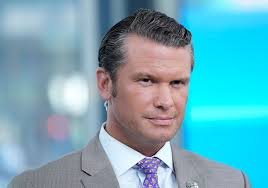
“We do not seek confrontation, but we are and will be ready and resolute. We’re proud to support our mutual economic vitality, including your efforts to modernize your armed forces and collective defense,” US Defense Secretary Peter Brian Hegseth stated in his meeting with President Ferdinand Marcos Jr. at the Pentagon.
‘Together, we must forge a strong shield of real deterrence for peace ensuring the long-term security and prosperity for our nations … (and) the importance of deepening ties as long-time allies since the Second World War and even before.’
Hegseth also pushed for the forging of “a strong shield of real deterrence” between Washington and Manila as he reaffirmed American defense aid for the Philippines and it’s support in the West Philippine Sea (WPS). China has been actively conducting incursive operations within Philippine territories which they claim, accordingly based on historical grounds and their sovereignty on areas within the 11-dash boundary Beijing created.
STRONGER TIES “Together, we must forge a strong shield of real deterrence for peace ensuring the long-term security and prosperity for our nations.”
He also emphasized the importance of deepening ties as long-time allies since the Second World War and even before.
“And the United States is committed to achieving peace through strength and willing to work with all nations who share this desire in the region,” he added.
The US defense chief likewise reaffirmed US commitment to the Mutual Defense Treaty with the Philippines, citing that “together, (the United States and the Philippines) remain committed to the Mutual Defense Agreement . . . and (that) this pact extends to armed attacks on (both) armed forces, aircraft, or public vessels including Coast Guards anywhere in the Pacific including the South China Sea.”
WITH THREE TROPICAL storms battering the country in the past week or so, continuous heavy downpour of torrential rains are expected to flood many areas across the archipelago. These were caused by the southwest monsoon or habagat triggered by consecutive tropical storms “Crising”, “Dante”, and “Emong”.
According to the Philippine Atmospheric, Geophysical and Astronomical Services Administration (PAGASA), heavy rains reaching to almost 200 millimeters is expected to drench Metro Manila, including the nearby provinces of Bulacan, Pampanga, Cavite, Batangas, Laguna, and Rizal.
Signal Number 3 is still up over the northern portion of Pangasinan and the western portion of La Union while Signal No. 2, is up over Ilocos Norte, Ilocos Sur, the rest of La Union, the western portion of Apayao, Abra, Kalinga, Mountain Province, Ifugao, Benguet, the central portion of Pangasinan, and the western portion of Nueva Vizcaya.
Still in Luzon, signal no. 1 was raised over Batanes, Cagayan Including Babuyan Islands, the western and central portions of Isabela and the rest of Nueva Vizcaya.
WARNING Meanwhile, the Philippine Institute of Volcanology and Seismology (Phivolcs) has warned residents living near Mayon Volcano in Albay on the possibility of volcanic flows or lahar even as the heavy rains could cause land inundation, accidental burials as well as landslides.
In Parañaque City, Mayor Edwin Olivarez has been quick to respond to the distress calls of his constituents, visiting the several evacuation sites in the city to provide immediate assistance, both in relief goods and monetary aid. The mayor also conduct clean-up operation to ensure the safety and Healthcare of evacuees.
In Manila, Mayor Francisco “Isko Moreno” Domagoso visited evacuation centers in Santa Cruz and Baseco where 1,289 individuals are taking shelter. He announced plans to declare a state of calamity in the city even as he asked barangay officials to prepare necessary documents to immediately access their calamity funds.
In Caloocan City, residents in Maypajo and other parts in the southern portion of the city gave notice regarding the apparent lack of responsive empathy of Mayor Dale Gonzalo Malapitan to his constituents farthest away from his bailiwick in North Caloocan. As of press time, no relief or assistance has been given to affected residents in the several barangays located in South Caloocan.
Ever met someone who always sounds angry—even when they’re not yelling? You ask a simple question—and boom! It feels like you poked a lion. But wait—what if they’re not actually angry? Here’s what might really be going on.
THE BACK STORY
You say “Good morning,” and they fire back with, “What’s so good about it?”
Or you ask a simple question, and they answer like you just insulted their grandmother.
It’s easy to think, “Wow, what’s their problem?”
But what if the problem isn’t anger at all?
Truth is, some people just come across angry—even when they’re not trying to.
It could be stress, old habits, or stuff they don’t even realize they’re doing.
So before you take it personally or react the same way, here’s a peek at what might really be going on underneath that harsh tone or grumpy face.
They’re Stressed Out
Maybe life’s been hard lately—money, work, family stuff. That pressure shows up in their voice or face, even if they don’t mean to sound angry.
Situation: Maria snaps at her coworker just for asking a simple question.
But she’s not really angry with him—she’s worried about her sick mom and a big deadline at work.
They Don’t Know They Sound That Way
Some folks talk in a sharp or loud tone without even realizing it.
It’s just how they’ve learned to speak.
Situation: Jake talks loud and fast, and his face always looks serious.
He doesn’t feel angry, but people often say, “Hey, why are you angry?” He’s shocked every time they ask.
It’s Their Habit
If they’ve been mad or defensive a lot, that “angry mode” becomes their normal way of talking—even when they’re not mad.
Situation: Lydia always talks like she’s scolding someone—even when she’s saying something nice!
Years of always being on edge made that her “normal voice.”
They Want To Feel In Control
Acting angry can sometimes be their way to look strong or stay in charge.
Situation: Coach Ben raises his voice even when nobody’s misbehaving.
He thinks if he sounds tough, people will listen and take him seriously.
They’re Hurting Inside
Anger can be a cover-up. Underneath, they might be sad, scared, or feeling unimportant.
Situation: Aaron seems mad all the time.
But deep down, he feels lonely and ignored.
Acting angry is how he keeps people from getting too close.
TIPS AND TECHNIQUES
Not every angry voice is about anger at all. Sometimes it’s about stress, habits, fear, or hurt. Or just how they’ve learned to speak.
It’s easy to take it personally, to snap back, or to shut down.
But what if—just for a moment—you saw beyond the tone?
The truth is, people don’t always need you to fix them.Sometimes, they just need someone who doesn’t fight fire with fire.
You never know what someone’s really carrying. Next time someone sounds angry, try this:
Pause
Breathe
Look beyond the tone
You might just change their day—and yours too.
Remember: Behind every angry tone, there might be a tired heart.
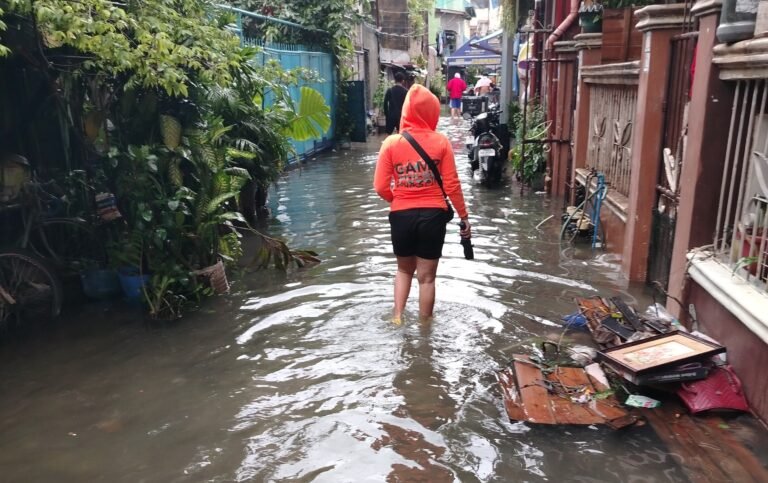
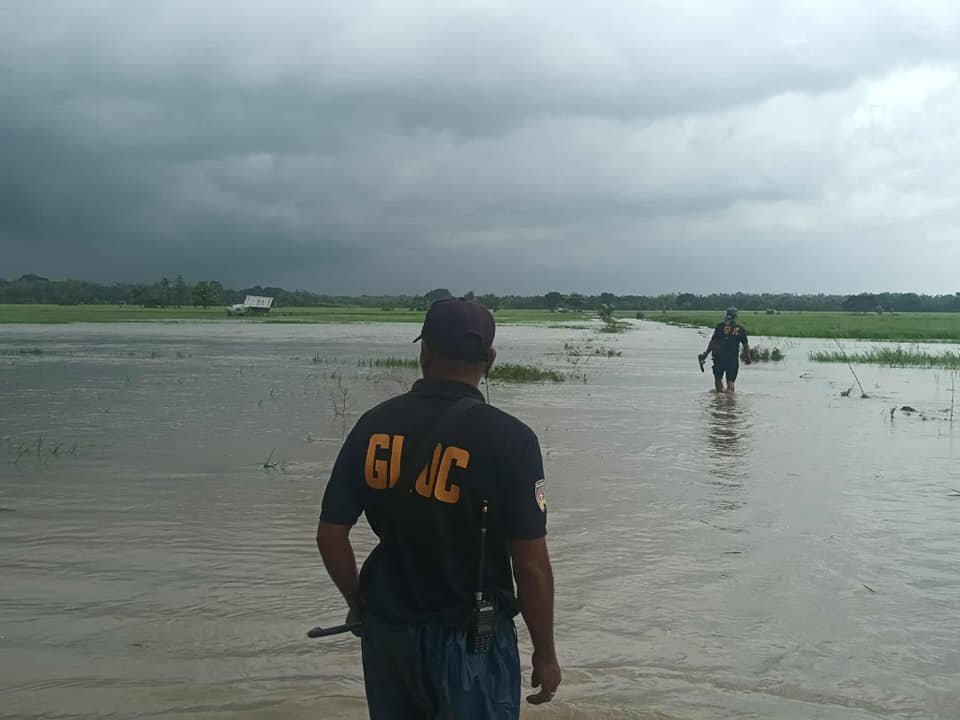
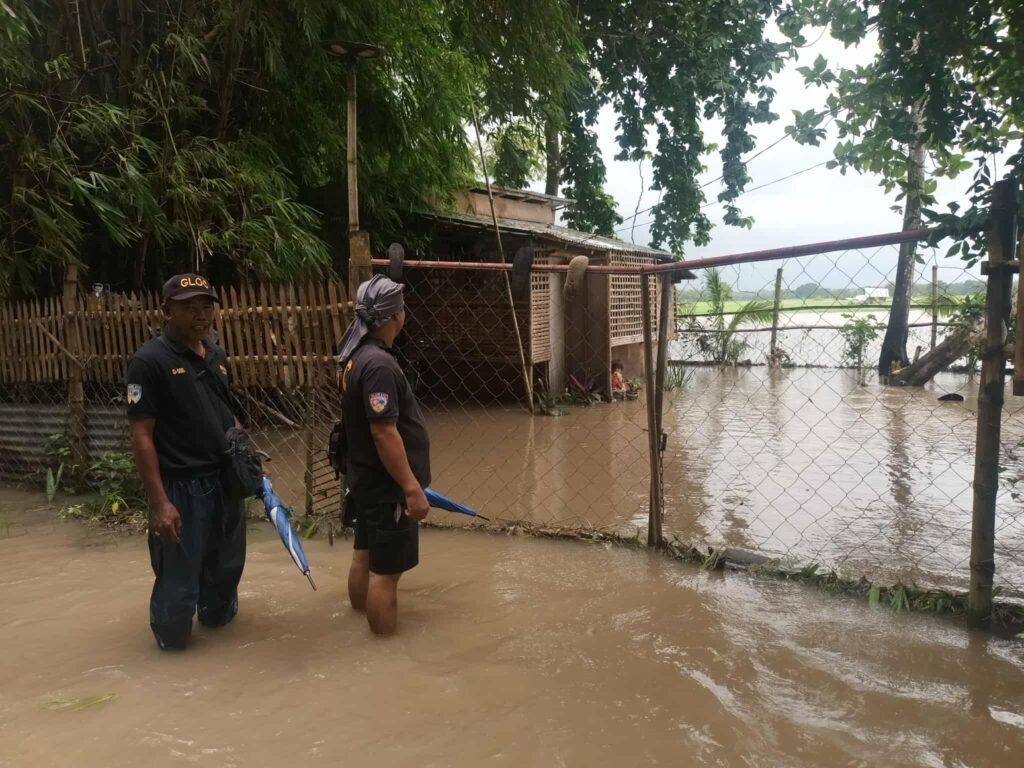
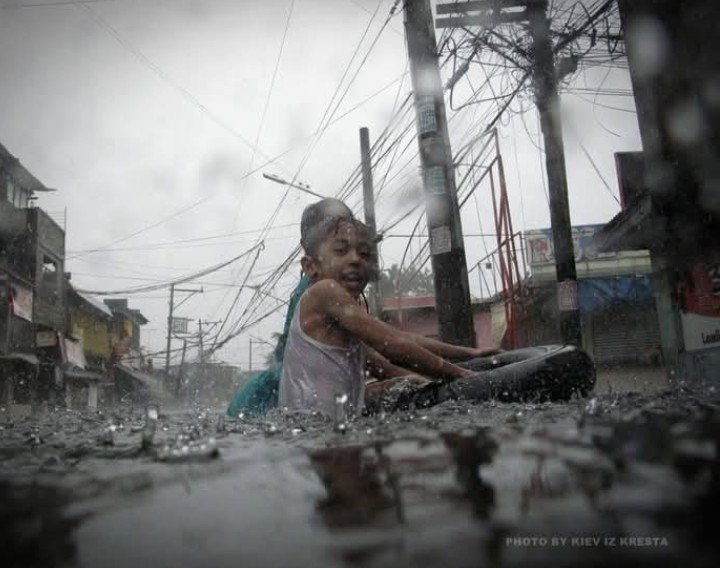
BY NOW, FLOODS in the Philippines feel as familiar as family reunions—only louder, messier, and with far more damage. Every rainy season, the same old scenes play out: ankle-deep water in your sala, car-turned-kayak on EDSA, and barangays transformed into lagoons. If there’s one thing we know, it’s this: floods don’t knock anymore. They walk right in like they own the place.
We know the rains are coming. We know our roads are cracked and creeks clogged like arteries after decades of sisig. We know typhoons are as regular as barangay basketball tournaments. And yet, every year, we act surprised. And here’s the kicker: the government also knows. But knowing isn’t the problem—it’s doing something that actually works.
Photo by GLOC 215 New Lucena, Iloilo Chapter
Flood control budgets balloon with every storm season, but results? Still underwater. Economist JC Punongbayan quips, “Why is the budget invisible?” A question many flood-soaked Filipinos ask while bailing out their homes with tabo and tears. It’s like we’re stuck in a loop of cash flow without water flow control.
Modernization hasn’t helped much either. If anything, it’s made things worse. In our obsession with high-rise dreams and wide concrete roads, we’ve buried centuries-old waterways under malls and subdivisions. Natural drainage is now just a line in history books. And when it floods? Blame it on the rain? Nah—blame it on poor planning, overbuilding, and garbage-choked rivers.
We’ve also unlearned hard lessons. We forget that massive budgets don’t mean progress, especially when corruption is the deepest flood we’re drowning in. That fancy new road you praised last year? It was raised—but the drainage wasn’t. Now it’s a moat. Because slapping cement on a problem doesn’t fix it—it just raises the water to new heights. Literally.
We cling to the myth that capitalism will save us. But don’t expect mega developers to build storm-resilient communities. They build for profit, not percolation. And without strong zoning laws and environmental enforcement, water will continue to overflow—right into our living rooms.
So what now? Wait for Noah? Build another ark?
No. What we need is a shift—from survival mode to steward mode.
Let’s demand real transparency. Not another press release with a billion-peso price tag, but GPS-tagged, completed infrastructure that people can see, feel, and walk over without sinking.
Let’s empower local governments and communities—not just Metro Manila, but flood-prone provinces with mangrove reforestation, creek revival, and barangay-based early warning systems.
Let’s stop pretending we’re helpless. Filipino ingenuity is unmatched. In Marikina, a teen used a boat to deliver rice to neighbors when the streets became canals. In every storm, community kitchens emerge, organized by neighbors and NGOs, proving that bayanihan still floats.
Urban planning shouldn’t mean just making the city bigger—it should make the city breathable. Bring back green zones. Use roads as dual-purpose floodways. Incentivize rainwater harvesting. And seriously, let’s bring back percolation trenches and “sacrificial gardens.” Because another faulty flyover isn’t going to drain the next habagat.
The stories tell it best. Street sweeper Avelina Lumangtad, 61, still doing her rounds amid calf-deep water, says, “This is hard… the floods are dangerous.” Teenager Angelo Dela Cruz had to use a boat instead of a van just to keep rice deliveries dry. Meanwhile, a Reddit user nails it: “It’s not that we don’t have drainage. It’s that we dump trash into it.”
And that’s the raw truth: no amount of modernization can replace the discipline we still struggle to embrace.
So here’s the punchline: floods are no longer just natural disasters. They’re political, social, and ethical ones too. They expose weak leadership, broken systems, and our collective apathy. But they also reveal our strengths—resilience, solidarity, and that odd but powerful ability to smile through soaked shoes.
We don’t have to accept drowning as our fate. We’re not just survivors—we’re builders, innovators, storytellers. We can rise above the waters—but only if we stop waiting for miracles and start demanding accountability, building smarter, and loving our land enough to protect it.
Because while we may be drenched, we are not defeated. And this storm? It’s not the end. It’s the wake-up call.
“Domestic demand grew 6.7 percent, supported by easing inflation and monetary policy. However, net exports dragged on growth as brisk imports outpaced exports,” the Asian Development Bank said in its Asian Development Outlook July 2025 report.
PHILIPPINE ECONOMIC GROWTH is expected to settle at 5.6 percent this year, according to the Asian Development Bank (ADB), which is at the lower end of the 5.5- to 6.5-percent downgraded target of the Development Budget Coordination Committee (DBCC).
To recall, the DBCC last June 26 revised downwards its economic growth assumption for 2025 to 5.5 to 6.5 percent from the previous 6 to 8 percent, citing mounting global uncertainties.
The ADB earlier projected 6.1-percent economic growth this year, but still citing external headwinds.
Nonetheless, the ADB sees Philippine gross domestic product (GDP) growth coming in second in Southeast Asia this year, with easing inflation and domestic consumption bolstering the country’s economic growth amid lower exports.
“Domestic demand grew 6.7 percent, supported by easing inflation and monetary policy. However, net exports dragged on growth as brisk imports outpaced exports,” the ADB said.
In its Asian Development Outlook July 2025 report released on Wednesday, the ADB said growth outlook for the Philippines is the second highest in Southeast Asia, next to Vietnam’s 6.3 percent. Meanwhile, Indonesia is seen growing by 5 percent, Malaysia by 4.3 percent, Singapore by 1.6 percent, and Thailand by 1.8 percent.
For 2026, Philippine GDP growth is forecast to settle at 5.8 percent.
The Philippine economy expanded by 5.4 percent in the first quarter of the year, which was quite disappointing. And while the ADB cited that the manufacturing index (PMI) recovered slightly to 50.7 in June from 50.1 in May, business confidence declined the face of heightened global policy uncertainties.
Besides the Philippines, the ADB also downgraded the GDP growth forecasts for most countries in Southeast Asia for 2025 and 2026, citing increased trade uncertainty.
“Weaker external conditions have hurt business and consumer sentiment and threaten to disrupt investment in the subregion,” it said.
“Except for Indonesia, the largest economy in the subregion, all Southeast Asian economies are expected to post weaker growth in the next two years,” the ADB added.
IN MANY QUITE towns across the country, something powerful is quietly unfolding. Digital transformation—once thought to be the domain of cities and tech hubs—is now breathing new life into the very heart of rural governance: the barangay.
Thanks to the efforts of organizations like Solution Ecosystems Activator (SEA) Inc. through their IPAT-SIAD program, community facilitators are discovering that with just a smartphone, a stable signal, and a GCash account, they can move mountains—or at least, barangay budgets, feedback forms, and the hearts of their constituents.
Let’s explore how this transformation is turning signals into sparks of change.
Barangay Work, Now Powered by Wi-Fi and Warmth
Remember when organizing a barangay meeting meant walking from house to house or waiting hours in the sun? Not anymore.
With improved internet access, especially through DICT’s Free Wi Fi for All program, facilitators now rely on group chats, SMS alerts, Facebook Lives, and even quick Zoom calls to connect communities. Information flows faster, and more importantly—with more heart.
Even once-burdensome data collection has leveled up. Instead of paper and pen, they now use Google Forms and chat-based surveys. Feedback that once took weeks is now available within hours, helping barangay leaders respond quicker and smarter.
The effect? People feel more heard, more included, more important.
Stories Behind the Numbers
When data goes digital, it becomes a tool for empathy.
Facilitators now track community needs—vaccination drives, livelihood efforts, disaster response, and more—in real time. They see not just numbers but faces behind those numbers, and they act with care and precision.
Whether displayed on a dashboard or livestreamed during an online update, these digital insights give voice to people’s everyday stories—not just problems, but progress.
Mobile Phones: The New Barangay Tool Kit
Today’s barangay worker carries more than a notepad—they carry a smartphone that doubles as camera, megaphone, notebook, and community connector.
That same phone can capture a cleanup drive, record a short interview with a farmer, and instantly upload it for everyone to see. What used to be small efforts are now moments of shared pride, inspiring others and affirming progress.
It’s how communities begin to see themselves from their best angles.
RADAR: When Stories Build Solidarity
Through platforms like RADAR New Lucena, towns now have their own community storytelling hub—a digital heartbeat where good news, local heroes, and feel-good updates take center stage.
From youth helping elders, to small wins in community projects, these stories make people feel like they matter. They aren’t just subjects of governance—they’re co-authors of change.
Every photo posted, every story shared, reminds people that their barangay is not forgotten. It’s thriving, and they are part of that story.
GCash Makes Things Easier (and Safer)
Barangay transactions—once reliant on paper receipts, long queues, and manual encoding—are now made easier through GCash.
Payments for barangay services, allowances, or contributions are now quick, secure, and trackable. This saves time, builds transparency, and increases trust. For facilitators, it also means less stress, fewer errors, and more time for the people.
It’s not flashy—but it’s revolutionary for grassroots governance.
When technology enters the barangay not as a cold, complicated tool—but as a warm, simple bridge—it transforms everything.
Facilitators feel more empowered and supported. Residents feel more seen and involved. Programs become more relevant, timely, and effective.
This is what real progress looks like—not in massive leaps, but in thousands of quiet, consistent steps taken together.
Digital transformation isn’t just about software or signal strength. It’s about turning a phone into a voice, a signal into a spark, and a data point into a story of dignity and change.
Thanks to initiatives like SEA Inc.’s IPAT-SIAD program, and platforms like RADAR New Lucena, barangays across the country are finding their digital rhythm—one message, one video, one GCash payment at a time.
Because in the end, the strongest connection is not the internet—it’s the connection between people.
DESPITE US PRESIDENT Donald Trump hailing President Ferdinand Marcos Jr. as a “tough” negotiator, the reality is the Philippines failed to get a fair trade deal with the US, as products from the United States will enjoy zero tariffs while Filipino shipments to American markets will be slapped 19-percent in tariffs.
In a social media post, Trump detailed what was the outcome of the tariff talks between the US and the Philippines.
“President Ferdinand Marcos, of the Philippines, is just leaving the White House, with all of his many Representatives. It was a beautiful visit, and we concluded our Trade Deal, whereby The Philippines is going OPEN MARKET with the United States, and ZERO Tariffs. The Philippines will pay a 19-percent Tariff,” Trump said.
“In addition, we will work together Militarily. It was a Great Honor to be with the President. He is Highly Respected in his Country, as he should be. He is also a very good, and tough, negotiator We extend our warmest regards to the wonderful people of The Philippines,” he added.
“President Ferdinand Marcos, of the Philippines, is just leaving the White House, with all of his many Representatives. It was a beautiful visit, and we concluded our Trade Deal, whereby The Philippines is going OPEN MARKET with the United States, and ZERO Tariffs. The Philippines will pay a 19-percent Tariff,” US President Donald Trump said.
Prior to Marcos flying to the US to negotiate for lower tariffs, Trump wrote him informing that shipments to the United States would be slapped 20-percent tariff. This surprised the country’s economic managers who were expecting a 17-percent tariff on shipments to the US.
Filipino economist Michael Ricafort of Rizal Commercial Banking Corporation was among the first to raise the alarm, saying: “The biggest hit would still be on Philippine exporters.”
The economist said that the US is the country’s biggest export market, accounting for 17 percent of the total volume, and that the high 19-percent tariff on shipments to the United States will weigh on Philippine economic growth.
Nonetheless, Ricafort sees the high US tariffs not having much drag on Philippine economic growth compared to countries in Southeast Asia that are also more dependent on exports.
“However, slower world economic/GDP (gross domestic product) growth due to Trump’s higher US import tariffs and other protectionist measures could also indirectly weigh on the Philippine economy,” Ricafort told China Daily.
Among politicians, Senator Panfilo Lacson aired his grave concern, saying that the deal Trump concluded with Marcos is an insult to the Philippine head of state.
“Nineteen percent versus zero-percent tariffs is definitely not the most fair deal between decades-old friends of allies like the United States and the Philippines. If I may add, it is the worst insult that a host can throw at his guest. It is time for us to look for other trade partners,” Lacson said.
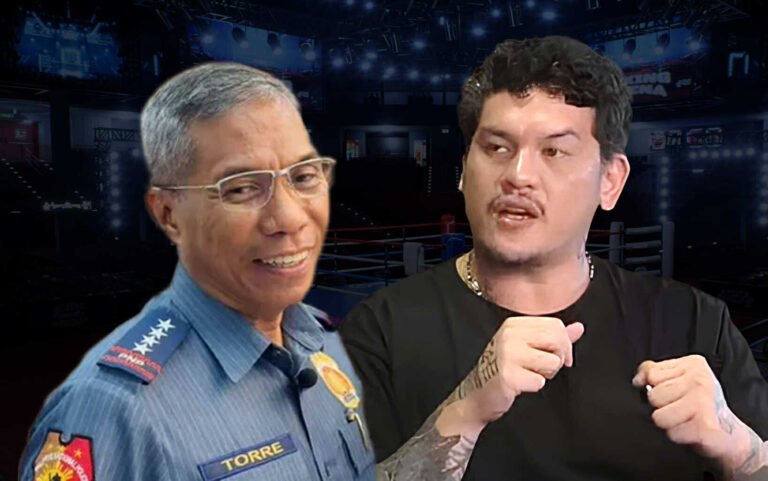
THE rift between Philippine National Police (PNP) chief Gen. Nicolas Torre III has gone beyond control as Davao City acting Mayor Sebastian Duterte dared the man behind his father’s arrest to a fistfight.
In a vlog uploaded on Youtube on Sunday, Duterte particularly mentioned Torre and challenged him for a fistfight.
Three days later, Torre responded and accepted the young Duterte’s dare, but with a twist. The country’s top cop wanted a charity boxing match with proceeds going to relief efforts for those affected by widespread flooding in Metro Manila and other areas.
“You know tamang tama dahil marami ang nasalanta ngayon ng bagyo at baha. Maybe we can use this moment as an opportunity to raise funds in a well charity boxing match,” said Torre.
“Naghamon siya ng suntukan… sa atin naman whether he is serious or not let’s put just put this on a better use kung yan ang gusto niya, madaling pagbigyan yan boxing na lang para madali isetup at gawin,” Torre said during a press briefing at the PNP headquarters in Camp Crame.
Torre proposed holding a 12-round match at 9 a.m. this Sunday at the Araneta Coliseum in Quezon City.
To raise funds, the police general called on “sponsors” to fund each round, with the proceeds going to those affected by the inclement weather.
“I will be there in Araneta. I’ll ask Araneta to set up a boxing ring. Hopefully they will oblige. Siguro you can find sponsors per round may mag sponsor. So let’s place their merchandise before each round. So 12 rounds para medyo marami-rami ang sponsors at marami tayong mairaise na pondo,” he added.
In the event that Araneta Coliseum isn’t available, Torre hinted expressed willingness to slug it out with the acting Davao City mayor in any gym with a boxing ring.
In an earlier media appearance, Duterte cursed Torre and challenged him to a fistfight. The two have been at odds, with Torre leading the arrest of his father, former President Rodrigo Duterte.
“Matapang ka lang naman, you have the position eh. Pero kung suntukan tayo, alam ko kaya kita kung ganon lang. You are a coward. You are nothing without your position,” an obviously pissed off Duterte said.
Torre, however, was quick to clarify that his decision to accept Baste’s challenge is meant to raise funds, especially for millions affected by the weather disturbances in the past days.
“I just see this is an opportunity to help our kababayan and maybe there would be sponsors, for the proceeds that we will raise we will donate to charity,” Torre explained.
“On my part, I will donate to charity whatever my share, and that would be for those affected by the typhoon and flood,” he assured.
Torre intends to hit the gym on Thursday (July 24) for a quick workout.
“He was the one who issued the challenge. Sa atin naman, tinatanggap lang naman,” said the PNP chief, even as he expressed hope that such a match would be aired (via live stream) on the condition that netizen viewers would donate for the typhoon victims.
Previously, Duterte threatened to slap Torre who was then the regional director of Davao region.
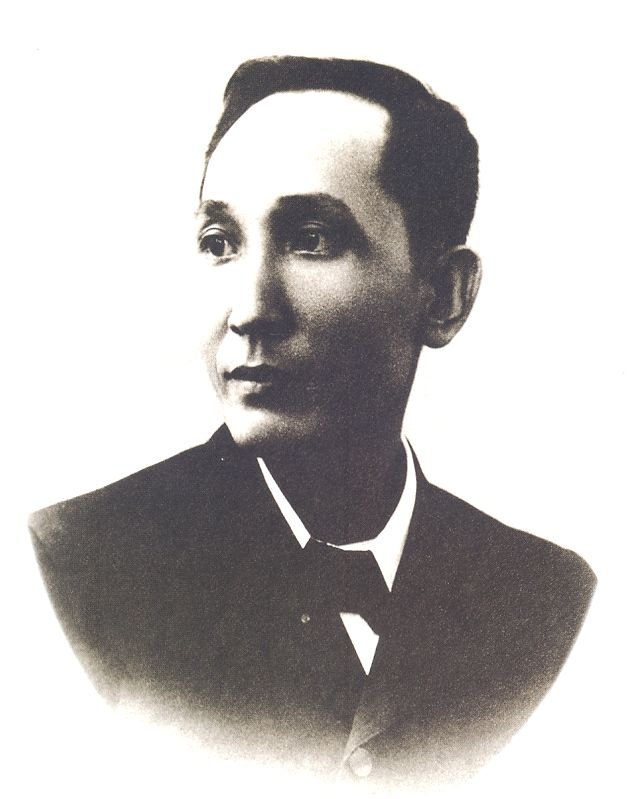
IF YOU THINK revolutions are only for those with weapons and washboard abs, then you probably haven’t met Apolinario Mabini. In a time when Gen Z attention is often snatched by viral soundbites and TikTok takes, a paralytic hero from the 1800s resurfaces—not to throw us back into history, but to remind us how to think, love, and commit to a nation.
So, who exactly is Apolinario Mabini?
He wasn’t born rich. He wasn’t blessed with perfect health. The second of eight children of a farmer and a market vendor from Tanauan, Batangas, he defied every obstacle thrown his way.
POLIO DID IT Through sheer brilliance, relentless effort, and a heart devoted to service, Mabini earned scholarships, studied at Letran, taught Latin, and finished law at the University of Santo Tomas—all before polio took away his ability to walk.
Yes, he lost the use of his legs. But his moral backbone was stronger than most of us with functioning limbs.
While others were busy finding comfort under colonial powers, Mabini was working behind the scenes of a revolution. He authored the foundational documents of the First Philippine Republic, guided Emilio Aguinaldo, and firmly refused to trade freedom for the illusion of peace.
MABINI’S PEN His pen, wielded through pain and persistence, became the sword that helped write our first Constitution.
But he wasn’t just a lawyer or an ideologue. He was the very first Prime Minister of the Philippines—a leader who couldn’t walk, but became the compass for a nation learning to stand on its own.
Is it hard for Gen Z to relate to someone like him? Not really. In fact, Mabini might just be the most underrated Gen Z icon—if we’re being honest. He was self-made. Awake to the truth. Immune to trends without depth. He didn’t chase clout. He stood firm in his beliefs, even when he didn’t hold power.
He proved that being poor, being disabled, or being sidelined doesn’t stop you from being the brain of a revolution. All you need is a sharp mind, steady principles, and genuine care for others.
CRITICAL THINKING And in this age of misinformation and clickbait activism, Mabini reminds us: never forget critical thinking. Not every “offer” is peace. Not every “trend” is truth. Sometimes, quiet conviction—without the need for likes or shares—is what truly makes a difference.
Here’s a little-known truth from the grapevine: When Mabini died, thousands lined up at his funeral. Imagine that—a man who never ran for office, never went viral, yet captured the soul of a nation.
His home in Manila was declared a national shrine. Which begs the question: in the midst of all the rights and freedoms he helped secure for us—how are we using them?
161st BIRTHDAY So today, on his 161st birthday, let’s do more than post his quotes. Let’s use our minds, lead with our hearts, and anchor ourselves in the kind of values he lived for. Let’s not be afraid to take a stand.
Let’s not lose hope even in hardship. And let’s never let the algorithm define the kind of Filipino we become.
Because in the end, true patriotism isn’t just about shouting in the streets—it’s about never stopping to love your country, even when no one’s watching. Just like Mabini.
Happy birthday, Apolinario. We still have so much to learn from you!
Feeling good is one of the secrets of looking good but to most people, one has to look good in order to feel good.
NOWADAYS, A LOT of people seek the help of cosmetic surgeons to enhance their physical appearance because of one purpose — to look good.
But there are various reasons why they want to be beautiful — it could be an ego-booster, to attract other people, to gain self-confidence, to regain self-esteem, to redeem broken relationships, for business agents who aim to increase sales, to be a credible endorser of products and services, and surprisingly some people visit the clinic because of depression or frustration and fear of growing old.
Whatever their reasons are, as a cosmetic surgeon, we look not only at their physical features but also their personality. We have to analyze every aspect why they come to consult and what they really want.
BY APPOINTMENT
In my practice, I entertain patients strictly by appointment because I really talk to them personally, listen intently, so I get to know them and to develop personal rapport. I also observe their manner of dressing up, their hairstyle and the way they carry themselves.
During the entire conversation, I take note of their facial expressions, the movements of their hands and fingers and the expressions of their eyes. These are some of the very important aspects in the assessment of the patient including psychosocial and behavioral evaluation.
Is the client: Perfectionist? Realist? Hesitant? Nervous?
These observations will serve as my guide in choosing the proper approach so that they will not expect too much, otherwise they will just be disappointed with the end result. They have to understand that surgical or non-invasive enhancements have limitations and will not result to perfection.
EDUCATE THE PATIENT
Moreover, I have to be a keen observant so that after the interview, I could pinpoint which part/s of the body or face that needs to be improved.
It is important for me to educate the patient first and let them understand that Cosmetic Surgery is a combination of art and science. As an art, it is obviously noticed and appreciated.
Just like a work of art, external beauty is a combination of enhanced body features with a blend of hairstyle, outfit, make-up (or absence of it), footwear and other accessories.
There are patients who come to my clinic for enhancements because they think they look awful. Upon examination, it turns out that they have beautiful facial features with minor imperfection.
Sometimes, it’s actually their hairstyle, manner of dressing or too much make up that I found to be disturbing.
I advise them to improve on these aspects and perhaps recommend to them some relaxing facial rejuvenation so that they will feel good. I would not do any surgical intervention on them unless I find something that truly needs to be improved even if they insist.
LESS IS MORE
As a science, it is dynamic since there are innovations as far as mechanisms and techniques are concerned.
Procedures nowadays are becoming simpler and involve relatively lesser invasive techniques to minimize complications.
I always believe in “Less is More.”
in other words, the more conservative approach, the better. I give them the options to address whatever concerns they have.
First, I discuss the simple and non-invasive procedure that is best for them. After which, I explain in detail the radical approach which they usually want. I convey to them the real expectations, limitations, possible complications and risks.
DOCTOR KNOWS BEST
Moreover, I always emphasize that the over-all result will not only depend on the surgeon but also most importantly on the patients themselves. It is a must to follow strictly the pre-operative and post-operative instructions as these can also affect the real outcome.
For those hesitant patients, I give them time to reflect and chance to think it over and refer them first to a wellness doctor to appease their fear.
I should say that, it really takes talent to be a good cosmetic surgeon because aside from being knowledgeable and skillful on the craft, one must be a good psychologist, good listener, a keen observer, compassionate and a good counselor -rolled into one.
A well-informed client will feel comfortable and calm before, during and after any beauty procedure. After all, the most important thing is: the patient as well as the doctor will be satisfied and happy with the result of the procedure done.
TO FORTIFY HIS run as Senate President in 2024, Francis Escudero doled out to allies P142.7-billion in insertions to the 2025 budget with the staggering allocation of P12.08 billion supposedly going to infrastructure projects of Bulacan.
A summary of insertions obtained by Politiko showed Escudero funneling billions into politically motivated allocation, raising serious concerns of transparency, duplication and backdoor dealmaking masquerading as development. Politiko was citing the study of New York-based think tank, GlobalSource Partners.
The biggest slice of the infrastructure insertion went to Bulacan, through term-limited Sen. Joel Villanueva at P12.08 billion, a close ally of Escudero who is rumored to reclaim the post of Senate Majority Leader should Escudero formally retain Senate leadership in the 20th Congress this July 28.
‘Without clear definitions, oversight of these funds becomes nearly impossible, opening the door for ghost projects or politically influenced implementation.’
SORSOGON BUDGET Next came Sorsogon, Escudero’s hometown, with P9.1 billion. Other top recipients were: Mindoro – ₱8.37 billion; Batangas – ₱7.32 billion; Davao – ₱7.2 billion; Misamis Occidental – ₱6.5 billion; Quezon – ₱5.9 billion; Cavite – ₱5.6 billion; Valenzuela City – ₱4.251 billion and Cebu – ₱4 billion.
GlobalSource said the P6.3 trillion budget for 2025 had allocations for flood control and infrastructure projects that were riddled with red flags ranging from overlapping roadworks to questionable flood mitigation efforts.
GlobalSource said Escudero’s budgetary maneuvering came at the expense of core government priorities with allocations for social services and economic programs dropping by 33.4 percent and 29.2 percent, respectively from their budgets in 2024, “a steep price paid for pork.”
SIZABLE SHARE Flood control projects had a sizable share of the insertions in the top 10 areas that received allocations from Escudero at P17 billion even as flooding remains a chronic problem in the Philippines, particularly during typhoons, the manner in which these projects were listed raised eyebrows.
Several flood control initiatives were listed as being for “nationwide” implementation, with allocations reaching ₱500 million per line item—yet no provinces, coordinates, or hazard maps were included to justify these figures.
For example, there was an item for the “Construction of Flood Mitigation Structures – Nationwide,” with a ₱500-million allocation.
INSERTION BY PROVINCE For instance, in General Nakar, Quezon, Escudero inserted five flood control projects along the Agos River, each worth ₱150 million, and labeled them as “phases” despite seemingly referring to the same area and waterway. Collectively, these flood control phases amount to ₱750 million, raising suspicions of “budget layering”—a practice where the same or similar projects are listed in parts to bypass scrutiny and inflate allocations.
Even more concerning, the entries lack engineering detail, geographic coordinates, or references to previous feasibility studies. In some cases, they simply state: “Construction of flood mitigation structure along Agos River, General Nakar, Phase X.”
In Bulacan, Escudero’s second most favored province after his hometown Sorsogon, multiple line items reveal near-identical road projects repeated under slightly altered titles or segmented kilometer markings.
The Sta. Rita–Biak Na Bato Road in San Miguel, Bulacan was listed multiple times, under names such as Segment A, Segment B, Segment C, and Packages A through E. Each of these entries had a uniform cost of ₱100 million, adding up to ₱500 million for what essentially appears to be one road corridor.
Another road, the San Miguel–Sibul Road, also appeared four times—again split into “Package A” to “Package D”—with identical ₱100-million allocations. That’s ₱400 million for the same route.
These patterns suggest a deliberate attempt to slice projects into smaller chunks, each remaining under thresholds that typically trigger closer scrutiny by the Department of Budget and Management or the Commission on Audit.
Multiple entries for the same road sections or with overlapping kilometer markers (especially in Bulacan and Quezon) suggest possible duplication of funding or budget padding.
SOLAR STREETLIGHTS Another red flag is the series of solar street lighting projects across Eastern Bulacan Road, General Alejo Santos Highway, Plaridel Access Road, and stretches of the Maharlika Highway. These were all marked at ₱100 million each, regardless of actual road length or vehicle/pedestrian traffic volume.
In San Miguel, Doña Remedios Trinidad, and San Rafael, multiple entries for solar street lights popped up with a striking similarity in language and cost. The repetition raises questions not just of redundancy, but of whether these projects are based on actual needs assessments or merely crafted to pad the province’s total budget share.
Without clear definitions, oversight of these funds becomes nearly impossible, opening the door for ghost projects or politically influenced implementation.
BONG GO INSERTIONS While Escudero was responsible for the majority of the insertions, he also included several items that were labeled as being “on behalf of Senator Bong Go, totaling over P3 billion. Items under this category include the construction of barangay health stations as well as super health centers for a total of P633 million.
Over 50 barangay health stations, rural health units, and super health centers were funded at ₱3M–₱10 million each, while provinces like Batangas, Palawan, Laguna, and Camarines Sur received 3–5 health centers each.
There was a separate P83 million allotted for the completion or repair of rural health units, as well as a total of P400 million for hospitals run by the local government units and Department of Health.
Under the guise of healthcare improvements, ₱1.88 billion was allocated for motor vehicles, including ambulances and official cars for local governments and military units—far more than actual health infrastructure like hospitals and dialysis centers.
BUMAHA SA BULACAN But even as P2.93 billion of insertions for Bulacan were intended for flood control projects, most parts of the province still suffer from destructive floods, as evidenced by the recent successive storms and Habagat for a few days now.
Aside from flood control projects, the balance of the P9.1 billion allocation for the province supposedly went to: road construction for ₱3.26 billion; bridges and buildings for ₱3.61 billion; and ₱2.28 billion for street lighting, water impounding, and pumping stations.
Several of the biggest items are concentrated in the towns of San Miguel and San Rafael, both of which appear repeatedly in the budget under different project names—many with identical scopes and ₱100-million price tags.
One major example is the Sta. Rita–Biak Na Bato Road in San Miguel, which appeared multiple times under different kilometer markers and labels like Segment A to C and Packages A to E. Each listing costs ₱100 million, bringing the total for what appears to be the same stretch of road to at least ₱500 million.
Another heavily funded project corridor is the San Miguel–Sibul Road, which showed up four times under different “packages.” With a ₱100-million allocation for each package, the total budget for this particular route amounted to ₱400 million.
Similar duplication appears in solar street lighting projects that were listed across various road names—including Maharlika Highway, Eastern Bulacan Road, General Alejo Santos Highway, and Plaridel Access Road—in the towns of San Miguel, Doña Remedios Trinidad, and San Rafael. Each project costs ₱100 million. Bulacan also got P3 million to purchase motor vehicles for healthcare under the title “on behalf of Senator Bong Go” for the Angat Super Health Center and P5 million for Angat and Paombong.
Bulacan’s windfall under the 2025 national budget is widely seen as a product of the close alliance between Senate President Francis Escudero and Senator Joel Villanueva—an alliance that reportedly deepened following Escudero’s ascent to the Senate presidency in May 2024.
A source told Politiko that the promise of generous insertions may have been a key factor in Villanueva’s decision to shift allegiance from then-Senate President Juan Miguel Zubiri, whose removal paved the way for Escudero’s leadership.
With Villanueva term-limited and barred from seeking re-election in 2028, the grapevine is abuzz with talk that infrastructure bonanza in Bulacan could be part of a broader strategy to lay the groundwork for a gubernatorial run in his home province.
Politiko’s direct quote on Villanueva’s comment for the multibillion-peso bonanza for Bulacan thus: “Hope its true but our Bulacan district engineers say its not. Am sure DBM and DPWH would be the right agencies to answer these questions. I’ll raise it this coming budget hearings.”
METAPHORICALLY, WE ARE already soaked in water with all the typhoons that have affected us. But do we really have to blame landslides, floods turning streets into dirty rivers, and claiming lives to a natural occurrence?
It’s typhoon season once again. According to PAGASA, the peak is from July to October each year. And from today, we can expect 11 to 19 more tropical cyclones until the end of 2025.
Historically, typhoon Gloring on July 18, 1972 called The Great Luzon Flood, was followed by three more intermittent rainstorms. Typhoons Glenda on July 9, 2014 and Carina that started on July 22, 2024 were just few of those which we have survived.
We are all vulnerable to the effects of typhoons, but there are a lot of preparations that we can do to protect ourselves. It’s not raining everyday. Make wise use of the sunny days, especially if you are a government official who has the power and the means to create change and make proper improvements on the lives of others. To use that power for your own personal gain is criminal. When you do that, then you have no right to be in that position.
FOREST DEGRADATION Recently, there have been photographs going around social media about forest degradation all over Sierra Madre, Mount Banahaw, Mount Makiling, and so many more places in the country. Those who are responsible for these never really care causing destruction to their fellowmen. Find ways to make those who are accountable pay for what they have caused. If those illegal activities continue, we are all doomed! It must be stopped!
Humans have the capacity to create solutions against everything that puts life in danger. When will we ever be tough enough to demand responsibility and accountability?
And when will we ever take part of the blame for having contributed to this age-old problem everytime there is a storm in the country? Have we made an effort to help avoid the causes of flood and landslide, all the things we could keep away from happening?
INTEGRITY IN WORSE TIMES It seems like we haven’t seen the worst to learn our lessons. There’s Ondoy, there’s Yolanda. What more are we waiting for? Enough praising resilience during typhoons, waiting for ayuda of noodles and sardines.
Let us show integrity by refusing to be subjects for minimal tokens for popularity. Level up the choice of government officials.
Why do most people keep electing those who do nothing to improve our lives as Filipinos? A big WHY?
DON’T BLAME NATURE Puyog is a Tagalog term that means basang-basa or drenched.
Let us be careful not to get wet but stay dry to see the problem clearly. Be part of the solution in our very own households and neighborhood, not to mention managing everyday garbage.
Typhoons have inherent risks, but humans can do something to improve the outcome.
Never blame nature, but those who put our lives in danger and those who do nothing. Let us not sit still!
(Gem Suguitan is a journalist, a contemporary artist, and a cultural worker. She is a lecturer on various topics on local culture and the arts. She can be reached at kulturatsining1857@gmail.com)
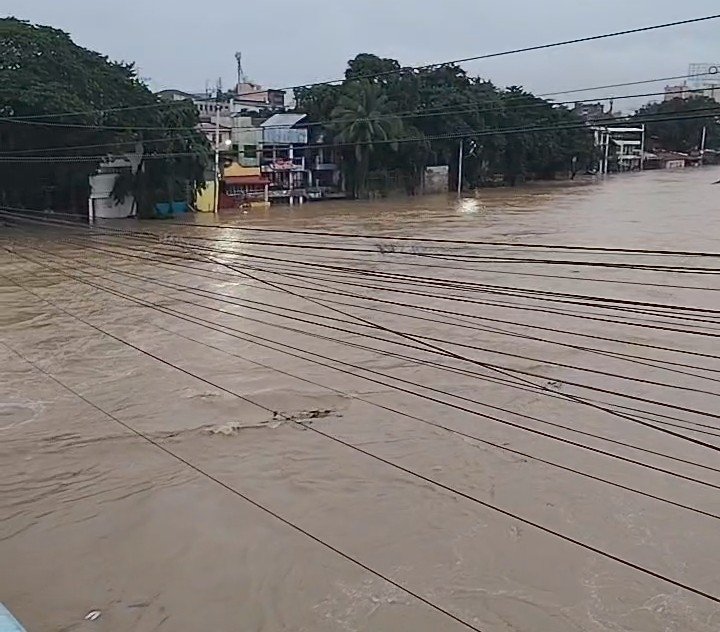
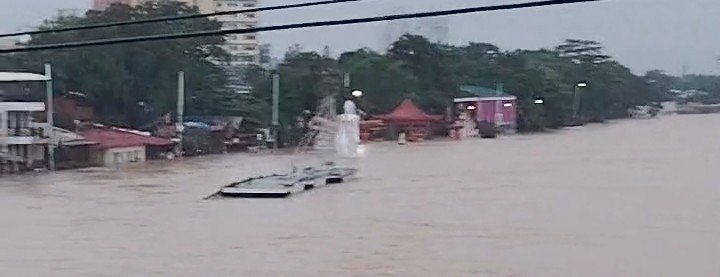
This is the present situation at the Marikina River near the Marcos Bridge, Barangay Industrial Valley Complex, Marikina City. The flood water level rose to 16.9 meters. Second alarm is still up for residents.
COCAINE isn’t the only drug found in the system of Filipino businessman Juan Paolo Tantoco, according to a forensics report released by the Los Angeles County Medical Examiner.
According to a 10-page report released by Deputy Examiner Dr. Raffi Djabourian and Forensic Technician Michelle Sierra, toxicology results showed that a cocktail of cocaine metabolites and benzodiazepines (commonly referred to as benzos) may have triggered the death of Tantoco.
There were no Fentanyl nor opioids detected in the laboratory analysis of the Forensic Science Laboratories of the country medical examiner, and the crime scene investigation report by Laura Araujo.
Interestingly, cocaine and benzos have contrasting effects with the former classified as a stimulant while the latter is deemed a depressant.
Cocaine triggers the central nervous system, while benzos slow down brain activity. Both are controlled substances requiring a prescription due to their potential for dependence and misuse, including dangerous interactions with other drugs like alcohol.
On March 8, the medical examiner reported Tantoco’s “accidental death” at the Beverly Hilton in Beverly Hills, of cocaine effects with probable atherosclerotic cardiovascular disease complications.
Tantoco’s mother, Nena Tantoco, earlier denied involvement of First Lady Liza Marcos in the death of her son in a social media post shared by Caritas Philippine Executive Director Father Tito Caluag, a close friend of the Tantocos.
In Araujo’s investigation report, Tantojo was with his wife Dina Arroyo-Tantoco at the time of the incident. She admitted to police that “they have been using cocaine, cannabis and alcohol.”
The investigation report rêvealed that Tantoco used cocaine on March 8 at 2 am and then cannabis around 3 am or 4 am to help him fall asleep. At around 11am, Tantoco’s wife believed that he woke up and went to the bathroom but could not confirm whether he again used drugs while inside.
His wife told the investigator that she woke up when Tantoco came out of the bathroom and said he did not feel well. Dina Arroyo-Tantoco said her husband looked pale and sweaty and then collapsed in front of her.
Tantoco’s wife asked for help from the hotel front desk, which dispatched hotel staff, which provided resuscitative measures until police arrived. This account corroborates the Beverly Hills Police Department blotter report that when they arrived at Room 504 of Beverly Hilton, hotel security personnel were performing chest compressions on an unconscious male, who was identified in the report as Tantoco.
Araujo’s report said that paramedics from the Beverly Hills Fire Department Rescue Ambulance #1 responded to the call and took over in performing life saving measures, including administering an unknown amount of Narcan. In Los Angeles County, Narcan is used on someone suspected of drug overdose, especially opioids,
Paramedic Guiney declared Tantoco dead at 12:05 pm and there was no reported traumatic injury or suspicion of foul play. Tantoco’s body was transported from the hotel at 6:10 pm.
Araujo reported that “police discovered multiple plastic baggies of an unknown white powder” in Tantoco’s nightstand drawer.
Among those recovered inside Tantoco’s hotel room included a small round canister with half of an unknown blue pill, two halves of unknown white pills, and a red gummy substance discovered on top of the night stand during the on scene investigation, the report said.
Tantoco’s wife Dina said they were visiting family in the United States from the Philippines and had been staying at the Beverly Hilton since March 3. She also said that Tantoco had been diagnosed with severe acid reflux and multiple over-the-counter medications for gastrointestinal issues were seen throughout the room, adding that his acid reflux is exacerbated by his alcohol and cocaine use.
WHAT’S THE DIFFERENCE between a professional photographer and a photojournalist?
At first, it’s easy to confuse them. Both carry cameras. Both take photos of people, events, and places. Both care deeply about light, angles, and timing. But beyond the lens lies a deeper divide—one defined not by skill, but by purpose.
That truth hit me hard when a veteran photojournalist—weathered by years of covering disasters, rallies, and injustice—told me, “Out of a hundred photography students, maybe one or two will actually become photojournalists. Maybe.”
Why so few?
Because while most photographers chase beauty, photojournalists chase the truth—even if that truth is painful, risky, or unpopular.
A professional photographer might spend their weekend capturing a sunset wedding. A photojournalist might be at that same resort—but pointing their lens at the displaced fishing community forced out to build it.
One captures memories. The other captures accountability.
It’s not that the rest lack talent. It’s that photojournalism isn’t a career—it’s a calling. You give up comfort for context, applause for awareness. You might work without pay, face police lines instead of party lights, and hear people ask, “Why are you showing this side of the story?”
And yet, you keep shooting. Because your camera isn’t just a tool—it’s a witness.
Being a photojournalist means carrying more than gear. It means carrying stories that stay with you long after the shutter clicks: the mother holding her child in floodwaters, the eerie silence after a blast, the dilemma of capturing a moment or stepping in to help.
This path demands heart. It demands courage. And sometimes, it demands your peace. But the power of photojournalism is undeniable. One image can shake governments, move people to act, or reveal what others try to hide. It’s not about getting likes—it’s about giving light.
To the one or two who choose this road: you may not be the most followed or the best paid. But years from now, when someone asks, “What really happened?”—your photo might be the answer that tells the truth when no one else dared to.
You’re not just taking pictures. You’re holding up a mirror to the world.
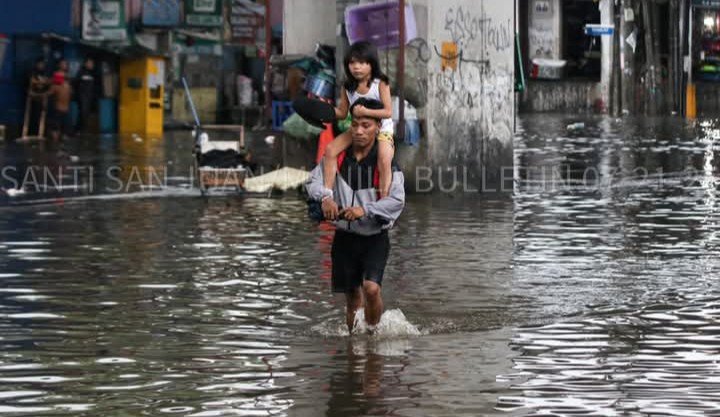
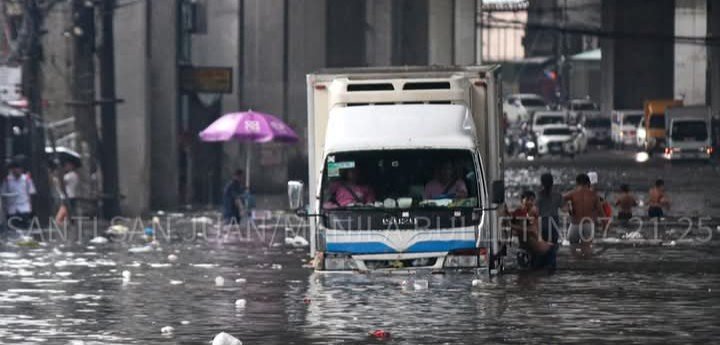
MAN CARRYING DAUGHTER braves the already-receding floodwaters along Araneta Avenue in Quezon City on Monday, July 21, following heavy rains brought by the Southwest Monsoon (Habagat) Tropical Cyclone ‘Crising’. Vehicles are stucked. PAGASA weather bureau reports that 50 to 100 mm of rainfall may be expected today in Metro Manila, Pangasinan, Zambales, Bataan, Cavite, Batangas, and Occidental Mindoro while another typhoon is brewing.
JOSE ARNULFO VELOSO, president/general manager of state-fund Government Service Insurance Corp., and five other GSIS officers were ordered suspended for six months by the Ombudsman over its controversial P1.45-billion investment in Altenergy Holdings of former Energy Secretary Vince Perez in Pililla, Rizal.
Reports said Ombudsman Samuel Martires ordered their immediate preventive suspension, without pay, that cannot be interrupted by any appeal, motion or petition, unless otherwise ordered by a competent court or the Ombudsman itself,” Bilyonaryo.com noted.
Veloso approved the deal without board clearance, exploiting a policy that allows investments under P1.5 billion to bypass board review, the business news portal said three days ago.
Also suspended were: Michael M. Praxedes, Executive Vice President; Jason C. Teng, Executive Vice President; Aaron Samuel C. Chan, Vice President; Mary Abigail V. Cruz-Francisco, Vice President; Jaime Leon K. Warren, Officer II and Alfredo S. A. Pablo, Acting Officer IV.
STRONG EVIDENCE OF GUILT Martires in his order dated July 15 cited “strong evidence showing their guilt” for grave misconduct, gross neglect of duty, and violation of reasonable office rules and regulations, based on a preliminary investigation completed in January.
The probe found that GSIS’s subscription to 100 million perpetual preferred shares of Alternergy in November 2023 violated multiple provisions of the 2022 GSIS Investment Policy Guidelines (IPG) and was done without approval from the Board of Trustees (BOT).
GSIS bought the shares after Alternergy’s stock had fallen 31 percent below its IPO price of ₱1.28 in March 2023. The stock hit an all-time low of ₱0.65 in September and is currently trading at ₱1.06. The Alternergy scandal was first reported by Bilyonaryo in April 2024.
G.S.I.S. STRICTURES Under GSIS investment rules, a)GSIS is only allowed to invest in stocks listed on the Philippine Stock Exchange (PSE) and issued by financially sound Philippine companies and b) Investments must be in companies with a minimum market capitalization of ₱15 billion.
GSIS cannot invest more than 10 percent of a company’s publicly traded shares, unless it seeks a board seat and gets prior BOT approval.
For newly listed stocks, the company must be worth at least ₱5 billion for trading purposes, or ₱10 billion for long-term holdings.
For Initial Public Offerings (IPOs) or Follow-On Offers (FOOs), companies must meet the same ₱5 billion (trading) or ₱10 billion (core portfolio) thresholds.
The Ombudsman noted that Alternergy’s shares were unlisted, did not meet capitalization requirements, and GSIS’ purchase was not endorsed by both the Assets and Liabilities Committee (ALCO) and the Risk Oversight Committee (ROC)—required steps before seeking BOT approval.
A month after the investment, Teng certified the ₱1.45 billion payment as a “lawful expense… incurred under his direct supervision.”
With Veloso’s imprimatur on the disbursement voucher, Warren and Pablo issued a payment instruction via real-time gross settlement (RTGS) to Cruz-Francisco, who, along with Praxedes, authorized Land Bank to debit the GSIS account and transfer funds to AHC’s BDO account.
Chan, investigators said, “justified” the purchase of shares despite noncompliance with the rules.
Under Section 24 of the Ombudsman Act of 1989, preventive suspension may be imposed when the evidence of guilt is strong, the charges warrant dismissal, or when the official’s continued stay may compromise the investigation.
All officials face suspension without pay for up to six months, pending the outcome of the case.
REBUTTAL FROM ALTENERGY But Business Mirror reported that Alternergy Holdings Corp. on Monday cited a statement from its financial advisor, Investment & Capital Corporation of the Philippines (ICCP), saying that all its capital-raising activities are compliant with relevant laws and regulations.
Founded by former DoE Secretary Vince Perez, the renewable energy (RE) firm’s financial advisor said it adhered to strict regulatory requirements and market practices.
“All disclosures were made to regulators and investors in line with the best standards of fairness, transparency, and investor protection,” said ICCP President/COO Manny Ocampo.
Alternergy itself did not issue a statement following the suspension of Veloso over the pension fund’s P1.44-billion investment in Alternergy. Reports indicated that GSIS’ investment in Alternergy was executed without the green light of the state firm’s board.
In 2023, the GSIS injected a total of P1.45 billion into Alternergy’s perpetual preferred shares 2 series A under a private placement. Back then, GSIS said its investment would help the energy company push through its wind, solar, and hydropower projects.
As sole issue coordinator and joint lead underwriter, ICCP advised Alternergy in structuring and executing its IPO in March 2023, where it successfully raised funds to support its RE projects. The IPO met the stringent requirements of the Securities and Exchange Commission (SEC) and the Philippine Stock Exchange (PSE), including the minimum market capitalization, track record, and profitability.
Following the IPO, ICCP also supported Alternergy as sole arranger in a Redeemable Preferred Shares (RPS) offering and its PSE listing. ICCP affirmed that the RPS issuance to institutional investor, GSIS, was conducted in accordance with corporate governance standards and existing securities regulations.
“These transactions followed strict due diligence and compliance processes. We ensured transparency at every stage of these transactions in line with our commitment to ethical and professional standards,” said ICC Chairman/CEO Val Bagatsing.
“In addition, Alternergy has reported to the PSE the payment of the first full annual coupon to the RPS in December 2024.”
Alternergy reported last May that its net income in the nine-month fiscal period ending March 31 reached P109 million, lower than the previous P158 million. The company cited a one-time gain from the full acquisition of the Tablas Straits offshore wind projects in the same period a year ago.
Revenues surged 43 percent to P261 million, up from P182 million, mainly brought about by the strong performance of its Palau Solar Battery Storage System project. EBITDA also went up by 9 percent to P291 million during the same period.
The company’s goal is to develop up to 500MW of additional wind, solar, and run of river hydro projects. Alternergy’s portfolio currently stands at 86 MW.
THERE’S A DIFFERENT kind of advocacy and brand of commitment started by Northern Samar’s Governor Harris Christopher Ongchuan who, on assumption into office, has brought with him a deeply grounded and pragmatic approach to provincial leadership —that of “Livelihood First”.
In this committed advocacy, the newly elected governor’s focus is very clear: empower the people economically as the foundation for building resilient and self-reliant communities.
Northern Samar’s Provincial Economic Development and Investment Promotions Office (PEDIPO) chief John Allen Berbon speaks well of the advocacy, saying that on witnessing it at firsthand, he realized how Ongchuan’s direction is not just a campaign promise but a strategic commitment to inclusive growth.
‘Governor Ongchuan’s able leadership … reflects his consistent message that “real progress begins with people who are empowered to improve their own lives.” ‘
EMPOWERMENT, SUSTAINABILITY “From day one, Governor Ongchuan emphasized that the livelihood and job generation of our fellow Nortehanons must be at the center of government action. His leadership recognizes that what people truly need are not temporary reliefs, but sustained access to tools, capital, skills and opportunities that allow them to find decent employment or launch their own small businesses,” Berbon pointed out.
In Northern Samar, where challenges in income and employment are still deeply rooted, this approach is both timely and transformative. One of the initiatives under this livelihood-centered governance is the continuing implementation of the Food Security and Sustainable Economic Development (FSSED) Cluster’s Barangay Livelihood Empowerment and Sustainability (BLES) Program.
“This initiative provides livelihood grants to organized barangay-based associations that engage in activities such as food processing, handicrafts, farming and other micro-enterprises. More than just financial assistance, BLES fosters accountability, community ownership, and long-term sustainability through capacity building and technical guidance.”
ALSO FOR THE YOUTH, WOMEN, OFWs Berbon added that alongside BLES, Northern Samar has scaled up its efforts to support and empower micro, small and medium enterprises (MSMEs) through partnerships with the pertinent government agencies that would provide the training for the workforce and even prospective investors to acquire skills and know-how to ensure success.
“With the help of the Departments of Trade and Industry (DTI), Labor and Employment (DoLE) and Science and Technology (DoST), Technical Education and Skills Development Authority (TESDA) and other development partners, we are rolling out livelihood training sessions, business coaching, trade fair participation, marketing assistance and access to e-commerce platforms even as programs focusing on meat and fish processing, mat weaving, organic farming, tailoring and digital entrepreneurship are now reaching more Nortehanons, especially women, youth and returning overseas Filipino workers (OFWS),” he announced.
WHERE REAL PROGRESS BEGINS Northern Samar’s PEDIPO chief praised Governor Ongchuan’s able leadership as it reflects his consistent message that “real progress begins with people who are empowered to improve their own lives.”
“Under his direction, our office is now more focused than ever on converting local potential into sustainable economic activity. We are not just addressing poverty, we are creating systems that allow people to rise above it,” Berbon concluded.
SINCE taking the lead role at the Department of Health in June 2023, Secretary Teodoro Herbosa has yet to deliver what is expected of him — make healthcare available and accessible to each and every Filipino.
For one, Herbosa’s so-called “leadership” has been marred with multiple red flags.
In a commitment letter signed by Herbosa, he promised to institute a 50% across-the-board health benefit increase and to cover at least 80% of cancer treatment and heart operation expenses by November 2024.
He also agreed to make various health diagnostic scans, such as Computed Tomography (CT) and Magnetic Resonance Imaging (MRI) free, making it part of outpatient services rendered by the Philippine Health Insurance Corporation (PhilHealth) in his capacity as chairman of the board.
Other issues included the arbitrary transfer of PhilHealth funds to the national treasury, zero subsidy for PhilHealth in 2025 General Appropriations Act, mismanagement of funds, and slow implementation of Universal Health Care.
It was also during his stint that the Commission on Audit (COA) came out with a report detailing P11.5 billion worth of expired vaccines and medicines.
There were also calls for his immediate resignation after photographs showed him hobnobbing with executives of the tobacco industry, which is being blamed for the proliferation of lung-related tuberculosis, at an event in Malacanang.
The act itself speaks well of his moral ascendancy. There are instances that one has to make choices, and in this case, he flipped on the wrong side of the coin. Herbosa in a snap lost the right to lead a department mainly tasked to defend the nation’s health.
His actions, deemed as unacceptable as they go against everything that anti-tobacco advocates have stood for, is a clear violation of the Joint Memorandum Circular 2010-01 of the Civil Service Commission and the DOH, which categorically bars government officials from engaging with the tobacco industry.
This is not just a lapse in judgment. This is a deliberate act that spits in the face of every Filipino who has lost a father, a mother, a brother, or a sister to tobacco-related illnesses.
It is an insult to every doctor, nurse, and healthcare worker fighting daily against lung cancer, heart disease, and respiratory failure caused by cigarette smoking.
DOH needs someone whose priority places the lives of Filipinos above corporate interests, someone who understands that public health is not up for negotiation.
We must never allow those entrusted with our well-being to sell out our future. We deserve better.
But from how it looks, Herbosa seemed to enjoy the fame and perks of being the Philippine Health Secretary, which leaves the Filipino people’s fate to President Ferdinand Marcos Jr. who by the way wields the power to axe inefficient cabinet men.