BACOLOD CITY, Negros Occidental — In line with President Ferdinand Marcos Jr.’s advocacy for digitalization, Kabankalan City in Negros Occidental has officially launched the ₱11.8-million Barangay Information Network System (BINS) as a major step towards digitalizing public service delivery across the city’s 32 barangays.
According to Kabankalan City mayor Benjie Miranda, the launching was part of the Tingug Sang Barangay seminar with the theme ‘Strengthening Community Engagement Through Barangay Information Officers’ that focused on empowering grassroots leaders and enhancing community engagement.
“This is another innovation by the city government to modernize public service and bring digital solutions closer to the people. Under the program, each barangay will receive a full suite of digital tools—desktop computers, printers, webcams, ring lights, laminators, and other essential equipment to improve local governance and service delivery,” Miranda explained.
NEWSWRITING WORKSHOP During the Tingug Sang Barangay seminar, brand developer Jasper Inocencio introduced the Gender and Development (GAD) Database-integrated BINS system and led a hands-on training session to barangay secretaries, treasurers, bookkeepers and Sangguniang Kabataan (SK) chairpersons on data encoding, ID printing and equipment use.
A journalism and news writing workshop was also conducted to strengthen the communication skills of barangay information officers. In conclusion, Mayor Miranda cited that the BINS project marks a significant leap forward in promoting transparent, efficient and tech-driven local governance that is expected to enhance barangay-level data management, documentation and service delivery.
THE BATAAN – CAVITE Interlink Bridge, which is projected to be the longest bridge in the country once completed, is expected to be finished by 2030.
According to Department of Public Works and Highways (DPWH) chief Manuel Bonoan, the mega bridge is part of the infrastructure development program of President Ferdinand Marcos Jr. It is budgeted P 175.7 billion and spans 32.15 kilometers long.
In a statement, Bonoan disclosed that once the bridge is done, it will cut down travel time from Mariveles to Naic from 5.5 hours to just 45 minutes.
LONGEST BRIDGE On its completion, it will be next to the 36-kilometer Manchac Swamp Bridge in Louisiana in the United States which is the No. 10 longest bay bridge in the world.
“The bridge will actually be longer than the 8.9-kilometer Cebu-Cordova Bridge and the 2.1-kilometer San Juanico Bridge. I was informed that the timeframe for completion of this major bridge project will be sometime 2030 or so,” Bonoan pointed out during a Senate hearing tackling the DPWH project when asked about it by his predecessor and now senator Mark Villar.
The bridge project is funded by the Asian Development Bank with co-financing from the Asian Infrastructure Investment Bank. It starts from Barangay Alas-asin in Mariveles, Bataan, crosses Manila Bay and ends at Barangay Timalan in Naic, Cavite.
Bonoan also noted as he affirmed that the bridge’s detailed engineering design has already been completed.
LET’S FACE IT—when tensions rise, even the best of us get tempted to shift the spotlight from the problem to the person. It’s fast, emotional, and oh-so-satisfying… for about three seconds.
THE BACK STORY
But if your goal is clarity, progress, or even just keeping your reputation intact, here’s a golden rule worth remembering:
• Attack the issue. Not the person.
It’s a simple line—but it takes real maturity to live by it.
We’ve all sat through that meeting where someone says, “Well, maybe if you had read the memo…” instead of asking, “What part of the plan didn’t get through?”
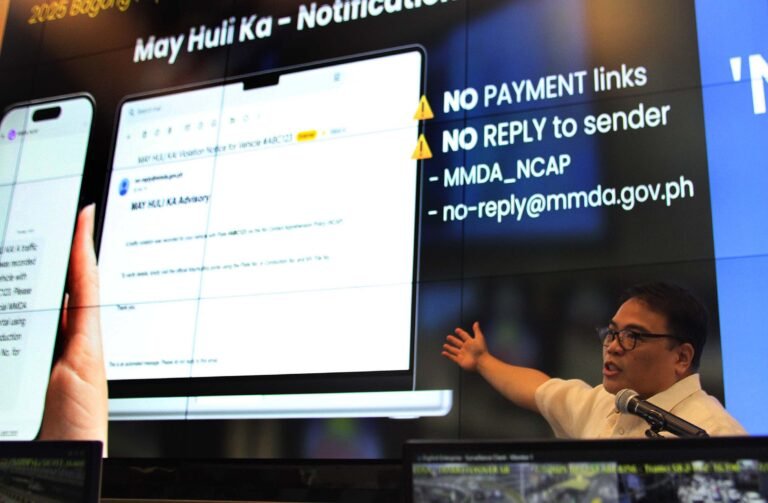
Metropolitan Manila Development Authority (MMDA) Chairman Don Artes briefs mediamen on the No Contact Apprehension Policy (NCAP) in the official launch of the real-time notification for violators of traffic rules through messaging or email. Artes said the latest development is in pursuant to the President’s directive for road safety and to quell corruption. Even without internet connection, vehicle owners will receive notification via SMS from the MMDA Communications and Command Center. This new move is also in partnership with the Land Transportation Office. The press conference was held at MMDA Head office in Pasig City.
EVERY TIME COMPLAINTS and clamors to ban an addictive vice or activity is being raised, the government’s stock answer is to tax them so that revenues can be raised and regulation, no matter if just a token control, can be imposed on the source of addiction.
Take the case of the Philippine Offshore Gaming Operator or POGO. It took years and so many debates and congressional hearings with proposals raised to tax the sector even more and to tighten the noose on it. Yet, just like a bacteria it grew until so big that the government could not even decide where to attack it to stop it, if not just cut the size of its operations.
When it was finally banned, the POGOs had been involved in so many crimes like human trafficking, forced labor, killings, kidnappings and money laundering. Even if the government reportedly earned billions of tax revenues, it turned out that such revenues did not really materialize to the extent reported, but just token taxes. Someone obviously earned so much from such an expanded operation to be able to live beyond this lifetime.
‘(The) President wants online gaming/gambling taxed alongside proposals to limit digital gambling to prevent their harm to society is just another half-baked strategy that won’t solve the problem at all.’
THE VAPE EPIDEMIC Another example is VAPE, which is now gripping even youngsters– high school and even younger– but pretty soon we would be gripped by a respiratory epidemic that is even worse than the pollution we derive from tobacco and gasoline combined. The government’s quick reaction is to tax the VAPE sellers.
Another is the esabong, which is now hogging headlines because of sabungeros who disappeared and were killed and dumped in Laguna Lake or some river. This one was banned, albeit too late, and has victimized peasants (farmers, fisherfolk, rural women/children) who sell or pawn their farms just to be able to bet on esabong, with no chance of winning at all.
Taxing such vices won’t stop them, nor would it have any effect in the malaise they bring to society because operators and perpetrators of such vices can just pay token taxes, while those addicted to them won’t be controlled in being hooked to them.
The answer lies in completely banning it, period. No in-betweens.
TAXING eGAMBLING Reports that the President wants online gaming/gambling taxed alongside proposals to limit digital gambling to prevent their harm to society is just another half-baked strategy that won’t solve the problem at all.
Proposed by the Department of Finance, the tax would help restrict online gambling (I beg to disagree vehemently) through legislation to push for more revenues. Taxing egambling is tantamount to approving its continued operation.
Finance Secretary Ralph G. Recto last week said they will propose an online gaming tax and are also studying other policy options “to deter unimpeded and practically unrestricted access to gambling, particularly digital gambling platforms.”
These include imposing limits on playing time or cash-in to help prevent addiction, age restrictions, as well as displaying clear warnings about the risks of gambling, Recto said. Let’s see.
The government is also ramping up its crackdown on unlicensed and illegal online gaming sites. Good luck on this. The government can’t control cybercrimes and hacking, and now it would crack down on egambling.
Economist Reinielle Matt M. Erece at Oikonomia Advisory and Research, Inc., said the DoF’s tax proposal is a “good way to increase government revenues,” reported Business World.
“The (online gambling) industry is growing quickly. Whether it curbs gambling addiction is hard to answer, as it requires proper intervention and programs to promote responsible gaming,” he said.
He added that an online gaming tax can serve as a barrier for new players while helping the government fund its programs.
SILENT EPIDEMIC Senator Juan Miguel F. Zubiri said that he is seeking an outright ban on online gambling platforms, calling the rise of gambling addiction a “silent epidemic,” especially among the youth.
“The taxes earned are not worth the social cost. The lives of our countrymen are being ruined, families are fighting, crime is rising, and they are drowning in debt” and that the “foregone revenues from the outright ban may reach P47 billion annually,” he added.
Senate Bill 142, seeks to ban online gambling on mobile gadgets. Internet service providers are also mandated to limit public access to online gambling platforms and applications. It also seeks to prohibit electronic wallets and other digital payment systems from being used on online gaming platforms.
GRAY MARKET Listed gaming technology provider DFNN, Inc. said that restrictions on online gambling platforms might force lower-income players to turn to unlicensed platforms.
“Well-intended restrictions, if not carefully calibrated across distinct gaming formats, may unintentionally create incentives for certain segments of the population, particularly casual or lower-income players, to seek alternatives from unlicensed or offshore platforms,” DFNN said adding that “these grey market operations, which often exist beyond regulatory reach and with non-existent player safeguards, could undermine the very protections that the legislation seeks to reinforce.”
ONE OF THE most ubiquitous showbiz personalities had chosen to rule out public viewing of her remains.
Lolit Solis, the irrepressible and high profile talent manager and movie columist, had requested her close friends and family members during her hale times, in her sickbed and before her death, to make her wake as simple, quiet and solemn as possible.
This was revealed by one of Lolit’s trusted friends and topnotch filmmaker, Chito S. Rono.
Chito Rono Photo Credit: Boy Villasanta
THEY DID OTHERWISE At the Aeternitas Chapels and Columbariun along Commonealth Avenue in Quezon City where the wake was held and her coffin was sealed, Chito said that it was Lolit’s wish from her bosom.buddies.
“‘Yan ang sabi ni Gorgy Rula noong nabuhuhay pa si Lolit (That was what he said when she was still alive),” echoed Rono who was always, in life and death, at Solis’ side. Rula was one of Lolit’s protege reporters and confidantes.
“Ang bilin nga raw ni Lolit, i-cremate siya agad pagkamatay na pagkamatay niya (She requested that she be cremated immediately after she expired).
“Gusto rin daw ni Lolit na hindi siya makita na nakahiga sa kabaong (Lolit also didn’t like to be seen lying a coffin),” said Rono.
But the people she left behind did otherwise.
‘Her memorial, neatly organized, was not short of grand and celebratory … Day in, day out, mourners, associated with her not, trooped to her wake to pay their last respects.’
MOURNERS TROOP Lolit’s remains were laid stately in a ceremonious fashion at the state of the art Aeternitas with all sorts of flowers, fully decked and arranged wreaths, of all colors, predominantly white, of all smells, shapes and sizes.
Her memorial, neatly organized, was not short of grand and celebratory.
Food and drinks, imported and locally produced of high quality like KitKat, flooded in several catering services spread out in near adjacent collapsible rooms.
Her remains stayed long enough at the funeral parlor for less than a week.
Day in, day out, mourners, associated with her not, trooped to her wake to pay their last respects.
WARDS AND TALENTS All her wards, past and present, were around like Ramon “Bong” Revilla, Jr., Lani Mercado, Lorna Tolentino, Amy Austria, Paolo Contis, Gladys Reyes, Tonton Gutierrez, Glydel Mercado, Christopher de Leon, Sandy Andolong, Gabby Concepcion, and Mark Herras, among others.
(From left) Isabel Rivas, Glydel Mercado, Gladys Reyes, Amy Austria and Tonton Gutierrez Photo Credit: Linda Cabuhayan Facebook
Other stars managed by various managements and independent talents also poured their sympathies like Vhong Navarro, Jhong Hilario, Regine Velasquez, Ogie Alcasid, Isabel Rivas, and many more.
Despite strict observance in casting last glimpses on Lolit’s closed casket, her close associates had the privilege of opening and looking at her body inside the coffin, according to Chito, like Gorgy, Bong, Lani, Cristy Fermin, and others.
FROM JUST THE optics that the former leadership of the Department of Agriculture Inspectorate and Enforcement (DA-IE) office used, the new head is now adopting a trifocal strategy, namely: 1) Soft Touch Enforcement Protocols (STEP); 2) the TRACER (or Tracking Reported and Alerted Consignments for Express Results), and 3) DA-IE requests the Customs bureau to TIN-block the importer in the BOC’s ICT systems.
Previously, the DA’s enforcement operations entailed Tac Teams, which are highly visible component of field enforcement such as raids, searchers and all optics.
These steps are contained in what it called AGRIForcement (the contraction of Agriculture and Enforcement) Version 2.0.
The new Assistant Secretary, Cuyco, of the DA-IE, headed by Undersecretary Carlos Carag, said the old system produced cargo confiscations of goods abandoned by importers and traders, leading to no charges against persons involved, which the greedy importers and traders book as “cost of doing business.”
The erring traders then moved to the next importation, sans disruption and prosecution. This did not make a dent on stopping illicit trade.
‘Cuyco, of the DA-IE, headed by Undersecretary Carlos Carag, said the old system produced cargo confiscations of goods abandoned by importers and traders, leading to no charges against persons involved … as “cost of doing business”.’
NEW SYSTEM With the trifocal offensive there “would be no optical raids and searches, no muscle, no arms, no balaclava, just papers, inspectors, auditors and monitors,” Cuyco explained in his FB post.
Under STEP, upon receipt of derogatory information from its layered sources, the DA Undersecretary for Inspectorate and Enforcement issues Advice for Law Enforcement and Regulatory Tracking or ALERT Requests where the alerted cargoes are traced and subjected to the “prior inspection and examination (PIE) by the DA’s port-based Quarantine and Border Inspectors, pursuant to Section 12(b) of RA 10611.”
The DA-IE copy furnishes the Anti-Agricultural Economic Council (chaired by President Marcos), Finance Secretary Ralph Recto, and newly-appointed Customs Commissioner Ariel Nepomuceno.
Next, the TRACER follows. Then the PIE is scheduled by the Port authorities of the BOC.
COORDINATION Reports said that today, July 8, Agriculture Secretary Francis Tiu Laurel Jr. will preside over the PIE of some 58 alerted containers that are now covered by the TRACER radar at the Subic Freeport, in the company of BOC Port officials.
Depending on the result of the PIE, the DA-IE will apply whatever is administratively doable within the confines of the DA Trade Regulatory Agencies (TRAs), like TIN-blocks access to import permits, issues show cause orders (SCOs) to erring importers tasking them to explain why their accreditation or registration should not be suspended, revoked, or cancelled.
Then DA-IE requests the Customs bureau to TIN-block the importer in the BOC’s ICT systems.
In the event the STEP takes a while due to dilatory tactics of concerned importers and/or regulators, the DA-IE resorts to the facilities of the AAES Council’s Enforcement Group.
TIGHTER ENFORCEMENT The raid in Paco market last week was an offshoot of DA’s referral to the Council after the intransigence of the warehouse owner that stalled the DA-IE operatives for some 3 weeks of covert operations.
DA-IE may also make direct referrals to the Special Team of Prosecutors under Section 17(a) of RA 12022. This a prelude to prosecutorial engagement.
Internally, the DA-IE has a reserve or spare magazine for TRA officials and employees who may be part of the rotten system which the whole DA under its current leadership desires to alter and change: the TOPS Matrix (Task-Officer-Period to Act-Sanction).
This TOPS completes the tripod of AGRIForcement.
Guess, we are seeing the light of day now– a prelude to tighter enforcement of the Anti Agricultural Smuggling and Cartelized operations law.
BOSTON, Massachusetts — Does AI or artificial intelligence, particularly ChatGPT, harm critical thinking abilities of our learners?
A new study from researchers at the Massachusetts Institute of Techonlgy (MIT)’s Media Lab has turned out csome concerning results that indicate AI’s adverse impact on education.
Under the said study, 54 subjects—18 to 39 year-olds from the Boston area—were divided into three groups and they were asked to write several Scolastic Assessment Test (SAT) essays using OpenAI’s ChatGPT, Google’s search engine and nothing at all, respectively. Researchers used an EEG to record the writers’ brain activity across 32 regions and found that of the three groups, ChatGPT users had the lowest brain engagement and “consistently underperformed at neural, linguistic, and behavioral levels.”
Additionally, over the course of several months, ChatGPT users got lazier with each subsequent essay, often resorting to copy-and-paste by the end of the study.
The MIT study suggests that the usage of Large Language Models (LLMs) could actually harm learning, especially for younger users. According to the study’s main author Nataliya Kosmyna, as society increasingly relies upon LLMs for immediate convenience, long-term brain development may be sacrificed in the process.
“What really motivated me to put it out now before waiting for a full peer review is that I am afraid in 6-8 months, there will be some policymaker who decides, ‘let’s do GPT kindergarten.’ I think that would be absolutely bad and detrimental,” Kosmyna dusclosed.
“Developing brains are at the highest risk,” she added.
In support, psychiatrist Dr. Zishan Khan, who treats children and adolescents, cited that he sees many kids who rely heavily on AI for their schoolwork and “from a psychiatric standpoint, (he) sees that overreliance on LLMs can have unintended psychological and cognitive consequences, especially for young people whose brains are still developing.”
“These neural connections that help you in accessing information, the memory of facts, and the ability to be resilient: all that is going to weaken,” Khan pointed out.
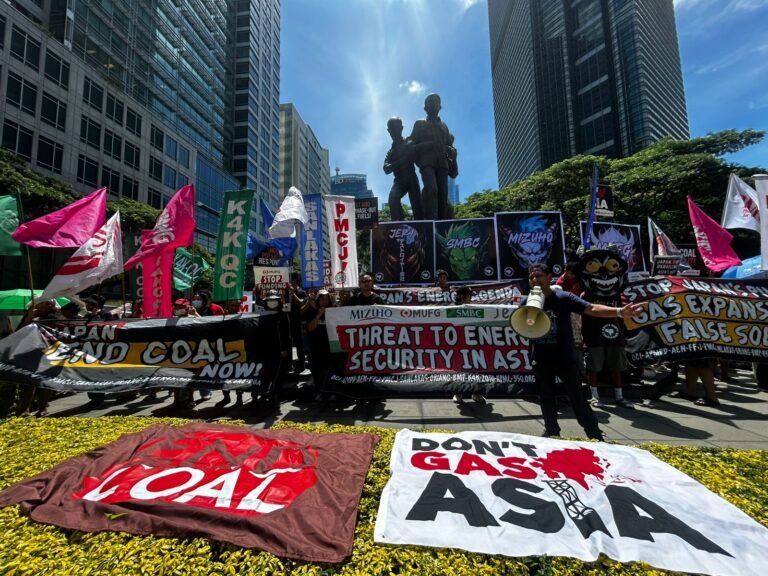
CLIMATE ADVOCATES GATHERED in Manila to confront what they called the “villains of the climate crisis” – Japanese megabanks and energy companies fueling the “unprecedented wave” of fossil fuel expansion across Asia.
Makati’s business district became the site of a symbolic protest where the activists restrained the anime-style “villains” with ropes to depict public resistance to Japan’s continued fossil fuel financing, which, they say, is accelerating climate destruction.
The mobilization, organized by the Asian Peoples Movement on Debt and Development, the Asian Energy Network (AEN), together with the Philippine Movement for Climate Justice (PMCJ), Sanlakas and other APMDD member groups, was held in time for the Annual General Meeting of Japan’s largest megabanks MUFG, SMBC, Mizuho, and energy giant JERA. It was part of Asia-wide actions against Japanese public and private corporations’ involvement in fossil fuel expansion in Asia.
AGGRESSIVE ACTION
Coordinated actions were also held in Bangladesh, India, Indonesia, and Pakistan, where peoples’ organizations called out Japan’s aggressive push for coal and gas projects in their countries, enabled by billions in financing from Japanese megabanks and public agencies.
“We are confronting the real villains of the climate crisis – Japan’s megabanks and fossil giants like JERA, which continue to fund dirty energy projects across the region. These corporations are raking in big profits while our communities suffer. They must be held accountable for their fossil fuel financing, which destroys lives, peoples’ livelihoods, and the environment,” stressed APMDD coordinator Lidy Nacpil.
“Every coal unit, every new gas pipeline and import terminal that Japan helps fund pushes our region further away from climate safety and deeper into environmental collapse. These investments are not solutions – they are accelerants of climate breakdown and severely threaten our ability to limit global warming to 1.5C,” Nacpil added.
“We refuse to be locked in any partnership that will condemn our region to decades more of escalating and devastating climate impacts and deadly fossil fuel dependence. Japan’s megabanks – MUFG, SMBC, and Mizuho, including the energy giant JERA – are enabling this destruction through their massive financing of gas expansion in the Philippines and across Asia. True energy security lies in a rapid, equitable, and just transition to renewable energy systems, not in Japan’s toxic gas exports,” stated PMCJ national coordinator Ian Rivera.
Japan’s 7th Strategic Energy Plan, released in February, identified LNG as a “realistic energy source” even beyond 2050… (encouraging) public-private cooperation for long-term fossil fuel investments… rather than transitioning to renewables.
WORST FINANCIERS
The Banking on Climate Chaos 2024 report revealed that Japanese banks are among the worst fossil fuel financiers in the world. Mizuho ranked No. 2 globally for total fossil fuel financing ($37 billion in 2023) and funding companies engaged in fossil fuel expansion, committing $18.8 billion. MUFG wasn’t far behind at No. 3, lending $15.4 billion for fossil fuel expansion.
Japan’s 7th Strategic Energy Plan, released in February, identified LNG as a “realistic energy source” even beyond 2050.
The plan encourages public-private cooperation for long-term fossil fuel investments and drew criticism from climate groups for reinforcing a fossil-heavy development path rather than transitioning to renewables.
They said that this marks a retreat from Japan’s previous commitments to decarbonization,” which is not ambitious in the first place.”
ENERGY AGENDA
Carrying slogans such as “Japan’s Energy Agenda: Threat to Energy Security in Asia,” APMDD and its partner-groups called on Japan’s megabanks – MUFG, Mizuho, and SMBC – as well as JERA and government institutions like JBIC and JICA, to: 1) immediately halt all new financing for fossil fuel infrastructure across Asia; 2) withdraw support for LNG, ammonia co-firing, and other false solutions, and 3) redirect investments towards renewable energy like wind and solar which are “scalable, cost effective and sustainable.”
TIME magazine has recognized the Hyundai Motor Group as an “Automotive Darkhorse” in “The 100 Most Influential Companies of 2025.”
This marked Hyundai Motor’s first appearance on the prestigious annual list, recognizing the company’s innovation leadership and transformative impact on the global automotive industry as it continues to drive sustainable mobility solutions and advanced vehicle technologies.
According to TIME, Hyundai Motor Group has demonstrated remarkable growth as it builds on its 2024 achievement as the third-largest global automotive group in sales. The publication noted that the South Korean automotive giant has become an industry leader in driving innovation in electrified vehicles (EVs) and sustainable mobility.
“TIME highlights that this impressive performance reflects strong consumer demand for the Group’s (Hyundai Motor) expanding lineup of electric and hybrid vehicles, with both the Hyundai Motor and Kia brands receiving industry recognition for their innovative EV and hybrid offerings,” Hyundai Motor said.
“Responding to evolving consumer preferences and market demands, Hyundai Motor Group has outlined an aggressive expansion plan for its hybrid vehicle portfolio. The Group is extending its reach beyond traditional compact and mid-size segments into the luxury vehicle market,” it added.
“TIME highlights that this impressive performance reflects strong consumer demand for the Group’s (Hyundai Motor) expanding lineup of electric and hybrid vehicles, with both the Hyundai Motor and Kia brands receiving industry recognition for their innovative EV and hybrid offerings,” Hyundai Motor said.
LANDMARK INVESTMENT IN UNITED STATES
In March 2025, Hyundai Motor Group announced a landmark $21 billion investment in US manufacturing operations through 2028, representing the company’s most significant commitment to American production in its history.
Hyundai Motor Group’s strategic initiatives reflect the company’s commitment to maintaining its position among global automotive leaders while adapting to industry transformation. The combination of record financial performance, expanding electrified vehicle offerings, and substantial US manufacturing investments positions the company’s for sustained growth in key markets worldwide.
TIME solicited nominations across sectors to assemble the list and polled its global network of contributors, correspondents, and outside experts. Then, TIME editors evaluated each key factor, including impact, innovation, ambition, and success. The result is a diverse group of 105 businesses helping chart an essential path forward.
IN LINE WITH the Department of Information and Communications Technology (DICT)’s campaign to curb online gambling in the country, the agency’s Cybercrime Investigation and Coordinating Center (CICC) is now working with both the Philippine Amusement and Gaming Corporation (PAGCor) and the Philippine Charity Sweepstakes Office (PCSO) to take down illegal online gambling sites.
Accordingly, the government will also be going after influencers who promote illegal gambling platforms as these have been monitored to be aggravating the problem in recent times.
“It’s part of our threat monitoring center. Pag nakakita tayo, binabato natin sa kanila for verification . . . Marami-rami na rin tayong napa-block na sites. I have 150 more sites, pending certification from PAGCor para i-block,” CICC deputy executive director Renato Paraiso disclosed.
“From a legal perspective, they’re part of a conspiracy to promote illegal gambling so they are part of that criminal organization. So sa lahat po ng mga influencers na nagpopromote ng illegal gambling, pinagtitibay na namin iyong mga batas na gagamitin namin para habulin po kayo so kung ako sa inyo, tigilan niyo na,” he added.
[A]mid the filing of several proposed bills aimed at curbing online gambling, PAGCor… declared that they will follow any regulation once they are passed into law.
MINOR BETTORS
Paraiso likewise announced that in order to deter minors from participating in online gambling activities, the CICC is helping PAGCor and PCSO in strengthening their registration and “Know-Your-Customer” guidelines.
But he admits that there are some who are still able to cheat the system such as by lying about their age.
“Ang suggestion namin is idikit na ito sa national ID as the single source of truth. Kung wala kang national ID, hindi ka registered, ibig sabihin kaduda-duda iyong mga ipi-present mong credentials to prove your age . . . Kapag national ID kasi hindi na mapepeke iyan e,” the CICC official pointed out.
BILL PROPOSED
Meanwhile, amid the filing of several proposed bills aimed at curbing online gambling, PAGCor chairman and chief-executive-officer Alejandro Tengco declared that they will follow any regulation once they are passed into law.
Sources in both Houses of Congress revealed that there are some lawmakers who are intent on pushing for an outright ban while others want to prohibit betting games using electronic wallets.
“It is the prerogative of our lawmakers to propose laws which they think will be beneficial to the public. PAGCor is duty-bound to follow any and all relevant regulations once they are passed by Congress and signed into law by the President,” Tengco stressed.
Tengco also assured the public that it is intensifying its crackdown against illegal online gaming activities, together with like-minded agencies and organizations and with the support of all gaming industry stakeholders.
By threatening to dismiss through voting the impeachment articles against Vice President Sara Duterte, did the 19th Senate under SP Chiz Escudero try to hide whatever tokens or favors some of its members might have received from those public funds that have been blatantly splurged by her?
Because based on the impeachment that former President Joseph Estrada went through, the impeachment court had to demand the opening of Estrada’s bank accounts that could prove his receiving gambling money and committed plunder.
In Sara’s case, people are speculating that the staunch defense of the Senator- judges against going through an actual trial could lead to missteps and result in questions as to actual beneficiaries of funds and favors, that could implicate some of them.
CONSTITUTION BETRAYED
Public outrage and vehement objections of Escudero’s latest pronouncement about junking the impeachment case via voting, have been filling the airwaves and social media, which some speculate could lead to a trial of the Senate as an institution itself, for betraying the Constitution in the VP’s case.
Nowhere in the Constitution does it state that the Senate, sitting as an impeachment court, can dismiss a case without hearing evidence, Rappler said.
The possibility of junking the articles of impeachment surfaced during a press briefing on June 25, when SP Escudero was asked if senator-judges could simply dismiss the impeachment case, to which he replied “That’s possible.”
REMANDED
A senator filing a motion to dismiss the impeachment case is entirely possible. However, whether such a move is constitutional is another matter. In fact, on June 10, diehard Duterte ally, Sen. Bato dela Rosa, filed a motion in plenary to dismiss the case against the VP. Although his motion was opposed by fellow senators, the majority ultimately decided to remand the case to the House, further delaying the proceedings.
Escudero explained that there are no restrictions on what motions can be filed in plenary, including a motion to dismiss. Such a motion would only require a simple majority vote — or 13 out of 24 senator-judges — to pass.
‘Incoming Rep. Leila de Lima, one of impeachment-judges said Escudero is trying to make his own Constitution in dismissing the impeachment case of the VP.’
DISMISS WITHOUT HEARING?
Returning Sen. Panfilo Lacson said it would be improper for senators, acting as judges in the impeachment court, to file a motion to dismiss the case without first hearing the evidence.
The Constitution is specific– “try and decide all cases of impeachment under Article XI of the 1987 Constitution.”
Nowhere in the Constitution does it state that the Senate, sitting as an impeachment court, can dismiss a case without hearing evidence, a view shared by House prosecutor Joel Chua.
UNFAIR TO SKIP TRIAL
Opposition Senator Risa Hontiveros said it would be unfair to skip the trial proper and proceed directly with a motion to dismiss — which, she noted, is essentially the substance of Duterte’s ad cautelam.
“I do not agree that it is our right, as the Senate impeachment trial court, to vote on and decide on a motion to dismiss — especially without even less than a minute of the trial taking place — as contained in the formal answer ad cautelam. We need to sit as senator-judges, conduct the trial, and only then decide and vote on whether or not to convict or acquit.
UP Law Professor Paolo Tamase opined that senator-judges cannot move to dismiss the case without a proper trial. “For one, it’s not in the Senate’s own rules. The sui generis character of impeachment doesn’t make the Senate an un-republican institution that can do whatever it wants. It also seems to be premised on inapplicable American practice.”
Tamase was referring to the similar dismissal procedures carried out by the US Senate in 2024 during the impeachment of then-Homeland Security secretary Alejandro Mayorkas. The Senate dismissed all impeachment charges against Mayorkas, effectively ending the House Republicans’ effort to remove him from office over his handling of the US-Mexico border issue, and concluding the trial before any arguments were heard, Rappler said.
DIFFERENT CONSIDERATIONS
“[The] Philippine impeachment practice has developed and is motivated by different constitutional considerations: the convening of the Senate as an impeachment court, allowing public participation, and a full presentation of the evidence before the public are among things that the Corona and Estrada impeachment courts have done in contrast to US Senate practice,” Tamase explained.
Incoming Rep. Leila de Lima, one of impeachment-judges said Escudero is trying to make his own Constitution in dismissing the impeachment case of the VP.
“Organizations have made real strides in tackling toxic cloud risks, but the rise of AI workloads introduces a fresh wave of complexity,” said Ari Eitan, Director of Cloud Security Research at Tenable.
CLOUD WORKLOADS SUPPORTING artificial intelligence (AI) initiatives are more vulnerable than traditional workloads, posing increased security risks for organizations in Southeast Asia as AI adoption accelerates.
This is one of the revelations of the “2025 Cloud Security Risk Report” released early this month by Tenable, an exposure management firm.
The report found that 70 percent of AI workloads across AWS, Azure and GCP contain at least one unremediated critical vulnerability.
“Organizations have made real strides in tackling toxic cloud risks, but the rise of AI workloads introduces a fresh wave of complexity,” said Ari Eitan, Director of Cloud Security Research at Tenable.
“AI’s data-intensive nature, combined with persistent misconfigurations and vulnerabilities, demands a new level of diligence. Exposure management gives security teams the context they need to protect what matters most, including the crown jewels hidden inside AI environments,” he added.
ATTRACTIVE TO THREAT ACTORS AI workloads, with their vast training datasets and model development processes, are an increasingly attractive target for threat actors. The study found that 77 percent of organizations using Google’s Vertex AI Workbench had at least one notebook instance configured with an overprivileged default service account, which could allow privilege escalation and lateral movement across cloud environments.
These risks are increasingly top-of-mind for regulators across Southeast Asia, including in the Philippines where the Data Privacy Act and the Bangko Sentral ng Pilipinas (BSP) regulations call for data classification, strong authentication and robust third-party governance. As these regulatory frameworks evolve, organizations must embed security early into AI development to ensure compliance and mitigate emerging cloud risks.
For iTenable’s research also shows broader progress in cloud risk management. Toxic cloud trilogies, workloads that are publicly exposed, critically vulnerable, and highly privileged, fell to 29 percent of organizations surveyed, a nine-point improvement from 2024. Tenable’s researchers attribute the nine-point decline to sharper risk-prioritization practices and wider use of cloud-native security tooling, yet warn that even a single trilogy provides attackers with a fast lane to sensitive data.
THE ALLIANCE OF Concerned Teachers (ACT) group is pushing for the increase to ₱50,000 the monthly entry level salary for teachers.
Education Secretary Edgardo Angara appears to be inclined to favor the move under a proposed bill filed by party-list representatives Antonio Tinio of ACT and Renee Louise Co of Kabataan.
ACT chairman Vladimir Quetua said the proposed increase was raised during their meeting with Angara and he said the secretary’s reaction was favorable. “His exact reaction was, ‘I don’t have a problem with that.”
He, however, said that since he is part of the executive, “let us just help each other. I will propose it. I will help you with your call, but I will not primarily push for it,” Quetua quoted Angara.
Angara, he said, vowed to address issues raised on the pilot implementation of the amended senior high school program.
HUMAN RIGHTS IN THE CURRICULUM
The education chief likewise met with Commission on Human Rights (CHR) officials to discuss how to strengthen efforts in teaching human rights among learners in public schools so they will become responsible and good citizens in the future.
In the meeting, CHR commissioner Beda Epres gave learning and instructional materials for teachers, which can be used as a guide in teaching human rights concepts.
Aside from the two issues, the Department of Education also vowed to intensify efforts to combat bullying which has become prevalent of late in several schools across the country.
AFTER ALL THE boasting and rosy projections last year of becoming an upper middle income country (UMIC) by 2025– and with all the geopolitical tension and trade uncertainties in the world, the Philippines, as far as the World Bank is concerned, remains a lower middle income nation.
The Bank’s parameter for stating so is a GNI (gross national income per capita) of $1,136 to $4,495 and the Philippines’ GNI per capita was $26 shy from the lowest WB GNI per capital requirement of $4,496 to $13,935 to become a UMIC. Last year, the GNI per capita requirement for a UMIC was between $4,516 and $14,005.
The Bank’s latest country income classification showed the Philippines posted a record gross national income (GNI) per capita of $4,470. This was higher than its GNI per capita of $4,230 in the previous year, reported Business World.
The World Bank computes a country’s GNI through the Atlas method, which serves as the basis of its income classifications — low, lower middle, upper middle and high. GNI refers to the total amount of money earned by its residents both inside and outside its borders.
MOVERS AND STAYERS In Southeast Asia, Vietnam overtook the Philippines in terms of GNI per capita with $4,490 but remained a lower middle-income country.
Cambodia ($2,520), Laos ($2,000), and Myanmar ($1,220) are also still classified as lower middle-income countries.
Meanwhile, Malaysia ($11,670), Thailand ($7,120) and Indonesia ($4,910) remained as upper middle-income countries.
Singapore ($74,750) and Brunei ($36,150) are still considered as high-income countries.
Other notable country movements include Costa Rica which is now classified as a high-income country; and Cabo Verde and Samoa, which both moved up to the UMIC category.
The WB updates country classifications by income level on July 1 each year, based on the GNI per capita of the previous calendar year.
Socioeconomic Planning Secretary Arsenio M. Balisacan in April said the country is still on track to meet its target of moving to the upper middle-income category by 2026.
UMIC AFTER 2027 However, World Bank lead economist for Brunei, Malaysia, the Philippines and Thailand Gonzalo J. Varela has said the country’s transition to UMIC status will likely take a bit longer.
“Getting there with an economy that’s growing a little bit slower than we thought about six months ago will take a little bit longer. So, we are thinking that a probable outcome is that it happens around 2027,” Varela told a media briefing last June.
The Bank expects the Philippines to grow by 5.3 percent this year, below the government’s recently revised 5.5 percent to 6.5 percent target.
Analysts said the Philippines is unlikely to move to the UMIC category by 2027.
“I’m doubtful we could. Much work needs to be done to improve our competitiveness ranking to attract more investments,” Ser Percival Pena-Reyes of Ateneo Center for Economic Research and Development Director Ser Percival K. Peña-Reyes told BusinessWorld.
The Philippines inched up a spot to 51st in the 2025 World Competitiveness Yearbook of the International Institute for Management Development. It remained a laggard in the region, ranking 13th out of 14 Asia-Pacific economies in the index.
RAMP UP INFRA, BOOST AGRI GROWTH John Paolo R. Rivera, a senior research fellow at the Philippine Institute for Development Studies– the government’s think tank, said it is possible for the Philippines to become an upper middle-income country by 2027, but this would “require stronger, more inclusive and sustained economic growth.”
Rivera said the government would have to ramp up infrastructure rollout and boost productivity in agriculture and manufacturing.
“Falling short of the UMIC threshold despite a lower benchmark highlights how structural challenges and global headwinds continue to weigh on the Philippines’ income trajectory,” Rivera said.
He also cited slower-than-expected growth, peso depreciation, and inflation pressures as factors that have hurt the country’s per capita GNI.
IN A DISPLAY of confidence and support, the Board of Investments donated two vehicles to the Provincial Government of Northern Samar for investment facilitation purposes. The ceremonial turnover was held at the BOI Headquarters in Makati City.
This move supports the growing investment potential of the province of Northern Samar as well as BOI’s commitment to strengthen local economic development and boost investor confidence in provinces.
It marks another significant milestone between the BOI and the provinces in their journey towards sustainable economic growth.
The Provincial Government of Northern Samar, under the leadership of Gov. Harris CM Ongchuan, extends its deepest gratitude to Undersecretary Ceferino Rodolfo and the BOI for this invaluable support.
With this, the Provincial Government reaffirms its commitment to continue laying the groundwork for a more business-friendly environment that drives local economic development.
Present during the turn-over activity were: the head of the Provincial Economic Development and Investment Promotions Office, Mr. Jhon Allen Berbon; the Director of the BOI – Investment Assistance Services, Dir. Ernersto Delos Reyes; the Director of the FInance and Administrative Services, and Atty. Ian Dennis Baniqued.
“Even a slight increase in wholesale prices reveals how vulnerable micro-retailers are to cost shifts upstream. This creates a ripple effect, especially in low-income communities where these stores are the primary source of daily essentials,” said Packworks Chief Data Officer Andoy Montiel.
WHILE THE GOVERNMENT continues to boast of lower inflation in the past months, sari-sari store buyers struggle with high prices.
This is the result of an analysis of data gathered by Filipino tech startup Packworks, analyzing more than one million monthly sales transactions from its network of over 300,000 sari-sari stores nationwide through its mobile app and business intelligence tool, Sari IQ.
Sari-sari stores serve as the primary source of daily essentials for around 94 percent of Filipinos. Packworks Chief Data Officer Andoy Montiel highlighted the vulnerability of sari-sari stores, saying even a slight increase in their wholesale purchase price can directly affect end consumer pricing.
“Sari-sari stores are known for their thin profit margins. While they operate as viable businesses, they also serve as extended pantries and community hubs for their neighbors. Even a slight increase in wholesale prices reveals how vulnerable micro-retailers are to cost shifts upstream. This creates a ripple effect, especially in low-income communities where these stores are the primary source of daily essentials,” Montiel said.
Tracking price movements across multiple product categories from 2023 to 2025, it showed that some product categories recorded average price increases of at least 11 percent across various regions nationwide.
KEY FINDINGS Key findings include significant retail price increases across the board for items like baby oil and baby powder. Notably, a 50-milliliter (ml) bottle of Johnson’s regular baby oil increased by 17 percent, from P42.00 in 2023 to P49.00 in 2025.
Furthermore, a 100-gram pack of Tender Care baby powder rose by 25 percent, from P40.00 to P50.00. These price hikes were observed in at least five regions: Ilocos Region (Region I), Cagayan Valley (Region II), Central Luzon (Region III), MIMAROPA (Region IV-B), and Bicol Region (Region V).
The study also found that 11 different stock keeping units (SKUs) within the confectionery and snacks category experienced at least a 13-percent increase in retail price. For example, the 50-gram pack of Lala Fish Crackers Classic, a popular and usually affordable sari-sari store snack, saw its price surge by 27 percent, rising from P18.00 in 2023 to P23.00 today. These spikes were recorded in stores based in Regions II and IV-B.
“The surges in AI-powered fraud, including deepfakes and synthetic identity documents, is exposing critical flaws in traditional verification systems,” said Penny Chai, Vice President, APAC, Sumsub.
THE PHILIPPINES LEADS the list of countries in the Asia-Pacific (APAC) region that has seen a sharp rise in synthetic identity document fraud cases.
This, as artificial intelligence (AI) becomes more accessible, fraudsters are using AI-powered tools to construct synthetic identity documents, combining real data like a valid ID number with fictitious details to create a completely new, non-existent persona.
In sectors like fintech and healthtech, where digital onboarding and remote verification are common, these AI-generated documents are often used to impersonate legitimate users during Know Your Customer (KYC) checks. This allows bad actors to fraudulently access financial services or sensitive health records, posing serious risks to both service providers and end users.
“While fintech fraud is a familiar battleground, given the sector’s long standing exposure to financial crime and its evolution alongside crypto, the scale of fraud in healthtech signals a worrying new frontier. As more healthcare services go digital, the sector’s vulnerabilities are being exploited at pace, putting trust in the digital health system at serious risk,” said Penny Chai, Vice President, APAC, Sumsub.
“The surges in AI-powered fraud, including deepfakes and synthetic identity documents, is exposing critical flaws in traditional verification systems,” she added.
Globally, synthetic identity document fraud cases have surged by 195 percent, with APAC seeing an even sharper rise of 233 percent, underscoring the scale and sophistication of the threat.
Several APAC markets have recorded a sharp year-on-year rise in synthetic identity document fraud, or from the first quarter of 2024 to the first quarter of this year, with particularly steep increases in: Philippines: 291-percent increase Hong Kong: 209-percent increase Thailand: 188-percent increase Singapore: 184-percent increase Australia: 117–percent increase
“To protect themselves, businesses must move beyond outdated approaches and adopt multi-layered, adaptive defenses. At Sumsub, our focus is on helping businesses stay one step ahead of fraudsters by anticipating new attack vectors and delivering smarter, more resilient full-cycle verification solution.”
In response to the rapidly growing fraud risks in the region and across the globe, Sumsub will host its inaugural What The Fraud Summit to serve as a dedicated platform for industry leaders, regulators and fraud experts to have bold conversations and exchange actionable insights to beat the global fraudemic. The Summit will be held in Singapore from November 19 to 20, 2025.
Sumsub is a full-cycle verification platform that secures the whole user journey. With Sumsub’s customizable KYC, KYB, Transaction Monitoring, and Fraud Prevention solutions, you can orchestrate your verification process, welcome more customers worldwide, meet compliance requirements, reduce costs, and protect your business. Sumsub has over 4,000 clients across the fintech, crypto, transportation, trading, e-commerce, education, and gaming industries.
WITH THE PROLIFERATION of high-end casinos, bingo joints, and tupadas/cockpit arenas, lottery and small time lottery outlets, where people place bets on their desired numbers, horses/cocks and so many other forms of gambling, I can’t understand why we even tolerate online gambling (through phones and other gadgets) that youngsters, farmers and fisherfolk and the poor get addicted to even to the point of nothingness.
For a time, the e-sabong was a big craze that even children who are naturally adept at using their mobile phones were gambling their school allowances and so with the farmers and fishermen in remote areas pawning their meager farm lands just to place bets on the chickens they have no control over, neither are they aware of the temperaments and care given to them by their owners.
The Philippines has embraced the gambling culture faster than China and Spain, which colonized our country for the longest time, which is why even up to now most of our people remain dirt poor.
There was a time beneficiaries of the 4Ps program betted on such gambling platforms, prompting people to call for the scrapping of the program, which is only being abused. Even pensioners and some public school teachers were hooked to gambling that they pawned their ATM cards even before they could get the money due them.
‘Due to its accessibility, online gambling activities have magnified the dangers from gambling and have been linked to the erosion of our moral fiber, as it has caused an increase in mental health problems, financial problems, addictive behavior, vices, and crime rates.’
MISERABLE STATE Such is the miserable state of our affairs that Sen. Sherwin Gatchalian filed on July 1 a bill that seeks to implement stricter rules for online gambling platforms to curb the rise of gambling addiction among younger Filipinos.
But to me, this is not the solution. We must completely ban online gambling.
The proposed measure seeks to raise the minimum cash-in requirement for online gambling platforms to P10,000, while a P5,000 minimum top-up is required to deter compulsive gamblers, reported Business World.
FROM 18 TO 21 Gatchalian eyes raising the minimum legal gambling age to 21 from 18, to protect young Filipinos from early exposure to online gambling.
“We also have regulations, so that not everyone can enter online gambling,” he added.
“Even with P20 you can gamble. That’s why many people are now entering, and the regulations are very weak.”
He said that the bill also bans the sponsorship of gambling platforms from public events and prohibits gaming entities from donating to campaigns.
It mandates regulators to allocate a portion of collected regulatory fees toward the establishment of gambling addiction rehabilitation centers.
He added that online banks would also be prohibited from facilitating gambling transactions.
“Due to its accessibility, online gambling activities have magnified the dangers from gambling and have been linked to the erosion of our moral fiber, as it has caused an increase in mental health problems, financial problems, addictive behavior, vices, and crime rates,” he said.
ENFORCE! Gatchalian also called on the Philippines Amusement and Gaming Corporation (PAGCOR), the Department of Information and Communications Technology (DICT), and the National Bureau of Investigation (NBI) to strengthen their enforcement against illegal gaming websites.
“I strongly urge PAGCOR, along with the DICT, NBI, police, and other law enforcement agencies, to conduct a thorough operation to block these websites from being accessed by local internet users,” he said in a statement.
He also called on the agencies to expedite their crackdown on illegal online platforms.
JUSTICE SECRETARY JESUS Crispin Remulla’s manifest interest in applying for the Constitutional office of the Ombudsman, with its 7-year prescribed term, is a political strategy. Others claim this could ensure his clan and those of the sitting president, Ferdinand Marcos Jr., would be protected from graft and corrupt charges until 2032.
Remulla told media he would apply for the post once vacated by an appointee of former President Rodrigo Duterte (now incarcerated at the International Criminal Court in the Netherlands) Samuel Martires, upon his retirement on July 27.
The Ombudsman’s office investigates and prosecutes corrupt public officials and can only be removed by impeachment by the House of Representatives and convicted by the Senate impeachment court as was the case of Merceditas Gutierrez in 2011.
A LOT TO OFFER Created by the 1987 Constitution, the Ombudsman can only be removed through impeachment by the House of Representatives and conviction by the Senate impeachment court, Business World reported.
The Ombudsman can file administrative, civil and criminal cases against erring public officials before the Sandiganbayan, the country’s anti-graft court.
Remulla said he plans to file his application for the Ombudsman with the Judicial and Bar Council (JBC) this week, adding that he has shortlisted candidates to replace him as Justice secretary in case he gets appointed.
“I think I have a lot to offer there,” he told reporters.
The justice secretary said he had signified his interest to become the next Ombudsman to the President.
“I’ve already communicated my interest through a mutual contact,” he said.
GRAFTBUSTER The JBC, which screens nominees for judicial and quasi-judicial bodies like the Office of the Ombudsman, started the application period for the next graft-buster in May.
Remulla himself is facing a complaint before the Ombudsman over the arrest of the former president and his subsequent transfer to The Netherlands, where he is facing charges of crimes against humanity in connection with his deadly war on drugs. But he said this is no hindrance to his applying for the post.
The JBC would take the complaint into consideration when screening him. “I think the JBC is in the best position to appreciate whatever I have to offer as Ombudsman,” he added.
Last May 7, Martires ordered several top officials of the Marcos administration to file a counter affidavit within 10 days from receipt of his order in relation to the former president’s arrest and detention in the Hague. This he did in response to the charge filed by the presidential sister, a known ally of Duterte, Imee Marcos against the administration.
STAUNCH DEFENDER Martires had been a staunch defender of the exiled president in preventing the publication of his annual statement of assets, liabilities and networth (SALN)– even to the point of asking a budget hearing that penalties of five years in jail be meted to anyone who commented on the SALN of government employees, stating that SALN has been “weaponized” because it has been used to destroy reputations. Such that until Duterte’s term ended, all requests for SALN had fallen on deaf ears and the latter’s wealth remained hiding, remarked Rappler.
In 2023, he also proposed to the House to drop a provision in the annual national budget requiring the public of Commission on Audit reports in government agencies referring to COA’s red flags, which Martires said caused confusion and prompted the public to prejudge as guilty those flagged by COA.
With his retirement, Martires’ immunity from suits would also be gone.