Thursday, March 26, 2026
Home Blog Page 5

ICC Rogues’ Gallery

2

THE INTERNATIONAL CRIMINAL Court (ICC) has named Rodrigo Roa Duterte’s coperpetrators in his crime against humanity – Sen. Ronald ‘Bato’ de la Rosa, Sen. Christopher ‘Bong’ Go, former Justice secretary Vitaliano Aguirre II, ex-PNP chief counterintelligence Vicente Danao Jr, ex-PDEA chief Isidro Lapena, ex-NCR police chief Oscar Albayalde, ex-PNP chief Camilo Cascolan, ex-Davao Region NBI chief Dante Gieran and other still unidentified police officers and ranking government officials.

Anticipating ahead of his possible apprehension, de la Rosa has been on the run since November 2025, insulting the Filipino people with his absence as a certified employee of the government, assigned to work as a legislator, yet still being paid his monthly salary plus allowances of more than P334,059.

Quick to vigorously deny (but well-known to be liars) participation in the ICC jailbird’s dastardly deed of extrajudicial killings were Duterte’s close friend and personal assistant, Bong Go, and ex-DOJ chief Aguirre.

The families of the EJK victims of these ICC Rogues Gallery couldn’t hide their elation with this official announcement of the ICC.

Many of them have suffered since 2011 (when Duterte was Davao City Mayor) and continue to experience sleepless nights and worries on how to cope daily with their lives in the absence of their breadwinners and loved ones, who were murdered by the ICC jailbird and through his minions.

The Filipino people are closely watching how other co-perpetrators will react, as their ‘partners-in-crime,’ Go and Aguirre, have accused the ICC as liars.

Social media enthusiasts have interesting feedbacks: “YES, go go go, ICC!”

“Bong Go, follow the lead of Bato – hide, hide, hide, forget reporting for work!,”

“Justice is finally catching up on these certified murderers!”

“God is good, He will grant justice to the EJK victims soon!” “Mabuhay, ICC!”

“Yehey, nanginginig na ang mga walanghiyang mamatay tao!”

That the ICC Rogues Gallery has gone public prior to the scheduled confirmation of charges against the former President is indeed a sunshine beam after the typhoons and floods caused by the corrupt Congress officials!

This breath of fresh air, as it were, coming a few days before the 40th Anniversary of the People Power Revolution, gives the Filipino people a bit of assurance that erring government officials will definitely have their day in court.

But one thing sure, the Filipino people are eagle-eyed watching the Bongbong-Sara leadership and their dynastic allies in Congress on their next moves after ICC’s revelation of the Rogues Gallery.

For one, we’re all aware about the DDS senators and congressmen who have silently supported the jailbird’s failed bloody solution to the country’s pestering drug problem.

Sen. Robinhood Padilla, for example, proudly showed his canine loyalty to the ICC jailbird and his blood-compacted friends, senators Bato and Bong, by publicly confessing his depression after hearing the latest revelation by the ICC of Rodrigo’s coperpetrators of his crimes against humanity.

In this regard, the people actually wish this pretentious-know-it-all senator is better off tight-lipped, as he often pontificates stupidities, which most likely makes his few intelligent colleagues cringe in shame.

At any rate, there’s somehow a ray of hope justice will prevail.

PH Wins Cacao Silver Award of Excellence in Amsterdam

FOR THE NTH time, the Philippines earned its place in the global map, this time for landing a spot in the list of the world’s finest chocolate-producing nations after securing a coveted Silver Award at the 2024–2025 Cacao Excellence Awards, the global competition widely regarded as “the Oscars of the cacao industry.” 

For a country whose cacao heritage dates back centuries, this recognition is far more than an accolade—it is a resounding affirmation of Filipino craftsmanship, resilience, and agricultural innovation.

MINDANAO’S RICH SOIL   

This year’s Philippine entry, harvested from the fertile lands of Davao Region, impressed judges with its complex sensory character. The winning beans showcased precision fermentation, deep genetic quality, and distinct Mindanao terroir, revealing flavor notes that combined classic chocolate richness with hints of tropical fruit acidity.

The Cacao Excellence Awards, organized by the Alliance of Bioversity International and CIAT, follow a meticulous evaluation process. Samples from around the world undergo a blind sensory analysis conducted by expert chocolatiers and flavor specialists. 

Out of more than 200 entries from over 50 countries, the Philippine beans emerged as one of the finest—proof that Filipino producers now compete neck-and-neck with cacao giants in Africa and Latin America.

FINE FLAVOR CHAMPION  

The Silver Award signals a remarkable evolution in the country’s cacao industry. 

For decades, the Philippines was seen largely as a small-scale bulk producer. Today, however, it is recognized as a fine flavor cacao destination, thanks largely to sustained improvements in post-harvest processing.

Filipino farmers and local processors have mastered the delicate steps of controlled fermentation, precise drying, and quality sorting—practices essential to producing bean-to-bar cacao worthy of global acclaim. 

This shift has allowed the Philippines to gain traction in the fast-growing craft chocolate market, where traceability, terroir-driven profiles, and ethical sourcing matter as much as flavor.

BOOM FOR PH FARMERS 

Beyond prestige, this international recognition brings tangible benefits to the local agriculture sector. Premium-grade cacao commands higher prices, and award-winning beans attract global bean-to-bar makers seeking unique origins. 

For the country’s 20,000-plus cacao farmers, this win is a shining testament that Philippine agriculture can excel on the world stage.

Such a distinction also strengthens the reputation of Davao, the official Cacao Capital of the Philippines, as a hub of world-class cacao production.

HERITAGE TO INNOVATION  

The country’s rising global profile in cacao rests on a deep historical foundation. The Philippines was the first nation in Asia to cultivate cacao, introduced during the Manila-Acapulco Galleon Trade of the 1600s. This long heritage allowed rare and highly sought-after cacao varieties, such as Criollo, to flourish in Philippine soil.

Today, modern science blends with this heritage. The Philippine Cacao Industry Roadmap has provided the structure needed to raise production standards while preserving the “boutique quality” that makes Filipino cacao stand out. 

The collaboration among the government, research institutions, and private stakeholders ensures that local cacao remains both competitive and sustainably grown.

BEACON OF EXCELLENCE  

The Silver Award brings renewed hope and motivation to cacao communities across the archipelago. In an industry often dominated by global titans, the Philippines’ recognition as a top-quality producer reinforces a powerful narrative: Filipino farmers can compete with—and surpass—established cacao regions through skill, dedication, and innovation.

As the country looks ahead, the goal is clear: to continue elevating quality, investing in farmer training and infrastructure, and strengthening research to unlock the full potential of Philippine cacao.

With the momentum now firmly on its side, the Philippines is well-poised to aim for Gold in future competitions. More importantly, this milestone honors the hands that make it all possible—the farmers who nurture every cacao pod from seed to harvest, turning Filipino soil and sweat into world-class chocolate.

A global win. National pride. And a reminder that Filipino excellence continues to shine—one cacao bean at a time.

Myrna Padilla: Pinay Maid To Tech CEO 

0

“IN THIS WEEK’S column opening of our OFW success story, we are presenting a unique and exciting  personal experience of resilience and triumph of our featured Modern Day Filipino Hero by the name of Myrna Padilla.

The story of Myrna Padilla is perhaps the ultimate “rags-to-riches” narrative of the Filipino diaspora. Myrna’s journey from “the girl who dived for coins” to a leader in the global tech industry proves that our starting point does not define our destination. 

Her story is a beacon of hope for every OFW currently feeling stuck in a foreign land. She is the living embodiment of the “fruition of sacrifice,” showing us that with a “Pinoy Heart” and a “Global Mindset,” no star is unreachable.”

Myrna Padilla’s journey began far from the digital world she would one day transform. Growing up in poverty in the coastal province of Bohol, she spent her childhood diving for coins tossed by tourists — a simple but harsh symbol of survival. 

Destiny, however, had in store a far more demanding path. At just 14, she was trafficked and pushed into forced labor. Yet the girl who knew the taste of hardship also carried within her an unshakeable resolve to reclaim her future.

NO WAY TO SURRENDER

Despite life’s early cruelties, Myrna refused to surrender. In her late teens, she joined the millions of Filipinos seeking better opportunities abroad, working as a domestic helper in Hong Kong, Singapore, and eventually the Middle East. 

The world she entered was unforgiving, but Myrna carried on with endurance shaped by necessity. She worked tirelessly, learning to navigate foreign cultures, languages, and expectations while sending home every peso she could spare.

But what truly set her apart was her unexpected love for technology. During her overseas employment, Myrna developed a fascination for computers — a tool she believed could change her life if she learned how to harness it. 

With only borrowed devices and little formal schooling, she taught herself basic software use, online systems, and coding. Each new skill was a victory. Each line of code was a small declaration: I decide my future now.

SELF-TAUGHT JOURNEY

Her self-taught journey eventually led her to a calling far greater than she imagined — to build a digital platform that would help protect migrants like herself. 

Witnessing the desperation and silent suffering of countless OFWs worldwide, she understood the magnitude of their vulnerabilities: exploitation, abuse, isolation, fear. No Filipina should have to endure what she endured. No migrant should disappear without a trace.

From this vision, Mynd Consulting and later the Trafficking in Persons (TIP) digital tools were born. Myrna transformed her personal trauma into a technological shield — real-time reporting features, digital documentation, and safety systems designed to protect migrant workers from trafficking, abuse, and modern slavery. 

What started as the dream of an OFW with a borrowed laptop evolved into one of the most respected migrant-protection tech initiatives in the region.

SOCIAL TECH LEADERSHIP

As the company expanded, Myrna became the face of a new era of social-tech leadership — a woman who rose not through privilege but through perseverance, skill, and an unbreakable sense of purpose. 

Her work gained international recognition, earning partnerships with global institutions, as well as nominations and awards that validated her mission. 

But for Myrna, the true reward was never prestige. It was every OFW who found safety because the system she built known to the digital world as “OFW WATCH APP” who had helped them speak, be heard, and be saved.

Now a respected CEO, Myrna Padilla carries the same humility she had as a migrant worker, but her vision has grown as large as the world she once feared. She continues to develop digital tools that uplift the marginalized, educate communities, and shine light on abuses often hidden behind closed borders.

WATCH APP FOR OFWS

Her life is proof that greatness can rise from the most unlikely places — a child diving for coins, a helper working in faraway homes, a survivor who turned trauma into technological empowerment. 

Today, thousands of migrants walk safer paths because she refused to accept silence as their fate.

Myrna Padilla stands as a powerful reminder to all Filipinos: that courage, when coupled with compassion, can transform not just a person’s destiny but the fate of countless others.

And in the vast digital world she helped shape, she remains the unwavering voice of the migrant who refuses to be unseen.

2 EDSA Rallies Mirror Growing Social Gaps

0

FORTY YEARS ago, the EDSA People Power Revolution which saw the joining of forces among various sectors of Philippine society screamed one uniform line — an end to Marcos (senior’s) dictatorship.

But 40 years later, with another Marcos on the helm — two rallies staged just a few kilometers away from each other (the Trillion Peso March organized by elitists civic organizations, the descendant of “democracy icons” Cory and Ninoy Aquino and the Catholic church at the People Power Monument) and the other by left-leaning groups whose members count the poorest of the poor in the country (at the EDSA Shrine) — no longer sang the same tune because their demand priorities are vastly different to gel. 

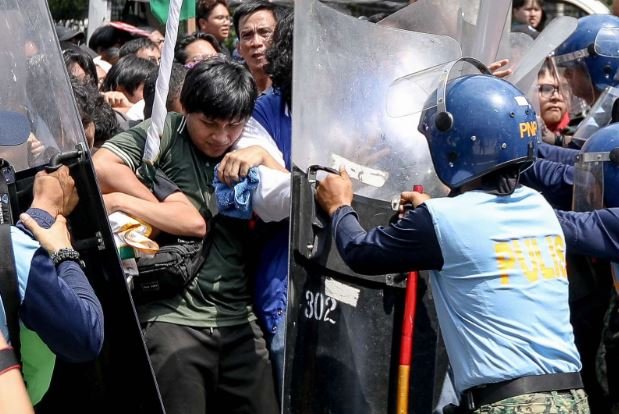
The radical left figured in clashes with the police (with 16,000 deployed to such a short strip of the main thoroughfare thereby adding to the traffic gridlock) leading to arrest of two protesters and injuries to a handful of policemen, based on PNP reports.

While police were lenient to the rallyists at the People Power Monument, they were not as forgiving to those at the EDSA Shrine because they had no permit to rally and they insisted on using the truck (with their sound system) which police claimed would disturb the peace in the area.

Speakers at the Trillion Peso March (whose participants paled significantly from the original September rally) included Cardinal Virgilio “Ambo” David, former Socioeconomic Planning Secretary Winnie Monsod, current and past politicians under former presidents Cory and Noynoy Aquino and rally organizer Kiko Aquino Dee in his capacity as lead convener of Tindig Pilipinas.

CALL TO FIND TIME

With the 40th EDSA People Power Revolution declared as a working holiday, organizers of the Trillion Peso March called on the public to find time joining activities commemorating the restoration of democracy in the Philippines. Dee in an earlier briefing stressed the importance of balancing lessons of the past and the challenges that Filipinos face at this time.

Caritas Executive Director Fr. Tito Caluag said it is the perfect time for every Filipino to reflect on what they have done to lead the country where it is now and to repent on deliberate shortcomings

“Everyone in our politics has a huge need to repent. Our call to our fellow Filipinos is that we have the power, not the Marcoses, not the Dutertes. What is happening in the country is our responsibility, Caluag said.

Some 86 Catholic Dioceses also held their own commemoration of EDSA People Power.

For Caluag, the commemoration of EDSA People Power’s 40th anniversary will only be meaningful if Filipinos observe what is happening to the country and guide the youth whom he says ‘must now own this movement.’

For Daniel Franklin Pilario, president of Adamson University, the rally was a response to “persistent poverty fueled by the misuse of public funds, with the main cause of poverty as taxes are being pocketed by corrupt politicians.”

GLARING MISMATCH

The Philippine National Police estimated the crowd at about 6,000 at the EDSA Shrine and People Power Monument (versus 16,000 deployed by PNP to these sites), according to Director of Operations General Ponce Rogelio I. Peñones, Jr.

The protesters included veteran activists, students and religious leaders, unified under the banner: We are the People Power vs. Corruption and Dynasties Then, Now, Tomorrow.

Akbayan Party President Rafaela David called for an “electoral revolution” to break the hold of the country’s most powerful families. 

“We can no longer tolerate power and politics being concentrated in the hands of a few families, like the Marcoses and the Dutertes,” David said, adding that “Malacañang should no longer serve as a home for dynastic nepo-babies.”

POLITICAL DYSNASTY

Partylist Rep. Percival V. Cendaña said a genuine anti-political dynasty law would strengthen democracy and fulfill one of EDSA’s long-unrealized promises.

“The abolition of political dynasties is a long-delayed task of EDSA,” he said. “Forty years since the February People Power Revolution, it is time to end their control over our democracy and economy.”

The Catholic Bishops’ Conference of the Philippines (CBCP) in a pastoral letter called for a moral reckoning. Gilbert A. Garcera, CBCP president, noted that corruption, poverty, criminality, lies and treachery continue to plague the nation.

“The enemies are no longer colonial rulers, but corruption, lies, injustice and indifference,” the CBCP letter said as it urged Filipinos to go beyond the walls of the Catholic Church and demand accountability from those in power.

MINIMAL TOLERANCE

The PNP meanwhile defended its arrest of two protesters following a clash with authorities, with PNP chief Gen. Jose Melencio Nartatez Jr. saying despite his maximum tolerance order to the uniformed men, the police had to act after some protesters allegedly threw stones and disrupted traffic.

The arrests of the two individuals– Edel Parducho of the Philippine Alliance of Human Rights Advocates (PAHRA) and Three Odeña of Samahan ng Progresibong Kabataan (SPARK) by elements of the Eastern Police District, occurred Wednesday afternoon as groups assembled at the corner of southbound Edsa and Rochester Street.

“Our protocols are clear: we exercise maximum tolerance. However, when our personnel are physically assaulted or when the safety of the public is at risk, we must act to restore order,” Nartatez said in a statement.

Responding to claims that the arrests infringed on human rights, Nartatez affirmed that the PNP upholds the public’s right to free speech and peaceful assembly — “Your rights end when violence begins.” 

“We are not arresting them for their beliefs. We are arresting them for specific violations of the law,” he added

The two individuals taken into custody are charged with direct assault, resisting and disobeying authority, causing public alarm, and violating the Public Assembly Act. Authorities also said that the group they belonged to reportedly did not obtain a permit for their activity.

SANLAKAS STATEMENT

In a statement, Sanlakas condemned the arrest and detention of the two protesters.

Police attempted to clear up EDSA lanes which were occupied by the protesters by shoving them into a single lane, and the sidewalk. As a consequence of the unwarranted and unjustified use of excessive force, protesters resisted by pushing back.

This happened at least twice – once during formation, and another during the march. In the ensuing melee, Parducho, who stood with his back against the police phalanx to protect a contingent of families of EJK victims, and Odeña, who was warding off the pushing and shoving by the police, were arrested.

Both were detained at the Mandaluyong Police Headquarters.

PRIOR AGREEMENT

On Feb. 24, rally organizers met with top officials of the EPD to come to an agreement as to the orderly conduct of the EDSA march to avoid clogging up EDSA. 

In 2024 and 2025, anti-corruption groups have peacefully staged rallies on the same stretch of road. The National Capital Region Police Office (NCRPO) rejected the plan. Organizers warned that this would result in an EDSA gridlock. This was exactly what happened.

At one point, all South-bound lanes leading to the Ortigas flyover were blocked when the police stopped the march. 

Protesters, however, successfully slipped through the police cordon, and occupied the EDSA-Ortigas Ave. intersection. Protesters later moved to the EDSA lanes next to EDSA Shrine when police appealed to free up the blocked intersection, the statement said.

Police again shoved protesters at one point during the program triggering a brief scuffle between the two sides.

REMINISCENT OF THE PAST 

The lack of a rally permit, or the unilateral declaration of EDSA being a no rally zone does not justify the employment of brute force against helpless civilians. Forty years today, Filipinos ousted the Marcosian police state which wantonly, and with impunity, suppressed fundamental freedoms and rights.

What the police, with the blessing of Malacanang, and the local governments of Quezon City and Mandaluyong City, demonstrated today is that the ghost of the country’s Marcosian past lingers. 

Protest is criminalized, as evidenced by the arrest of Parducho and Ordena, and which is reminiscent of the dark years under the Marcos dictatorship.

The group demanded the immediate and unconditional release of Parducho and Odeña and the PNP leadership to conduct an investigation into the violent handling of the NCRPO and EPD.

The group called on the Commission on Human Rights to conduct an independent investigation into police misconduct, and the use of excessive force!

Cybercrime Office And Lending Firm Forge Ties To Take Action Vs Abusive Online Lenders

0

“The collaboration seeks to move Filipinos toward a ‘courageous employment’ of online financial services by stripping away the fear and negative impressions created by illegal operators,” said Cybercrime Investigation and Coordinating Center (CICC)information officer Shekaina Lim.

AMID THE CONTINUED abuses of online lending applications (OLAs), the Cybercrime Investigation and Coordinating Center (CICC) has entered into a partnership with finance technology firm Copperstone Lending, Inc. to take action against abusive lenders.

CICC information officer Shekaina Lim said the initiative aims to promote a “safer lending landscape” amid the continued proliferation of OLAs that advertise “instant approval” loans while allegedly concealing high fees and engaging in psychological harassment.

“The collaboration seeks to move Filipinos toward a ‘courageous employment’ of online financial services by stripping away the fear and negative impressions created by illegal operators,” Lim said.

The partnership was formalized through a memorandum of agreement (MOA) signed Tuesday at the CICC office in Quezon City.

Under the agreement, the CICC and Copperstone will conduct public information campaigns to help consumers differentiate legitimate lenders from fraudulent operators. The two parties will also collaborate on policy development, particularly on measures aimed at curbing and regulating OLA-related cybercrimes.

TECHNICAL AND REGULATORY SUPPORT

Both institutions committed to extending technical and regulatory support to bolster enforcement efforts.

“By promoting transparency and rigorous enforcement, the CICC and Copperstone aim to ensure that financial technology remains a tool for empowerment, not a weapon for extortion,” Lim said.

From Jan. 1 to Feb. 10, the CICC’s Cybercrime Complaint Center (C3) recorded 278 complaints involving OLAs. The cases involved 75 different lending applications, but only 23 were registered with the Securities and Exchange Commission (SEC).

Approximately half of the complaints cited incidents of online harassment, including public shaming of borrowers. Other reported violations included loan scams or direct fraud cases in which no funds were disbursed, deceptive lending practices that trap borrowers in recurring debt due to undisclosed terms, and advance fee fraud requiring payment before loan release. Some platforms were reported to be operating without legal authorization.

Data from the C3 also showed that individuals aged 18 to 29 comprised the largest group of complainants, followed by those aged 30 to 39 and 40 to 49.

“This indicates that digital natives are being specifically targeted in the apps and social spaces they frequent most,” Lim said.

The public is encouraged to report online debt harassment or scams to the CICC through the Inter-Agency Response Center (I-ARC) Hotline 1326.

In January, the SEC reported the continued availability of several unregistered OLAs on the Google Play Store, including 22 applications operating without the required permits.

The continued operation of these platforms violates SEC Memorandum Circular No. 10, series of 2021, which prohibits the launch, registration and operation of new online lending platforms since it took effect in November 2021.

Mustang Mach E Recognized As Top Battery EV In US

0

THE FORD MUSTANG MachE has been recognized as the top-ranked battery electric vehicle in the JD Power 2026 US Electric Vehicle Experience (EVX) Ownership Study,reflecting strong owner satisfaction across key aspects of EV ownership—from driving enjoyment to ease of charging and day-to-day usability. 

The Mach-E scored 760 (on a 1,000-point scale), outpacing its competitors in the US like the  Hyundai’s IONIQ 6 (748) and the Kia EV9 (745).

“A recognition like this matters because it reflects what owners feel every day—how confident they are behind the wheel, how easy the vehicle is to live with, and how seamless the overall experience is,” said Pedro Simoes, President and Managing Director, Ford Philippines. 

“The Mustang MachE embodies Ford’s commitment to deliver an electric vehicle that’s unmistakably fun to drive, thoughtfully designed with the customer in mind, and supported by the kind of ownership experience our customers deserve. As interest in electrified mobility grows in the Philippines, recognitions like this testify to Ford’s global commitment in bringing products and experiences that fit today’s lifestyles,” he added.

The EVX Ownership Study measures feedback from electric vehicle owners after their first year of ownership, focusing on the real-world experience of living with an EV. The study evaluates factors such as driving enjoyment, range accuracy, charging convenience, cost of ownership, vehicle quality and reliability, and the effectiveness of EV-related education and guidance provided to customers. The Mustang MachE’s leading performance highlights Ford’s continued focus on making electrification more accessible and rewarding for customers.

ICONIC MUSTANG EXPERIENCE 

The Mustang MachE is Ford’s all-electric SUV that brings the iconic Mustang performance and DNA to a practical, modern package—delivering quick, responsive acceleration, a spacious and versatile cabin, and a connected digital driving experience designed for everyday ease. 

As EV adoption accelerates worldwide, customer experience has become as important as specifications. The JD Power EVX Ownership Study underscores that satisfaction is shaped by how well an EV integrates into daily life—covering not only performance and technology, but also the learning curve and practical realities of charging.

Mustang MachE’s top ranking signals the strength of Ford’s approach: combining iconic design and engaging performance with smart technology intended to simplify the transition to electric driving.

DDS In A Bind — And Kaufman Tightened It

0

THERE IS A tragic poetry to the spectacle now unfolding.

For years, the catechism of the Duterte faithful was simple and savage: the drug war was necessary. It kept the streets safe. Addicts were vermin. Better them than your own children. If an addict rapes or kills, does he deserve to live? They hurled this at us not as an argument but as moral intimidation. It hit the gut, not the head. It was meant to silence.

Now comes Duterte’s lawyer, Nicholas Kaufman, speaking in defense of his client before the world. And what does he say? That Duterte’s “kill, kill” pronouncements were merely warnings. That they were rhetorical flourishes. That the former president did not literally order the killings.

Notice what he did not say.

He did not deny that killings happened. He did not challenge the allegation that thousands died. He did not claim the bloodshed was fabricated.

Instead, he justified it. The drug problem was severe. The country was drowning in narcotics. Only Rodrigo Duterte had the courage to confront it head-on.

In other words: yes, people died — but it was necessary. It was only the critics, the traditional media, the human rights groups, the colonialists who made it appear otherwise.

And there lies the bind.

For years, the defenders of the drug war glorified the body count. “One time, big time.” They cheered the “32 in one day.” They applauded the spectacle. When Duterte joked that he wanted more “32 a day,” they laughed along. They posted memes. They called it decisive leadership. They called it political will.

Now, before the International Criminal Court, the tune must change. Suddenly, the words were metaphors. Suddenly, the speeches were warnings. Suddenly, the police acted on their own.

But you cannot build a political movement on blood and then wash your hands of it when the reckoning comes.

This is not merely a legal strategy. It is psychological survival. Kaufman’s statements are clearly meant to appease and reassure the base. To tell them: do not panic, we are still standing by the righteousness of the cause. The drug war was good. The intention was pure. The outcome justified the means.

But here is the brutal irony: the more they justify the killings, the more they strengthen the prosecution’s case.

Crimes against humanity are not about isolated rogue acts. They are about widespread or systematic attacks against civilians. They are about policy. They are about intent. They are about public pronouncements that signal permission, encouragement, protection.

And what have the DDS been doing for years?

They have been proclaiming that the killings were systematic. They have been celebrating that they were widespread. They have been arguing that they were necessary and deliberate.

Every time they say, “Yes, addicts deserved to die,” they concede the moral architecture of the crime. Every time they insist, “It was the only way,” they affirm intent. Every time they claim the drug war produced good outcomes, they admit it was purposeful.

They think they are defending Duterte.

NO! They are testifying against him.

In my previous writings, I have said that the most dangerous feature of the drug war was not only the killing itself but the normalization of killing. The transformation of state violence into civic virtue. The conversion of police bullets into badges of patriotism.

We saw how the police were assured protection. We saw how “nanlaban” became a ritual incantation. We saw how operations like Tokhang and Double Barrel were institutionalized. We saw how fear replaced due process.

The DDS cheered all of this.

They said preemptive killing was justified. They said addicts were beyond reform. They stripped entire communities of humanity for the comfort of feeling safe.

Now, their own lawyer says Duterte did not really mean “kill.” He was just warning.

But which is it?

Was the drug war a glorious campaign that saved the nation — or was it a misunderstood set of rhetorical excesses?

You cannot have both.

If Duterte merely warned, then the killings were rogue acts, crimes committed by police officers acting without presidential blessing. In that case, why defend the drug war as righteous? Why celebrate the dead?

If, on the other hand, the killings were necessary and justified responses to a grave threat — then you concede they were intentional, systematic, and policy-driven.

That is the trap.

Silence would have been smarter. If they truly wanted Duterte released, they would stop glorifying the bloodshed. They would stop calling the victims names. They would express remorse. They would say mistakes were made. They would humanize the dead.

But they cannot.

The movement was built on the premise that killing was strength. That brutality was authenticity. That compassion was weakness. To abandon that now is to admit that the entire moral crusade was a lie.

So they double down.

They insist the killings were for a good purpose, produced a good outcome, and therefore were justified. They cling to this creed in cult fashion, as if repetition could turn blood into policy success.

Yet international law does not measure morality by applause. It measures conduct by evidence.

And the evidence is not only in police reports or forensic files. It is in speeches. It is in public assurances. It is in the pattern. It is in the repeated declaration that criminals would be killed, that the president would protect those who did it, that human rights were obstacles to be brushed aside.

The defense’s dilemma is clear. They cannot deny the killings happened; too many graves, too many widows and orphans, too many testimonies. So they minimize the language. They soften the verbs. They call “neutralization” a warning, not an extermination.

But words matter.

When a head of state repeatedly says he will kill, encourages killing, promises protection to killers, and thousands die in operations that follow that script, those are not stray metaphors. They are signals.

And here is the final irony: the more the DDS insist the drug war was necessary, the more they reinforce the argument that it was systematic. The more they say it saved the nation, the more they imply it was policy. The more they glorify it, the more they prove intent.

They are trapped in a bind of their own making.

If they admit the killings were wrong, they betray the myth that sustained them. If they continue to justify the killings, they help build the legal architecture that will convict their hero.

This is what happens when politics becomes blood sport. When governance is reduced to slogans and bullets. When a nation is told that safety requires surrendering its soul.

The DDS want to have it both ways: to celebrate the violence and deny responsibility for it. But history is not so easily manipulated. Nor is international law.

Every chant that the drug war was necessary is another brick sealing the cell. Every defense that it was justified is another confession by proxy.

And so the bind tightens.

#thefilipinocriminologist

To Banish Travel Tax Or Not

0

WITH THE HOUSE voting to abolish the travel tax just days ago, support for its abolition has gone bolder but the agencies who have been receiving allocations from the collected taxes since 1977 are screaming loudly to stop its banishment because of communities that would be deprived of program funding.

Yet with the full support given by President Marcos for its abolition– making it among his priority legislations to report during his 4th SONA in July–  the abolition of this antique 1977 measure gets real each passing day.

Finance Secretary Frederick Go has expressed concern about some P8 billion yearly losses with the travel tax abolition, which Filipinos traveling abroad find unnecessary, antique and another source of legalized robbery (in addition to forcing them to queue for long periods) just so they can enter the airports and wait for their departing flights.

The government collects a travel tax of P1,620 ($28.35) from economy air passengers and P2,700 ($47.24) from first class air passengers, if they are departing to a foreign country.

While the Philippines specifically labels its P1,620 (economy) and P2,700 (first class) charges as a “travel tax,” neighboring nations use a variety of terms for similar collections. Australia charges A$60 as Passenger Movement Charge on all departing passengers, Japan has the International Tourist Tax of JPY 1,000 (rising to JPY 3,000 in July), Cambodia has a departure fee of US$25 already included in ticket, Bali (Indonesia) has the Mandatory Tourist Levy of IDR 150,000, and Thailand has the Foreign Entry Fee of 300 Baht (effective February 2026).

Exempt from travel tax are overseas Filipino workers, Filipino permanent residents overseas who stayed less than a year in the Philippines, and children aged two years and below.

In most other countries– developed and those within our Asian neighors– the travel tax is tucked in the cost of the tickets, which can be booked and paid online without the hassle of queueing again before departure.

The beneficiaries of the Marcos Sr. travel tax scheme were the Tourism Infrastructure and Enterprise Zone Authority (with 50 percent); the Commission on Higher Education for scholarships of poor students desiring to finish tourism and hospitality courses (with 40 percent) and the National Commission on Culture and the Arts (with 10 percent).

In money terms this means allocations of P3.9 billion for infrastructure (TIEZ), P3.1 billion for scholarship (CHED) and P1.1 billion for NCCA.

Authorities collected about P8.7 billion in travel tax revenue in 2025, according to a position paper from TIEZA that was submitted to the congressional committee and obtained by BusinessWorld. Collections reached P7.8 billion in 2024, P6.3 billion in 2023, P332 million in 2021, P713 million in 2020, and P7.1 billion in 2019.

Collections from travel tax reached P7.2 billion before the pandemic; dropping to P123 million in 2020 then rising to P359 million in 2021, recovering at P2.38 billion in 2022 and then to P7.75 billion in 2024.

Critics of the antiquated travel tax– which Marcos imposed to keep the people from spending dollars abroad (during the deep economic crisis during Martial law) and to encourage more domestic tourism– claim that such funds can be “inserted” into the budgets of these agencies instead of continuing to impose this cumbersome practice.

Those in favor of continuing travel tax claim that this is tantamount to encouraging more Filipinos to travel abroad (principally to Asian neighbors) instead of luring them more in the country’s over 7,000 islands that provide the same, if not more, breathtaking views and wholesome experiences to the travellers.

 As Esquire magazine reported yesterday the funds for scholars, arts, and tourism infrastructure face an uncertain future with the repeal of the travel tax, according to CHED, NCCA, and TIEZA representatives.

“Each person who pays the travel tax invests in underprivileged scholars in college, artists’ grants, and the development of tourism destinations in the country,” the report noted.

In 2025, the government collected some P8.7 billion in travel taxes.

Despite its clear benefits, however, the Committee on Tourism at the House of Representatives approved six bills abolishing the travel tax, citing the need to ease the burden of Filipinos traveling abroad. President Marcos Jr. had earlier directed its abolition upon recommendation of the Legislative-Executive Development Advisory Council.

During Monday’s hearing of Committee on Tourism, Nueva Ecjia First District Rep. Mikaela Angela B. Suansing, assured the three government agencies, “Given the criticality of the funds, we will work together (heads of the committees on tourism, ways and means, appropriations, and respective authors of the bills) to ensure that those funds will remain available…and to structure the [ensuing] bill in such a way that [the funds] would still be responsive to the needs of the different government agencies,” without being subjected to the annual appropriations requests.

Suansing chairs the Committee on Appropriations, Romblon Rep. Eleandro Jesus F. Madrona chairs the Committee on Tourism, and Marikina Second District Rep. Miro S. Quimbo chairs the Committee on Ways and Means.

Compromising Scholars

CHED Chair Dr. Shirley C. Agrupis said 85.63 percent of the Higher Education Development Fund (HEDF), which was established under Republic Act No. 7722, “relies predominantly on travel taxes. From 1995 to 2025, these funds totaled some P38 billion.

Among the projects funded by the HEDF are the upgrade of facilities like laboratories, research grants, and scholarships for faculty development and student financial assistance, to name a few. In particular, she said the HEDF has assisted 246,034 undergraduate and graduate student scholars from 2018 to 2025.

NCCA Deputy Director Marichu Tellano said the agency receives P600 million to P700 million a year from travel taxes needed for its “permanent possessions. Without the travel tax, all the grants for the artists and different organizations will be gone.” The travel taxes have also funded the restoration and operation of the Manila Metropolitan Theater, the maintenance and operation of the different UNESCO World Heritage sites.

TIEZA Chief Operating Officer Dr. Mark T. Lapid said the travel tax “fuels tourism development” through direly needed tourism-infrastructure projects, developing tourism economic zones by attracting investors, funding tourism master plans, and extending emergency assistance, such as in their recent support to enable the Philippines host its first Women’s Tennis Association match.

148 Tourism Infra Doomed?

From 2019 to 2025, Tieza has been able to complete some P5 billion worth of tourism infrastructure projects, and some 148 projects valued at P7.13 billion are currently being developed.

For his part, Aklan Second District Rep. Florencio T. Miraflores, vice chair of the Committee on Tourism, said Boracay Island, which is under his jurisdiction, is one of the major beneficiaries of the travel tax, primarily for the provision of the “water, sewerage treatment plant, and the corresponding drainage project, which has made Boracay a worldwide destination today.” He underscored that “Tieza needs the flexibility of funding of tourism-related projects,” to immediately respond to the concerns of tourism destinations, like in Boracay’s case, a recent flooding problem.

Capiz First District Rep. Howard A. Guintu, speaking in Filipino, also said that “TIEZA was a big help in rehabilitating our centuries-old church,” and warned that in the case of his colleagues who also need help in restoring their historical landmarks, “if the travel tax is abolished, they may have further encountered difficulties in requesting funds to restore these landmarks.”

The levy was first imposed by Republic Act No. 1478 in 1956 and was later amended through Presidential Decree No. 1183 in 1977.

President Ferdinand R. Marcos, Jr. has declared the bill abolishing the travel tax a priority and had urged Congress to pass it before the adjournment in June.

The three agencies supported the move to scrap travel tax granted their funding would be secured via the annual budget bill.

“To be honest, what goes to TIEZA is only around 35%,” said Lapid adding that “we are in charge of the administrative fee or about P500 million to collect the travel tax,” Business World quoted him.

In its position paper, TIEZA said 90% of its budget relies on the travel tax, and “any disruption without a viable alternative is critical.”

“The travel tax provides the fiscal agility required for immediate tourism response,” it said, noting that its funding source allows the agency to “urgently address” tourism needs.

Impact on Higher Education

Agrupis told legislators that removing the travel tax without a replacement revenue source would deprive 5.4 million students who rely on it. “If the travel tax is repealed without a replacement revenue source, we will lose 85.6% of its funding.”

Scrapping the Philippines’ travel tax would lower the cost of flying, stimulate outbound and inbound travel and make the Philippines more competitive as a regional hub, said Jonathan L. Ravelas, a senior adviser at Reyes Tacandong & Co.

“But it’s not a silver bullet. The real gains come only if the lost revenue is replaced by smarter funding for tourism — better airports, smoother visas, and stronger destination marketing,” he added.

Sandro’s House Bill 7443

House Bill No. 7443, filed by House Majority Leader Sandro Marcos, proposes the abolition of the Philippine Travel Tax on the premise that it imposes an undue burden on travelers and hinders economic mobility and tourism growth. While the bill identifies legitimate concerns regarding travel affordability and regional competitiveness, the outright repeal of the travel tax is both economically and fiscally misguided, according to a research paper.

The paper said abolishing the travel tax would undermine dedicated funding for tourism infrastructure and related programs, shift the burden of financing to general taxation, and disrupt Philippine fiscal stability. Instead of abolition, recalibrating the tax structure and reforming its administration would better address equity and mobility concerns while preserving essential revenue streams.

It added that abolishing it outright would undermine long-term public finance stability, remove a visible funding mechanism for critical national programs, and ultimately shift burden to the general body of taxpayers. Rather than repeal, what is needed is meaningful reform—rate rationalization, equity-based exemptions, administrative modernization, and stronger transparency and accountability frameworks.

Advocates of abolishing the Travel Tax typically ground their arguments in three key points: affordability, equity, and administrative efficiency. The affordability argument suggests that each mandatory fee imposed on travelers ultimately raises the total cost of travel and could serve as a barrier to mobility for middle and low-income families, students, overseas workers, and micro-entrepreneurs (Smith, 2021). From this perspective, a Travel Tax—however modest—is an additional cost that combined with airfare, fuel surcharges, airport fees, and other travel-related taxes, compounds the financial burden and potentially dampens travel demand.

Knocking Out Tourism

Bilyonaryo reported that the Philippine Hotel Owners Association (PHOA) is pushing back against a government proposal to abolish the national travel tax, warning that the move could subsidize “bon voyage” trips at the expense of the local hospitality sector.

The trade group, representing the country’s largest hotel and resort owners, argues that eliminating the levy would encourage the outflow of consumer spending to neighboring Southeast Asian markets, siphoning capital from a domestic industry still navigating its post-pandemic recovery.

While the government views the tax repeal as a way to lower costs for Filipino travelers, PHOA leadership contends the timing is economically counterproductive.

By making international departures cheaper, the association fears the state is inadvertently incentivizing the “export” of Philippine pesos to regional rivals like Thailand and Vietnam.

“We should not be bodily subsidizing a ‘bon voyage’ at the expense of our own backyard,” the association said in a statement. “Before we cut the cord, we need a dialogue that prioritizes Philippine jobs over foreign spending.”

PHOA president Arthur M. Lopez emphasized that the national priority should remain the growth of inbound traffic, bringing foreign currency into the country rather than facilitating its exit.

PHOA warned that abolishing the tax without a “comprehensive replacement plan” would be premature, potentially depriving the industry of the infrastructure support required to sustain long-term growth.

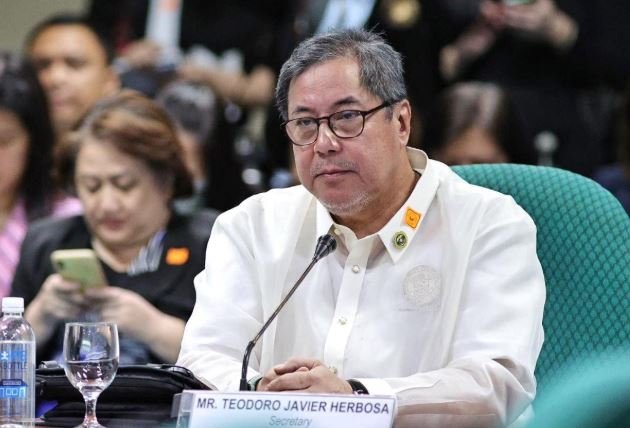
Sec. Herbosa’s Staying Power

0

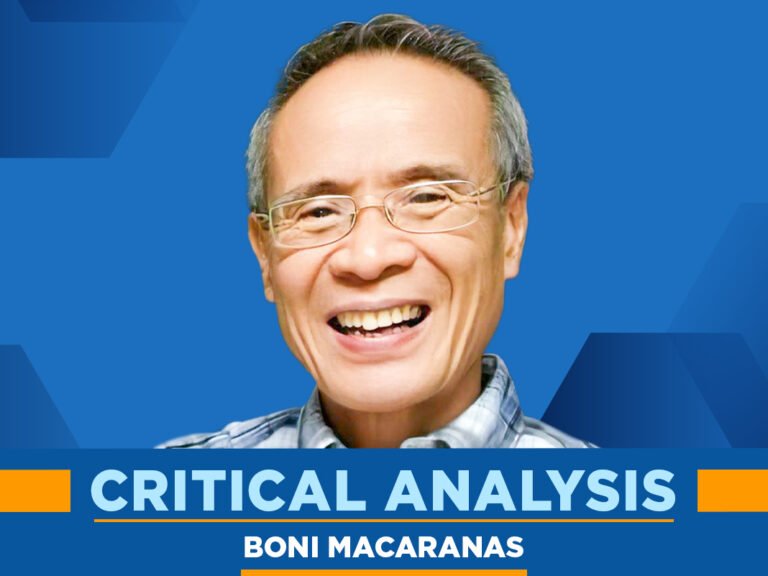
NOT EVEN A long list of formal complaints in view of one irregularity after another, seemed enough reason for President Ferdinand Marcos Jr. to fire Health Secretary Ted Herbosa.

The reason — Herbosa’s relation by affinity (or consanguinity) to the mother of the President who wields the power to appoint or fire Cabinet-level government posts.

According to Palace sources, Herbosa has remained “immovable” from the Department of Health primarily because of his relatives in power. Marcos (the appointing authority), former House Speaker Martin Romualdez, and even Ambassador to the United States Manuel ‘Babes’ Romualdez are reportedly backing up Herbosa.

“Herbosa has reportedly been lucky to have a Romualdez in his corner, the kind of protection that has helped him cling to the Health Secretary post for nearly three years like a blood-sucking tick that refuses to let go,” reads part of a report released by Bilyonaryo News Channel.

ROMUALDEZ, AS USUAL

According to its source, Herbosa has gained a new lease on life at the DOH after reportedly being backstopped by Ambassador Babes Romualdez.

It said Malacañang was ready to pull the trigger on Herbosa weeks ago and was already vetting several candidates to replace him (with one a Filipino doctor with famous Hollywood clients), until Babes allegedly stepped in to his rescue.

Herbosa is also reportedly personally close to Babes, while Martin is his fraternity brother in Upsilon Sigma Phi at the University of the Philippines.

It is public knowledge that Martin moved heaven and earth to secure Herbosa’s appointment and keep him in place despite criticism over his performance and a tenure tainted by corruption allegations. When Martin lost the Speakership last September amid the so-called flood-control scandal, many believed Herbosa’s days were numbered, Bilyonaryo explained.

BARRAGE OF ANOMALIES

In recent months, corruption allegations have piled up against Herbosa. Some DOH employees have accused him of a conflict of interest, claiming he crossed the line by keeping cozy social ties with Zuellig Pharma even as the company was allegedly an active bidder for DOH projects.

Then there is the P1.29 billion money trail, for which DOH employees asked the Office of the Ombudsman to investigate, with the cash transfer to UNICEF for vaccines and essential medicines that they alleged remained unliquidated from February 2024 to July 30, 2024.

The employees also claimed that while that amount was still unaccounted for, Herbosa approved another UNICEF vaccine purchase worth P524.9 million, a move they say violated Commission on Audit rules and a DOH memorandum barring new fund transfers until earlier ones are liquidated.

Herbosa is taking heat over claims that P98 million in public funds went to a DZMM program produced by Media Serbisyo Production Corporation, owned by Franco Reyes, the husband of DOH Health Promotion Bureau Director Tina Marasigan.

Herbosa, Marasigan, and Assistant Secretary Albert Domingo are listed as anchors of the show on the radio station owned by Martin.

Herbosa is also weathering the storm with another Romualdez as his main backer. The real question is whether Herbosa’s latest lifeline is a genuine reprieve or simply a delay, as corruption allegations and internal unrest continue to rumble inside the DOH.

REPLACEMENT DEFERRED

Relatedly, columnist Ramon Tulfo wrote three weeks ago that US-based Filipino doctor Dr. Ronald Rigor, a Beverly Hills-based physician, is being floated as a possible replacement for Herbosa and his pitch is simple but explosive: zero-balance hospitalization for Filipinos.

Rigor plans to use PhilHealth funds aggressively to cover full hospital bills if he is appointed health secretary. The aim is to eliminate out-of-pocket expenses for admitted patients, a long-standing promise that has repeatedly fallen short.

“Ang papalit kay Ted Herbosa bilang health secretary, si Dr. Ronald Rigor, ay nagbabalak na gamitin ang lahat ng pera ng Philhealth para sa ‘zero balance’ hospitalization. Ito ang aking nakalap sa mga taong nakausap niya,” Tulfo said on social media.

“Pati ang ilang private hospitals ay balak daw gawin ni Rigor na isama sa coverage ng ‘zero balance’ kung siya’y maging health secretary. Sapat naman daw ang pondo ng Philhealth at kinikita sa ‘sin tax’ para sa pagbabayad sa mga ospital at doctors’ professional fee,” he added.

Tulfo described Rigor as a “multimillionaire” who runs a popular beauty clinic catering to Hollywood stars such as Angelina Jolie and Johnny Depp. He also claimed Rigor is a consultant to 130 homes for the elderly.

“Ayaw sana ng asawa ni Rigor na maging miyembro siya ng Gabinete, pero nababaitan daw ito kay Bongbong Marcos. Gaya pala si Rigor ni Agriculture Secretary Kiko Tiu Laurel, isang billionaire, na ayaw ng pamilya na maging Cabinet member, pero malapit na kaibigan si Kiko ni Bonget,” Bilyonaryo quoted Tulfo.

Tulfo also claimed Rigor is willing to renounce his US citizenship if he is offered the health secretary post.

ENOUGH OF HERBOSA

Over the past few months, calls to remove Herbosa have grown amid corruption allegations within the DOH.

DOH employees have accused Herbosa of conflict of interest for allegedly fraternizing with health contractor Zuellig Pharma, an active bidder in DoH projects. The employees alleged Herbosa attended company-sponsored trips, social gatherings, out-of-town activities, and accepted gifts.

Earlier, DOH employees asked the Office of the Ombudsman to look into Herbosa’s P1.29 billion cash transfer to UNICEF for vaccines and essential medicines, which they said remained unliquidated from February 2024 to July 30, 2024.

They also alleged that while this amount was still unaccounted for, Herbosa approved another request to buy vaccines from UNICEF worth P524.9 million, in violation of Commission on Audit rules and a DOH memorandum that bars new fund transfers when previous ones have not yet been liquidated.

Tulfo criticized the president for not properly checking Herbosa’s background before appointing him. Tulfo claimed Herbosa has a history of “double-crossing” people, including an old allegation from his time as DOH undersecretary under President Aquino. In that earlier claim, a supplier allegedly pointed a gun at Herbosa after a deal was not honored.

CONG-TRACTOR SOLON

Tulfo alleged that Herbosa received P60 million from CWS party-list Rep. Edwin Gardiola, supposedly in connection with winning public bidding projects for construction of hospitals.

Tulfo shared photos allegedly showing boxes of cash being received in front of Herbosa’s residence. He also claimed that an armored Land Cruiser was given to the health chief by Gardiola, now known as “cong-tractor.”

Tulfo captioned the photos he posted as: “Makikita yung malaking kahon na pinaglagyan ng pera, yung mga kasambahay ni Herbosa na tumanggap ng limpak-limpak na salapi, yung pintuan ng bahay ni Herbosa, at yung armored Toyota Land Cruiser na binigay din ni Gardiola sa kanya.” 

Tulfo further claimed that the release of the photos stemmed from a falling out between the two officials.

“Ayon sa aking tweety bird, dinobol-kros ni Herbosa si Partylist Congressman/Tongtractor Edwin Gardiola kaya’t nilabas niya ang mga litrato. Nagdududa daw kasi si Gardiola kay Herbosa na baka di tumupad sa usapan si Herbosa,” said Tulfo.

Gardiola has been linked to the flood control scandal and has been tagged as one of several so-called “cong-tractors.” The Anti-Money Laundering Council (AMLC)has reportedly frozen up to 1,000 bank accounts tied to Gardiola.

Herbosa has also faced multiple controversies during his tenure at the DoH such as the graft complaint involving DOH Director Tina Marasigan over a P98-million radio program allegedly used to promote the image of DOH officials.

“The question is, was the P98 million radio program genuinely for public health promotion, or was it a publicly financed vehicle for Respondent Herbosa’s own media exposure and personal branding?” said the complaint.

SUBSTANDARD CLINICS

Tulfo was quoted last January 31 by Politiko saying Herbosa is allegedly pushing for the DoH to accept substandard mobile clinics because he stands to earn over half a billion pesos from the contract, citing Tulfo.

He cited a source who alleged that Herbosa would receive about P530 million—representing a 30-percent cut—from the P1.8-billion procurement of mobile clinics.

“Ayaw pumayag pumirma ng mga USECs niya kasi pangit yung specs, pero yun ang gusto ni Sec Ted kasi 30% siya dun, P1.8 billion yung purchase. P530 M kay Sec,” Tulfo quoted his source as saying.

Tulfo also claimed that Herbosa’s days in the Cabinet are numbered, alleging that the Health chief would soon be replaced.

“Si Herbosa ang pinaka-corrupt na ngayon na miyembro ng Gabinete ni BBM. Papalitan na siya,” Tulfo quipped.

Show Me: Words vs. Results

0

HAVE YOU EVER believed someone’s promise… only to watch the same behavior show up again the next week? Same tone. Same habits. Same excuses.

The Back Story 

You start questioning yourself. “Maybe I’m expecting too much.”

But deep down, you know. 

  • Words are easy. 
  • Change is not.

Words Without Change

We’ve all seen it. Big speeches. Big promises. Big emotions. 

Someone says:

  • “I’m working on it.” 
  • “I’m going to do better.” 
  • “Things will change.” 

Applause. But nothing really changes.

Situation:
Jerry wants to be more open to feedback with his team.

Before:

  • He interrupts people in meetings
  • Explains his decisions instead of listening
  • Gets defensive when someone disagrees

After:

  • Jerry lets people finish speaking
  • Listens without interrupting
  • Asks, “What would you suggest?”

Tip:
Do not announce growth. Apply it.

Break the Pattern

The same patterns repeat. The same outcomes happen.

  • That’s not growth. That’s theater.

Situation:
Angela wants better relationships with colleagues.

Before:

  • She avoids hard conversations
  • Sends long emotional messages instead of talking face-to-face
  • Brings up old issues repeatedly.

After:

  • Angela schedules a calm conversation
  • Focuses on one issue at a time
  • Listens without interrupting

Tip:
If you want a new result, change the pattern.

Quiet Action Wins

Talking feels bold. Promising feels productive. 

But real change? It’s consistent.

It shows up in actions when nobody is clapping. It means:

  • Saying less
  • Doing more
  • Repeating the new behavior even when it’s uncomfortable
  • Stopping what no longer fits
  • No spotlight. No applause

Just consistency.

Situation:
Daniel wants to show that culture really matters to his team.

Before:

  • He comes in late to meetings
  • Cancels one-on-one check-ins when busy
  • Mostly talks to his team only when something goes wrong

After:

  • Daniel shows up on time
  • Keeps his one-on-one meetings
  • Checks in regularly even when nothing is wrong

Tip:
Show up. Keep your word. Repeat.

Prove It

If words disappeared, would the behavior still prove the message?

Talk: 

  • Content + Delivery

Results: 

  • Content + Delivery + Behavior over time

That’s the difference.

When your words and your actions match, you are not performing for applause.

  • You are growing for real. 

Situation:
Marcie wants more discipline in her daily routine.

Before:

  • She hits snooze every morning
  • Skips workouts when she feels tired
  • Says she doesn’t have time

After:

  • Marcie gets up when the alarm rings
  • Schedules her workouts
  • Protects that time like it matters

Tip:
Stop talking about it. Do it.

Tips And Techniques 

At the end of the day, people don’t trust words. They trust patterns.

Here’s the real question.

  • What pattern are you building?
  • If someone watched your actions for the next 30 days – what story would they tell about you?

Don’t announce the upgrade. Become it. 

Remember: Beyond words, show them results.

When Politics Turn Into Circus

0

WHEN Sara Duterte announced she is running for President in 2028, it wasn’t just a political declaration. It was a digital grenade.

Within minutes, Filipino social media turned into a full-blown arena — memes flying, keyboard warriors stretching, influencers sharpening their captions like bolo knives.

And at the center of the noise? Two loud, unapologetic voices: Iloy Bugris and Jessica “Jam” Magno.

The Announcement That Split the Timeline

Sara’s presidential bid did what only Duterte headlines can do: it divided comment sections faster than a family group chat during Christmas politics.

Supporters called it destiny.
Critics called it strategy.
Skeptics called it survival.

But what made this different wasn’t the announcement itself — it was how personalities online weaponized it.

Iloy Bugris: The People’s Megaphone

Iloy Bugris doesn’t do polished political theory. She does raw. She does unfiltered. She does the kind of commentary that sounds like it came straight from the sari-sari store bench — sharp, sarcastic, emotionally charged.

Her tone?
“Let’s not pretend this is surprising.”

She doesn’t dissect policy. She dissects vibes. She questions motives in punchlines. She rallies engagement through humor, outrage, and livestream theatrics.

Her ethics lean toward emotional populism. If it feels suspicious, she’ll say it. If it sounds grand, she’ll mock it.

To her followers, she’s relatable truth.
To her critics, she’s performance politics in lipstick.

But make no mistake — she understands the algorithm. And in today’s Philippines, the algorithm is power.

Jam Magno: The Confrontational Critic

Jessica “Jam” Magno plays a different game.

She doesn’t wrap her commentary in jokes. She wraps it in challenge. Her take on Sara’s run wasn’t giggles — it was questions.

Is this about service?
Or is this about control?
Is this ambition?
Or insulation?

Jam thrives in confrontation. She isn’t afraid to call out what she sees as political maneuvering. She knows the backlash will come — and sometimes she leans into it.

Her ethics lean toward accountability and blunt interrogation. She believes political loyalty should not cancel scrutiny.

To her supporters, she’s fearless.
To her detractors, she’s divisive.

But unlike Iloy’s emotional wave, Jam swings with pointed skepticism.

The Real Story: Filipino Netizens

Here’s where it gets louder.

Filipino netizens reacted in three predictable but powerful ways:

1. The Loyalists:
“Finally. Strong leadership again.”
For them, Sara represents continuity, strength, decisiveness.

2. The Cynics:
“This is chess, not service.”
They see political positioning, power preservation, dynasty strategy.

3. The Exhausted Middle:
“Here we go again.”
They scroll, react, share memes, and go back to surviving inflation.

And this is the uncomfortable truth:

We no longer process politics quietly.
We perform it publicly.

Outrage is content.
Support is branding.
Neutrality is weakness.

Ethics vs. Engagement

What separates Iloy and Jam isn’t just tone — it’s philosophy.

Iloy thrives on emotional resonance. She mirrors public frustration and turns it into digital applause.

Jam thrives on confrontation. She pushes hard questions even when it costs her followers.

One mobilizes feelings.
One mobilizes friction.

But both operate in the same ecosystem: a Filipino internet addicted to drama more than depth.

The Dangerous Shift

When presidential announcements trend like celebrity breakups, we should pause.

Because here’s the hard pill:

We are no longer debating governance.
We are consuming it.

We measure politics in shares.
We validate opinions in reaction emojis.
We mistake virality for virtue.

And while influencers clash and supporters duel in comment sections, the actual issues — jobs, prices, education, corruption — quietly wait their turn.

The Bold Comparison

Iloy Bugris fuels the fire of public emotion.
Jam Magno throws sparks of confrontation.
But neither should replace serious civic thinking.

Because if elections become entertainment,
the loudest voice wins — not necessarily the best leader.

And that should scare us more than any announcement ever could.

Tragedy Hits Rizal Trashdump, 3 Dead, Scores Missing

0

WEEKS after a garbage hill collapsed in Cebu City dumpsite where dozens were buried alive, another tragedy took place — this time at the Rizal Provincial Sanitary Landfill in Montalban (formerly Rodriguez), Rizal.

A trashslide is usually triggered by continuous rains or floods which loosen the soil used in covering the trash — thereby causing erosion– in a mixed trash setting, which had been banned under Republic Act 9003 or the Ecological Solid Waste Management Act.

This is not the first time such a trashslide occurred in a solidwaste management facility located at the border of Montalban and Quezon City in Metro Manila. A more serious trashslide occurred on April 24, 2013 and then on August 16, 2025 which was caused by chest-deep flood waters.

NON-COMPLIANT

Back in 2013, conditions were set by the National Solid Waste Management Commission (NSWMC), one of which reads “the height of landfill should not exceed 10 feet.”

However, verified information showed the height of the garbage pile at the Rizal Provincial Sanitary Landfill prior to the tragedy was more than 20 feet, or twice as much as what is allowed by the NSWMC.

Photos provided by netizens in the area also showed mixed garbage, an indication of failure in the implementation of RA 9003 which stipulates mandatory segregation (separating the recyclable to the compost) before trash is dumped into the landfill.

In a statement farmed out by Kadamay Secretary-General Mimi Doringo, around 50 persons (mostly scavengers) have remained missing, citing information of local residents. Under the NSWMC guidelines, only accredited (or authorized) persons would be allowed inside the facility.

Kadamay also expressed doubt if the Rizal Provincial Sanitary Landfill has perforated pipes which would have served as an exhaust duct to release methane in the air.

Ecowaste Coalition’s Romeo Hidalgo, in his capacity as representative of the non-government organizations in the Commission also noted the presence of a mining site 500 meters away from the landfill.

NEWS BLACKOUT

The Rizal Provincial Government has yet to issue a statement on the incident that took place on February 20 but was only made known to the public by Kadamay.

According to Kadamay, the portion of the landfill where tragedy struck is being operated by private firm International Solid Waste Integrated Management Specialist Inc. (ISWIMS).

“Sa totoo lang, wala talaga kaming maayos na datos. Nag-aano lang kami dun sa sinasabing 50 dahil may mga tantsa ng mga kausap namin na may ganung karaming pamilya na nag-aabang pa ng update,” she said. 

Two minor siblings survived after being submerged in the mound of garbage for over an hour — “Yung isa, hanggang bewang yung basura sa kanya. Yung isa, hanggang leeg. Mabuti na lang daw na nakita sila nung ibang mga tao,” Doringo said.

In a Pinoy Weekly news report, an advocacy group which calls itself Protect Rizal attributed the garbage hill collapse to a nearby quarry blasting prior to the incident. 

MEDIAMEN SHOOED

The Bagong Alyansang Makabayan – Rizal Chapter alleged that the landfill operator ISWIMS has imposed a ban on media covering the incident, adding that the police involved in the alleged cover-up are also patrolling the area.

The group said a resident scavenger, who supposedly secured and uploaded photos of the incident to social media, was visited by ISWIMS’ personnel and allegedly intimidated into deleting the post. 

“[A]t sa kasalukuyan, hindi pinoprotektahan ng batas ang tinakot na scavenger,” the group noted.

They asked the local government to allow the media and the residents to release information on the incident and to launch rescue and relief operations for those affected by the reported landslide.

“Maglunsad ng malalim at transparent na imbestigasyon, at panagutin ang mga responsable sa proyektong naglantad sa panganib ang buhay at kabuhayan ng mga mamamayan,” it said. 

BRIBERY EXPOSED 

Kadamay also exposed what looks more like a “damage control” that was done to keep the news from coming out. 

Citing reports from the families living adjacent the area, a group of individuals introducing themselves as lawyers paid a visit in the area.

Among those who were approached the “lawyer” allegedly offered them money to not speak about the collapse — “Iniisip nung mag-asawa, kung tatanggapin nila yung pera, parang tatabunan na lang yung buhay ng anak nila,” Doringo shared.

It was not certain though if there were families who accepted the bribe in exchange of keeping their mouth shut on the incident.

The PH Insider went to Sitio 1B Harangan, Barangay San Isidro to collate more details from the affected families. Residents however spoke too little about the tragedy involving the landfill from where they depend their “livelihood.

DEAFENING SILENCE

In a news which came out in the ABS-CBN news portal, ISWIMS’s office was reportedly closed when a television news crew visited on Sunday morning. A landfill guard said there is no office work on weekends.

Meanwhile, the Montalban Municipal Disaster and Risk Reduction Management Office said it has visited the landfill but refused to make a statement, saying ISWIMS should be made to comment instead.  

Barangay San Isidro said it has not yet received an official report on the issue from residents, who have expressed fear over alleged plans to demolish their homes in view of the trashslide.

In 2013, a trash avalanche in the same landfill, operated by the same company, buried four landfill workers alive after two hours of non-stop heavy rain.

In 2008, the RPSL was temporarily shut down after it was found disposing of leachate, a toxic liquid substance from the landfill, to the Montalban river.

CASUALTY COUNT

The reported landfill collapse comes a little more than a month after a similar incident at Binaliw landfill in Cebu City in early January. Dozens were killed.

In a phone interview with GMA News Online, the Provincial Disaster Risk Reduction Management Office (PDRRMO) said onsite response teams at the Rizal Provincial Sanitary Landfill reported three initial fatality count.

The deceased were all women, the PDRRMO said, adding that it is continually verifying reports on the ground.

Kadamay said over 50 people are missing in the wake of the incident, although The PH Insider could not immediately verify such information as of posting time.

In July 2000, the 19-hectare Rizal Provincial Sanitary Landfill in San Isidro, Rodriguez collapsed due to incessant rains that led to unleashing trash in an adjacent creek.

ECOWASTE PLEADS

The Ecowaste Coalition, an environmental network of over 85 public interest groups, called on the inter-agency National Solid Waste Management Commission (NSWMC) to ferret out the truth behind the incident that evokes memories of the tragic Payatas garbage slide in July 2000.

“We call on the NSWMC to get to the bottom of the frightful breach in the boundary wall of the Rizal provincial dumpsite that sent trash cascading down the nearby creek,” said Romy Hidalgo of the Ecowaste Coalition’s Task Force against Dumps/Landfills.

“How could this happen to a much-trumpeted engineered facility that has received a seal of approval from the Environment Department and the NSWMC? Given the boom in landfill construction all over the country, we could not help but question the reliability of the rules governing disposal sites in terms of ensuring public health and safety.” 

Hidalgo previously said that out of the 42,000 barangays in the country, only 5,000 had materials recovery facilities (MRFs) to segregate the recyclables and compost, which are being dumped together in landfills throughout the country.

USELESS GUIDELINES

Twenty years ago, the Department of Environment and Natural Resources (DENR) issued  Administrative Order No. 10, Series of 2006 or the “Guidelines on the Categorized Final Disposal Facilities” signed by then Secretary and NSWMC Chair Angelo Reyes.

AO 10 (series of 2006) specifies permitting, facility development and operating requirements for “sanitary” landfills.

“The incident is just the tip of the iceberg. Wait until the leachate takes its heavy toll on the water supply and the people’s health,” commented Rene Pineda, President of the Citizens Organization Concerned with Advocating Philippine Environmental Sustainability (COCAPES).

To avoid the health and environmental hazards, the EcoWaste Coalition asked the national and local authorities to move away from dumpsites and landfills and enforce waste prevention, reduction, reuse, recycling and composting programs with people’s involvement and support.

PREVENTIVE MEASURES

The EcoWaste Coalition likewise advised local officials to inspect disposal sites within their jurisdictions and conduct remedial steps to avert Payatas-like avalanches from happening during the rainy season.

There are 26 “sanitary” landfills (SLF) currently operating in the Philippines, and 25 that are undergoing construction on top of the 349 sites being eyed as host of the planned disposal facility.

Despite long being outlawed, a total of 1,235 open and “controlled” dumpsites continue to operate in various parts of the country. The data are from the second quarter of 2009 report of the NSWMC.

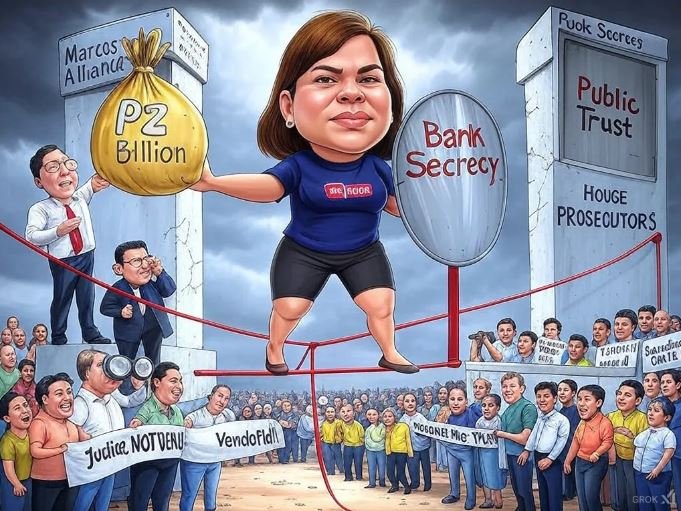
Zeroing On Duterte’s Unexplained Wealth

0

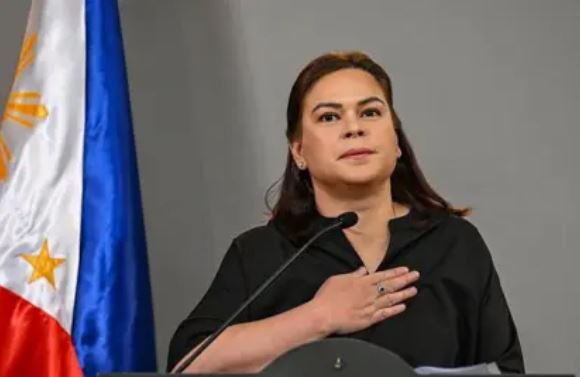
THE FOURTH IMPEACHMENT complaint against Vice President Sara Duterte has nothing to do with political persecution in view of what looks more like an early pronouncement of her 2028 presidential bid.

As it turns out, the impeachment complaint dwells more on “serious and disturbing” allegations of unexplained wealth and incomplete statement of assets, liabilities and net worth (SALN) as mandated by the Constitution.

Lawyer Nathaniel G. Cabrera recently filed the fourth complaint with no less that the so-called Super Majority stalwarts — House Committee on Human Rights chair Manila Rep. Bienvenido Abante Jr. and Deputy Speaker La Union Rep. Paolo Ortega as endorsers.

UNDISCLOSED ASSETS

Ortega explained that the complaint highlights constitutional accountability, noting that any material omission or undisclosed asset is a grave matter the House cannot ignore.

“This is about constitutional accountability – the SALN is mandatory and must be complete and truthful, and any undeclared asset or unexplained wealth is a grave issue,” Ortega said, adding that endorsing the complaint is not a conviction but a procedural step.

“Running for President does not erase serious questions about asset disclosures and public funds. Oversight is not persecution. It is a constitutional duty,” Business Mirror quoted him.

The filing alleges that certain bank accounts, properties, and significant cash movements were not fully reflected in Duterte’s SALN, raising questions about whether her declared net worth accurately represents her financial position.

“If public officials are required to disclose all assets and live modestly, then any material omission is a serious constitutional concern that the House cannot ignore,” Ortega said.

MADRIAGA CONFESSION

Ortega also cited the sworn affidavit of alleged Duterte bagman Ramil Madriaga, who described the transport and delivery of millions of pesos in cash in duffel bags following the encashment of confidential and intelligence funds allocated to the Office of the Vice President and previously to the Department of Education.

“These confidential and intelligence funds amounting to hundreds of millions of pesos are subject to strict audit rules, and when there are sworn accounts of large cash transfers, those must be reconciled with SALN disclosures,” Ortega said.

Ortega stressed that endorsing the complaint does not prejudge the vice president.

“This is not a conviction. This is a process. But when there are sworn statements about large cash transfers and serious red flags in asset declarations, the House cannot look away,” he pointed out.

POINT OF NO RETURN

Ortega also said Duterte’s early declaration of a 2028 presidential bid does not affect constitutional accountability.

“Let us be clear – running for President does not erase serious questions about asset disclosures and public funds. The timing speaks for itself,” he said.

He maintained that unresolved issues surrounding confidential and intelligence funds, along with alleged incomplete SALN, remain governance concerns rather than campaign issues.

“Oversight is not persecution. It is a constitutional duty,” he said.

He rejected the idea that a presidential run transforms accountability proceedings into political harassment.

ABSENCE OF PRINCIPLE

Abante dismissed claims that Duterte’s resignation from the Cabinet reflected principled opposition to corruption or government inefficiency.

“This was not a principled resignation. If the Vice President truly believed the administration was corrupt or incapable of addressing the people’s problems, she had every opportunity to say so while she was inside the Cabinet. She did not,” Abante stressed.

Abante emphasized that the Vice President was not an outsider.

“For nearly two years, she was a Cabinet member as Secretary of Education. She was part of the UniTeam mandate. She participated in policy discussions and budget processes,” the House leader said.

“If there were systemic corruption or governance failures of the magnitude now being suggested, why was there no sustained public dissent? No reform blueprint? No formal policy objections?” Abante said.

CONSTITUTIONAL POWER

Abante maintained that the political rupture coincided with congressional scrutiny over confidential and intelligence funds.

“The timeline is clear. The tension escalated when Congress exercised its constitutional power of the purse and asked questions about public funds. That is not political persecution – that is oversight,” Abante said.

“When accountability mechanisms were activated, that is when the distancing began,” he explained.

He also noted that the split unfolded amid early positioning for the 2028 national elections.

“In Philippine politics, alliances shift when strategic calculations shift. Let us not confuse succession maneuvering with moral crusades,” Abante averred.

IMPEACHMENT FOCUS

The fourth impeachment complaint was filed in the House against Duterte, focusing on allegations that she failed to fully disclose her assets in her SALN and may have accumulated wealth disproportionate to her lawful income.

The complaint accused Duterte of culpable violation of the Constitution, betrayal of public trust, graft and corruption, bribery, and other high crimes.

At the center of the filing are allegations that certain assets, bank accounts, cash holdings, and property transactions were omitted, understated, or not fully disclosed in her SALN.

The complaint argued that the Constitution requires full transparency from high public officials and that any material nondisclosure or accumulation of wealth manifestly disproportionate to legitimate income constitutes an impeachable offense.

FORENSIC REVIEW

The complainant pushed for a forensic review of bank records, property transfers, and related financial documents to determine whether public funds were converted into private assets and whether Duterte’s declared net worth accurately reflects her true financial position.

The unexplained wealth allegations are linked to broader claims of irregular confidential fund disbursements totaling at least ₱612.5 million from December 2022 to the third quarter of 2023, covering both the Office of the Vice President (OVP) and the Department of Education (DepEd).

It also delved on the rapid encashment of ₱125 million in December 2022—allegedly liquidated within 11 days – along with findings by the Commission on Audit (COA) flagging irregularities.

COA later issued notices of suspension and disallowance covering ₱73.287 million in questioned expenditures.

It also pointed to allegedly fabricated or defective receipts, unverifiable payees, duplicated entries, and sworn affidavits describing the transport of large sums of cash in duffle bags.

ASSASINATION ORDER

Beyond the financial allegations, the complaint reiterated earlier accusations that Duterte publicly admitted to having “asked a person” to kill President Marcos, First Lady Liza Araneta Marcos, and former speaker Ferdinand Martin G. Romualdez – an act described in the complaint as a subversion of constitutional order.

The allegations are supported by sworn affidavits and witness statements, including that of Duterte’s alleged bagman Ramil Madriaga; official liquidation and accomplishment reports from the OVP and DepEd; COA audit memoranda and notices of disallowance; Philippine Statistics Authority certifications on purported payees; congressional hearing transcripts; public statements of the respondent; and Joint Circular 2015-01 governing confidential and intelligence funds.

The complainant urged the House Committee on Justice to conduct a full investigation, issue subpoenas for financial and audit records, and, if warranted, transmit Articles of Impeachment to the Senate for trial.

FORTHWITH COMPLIANCE

The filing marks the fourth impeachment case lodged against the Vice President, following earlier complaints involving her public statements, alleged misuse of confidential funds, and refusal to fully cooperate with congressional oversight.

With four impeachment complaints now pending, the House must determine whether the allegations – particularly those involving SALN disclosures and unexplained wealth – meet the constitutional threshold for impeachment under Article XI of the 1987 Constitution. The complaints are set to be referred to the House Committee on Justice on Monday.

Under the Constitution, the Vice President may be removed from office for culpable violation of the Constitution, treason, bribery, graft and corruption, other high crimes, or betrayal of public trust.

IMPEACHMENT IS A GO

The fourth impeachment complaint against Duterte has been officially submitted to the Office of House Speaker Faustino G. Dy III, following its receipt by the Office of the Secretary General on Wednesday.

The OSG said the verified complaint has now formally reached the Speaker’s desk, marking the next step in the procedural process outlined by the House rules. 

The OSG emphasized that its role is purely ministerial, tasked only with receiving and transmitting documents. It ensured that any action on the complaint will strictly follow the Constitution and the rules of the House of Representatives.

This submission highlights the procedural advancement of the impeachment process against Duterte, as the House moves to determine the proper course of action regarding the complaint.

ALIEN MANIPULATION

Duterte’s early disclosure of her presidential bid for 2028, two years ahead of the polls, is being cast not only as a shield against impeachment and international scrutiny but also as a move that risks exposing Philippine democracy to foreign manipulation.

Prof. Dindo Manhit, president of think tank Stratbase ADR Institute, warned that the prolonged election season created by Duterte’s early bid could provide fertile ground for “malign influence” and disinformation campaigns, Business Mirror reported. 

He cautioned that narratives aligned with external actors—particularly those linked to the Chinese Embassy—may attempt to shape public opinion long before Filipinos cast their votes.

“We should not allow interference, disinformation, misinformation, attempts to interfere in our own democracy,” Manhit stressed, noting that the early framing of the 2028 race could invite narratives shaped by foreign interests rather than national priorities.

STRATEGIC INOCULATION

Analysts view Duterte’s announcement as a calculated “inoculation.” By surfacing allegations now, she may be attempting to blunt their potency before the campaign season. 

Manhit warned that the tactic forces “everyone to talk about it,” potentially amplifying accusations tied to the Duterte brand. Her timing is a stark contrast to her father’s, who declared his candidacy in November 2015– barely six months before the election and just weeks after the filing deadline. 

“I hope this is not orchestrated with the narrative of a very aggressive China Embassy. Because our democracy is our democracy, and we don’t like this to interfere from our own discourse as a nation,” Manhit said

CHINA FROM A DISTANCE

Deputy Spokesperson of the Chinese Embassy Guo Wei rejected claims of foreign interference, describing them as “manufactured pretexts.”

“The recent amplification of so-called ‘FIMI’ (Foreign Information Manipulation and Interference) claims appears less like an objective assessment and more like a familiar script: reframing disagreement as manipulation and recasting conjecture as threat. Using technical terminology to dress up suspicion does not transform it into evidence,” Guo said.

Guo emphasized that diplomatic engagement is neither interference nor impropriety, but part of routine responsibilities under international law.

“Communication, clarification, and public engagement are routine responsibilities of embassies everywhere. China will continue to articulate its positions clearly and will firmly reject unfounded attacks and smears,” he explained.

Guo also highlighted the role of Confucius Institutes and Filipino-Chinese associations in language training, cultural exchange, entrepreneurship, disaster relief, and education. 

“To suggest ulterior motives behind long-standing community engagement is not only unfounded but dismissive of tangible and visible contributions.”

Beyond Speed: Building A Nation On Reliable Connectivity

0

GLOBE TELECOM OPENED the year not with a boast about speed, but with a reframing of the entire conversation.

At its flagship quarterly media event, The Blueprint by Globe, held at The Globe Tower, the company made one thing unmistakably clear: connectivity is no longer a race for the fastest signal bar. It is about stability, affordability, and access — for everyone.

Under the theme “Every Filipino Connected,” Globe positioned internet service as what it truly has become: a lifeline. Not a perk. Not a privilege. A necessity.

And the strongest moments of the event were not just the announcements — but the statements behind them.

Reliability Is the Real Headline

Among the major milestones was Globe’s recognition by Ookla® as the country’s most reliable mobile and broadband network, earning industry-leading consistency scores.

But what stood out was how Globe framed that recognition.

As Roche Vandenberghe, Chief Marketing Officer, underscored:“This recognition affirms that Globe’s investments are delivering real benefits for our customers — reliable connectivity they can count on every day for work, learning, and commerce.”

Not speed tests. Not advertising claims.
Reliable connectivity they can count on.

She added a line that cuts straight to the heart of the digital economy: “Consistency is more than a benchmark; it is the backbone of a digital economy where MSMEs thrive, families stay connected, and communities build resilience.”

That statement moves the conversation beyond infrastructure. It links signal stability to livelihood, education, and community survival.

And perhaps most powerfully: “By delivering quality of experience at scale, Globe empowers lives and contributes to nation-building, making connectivity a driver of inclusive growth for the Philippines.”

Connectivity, in this framing, is not a service. It is development policy.

Connectivity as a Lifeline — Not a Luxury

Globe’s partnership with Starlink’s Direct-to-Cell satellite technology signals ambition beyond city centers. After a successful live pilot trial, expansion into more locations and scenarios is underway.

But the deeper message came from Globe’s Chief Commercial Officer, Daruis Delgado: “Connectivity today is a lifeline.”

Three words. Heavy meaning.

He continued: “We want to ensure every Filipino, whether in bustling cities or the most remote barangays, has access to reliable and consistent digital services.”

This is where technology meets geography — and equity.

And then the core philosophy: “More than speed, we are building trust, inclusivity, and resilience into the very fabric of our network.”

Trust. Inclusivity. Resilience.
Not typical telecom buzzwords — but foundational pillars of a functioning digital nation.

Beyond Infrastructure: Access and Empowerment

Globe Business introduced enterprise-grade data streaming in partnership with Confluent and the Globe Omnichannel Cloud Contact Center hosted on Google Cloud — tools designed to remove CAPEX barriers and democratize AI-powered intelligence.

For MSMEs, this means access without prohibitive costs. For the broader economy, it means leveling the digital playing field.

Meanwhile, Globe At Home is reframing fiber as a built-in utility in new developments, supported by AI-driven services and a 24-hour Care Squad — promising what it calls “Digital Peace of Mind.”

Again, the language reflects a shift: internet should work quietly, reliably, and seamlessly — as essential as water and electricity.

Connectivity With Consequence

Through GoGIVE, Globe Prepaid users have generated over 4 billion hearts, translating to more than 840 million donated via the GlobeOne app to partner organizations such as Ayala Foundation, Rise Against Hunger Philippines, Pawssion Project, and the Philippine Eagle Foundation.

Here, digital engagement becomes social impact. Connectivity turns into collective action.

The Blueprint as a National Conversation

The Blueprint by Globe is more than a quarterly update. It is a repositioning.

From “fastest” to “Connectivity You Can Count On.”
From exclusivity to “Connectivity for Every Filipino.”
From marketing claims to “Experience Globe Connectivity.”

The emphasis is clear: consistency over hype. Inclusion over competition. Reliability over rhetoric.

In a country where signal strength can mean access to education, livelihood, emergency response, and opportunity, Globe’s strongest message may not be about technology at all.

It is about presence.

Because in the end, the real test of connectivity is not how fast it runs.

It is whether it shows up — every single day — when Filipinos need it most.

The Need To Safeguard Returning OFWs 

0

EVERY YEAR, THOUSANDS of overseas Filipino workers return home filled with hope, experience, and dreams for a better future. But alongside these aspirations often comes uncertainty—about employment, livelihood, and how to rebuild life after years abroad. 

This reality is at the heart of the proposed National Reintegration Bill, a measure designed to ensure that OFWs who come home are not left to start from zero.

REINTEGRATION BILL

Filed in the Senate under Senate Bill 1776, dated February 5, 2026, also known as the National Reintegration Bill or Balikbayan Reintegration Act, the proposed law seeks to institutionalize a permanent, government-wide framework that supports returning migrant workers long after their overseas contracts end. 

Its core philosophy is simple: the responsibility of the nation toward its “modern-day heroes” must not end the moment they step off the plane.

ECONOMIC PILLARS

For decades, OFWs have been pillars of the economy—fueling national growth through remittances and strengthening communities through the skills and experiences they bring home. 

Yet reintegration has remained one of the weakest links in the country’s migration cycle. 

Many returnees struggle to find stable jobs, while others lack access to capital, skills matching, or acknowledgment of the expertise they gained overseas. Some return home permanently, others temporarily, but nearly all face the same challenges.

COORDINATED EFFORT

SB 1776 directly responds to this longstanding gap. 

Under the proposed measure, the reintegration process would finally be institutionalized—no longer dependent on temporary programs or fragmented agency efforts. 

The bill mandates the creation of coordinated, sustainable support systems through the Department of Migrant Workers (DMW), Department of Labor and Employment (DOLE), and the Technical Education and Skills Development Authority (TESDA).

REGULAR JOB FAIRS

A key provision requires DOLE and DMW to conduct regular job fairs nationwide, strategically located where large numbers of OFWs return. 

This ensures that skilled Filipino workers are matched with job opportunities that reflect their overseas training and experience. 

Instead of navigating the job hunt on their own, returning OFWs will have direct access to employers actively seeking their specialized competencies.

TESDA CERTIFICATION

Another pillar of the bill is the recognition of global skills. TESDA is mandated to issue certifications, diplomas, or assessments that validate the education and expertise OFWs have gained abroad—an important step in ensuring their competitive advantage in the local workforce. 

This recognition is crucial, especially for workers who have spent years honing technical expertise that is often not formally acknowledged upon their return.

For those who wish to pursue entrepreneurship, the bill opens the door to capacity-building programs, financial literacy training, and access to credit facilities through the government’s Small Business Corporation. 

The goal is clear: help OFWs turn their savings and overseas experience into viable enterprises that can support their families and even generate jobs within their communities.

LONG-TERM STABILITY

Beyond economic reintegration, the measure reflects a deeper moral commitment. It acknowledges the sacrifices made by millions of Filipinos who leave their homes to support their families and the nation. 

By strengthening reintegration policies, the government addresses not just their needs today but secures their long-term stability.

As the bill remains under committee deliberation, its passage holds significant promise. 

If enacted, the National Reintegration Bill would mark a historic step toward a migration system that is not only focused on deployment but also on return, recovery, and reintegration. 

It would ensure that no OFW comes home to uncertainty—and that every Filipino worker abroad knows they have a clear, dignified pathway waiting for them back home.

ASPIRATION TO RENEWAL

For the country, the measure is more than policy. It is a reinvestment in human capital, a reaffirmation of national responsibility, and a recognition that the journey of an OFW does not end overseas. 

Reintegration is part of the nation’s duty—to stand by its workers from departure to homecoming, from aspiration to renewal.

As discussions on SB 1776 continue, one message resonates: a strong reintegration framework is not a privilege for OFWs—it is a debt long overdue.

Sara’s Gambit: Nothing To Lose, Much To Gain 

0

JUST when the 20th Congress is about to commence what looks more like a refined legislative mandate embarking on impeachment, Vice President Sara Duterte announced her intent to run for the highest elective position in the country.

For one, VP Sara knows only too well that it’s “way too early” to declare political plans, and such a move would make her an open target of politicians who are not keen on the idea of seeing another Duterte at the helm of Malacanang.

So what exactly could have compelled VP Sara to make an early declaration of her political plans?

NOTHING TO LOSE

With four verified impeachment complaints filed against her, there is a possibility that she’ll be convicted over a long list of allegations deemed red flags under the 1987 Constitution.

But a masterful gambit primarily designed to divide Congress may be more than enough to avert what looks more like a grand plan to put an exclamation point on her political career.

By announcing her 2028 presidential bid, Sara is looking at dislodging both the Senate and the House of Representatives by forcing legislators to take a stand — either they join her or face the consequences when she finally gets elected as the 18th President.

The move would also reinvigorate her flailing supporters from as many societal camps as possible, who are having second thoughts amid what she claimed as a “well-funded demolition job against her.”

SO MUCH TO GAIN

Controversial as she has always been, any news involving Sara attracts both local and foreign media.

With the declaration of her 2028 political plans, an impeachment trial doesn’t only keep her popular, but could also be seen as a “political persecution” meant to disparage Duterte’s chances.

Taking cue from how the local and foreign media are reporting their stories, Sara has so far been succeeding in sidetracking all issues against her, as people would now be on guard in their utterances and writings about her, should she win in 2028. 

Recent surveys on the Philippine government officials’ trust and approval rating showed Sara at the forefront — far “more trustworthy” than any other government officials under the Marcos administration.

Marcos himself failed to impress the public in the latest SWS Survey where he got a —3 trust rating.

MIND CONDITIONING

As it is, she now dons a better image and popularity in surveys – of course, a mind conditioning strategy – compared to her erstwhile Uniteam partner, President Ferdinand Marcos Jr. 

She is the trending news in global media outlets — and even on social media. With just a little more makeover of her image (which naturally comes with bulldozing those who are against her) and with Cebu and the entire Mindanao solid behind her, she has better chances to win against whoever Marcos would anoint.

Far fetched as it might sound, another potential outcome of her early announcement could be an easing by the International Criminal Court in trying her detained father, former President Rodrigo Duterte in the Hague, the Netherlands. 

Naturally, the victims of his deadly war on drugs will be silenced by her potential reign.

CLOUD OF INFLUENCE

An early indication of just how powerful the Duterte clan still is can be seen with the Supreme Court (dominated by her father’s appointees) junking the impeachment by the lower house over procedural lapses.

Her announcement comes just days before her father, Rodrigo, begins a pre-trial hearing at the ICC in the Netherlands over crimes against humanity committed as part of a brutal crackdown on drugs.

“I offer my life, my strength, and my future in the service of our nation,” she said at a press briefing where she assailed Marcos’ record and sincerity in public service.

Duterte accused Marcos of corruption in her brief speech, saying he had failed to live up to his word during the short-lived alliance that saw them storm to a landslide victory in 2022. However, in her short Cabinet position at the Department of Education, she herself had engaged in anomalous transactions and dubious use of her confidential funds (both as vice president and DepEd secretary).

DRAWING THE LINE

As Michael Henry Yusingco, senior research fellow at the Ateneo Policy Center, told Agence France Presse, the campaign announcement was a “big risk,” but Duterte’s solid base of support in the family stronghold Mindanao gave her a real advantage.

“Conventional thinking would say she has the best chance of winning. Survey numbers are in her favor,” he said, while adding that her father’s physical absence might discourage supporters.

Cleve Arguelles, president of Manila-based WR Numero Research, suggested Duterte’s public declaration could be more about keeping allies in line at a time of political uncertainty.

“By projecting an inevitable 2028 run, she raises the perceived cost of defection — reminding politicians in Congress that her faction could still return to power,” he said.

The announcement was aimed at drawing “a clear line among those who are with her or against her, given the ICC and the impeachment (cases),” said Jean Franco, political science professor at the University of the Philippines.

Philippine presidents are limited to a single six-year term.

IMPEACHMENT PUSH

Yusingco added that the Marcos administration is likely to become more openly hostile. “Behind the scenes, they’ll probably push for her impeachment,” he said.

Duterte has seen the impeachment bid against her revived in recent weeks, with members of the Philippine clergy filing a case against her on February 9, one of three logged within days.

Under the 1987 Constitution, an impeachment triggers a Senate trial. A guilty verdict would result in Duterte’s perpetual disqualification from any government position. 

A pair of impeachment complaints against Marcos, meanwhile, were recently tossed out by the House of Representatives justice committee, which said they lacked the necessary substance.

JUNIOR’S HEADWINDS

But Marcos is facing his own headwinds, with the archipelago nation roiling over a scandal involving bogus flood-control projects believed to have cost taxpayers billions of dollars, the AFP said.

The President has seen friend and foe alike, including a congressman cousin, swept up in the political firestorm since he first put the issue centerstage in a July national address.

On Wednesday, Marcos spokesperson Claire Castro said the VP should apologise for the “corruption and misuse of funds” cited in the impeachment complaints against her before attacking the president’s record.

Marcos, she added, had said only “good luck” in response to the news of Duterte’s candidacy.

The two former allies have been engaged in a high-stakes political brawl that erupted within weeks of their 2022 win in the presidential election, when the vice president was denied her favored cabinet portfolios (the defense department) and instead named education secretary.

SARA THE FRONTRUNNER

Despite impeachment bids, political analyst Richard Heydarian considers Sara as the candidate to beat come the 2028 presidential election.

“She is still the prohibitive frontrunner in a race where most potential rivals are still hedging,” said Heydarian in a text to Inquirer on Wednesday.

“So it’s a narrative shift tactic to remind everyone of her political capital and enduring popularity,” he continued.

The setbacks Heydarian is referring to are the possible trial of her father before the ICC; the possible issuance of ICC arrest warrants against her allies – Senators Ronald Dela Rosa and Bong Go; and the possible impeachment trial against her.

“Timing suggests its projection of strength amid major setbacks for her camp,” Heydarian said. “She feels the pressure to display defiance and determinism to win the Malacañang back for her dynasty.”

ROOM TO FINETUNE

Yusingco also said “announcing this early gives Sara a chance to fine-tune her strategy closer to the election,” as Duterte’s impeachment charges “might also shrink the pool of potential financial backers she needs to run a strong campaign.”

He added that this move could prompt the Marcos camp to push for Duterte’s impeachment “behind the scenes.”

Yusingco said “she took a big risk too,” since “at this point, the Marcos administration will expectedly treat her with more hostility and aggression.”

“She has no choice but to be as vitriolic in her response,” he continued.

“She might need to reveal more damning information that led to the UniTeam and its disintegration,” Yusingco said, referring to the moniker used by Marcos and Duterte when they were running mates in the 2022 elections.

The political clans of Marcos and Duterte have been embroiled in a bitter feud marked by her resignation in June 2024 as education secretary.

MAKE OR BREAK

The feud became more intense after Marcos administration allowed the ICC to arrest Duterte, who faces crimes against humanity charges due to his drug war which reportedly killed thousands, based on official government data. 

The risk of such an early announcement is that Duterte could even undermine her own candidacy by making herself a target of insidious propaganda operations aimed at derailing her bid to win the presidency in 2028, similar to what happened with former Vice President Jejomar Binay in the 2016 polls. 

Duterte’s early declaration of her candidacy is the exact opposite of her father when he successfully ran for president in 2016, by repeatedly denying his aspiration only to enter the race through substitution. 

Sara used a somewhat similar tactic when she remained mum about her political ambitions until she filed her candidacy to become vice president in 2021.

REFINING NARRATIVES

Duterte said that delaying her announcement won’t matter anymore since she had been vilified by those who feel threatened by her candidacy —“Politicians usually avoid announcing early to avoid being targeted, but this administration had already been destroying my name for a long time.”

Analysts and activist lawmakers opine that Sara aims to reframe news narratives by putting a spotlight on her candidacy instead of the incriminating corruption evidence that could be presented in committee hearings in the coming days and weeks. 

She could be seeking to downplay the clamor for accountability against her and her father by portraying her family as victims of political persecution.

Since impeachment is a political process, her early announcement could also be her way of signaling her appeal or threat to local politicians about the prospect of switching allegiances as she consolidates her electoral base, Rappler noted.

FLOODGATE SCANDAL

The vicious verbal exchange between Marcos and Duterte drowned the legitimate issues involving the country’s governance, economic matters, and the people’s demand for accountability. 

Both Marcos and Duterte are liable for the corruption crisis  engulfing the nation today, but they are actively maneuvering not just for influence but also to avoid being held accountable.

Duterte has dismissed the impeachment case against her as a form of politicking that does nothing to solve the country’s woes. What she failed to realize was that her early electoral announcement would actually intensify partisan debates and political divisiveness amid rising social discontent and the people’s assertion for politicians to focus on improving the country’s living conditions, Rappler added.

“With the possibility of a second impeachment and the possibility of her being impeached, she might as well shift the narrative and make the impeachment and the attacks on her, color it as a political ploy to knock her off the 2028 race,” said Julio Teehankee, political science professor at De La Salle University.

But the move also carries risks, said Ederson Tapia, professor of public administration at the University of Makati, as it could intensify political attacks against her and that could undermine her presidential ambition. 

Inseparable: Curlee Likely Joining Sara

0

TRUE ENOUGH, wedding vows made by couple Curlee and Sara Discaya are not made to be broken through thick and thin, in richer or poorer, sickness and health — and even incarceration. 

Not long after the court issued a commitment order which effectively took Sara Discaya to a real jail where every day is a fight for survival, her husband Curlee may soon find himself in a similar predicament.

However, they won’t be sitting side by side, not even from a distance where they could see each other as Curlee is reportedly headed to Davao Occidental, which is about eight to 12 hours away from the Lapu-Lapu City Jail where Sara is billeted.

DAVAO PROJECT

For one, Curlee’s name did not appear as owner of St. Timothy Construction Corp.— the construction company that figured in the flood control mess in Davao Occidental.

But several witnesses submitted sworn statements that had him personally calling shots and giving instructions for a flood control project that never was.

Hence, the Department of Public Works and Highways (DPWH) asked the prosecutors of the Ombudsman’s office to include Curlee and hold him liable in the flood control scandal by the firm in Davao Occidental.

The case was earlier lodged with the Digos City Regional Trial Court against several DPWH officials and his wife, Sara who has since been detained at the Lapu-Lapu City Jail.

Curlee remains under Senate custody.

BENEFICIAL OWNER

Assistant Ombudsman Mico Clavano said that the affidavits gathered by investigators point to Curlee as a possible “beneficial owner” of St. Timothy Construction Corporation, the firm that bagged the flood control contract, Rappler disclosed.

Clavano explained that beneficial ownership refers to a person who exercises control or gives instructions within a company, even if their name does not appear in official corporate documents.

“There was a revelation in the affidavits of various people that Curlee Discaya has beneficial ownership or is exercising control over the companies involved in the Davao Occidental case,” Clavano said.

Establishing that link, Clavano noted, is crucial before prosecutors can formally include him in the charge sheet.

SAFE FOR NOW

Despite the DPWH’s request, Curlee cannot automatically be added as an accused even as Clavano stressed that he must first be given the opportunity to respond to the allegations, in keeping with due process.

The criminal complaints stemmed from a flood control project in Barangay Culaman that prosecutors said existed only on paper.

Records showed that the contract was awarded on January 22, 2022, yet investigators found no actual construction on the ground. Despite this, the DPWH-Davao Occidental District Engineering Office certified the project as “completed,” allowing Discya’s firm to secure the payment for the project.

Aside from Sarah Discaya, other respondents in the case are DPWH district engineer Rodrigo Larete, assistant district engineer Michael Awa, several DPWH section chiefs, project engineers and inspectors, as well as Ma. Roma Angeline Rimando of St. Timothy Construction.

No Plane Rides For Bonoan and Jinggoy

0

SENATOR JINGGOY Estrada, resigned Public Works Secretary Manuel Bonoan, and a bunch of “has-beens” will have to abort plans to go abroad, after a regional trial court issued “precautionary hold departure order” covering individuals whose names were dragged into the so-called flood control scandal.

In issuing the precautionary hold-departure order (HDO), Manila RTC Branch 52 Judge Juan G. Ranola Jr. granted the prosecutors request for a court order that would prevent Estrada and Bonoan from going elsewhere. 

Both Estrada and Bonoan are subject of plunder complaints, along with resigned DPWH Undersecretary Roberto Bernardo, Regional Director Gerard Opulencia and former DPWH Bulacan First District Engr. Henry Alcantara.

In a press briefing, lawyer Polo Martinez in his capacity as spokesperson of the Department of Justice, confirmed receiving a copy of the court order. 

According to Martinez, the trial court “found probable cause to believe that the respondents will depart from the Philippines to evade arrest.”

He added that the court instructed the commissioner of the Bureau of Immigration (BI) to hold the departure of the five individuals and to include them in the hold departure list.

Estrada and his four co-respondents are facing a plunder charge in the flood control mess now under preliminary investigation before a DOJ panel of prosecutors.

Hold departure orders are issued by courts once charges have been filed before the courts to prevent accused from leaving the country, Martinez explained.

If a charge is still undergoing preliminary investigation and no case has been filed before the courts, prosecutors may ask the courts for the issuance of a PHDO to prevent them from leaving the country, he added.

Bonoan earlier asked the DOJ to allow him to travel to the United States for his wife’s medical needs, following the filing of his counter-affidavit regarding a plunder complaint. 

Bonoan went to the US on November 11, 2025, for his wife’s medical procedure and returned to the Philippines on January 18, 2026.

The accusations relate to alleged “ghost” projects and anomalies in flood control. While he was previously under an Immigration Lookout Bulletin Order, the current PHDO is more restrictive, Rappler explained. 

In issuing the order dated February 10 — and was made available on Monday, February 16 — Rañola said “there is probable cause to believe that respondents will depart from the Philippines to evade arrest and prosecution of the crimes against them.”

The PHDO stemmed from the complaints filed by the National Bureau of Investigation over alleged violation of section 3(e) of Republic Act No. 3019 or Anti-Graft and Corrupt Practices Act, plunder, direct bribery, receiving gifts by public officers, and corruption of public officers.

Prior to the PHDO’s approval in 2018, only an HDO can prevent overseas travel. However, such can only be invoked when there’s already a case filed before a court.

Estrada has been dragged into the flood control scandal after former DPWH former assistant district engineer Brice Hernandez claimed that the senator channeled P355 million worth of projects to Hagonoy and Malolos, both in Bulacan, in 2025, with a supposed 30% “SOP” or kickback.

Estrada, previously tagged in the pork barrel scam, was also included in the Independent Commission for Infrastructure’s (ICI) recommendation to the Office of the Ombudsman as among the officials who should be held liable in the flood control scam. 

And so was Bonoan in the ICI recommendation to the Ombudsman for further investigation. 

Alcantara, Bernardo, and Opulencia are state witnesses in the flood control corruption, as previously announced by the DOJ. 

“If at all, the Department just takes it as his gesture of good faith. Wala po siyang legal or procedural bearing,” Martinez said about Bonoan getting permission to go to the US.

Bonoan filed his counter-affidavit on Feb. 16 before a panel of prosecutors to the plunder complaint filed by the NBI concerning the flood control mess.

Martinez said Bonoan’s co-respondent (Jinggoy), is expected to file his counter-affidavit on Feb. 23.

Digital Fasting, Anyone?

0

MORE THAN JUST a daily habit, many among us are hooked to social media — whether games, or active posts, viewing, replying to contents and to show off their creativity and social activities (mostly in restaurants and events place) as if a day of not doing so has isolated them from their communities.

But addiction to social media is one vital area that we can sacrifice or fast on this Lenten season as prescribed by the Catholic Bishops Conference of the Philippines (CBCP).

The CBCP calls this as “digital media fasting” as part of the Lenten discipline this year, without discarding or disregarding the traditional fasting methods of foregoing cravings for food, eating just one meal a day and attending masses, if possible, for the entire season, preferably First Fridays, Ash Wednesday (which is today) and being more prayerful (as opposed to socializing in beaches, parties and the like).

The bishops, in a pastoral message entitled “Fasting Beyond Food: Inviting Christ into Digital Media Use,” said the traditional practice of fasting must also address modern distractions, particularly the pervasive influence of digital technology.

“As we approach the holy season of Lent 2026, the CBCP invites all the faithful to renew their hearts through prayer, fasting, and works of mercy,” the CBCP said.

While fasting has long been associated with abstaining from food, the bishops explained that it also means detaching from anything that draws one’s heart away from God.

They pointed to constant engagement with phones, social media, streaming platforms, and online entertainment as factors that can weaken interior life and diminish silence and reflection.

“Technology is a blessing when used responsibly, yet excessive media use often leads to distraction, fatigue, loss of focus, weakened relationships, and diminished spiritual awareness,” the statement read.

The prelates clarified that digital media fasting is not anti-technology but a call to place technology at the service of human life, rather than allowing it to dominate daily routines.

“By limiting screen time, the faithful are encouraged to create space for prayer, reading Scripture, Eucharistic devotion, works of mercy, and meaningful encounters with others.

The bishops described the practice as a path toward interior conversion.”

Although admittedly there are sites devoted to prayers and meditation, which to the CBCP cannot compare with actual prayers and meditation done physically in churches and other places of worship.

“Digital media fasting is not simply about giving something up. It is about making room for something better.”

Among the concrete steps suggested are avoiding phone use before sleep and upon waking, observing device-free meals, limiting social media and streaming time, practicing occasional 24-hour or weekend digital fasts, and replacing screen time with prayer, service, reading, or conversation.

The bishops expressed hope that through this discipline, the faithful may grow in faith, clarity, and deeper communion with God and one another.

Today, being Ash Wednesday, I hope the faithful would not forget the obligation to hear mass, confession and receive the Holy Eucharist and have their foreheads marked with ashes to remind them of human mortality. “From dust we came to dust we shall return.”

Sharon, Pokwang And Pinky, Political Turncoats?

THE WORD TO linger the longest time in public consciousness these days is “kain-suka,” sort of a Filipino onomatopoeia, literally translated as “eat-vomit,” as vivid as memories can get.

I first read the term phrase “could it be an irony?” from certified Duterte Diehard Supporter (DDS) actress Vivian Velez who captioned in her Facebook wall the photo of Megastar Sharon Cuneta in a chummy hush, a “beso-beso” (cheek-to-cheek), a showbiz if not a quotidian indulgence with President Ferdinand Marcos Jr. during a star-studded affair billed as “An Evening with the Stars: A Gala Celebrating the Stars who Continue to Light Our Way” at Foro Intramuros to recognize entertainment luminaries for their contributions to the development of popular culture as an art form.

It is also where Sharon playfully exclaimed in her spiels in between her musical numbers to wit: “Sir, I only have one vice president. My date tonight. Mali (Wrong) your choice, no” as if saying “it should have been my husband” as Marcos, Jr.’s second-in-command. 

After the teasing, she proclaimed: “Basta (It just is), Mr. President, you have my support.”

Velez sarcastically described the face-to-face tableau of the President and the singer-actress as a textbook meaning of “kain-suka.” 

SHARON’S ANTI-STANCE

Is it simply in the context of Cuneta’s anti-Bongbong pronouncements during the presidential elections in 2022 when Marcos ran with Sara Duterte as his VP?

In this historic meeting between Kiko Pangilinan’s wife and the then presidential candidate of the Uniteam that Vivian’s metaphor of a “kain-suka” applied?

There’s more to it than meets the eye, though.

It’s more than civility and political rhetoric.

It’s the kind of patronage if not traditional politics Filipinos–celebs or not–are wont to engage.

Let’s trace the political past of the Cunetas (Sharon was the daughter of the late Mayor Pablo Cuneta who served the longest in Pasay City before and even during the Marcos Sr. dictatorship and who eventually chose and got the late strongman as principal sponsor to the Sharon-Gabby Concepcion wedding) subscribing to the feudal arrangement of leadership like “you scratch my back I scratch yours” to not to break the chain of tradpol that governs not only the unwashed but the middle and upper classes as well in this society.

In other words, the wielding of power in an elitist politics.

So how can Shawie ever get out of the web?

KIKO PANGILINAN FACTOR

Thanks but no thanks to Kiko who has opened her eyes to, at least, in some degrees of enlightenment about the material sources of injustice, poverty, exploitation, obscurantism, social inequality, horrors of capitalism, misogyny, unfair labor practice and other inhuman exercises.

What is intriguing is the file video posts of DDS showing Sharon throwing lavish praises on Sara in a past encounter as if insinuating that the Megastar is insincere, plastic and double-edged.

Of course, Sharon could just keep her mouth shut but she knows how to play the game without being rude.

POKWANG AND PINKY

In this recent event, not a few supporters of the fiercest presidential opponent of Marcos, Jr.and former vice-president and losing 2022 presidential aspirant Leni Robredo were around like Pokwang, Pinky Amador etc. to partake in the dinner gala.

On his socmed wall, young movie director Darryl Yap, an ardent DDS, lambasted Pokwang and Pinky about their “kain-suka” stance as the two were critics of Bongbong.

“Dati akala ko, malakas na ang loob ko, akala ko makapal ang mukha ko—

pero nung nakita ko ang pictures nila Pokwang at Pinky Amador sa paparty ni Bongbong Marcos, Isa pala akong Mahiyain (Before, I thought I was bold enough, thick-faced–but when I saw their photos in the Marcos party, I was, after all, coy). HAHAHAHAHAHAAHAHAHAHAHAHA! (boisterous laughter).

“Yung isa, inalipusta si Ella Cruz dahil sa pagsuporta sa Marcos, yung isa akala mo kung sinong santa sa pag-iinarte at pagsigaw ng Magnanakaw at Human Rights, ayun— present sa pabuffet ng suka (the other one touted and criticized Ella Cruz for being a Marcos supporter, the other one was like playing saint by acting and shouting Thief and Human Rights–but there they were in the party of the vomit). 

DARYL YAP’S RANT

“Walang masama kung nagbago na ang kanilang paniniwala, or baka wala silang hapunan ng gabing iyon. Ang masama ay yung sakit ng salita, panlilibak at panghuhusga nila sa kapwa nung panahon ng kampanya, hindi na mababawi iyon (it’s okay to change beliefs or maybe they didn’t have something to eat that night. What is not okay is their hurting words, the mockery and misjudgement on people during the campaign, they cannot take them back)

“Kaya, may respeto na ko ulit kay therefore, I have my respect for (Cherry Pie),” gushed Yap.

Is Darryl talking about Cherry Pie Picache?

Very vague even if Pie wasn’t in the shindig.

Pokwang and Pinky might be Kakampinks or Leni rooters but their presence in the event doesn’t mean to say they are political turncoats or vascillators.

TOGETHER WITH GARY V.

Together with Sharon or even Gary Valenciano who is a brother-in-law of Kiko, these Leni endorsers are critical allies of Marcos or shall we be vigilant about their actions?

We expect Sharon, Gary, Pokwang, Pinky et al to be critical of Marcos Jr. and the Dutertes for the sake of the Filipinos.

And why did Darryl spare Sharon in his rants?

Is it because Cuneta is still very much attached and identified with Viva Films, the producer of Yap’s political propaganda movies, “Maid in Malacanang” and “Martyr or Murderer”?

What hypocrisy!What selective criticism!

POLITICAL SHOWBIZ

Enough of these political show business moro-moro (a traditional literary theater about the conflict between Christians and Muslims to the victory of the former. In the context of contemporary real-life events, it is usually a scripted drama with favored protagonists).