“The accomplice to the crime of corruption is frequently our own indifference” — Jewish-American television actress and politician Bess Myerson
THE OFFICE OF the Ombudsman seemed to be grinding its axe on Senator Alan Peter Cayetano as it hinted at reopening the files on the 2019 Southeast Asian (SEA) Games sports facilities project to review possible violations.
The Ombudsman finds no double jeopardy because no charges were ever filed. To some extent, Ombudsman Jesus Crispin Remulla could be right — or otherwise.
But regardless of where he’s coming from, Remulla has already instructed his staff to get the whole file from 2021 in order for him to “review” the records before he decides on the next course of action.
Asked to comment on Senator Alan Peter Cayetano, who served as chairperson of the Philippine Southeast Asian Games Organizing Committee (PHISGOC) in 2019, Remulla simply said: “There’s a time for everything.”
Pushed against the wall, Cayetano who leads the senate minority bloc hinted at resuming its investigation into the anomalous flood control projects while the National Bureau of Investigation (NBI) probes into the alleged irregularities in the bidding and funding of the 2019 SEA Games projects.
Remulla knew for a fact that complaints filed against Department of Public Works and Highways (DPWH) secretary Vince Dizon and three others over the construction of sports facilities for the 2019 SEA Games had already been dismissed as early as December 2021 due to insufficient evidence. Dizon then was the BCDA chair.
Aside from Dizon, the other respondents were BCDA senior vice president for legal services Elvira Estanislao, Office of the Government Corporate Counsel (OGCC) lawyer Elpidio Vega, and Isaac David, director and representative of Malaysian construction firm MTD Capital Berhad for the SEA Games facilities at New Clark City in Tarlac.
The complaint filed against them alleged that the three public officials conspired in awarding MTD Capital Berhad a P8.51-billion joint venture agreement (JVA) for the construction of the sports facilities despite irregularities — lack of public bidding, absence of budget appropriation, and unauthorized “insertions and modifications” to the original contract.
Amid probe on the New Clark City Sports Complex, several athletes find the facility useful. The place enabled them to train and qualify for several competitions, including the Palarong Pambansa.
Accordingly, even as controversy surrounding the Sports Complex is reignited, student athletes the facility has given them the opportunity to take advantage of its world-class venue and training equipment, despite the Commission on Audit (CoA)’s flagging its operations years back for financial losses.
Based on official records, the complex cost a hefty P10 billion to make, with construction lasting a mere 18 months. It was built for the Philippines’ hosting stint of the 30th Southeast Asian (SEA) Games in 2019, but several controversies hounded the events.
State auditors told the Bases Conversion and Development Authority (BCDA), which manages the complex, that the annual maintenance of the facilities was greater than what it was profiting. In 2022, the BCDA spent more than P51 million on the operations and maintenance of the complex.
The venue only made P39.8 million in adjusted rent income, resulting in a P11.39 million loss.
The following year, the BCDA lost P5.77 million on the sports complex.
Requests for the BCDA’s comment on the matter have proven to be futile.
* * *
FOR your comments or suggestions, complaints or requests, just send a message through my email at cipcab2006@yahoo.com or text me at cellphone numbers 09171656792 or 09171592256 during office hours from Monday to Friday. Thank you and Mabuhay!
TO AVOID the strict sub judice and court room restriction, presiding impeachment trial court officer , Senator Francis Escudero wants both the prosecution and defense panels to consider designating non- lawyers who are not part of their teams in the trial of Vice President Sara Z. Duterte.
Before the adjournment of the proceedings, Escudero said “you might want to consider, in order to give a fair hand, nominating a spokesperson that is purely a spokesperson, that is not limited by the rules of the impeachment court with respect to what he or she can say.”
He acknowledged that thus far, both lawyers have so far been “very careful” with their public statements.
Still he reminded both parties of the rule that restricts prosecutors, defense counsels, and witnesses from making certain public comments or disclosures related to the case.
“I noticed that Atty. [Benjamin “Jay”] Tolosa, who is a registered counsel for the panel of prosecutors, and Atty. [Michael] Poa, who is a registered counsel for the respondent, are both serving as spokespersons as well,” Escudero noted.
He warned that “as the trial goes on, it might take its toll with respect to the spokesperson and counsel at the same time being able to distinguish between the merits of the case and purely procedural observations or facts.”
He reminded both camps that the court would be monitoring statements made by their lawyers.
In a press briefing after the proceedings, House Lead Prosecutor Rep. Gerville Luistro said the prosecution team would discuss Escudero’s suggestion with Tolosa.
“We will bring that up to Atty. Jay Tolosa. Ever since, we are always deciding as a team so we will be consulting each other as to the best action to take for Atty. Tolosa but ultimately, of course, this will be his decision,” Luistro said.
Defense spokesman Atty. Michael Poa said the defense appreciated Escudero’s advice acknowledging the difficulty of balancing roles as both counsel and spokesperson.
But, he said, that is something that he would have to consult the vice president
Poa said he and Tolosa had a brief exchange and shared in a briefing, “We thought the two of us were going to be reprimanded earlier. Thankfully, we weren’t, and thankfully, the presiding officer saw that we have been trying our best to be very careful in media interviews.”
Appointing a non-lawyer as a spokesperson for the prosecution and defense is important to prevent active counsels from violating professional ethics or being distracted from trial preparation.
Active legal counsels are bound by strict court gag orders and sub judice rules. A dedicated non-counsel spokesperson has a “freer hand” to explain updates to the public without risking contempt of court.
Lawyers acting as spokespersons risk mixing public arguments with trial evidence, which can violate professional responsibility codes. A separate voice keeps public relations outside the courtroom.
Trials require intense legal research and strategy. Letting a non-lawyer handle media briefings allows the actual defense or prosecution counsels to focus entirely on presenting the case before the judges.
Lawyers often use heavy legal jargon. A non-lawyer spokesman can translate complex legal events into simple, clear messages that the general public can easily understand.
OVER 25 PERCENT of Filipinos would want the President to discuss or touch on the fight against corruption as a follow through of last year’s SONA as regards the list of top contractors that failed to deliver on their flood control projects and kickbacks in cahoots with lawmakers, through budget insertions.
Next priority concerns of those surveyed by Pulse Asia, which released its report on Friday, are inflation, jobs and the West Philippine Sea.
The Pulse survey showed that 29.8 percent of Pinoys want a score card on corruption in Monday’s 5th (and second to the last) State of the Nation Address of the President.
More specifically, investigating and holding accountable all those involved in the flood control scandal was at 18.9 percent, while anti-corruption measures in general were at 10.9 percent, reported the Inquirer.
The President last year blurted his frustration over the kickback schemes in flood control projects that led to months-long investigations by Congress and the infrastructure committee he created into the flood control anomalies.
Amid the resumption of fighting in the Middle East, the next priority concern raised was inflation and prices of basic goods at 18.7 percent, followed by livelihood at 6.6%, alleviating poverty, 6.2% and the campaign against illegal drugs at 5.5%.
Other issues the survey respondents wanted Marcos to discuss were rising wages (5.1 percent), lowering oil prices (4.9 percent), agriculture (4.0 percent), crime rates (2.8 percent) and education (2.0 percent), the Inquirer added.
The President’s campaign promises polled at 1.6 percent; the impeachment trial of Vice President Sara Duterte was at 1.2 % and juvenile justice (which had been rising in recent months) and the Senate leadership crisis and the needs of senior citizens each with 1%.
Awareness of Marcos’ SONAs was at 81% based on the July 2026 Pulse Asia survey with Pinoys saying they “heard, read or watched the president’s past annual addresses, compared to 78 % in June 2025.
The survey was conducted through face-to-face interviews with 2,400 representative adults aged 18 and older from June 28 to July 3 and 6 with a 2-percent error margin and a 95-percent confidence level.
Meanwhile the Quezon City government suspended all classes on Monday for the SONA and the supposed mobilization of the Iglesia ni Cristo cult, which is celebrating its registration anniversary that day.
The Philippine National Police is preparing to deploy troops to guard the Batasang Pambansa for the SONA and to ensure peaceful rallies by different groups during the President’s annual address.
ZEROING IN ON movie press, is a regular invite to presscons, premiere nights, set visits and other events the real gauge that one is in and indeed on the go?
Or if one isn’t invited to any showbiz affairs, if only rarely, or completely not at all, does it mean that an entertainment journalist is out, a has been, dead meat, irrelevant, down, useless and all possible negative or unsavory comments one can get?
When I was just starting my movie reporting career in the mid-70s, I was on solo flight looking for news and its platforms (usually in komiks magazines or tabloids but mostly fanzines like Modern Romances and True Confessions Magazine (MRTC), the very outlet where my first showbiz article came out—meaning, when I was already graduated from college because during my high school days I was already contributing entertainment stories as an amateur scribe or field contributor from section editors encouraging young writers to tinker on any idea, specifically about Nora Aunor, the most buyable and hottest copy, in komiks pages).
Of course, I wouldn’t be recognized, much less get invited to gatherings, just by one article alone even if there were only a handful of print publications or radio and TV broadcasts which didn’t have much space for movie news.
I was still all by myself searching for stories, one I bumped into was 1975 Miss RP Suzanne Gonzales buying out her title from beauty pageant organizer Ferdie Villar of Spotlight Promotions for allegedly failing to send prizes allotted to her.
However, the scoop was frozen, placed in the backburner by my editor Ninoy Sofranes.
It was frustrating, saddening. To think it was hot news.
Back then, it was no mean feat to get published even in mass-consumed reading matters as kitschy as they say as komiks.
It took a community to be a movie reporter, believe you me, not even thinking it was the most maligned beat in the hierarchy of journalism kinds at all times—pambalot ng tinapa (smoked fish wrapper) or panulat sa pader (writing on the walls, pun intended).
LHAR, OBETTE AND ROLAND
Anyway, after years and tears of regularly and painstakingly writing popular pieces for tabloids and fanzines, I begun to associate myself with other scribes like Lhar Santiago, now a retired GMA Network entertainment broadcaster; Obette Serrano, a former ABS-CBN showbiz reporter and Roland Lerum who would be baptized wittingly or unwittingly if not condescendingly by bitchy senior columnists and komiks writers Alfie Lorenzo and Rino Fernan Silverio as Shoulder Bag Beauties (a story by itself when we were gifted identical shoulder bags by the controversial Dr. Rey de la Cruz, talent manager at the time of Rio Locsin and Yehlen Catral, now a lawyer).
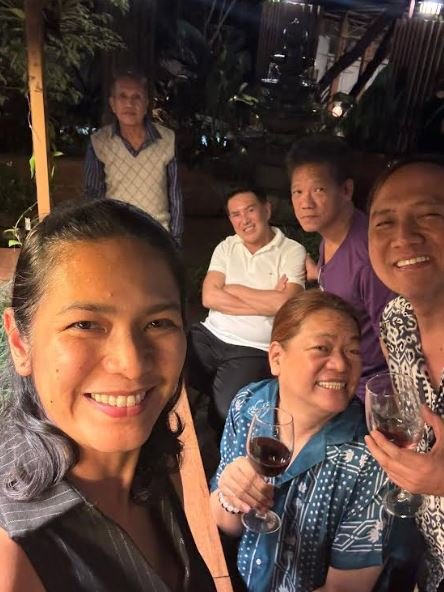
Shown in photo (clockwise) are Marinel Cruz, Boy Villasanta, Brillante Ma. Mendoza, Archie Liao, Allan Diones and Mell T. Navarro (Photo Credit: Marinel Cruz/Facebook)
The Shoulder Bag Beauties were everywhere along with my association with Special People, a group composed of crisscrossing me and Lhar, Pilar Mateo, Ronald Mendoza, Josie Manago, Carol Matias and the late Andy Garcia and Danny T. Vibas, formed by the still missing entertainment columnist, star builder, talent manager and TV host Boy C. de Guia.
We were like “pavo real” or peacocks, conspicuous if not ubiquitous anywhere flapping our wings with many perks on the side.
Then came my broadcast stint which started by guesting as reporter-panelist in Inday Badiday’s juicy entertainment talk TV show “See-True” onto Kuya (a term of endearment to an older man by affinity or brother by blood) Boy de Guia and Lolit Solis’ “Scoop” that replaced Inday’s show after she crossed the border from Broadcast City to GMA Network.
I remember when I was doing field reports, gathering star news, writing audiovisual materials for anchor Angelique Lazo, segment producing and rendering my Voice-Over (VO) scripts for the daily grind of “TV Patrol”‘s “Star News.”
My broadcast files of controversies, apparently independent and interesting subjects, seemingly equal treatment in the name of “democratic” stance to cover competing channels and their stories and narratives before ABS-CBN called us out for exclusivity etc. were aplenty and I could safely say I was a byword in every corner of star newslandia because “TV Patrol” was soaring in the ratings game.
I vividly recall, one night, when I was at the doorstep of a bar and restaurant somewhere in Timog Avenue (to cover a music gig, the star of which I couldn’t remember anymore) where roving vendors, young boys and girls alike, milled around with their merchandise on hand like cigarettes, sampaguita garlands and chewing gums and candies for sale to habitues and guests.
I readily presented myself to the guard to ask what time the show would start.
When the kids heard my name, they were kind of excited to no end as if they won a lotto if not a jueteng bet or given a salary increase by five cents or all their items were sold-out.
They echoed my name in unison.
ABS-CBN’S TV PATROL
To think it was only a few years since “TV Patrol” was reformatted to Star Network’s tabloid-on-air format from its commonplace newscast “Balita Ngayon.”
You could imagine I was in every showbiz event—big and small—and red carpets were rolled out each time I was around.
The late Mario V. Dumaual whom I dragged in to work with me during the news show’s inception because “Star News” was under staff at the time and I was ahead of him in the room intently asked me: “Sa palagay mo, bakit tayo laging naiimbita sa lahat ng (Why do you think we are always invited in all) showbiz events?”
With all honesty and naivete, I retorted: “Dahil mabait ako sa kanila (Because they find me congenial and I am ‘Miss Amity’),” an answer which took him flabbergasted and broke him to loud guffaws.
I kept thinking why Mario reacted that way.
“Because we are ‘TV Patrol’,” he figuratively quipped like dropping a bomb to wake me up from slumber.
Why did I have to take his idea hook, line and sinker?
Our platform was a sleeping giant, to say the least.
I knew it ever since that I was only a dot in the entire gigantic landscape of a glamorous yet competitive broadcast industry.
Had I become suddenly identity-less and had assumed a new consumerist personality despite my own self?
We started “Star News” by sheer hard work, creativity and resourcefulness when no big stars would let them be in the Channel 2 frame because we were nobody.
In effect, Mario and I didn’t take the cellar dwelling place of the newscast sitting down.
Alma Moreno, Snooky Serna, Richard Gomez and their ilk
True, we had Alma Moreno, Snooky Serna, Richard Gomez and their ilk at the time because they didn’t have the regularity in formidable stations, only from film companies except for Alma who was in a government-run station and later, her contract with Intercontinental Broadcasting Corporation (IBC) Channel 13 would soon reportedly expire ahead of others.
I had to make things on my end happen even making the impossible possible.
I then thought and espoused the so-called “ambush interviews.”
Nora Aunor was loyal to Radio Philippines Network (RPN) Channel 9 as well as Dolphy, Vilma Santos was faithful to GMA Network Channel 7, Sharon Cuneta was the face of Channel 13 as well as Maricel Soriano who was the first to be moved out from her TV studio.
Well, Fernando Poe, Jr. allegedly had a verbal exclusive contract for interviews with the TV Queen of Intrigues Inday Badiday.
Dumaual and I had a pact.
He would take care of Vilma and I Nora, who were both elusive to ABS-CBN cameras.
Since they wouldn’t face us on cam, you know what I did?
In one awards night at Manila Hotel, here comes Nora walking down the hallways.
I instructed my cameraman Pablito Manalo to just thrust his camera on Aunor while we met head-on that she couldn’t evade my mic (avoiding interviews in public would mean impolite o discourteous especially for a Superstar like her) so she answered back my haphazard questions however in her “single word,” “one phrase” stingy replies.
DA KING OF BOX OFFICE
FPJ didn’t escape my invasion as well of his person at the backstage of Araneta Coliseum during the Box-Office King and Queen coronation if only to capture just his one million-dollar smiles sans soundbites in my three queries, namely “What can you say about your award? “To whom do you dedicate the award?” and “What are your plans after the awarding?”
No answers.
Yes, FPJ just grinned before the camera.
That’s all.
Those were “big stories” by just getting their faces on ABS-CBN cameras later delivered on the four corners of the screen.
Oh, Sharon, indeed, enjoyed my ambush interviews with her.
Well, Maricel, Kris Aquino, the late Dolphy and Rudy Fernandez were willing interviewees after my “ambush interview” spree.
Lea Salonga, Sarah Geronimo etc. I already had them in their own sweet time.
Piolo Pascual, Bea Alonzo, Kristine Hermosa, Jericho Rosales, Diether Ocampo, Joshua Garcia et al were already in the ABS-CBN territory and they were easy catches by using charm, tact and friendliness which Mario was gifted with.
Until I left ABS-CBN because I wanted to do more stuff in show business like “theatering” by putting up DUMALO (Dulaang Don Mateo Lopez), a community-based theater group in Lopez, Quezon.
Then ABS-CBN was and still is lording it over all other networks and “TV Patrol” was and still is your regular news program staple.
When Angelique Lazo moved to Channel 9, she offered me to do entertainment news again for “Action 9” with Ramon Tulfo, Rey Langit and the late Dong Puno which I obliged and the repeat of showbiz social or socializing inclusion had occurred anew—presscons, parties and other related happenings everywhere, anytime, anyhow.
It was also the same rhythm and temper when Angelique did “Arangkada Extra Balita,” the noontime news show of RPN with Dodie Lacuna.
I also did AM radio in the nebulous DZXQ (I should have stayed on with ABS-CBN for it could give me my own solo TV show or a radio program, after all, Jik—Angelique’s pet name—Mario, Obette and Apa Ongpin started ‘Star Patrol’ talk radio version but it’s another story), editing vernacular entertainment tabloids, writing for English broadsheets, organizing confabs, producing showbiz talk shows for other stations in between which also brought me to the realm of the high and mighty.
DANIEL RAZON AND ELI SORIANO
Meanwhile, I was able to host my own daily showbiz talk show, “Barangay Showbiz,” for Daniel Razon and the late Bro. Eli Soriano’s UNTV.
Although the marketing verve and nerve of ABS-CBN was and still is supreme and ultra expensive which RPN and UNTV couldn’t match.
Now, I am confined to print and printed texts on social or digital media but my outlets do not subscribe to the highest order of marketing strategies.
They just let it happen naturally, overwhelmingly by lifting one’s finger or by twist of fate, miraculously.
My invites now are not as many as they used to be.
No room for self-pity, arrogance or false pride or even lost glory because they are just artificial trimmings in life.
Does it hurt?
If it does, one should rise above the petty and the mundane.
It is a capitalist state, for God’s sake.
What matters is one’s contributions to amass profit from a mode of production, literally and symbolically, in any way possible.
There shouldn’t also be any comparison and contrast between showbiz then and now (for the line that divides the past and the present has blurred as seen through historical upheavals vis-a-cis arts and culture in recent years when showbiz is also a beneficiary like the rise of independent filmmaking or the deconstruction of star system), for the only things left are the same social structures that mold show business since time immemorial, in more ways than one, generally, like pursuits of material things, vanity, popularity for one’s end, socio-political influence etc. or on a more positive note, inspiration, practicality or to be loftier about it, pragmatism or enlightenment for the masses or the general crowd.
Am I losing my glow?
No matter.
As long as I am able to write the things I want to impart to the audience, usually the untypical showbiz write-ups.
It’s not enough that one is popular but popularizing the unpopular but inspirational and substantial counts the most.
A stroke doesn’t politely ease itself into your life. It crashes through the front door like a wrecking ball.
One minute you’re arguing about what to eat for dinner or scrolling through Facebook. The next, your arm won’t move, your words come out scrambled, and suddenly grown adults are discussing your brain scans over your hospital bed like you’re not even there.
And for many stroke survivors, the hardest part comes after the emergency.
Recovery can feel painfully slow. Some regain movement quickly. Others spend months trying to relearn things they used to do without thinking—buttoning a shirt, lifting a spoon, forming a sentence. I’ve seen patients break down in tears because their brain knew exactly what they wanted to say, but their mouth simply refused to cooperate.
That’s where scalp acupuncture enters the conversation.
And no, this isn’t the “spa acupuncture” people get for stress relief while whale music plays in the background. Scalp acupuncture is a specialized neurological technique designed to stimulate specific areas of the brain itself.
Think of it as physical therapy for the nervous system—with needles.
Unlike traditional body acupuncture that targets meridians throughout the body, scalp acupuncture focuses on zones of the scalp that correspond to motor function, speech, balance, memory, and sensory processing. Tiny needles are inserted into precise areas to stimulate damaged neural pathways and encourage the brain to start communicating again.
Because here’s the fascinating thing about the human brain: it’s stubbornly adaptable.
Neurologists call it neuroplasticity—the brain’s ability to reorganize itself and create new pathways after injury. In plain English, it means the brain is capable of rerouting around damaged areas like a frustrated driver trying to escape EDSA traffic.
Scalp acupuncture appears to help support that rewiring process by improving circulation and stimulating the central nervous system.
And sometimes the changes are surprisingly emotional to witness.
I’ve seen patients who initially dragged one leg behind them suddenly lift it with less effort after several sessions. I’ve watched people who spoke in broken, hesitant words begin finishing complete sentences again. One patient smiled at me after finally managing to raise his hand high enough to scratch his own head—a tiny victory that felt enormous to him.
That’s the thing about stroke recovery: outsiders celebrate the “big milestones,” but survivors celebrate the return of ordinary life.
Holding a fork. Signing your name. Walking to the bathroom without fear.
Scalp acupuncture is not magic, and I’ll never insult patients by pretending it is. It doesn’t replace emergency care, physical therapy, speech rehab, or medications prescribed by physicians. But as a complementary treatment, it can become a valuable tool inside a much larger recovery plan.
And unlike many medications, the side effect profile is remarkably low when performed properly by a trained practitioner. Most patients barely feel the needles. Some even report a strange sensation of “waking up” in affected limbs during treatment.
The brain is incredibly complex, but it’s also surprisingly hungry for stimulation and repetition. Sometimes it just needs the right nudge to start reconnecting the dots again.
Stroke survivors hear a lot of discouraging words:
“This may be permanent.”
“You’ve probably plateaued.”
“This is the best it’s going to get.”
But the nervous system doesn’t always read the textbook.
Healing can continue longer than people expect.
Sometimes slowly. Sometimes unevenly. Sometimes one tiny movement at a time.
And occasionally, healing starts with a few carefully placed needles on the scalp.
TO FREE UP funds for disaster relief and other important aid programs, President Ferdinand Marcos Jr. ordered that his 5th State of the Nation Address (SONA) on Monday be frugal by utilizing its own personnel to perform the National Anthem and direct the program itself, rather than hiring external contractors.
But knowing the legislators–both chambers of Congress–the lawmakers and Cabinet members will be parading the latest fashion pieces just like years past to make their presence more obvious to the ogling public, especially in the age of social media.
At the Palace press briefing, lawyer Claire Castro in her capacity as Palace Press Officer, said that the Presidential Communications Office (PCO) Chorale will sing the National Anthem on 27 July 2026 at the Batasang Pambansa Complex in Quezon City, while the Radio Television Malacañang (RTVM) will direct the upcoming SONA.
There will also be no “A-listers” to perform.
“So, the conduct of a national event like the SONA will be simple yet dignified,” Castro told reporters.
Last month, the House of Representatives said next week’s SONA will be “simple” since there will be no red carpet or long gowns. It also encouraged guests to wear simple but dignified clothing.
In the previous Presidential SONAs, celebrities were tapped – at cost. Among them were filmmaker Paul Soriano, who directed Marcos’ first SONA, while The Voice USA Season 26 champion Sofronio Vasquez sang the National Anthem in the SONA last year.
This year, Castro said the President wants preparations for the SONA to be austere as the government cuts its expenses since it requires additional funding for its response to the Middle East crisis.
“That is indeed the plan, and that is also what the President wants,” she said.
The Department of Budget and Management (DBM) earlier said the government will use the savings under its National Budget Circular 602 and 603 to finance the P12.38-billion expanded United Package for Livelihoods, Industry, Food, and Transport (UPLIFT) assistance.
As to whether the government can sustain its UPLIFT programs in case the Middle East conflict will continue to drag on longer, Castro said it will depend on the availability of funds for it.
But even with the planned austerity, Castro said the upcoming SONA will remain dignified, reported Business Mirror.
Castro said the government has implemented measures to address the plight of Filipinos affected by earthquakes and typhoons, which affected parts of the country as well as the Middle East crisis.
BRAGGING ACHIEVEMENTS
One of the achievements to be heralded in the SONA is the reduction in crime incidents, by 17 percent from 9,506 from January to April to 7,883 from April 6 to July 4.
Despite such decline, the president recognizes the need to continue the campaign against crime, including the killing of the noted American marine biologist Kent Carpenter in Negros Occidental and pro-Marcos political vlogger Alicia Lipata, also known as “Mima Alicia,” in Caloocan City.
“The government does not condone the occurrence of such crimes. That is why the PNP [Philippine National Police] is intensifying its efforts to fulfill its mandate of ensuring safer communities and enabling faster responses to such incidents,” Castro said.
GUIDANCE ON OIL PRICE HIKE
The President will announce the guidance to the Department of Energy on the near-term energy policy with the renewed fighting in the Persian Gulf that threatens to put pressure on oil prices once more.
Hopefully the President can give us a directive on what to do so we won’t suffer as much during (the next) oil crisis,” said Energy Secretary Sharon Garin.
The SONA is expected to highlight updates on the national energy emergency after the US and Israel attacked Iran in late February that led oil prices soaring with domestic diesel reaching a high P170 per liter, one of the world’s most severe price spikes, according to Global Petrol Prices.
After a brief calm, renewed fighting in the Middle East have sent pump prices north of P100 per liter again.
“We have given (our suggestions) to the OP and we are preparing for what the directive will be for the DoE. We’re ready and I think energy will be a very important topic,” Garin said.
As the Marcos administration enters its last two years, the DoE is hoping to finish major energy projects, with more than 200 power projects in the pipeline, Business World said.
Garin said the government is working on a master plan to construct and rehabilitate power facilities in Mindoro, Palawan, and the Visayas, which has been experiencing multiple yellow alerts due to power plant shutdowns.
“I think by the time the President steps down, it will be a better situation in the Visayas because of the plans in place,” she said.
NOT EVEN A change in ownership of the notoriously famous PrimeWater Infrastructure Corp. would absolve the Villar family from legal suits even as Malacañang hinted at other remedies that will effectively hold its former owners accountable.
For the longest time, PrimeWater has been a subject of consumer complaints for charging exorbitant rates for poor services.
In December 2025, the Villar family sold 100% of PrimeWater to Crystal Bridges Holding Corporation, an investment firm owned by retail and business tycoon Lucio Co. The sale was approved by the Philippine Competition Commission.
PrimeWater has since been renamed to Hiraya Water Corporation.
President Ferdinand Marcos Jr. has ordered the Local Water Utilities Administration (LWUA) to look into a long list of allegations, as the Palace started to review pieces of evidence on PrimeWater’s alleged poor service and that LWUA is considering taking over its operations as a last resort.
ACCOUNTABILITY REMAINS
Lawyer Claire Castro, in her capacity as Palace Press Officer, said the government will still take action against the previous operator of PrimeWater.
“Regarding the accountability of those who allegedly fell short in their service should be held liable, we are currently looking into legal remedies to ensure that those responsible are held accountable,” Castro said.
The President has directed LWUA to continue improving water services nationwide by developing new water sources, expanding water networks and reducing non-revenue water for qualified water districts.
LWUA also committed to ensure the companies will adhere to their commitment to water districts.
“LWUA also stated that they are committed to their mandate and responsibilities regarding these water districts. Thus, LWUA continues to monitor, examine, and assess the services provided by the water districts,” Castro quipped.
WHEN the Philippine National Police (PNP) was created by virtue of Republic Act 6975, its mandate is specifically “to serve and protect.” Nowhere in the law, which merged the Philippine Constabulary and the Integrated National Police, allowed cops to harass civilians, including journalists.
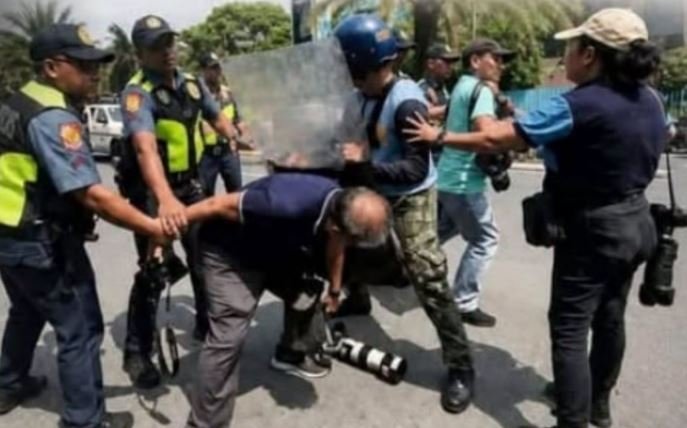
But the July 22 incident that was caught on video, doesn’t seem to speak well of the PNP, even as various media organizations condemned the police over what looks more like harassment of two photojournalists covering a protest rally in Pasay City.
Cops, who had guns tucked on their waists, ran after news photographers Bullit Marquez and Rene Dilan while taking photos of the protest rally in connection with the Association of Southeast Asian Nations (Asean) ministers’ meeting being held at the CCP Complex.
Among the media organizations which called out media harassment by the so-called “anti-riot policemen” include the National Union of Journalists in the Philippines (NUJP), the Press Photographers of the Philippines (PPP), and the National Press Club (NPC).
According to Marquez, who has spent most of his life as news photographer of various media organizations, armed policemen “confronted” and “prevented” them from taking pictures of cops while arresting protesters.
Both Marquez and Dilan were wearing press IDs when police officers attempted to arrest them. He added that cops also tried to handcuff him when his camera fell to the ground during the commotion.
Journalists and photojournalists perform a vital public service by documenting events of public interest. They must be allowed to carry out their work without threats, obstruction, or intimidation,” the PCP said.
Interestingly, PNP chief Gen. Jose Melencio Nartatez issued a statement warding off “police harassment” during the confrontation.
In defending the anti-riot cops, Nartatez went as far as saying — “Kung nandoon ako, siguro nakapag-aresto na ‘ko kung nagmura sila [sa mga pulis].”
Meanwhile, the Southern Police District (SPD), in a statement claimed that “several police personnel also sustained injuries” in a commotion during the rally.
THE SCOLDING by the Senate Impeachment Court may have compelled the House prosecution panel to drop the idea of conducting a redirect examination to National Bureau of Investigation (NBI) Director Melvin Matibag.
During the trial, impeachment court presiding officer Francis Escudero called out Matibag for “making a ruling on his behalf.”
Matibag said that the accused, Vice President Sara Duterte, “consummated betrayal of public trust.”
“The betrayal of public trust was already consummated when she publicly admitted — there is already an admission — that she contracted a killer, mamamatay-tao or assassin to kill the president,” Matibag was quoted as saying on Day nine of the impeachment trial.
“That itself is an admission…Why? Because the oath of the Office of the Vice President, sabi nya she will execute the law and do justice to every man. So kapag nagbalak kang pumatay at ginawa mo yan that is no justice to every man. It’s not execute the law but execute the president ang gusto mong gawin dyan,” he added.
Then the impeachment court presiding officer butted in and told Matibag to refrain from premediating on his behalf.
“The Presiding Officer would like to remind the witness to kindly avoid making a ruling for and on behalf of the Presiding Officer,” Escudero said while trying to hold back his laughter.
“I’m sorry, your Honor,” Matibag said.
Meanwhile, the impeachment prosecution legal spokesperson Benjamin Tolosa hinted at the idea of further questioning Matibag.
A redirect examination is a phase in a trial where a lawyer can again question their own witness following cross-examination by the opposing side, and it provides an opportunity to clarify any testimony weakened or muddled by counsel for the opposing party.
A WEEK after word war broke out, Majority Senator Panfilo Lacson has buckled down to work, digging deeper into what he earlier referred to as spurious infrastructure projects in Senator Alan Peter Cayetano’s own bailiwick.
According to Lacson, his team had identified two suspected “ghost” infrastructure projects in Taguig City — on top of other projects totaling P2.085 billion in insertions from the General Appropriations Act (GAA) of 2025.
“We have documented at least two case studies so far. Too many P100M slope protection and drainage projects totaling P2.085B out of the P6.79B insertions under the 2025 GAA,” Lacson’s social media post reads.
He however did not say how much is involved in the two suspected ghost projects.
Lacson previously accused Cayetano of imposing a 25 percent “kickback” in 68 of 70 Taguig infrastructure projects which he helped secure funds through budget insertions.
The remaining two, the senator added, “remained unreleased or unobligated.”
Cayetano had already denied Lacson’s earlier claims, saying there are “no ghost projects in Taguig,” adding that Lacson should not focus on Taguig alone and that Lacson “ needs to show that he’s not just annoyed with one person.”
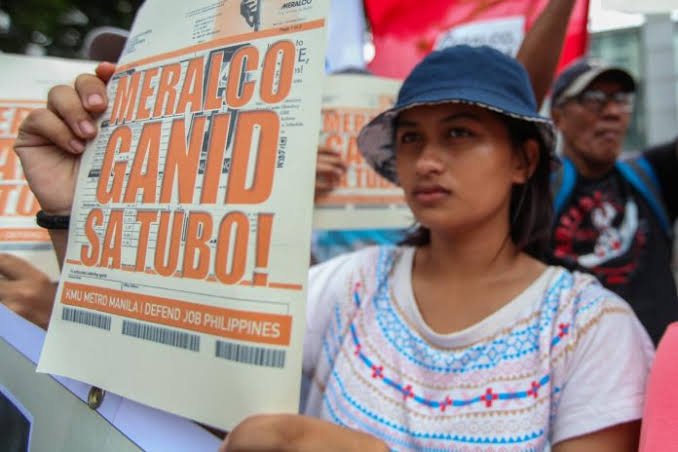
NOTWITHSTANDING public howl over its alleged overcharging, the Manila Electric Company (Meralco) managed to secure congressional concurrence for a 25-year extension of its franchise “in the dead of the night.”
For one, Meralco’s exorbitant charges allowed the Philippines to surpass Singapore in the list of Southeast Asian Countries with the highest electricity rate.
Lawyer Wilfredo Garrido, in his Facebook post, said that approval or renewal of a public utility franchise requires transparency through public hearings, which according to him was neither announced or published.
According to Garrido, Medralco had its franchise renewed last year by the House of Representative in the “dead of the night.”
When the franchise of a major public utility is up for renewal, it is usually set for public hearing so that disgruntled customers could interpose objections. Classic example was ABS-CBN in 2020, when no less than the president voiced his disapproval, citing grounds real or imagined, mostly the latter.
Meralco’s franchise was up for renewal last year.
Garrido asked his readers “how many of you would have loved to come out in the open to complain about Meralco’s unconscionable rates, its abysmal service, inscrutable billings, merciless disconnection policy.”
Disgruntled consumers would love to put Manny V. Pangilinan in the hot seat and see him squirm under questioning — just as ABS-CBN chairman Gabby Lopez was flayed alive together with Carlo Katigbak.
I would have asked MVP to account for Meralco’s P30 billion to P50 billion “in yearly profit and why it can’t reduce its rates.”
“I would have also asked if he doesn’t think he overpaid Leandro Leviste’s solar company,” Garrido stated.
ADVANCE COLLECTION
Consider that Meralco doesn’t have to borrow for capital investments. Under the governing Performance Based Regulation (which I have written about a few days ago) consumers pay for Meralco’s investments in advance.
For example, if Meralco tells the Energy Regulatory Commission it needs P10 billion for new transformers, it needs only submit the estimate as part of its so-called Annual Revenue Requirement and the ERC commissioners will ask a few questions then add a few centavos per kilowatt-hour to your bill. It doesn’t need to borrow from the banks.
What Meralco wants, Meralco gets — and the consumers pay in advance through the nose — thanks to the bogus PBR (or performance based regulations) methodology and the pliable ERC commissioners who inflict it on the consumers.
OPULENT LIFESTYLE
MVP is Opus Dei and a bachelor yet he lives in a multi billion-peso palace in South Forbes Park (which he recently paraded on YouTube with Small Laude).
Of course, if you were to ask the stockholders of Meralco — and PLDT, Smart, NLEX, among other companies he controls — he deserves to live in opulence, Garrido said.
All the foregoing questions went unanswered.
Meralco’s franchise bill went sailing through both houses of Congress behind our backs and it was signed into law by Marcos Jr. on April 11, 2025.
How many of you heard about it? It was meant to be, his piece concluded.
PUBLIC OUTRAGE
Mary Elizabeth reacted to the piece saying: “Always wary of midnight deals. And no, never heard of this. An Opus Dei member who accumulates wealth through questionable means, no remorse for the exorbitant bills, and not shy about flaunting his wealth (YT video with Small Laude)…this stereotype of the upper 1% (or is it .5%?) is so commonplace it’s depressing”
Sonny de los Santos said: “In the Philippines, regulatory agencies are in truth “regulated agencies” of businesses they are mandated to regulate.”
Kiko Sanchez was kinder by comparing “Meralco charges of an average P13.8 per kW-hour of electricity, which is about $0.22 per kWh and Metro Manilans don’t get power outages as we do from the provinces “so frequently” and in “longer hours, at times even for a whole day” where electric companies and electric cooperatives charge an average $0.24 per kWh.
We would gladly welcome Meralco to operate in our provinces than the relatively smaller cooperatives in the name of a steady power supply. If Meralco has to tap geothermal power, build solar farms to augment the national grid fed by bunker type power plants, even better for us province people…
Dan Michael Cacamindin said “if that’s the case, not only consumers pay VAT (value added tax), but are directly subsidizing Meralco. WTF!
Bahi Dabasol remarked “and while listed as a public company !’
“Iba talaga si money pangilinan galing ang persuasive power,” described Edgardo Sanchez.
“We have a deep state of the local elite..,” sighed Jie Esguerra.
“Yan ang malalim na epekto sa mamamayan ng PRIVATIZATION,” explained Pablo Castro.
John Dadre was more direct in saying “ginigisa tayo sa sariling mantika ! At walang kabusugan sila habang naghihirap Ang taong bayan !”
Clarito Cairo Jr. said “2022 payback.”
A certain Joel Villanueva said: “Dapat kalusin yun ERC-Department of Energy at mga tongressman na pumapayag sa lahat ng pabor na hinihingi ng Meralco.
THE BANGKO Sentral ng Pilipinas (BSP) is stepping up scrutiny of banks and e-wallet providers that have yet to fully comply with its directive to adopt “reasonable and fair pricing” for fund transfer fees.
The central bank is now reviewing explanations and cost analyses submitted by financial institutions that continue to charge transfer fees despite BSP Circular No. 1238, which aims to make digital payments cheaper and more accessible.
“We asked them to give us an explanation or an itemized breakdown on how their fees were constructed, so that we will see if it complies with Circular 1238 or if it needs improvement,” said BSP Deputy Governor Mamerto Tangonan, who heads the Payments and Currency Management Sector.
While many banks have already eliminated transfer fees, some of the country’s largest e-wallet providers, including GCash and Maya, continue to charge P10 for InstaPay transfers to other banks after reducing—but not removing—the fee.
The BSP circular states that fees for transfers within the same bank or e-wallet should not be materially different from charges for transfers to other banks or platforms.
Before the circular took effect, transfers within the same institution were generally free, while interbank transfers carried a fee. The BSP said institutions may still impose a charge, but only enough to recover the actual switching cost, estimated at around P1.50 per transaction.
To determine whether the remaining fees are justified, the BSP required non-compliant banks and e-wallet providers to submit detailed breakdowns of how their transfer charges were computed.
Tangonan said the reports were submitted last week and are now undergoing validation.
He argued that reducing transfer fees is not only good for consumers but also makes business sense for banks and e-wallet providers by encouraging greater use of digital payments and creating more opportunities to sell other financial products.
“Now that we have reduced the friction in the payments system, funds can now flow more freely within the system. Therefore, any e-wallet provider or bank that can offer consumers better savings products, better credit products, more affordable insurance and investment products will gain more customers,” he said.
According to Tangonan, institutions that have yet to comply face a straightforward choice: either raise fees for transfers within their own platforms so they are no longer materially different from interbank charges, or reduce interbank transfer fees even further.
In the end, he said, the market will decide.
“The consumers have a choice. If you don’t want A, then go to B,” he said.
Tangonan said he is encouraged by the growing compliance, noting that most major banks—representing about 90 percent of total transaction volume—have already lowered or waived transfer fees.
He added that the BSP’s push extends beyond consumers.
The circular also seeks to make it easier for merchants, particularly small businesses, to join the digital payments ecosystem by reducing onboarding requirements.
For the BSP, broader adoption by both consumers and merchants is key to achieving greater financial inclusion.
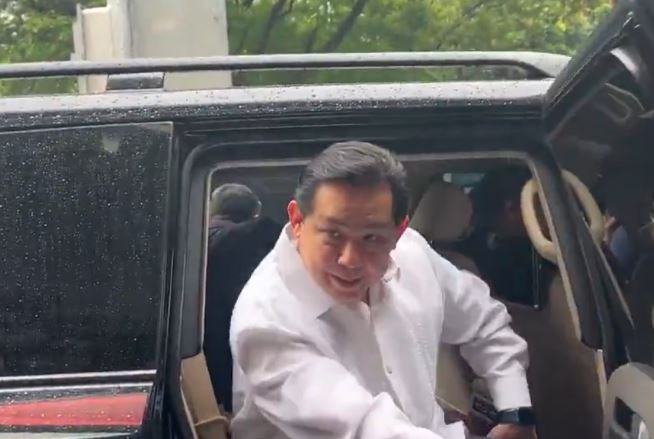
THE ALLEGED mastermind behind the notoriously famous flood control scandal has repeatedly tried to leave the country, according to the Office of the Ombudsman.
In a press briefing, Assistant Ombudsman Mico Clavano said that former House Speaker Martin Romualdez has been attempting to leave the country, after news broke out on the supposed filing of formal charges of plunder against the Leyte congressman.
To prevent Romualdez from fleeing, the Office of the Ombudsman, he added, has already asked border security and law enforcement agencies to implement heightened controls and close monitoring over “informal channels.”
“Despite a precautionary hold departure order issued by the Sandiganbayan, this office has received credible intelligence reports that former Speaker Martin Romualdez has not ceased attempting to leave the country. The office calls on all relevant agencies to make sure that this does not happen,” Clavano said.
However, lawyer Elaine Atienza in her capacity as Romualdez’s spokesperson denied what she referred to as “mere insinuations.”
“We deny in the strongest possible way any insinuation that Rep. Romualdez has attempted to evade the legal process. Uulitin po namin: kailanman ay hindi nagtago si Rep. Romualdez,” said Atty. Elaine Atienza, the spokesperson for Romualdez.
“Siya po ay nasa bansa at mananatili sa bansa until such time that he will be able to clear his name,” Atienza added.
The Sandiganbayan in April issued a precautionary hold departure order (PHDO) against Romualdez who is being investigated over complaints of alleged plunder, direct bribery, violations of the Anti-Graft and Corrupt Practices Act, indirect bribery, and money laundering.
When sought for details regarding Romualdez’s supposed attempts to leave the country, Clavano noted that the legislator, who happens to be the cousin of President Ferdinand Marcos Jr., was well aware he could not leave through formal exit points.
“Watch out, dahil malamang sa hindi niyan, lalabas siya sa informal channels at hindi sa formal borders natin. May PHDO na siya, ibig sabihin niyan, hindi na po siya makakaalis gamit ang ating mga normal or formal borders—airport, seaport,” Clavano explained.
“Kung ganyan po ang intention ng isang tao na meron nang precautionary hold departure order, ang presumption natin ay hindi talaga siya dadaan sa formal borders, dahil alam niya na po e na bawal na siyang umalis.”
Meanwhile, the Office of the Ombudsman announced the filing of two separate complaints for preliminary investigations against Romualdez for plunder and violation of the Anti-Money Laundering Act complaints.
In case Romualdez flees the country while the complaints undergo preliminary investigations and fails to submit a counter-affidavit, Clavano said that such an act translates to waiver of his right to a defense, and the case will be resolved based on the allegations alone.
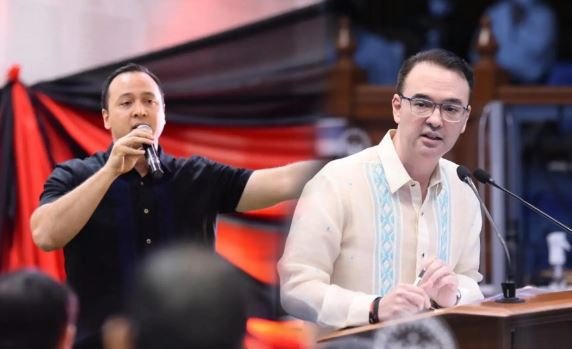
BLOOD is thicker than water, or so we thought. In Taguig City, the political clan lording over the lakeshore locality is on the verge of collapse after the youngest of the Cayetano siblings hinted at “telling all” about the ghost projects in their bailiwick.
In a radio interview, Senator Panfilo Lacson identified the “maverick” as Lino Cayetano, the youngest brother of minority Senator Alan Peter Cayetano.
According to Lacson, the younger Cayetano, who now works as People’s Television Network General Manager, volunteered to share what he knows about “ghost projects” in the city.
“Someone told me, through an intermediary, that Lino wanted to cross over and asked if he could contact me because he wants to help in the investigation since he said he knows many ghost projects in Taguig,” Lacson was quoted as saying during a radio interview with hosts Ted Failon and DJ Chacha.
“We will look into those to show that there are ghost projects in Taguig,” Lacson added.
By his own admission, Lacson said that his office has long been looking into “defective projects” involving companies linked to private contractors Pacifico and Cezarah Discaya during Alan Peter’s stint as Speaker of the House of Representatives.
Lacson however maintained he is not keen on the idea of “fabricating evidence” just to back his findings.
Sen. Cayetano however categorically denied the existence of ghost projects in Taguig City where he served as congressman before becoming a senator.
“All over the Philippines, all over Metro Manila, there are lots of floods, but here in our city, everything is orderly. Still, we are the ones being investigated. They say there are Discaya projects,” he said.
“But who has a picture with the Discayas? Isn’t it Sen. Ping Lacson? But I’m the one being investigated, not him,” he added.
Lacson and Cayetano have been at odds after the senate minority leader flagged Lacson’s net worth which had doubled over the years.
In response, Lacson corrected Cayetano’s statement adding that his worth quadrupled because his legitimate businesses are earning.
He also said that Alan Peter belongs in jail for corruption, adding that he was investigating alleged ghost projects in Taguig.
Cateyano is also being investigated by the National Bureau of Investigation (NBI) over alleged irregularities in the country’s hosting of the 2019 SEA Games.
AS IF mockery of the Filipino race isn’t enough, China has pulled another atrocity at the West Philippine Sea as Chinese Coast Guards attacked Filipino sailors at the Ayungin Shoal.
Citing reports from the Philippine Navy, the Armed Forces of the Philippines (AFP) said that a China Coast Guard member struck the Filipino navy man on the head on July 20.
The confrontation took place near the BRP Sierra Madre at the Ayungin Shoal. BRP Sierra Madre, which has been grounded for half a century, serves as the Philippines’ outpost in the West Philippine Sea.
According to the Philippine Navy, China Coast Guard personnel acted “violently and aggressively” — hitting a Filipino sailor with a wooden baton during an encounter. The Chinese Coast Guard, the Philippine Navy added, destroyed one of the Philippine boats.
The injured navy serviceman was given first aid and brought to an undisclosed infirmary for medical attention.
Despite the incident, the AFP maintained that the Philippine troops would continue lawful missions in the West Philippine Sea. The AFP described the incident as “illegal, coercive, aggressive and deceptive.”
Following the incident, Philippine security officials took a swipe at China adding that the encounter was part of a broader pattern of harassment around Manila’s outpost in Ayungin Shoal.
The National Security Council condemned the actions of the China Coast Guard, calling them “violent and unlawful.”
“This latest act of aggression against personnel performing their lawful duties is unacceptable and serves only to heighten tensions and increase the risk of dangerous miscalculation at sea,” the NSC said.
The Department of National Defense also lashed at what it described as “the latest act of violence and harassment committed by the China Coast Guard against Philippine Navy personnel stationed at the BRP Sierra Madre.”
The DND said the incident showed “a clear pattern of provocative and hostile behavior” and contributed to what it called China’s “deficit of trust and credibility.”
“Against the backdrop of the PRC’s circumvention of international law, particularly the United Nations Convention on the Law of the Sea, and disregard of the final and binding 2016 Arbitral Tribunal Ruling on the South China Sea, their actions further justify the Department’s position of disengagement,” the DND said.
“We simply cannot trust this belligerent neighbor,” it added.
The incident, the DND added, should strengthen the country’s resolve to build deterrence, shore up alliances and safeguard what is rightfully the Philippines’.
“As we continue to monitor and prepare measures to meet this aggression, the Department of National Defense salutes the defenders of BRP Sierra Madre and our western frontier. We will not back down.”
THE Department of National Defense (DND) doesn’t like the idea of allowing “communists” to be part of the Armed Forces of the Philippines (AFP) reservist list.
No less than Defense Secretary Gilberto Teodoro Jr. called on the AFP to look into the status of Senator Robin Padilla as a Philippine Army (PA) reservist following the latter’s admission of being a “communist” during a Senate plenary session.
According to Teodoro, the AFP has its own procedures to determine whether Padilla’s statement has implications on his status in the reserve force.
“Well, the AFP should probably take note of that and do its processes accordingly,” Teodoro said when asked about Padilla’s admission.
Padilla, sitting as a senator-judge, made the remark during the fifth day of the impeachment trial against Vice President Sara Duterte last July 14, declaring himself as a communist during his inquiry of National Bureau of Investigation (NBI) Atty. Jeremy Lotoc regarding the historical background of “Operation Romanov.”
At the witness stand, Lotoc categorically claimed that “Operation Romanov,” was an alleged assassination plot against President Marcos and his family.
Padilla, who dons a rank of lieutenant colonel as AFP reservist, later clarified his statement — that he isn’t part of the 50-year old Communist Party of the Philippines (CPP) that has already been classified as a terrorist group
The senator insisted that his statement referred to his personal political beliefs and not to membership in any armed movement.
Padilla joined the military as a reservist in 2019. He was eventually commissioned as a captain before he was bestowed the rank of reserve lieutenant colonel.
In 2020, he was elected chairperson of the Philippine Army’s Multi-Sectoral Advisory Board Strategic Communication Committee.
In December 2021, the Philippine Army relieved Padilla and other reservists seeking elective posts of their organizational assignments to preserve the military’s nonpartisan character.
However, the Army clarified that they remained members of the reserve force.
PRESIDENT Ferdinand Marcos Jr. named Lieutenant General Antonio Nafarrete as chief of staff of the Armed Forces of the Philippines (AFP), replacing General Romeo Brawner who is set to retire on Tuesday
With Nafarrete’s appointment, AFP Western Mindanao Command chief Lieutenant General Donald Gumiran will take over the Philippine Army.
Nafarrete is expected to pursue Brawner’s transition of AFP’s focus from internal security to external defense in accordance with the new National Security Policy.
The new National Security Policy embarks on recalibration of priorities — from modernization and retraining to the redeployment of forces in the Navy and Air Force amid the continuing tension at the West Philippine Sea.
Hence, the Philippine Army would have to work twice as hard to ensure internal security operations until after the Philippine National Police (PNP) gets familiarized with the new task.
Unless fired, Nafarrete would remain as AFP chief until July 2029 — or beyond Marcos’ term of office as stipulated under Republic Act 11939 which provided a fixed three-year term for AFP chiefs even after reaching the mandatory retirement age of 57.
No Filipino fighting for his or her life should have to ask this question: “Do we have enough money to get admitted?”
Yet for countless Filipino families, that question comes even before the doctor gives a diagnosis.
A father suffers chest pains, but hesitates to go to the hospital because he fears the bill more than the illness. A mother postpones her laboratory tests so the family can pay the month’s rent. An elderly couple buys only half of their prescribed maintenance medicines because their pension is not enough. A child is rushed to the emergency room while relatives frantically call friends, pawn jewelry, or create online fundraisers to save a loved one’s life.
These are not isolated tragedies. They have quietly become part of everyday Filipino life.
Our Constitution envisioned a different future. Article II, Section 15 declares that the State shall protect and promote the right to health of the people. Article XIII, Section 11 further mandates the State to adopt an integrated and comprehensive approach to health development and make essential health services available to all people at affordable cost, with priority for the underprivileged, the sick, the elderly, women, and children.
These constitutional provisions recognize a simple truth: healthcare is not a privilege reserved for those who can afford it. It is a matter of human dignity.
Congress reinforced this constitutional commitment through Republic Act No. 11223, the Universal Health Care Act, which automatically enrolls every Filipino into the national health insurance program and seeks to improve access to quality healthcare services. It was a significant legislative milestone and a step in the right direction.
Yet legislation alone does not erase the difficult choices that ordinary families continue to make.
To be fair, PhilHealth has provided much-needed financial assistance to millions of Filipinos. Yet anyone who has experienced a serious illness understands that PhilHealth often covers only a fraction of the actual cost of treatment. The balance—sometimes amounting to hundreds of thousands of pesos—still falls upon patients and their families.
The result is painfully familiar. Families borrow money. Employees cash in retirement savings. Parents mortgage property. Some simply decide not to continue treatment because they can no longer afford it.
Perhaps one of the most telling measures of a country’s healthcare system is this: would its own people choose to spend their retirement there?
Over the years, I have spoken with many Filipino-Americans who dream of returning home after decades of working abroad. Many long to spend their retirement in the Philippines, close to family, familiar traditions, and the communities where they were raised. They miss the warmth of Filipino hospitality, the slower pace of provincial life, and the simple joy of growing old in the country they still call home.
Yet despite their desire to come home, many of them share the same hesitation.
Their greatest concern is not the weather, the cost of living, or even public safety. It is healthcare.
They worry about whether they can readily access specialized medical care, whether hospitals have the facilities they may need as they age, and whether they would face substantial out-of-pocket expenses despite having saved for retirement. For many, the reliability and accessibility of healthcare ultimately become decisive considerations in choosing where to spend their later years.
That should give us pause.
When Filipinos who have the financial means to retire comfortably still express reservations about the country’s healthcare system, we should ask ourselves an uncomfortable question: What more for the ordinary Filipino who has far fewer resources and nowhere else to go?
Healthcare is therefore more than a social service. It is also a measure of national competitiveness. A country that aspires to encourage overseas Filipinos to return, invest, or retire at home must be able to offer confidence that quality healthcare will be available when it is needed most. A healthcare system that earns the trust of its own people—whether they live in Manila, Mindanao, London, or Los Angeles—is a healthcare system that strengthens not only public welfare but also the nation’s future.
Equally troubling is the continuing fear among many patients that they may not receive timely medical attention because they cannot immediately produce the money required for hospitalization. Republic Act No. 10932 strengthened the long-standing prohibition against hospitals requiring deposits or advance payments before providing emergency treatment or managing serious cases. Simply put, when life hangs in the balance, treatment should come first.
However, legal protection alone cannot solve every problem confronting our healthcare system.
Behind every hospital bed stands another challenge that deserves national attention—the steady migration of Filipino doctors, nurses, and other healthcare professionals.
The Philippines has long been recognized for producing some of the world’s finest nurses and highly competent physicians. They serve patients in North America, Europe, the Middle East, Australia, and many other parts of the world. Their competence, professionalism, and compassion have earned international respect.
One of those nurses is my own sister, who now works as a registered nurse in the United Kingdom. Out family takes pride in what she has achieved overseas. At the same time, I cannot help but wonder how many more Filipinos here at home could have benefited from her skills had our healthcare system offered the same opportunities
Like many Filipino healthcare professionals, she did not leave because she loved the Philippines any less. She left because another country offered better compensation, greater professional opportunities, and a more secure future for her family.
Her story mirrors that of thousands of Filipino doctors, nurses and healthcare professionals who continue to leave our shores every year.
Their success abroad is something we celebrate with pride. But it also raises a difficult question: why do so many of our best healthcare professionals find better opportunities elsewhere than in the country that educated and trained them?
The answer is neither simple nor comfortable.
Many public hospitals continue to struggle with inadequate facilities, manpower shortages, heavy patient loads, and limited resources. Healthcare workers often work long hours under difficult conditions while receiving salaries that cannot compete with those offered overseas. Rural communities remain underserved because physicians and nurses naturally gravitate toward areas where professional and financial opportunities are greater.
This is not a criticism of those who leave. Every Filipino has the right to pursue a better life for themselves and their families.
The real challenge belongs to government.
If we truly want universal healthcare to succeed, we must also create an environment where healthcare professionals are encouraged to build their careers here at home.
That means faithfully implementing the Magna Carta of Public Health Workers under Republic Act No. 7305, improving salaries and benefits, expanding scholarship and residency opportunities, modernizing public hospitals, investing in medical equipment, strengthening rural health programs, and ensuring that healthcare workers are treated not merely as heroes during times of crisis but as indispensable partners in nation-building every single day.
Our Supreme Court has consistently recognized that the Constitution’s social justice provisions are not empty promises but guiding principles for governance. In Imbong v. Ochoa (G.R. No. 204819, April 8, 2014), the Supreme Court acknowledged the State’s important role in promoting and protecting public health while ensuring that public health measures remain consistent with constitutional guarantees. The decision underscores that healthcare policy is not merely an administrative concern but one that implicates constitutional values.
For many families, the struggle does not end when they leave the hospital. It continues at the pharmacy counter. Maintenance medicines for hypertension, diabetes, heart disease, and other chronic illnesses consume a substantial portion of a family’s monthly income. Some patients skip doses, reduce their prescribed medication, or stop treatment altogether simply because they can no longer afford it. Healthcare cannot end with a successful operation or hospital discharge. Recovery depends equally on access to affordable medicines and continuous medical care.
We need stronger community health centers capable of preventing illnesses before they become medical emergencies. Preventive medicine, vaccination, nutrition, early screening, and health education deserve as much attention as hospital infrastructure. Every peso spent preventing disease saves many more pesos treating it.
We should likewise continue strengthening PhilHealth so that its benefit packages more accurately reflect the actual cost of modern medical treatment. Universal health coverage must not exist only on paper; it must be felt by every Filipino family standing at a hospital billing counter.
Healthcare is ultimately an investment in people.
A nation cannot speak of inclusive growth while millions remain one illness away from financial ruin. Economic progress loses much of its meaning if ordinary citizens continue to fear that getting sick could erase a lifetime of hard work.
A healthcare system should give every Filipino confidence—not only to live in this country, but also to return to it after a lifetime abroad, knowing that growing old in the Philippines will never mean compromising one’s health, dignity, or peace of mind.
The true measure of a nation’s progress is not merely the height of its buildings or the size of its economy. It is found in the confidence of an ordinary Filipino who knows that when illness strikes, the healthcare system will respond not with another impossible bill, but with competence, compassion, and dignity.
Our Constitution made that promise nearly four decades ago.
The Filipino people are no longer asking for grand promises. They are asking for hospitals they can trust, medicines they can afford, healthcare professionals who choose to stay, and a healthcare system that treats every life with equal dignity.
Until that day comes, the constitutional promise that healthcare belongs to every Filipino remains a promise still waiting to be fully realized.
THERE’S NO way consumers can file plunder charges against the Manila Electric Company (Meralco) for its deliberate refusal to refund P40.5 billion in overcollection. But that doesn’t mean Meralco is off the hook.
For one, the money that Meralco owes to the consumers could not be considered public funds. Hence, plunder charges wouldn’t work. But filing criminal charges for deliberate falsification of public documents, malicious tampering of electric meters, or syndicated estafa against the public utility company, would be a message strong enough to make Meralco realize we’re not as stupid as they thought.
Meralco, which is under the control of companies supposedly owned by the country’s top three billionaires — Manny V. Pangilinan, Lance Gokongwei and Ramon Ang — owes consumers a staggering P40.5 billion since 2021.
Looking back, the Energy Regulatory Commission in 2021 ordered Meralco to refund its consumers the amount of roughly P14 billion in excess collections or “over recoveries.”
Meralco didn’t heed.
The following year, the ERC ordered another refund amounting to P4.8 billion Then, in July 2022, in a final decision on the same case, the ERC yet again ordered Meralco to cough up the additional amount of P21.77 billion.
Still, no refund was made by Meralco. All in all, Meralco owes the consumer a whopping P40.492 billion.
To be perfectly candid, Meralco owes us so much more – anguish, anxiety and the value of the money considering factors like inflation and the profits that the consumers could have earned had they been able to use their hard-earned money in side gigs like online selling, sari-sari store, buy-and sell business, etcetera.
The fact that Meralco didn’t appeal the decision is an indication that they’re actually overcharging us for the last seven years.
Sadly, not a dime has since been returned. Check your bills and you’d probably realize that consumer advocates have been telling the truth and fighting a lonely battle all by themselves.
Ranting on social media platforms isn’t enough. Join consumer advocate movements in filing a class suit against Meralco.
With a class suit filed before the proper court, only then would Congress realize that there’s valid ground to strip Meralco of its franchise. But if I had it my way, I’d rather want the government to seize control of Meralco which has been legally snatching food, health and education from the poor.