
Thursday, March 26, 2026
Home Blog Page 51

Getting Real (And Serious) On Plastics

0

IT’S WORLD ENVIRONMENT DAY on June 5 and the theme is “Combating Plastic Pollution”. Organizer United Nations has long been alarmed by this problem which poses significant threats to biodiversity, human health, and the global economy. And despite unwavering efforts to curb it, global plastic production has doubled in the recent decades with much of the plastic waste still ending up in the landfills or polluting the environment.

Some key figures:

*An estimated 20 million metric tons of plastic litter enter the environment annually with a big number going to oceans, rivers, and lakes.

*Plastic pollution costs billions of dollars annually due to reduced marine ecosystem services (mainly food supply and regeneration) and clean-up efforts.

-The Philippines, with its wealth of water bodies along with stretches of coastal areas, ranks third in the global plastic pollution.

‘As a non-biodegradable material, plastic can not be decomposed. It just remains on earth … a big part of which is dumped in bodies of water choking fishes and other marine creatures …’

DETRIMENTAL EFFECTS

As a non-biodegradable material, plastic can not be decomposed. It just remains on earth in the form of trash, a big part of which is dumped in bodies of water choking fishes and other marine creatures or if they survive, pass on their toxic elements to humans’ digestive systems.

There is an even more destructive kind many are not yet aware of: microplastics.

At sea, the actions of sun, wind, and waves break down plastic waste into small particles which further break down into microfibers.

Plastic microfibers have been found in municipal drinking water systems and drifting through the air. Scientists have now found such particles in people’s blood, lungs, and even feces. They are now urgently studying the extent of harm microplastics are doing to human health.

BEATING PLASTICS

So, there must be continuing efforts to limit throwing them away to landfills and oceans, toxic chemical substances and all.

Recycling has been the popular method to make used plastics more than pure waste.

Aside from disposing plastics to garbage collectors, they can be sold or donated to recycling or upcycling entrepreneurs to become valuable and long-used products like furnitures, ornaments, floorings, fashion accessories, and other creative stuffs.

Big businesses also reclaim their plastic containers to re-use or recycle in their new productions instead of adding plastic supply to the environment.

More sophisticated and large-scale recycling innovations have also sprouted, using advanced technologies with added value to the environment.

Petgas, a Mexican start-up company, is one example by focusing on converting plastics into high-quality fuels like kerosene, diesel, gasoline, gas, and paraffin, through thermal recycling called pyrolysis, the leading core recycling technology.

BE A PLASTIC WARRIOR

Getting real, curse plastic we may, but no individual and household I guess can fully get it out of one’s life. At the least, we should adopt new habits and mindset as consumers in support of the massive and urgent campaign to combat plastic pollution for better environment, health, and economy. Let me count the ways, which may already be singsong to the ears:

Avoid single-use plastics like beverage straws, cups, fast-food utensils. Bring own water bottle for refill.
Bring a cloth ecobag to market and mall to cut down on the stores’ plastic bags.
Buy glass-bottled or paper-packed products and in bulk rather than in sachet forms.
If you get to use a plastic-packed product like water or juice and you’re in a resort, make sure not to litter the water body and the shore.

Issues On The 2025 Mid-Term Elections

COMELEC CHAIR GEORGE Erwin Garcia and his fellow commissioners managed to dribble off from the persistent calls by concerned citizens, especially the TNTrio and other IT professional groups, for clarifications on certain discrepancies that plagued the May 9, 2022 national elections, leading to a strong belief of its rigging.

Somehow, the mid-term elections of May 12, 2025 appeared to be generally acceptable.

The election of former senators Bam Aquino and Kiko Pangilinan, and other known genuine opposition candidates in the lower house, like Chel Diokno and his two other nominees under the Akbayan Partylist, Leila de Lima of ML Partylist, and other nominees of party-lists ACT Teachers and Kabataan, not to mention other local winning candidates, have toned down the honest-to-goodness cries of “DAYAAN!” from various groups which have been in the forefront of the fight for truth, justice, human rights and good governance.

‘With the 2025 mid-term elections’ problems of ACMs malfunctioning, disenfranchisement of voters, uncontrolled vote-buying, harassment of certain candidates’ campaign sorties, etc., is Comelec up to its mandate of fair, transparent, credible elections?’

COMELEC’S BASIC TASK

However, it must be noted that the billion-peso acquisition and use of the Korean-tech Miru in this just-concluded election did not completely result in a transparent and fair handling by Comelec.

Why did Comelec Chair George Erwin Garcia not allow the foreign observers to watch the voting exercise, as required under the law?

State forces managed to cripple well-known progressive groups like Bayan Muna and Gabriela party-lists with massive disinformation, red-tagging, and actual harassment and intimidation of their supporters in their campaign sorties.

Comelec failed to act decisively to prevent such unlawful actions during the campaign period, even when these violations were brought to their attention on time.

Comelec’s basic task was to ensure that all candidates were given equal protection in their campaigning, and guilty parties promptly confronted and held accountable under the law.

TRANSPARENCY, DISQUALIFICATIONS

Technical glitches in the ACMs resulted in the disenfranchisement of countless number of voters. During the early hours of public media revelations of the vote counts of the leading candidates, there appeared confusing numbers.

Comelec failed to erase doubts expressed by netizens about the integrity of the information relayed by mainstream media, which was supposedly in close coordination with Comelec.

Also, the OFW voters met difficulties, or actually unable to vote, given the changes in the original system. They were unfamiliar with the necessity of re-registration and voting online, and only knew and were used to manual voting.

In other words, Comelec has not completely come out clean and transparent with this May 12, 2025 elections. In other words, Comelec has yet to prove itself incorruptible and able to run the next election exercise with efficiency and integrity.

Not to forget, moreover, is that Comelec mishandled disqualification cases.

Strong reservations were in the minds of voters themselves and the disqualification-targeted candidates. Aren’t Comelec guidelines on candidate-qualifications clear?

SHORTFALLS

Other issues came up: Were timelines for ballot preparations prepared realistically months before? Were protection measures on technology malfunctioning readied, to avoid delays and money wastage?

Manpower requirements at precinct levels and so-called hot spots should have been determined and scheduled without any hitch.

There were cases about voters being made to wait for hours under the hot weather, and voters not finding their names in their precincts where they voted in the past. What happened here?

Comelec’s shortcomings are clear. It failed to explain many discrepancies pointed out by IT professional groups and others about the May 9, 2022 elections.

Attempts to dialogue with Comelec chair George Erwin Garcia were simply brushed off.

With the 2025 mid-term elections’ problems of ACMs malfunctioning, disenfranchisement of voters, uncontrolled vote-buying, harassment of certain candidates’ campaign sorties, etc., is Comelec up to its mandate of fair, transparent, credible elections?

The Coming Political Bloodbath

THE RECENT STATEMENT of Vice President Sara Duterte warning of an impending bloodbath must not be dismissed lightly. While some commentators have downplayed it as mere rhetoric or exaggerated it as a threat of physical violence, it is better understood as a metaphor for an impending political bloodbath—a looming political civil war that threatens to fracture the Philippine political landscape even further.

This confrontation, a house divided against itself, carries long-term implications for the future of Philippine governance and democracy.

‘[Our] political history provides precedent for this kind of selective political annihilation, where victors weaponize state power to purge opponents and consolidate their dominance.’

VP Duterte has already mobilized her legal team and instructed her allies to go all out in preparing for her defense against the anticipated impeachment proceedings. She fully expects the sitting administration, to match this intensity with its own full-blown political offensive.

WHO WILL SURVIVE?

In essence, Duterte is daring her political rivals to bring forward everything they have, challenging them to engage in an all-or-nothing battle where only the strongest survive—matira ang matibay.

This is the very essence of what political scientists describe as high-stakes elite conflict, where rival factions within the ruling class engage in winner-take-all struggles that threaten institutional stability. These kinds of conflicts are rarely about policy differences; rather, they are power struggles aimed at monopolizing state resources and control over political institutions.

Political careers will rise and fall based on which side individuals choose, reinforcing clientelism and factional loyalties that have long characterized Philippine politics.

RETRIBUTION FOLLOWS

In her own words, Duterte has indicated that if she loses—if she is impeached or barred from seeking the presidency—so be it. If she is imprisoned like her father, former President Rodrigo Duterte, she claims she is prepared for that outcome as well.

This reveals a political strategy scholars refer to as “high-risk, high-reward” political gambling, where actors commit all their resources to a single defining battle, knowing full well that defeat could mean political death.

But should she survive and emerge victorious, Duterte has made it clear that political retribution will follow.

All those who allied with the administration are already marked, and she has promised to destroy their political careers.

TRACK RECORD

Philippine political history provides precedent for this kind of selective political annihilation, where victors weaponize state power to purge opponents and consolidate their dominance.

The Duterte family’s track record shows they possess the capacity, willingness, and motivation to carry out such reprisals.

This impeachment battle will likely deepen political polarization and fracture the country even further. Both sides will present themselves as the moral alternative—framing their struggle as a battle of good versus evil, corrupt versus incorruptible, a tactic widely recognized in political science as “moralized partisanship”. Such framing not only fuels division but also delegitimizes institutional checks and balances, weakening democratic accountability.

GEOGRAPHIC WAR

The political elites from the north are poised to face off against the political elites from the south. This is a geographic and factional civil war in the making—one that the Philippines has never fully experienced in modern times but which resembles factional elite fragmentation seen in other fragile democracies.

While the outcome of this political bloodbath remains uncertain, one thing is clear: whoever emerges victorious will dominate Philippine politics for years to come.

With such dominance, the winner will likely undermine the already fragile system of checks and balances, paving the way for the institutionalization of corruption at unprecedented levels. The state will become a personal fiefdom of the victorious political dynasty, further marginalizing the interests of ordinary Filipinos.

FILIPINOS STAND TO LOSE

Indeed, regardless of who wins this battle, it is the Filipino people who stand to lose the most. Both camps have histories of exploiting public resources for personal and political gain.

As political scientist Paul Hutchcroft in his outstaning book , Booty Capitalism, argued, the Philippine state has long been “captured by oligarchic interests,” and this upcoming political confrontation threatens to entrench that capture even further.

In light of this, the Filipino people must resist becoming mere pawns in this elite power struggle. We must remain vigilant, critical, and politically aware.

We must refuse to be instruments of their factional war. Our loyalty should not lie with any political dynasty, especially when both sides have demonstrated a capacity for exploitation and authoritarian tendencies.

EROSION OF DEMOCRACY

The erosion of democracy often begins not with a single violent act, but with the normalization of elite manipulation and the decay of democratic norms. This is why the true fight is not between these rival political families but against the entrenched culture of deception, greed, and corruption that has long oppressed the Filipino people.

It is time for ordinary citizens to wake up, unite, and stand for genuine systemic change for the future of the nation.

The people must reclaim the democratic institutions that have been captured by elite interests and demand transparency, accountability, and real reform. Only then can the cycle of elite domination be broken.

(Editor’s Note: Dr. Raymund E. Narag is an associate professor at the on Criminology and Criminal Justice at the Southern Illinois University. He also sudied at the University of the Philippines.)

Relaying The Message

IN WHAT APPEARS to be yet another blunder, the Presidential Communications Office (PCO) — for the nth time — failed to effectively relay a simple message embarking on “courtesy resignations.”

The PCO issued a press statement saying that Marcos sought the courtesy resignations of Cabinet secretaries, but there was no mention that the directive included other heads of agencies.

According to Executive Secretary Lucas Bersamin, the quit call, which is primarily aimed at recalibrating the administration, isn’t limited to cabinet secretaries. It covers presidential advisers, agency heads and bureau chiefs as part of the administration’s recalibration

He particularly cited the memorandum order which reads “Cabinet Secretaries, Heads of Agencies of Cabinet rank, other Heads of Agencies, Presidential Advisers/Assistants” to tender their “unqualified courtesy resignation.”

‘Taking a closer look at the government communications team, they all seemed qualified for the job. Could it be the absence of coordination among them that spoiled the job?’

EXEMPTED

It is for the PCO’s failure to relay the message the way they’re supposed to, that other presidential appointees — like Presidential Adviser Larry Gadon, was under impression that he’s exempted from tendering the courtesy resignation.

To be perfectly candid, relaying the president’s message doesn’t require a rocket scientist. It’s as simple as ABC.

Taking a closer look at the government communications team, they all seemed qualified for the job. Could it be the absence of coordination among them that spoiled the job?

Since the “new communications team” was formed in February, PCO has yet to prove that they’re worth the handsome salaries drawn from our taxes.

They can’t effectively handle controversies, they’re not even responsive to national crises. Worse, they are not good at damage control. Failure, that’s what it is.

EMBARRASSING

For one, the government’s chief communications arm’s inability to do a simple task which is to get its messaging right is unacceptable. And to think that the PCO is composed of seasoned communicators.

PCO’s incompetence and inconsistency translates to dismal credibility, which in itself should be more than enough reason for the President to seriously consider replacing Press Secretary Jay Ruiz — or perhaps the entire team.

Embarrassing is an understatement to describe the way PCO is handling government communications.

Of Smugglers, Hoarders, Cartels

DESPITE OUR VERY rigid law on anti agricultural smuggling, still these market disruptors (hoarders, manipulators and smugglers) proliferate simply because they have power, connections and money.

Not even the tight law on cartelized operations could stop them and noticeably not one of the perpetrators of these market malpractices are being charged and put behind bars because of their deep connections with the powers- that-be (past or present).

I am not surprised that even sitting President Marcos Jr. is now blaming the unnamed  “spoiled officials” of the Duterte era for smuggling and hoarding that kept rice (and other foodstuff) prices high for years during his term.

But wait, there are also officials within the palace halls and those other influential offices that protect smugglers and hoarders and they are so influential to even dictate the volume of importation of all agricultural products. 

‘It would be good for consumers and local producers alike if they would see even one big hoarder or price manipulator languishing in jail. That would be one big feather on the cap … if the one to be punished is part of the current administration.’

BIGGEST SMUGGLERS

Marcos, in debuting his podcast, said the previous administration officials profited from legal and illegal rice imports, which distorted the market and drove prices up. “Ang mga opisyal natin, spoiled—basta import lang nang import, legalman o illegal,” he said. “Ang pang-kontrol nila sa presyo ng bigas ay smuggled rice. Dahil dito, nagkakaroon ng hoarding.”

He further claimed that some of the biggest rice smugglers were public officials themselves.

Marcos, who ran in 2022 with the promise of bringing down prices to P20/kg, vents his frustration after seeing that prices continue to hover around P50/kg in most wet and private stalls and supermarkets.

KADIWA STORES

For most of his three years in office, only the Kadiwa stores (operated by the Department of Agriculture and Food Terminal Inc) are able to supply the consumers (especially the low-income buyers) his promised P20/kg rice in 2025. “Bakit nila papalitan ang sistema?” he said, criticizing the status quo when he assumed office. 

Marcos noted that prices stayed high from 2022 to 2024 even as his administration fervently tried to boost local production through subsidies, irrigation projects and distributing farm machineries.  

He vented that “2023 saw the highest palay harvest in Philippine history—and 2024 surpassed that.”

With improved harvests and supply, rice prices are finally beginning to ease—at least in government-supported channels.

LAX ENFORCEMENT

Understandably, hoarders, smugglers and price manipulators thrive because they see that enforcement of the new anti agricultural smuggling law is very weak. They even laugh about the supposed rigid penalties of the law.

Consumers and farmers are one in saying that weak monitoring and law enforcement have emboldened  these market distorters to continue with their game.

Even at peak harvest of rice and other agricultural products, these market distorters don’t give a damn if their greed cuts both ways to the detriment of local farmers and the buying public.

And as always, the government only issues threats after threats against them without a serious follow through on their pronouncements.

It would be good for consumers and local producers alike if they would see even one big hoarder or price manipulator languishing in jail.

That would be one big feather on the cap of this administration, especially if the one to be punished is part of the current administration.

It would not look good if the one being punished is from Duterte’s camp– which would only reflect the vindictiveness of this administration.

#agrismuggling

#innertruth

#spoiledofficials

#Marcosdebutpodcast

#laxenforcement

#weakmonitoring

#thephinsider

Paws And Protect On Ibabao Pet Day

0

Tiger Cubs Summer and Winter, the pride of San Roque in Northern Samar experienced a paws-itively exciting day during the celebration of Ibabao Pet Day recently. Summer and Winter received anti-rabies vaccines from clinicians Cynric Cajusay Flores and Crisa Ochondra, under the supervision of Dr. Arleen Tilbe, and with support from Tourism Officer Dianna C Magpayo. Here’s to happy, healthy tigers in a community that cares!

Marcos Gambit

A MONTH BEFORE the 20th Congress convenes, prominent members of the higher legislative chamber have started haggling for the third highest elective position in the country — the Senate presidency.

For one, the Senate presidency —which is currently being held by Senator Francis Escudero —has become the most coveted position in case the Senate, acting as impeachment court, rules to expel Vice President Sara Duterte.

Duterte has earlier been impeached by the House of Representatives over alleged corruption, plotting to assassinate President Ferdinand Marcos Jr., involvement in extrajudicial killings and incitement to insurrection and public disorder.

‘The tussle for the Senate leadership in time for the next Congress is expected to be a three-cornered fight involving Escudero, former Senate President Vicente Sotto III and presidential sister Imee Marcos.’

CONFIDENT ESCUDERO

The tussle for the Senate leadership in time for the next Congress is expected to be a three-cornered fight involving Escudero, former Senate President Vicente Sotto III and presidential sister Imee Marcos. The 20th Congress is scheduled to convene on July 28, 2025.

Escudero abruptly assumed the Senate presidency even before 15 members of the higher chamber could cast their vote to oust Senator Juan Miguel Zubiri. 

In a news article which appeared in various Manila-based daily newspapers, Escudero acknowledged that his current position as the chief lawmaker in the upper chamber could change at any moment.

“It’s not a question of hoping, it’s a question of reality. I repeat, the Senate President needs to have the confidence of more than the majority, more than 14,”  a seemingly relaxed Escudero told reporters in a mix of English and Filipino.

COMBACKING TITOSEN 

Sotto, has openly expressed interest in securing his previous post when he finally — and officially, starts his historic fifth six-year term as senator. 

According to the actor-turned politician, several senators had approached him about being the next Senate president.

“I’d be lying if I said no. Some people have been talking to me. You know me — you all know what I’m like. I’m not the type to go around asking people to sign up and support me. That’s not who I am. I take after the old-timers — very old school,” Sotto said in the vernacular.

“If they have the numbers and they want me to be Senate president, I’ll accept,” he added.

RACING DARK HORSE 

For one, a slug fest between Escudero and Sotto in itself is already exciting. But with presidential sister Imee Marcos expressing intent on becoming the first woman to become Senate President.

Sen. Imee, the eldest of three Marcos siblings, has been criticizing her brother’s administration over several national issues, including the arrest and transfer to The Hague of former President Rodrigo Duterte. 

However, political pundits shrugged off Imee’s political stance as no more than “an act of deploying Trojan Horse,” a common ploy of the Marcoses since time immemorial.

“Whoever will be elected by our peers, whether it is me or not, there are certain congressional reforms that need to be undertaken. The most important is reform in the budgetary process,” the presidential sister’s press release reads.

“We should also start [with] electoral reforms, including [reforms in the] political [parties], which have become mere tools for personal ambition rather than public interest,” she added.

MARCOS-MARCOS TANDEM

On the assumption Sen. Imee pulls an upset against formidable “fellows,” she won’t just be regarded as the 26th Senate President – but the first woman to hold such a prestigious (and powerful) post in the Philippine Congress.

More than just making history, Sen. Imee’s “assumption” as the 26th Senate President will make her an eligible replacement to Vice President Sara Duterte if the Senate, acting as impeachment court, would hand down a guilty verdict that would merit her expulsion and perpetual disqualification from holding elective or appointive government position.

Hence, a Marcos-Marcos administration.

Erdogan Lashes Out At ‘Interest-Based Economic System’

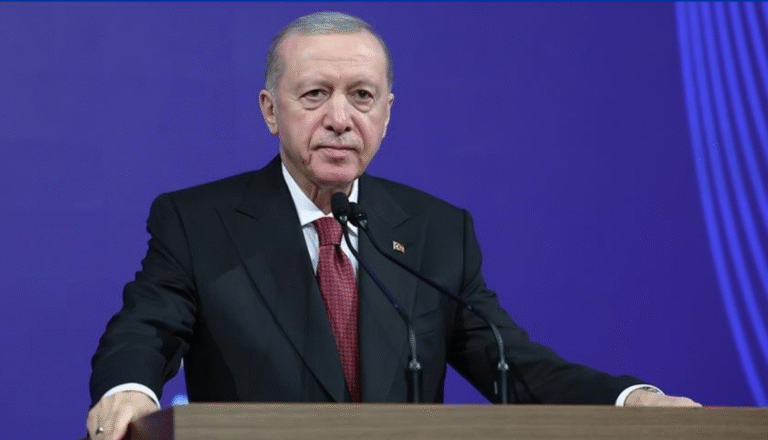
“Just as we objected to the idea that ‘the world is bigger than five,’ I will not back down from the struggle to change the interest-based economic system; I will not only object, but I will also strive to produce and disseminate alternatives,” said President Recep Tayyip Erdogan of Turkey.

THE PRESIDENT OF TURKEY, Recep Tayyip Erdogan, lashed out at the “interest-based economic system” that he claimed worsens inequalities and enslaves people to capitalism globally.

“Just as we objected to the idea that ‘the world is bigger than five,’ I will not back down from the struggle to change the interest-based economic system; I will not only object, but I will also strive to produce and disseminate alternatives,” Erdogan said in his speech at the Second Global Islamic Economy Forum, organized by Albaraka Bank, in Istanbul over the weekend.

“I have repeatedly stated that we cannot legitimize interest or the interest-based economic system in any form,” he added.

Erdogan added that there is a need for a shift, particularly in the financial sector, to adopt a human-centered, fair, compassionate, and responsible paradigm in the economy.

Also, the current global economic system prioritizes consumption and profit maximization, resulting in human values pushed to the background, the exacerbation of inequalities, and promotion of unproductive growth.

Erdogan emphasized that the world is currently experiencing escalating trade wars and heightened geopolitical crises, which is worsened by high global debt, an aging population, and climate change. All of those factors put pressure on global economic growth.

He pointed out the while Muslims account for 25 percent of the global population, Islamic finance has been valued at about $2.5 trillion.

“As the Islamic world, we need to maximize the opportunities for finance, trade, and cooperation among us,” he added, emphasizing that Islamic economic principles stand out for their focus on justice, risk sharing, and social solidarity.

The Organization of Islamic Countries (OIC), the second largest organization after the United Nations, has 57 member-countries including Turkey, accounting for around 11 percent of global trade.

Expelled solon back in Manila

AFTER two long years, former congressman Arnulfo Teves Jr. is back in the Philippines from Timor Leste which served as his refuge amid a long list of criminal cases, including the March 2023 attack that killed then Negros Oriental Gov. Roel Degamo.

On board a Philippine military plane, cuffed Teves arrived at around 7:40 Thursday night for a stopover in Davao City before being brought to the Villamor Air Base in Pasay City from where he was taken to the National Bureau of Investigation (NBI) headquarters in Manila for booking procedure and medical check-up.

“Former representative, Representative Arnie Teves, is now back in the Philippines,” President Ferdinand Marcos Jr. confirmed in a video statement.

BACKDOOR CHANNEL

Marcos admitted that Teves’ return to the Philippines was facilitated by no less than José Ramos-Horta, even as the President claimed that he only knew of the Timor Leste’s deportation plan from Prime Minister Xanana Gusmao during the Association of Southeast Asian Nations (ASEAN) meetings in Kuala Lumpur. 

“This would not have happened without the assistance of President Horta and Prime Minister Gusmao of Timor Leste. They have been working very hard to bring this to conclusion,” Marcos added.

“I would also like to assure all our citizens that such lawlessness will not go unpunished, and it is now time for Arnie Teves to face justice,” the President added.

HIGH-SECURITY RISK

Teves, who was previously arrested by the International Police Organization (Interpol) on the request of the Philippine government, was allowed to stay in Dili after a Timorese court blocked his extradition.

While in Timor Leste, Teves applied for an asylum. The Philippine government then filed an extradition request, which was turned down via a resolution to a motion filed by Filipino lawyer Ferdinand Topacio in his capacity as he former congressman’s legal counsel.

Timor-Leste on Wednesday hinted at deporting Teves, whom they described as a security risk, for which its immigration bureau personnel arrested the former congressman whose name form’s part of the Philippine Anti-Terrorism Council’s list of “terrorists.”

The Timor-Leste government also cited the need to deport Teves who has been in the country without a valid visa and legal authorization to stay.

MIRANDA RIGHTS

In a video farmed out by the Presidential Communications Office (PCO), an NBI personnel read Teves’ Miranda Rights while on board the Philippine military plane.

“You are under arrest by virtue of warrants of arrest issued by Manila Court in September 2023 for 10 counts of murder, 12 counts of frustrated murder, 4 counts of attempted murder.” 

“In addition to that, a 2024 warrant of arrest was issued against you by the Dumaguete court for murder, for illegal possession of explosives, for illegal possession of firearms and for the Terrorism Financing Prevention and Suppression Act,” the NBI personnel told Teves.

The expelled congressman was also informed about his rights to remain silent and avail of a legal counsel.

WHAT WENT BEFORE

On March 4, 2023, heavily armed men in military uniform made a surprise attack in the former governor’s house in Pamplona town, killing Degamo and nine others.

Teves, who was in the United States at the time of the incident, has since denied involvement in the carnage, which took place months after Degamo was declared winner of a disputed vote, unseating Henry Teves, the ex-lawmaker’s brother.

At the onset of the investigation, the Philippine government asked Teves to return to the country amid allegations of ordering the killings. He however refused to cave in, for which the House of Representatives decided to expel him from the roster of legislators.

Torre Named New Top Cop 

IT pays to be bold and daring — just like the 54-year old police general who went hands on just to make sure former president Rodrigo Duterte gets arrested and flown to The Hague to face charges arising from a drug war that saw thousands extinguished.

In a press briefing in Malacanang, Executive Secretary Lucas Bersamin announced the appointment of Criminal Investigation and Detection Group (CIDG) chief Major General Nicolas Torre III as the country’s  top cop replacing General Rommel Marbil, whose extended term is set to expire on June 7.

However, the turnover would take place even before June 7, the supposed date that Marbil will officially step down.

”The turnover of command will happen June 2nd,” said Bersamin on the assumption of the first non-PMA graduate to be designated to the post.

MARCOS’ DISCRETION

He declined to elaborate on the President’s basis in naming Torre, even as he gave a premium on the President’s discretion.

”Wala akong maibigay na detalye diyan ano? You know the appointment of  the officers of the PNP, they are to be kept confidential. We should respect that confidentiality,” Marcos’ top lieutenant averred.

“But it’s the President’s discretion which I consider to be absolute. No one can question that use of discretion,” he added. 

NOT A REWARD

Aside from arresting Duterte, Torre also led the capture of Kingdom of Jesus Christ founder Apollo Quiboloy on September 8, 2024 in Davao City over charges of human trafficking and sexual exploitation of minors.

When asked whether or not the President’s choice has something to do with the arrest of the two most powerful individuals in recent years,, Bersamin said that Torre’s appointment was the result of the major operations he carried out.

”I’m not going to discount that. But maybe there are other qualities of General Torre that he (Marcos) might have considered.”

Marcos Fires Guevarra, UP Law Dean Takes Over OSG

AMID the administration’s continuing purge in the guise of “government reorganization,” President Ferdinand Marcos Jr. tapped a law dean from one of the country’s finest state universities to replace Menardo Guevarra.

Currently the dean of the University of the Philippines (UP) College of Law, lawyer Darlene Berberabe took her oath before Marcos Jr. on Thursday.

NO STRANGER 

Prior to his appointment, Berberabe served as Pag-IBIG Fund chief executive officer (CEO) during the administration of the late former President Benigno Simeon Aquino III. 

Interestingly, Berberabe was among those being considered by the Judicial and Bar Council (JBC) for the position of Supreme Court (SC) associate justice in view of the compulsory retirement of Associate Justice Mario Lopez on June 4.

Meanwhile, Guevara welcomed Berberabe whom he described as a top-caliber lawyer with an impressive management background, adding that he would return to private life. There was no mention though whether he would still engage in law practice.

SAW IT COMING

The decision to replace Guevarra is something that is expected following the Solicitor General’s manifestation seeking to recuse itself from the consolidated habeas corpus petitions filed before the Supreme Court by former President Rodrigo Duterte’s children, who are seeking his release and return from The Hague, Netherlands.

In its nine-page motion, the OSG stated it “may not be able to effectively represent respondents in these cases” due to its firm stance that the International Criminal Court (ICC) has no jurisdiction over the Philippines.

It was then that Malacañang called on Guevarra to assess himself if he is still capable of serving as the Solicitor General. 

Is Traveling to Ph Safe?

REGARDLESS OF TRAVEL alert levels a country (esp. an ally or friend at that) labels another (like the Philippines), such will have a psychological impact on tourists, who will either put off such plans to visit a certain place, or if the tourist is adventurous enough would disregard the advisory altogether.

The Level 2 travel advisory branded on regions in Southern Philippines, this would have an adverse impact on local tourism and business as it might also discourage even local tourist (Filipinos in the country) from considering going to those areas.

It is but right for Rep. Rufus Rodriguez to call the State Department advisory as an “unfair shotgun warning,” which would deeply hurt the lives and livelihood of people living within local governments in these islands.

INCREASED CAUTION

US citizens are advised to reconsider travel to Mindanao, except Davao City, Davao del Norte Province, Siargao Island, and the Dinagat Islands because these are being targeted by terrorists and armed groups who engage in kidnapping, bombings and other attacks, many of which target foreign visitors.

Travel to the Philippines is under Level 2 meaning increased caution due to potential for kidnappings, bombings and other attacks that target tourist sites, markets and local government facilities. 

The State Department advisory states: “protests in the Philippines could turn violent and local governments often have limited ability to respond.”

Terrorist and armed groups in the Sulu Archipelago and the Sulu Sea have historically engaged in kidnappings as well as bombings and other attacks, the State Department warned. 

SPECIAL TRAVEL AUTHORITY

The US government already requires special authorization for federal employees to travel to those areas because of limited access to emergency services.
Clashes between terrorist groups and Philippine security forces prompted the warning for Marawi City.

The State Department especially highlighted at least two different islands in the Philippines to avoid. This Level 4 advisory is for “The Sulu Archipelago, including the southern Sulu Sea” due to crime, terrorism, civil unrest and kidnapping, as well as “Marawi City in Mindanao due to terrorism and civil unrest.”

‘It’s particularly biased against Mindanao. We have worked hard to show that our region is open, safe, and vibrant. This advisory erases that progress with one stroke.’

LEVELS OF T.A.

There are four levels of travel advisory: Level 1 through 4. For the Philippines, Level 2 was announced indicating the level of concern for the entire areas and Level 4 has been raised for the two islands. 

The State Department also advised US citizens travelling to the Philippines to: 1) monitor local media for breaking events and be prepared to adjust their plans; 2) avoid demonstrations; and 3) buy insurance before travelling. It is said the State Department also issued travel advisories in popular tourist destinations in Europe.

The State Department also recommended medical evacuation insurance, travel health insurance and trip cancellation insurance. 

It also suggested enrolling in the Smart Travel Enrolment Program to get alerts and make it easier for the traveler to be located in an emergency and prepare a contingency plan for emergency situations.

Back home, the Department of Foreign Affairs, which should be the frontliner in disputing such an advisory  was asked by Rep. Rufus Rodriguez (Cagayan de Oro) to summon US Ambassador to the Philippines MaryKay Carson to demand an explanation over the May 8 travel advisory by the State Department.

CASE TO CASE

The US Embassy in Manila explained their travel advisories are based on “a careful analysis of local conditions.”

“We regularly evaluate our travel advisories to ensure that they provide the most accurate information to American citizen travelers.  Our travel advisory for the Philippines has not changed substantially since May 2024,” US Embassy in Manila spokesman Kanishka Gangopadhyay told Business Mirror recently.

Rodriguez also urged President Marcos to summon Philippine Ambassador to the US Jose Manuel Romualdez and the Department of Tourism what measures they have taken to address the concerns raised by the advisory.

“This is an unfair, shotgun warning. There are certainly many places in the country that are safe to tourists,” Rodriguez explained as he urged the US to review the advisory.

VIOLENT CRIMES

The May 8 advisory published on the US State department’s website said that armed groups have carried out kidnappings and attacks on public areas like tourist sites, markets and government facilities in the country.

“Violent crimes are also common in the Philippines such as robbery, kidnappings, and physical assaults,” it said. “Protests happen in the Philippines and could turn violent and/or result in traffic jams and road closures with limited capacity of the local government to respond.”

As of March, the Philippine National Police (PNP) said the nationwide crime rate fell by 18.4% in the first quarter of 2025 from that of 2024.
The number of crimes recorded by the PNP dropped to 7,301 cases from 8,950 in the last three months of 2024.

IN A BAD LIGHT

Rodriguez deplored the travel warning as painting the Philippines in a bad light, unfairly portraying the country.

“It discourages not only Americans but other foreign tourists as well from visiting the Philippines. It will surely hurt our tourism sector,” he said.

Philippine tourism last year registered earnings of P760 billion, Department of Tourism records showed. Around 5.95 million foreign tourists entered the country in 2024, up 9.15 percent from 2023, but way below DoT’s goal of 7.7-million.

FOCUS ON MINDANAO

Rodriguez is particularly concerned that focus on Mindanao where Sulu and Marawi City were under Level 4 (the strictest level) while most of Mindanao was classifed as Level 3 (reconsider travel) while the rest of the country was at Level 2.

“It’s particularly biased against Mindanao. We have worked hard to show that our region is open, safe, and vibrant. This advisory erases that progress with one stroke,” he said.

Rodriguez stressed that while the Philippines values its strong ties with the U.S., allies must treat each other with fairness.

MPox, A Wake-Up Call, Not A Panic Button

ON MAY 28, 2025, the City Health Office (CHO) confirmed Iloilo City’s first case of MPox (formerly known as Monkeypox), sounding the alarm on a disease many of us hoped we would never hear about again.

The patient, currently in stable condition and under isolation, has no recent travel history—a detail that is both curious and concerning. In addition, four other suspected cases are under close observation.

This confirmation should not be a source of panic—but it must be a prompt for awareness and swift action.

‘While Mpox is not as highly contagious as COVID-19, it remains a serious public health threat. It is transmitted primarily through prolonged close contact… ‘

HIGHLY CONTAGIOUS

While MPox is not as highly contagious as COVID-19, it remains a serious public health threat. It is transmitted primarily through prolonged close contact—especially skin-to-skin, respiratory droplets, or contact with contaminated materials such as clothing or bedding. It can also be spread through intimate contact, including sexual activity.

Dr. Mary Ann Diaz and the CHO have acted quickly, initiating isolation protocols and contact tracing to limit the risk of further transmission. But the real test lies in how the public responds.

PREVENTABLE

We need to understand that Mpox is preventable if we take the right steps.

Practicing good hygiene—frequent handwashing, disinfecting surfaces, and avoiding contact with anyone showing unusual rashes or flu-like symptoms—is essential. It is also wise to avoid crowded areas for the time being, especially if you’re immunocompromised or working in high-contact settings like schools, hospitals, or public transportation.

Importantly, we must resist the urge to stigmatize or point fingers. The history of health crises tells us that fear and discrimination can spread faster than any virus. Let’s replace fear with facts.

CRITICAL DEFENSE

MPox is not exclusive to any gender, race, or group. Anyone can contract it—and anyone can help stop its spread.

The presence of a local case with no travel history raises a crucial point: the virus might already be circulating in the community undetected.

This means early medical consultation becomes a critical line of defense. If you or someone you know notices rashes, fever, swollen lymph nodes, or fatigue—report it. Get checked. Don’t brush it off.

We’ve been through worse.

Iloilo City has faced health crises before and emerged stronger. What matters now is vigilance without hysteria, action without apathy, and compassion without judgment.

Let’s not wait for the numbers to climb before we take this seriously. The first confirmed case of Mpox in our city is not just a medical event—it’s a reminder that health is a shared responsibility.

Let’s stay informed. Let’s stay safe. And most importantly, let’s take care of each other.

Dr. Mary Ann Diaz and the CHO have acted quickly, initiating isolation protocols and contact tracing to limit the risk of further transmission. But the real test lies in how the public responds.

We need to understand that Mpox is preventable if we take the right steps. Practicing good hygiene—frequent handwashing, disinfecting surfaces, and avoiding contact with anyone showing unusual rashes or flu-like symptoms—is essential. It is also wise to avoid crowded areas for the time being, especially if you’re immunocompromised or working in high-contact settings like schools, hospitals, or public transportation.

Importantly, we must resist the urge to stigmatize or point fingers. The history of health crises tells us that fear and discrimination can spread faster than any virus. Let’s replace fear with facts. Mpox is not exclusive to any gender, race, or group. Anyone can contract it—and anyone can help stop its spread.

The presence of a local case with no travel history raises a crucial point: the virus might already be circulating in the community undetected. This means early medical consultation becomes a critical line of defense. If you or someone you know notices rashes, fever, swollen lymph nodes, or fatigue—report it. Get checked. Don’t brush it off.

We’ve been through worse. Iloilo City has faced health crises before and emerged stronger. What matters now is vigilance without hysteria, action without apathy, and compassion without judgment.

Let’s not wait for the numbers to climb before we take this seriously. The first confirmed case of Mpox in our city is not just a medical event—it’s a reminder that health is a shared responsibility.

Let’s stay informed. Let’s stay safe. And most importantly, let’s take care of each other.

Mober Expands To Thailand

Mober, a frontrunner in green logistics services in the Philippines, has expanded its operations to Thailand, marking a significant milestone in the company’s regional growth strategy towards championing greener delivery solutions in Southeast Asia.

Mober launched an initial fleet of 21 electric trucks in the Bang Na district in Bangkok, mainly to support the last-mile delivery needs of IKEA Thailand. Supporting the deployment is a newly built 1,600-square-meter charging hub in Bang Na, outfitted with four 22-kilowatt (kW) chargers and two 60-kW fast chargers. The facility enables an optimized turnaround and delivery capacity of 150 to 200 drops per day.

“Coming from the Philippines, we at Mober are proud to bring our proven green logistics solutions to Thailand, a market with a thriving environment and a promising future for electric vehicles. As we officially launch our operations, we are confident we will not only make deliveries in Thailand greener but also contribute to a more sustainable urban environment,” Jade Hugo, Mober Co-founder and Head of New Business, said.

The strategic expansion adds to the list of milestones Mober has achieved in 2025. In February, the company introduced the Philippines’ first 100-percent electric tractor head truck to enable large-scale logistics operations. In the following month, Mober opened the largest commercial electric (EV) charging hub in the country to date, spanning 3,000 square meters with a 56-port capacity.

Mober CEO Dennis Ng said that the expansion to Thailand fulfills the company’s goal to bring sustainable logistics from the Philippines to the region.

“Mober’s expansion to Thailand aligns with our vision to become the leading green logistics provider in SEA. This strategic move is not just about introducing our EVs on the roads of Thailand but, more importantly, continuously building the foundation for sustainable and efficient urban delivery in the region,” Ng said.

Mober’s entry into Thailand builds on its ongoing investments in green logistics. The company is also raising additional funding to support its Philippine operations and scale its EV fleet in Thailand, with plans to significantly grow the number of units by early 2026.

This latest expansion builds on Mober’s recent recognition by Forbes Asia, which included the company in its prestigious 100 to Watch List last year. Named among the Asia-Pacific region’s most impactful and fast-growing companies, Mober has made notable strides in transforming the Philippines’ logistics industry while maintaining strong financial growth.

Asean Seeks ‘Break Away From Business As Usual’

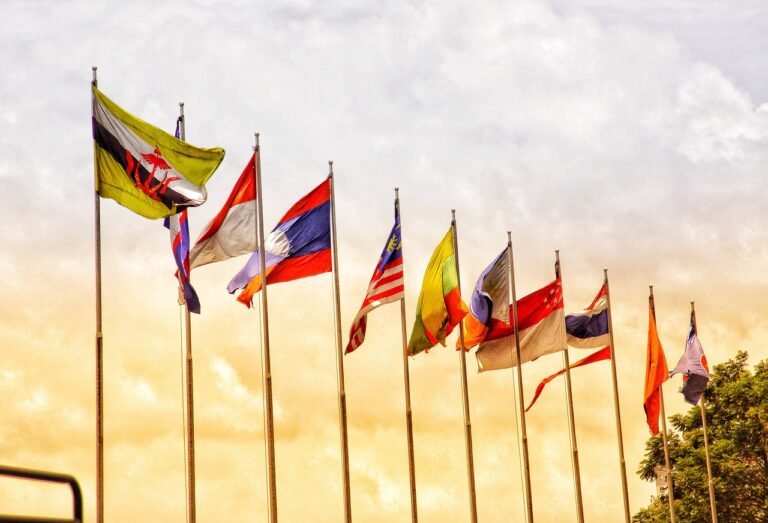
IN THE FACE of the high tariffs the Trump administration is imposing globally, the Association of Southeast Asian Nations (ASEAN) has taken a stand to “break away from business as usual.”

Specifically, the bloc seeks to be “bolder and more agile” to safeguard its interests amid global challenges, according to Malaysia’s Minister of Investment, Trade, and Industry, Zafrul Abdul Aziz.

He made the statement on Sunday after the ASEAN Economic Community Council (AECC) meeting, or ahead of the 46th ASEAN summit on Monday in Kuala Lumpur, Malaysia.

“At the meeting this morning, the AECC deliberated on several pressing issues, including the rising geopolitical tension and the impact of US tariff measures on the ASEAN trading and investment landscape,” Aziz was quoted by the newspaper as saying.

“The AECC council collectively acknowledged that ASEAN would need to break away from the business-as-usual approach. We need to be bolder and more agile with more forward-looking strategies in order to advance and safeguard ASEAN’s socioeconomic interests,” he added.

“The AECC council collectively acknowledged that ASEAN would need to break away from the business-as-usual approach. We need to be bolder and more agile with more forward-looking strategies in order to advance and safeguard ASEAN’s socioeconomic interests,” said Malaysia’s Minister of Investment, Trade, and Industry, Zafrul Abdul Aziz.

UP TO 49% OF TARIFFS

To recall, ASEAN member-states were slapped by tariffs ranging from 10 percent to 49 percent, as ordered by US President Donald Trump who later announced a 90-day pause on the levies. This prompted ASEAN to initiate negotiations with Washington.

For its part, the Philippine government has formed a technical working group (TWG) to continue the discussions with the United States on its reciprocal tariff, Special Assistant to the President for Investment and Economic Affairs (SAPIEA) Secretary Frederick Go said earlier.

“The technical working groups now will be the one to meet. In particular, if you want to know, it’s Undersecretary Allan Gepty of DTI (Department of Trade and Industry) that will be continuing with the discussions with his counterparts at the USTR office,” he said, referring to the United States Trade Representative.

From Awkward To Awesome

Ever felt weird in a room full of people? Like you’re just standing there, not sure what to say or where to look?

THE BACK STORY 

Here’s what happens. Your mind goes blank, your hands feel awkward, and you wish you could just disappear.

But guess what? You don’t have to stay stuck in that awkward zone forever. Social confidence is something you can build.

WHAT IS SOCIAL CONFIDENCE?

It’s when you feel comfortable around people. Talking feels easy – not fake or forced. 

It’s not a performance. You’re just being yourself. You connect more, worry less, and stop overthinking everything.

And no – it’s not about being smooth or knowing all the perfect things to say. It’s just about feeling okay being around others.

THE AWKWARD MIND TRAP

That awkward feeling? It usually starts with overthinking. And that little voice in your head loves drama.

  • “What if I say something odd?”
  • “What if they laugh at me?”
  • “What if I totally mess up?”

Sound familiar? That inner voice is always ready to turn a simple moment into a big deal. 

But here’s the truth: most people are too focused on their own thoughts to notice. Your awkward moments feel huge to you, but to everyone else? Not a big deal. 

The more you join in, take a chance, and stay real – the smaller that awkward feeling gets.

TINY STEPS LEAD TO BIG WINS

There’s no need to change who you are. Forget trying to be the loudest or the funniest. Just take small steps. 

Start with these:

  • Wave and say, “Hey, good to see you.”
  • Ask something easy like, “Busy day?” 
  • Mention something you notice: “I like your energy today.”

These tiny things help. Each time you do one, your confidence grows a little. It’s like a muscle – you build it with practice. 

Start simple. Keep trying. That’s how you get better.

REAL CONFIDENCE MEANS BEING REAL

You don’t need to be the loudest person in the room. It’s not about being the funniest or the smartest. You just need to be you. That’s what real confidence is. 

It’s not about being perfect. It’s about saying, “I’m okay with who I am.” People can feel that, and they’re naturally drawn to it.

TOP 3 BENEFITS OF SOCIAL CONFIDENCE

You feel more relaxed. 

  • No more overthinking every word

You speak up more easily. 

  • You say what’s on your mind without freezing.

You connect better. 

  • Real conversations. Real friendships. Real moments.

TIPS AND TECHNIQUES

Social confidence isn’t something you’re born with. It’s something you build. Step by step. One small move at a time.

The more you try, the better it gets. Remember: From awkward to awesome? Totally possible. Let’s do this.

Local shares continue to show strength

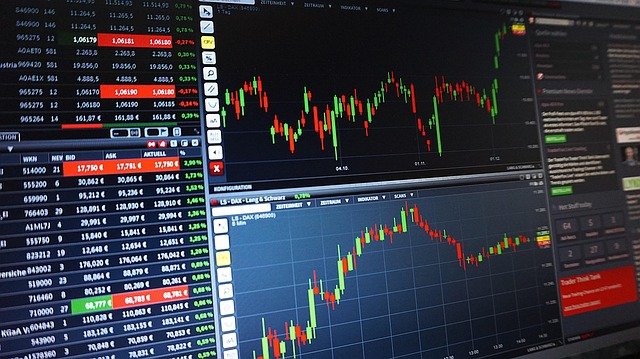
Local shares continued to show strength in the trading week of May 19 to 23, as the Philippine Stock Exchange index (PSEi) managed to close above 6,400 points for three of five days.

However, the PSEi performance from May 19 to 23 was weaker than the shortened trading week of May 13 to 16, where the index closed above 6,500 points twice.

On the last trading of last week, or May 23 (Friday), the PSEi went up by 1.71 percent to 6,413.10 while the All Shares index went up by 1.04 percent to 3,746.79. Almost all sectors went up except for Mining and Oil, which slipped by 0.65 percent.

Regina Capital Development Corp. head of sales Luis Limlingan said investors hunted for bargains, following the dip of the PSEi on May 22 (Thursday) by 1.10 percent to 6,305.37 while the All Shares index slipped by 0.80 percent to 3,708.18.

The PSEi’s close of 6,305.37 on May 22 is the lowest for the stock index for the month of May.
“The local bourse closed higher as investors engaged in bargain hunting following recent declines, focusing on prospects for reform and improved market operations,” Regina Capital Development Corp. head of sales Luis Limlingan said.

As for PSEi’s drop on May 22, he said that investor sentiment was also affected by the local political scene, and the call of President Ferdinand Marcos Jr. for a Cabinet revamp.

“Investor caution was further heightened by domestic political uncertainty after President (Marcos Jr.’s call for the courtesy resignation of his Cabinet secretaries, seen by some as a possible shift in policy direction,” Limlingan said.
Philstocks Financial Inc. research manager Japhet Tantiangco echoed this view.

“Investors also dealt with President Marcos Jr.’s move to call for the resignation of his Cabinet secretaries,” Tantiangco said.
So far, the PSEi has managed to stay above 6,300 points and but still struggled to get past 6,600 points as the highest close this month was at 6,566.82 on the 13th.

For the next trading days, the PSEi is seen testing the 6,500 points, seen as the next resistance level.

DPWH Focuses On EDSA Rehab, Construction Of New Bridge

0

CITING the urgent need to deliver results, the Department of Public Works and Highways (DPWH) finds it imperative to commence the long overdue rehabilitation of the country’s premier highway which has incurred significant structure defects over the years.

Likewise on the DPWH radar is the San Juanico Bridge connecting the island provinces of Samar and Leyte.

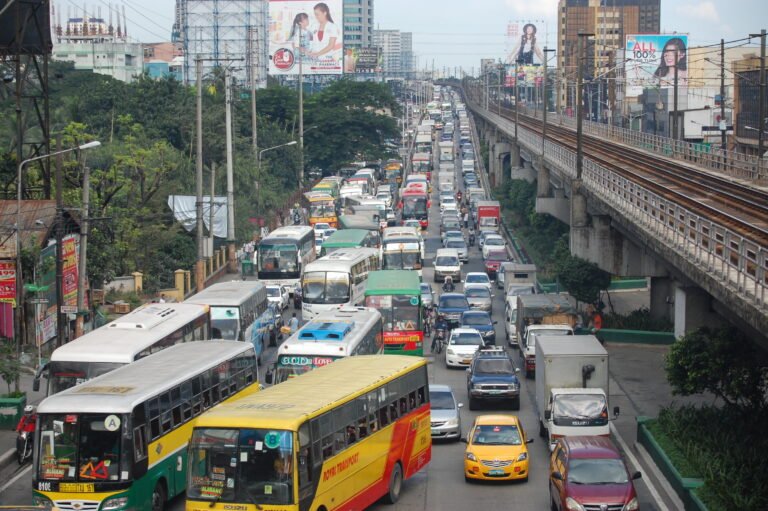
The rehabilitation of the Epifanio Delos Santos Avenue (EDSA) is scheduled to begin soon as part of preparations for the Association of Southeast Asian Nations (ASEAN) Summit in early 2026 with the DPWH taking significant steps to ensure smoother traffic flow in Metro Manila during the event.

‘(DPWH is) expecting minimal effects as the construction activities would be done in phases and clusters to ensure minimal disruption to commuters and traffic during the work schedule.’

BEFORE ASEAN SUMMIT

In a Malacañang press briefing, DPWH Secretary Manuel Manligas Bonoan said that they are prioritizing the rehabilitation of EDSA with the specific focus on sections in time for the ASEAN event.

Bonoan mentioned that construction on EDSA will be focused on both lanes of the highway’s segment from Pasay City to Shaw Boulevard, where the summit’s concentration will be held.

“Ang timetable po namin dito is we hope that we can complete those segments, iyong segments na iyan, towards the end of the year,” said Bonoan noting that the rehab program forms part of a broader scope to ease congestion and improve infrastructure in Metro Manila. 

CONTINGENCY MEASURES

By his own admission, Bonoan may slow down traffic flow. He, however, clarified that they are expecting minimal effects as the construction activities would be done in phases and clusters to ensure minimal disruption to commuters and traffic during the work schedule.

“Ang plano po namin dito, while we’re going to put priority to those sections from Pasay to Shaw Boulevard, then maybe other sections that we may start also na hindi naman masyadong nakakaabala doon sa traffic during the summit in Manila,” the DPWH chief pointed out.

The ASEAN Summit is a biannual meeting on economic, political, security, and socio-cultural development of Southeast Asian countries. It also serves as a regional platform to discuss various problems and global issues, strengthening cooperation, and making decisions.

TWO SAN JUANICO BRIDGES

Amid inconsistencies in the structural integrity of the San Juanico Bridge in the eastern Visayas, the DPWH hinted at constructing a new and longer bridge adjacent to the existing structure.
 
In view of what described as adverse economic impacts of the San Juanico Bridge rehabilitation,  Bonoan cited the urgent need to hasten the construction of a new bridge which according to him would be 2.6 kilometers long.

“The new bridge is now under preparation. In fact, this will be one of the flagship projects under this administration and ito po ay mapi-finance ng Japanese government,” he noted.

“It’s now under detailed engineering design, we hope that the detailed engineering design will be completed by 2026 and thereafter, the construction will follow immediately,” he added.

HALF CENTURY OLD

Constructed in 1969 during the administration of then President Ferdinand Edralin Marcos Sr., the bridge spans 2.16 km. and remains a vital economic and transport artery in Eastern Visayas.

A three-ton weight limit was imposed on the structure after engineers raised red flags about its load-bearing capacity even as immediate retrofitting had begun on specific segments which were “found to be deteriorated and also dangerous for heavy loads.”

“We are expediting the process. In the meantime, nakipag-coordinate po kami (we have coordinated) with the local governments, the Philippine Ports Authority (PPA) and doon sa PNP (Philippine National Police) for the control of traffic,” the public works chief spelled out. 

WORTH THE AGONY

Bonoan also made a public appeal to bear the “temporary agony” which he claimed would yield convenience to both the motorists and commuters after the project shall have been completed.

“Iyong passengers (who) have to cross the bridge, unfortunately they will have to stop on one end and they will transfer to another—to the same bus company on the other end,” he averred.

“Pero iyong transport po, ang passengers are being shuttled free of charge. So, ito po iyong arrangements for the time being,” the DPWH chief added.

In addition, Bonoan said that the PPA is coming up with alternative routes from Luzon going to Leyte without passing the San Juanico Bridge to provide safe access to motorists.

“The load limit on the San Juanico Bridge may also increase to a maximum of 10 tons by the last quarter of 2025, once the retrofitting of the segments is completed. In the meantime, we are doing our best na kung matapos po namin kumpunihin ‘yung deteriorated sections doon sa approaches, we might be able to increase the load limit sometime within the year,” he quipped.

#EDSAtraffic

#transportation

#publicworks

#DPWH

#construction

#ASEANsummit

Global economic slowdown more imminent

The global economy is not expected to make a rebound over the short term as there are clear signs it will slow down, which is bad news for poor countries relying on exports to fuel economic growth.

This, as the Organization for Economic Cooperation and Development (OECD) recorded a gross domestic product (GDP) growth of only 0.1 percent in the first quarter of 2025, slowing from 0.5 percent of the previous quarter.

Also, the overall GDP growth rate for the Group of 7 (G7) nations was also at 0.1 percent in the first quarter of this year, decreasing from the 0.4 percent of the previous quarter.

Compounding the situation is Fitch has forecast an average potential growth of 3.1 percent for the Group of 10 (G10) developing countries.

The IMF expecting a global economic growth of 3.3 percent in 2025

OECD ECONOMIES FALTER

The OECD reported that the Japanese economy contracted in the first quarter by 0.2 percent from the 0.6-percent growth of the previous quarter. This was primarily caused by a 2.4-percent rise in imports in the first three months of the current year.

Meanwhile, the US economy shrank, from 0.6 percent to minus 0.1 percent as the imports of goods increased sharply by 10.8 percent in the first three months of the current year.

“The rise in US imports of goods, likely influenced by anticipated changes to trade tariffs, was the main drag on growth,” it said.

Also, the Canadian economy slowed down by 0.4 percent in the first quarter from 0.6 percent, while the GDP of the United Kingdom rose marginally to 0.7 percent from 0.1 percent, mainly attributed to an increase in investments.
Among other OECD economies, Ireland recorded the highest growth rate with 3.2 percent in the first quarter of the current year.

FITCH DOWNGRADES FOR G10

For its part, international credit rating agency Fitch has downgraded its forecast for medium-term of five-year growth potential for the G10 developing countries, or to 3.9 percent from 4 percent.

Fitch made the revision as it sees China’s potential growth rate going down to 4.3 percent this year from 4.6 percent.

Also, growth forecasts for Mexico, Indonesia and South Korea were downgraded.

On the positive side, Fitch revised upwards the GDP growths for Russia, Brazil, Poland and India, while its forecasts for South Africa and Türkiye remained unchanged.

Specifically, the five-year growth forecasts were revised down to 4.7 percent from 4.9 percent for Indonesia, to 1.8 percent from 2 percent for Mexico, and to 1.9 percent from 2.1 percent South Korea.

The projected growth rate for India was raised to 6.4 percent from 6.2 percent, 3.2 percent from 3 percent for Poland, 2.0 percent from 1.7 percent for Brazil, and 1.2 percent from 0.8 percent for Russia.

Meanwhile, the medium-term forecast for South Africa was maintained at 1 percent and Türkiye at 4.1 percent.