Thursday, March 26, 2026
Home Blog Page 6

Mindless Moments: Use Your Head

0

EVER WATCH SOMEONE do something… and you sit there thinking, “Duh! Use your head!”? You just stare, wondering how anyone can survive this. Welcome to the world of Mindless Moments.

The Back Story 

They see the obvious. They have the tools. They know better.

And still… chaos happens.

  • DUH moments everywhere 

Plans blow up. Dinner burns. Furniture collapses. Meetings spiral. And all you can do is blink, shake your head, and wonder… how did we get here?

  • That’s a Mindless Moment.

Not because the person isn’t smart. Sometimes, they’re sharp, talented, capable. 

  • But for some reason… they just don’t use that brain.

Mindless Moments: What They Look Like

Mindless rushes. Ignores. Repeats mistakes. 

  • It’s skipping instructions that would’ve saved ten minutes.
  • It’s talking over the plan instead of listening.
  • It’s winging it in the kitchen and wondering why the smoke alarm goes off.

It’s saying, “It’ll be fine,” when everyone knows it won’t.

DUH. 🙃

Mindful Moves: How They Win

Mindful pauses. Thinks. Checks. Adjusts. And asks, “Does this make sense?”

  • Mindful listens. 
  • Reads the steps. 
  • Checks twice. 
  • Reflects.

And sometimes… says, “I don’t know. Let me think.”

Weekend Whoa:  Brain Off, Ego On

Situation: Mike and Emma are planning their weekend.

  • Mindless: Mike jumps in, talks over Emma, pushes his plan — tension instead of fun… She facepalms — classic Saturday energy.
  • Mindful: Emma pauses, listens, suggests each pick one thing — weekend saved.

Tip: Listen first. Plans work better when both people feel heard.

Kitchen Chaos: Recipe for Disaster

Situation: Tim and Janice try cooking something new.

  • Mindless: Tim wings it, ignores the recipe, cranks up the heat — dinner burns… Janice whispers, ‘Not again…’ as smoke rises.
  • Mindful: Janice reads the steps, measures carefully, tastes as she goes — dinner wins.

Tip: A little attention upfront saves a big mess later.

Furniture Fiasco: Epic Desk Fail

Situation: Kevin and Mia assemble a new desk.

  • Mindless: Kevin skips the instructions and forces pieces together — undoing everything… Mia sighs — ‘This is why instructions exist.’
  • Mindful: Mia follows steps, checks each part — desk done, no drama.

Tip: Follow the process. Shortcuts cost more time.

Tips And Techniques 

Mindless feels fast. It looks fun… until the cleanup. The sighs.

  • The “I told you so’s.”

Mindful wins quietly. Smoothly.

  • No drama.
  • No stress.
  • No epic fails.

Mindless: The cost of not thinking?

  • High.

Mindful: The  benefit of pausing? .

  • Priceless.

Remember: Be mindful. Use your head.

Plans To Release Grijaldo Deferred 

0

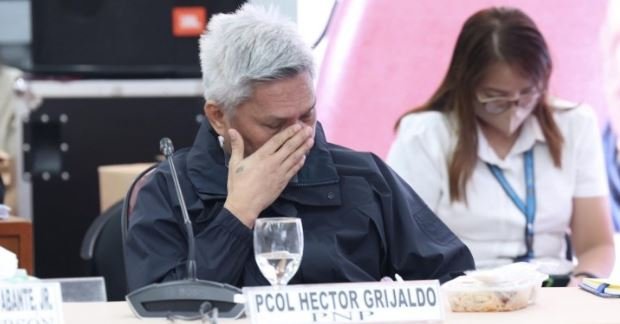
A DETAINED POLICE Colonel who accused ranking House officials of forcing him to lie before a congressional investigation, will have to stay longer in jail after he was named an accused in a graft case filed with the Sandiganbayan.

Based on the documents obtained by the media, Col. Hector Grijaldo, who has been under “restrictive custody” since October 2024, allegedly ordered 51 subordinates to construct a private property in Sitio Cantipla, Barangay Tabunan, Cebu City.

Aside from Grijaldo, also named respondent in a criminal case filed by the Office of the Ombudsman is retired Master Sergeant Jesus Batobalonos.

SERIOUS ALLEGATIONS

According to the Ombudsman, the incident took place from August 2019 to April 2020 — at a time when the accused Grijaldo and Batobalonos were part of the Philippine National Police – Regional Mobile Force Battalion (PNP-RMFB) in Central Visayas.

Grijado allegedly took advantage of their positions and “unlawfully and criminally” used their subordinates for the construction of a private structure owned by the police colonel.

“The act resulted in the injury to the Government in the amount of P9,435,144 more or less, representing the salaries paid to the said police officers, along with the resources of the PNP used to transport the officers to the construction site,” reads part of the information sheet obtained by the media.

GRIJADO’S TRAVAILS

Col. Grijaldo was the Mandaluyong City police chief who gained national prominence for his involvement in high-profile legislative investigations into the Duterte administration’s “war on drugs”. 

During a Senate hearing in October 2024, Grijaldo in a sworn testimony said House quad committee stalwarts Reps. Dan Fernandez and Benny Abante pressured him to confirm the existence of a “reward system” for drug war killings. Both have since denied Grijaldo’s allegations.

In December 2024, the quad committee summoned him but Grijaldo opted to skip, for which he was cited in contempt and ordered arrested. The police colonel for his second citation ticket in January of the following year after he declined to answer questions regarding his testimony.

He has since been detained at the Quezon City Police District (QCPD) Station 6 holding area.

WHAT WENT BEFORE

In July 2020, retired Police Gen. Wesley Barayuga, who was then working as Secretariat for the Philippine Charity Sweepstakes Office (PCSO), was killed moments after leaving his office in Mandaluyong City.

Grijaldo was the chief of police in Mandaluyong when Barayuga was slain. It was for that reason that the House quad comm investigated his potential role or knowledge regarding the alleged cover-up of this incident.

The quad comm cited Grijaldo’s supposed links with then PCSO general manager, retired Gen. Royima Garma who was tagged as the alleged brains behind the Barayuga killing. The motive — to prevent the victim from leaking corruption in the agency.

Interestingly, Garma was later on classified as a “whistleblower” for admitting the alleged existence of a reward system to bolster the bloody war against drugs under the previous administration.

Did Marcos Jr Benefit From Flood Control Cuts?

0

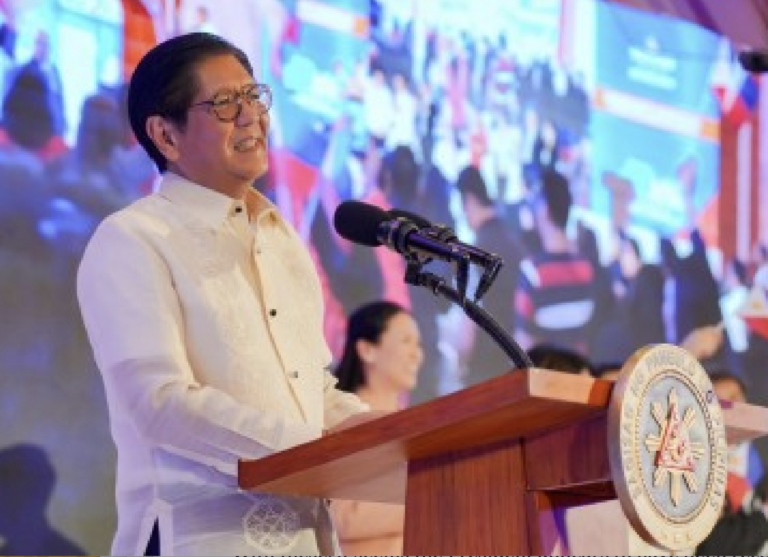
NO ONE HAS ever dared directly drag President Ferdinand R. Marcos Jr. into the flood control mess, except ACT Teachers Partylist Rep. Antonio Luansing Tinio, an activist and politician since 2025.

Tinio said based on the exchange of text messages between the President and his former Undersecretary Adrian Bersamin of the Presidential Legislative Liaison Office, Marcos Jr. benefitted from the kickbacks in the flood control fund scandal.

Tinio, in an interview with GMA Integrated News, claimed that Bersamin was the personal runner or “bagman” of the President in collecting the kickbacks.

CASH DELIVERIES, TEX MESSAGES

Citing a July 10, 2025 alleged text of Bersamin said: “complete na po ang 7.122 delivery sa akin. Tapusin ko po ang computation today.” Tinio said that was similar to messages from March  24, 2025 from July 10, 2025.

“Eto nga yung nagpapaabot si Bersamin na meron pong cash delivery P2 billion dadalhin natin sa Narra residence”, to which Marcos allegedly replied: “Sasabihan ko si Jun Baris.” Baris was former head of security.

The TV newscaster said: “matatandaan na si Bersamin ang tinuro noon ni (resigned and now fugitive) Rep. Zaldy Co na nagkumpirma na may pinapa insert si Pangulo Maros ng P100 billion sa budget. Si Bersamin din daw ang nagbigay kay Co ng listahan ng mga proyekto na mula mismo kay Pangulo.”

This was previously denied by Malacañang, but Tinio said this can be matched against the testimony of former Public Works and Highways Secretary Roberto Bernardo, where the latter claimed that in March he completed the delivery of around P2 billion in an armored van.

Tinio said the text messages were also obtained by Caloocan (2nd district) Rep. Edgar Erice and other congressmen. 

LEVISTE CONFIRMED

Batangas (1st district) Rep. Leandro Leviste was the one that showed the text exchanges but Tinio deferred to Leviste to explain how the exchange of text messages landed in his hands.

When GMA tried to get confirmation from Leviste, he posted in his FB post that “panoorin na lang niyo ang mga pahayag ni Tinio at Erice.”

Erice confirmed that it was Leviste who showed them the text exchanges between Marcos and Bersamin.

Bersamin allegedly did an affidavit on this in Leviste’s house in Taal, Batangas. The latter even showed CCTV footage of the arrival of Bersamin, along with some lawyers.

The Makabayan bloc is now studying how to use the text messages between Bersamin and Marcos as evidence.

Rep Sarah Elago of Gabriela Women’s party challenged the Office of the Ombudsman over this serious new twist that could not be ignored.

OUSTER INPUT

Palace spokesman Claire Castro belittled this development saying this is just another fodder for the ouster of the President. 

One of the accusations in the petition endorsed by Makabayan was that Marcos had direct personal knowledge of the modus, citing the video statements of former House budget chairperson Zaldy Co and the testimony of former Department of Public Works and Highways undersecretary Roberto Bernardo, among others.

With these, it seems the President appears to have been receiving kickbacks just days before he went to Congress, where he stood before the chamber and said, “Mahiya naman kayo!”

Tinio said that aside from Bersamin, Leviste also claimed he has a copy of the “record of communications.”

JUNKED!

The House overwhelmingly junked the impeachment complaints against Marcos on Tuesday, with 284 lawmakers out of 296 House members present voting in favor of dismissal.

“These complaints fail to establish a factual nexus between the President and any impeachable offense. They attempt to reframe mere policy disagreements and routine executive functions as a betrayal of public trust without any showing of bad faith or malice,” committee chairperson Gerville “Jinky” Luistro said.

China, Not The PH, Is The Bully 

0

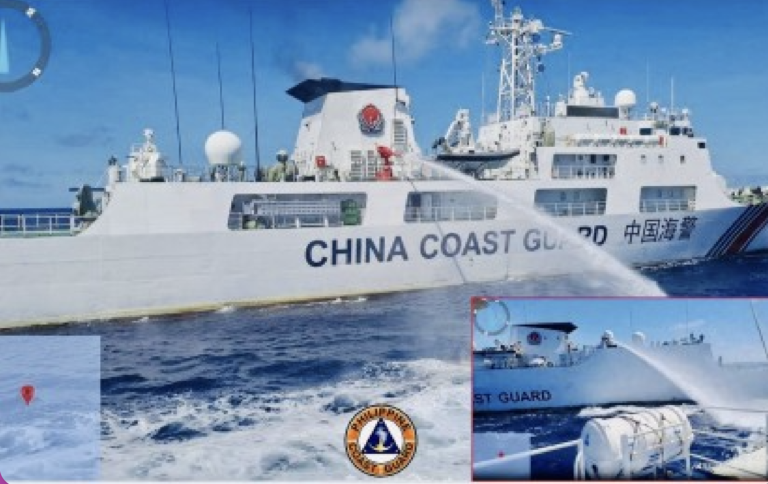
FOR ALL ITS aggression, laser lighting and water cannoning fishermen and vessels of state research and Coast Guard; and quarrying in nearby islands for materials to be used in its island building at the West Philippine Sea, China- not the Philippines– is the provocateur and the repugnant bully. By challenging Philippine officials and putting negative labels on them, China completely disrespects the Filipinos’ freedom of speech and movement.

Think tank Stratbase PH founder/CEO Victor Andres “Dindo” Manhit said the facts are consistent and well-documented: it is China’s maritime forces that repeatedly employ coercive and dangerous acts at sea, including water cannons, aggressive maneuvers, and ramming incidents that have damaged Philippine vessels and harmed even Filipino civilians.”

“Under UNCLOS (United Nations Convention on the Law of the Sea), the 2016 Arbitral Award is final and binding on the parties and rejected China’s expansive ‘historic rights’ claims. Respect for international law, not rhetorical accusations, is the only durable foundation for stability.” 

‘Philippine data show a persistent trade imbalance that does not erase accountability … (We maintain) strong and mutually beneficial economic partnerships with many countries, and none of these partners assert their interests through intimidation, coercion, or the use of force at sea.’

RESTRAINT

Manhit said calls for “restraint” sound hollow when Chinese maritime forces are reported conducting continued harassment against Philippine ships and fisherfolk whose livelihoods depend on waters international law recognizes within the Philippines’ maritime entitlements. He said deescalation begins when coercion ends.

Economic ties cannot be invoked to excuse violations of sovereign rights, Manhit added.

Philippine data show a persistent trade imbalance that does not erase accountability. The Philippines maintains strong and mutually beneficial economic partnerships with many countries, and none of these partners assert their interests through intimidation, coercion, or the use of force at sea.

SENATORS CONDEMNED

Already 15 senators have signed an unnumbered resolution denouncing the recent statements of the Chinese Embassy in Manila against certain Filipino government officials who criticized Beijing’s aggressive actions in the disputed South China Sea.

They called on the Department of Foreign Affairs (DFA) to take the necessary diplomatic measures to uphold the dignity of the Philippines and to ensure that relations with other states are conducted in accordance with international law and established principles of state relations.

The senators condemned the recent public statements of the Embassy, which they described as “contrary to accepted standards of diplomatic conduct and mutual respect between states.”

They affirmed the Philippines sovereign right and responsibility to present, assert, and defend its officials positions and national interests, in accordance with international law. 

Signatories were: Senate President Vicente “Tito” Sotto III; Panfilo “Ping” Lacson; Juan Miguel “Migz” Zubiri; Francis “Kiko” Pangilinan; Risa Hontiveros; Erwin Tulfo; Raffy Tulfo; Sherwin Gatchalian; Loren Legarda; JV Ejercito; Jinggoy Estrada; Bam Aquino; Lito Lapid; Camille Villar and Mark Villar.

COWARDLY ACT

Senator Pangilinan defended his ally, Senator Hontiveros, calling the Chinese Embassy in Manila “cowardly” and “duplicitous” for using social media to attack Filipino lawmakers. The word war began after the Chinese Embassy’s deputy spokesperson, Guo Wei, used social media to lecture Hontiveros for her criticisms of Beijing’s aggression in the West Philippine Sea. China cited the alleged “provocation” by some PH officials with a warning: Stop or pay the price. 

“Now is the time for the country – the Executive, the Legislative branches of government to unite behind what I believe to be a bullying of a super power. And I believe the only way to deal with the bully is to stand up to it,” Pangilinan said. 

“The UNCLOS issue is something that we insist on, not only the Philippines, but other ASEAN member states,” Foreign Secretary Ma. Theresa Lazaro said in a Reuters interview.

The idea of a formal code of conduct to ease tensions in the South China Sea was first raised over 20 years ago, but only in 2017 did the parties commit to start the drafting process. However, little substantive progress has been made since then.

A SENSITIVE ISSUE

The issue remains highly sensitive. China’s Southeast Asian neighbors want the code to be grounded in international law, which Beijing has repeatedly been accused of disregarding as it asserts its sovereignty over nearly all of the South China Sea.

Lazaro reiterated Manila’s position that the code must be legally binding, although she acknowledged this issue will require “further and deeper discussion” among ASEAN member states and China.

The Chinese Embassy in Manila has also filed a diplomatic protest against Tarriela after he used an image collage of Xi that appeared to be an AI-generated depiction of the leader fuming in anger, flexing his muscles, and even holding a wooden boat bearing a Philippine flag.

Palawan: World Best Destination 2026 The Last Ecological Frontierof Asia

0

IN THE EARLY morning mist when dawn breaks over Palawan, light glides slowly across limestone cliffs, sweeping over hidden lagoons and fishing boats that carve the first ripples on glass-clear water. The breeze carries the scent of salt and forest, while the sea mirrors a sky just beginning to blush. In these quiet moments, it becomes clear why the world keeps returning—because some places do not just take your breath; they give something back to your spirit. Palawan is one of them.

The Frommer’s global travel authority once again affirmed what many have long known, naming Palawan among its “Best Places to Go” in 2026. Its recognition highlights destinations defined not only by beauty, but by authenticity, connection, and a commitment to caring for the planet. For Palawan, the honor reflects an identity it has carried for decades: The Last Ecological Frontier—a place where nature is not simply admired but fiercely protected.

A CROWNING JEWEL

Palawan’s magic lies in its contrasts: dramatic karst cliffs towering above lagoons so clear they dissolve the line between sea and sky; forests alive with birdsong; and coastal villages whose lives move in harmony with the tides. Visitors arrive in search of paradise, but stay because the island offers something deeper—a rare balance between solitude and discovery.

In El Nido, limestone walls cradle secret coves like Hidden Beach, Big Lagoon, and the more secluded Cadlao Lagoon. The emerald-and-indigo waters invite quiet exploration, revealing pockets of calm where silence feels sacred.

In Coron, history sleeps beneath the waves. Coral gardens bloom over World War II shipwrecks, creating underwater cathedrals where divers glide through portals to the past.

Further south in Balabac, pink-sand shores glow at sunset, and the pace of island life slows to a gentle whisper. Here, the sea shifts from turquoise to blush, as if painting its own farewell to the day.

PALAWAN’S awesome underground river

MODEL OF SUSTAINABLE STEWARDSHIP

Palawan’s most remarkable achievement is not only its natural wonders, but how its people have learned to protect them. Long before “sustainable tourism” became a global standard, Palaweños were already practicing it.

Through the Tourism Promotions Board (TPB) Philippines’ Community-Based Tourism (CBT) Marketing Enhancement Program, small towns have strengthened homestays, training programs, and visitor experiences that benefit both residents and travelers.

LONGEST WHITE BEACH

In San Vicente, home to the country’s longest stretch of white sand, fisherfolk families transformed portions of their homes into eco-lodges, ensuring livelihood without harming mangrove forests. In Brooke’s Point and Taytay, local guides—many of them youth—have been trained to lead responsible snorkeling tours, trekking adventures, and cultural walks.

For TPB Chief Operating Officer Maria Margarita Montemayor Nograles, Palawan’s international recognitions tell a larger story:
“When destinations like Palawan are celebrated, what the world is really seeing are the communities behind them—the stewards who protect every reef, forest, and shoreline.”

ASIA’S BEST ISLAND

The accolades continue. Travel + Leisure once named Palawan Asia’s Best Island. TripAdvisor has awarded its beaches top global rankings. More recently, Frommer’s, Business Traveller Magazine, U.S. News & World Report, and Expedia all ranked it among the Top Global Destinations for 2026, praising its pristine environment, adventure opportunities, and commitment to community-led tourism.

Palawan is home to two of the world’s greatest natural treasures: the Puerto Princesa Underground River, a UNESCO World Heritage Site and New 7 Wonder of Nature, and the Tubbataha Reefs Natural Park, one of the planet’s most biodiverse marine ecosystems.

JOURNEY WORTH PROTECTING

Beyond the awards and rankings, what truly endures are the quiet memories travelers bring home:a bowl of sinigang shared with locals, laughter after tasting tamilok, the hush over Bacuit Bay when sunset paints the cliffs gold. These moments form the soul of Palawan’s allure.

As more travelers return in 2026, they discover that Palawan is not a place to consume, but a place to care for—a destination built on stewardship, community, and love for the land.

For authentic and sustainable travel planning, visitors may explore the TravelPH app, available on the App Store and Google Play.

Kris Aquino: The Triumph Of The Spirit

FINALLY, QUEEN OF All Media Kris Aquino has been discharged from the hospital, specifically from St. Luke’s Medical Center BGC (Bonifacio Global City) in Taguig.

​After six weeks of confinement, Kris is able to say she’s feeling well and smiling sweetly.

​It’s the triumph of the human spirit, mind you.

​For Chrissake (no pun intended), it’s no joke to have contracted illnesses as complicated, grievous and as deadly as autoimmune diseases, eleven of them, during initial phases that included the commonly dreaded lupus.

​I could imagine it was like hell suffering from Systemic Sclerosis, Rheumatoid Arthritis, among other maladies, mostly described in modern medicine.

BENIGNO AQUINO, JR., CORY AQUINO

But Kris, Kristina Bernadette Cojuangco Aquino, was able to battle and bear them with conviction and determination about four years ago.

If it had happened to anyone who’s body and soul are weak, who’s system or who’s pocket is bereft(considering the financial demands of the treatment), a patient could easily give up and buck down.

​But not the youngest daughter of the murdered, martyred former senator and opposition leader Benigno Aquino, Jr. and the late former president Cory Aquino.

​The sacrifice Ninoy had done for the nation just to liberate the Filipinos from authoritarianism in exchange for his life and a woman leader to redirect the life of the country were of paramount virtues.

​They had the guts and the endurance. 

​It must have been in the genes of Kris.

‘[Kris] also requested well-wishers on her recent Valentine birthday to please refrain from sending her flowers because the pollen might trigger her allergy which is an anathema to her health especially at this point of her recovery.’

GENETIC LEGACY

​The genetic legacy of courage and commitment is indeed working in the actress and TV host.

​The prayerful Cory had influenced her daughter a lot about the power of meditation and prayers.

​It must be noticed that in her regular posts in social media, specifically Instagram, Kris until now is thankful to those who are praying and wishing her well in her fight against her sickness. 

It worked and still works.

​There was even a time she was at the brink of collapse or in a situation between life and death.

​Just recently, the former presidential sister and daughter had stopped breathing for nearly two minutes when she underwent a PICC line.

​It was frightening but she withstood and won over the medical challenge.

​After that fateful procedure, she came out, of course, alive and was welcomed at the recovery room by her kith and kin, foremost of them Bimby, her son by basketball player and politician James Yap.

​At the moment, it’s another chapter of Kris’ life unfolding after discharge from her exclusive treatment hub.

SPORTING A NEW LOOK

​Obviously, she’s sporting a new look by cutting her hair through the expertise of make-up artist and stylist Jonathan Velasco after a serious medication, feeling reenergized and pumping fresh blood into her veins.

​As a matter of course, days before she got out of the facility, Kris Aquino was looking for a swimming pool in a private which she could enroll in a membership basis.

​She also requested well-wishers on her recent Valentine birthday to please refrain from sending her flowers because the pollen might trigger her allergy which is an anathema to her health especially at this point of her recovery.

​Hoping for her complete healing.

​Happy for Kris.

The Pulse Of The Filipino Diaspora

0

“THIS COLUMN IS successfully and humbly created for THE PH INSIDER News Magazine, as a source of information and inspiration for the millions of OFWs navigating the global stage. I dedicate this debut issue of ‘OFW Global Trends and Stories’ to the tireless men and women who serve as the backbone of our nation’s economy and the pride of our heritage. Having lived and worked alongside with you as a former OFW in Riyadh, Kingdom of Saudi Arabia, I carry your struggles, your laughter, and your sacrifices in my own heart. This space is more than just a collection of news; it is a tribute to our shared journey, a bridge connecting our experiences across borders, and a testament to the enduring Filipino spirit that shines brightly in every corner of the world.”

Across every time zone and continent, the Filipino spirit remains a constant force of resilience and excellence. 

OFW Global Trends and Stories is dedicated to capturing this vast landscape, offering readers a curated look at the shifting tides of international labor markets, new migration policies, and the emerging economic opportunities that affect our modern-day heroes. We aim to keep you informed and ahead of the curve in an ever-changing global economy.

We dive deep into the news that matters: from updates on bilateral labor agreements and visa regulations to the impact of new technologies on traditional OFW roles… to empower our readers with the knowledge they need to navigate their careers and protect their rights, no matter where in the world they land.’

ITS TRUE SOUL

Beyond the data and the headlines, however, lies the true soul of this column: the people. 

We are a home for the lived experiences of our OFWs—the triumphs celebrated in quiet apartments, the challenges overcome in foreign tongues, and the enduring bond kept with the motherland. Whether you are currently working abroad, planning your journey, or waiting for a loved one at home, this column serves as your bridge to the global Filipino community.

The world is getting smaller, yet the journey of the Overseas Filipino Worker (OFW) has never been more complex. 

As global industries evolve and new frontiers open, staying informed is no longer just an advantage—it is a necessity. OFW Global Trends and Stories was created to be your essential guide through this dynamic environment, breaking down the latest developments in global employment and migration.

EMPOWERING READERS

In the first half of our mission, we focus on the “Trends.” 

We dive deep into the news that matters: from updates on bilateral labor agreements and visa regulations to the impact of new technologies on traditional OFW roles. Our goal is to empower our readers with the knowledge they need to navigate their careers and protect their rights, no matter where in the world they land.

But a column about work would be empty without the “Stories” that define us. Every balikbayan box sent home carries more than just goods; it carries a narrative of sacrifice and hope. Here, we give a voice to those narratives. We share the inspiring success stories of entrepreneurs, the quiet bravery of healthcare workers, and the everyday wisdom of those building a future for their families from thousands of miles away.

Ultimately, OFW Global Trends and Stories is a celebration of the “Global Filipino.” 

We are here to foster a sense of belonging and connection, proving that even when we are scattered across the globe, our stories keep us together. Join us in every issue as we explore the pulse of the Filipino diaspora—one trend and one story at a time.

Why The Filipino Police Became Systematically Corrupt

0

EIGHT POLICE OFFICERS recently robbed civilians during a supposed drug raid. The search warrant turned out to be invalid. The raid itself was a ruse—a legal costume worn to justify theft. Cash disappeared. Jewelry vanished. Homes were ransacked not for evidence but for profit. The officers meant to enforce the law became its predators.

This was not an aberration. This was routine.

Ask any drug suspect, any poor family unlucky enough to host a police “operation,” and the story repeats with chilling sameness: cabinets emptied, envelopes pocketed, phones seized, gold taken. Even the drugs that should be inventoried, photographed, and presented in court are stolen—recycled back into the streets, resold by the very men sworn to eradicate them. The police have not merely been infiltrated by corruption; in many places, they have normalized theft as procedure. The thief now wears a badge.

‘A country’s justice system must adhere to the highest standards of fairness and transparency, as it serves as the bedrock of democracy, giving impetus to peace and progress for the nation and its people.’ 

And this persists despite higher salaries, hazard pay, allowances, and bonuses showered to keep the ranks loyal to whoever sits in Malacañang. Pay, we were told, would professionalize the force. Instead, authority became more expensive—and therefore more lucrative to abuse. The badge turned into a license to extort, to plant evidence, to fabricate cases, to steal with impunity. This is not individual moral failure. This is systemic rot.

Criminology has long warned us about this. Police corruption thrives where opportunity meets weak supervision and a culture of silence. The classic “rotten apple” theory—blaming a few bad cops—has long been discredited. What we have is a rotten barrel, sustained by rotten orchards. In the Philippine context, the problem is institutionalized across at least four fronts: education, recruitment, socialization, and political control.

First, police education has failed. Criminology programs churn out graduates who can recite theories but cannot distinguish right from wrong in practice. Ethics is treated as a minor subject, a box to tick, not a moral spine to build. Many officers genuinely do not know—or no longer care—where ethical conduct ends and criminal conduct begins. When abuse becomes routine, conscience atrophies.

Second, recruitment is corrupted at birth. Officially, there are exams, physical tests, psychological screening. In reality, the decisive qualification is still may backer ako. Palakasan trumps merit. Those who enter the service do so indebted to padrinos—politicians, senior officers, power brokers. From day one, loyalty is not to the Constitution but to the patron. The uniform is issued alongside an unspoken IOU.

Third, and most lethal, is police socialization. What young officers learn on the ground is not integrity but survival. They are inducted into the bata-bata system, the politics of favoritism and fear. Do the right thing, and you are isolated. Question a superior, and you are banished—itatapon ka sa kangkungan. Promotions are not earned; they are performed through obedience, flattery, and silence. Those who cannot stomach corruption either leave, are sidelined, or are broken. Those who remain are often the most adaptable—and the most corrupt.

Criminological studies on police deviance describe this as noble cause corruption sliding into outright criminality. Officers begin by justifying small violations “for the greater good,” then graduate to theft, extortion, and violence once the moral line has already been crossed. In the Philippines, this is amplified by weak internal affairs, politicized discipline, and a justice system that rarely convicts uniformed offenders. Impunity becomes the real training manual.

The result is an organization that, by default, behaves like a crime syndicate. The PNP is one big criminal organization. Not by design, perhaps—but by tolerated practice. This must be said carefully: many police officers remain honest, idealistic, and committed to service. They exist. They endure. But they are often silent and powerless, buried under layers of command that reward complicity and punish conscience.

Corruption, like culture, reproduces itself. Each generation of police inherits the habits of the last, adapting them to the political weather. Under Marcos Sr., the police were the blunt instruments of authoritarian plunder. Under Duterte, they became executioners in a drug war that paid in blood and promised protection from prosecution. Kill counts replaced arrests; body bags replaced case folders. Today, stripped of that spectacle, many simply return to predation—shaking down the poor, terrorizing communities, stealing in daylight.

This is not merely a policing problem. It is a governance failure.

What must be done is neither mysterious nor novel. Officers who engage in deviance must be disciplined swiftly and publicly. Corrupt politicians must be barred from meddling in police affairs. The police must be insulated from partisan control, funded nationally, and governed by transparent, merit-based systems. Recruitment must be purged of backers. Promotions must be earned, not performed.

Education and training must be overhauled. Ethics cannot be ceremonial; it must be continuous. Annual ethics training should be mandatory for all ranks, tied to promotion and retention. Whistleblowers must be protected, not punished. Internal accountability must be real, not decorative.

Until then, the Filipino people will continue to fear those meant to protect them. And the police—once imagined as guardians of order—will remain what too many have already become: thieves in uniform, armed with authority, sheltered by silence, and unleashed on the powerless.

N. Samar Takes Pride In Cultural Wealth

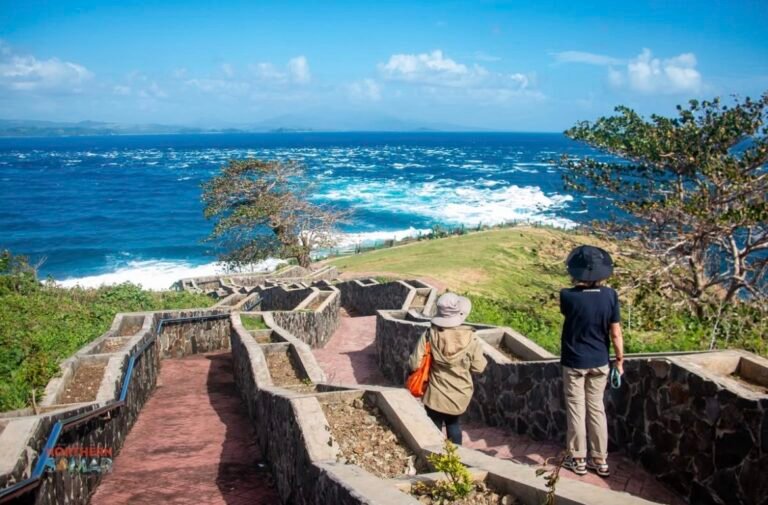
CAPUL, NORTHERN SAMAR welcomed Compagnie du Ponant, a distinguished French luxury cruise line, for a destination assessment aimed at exploring potential routes for the 2027–2028 cruise season. This was supported by the Provincial Tourism Office and local government officials.


The assessment team—composed of senior representatives from Compagnie du Ponant, Intercruises, and Travel People Ltd., together with officials from DOT Region VIII—explored Capul’s rich blend of natural beauty, history, and culture. The team visited the iconic Capul Lighthouse, where they were amazed by the dramatic wave formations visible below. 

They also explored the historic Bañadero, a centuries-old natural spring that has long served as an important part of Capul’s heritage and the Capul Parish Church (Fuerza de Capul) and its museum— a 17th-century fortress church dedicated to St. Ignatius of Loyola, built to protect the town from Moro raids. Its thick stone walls, surrounding fortifications, and nearby watchtower.

The group also enjoyed touring Capul’s beautiful beaches, showcasing the island’s serene coastal charm.The guests also savored the town’s signature delicacies, including Sinarungsong and Kinilaw.


Ms. Faith Jirah Rebong, Tourism Officer of Capul, welcomed the guests with pride in sharing its heritage.

No To Government’s 2 Energy Ideas

0

AMID THE SCORCHING political debates in the country today, which can either burn or renew the republic, there are other serious concerns that can leave as deep a scar. Environmental is one.

ENERGY CONTROVERSY

October last year, the Philippine Department of Energy released a comprehensive framework for the integration of Nuclear Energy (NE) into the country’s power generation mix with Secretary Sharon Garin earlier unveiling its roadmap for 2023-2050 in Vienna, Austria. Shortly after, the Waste-to-Energy (WTE) ideacropped up. Both revved the environment movement to take stands in Congress, streets, media, fora, and position papers.  At the surface, these two ideas areargued as harmful to the environment and the people’s health mainly due to their toxic radioactive and gas emissions.

​In the November edition of Kamayan para saKalikasan, Victoria Segovia, the president of Green Convergence, the organizer of the monthly forum, said these are in contrast to the stronger calls for the phase-out of fossil fuels in the recent Conference of Parties (COP 30) held in Brazil. She noted that with our national leaders now promoting the use of nuclear and waste-to-energy technologies as alternatives, she wondered about this step towards sustainable development.

‘Over the years, civil society groups have consistently opposed nuclear as a power source. “Nuclear power is not the solution to the climate crisis and to our power needs” … Green Convergence sums up in its position paper previously signed by some member networks, organizations, and individuals of the coalition.’ 

NUCLEAR ENERGY

Over the years, civil society groups have consistently opposed nuclear as a power source. “Nuclear power is not the solution to the climate crisis and to our power needs … it is not safe, not cheap, not sustainable, is expensive, will saddle our country with radioactive waste,” Green Convergence sums up in its position paper previously signed by some member networks, organizations, and individuals of the coalition.

Gerry Arances, Founder and Executive Director of the Center for Energy, Ecology, and Development, said in the same Kamayan forum, that approved renewable energy capacity is already enough to power the country forward… no need for new fossil fuel plants, nuclear power, or WTE. “We already have enough renewable energy in the pipeline for the next decade… we do not need nuclear and WTE.”

WTE TECHNOLOGY

On considering Waste-To-Energy technology in the Philippines, Sonia Mendoza, Chairperson of Mother Earth Foundation, warned that WTE incineration actually worsens both the waste and climate crises despite being marketed as a modern solution. She said all thermal WTE processes—from combustion to pyrolysis—emit greenhouse gases (GHGs). They release dioxins linked to cancer and reproductive harm. 

She also pointed out that WTE contradicts the Clean Air Act and the Ecological Solid Waste Management Act. 

“We’re already vulnerable to natural hazards. We will exacerbate our vulnerability by these technologies,” Founding GC Trustee Dr. Angelina Galang expressed in concluding the forum.

Corruption Concealed Behind Investments 

0

CORRUPTION IN RECENT years has become extremely sensational and adversely affecting the Philippine economy. We’re drowning in debt, while people can’t seem to find a formula on how to make both ends meet.

For one, the P695 minimum wage in Metro Manila isn’t enough to cover the daily expenses for a family of five – food, rent, transportation, education, health, and utility bills to name a few.

The suffering all boils down to government corruption. Funds intended to ensure public welfare isn’t serving its purpose.  

After two humongous fund mess — the pork barrel scam and the flood control scandal, crooks in the government were compelled to adapt and become more creative and enterprising. Crooks are slowly veering away from agencies under public scrutiny.


Aware that the Filipino taxpayers are getting more vigilant, the so-called “honorables” reinvented the conventional way to siphon public funds. In fairness, crooks are certainly very intelligent these days as they have found a way to sustain the illegal practice in the guise of the so-called investments.

‘After two humongous fund mess — the pork barrel scam and the flood control scandal, crooks in the government were compelled to adapt and become more creative and enterprising. Crooks are slowly veering away from agencies under public scrutiny.’
 

REINVENTED VERSION OF CORRUPTION

Under the Marcos administration, the media has flagged down at least four government agencies adapting the reinvented version of corruption.

The Overseas Workers Welfare Administration (OWWA), the Government Service Insurance System (GSIS), the Pag-IBIG Fund, and the Maharlika Investment Corporation ( MIC). 

By law, OWWA is mandated to ensure the welfare of overseas Filipino workers (OFW), a sector that has been contributing a significant chunk in the country’s economic stability through remittances. Former OWWA Administrator Arnell Ignacio sealed a P1.4 billion land deal without the approval of its board. Ignacio, who has already been sacked, is currently facing a graft complaint at the Office of the Ombudsman.

GSIS is mandated under the law to make sure that the life of government employees won’t be miserable after retirement. But its top honcho Arnulfo Veloso gambled billions in pension funds in an online gambling venture. By the way, online gambling is illegal.

Pag-IBIG Fund, which is supposed to help the Department of Human Settlements and Urban Development in addressing the gargantuan task of covering 8.25 million (as of 2025) housing backlog, infused a P6 billion investment in a company that has been wallowing in debt and on a losing skid over the last three years. 

MIC, meanwhile, isn’t created to bail out oligarchs. It was formed to “multiply limited government resources.” Using sovereign funds, MIC is poised to acquire an 11.2-percent stake in ATI as the port operator transitions to private ownership. 

Perhaps, it’s high time for the “sparrows” to resurrect. 

What Valentine’s Day Must Really Mean

0

FEBRUARY 14 WAS  a frenetic day for lovers– in the sensual, material and sexual way.

Commerce took advantage of it to the hilt – promoting and selling roses, chocolates, special events, hotel and motel offers — anything and everything other than the purest love.

Traffic was horrendous and malls were so overflowing with huge crowds– patrons or bystanders– just to create a preconceived meaning out of the word love and hearts.

But the true essence of love is compassion for other people– those in the fringes of society– the poor, the sick, the prisoners, the homeless and those needing attention and our resources.

These “invisible” people – whom we often discard like statues, or fixtures or even floors that we step on – are the real people whom God gave attention to, whom God blessed because they had no one else to turn to.

‘But the true essence of love is compassion for other people– those in the fringes of society– the poor, the sick, the prisoners, the homeless and those needing attention and our resources.
These “invisible” people … (they) are the real people whom God gave attention to, whom God blessed because they had no one else to turn to.’

GREAT COMPASSION

I attended online mass on February 14 at RadyoKatipunan of the Jesuits. 

The presiding priest, Fr. Ben Nebres, an old favorite of my dear friend, gave a sermon of how Christ moved by great compassion for the multitude that stayed with him to listen to his words despite growling stomachs for three days, persisted but He had no choice but to move on.

So seeing them hungry with him in a deserted area, he asked his disciples how many loaves do we have– seven they replied– so Jesus took them, prayed a blessing and asked his followers to distribute them to thousands in the crowd. 

Then he asked about the supply of fish. He blessed them and again had his disciples distribute the fish. When all were satisfied, Jesus had them collect the fragments that came up in seven full baskets, which I surmise were also given to those that wanted to take home something.

GENUINE LOVE

What was outstanding about this act of Jesus was his deep understanding of human frailty– hunger and fatigue (which being a God, he did not feel) – and He said if they walk home hungry they might collapse (and die). By this act Jesus showed us how important it is to feed the hungry out of genuine love. Jesus showed us that He cares for us, especially the hungry and those in dire need. 

Fr. Nebres then recalled last Sunday’s gospel about Lazarus and the rich man, who showed his apathy towards the beggar (Lazarus) waiting for scraps for his growling stomach. 

When Lazarus died, the angels took him to heaven but when the rich man died, he went straight to hell. He begged Jesus to send him Lazarus so he could warn his peers and save them from such hellish persecution, but the Lord said Lazarus had nothing to eat but you did not give him anything. 

I don’t hold feeding programs for the poor and the hungry because I don’t have much to spare. But when someone knocks on my door asking for food or water, I try as much as my resources can to give, with no one looking. If I have some food left after a meal, I call and give them to our village guards since I know they don’t eat good food with only meager salaries. If the scraps are good for the strays, I provide daily to the dogs and cats on the road.  

KUMAIN KA NA BA?

Fr. Nebres recalled that the weekend before Valentine’s he joined a group from the del Rosario Foundation and the Gawad Kalinga for four days in Sulu. They distributed food, toys and teddy bears and school bags with school supplies to the children, parents and teachers of 8 out of the 14 schools that the Foundation conducts regular feeding programs.

Soldiers and cops provided the logistics by getting the supplies from Zamboanga and bringing them to the schools in Sulu where the programs would be held. They also helped in cooking the food to be given to the children, teachers and parents of the schoolchildren that day.

“Their helmets were so heavy and thick and their uniforms were so hot but they were overjoyed and did not mind the heat that day,” Nebres recalled.

Fr. Nebres said he was so overjoyed himself seeing how happy the underprivileged children and their family members were, and so with the teachers.


Remember how our others would ask us– whatever time of day we return home– kumain ka na ba?

Nebres said that is how much our mothers love us by feeding us. Food was their language of love. 


CULTURE OF COMPASSION

The late Pope Francis reminded us about the culture of encounter and compassion during the pandemic. He invited us not to look away but to reach out to those needing our attention, care and guidance. 

The late pope even joked saying “if we keep looking away in one direction we might suffer from stiff necks,” Fr. Nebres said. 

Pope Francis even told us that another more dangerous virus than COVID 19, was the virus of indifference, citing the bible parable of Lazarus and the rich man. 

By staying in our comfort zones, we miss the joy that Jesus showed in feeding the poor, the destitute and the hungry children and caring for those in need. 

Fr. Nebres concluded his sermon with “let us celebrate love and joy by feeding the hungry, esp. children and caring for those in need.”

I hope everyone had a joy-filled Valentine’s Day by sharing our love and food to those in need.  

Impeachment Of PBBM, VPSD

0

THE IMPEACHMENT OF the erstwhile Uniteamtandem one after the other has been in the public eye for the past months. Public figures who are considered as influencers by mainstream media have been interviewed and have given their views. Netizens have not failed to have their own comments known. As of this writing, the Congress’ Committee on Justice has shot down the two impeachment cases filed against PBBM for insufficiency in substance. 

Understandably, given that the current membership of the committee is dominated by PBBM’s allies, the discussion tended to dwell on strict rules in regular court cases, which could have been more properly the domain of the Senate as the Impeachment Court. 

At any rate, as viewed live-streamed, Batangas Rep. Gerville Luistro managed to steer the meeting quite smoothly and viewers can only admit every member was able to express his/her own view, and the public can just say, “That’s it, PBBM has the support of the majority in the Committee on Justice.” 

The small number of the Committee members who felt there was railroading of the proceedings can only hope for a favorable result when the Committee’s official report is brought for final judgment in the plenary session.

‘Immediately what comes to mind to the serious watchers of the national scene, is the creation of the ICI which apparently was haphazardly done, as it quickly turned into a pathetic one-man investigating body. The people have been so used to a daily dose of bad news affecting their lives.’

HAPHAZARDLY DONE

For the Filipino people in general, the exercise carried out live-streamed may have been missed, or dismissed outright in favor of a more interesting lively show of their favorite comedian or a PVL volleyball game. 

And if viewed, a general comment probably was “Oh well, kung ano man ang pinaguusapan nila, malamangpara sa kanilang interes, at kung meron man para saating mga mamayan, katiting lamang, o wala!” 

But for the serious observers of the political scene, they probably would have a similar comment like that of the general public. 

This is especially in view of various reasons, on how PBBM and VPSD have been governing the country since 2022. 

Immediately what comes to mind to the serious watchers of the national scene, is the creation of the Investigation Commission on Infrastructure (ICI) which apparently was haphazardly done, as it quickly turned into a pathetic one-man investigating body. 

DOSES OF BAD NEWS

The people have been so used to a daily dose of bad news affecting their lives. The flood control projects, proudly emphasized by PBBM himself in his SONA as one of the Bagong Pilipinas’ major programs to benefit the Filipino people have turned out to be the ‘golden egg,’ as it were, of corruption for the senators, congressmen, other national government officials, and seemingly, up to the highly – placed officials in the government hierarchy.

The topmost concern of the millions of poor Filipinos is to be able to buy P20/kg of rice, affordable vegetables, fruits, fish and meat. Parents with children have long wished for an effective learning environment under a more improved education system that can compare with international standards. 

Healthcare is also their concern. 

Why has the PNP allowed its troops, almost daily, to be involved in criminal activities – bullying, harassments, planting evidence, illegal arrests – and inability to stop the proliferation of drugs by apprehending at least one supplier-drug-lord? 

Why have they failed so far to apprehend Atong Ang, the suspected mastermind of killing, in cahoots with policemen, of more than 30 “sabungeros” and throwing their bodies in the Taal Lake? 

Why is PBBM directing the NTF-ELCAC to red-tag activists, causing their illegal arrests or EJKs? Why is PBBM silent about Sen. Marcoleta’s wanting to give the Kalayaan Group of Islands to China? What is PBBM doing to effectively stop China’s attacks on our sovereignty in the WPS? Is incompetence simply incurable?    

Love Is Sweet. Your Blood Shouldn’t Be.

1

WELCOME TO FEBRUARY—the month where we collectively decide that the best way to say “I love you” is by gift-wrapping a metabolic dumpster fire.

Somewhere along the way, romance got permanently married to sugar. Chalky conversation hearts that taste like flavored drywall. Artisan truffles with origin stories longer than your last relationship. Champagne, cake, chocolate fountains. Because nothing says devotion like spiking someone’s blood glucose and calling it affection.

As someone who spends her days poking people with needles for a living, let me be very clear: your sweet tooth isn’t cute. It’s a slow-motion suicide pact.

“If you truly love someone this month, don’t hand them a box of inflammatory agents with a bow on it.
If you love yourself, stop treating your body like a seasonal candy dumpster.”
 

THE SILENT SPIKE

Here’s the uncomfortable truth most people don’t want to hear: a shocking number of you are already pre-diabetic and don’t know it.

You feel fine. Mostly. Maybe you crash after pasta. Maybe your brain feels foggy by mid-afternoon. Maybe you’re tired but can’t sleep. You blame stress, age, hormones, Mercury in retrograde—anything except the reality that your pancreas is in the basement screaming into a pillow while you down your second salted caramel latte.

Pre-diabetes is the ultimate ghoster. No dramatic symptoms. No warning text. It just quietly erodes insulin sensitivity until your cells start rejecting glucose like a bad Tinder date. By the time you’re “thirsty all the time,” the damage isn’t pending—it’s already moved in and rearranged the furniture.

THE ALCHEMY OF DAMPNESS

In Traditional Chinese Medicine, we don’t just stare at lab values—we look at the internal environment. And excessive sugar? That’s what we call Spleen-damaging.

Overindulging in sweets creates Dampness.

Think of your body like a high-end sports car. Sugar is pouring cheap, sticky molasses into the fuel tank. Everything slows down. You feel heavy. Bloated. Sluggish. Your Qi—your usable energy—gets stuck. This Dampness is the metabolic traffic jam that eventually shows up in Western medicine as insulin resistance and diabetes.

You’re not just “full.” You’re bogged down.

Why You Need a Good Prick

This is where people ask, “How can acupuncture help with sugar cravings?”

Because balance isn’t a suggestion—it’s a requirement.

When I needle points like Spleen 6 or Stomach 36, I’m not just poking you for fun. I’m sending a very firm memo to your nervous and endocrine systems to regulate already. Acupuncture helps stabilize blood sugar swings, calm cortisol spikes, and reduce those frantic 3:00 p.m. sugar cravings that feel like an emergency but aren’t.

We work to resolve Dampness—clearing the internal fog so your body remembers how to process fuel without launching your glucose into orbit. It’s about restoring communication between your brain and your gut—lines that years of processed sugar have quietly sabotaged.

A VALENTINE’S REALITY CHECK

If you truly love someone this month, don’t hand them a box of inflammatory agents with a bow on it.

If you love yourself, stop treating your body like a seasonal candy dumpster.

Being a Certified Prick means saying what most doctors are too polite to spell out: you are one chocolate fountain away from a lifetime of finger-pricks. Why wait for a diagnosis before you start caring?

Skip the sugar rush. Come see me instead. Let’s move stagnant Qi, regulate your system, and address the sweetness in your blood before it turns bitter.

CERTIFIED PRICK PRO-TIP

If you’re craving sugar, you’re often dehydrated or protein-deficient. Drink 12 ounces of water first. If the craving survives, then we’ll talk needles.

THE GOLDEN RULES

Stop the ice water. Cold drinks drown digestive fire. Choose warm water or ginger tea.

Eat to 80%. Overeating is the fastest way to create stagnation.

Bitter is better. Arugula, dandelion greens, ampalaya—bitterness reins in sugar cravings.

Say no to “White” Foods. If it’s white (bread, white sugar, white flour), it’s basically glue for your arteries.

The Certified Prick – 

Stay sharp. Stay balanced. And for heaven’s sake—put down the truffle.

Recovering What Was Lost

0

If we command our wealth, we shall be rich and free. If our wealth commands us, we are poor indeed

                               — Anglo-Irish writer-philosopher Edmund Burke

APART FROM GOING after those involved in corruption in government like the flood control scam and finding proof to send them to jail, an important aspect of the mission is to recover the stolen fund supposedly pocketed by a number of high-ranking officials in the Marcos Jr. administration. 

However, this appears to be “easier said than done.” Although those ill-gotten moneys in the banks could be easily targeted and frozen, there are also so-called dirty cash not kept in banks and laundered in several ways that would be extremely difficult to recover. 

This view is supported by Bangko Sentral ng Pilipinas governor Eli Remolona Jr., also the chairperson of the Anti-Money Laundering Council (AMLC), who admitted that it would really be challenging to track all money stolen from the government that are not in any banking institution. 

‘The truth is that our country still has a lot of growth potential and recovery can be done if the right decisions are made in who to support in 2028 when we the electorate once again choose those who will lead us under a new administration for the next six years and beyond.’

Remolona cited this at the Economic Briefing organized by the Management Association of the Philippines (MAP), where he highlighted that while the AMLC can monitor bank accounts and, in fact has already frozen assets worth almost P25 billion—consisting of bank accounts, e-wallet accounts, insurance policies, and other assets linked to the flood control scandal—those not deposited in banks may be harder to track.

(The) problem here, he said, is that “we can only do something if the money is in the bank (so) they will need the help of other agencies to look for potentially stolen money outside the formal banking sector— including possible huge amounts of cash inside homes.”

MONEY LAUNDERING

In the meantime, the BSP chief added they are strengthening AMLC to better track or identify money laundering schemes. There are current tools, he said, but they need more: “We had some tools. We’ve succeeded in using them. I would admit we need more tools. We’re getting help from international organizations.”

On another point, too, he disclosed that an economic recovery is expected this year following a weaker-than-expected growth in 2025 due to the flood control issue. But he also stated the 2025 figure may be a more realistic growth rate of the country since the higher growth rates in 2023 and 2024 were not yet impacted by the flood control controversy. He said expenditures were high in 2023 and 2024, but now that money likely did not go to the intended projects.

For our take in all the hullabaloo, we realize that not all the public funds did not actually go to investment or consumption and a lot of it went to cash that was stored in people’s basements, so we have to make our ownadjustments. 

POTENTIAL AND RECOVERY

The truth is that our country still has a lot of growth potential and recovery can be done if the right decisions are made in who to support in 2028 when we the electorate once again choose those who will lead us under a new administration for the next six years and beyond. 

What’s unfortunate, though, is that from those we will be voting, it’s apparent that they are the same candidates we have chosen before so we know what’s going to happen after the election are done—the same sort of leaders will sit to decide our fate, good or bad. 

* * *

FOR your comments or suggestions, complaints or requests, just send a message through my email at cipcab2006@yahoo.com or text me at cellphone numbers 09171656792 or 09171592256 during office hours from Monday to Friday. Thank you and mabuhay! 

Catholic Bishops Calling Out China

0

UNDER THE 1987 Constitution, there’s a clear provision on the separation of the Church and the State.  But when the national integrity and sovereignty are at stake, the thin line which serves delineation should be set aside.

This comes as two Catholic bishops stood by Philippine Coast Guard spokesperson Commodore Jay Tarriela for calling out China’s persistent bullying at the West Philippine Sea.

According to Lingayen Dagupan Archbishop Socrates Villegas, Chinese aggression inside the country’s 200-nautical mile exclusive economic zone has adversely affected not just the livelihood of fishermen, but also caused the depletion of the fishing resources of the Philippines.

CHINATOR CAYETANO

Villegas also took a swipe at Senator Alan Peter Cayetano for shaming Tarriela “for standing up against foreign aggressors.”

“Despite shaming from pro-China politicians, your stand safeguards God’s people and future Filipinos. We salute your principled statesmanship and fidelity to oath,” said the prelate in reference to Tarriela’s gallant stand.

“This is not merely political but profoundly pastoral, affecting present and future generations’ well-being. I personally admire your fearless defense of our maritime zones, sovereign by international and domestic law,” Villegas added.

Tarriela replied on X (formerly Twitter) that Villegas letter posted on FB gave him “real strength and motivation as I carry on my patriotic duty in standing for our rights in the West Philippine Sea.”

PROFOUNDLY MORAL

Caloocan Bishop Pablo Virgilio David for his part lauded Tarriela’s heroism — “this is not only a political issue. It is profoundly moral and pastoral, because the livelihood and safety of our people, especially our fisherfolk, are at stake.”

David likewise commended the 15 senators who signed a Senate resolution “expressing our nation’s protest against China’s continuing acts of coercion and harassment in our waters.” 

The resolution condemned the statement of the Chinese Embassy against the Philippines trying to grab the Kalayaan Island Group and the WPS that China claimed is historically theirs.

“May the Blessed Mother, Stella Maris (“Star of the Sea”) protect you, the Filipino fishermen and the uniformed personnel guarding the WPS, ” said Villegas.

CARTOON SENSITIVE

Cayetano recently criticized a caricature that Tarriela used in his recent academic lecture showing Chinese president Xi Jinping with the words “Why China remains to be a bully?”

“Yung pagkagigil niya sa akin, naibato ba niya yan sa China everytime hina-harass tayo?… Everytime na wina-water cannon ang mangingisdang Pilipino,” Tarriela retorted.

In Villegas social media post, he vigorously condemned China’s growing aggressiveness towards Filipino fishermen and local maritime authorities as well as anti-China Filipino legislators.

“China has seized vast seas, bullied fisher folk from traditional grounds with water cannons on frail bancas, injured our personnel, and militarized islands near our shores—violating our right to peace,” the Archbishop declared.

TAKING A STAND

Villegas stressed that the Catholic church’s stand is based on social teachings about dignity and defending our rights.

“The Church teaches that every person has ‘the natural right to be recognized as a free and responsible being,’ with freedom protected for the common good. Justice, inseparable from charity, demands defending legitimate rights,” Villegas emphasized.

“Despite shaming from pro-China politicians, your stand safeguards God’s people and future Filipinos. We salute your principled statesmanship and fidelity to oath,”  he further said.

David noted that a significant chunk of the population depend on the sea’s bounty — God’s gifts now threatened by China’s encroachments. David referred and quoted Villegas’ earlier FB post.

VERY HOSTILE ENVOY

Meanwhile, Sen. JV Ejercito called for the immediate replacement of newly-designated Chinese Ambassador to the Philippines Jing Quan for the latter’s continued attacks on Philippine officials.

Ejercito said barely two months as ambassador, Quan has been “very hostile” in his dealings and utterances towards Filipino officials.

He however clarified that the Philippine Congress would neither condone nor be terrified by China’s abusive behavior towards a nation that is only defending its rights.

As this developed, Interior and Local Government Secretary Jonvic Remulla met on Feb. 13 with the Quan to “deescalate” tensions between the two countries during Quan’s courtesy call to Remulla, citing “deescalation and cultural exchanges” were the only agenda on the table.

SCOLDING EMBASSY

The Department of Foreign Affairs (DFA) spokesman on maritime affairs Rogelio Villanueva for its part urged the Chinese embassy to be respectful and to act in a calm and professional manner in its statements.

“While indeed the embassies have the duty to respond, the DFA urges that such responses be made in a calm and professional manner, conscious of the mutual respect that must prevail in all diplomatic interactions,” Villanueva said in a video statement.

He said the DFA values “candid and vigorous debate with its foreign counterparts on important issues consistent with the Philippines’ democratic tradition,” and reminded China to be “constructive in its statements towards a healthy dialogue despite major differences with a view to advance the overall bilateral relationship.”

CHINA TALKS BACK

In response, the embassy insisted its statements were made in a “calm, professional and constructive” manner to “defend the national interests and dignity of China.”

“We urge the Philippine side to speak with a unified and constructive voice and hope the DFA will play a constructive role in leading the efforts to manage differences and advance the overall bilateral relationship,” the embassy said.

Quan also denied acting rude towards the Philippine government officials even as he claimed that it was Senate President Vicente Sotto III and his colleagues who were being rude. 

“When someone triggers you to react and you do not, it’s annoying! I prefer to be annoying,” reads Sotto’s brief statement over Quan’s rant.

MORE LIKE AGITATOR

Sen. Raffy Tulfo accused China of being onion-skinned when its coast guard and maritime militia are the ones harassing Filipino vessels and fisherfolk and making baseless claims in the South China Sea.

Sen. Ejercito for his part urged the Chinese envoy to “act like one,” adding that Quan should foster and improve the camaraderie and relationship between the two countries, instead of being hostile to Philippine officials. 

In barely two months here, “Instead of dousing cold water to the fire, he’s adding fuel to the fire,” Ejercito said.

Kalayaan officials earlier declared Chinese embassy officials as unwelcome or persona non grata which the embassy and Beijing reciprocated by also banning the local officials from mainland China, Hong Kong and Macau.

LOCAL LIVING HEROES

At the House of Representatives, members of the so-called West Philippine Sea bloc have filed a congressional resolution to declare the people of Kalayaan, Palawan as “Outstanding Filipinos of 2026.”

Led by Akbayan Rep. Dadah Kiram Ismula, House Resolution 780 was introduced by Akbayan reform bloc Representatives Chel Diokno, Percival Cendaña, and Dinagat Islands Rep. Kaka Bag-ao; along with Albay District 1 Rep. Cielo Krisel Lagman and Mamamayang Liberal Rep. Leila de Lima.

The resolution commends 16 local government officials for their “courage, vigilance, and unwavering commitment” to Philippine sovereignty.

“This early in the year, the courage and patriotism shown in the actions of the people of Kalayaan are worthy to be hailed as Outstanding Filipinos of the Year,” Ismula stated.

“The heroes of Kalayaan have more courage than the Tsinador. They are the ones that we need to emulate,” Ismula said.

DIPLOMATIC PROTEST

The Chinese Embassy said Friday a diplomatic protest has already been filed against the coast guard spokesman over a social media post that included cartoonish images of President Xi Jinping.

The embassy slammed the post for “attacking and smearing Chinese leaders, a serious violation of China’s political dignity, and a blatant political provocation, which has crossed the red line,” the embassy statement said.

The embassy expressed “strong indignation” to the presidential palace, foreign affairs department and coast guard demanding an explanation for Tarriela’s “malicious provocations.”

Tarriela responded saying the (diplomatic) protest is “an attempt to deflect from the core issue: China’s repeated aggressive and illegal actions in the West Philippine Sea,” using the Filipino term for the waters on the immediate west of the country.


Maharlika Booed: Buying DP World Stakes Is A Blunder

0

WITH PRESSURE NOW building up against Emirates DP World globally because of its head’s ties with controversial billionaire sex peddler Jeffrey Epstein, it would seem like the country’s sovereign wealth fund committed a grave blunder in acquiring DP World’s majority share in the Asian Terminal Inc., its local partner. 

The issue is landing at a sensitive moment for Philippine markets because DP World is a major shareholder of Asian Terminals Inc. (ATI), a key operator in Philippine port logistics, and ATI is moving toward a voluntary delisting from the Philippine Stock Exchange.

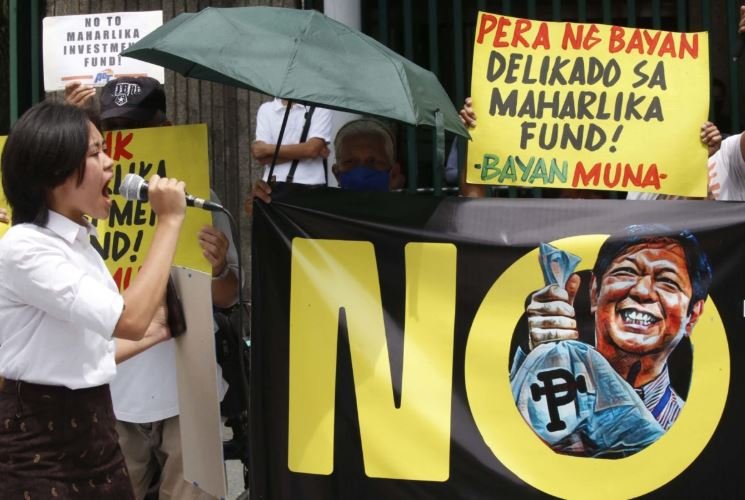
ATI and Maharlika Investment Corp. (MIC) are now in the middle of a tender offer running up to March 3 to buy up to 191.44 million shares at P36 per share, as part of ATI’s planned delisting supported by an independent fairness opinion, reported Bilyonaryo.

ATI wants to leave the stock market, and critics say that is a problem because once it is delisted, the company will no longer be forced to keep the public updated the way listed firms are. Less disclosure means less visibility. 

For a business that runs major gateways like Manila South Harbor and other key ports, many are inclined to believe that such would translate less questions and fewer documents.

PUBLIC FUNDS

The bigger issue is Maharlika showing up with billions in public money just as ATI’s private owners, including Yosi Tanco and Jun Palafox, are trying to take it private.

Critics see it as the government helping rich, powerful shareholders cash out the public float, while taxpayers take on the risk. Maharlika may get a small stake and a board seat, but it will not control the company, and returns are not guaranteed. 

If the owners are already billionaires with deep pockets, why are ordinary Filipinos being asked to help pay the bill?

For Filipino investors and government officials watching ATI’s delisting and Maharlika’s buy-in, the DP World controversy abroad boils down to: when a major owner is under a global spotlight, expect tougher questions here too. 

And because Maharlika is using public money to buy stakes in a company tied to a key Philippine port, the deal could face even more scrutiny from Congress, regulators, and the public.

CONGRESSIONAL PROBE

Already, the Senate and the House of Representatives are pushing for separate investigations into alleged Philippine-based operations mentioned in documents linked to the late convicted sex offender Jeffrey Epstein.

Senator Loren Legarda filed Senate Resolution 300, calling on government agencies to ensure that Philippine institutions and digital platforms are not used to conceal or enable criminal activities. 

At the lower legislative chamber, Gabriela partylist Rep. Sarah Elago, ACT Teachers Rep. Antonio Tinio, and Kabataan Rep. Renee Co filed House Resolution 762 seeking a similar inquiry.

Lawmakers cited information from documents released by the US Department of Justice, which allegedly indicate that a Philippine-based outfit may have helped manage Epstein’s online reputation through search engine optimization and other digital strategies. 

The resolutions seek to determine whether any Filipino individuals or entities were involved and to ensure accountability if laws were violated.

ATI  is currently DP World’s local partner in the Philippines. It operates Manila South Harbor, the Integrated Batangas Port, Cavite Barge Terminal, and strategic inland logistics terminals, ATI said on its website.

CONNECTED TO EPSTEIN

On May 5, 2025, DP World and ATI invested about $100 million in projects that included extending Pier 3’s berth to more than 600 meters, expanding the yard to accommodate 20,000 twenty-foot equivalent units (TEUs), as well as adding two new Ship-to-Shore cranes and purchasing eco-friendly landside equipment. 

The company website says DP World operates ports and terminals, logistics, economic zones and marine services in 79 countries.

MIC, created under Republic Act (RA) No. 11954, or the Maharlika Fund Act, serves as the primary vehicle for utilizing the Philippines’ sovereign wealth fund. Its seed capital comes from state banks and government corporations.

The name of Sultan Ahmed bin Sulayem, chairman and chief executive of DP World, surfaced in the newly-released US Justice Department files linked to Epstein. 

The UK development finance agency and Canada’s second-largest pension fund have suspended new investment with global ports operator DP World over alleged ties between its chief executive and Epstein, raising pressure on the Dubai-based firm.

DB WORLD’S SULAYEM

‘We are shocked!’ Investors pulled back as DP World chief Sulayem, named in Epstein files, raising fresh questions for Maharlika’s bailout of ATI’s Emirati owner, screamed Bilyonaryo’s headline based on the story of BII.

Members of the U.S. Congress said Sulayem’s name appeared in the files, prompting renewed scrutiny of his past interactions with Epstein, a convicted sex offender.

The documents, some of millions published by the U.S. Department of Justice and showing Epstein’s web of relationships with prominent people in politics, finance, academia and business, suggest a close relationship between the two men for more than a decade after Epstein’s conviction in 2008 on prostitution charges involving an underage girl.

DP World declined to comment, while Bin Sulayem did not immediately respond to a request for comment sent to his LinkedIn account.

The UK development finance agency, British International Investment, said that it had paused new investments with DP World.

“We are shocked by the allegations emerging in the Epstein files regarding Sultan Ahmed bin Sulayem,” said a spokesperson for BII, which invests alongside DP World in four ports in Africa.

CEASING RELATIONSHIP

“In light of the allegations, we will not be making any new investments with DP World until the required actions have been taken by the company.”

Canadian pension fund La Caisse said in a statement it was “pausing additional capital deployment alongside the company” until DP World clarified the situation and took “the necessary actions”.

Bin Sulayem, one of Dubai’s most influential businessmen, has led DP World through an expansion that has seen the company turn into one of the world’s largest logistics companies.

It says it handles around 10% of global trade, with operations spanning across the globe, including in Canada, Peru, and India among others.

Justice or Injustice, PH Style

0

ON JANUARY 22, 2026, community journalist Frenchie May Cumpio and church worker Marielle Domequil were convicted by Judge Georgina Perez of the Tacloban City Regional Trial Court (RTC) Branch 45, of terrorism financing, and were sentenced to a prison term of up to 18 years. 

The judge admitted giving weight to the testimony ofwhat the AFP identified as surenderee/ex-rebels, saying that in March 29,2019, “they facilitated the delivery of cash and ammunition to CPP-NPA members.” Compioand Domequil were among the five activists, collectively referred to as “Tacloban 5,” after they were arrested on February 7, 2020, in Tacloban. (INQUIRER)

Fides Lim of KAPATID, a support group for political prisoners, said that “justice demands that Frenchie and Marille be granted bail while the courts review a conviction that remains deeply contested being legally infirm and constitutionally unsound.” 

The MEDIA FREEDOM COALITION EMBASSY NETWORK (comprising sixteen foreign embassies – Austria, Belgium, Canada, Czech Republic, Denmark, Finland, Germany, Ireland, the Netherlands, Norway, Slovenia, Sweden, Switzerland, Ukraine and the United Kingdom) “expressed outrage over Cumpio’sconviction, the first Filipino journalist to be punished by the 2012 law on terrorism financing…a case, stark reminder of the challenges faced by journalists in pursuit of their vital work…We urge all stakeholders to ensure that journalists can carry out their work without fear of persecution or undue interference. Freedom of expression and the ability to report independently are essential pillars of democracy and must be safeguarded.”

IS IT REALLY WORKING? 

With the international community actively watching not only the country’s current political and socio-economic developments, but also the justice system,under the administration of President Bongbong Marcos and VP Sara Duterte, shouldn’t the Senate and the House of Representatives be alarmed about how the country’s judiciary system is working, and make sure it is REALLY working? 

A country’s justice system must adhere to the highest standards of fairness and transparency, as it serves as the bedrock of democracy, giving impetus to peace and progress for the nation and its people. 

Indeed, freedom of the press for the country ensures that the people are well informed of how the government is functioning in accordance with its mandate, based on the Constitution and Rule of Law. 

ARE THEY FULLY AWARE?

The Filipino people can rest easy and feel assured of a stable and just government working for a decent life of everyone, if they are fully made aware of how the government leadership is addressing not only the currently existing social inequalities, but more so the infirmities of the justice system, so that those who are truly guilty are made accountable (as for example, the corrupt Senators and Congressmen in the messy case of ghost and sub-standard flood control and other infrastructure projects).

Moreover, the Philippines’ justice system is expected to protect and promote the interests of all Filipino citizens, that is, justice for children and youth in their educational and healthcare needs as they attain adulthood. 

More importantly, the government should ensure thatjustice is always a given to the workers – laborers, farmers, fisherfolks, IPs, vendors, small entrepreneurs, businessmen, professionals, which include journalists and church workers. 

Justice has been trampled upon by the courts since the ICC jailbird, Rodrigo, ordered EJKs and jailed a senator on trumped-up charges.

When will the Marcos-Duterte regime stop injustice in the courts?  

Asian Youth’s Anger At Corruption Can Undermine Region’s Stability

0

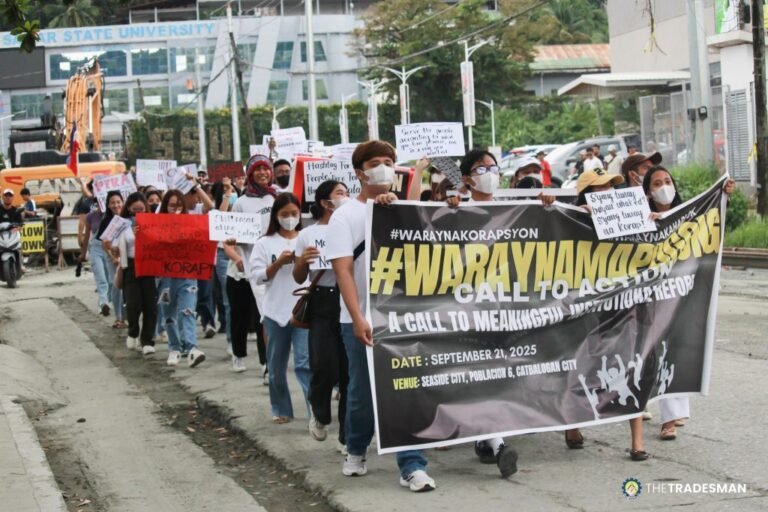
Frustration within the region at weak governance and limited accountability were clearly felt in 2025, with a surge in young people taking to the streets to demand action and accountability from their governments,” said Transparency International.

THE YOUNGER GENERATION, specifically GenZ, across Asia are mad over corruption, and their disgruntlement can undermine stability in the region if governments choose to look the other way or respond with force.

This was the warning of Willis, a WTW business listed at NASDAQ, and Transparency International in their latest reports on instability in Asia, and global corruption, respectively.

Wilis warned that civil unrest fueled by dissatisfaction among the youth is among the major factors that can cause continued instability in Asia, and governments not taking the appropriate action can worsen the situation.

“The Asia Pacific region will continue to face heightened crisis-related pressures in 2026, shaped by sustained civil unrest, driven by economic pressures, political grievances and rising youth activism,” said Will Miller, Head of Crisis Management for Asia Pacific at Willis.

Willis cited that the younger generation, most especially Gen Z, are taking to the streets in countries like Indonesia, Nepal and the Philippines, and leveraging digital platforms and social networks to mobilize demonstrations.

However, governments can respond with force against the protests that in turn can affect stability and even economic activity.

“Governments may respond with a combination of concessions and force, potentially escalating tensions and prolonging instability, which could impact domestic economic activity and foreign investment,” Wilis added.

LOW PH RANKING IN CORRUPTION INDEX

For its part, Transparency International said that frustration in Asia over corruption are causing younger people to stage protests and demand reforms from their governments.

“Frustration within the region at weak governance and limited accountability were clearly felt in 2025, with a surge in young people taking to the streets to demand action and accountability from their governments,” it added.

Transparency International Asia Pacific adviser Ilham Mohamed said governments must take action to address corruption and listen to the call of the younger generation.

“In many countries across Asia Pacific, good governance is being undermined by weak law enforcement, unaccountable leadership and opacity in political funding. With young people demanding better, leaders must act now to curb corruption and strengthen democracy. Meaningful reforms can rebuild public trust and show those in power are finally listening,” Mohamed said in a statement.

In its 2025 Corruption Perceptions Index, Transparency International said the Philippines had a score of 32, which is -1 lower compared to 2024, ranking it at 120th out of 182 countries.

The report said is a “climate change impacted” country and cited the flood control scandal that has seen billions of pesos spent on substandard and non-existent projects. This, in turn, resulted in the failure to deliver services and projects that would really benefit citizens.

“In climate-change impacted Philippines, citizens were outraged by allegations that a substantial amount of public funds were lost to a fake flood relief project,” it said.

“Uniting these movements was a sense that those in charge were abusing their power for private interests, while failing to deliver decent public services, a stable economy and fair opportunities for citizens,” the report added.

Kickoff 2026: PH Brands Enter the World Cup Arena

0

FOOTBALL IS NO longer a niche sport in the Philippines. It is no longer just a late-night cable indulgence or a distant European obsession. With the FIFA World Cup 2026™ on the horizon, the game has officially entered the Filipino mainstream — and brands are being invited to play.

On February 12, 2026, Aleph, a global digital advertising and fintech company, was appointed by FIFA as the exclusive partner for multimedia distribution and commercialization of the FIFA World Cup 2026™ in the Philippines. In practical terms, this makes Aleph the single gateway for brands looking to advertise, sponsor, and activate across platforms — from free-to-air and pay TV to digital streaming, mobile, and video-on-demand.

This is not a small assignment. It is a strategic power play.

Aleph operates in more than 130 high-growth markets and represents major digital platforms in the Philippines, including X, Pinterest, Reddit, and TikTok. With this ecosystem, the company is positioned to do more than broadcast matches. It can engineer conversations, spark fan-driven content, and connect brands to audiences who are watching with one eye on the screen and the other on their phones.

As Anna Dy, Aleph Country Head for the Philippines, aptly puts it: football has moved “from the sidelines to the center of the Philippine sports conversation.” The shift is cultural as much as commercial. Today’s fans do not just watch — they react, remix, meme, and mobilize. The World Cup is no longer a passive viewing experience. It is a participatory digital festival.

The numbers back this up. During the FIFA World Cup Qatar 2022™, Asia achieved over 1.19 billion in digital streaming reach. The region also led globally in share of video views (65.3%) and hours viewed (63%) on digital and social platforms. If 2022 was the proof of concept, 2026 is poised to be the full realization of sports as a multi-screen, multi-platform spectacle.

And 2026 will be historic. For the first time, 48 national teams will compete across 104 matches in 39 days. It may also be the final World Cup appearance for legends like Lionel Messi and Cristiano Ronaldo — a passing of the torch moment that will draw not only loyal fans but casual viewers eager to witness history.

Aleph’s mandate, therefore, is not merely logistical. It is experiential. The company sees opportunity in merging live sports with real-time digital interaction — unifying broadcast and mobile engagement into one seamless narrative. In a country where social media usage ranks among the highest in the world, that integration could redefine how Filipinos experience global sports.

The appointment signals more than a partnership. It signals recognition that the Philippine market is ready — commercially, digitally, and culturally — to stand on football’s biggest stage.

Come 2026, the World Cup will not just be watched in the Philippines. It will be streamed, shared, commented on, memed, monetized, and remembered.

And for brands willing to step onto the pitch early, the whistle has already blown.