

NOT even P15.8 billion “allocable” from 2023 to 2025 seemed enough to come up with a working flood control system in a congressional district being represented by no less than the President’s son, Sandro.
Floods and landslides were reported in several barangays in Laoag City on Monday, Aug. 31, amid prevailing bad weather.
Over the weekend, the Office of Civil Defense (OCD) reported floods and landslides in Laoag City, which forms part of Ilocos Norte’s 1st Congressional District.
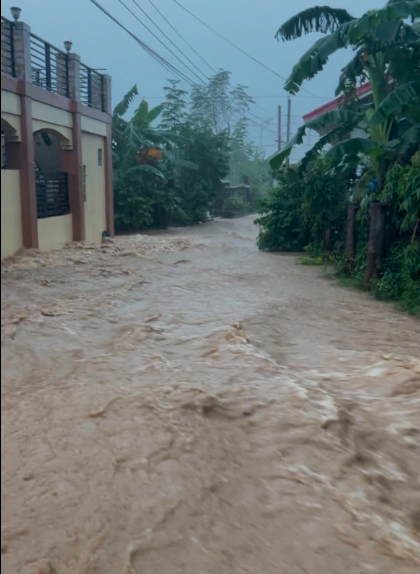
VISIBLY AFFECTED
Citing the city government’s disaster risk reduction and management office, the OCD said floodwaters were ankle to knee-deep in several areas, with below-waist-level flooding reported in parts of Barangay 2. Knee-level flooding was also recorded in Barangay 38-A in Mangato village.
Landslides were also recorded in Barangays 23 and 55-A, while two more occurred in Sitio Matirem-A in Barangay 57, Pila. A house in Sitio Ligsay was also flooded.
A road in Barangay 52-B, Lataag, was closed to heavy vehicles, with only light vehicles allowed to pass.
ALLOCABLE KING
Data posted on the Philippine Center for Investigative Journalism (PCIJ) website, Ilocos Norte 1st District Rep. Sandro Marcos got the biggest share of the so-called allocables from 2023 to 2025 — a staggering P15.8 billion.
Not far behind the presidential son is former House Speaker Martin Romualdez who reportedly cornered a whopping P14.4 billion.
The remaining 251 district representatives in the previous Congress were each entitled to anywhere from P1 billion to P10 billion in “allocables” during that period.
House members identified with Vice President Sara Duterte got nothing at all in the final version of the 2025 budget.
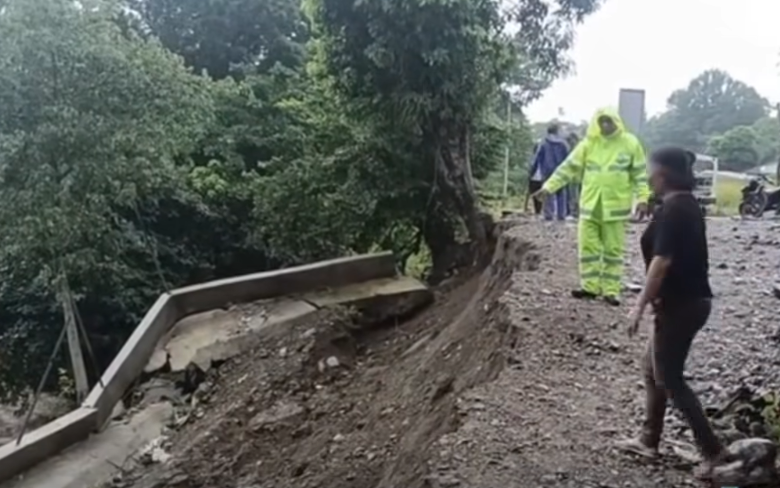
GROSSLY UNFAIR
Demographics-wise, the huge amounts given to the presidential son and the presidential cousin looks more like an exaggeration, if not totally unfair.
Ilocos Norte’s 1st District, with a population of less than 320,000, got almost twice the P7.8-billion allocable of Rizal’s 1st District, the country’s most populous legislative constituency with 1.2 million residents.
A document obtained by PCIJ also showed political maneuvering for so-called “non-allocable” projects. These are projects that the DPWH proposes, supposedly based on an infrastructure masterplan that is premised on poverty alleviation, disaster mitigation, and service provision.
“But the truth is that Congress members and executive officials often make major insertions for non-allocable projects as well, skewing DPWH priorities,” reads part of the PCIJ observation.

