Thursday, March 26, 2026
Home Blog Page 4

RTC Judge Suspended For Concealing Criminal Case

THE MERE MENTION of the judiciary translates to honesty and integrity — but not for regional trial court judge who had just been slapped with a six-month suspension for failure to disclose a pending criminal case prior to his appointment.

This comes as the Supreme Court en banc sanctioned Catbalogan City-based RTC Judge Alfonso Cinco IV who was charged for allegedly violating Republic Act 10168 (Terrorism Financing Prevention and Suppression Act of 2012).

In a decision penned by no less than Chief Justice Alexander G. Gesmundo, the Court said Cinco did not inform the Judicial Bar Council (JBC) that a complaint had been filed against him before he assumed office as presiding judge.

“ACCORDINGLY, Judge Alfonso M. Cinco IV is found GUILTY of serious dishonesty. He is hereby SUSPENDED FROM THE SERVICE for six months without pay, to take effect upon finality hereof, with a stern warning that a repetition of the same or similar act will be dealt with more severely,” reads part of the SC decision.

Records show that on May 23, 2023, the Joint Task Group Cebu of the 3rd Infantry Division, Philippine Army, under the Visayas Command (Viscom) filed a complaint before the Department of Justice (DOJ) against the Community Empowerment Resources Network (CERNET) where Cinco was identified as among its officers.

Based on the complaint, CERNET allegedly provided funds to the South-Eastern Front of the New People’s Army (NPA), in violation of RA 10168, otherwise known as the Terrorism Financing Prevention and Suppression Act of 2012.

Cinco was accused of violating Section 8(ii), in relation to Section 9, of RA 10168.

Court records further showed Cinco was indicted three months before he received his judicial appointment on August 30, 2024.

Cinco however maintained that he honestly believed he was not required to disclose the pending case.

“For his part, Judge Cinco argues that he was busy discharging his functions as then prosecutor; that he had been experiencing a slew of personal problems; and that he honestly believed that he need not make a report on the matter,” the Court noted.

The criminal case against Cinco is currently pending before Branch 74, Regional Trial Court, Cebu City.

Epal Spotted: COA Flags Villafuerte

SHEER WARNING AGAINST the so-called epal politicians does not make the Department of Interior and Local Government (DILG) effective — walking its talk does.

Far from the DILG’s pure talk, the Commission on Audit (COA) did what the DILG should have done following a stern warning issued by no less than Local Government Secretary Jonvic Remulla.

This comes as COA called out officials of the provincial government of Camarines Sur for violations of the Anti-Epal rules under the DILG Memorandum Circular No. 2010-101 and COA Circular No. 2013-004.

The DILG memo banned the names, initials or images of government officials in billboards and signages of government programs and properties.

On the other hand, the COA circular considers the posting of photographs and names of public officials on government programs and projects as “irregular or unnecessary expenditures” that may be disallowed in audit.

“An inspection and evaluation of the inventory accounts of the LGU (local government unit) revealed that certain procured items bear markings, logos, color motifs, initials and other symbols or graphic representations associated with the top leadership of the project proponent,” the COA said in its 2024 audit report on the province released last December 19.

The state auditor clarified that while government agencies are expected to notify the public of its projects, programs, and activities, they are required to avoid “unnecessary branding” that may be “construed as political promotion.”

Among the items found to have violated the Anti-Epal rules were 75,000 22-liter water containers with faucets with a total value of P18.37 million. These were distributed to various barangays with blue and white stickers containing the words “Serbisyong Ka Fuerte.”

Also found were 20,000 high-grade outdoor vests for barangay “tanods” bearing the marks “From: Gov. Luigi Villafuerte” in front and “Gov’ Luigi Villafuerte” at the back in addition to an “LV” logo.

Auditors likewise listed 1,000 wheeled trash bins worth P1.45 million with “personalized markings of the name “LUIGI VILLAFUERTE” in blue and red colors.

Moreover, 1,000 laptops worth P34.45 million for distribution to elementary and secondary level public school teachers were also discovered with “SERBISYONG KA FUERTE” stickers.

“It bears stressing that the inclusion of logos and symbols associated with specific public officials on government-funded items raises concerns regarding compliance with DILG Memorandum Circular No. 2010-101 and COA Circular No. 2013-004. Hence, this transaction is deemed irregular and disallowable in audit,” auditors said.

Other items flagged by the audit team were 970 portable speakers (P20.61 million) with the “Ka Fuerte” logo and basketball backboards of undetermined number and value bearing the phrases or names “Migzerbisyo Rinconada”, “Luigi”, and “Marco Gumabao.”

The audit team notified the provincial leadership to immediately cease the branding of procured items using public funds and to submit an explanation why the practice was allowed despite existing prohibitions.

In response to Audit Observation Memorandum No. 2025-016-100, the province assured the audit team that the inclusion of political logos and personal markings was not approved by the local government.

It said the markings were done at the initiative of suppliers but did not cost the province a centavo.

The provincial officials acknowledged the importance of complying with government rules and committed that there will no longer be a repetition in future procurements and distributions. 

Ex-Mayor Liable For Smoldered Building

0

THE OMBUDSMAN MAY have dismissed the criminal liability of a former municipal mayor supposedly behind the burning of a town hall — but that does not absolve him from property accountability.

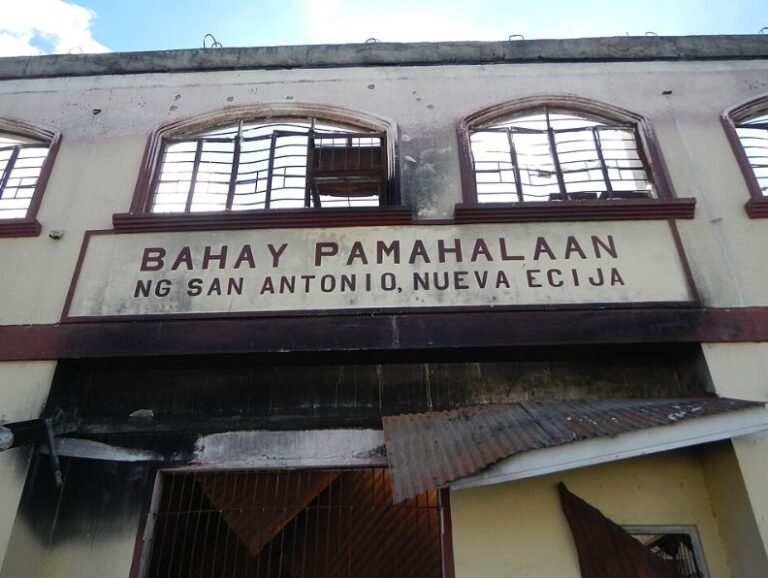
In an en banc resolution, the Commission on Audit (COA) stood firm on holding former San Antonio, Nueva Ecija Mayor Arvin Salonga liable for property loss in the fire that gutted down the municipal hall in 2013.

COA said there is no justifiable reason to relieve Salonga from paying P21.99 million corresponding to the depreciated value of the municipal building that was burned days before he was supposed to step down.

The commission stood pat on its earlier pronouncement that the former mayor was guilty of negligence for belatedly filing his Motion for Relief on July 21, 2016, more than three years since the fire that destroyed the town hall a little past midnight of June 8, 2013.

According to the COA, there was no justifiable reason for the three-year delay since the destruction of the building took place 22 days before Salonga’s term as mayor ended. He only took action when he was re-elected to the post in 2016.

Likewise, Salonga was found at fault for failure to secure insurance coverage for the town hall in violation of Republic Act 656, the law that created the Property Insurance Fund under the Government Service Insurance System (GSIS).

The Bureau of Fire Protection filed a criminal complaint for arson against Salonga before the Office of the Ombudsman but this was dismissed for lack of evidence. 

However, the COA said it took consideration of other events and circumstances based on available records to come up with its ruling.

“Weeks prior to the fire incident, all closed-circuit television (CCTV) cameras in the municipality were removed. A prior ambush incident involving COA auditor took place after the team informed Mayor Salonga that an audit will be conducted on the transaction of the municipality. The above circumstances, if taken together, show that the fire was not accidental,” the Commission noted.

Other than the BFP finding of arson, security personnel assigned to the building reported hearing noise of something being pushed inside the structure before the fire.

“There was no explanation as to why the CCTV cameras were removed. This Commission also noted the indifference of Mayor Salonga over the situation, he had not shown any interest nor taken any action after the conflagration,” COA said.

The ruling was signed by COA chairperson Gamaliel Cordoba and Commissioner Douglas Mallillin. The third man in the three-member state auditor — Commissioner Mario Lipana — remains “on leave.” 

Alarming Spike On Babies Being Sold 

READING A STORY about online ‘sale’ of babies almost made me puke because I could never imagine how a parent resorting to selling a baby is almost unimaginable just like an animal eating its own offspring.

I have always encountered babies being dumped in a bin or being left at the doorstep of a stranger and even in churches or social welfare shelters. But being sold online really wasn’t in my radar.

Why in the first place do they ‘make love’ only to abandon or sell the fetus and infant to strangers, who might turn out to be an abuser, a sex offender or in extreme case, a cannibal. 

Was the sex act even a transaction– bereft of love– that when the infant was expelled from the mother’s womb, they just threw it, abandoned in some place or dump and worse, sold to a stranger like a tampon, a chocolate bar, a curtain or even a kilo of rice. Has our society gone so low as to accept this as normal?

The story cited financial hardship as a main trigger for this emerging practice and that authorities have flagged a steady rise in cases involving this kind of trade through social media.

And why are social media sites carrying such transactions, which even in the most degenerate society would not find this acceptable and practicable.

The newspaper story said a quick search of Facebook groups shows infants in the Philippines being offered in exchange for cash as low as P8,000 to as much as P130,000.

The Department of Social Welfare and Development’s National Authority for Child Care (NACC) said these online transactions have prompted a series of entrapment operations since 2024.

DSWD data said seven entrapment operations have been done against online baby selling in the first three months of 2026 alone—nearly matching the eight operations in the whole of 2025 and exceeding the five recorded in 2024.

At least 22 minors, some as young as two months old, have been rescued, while more than 33 individuals—mostly biological mothers—have been arrested.

NACC Assistant Secretary Rowena Macalintal said lack of money is the most frequently cited reason behind these cases.

“Many say they have children who are sick, they need bail money for a spouse, funds for a parent’s hospital treatment, some did not realize they were pregnant, some need capital for a food cart business, money to pay placement fees for overseas work, some were abandoned by their husbands, and others need to pay off debts,” Business Mirror quoted her.

She stressed that financial hardship does not justify the act, to which I completely agree.

“They [babies] are not products, they are not commodities for sale. It is our obligation to protect and care for our children. And if we are going through a crisis, selling our children is not an option,” she said.

“If poverty is the reason, the government has assistance that can help us get through this crisis.”

Online selling of children is strictly prohibited in the Philippines. Both buyers and sellers may face charges of human trafficking or illegal adoption, along with possible violations of the Anti-Child Abuse Law and the Anti-Cybercrime Act.

Illegal adoption alone carries penalties of six to 12 years imprisonment.

The NACC said parents who can no longer care for their child may legally surrender the child to the agency, which will handle the formal adoption process.

The procedure typically takes around nine months, provided prospective adoptive parents complete all required documents and assessments.

The NACC also said it has repeatedly written to Meta seeking a crackdown on Facebook groups facilitating these transactions but has yet to receive a response.

OFW’s Last Breath To Save Life

“IN A WORLD WHERE Filipino migrant workers are celebrated for their resilience and triumphs, this week’s column turns to a different kind of story — one not of success, but of sacrifice. Across oceans and borders, our modern-day heroes live with a quiet acceptance of fear, stepping into unfamiliar lands with nothing but faith and duty in their hearts.

Today, we mourn and honor one such hero: Mary Ann Velasquez De Vera whose final act of courage in Tel Aviv was to shield and secure safety of the elderly patient under her care as missile shrapnels rained from the sky. Her bravery saved a life, even as it cost her own — a testament to the extraordinary strength carried by every Filipino who leaves home in search of a better tomorrow. In this tragedy, the nation is reminded that behind every OFW is a story of love, risk, and sacrifice far deeper than the world often sees.

Mary Ann’s story has cast a heavy shadow across the global Filipino diaspora, reverberating through communities where Overseas Filipino Workers (OFWs) carry both the hopes of their families and the weight of living in regions marked by conflict. Her passing is not merely a statistic in the rising tensions in the Middle East and the Gulf Regions—it is a story of extraordinary courage and selfless devotion.

The 32-year-old caregiver from Basista, Pangasinan, had lived in Israel since 2019. Like many Filipinos who travel abroad to care for the elderly, she embraced her role with humility, compassion, and a deep sense of responsibility. On February 28, 2026, as sirens wailed across Tel Aviv following a barrage of Iranian missiles, she was guiding and shielding her elderly patient to safety—choosing to protect another life before seeking protection for her own. It was in those final moments, as shrapnel tore through the neighborhood, that Mary Ann sustained fatal injuries. Her patient survived.

Her remains were later identified through biometric records at the Abu Kabir Forensic Institute, where her husband—also an OFW in Israel—confirmed her identity. The loss has devastated her family, friends, and hometown, where she is remembered as a devoted daughter, a loving wife, and a steadfast breadwinner who worked tirelessly for their future.

Both the Philippine and Israeli governments immediately acknowledged her heroism. The Embassy of Israel in Manila issued a statement mourning her death and honoring her final act, describing her as “selfless” and “courageous.” That bravery, they emphasized, embodied the strength and compassion of Filipino caregivers—professionals who often become beloved members of the families they serve.

In the Philippines, President Ferdinand Marcos Jr. addressed the nation with a solemn message of grief. He confirmed Mary Ann as the first Filipino casualty of the escalating conflict and extended profound condolences to her family. In his late-night message, he said she died “assisting and shielding her patient” as the explosions unfolded, assuring the public that the government would provide full support and immediate repatriation.

Local officials in Pangasinan echoed this commitment. The provincial government pledged financial assistance, while the Department of Migrant Workers (DMW) and the Overseas Workers Welfare Administration (OWWA) coordinated closely with her husband for the swift return of her remains. Scholarship support for surviving relatives and funeral assistance were likewise guaranteed.

Israeli Ambassador to the Philippines Ilan Fluss paid tribute to Mary Ann’s dedication, noting that she had even learned Hebrew to better communicate with and care for her patient. Her deep integration into the community she served, he said, reflected the invaluable contributions of Filipino caregivers in Israel—individuals who often remain on the frontlines of danger, especially during sudden escalations of violence.

As the conflict in the Middle East widens, the Philippine government has escalated its protective measures for the 2.2 million Filipinos living and working across the region. Tel Aviv remains under heightened alert, and voluntary repatriation protocols continue for those wishing to return home. The DMW’s global hotline (1348) and its Middle East assistance desks remain active around the clock, responding to distressed OFWs and their families amid airport closures, flight cancellations, and continued missile threats.

But beyond the numbers and official statements, the weight of Mary Ann’s story rests on the hearts of every Filipino who knows what it means to leave home in search of opportunity. Her courage is a reminder that OFWs not only carry their families’ dreams but also confront real dangers, often in silence, far away from home.

As her hometown of Basista prepares for her return, the community and the nation stand united in mourning a life lost too soon—but not in vain. Mary Ann Velasquez De Vera leaves behind a legacy of love, sacrifice, and unwavering devotion. Her story will be remembered not only for the tragedy that claimed her life, but for the noble act that defined it.

Sandro’s Road Rage Bill Confirms NLEX Incident

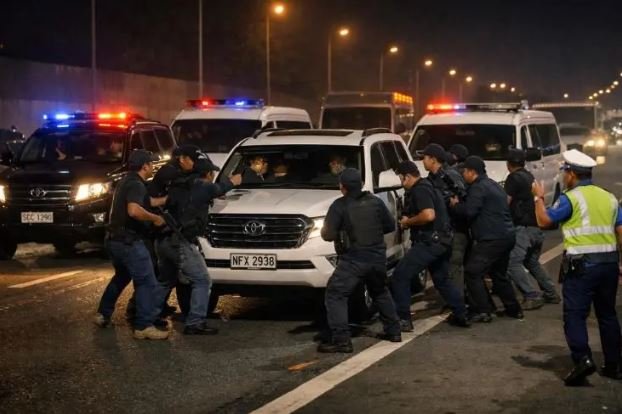
DESPITE EFFORTS BY the Palace to downplay and even deny the road rage encounter of the President’s youngest son, Vinnie,  with the thugs of Bulacan Gov. Daniel Fernando at the North Luzon Expressway, the mere filing by kuya Rep. Sandro Marcos of the road rage bill confirmed the incident.

The bill of the House Majority Leader from Ilocos Norte defined road rage as an intentional and aggressive act and imposes stricter penalties for aggressive and retaliatory driving.

Vinnie, who was driving without the usual security from PSG, cut through the four-car convoy of Fernando’s security surrounding Vinnie’s patrol car and demanded his license. During their inspection of his license, and upon seeing his surname, they all speedily scampered. But Vinnie, upon the suggestion of a friend he called, took note of their car plate numbers and forwarded the same to the Land Transportation Office. 

When asked during the Palace briefing, the press office feigned not knowing about the incident, even denying such in an effort to downplay it.

SANDRO’S WRATH

Sandro’s proposed Anti Road Rage Act (House Bill 8190) sends a clear message that public roads are not arenas for intimidation, threats, and violence, and will draw a firm legal line between ordinary traffic violations and deliberate acts that put lives at risk.

“We cannot allow road rages to continue on our roads, because one reckless decision can turn into a lifelong tragedy for an innocent family,” Marcos said.

Under HB 8190, road rage is defined as any intentional and aggressive act committed by a driver or occupant arising from a traffic-related incident, carried out to intimidate, threaten, harass, retaliate against, or cause harm to another road user, and creating a clear and present danger to life, limb, or property.

STERN WARNING

The bill lists acts such as driving in a manner that endangers another road user, using a vehicle as a means of intimidation or pursuit, and threatening or assaulting another person in connection with a traffic encounter.

The bill imposes a prison term of six months to one year and/or a fine of P20,000 to P100,000 when road rage is committed without causing damage, injury, or death.

If road rage results in property damage or physical injury, the penalty increases to imprisonment of two to four years and/or a fine of P100,000 to P200,000.

Under the bill, if the offense results in two or more less serious physical injuries, or a serious physical injury or death, the offender shall be prosecuted for intentional felonies under the Revised Penal Code, with the appropriate penalties imposed in their maximum period, and a fine ranging from P200,000 to P500,000.

The bill also states that these penalties are without prejudice to civil liability for damages.

MORE CONSEQUENCES

The measure also requires offenders, in all cases, to undergo anger management training as may be determined by the courts, in coordination with the Metropolitan Manila Development Authority (MMDA) and the Philippine National Police (PNP), Politiko reported.

The bill also states that the driver’s license of the accused shall be immediately suspended. Upon final determination of liability, the offender shall be perpetually disqualified from obtaining or holding a driver’s license.

If the offender is in possession of a firearm and holds a license to carry it, the license shall be automatically revoked, with perpetual disqualification from securing any license to carry a firearm.

ALARMING STATS

Road rage incidents in the Philippines are alarmingly frequent and on the rise, with recent data indicating they contribute significantly to the country’s high number of traffic crashes.

In 2022, a significant portion of the roughly 72,000 recorded road crashes in Metro Manila were linked to road rage, according to the Metropolitan Manila Development Authority (MMDA).

Recent statistics indicate that eight out of 10 drivers in the Philippines admit to exhibiting aggressive behavior at least once a year.

Road crash incidents rose by 27.6% in 2024, with 31,258 cases reported by the Highway Patrol Group (HPG), compared to 24,495 in 2023.

In 2024, a total of 2,747 people died in road crashes, up by 35.32% from 2023 with 87.17% of these cases attributed to reckless driving, which includes behaviors often associated with road rage.

STRESS-RELATED?

Common triggers, according to studies, are the perceived loss of personal space, reckless merging, impatient driving, and heavy traffic congestion. 

Videos of violent confrontations, including the use of firearms, have frequently gone viral in recent years.

The growing number of vehicles, particularly in Metro Manila, has intensified traffic congestion, leading to higher stress levels for motorists.

Due to the increasing severity of these incidents, there have been efforts in Congress to pass the “Anti-Road Rage Act” to define and penalize this behavior specifically.

NLEX WIDE ENOUGH

Interior and Local Government Secretary Jonvic Remulla summoned Fernando to explain his side and told the LTO that whenever Fernando uses NLEx, he “takes up four lanes that you can’t overtake.”

Fernando on Monday broke his silence, deferring to the Palace’s statement and the LTO, according to an ABS-CBN report.

In a statement, Sandro Marcos said “we cannot allow road rages to continue on our roads, because one reckless decision can turn into a lifelong tragedy for an innocent family.”

Fishermen: Revoke Manila Bay Reclamation Project

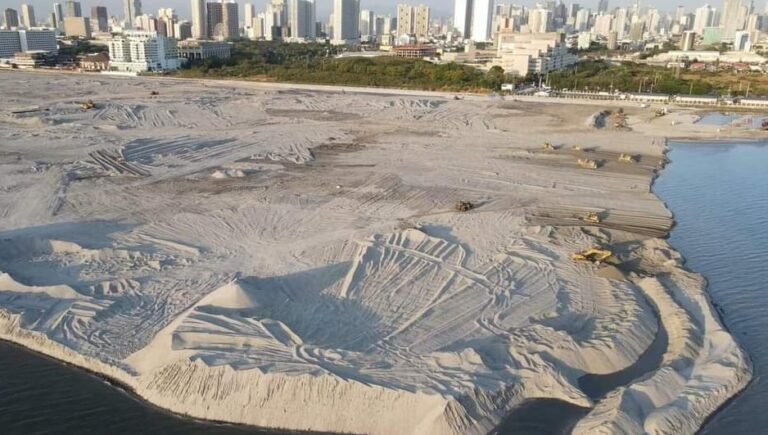
CITING THE ADVERSE impact of reclamations in the Manila Bay marine resources and the substantial losses to their livelihood and incomes, the fishers group– Pamabansang Lakas ng Kilusang Mamamalakaya (Pamalakaya) — urged Acting Environment and Natural Resources Secretary Juan Miguel Cuna to revoke environmental compliance certificates of at least 13 projects.

Cuna took over the post from Raphael Lotilla (now envoy to the Holy See), whom the group Pamalakaya had chided for his failure to safeguard Manila Bay, nearby coastal communities, and marine ecosystems from what it described as harmful reclamation and dredging operations. But Lotilla occupied the post barely a year ago, taking over from Ma. Antonia Yulo-Loyzaga.

The reclamation projects were approved during the Duterte administration despite vehement rejection by a growing number of civic and fisheries groups and the residents surrounding the bay by the few moneyed families and their foreign partners.

“Fisherfolk, coastal poor communities, and environmental advocates are closely watching the new head of the department to see whether he will uphold genuine environmental protection or merely serve as an instrument of natural resource plunderers like his predecessors,” Pamalakaya national chair Fernando Hicap said on Sunday, in what seemed like a  veiled warning.

President Marcos appointed on Feb. 27 Cuna (an insider) as acting DENR secretary.

Cuna, a lawyer and veteran government official with decades of experience in public service and environmental management, holds the rank of career executive service officer and has held various positions within the DENR, focusing on field operations and environmental law enforcement.

IMPACT ASSESSMENT

Pamalakaya said Cuna only has to look at the DENR’s own cumulative impact assessment, which confirms that reclamation causes irreversible environmental damage, the Inquirer quoted the group’s statement.

“It will no longer be a difficult puzzle for the new DENR secretary to understand why the reclamation projects in Manila Bay need to be urgently reviewed. The agency itself has already conducted studies on the damage these activities cause to the environment, fisheries, and coastal communities,” Pamalakaya noted.

The first phase of the DENR’s cumulative impact assessment (CIA) released in April 2025 showed that the proposed reclamation projects in Manila Bay are expected to disrupt water circulation, reduce fishing grounds, destroy mangroves, and degrade ecosystems, increasing risks of harmful algal blooms and threats to marine biodiversity.

According to the DENR assessment, the reclamation projects can also obstruct natural drainage, worsening coastal and inland flooding during storms, thereby heightening dangers to lives, infrastructure, and community resilience, the Inquirer reported.

The results were also backed by the Marine Environment and Resources Foundation as its oceanographer, Charina Lyn Repollo, said flooding in nearby communities could worsen, with reclamation raising backflow and increasing floodwater levels.

Following the results of the CIA showing significant environmental risks, the DENR announced it would strengthen its rules on issuing ECCs.

OCEANA JOIN CALL

In May 2025, environmental groups Oceana and Alyansa Tigil Muna (ATM) already urged the cancellation of all Manila Bay reclamation projects.

Bernie Larin, campaign officer of ATM, pointed out that ECC reviews should have been completed before issuing reclamation permits in order to protect the environment and public safety, as he questioned why the previous DENR approved these projects without assessing their potential impacts.

As of December 2025, the DENR was still conducting Phase 2 of the CIA for Manila Bay reclamation projects.

The review process will include consultations and discussions with the Philippine Reclamation Authority (PRA), the proponent LGUs and other stakeholders, to determine if ECCs should be revised or amended and thus address the potential cumulative environmental, social, economic and ecological impacts highlighted in the assessment.

MARCOS’ SUSPENSION

As early as August 2023 President Marcos ordered an indefinite suspension of 22 major land reclamation projects to allow a study of their environmental impact and legal compliance. The PRA said 13 of these are in Manila Bay.

Marcos made the decision following environmentalists’ warnings that the projects have caused flooding in various areas, a situation worsened by the impact of Typhoon “Egay” (international name: Doksuri) in 2023.

Among the biggest developments in the Manila Bay area are the 360-hectare Pasay reclamation and development project, located across the Mall of Asia complex and proposed by the city government of Pasay.

In a joint venture with SM Prime Holdings Inc., it is intended for mixed-use commercial, residential, institutional centers, and tourism estates.

The Pasay Harbor City reclamation project, covering 265 hectares of foreshore and offshore areas in Pasay City, is another undertaking also proposed by the Pasay local government in a joint venture with Pasay Harbor City Corp.

It is intended to be developed for mixed uses of residential and commercial spaces with integrated tourism and allocation for theme parks, with the proponents aiming to develop it into a commercial business district by the bay.

Tactical Conversation: Credible, Clear and Confident 

EVER BEEN IN a conversation where everything feels chaotic—people talking over each other, questions flying, pressure mounting—and somehow one person just handles it with grace and style?

The Back Story 

That’s tactical conversation in action. 

  • Credible, clear, and confident—right here, right now.

You say it once, everyone gets it, and suddenly, chaos flows smoothly.

  • Quick thinking
  • Smart replies
  • Steady delivery

These are the moves that create a tactical superpower.

The Core What 

Credible 

  • People trust you because you say it clear and say it once.

Clear 

  • No confusing words or messy points. Everyone gets you.

Confident 

  • You stay calm, in control, and deliver like a pro.

The Big Why

A plan is great (strategic), but what happens in the moment is where results show.

Turn strategy into real impact.

It’s the right-now moves that make people trust you, follow you, and notice your presence.

Chaos To Calm

Situation: A surprise client call hits the team.

Before:

  • The team is panicking. Ideas are everywhere, and nerves are showing.

After:

  • You answer clearly and confidently, guiding the client smoothly.

Tip:
Focus on what you can say and do right now. Speak slow, clear, and with steady energy.

Drama To Clarity 

Situation: A teammate drops drama while Nancy is finishing reports.

Before:

  • Nancy feels her emotions rising and wants to react immediately.

After:

  • She responds calmly and clearly, keeping the relationship strong.

Tip:
Breathe, pause, then reply. Calm + clarity = credibility.

Mayhem To Flow

Situation: Chaos erupts at a volunteer event.

Before:

  • Liz is volunteering at a busy charity event.
  • People aren’t sure who’s doing what, and stress is spreading fast.

After:

  • She organizes tasks calmly, and the event flows smoothly.

Tip:
Keep instructions simple and actionable. Stay present; your calm sets the tone.

Tips And Techniques

Think fast, speak clear, stay steady.

Tactical conversation isn’t about fancy plans or long speeches.

Be credible, clear, and confident—right here, right now.

When you master it:

  • People notice
  • They trust you
  • They follow you

Above all, you handle life with calm, smart moves

Next time a tricky situation comes up:
Plan is good. Move smart is better.

  • Keep your mind steady
  • Stay focused
  • Be unshakable

That’s the superpower everyone wishes they had.

Remember: Apply tactical conversation in the moment—and outshine any plan.

Impeaching VP Sara, A Tall Order for HOR

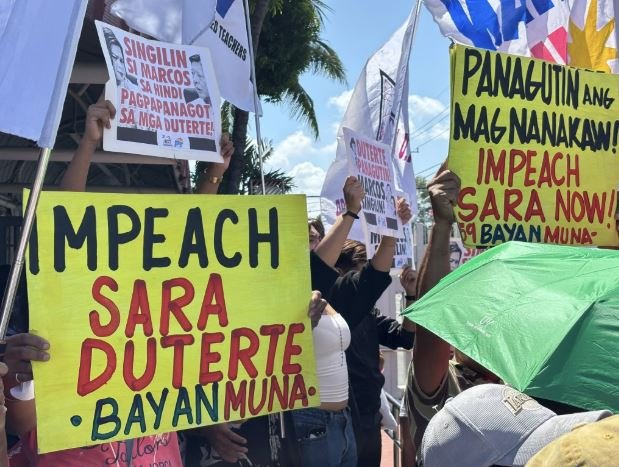
WILL THE HOUSE of Representatives be able to muster enough numbers to impeach Vice President Sara Duterte for the second time around? 

This question has been raised following House Speaker Faustino Dy III’s declaration that he would allow the [impeachment] process to take its course.

During the opening deliberations presided over by the House Committee on Justice, Dy committed to ensure that the public gets what it wants — a fair, lawful and transparent constitutional process embarking on the removal of the Vice President.

“The House will do its duty,” said Dy.

OBEDIENT BODJIE

Dy, who was elected Speaker by fellow legislators on September 17 last year, made the declaration today to set the tone for the two remaining impeachment complaints filed against Duterte.

Despite assurance that he won’t cave in to “pressures,” many still perceive Dy as a close political ally of his predecessor, former House Speaker Martin Romualdez and President Ferdinand Marcos Jr. and would eventually toe the line, when “the going gets tough.”

While Dy is a member of the Partido Federal ng Pilipinas (PFP), the political vehicle that brought Marcos to Malacanang, the House leader remains under the shadow of Romualdez.  

WORTHY SPEAKER?

Dy received and processed the impeachment complaints against the President early this year, with Duterte claiming that the leadership change to Dy is no more than a “sham” designed to secure control of the lower chamber.

Since assuming the speakership, Dy prioritized efforts to regain public trust and restore the credibility that was besmirched by allegations of massive kickbacks from the 2025 budget insertions for government flood control projects. 

Faced with low trust levels for HOR, Dy’’s first directive was to enjoin the chamber’s members to coordinate and cooperate with the ad hoc Independent Commission for Infrastructure, a fact-finding body created by virtue of an executive order.

Dy previously revoked former Ako Bicol partylist Rep. Zaldy Co’s travel clearance in September 2025.

DISSENTING BLOC

With the National Unity Party (NUP) calling on its members to vote on the impeachment complaints on the basis of their consciences, it remains a big question if Marcos’ sway over Congress could match the level of Romualdez and test the durability of his majority coalition.

Political analysts said the House Justice Committee’s hearings on the impeachment attempts against Duterte – that began today –  could offer lawmakers a chance to hedge against her influence in the next election cycle and expose political fissures in the ruling coalition, Business World quoted them saying.

“The handling of the complaints will function as a stress test of the majority coalition,” Ederson DT Tapia, a political science professor at the University of Makati, posted on Facebook Messenger. 

“A tightly coordinated response suggests leadership control and coalition discipline, while visible hesitation, abstentions, or fragmented messaging may signal underlying strain.”

ANTICIPATING 2028

The 39-member congressional panel is set to open hearings on four impeachment complaints against Sara, who retains strong grassroots support despite allegations of misusing intelligence funds — aside from the widening rift with her standard bearer during the 2022 presidential election.

Sara, who hails from the south, rose to national prominence on the popularity of her father, former and now jailed President Rodrigo Duterte, whose combative, tough-talking style of leadership resonated among Filipinos.

Analysts said the impeachment drive against Sara carries political undertones that could turn the proceedings into a proxy battle between her camp and Marcos’ allies, exposing tensions between the two leaders who ran as a ticket in the 2022 elections and won by a wide margin, BusinessWorld reported.

PROXY BATTLE

“The impeachment process at the committee level could function as an early proxy battle between the Dutertes and Marcoses,” said Arjan P. Aguirre, an assistant professor of political science at the Ateneo de Manila University, in his Facebook chat.

“Beyond the legal merits of the complaint, the proceedings may serve as a testing ground for coalition durability, factional loyalty and elite coordination,” he said.

Aguirre said the proceedings could “reveal early cracks” within the Marcos coalition.

“As the current administration approaches its final years, some members of Congress may hedge against the possibility of a Duterte political comeback,” and this could manifest in slower deliberations, more extended debate, or reluctance to take strong anti-Duterte positions,” Aguirre added.

POLITICAL SURVIVAL

Dennis Coronacion, chairman of the University of Santo Tomas Political Science Department, said the political survival of lawmakers also hinged on the positions they would take on VP Sara’s impeachment proceedings.

“If they would decide to approve the impeachment complaints against VP [Sara] Duterte, she could ruin their reelection bid by campaigning against them,” he averred.

Tapia said lawmakers should not frame the impeachment issue merely as a political contest ahead of 2028 but focus instead on their role in ensuring accountability for public officials.

“It’s whether Congress treats impeachment as a serious accountability process or as a numbers-driven political exercise.” 

“If the House Justice Committee conducts a transparent, evidence-based threshold review, it could strengthen institutional trust,” he added. “But if the process appears pre-determined or procedurally evasive, it risks reinforcing public cynicism toward Congress.”

VERIFIED COMPLAINTS

From four, the two remaining impeachment complaints filed by civil society groups and activists, accused VP Sara of misusing P612.5 million in confidential and intelligence funds allocated to the Office of the Vice-President and the Department of Education, which she used to head.

The last complaint embarks on her failure to fully disclose assets in her statements of net worth and of amassing wealth disproportionate to her lawful income.

Tindig Pilipinas which filed the second impeachment complaint backed out and would consolidate support for the third complaint that accused Duterte of committing impeachable offenses like violating the Constitution and betraying public trust.

“Consolidating our support behind the third complaint will strengthen our position and help move the case forward to the Senate impeachment court,”  and that it believes that the impeachment process must proceed at the earliest possible time, free from procedural limbo and unnecessary legal delays that would otherwise obstruct the process,” Tindig Pilipinas said.

SELF-ENRICHMENT

In the third complaint, Sara is accused of illegally enriching herself, with critics saying her declared income as a former mayor and vice-mayor could not account for the hundreds of millions of pesos allegedly found in her bank accounts. 

She was also accused of bribery linked to government contracts and of threatening to kill President Marcos, the First Lady and former House Speaker Ferdinand Martin G. Romualdez, the President’s cousin.

Dy stressed that the role of the Committee on Justice at this stage is clearly defined, which is to determine whether the complaints are sufficient in form and substance in accordance with the Constitution and House rules.

“As Speaker of the House, I want to be clear about one thing: this is a constitutional process. It is not a political performance, and it is not a venue for trial by publicity,” Dy noted.

TRUST THE PROCESS

The House leader also called on the public to allow the House Committee on Justice to do its job.

“That responsibility rests primarily with the Committee on Justice, under the leadership of Chairperson Gerville Luistro. The committee has been properly notified, and the proceedings will follow established House rules,” he added.

The Isabela Speaker emphasized that the proceedings transcend personalities and partisan interests.

“Let me emphasize: impeachment is not about personalities. It is about institutions. It is not about taking sides. It is about upholding the Constitution,” he said.

He also stressed that fairness and due process must govern every step.

“Every elected official, including the Vice President, deserves fairness, due process, and the presumption that allegations must be examined carefully and judiciously,” Dy said.

PARTING SHOTS

“At the same time, complainants who have invoked a constitutional mechanism are entitled to have their filings addressed in accordance with the law,” he added.

The House chief made clear that he will not interfere with the committee’s deliberations.

“My role as Speaker is not to pre-judge the outcome, nor to influence the committee’s deliberations. My responsibility is to ensure that the House functions with professionalism, order, and fidelity to the Constitution.” 

Junk Edca

0

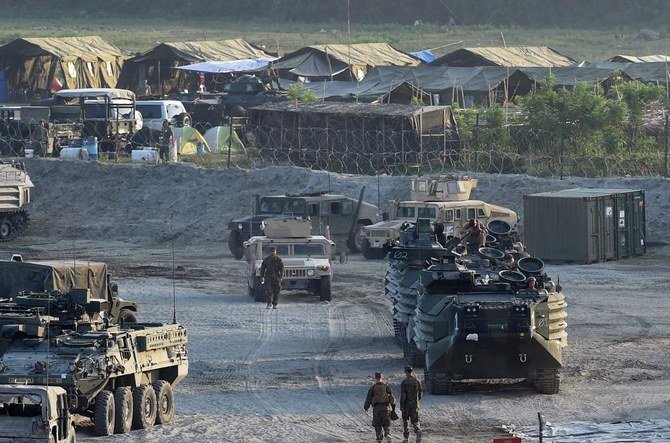
AMID INFLATION, NATURAL disasters, and political instability, a war thousands of miles away, could actually affect the Philippines, which plays host to at least nine military installations referred to as Enhanced Defense Cooperation Agreement (EDCA) sites.

This comes as the United States and Israel launched an attack on Iraq, decimating the city into rubles. The attack also resulted in the death of Iran Supreme Leader Ayatollah Ali Khamenei and its top government and military officials.

In return, Iran fired upon Dubai and Saudi Arabia, where the US has been maintaining military installations as part of its geo-political strategy.

International news reports also hinted at the possibility of Iran retaliating on other US-allied countries — like the Philippines.

‘To date, there are nine EDCA sites strategically located in various parts of the archipelago. Of the nine EDCA sites, five were installed in 2016. The rest were consummated in 2023, under the Marcos administration … The establishment of EDCA sites where American troops were given full access, has fueled concerns of escalating tensions with China.’ 

STRATEGIC ALLIANCE

By his own admission, Senator Erwin Tulfo, in his capacity as chairman of the Senate Foreign Relations Committee, has expressed alarm over the presence of US military installations in the Philippines. 

Tulfo called for a review of the presence of American military installations in the guise of EDCA sites, which to him could become a potential target of Iran’s missile attacks — in retaliation to the US.

Under an agreement that was sealed in 2014, the Philippines and the US agreed to fortify defense cooperation under the 1954 Mutual Defense Treaty. But under the Marcos Jr. administration, US troops have been given expanded military access to the Philippines.

According to the senator, there is an “urgent need” to review the EDCA pact to shoot down the possibility of Iranian forces striking the country with drone and missile attacks. 

POTENTIAL TARGET

Tulfo said that the recent  developments are more than enough reasons for the Philippines to be “concerned” on the possibility that the Philippines could become the next target of Iran’s reprisal attacks due to expanded EDCA sites.

The legislator then cited Iran’s launching of a barrage of retaliatory missiles in the Middle East, including those in the United Arab Emirates, Kuwait, Qatar, and Jordan, which hosted US military bases.

Interestingly, most of the missiles fired by Iran were intercepted.

“With all these instances and events that are happening, where other countries are targeting American facilities, perhaps you’re right that we should review the Enhanced Defense Cooperation Agreement because we might be targeted,” Tulfo was quoted as saying in a radio interview.

“It’s high time. Since I’m the chairman of foreign relations, I need to look into this and consult the Senate leadership on this issue,” he added.

EXISTING EDCA SITES

To date, there are nine EDCA sites strategically located in various parts of the archipelago. Of the nine EDCA sites, five were installed in 2016. The rest were consummated in 2023, under the Marcos administration. 

The original EDCA sites include the Antonio Bautista Air Base in Palawan; Basa Air Base in Pampanga; Fort Magsaysay in Nueva Ecija; Lumbia Air Base in Cagayan de Oro; and Mactan-Benito Ebuen Air Base in Cebu.


A year after Marcos took the helm of Malacañang transformed four Philippine military bases to EDCA sites — the Naval Base Camilo Osias in Santa Ana, Cagayan; Lal-lo Airport in Cagayan; Camp Melchor de la Cruz in Gamu, Isabela; and Balabac in Palawan.

The establishment of EDCA sites where American troops were given full access, has fueled concerns of escalating tensions with China. 


LIKE FATHER, LIKE SON

At the House of Representatives, Davao City Rep. Paulo Duterte has a lot to say against the successor of his father, former President Rodrigo Duterte.

According to the younger Duterte, the Marcos administration “painted bullseye on the Philippine soil” by allowing the “aggressive” and “unchecked” expansion of the US troops in Philippine military bases, even as he claimed that the continued presence of the Americans in Philippine military bases invites “retaliation, escalation, and entanglement in wars that are not ours.”

He likewise expressed apprehension on the possibility of transforming the Philippine communities, airports, and seaports into potential battlegrounds.

“In basic military doctrine, any territory made available to foreign forces automatically becomes a legitimate target,” Duterte noted.

“The Philippines should stand as a sovereign nation, not as collateral damage in another country’s war,” he added.

OPPOSITE POLICIES 

Under the previous administration, the Philippines pivoted to China for the purpose of economic considerations and eased tensions in the West Philippine Sea.

But when Marcos became president, the Philippines sided back to the US and has since adopted a bold stance against Beijing, to assert sovereign right over the 200-nautical mile Philippine exclusive economic zone, aptly referred to as the West Philippine Sea.

The Marcos administration stood firm on the need to respect the 2016 arbitral ruling junking China’s nine-dash line argument.

Remulla Siblings

IT’S NOT VERY often that we get see a Philippine President entrusting two of the most powerful government offices to siblings. 

When Ferdinand Marcos Jr. assumed the country’s highest elective post, nobody expected that he’d pick Boying Remulla to take the helm of the Department of Justice, considering his allegiance to former President Rodrigo Duterte.

During the previous administration, Boying is considered as Duterte’s go-to-guy at the House of Representatives. He was a congressman representing a district in Cavite.

During that time, he never criticized the massive corruption in the government. He kept mum on the bloody war against drugs. Boying’s silence indicates conformity to whatever Duterte says or does.

His brother Jonvic is a turncoat. As early as 2015, he was rooting for former Vice President Jojo Binay who considered him a trusted lieutenant.

But as the 2016 presidential election drew closer, he abandoned Binay to join Duterte who was already leading surveys.

Moving forward, Marcos became the President. Boying was handsomely rewarded. 

The President appointed him as Secretary of the Department of Justice on the request of Marcos’ runningmate, Vice President Sara Duterte.

When Marcos’ relationship with Sara turned sour, Boying took the lead in purging the very person who backed him up. 

Halfway Marcos’ term, then Cavite Gov. Jonvic Remulla was appointed as Secretary of the Department of Interior and Local Government on a marching order to sweep the Duterte remnants, to include high-profile fugitives like former BuCor Director General Gerald Bantag, former Palace spokesperson Harry Roque, former Ako Bicol partylist Rep. Zaldy Co and gaming tycoon Atong Ang.

To date, all four high-profile fugitives have not been arrested.

As for Boying, his luck pushed farther as he managed to become the Ombudsman with marching order to run after crooks in the government.

Sadly though, Boying has yet to prosecute the brains behind the biggest fund scandal in the Philippine history. All he’s got are minions.

In short, they both failed to deliver. But if there’s something they’re good at, that would be presiding over press conferences.

Brace For Inflation

0

FOR A COUNTRY whose economy is heavily dependent on imported petroleum products, the Philippines seemed headed to what looks more like an “inevitable circumstances” amid an ongoing conflict in Middle East Asia.

However, economist Arsenio Balisacan, in his capacity as Secretary of the Department of Economy, Planning, and Development (DepDev), doesn’t seem worried over a conflict which he claimed had a “minimal” impact on the Philippine economy.

Echoing Balisacan’s assessment is Acting Energy Secretary Sharon Garin, who insisted that there is no reason for the public to be worried, at least for now — “The impact is so minimal on our economy that it doesn’t seem alarming as of now, as long as [global oil prices] don’t increase or the conflict worsens.” 

‘[T]he Philippines is highly vulnerable to inflation because of its high-dependence on imported petroleum products, including crude oil … Likely to speed up inflation, as we import oil primarily … can trigger price increases down the line.’

FITCH RATINGS

However, Fitch Ratings director Krisjanis Krustinsbegged to disagree. 

According to Krustins, oil prices significantly contribute to inflation in the Philippines, which for the longest time has been heavily dependent on oil imports. 

“Oil prices are a significant contributor to inflation in the Philippines. Our analysis suggests that a 10% oil price shock contributes 0.3-0.4 percentage point (ppt) to headline consumer price index, all else equal,” Krustins said.

Sought to elaborate, Krustins said that the “final impact” of the war will rest on the duration and size of the oil price shock.

INFLATION SPIKE

In view of threats to shut down the vital Strait of Hormuz, where 20 percent of the world’s petroleum supply on board ocean-going oil tanker ships are passing through, the price of crude oil has become “unpredictable.”

According to Percival Peña-Reyes, director of the Ateneo Center for Economic Research and Development, the Philippines is highly vulnerable to inflation because of its high-dependence on imported petroleum products, including crude oil.

“Likely to speed up inflation, as we import oil primarily. Oil, being a production input that links to many other industries, can trigger price increases down the line,” Peña-Reyes said in a report.

UNCERTAIN TIMES

S&P Global Market Intelligence Principal Economist Harumi Taguchi for her part said inflation could settle to 2.3 percent in the second half and less than 2 percent for the full year.

“The situation is still uncertain, but assuming the oil prices stay around the current $75 per barrel and the peso remains at the current level through this end of the year,” Taguchi told Money Talks anchor Cathy Yang in an interview.

If oil prices surge to over $100 per barrel, inflation will likely accelerate to over 4 percent in the first half of 2026, she said.

BANK WARNINGS

Bangko Sentral ng Pilipinas (BSP) Governor Eli Remolona, Jr. earlier warned that rising global oil prices and the weakening peso could bring inflation to 5 percent, breaching the 2-4 percent target range.

Rizal Commercial Banking Corp. Chief Economist Michael L. Ricafort projected a 0.5-0.7-ppt increase in inflation if crude oil prices remain elevated.

“The resulting higher local fuel pump prices would lead to higher prices of other goods and services, passing the effects of higher world crude oil prices and weaker peso recently, thereby could lead to some pickup in overall inflation,” Ricafort said in reference to the first tranche of the oil price hike — P3.50 per liter for gasoline, P5.20 for diesel and P4.80 for kerosene. 

DOMINO EFFECT

GlobalSource Partners Country Analyst Diwa Guinigundo warned that a sharp increase in petroleum prices could trigger higher prices for food and non-food commodities.

“If JPMorgan’s oil price forecast of between $120 and $130 per barrel materializes over a prolonged period, it’s likely that we see a breach of the 2-4 percent inflation target,” Guinigundo, former deputy BSP governor, was quoted in the BusinessWorld report.

He also hinted at second-round effects on wages and transport fares.

Pantheon Macroeconomics Chief Emerging Asia Economist Miguel Chanco said the crude oil price trend is “not yet explicitly inflationary,” noting Brent crude remains 9% lower year on year.

“Reassuringly as well, oil futures still point to prices starting to calm down from September onwards,” Chanco assured, adding that the risks to inflation globally, and not just the Philippines are now skewed to the upside.

WORSE THAN 2022

Peña-Reyes warned that the inflationary impact could be similar or “possibly worse” compared to the Russia-Ukraine war, which started in 2022.

During the onset of the war in late February, Philippine inflation spiked to 4 percent in March followed by 4.9 percent in April. It further stretched to 8 percent levels in November and December.

“It’s possible to see a similar situation that we saw during the Russia-Ukraine if this war is escalated with both the participation of Europe aside from the US as well as those more sympathetic to Iran like China and Russia,” Guinigundo averred.

Fast From Digital Media For Lenten Season – CBCP

MORE THAN JUST a daily habit, netizens are hooked to social media– whether games, or active posts, viewing/surfing/replying to contents and to show off their creativity and social activities (mostly in restaurants and events place) as if a day of not doing so has isolated them from their communities.

But addiction to social media is one vital area that we can sacrifice or fast on this Lenten season as prescribed by the Catholic Bishops Conference of the Philippines.

The CBCP calls this as “digital media fasting” as part of the Lenten discipline this year, without discarding or disregarding the traditional fasting methods of foregoing cravings for food, eating just one meal a day and attending masses, if possible, for the entire season, preferably First Fridays, Ash Wednesday (which is today) and being more prayerful (as opposed to socializing in beaches, parties and the like).

‘“Fasting Beyond Food: Inviting Christ into Digital Media Use … (is) the traditional practice of fasting must also address modern distractions, particularly the pervasive influence of digital technology. As we approach the holy season of Lent 2026, the CBCP invites all the faithful to renew their hearts through prayer, fasting, and works of mercy.’


BEYOND FOOD

The bishops, in a pastoral message entitled “Fasting Beyond Food: Inviting Christ into Digital Media Use,” said the traditional practice of fasting must also address modern distractions, particularly the pervasive influence of digital technology.

“As we approach the holy season of Lent 2026, the CBCP invites all the faithful to renew their hearts through prayer, fasting, and works of mercy,” the CBCP said.

While fasting has long been associated with abstaining from food, the bishops explained that it also means detaching from anything that draws one’s heart away from God.

They pointed to constant engagement with phones, social media, streaming platforms, and online entertainment as factors that can weaken interior life and diminish silence and reflection.

“Technology is a blessing when used responsibly, yet excessive media use often leads to distraction, fatigue, loss of focus, weakened relationships, and diminished spiritual awareness,” the statement read.


NOT ANTI-TECH

The prelates clarified that digital media fasting is not anti-technology but a call to place technology at the service of human life, rather than allowing it to dominate daily routines.

“By limiting screen time, the faithful are encouraged to create space for prayer, reading Scripture, Eucharistic devotion, works of mercy, and meaningful encounters with others.

The bishops described the practice as a path toward interior conversion.”

Although admittedly there are sites devoted to prayers and meditation, which to the CBCP cannot compare with actual prayers and meditation done physically in churches and other places of worship.

“Digital media fasting is not simply about giving something up. It is about making room for something better.”

Among the concrete steps suggested are avoiding phone use before sleep and upon waking, observing device-free meals, limiting social media and streaming time, practicing occasional 24-hour or weekend digital fasts, and replacing screen time with prayer, service, reading, or conversation.


The bishops expressed hope that through this discipline, the faithful may grow in faith, clarity, and deeper communion with God and one another.

The Relevance Of Jazz Music In Today’s Troubled World

MUSIC IS A universal language, as we are wont to say.

​That music heals all wounds, presumably symbolically and figuratively.

​It mediates between two or more contesting stands or points-of-view.

​It intensifies, creates and renews friendships.

​Peer karaoke builds up, cements camaraderie as well as rebuilds relationships.

​Nonetheless, it bridges and binds new acquaintances.

​Top Filipino jazz artists Jeannie Tiongco, Gina Panizales and Heidi Tann believe so.

​Jeannie says jazz has the power to move people to think, decide and act on a particular situation

If there’s a lover’s quarrel, Tiongco shares an experience, that a line or two in a jazz piece can patch things up.

It may not be as immediate as one can get but the magic of the song can mesmerize and clear the cloud of doubt and kinks are gradually diminished.

“Music, generally, is utilitarian just like the ability of a soap, detergent or bath, to wash away dirt or add scent or deodorize a piece of cloth or a human body. In the current state of local or even world affairs in any aspect of life, jazz can balance the equilibrium of the ying and yang.”


TIONGCO BROTHERS

​Jeannie when she sings can stretch her imagination as she prolongs a word or a note to emphasize pain and how to blow it away or joy and how to keep and sustain it.

​”There are many variations of jazz to show and interpret many nuances of life,” enthuses Tiongco, a progeny of the late music man Emil Tiongco of the iconic Tiongco Brothers.

​Jeannie discloses that she used to sing pop but opted to concentrate on jazz not only to be different but to inspire as well.

​”Jazz has the power to neutralize,” she quips and adds its capacity to foster peace not only of its soothing and gentleness but its direct message of love, understanding and hope.

​Music, generally, is utilitarian just like the ability of a soap, detergent or bath, to wash away dirt or add scent or deodorize a piece of cloth or a human body.

​In the current state of local or even world affairs in any aspect of life, jazz can balance the equilibrium ofthe ying and yang.

PRESIDENT VOLODYMYR ZELENSKY

​It is believed that Ukrainian President Volodymyr Zelensky sings his way as well to ease up the struggle between his country and Russia.  

​The Lumads of southern Philippines can create harmony between nature and man-made disturbances in their ancestral land through chants.

​In the Philippines, Heidi’s panacea to some of her worries is singing pop songs in solo or group performances.

​When she migrated to the US, though, she not only brought hope and optimism to provide happiness and material support to her family back home but also tagged along music to lerate her thoughts for a brand-new freedom being offered by democracy in a foreign land.

Heidi Tann (Photo Credit: Heidi Tann/Facebook)

ELLA FITZGERALD

As a Filipino pop culturati, Tann learned to rejoin and renew in the diaspora by collaborating with Filipino or Fil-Am or cross-cultural musicians but also later, to gradually embrace jazz music, a staple Americans and other residents of the US love to dig since the dawn of the likes of Ella Fitzgerald etc. in the musical loop.
Heidi has broken traditions about Filipino jazz composers abroad by making it in the charts and awards.

​She may not have been nominated in the prestigious Grammys but she nonetheless got noticedby the discriminating taste of its members and voters.

​”The Grammys has noticed my composition, ‘You’re the Best Thing.’ I’m proud of it,” Heidi beams.

​Her original work is nominated at the 2025 Indie Soul Award, a prominent awards body in the US.

​”Amazing news to find out that it is nominated for Best Smooth Jazz Single of The Year thank you toChris Clay II for this great opportunity to be considered, we are humbled and very honored…What a great start of 2026. Wow!” says Tann.

​Heidi has also won the Artist of the Year plum from the 2025 The Central Standard Time Show by Ultimate Entertainment.

​Meanwhile, Filipino jazz ambassador to Malaysia Gina Panizales is another pride to contend with in the field.

JAZZ AMBASSADOR TO MALAYSIA

​An Ilongga, Gina went to Malaysia not only to sing but to represent the Philippines’ arts and culture, particularly music.

​She brought with her the genre that eventually endeared her not only to Filipinos in Malaysia but to true-blooded Malaysians and multicultural everyman as well in Kuala Lumpur and elsewhere.

Gina Panizales (Photo Credit: Gina Panizales/Facebook)

Panizales isn’t only known in the country but internationally, as she velvety renders standard jazz pieces that connect to her listeners, in-person or virtually.

In KL, she has just launched her newest album, “Invisible,” an entirely jazz collection of her favorite music that could launch not only a thousand ships but also could end tensions among warring individuals and nations.

Enhancing Disaster Preparedness Thru FoodTech

BUILDING ON EARLIER food safety and disaster-readiness initiatives, the Provincial Economic Development and Investment Promotions Office (PEDIPO), in partnership with the Eastern Visayas State University – Food Innovation Center (EVSU-FIC) and the Northern Samar Provincial Science and Technology Office (NSPSTO), successfully conducted a comprehensive four-day Ready-to-Eat (RTE) Champorado Product Development Workshop at the San Roque Shared Service Facility.

The activity gathered members of the San Roque Community Coco-Based Producers Association (SRCCPA) for an intensive, hands-on training focused on developing shelf-stable, safe, and nutritious food products using water retort technology. This initiative forms part of PEDIPO’s broader strategy to strengthen community-based enterprises through innovation, technology transfer, and sustainable livelihood development while also supporting disaster preparedness efforts in Northern Samar.

Leading the workshop were Mark Rumbert M. Patindol, Operations Manager of EVSU-FIC, and his team of food technologists with in-depth technical discussions
The guided participants on the standardized formulation of RTE champorado, emphasizing proper ingredient selection, precise measurement, sanitation protocols, and quality control systems to ensure product consistency and consumer safety. A major highlight was the operational testing of the water retort machine.

This hands-on exposure strengthened their understanding of critical control points and reinforced compliance with food safety standards and Current Good Manufacturing Practices (cGMP).

Through this collaborative undertaking, PEDIPO and its partners reaffirm their shared commitment to empowering local producers and advancing food innovation, an initiation that not only enhances enterprise development but also contributes to building resilient, disaster-ready communities in Northern Samar.

Sierra Madre: PH’s Disaster Fortress 

SIERRA MADRE IS the country’s most significant mountain range and serves with environmental importance. There is a nationwide campaign for the protection and conservation of what is deemed as a formidable shield against natural disasters.

For one, the Sierra Madre is considered as the “Mother of All Mountains.” 

Even before World War II, it earned the title “Fortress of the Philippine Islands” for its role as a barrier that cushions the impact of typhoons and cyclones from the Pacific. 

Stretching across eastern Luzon, the mountain range has safeguarded millions of residents from storms for generations.

‘Despite its value, the Sierra Madre faces alarming threats. Illegal logging, mining, and unchecked infrastructure projects strip away its forest cover, weakening its natural defenses. Deforestation makes low-lying areas more prone to floods and landslides, while also wiping out habitats of endangered species.’

THEATER OF OPS

During World War II, the Sierra Madre served as a theater of operations and refuge for American and Filipino forces against the Japanese Shimbu Group. 

Key battles were fought around Wawa and Ipo Dams in 1945, while its dense forests gave cover to thriving guerrilla units who sabotaged enemy lines and aided stranded soldiers. 

The mountains thus became not only a natural shield but also a stronghold of resistance.

IN UNESCO LIST

At over 540 kilometers long, the Sierra Madre runs from Cagayan down to Quezon. To its east lies the Pacific Ocean; to its west, the vast plains of Cagayan Valley, Central Luzon, and Calabarzon. 

Some coastal communities on its eastern side remain so remote that they are accessible only by boat or small aircraft, preserving a way of life far from modern congestion.

The Northern Sierra Madre Natural Park in Isabela is already the country’s largest protected area and sits on UNESCO’s tentative World Heritage List. 

Conservationists are urging the government to expand this recognition to cover the entire range from Cagayan to Quezon, citing its extraordinary biodiversity and ecological value.

NATURAL SHIELD

When typhoons strike, the Sierra Madre acts as a first line of defense. Its rugged terrain and forest cover weaken storms by disrupting wind circulation, slowing wind speeds, and reducing storm surges further inland. 

Weather experts noted that powerful systems such as Super Typhoon Karding (2022), Ompong (2016), Ondoy (2009), and others were significantly weakened after crossing the range.

This protective shield has spared Metro Manila and central Luzon provinces from far greater destruction. However, the mountains also produce orographic rainfall: moist air lifted by the slopes increases rainfall in areas like Metro Manila while reducing it in the Cagayan Valley, creating both benefits and risks.

UNDER THREAT

Despite its value, the Sierra Madre faces alarming threats. Illegal logging, mining, and unchecked infrastructure projects strip away its forest cover, weakening its natural defenses. Deforestation makes low-lying areas more prone to floods and landslides, while also wiping out habitats of endangered species.

The destruction of Sierra Madre not only endangers communities but also erodes one of the country’s last ecological frontiers. Its biodiversity is irreplaceable, yet increasingly fragile.

MUST CONSERVE

“Save Sierra Madre” advocacy highlights these dangers and encourage collective action. Government agencies, schools, and communities are tasked to organize activities that promote conservation awareness. 

The call is clear: protecting Sierra Madre means protecting millions of Filipino lives, preserving water sources, and safeguarding biodiversity.
Living Legacy

Sierra Madre is more than a mountain range. It is both a fortress in times of war and disaster, and a living monument of nature that sustains life across Luzon. As the country honors this annual observance, the challenge is not only to remember its historical role but to actively protect it from further harm.

In doing so, we ensure that future generations will inherit not just memories of its strength but the very shield that has defended the Philippines for centuries. 

A Week’s Peek On Our Country’s Future

0

IN THE WEEK of February 21-26, the mix of political stories in the Philippines was like a long-simmering “sinigang” now very close to not just scalding but exploding, the “palayok”. 

​There’s the 40th anniversary of EDSA People Power on the 25th as the mostly new gens in the 3rd Trillion March shared with the tireless veterans the yellow-ribboned highway. “We got a dictator out, then who elected a criminal, then a son who still has to put in prison the officials embroiled in the flood control corruption, then possibly a daughter with impeachable issues.” Anyare?, Bishop Pablo “Ambo” David asked in the celebration, in a broader context.

‘I love how Bishop Socrates Villegas spoke sharply to all Filipinos at the closing mass on EDSA 40. “We do not bask in the EDSA nostalgia… today, we celebrate not faded yellow ribbons, but a call to reclaim the fire which we wasted to corruption, trolls, dynasties, vulgarity, forgotten dignity”.’

​In front of a wide tv screen or a tiny cellphone for three days, Filipinos at home as well as in other countries also broke their routines glued to the preliminary ICC confirmation of the charges on the human rights crimes of a former president. “Tatay Digong” as how the Defense called Rodrigo Duterte or“Halimaw Digong” after Prosecution showed gripping video clips of the EJK atrocities he ordered.

​As if these are not sufficient headline-hoggers, a few more stories sprung. Sara Duterte, announced her intent to run for president in the 2028 election, the earliest to declare. With a footnote: 6 years is not enough for a presidency, 30 years is her vision. Loony, but aside from confidence in leading candidate surveys, that must be a veiled threat to congressmen to think of their political future, a week before the House of Representatives start the renewed impeachment process on March 2.

​And further, the accusation by 18 ex-marines of congressional recipients of the “maletas” containing billions of pesos from escapee Rep. Zaldy Co, a key figure in the flood control corruption that angered citizens. Incredulous list, bad script!

​There were more news, but these four alone should make us worry hard about the future of our country.

A POSSIBLE FUTURE

​I love how Bishop Socrates Villegas spoke sharply to all Filipinos at the closing mass on EDSA 40. “We do not bask in the EDSA nostalgia… today, we celebrate not faded yellow ribbons, but a call to reclaim the fire which we wasted to corruption, trolls, dynasties, vulgarity, forgotten dignity.”

I had to digress from my column’s regular focus on the environment for the big picture.  No apology for what the heart spoke. And with eyes wide open, I also fear the environment will be a major casualty in a future under another immoral and criminal leadership. Impunity has no conscience to spare the fruitful forests and the abundant marine resources, as it disrespects human life. Corruption can turn over our sea and islands to an imperialist power. Greed will allow oligarch allies to reclaim more lands and mine more mountains increasing our climate vulnerability. The Duterte regime already showed us. Another Duterte is similarly wired.

​So we can only choose to remain genuine, self-respecting Filipinos. And one reward, not insignificant at all, is for the country to stay green and sustainable.  

The Grain Of Deception: Why Your ‘Miracle Rice’ Is A Gastric Prank

0

IF YOU’RE BLOATED, constipated, or quietly wondering why your stomach hates you, start here: drop the shirataki first.

I just watched a TikTok from a creator who looks absolutely convinced they’ve unlocked the dietary equivalent of the Holy Grail. Front and center is a bowl of shirataki rice—that translucent, wobbly substance that looks less like food and more like something salvaged from a retired silicone implant. They’re glowing. Evangelical. According to them, this “miracle rice” is how you eat like a glutton and still look like you run marathons for fun.

I hate to ruin the vibe, but someone has to say it: you’re not eating rice. You’re eating a hydrated sponge made of konjac root and misplaced hope.

“You can keep eating shirataki rice and smelling faintly like a wharf, or you can address what’s actually driving the struggle—with real food, real regulation, and maybe a few well-placed needles.”

THE MIRACLE VS. THE MISERY

Let’s be clear about why shirataki rice became popular in the first place. Its advantages are mostly defined by absence. It has almost no calories and virtually no net carbs because it’s basically water held together by glucomannan fiber. That fiber swells in the stomach, which can create a feeling of fullness. For people managing blood sugar, that can be useful—no glucose spike, no pancreas panic.

As a tool, it has a place.

As a solution, it absolutely does not.

Now for the part TikTok glosses over.

First, the smell. Open a bag and you’re hit with an aroma best described as “fish market that missed a few trash days.” You can rinse it. You can boil it. You can lie to yourself. It’s still there.

Then there’s the texture. Those little rubbery pearls don’t absorb flavor. They just skate around your mouth, flavor-adjacent but never fully involved, like tiny culinary freeloaders.

Nutritionally, it’s a dead end. No vitamins. No minerals. No protein. Try to live on this long enough and your body will eventually start borrowing nutrients from your own muscle tissue to make up for what your “miracle” meal failed to provide.

And let’s not forget the fan favorite: bloating. Gas. Abdominal discomfort. That moment when your digestive system realizes it’s been handed a ball of expanding gel and reacts accordingly. In extreme cases—yes, rare, but real—overuse has been linked to serious intestinal complications. Nothing says “wellness” like a hospital bill that costs more than a luxury car.

A SMARTER DIRECTION

The video implies that willpower is the only thing standing between you and weight loss. That’s lazy thinking. Willpower isn’t the issue—hormones are.

If you’re genuinely trying to lose weight but can’t stomach another bowl of translucent rubber, maybe the answer isn’t tricking your stomach. Maybe it’s working with your brain.

This is where acupuncture for weight loss actually makes sense. Not as magic. Not as a shortcut. But as a way to address appetite and stress at their source. By stimulating specific points—like Zusanli or auricular hunger points—acupuncture can influence the hypothalamus and help regulate ghrelin and leptin, the hormones that decide when you’re starving and when you’re satisfied.

It also helps lower cortisol, the stress hormone that makes you crave exactly the foods you’re trying to banish. Instead of forcing fullness with fake rice, you’re supporting regulation. Less chaos. Fewer cravings. No sensation of having swallowed a bag of marbles.

THE VERDICT

TikTok will keep chasing zero-calorie miracles. That’s what it does. But weight loss has never been about swapping one side dish for another. It’s systemic.

Metabolic. Hormonal.

You can keep eating shirataki rice and smelling faintly like a wharf, or you can address what’s actually driving the struggle—with real food, real regulation, and maybe a few well-placed needles.

Your call. Just don’t invite me over if that translucent sludge is on the menu.

I have standards. Even if I am a prick.

— The Certified Prick

Rice—real rice—is not your enemy.

Your relationship with food and your body is.

40th Anniversary Of The EDSA People Power Revolution

“MARCOS SINGILIN, DUTERTE Panagutin!” “Mga Kurakot, Ikulong na Yan!””Mga Magnanakaw, Panagutin at Ipabalik ang Pera ng Bayan!” Such were strong demands in placards and in speeches delivered by thousands of rallyists at EDSA Shrine and at the People Power Monument (PPM) last February 25, 2026. 

They were clear messages that have resonated even as far back as during the bloody reign of the currentInternational Criminal Court (ICC) jailbird Rodrigo Roa Duterte, former Davao City mayor and former president of the country. But the same calls for accountability were actually addressed, more importantly, among the current incumbent senators, congressmen and other government officials under the Bongbong Marcos – Sara Duterte regime. 

The thousands of students, laborers, farmers, IPs, professionals, church leaders – Cardinal Ambo David of the Archdiocese of Caloocan, Bishop Soc Villegas, other bishops, priests, pastors and seminarians and recognized pro-people government officials loudly declared in no uncertain terms that President Bongbong Marcos, especially as president, should do his mandated job – “to give justice to every man!” 

That means, for one, have the current senators to set themselves up as an Impeachment Court to preside over what the Filipino people have demanded way back in 2025 to “LITISIN NA SI VP SARA DUTERTE!”

‘[T]he Filipino people’s massive mobilization in the streets, not only in NCR but in other towns/cities in the Visayas and Mindanao was doubtless a serious urgent demand for professional and, indeed, a compelling honest and compassionate governance for the country!’

UNITEAM’S PROMISE

Moreover, the Filipino people’s mobilization at the EDSA shrine and at the PPM were likewise demanding that the Uniteam’s promise of marketing P20/kgm of rice and affordable basic food items be fulfilled NOW in Luzon, Visayas and Mindanao! 

So too, the people reminded President Bongbong and his VP Sara to create jobs and livelihoods for the millions of jobless Filipinos, instead of encouragingthem to find employment abroad (which has been atragic formula for family-break ups, lack of proper parental home-guidance, and other social costs!).

The people reminded the government to initiate other public services, such us, fair wages for the workers, assistance to the farmers, fisher folks and IPs; abolition of the notorious NTF-ELCAC that has caused, with its red-tagging and terrorist tagging operations, illegal arrests and detention of activist youths, enforced disappearances and even EJKs; giving justice to the more than 750 political prisoners; improvement of the country’s education system and healthcare services;and stoppage of the aggressive encroachment of the China vessels into our sovereign territories.

COMPASSIONATE GOVERNANCE

In other words, the Filipino people’s massive mobilization in the streets, not only in NCR but in other towns/cities in the Visayas and Mindanao wasdoubtless a serious urgent demand for professional and, indeed, a compelling honest and compassionate governance for the country!

The people, especially the veteran street parliamentarians, are wondering why government authorities, from the president down to his cabinet secretaries, the legislators, LGU officials and the AFP/PNP officials and ground personnel seem to be surprised and appear to be panicky when the people go to the streets to demand reforms in governance. 

The people are simply expressing certain limitations, in fact critical governance issues causing much suffering to their constituents, particularly the poor, the voiceless and marginalized, and these problems should have been forthwith addressed.

The message these panicky government officials should automatically understand is that they have basically failed to do their jobs. That people have topractice their Right of Assembly to air their grievances should simply be a clear signal that as public officials, they simply failed to listen to the people about their problems that needed to be resolved soonest.

The people ask: “When will the President Bongbong Marcos and VP Sara Duterte really do their job, as they have promised under oath? And the people need not launch protest rallies!”

Death Of Policing As A Profession In The Philippines: Can The PNP Recover?

THIS ARTICLE WAS first written in August 2017, at the height of the drug war. Today, as former President Rodrigo Duterte sits detained and faces trial before the International Criminal Court, it is worth remembering—not out of vengeance, but out of clarity—the torment inflicted upon the Filipino people and what was done to the Philippine National Police in the process.

On August 15, 2017, in one sweeping operation, 32 drug suspects were killed by Philippine National Police officers in Bulacan. That day earned the grim distinction of having the highest number of deaths in a single day in the drug war. Dubbed “one time-big time” by the Bulacan Provincial Police, it was praised by President Duterte as an efficient implementation of his order. In jest, he said he wanted more “32 deaths a day” like this. And like clockwork, the police obliged: 26 more deaths in Manila, 17 in Cavite, 4 in Caloocan, and 2 in Marikina in the days that followed.

“What stands before us now is not merely a legal reckoning in an international courtroom. It is a moral reckoning at home. Will we rebuild policing as a profession grounded in law, or will we again be seduced by the applause that follows the gunshot? That choice, unlike the bullets fired in 2017, is still ours.”

NUMBERS. BODY COUNTS. TROPHIES.
The police had become the personal killers of the President. They willingly embraced the role of executioners. The killings were no longer the aberrations of rogue officers; they had become systematic and systemic. It was no longer individual misconduct—it was institutional engagement. It marked the death of policing as a profession in the Philippines.

And this is what makes the tragedy unbearable. Because before the fall, there was ascent.

When the Philippine Public Safety College took control of the Philippine National Police Academy and the Philippine National Training Institute in 1991, the goal was clear: professionalize the police. The PNPA would mold future commissioned officers through a rigorous four-year program. The PNTI would train non-commissioned officers, requiring a bachelor’s degree prior to admission. Cadets were instructed in rule of law, due process, constitutional rights. They were mentored in rules of engagement, calibrated use of force, preservation of forensic evidence, lawful investigation techniques.

Continuing ladderized education programs were introduced to upgrade managerial competence and embed merit in the promotion system. Modern policing concepts gained traction: community policing, CompStat, problem-oriented policing, smart policing, human-rights–based approaches, gender sensitivity, child-friendly procedures, environmental policing. Slowly, painstakingly, young officers began to think differently. They would question illegal orders. They would resist corruption. They would aspire to professionalism.

These reforms were born from a dark history. During Martial Law, the police operated with impunity—brutalizing dissenters, serving as henchmen of dictators and local political warlords. The culture of impunity was deeply ingrained. Post-EDSA reforms struggled against it. Political elites—untouched by genuine transformation—continued to treat the police as private armies. Morale remained low. Corruption festered. Human rights abuses by erring officers tainted the entire institution.

Yet despite the gargantuan problems, reform was inching forward. It was imperfect. It was fragile. But it was moving in the right direction.

THEN CAME DUTERTE
As I have argued in my previous writings on noble-cause corruption and the institutional decay of policing, the drug war did not simply target suspects; it targeted the very architecture of professional policing. Duterte correctly understood that the police were weak under the stranglehold of local politicians. But instead of liberating them through structural reform—shielding them from patronage, strengthening meritocracy, insulating them from political interference—he offered something else: a license to kill.

He correctly understood that corruption plagued the force. Yet instead of cleansing it through accountability, he weaponized it. He used the same corrupt officers, employing the same corrupt practices, to eliminate his perceived problem: drug users.

The long-suffering police officer suddenly found meaning—not in service, not in justice—but in sanctioned violence. Morale soared, but it was the morale of a mob given state power. They could now kill a mayor who had once humiliated them. They could eliminate suspects without paperwork, without prosecutors, without courts. And they could rely on a President who promised immunity.

This was not reform. This was regression dressed as revolution.

Instructors at the PPSC, PNPA, and PNTI could only watch in despair. This was not what they taught. They had lectured about calibrated force; the streets demanded corpses. They had emphasized preservation of evidence; operations were conducted in darkness, with the familiar script of “nanlaban.” They had spoken of due process; due process was mocked as weakness.

The top brass of the PNP faced a choice: comply or be transferred to Siberia—figuratively speaking. Raise doubts and risk being labeled a protector of drug lords. Professional officers were cornered: join the slaughter or leave the service. Many chose silence. Some chose participation. A few chose resignation.

AND THE PUBLIC CHEERED
The Filipino people, frustrated by decades of slow courts, porous prosecution, and visible street-level crime, believed this was the rebirth of policing. They saw action. They saw decisiveness. They saw criminals falling. In my earlier essays on prolonged pretrial detention and systemic inefficiencies, I have acknowledged the people’s frustration with a justice system that moves at glacial speed. But frustration cannot justify perversion.

When the police abandon procedure, they abandon legitimacy. When they abandon legitimacy, they abandon profession. They become an armed group in uniform.

This is the gravest cost of the drug war: not only the thousands of lives lost, but the corrosion of institutional soul. A profession built on legality was recast as a machinery of fear. The delicate post-Marcos effort to move from force to service, from patronage to professionalism, from impunity to accountability—was reversed in a matter of months.

Now Duterte faces trial in The Hague. History has a way of circling back. But trials alone cannot resurrect professionalism. The deeper question remains: can Philippine policing be reclaimed?

Professionalism is not restored by speeches. It requires structural insulation from political interference. It requires merit-based promotions. It requires a promotion system shielded from batchmate cliques and political patronage—issues I have repeatedly raised. It requires retraining grounded in human rights, procedural justice, and evidence-based policing. It requires courage from within the ranks to say no to unlawful orders.

Above all, it requires the Filipino people to understand that quick justice is often no justice at all.

The death of policing as a profession did not happen in a vacuum. It was cheered. It was rationalized. It was framed as necessary.

But killing as policy is not policing. It is abdication.

The tragedy of August 15, 2017, was not merely that 32 lives were lost in Bulacan. It was that, in that moment, the state publicly celebrated death as efficiency. And once death becomes performance, the profession is already dead.

What stands before us now is not merely a legal reckoning in an international courtroom. It is a moral reckoning at home.

Will we rebuild policing as a profession grounded in law, or will we again be seduced by the applause that follows the gunshot?

That choice, unlike the bullets fired in 2017, is still ours.