

TRANSPORTATION SECRETARY VINCE Dizon and Pasig City Mayor Vico Sotto review the route where there exists a right-of-way problem in the construction of the Ortigas Station of the Metro Manila Subway Project, a flagship project of the Marcos Administration. This is expected to ease commuters’ traffic woes. Dizon said this is the only phase that has caused delay in the subway project. He said they are trying to achieve solutions so that construction could finally start. Sotto expressed appreciation to the DOTr and pledged to assist in facilitating resolve to the ROW concerns. The subway project is expected to be fully operational by 2028
A Challenge To LWUA

FOLLOWING PRESIDENT MARCOS’ orders to go after contractors of utilities and flood control projects that were half-done, did not materialize at all, or were overpriced despite the substandard materials used in constructing them, the Local Water Utilities Administration said it would purge underperforming water deals after 6 million customers had been shortchanged.
Let’s see how far this purge would go. Can they run after Prime Water– owned by the Villar family, with Senator Mark Villar now heading the Senate Public Works Committee and sister, Sen. Camille chairs the Senate committee on environment, natural resources and climate change, which oversees the Department of Environment and Natural Resources that grants water rights projects in watersheds and other protected areas.
LWUA Administrator Jose Moises “Joy” Salonga said at a post-State of the Nation Address (SONA) forum, that the government is preparing a coordinated plan to address failed joint venture agreements (JVAs) between local water districts and private firms that have left around six million Filipinos with poor or inconsistent service, and at this point, the Villar-owned Prime Water has the most number of published failed projects coming from aggrieved customers.
“Pag gumalaw kami, matitiyak niyong mararamdaman na nila,” Salonga warned as if the Villars and their contractors are easy targets.
Balikbayan boxes of complaints
He said his agency receives numerous complaints each day about the performance of local water districts and that LWUA had sent two balikbayan boxes filled with documents to Malacañang to illustrate the depth of the problem.
“Hindi lang ako makapagsabi pero detalyado ang strategy. Fina-fine tune na para maayos at mabisa ang galaw ng gobyerno,” he said.
Among the private operators in question is PrimeWater Infrastructure Corp., owned by ultra bilyonaryo Manny Villar, which entered into multiple joint ventures with local utilities, particularly during the tenure of Mark Villar at DPWH.
Salonga criticized these operators for failing to invest in infrastructure despite steady revenues from paying customers.
Gypping water consumers
“Nagbabayad ang mga tao religiously. Ang collection rate ay 99.4% sa probinsya, above 90% ang nagbabayad… Hindi natin alam kung saan napunta ang koleksyon nila,” Salonga said.
Salonga, who previously worked in the energy sector, noted that such high collection rates are rare and should have supported operational improvements.
He added that water districts involved in the troubled joint ventures have submitted catch-up plans.
“Nakatanggap na kami ng catch-up plan. That is an admission na may mga pagkukulang sila,” Salonga said.
SONA had no ‘wow’ moment
In his SONA, the President ordered the DPWH for a complete list of projects (their completion and timelines), the cost, contractors involved and other data to be published so that the people would know where their money went, or if they got lost from corruption.
Tough- talking as the President sounded, Arjan Aguirre, assistant Political Science Professor of Ateneo, found “no strong takes on the pressing issues of the day. There was no ‘wow’ moment when he would surprise or put the crowd in awe.”
“The closest that we can highlight here is the mention of the flood control project, which still did not sound convincing since everything would still depend on him — no mention of institutionalizing changes like mechanisms and safeguards in the process itself,” Aguirre told Business World.
Flood control probe
In ordering an investigation on flood control projects, the President stressed the widespread corruption in infrastructure spending warning that criminal charges would be filed for those found guilty. (He must include those that misappropriated public funds through insertions in the 2025 budget) This after the entire country suffered from massive flooding the whole of last week from successive storms and habagat rains.
He mentioned his recent inspections after the typhoons (Crising, Dante and Emong) and the southwest monsoon, which exposed the collapse and dysfunction of flood mitigation systems across the country.
“I saw firsthand that many flood control projects were poorly built, collapsed, or worse — never even existed. Let’s stop pretending. The public knows there was racketeering in these projects,” he said. (So why not prosecute and jail them?)
Marcos accused unnamed officials and contractors of pocketing public funds through “kickbacks, initiatives, errata, SOPs (standard operating procedures), for the boys censuring them “mahiya naman kayo.’
“You should be more ashamed for burdening our children with debt from money you simply stole,” he sternly said while asking the DPWH to immediately submit a list of all flood control projects launched or completed in the past three years across all regions.
He also called on the regional project monitoring committees to review the list to identify incomplete, substandard or ghost projects. “We will publish this list so the public can review them and shed light on the investigation.”
He added that an audit and performance review would accompany the probe to trace how public funds were used. “In the coming months, everyone found guilty in this investigation — along with their contractor accomplices — will face charges. There must be accountability for the damage and corruption,” he said.
#LWUA
#SONA
#plansonwaterdistrict
#balikbayanboxesfilledwithcomplaints
#floodcontrol
#corruption
#erringcontractorsandpoliticians
#mahiyanamankayo
#PresidentMarcos’SONA
Pangarap Mo, Simulan Mo: How a QR Code Became a Bridge to Dreams

WE ARE BEYOND excited to invite you to the exclusive premiere of #GCashStories: Pangarap Mo, Simulan Mo! — a heartfelt tribute to the everyday Filipinos who dared to dream and dared to do.
This isn’t just another campaign. It’s a celebration of real lives, real struggles, and real victories powered by something as simple—but powerful—as a scan-to-pay code.
Why Matters
Because we all know someone with a dream.
The sari-sari store owner who opens before sunrise.
The taho vendor weaving through traffic, whispering “Tahoooo” like a prayer.
The young woman crafting earrings in the corner of her room, hoping to sell one pair by the end of the week.
But having a dream is not enough. In a world that moves faster every day, what they need is access. What they need is a chance. What they need is the power to say:
“Kaya ko. Kasi may paraan na.“
That’s where GCash steps in.
The Digital Difference
Small entrepreneurs used to depend only on coins, bills, and good faith. But today, with GCash’s Scan to Pay feature, they’re no longer limited by change or location.
Suddenly, the fishball vendor is no longer “cash only.”
The local baker accepts payment even if you forgot your wallet.
The single mom selling soaps on Facebook can now say:
“Just scan my QR.”
That’s not just convenience.
That’s empowerment.
That’s dignity.
The Big Impact of Small Payments
The true revolution here isn’t the tech.
It’s the transformation of how people believe in themselves.
Because when your business accepts digital payments,
—You look more professional.
—You reach more customers.
—You feel more legit.
And that confidence?
That fuels growth.
GCash is no longer just an app.
It’s now a tool for inclusion. A currency of hope.
A quiet partner in every piso earned, every panaginip pursued.
At the premiere of #GCashStories: Pangarap Mo, Simulan Mo!,you’ll witness not just narratives, but lifelines—stories of ordinary Filipinos building their dreams, one digital scan at a time.
And maybe, just maybe, it will spark something in you too.
To support local.
To dream again.
To begin again.
Because whether you’re selling bread or building a brand—
The power to start is already in your pocket.
So join us. Be inspired. And let your own #GCashStory begin.
Pangarap Mo, Simulan Mo. The future of Filipino dreams is now just a scan away.
12 COPS IN MISSING SABUNGEROS CASE
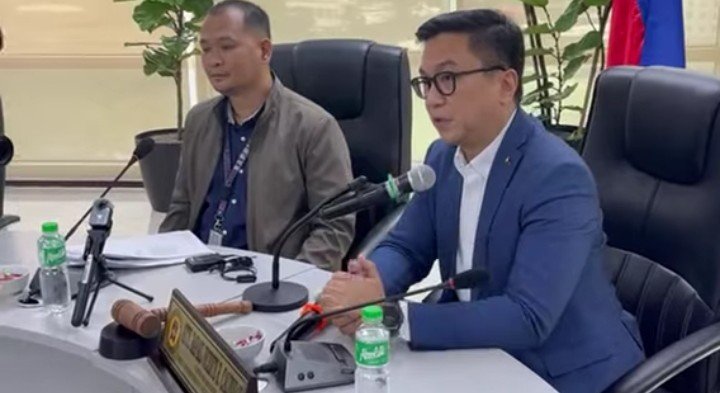
NATIONAL POLICE COMMISSION (Napolcom) Inspection, Monitoring and Investigation Service Staff Director Edman Pares and Vice Chair and Executive Officer, lawyer Rafael Vicente Calinisan, announced yesterday, July 29, that the commission found probable cause on the administrative case filed by whistleblower Julie Patidongan, alias ‘Totoy,’ against the 12 police officers tagged in the missing ‘sabungeros’ (cockfight enthusiasts) case. Relatives of the missing cockfighting enthusiasts joined Patidongan in lodging complaints against the police officers. The complaint is administrative in nature, which means the penalty could either be suspension or removal from police service, depending on Napolcom’s findings.
US Healthcare Firm Endows $500-M On Phl Tertiary Hospital

GOOD NEWS FROM the Office of the Special Assistant to the President for Investment and Economic Affairs (OSAPIEA)! It confirmed the other day that American Healthcare firm Bon Secours Mercy Health (BSMH) has expressed its intent to expand its existing Global Business Services (GBS) operations in the Philippines and invest up to $500 million to develop a premium, state-of-the-art tertiary hospital in the country.
According to OSAPIEA, BSMH will be expanding its GBS operations in Manila to approximately 1,200 professionals from its current team of 170 even as its subsidiaries in the Philippines, namely Nordic and BSMH Philippines will provide information technology systems and back-end support services to the company’s global operations covering over 50 hospitals, 1,200 care sites across the United States and Ireland.
BSMH’s investment plans was conveyed during a pre-conference with US investors and trading partners prior to President Ferdinand Marcos Jr. (PBBM)’s meeting with US President Donald Trump to discuss trade agreements between Manila and Washington and a reduction in the imposed tariffs on Philippine imports that begins on August 1 this year.
OSAPIEA likewise disclosed that BSMH is also set to invest between $300 million to $500 million to develop a tertiary hospital that would somehow upgrade healthcare services in the country.
“As a $13-billion integrated Catholic health delivery system based in the United States, we’re proud to expand our global reach and deepen our existing commitment in the Philippines,” BSMH president and chief-executive-officer John Starcher enthused.
“(W)e are excited to begin the aggressive exploration of developing state-of-the-art healthcare delivery services to provide unique, premium access to Filipinos and our own associates. That said, I couldn’t be more bullish on bringing new, premium healthcare services to the Philippines,” Starcher added.
BIGGEST INVESTMENT
In reaction, special assistant to the president (SAP) Frederick Go asserted that should the investment be realized, it would make one of the biggest private-sector healthcare investments by a US-based system in the Philippines.
“This is a strong vote of confidence in the Philippines and a transformative opportunity for our healthcare and services sectors,” Go pointed out.
“We will work closely with BSMH to help turn their plans into reality. Their investment will generate meaningful jobs and help deliver world-class facilities, advanced medical equipment, and high-quality healthcare for the Filipino people,” he further noted.
Political Appointees Over Career Service Officials

IN WHAT LOOKS more like a distorted sense of compliance, the Department of Health (DOH) formulated its own version of the “Palace-inspired recalibration” following Secretary Teodoro Herbosa’s move to fire three career executive officers (CESO).
The casualties — Health Undersecretaries Dr. Maria Rosario Singh-Vergeire, CESO II; Achilles Gerard Bravo, CESO, II; and Dr. Kenneth Ronquillo, CESO III.
By his own admission, DOH spokesperson Albert Domingo confirmed that Vergeire, Bravo and Ronquillo are no longer affiliated with the agency.
A check at the DOH website showed that their names are also no longer on the list of the members of the DOH’s Executive Committee (Execom), composed of Health Secretary Teodoro Herbosa and his undersecretaries and assistant secretaries.
Domingo however declined to provide details as to why they were fired by Herbosa.“Decisions of Execom members leading to their separation from the service (e.g., retirement, resignation, etc.) are personal in nature and treated with the utmost respect as to privacy,” he said in a message on Sunday.
The DOH has yet to make an announcement on the incoming officials.
LOBBYING MAFIA
However, a DOH Insider tweaked Domingo’s claim even as he insisted that the move may have something to do with the agency’s medical supplies procurement deals.
According to the Insider, a group claiming affiliation to Herbosa has been manipulating the bidding process.
When asked which particular medicines have been “manipulated,” the Insider particularly hinted at procurement deals for the supply of antidotes to cure infectious diseases, including tuberculosis and dengue.
He went as far as claiming that the group had been in the “business” since the previous administration.
The same mafia, he added, is expected to “bankroll” the appointment of people who would be able to help their business in the government.
“Nagalit yung mafia sa mga Usec kasi laging sinisilip yung mga lapses sa procurement deals para sa mga gamot. In one instance, isa dun sa mga tinanggal na Usec ang gustong ipa-disqualify for life yung nanalong bidder pero hindi nagdeliver ng gamot.”
MERIT AND COMPETENCE
The move to remove career executive service officers comes after the Civil Service Commission (CSC) cited the need to professionalize the government if only to enhance public service delivery by improving the quality, efficiency, and accountability of government personnel.
Professionalization, the CSC explained, involves establishing qualification standards, promoting continuous professional development, and potentially implementing licensing programs for specific roles.
The CSC has established clear and specific requirements for various government positions to help ensure that only qualified individuals are hired and promoted.
“Ayaw ng mafia sa mga CESO… masyado daw mahigpit,” the Insider concluded.
ATTACHED AGENCIES
Citing the need to comply with President Ferdinand Marcos Jr’s directive to enhance health services and benefits under the Universal Health Care Act, the implementation of the so-called “recalibration” would also affect the Philippine Health Insurance Corporation (PhilHealth).
Herbosa said that the move is primarily aimed at “ensuring that the organizational structure of PhilHealth is suitable for the implementation of Universal Health Care.”
“PhilHealth staff and especially the public have been waiting for this reorg for a long time,” Herbosa said. “The DOH and the entire Board of Directors have paid close attention to every detail,” he added.
Herbosa noted that the structural overhaul was necessary to address long-standing challenges in the agency and to better serve the Filipino public.
“President Marcos, Jr.’s directive to us is to seize this opportunity to make every Filipino feel better about their health, and that is what we will do,” he further noted.
REGULAR OVERHAUL
According to the Government Commission for GOCCs (Government-Owned and Operated Corporations), PhilHealth’s restructuring marks a significant milestone in the agency’s efforts to modernize its operations and fulfill its expanded mandate under Republic Act No. 11223 (Universal Health Care Act).
The restructuring plan introduces a revised organizational structure comprising 503 units and 7,149 positions.
It is aimed at addressing inefficiencies related to workforce limitations, fragmented data systems, and slow benefit claims processing.
CENTRALIZED SERVICES
To ensure streamlined operations, five critical services—finance, legal, information technology (IT), procurement, human resources, and general administration—will be centralized to eliminate operational redundancies, reduce inconsistencies, and improve responsiveness across all levels of PhilHealth.
In addition, the internal audit office will be strengthened to match the increasing scope and complexity of PhilHealth’s operations.
It will report functionally to the Audit Committee of the Board of Directors and administratively to the President and CEO of PhilHealth to ensure independence and effective oversight.
SONA 2025: A Standing Ovation in a Sinking Nation

WELCOME TO THE Philippines—where politics is performance art, governance is occasionally improv, and the budget for tarpaulins seems to outpace actual flood control. If you missed President Bongbong Marcos Jr.’s fourth State of the Nation Address, don’t worry—we were watching, scrolling, screenshotting, and, like many Filipinos, soaking in both sarcasm and floodwaters.
Let’s talk about the moment that made every viewer at home side-eye their screen. The president, with all the gravitas he could summon, slammed the corruption behind failed flood-control projects. The irony? He was met with a standing ovation from a room likely sprinkled with those responsible for those very “palpak” projects. It was the kind of moment that makes you wonder: is this governance, or is someone auditioning for the sequel to Ang Probinsyano: The Senate Years?
As one netizen put it: “Marcos calling out flood corruption while the culprits cheer? That’s not a SONA, that’s a sitcom.” Another zinger went: “When he said ‘Mahiya naman kayo,’ somewhere a DPWH contractor choked on caviar and called his lawyer.”
Outside the plush walls of Batasang Pambansa, it was a different scene entirely. Rain poured. Protesters marched. Students from UP Diliman literally braved habagat to give the president a failing grade—live and unfiltered. Civil society groups, workers, and activists filled the streets with placards, chants, and unrelenting truth bombs about inflation, joblessness, and climate neglect. The kind of effort that deserved its own press con, but instead earned police barricades and barely a paragraph on mainstream media.
And just when we thought the optics couldn’t get more awkward, viral photos surfaced of government workers struggling to put up SONA banners while standing knee-deep in floodwater. If irony were a budget item, it would’ve been fully liquidated.
Meanwhile, over in Cebu, things were… surprisingly upbeat? Governor Baricuatro took the president’s “mahiya kayo” line and ran with it, declaring that SOPs and kickbacks have no place in the local government. Admirable, if not a little optimistic. Mayor Archival chimed in too, praising the “synchronization” of flood-control plans with DPWH. That’s right—synchronized swimming, but for local infrastructure. We wish them buoyancy.
Back in the air-conditioned comfort of post-SONA panels, analysts from OCTA and WR Numero were charitably calling the speech “realistic.” Marcos did say he knows the people are disappointed—though he stopped short of saying why or how that’s going to change. BusinessWorld labeled it the “toughest SONA yet,” which likely referred to delivery, not policy.
And then there was Sandro. Yes, Majority Leader Sandro Marcos, who praised the speech for being “in touch with the realities we live in right now.” We’re not sure if he meant the same realities where rice is still far from ₱20 per kilo, or the ones where “healthcare for all” exists mostly on PowerPoint slides.
Speaking of rice—the president once again resurrected the holy grail of campaign promises: ₱20 per kilo. Word on the street is it’s happening “in select areas,” which is code for “in places with ribbon-cutting ceremonies and drone shots.” Meanwhile, vendors and suppliers continue to shout into the void about subsidies, while consumers settle for overpriced lugaw and existential dread.
And here’s the thing—Filipinos aren’t looking for perfection. We’re not ungrateful. We know progress takes time. But we also know when we’re being sold the same speech repackaged with new metaphors and matching barongs. You can’t blame the people for being skeptical when speeches are sharp but actions remain soggy. You can’t talk flood control while literal floods take over your photo ops. You can’t say “no to corruption” while clinking glasses with its enablers.
So when Marcos said, “Mahiya naman kayo,” we felt that. Just… not in the way he probably intended.
As one tweet (equal parts savage and sincere) captured:
“Nice speech, Boss. Now show us the receipts.”
Or better yet, show us bridges that don’t collapse, prices that don’t skyrocket, and governance that isn’t allergic to transparency.
Until then, the real SONA doesn’t echo in the chamber of Congress. It echoes in flooded streets, on activist placards, in sarcastic Facebook posts, and in a nation that’s still waiting—for delivery, not just drama.
We’re tired, we’re witty, we’re watching. And yes, we’re still hoping.
Egambling Operators See Good In Marcos’ SONA Silence

MOTHERHOOD STATEMENTS ON food security, healthcare, the upcoming healthy state of PhilHealth and US tariffs and the economy, floods and massive corruption and plunder for flood control projects through insertions and misdeclaration/repetition of completed projects in the 2025 budget. But there was a noticeable eerie silence on egambling.
Why? Because the biggest operators are the President’s brother-in-law and tycoon, Enrique Razon– one of the favored cronies of the administration– and many other old friends even during his father’s term.
Marcos’ skipping mention of egambling, which is now gathering steam from those fighting this emerging scourge and social epidemic, including with legislators, bigtime operators would rather operate unobtrusively until the heat cools down.
Because of the silence, gambling stocks surged in early trading today (after yesterday’s State of the Nation Address), Bilyonaryo noted.
Online gaming stocks soared on Tuesday after the SONA with Digiplus Interactive Corp (PLUS), the country’s largest e-gaming operator, led the rally with an 18 percent jump to P37.75 in early trading– making it the top gainer on the Philippine Stock Exchange, Bilyonaryo reported..
PhilWeb Corp. (WEB), owned by presidential brother-in-law Gregorio “Greggy” Araneta III (hubby of sister, Irene), surged 10.4% to ₱3.70, while Bloomberry Resorts Corp. (BLOOM) of ultra bilyonaryo Ricky Razon added 2% to ₱4.65, the report added.
This just proves the saying: No news (good or bad) is good news.
Despite growing pressure from lawmakers, regulators, and the public, Marcos made no mention of whether his administration plans to ban or regulate online gaming—which expanded rapidly in recent years (just as e-sabong during the time of his predecessor) and now faces mounting scrutiny over its social costs.
The omission disappointed both sides of the debate. Operators, licensed by the Philippine Amusement and Gaming Corporation (PAGCOR), had hoped for clarity and a path forward. Critics, meanwhile, were looking for a hardline stance against what they call a growing epidemic.
The President’s silence left both sides of the debate unsatisfied. PAGCOR-licensed operators had hoped for policy clarity to ensure business continuity. Critics, meanwhile, were looking for a definitive stance—especially after recent congressional hearings and high-profile reports of gambling-related harm.
Previously Executive Secretary Lucas Bersamin (the little president) said the palace is still looking into it to consider ramifications like taxing it and regulating it. He confirmed that Marcos had not yet reached a final decision.
The lack of guidance has left the multi billion-peso industry in regulatory limbo.
Finance Secretary Ralph Recto earlier confessed the government can’t afford a total ban on egambling because of revenues to be lost which would worsen the budget deficit now at P1.6 trillion for 2025. So money is more important than preserving social and moral welfare.
PAGOR data showed that e-games and e-bingo have overtaken casinos as top revenue source, at ₱51.39 billion in the first quarter of 2025—nearly half of the total ₱104.12 billion earned by the entire gaming industry.
On July 17, 14 PAGCOR-licensed online gaming firms issued a joint statement opposing a proposed nationwide ban warning that prohibition would only drive consumers toward illegal and unregulated platforms. The statement instead sought tighter controls and enforcement.
Marcos’ omission of egambling in his SONA provided relief for operators and investors, who saw it as their quiet victory.
A prominent Manila-based fund manager told Bilyonaryo that silence was “the best possible outcome” for the embattled digital gaming sector.
“Wag na magsalita. Pag nagsalita, mahirap ng umatras,” the manager said, adding that any official stance—especially one hinting at prohibition—would be difficult to roll back. “Walang sinabi, may chance pang makabalik.”
“Uncertainty, ironically, works in the industry’s favor. Anything Marcos says publicly will likely be negative for the industry. There’s too much political heat. At least this way, there’s room to maneuver,” he said.
With the threat of total ban now avoided, industry players are shifting their focus to Congress, where upcoming hearings are expected to be the next battleground. Lawmakers remain divided, with some pushing for an outright ban and others calling for stricter regulations and higher taxation on digital gambling platforms.
Several lawmakers, including Senator Raffy Tulfo, have called for a total ban, citing its harmful effects on Filipino players.
However, Malacañang signaled a more cautious approach. “Decisions like this are carefully studied to determine their impact on the economy and the public,” said Palace Press Officer Claire Castro.
“Banning legal and licensed operators may lead to a rise in illegal sites, which could have an even greater negative effect.”
#SONAsilenceonegambling
#quietvictoryforoperators
#PresidentMarcos
#SONA
#totalban
#socialmalaise
#Congress
Youth Jubilee in Rome

THE YOUTH JUBILEE in Rome that started Monday, July 28, started with a big bang as around half a million young people from different parts of the world gathered at its opening. This is the first massive gathering for history’s first American pope, Leo XIV.
This is considered as the biggest event of the 2025 Holy Year, a weeklong Jubilee celebration for young Catholics that will sorely test their tolerance for heat and the Eternal City’s ability to provide public services, security and logistical support during its peak tourist season.
Archbishop Rino Fisichella, Vatican Jubilee chief, said this opening crowd represent around 68 percent of the young people who registered to attend hail from European countries. Young pilgrims from 146 countries are expected.
Italy’s Lazio Region vice president Roberta Angelilli commented that this is the collective effort and a big institutional test.”
EVENT HIGHLIGHTS
Vatican officials said the highlight of the week-long event that culminates on Sunday, August 3. This is the two-day vigil service from August second to the third which also features an outdoor overnight slumber party and morning Mass to be presided over by Pope Leo XIV himself.
This is going to be held on the same dusty field on the outskirts of Rome where Saint John Paul II led the World Youth Day in 2000, an even larger gathering of some 2 million young Catholics in that millennial Jubilee year.
With temperatures next weekend expected to soar between 32 to 34 centigrade (90 to 93 fahrenheit), organizers have lined up five million bottles of water, 2,660 drinking water stations and 70 giant water cannons that are normally used for dust control during building demolitions to spritz the young pilgrims in trying to keep them cool.
SECURITY AND LOGISTICS
Italian and Vatican organizers have prepared a massive security and logistical framework with outlined plans representing the biggest technological setup ever in Italy. Four thousand police and firefighters have been called up to provide security, with Spanish, French and Polish law enforcement agencies sending teams to help out, given the large number of pilgrims expected from those countries.
In addition to law enforcement, 3,000 civil protection volunteers, 500 Vatican volunteers and 4,300 Jubilee stewards are on hand to shepherd the young people around.
A medevac helicopter, 43 ambulances, and 10 mobile health positions are in position at the Tor Vergata field in case pilgrims fall ill.
TRANSPORT REINFORCEMENT
Rome’s notoriously insufficient public transport system is being reinforced to provide nearly around-the-clock service and sanitation workers are clocking overtime to the tune of 4,600 shifts.
There will be 2,760 portable toilets, plus 158 for disabled people, spread over the event space of 52 hectares (128 acres), officials said.
Officials are also closing the airspace over the Tor Vergata field to civilian aircraft and drones even as 122 surveillance cameras have been put up to keep watch on the proceedings.
“This is an event that because of its importance requires exceptional security measures. We don’t have any signs of negative attention to the event, but the international situation, the various tensions and the magnitude, significance and beauty of the event require us to be very careful,” Rome’s Prefect Lamberto Giannini told told the media at a Vatican press conference.
CELEBRATION OF CATHOLICISM
Archbishop Fisichella cited that the Youth Jubilee, which resembles a World Youth Day, comes at the halfway point in the Vatican’s 2025 Holy Year, a once-every-quarter-century celebration of Catholicism that brings millions of pilgrims to Rome.
“The event has assumed many characteristics of a World Youth Day, the Catholic youth rally taking place every three years that was launched by John Paul and maintained by every pope since. Heat waves and the invariable health issues that accompany them have become an integral part of youth days, since they are always scheduled during summer when young people are typically on vacation,” the Jubilee chief clarified.
Chiding The High Tribunal For ‘Rushed Decision’ On Impeachment
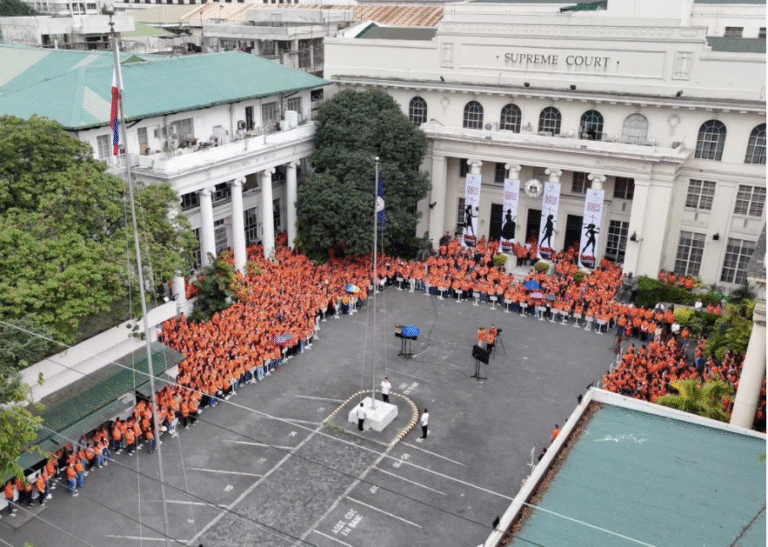
IN ASKING THE people to respect Friday’s decision of the Supreme Court nullifying the impeachment complaint filed by the House of Representatives against Vice President Sara Duterte, the SC should have first allowed an oral argument to take place and issued a status quo ante order, for the enlightenment of all parties, including the public.
Because of the order, too many discordant voices have been dominating the political landscape with many questioning the justices that voted 12 (out of 15) in favor of declaring the fourth impeachment case unconstitutional.
Some people have not only harshly criticized the former President Duterte-dominated court’s integrity, or lack of it, and some have even enunciated the need for a people power against the lack of transparency and accountability of public officials, including the SC.
‘A status quo ante order should have been considered by the 15-man High Tribunal instead of a “rushed decision” … In this way, both the justices and the public would have had a better grasp of the facts and the law involved.’
WELCOMING M.O.R.
Former Chief Justice Artemio Panganiban urged all parties to respect SC’s decision while stressing that the decision is not yet final as the respondents House and Senate are still allowed to file a motion for reconsideration of SC’s unanimous decision.
“First, regardless of whether we are for or against the decision, let us respect it. We must observe the rule of law,” Panganiban said.
STATUS QUO ANTE ORDER
Panganiban voiced his belief that a status quo ante order should have been considered by the 15-man High Tribunal instead of a “rushed decision.”
He said a SQAO would have barred the parties from conducting further proceedings on the fourth impeachment complaint pending the Court’s deliberation and resolution on the merits of the petitions assailing its constitutionality.
“In this way, both the justices and the public would have had a better grasp of the facts and the law involved. After all, this case has transcendental importance to the nation and to our people,” Panganiban said.
NO ORAL ARGUMENT?
Further, Panganiban suggested that an oral argument should have been conducted before any decision was issued on the issue. “If the Court had patiently heard oral argument on less important problems like the recognition of foreign divorces and the PhilHealth petitions, why not on this monumental case?”
“In the least, if only to accord respect to a coequal branch of the government, the HOR, I would have called for Oral Argument before making up my mind and casting my vote,” he added.
UNFAIR! – AZCUNA
Former Associate Justice Adolfo Azcuna asserted that while the SC decision may be legally correct, it is unfair for the respondents and movants of the impeachment.
“By declaring that the fourth Articles of Impeachment adopted by the House as violative of the one-year-bar rule under the Constitution, the Court came out with a new definition of what constitutes being “initiated,” Azcuna said.
In the Davide case, the SC defined initiating an Impeachment complaint as putting it in the order of business and referring it to a proper committee. But Azcuna said this was not followed with regard to the three impeachment complaints earlier filed before the House.
Azcuna added that SC’s recent ruling would now cover a situation where the complaints were not referred to a committee and, after the lapse of the time to do so, archived, and thus, the Supreme Court said, “effectively dismissed.”
“I respectfully submit that it would be unfair to apply this new definition to the complaint involved in the present case, as it was precisely adopted in reliance on the Supreme Court’s then prevailing definition.”
DOCTRINE OF OPERATIVE FACTS
Azcuna suggested that the SC apply the Doctrine of Operative Facts in order for the impeachment trial to continue. Under the “doctrine of operative fact,” acts done in good faith prior to the determination of their unconstitutionality produce consequences that cannot always be erased, ignored, or disregarded.
“I respectfully appeal that the High Court, by way of a Supplemental Resolution, apply to this case the Doctrine of Operative Facts, which it has applied before in similar cases, stating that where actions were taken and things done in reliance on its former and then prevailing definition [or in the absence of one], the action and things done will be treated as valid, and the new definition will be applied prospectively, i.e., to future cases,” Azcuna posted in his Facebook account.
“In this way, I respectfully submit, the people’s unwavering demand for accountability now will be served, and the trial in the Senate can still, and finally, proceed forthwith,” he added.
THE 97-PAGE DECISION
The 97-page decision issued on Friday and penned by Associate Justice Marvic Leonen, declared as unconstitutional the fourth impeachment complaint against Duterte for violating her right to due process and Article XI, Section 3 (5) of the Constitution which prohibits the filing an impeachment complaint against the same official more than once within a period of one year.
The SC said the three impeachment complaints were archived, thus, deemed dismissed on February 5, 2025 when the House filed the fourth impeachment complaint.
Thus, the SC held that no new impeachment complaint should be initiated earlier than February 6, 2026.
REVERSE RULING, HOUSE ASKS
The HoR will seek a reversal of SC’s decision nullifying the impeachment complaint against VP Sara, asserting that the ruling rests on misleading and factually incorrect premises.
House spokesman Princess Abante said while the chamber respects the SC, it is “deeply troubled” by the decision that invalidated the impeachment complaint filed on February 5, 2025.
“First and foremost, the House maintains its respect for our Supreme Court. However, we are deeply concerned upon receiving and reviewing the Court’s ruling, which voided the impeachment complaint against VP Duterte,” Abante said.
“After careful study, the House will file a Motion for Reconsideration. The ruling—which claims that the Articles of Impeachment transmitted to the Senate were unconstitutional—is based on incorrect and contradictory factual findings,” and that the Court may have unintentionally rewritten the rules on impeachment.
CATEGORICALLY FALSE
Abante underscored that the Court’s claim—that the Articles of Impeachment were sent to the Senate without plenary approval—is “categorically false.”
“On February 5, 2025, Majority Leader Mannix Dalipe moved to transmit the complaint to the Senate, based on the fact that it was verified and signed by at least one-third of all House members. This motion was approved in plenary, and the House subsequently formed a panel of public prosecutors. The transmittal was not unilateral nor ministerial—it was a result of plenary action,” she explained.
This plenary action is clearly reflected in House Journal 36 and in the official Record of the House of Representatives, she said.
THREE OTHER PLAINTS
The SC also noted that the House failed to act on three earlier complaints filed in December 2024, which Abante refuted, saying the chamber had, in fact, archived those complaints just hours before the session adjourned.
“On the same day the February complaint was acted upon, the House also voted in plenary to archive the three December complaints. This was done a few hours before adjournment, after confirming that the February complaint had been properly verified and signed by one-third of the members,” she said.
“Under the Constitution, that alone constitutes the Articles of Impeachment and mandates their transmission to the Senate,” she added.
CENTRAL PREMISE
She said the SC’s conclusion that the February complaint violated the one-year bar rule, is a “factual and procedural inversion.”
“The ruling’s central premise—the foundation on which all legal conclusions were made—is erroneous. It disregarded the plenary vote, misread the timeline of House actions, and relied more on a news article than on the House Journal and official reports submitted to the Court,” Abante said.
“What’s more troubling is that the decision failed to even mention, much less address, these official documents,” she added.
She also challenged the Court’s interpretation of due process, saying it imposed new requirements not found in either the Constitution or the House rules.
“The Court now claims that even if a complaint is signed and verified by one-third of the members, it must still be individually read by each signatory and voted on again in plenary. It also claims the respondent must be given the chance to respond before the complaint reaches the Senate. But no such requirement exists in the Constitution or in our House rules,” she said.
“In effect, the Court created new standards that were never part of our existing laws. They nullified the Articles of Impeachment based on these new due process rules,” she added.
IN GOOD FAITH
Abante invoked the doctrine of operative facts, pointing out that the House acted in good faith based on the Supreme Court’s own previous rulings in Francisco and Gutierrez.
She said that VP Duterte was invited multiple times to committee hearings to present her side but declined to appear. “If due process and the right to be heard are truly at issue, let it be noted that VP Sara Duterte was repeatedly invited to speak at the hearings but chose to remain silent,” she said.
She warned that the ruling not only complicates impeachment proceedings but also infringes on the House’s exclusive constitutional powers.
LEGAL MANEUVER
The Makabayan bloc has denounced the SC’s decision halting the impeachment trial calling it a legal maneuver that enables impunity rather than upholding justice.
“We express deep disappointment and outrage over this ruling. Once again, holding the powerful to account proves to be an uphill battle in our country,” the bloc said.
The group accused Malacañang and the Senate of having actively blocked the impeachment process since February, now culminating in a decision that strips the Senate of jurisdiction and buries the trial.
The group noted that the Court’s ruling was based on a questionable interpretation of the one-year ban on multiple impeachment complaints and alleged due process violations—despite clear constitutional provisions.
“Section 3 [4], Article XI of the Constitution clearly states: ‘An impeachment complaint filed by one-third of the members of the House shall constitute the Articles of Impeachment, and trial by the Senate shall forthwith proceed.’ That mandate is not optional. It is mandatory,” the bloc said.
PREFERENTIAL TREATMENT
Former PCGG lawyer Catalino Generillo Jr. accused the SC of giving VP Duterte preferential treatment after her petition to block her impeachment trial was resolved ahead of another filed days earlier, Rappler reported.
Generillo Jr. said the High Court violated both the 1987 Constitution and its own internal rules when it granted Duterte’s petition to block the trial — which she filed on February 18 — ahead of his February 14 petition asking the SC to direct the Senate to “immediately” start Duterte’s trial.
Generillo said the SC should have decided weeks ago on May 20 after the Senate filed its comment on May 19 through the Office of the Solicitor General (OSG). Meanwhile, Duterte’s petition only became ripe for a decision on July 17 after the House of Representatives submitted its Compliance with the Supreme Court.
“[The] SC therefore has the constitutional duty to render its decision on my petition first. The same duty is imposed by the Internal Rules of the Supreme Court,” the former special counsel for the Presidential Commission on Good Government (PCGG) said on Saturday, July 26, Rappler added.
Generillo also said the justices gave “special treatment to the Duterte petition,” and therefore violated the Constitution.
Generillo pointed out that the Senate was ready to proceed with the impeachment trial once session resumes and after the Articles of Impeachment were read on June 2.
The impeachment court would have convened on June 3 and have the senator-judges take their oath. The actual trial would have started on July 30.
The OSG asked the SC to junk Generillo’s petition asking the Senate to convene for the trial as “there is [nothing] left for the Honorable Court to compel the Senate to do.”
#SCruling
#impeachmenttrialstopped
#HoRtofileforreconsideration
#SCCJPanganiban
#SCAJAzcuna
#unconstitutional
#unfair
#statusquoanteorder
#VPSaraDuterte
#ThePhInsider
Prelate Blames Corruption For Woeful Floods

DESPITE P1-TRILLION BUDGET allotted for flood control projects, a huge chunk went to corruption in addition to the pork barrel system perpetrated by Congress through insertions that sacrificed vital social infrastructure and services to the utter disgust of taxpayers.
Cardinal Pablo Virgilio David of Kalookan lamented the billions poured into flood control projects, without having to abate, if not completely end, flooding in Malabon, Navotas, Marikina and several parts of Luzon, particularly Pampanga and Rizal provinces.
Even insertions of over P120 billion to the 2025 budget, the bulk of which went to Bulacan province and Sorsogon, by Senate President Francis Escudero, did not even result in an easing of the flood problem, as evidenced by floods in numerous portions of Bulacan recent weeks.
“[There is] not an iota of improvement despite billions of pesos spent by the national government on flood control projects,” David said posted in social media.
“Check out the COA [Commission on Audit] reports on these projects, and you’ll get the shock of your life,” he said.
‘Cardinal Pablo Virgilio David of Kalookan lamented the billions poured into flood control projects, without having to abate, if not completely end, flooding in Malabon, Navotas, Marikina and several parts of Luzon … ‘
SYSTEMIC CORRUPTION
His message included images of floodwaters submerging several areas, including churches in Malabon and Navotas.
“Climate change is bad enough; corruption makes it even worse, making the substandard flood control projects a total waste of money,” he said.
David stressed that long-term solutions to flooding will remain out of reach unless the government confronts systemic corruption.
“Obviously, flood control in our country has to be preceded by corruption control,” he said.
Heavy monsoon rains have caused flooding in several parts of the country, including the capital region, prompting school closures and the suspension of government work.
The national disaster agency said thousands of families remain in evacuation centers as continuous rains, intensified by tropical cyclones, continue to affect the country.
Several cities and towns, including Manila, have declared a state of calamity to access emergency funds for rehabilitation and recovery.
RISE IN FLOOD CONTROL BUDGET
Relatedly, Senator Panfilo Lacson on Sunday renewed his call for a review of flood control projects saying almost half of almost P2 trillion allocated for that program since 2011 may have been lost to corruption, the Inquirer reported.
“Isn’t it absurd that the rise of floodwaters in our country is directly proportional to the increase in the annual budget for the national government’s flood management program? For 15 years since 2011, the DPWH (Department of Public Works and Highways) is supposed to have spent almost 2 trillion pesos. And yet,” he said in a radio interview.
“Climate change has been tagged as a factor in the flooding problem but it has become a convenient excuse for some. We need to see where we can improve in terms of preparation, planning and implementation,” Lacson said.
“We also cannot discount that of the P2 trillion in allocations, P1 trillion may have ended up in some people’s pockets.”
Lacson said “two trillion pesos means an average daily expense of almost P350 million for the past 15 years. A midsize cutter suction dredger costs anywhere from $1.5 million to $8 million.”
“At $5 million or P285 million with the current peso-dollar exchange rate, we can actually buy one dredging machine every day and use part of the excess of P65 million for operating expenses and maintenance,” he added.
PRESIDENT’S S.O.N.A.
Lacson was right. The President mentioned in his SONA (State of the Nation Address) yesterday the flooding problem, along with peace and order. But Lacson said he himself would take up this issue during the budget deliberations for 2026.
“I will tackle this issue in a privilege speech, or for sure in a budget deliberation once the budget of DPWH is discussed, or even in DBCC (Development Budget Coordination Committee), the general principles. I can take up what is our policy in flood management? What happened to us? So much funds are wasted,” he said.
Earlier on Friday, Sen. Bam Aquino called for a Senate inquiry into the flood-control projects.
Lacson said the figures he cited did not include yet the flood-control budget for the Metropolitan Manila Development Authority.
“So imagine there is such a huge funding for flood control over the years. During the time of [the late] President [Noynoy] Aquino, the flood control fund was around P11 billion, [then] P10 billion in 2012… In 2018 it became nine 9 figures already, around P100 billion,” he said.
Starting 2023, 2024, 2025, it’s already P300 billion—P280 billion in 2023, P349 billion in 2024, P346 billion in 2025… This is a paradox, irony. With bigger funding, shouldn’t flood levels be going down? Why is the rise in funding directly proportional to the rise in floodwater levels?”
Lacson, who earned a reputation as an eagle-eyed auditor of the national budget, also bared earlier inequitable and distorted allocation of funds for flood-control projects in some areas in the 2025 budget—including a small barangay in Oriental Mindoro that received P1.9 billion and a small town in the same province that received P10 billion, Inquirer quoted him.
He said he would grill the concerned officials regarding the flood-control projects.
“The scrutiny of public funds, including confidential and intelligence funds, must continue. Even if the amount being questioned is just P10, it is still public funds,” Lacson said.
1.5-M FAMILIES AFFECTED
Much of Luzon, including Metro Manila, continued to experience heavy rains on Sunday due to the habagat, according to the Philippine Atmospheric, Geophysical and Astronomical Services Administration.
Reported deaths from the combined effects of the southwest monsoon and Tropical Storms Crising, Dante and Emong rose to 30, the National Disaster Risk Reduction and Management Council (NDRRMC) said in its Sunday update.
Of the latest death toll, 13 have been confirmed by the agency—nine in the National Capital Region, two in Region 3, one in Region 10 (Northern Mindanao) and one in Caraga.
Still undergoing validation are reports of 17 which are as follow: six for Region 6 (Western Visayas), four for Calabarzon, three for the Negros Island Region, two for Northern Mindanao, one for Mimaropa, and another one for Region 11 (Davao Region).
Affected families are now at 1,536,381, equivalent to 5,573,336 persons residing in 6,053 barangays in 17 regions.
The NDRRMC said 51,681 families are being aided in 1,689 evacuation centers and another 34,296 families in other relief areas.
#floods
#floodcontrolbudget
#corruptioncontrol
#CardinalDavid
#Sen.Lacson
#budgetinsertionsin2025
#wastedmoney
#ThePhInsider
Sexy Actress Vida Verde’s Gay Sis Marries Wife And Dies Soon After

SEXY ACTRESS VIDA Verde (“Nene,” “Katawang Putik,” “Raid Casa” etc.) had buried her gay sister a month ago in a cemetery in Tumauini, Isabela but the memories of her dead have been haunting her, reminding her of joys and sadness, gains and pains, hopes and despairs in the life of the dead.
John Genally Clemente Mejia, one of Vida’s nine siblings of all girls, recently died of breast cancer in the Philippines. Surprisingly, it was only last year that John Genally was diagnosed with a Stage 3 deadly disease.
”Hanggang nagtuluy-tuloy na (Until it progressed terminally),” recalled Vida, Catherine Clemente Mejia in real life.
As expected, he was treated professionally with the illness in Alaska in the United States of America.
”Pero gano’n nga yata ang buhay (But I think that’s life),” the actress submissively said.
‘According to Vida, her LGBTQIA+ sis was a “playboy” during his younger days in the Philippines. Ang gaganda pa ng mga nagjging girlfriend niya!’
BACK TO BIRTHLAND
But according to Verde, John Genally wanted to die in her birthland.
”Kaya nagpauwi siya rito sa Pilipinas (So he requested to be brought home),” she quipped.
John Genally was flown home by Vivian, the youngest in the brood whom he first stayed at when he migrated to Alaska and his wife Helen Recustodio, a Filipina from La Union.
Helen and John Genally were living-in in Alaska for the last thirty years or so.
”Nakilala ko si John sa (I met him at) McDonald’s sa (in) Anchorage,” recalled Helen during the funeral procession.
”Niligawan niya ako at madali ko naman siyang nakagaan nang loob (He courted me and he was easy to get along with),” divulged Recustodio with a smile.
”I was only sixteen years old at the time,” she added. “Ang dami naming mga pangarap (We had so much dreams).”
SIS WAS A ‘PLAYBOY’
According to Vida, her LGBTQIA+ sis was a “playboy” during his younger days in the Philippines.
”Ang gaganda pa ng mga nagjging girlfriend niya(Most of his girlfriends were pretty),” chuckled Verde.
John Genally’s elder sis said that he was already tomboyish at three years old.
”Ang tatay kasi namin, militar. Wala siyang anak na lalaki. May kapatid sana kaming lalaki pero namatay nang wala pang isang taon. No’ng una, ako ang ginagawa niyang lalaki pero nang magka-suso na ako, babae na ako (Our father was a military. He had no sons. We had a brother but I think he died when he was just months old. Before, I was the one being groomed to be a boy but when I was already in puberty, I was already a girl),” gushed Vida who in the latter part of her narration broke into guffaws.
”Si John, pangatlo siya mula sa akin. Napapagitnaan namin si Beth. Si John, ang laging ginagawang lalaki ng tatay ko. At siya ‘yong nakikita ng tatay namin na lalaki. Si Beth, babaing-babae (John came third from me. Our sister Beth was in the middle. John was the one being groomed by our dad to be a boy. He also saw John as a boy. Beth was a real girl),” said Verde.
PERFECT COUPLE
She said that the first name John was legally attached to his Christian name Genally in Alaska and affirmed that they were a perfect couple in Alaska.
”May mga hindi rin sila pagkakaunawaan lalo na nang maysakit na si John (Of course, there were also misunderstandings between them especially when he was already sick),” recollected the actress.
”Halimbawa, bawal uminom ng alak si John dahil may sakit nga. Pagsasabihan siya ni Helen pero hindi naman niya susundin. ‘Yan, away na ‘yon (Like liquor wasn’t allowed because he was sick. He would be reprimanded by Helen but he wouldn’t follow her. Then, they would quarrel),” she added.
NORMAL FAMILY
During their tenure as live-in partners, they wanted to raise a normal family so the couple adopted a son whom they named Matthew, Helen’s real-life nephew.
Her other kin was Andrew whom the couple also adopted.
Matthew went all the way from Alaska to bury his father while Andrew, according to Vida, wasn’t able to come to the funeral because of his military training.Helen’s mom was also around to share the grief with her daughter.
”Mahal na mahal pareho nina Matthew at Andrew si John (He was dearly loved by them),” assured Cathy, Vida’s pet name.
After all these years, though, Helen and John Genally got married in Alaska days before he passed on.
What are Helen’s plans after the burial of her husband.
”Wala pa (None yet),” she empathically replied.
Meanwhile, Vida mostly spends her daily routine paying John Genally’s tomb a visit.
”Mahal na mahal ko si John. Miss na miss kita, ading (I love him.so much. I miss you sorely, brother),” exclaimed Verde.
A Wish For SONA
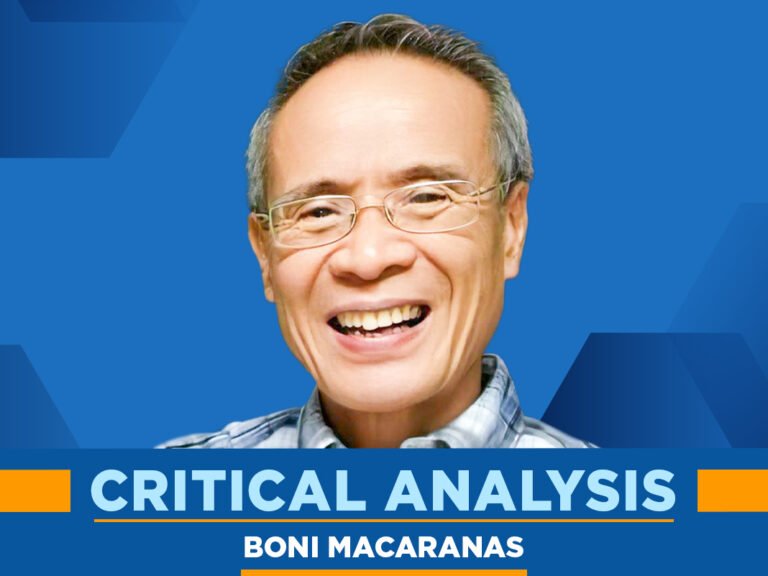
TODAY, THE FILIPINO people really wish President Bongbong Marcos will make an honest-to-goodness SONA this 2025.
Wishfully, he will admit that he has not enough experience in government to become president.
All he wanted was to some extent minimize the hate the Filipinos have against his father and the Marcos family. Thus, he will try his best, though late, to resolve all the varied problems besetting the country.
Accordingly, PBBM will report: “I will henceforth accomplish the following urgent matters: (1) I will reduce poverty among our people and build a robust economy by (a) creating jobs and livelihoods for all working-age Filipinos, so that they can help improve the country’s productivity, while helping their families enjoy decent lives; (b) I will check the soundness of setting the minimum wage of workers at P1,200 per day, considering that more than 90 percent of industrial establishments are small businesses and NGOs;
‘All he wanted was to some extent minimize the hate the Filipinos have against his father and the Marcos family. Thus, he will try his best, though late, to resolve all the varied problems besetting the country.’
“(2) I will help the farmers, fishermen, and the IPs raise their standards of living by providing appropriate assistance in their work; (3) I’ll urge Congress to immediately pass an Anti-Dynasty Bill, to stop the dynasties from causing widespread poverty in our country; (4) I will henceforth help people to buy rice at P20/kg and affordable seafoods, vegetables, fruits, and basic household needs;
“(5) I will abolish the Anti-Terror Law and its implementing agency the notorious National Task Force to End the Local Communist Armed Conflict (NTF-ELCAC), which has been responsible for the estimated 1,609,496 victims of intimidation, illegal arrests, detention, forced disappearances and killings of reformist activists and groups; (6) I will give justice to all the families of the victims of extra-judicial-killings (EJKs) and hold accountable the AFP/PNP generals/officers and ground troops responsible for these violations of human rights;
“(7) I will restore our official membership in the International Criminal Court (ICC) to cement our country’s firm stand for justice in the international community; (8) I will give justice to the more than 750 political prisoners still languishing in jail; (9) I will focus special attention in improving our education system, and ascertaining that our graders and high school students become educated per international standards in reading comprehension, proficiency in math/ science/engineering/technology, and critical thinking;
“(10) I will improve the country’s Health System by retrieving the billions of pesos (stupidly re-allocated to unprogrammed projects) meant for expanded services to the millions of poor beneficiaries of PhilHealth; (11) I will hold accountable those responsible for the loss of billions of pesos spent for vaccines, medicines and other medical technologies needed during the years the country had to cope with the covid-virus pandemic;
“(12) I will order the Department of Foreign Affairs (DFA) to file another arbitration case, under the UNCLOS, in the Hague regarding the illegal encroachments of China into our sovereign territories in the South China sea, and in this regard, consult with the country’s experts on this case;
“(13) A highly important task for me: I will require Comelec Chairman George Erwin Garcia and his fellow commissioners to explain why quite a number of IT individual experts and professional groups have been raising questions and requesting explanations on certain discrepancies in the results of the past May 9, 2022 and the May 12, 2025 national elections – and the strong possibility of both elections having been rigged given the use of Smartmatic and Miru in the counting and canvassing of votes.
“I must admit this is a serious matter, and I want the truth out in the open. I’m sorry for the countless mistakes I’ve committed as your president.
“Thank you everyone!”
BLESSED Outreach

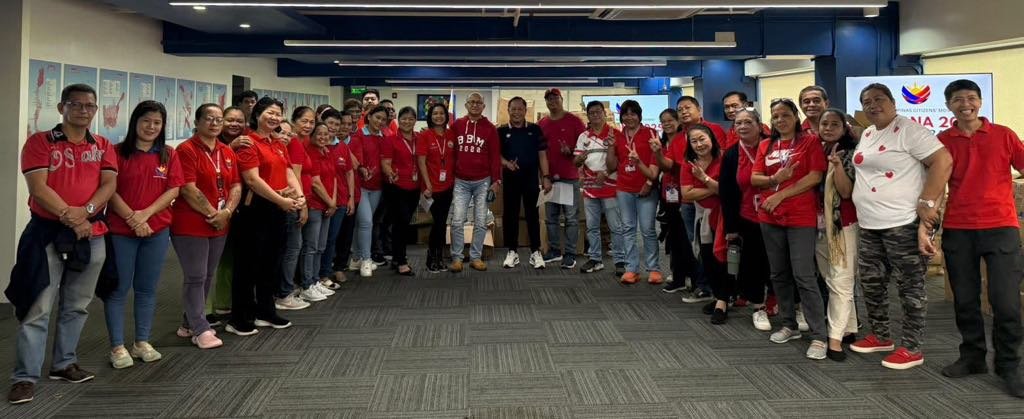
STRONG RAINS AND floodings triggered the advocacy of the Bagong Lipunan Enhanced Synergy Stewardship Economic Development Movement – Inc. or The BLESSED Movement in giving immediate assistance to those affected in many areas in the National Capital Region. Founded in 2023, its chairman, Herbert Antonio Martinez, (in white shirt) and secretary general Rey M. Santia, The BLESSED Movement has at its main objective to unite citizens across diverse religious and cultural backgrounds for holistic nation building. It has over 2 million members nationwide with 80 affiliate faith-based groups, including Muslim organizations. Together with members, they distributed relief goods, nutribun, and fruits to evacuation centers to also support members and victims affected by the typhoon. The movement also expressed gratitude to First Lady Liza Marcos who they view as a beacon of compassion and action in inspiring them to act and bring comfort to those affected.
Prepared For The S.O.N.A

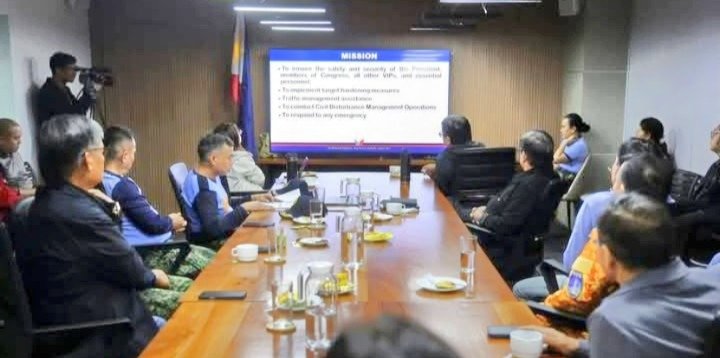
QUEZON CITY MAYOR Joy Belmonte is making sure that preparation for the the President’s State of the Nation Address (SONA) today, July 28, at the Batasan in the city is in order and secured. The Quezon City Law and Order Cluster and other government agencies are coordinated, prepared and ready to ensure that everything goes well. Also present at the meeting were Chief of Staff Rowena Macatao, ACA Alberto Kimpo, Department of Public Order and Safety head Elmo San Diego, Disaster Risk Reduction and Management Office head Bianca Perez, Market Development and Administration Department head Alex Alberto, D2 Action Officer Atty. Bong Teodoro, QC Fire District Marshal FSUPPT. Rodrigo N. Reyes, Traffic and Transport Management Department head Dexter Cardenas, and members of the QC Police District.
Typhoons, Habagat Severely Affect 3M Pinoys

TO DATE, AROUND 2,733,646 people or 765,869 families have been affected by the bad weather in all regions, except in Eastern Visayas as many calamity areas had been identified.
In a recent assessment gathered report from the National Disaster Risk and Management Council (NDRRMC), a total of 40 cities and municipalities have declared a state of calamity as of Thursday morning due to the impact of Tropical Cyclones Crising, Dante, and Emong as well as the Southwest Monsoon or Habagat.
And the NDRRMC reported these past two days that affected areas include the entire province of Cavite covering 23 cities and municipalities, as well as 17 areas in other provinces and Metro Manila. These are: Cavite province, Mangaldan, Umingan in Pangasinan, Meycauayan, Paombong, Balagtas (Bigaa), and Calumpit in Bulacan, Masantol, Pampanga, Paniqui, Tarlac, Agoncillo, Batangas,San Mateo, Rodriguez (Montalban), and Cainta in Rizal, Roxas, Palawan, Barbaza and Sebaste in Antique, Malabon City, and Quezon City.
Aside from these areas, the NDRRMC said that aside from these 40 areas, nine others are now officially under a state of calamity: Marikina, Manila, and Las Piñas in Metro Manila, Dagupan City, Calasiao, Lingayen, Malasiqui, and Sta. Barbara in Pangasinan, and Cebu City.
AFFECTED POPULACE
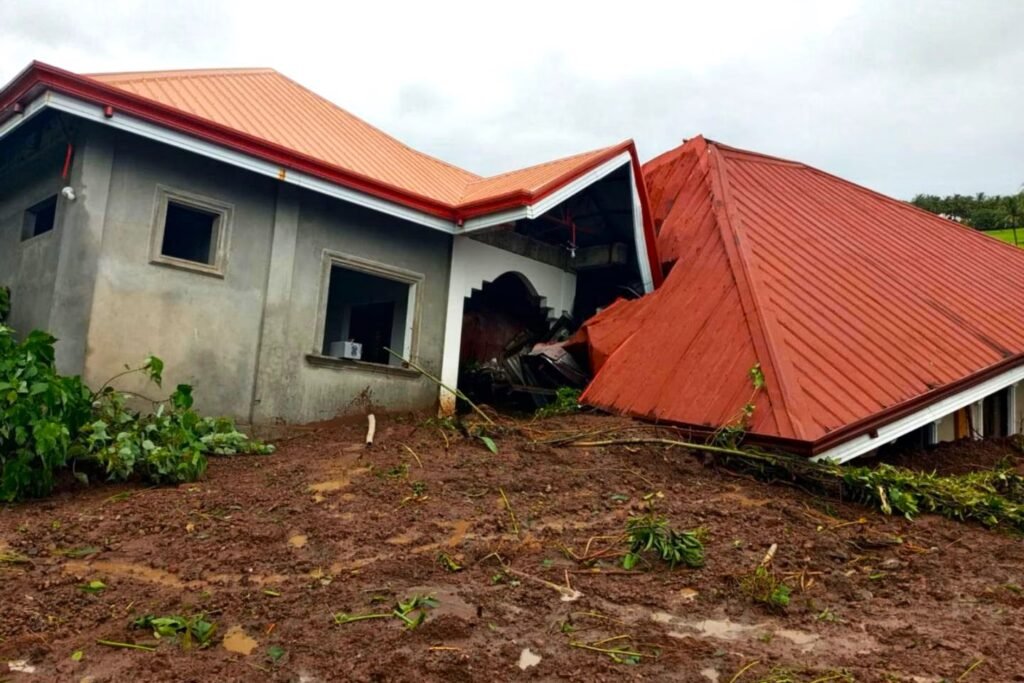
Regions with the most number of affected individuals was Central Luzon with 1,545,370, followed by Negros Island Region with 178,781, and Calabarzon with 173,108. Floods, landslides, collapsed structures, and tornadoes were reported in the affected areas.
The overall total affected population, 147,521 people or 40,487 families were staying in evacuation centers, while 97,958 people or 23,830 families were taking shelter in other places.
FATALITIES
As of yesterday, Friday, there were three fatalities reported in Calabarzon and Northern Mindanao. Two deaths were reported in Western Visayas. One fatality was reported each in Mimaropa, Davao Region, Caraga, and Metro Manila.
In Barangay Poblacion in Mambajao, Camiguin, the victim was hit by a falling tree on July 19. She was brought to a hospital but she was declared dead on arrival due to trauma secondary to external injury. In Barangay Matin-ao in Mainit, Surigao del Norte, another victim was riding his motorcycle from a friend’s house when a tree collapsed and hit him.
Eight people were reported missing while eight others were reported injured, the NDRRMC said. The death toll due to Crising, Dante, Emong, and Habagat is now 12.
The extent of damage was reported at P3,770,744,291 for infrastructure, P366,377,015 for agriculture, P281,660,000 for irrigation systems. A total of 2,431 houses were damaged—2,008 partially and 423 totally, according to the NDRRMC.
TRANSPORT-UTILITIES
Two affected airports have returned to normal operations as of Friday evening. A total of 93 passengers, five rolling cargoes, and four vessels remained stranded as only 35 of 62 seaports have returned to normal operations.
Power has been restored in 113 of 126 affected areas. Water service is now operational in three of four affected areas. Meanwhile, communications lines are back in 27 of 28 affected areas. Only 203 of 307 affected road sections and seven of 21 affected bridges became passable again to motorists.
SUSPENSION OF CLASSES
Last Thursday, the Department of Education (DepEd) said a total of 24,648 schools have suspended in-person classes. Amid these disruptions, several school division offices have implemented alternative learning modes.
“The Disaster Risk Reduction and Management Service (DRRMS) has recorded 1,876 classrooms with minor damage, 562 with major damage, 531 that are totally damaged, and 232 damaged hygiene facilities,” DepEd said.
A total of 270 schools in 10 regions are currently being used as evacuation centers, including Ilocos Region, Cagayan Valley, Central Luzon, Calabarzon, Mimaropa, Western Visayas, Zamboanga Peninsula, Cordillera Administrative Region, Metro Manila, and Negros Island Region.
DepEd reported that in these areas, face-to-face classes remain suspended, with some schools experiencing class disruptions for up to four consecutive days.
GSIS Opens Emergency Loan In 4 Calamity Areas

IN A BID to provide immediate financial relief to members and pensioners affected by Severe Tropical Storm Crising and the enhanced southwest monsoon (habagat), the Government Service Insurance System (GSIS) has opened its emergency loan facility in four calamity-declared areas in Metro Manila and Luzon, namely in Quezon City, Cavite, Umingan, Pangasinan, and Calumpit, Bulacan.
GSIS officer-in-charge Juliet Bautista announced that eligible members and pensioners in the named areas may now apply for the emergency loan.
The availment period runs until August 23, 2025 for Umingan, Pangasinan and Calumpit, Bulacan and until October 23, 2025 for Cavite and Quezon City.
Bautista enthused that “th(e) emergency loan is one way (GSIS) can quickly respond to the needs of (its) members and pensioners affected by the recent calamities.”
“As more local government units (LGUs) submit their official declarations, (we) expect the list of covered areas to increase in the coming days. This will help ensure that more members and pensioners in similarly affected locations can access emergency financial assistance,” she added.
Under the agency’s loan guidelines, qualified members with existing emergency loans may borrow up to ₱40,000, while first-time borrowers may avail up to ₱20,000. The loan is payable in three years, with a low 6 percent annual interest and no processing fee.
GUIDELINES
Under the agency’s loan guidelines, qualified members with existing emergency loans may borrow up to ₱40,000, while first-time borrowers may avail up to ₱20,000. The loan is payable in three years, with a low 6 percent annual interest and no processing fee.
“To qualify, active members must be working or residing in the declared calamity area, be in active service and not on unpaid leave, have no pending administrative or legal case, and have paid at least six monthly premiums. They must also have a net take-home pay of at least ₱5,000.
Old-age and disability pensioners may also apply, provided their net monthly pension after loan amortization is at least 25 percent of their gross pension,” Bautista clarified.
Members and pensioners are encouraged to apply through the GSIS Touch mobile app for faster and more convenient processing. For those not yet registered in the app, they may apply through any GWAPS kiosk located in GSIS branches, select government offices, or over the counter.For more information and updates on the areas covered by the GSIS Emergency Loan, visit www.gsis.gov.ph, follow GSIS on Facebook, TikTok, YouTube, and Instagram; email gsiscares@gsis.gov.ph, or call the GSIS Contact Center.
Half Train Fare for Seniors, PWD, Students

AS THE ENTIRE nation observed the 47th National Disability Week, President Ferdinand Marcos, Jr. led the official launching of the half fare discount for all senior citizens, PWDs and students which was successfully held recently at the MRT-3 Santolan-Annapolis southbound station. The President was welcomed by Transportation Secretary Vince Dizon and MRT-3 general manager Michael Capati.
The President has ordered the Department of Transportation (DOTR), to grant a 50-percent discount on these sectors for all train rides in all Light Rail Transit 1 (LRT-1), Light Trail Transit Line 2 (LRT 2), and Metro Rail Transit Line 3 (MRT3) in Metro Manila. The President’s directive is always to prioritize the welfare of seniors and PWDs, as well as to ease the family’s daily burden for their transportation expenses.
“Our students, persons with disabilities (PWDs), senior citizens truly need our help because their incomes are very limited. That’s why we thought of this program as something we can do to support our commuters who are PWDs and senior citizens,” the President said in a speech at the MRT-3 Santolan-Annapolis southbound station.
MANDATED HALF FARE
The project expands the current mandated fare discount of 20 percent for students, senior citizens, and PWDs to 50 percent.
This 50 percent discount on train fares is a small step to make public transportation more affordable for our priority sectors,” he added.
”Nandito po tayo ngayong umaga para i-highlight ‘yung ating bagong gagawin na nagbibigay tayo ng diskwento. Noong nakaraan nakapagbigay tayo ng diskwento sa ating mga students basta’t magpakita ng student ID ay makakapagkuha sila ng 50 porsyento na discount,” Marcos said. (We are here this morning to highlight the new discounts we will offer. Last time, we were able to give 50 percent discounts to students as long as they present their IDs.)
13M SENIORS, 7M PWDs
According to the President, the additional discount will benefit 13 million seniors and 7 million PWDs per year.
He emphasized that students, seniors and PWDs need the help of the government as they have limited incomes and allowances
“We have given a 50-percent discount to students as long as they present their student IDs,” he said. “Now we are adding senior citizens and PWDs to the 50-percent discount.”
The 50-percent discount will automatically be applied using the registered white Beep cards for PWDs and senior citizens. For those who have not applied for white Beep cards yet, discounts may also be availed through single-journey tickets.
HOW TO AVAIL
Similar to the 50-percent student discount, seniors and PWDs can avail themselves of lower train fares every day, including weekends and holidays, until 2028, simply by presenting their senior citizen ID or PWD ID at ticket counters.
COMMUTER COMPLAINTS
The expanded discount on train fares comes as the administration continues to face public complaints about the quality of rail services, particularly MRT 3, the busiest among the three rapid transit lines in Metro Manila. Marcos acknowledged the problems of overcrowding, delays, and extreme heat that regular commuters endure daily.
PBBM PODCAST
In President’s recent second episode of his “BBM Podcast” in June, Marcos said he drew inspiration from how other countries provide generous transport benefits to their vulnerable sectors.
SENIOR INDIGENTS
In a related report, the DSWD said over four million indigent seniors are receiving aid for their health and daily needs through the agency’s Social Pension for Indigent Senior Citizens program.
On The Alert
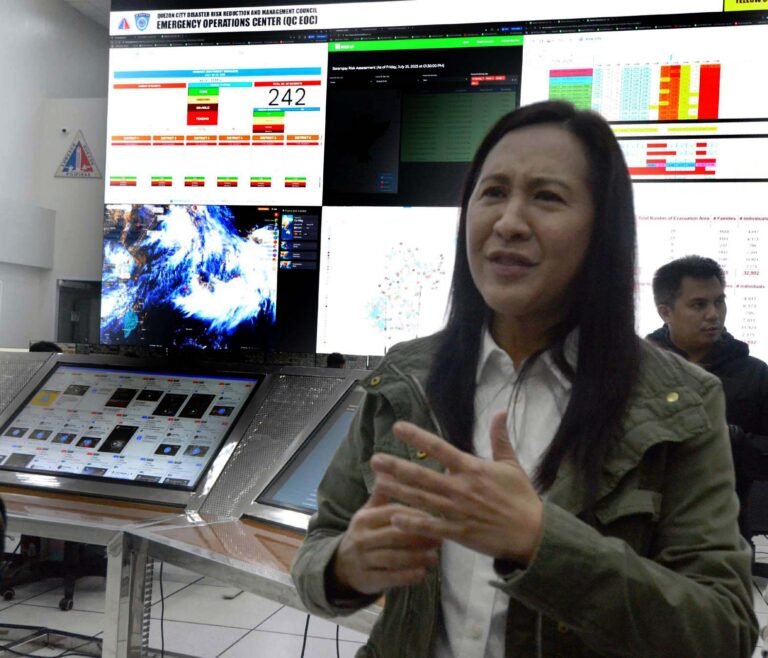
Quezon City Mayor Joy Belmonte, in a press conference yesterday, Friday, July 25, at the Quezon City Disaster Risk Reduction and Management Office. Belmonte gave an update on the local government’s disaster response during the onslaught of the successive habagat and typhoons, Crising, Dante, and Elmo. The LGU regularly conducts briefing.
ADB Sees Tougher Year For Ph
A TOUGHER YEAR is forecast for the Philippines in 2025 and 2026 owing to global headwinds and a broader slowdown across Southeast Asia because of soft global demand and trade tensions, prompting the Asian Development Bank to reduce its 2025 and 2026 growth projection to 5.6 percent (from 6 percent) and for 2026 to 5.8 percent from 6.1 percent.
The 2025 Asian Development Outlook for July 2025 said the revision follows a “weaker than expected” GDP (gross domestic product) growth of 5.4 percent in the first quarter, despite easing inflation and a pickup in domestic demand.
The ADB said business confidence in the Philippines waned because of heightened global policy uncertainties, though consumer sentiment remained upbeat in the short-term.
While domestic consumption remained a bright spot—fueled by low unemployment, stronger remittances, and accommodative monetary policy—net exports dragged on overall growth as import volumes outpaced exports, reported Bilyonaryo.
The ADB projects inflation to average 2.2 percent in 2025, before picking up to 3.0 percent in 2026, both within the central bank’s target range.
‘The region has been hit by sluggish electronics demand, weak commodity prices, and rising trade protectionism, with higher U.S. tariffs adding pressure.’
LOWEST REMITTANCES
Remittances, which rose 3 percent in May, continued to support household spending, while the unemployment rate held at 3.9 percent, among the lowest in the region.
The Philippines’ revised outlook mirrors broader cuts across Southeast Asia, with the ADB slashing its 2025 regional growth forecast to 4.2 percent, down from 4.7 percent. The 2026 projection was also reduced to 4.3 percent from 4.8 percent.
“Asia and the Pacific has weathered an increasingly challenging external environment this year. But the economic outlook has weakened amid intensifying risks and global uncertainty,” said Albert Park, ADB’s chief economist.
SLUGGISH DEMAND
The region has been hit by sluggish electronics demand, weak commodity prices, and rising trade protectionism, with higher U.S. tariffs adding pressure. These factors have weighed on export-heavy economies like Vietnam, Thailand, and Malaysia.
Despite the downgrade, the Philippines is still expected to post one of the region’s strongest growth rates in 2025, second only to Vietnam’s 6.3 percent.
Park said governments should prioritize reforms that enhance investment, trade, and regional integration, emphasizing that strengthening fundamentals is critical to navigating the uncertain global landscape.
#Asian Development Banking
#PhEconomy
#Investments
#UStariff
#ThePhInsider