
Thursday, March 26, 2026
Home Blog Page 58

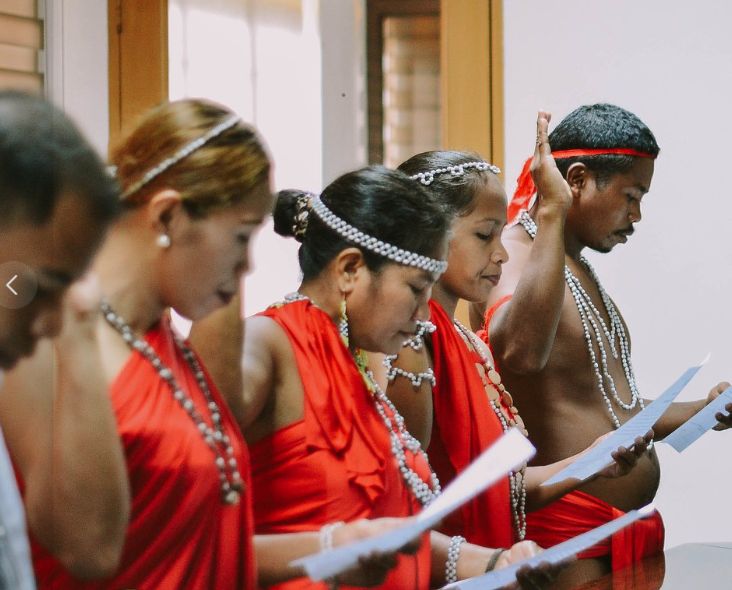
Celebrating Subic Bay’s Triumphant Trilogy

THE PORT OF SUBIC recently orchestrated a three-part symphony of progress, a vibrant testament to its diverse and dedicated stakeholders’ interwoven destinies and shared aspirations. 

Opening as a carefully composed narrative of advancement, was the landmark ceremonial signing of a Memorandum of Agreement among industry partners.

This transitioned into the vital and candid discourse of the Port of Subic’s Customs Industry Consultative and Advisory Council (CICAC) Meeting, a forum for collaborative problem-solving. 

The Stakeholder’s awarding rites that followed was a heartfelt tribute to the invaluable contributions that have sculpted Subic Bay’s success.

A SHARED VISION

The MOA signing in the morning was a powerful symbol of unified purpose, under the guidance of Subic Bay Metropolitan Authority Chairman and Administrator Eduardo Jose L. Aliño and Customs Commissioner Bienvenido Y. Rubio. This was witnessed by dedicated luminaries from the SBMA and the Bureau of Customs (BOC) and stakeholders and industry partners who who made this economic engine signing meaningful. 

It embodied the powerful culmination of a shared, ambitious vision, a tangible and enduring blueprint meticulously crafted for Subic Bay’s ascent to unprecedented efficiency, prosperity, and global prominence. 

The accord was not merely a recitation of terms. It was the solidified understanding of deeply intertwined destinies, a resolute commitment to jointly navigate the future, and exponentially amplify the crucial synergy between the SBMA’s mandate for holistic and sustainable development and the BOC’s indispensable role in facilitating the seamless flow of legitimate trade, ensuring equitable and transparent revenue collection, and steadfastly safeguarding national economic borders.

(The CICAC) served as a vital platform to address immediate issues and fortify the essential bonds of collaboration, ensuring that the Port of Subic remains agile, responsive to the evolving needs of its diverse stakeholders, and consistently operates with optimal efficiency and unwavering integrity.

UNWAVERING COMMITMENT

In the afternoon was the CICAC Meeting, a dynamic forum that underscored the Port of Subic’s unwavering commitment to fostering open dialogue, actively soliciting feedback, and championing continuous improvement. 

Here, the port’s essential industry and government partners converged, engaging in insightful and solution-oriented discussions centered on identifying critical concerns, dissecting existing challenges, and collectively brainstorming innovative strategies to further streamline operational processes within the bustling Subic Bay Freeport Zone. 

This crucial meeting served as a vital platform to address immediate issues and fortify the essential bonds of collaboration, ensuring that the Port of Subic remains agile, responsive to the evolving needs of its diverse stakeholders, and consistently operates with optimal efficiency and unwavering integrity.

UNWAVERING COMMITMENT

As its culminating activity was deeply appreciative Stakeholder’s Awarding Ceremony. This was not only a formal exchange of accolades. It was a sincere and profound expression of gratitude for the invaluable contributions of every dedicated partner who has poured expertise, resources, and unwavering belief into the enduring success story of Subic Bay. 

This part provided a significant and poignant moment for collective reflection, a cherished opportunity to acknowledge the remarkable progress achieved through shared dedication, collaborative spirit, and an unwavering commitment to excellence. 

Looking forward with renewed vigor, optimism and unified vision for sustained growth and amplified impact, the ceremony resoundingly celebrated the individuals and organizations forming the bedrock of the Port of Subic’s continued triumph.

On behalf of the BOC leadership, speaking with genuine warmth and deep appreciation profound gratitude was extended to the visionary guidance of Chairman and Administrator Aliño and the steadfast and unwavering support of SBMA directors and its entire family. 

Acknowledgment was also bestowed on the tireless dedication, remarkable collaborative spirit and sheer hard work of the dedicated SBMA and BOC teams, and partners for their collective expertise, unwavering commitment, and shared trust in the boundless potential of the Subic Bay Freeport Zone.
DAMAGE CONTROL?

0

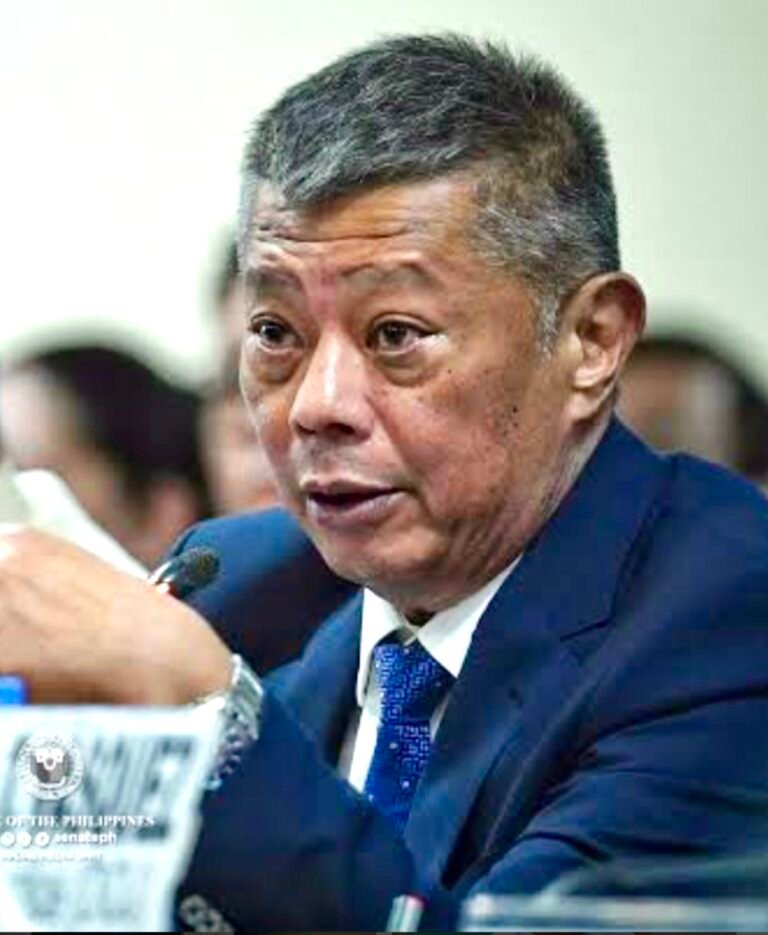
IN WHAT APPEARS to be a grand display of allegiance to the “appointing authority,” Justice Secretary Juanito Crispin Remulla owned up all the responsibilities behind the incarceration of former President Rodrigo Duterte and in surrendering him to the International Criminal Court in The Netherlands.

During the third hearing of the Senate Committee on Foreign Relations, Remulla admitted giving the clearances to serve the ICC’s warrant on Duterte — and to fly him to The Hague so he would be compelled to face crimes against humanity charges filed by the families of drug suspects who were summarily executed for the duration of the previous administration’s war against drugs.

According to Remulla, he ordered the serving of the ICC arrest warrant even as he claimed that there were legal grounds to do so. He also owned up the decision to fly the 80-year old former president to the Hague, in accordance with the law.

“I will admit that I gave the clearances to — Number One, serve the warrant of arrest as I saw it, as I deem fit. And Number Two, to fly him to The Hague, to be surrendered under Section 17 of Republic Act 9851,” Remulla was quoted as saying during the Senate committee hearing.

WHAT WENT BEFORE

On the morning of March 11, dozens of policemen swarmed and secured the Ninoy Aquino International Airport (NAIA) in anticipation of Duterte’s arrival from Hong Kong where the latter supposedly led a campaign sortie for PDP senatorial bets.

When the plane arrived, cops led by Criminal Investigation and Detection Group (CIDG) chief Maj. Gen. Nicolas Torre III “secured Duterte”. The former president was taken to the nearby Villamor Air Base.

Shortly before midnight, he was flown to The Netherlands and was placed in detention at The Hague Penitentiary Institution or the Scheveningen Prison on the following day.

At The Hague, Duterte was made to face the ICC via video link as the court read the charges related to the killings under his bloody drug war.

BOYING ON BULLYING

The DOJ chief took a swipe at the senators whom he claimed were “trying to make people admit” matters related to the arrest of the former president. 

Remulla, particularly cited committee chairperson Senator Imee Marcos and Senator Ronald Dela Rosa for pushing Philippine Center on Transnational Crime Executive Director Anthony Alcantara and PNP chief Gen. Rommel Marbil too hard against the wall.

During the hearing, Alcantara insisted he neither wields power nor authority to force Duterte into the private jet. Marbil for his part invoked executive privilege in answering the senators’ query.

It was at this point that Marcos and Dela Rosa took turns scolding Marbil for which Remulla butted in.

“That’s why we didn’t want to attend the last hearing because this is what we were expecting. We didn’t want to be bullied into a position… you are trying to make people admit something that they will not admit.”

PROTECTING MARCOS

To some, what Remulla did is a combination of damage control and a grand display of protecting the President from being dragged and blamed for the incarceration of his most vocal critic who happens to be the father of his running mate during the 2022 presidential election.

For practitioners specializing in crisis PR, Remulla’s act of owning up the responsibility effectively stopped the “congressional fishing expedition.”

“Sec. Remulla pulled a fast kill. He could be compromised by his own admission but the bleeding stops there,” says a retired crisis PR expert who spoke on the condition that his name won’t form part of the article.

Previously, Executive Secretary Lucas Bersamin sent a letter to the Senate. According to Bersamin, their first appearance before the Senate is more than enough and that they’re invoking the so-called executive privilege on the Senate hearing regarding Duterte’s arrest.

Act On Political Dynasty Petitions  

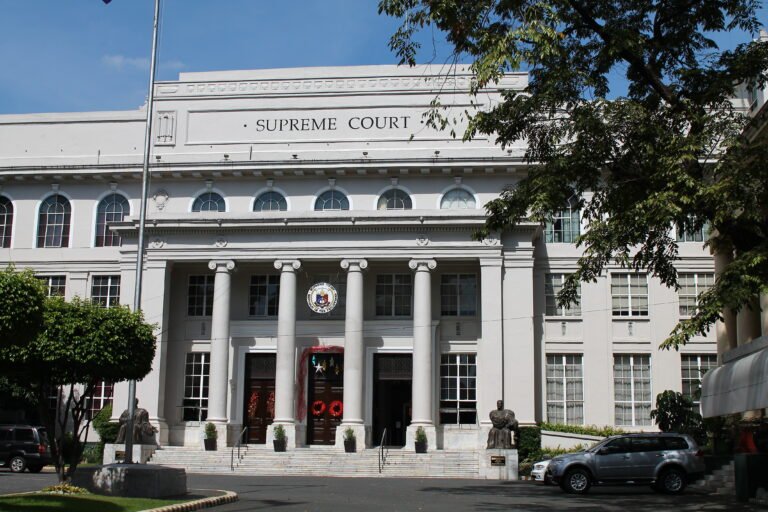
WANTING TO FINALLY settle the issue, the Supreme Court has directed lawmakers in both Houses of Congress to submit their comments “within 10 days” from April 8 on a series of petitions calling for the enactment of an anti-political dynasty law.

According to the High Tribunal, this directive is in line with the ruling that responds to three consolidated petitions urging Congress — Senate and the Lower House — to fulfill its constitutional duty to pass a law prohibiting political dynasties, as mandated by the 1987 Constitution.

The petitions were filed by Kapatiran Party (Alliance for the Common Good), Wilfredo Trinidad, and the 1Sambayan Coalition which had been merged by the High Court as an acknowledgement of the shared claims on the Constitutional issue.

It was explained that central to the petitions is the assertion that Congress has failed to fulfill its Constitutional duty as outlined in Article II, Section 26 of the 1987 Constitution, which stipulates that the State “shall guarantee equal access to opportunities for public service and prohibit political dynasties as may be defined by law.”

AS DEFINED, MANDATED

Political dynasty is defined as the “concentration, consolidation, and/or perpetuation of public office and political powers by persons related to one another within the second degree of consanguinity or affinity.”

This meaning, members of a family or a clan are running for public office at the same time or in succession.

Despite this clear mandate, though, nearly four decades have passed without the passage of an enabling law that would define and enforce the prohibition on political dynasties.

As observed, political dynasties continue to hold a tight grip on the country’s political landscape, with powerful families retaining multiple elective positions across generations, often within the same districts or regions.

Critics contend that this concentration of power fosters corruption, weakens the nation’s institutions and systematically denies capable but less-connected individuals the opportunity to serve. Such are seen as a major barrier to meaningful political reform and a more inclusive governance structure.

If the Supreme Court rules in favor of the petitioners, it would mark an unprecedented intervention by the judiciary, compelling Congress to fulfill its constitutional duty to pass a law on political dynasties. 

ANYTIME@EDSA

0

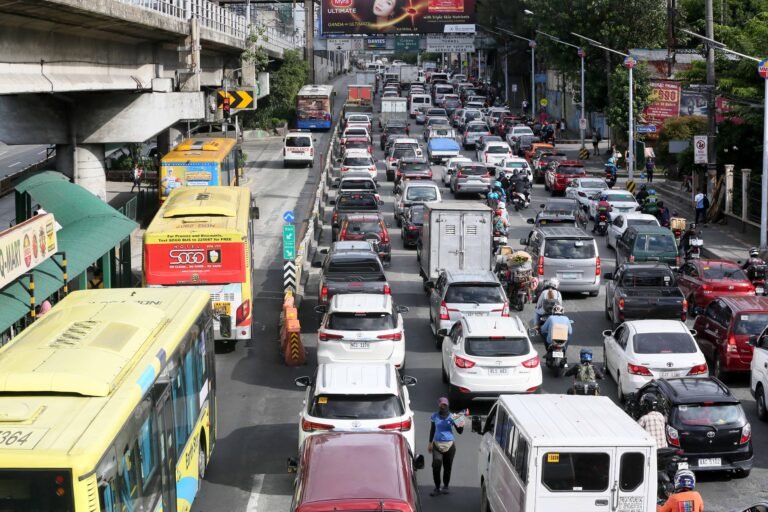
Congestion on both sides of Epifanio delos Santos, commonly known as EDSA, is an ordinary sight especially during rush hours. Even as buses are confined to the carousel lane, the Metro Manila Development Authority is doing all strategies to ease the flow. MMDA also believes that a factor is that the volume of private vehicles continues to increase by the day. EDSA, a 23.8-kilometer main thoroughfare, was constructed in 1940 to connect Metro Manila cities from Roxas Blvd in Pasay City the south to McArthur Highway in Caloocan in the north.

Eco-Friendly Water Solutions for N.Samar

THE LARGEST CEBU-BASED desalination plant that generates up to 20 million liters of potable water daily (MLD) is coming to Northern Samar. The plant can meet the daily water consumption needs of approximately 20,000 households.

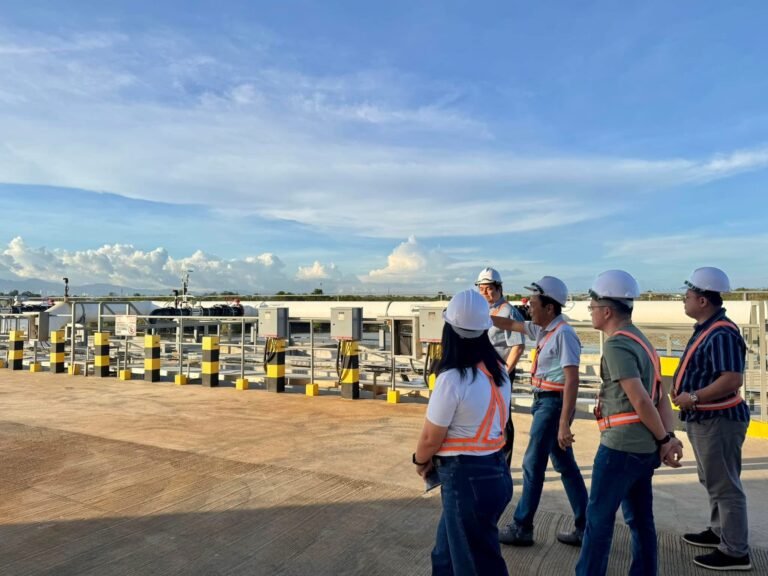
Vivant Water, the water infrastructure arm of the Cebu-based conglomerate Vivant Corporation, recently demonstrated the capabilities of its desalination plant in Cordova, Cebu, to Northern Samar’s 2nd District Congressman, Harris Christopher M. Ongchuan, accompanied by officers of the Provincial Economic Development and Investment Promotion Office (PEDIPO).

Emil Andre M. Garcia, Vivant president, said this the state-of-the-art facility investment cost ₱1.2 billion to construct. The Cordova desalination plant is the first of its kind in the country. 

POTABLE SEA WATER
Utilizing a process that removes salt and other impurities from seawater, the desalination facility ensures a steady supply of fresh water suitable for community use.

Addressing the critical water shortage in Metro Cebu, Garcia pointed out the stark disparity between the high demand, approximated at 500 to 600 MLD, and the significantly lower supply, which fluctuates between 100 to 250 MLD and often falls below 200 MLD during the dry season.

The desalination plant, is a Public-Private Partnership (PPP) project with the Municipality of Cordova, Cebu, aims to alleviate this water scarcity.

Congressman Ongchuan expressed interest in adopting a similar desalination project for the benefit of the second district t of Northern Samar.

Consequently, Gov. Edwin C. Ongchuan has instructed PEDIPO’s PPP unit to explore a potential partnership with Vivant, leveraging the PPP framework to enhance local water supply infrastructure.

WIND POWER PROJECT
Vivant Corporation has announced plans to launch a 200-MW wind power project in Allen, Northern Samar by 2026, reflecting the company’s commitment to sustainable and renewable energy solutions.

Vivant’s engagement spans various sectors, including electric power generation and distribution, retail electricity, and recently, the water industry.

With a diversified portfolio encompassing bulk water supply, wastewater treatment, and water distribution, Vivant aims to address critical infrastructure needs and foster sustainable development in the regions it serves.

Challenges, Opportunities in Appointing, Designating Government Agencies Execs

IN THE PHILIPPINE government, the appointment and designation of officials follow a structured legal framework primarily governed by the Civil Service Commission (CSC).

The CSC ensures that these posts, particularly those in the career service, are filled based on merit and fitness, adhering to professional competence, integrity, and public accountability.

In agencies where leadership plays a crucial role in policy implementation, revenue generation, and law enforcement—such as the Bureau of Customs (BOC)—other considerations beyond CSC rules also come into play.

As one of the country’s key revenue-generating agencies, the BOC operates under the Department of Finance (DOF) and is tasked with enforcing customs laws, collecting duties and taxes, and combating smuggling.

Individuals who lead the BOC hold highly sensitive positions that demand technical expertise, political trust, and administrative discretion. Their appointments are influenced by civil service qualifications, presidential prerogative, and sectoral interests, making the selection process complex and multifaceted.

PRESIDENT’S PREROGATIVE

At the helm of BOC is the Commissioner who serves at the pleasure of the President. Unlike career officials who undergo stringent CSC qualification procedures, the Commissioner is chosen based on executive discretion. The President can appoint and replace the Commissioner at any time, a practice that aligns with the agency’s critical function in enforcing national trade policies, securing borders, and ensuring customs revenue meets government targets.

Over the years, the selection of Customs Commissioners has often reflected the administration’s priorities.

Some Presidents have appointed experienced career officials from within the BOC, believing that institutional knowledge is key to effective leadership. Others opted for outsiders —retired military generals, law enforcement officers, or private sector executives— hoping that fresh perspectives and strong enforcement backgrounds can curb corruption and improve efficiency.

A SIGNIFICANT POST

Other than the commissioner, customs collectors —who oversee the country’s ports and sub-ports— play an equally important role. They are responsible for ensuring the smooth collection of customs duties, enforcing trade regulations, and preventing illicit activities such as smuggling and misdeclaration of goods.

While still subject to CSC rules, their appointments often involve additional layers of scrutiny and political considerations.

While CSC rules establish the foundation for government appointments, certain positions within BOC, especially those at the highest levels, require additional considerations. These factors, though not explicitly stated in civil service laws, significantly influence the placement of key officials.

APPOINTMENT PROCESS

Trust and political alignment play a vital role in the selection process beyond qualifications. The President needs assurance that the appointee can implement policies effectively and maintain the agency’s integrity.

Although some commissioners and collectors are appointed from within the BOC, many come from diverse backgrounds, such as law enforcement, military service, finance, and trade regulation.

The belief is that individuals with specialized expertise in these fields can bring much-needed reforms to an agency historically plagued by inefficiencies and corruption.

NATIONAL SECURITY FOCUS

The BOC has long been scrutinized for corruption and inefficiencies. As a result, many administrations have chosen to appoint individuals with strong anti-corruption backgrounds who are anticipated to clean up the agency and enforce stricter regulations.

Customs collectors assigned to major ports —like Manila, Batangas, and Cebu— are expected to meet or exceed revenue targets. Officials who demonstrate exceptional performance in revenue collection, compliance enforcement, and operational efficiency are often retained or promoted to higher positions.

Given the BOC’s role in border security and trade facilitation, its officials must align with the government’s broader economic and security strategies. There is strong emphasis on national security, particularly in times of heightened threats related to smuggling, terrorism financing, and illegal trade.

A DELICATE BALANCE

The appointment of BOC officials highlights the delicate balance between professional qualifications and political realities. While the CSC ensures that career service officials are appointed based on merit and fitness, selecting top Customs officials goes beyond CSC standards.

Throughout history, the BOC’s leadership structure has been shaped by legal requirements, executive discretion, political endorsements, and reform agendas. Some administrations prioritize institutional stability by appointing career Customs officials, while others focus on bringing in external leaders to drive reforms.

In all cases, the overarching goal remains the same: to create an efficient, transparent, and effective BOC that upholds its mandate of revenue collection, trade facilitation, and national security.

CSC rules do not solely dictate the appointment and designation of BOC officials. While merit-based qualifications and regulatory compliance remain essential, the President’s trust, political landscape, security concerns, and economic priorities also play a crucial role in shaping the agency’s leadership. 

In a highly strategic and often controversial agency like BOC, selecting its officials remains both a challenge and an opportunity—one that requires striking the right balance between competence, integrity, and political realities.

Is Bird Flu About To Become A Global Epidemic?

BIRD FLU —OR the H5N1 strain —was first detected in China in 2013. But now another strain H7N9 is wreaking havoc in the United States, which first detected it there in 2017. The US had since been moving heaven and earth to contain it.

According to a Reuters report (written by Sybille de La Hamaide) the US continues to grapple with another bird flu strain that has infected humans and caused egg prices to hit record highs. 

“The spread of avian influenza, commonly called bird flu, has ravaged flocks around the world, disrupting supply and fuelling higher food prices. Its spread to mammals, including dairy cows in the US, has raised concerns among governments about a risk of a new pandemic,” she added.

The strain that has caused most damage to poultry in recent years and the death of one person in the US is the H5N1.

The H7N9 bird flu virus has had a high death rate among humans worldwide killing 616 people, or 39 percent, of the 1,568 people infected worldwide since it was first detected.

COMPREHENSIVE STRAIN

The H7N9 bird flu virus has had a high death rate among humans worldwide killing 616 people, or 39 percent, of the 1,568 people infected worldwide since it was first detected, the World Health Organization (WHO) said.

The latest outbreak of H7N9 was detected on a farm of 47,654 commercial broiler breeder chickens in Noxubee, Mississippi, the Paris-based World Animal Health Organization said in a report on Monday, citing US Authorities.

“Highly pathogenic avian influenza (HPAI) H7N9 of North American wild bird lineage was detected in a commercial broiler breeder chicken flock in Mississippi. Depopulation of the affected flock is in progress,” the report says.

“The USDA Animal and Plant Health Inspection Service (APHIS), in conjunction with State Animal Health and Wildlife Officials, are conducting a comprehensive epidemiological investigation and enhanced surveillance in response to the detection,” it added.

CHICKEN PRICE SOARS

On July 22, 2024, the Department of Science and Technology- Philippine Council for Agriculture, Aquatic and Natural Resources Research and Development (PCAARRD) said the impact of chicken shortage was already evident on July 17, 2024, with retail prices in local markets of Metro Manila surging to a record high. 

The Department of Agriculture (DA) reported prices for whole-dressed chickens ranging from P190 per kg to P250 per kg, up from P160/kg to P220/kg in the previous month.

United Broiler Raisers Association (UBRA) president Jose Gerardo Feliciano attributed this price spike to reduced broiler stocks. This led producers to decrease flock sizes in response to recent financial losses. Furthermore, the farmgate price for day-old chicks has nearly doubled, reflecting tight supply conditions. 

The USDA in its 2024 report entitled “Livestock and Poultry: World Markets and Trade” revealed that the national chicken consumption in the Philippines would reach 1.988 million MT in 2024 while local production would be at 1.54 MMT, indicating a shortfall of 465,000 MT of chicken meat.

DEMAND CHALLENGES

The shortage is expected to push prices up at both farmgate and retail levels, considering challenges of the sector in meeting the demand.

Such challenges include rising production costs, including higher prices of imported feed additives and the impact of poultry diseases, which boosted price surge.

The rising chicken meat prices in local markets have heightened the appeal of imports. On July 18, 2024, the Bureau of Animal Industry (BAI) reported a 4.98 percent increase in chicken meat imports from 172.64 million kg in the first five months of 2023 to 181.23 million kg for the comparative period in 2024.

Chicken meat imports now account for 34.5 percent of the country’s total meat imports, with Brazil, the US, and Australia being the leading suppliers.

Action Movies On My Mind

After “SekSinema (Gender Images in Philippine Sex Cinema Enfolding Pandemia)” I am doing “Bakbakan (Action Movies in the Philippines)” to be published by BVV8 Media Productions.

I have already written the outline of the project and culled photos —stills, studio pictorials, candid, set snapshots, etc.— exclusive or shared, about the topic from my files stored in my vault.

Before the advent of cellphone cameras, instamatic cameras like Asahi or Olympia with Fuji film or negatives in it or Kodak with the same filaments were in vogue among entertainment press covering various events— press conferences, visits on location shoots of movies, especially, and yes, tapings of TV shows, when exclusive and monopolized tube productions were not yet lording them over minor or secondary even equally big networks.

ART IN THE HIGHEST FORM

Action movies are typically the gun toting, kicking and boxing, fistfights, gunfights, explosions, car chase, espionage, undercover agenting, thriller, karate, judo, the “kiss-kiss, bang-bang” type, etc.

But action movies are also basically the manner by which a character in the narrative is motivated by stimuli, situations, conflicts and other circumstances within and without the persona as in tension, internal and external, the problems solved in the denouement and finally the purgation of minds and emotions in reel world.

Action movies are also art in the highest form but sadly, in the context of many local films, the logic and credibility of this genre are lost thereby making them mediocre commercial ventures.

There were attempts, though, to level up action movies to excellent mimesis of action-filled real life of the quotidian like Arnel Barbarona’s “Tu Puy Imatuy” (2017), Arnel Mardoquio’s “Crossfire” (2011), Gerry dr Leon’s “The Moises Padilla Story” (1961), etc.; Celso Ad Castillo’s “Asedillo” (1971) etc., Lino Brocka’s “Santiago” (1970), “Bayan Ko, Kapit sa Patalim” (1984), etc.; 

(Mario O’Hara’s “Bagong Hari” (1986), Ishmael Bernal’s “El Vibora” (1972), “Wating” (1994) etc., Brillante Ma. Mendoza’s “Alpha: The Right to Kill” (2018), “Motherland” (2024), etc. Lav Diaz’ “Hesus Rebolusyonaryo” (2002), “Serafin Geronimo: Kriminal sa Baryo Concepcion” (1998), “Panahon ng Halimaw” (2018) etc., Erik Matti’s “OTJ (On the Job) 1 and 2 (Missing 8)” (2013 and 2021, respectively), Romy Suzara’s “Pepeng Shotgun” (1981), Joel Lamangan’s “Dukot” (2009), “Death Row” (2000), etc., and Richard Somes’ “Ishmael” (2010), “Supremo” (2012), among many others from no-nonsense directors.

They’re arguably action-drama but intense acts just the same.

Critics might say they’re pure action movies but they are also mutations of drama-action for there is no straight action from beginning to end of a film.

CHAMPS OF THE OPPRESSED

It just so happens that the lead stars of the projects are established action heroes or built in the image of an action star albeit with clayed feet— champion of the oppressed, deliverer of justice and freedom though a barrel of a gun or turn a villain into a punching bag, savior of the underdogs etc.— that made them hyperbolic. 

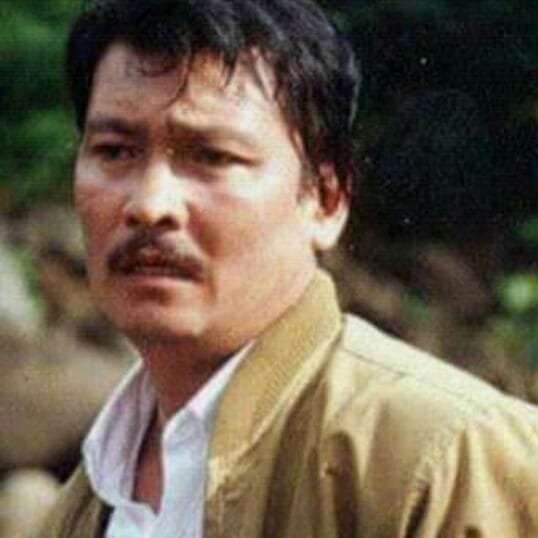
The late Fernando Poe, Jr. was dubbed King of Philippine Movies while he also acted melodramatic, sang and sometimes unconsciously played “cutesy patootsie” like a matinee idol in some big screen scenes. 

Lito Lapid is a sexy and dramatic star with daring stunts on the side especially in his earlier films like “Yakapin Mo Ako, Lalaking Matapang” (1980), “Kastilyong Buhangin” (1980), “Gaano Kita Kamahal” (1981), etc. or bed scenes with leading ladies the way Ramon Revilla, Sr., Rudy Fernandez, Ace Vergel, etc. did in the recent past and Ramon “Bong” Revilla, Jr., Phillip Salvador, Robin Padilla, among others, not excluding their copycats, are still doing in the present.

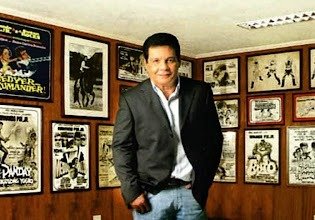
Lito Lapid

Even Chinese kung fu movies aren’t entirely action but there are ingredients of multiple genres like drama, sex, fantasy, etc. Bruce Lee’s martial arts cinema had derivations from classics while Jackie Chan’s outings are peppered with comic antics and highly-charged emotional scenes to a certain extent mawkish.

Thailand’s “Ong Bak” series which stars Tony Jaa who is widely known as Tatchakorn Yeerum, aside from hardcore Muay Thai, silat, among other indigenous self-defense moves, have poignant Asian drama as well.

In the home front, the more palatable mishmash of an action menu, the merrier, the more attractive however cynics and naysayers calling out action films dead.     

“Bakbakan (Action Movies in the Philippines)” is more than a biography and public landscapes of action superstars and their semiotics.

US-China Tariff War Worsens

WHO WILL BACK down in the worsening tariff war between the United States and China?

Nobody knows yet, but the US stepped up its tariff offensive against China with an announcement that Washington will impose 104 percent tariffs on Chinese imports beginning Thursday this week.

The response of the US imposing 104 percent tariffs on Chinese imports was in retaliation for Beijing’s 34 percent tariffs on US imports.

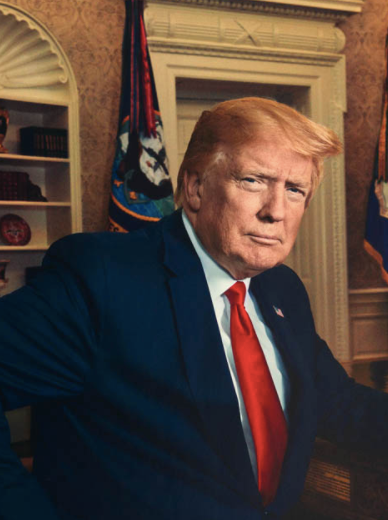
Earlier, US President Donald Trump tariffs on all products from China entering the American mainland.

“There will be 104 percent tariffs going into effect on China tonight at midnight,” spokeswoman Karoline Leavitt said in a media briefing at the White House on Wednesday.

“It was a mistake for China to retaliate,” she added.

Leavitt said that in the face of the imposition of the tariffs on China, it is time for Beijing “to make a deal” with Washington.

[I]f Beijing is interested on making a deal, (Trump) would be “incredibly gracious”… But he’s going to do what’s best for the American people.…The Chinese want to make a deal. They just don’t know how to do it.

MAKING A DEAL

Trump said that if Beijing is interested on making a deal, he would be “incredibly gracious.”

“But he’s (Trump) going to do what’s best for the American people. … The Chinese want to make a deal. They just don’t know how to do it,” Leavitt said.

Trump ordered 10 percent minimum tariff on all imports and higher reciprocal tariffs on the trading partners of the US, which counts China and the European Union.

Leavitt added that the US is waiting for its trading partners to start making deals with Washington.

“He directed them to have tailor-made trade deals with each and every country that calls up this administration to strike a deal,” she added.

“As the president said, the reciprocal tariffs, which will continue to go in effect as these deals are negotiated and ongoing, will generate trillions of dollars in revenue to the United States,” she said.

Partnership Against Hunger and Poverty

Agrarian Reform Secretary Conrado Estrella III and Bureau of Jail Management and Penology Chief Ruel Rivera seal the renewal of their collaboration under the Partnership Against Hunger and Poverty (PAHP) Program.

This links agrarian reform beneficiaries with BJMP facilities to supply fresh and local produce for persons deprived of liberty nationwide.

Rivera noted over P30 million in produce was purchased from farmer organizations in 2024, with over 357 jail facilities nationwide have existing marketing agreements with their local ARBs.

He also urged expansion of these local sourcing agreements, currently active in most BJMP facilities.

The renewed partnership underscores the government’s commitment to supporting farmers while addressing the food needs of jail facilities.

Convicted General Dupes Sandigan

CRIME DOES PAY but not a convicted army general who was released by a court embarking on a compromise that he’ll plead guilty for a lesser crime and pay a hefty fine corresponding to the admitted crime.

Taking the case of a convicted Army General Carlos Garcia, he managed to walk out of jail via the so-called “plea bargaining.”

In a 15-page resolution issued by the Sandiganbayan Second Special Division, the court made an indirect admission on what appears to be “putting one over the court.” 

According to the Sandiganbayan, Garcia has yet to pay the P408-million fine set by the court in connection with his conviction in 2022 for direct bribery and money laundering in connection with the illegal wealth he amassed from 1993 until 2004 – for which the anti-graft court issued “writs of execution.”

A writ of execution is a judicial remedy to compel the implementation of an earlier court resolution. In Garcia’s case, the court hoped that writ of execution would compel the convicted general to pay up.

PLEA BARGAIN PACT

Plea bargaining is a common practice in the criminal justice system where the prosecution and the defense negotiate an agreement to resolve a criminal case without a trial — or to cut short jail time.

In the case of Garcia, he agreed to plead guilty to a lesser crime to cut his jail time, even as the agreement somehow “decongested” the court of cases that has been under litigation beyond the 180-day deadline as provided under a Supreme Court decision.

Garcia’s camp however insisted that the convicted general is already a pauper after paying P135.4 million – an amount that is way below the P1.5 billion that was allegedly plundered during his senior stint in the Armed Forces of the Philippines.”

Garcia, who was then the AFP Deputy Chief of Staff for Comptrollership, is known for the AFP Corruption Scandal embarking on the so-called “pabaon scandal,” a scheme bestowing “hefty goodwill money” to retiring AFP senior officers.

SANDIGAN’S DISBELIEF

The court however doesn’t seem convinced that Garcia is already a pauper and no longer capable of paying up, notwithstanding the plea bargaining agreement that was signed by the prosecution and defense panel.

“As discussed above, the amount of P135,433,387.84 surrendered to the Republic in accordance with the Plea Bargaining Agreement was given by way of restitution for criminal acts and constitutes an admission of civil liability arising from the commission of a crime,” Sandiganbayan Special Second Division countered.

“As the accused pleaded guilty to the crime of direct bribery, the Court is duty-bound to render the requisite penalty as dictated by law,” it added.

The court also found no merit in Garcia’s claim of insolvency or inability to pay as the government supposedly already forfeited all his assets and properties.

WHAT WENT BEFORE

The cases stemmed from Garcia’s alleged receipt of kickbacks, commissions and “shopping money or gratitude money” in several government projects or transactions when he was the AFP deputy chief of staff for comptrollership with the rank of major general.

An investigation by the Senate Blue Ribbon committee also revealed Garcia was allowed to pocket some P165 million in “pabaon” or send-off money before his retirement in 2004, as per testimony of former budget officer George Rabusa.

The way the money was diverted was uncovered by Commission on Audit auditor Heidi Mendoza when she testified on a House of Representatives Committee on Justice

An estimated P1.5 billion in AFP funds were allegedly placed anomalously in an unaudited pool of discretionary resources. Under the system, Garcia was accused of amassing no less than P303 million – on top of the P164 million that he got when he reached the mandatory retirement age.

WHAT ABOUT OTHERS

The scandal resulted in the filing of plunder charges against six retired generals and five other officers including AFP chiefs Roy Cimatu and Diomedio Villanueva; retired military comptrollers Garcia and Jacinto Ligot; retired major general Hilario Atendido; former brigadier general Benito de Leon; retired lieutenant colonel Ernesto Paranis; active-duty officers Cirilo Tomas Donato and Roy Devesa; former civilian auditor of Divina Cabrera; and former accountant Generoso del Castillo.

Rabusa testified that all of the AFP chiefs of staff were recipients of send-off money. Allegations that they received send-off money were denied. The late Environment Sec. Angelo Reyes (himself a former AFP chief of staff) whose name forms part of the list of the supposed “recipients” opted to kill himself rather than testify in Congress.

Of the 11 senior AFP officials only Ligot and Garcia, who were the AFP’s comptrollers when the system was in place. Interestingly, both of them found their way out of jail – Ligot was acquitted, while  Garcia was released via plea bargain. 

Govt backs ASEAN response to Trump tariffs

The Philippines backs a unified response by the Association of Southeast Asian Nations (ASEAN) to the tariffs that the United States will impose globally starting April 9, 2025.

This, as Department of Trade and Industry (DTI) Secretary Ma. Cristina Roque said President Ferdinand R. Marcos Jr.’s economic team will meet on April 8 to discuss the government’s action to the reciprocal tariffs ordered by US President Donald Trump.

“We are really going to do that,” Roque said, “Yes, of course, as we all work together as ASEAN.”
Malaysian Prime Minister Anwar Ibrahim earlier said he had telephone discussions with other ASEAN leaders, including Marcos, Indonesian President Prabowo Subianto, Singaporean President Lawrence Wong, and Brunei Sultan Hassanal Bolkiah, to coordinate an ASEAN-wide response to the US reciprocal tariffs.

ASEAN member-states will be the one of the hardest hit with Trump’s new tariff order, slapping Cambodia with 49 percent tariff, Laos with 48 percent, Vietnam with 46 percent, Myanmar with 46 percent, Thailand with 36 percent, Indonesia with 32 percent, Malaysia with 24 percent, and the Philippines with 17 percent.

“We view with guarded optimism that the recent US imposition of reciprocal tariffs will provide strategic opportunities for the Philippines to improve its economic relationship with the US. As we have expected, the Philippines is among the least hit among key exporters to the US,” Roque earlier said.

In 2024, the US imported $14.2 billion from the Philippines, which increased by 6.9 percent from 2023 level, while it exported $9.3 billion. This left the US with a trade deficit of $4.9 billion with the Philippines in 2024, the US Trade Representative data showed.
According to the DTI, US accounted for 17 percent of Philippine exports in 2024.
Bulk of the Philippine outbound shipment to the US are electronic products, or sharing 53 percent of the total exports to the US.

“Overall, about 10 percent of our total trade involves the US,” Roque said.
She said there are Philippine goods exempted from the reciprocal tariffs such as copper ores and concentrates, and integrated circuits, among others.

Roque cited another opportunity for the Philippines amid the new tariff imposition.
She said the lower tariff for the Philippines than Thailand will make the former’s coconut products cheaper in the US market.

Undesirable Alien

Interior and Local Governments Secretary Juanito Victor Remulla presents Vitaly Zdorovetskiy, the Russian-American vlogger, tagged as an undesirable alien by the Bureau of Immigration, during a press conference in Quezon City on Monday morning, April 7, 2025. Zdorovetskiy was caught blatantly disrespecting security guards, women, and motorists on his vlogs that went viral.

Araw Ng Kagitingan

April 9 is an important day for Filipinos, a day for everyone to recall and pay tribute to the country’s heroes who sacrificed with their lives, for the independence of the Philippines as a sovereign nation. It is designated as a special non-working holiday, for all Filipinos to look back, reflect and commemorate the courage of the Filipino soldiers, driven by their deep love for the country’s independence as a sovereign state in the international community of nations. 

While it focuses on the brave stand of the Filipino and American soldiers to fight off the Japanese invaders in Bataan in the first half of the 1940s, it behooves every Filipino to remember and reflect on the inspiring self-sacrifice of all the Filipino heroes, like Lapu-Lapu, Fathers Gomez-Burgos-Zamora, Diego and Gabriela Silang, Dr. Jose Rizal, Andres Bonifacio, Teodora Alonzo (Tandang Sora), Antonio Luna, Juan Luna, Apolinario Mabini, Macario Sakay, and many others who dedicated their lives in fighting off the Spanish, American and Japanese colonial administrations. 

Of course, it goes without saying, that the heroic sacrifice of those who fought the brutal Marcos Martial Law regime from 1971 to 1986 should never be forgotten and must also fittingly be remembered and given due recognition with their stories shared in the history classes particularly of elementary and high school students. 

HEROISM & SUPREME SACRIFICE

In this regard, our public officials from President Bongbong Marcos, VP Sara Duterte, the Senators, Congressmen, the Supreme Court justices and down to the LGU officials are expected to lead the celebrations in their respective jurisdictions, to highlight the importance of remembering the heroism and supreme sacrifice of the country’s national heroes. 

Note that our paper currency, in various denominations, has prominently displayed the faces of some of our national heroes. (BUT, the Central Bank, under this current Marcos-Duterte regime, stupidly replaced some of the heroes’ faces with those of animals! 

Netizens expressed their disappointment in social media, and wondering if the idea-people in the Central Bank meant to obliterate the self-sacrificing patriotism embodied by the national heroes. Did they opt, traitorously if so, to put some Chinese or American symbols, as the former president now in an ICC prison in the Hague apparently showed his personal preference in word and in deed, at the height of his power as head-of-state?).

KEEPING THE SPIRIT

The commemoration of the courageous nationalist and patriotic self-sacrifice of our national heroes, on their respective birthdates or on other dates collectively honoring them, must be seriously implemented in all LGUs nationwide, and especially in schools and colleges, along with all government institutions –- to keep the Spirit of Love of Country instilled in the heart of every Filipino.

Especially at this time of President Xi Jin Ping’s China continuing aggression on our sovereignty in the West Philippine Sea, and President Trumps’ self-serving trade wars against more than 80 countries, the nationalist spirit of the Filipinos must be renewed vigorously by the government, by emphasizing and encouraging a patriotism-event-to-remember in all LGUs, government institutions, and in schools and colleges nationwide.

These significant dates of remembrance, dedicated to the heroism of our national heroes, actually should be a date when all of our public officials seriously reflect on how best they can emulate the heroes’ self-sacrificing love of country. 

And, as mandated, to keep their spirit of “SERVE THE PEOPLE,” as clearly stated in the Constitution “to build a just and humane society.” Indeed, today, more urgently, the Filipino people are expecting that the Marcos-Duterte administration will at least start providing the people the P20/kg of rice, STOP extra-judicial killings (EJKs), and China’s encroachment into our sovereign territories.

Rizal IP group finally finds an ally in the Senate

0

PILILLA, Rizal — After eight long years, the indigenous group who were shoved away from their ancestral domain by a private contractor masquerading as environmental stewards finally finds an ally in the Senate.

In an interview shortly after meeting local farmers, Senator Imee Marcos took a swipe at the memorandum of agreement signed by the late Environment Secretary Gina Lopez with a construction company, to whom the government “effectively ceded custody and authority over an area as big as Pasig City.”

“The MOA entered into by the DENR Secretary that time is void from the very start… saan ka ba naman kasi nakakita ng kontratang may perpetuity clause. Tapos wala man lang napapala ang gobyerno,” said the reelectionist senator.

She likewise cited the  urgent need for the Department of Agriculture to extend a comprehensive assistance program that is “conducive to what they have been accustomed to.”

“The Dumagat-Remontados of Rizal are known for their knack in planting root crops… hence, the government assistance program should be centered on a complete cycle starting from cultivation, harvesting, processing, distribution and sales,” Sen. Marcos said in the vernacular.

But even before that, Marcos urged the “concerned government agencies” to ensure that the Rizal-based IP groups have a place to plant their crops.”

“Kasi from what I heard and read in the news, kasama yatang binakuran yung ancestral domain ng mga Dumagat-Remontados… meron din mga lehitimong magbubukid na pinalayas sa sariling taniman,” Marcos added.

The presidential sister, who authored a legislative bill — the Agrarian Emancipation Act, which effectively amended the outdated agrarian reform law, emphasized the urgency for the government to transfer emancipated agricultural land to the farmer beneficiaries, if only to prevent a similar incident from taking place in the future.

“Ito kasing agrarian reform law, ang tulong niyan is nakapagbigay tayo ng mga titulo, pero collective title na pag sinipat mo yung likod may nakatalang pagkakautang… mabuti na lang nagawan natin ng paraan yung tinatawag na condonation… wala na silang utang,” she further averred.

But still, Sen. Imee believes condonation isn’t enough – “tutulong na rin lang ang gobyerno, lubos-lubusin na para siguradong makakatayo sa sariling paa ang sektor ng agrikultura.”

She also urged the government to recalibrate its food security strategy. “Paunlarin muna natin ang local agri sector. Pag nagawa natin yan, hindi na natin kailangan umangkat sa ibang bansa…. Ang pinapayaman kasi natin yung agri sector sa mga karatig bansa natin sa Asya.”

Study Shows Bottled Water Ain’t Safe

0

FOR the longest time, many are living under the impression that commercially sold bottled water is safe for human consumption, for which a long list of businessmen invested in what appears to be a lucrative business embarking on “needs.”

In a study published by Communications Biology, a peer-reviewed open access scientific journal covering research in biology, bottled water is the main source of microplastics, doing damage to the intestinal wall and kidneys and causing systemic inflammation. 

“Microplastics in drinking water and food are being ingested by humans, causing damage to internal organs after being absorbed through the digestive system. That’s most notably occurring in the kidneys,” reads part of the study.

The study also found microplastics — tiny plastic particles less than 5 millimeters in length — are the primary carriers of the environmental pollutant Benzo[a]pyrene (BaP) into the body. The specific pathways are not fully understood, but there is evidence that BaP is being absorbed primarily through the intestines after oral ingestion, posing health risks. 

TINY BUT ALARMING

Part of the same study hinted at difficulties in addressing microplastics in the environment “since they are nearly impossible to clean up because of their tiny size.”

Citing documented cases, the Communications Biology claims microplastics have been “found in the stomachs of humans and animals, as well as in the air, soil, tap water, food, and drinks. They are also accumulating in our oceans, causing damage to coral reefs and oceanic ecosystems.”

For one, microplastics are not found in nature. The most recent global environmental concern is manufactured by humans, which makes it improbable to be broken down by organisms.

STUDY METHODOLOGY

The study on microplastics — identified in diverse settings, including drinking water, freshwater, food, air, and marine environments — employed stereomicroscopic and µ-Raman techniques to analyze water samples from ten widely consumed bottled water brands, aiming to detect and characterize microplastics (MPs, for brevity).

Additionally, the oral consumption of MPs per capita was estimated. The average abundance of MPs ranged from 9 ± 1.00 MPs/L to 3 ± 1.73 MPs/L across all brands

Various MPs shapes were observed, including fibers, fragments, films, and pellets, with fibers being predominant (58.928%). MPs were categorized by color into five groups (red, blue, black, yellow, and transparent), with red comprising approximately 35.714% of the total count. 

All identified MPs were less than 500 µm in size. 

DAILY WATER INTAKE

The study confirmed the presence of eight different polymer types in bottled water that “health-conscious” people consume on a daily basis.

Unknown to consumers, bottled water contains polypropylene, polymethyl methacrylate, polystyrene, polycarbonate, polybutylene1, isotactic polypropylene, Nylon 6-α polymorph, and polyvinyl alcohol.

The estimated daily intake of MPs per person is pegged at 0.42 MPs, translating to an annual intake of 153.3 MPs per person. 

The origin of MPs in bottled water was likely attributed to both raw water sources and packaging materials, underscoring the need for further investigation. Given the potential health implications of human exposure to drinking water MPs, careful consideration should be given to the use of plastic packaging for potable water.

REDUCING MICROPLASTICS

Addressing health risks caused by microplastics in the environment doesn’t need a rocket-science solution. All we have to do is to reduce plastic use. In some cases, plastic use is unavoidable, for which recycling was conceptualized. 

In the Philippines, there is a law referred to as the Ecological Solid Waste Management Act of 2000 (Republic Act 9003) which provides a framework for local government units (LGUs) to implement integrated solid waste management plans, aiming to reduce waste by at least 25% through the 3Rs (reduce, reuse, and recycle).

However, the government can not solve the problem without public compliance and cooperation. Example, consider reusable water bottles over single-use plastics. Use eco bags or baskets rather than disposable bags. 

Proper recycling of plastics is also a must to keep plastics from evolving into microplastics that we can breathe and ingest.

LGU Hospital Cuts Operating Hours

0

TAYTAY, Rizal — In what appears to be another first in the Philippines, a local government-run public healthcare institution has reportedly cut its operating hours amid lack of doctors to attend emergency cases.

In a Facebook post that has since gone viral, netizens took turns lambasting the supposed failure to address health emergency situations at the Taytay Emergency Hospital, a local government unit-owned and operated medical facility.

The post had photos of a hospital utility worker seated on a bench in a diagonal position blocking at the hospital entrance.

A hospital should ideally be open 24 hours a day, especially its emergency department, to ensure immediate access to medical care for patients experiencing critical or life-threatening situations at any time, regardless of the day or hour. 

DEPRIVED LOCAL FOLKS

According to the netizen behind the Facebook post, she went to the Taytay Emergency Hospital amid symptoms of a “stroke.”

“Nakakadismaya emergency kagabi… pumunta kami dahil masama pakiramdam ko manhid katawan ko, sakit ulo batok, yun pala sobrang taas na ng BP ko. Totoo pala mga nabasa ko post reklamo dyan hospital Taytay Emergency… walang doktor.”

She claimed that it wasn’t just her who was deprived of emergency treatment. “Maya-maya pa may dumating humingi ng tulong may aksidente… wala din aksyon umalis na lang kami. Mayor Allan (de Leon) sana po umaksyon kayo nangyayari Taytay Emergency,” reads part of her Facebook post.

She nevertheless got treatment in another hospital, but had to ask help from relatives and friends who pooled funds to pay her bill for saving her life.

CLOSED BEFORE SUNSET

According to another resident by the name of Yayam Dizon, Taytay Emergency Hospital is operating on limited “business” hours — from 8:00 in the morning until 5:00 in the afternoon.

While most government offices strictly adhere to 8 to 5 working hours, public hospitals are supposed to be 24-7, Dizon said.

“Saan ka ba naman nakakita ng Emergency Hospital na 8:00 AM to 5:00 PM lang? Ano yun kapag may emergency situation sasabihin sa pasyente at pamilya nito bumalik na lang bukas dahil sarado na kami?,” a sarcastic first paragraph of a separate Facebook post reads.

The local government has yet to issue a statement.

UNIVERSAL HEALTHCARE

In 2019, then President Rodrigo Duterte signed into law Republic Act 11223, otherwise referred to as the Universal Health Care Act (UHC Act) primarily designed to make healthcare affordable and accessible to all Filipinos. 

Under RA 11223, all Filipinos – regardless of age, socio-economic status, gender,, ethnicity are automatically enrolled in the National Health Insurance Program (NHIP). 

The law ensures protection of citizens from financial hardship, expands the health benefit packages, brings more doctors to remote communities, improves overall health system performance, and ensures equitable access to quality and affordable health care. 

Criminal Justice System In The Philippines, Currently

AT THE HEIGHT of Duterte’s War on Drugs, the criminal justice system was viewed as weak, inefficient, and corrupt. This brought to conclude that police could not be trusted and that other law enforcement agencies were gleaned as protectors of drug syndicates.

In my research and studies, victims complained that the prosecution and the courts as “too slow”. Trial proceedings often took several years. They say, only the rich, powerful, and well-connected have access to justice. Wealthy individuals could easily secure bail even in serious offenses, while poor people languished behind bars for the most minor and petty offenses.

The correctional system was equally a failure. Jails and prisons were extremely overcrowded. Inmates had to rely on their own resources to survive. A mayores system emerged to compensate for the lack of custodial staff. Inmate gangs became essential in mediating conflicts and managing the day-to-day needs of the facilities. In the process, inmates gained access to amenities such as cell phones.

In partnership with corrupt guards, drug use and the drug trade proliferated inside some of the largest jails and prisons. As a result, inmates became more hardened, learning criminogenic trades while behind bars. Upon release, they struggled to reintegrate as responsible citizens.

THE RIGHT THING, ACCORDING TO DUTERTE
It was this state of affairs that President Duterte railed against to justify his draconian policy on the war against drugs and criminality. Duterte should have first reformed the police force to make them more professional and capable of performing their duties effectively. Instead, majority turned into his (seemingly) personal allies.

Guided by Duterte’s singular belief that he was doing the right thing for the country, he unleashed the same police force to target drug addicts. As reflected in the victims’ relatives’ testimonials, the same force to his instructions as “complete authority” to trample on the human rights of “suspects”, bypass due process, and even provoke suspects to fight back. “Kapag lumaban, patay!”

How were the police “rewarded”?

FOR FANATICS, IT’S ACCEPTABLE
Duterte supporters and fanatics endorsed this same mind though. They became “legally” cynical, believing it was acceptable to kill drug addicts since the traditional justice system was unlikely to hold offenders accountable “fast”.

They dismissed the rule of law as a mere technicality exploited by the rich and powerful. They reduced human rights to a ploy designed to protect offenders. They mocked court procedures like due process and equal protection as mere tactics to delay punishments.

And while Duterte and his supporters fully understood the weaknesses and inequities of the justice system, they did nothing to improve it. Worse, the same system to wage a bloody drug war was acceptable to them.

Consequently, this magnified how the corrupt system preyed on the Filipino people. Only impoverished drug addicts or users were “eliminated”.

Hardly were there drug lords that perished in this selective drug war. Others suspected that under the Duterte regime the drug lords remained untouched.

A SYSTEM THAT NOW WORKS
Ironically, now that Duterte is detained at The Hague on charges of Crimes Against Humanity before the International Criminal Court (ICC), his supporters claim that the Philippine criminal justice system is functioning effectively and that he should be tried here.

Duterte supporters also now assert that the police system works and that if evidence of his crimes exists, victims of the drug war should file their cases with local authorities.

Duterte’s supporters now claim that the local court system is effective and that local judges — not foreigners who supposedly know nothing about the Philippine justice system — should decide his guilt.

Have they conveniently forgotten that Duterte and his allies intimidated actors in the criminal justice system by publicly including their names in the “Matrix,” or list of supposed drug coddlers?

PANACEA TO THESE AILS
There is still much to be done to improve the criminal justice system. Police must be professionalized. Disposition of cases must be expedited. Jail and prison overcrowding must be addressed. Alternatives to detention and incarceration must be introduced.

Best practices in risk assessments and rehabilitation must also be adopted.

More importantly, Duterte must be held accountable for the brutal drug war and the crimes against humanity that he unleashed upon the Filipino people.

For the Philippines to recover from the mayhem Duterte inflicted on its criminal justice system, that process must begin with holding him accountable at the ICC.

Global oil prices a major contributor to lower February inflation

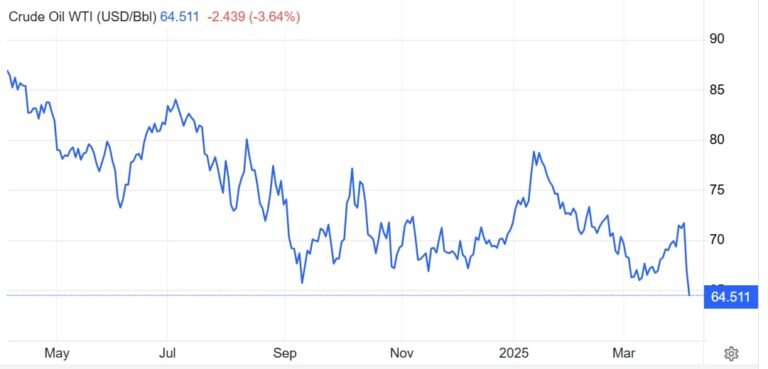
Despite the government cheering its efforts to control inflation this year, the reality is the lower global prices of crude have been on a downtrend despite ongoing geopolitical conflicts, also contributing significantly to the downtrend of the consumer price index.

This, as the inflation rate in March this year settled at 1.8 percent, marking a nearly five-year low, mainly due to the slower price increase in food and non-alcoholic beverages, particularly lower prices of rice.

Philippine Statistics Authority (PSA) Undersecretary Claire Dennis Mapa said in a press briefing that last month’s inflation was lower than the rate in February 2025 at 2.1 percent and the 3.7 percent in March 2024. Also, the inflation last month was the lowest since June 2020.

While the PSA attributed the slower pace of price increases in March 2025 to the easing of food and non-alcoholic beverages inflation at 2.2 percent from 2.6 percent a month ago, inflation in the transport group recorded -1.1 percent in March 2025 from -0.2 percent in February 2025.

This sector contributed 27 percent to the downtrend in inflation in the previous month due to lower prices of gasoline and diesel, as well as slower pace in fare increase in passenger road transport.

A check of global oil prices showed these were on a downtrend since early this year, hitting below $65 per barrel (WTI) in the latter part of March. This is a significant decrease from the above $80 per barrel (WTI) in March last year,

And while food and non-alcoholic beverages shared 50.2 percent to the downtrend in inflation, the prices of food also depend on the cost of fuel as food products need to be transported.

When it comes to food inflation in particular, cereals and cereal products recorded a deflation, or decrease in prices, of 5.2 percent last month from a deflation of 3 percent in February 2025.

This commodity group includes rice, which recorded negative inflation for the past three months: -2.3 percent in January, -8.4 percent in February, and -7.7 percent in March.

Mapa said that since the Executive Order 62 took effect in July 2024, which reduced the tariff on imported rice, prices of the staple have substantially declined.

“Kung i-compare natin noong—say, base natin noong July 2024, kung saan nagsimula ‘yong reduction sa tariff, bumaba na rin substantially ‘yong presyo ng bigas per kilo [If we compare it to—(let’s) say, based on July 2024, when the tariff reduction started, the price of rice per kilogram has substantially decreased],” he said.

Citing PSA data, Mapa said comparing the prices from July 2024 to March 2025, average price reduction for regular milled rice was at P4.90, or from P51.11 per kilo to P46.09 per kilogram (kg).

Well milled rice also declined in the same period by P4.19 per kg., or from P56.44 per kg. to P52.25 per kg., and by P2.60 per kg. for special rice, or from P64.75 per kg. to P62.15 per kg.

However, the price of regular milled rice in July 2023 was P41 per kg, and P45 per kg for well-milled rice. Meanwhile, restaurants and accommodation services, with an inflation of 2.3 percent, shared 16 percent to the downtrend of inflation last month.

PH in better position to deal with US reciprocal tariffs

The Philippines is in a better position compared to other Asian nations once the reciprocal tariffs that United States will impose globally takes effect.

Under US President Donald Trump’s executive order, Philippine goods entering the US market will be levied 17 percent, still below the tariff for other member-states under the Association of Southeast Asian Nations (ASEAN) like Cambodia at 49 percent, Laos at 48 percent, Vietnam at 46 percent, Myanmar at 46 percent, Thailand at 36 percent, Indonesia at 32 percent, and Malaysia at 24 percent.

US reciprocal tariff on Philippine goods is the second lowest in ASEAN, only above Singapore at a rate of 10 percent.

“We view with guarded optimism that the recent US imposition of reciprocal tariffs will provide strategic opportunities for the Philippines to improve its economic relationship with the US. As we have expected, the Philippines is among the least hit among key exporters to the US,” DTI Secretary Ma. Cristina Roque said in a Viber message to reporters.

“In light of the new tariffs announced, the Philippines can be in a better position than other neighboring countries because of the relatively lower tariffs imposed,” she added.

Reciprocal tariffs on Asian economies were also higher than the Philippines like China at 34 percent, Taiwan at 32 percent, India at 26 percent, South Korea at 25 percent, and Japan at 24 percent.

The new tariffs will be implemented starting April 9, 2025, or what Trump called “liberation day”.

With Trump’s new tariff order, Philippine exports previously enjoying lower or zero tariffs will face a uniform 17 percent tariff when entering the US market. This means Philippine goods will become more expensive in the US and it has potential to reduce revenues and cut workforce for industries reliant on US trade.

The US is the biggest market for Philippine exports, reaching $14.2 billion last year, reflecting an increase of 6.9 percent from 2023. On the other hand, the country imported $9.3 billion worth of products from the US, for trade deficit surplus of $4.9 billion, according to US Trade Representative data.

According to the DTI, the US accounted for 17 percent of Philippine exports in 2024.

Bulk of the Philippine outbound shipment to the US are electronic products, sharing 53 percent of the total exports to the US.

“Overall, about 10 percent of our total trade involves the US,” Roque said.

She said there are Philippine goods exempted from the reciprocal tariffs such as copper ores and concentrates, and integrated circuits, among others.

“We are carefully studying the impact of reciprocal tariffs on agri-based products, particularly food exports noting that these are not covered by the exemptions,” Roque said.

Roque cited another opportunity for the Philippines amid the new tariff imposition.

She said the lower tariff for the Philippines than Thailand will make the former’s coconut products cheaper in the US market. “The task at hand right now for DTI and other government agencies is how to act fast and take advantage of this new development,” she added.