
Friday, March 27, 2026
Home Blog Page 47

Comply Or Defy

WINNING AN ELECTION fair and square does not automatically mean assumption to office, says the Department of Interior and Local Government (DILG) amid reports that hundreds of local candidates who won during the May 12 election failed to submit Statement of Contributions and Expenditures (SOCE).

Citing Section 14 of Republic Act 7166 and Commission on Elections (Comelec) Resolution 10730, all candidates and political parties in the May 2025 elections were required to file their SOCE by June 11, 2025, without extension.

The SOCE filing requirement applies to all candidates, whether elected or not. Under the law, no elected official shall be allowed to assume office until the required SOCE has been submitted in full compliance with the rules set by the poll body.

‘The SOCE requirement promotes transparency and accountability in the conduct of elections and in the use of campaign funds … to ensure integrity in public office and to reinforce public trust in electoral processes.’

IMPLEMENTING BODY
According to the DILG, the agency’s mandate is to supervise local governments and implement relevant election-related laws and policies, adding that part of its obligation is to ensure that local officials meet the SOCE filing requirement.

In a memorandum circular, Local Government Secretary Jonvic Remulla instructed regional and field offices to refrain from issuing any recognition of assumption or acknowledge any oath-taking for defiant officials.

Remulla also told regional and field counterparts to coordinate with Comelec for verification prior to acting on any assumption to office at the local level.

COMPLIANCE A MUST
Failure to file SOCE may also result in administrative fines for both winning and losing candidates. Repeat violations result in stiffer fines and subject the offender to perpetual disqualification to hold public office.

The SOCE requirement promotes transparency and accountability in the conduct of elections and in the use of campaign funds. It serves as a post-election compliance measure to ensure integrity in public office and to reinforce public trust in electoral processes.

Full compliance with the SOCE requirement is a condition precedent to the lawful entry into public office. 

Local government units and transition teams are directed to ensure that all legal prerequisites, including the SOCE, are verified and fulfilled before proceeding with any turnover or assumption ceremonies.


New Customs Chief

PRESIDENT FERDINAND R. MARCOS Jr. on Monday (June 30) swore in Ariel Nepomuceno as the new Commissioner of the Bureau of Customs (BOC).
Nepomuceno, who served as Office of Civil Defense (OCD) Administrator, will replace Bienvenido Rubio as BOC chief.

The oath-taking ceremony was held in Malacañang, marking another key appointment in Marcos’ ongoing Cabinet reorganization after the 2025 midterm elections.

‘Before his appointment to OCD, Nepomuceno served as BOC’s Deputy Commissioner for Enforcement Group from 2013 to 2017… (He) takes the helm at one of the country’s most critical revenue-generating and border protection agencies.’

Before his appointment to OCD, Nepomuceno served as BOC’s Deputy Commissioner for Enforcement Group from 2013 to 2017.

Rubio earlier announced his resignation in line with the wave of courtesy resignations submitted by Cabinet and other secretary-level officials as part of the President’s directive to recalibrate his administration’s leadership moving into the second half of his term.

Nepomuceno now takes the helm at one of the country’s most critical revenue-generating and border protection agencies.

The Palace has yet to announce Nepomuceno’s successor at the OCD as of posting time.

Sheer Lack Of Compassion

WHEN THE PHILIPPINE Congress enacted Republic Act 9994 (otherwise referred to as the Expanded Senior Citizens Act of 2010), Filipino elders were made to believe that the law would somehow make their life a little less difficult.

Under RA 9994, Filipinos (regardless of gender and social status) aged 60 and above are entitled to a 20 percent discount and exemption from value-added tax (VAT) on certain goods and services for their personal consumption. 

The discounts apply to both cash and credit card payments covering goods and services like dine-in and take-out orders in restaurants; hotel room accommodations, transportation whether it be air, land, and sea travel fares; prescription and over the counter medicines; grocery items like rice, bread, meat, eggs, etcetera.

‘The … hinted at a provision on “Other goods and services for personal use as defined by law” … the law in itself sounds good but a reality check doesn’t seem to be consistent with the purpose for which the law was enacted.’

REALITY CHECK
The same law also hinted at a provision on “Other goods and services for personal use as defined by law.”

For one, the law in itself sounds good but a reality check doesn’t seem to be consistent with the purpose for which the law was enacted.

In restaurants, senior citizens may only use their discount privilege once a day. What makes it worse is that a closer look into the official receipt tends to show that these people who have been paying taxes all their life are still made to pay for an “obligation” which has already been stripped under the RA 9994.

Drug stores won’t give discounts for “over the counter medicines.” Other establishments which have been remiss on complying with the law are drug stores, and credit card companies.

MALASAKIT
For the last 10 years, we’ve heard all sorts of complaints on the half-based implementation of the expanded senior citizens act. 

Under these circumstances, a legislator by the name of Senator Bong Go offered a legislative solution.

His take — exempt senior citizens from paying VAT in cash and credit card payments covering goods and services like dine-in and take-out orders in restaurants; hotel room accommodations, transportation whether it be air, land, and sea travel fares; prescription and over the counter medicines; grocery items like rice, bread, meat, eggs, etcetera.

Ganun din naman kasi…. Mas malaki pa nga ang ipinapataw na VAT sa kanila kumpara sa diskwento para lang sa mga piling bilihin.

Let me be clear though. I am six years away from becoming a dual citizen (Filipino and Senior) so there’s nothing for me to gain — for now.

I am also no fan of Senator Go. But the man behind the Malasakit Centers Act, talks with sense unlike other politicians na puro lang dada.

Moving Organic Agriculture Forward

0

SINCE CREATION, THE only agriculture likely practiced in the world had been natural — planting seeds on the soil under the care of rain, sun, irrigation, and farm animals. Until Capitalism during the Industrial Revolution brought in chemical and synthetic inputs to increase crop production that would meet the needs of a booming population.

From the early fertilizers, antibiotics and pesticides that are still widely used, business and science acumen in time advanced to genetic modified organisms (GMOs) that made corn, rice, and other food stuffs more palatable but hazardous to health.

Shouldn’t health buffs, environment advocates, and consumers at large welcome the rise of an alternative? Organic Agriculture is going back to basics with Nature providing for the fields and their nurturers, as well as to a time when food was more nutritious than fortified. And, there’s also another path to boost it: FORWARD.

In the Philippines, since organic agriculture quite belatedly drew the government’s serious attention in 2005 with the first legal framework to institutionalize Organic Agriculture (OA), this sector is slowly picking up.

‘Organic Agriculture is going back to basics with Nature providing for the fields and their nurturers, as well as to a time when food was more nutritious than fortified. And, there’s also another path to boost it: FORWARD.’

WHY GO ORGANIC?
It was a long but very informative Kamayan forum in June by Green Convergence for safe food, healthy environment and sustainable economy when experts laid down the benefits of organic agriculture and why it is an answer to the growing concern for food security.

Zoom attendees were a cross-section of agriculture and environment students and teachers, environment educators and advocates, small farm owners, promoters of organic harvests, and health-concerned individuals. I was particularly interested as one in the stage of making lifestyle changes for better health and encouraging others to do likewise.

Dr. Chito Medina, founder of MASIPAG, a nationwide network of farmers and scientists working to empower small farmers, shared his long experience in agriculture including educational visits to organic farms abroad and engagements with local government units.

He identified some of the benefits of Organic Agriculture as: product is healthier, more nutritious; avoids artificial and hazardous chemicals such as fertilizers, antibiotics, and pesticides; a sustainable farming practice; relies on modern and scientific knowledge while also depending on tradition; good for rural development; a mitigation measure against climate change; and politically, can fend off corporate control.

Fr. Benigno Beltran, SVD, representing the Veritas Social Empowerment Inc. and the Laudato Si movement of the Catholic Church, discussed their e-trading network to help organic farmers efficiently sell their harvests to consumers. Inspired by the Pope Francis encyclical on care for the planet which includes care for the poor and marginalized, they envision an economic system prioritizing human dignity, social justice, and environmental stewardship.

Their e-trading strategy allows women and youth to help the farmers in their family to use technology to market and deliver their supplies.

Both also brought up issues which hinder the growth of Organic Agriculture – the strict and costly certification system for organic farmers and organizations and lack of strong technology and promotion support from the government represented in the session by the Department of Agriculture. Medina also envisions the government building small farmers’ organic markets in various localities.

MOVING FORCES
Two Green Convergence trustees were also able to articulate why Organic Agriculture is good practice. GC president Victoria Segovia said it can address food security through good soil, natural farming system, and respect for the dignity of farmers.

Dr. Cecilia Alarcon concluded the session noting two strong foundations of Organic Agriculture: the Science that advances the practice and the Spirit to help the poor and harmonize Agriculture with Nature.

The whole episode on Organic Agriculture: Answer to Food Security? can be viewed at greenconvergencephil.com.

The Church And Bad Governance

THE LOUDEST CALL today by the parliament of the streets is “IMPEACH SARA DUTERTE NOW!”

It’s a demand from the people concerned about truth, justice, and accountability in government. That the vice-president of the country has been charged to have violated the Constitution and the Rule of Law requires that she be given her day before the Impeachment Court soonest.

The vice-president, accused of betraying his mandate to serve the people, is a grave matter of governance. This means that she has not been doing her job, and has done wrong to the people whom she was supposed to serve while holding the second highest position of public trust in government.

The Senate and the House of Representatives have been expected by the people to do their job in accordance with their clear constitutional duties. BUT they have been remised in expediting the impeachment of VP Sara Duterte.

‘There are a few brave bishops, priests and pastors, who have tirelessly supported the activists in their fight for truth, justice, accountability and good governance.’

BEDROCK OF CHRISTIANITY
The Philippines is known to be the bedrock of Christianity in Asia, with more than 90 percent of the population professing to be followers of Jesus Christ, that is, believers and doers of what is right and avoiding what is wrong towards fellowmen. Presumably, this Christian population is supposedly guided in the practice of their Christian Faith primarily by priests, pastors, bishops and other recognized church leaders.

It is probably safe to presume that President Bongbong Marcos and the rest of his cabinet ministers, other appointed officials, and the senators and congressmen profess to be Christians, or at least believe themselves to be trying to do what is right, and not doing anything wrong in holding their respective positions of public trust.

In this regard, aren’t Church leaders, as prophets, supposed to guide their Christian flock, particularly government officials, to avoid doing evil, and to carry out their official duties with integrity in the service of their constituents?

OBSERVERS OF WRONGDOINGS
For decades now, the people have observed that the Church priests, pastors and bishops have been silent observers of the many wrongdoings of government officials.

Their Christian flocks are at times, or more often than not, surprised that in the face of the evil doings of the country’s public officials, their bishops, priests, and pastors have not done anything concrete to advise or confront the erring public officials, much less, to demand accountability for their actions in violation of their oath of office to serve the people. In effect, these church leaders appear complicit in the evil doings of the government officials.

Concerned Filipinos of goodwill, and especially the many activist groups, civil society organizations, NGOs, social movements, and countless citizens believing and working for good governance in their own creative or small ways, really wonder why the leaders of the Christian Faith seem to be uncaring about how the government is being run by self-serving dynastic families, egoistic celebrities, pretentious know-it-all officials, rogue cops and military officers.

These church leaders seem to be so comfortable with their presiding over worship services and leading their parishioners in their devotional practices. They do not see the need to be with their flocks who, despite difficulties of getting public transports and other hazards from sun, or rain, and possible harassments by PNP ground troops, join the parliament of the streets clamoring for reforms in government plans and programs. The SHEPHERDS have so far failed to guide and protect their flocks from the WOLVES in government!

DID THE CHURCH FAIL?
From the time of the brutal “war on drugs” beginning in 2011, initiated by the former Davao mayor Rodrigo Roa Duterte and later, becoming the country’s president in 2016, causing the extra-judicial killings (EJKs) and red-tagged killings of more than 30,000 Filipinos, the Church’s bishops, priests and pastors have not lent enough of their voices to denounce such killings, or somehow confront the perpetrator-officials themselves for committing such crimes, or sins, against the people.

There are a few brave bishops, priests and pastors, who have tirelessly supported the activists in their fight for truth, justice, accountability and good governance.

But the Church, as THE PROPHET for good governance, has basically failed the people!

Desecration Of Scenic Sites

OUR COUNTRY HAS an abundance of cretin and mindless businessmen, whose only concern is profit even to the extent of desecrating our pristine natural resources and scenic spots.

In practically every province of our country, where there are beautiful and lush green-covered mountains and hills, the marine rich dive sites, white sand beaches, there are poachers, illegal loggers, illegal quarrymen and gold diggers and illegal miners, hunters and wildlife smugglers.

The Chocolate Hills in Bohol, the dive sites in Siargao, with its coral reefs a marvel to humans and a useful food source and habitat for marine life; the white sand beaches of Boracay and the continuing desecration of El Nido in Palawan, and now the quarrying on the slopes of majestic Mount Mayon.

‘Do not allow development to become an excuse for destruction … When public projects ignore environmental safeguards, override communities, or enrich only the few, they betray the common good.’

FAILURE TO PROTECT
The government’s continued failure to protect and preserve these rich natural resources from despoilation, perhaps because some officials are on the take from these unscrupulous and greedy businessmen even if nothing would be left of such resources for future generations of Filipinos, is a major contributor to the disastrous effects of climate change. Communities surrounding these resources are powerless, though not voiceless, in denouncing such criminal acts against nature.

Take for instance, the diocese of Legazpi, Albay has been vociferously denouncing and exposing the ecological crisis caused by quarrying on the slopes of the perfect cone of Mt. Mayon.

In an article of Business Mirror, the diocese condemned the worsening environmental degradation in Albay province– thanks to the inutility of the Department of Environment and Natural Resources under the ousted DENR secretary–  because of the irresponsible quarrying, deforestation and a lack of public consultation on infrastructure projects as evidence of “systemic neglect.”

ESCALATING CRISIS
A pastoral statement issued last Corpus Cristi Sunday by Bishop Joel Baylon and the diocesan clergy urged government officials and the public to take responsibility for what they called an escalating environmental crisis.

“Do not allow development to become an excuse for destruction…Albay deserves better—and we can still choose to do better,” part of the statement reads.

Addressing public officials, the diocese called for integrity and transparency in governance.

“When public projects ignore environmental safeguards, override communities, or enrich only the few, they betray the common good,” it said.

UNDER THREAT
The diocese criticized ongoing quarrying activities on the slopes of Mount Mayon—a protected area—and warned about the consequences of clearing forest cover and altering waterways.

It also raised concern over infrastructure projects encroaching on geologically– sensitive and heritage zones “with little regard for ecological impact or the long-term welfare of residents.”

“In various towns, our people have begun to ask: Who benefits from these projects? Why are those most affected rarely consulted?” the statement said.

Albay was designated a UNESCO Biosphere Reserve in 2016—a status the diocese said is now under threat due to ecological degradation.

AN APOLOGY
In the pastoral letter, the diocese apologized for not always speaking out forcefully in the past.

“For the times we remained silent when we should have spoken…we sincerely ask forgiveness,” the clergy wrote. “This is a moment for repentance and renewal, not only in words but in witness,” wrote the CBCP News.

It Is Lawless To Be Lawful In A Lawless Society

HERE WE ARE again, dazed and confused. Bewildered. Angry. Tired.

The Senate, in an 18 to 5 vote, remanded the impeachment case against Vice President Sara Duterte back to the House of Representatives. The reason? Alleged constitutional infirmities. The solution? A freshly invented maneuver called “remand”—a word that doesn’t even exist in the Constitution, not in the letter, not in the spirit, not even in the margins.

Her loyalists burst into applause. What brilliance! What finesse! What constitutional genius from the 18 senators who, as they claim, are the real defenders of the Charter.

But ask a constitutional law professor—heck, ask a freshman law student—and you’ll hear a different tune: this is not just a misstep, it’s a deliberate stalling tactic, a smokescreen thrown up by pro-Duterte allies to protect one of their own from facing the music.

And now, everyone is a legal eagle, everyone’s a constitutional scholar. TV talking heads, TikTok influencers, your neighborhood barber. We’re having a national crash course on impeachment—while forgetting the most basic, most painful subject of all: morality.

‘So what are we left with? Legal jargon. Constitutional gymnastics. A circus of rules twisted beyond recognition … [while] the Filipino masses … cheering on the very leaders who will rob them blind, not just today, but every day, until there is nothing left to steal.’

HYPOCRISY REEKS
We say we’re tired of corruption. We march. We rant online. We pray for change. But when the moment comes—when there’s a real, tangible chance to hold someone accountable for questionable millions in confidential funds—we retreat into our old, tired excuses. “But the Speaker is worse!” “But the President did more!” “Why target her?”

I get it. The hypocrisy reeks. Yes, there are bigger fish. But that doesn’t mean you let this one slip back into the sea. In fact, if we begin here—if we start with the vice president—we draw a moral line in the sand. A precedent. A warning shot to all officials that accountability isn’t selective, that no one gets a free pass.

Instead, we twist ourselves into pretzels defending the indefensible. We let the immoral hide behind the veneer of legality. We allow loyalty to trump integrity. And when a few brave souls rise up to do what is right, to challenge the abuse of public funds, we call them the lawless ones.

That’s the irony, the tragedy: it has become lawless to be lawful in a lawless society.

CONSTITUTIONAL GYMNASTICS
Corruption has been so deeply woven into the fabric of our politics that we no longer see it for what it is. It’s just business as usual. It’s the price of doing politics. And worse, it’s the glue that binds our loyalty. We don’t just accept the rot—we worship it. We applaud it. We vote for it.

So what are we left with? Legal jargon. Constitutional gymnastics. A circus of rules twisted beyond recognition.

And in the background, the Filipino masses, anesthetized by poverty and partisanship, cheering on the very leaders who will rob them blind, not just today, but every day, until there is nothing left to steal.

And that, in the end, is the true constitutional crisis. Not in the law, but in the soul.

(Editor’s Note: Dr. Raymund E. Narag is an associate professor at the Criminology and Criminal Justice Department at the Southern Illinois University. He had his undergraduate courses at the University of the Philippines in Diliman, Quezon City.)

Can Music Really Help Fight Cancer? Science Says It Just Might

IMAGINE THIS: YOU’RE lying on a hospital bed, not hooked up to chemo — but to a sound system playing Beethoven’s Symphony No. 5. Instead of bracing for side effects, you’re tapping your toes and humming along, while your cancer cells quietly tap out. No, this isn’t a fever dream or a new teleserye plot twist — it’s science. Real, legit science.

Researchers, led by Dr. Márcia Alves Marques Capella (who clearly has the coolest job ever), discovered that classical music —yes, the same dramatic kind that plays when you accidentally drop your phone screen-first— might have the power to kill cancer cells. In controlled lab tests, Beethoven’s Symphony No. 5 yes, that one with the iconic “duh-duh-duh-duuuh” intro — managed to destroy about 20 percent of cancer cells in lab rats, all while leaving healthy cells untouched. That’s right —Beethoven, centuries after going deaf, might still be saving lives.

‘What if music became part of our healing arsenal, like a trusty hot compress or your mom’s chicken noodle soup? Filipinos have always known that music is more than background noise —it’s therapy.’

KIND OF MUSIC
And it’s not just Beethoven getting all the medical applause. Ligeti’s “Atmosphères,” which sounds like the kind of music you’d hear during a creepy sci-fi scene or when you’re trying to summon your last ounce of patience in EDSA traffic, also showed cancer-fighting potential.

Apparently, some cancer cells are drama queens — they can’t handle a bit of dissonant tension and crumble under musical pressure.

So, what’s going on here? Researchers believe that the vibrations, frequencies, and rhythms in music may influence cells at a microscopic level.

Think of it like this: if your tita’s karaoke version of “My Way” can make a barangay dog howl and the neighbor move to another house, maybe certain songs can shake cancer cells into submission.

But wait, there’s more.

Dr. Capella’s team in Brazil is now testing local beats like samba and funk. That got me thinking… What if OPM hits could join the medical frontline? Imagine blasting “Anak” or “Tala” in an operating room. Or maybe cancer cells just can’t stand the intense emotions in Morissettes version of “Gusto Ko Nang Bumitaw” and voluntarily pack up.

SOUND THERAPY
Now, before you sell your chemo stock for a Spotify subscription, let’s be clear —it’s early days.

No doctor is going to prescribe a Bruno Mars playlist in place of radiation just yet. But this research opens a fascinating new avenue: what if sound therapy could support traditional treatments? What if music became part of our healing arsenal, like a trusty hot compress or your mom’s chicken noodle soup?

Filipinos have always known that music is more than background noise —it’s therapy.

We sing when we’re heartbroken, when we’re stuck in traffic, and even while doing laundry. Who knew our love for music might one day help fight the biggest battle of all?

So, the next time someone says “music saved me,” take it seriously. It might not just be a metaphor. It could be the future of medicine—complete with a killer soundtrack.

Cue: “Eye of the Tiger” in the background.

The Problem With K- 12

The function of education is to teach one to think intensively and to think critically. Intelligence plus character – that is the goal of true education.
                               — American civil rights activist Martin Luther King Jr. 

THE KINDERGARTEN TO Grade 12 or simply K-12 program was officially implemented in the Philippines starting in the 2012-2013 school year. This marked the beginning of the rollout of the enhanced curriculum, which included one year of universal kindergarten and two additional years of secondary education (senior high school). 

The program supposedly aims to align the Philippine education system with global standards and enhance the quality of education by providing sufficient time for students to master concepts and skills, fostering lifelong learners, and better preparing graduates for higher education, employment, or entrepreneurship. 

However, after 13 years of implementation, it appears that nothing good has resulted with the hyped K-12 program failing to produce job-ready high school graduates while being an additional financial burden to parents, who keep shelling out allowances and other fees for the two additional secondary years their children have to undergo.

No less than the country’s chief executive himself, President Ferdinand Marcos Jr., disclosed that the program has cost parents more because two additional years were added therefore they had to pay for enrollment, buy a lot of school supplies, purchase books and provide transportation and living allowances for the schooling kids. “Yet after 10 years, there’s no real advantage,” Mr. Marcos Jr. enthused. 

‘[T]he steady declining performance of learners in key subjects like science, technology, engineering and mathematics (STEM) … reflects the long-term consequences of neglect … and many are struggling even with basic reading skills.’ 

EYEING COLLEGE GRADS
A report from the Congressional Commission on Education (EdCom) warned about the dire state of basic literacy among public schools with students falling four to five years behind the expected reading proficiency for their grade levels.

As a consequence, lawmakers are calling for the abolition of the mandatory senior high school system under the K-12 program.

Originally intended to provide high school students with employable skills through four tracks, the expected employment did not materialize as businesses complained they were not equipped with the proper skills needed by industries.

To date, most employers still prefer college degree holders over K-12 graduates. 

According to Maria Ella Calaor-Oplas, an economics professor at De La Salle University in Manila to Business World, “there is still preference for degrees, even if it’s not necessary and could be done by K-12 graduates (even as) senior high school graduates are ready if job opportunities for them are available.”

REVISE CURRICULUM 
The Department of Education (DepEd) is rolling out in 889 schools across the country, the pilot of a revised K-12 curriculum this school year that updates the senior high school program.

While the law mandating K-12 is still in place, Pres. Marcos Jr. has ordered DepEd secretary Juan Edgardo “Sonny” Angara to significantly improve the program  to address the issue of skills mismatch.

In addition, the government is finding out from the private sector the skills they need, the kind of workers they are looking for so they can be hired by the company. The private sector went a step further, though, by suggesting that training programs should be pursued and once completed, they can hire the graduates. 

FALLING BEHIND
Angara likewise cited the steady declining performance of learners in key subjects like science, technology, engineering and mathematics (STEM), which reflects the long-term consequences of neglect.

The truth is that students are falling behind in STEM and many are struggling even with basic reading skills. 

FOR your comments or suggestions, complaints or requests, just send a message through my email at cipcab2006@yahoo.com or text me at cellphone numbers 09171656792 or 09171592256 during office hours from Monday to Friday. Thank you and mabuhay! 

Revising Philippine Sex Cinema Book

AT THE RECENTLY concluded “Dia del Libro,” a one-day bibliotheque event organized and managed by the Embassy of Spain’s Instituto de Cervantes Manila, I bumped into Sally Eugenio, one of the top brass of Vibal Foundation, Inc. which is also a mass media conglomerate.
Eugenio was the same person who hosted a luncheon for me in 2009 days after I launched the original Filipino edition of “SekSinema,” the maiden off-the-press edition of The Word Publishing which I immediately dissolved after a chaotic registration.
Sally and I had pleasantries beside the prospect of a possible reprint of my English version of “SekSinema” which has a subtitle of “Gender Images of Philippine Sex Cinema Enfolding Pandemia” published by my multimedia company BVV8 Media Productions and had an online launch in 2021 and an on-site launch in 2022 at the Cinematheque Manila of the Film Development Council of the Philippines (FDCP).

‘[S]ince sex in Philippine cinema is evolving I should keep track of what has been introduced in the field during the pandemic to the interest of the many, obviously the emergence of the controversial Over-The-Top Services Vivamax…’

REPRINT PITCH
At the “Dia del Libro,” among other publishing houses, Vibal had a booth of titles.
I told Eugenio that I plan to reprint my predominantly English material.
I don’t remember exactly if I teased her about Vibal reprinting it but she welcomed the idea.
Initially, Sally had agreed to some terms and conditions so I became curious and excited about the deal.
I told her I would immediately revise and update the book that covers from the first Filipino screen kisses between Fil-Irish sultry singer and actress Elizabeth “Dimples” Cooper and sportsman Luis Tuazon in “Tatlong Hambog” (1926) produced and directed by the Father of Philippine Movies Jose Nepomuceno; and between Miss Cotabato Sofia Lota and Vicente Salumbides, considered the Second Father of Philippine Movies in “Truth or Consequence” (1926) produced, directed, written and made up by the latter to the hot sex scenes in live streaming, particularly of Vivamax and other digital platforms being beamed in the country.
At the book event held at the Ayala Triangle Gardens in Makati City, ten new books of diverse genres and topics were launched by VFI that added excitement in me.
There was a presentation of the authors of the books.
I wished I could also participate in a panel discussion like that facilitated by Vibal’s Executive Director Kristine Mandigma. One of the panelists was award-winning TV and screenwriters Jerry Gracio.
National Artist for Film Ricardo Lee, also known as Ricky Lee, was in the audience although I think he was there as a plain walk-in.

THE REVISION
So, I began to revise my sex cinema book.
It wasn’t easy revising and updating, though.
Technically, in 2020, I sent my final draft to my artist Rannie Lao for final bedding but when we were already laying out, there were still polishing and finishing touches, some of them different from the earlier copy I sent him.
Today, I have to refer to the hard copy of the book, page after page (in Chapter 1 alone and I am still stuck in its many pages) where I made changes, corrected, deleted and/or added words, sentences or even paragraphs against the earliest final draft/soft copy I forwarded to my artist.
It was a laborious act.
A friend came to my rescue, though.
He said that I should ask my artist for the original material in in-design format so that I can directly revise from there, no sweat.
I’ll do that later.

OVER THE TOP
For the meantime, since sex in Philippine cinema is evolving I should keep track of what has been introduced in the field during the pandemic to the interest of the many, obviously the emergence of the controversial OTTS (Over-The-Top Services) Vivamax and lording it over the screening, both in cinemas and online, of Filipino films.
Aside from facts and figures Vivamax can supply I should also include some epistemological backgrounds to the texts.

Global Trade Link Eyes Visayas Growth

INCLUSIVE GROWTH ACROSS the Visayas is not just on the drawing board, it is for certain.

Marking a pivotal stride in advancing regional economic cooperation, the Bureau of Customs (BOC)-Port of Cebu sealed a partnership pact with the Government of Norway to speed up growth across the Visayas during the Philippines-Norway Partnership Forum: Navigating EFTA and Future Collaborations in the Visayas. This was held recently at the Radisson Blu Hotel in Cebu City.

Atty. Felipe Geoffrey K. De Vera, Customs District Collector, was among the panelists in the high-level dialogue, joining Norway Ambassador to the Philippines Christian Halaas Lyster, and Lucio Roger Lim, Jr., chairman of the Philippine Coastwise Shipping Association.

‘For the Visayas, this means local products, our seafoods, our innovations, our heritage can compete on a global stage. It means our ports are no longer just points of entry, but platforms of empowerment.’

Hosted by the Royal Norwegian Embassy in Manila and the European Chamber of Commerce of the Philippines (ECCP), the event brought together government officials, business leaders, and regional stakeholders to explore how the European Free Trade Association (EFTA) agreement can unlock lasting partnerships and inclusive growth across the Visayas.

In his address, De Vera highlighted the BOC’s official directive that operationalizes the Free Trade Agreement between the EFTA and the Philippines.

READY TO LEAD
The bureau memorandum, CMO No. 14-2018, is a policy blueprint for opportunity ensuring that goods originating from EFTA member-states can enter the country with preferential treatment while providing our exporters access to high-value European markets with greater ease, transparency, and efficiency.

De Vera said: “For the Visayas, this means local products, our seafoods, our innovations, our heritage can compete on a global stage. It means our ports are no longer just points of entry, but platforms of empowerment. It means Cebu is ready to lead. This is more than facilitating trade. It is building trust with our global partners, creating jobs at home, and ensuring that no region is left behind in the promise of prosperity.”

REGIONAL INTEGRATION
The forum was a testament to how strategic collaboration and forward-thinking customs practices can accelerate regional integration. Panel discussions explored key sectors including maritime development, sustainable trade, logistics, and creative industries. These are areas where the Visayas holds immense potential to partner with Norway and the broader EFTA bloc.

With the guidance from Customs Commissioner Bienvenido Y. Rubio, De Vera affirmed that the Port of Cebu remains committed to building bridges beyond borders, supporting sustainable trade, and unlocking new opportunities for the Visayas in a rapidly evolving global economy.

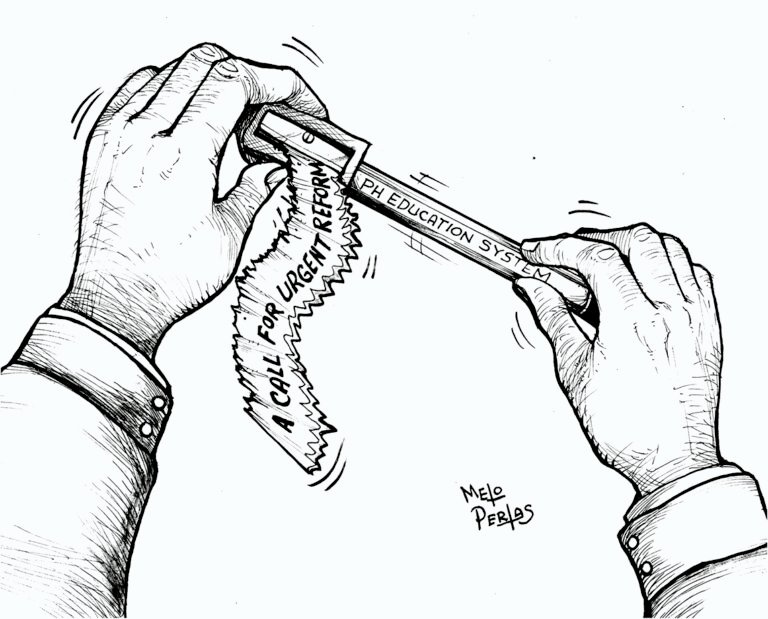
A Call for Urgent Reform

THE COUNTRY’S EDUCATION system stands at critical crossroads. For years, the Philippines has been struggling with challenging issues like quality, access, and equity which further deteriorated after the Covid-19 pandemic. 

When the Department of Education (DepEd) introduced the Matatag Curriculum — an academic framework primarily designed to polish the Philippine K-12 program, many were made to believe that such would somehow improve the quality and relevance of education.

Coined from a Filipino virtue of resilience, the Matatag Curriculum failed to focus on strengthening foundational skills, decongesting the curriculum, and promoting learner well-being.  Attempts to recalibrate the K-12 program, specifically on its  goal to build a more robust and adaptable curriculum never came to be.

For the lack of an honest evaluation of its educational direction, the Program for International Student Assessment (PISA) gave the Philippines a failing mark.

In its assessment, PISA particularly took note of the “very low” score in reading, math, and science among Filipino students. Does this reflect a broader systemic crisis marked by overcrowded classrooms, undertrained teachers, outdated learning materials, and a curriculum that often prioritizes quantity over quality? 

Implemented in 2012, the K-12 law aims to produce globally competitive graduates by introducing senior high school level, embarking on a promise of employability. For families, the additional years imposed additional burden while for educational institutions, they grappled with inadequate support systems. 

A decade after its implementation, employers find senior high school graduates underprepared. Colleges and universities report that bridging gaps in foundational skills are still wanting. 

Overall, included in the core issues are teacher training and compensation. As the backbone of the education system, many teachers are overworked, underpaid, and under-equipped. Shouldn’t the government prioritize investing in their continuous professional development and well-being. Educational iniquities are stark in far-flung areas where schools are lacking in modern facilities and digital tools. 

Another concern is the curriculum that no longer reflects the country’s cultural diversity, local histories, and socioeconomic realities. The current curriculum has proven ineffective in addressing the unique challenges Filipino learners face. 

Reform must also include strengthening early childhood education, enhancing technical-vocational training pathways, and promoting research-based policy-making. These are long-term efforts that require consistent political will, adequate funding, and public support. 

The future of the country depends on an education system that genuinely equips learners not just with academic knowledge, but with critical thinking, empathy, adaptability, and a strong sense of civic responsibility.

Education is not merely a sector; it is the foundation of our national development. Let’s build it right. 

Rice Pests Threat Damaging Farms 

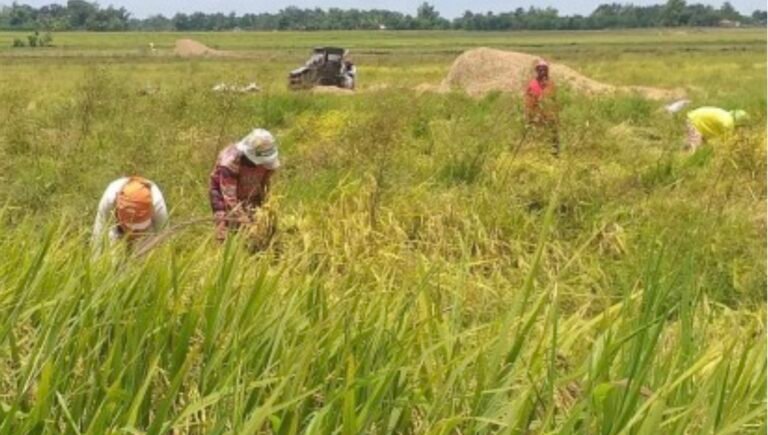
AMID AN ANTICIPATED good rice harvest, the threat that pests like rodents, rice stem borers, brown planthoppers and rice bugs could infest standing crops until June in the rice farms of Central Luzon, Western Visayas, CAR, and the Bicol region.

This prompted the Philippine Rice Research Institute to warn farmers in these regions to intensify their monitoring for signs of these pests. Central Luzon is the country;s rice granary and top rice producer in 2024.

‘If left unmanaged, PhilRice said these pests could lead to “significant” yield losses … Even minimal negligence can escalate into severe infestations that compromise yield and quality.’

If left unmanaged, PhilRice said these pests could lead to “significant” yield losses.

“Regular field monitoring and timely pest control are crucial at this point in the season. Even minimal negligence can escalate into severe infestations that compromise yield and quality,” said Leonardo Marquez, PhilRice crop protection expert, in a statement.

Marquez noted that rodents are the leading threat due to their “destructive feeding behavior” throughout the crop’s growth stages, urging farmers to remain vigilant.

“A single rodent can damage up to 300 tillers in one night, potentially causing yield losses of up to 90 percent in heavily infested fields. Farmers are advised to look for burrows, footprints, and chewed tillers, and to destroy nests on sight.”

STEM BORERS
PhilRice said the rice stem borers remain a persistent problem. This pest bores into stems, causing “deadheart” and “whitehead” symptoms that could reduce grain development.

Brown planthoppers, which thrive in nitrogen-rich environments, suck sap from plants and cause hopperburn, leading to premature death. Rice bugs target maturing grains, which results in empty or discolored kernels.

Marquez stressed the importance of integrated pest management strategies, including community-wide synchronized planting, controlled nitrogen use, and crop rotation.

He also warned farmers to be cautious of overusing insecticides, since improper application can lead to pesticide resistance and disrupt populations of beneficial insects.

“Farmers are encouraged to coordinate with their local agriculture offices and consult extension workers for pest surveillance and management support.”

Legitimizing Businesses In Forest Lands

THE NEW REFORESTATION program of the Department of Environment and Natural Resources has a lot of gray areas and potential loopholes that greedy businessmen and investors could exploit for their selfish interests. 

The country might end up seeing businesses rushing in droves to these forest lands – including verdant areas – in the guise of reforestation but in reality would end up amassing wealth while abandoning their commitment to re-green such areas.

And what about the communities surrounding such erstwhile or current forestlands that would be awarded to these investors/companies, will they also be uprooted because of conflicting claims? Our geohazard maps and zoning ordinances are too imperfect to a point that abuses tend to be justified in the name of progress, at the expense of local communities.

‘The program eliminates the fragmented application processes and overlapping requirements that have historically discouraged potential investors and delayed project implementation.’

FOREST MANAGEMENT
Newly-appointed Environment and Natural Resources Secretary Raphael Lotilla said the Sustainable Forest Land Management Agreement (SFLMA), which supersedes all other previous reforestation and land-use agreements, would allow participants to pursue various business objectives like wood production (there goes legitimacy for logging again), ecotourism (so why was the NGO in Tanay not allowed to continue its operations, which had received various international awards for its sustainability) on up to 40,000 hectares each for 25 years, renewable for another 25 years.

Other endeavors to be allowed in SFLMA are agroforestry, forest plantation, pasture and livestock development, ecotourism, renewable energy, and carbon offset projects.

Individuals and peoples’ organizations may also participate in the forest management program with their allocations limited to 50 hectares and 1,000 hectares, respectively.

The DENR program covers all forest land in the public domain (this is where the danger lies), particularly denuded areas.

EXEMPTIONS
For sites with less than 50 percent natural forest cover, the proponent will be responsible for reforestation to bring the forest cover to at least 50 percent,” according to Administrative Order No. 22 on the SFLMA program.

“Exempted from this (the 50 percent reforestation mandate) are developments that require open areas such as grazing, timber production (does this mean that because of timber the concessionaires do not need to replace what they have cut?), renewable energy (which has the danger of annihilating wildlife)  etc.,” it added.

“The program eliminates the fragmented application processes and overlapping requirements that have historically discouraged potential investors and delayed project implementation,”  Lotilla said.

The SFLMA voids eight forest management instruments: the Integrated Forest Management Agreement, Community-Based Forest Management Agreement, Forest Land Grazing Management Agreement, Socialized Industrial Forest Management Agreement, Forest Land Use Agreement, Forest Land Use Agreement for Tourism, Special Land Use Permit, and the Community-Based Forest Management Agreement.

Under SFLMA, participants are exempt from logging bans and may export without restriction. (This is what I fear most, a gateway for illegal loggers).

RENEWABLE ENERGY
Ray Thomas Kabigting, assistant director of DENR’s Forest Management Bureau said SFLMA will revive the country’s reputation as a net wood exporter.

In 2024, local wood demand reached 6 million cu.m.. of which 85 percent was imported while only 2 percent of local demand was met by public plantations and 13 percent by private plantations, he added.

The DENR is also prioritizing renewable energy within forest land because we support the National Renewable Energy Plan of the government,” he added.

The user fee structure is P1,200/ha./year for forestry/agroforestry ventures, P300/ha./year for  grazing, P85,000/ha/yr. for energy use and P7,200/ha./yr.  for special uses like ecotourism.

This would enable the government to raise P600 million based on exactions in 2024 from user fees from previous forest management programs, which Kabigting admitted is quite low considering the coverage of 1.4 million hectares.

Lotilla said the benefit should not be viewed just in user fees but also in the productivity to be unleashed by these ventures. Timber, rattan, and bamboo are among the main targets for forest plantation businesses.

For agroforestry operations, the target crops are fruit trees, cacao, coffee, and vegetables.

Projecting Economic Growth Is, At Best, A Guess

EVEN AS A NON-ECONOMIST, I don’t subscribe to setting economic growth targets since our country is part of a global economy, thus any virus that hits it, hits us. Thus, goal setting is, at best, a guessing game.

Targets are good to a certain extent, but in the end such targets somehow limit our capacity to grow beyond these parameters, in much the same way that failure to meet such targets would make us look badly at ourselves to the point of resorting to blame games– determining which sector failed the overall economy.

With the global uncertainties now besetting the world economic order– Trump’s tariffs, geopolitical tensions in the MIddle East, the continuing war in Ukraine, global supply disruptions and supply chain limitations– naturally all these would impact a country’s growth, like ours. So it is pointless to set goals/targets of economic growth, unless we have full control over local and international risks and threats.

‘With the global uncertainties now besetting the world economic order– Trump’s tariffs, geopolitical tensions in the MIddle East, the continuing war in Ukraine, global supply disruptions and supply chain limitations– naturally all these would impact a country’s growth, like ours.’

GLOBAL UNCERTAINTIES
Just recently, our economic managers revised the gross domestic product (GDP) target for 2025 from 6 to 7 percent, down to 5.5-6.5 percent with exports expected to shrink by 2 percent amid weakening global demand because of trade tensions and geopolitical risks.

At the 191st meeting of the Development Budget Coordination Committee (DBCC), officials also narrowed the inflation forecast to 2–3 percent, from 2–4 percent — the first time since 2002 that the inflation assumption has been reduced to a one-percentage-point range—coinciding with the Bangko Sentral ng Pilipinas’ adoption of an inflation-targeting framework, reported Bilyonaryo..

“The revisions take into account heightened global uncertainties, such as the unforeseen escalation of tensions in the Middle East and the imposition of US tariffs,” the DBCC statement said.

“Despite these headwinds, the DBCC remains vigilant and ready to deploy timely and targeted measures to mitigate their potential impact on the Philippine economy.”

TRADE PARTNERSHIPS
Despite rising global oil prices, the DBCC retained its assumption for Dubai crude at $60–70 per barrel through 2026, along with a ₱56–₱58 exchange rate projection against the U.S. dollar.

The DBCC officially reduced its previous goal of 8 percent GDP growth for the remainder of President Marcos Jr.’s term but now targets a more realistic 6-7 percent from 2026 to 2028, with a modest 2 percent export growth.

“To sustain this economic momentum, the government is focused on maintaining price stability while expanding trade partnerships and enhancing the productivity of domestic industries,” the DBCC said.

“Accelerated implementation of government programs and projects also remains a key priority, alongside seizing growth opportunities in the services sector.

POTENTIAL IMPACT
The Philippine economy grew by a weaker-than-expected 5.4 percent in the first quarter from the 5.9 percent expansion a year ago, the AFP quoted Budget Secretary Amenah Pangandaman saying.

The inflation assumption for 2025 was narrowed to 2 percent-3 percent from a previous outlook of 2 percent-4 percent. It kept the 2-4 percent inflation assumption for 2026 to 2028. In the first five months, inflation has averaged 1.9 percent, slightly below the Bangko Sentral ng Pilipinas’ (BSP) 2-4 percent target range.

NEDA Secretary Arsenio Balisacan warned that the potential impact of a prolonged war in the Middle East could badly affect the Philippines and the rest of the world. Oil prices rose on Thursday after a sharp slump after the Israel-Iran ceasefire was announced. Reuters reported Brent crude futures rose 0.37 percent to $67.93 a barrel, while US West Texas Intermediate crude  gained 0.45 percent to $65.21.

Foreign exchange is assumed to “remain stable” and average to P56-P58 per dollar from this year until 2028 because of lower domestic inflation, which will continue to be shaped by global financial conditions and external trade performance, the DBCC said.

TRUMP’S IMPACT
Trade is expected to be sluggish, reflecting the impact of the Trump administration’s tariff policy.

“Goods exports are projected to contract by 2 percent in 2025 (from a previous projection of 6 percent growth), largely due to slower global demand and heightened trade policy uncertainties, before recovering to a modest growth of 2 percent from 2026 to 2028,” DBCC said.

The DBCC said it expects the budget deficit to balloon to 5.5 percent in 2025 as a share of GDP from 5.3 percent previously. It also sees the deficit as a share of GDP to widen to 5.3 percent in 2026 from 4.7 percent previously. 

The projected budget gap as a percentage of GDP for 2027 was raised to 4.8 percent from 4.1 percent previously, while for 2028, it was revised to 4.3 percent from 3.7 percent previously. 

Marijuana Plantation

SOME 30,000 BUSHES of fully-grown marijuana were discovered by operatives of the Philippine Drug Enforcement Agency (PDEA) in the remote barangay of Loccong in Tinglayan, Kalinga. Together with local police, they successfully carried out a two-day marijuana eradication-and-burning initiative on site, from  June 24 to 25, 2025. This covered some 3,000 square meters of land. This proactive effort led to the destruction of marijuana plants and dried leaves estimated to be worth around ₱9,600,000. Approximately 30 kilograms of dried marijuana leaves and stalks were also discovered. No person or cultivator was reported arrested during the operation.

Frequent Gas Price Increase

0

GASOLINE STATIONS, LIKE Flying V and Petron, along Commonwealth Avenue in Quezon City are constantly changing their tag prices displays. This goes with the frequent and new adjustments on pump prices implemented Tuesday, June 24, as early as 6 in the morning. The current price increases, usually done on a Tuesday, per liter are now; gasoline by P1.75, diesel by P2.60, and kerosene by P2.40.

The Elusive Onion Smuggling Firm

WITH JUST A name in its hands, the government might find it severely difficult, if at all, to run after a company that brought in P2 million worth of red onions from China via the Mindanao International Container Terminal in Misamis Occidental.

The Department of Agriculture said it coordinated with the Securities and Exchange Commission database and its older system, the SEC Express System, but found no data about Lantix Consumer Groups Trading, a company said to be based in Binondo which imported the 25 metric tons of red onions.

Agriculture Secretary Francisco Tiu Laurel Jr. vowed to pursue the company to charge it for violations of the Anti Agricultural Smuggling Act.

‘[F]or violations of the Anti Agricultural Smuggling Act … The law classifies the smuggling of agricultural goods worth over ₱250,000—excluding rice—as economic sabotage.’

ACCREDITATION
The law classifies the smuggling of agricultural goods worth over ₱250,000—excluding rice—as economic sabotage; and non-importers are further required to obtain Bureau of Customs accreditation and submit financial statements or bank certifications to prove their capacity to pay duties and taxes.

But with only a company name and no general information sheet on file with the SEC, the DA may find it difficult to track down the smugglers, according to a report of Bilyonaryo.

To import legally, companies must be registered with the SEC (for corporations), the Department of Trade and Industry (for single proprietors), or the Cooperative Development Authority (for coops). They must also secure business permits, BIR registration, a valid TIN, and an import clearance certificate.

Importers are further required to obtain Bureau of Customs accreditation and submit financial statements or bank certifications to prove their capacity to pay duties and taxes.

But with only a company name and no general information sheet on file with the SEC, the DA may find it difficult to track down the smugglers.

MISDECLARED
The shipment was seized on May 26– declared as frozen goods like egg noodles, croissant dough, pizza dough, buns and spring rolls– earlier seized by the Bureau of Plant Industry and the Bureau of Customs as BPI said it had not issued any sanitary and phytosanitary import clearances for it.

The BPI-Plant Quarantine Service in Cagayan de Oro asked the BOC to withhold the release of the container van for further inspection. Upon inspection done on June 11, the shipment was found to contain fresh red onions and not the items enumerated in the manifest.

Laurel said onion importations would only be authorized in August for white and October for red, upon release of final data on inventory and those to be harvested late this June.

One thing clear is that we have not released any import permits since early 2025, which means that all arriving onions are illegal and smuggled, Laurel said. 

Instead of arresting vendors, the government will seek their cooperation to trace the source of the smuggled onions, Laurel said.

Brace For Hard Times Ahead

GLOBAL EXTERNAL SHOCKS seem to multiply each day. The hardest, or what we thought as the hardest one, came from the tariffs that the Trump administration would impose on its allies and non allies, which around the world are just preparing for. And now, the escalating conflict, although Trump claims that a ceasefire had been reached, between Israel and Iran. 

Should either country renege on its avowed ceasefire then the chance that Hormuz Strait, where most goods and chemicals pass through before heading to international waters, would be closed would exacerbate the current problems of supply chains that had since lingered from the Covid 19 pandemic.

Already, prices of petroleum products are expected to soar — including LPG (which households and industries/commerce use for cooking) — which would trigger increases in power, food products and services, prompting labor groups to caution about the further erosion of incomes especially of the middle and lower income groups.

‘Should either country renege on its avowed ceasefire then the chance that Hormuz Strait … would be closed would exacerbate the current problems of supply chains that had since lingered from the Covid 19 pandemic.’

FURTHER STRAIN
Two labor groups — the Federation of Free Workers and the Sentro ng mga Nagkakaisa at Progresibong Manggagawa — warned yesterday that the continued increase in fuel prices might further strain the already stretched budgets of Filipino workers, particularly minimum wage earners.

FFW President Sonny Matula said rising oil prices would lead to higher transport fares and more expensive basic goods — burdens that will surely hit low-income workers the hardest.

“The increase in fuel prices underscores the urgency of a substantial wage adjustment. The proposed P100–P200 nationwide legislated wage hike now becomes not just a demand but an emergency or a lifeline to survive,” he told Business Mirror.

HARDEST HIT
Currently, the minimum wage in Metro Manila stands at P645 —the highest in the country— while the lowest is in the Bangsamoro Autonomous Region in Muslim Mindanao (BARMM) at P361, highlighting the wide gap in regional pay and the need for a unified wage hike.

Matula asked the government to provide direct assistance to vulnerable sectors, especially workers in the transport and agricultural industries, who are among the hardest hit by the ripple effects of the ongoing conflict between Israel and Iran.

He added that the Department of Labor and Employment (DOLE) must ensure that no worker is left behind and that a responsive safety net is in place to protect those affected by inflationary shocks.

Matula also urged the government to scale up training and support for fuel-impacted sectors to help them transition, adapt, or supplement their incomes.

INTERVENTIONS
Sentro Secretary General Josua Mata urged the Marcos administration to go beyond issuing advisories and to consider regulatory intervention to prevent unjustified increases in oil prices.

Citing Republic Act No. 8479 or the Oil Deregulation Law, he said, the government is authorized to act when domestic pump prices become excessive or when there are signs of market abuse
.
“After an initial spike, global oil prices have already stabilized. Recent geopolitical shocks were swiftly contained, and [Organization of the Petroleum Exporting Countries] has the capacity to keep supply steady. I see no justification for keeping domestic oil prices high,” Mata said.

SPIKING FUEL COST
The Department of Energy (DOE) on Monday confirmed that oil companies had initially planned to raise prices by as much as P5 per liter this week, but later agreed to stagger the increases to ease the burden on consumers.

The Department of Trade assured that local sardine manufacturers have promised to keep their current prices for canned sardines (a basic item for low income consumers) debunking reports that the sardine canners have been seeking price hikes.

“We appreciate the industry’s commitment to the consumer, especially with the economic pressures families are facing today,” said Trade Secretary Ma. Cristina A. Roque.

“Their decision not to increase prices supports President Ferdinand R. Marcos, Jr.’s directive to keep basic goods affordable and ease the daily burden on consumers,” she added.

The manufacturers’ commitment follows her June 23 meeting with members of the Canned Sardines Association of the Philippines, after news reports said the industry planned to request an increase in the suggested retail prices of 155-gram sardine cans from P21 to P24 because of rising production costs.
.
Among the attendees were Chattrade, Mega Prime Foods, Inc., PERMEX, Universal Canning, Inc., and Century Pacific Food, Inc.

Recount Sought By PDP-Laban For Its Senatorial Bets

SOME PEOPLE JUST can’t accept defeat, especially an election loss, because to their minds all their bets are winnable and worthy to sit in the Senate.

At least this is what Duterte’s political party, the PDP-Laban  (Alfonso) Cusi wing is claiming before the Supreme Court, citing irregularities, cheating and what not.

Their petition before the High Tribunal is for a manual counting or recount “whether partial, targeted or nationwide” depending on the court’s discretion as to the extent of necessity, efficiency and economy or cost-effectiveness in implementing the pertinent election laws.

“What is essential is that the mandated process under our prevailing election laws be carried out, so that the truth may be known, accountability may be identified and exacted, and public confidence in the electoral process may be restored,” it added based on a report of Business World.

‘(The) National Citizens’ Movement for Free Elections earlier said it did not observe any unusual activity during the 2025 midterm elections but noted that certain irregularities warrant further investigation.’

IRREGULARITIES
Vice President Sara Duterte-Carpio, whom the party adopted as its vice-presidential candidate in the 2022 elections, earlier alleged election fraud, claiming that three senatorial bets of the party had been cheated.

The lawsuit named the Commission on Elections (Comelec) and Chairman George Erwin M. Garcia as the respondent.

The party said its call for a vote recount is anchored on Republic Act 9369 or the Automated Election System Act, and Batas Pambansa Blg. 881 or the Omnibus Election Code.

PDP-Laban argued that Section 31 of RA 9369 provides for the conduct of a manual count of votes to safeguard the integrity of elections and ensure they are free, honest and credible.

Among the irregularities cited was the discovery of equipment — including Starlink transmission devices and solar panels — inside a private residence in Buhangin Village, Davao City (hometown and stronghold of the Dutertes), which the party said raises a “potential conflict of interest.”

“Comelec welcomes remedies like this to prove the real mandate of the electorate,” Garcia told reporters. “We will just wait for the Supreme Court action on this matter.”

DISCREPANCIES
PDP-Laban also alleged discrepancies between actual ballots and voter receipts, as well as the exclusion of more than 17 million senatorial votes from the final tally after the Comelec allegedly classified these as “overvotes.”

“The proposed supplemental petition is being submitted together with this motion and it seeks merely to incorporate the updated facts or recent developments — transactions, occurrences or events which have happened subsequent to the filing of the original petition — to aid in the full, fair and fast adjudication of the issues already raised in the original petition,” PDP-Laban said.

The ruling Alyansa Para sa Bagong Pilipinas coalition secured six Senate seats.

PDP-Laban coalition senatorial candidates Christopher Lawrence T. Go and Ronald M. dela Rosa, both re-electionists, and Party-list Rep. Rodante D. Marcoleta won.

The VP earlier said PDP-Laban senatorial candidates Jesus V. Hinlo, Jr., James Patrick “Jimmy” R. Bondoc and Richard T. Mata had been cheated, without providing evidence. (I don’t even know these candidates, so how can I vote for them).

Election watchdog National Citizens’ Movement for Free Elections earlier said it did not observe any unusual activity during the 2025 midterm elections but noted that certain irregularities warrant further investigation.